† Память о преп. Марке, Иоанне и Феофиле
† Commemoration of our Venerable Fathers Mark, John, and Theophilus
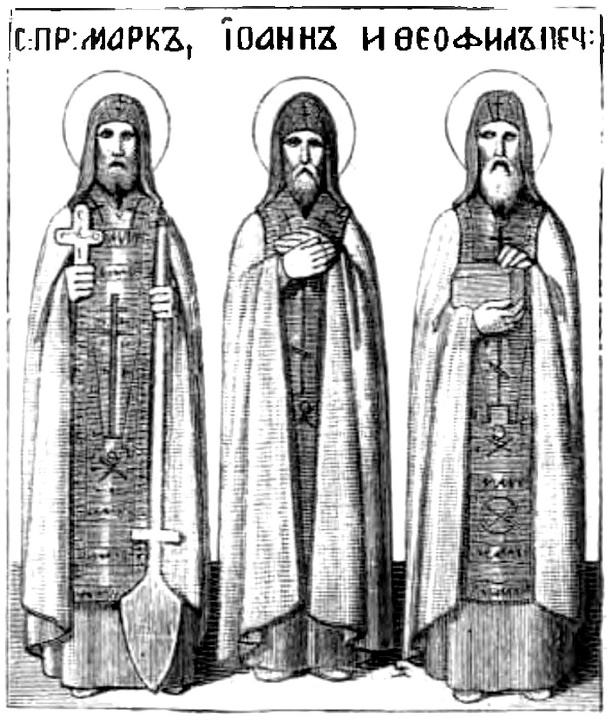
Мы, немощные, так начинает свою повесть о преп. Марке Печерский инок Поликарп, хотим следовать примеру древних. – Они употребили много труда, ходили по пустыням, горам, провалинам земным и одних из преподобных мужей, о которых писали, видели сами, о жизни других, о чудесах и Богоугодных подвигах слышали от прежде бывших отцов и так составили патерик, который читая, столько наслаждаемся духовно. – Я, недостойный, не имею разумения истины и ничего такого не видел, а следую только слышанному мною от преподобного епископа Симона. Не ходил я по св. местам, не видел ни Иерусалима, ни Синайской горы, чтобы мог прибавить что-нибудь к моей повести, как делают искусные в слове. – Но пусть не буду я хвалиться ничем другим, как только св. монастырём Печерским и бывшими в нём черноризцами, их житием и чудесами, которые воспоминаю с радостью. Сильно желаю я, грешный, молитвы тех отцов. – Затем начинаю повесть о преп. Марке Печерском370.
We, the weak, — thus begins the monk Polycarp his account of the Venerable Mark of the Caves — wish to follow the example of the ancients. They spent much labor, traveled through deserts, mountains, and chasms of the earth, and some of the venerable men about whom they wrote they saw themselves; concerning the life, miracles, and God-pleasing struggles of others, they heard from the fathers who had gone before, and thus compiled a patericon, which we read with such spiritual delight. I, the unworthy one, have no understanding of the truth and have seen nothing of the sort, but follow only what I have heard from the venerable Bishop Simon. I have not traveled to the holy places, I have seen neither Jerusalem nor Mount Sinai, that I might add something to my account, as those skilled in speech do. But let me boast in nothing else save the holy Monastery of the Caves and the monks who were in it, their life and miracles, which I recall with joy. I greatly desire, sinful as I am, the prayers of those fathers. Then I begin the account of the Venerable Mark of the Caves370.
Подлинно скажем и мы, преподобный Марк Печерский – такой человек Божий, который составляет славу Русской Церкви, и, имея его в виду, не имеем нужды ходить на Восток, чтобы видеть истинного человека Божия. Преподобн. Марк – чудный человек Божий! Самое поразительное в нём – простота подвига его. Он не вёл высокой созерцательной жизни. Занятие его было очень обыкновенное: он копал землю. Но при этом простом труде достиг высокого совершенства духовного, какого достигают немногие. – Это – самый убедительный пример тому, что при всяком труде телесном, если дух работает Господу, прогоняет от души всё нечистое, наполняет еёе мыслями и воздыханиями святыми, строго охраняя её смирением и простотой, душа может усовершаться духовно. Выслушаем все повествование Поликарпа о дивном Марке.
Truly we also shall say: the Venerable Mark of the Caves is such a man of God that he constitutes the glory of the Russian Church, and having him in view, we have no need to go to the East to see a true man of God. The Venerable Mark is a wondrous man of God! The most striking thing about him is the simplicity of his struggle. He did not lead a lofty contemplative life. His occupation was very ordinary: he dug the earth. But in this simple labor he attained such high spiritual perfection as few attain. This is the most convincing example that in every bodily labor, if the spirit works for the Lord, drives away from the soul everything unclean, fills it with holy thoughts and sighings, strictly guarding it with humility and simplicity, the soul can be perfected spiritually. Let us hear the whole account of Polycarp about the wondrous Mark.
Преп. Марк, пишет Поликарп, «живя в пещере, своими руками выкопал много пещер и на своих плечах носил землю, день и ночь трудясь для Господа. Он выкопал много мест для погребения братии и не брал за то ничего, разве кто сам давал что-нибудь, да и то раздавал бедным. При нём св. Феодосий перенесён был из пещеры в монастырь, в великую церковь».
The Venerable Mark, writes Polycarp, "living in the cave, dug out many caves with his own hands and carried the earth on his own shoulders, laboring day and night for the Lord. He dug many places for the burial of the brethren and took nothing for it, unless someone himself gave something, and even that he distributed to the poor. In his time, St. Theodosius was translated from the cave into the monastery, into the great church."
Надобно прибавить, что преподобный при всём том, что так много трудился, копая пещеры и могилы, носил на себе вериги: они висят ныне над его мощами. Здесь же крест его – памятник воздержания его даже в употреблении воды; когда томила его жажда, он не более пил, как сколько вмещалось в этом медном кресте371.
It must be added that the venerable one, despite all his great labor in digging caves and graves, wore chains upon himself: they hang now over his relics. Here also is his cross — a memorial of his abstinence even in the use of water; when thirst tormented him, he drank no more than could be contained in this copper cross371.
«В одно время, повествует Поликарп, Марк, копая землю, утомился до изнеможения и оставил место тесным, не расширенным. Случилось одному брату заболеть и умереть; другого места ему не было кроме того тесного; мёртвый, быв принесён в пещеру, едва с нуждой был вложен. Братия роптала на Марка, не имея возможности убрать его, ни возлить на него елея; так узко было место! Пещерник со смирением кланялся всем и говорил: «простите меня, святые отцы! по худости не докончил». Они ещё более стали бранить его. – Марк сказал мёртвому: «место тесно; сам, брат, потрудись, возьми и возлей на себя елей». Мёртвый простёр руку и, несколько поднявшись, взял масло и возлил крестовидно на лице и на грудь и, отдав сосуд, сам перед всеми убрал всё, лёг и уснул. – Когда совершилось это чудо, на всех напал страх».
"On one occasion," relates Polycarp, "Mark, while digging the earth, grew weary to exhaustion and left the place narrow, not widened. It happened that a certain brother fell ill and died; there was no other place for him except that narrow one; the dead man, having been brought into the cave, was with difficulty placed in it. The brethren murmured against Mark, being unable to arrange him or to pour oil upon him; so narrow was the place! The cave-dweller bowed humbly to all and said: 'Forgive me, holy fathers! In my weakness I did not finish.' They began to revile him even more. Mark said to the dead man: 'The place is narrow; do you yourself, brother, take pains, take the oil and pour it upon yourself.' The dead man stretched out his hand and, having risen a little, took the oil and poured it crosswise upon his face and chest, and having given back the vessel, he himself arranged everything before them all, lay down, and fell asleep. When this miracle took place, fear fell upon all."
«Другой брат, после долгой болезни, умер, и один из друзей его, обмыв тело его по обычаю, пошёл в пещеру посмотреть, где бы положить тело своего друга. Он спросил о том пещерника Марка; но тот отвечал: «иди, скажи брату, чтобы подождал до утра, пока выкопаю место, и тогда пусть идёт на вечный покой». «Отче! возразил брат, кому велишь это сказать? Я уже отёр губою мёртвое тело». Но Марк повторил ему: «ты видишь, место ещё не готово; иди, скажи умершему: грешный Марк говорит тебе: – останься, брат, ещё на день, пока не скажу тебе, что место готово; на утро отойдёшь ко Христу». – Инок возвратился в монастырь; здесь братия уже совершали обычное пение по умершем. При всех он сказал умершему: «Марк говорит тебе, что ещё не готово место для тебя, подожди до утра». При этих словах и усопший открыл глаза, душа его возвратилась, и он всю ночь оставался живым, ни с кем не говоря. – На утро брат опять пошёл в пещеру узнать о месте, и пещерник сказал и ему: «иди – скажи ожившему, – Марк говорит тебе: оставь теперь временную жизнь, предай дух Богу, а телу твоему место готово здесь». – Как только брат сказал это ожившему: тот, сомкнув глаза, предал дух Богу.
"Another brother died after a long illness, and one of his friends, having washed the body according to custom, went into the cave to see where he might lay the body of his friend. He asked the cave-dweller Mark about it; but he answered: 'Go, tell the brother to wait until morning, until I dig the place, and then let him go to eternal rest.' 'Father!' objected the brother, 'to whom do you bid me say this? I have already wiped the dead body with a sponge.' But Mark repeated to him: 'You see, the place is not yet ready; go, say to the deceased: the sinful Mark says to you: — remain, brother, one more day, until I tell you that the place is ready; in the morning you will depart to Christ.' The monk returned to the monastery; there the brethren were already performing the customary singing over the deceased. In the presence of all he said to the dead man: 'Mark says to you that the place is not yet ready for you; wait until morning.' At these words the deceased opened his eyes, his soul returned, and he remained alive all night, speaking to no one. In the morning the brother again went into the cave to learn about the place, and the cave-dweller said to him: 'Go — say to the one who has come back to life: Mark says to you: leave now the temporal life, surrender your spirit to God, and for your body the place is ready here.' As soon as the brother said this to the one who had come back to life, he, closing his eyes, surrendered his spirit to God."
«Два брата, Иоанн и Феофил, соединены были между собой сердечной любовью от юности и одинаково ревновали служить Богу. Они просили блаженного Марка приготовить им одно общее место погребения. – Спустя много времени, старший брат Феофил был послан на сторону по монастырской нужде. Младший, угодив Господу, разболелся и умер; его положили на приготовленном месте. Через несколько дней возвратился Феофил и, узнав о смерти брата, пошёл вместе с братией посмотреть, на каком месте положен умерший. – Увидев, что тот положен в общем их гробе, на первом месте, вознегодовал за то на Марка и говорил: «зачем положил его здесь на моём месте? я старше того». Пещерник, со смирением кланяясь ему, отвечал: «прости меня грешного и – обратясь к умершему, сказал ему: «брат, встань и дай это место старшему брату твоему, сам же ляг на другом». По слову блаженного, мёртвый встал и лёг на другом месте. Тогда Феофил, роптавший на блаженного, пал к ногам его и говорил: «согрешил я, отче, потревожил брата моего; прошу тебя, прикажи ему, чтобы опять лёг там». Блаженный отвечал: «Господь сотворил дело, чтобы не было вражды между нами; Он повелел умершему уступить тебе место старшего. Божие дело воскрешать умерших, а я человек грешный; прикажи ты ему, не послушает ли он тебя? Знай и то, что тебе следовало, не выходя отсюда, занять твоё любимое старшинство и быть положенным здесь. Но так как ты ещё не готов к исходу, иди и заботься о твоём спасении; спустя несколько дней ты будешь принесён сюда». – Услышав это, Феофил пришёл в ужас и думал, что тут же умрёт. Возвратясь кое-как в келью, он горько рыдал.
"Two brothers, John and Theophilus, were united to each other by heartfelt love from youth and were equally zealous to serve God. They asked the blessed Mark to prepare for them one common burial place. After much time, the elder brother Theophilus was sent away on monastery business. The younger, having pleased the Lord, fell ill and died; he was laid in the prepared place. After a few days Theophilus returned and, learning of his brother's death, went together with the brethren to see in what place the deceased was laid. Seeing that he was laid in their common grave, in the first place, he was indignant at Mark for this and said: 'Why did you lay him here in my place? I am older than he.' The cave-dweller, bowing humbly to him, answered: 'Forgive me, a sinner,' and, turning to the deceased, said to him: 'Brother, arise and give this place to your elder brother, and lie down yourself in the other.' At the word of the blessed one, the dead man arose and lay down in the other place. Then Theophilus, who had murmured against the blessed one, fell at his feet and said: 'I have sinned, father, I have troubled my brother; I beg you, bid him to lie down there again.' The blessed one answered: 'The Lord has done this work, that there might be no enmity between us; He commanded the deceased to yield to you the place of the elder. It is God's work to raise the dead, and I am a sinful man; do you command him — will he not obey you? Know also that it was fitting for you, without leaving this place, to take your beloved seniority and be laid here. But since you are not yet ready for the departure, go and care for your salvation; after a few days you will be brought here.' Hearing this, Theophilus was seized with terror and thought that he would die on the spot. Having returned with difficulty to his cell, he wept bitterly.
Раздав всё, что имел, и оставив у себя только мантию, он каждый день ожидал смертного часа, и никто не мог удержать его от слёз или заставить вкусить сладкой пищи; слёзы были ему пищей, день и ночь. Всякое утро омывал он лицо слезами, не зная, достигнет ли вечера; с приближением же ночи омрачал глаза слезами и говорил: кто знает, проживу ли до утра? Многие, отходя к временному покою, заснули сном вечным. Как же мне надеяться, что останусь в живых, когда уже сказано мне о близкой моей кончине? Феофил со слезами молил Господа дать ему время для покаяния. Таким подвигом в течение нескольких лет до того иссушил он тело своё, что можно было перечесть кости его. От слёз потерял он зрение.
Having distributed all that he had, and keeping only his mantle, he awaited the hour of death every day, and no one could restrain him from tears or make him taste sweet food; tears were his food, day and night. Every morning he washed his face with tears, not knowing whether he would reach evening; with the approach of night he darkened his eyes with tears and said: Who knows whether I shall live until morning? Many, departing to temporal rest, have fallen asleep in eternal sleep. How then can I hope to remain alive, when I have already been told of my imminent end? Theophilus with tears besought the Lord to give him time for repentance. By such struggle over several years he so dried up his body that one could count his bones. From tears he lost his sight.
Преп. Марк, провидев час отшествия своего ко Господу, призвал к себе Феофила и сказал ему: «прости меня, брат, что оскорбил тебя на столько лет, и моли о мне Бога, – я уже отхожу отсюда; не забуду я молиться и за тебя, чтобы Господь Бог удостоил нас видеться друг с другом и пребывать вместе с преп. отцами Антонием и Феодосием». Тогда Феофил сказал: «отче! зачем ты оставляешь меня здесь? Возьми и меня с собой, или дай мне прозреть. – Знаю, что за грехи я должен был умереть тогда же, как ты воскресил брата моего; для твоих святых молитв Господь пощадил меня, ожидая покаяния моего. – И ныне ты в состоянии дать мне, чего прошу. Пусть отойду с тобой ко Господу или прозрю». Преп. Марк отвечал: «не скорби, брат мой, что Бога ради помрачился ты телесными очами, – ты прозрел духовными. – Я даже рад, что был виной твоему ослеплению; я возвестил тебе смерть, желая плотское твоё мудрование привести к смирению. Не желай смерти: она придёт, хотя бы и не желал ты. Вот что послужит тебе знамением близкой твоей кончины: за три дня до неё ты прозреешь». Сказав это, блаженный Марк почил. Св. мощи его положены в пещере, которую он сам себе выкопал».
The Venerable Mark, foreseeing the hour of his departure to the Lord, summoned Theophilus to him and said to him: 'Forgive me, brother, that I have grieved you for so many years, and pray to God for me — I am already departing from here; I will not forget to pray also for you, that the Lord God may vouchsafe us to see each other and to abide together with the venerable fathers Anthony and Theodosius.' Then Theophilus said: 'Father! Why do you leave me here? Take me with you, or give me back my sight. I know that for my sins I ought to have died then, when you raised my brother; for the sake of your holy prayers the Lord spared me, awaiting my repentance. And now you are able to give me what I ask. Let me depart with you to the Lord, or let me receive my sight.' The Venerable Mark answered: 'Do not grieve, my brother, that for God's sake you have been darkened in bodily eyes — you have been enlightened in spiritual eyes. I am even glad that I was the cause of your blindness; I announced death to you, desiring to bring your carnal wisdom to humility. Do not desire death: it will come, even if you do not desire it. Let this be a sign to you of your imminent end: three days before it, you will receive your sight.' Having said this, the blessed Mark reposed. His holy relics were laid in the cave which he himself had dug for himself."
Так как, по словам Поликарпа, блаж. Марк был свидетелем перенесения мощей преп. Феодосия из пещеры в храм обители, но Поликарп не говорит, что блаж. Марк видел в живых преп. Феодосия, а перенесение мощей Феодосия было в 1091 г., то кончина преп. Марка последовала, вероятно, в 1102 г.372.
Since, according to the words of Polycarp, the blessed Mark was a witness of the translation of the relics of the Venerable Theodosius from the cave to the church of the monastery, but Polycarp does not say that the blessed Mark saw the Venerable Theodosius alive, and the translation of the relics of Theodosius was in the year 1091, the repose of the Venerable Mark followed, in all likelihood, in the year 1102372.
По его молитве получают исцеление те, которые с благоговением пьют из креста его373.
Through his prayer, those who with reverence drink from his cross receive healing373.
Блаж. Феофил продолжал плакать о себе, по кончине Марка. Слёзы текли у него в таком обилии, что наполнился ими целый сосуд. По предсказанию Марка возвратился ему и свет очей, и тогда узнал он, что близка кончина его. Ему явился ангел и сказал: «ты хорошо молишься, – но для чего хвалишься слезами твоими, собрав их в сосуд? Вот и другой сосуд, полный благоуханий; в нём те слёзы, лившиеся в молитве, которые отирал ты краем одежды или ронял на землю; они все целы». Сказав это, оставил сосуд и перестал быть видимым. Феофил, призвав игумена, открыл ему видение и, показав ему два сосуда, просил вылить их при погребении на его тело. На третий день после его прозрения он мирно почил. Тело его положено было в пещере вместе с любимым братом его Иоанном, вблизи преподобного Марка. При погребении вылили на тело его сосуд ангела и вся пещера исполнилась благоухания, а потом вылили на него и другой сосуд».
Blessed Theophilus continued to weep for himself after the repose of Mark. Tears flowed from him in such abundance that a whole vessel was filled with them. According to Mark’s prophecy, the light of his eyes also returned to him, and then he knew that his end was near. An angel appeared to him and said: “You pray well—but why do you boast of your tears, having gathered them in a vessel? Behold, another vessel, full of sweet fragrances; in it are those tears shed in prayer which you wiped away with the edge of your garment or let fall to the ground; they are all preserved.” Having said this, he left the vessel and ceased to be visible. Theophilus, summoning the abbot, revealed the vision to him and, showing him the two vessels, asked that they be poured out upon his body at his burial. On the third day after his recovery of sight, he reposed peacefully. His body was placed in the cave together with his beloved brother John, near the Venerable Mark. At the burial they poured out upon his body the vessel of the angel, and the whole cave was filled with fragrance; and afterwards they poured out upon him the other vessel as well.
Царю веков нетленному, невидимому, единому премудрому Богу честь и слава во веки веков» (1Тим.1:17).
“Now unto the King eternal, immortal, invisible, the only wise God, be honour and glory for ever and ever” (1 Tim. 1:17).