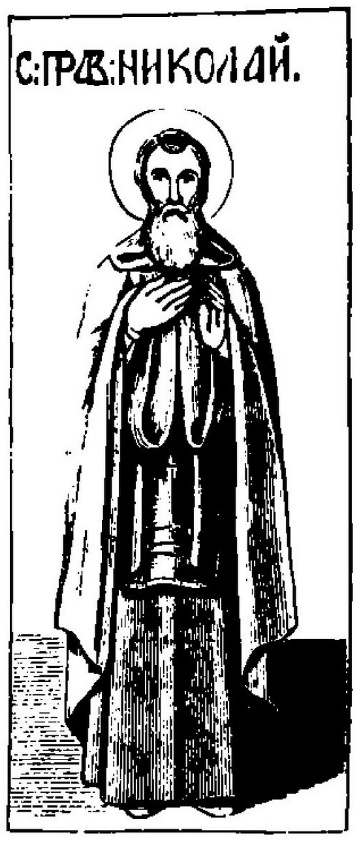
Св. преподобно-муч. Евгении девицы, её родителей Филиппа и Клавдии, служителей Прота и Иакинфа и девицы Василлы
St. Venerable Martyr Eugenia the Virgin, her parents Philip and Claudia, the servants Protus and Hyacinth, and the virgin Basilla
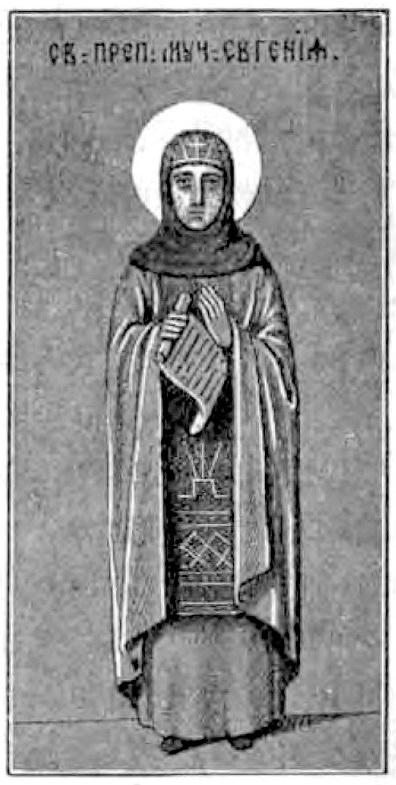
Евгения – Римлянка, дочь знатных родителей – язычников (отец её – Филипп был правителем г. Александрии), отличалась блистательным образованием и привлекательной наружностью; родители её надеялись обеспечить и будущность её посредством блистательного супружества с одним из многочисленных искателей руки её, знатнейших и богатейших людей того общества, к которому принадлежала Евгения.
Eugenia was a Roman, the daughter of noble pagan parents (her father Philip was the governor of the city of Alexandria). She was distinguished by a brilliant education and an attractive appearance. Her parents hoped to secure her future through a brilliant marriage with one of the many suitors for her hand, the most noble and wealthy people of that society to which Eugenia belonged.
Но не увлекалась сама молодая Евгения мечтами ни о замужестве, ни о какой блистательной будущности. Случайно попало в её руки такое чтение, которое произвело переворот в её чувствах и понятиях, и ей стала вдруг чужда её языческая обстановка. Чтение это, а именно: послания св. Апостола Павла, перенесло её душу в совершенно иной, новый для неё и чудный христианский мир. Всей душой полюбила она проповедуемого Павлом Христа и преисполнилась жаждой познания Его. С этой целью искала она случаев сближения с преследуемыми тогда христианами, от которых могла услышать о Христе и просветиться Его учением. Поражённая высоким смыслом христианских песнопений, которые случилось ей выслушать однажды во время её прогулки загородом, Евгения решилась окончательно присоединиться к обществу христиан, и, не надеясь получить на это позволение своих родителей, опасаясь, наоборот, всякого препятствия в этом отношении с их стороны, она, убедив двух домашних слуг, Прота и Иакинфа, последовать за ней и переодевшись в мужское платье ради того, чтобы удобнее было скрываться от поисков за ней, скрылась из родного дома и явилась в мужской монастырь, назвав себя братом сопровождавших её слуг. Все они были приняты и вскоре приняли крещение от христианского епископа Елия, известного святостью своей жизни.
But the young Eugenia herself was not carried away by dreams either of marriage or of any brilliant future. By chance, reading fell into her hands which produced a revolution in her feelings and understanding, and suddenly her pagan surroundings became alien to her. This reading—namely, the epistles of the holy Apostle Paul—transported her soul into a completely different, new and wondrous Christian world. With her whole soul she loved the Christ preached by Paul and was filled with a thirst to know Him. With this aim, she sought opportunities to draw near to the then-persecuted Christians, from whom she could hear about Christ and be enlightened by His teaching. Struck by the lofty meaning of Christian hymns, which she happened to hear one day during a walk outside the city, Eugenia decided finally to join the community of Christians. Not hoping to receive permission from her parents for this, and fearing, on the contrary, every obstacle from them in this regard, she persuaded two household servants, Protus and Hyacinth, to follow her. Disguising herself in men's clothing so that it would be easier to hide from those searching for her, she fled from her parental home and appeared at a men's monastery, calling herself the brother of the servants accompanying her. They were all received and soon accepted Baptism from the Christian bishop Eleus, known for the holiness of his life.
Всецело предавшись иноческому подвижничеству, Евгения достигла такого нравственного совершенства, что по смерти игумена обители единодушно была избрана на его место. Бог подкреплял её в её необычайных трудах и удостоил её дара чудотворений. Исцеляя молитвой больных, она приобрела известность; но слава, достигнутая ею, не могла обойтись без своих обыкновенных последствий: вражды и клеветы...
Having given herself entirely to monastic asceticism, Eugenia attained such moral perfection that after the death of the abbot of the monastery she was unanimously chosen in his place. God strengthened her in her extraordinary labors and granted her the gift of wonderworking. Healing the sick through prayer, she acquired fame; but the glory she attained could not avoid its usual consequences: enmity and slander...
Обратив на себя внимание одной знатной женщины, по имени Меланфии, которую она исцелила от болезни, Евгения подверглась её мстительности за то, что с ужасом отказалась от её кощунственного предложения вступить с ней в незаконный союз, причём бесстыдная женщина предлагала передать мнимому иноку всё своё богатство.
Having drawn the attention of a certain noblewoman named Melanthia, whom she healed from an illness, Eugenia incurred her vengefulness because she recoiled in horror from her blasphemous proposal to enter into an unlawful union with her, the shameless woman even offering to transfer all her wealth to the supposed monk.
– Замолчи, женщина! – с негодованием отозвалась Евгения – на слова Меланфии, – и знай, что не для того мы отрешились от всех благ мирских, чтобы прельститься богатством. Соединение с людьми у нас только – в любви ко Христу, и всё богатство наше – в познании истины.
"Be silent, woman!" Eugenia responded indignantly to Melanthia's words, "and know that we have not renounced all worldly goods in order to be seduced by wealth. Our union with people is only in love for Christ, and all our wealth is in the knowledge of the truth."
Пристыженная и раздражённая до крайней степени Меланфия не остановилась тогда перед самой позорной клеветой, чтобы погубить святую подвижницу, которую она принимала за инока, и принесла на него жалобу, как на желавшего обольстить её...
Shamed and irritated to the utmost degree, Melanthia did not then shrink from the most shameful slander in order to destroy the holy ascetic, whom she took for a monk, and brought a complaint against him, as one who had wished to seduce her...
Тогда-то, чтобы спасти и честь иноческого звания и братий своей обители, которых также успела вовлечь в ответственность злая женщина, так что подвергла их возможности быть замученными при обнаружении исповедания ими христианской веры, Евгения решилась ради изобличения клеветы открыть свою давнюю тайну перед правителем города, всё тем же Филиппом, родным отцом её...
Then, in order to save both the honor of the monastic rank and the brethren of her monastery, whom the evil woman had also succeeded in drawing into responsibility, so that she exposed them to the possibility of being tortured upon the discovery of their confession of the Christian faith, Eugenia decided, for the refutation of the slander, to reveal her long-kept secret before the governor of the city, who was still the same Philip, her own father...
Приведённая к нему на суд и ложно обличённая подкупными свидетелями, она обратилась к нему с следующими словами: «настало время нарушить молчание, которое долго соблюдала я... Настало время высказаться свободно и открыть истину ради обнаружения лжи, взведённой на нас. Не ради тщеславия, но ради славы имени Христова и ради того, чтобы не допустить торжества беззакония над невинностью и незаслуженного поругания над христианами, должна я открыть тайну, которую хотела сохранять до конца моей жизни...
Brought before him for judgment and falsely accused by bribed witnesses, she addressed him with the following words: "The time has come to break the silence which I have long kept... The time has come to speak freely and to reveal the truth for the exposure of the lie brought against us. Not for the sake of vainglory, but for the glory of the name of Christ and in order not to allow the triumph of lawlessness over innocence and undeserved mockery of Christians, I must reveal the secret which I wished to preserve until the end of my life...
«Много лет ты не видал меня, господин мой, правитель, и не узнал во мне под видом инока – родную дочь твою... Но теперь ты должен узнать, что такова сила святого имени Христова, что ею и слабые жёны не уступают в твёрдости сильным мужам, и не полагается между людьми другого различия, кроме степени веры... Все мы – одного духовного естества во Иисусе Христе, перед Которым не полагается различия между мужами и жёнами, как свидетельствует учитель христианский Павел... Потому и я, уверовав во Христа, не усомнилась послужить Ему, избрав деятельность, хотя и превышающую силы слабого женского существа, но утаившую мой путь от внимания тех, кто мог бы воспрепятствовать мне подвизаться на нём... И вот, теперь я открываюсь перед тобой, отец мой, и перед вами, братия мои, Сергий и Авит, присутствующие здесь... Я – Евгения, твоя дочь, отец мой, Филипп, которая ради любви ко Христу отрешилась от всяких земных утешений... А вот и слуги твои, а теперь – братия мои – Прот и Иакинф, которые также пожелали посвятить себя служению Богу истинному».
"For many years you have not seen me, my lord, the governor, and you did not recognize in me, under the guise of a monk, your own daughter... But now you must know that such is the power of the holy name of Christ, that by it even weak women yield not in firmness to strong men, and no other distinction is made among people except the degree of faith... We are all of one spiritual nature in Jesus Christ, before Whom no distinction is made between men and women, as the Christian teacher Paul testifies... Therefore I also, having believed in Christ, did not hesitate to serve Him, choosing a labor, although exceeding the strength of a weak female being, yet concealing my path from the attention of those who might hinder me from striving upon it... And behold, now I reveal myself before you, my father, and before you, my brothers, Sergius and Avitus, who are present here... I am Eugenia, your daughter, my father Philip, who for love of Christ renounced all earthly consolations... And here are your servants, but now my brothers—Protus and Hyacinth—who also desired to dedicate themselves to the service of the true God."
Едва успела высказать это о себе Евгения, как отец её, признав её по мере того, как она говорила, и придя в себя от охватившего его волнения при таком неожиданном открытии, припал к ней, со слезами неописанной, радости обнимаятакую дочь свою... В эту минуту он постиг её христианское совершенство и истину избранного ею пути...
Scarcely had Eugenia finished speaking thus about herself, when her father, recognizing her as she spoke and coming to himself from the agitation that had seized him at such an unexpected discovery, fell upon her, embracing such a daughter of his with tears of indescribable joy... In that moment he comprehended her Christian perfection and the truth of the path she had chosen...
Кто бы мог измерить также и радость матери Евгении – Клавдии, когда, извещённая о случившемся, поспешила она увидать дочь свою, которую уже давно почитала погибшей...
Who could measure also the joy of Eugenia's mother, Claudia, when, informed of what had happened, she hastened to see her daughter, whom she had long considered lost...
Не только родители Евгении, но и весь народ, бывший при этом, восторженно восклицал:
Not only Eugenia's parents, but all the people present at this cried out enthusiastically:
– Велик Христос, Бог христианский! Он один – истинный Бог, творящий чудеса! Открывающий сокровенное, защищающий правду, посрамляющий ложь!
"Great is Christ, the Christian God! He alone is the true God, working wonders! Revealing what is hidden, defending the truth, putting lies to shame!"
Вслед затем правитель Филипп со всем домом своим и множество народа приняли веру Христову. Принуждённый, когда узнали об этом гонители христиан, или отречься от веры христианской или быть отрешённым от звания правителя, Филипп предпочёл последнее, и был тогда поставлен епископом; но не долго послужил он христианам в сане святителя: он был умерщвлён по повелению нового правителя города –Терентия. По смерти Филиппа семья его возвратилась в Рим, где сыновья его поступили на государственную службу, а вдова его, Клавдия, с блаженной дочерью своей Евгениею поселилась в своём имении за городом, где и жили они в трудах распространения веры Христовой. За это, и в особенности за обращение ко Христу одной знатной девицы Василлы, Евгения была предана мукам. Долго, но с непоколебимым мужеством переносила она различные истязания, наконец, была обезглавлена вместе с Василлой в самый день Рождества Христова в 262 г. – Клавдия похоронила дочь свою в своём загородном имении, и сама скончалась вскоре после того, быв предупреждена во сне о своей кончине дочерью своей, мученицей Евгенией.
Immediately afterward, the governor Philip, with all his household, and a multitude of the people accepted the faith of Christ. Forced, when the persecutors of Christians learned of this, either to renounce the Christian faith or to be removed from the office of governor, Philip chose the latter, and was then appointed bishop; but he did not long serve Christians in the rank of hierarch: he was put to death by order of the new governor of the city, Terentius. After Philip's death, his family returned to Rome, where his sons entered state service, while his widow, Claudia, together with her blessed daughter Eugenia, settled on her suburban estate, where they lived in labors for the spread of the faith of Christ. For this, and especially for the conversion to Christ of a certain noble maiden, Basilla, Eugenia was delivered up to torments. For a long time, but with unshakable courage, she endured various tortures; finally, she was beheaded together with Basilla on the very day of the Nativity of Christ in the year 262. Claudia buried her daughter on her suburban estate, and herself reposed soon afterward, having been forewarned in a dream of her end by her daughter, the martyr Eugenia.
Вместе с Евгенией были обезглавлены и бывшие при ней Прот и Иакинф за то, что не хотели принять участие в жертвоприношении язычникам.
Together with Eugenia, Protus and Hyacinth, who were with her, were also beheaded because they would not take part in sacrifice to the pagans.
«О Проте и Иакинфе упоминается в стихотворениях папы Дамаса. Гробы их открыты при этом папе в 366 г. и над ними выстроена была вскоре после того церковь. В настоящее время мощи Прота почивают в Риме, в церкви И. Предтечи у Флорентинцев; мощи Иакинфа – в церкви св. Ап. Павла, Остийской; мощи Евгении – в церкви 12-ти Апостолов; мощи Василлы – в церкви Пракседы»357.
"Protus and Hyacinth are mentioned in the poems of Pope Damasus. Their tombs were uncovered under this pope in the year 366, and a church was soon built over them. At the present time, the relics of Protus rest in Rome, in the church of St. John the Forerunner of the Florentines; the relics of Hyacinth, in the church of the holy Apostle Paul, Ostian; the relics of Eugenia, in the church of the Twelve Apostles; the relics of Basilla, in the church of Praxedes."357