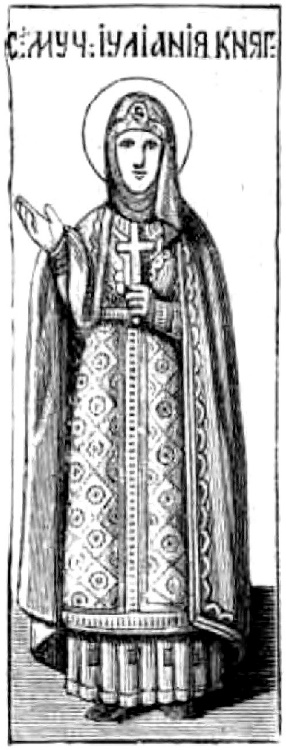
Иулиания, дочь знатных и богатых родителей, язычников, живших в Вифинии в конце III в., в малолетстве ещё была обручена ими за одного юношу, также знатного рода, и язычника, именем Елевсия.
Juliana was the daughter of noble and wealthy pagan parents living in Bithynia at the end of the third century. In her childhood, she was betrothed by them to a youth, also of noble birth and a pagan, named Eleusius.
Между тем, придя в возраст, она имела случай просветиться верой в истинного Бога, услышав проповедь о Христе, и тогда устрашилась соединить судьбу свою с идолопоклонником. Поэтому, когда наступило ей время выйти замуж, то она написала Елевсию, что если он не уверует в Бога-Христа, Которому она служит, то пусть ищет себе другую невесту.
Meanwhile, upon coming of age, she had occasion to be enlightened in the faith of the true God, having heard the preaching about Christ, and she then feared to unite her fate with an idolater. Therefore, when the time came for her to marry, she wrote to Eleusius that if he did not believe in the God-Christ, Whom she served, then he should seek another bride.
Сообщив об этом родителям Иулиании, Елевсий вместе с ними убеждал её к отречению от веры в распятого Христа, но никакие просьбы, ни убеждения не могли склонить молодую христианку сделаться отступницей от Того, Кому она предалась безвозвратно с той минуты, как узнала Его.
Having informed Juliana's parents of this, Eleusius, together with them, urged her to renounce her faith in the crucified Christ, but neither entreaties nor persuasions could incline the young Christian woman to become an apostate from the One to Whom she had irrevocably given herself from the moment she came to know Him.
Доведённый до ярости тем, что ему казалось непонятным упрямством со стороны Иулиании, отец её отнёсся к ней со зверской жестокостью, беспощадно бил и, наконец, избитую представил на суд Елевсию, который в это время уже состоял в звании епарха. Обрадовался он сначала возможности отомстить отвергнувшей его невесте, но тронутый, когда снова увидел Иулианию, отличавшуюся поразительной красотой, Елевсий снова стал умолять её соединиться с ним, обещая ей никогда не принуждать её поклоняться языческим богам...
Driven to fury by what seemed to him an incomprehensible stubbornness on Juliana's part, her father treated her with savage cruelty, beat her mercilessly, and finally, having beaten her, presented her for judgment before Eleusius, who at that time already held the rank of eparch. He was at first glad of the opportunity to take revenge on the bride who had rejected him, but, moved when he again saw Juliana, who was distinguished by striking beauty, Eleusius again began to beseech her to unite with him, promising never to force her to worship the pagan gods...
– Согласился бы я на это, моя возлюбленная, – возразил Елевсий, – если бы не опасался, что, узнав об этом, император лишит меня не только сана, но и жизни...
"I would agree to this, my beloved," Eleusius objected, "if I were not afraid that, learning of this, the emperor would deprive me not only of my rank but also of my life..."
– Если ты смертного и временного царя своего опасаешься, то как же могу я не страшиться моего Царя бессмертного, владычествующего над всеми людьми и над земными царями, и как могу соединиться брачным союзом с врагом Его? Обратись к Богу моему, а иначе – поступай со мной, как хочешь... никакие пытки не заставят меня отступиться от Него...
"If you fear your mortal and temporal emperor, how can I not fear my immortal King, Who rules over all men and over earthly kings, and how can I unite in marriage with His enemy? Turn to my God, or else—do with me as you will... no tortures will force me to renounce Him..."
И действительно, ни мольбы, ни угрозы, ни истязания самые бесчеловечные не могли победить неустрашимую исповедницу имени Христова. Обнажённую, перевязанную верёвками, били её сначала сухими жилами, потом повесили за волосы, так что кожа с волосами отделялась от головы; в то же время терзали её тело острым железом, и замученную, едва живую бросили в темницу. Но сердце мученицы горело молитвой, и неземная отрада превозмогала телесную боль. На другой день Иулиания снова была взята на мучения, но подкрепляемая истинно Божественною силой, она и в огне пребывала невредимой.
And indeed, neither entreaties, nor threats, nor the most inhuman torments could overcome the fearless confessor of the name of Christ. Stripped naked and bound with ropes, they beat her first with dry sinews, then hung her by the hair, so that the skin and hair were torn from her head; at the same time, they lacerated her body with sharp iron, and, tormented and barely alive, they cast her into prison. But the heart of the martyr burned with prayer, and an unearthly solace overcame the bodily pain. The next day, Juliana was again taken for torments, but, strengthened by a truly Divine power, she remained unharmed even in the fire.
Поражённый сверхъестественной силой, с которой мученица переносила испытания, превышающие силы человеческие, народ славил Бога Иулиании, творящего чудеса, и, воодушевлённый восторгом, исповедовал Христа, единого Бога истинного. Уверовавших во время страданий Иулиании оказалось до 630 человек. Все они немедленно были усечены мечом, приняв таким образом крещение в своей крови... Наконец, Иулиания была обезглавлена, как полагают иные, в 290 г., а другие – в 304 г. Останки её были погребены христианами, и над ними выстроена церковь285.
Struck by the supernatural strength with which the martyr endured trials beyond human power, the people glorified Juliana's God, Who worked miracles, and, inspired with rapture, confessed Christ as the one true God. Those who came to believe during Juliana's sufferings numbered up to 630 persons. All of them were immediately put to the sword, thus receiving baptism in their own blood... Finally, Juliana was beheaded, as some suppose, in the year 290, and others, in 304. Her remains were buried by Christians, and a church was built over them285.
Слава св. муч. Иулиании на Западе велика, и части мощей её находятся во многих странах. И православная Церковь чествует её, воспевая ей:
The glory of St. Juliana the Martyr is great in the West, and particles of her relics are found in many countries. And the Orthodox Church honors her, singing to her:
«Девства добротами преочищенна, девице, и мучения венцы Иулиания ныне венчавшися, даеши сущим в нуждах и недугах исцеление и спасение; приступающим к раце Твоей и Божественную благодать Христос источает и жизнь вечную».
"Having been purified by the beauties of virginity, O virgin, and now crowned with the crowns of martyrdom, Juliana grants healing and salvation to those in needs and infirmities; to those who approach your reliquary, Christ pours forth Divine grace and eternal life."
Акты св. мученицы Иулиании и пострадавших с нею 500 мужей и 160 жён признают весьма древними, написанными до нашествия лонгобардов286.
The Acts of St. Juliana the Martyr and those who suffered with her, 500 men and 160 women, are considered very ancient, written before the invasion of the Lombards286.
Память святого Фемистокла, уроженца Мир Ливийских и пастыря овец. В гонение Декия (249–251) спрошенный о некоем Диоскориде. скрывшемся в горах от мучителей, не видал ли его, отозвался отрицательно, исповедав себя христианином, схвачен и подвергнут пыткам (бит по чреву, влачим по острому железу) и наконец обезглавлен.
Commemoration of St. Themistocles, a native of Myra in Lycia and a shepherd of sheep. During the persecution of Decius (249–251), being asked about a certain Dioscorides, who had hidden in the mountains from the tormentors, whether he had seen him, he answered in the negative, confessing himself a Christian, was seized and subjected to tortures (beaten on the belly, dragged over sharp iron) and finally beheaded.
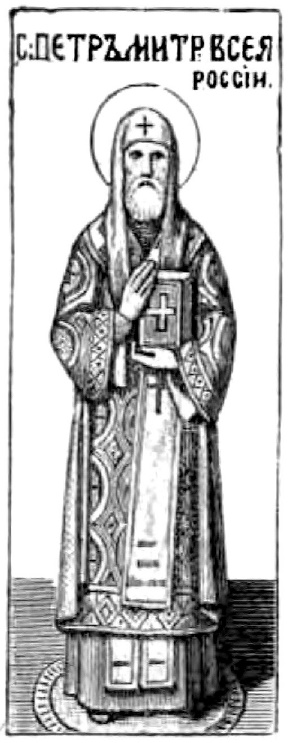
Блаженный Пётр, так пишет м. Киприан287, родился в земле Волынской от благоговейных родителей. Отец его именовался Феодором288. Мать его, женщина благочестивая и Богобоязненная, имела видение прежде рождения Петра, когда он ещё младенцем был в её чреве. На рассвете воскресного дня снилось ей, что она держит в руках агнца, между рогами коего выросло дерево, пышно одетое листьями, со множеством цветов и плодов, а между плодами горели свечи, и от них исходило благоухание. Проснувшись, мать недоумевала о чудном видении. Впоследствии Господь оправдал видение, обогатив Своими дарами сына её. До семи лет Пётр рос в доме отца и потом отдан был родителями учиться книгам. Он учился прилежно; но учение шло не успешно. Это печалило родителей и сына. Раз во сне видит он мужа в святительской одежде, который, став близ него, сказал: «чадо моё! открой уста твои;» когда же открыл их, святитель прикоснулся языка его и, благословив, как-бы влил сладость в уста его. Отрок проснулся, но никого не видел. С того времени, что писал учитель его, изучал он легко и в короткое время превзошёл своих товарищей успехами.
The blessed Peter, as Metropolitan Cyprian writes287, was born in the land of Volhynia to pious parents. His father was named Theodore288. His mother, a pious and God-fearing woman, had a vision before Peter's birth, while he was still an infant in her womb. At dawn on a Sunday, she dreamed that she held in her hands a lamb, between whose horns a tree had grown, luxuriantly clothed with leaves, with many flowers and fruits, and among the fruits candles burned, from which a fragrance emanated. Upon awakening, the mother wondered at the wondrous vision. Later, the Lord justified the vision, enriching her son with His gifts. Until the age of seven, Peter grew up in his father's house and was then sent by his parents to study books. He studied diligently, but his learning did not progress successfully. This grieved both parents and son. Once, in a dream, he saw a man in hierarchal vestments, who, standing near him, said: "My child! Open your mouth;" and when he opened it, the hierarch touched his tongue and, blessing him, as it were poured sweetness into his mouth. The youth awoke, but saw no one. From that time, whatever his teacher wrote, he learned easily, and in a short time surpassed his companions in progress.
Двенадцати лет отрок удалился в один из монастырей, близкий к месту рождения его, и принят был игуменом в число братии; здесь он был послушным во всём духовному отцу; окрепши силами, носил воду на плечах, мыл братские власяницы, зимой и летом не оставляя своего послушания: первый по звону церковному приходил в церковь и в храме стоял, не прислоняясь к стене. – По воле настоятеля, удостоен он диаконства и потом пресвитерства. Он научился и писанию св. икон. Это было для него занятием весьма приятным. Занимаясь изображением святых, проливал он слёзы молитвы и умиления, при мыслях о своей нищете и высоте святости Божией. – Человек Божий усердно писал иконы, а настоятель раздавал братии и христолюбивым мирянам, посещавшим обитель; одних это утешало и ободряло к молитве, других располагало благодетельствовать обители пожертвованиями нужного для жизни.
At the age of twelve, the youth withdrew to one of the monasteries near his birthplace, and was received by the abbot into the brotherhood; here he was obedient in all things to his spiritual father. Having grown stronger, he carried water on his shoulders, washed the brothers' hair-shirts, and in winter and summer did not abandon his obedience: he was the first, at the church bell, to come to church, and in the temple he stood without leaning against the wall. By the will of the abbot, he was deemed worthy of the diaconate and then the priesthood. He also learned the writing of holy icons. This was a very pleasing occupation for him. While engaged in depicting the saints, he shed tears of prayer and tenderness, at the thought of his own poverty and the height of God's holiness. The man of God diligently painted icons, and the abbot distributed them to the brethren and to Christ-loving laymen who visited the monastery; some were comforted and encouraged to prayer, others were disposed to benefit the monastery with donations of necessities for life.
После многолетних подвигов в общежитии, по благословению настоятеля, вышел он из обители на подвиги уединения. «Обойдя окрестности, нашёл он безмолвное место на р. Рате. – Тут поставил он себе келью и много перенёс трудов. Тут воздвиг церковь во имя Спаса нашего Иисуса Христа и поставил кельи для приходящей к нему братии289. – Не мало иноков в короткое время собралось к нему; как чадолюбивый отец, заботился он о их спасении, наставляя их не только словом, но ещё более примером, выставляя из себя не старейшину братии, а последнего из всех. – Никогда не раздражался он на согрешавших, но тихо увещевал умилительным словом. – Он был так милостив, что никогда просящего именем Божиим или странника не отпускал с пустыми руками, а всё подавал, что только обреталось у него. Если не имел чего другого, то раздавал свои иконы, или отдавал свою власяницу. – Слава о праведной жизни его дошла до князя и вельмож страны Волынской и Галицкой, которая тогда цвела славой и богатством. – Князь и бояре дивились человеку Божию и с любовью приходили слушать наставление его. – Когда митрополит Максим из Владимира посещал Русскую землю, поучая народ по уставу, – пришёл и человек Божий Пётр со своей братией принять благословение у святителя и принёс ему образ Успения Владычицы, который сам писал; святитель с любовью принял образ Пречистой, украсил его золотом и дорогими камнями и до конца жизни благоговейно хранил у себя в кельи, днём и ночью молясь сей иконе о спасении вверенной ему земли Русской».
After many years of ascetic labors in the cenobitic life, with the blessing of the abbot, he left the monastery for the labors of solitude. "Having surveyed the surrounding area, he found a silent place on the River Rata. There he built himself a cell and endured many labors. There he erected a church in the name of our Savior Jesus Christ and built cells for the brethren who came to him289. Not a few monks gathered to him in a short time; like a loving father, he cared for their salvation, instructing them not only by word but even more by example, presenting himself not as the elder of the brethren, but as the last of all. He never grew angry at those who sinned, but gently admonished them with a touching word. He was so merciful that he never sent away anyone asking in the name of God, or a stranger, with empty hands, but gave whatever he had. If he had nothing else, he distributed his own icons, or gave away his own hair-shirt. The fame of his righteous life reached the prince and nobles of the land of Volhynia and Galicia, which then flourished in glory and wealth. The prince and boyars marveled at the man of God and lovingly came to hear his instruction. When Metropolitan Maximus from Vladimir visited the Russian land, teaching the people according to the rule, the man of God Peter came with his brethren to receive the blessing of the hierarch and brought him an icon of the Dormition of the Lady, which he himself had painted; the hierarch lovingly received the icon of the Most Pure One, adorned it with gold and precious stones, and until the end of his life reverently kept it in his cell, praying day and night before this icon for the salvation of the Russian land entrusted to him."
Когда преставился благочестивый святитель Максим во Владимире, игумен Геронтий дерзнул на восхищение святительства, тогда как всякий дар даётся отцом Небесным. – Одержимый недугом властолюбия и самочиния, он взял утварь святительскую, пастырский жезл и ту икону, которую писал блаженный Пётр, и отправился с некоторыми сановными в Царьград. Галицкий князь Юрий негодовал на самоволие Геронтия, тем более, что на Волыни, недовольные удалением кафедры из Киева в дальний Владимир, желали видеть митрополита где-либо на юге; особенно же князь Юрий хотел, чтобы митрополия была в Галиче. Князь Юрий был могущественный: владея всей Галицией, он именовался царём Руси290. – Он просил блаж. Петра идти в Царьград и просить у патриарха митрополита для юга. Долго блаж. Пётр не соглашался на то, и когда согласился, то не знал того, что ему самому назначен высокий сан. Князь тайно написал прошение к святейшему о рукоположении Петра на святительский престол; для большего же успеха в своём деле отправил от себя особого посла к патриарху вместе с игуменом Петром. Пётр и Геронтий отправились в Царьград из разных пристаней приморских. Плавание Геронтия было несчастное: поднялась буря, и ветры задерживали ход корабля. – Кораблю же Петрову, плывшему по другой полосе Чёрного моря, благоприятствовал тихий ветер попутный, и он скоро достиг Цареграда. – Во время бури ночью явилась Геронтию Матерь Божия и строго сказала: «напрасно трудишься; сан святительский не достанется тебе; тот, кто написал Меня, Ратский игумен Пётр, возведён будет на престол Русской митрополии». – Геронтий в страхе пробудился и потом говорил бывшим с ним: «напрасно мы трудимся, – не получим, чего желаем». Патриаршую кафедру св. Софии занимал тогда Афанасий, муж чудный по добродетелям. – Когда явился к нему блаженный Пётр, – храм наполнился благоухания. – Патриарх духом уразумел, что это для блаж. Петра и принял его с любовью. Узнав причину прибытия его, созвал собор; блаженный Пётр провозглашён митрополитом не одной южной, а всей России. – «Слышал я, говорит св. Киприан, от некоторых в Цареграде, за истину передавших мне, что во время посвящения лицо Петра просветилось, как-бы лучами солнечными, так что все служившие с патриархом изумились. Первосвятитель, убеждённый в святости человека Божия, пророчески сказал всему собору: «истинно повелением Божиим пришёл к нам дивный муж, и благодатью Божией он хорошо упасёт вверенное ему стадо». – Геронтий приплыл в Царьград уже спустя несколько дней после посвящения Петра. – Невольно рассказал он патриарху свой сон. Патриарх, сделав ему строгое обличение, передал блаж. Петру утварь святительскую с жезлом и иконой Богоматери.
When the pious Hierarch Maxim reposed in Vladimir, Abbot Gerontius presumed to seize the episcopal dignity, though every gift is given by the Father of Heaven. — Possessed by the malady of love of power and self-will, he took the episcopal vestments, the pastoral staff, and that icon which the blessed Peter had painted, and set off with certain dignitaries for Constantinople. Prince Yuri of Galicia was indignant at Gerontius's self-will, the more so because in Volhynia, dissatisfied with the removal of the see from Kiev to distant Vladimir, they wished to see the metropolitan somewhere in the south; and especially did Prince Yuri desire that the metropolis be in Galich. Prince Yuri was powerful: ruling all of Galicia, he was called Tsar of Rus'290. — He asked the blessed Peter to go to Constantinople and to request of the patriarch a metropolitan for the south. For a long time the blessed Peter did not agree to this, and when he did agree, he did not know that the high rank was appointed for him himself. The prince secretly wrote a petition to His Holiness concerning the ordination of Peter to the episcopal throne; and for greater success in his affair he sent a special envoy of his own to the patriarch together with Abbot Peter. Peter and Gerontius set off for Constantinople from different maritime harbors. Gerontius's voyage was unfortunate: a storm arose, and the winds held back the ship's progress. — But Peter's ship, sailing along another stretch of the Black Sea, was favored by a gentle following wind, and he soon reached Constantinople. — During the storm, at night, the Mother of God appeared to Gerontius and said sternly: "In vain you labor; the episcopal rank shall not fall to you; he who painted Me, the Ratsk Abbot Peter, shall be raised to the throne of the Russian Metropolis." — Gerontius awoke in terror and afterwards said to those with him: "In vain do we labor — we shall not obtain what we desire." The patriarchal see of St. Sophia was then occupied by Athanasius, a man wondrous in virtues. — When the blessed Peter appeared before him, the church was filled with fragrance. — The patriarch understood in spirit that this was for the blessed Peter's sake and received him with love. Having learned the reason for his arrival, he convened a council; the blessed Peter was proclaimed metropolitan not of the south alone, but of all Russia. — "I have heard," says St. Cyprian, "from certain ones in Constantinople, who truthfully related it to me, that at the time of his consecration Peter's face was illumined as if by rays of the sun, so that all who served with the patriarch were amazed. The First Hierarch, convinced of the holiness of the man of God, said prophetically to the whole council: 'Truly by the command of God this wondrous man has come to us, and by the grace of God he will well shepherd the flock entrusted to him.'" — Gerontius arrived in Constantinople only several days after Peter's consecration. — Involuntarily he related his dream to the patriarch. The patriarch, having given him a strict rebuke, handed over to the blessed Peter the episcopal vestments with the staff and the icon of the Mother of God.
Св. Пётр прибыл из Цареграда в Киев в том же 1308 г., в котором был посвящён, а в следующем году переехал во Владимир, где предшественником его поставлена была кафедра митрополита всей России. Здесь в июне 1309 г. посвятил он Новгород. архиеп. Давида. – Вслед затем отправился он осматривать епархии и в конце июля был в Новгороде. – Зимой следующего года видим его. в Брянске. Удельный князь сего города был изгнан дядей Святославом; но, выпросив помощь у хана, ввёл с собою Татар против дяди. Кроткий святитель убеждал Святослава поделиться княжением с племянником, или совсем отказаться от Брянска, чтобы не проливать крови христианской. Святослав не хотел ни того, ни другого, и потерял в сражении жизнь. Татары ворвались в город, и св. Пётр принуждён был искать себе безопасности в церкви291.
St. Peter arrived from Constantinople in Kiev in the same year 1308, in which he was consecrated, and in the following year moved to Vladimir, where his predecessor had established the see of the metropolitan of all Russia. Here, in June 1309, he consecrated David as Archbishop of Novgorod. — Immediately afterwards he set out to inspect the dioceses and at the end of July was in Novgorod. — In the winter of the following year we see him in Bryansk. The appanage prince of that city had been expelled by his uncle Svyatoslav; but, having obtained help from the khan, he brought Tatars in against his uncle. The meek hierarch urged Svyatoslav to share the principality with his nephew, or to give up Bryansk altogether, so as not to shed Christian blood. Svyatoslav wanted neither one nor the other, and lost his life in battle. The Tatars burst into the city, and St. Peter was compelled to seek safety for himself in the church291.
Тогда как святитель с такой любовью заботился о покое и спасении паствы своей, против него восстал Тверской епископ Андрей. По всей вероятности, Андрею, происходившему из дама Литовских князей, хотелось занять кафедру митрополита. Знатность рода его и неудовольствие некоторых на избранного югом митрополита поддерживали в нём мечту о высшем сане. – Он тайно послал к патриарху донос на св. Петра. Патриарх изумлён был доносом, но послал доверенное лицо исследовать на месте дело. – «Священнейший митрополит Киевский и всея России!» так писал святейший Афанасий, «возлюбленный во Св. Духе брат и сослужитель нашего смирения! Избранием Св. Духа поставлен ты пастырем и учителем словесного стада Христова. Но вот из вашего племени и твоей области дошли до моего слуха слова тяжкие о тебе. Они смутили мою мысль. Постарайся очистить и исправить дело». Св. Пётр принял искушение с надеждой на Бога, защитника невинных. Составился собор в северном Переяславле. Здесь были между прочими «Боголюбивый Ростовский епископ Симеон и преп. Прохор, тогда игумен». Это было без сомнения во второй половине 1310 г., так как блажен. п. Афанасий в начале 1311 г. уже отказался от кафедры и игумен Прохор, присутствовавший на соборе, в 1311 г. посвящён в Ростовского епископа. На соборе были, кроме других князей, и сыновья в. князя Александр и Димитрий. Но благочестивый в. князь Михаил не захотел быть свидетелем унижения первосвятителя России292. Кн. Курбский писал, что в. князю известно было содержание доноса Андреева на св. Петра, но он не счёл себя в праве рассматривать это дело293. Когда же на соборе прочитан был донос, то произошло сильное волнение между присутствовавшими. Против тех немногих, которые хотели доверять доносу, восстали другие с полным негодованием, указывая на нелепость обвинения, очевидную для знающих святителя Божия. – Кроткий святитель, желая прекратить волнение, сказал: «братия! я не лучше прор. Ионы; если из-за меня такое смятение, выбросьте меня из среды вашей». – Все потребовали на лицо доносителя, чтобы или доказал он справедливость доноса, или подвергнут был строгому осуждению за клевету. – Легкомысленный Андрей увидал себя в невыгодном положении: на клеветника восстал весь собор. Но его принял под свою защиту св. Пётр. «Мир тебе, чадо», сказал святитель. «Не ты виноват, а древний ненавистник людей, диавол. Отныне берегись лжи. Прошедшее да простит тебе Бог»294.
While the hierarch with such love cared for the peace and salvation of his flock, Andrew, Bishop of Tver, rose up against him. In all likelihood, Andrew, who came from the line of Lithuanian princes, desired to occupy the metropolitan see. The nobility of his lineage and the displeasure of some at a metropolitan chosen from the south supported in him the dream of the higher rank. — He secretly sent a denunciation of St. Peter to the patriarch. The patriarch was astonished at the denunciation, but sent a trusted person to investigate the matter on the spot. — "Most sacred Metropolitan of Kiev and all Russia!" thus wrote the Most Holy Athanasius, "beloved in the Holy Spirit, brother and fellow-servant of our humility! By the election of the Holy Spirit you have been appointed pastor and teacher of the verbal flock of Christ. But behold, from your people and your region heavy words about you have reached my hearing. They have troubled my mind. Strive to clear and correct the matter." St. Peter received the temptation with hope in God, the defender of the innocent. A council was convened in northern Pereyaslavl. Present here, among others, were "the God-loving Simeon, Bishop of Rostov, and the Venerable Prochorus, then abbot." This was without doubt in the second half of 1310, since the blessed Patriarch Athanasius at the beginning of 1311 already resigned the see, and Abbot Prochorus, who was present at the council, was consecrated Bishop of Rostov in 1311. At the council were present, besides other princes, the sons of the Grand Prince, Alexander and Demetrius. But the pious Grand Prince Michael did not wish to be a witness to the humiliation of the First Hierarch of Russia292. Prince Kurbsky wrote that the Grand Prince knew the contents of Andrew's denunciation of St. Peter, but did not consider himself entitled to examine this matter293. When the denunciation was read at the council, a strong commotion arose among those present. Against the few who wished to trust the denunciation, others rose up with complete indignation, pointing to the absurdity of the accusation, evident to those who knew the hierarch of God. — The meek hierarch, wishing to put an end to the commotion, said: "Brethren! I am no better than the Prophet Jonah; if because of me there is such turmoil, cast me out from among you." — All demanded that the accuser be brought forward, that he either prove the justice of the denunciation or be subjected to strict condemnation for slander. — The frivolous Andrew saw himself in an unfavorable position: the whole council rose up against the slanderer. But St. Peter took him under his protection. "Peace be to you, child," said the hierarch. "It is not you who are guilty, but the ancient hater of men, the devil. From now on beware of falsehood. May God forgive you the past"294.
После того как невинность св. Петра торжественно признана была собором, св. митрополит предложил собору о незаконных поступках Саранского епископа Измаила. Летопись, говоря, что Измаил лишён был сана, не показывает, за какие вины наказан он295. – За то блаж. Феогност пишет, что св. м. Пётр писал грамоту на Чёрный Яр о пределах Сарайской и Рязанской епархий и что о том же предмете объявлено было определение м. Максима296. После сего несомненно, что Измаил, вопреки соборному решению, по корыстным расчётам, причислял к своей епархии Церкви, принадлежащие к Рязанской епархии, а не желал трудиться на новой ниве своей, по Хопру и низовьям Дона. Святитель Пётр признавал такие поступки Измаила тем более преступными, что в низовьях Дона угрожали православию происки папизма: вскоре после того (в 1318 году) папа назначил в Кафу (Феодосию) своего бискупа, и епархию его простёр от Чёрного моря до России и от Болгарии до Волги297. Святитель Пётр на место низложенного Измаила посвятил (в 1312 г.) «в епископа Сараю и странам Донским» Варсонофия298.
After the innocence of St. Peter was solemnly recognized by the council, the holy metropolitan brought before the council the unlawful acts of Ismail, Bishop of Sarai. The chronicle, saying that Ismail was deprived of his rank, does not show for what offenses he was punished295. — But the blessed Theognostus writes that St. Metropolitan Peter wrote a charter to Cherny Yar concerning the boundaries of the Sarai and Ryazan dioceses, and that on the same subject the decision of Metropolitan Maxim had been declared296. After this it is beyond doubt that Ismail, contrary to the council's decision, out of covetous calculations, annexed to his diocese churches belonging to the Ryazan diocese, and did not wish to labor on his new field, along the Khoper and the lower Don. Hierarch Peter regarded such acts of Ismail as all the more criminal in that in the lower Don the intrigues of papism threatened Orthodoxy: soon after that (in 1318) the pope appointed his bishop in Kaffa (Theodosia), and extended his diocese from the Black Sea to Russia and from Bulgaria to the Volga297. Hierarch Peter, in place of the deposed Ismail, consecrated (in 1312) "Barsanuphius as bishop of Sarai and the Don regions"298.
В 1312 г. умер хан Тохтагу и на престол взошёл Узбек, принявший магометанство. К новому хану надлежало явиться вместе с в. князем митрполиту, чтобы испросить подтверждение правам духовенства, тем более, что эти права подвергались разным оскорблениям со стороны дикого произвола даже христиан. К тому же надобно было предупредить и происки послов папы у хана. Посольство святителя увенчалось успехом. Святитель принят был Узбеком с почестью и без Монгольской проволочки отпущен был из Орды299, а с в. кн. Михаилом прислана была милостивая грамота хана митрополиту Петру300.
In 1312 Khan Tokhta died, and Uzbek, who had embraced Mohammedanism, ascended the throne. It was necessary for the metropolitan to appear before the new khan together with the Grand Prince, to request confirmation of the rights of the clergy, the more so because these rights were subjected to various insults from wild arbitrariness, even of Christians. Moreover, it was necessary to forestall the intrigues of the pope's envoys at the khan. The hierarch's embassy was crowned with success. The hierarch was received by Uzbek with honor and was dismissed from the Horde without Mongol delay299, and with the Grand Prince Michael a gracious charter of the khan was sent to Metropolitan Peter300.
Более, чем вероятно, что эта грамота составлена была по записке, оставленной святителем в Орде кн. Михаилу: так видно по исчислению предметов и лиц церковного ведомства и по указанию на грамоты князей и церковные законы. – По содержанию своему, это – самая замечательная из грамот, какие давались ханами для Русской Церкви. – В ней не только ограждена личная свобода духовных лиц с правом на владение имуществами, но ограждена свобода святой веры угрозой смертной казни оскорбителям её, признана независимость церковного управления. – Вот эта замечательная грамота!
More than likely, this charter was composed according to a memorandum left by the hierarch in the Horde for Prince Michael: this is evident from the enumeration of the subjects and persons of the ecclesiastical administration and from the reference to the charters of the princes and church laws. — By its content, this is the most remarkable of the charters given by khans for the Russian Church. — In it not only is the personal freedom of clergy secured with the right to hold property, but the freedom of the holy faith is secured by the threat of death penalty to its offenders, and the independence of church administration is recognized. — Here is this remarkable charter!
«Вышнего Бога силой и милостью Узбеково слово всем нашим князьям301... Пусть никто не обижает на Руси соборной Церкви митрополита Петра, его людей и людей церковных. Пусть не касаются ни имений, ни людей. Митрополит Пётр заведует своими людями, судит их и управляет ими, во всех случаях: в разбое, в поличном, в воровстве; во всех делах ведает один митрополит Пётр, или кому он прикажет. – Пусть все повинуются ему, пусть слушают его церковные причты, согласно с изначальными законами их и по прежним грамотам царей наших. Пусть никто не вступается в церковную собственность митрополита; это – собственность Божия. Если кто вступится и нарушит наше слово, тот будет под гневом Божиим и от нас наказан будет смертью. Митрополит имеет спокойно и свободно устроять, судить и приводить в порядок церковные дела, сам или через доверенных. Ни мы, ни дети наши, ни князья нашего царства и всех улусов наших не будут вступаться ни во что церковное и митрополичье, ни в города, ни в волости, ни в сёла, ни в ловли, ни в борти, ни в земли, ни в сады, ни и в мельницы, ни в стада. Всеми имениями церковными, людями, причтами, всеми старыми уложениями и законами заведует митрополит, или кому он прикажет. – Пусть митрополит живёт спокойно и молит Бога за нас и наших детей. Мы управляем и жалуем, как и прежние цари, дававшие им ярлыки. И мы теми же ярлыками жалуем, чтобы нас Бог помиловал. – Мы оберегаем Божие и данного Богу не отнимаем. – Кто берёт Божие, тот будет в вине перед Богом, гнев Божий будет на нём и от нас смертная казнь. Когда поедут наши баскаки, таможенные даньщики, писцы: пусть по этому нашему ярлыку остаются неприкосновенными и без оскорбленья все церкви митрополита, и все люди его, архимандриты, игумены, священники и все церковные причты. – Будут ли брать дань для нас или другое что, тамгу ли, поплужное, ям, мостовщину, ловитву, или прикажем собирать войско на нашу службу: с соборной церкви митрополита Петра, с людей его и со всего его причта пусть никто не берёт. – Они молят за нас Бога, охраняют и укрепляют наше войско. – Кто и прежде нас не знал того, что силой и волей бессмертного Бога все живут и воюют? Все знают это. По грамотам прежних царей и мы выдаём жалованную грамоту, не изменяя прежнего пути. Какой есть закон у них и по закону церкви, монастыри, часовни: пусть не портят того и не хулят. Кто станет хулить или осуждать веру: извинения тому нет, умрёт злой смертью. Если у священников и диаконов брат и сын живут вместе с ними в одном доме и один едят хлеб: то и на тех простирается наше жалованье. – Если же кто вышел от них, митрополиту не служит и живёт особо, только с именем поповича: пусть даёт дань. Кто неправым сердцем будет молиться за нас: на том – грех. Так установило наше слово. Такой крепостью утверждено, в заячий год (1315) осеннего первого месяца 4 ветха (сентября 19 ч.)»302.
«By the power and mercy of the Most High God, the word of Uzbek to all our princes301... Let no one offend in Rus' the cathedral Church of Metropolitan Peter, his people, and church people. Let them not touch either the estates or the people. Metropolitan Peter administers his people, judges them, and governs them in all cases: in robbery, in stolen goods, in theft; in all matters Metropolitan Peter alone has jurisdiction, or whomever he commands. – Let all obey him, let his church clergy hearken to him, according to their original laws and according to the former charters of our tsars. Let no one interfere with the church property of the metropolitan; it is the property of God. If anyone interferes and violates our word, he shall be under the wrath of God and shall be punished by us with death. The metropolitan shall peacefully and freely arrange, judge, and bring into order church affairs, himself or through trusted men. Neither we, nor our children, nor the princes of our kingdom and of all our uluses shall interfere in anything ecclesiastical or metropolitan, neither in cities, nor in volosts, nor in villages, nor in hunting grounds, nor in beehives, nor in lands, nor in gardens, nor in mills, nor in herds. All church possessions, people, clergy, all old statutes and laws are administered by the metropolitan, or whomever he commands. – Let the metropolitan live peacefully and pray to God for us and our children. We govern and grant favor, as did the former tsars who gave them charters. And we by the same charters grant favor, that God may have mercy on us. – We protect what is God's and do not take away what is given to God. – Whoever takes what is God's shall be guilty before God; the wrath of God shall be upon him, and from us, the death penalty. When our baskaki, customs tribute-collectors, and scribes travel: let all the churches of the metropolitan and all his people, archimandrites, abbots, priests, and all church clergy remain inviolate and without offense according to this our charter. – Whether they collect tribute for us or anything else, whether tamga, popluzhnoe, yam, bridge-toll, hunting dues, or whether we command troops to be gathered for our service: from the cathedral church of Metropolitan Peter, from his people, and from all his clergy let no one take anything. – They pray to God for us, they guard and strengthen our army. – Who before us did not know that by the power and will of the immortal God all live and wage war? All know this. According to the charters of the former tsars, we too issue a grant charter, not altering the former path. Whatever law they have, and according to church law, monasteries and chapels: let them not destroy or revile these. Whoever shall revile or condemn the faith: there is no excuse for him; he shall die an evil death. If priests and deacons have a brother or son living with them in the same house and eating the same bread: our favor extends to them as well. – But if anyone has departed from them, does not serve the metropolitan, and lives apart, bearing only the name of a priest's son: let him pay tribute. Whoever with an unrighteous heart shall pray for us: on him be the sin. Thus has our word established. By such a decree it is confirmed, in the year of the hare (1315), of the autumn first month, the 4th of the waning (September 19)»302.
В сущности, ханские грамоты не избавляли никого от необузданного произвола диких и гордых степняков: их обуздывал только меч. Тем не менее грамоты, как дело закона самих Монголов, служили некоторой охраной св. вере. Потому благоговейный святитель ожидал грамоты, как милости Божией303. – По молитвам его, ещё прежде чем доставлен был в Россию ярлык Узбека, он утешен был верным знамением милости Божией к бедствующей России, – явлением Богоматерней иконы на Толге, что было в 1314 г.304.
In essence, the khan's charters delivered no one from the unbridled arbitrariness of the wild and proud steppe-dwellers: only the sword restrained them. Nevertheless, the charters, as an act of the law of the Mongols themselves, served as a certain protection for the holy faith. Therefore the reverent hierarch awaited the charter as a mercy of God303. – Through his prayers, even before Uzbek's charter was brought to Rus', he was consoled by a sure sign of God's mercy toward suffering Rus' – the appearance of the Theotokos Icon on the Tolga, which occurred in 1314304.
Святой Пётр пастырски заботился об устроении благочестия в обширной своей пастве. Не смотря ни на немощь свою, ни на тогдашние опасности пути, объезжал он епархии, наставлял всех в вере и святой жизни. – «Он объяснял, говорит современник, писание Евангельское и Апостольское; как Василий Бел., Иоанн Златоуст и Григорий Богослов, так он предлагал учение»305. Это, как очевидно, относится и к письменным и к устным наставлениям святителя.
Saint Peter pastorally cared for the establishment of piety in his vast flock. Not heeding either his infirmity or the dangers of the road at that time, he traveled through the dioceses, instructing all in the faith and holy life. – «He explained, says a contemporary, the Evangelical and Apostolic Scripture; as Basil the Great, John Chrysostom, and Gregory the Theologian, so he offered teaching»305. This, as is evident, refers both to the written and oral instructions of the hierarch.
Великий пастырь имел в своё время нужду обличать и своеволие людей в вере. «В то время, говорит блаженный Киприан, являлся еретик Сеит, который проповедовал противное Церкви Христовой и православной вере. Святой обличил его и за упорство против св. истины предал проклятию, и он исчез». Хотя Сеитами по летописям постоянно называются учители магометанства 306, и Узбек ревностно распространял алкоран между Татарами; но название еретика и отлучение от Церкви показывает, что обличённый св. Петром был такой исповедник христианства, который извращал христианское учение, название же Сеита дано ему конечно за увлечение некоторыми мыслями магометанства. По некоторым известиям, Сеит был Новгородский протопоп и проповедовал против монашеского девства с такой силой, что многие из монахов оставили монашество и вступили в супружество307. По известию блаж. Прохора, святитель «еретика препре, приехавши на прю, и прокля и». – Значит, еретик распространял учение своё и возмущал людей не там, где жил св. Пётр: этим подтверждается известие о Сеите, как о Новгородском протопопе. По словам Нестора видно и то, что обличение Сеита было во время обзора епархий митрополитом. Так несчастный протопоп увлёкся магометанской страстью к чувственной жизни. Название Сеита – меткое название ему и анафема святителя достойно пала на него и увлечённых им иноков308. Конечно, это дело ревнителя чистой св. веры имел в виду пр. Иосиф, когда, оплакивая время жидовствующих, говорил: «отлетели от нас соловьи громогласные, Божественные святители и великие чудотворцы Пётр и Алексий, которые в саду церковном оглашали слух учением православия»309.
The great pastor in his time also had need to rebuke the self-will of people in the faith. «At that time, says blessed Cyprian, there appeared a heretic, Seit, who preached things contrary to the Church of Christ and the Orthodox faith. The saint rebuked him and, for his obstinacy against the holy truth, delivered him to anathema, and he vanished.» Although by the chronicles the Seits are constantly called teachers of Mohammedanism306, and Uzbek zealously spread the Koran among the Tatars; yet the name of heretic and excommunication from the Church shows that the one rebuked by St. Peter was such a confessor of Christianity who distorted the Christian teaching, while the name Seit was given him, of course, for his being carried away by certain thoughts of Mohammedanism. According to some accounts, Seit was a Novgorod protopope and preached against monastic virginity with such force that many of the monks abandoned monasticism and entered into marriage307. According to the account of blessed Prochorus, the hierarch «refuted the heretic, having come to the dispute, and anathematized him.» – This means that the heretic spread his teaching and disturbed the people not where St. Peter lived: this confirms the account of Seit as a Novgorod protopope. From the words of Nestor it is also evident that the rebuke of Seit occurred during the metropolitan's survey of the dioceses. Thus the unfortunate protopope was carried away by the Mohammedan passion for sensual life. The name Seit is an apt name for him, and the anathema of the hierarch worthily fell upon him and upon the monks led astray by him308. Of course, it was this deed of the zealot for the pure holy faith that the Venerable Joseph had in mind when, lamenting the time of the Judaizers, he said: «The loud-voiced nightingales have flown away from us, the divine hierarchs and great wonderworkers Peter and Alexis, who in the church garden filled the ear with the teaching of Orthodoxy»309.
Неизвестно, в каком году «купил Пётр митрополит Алексин место домовое св. Богородицы»310. Но покупка означала, что приобретена земля с постройками, нужная частью для временного пребывания святителя, частью для местного духовного управления. Епископ Прохор, сказав об осуждении Сеита, продолжает: «святой ещё более стал подвизаться в посте и делах милости, наставлял иереев, как пасти овец стада Христова, равно черноризцев и черноризиц, проходя города». – Это значит, что после осуждения Сеита он снова осматривал епархии России для преподания наставлений в вере и благочестии311.
It is unknown in what year «Peter the metropolitan bought the place of Aleksin for the household of the Most Holy Theotokos»310. But the purchase meant that land with buildings was acquired, needed partly for the temporary residence of the hierarch, partly for the local spiritual administration. Bishop Prochorus, having spoken of the condemnation of Seit, continues: «the saint began to strive even more in fasting and works of mercy, instructed the priests how to shepherd the sheep of Christ's flock, likewise monks and nuns, passing through the cities.» – This means that after the condemnation of Seit he again surveyed the dioceses of Rus' to give instruction in faith and piety311.
В 77 главе стоглавника упоминается «о вдовствующих попех поучение иже во святых отца нашего Петра митрополита всея Русии, чудотворца», и предлагается из него правило: «аще у попа умрет попадья и идет в монастырь и стрижется, имеет священство своё паки; аще ли же имет пребывати и любити мирские сласти, да не служит. Аще ли кто имет не слушать моего писанья, будет не благословен и иже приобщаются с ним. Который поп имет упиватися, да не явится священник Христов». – На соборе 1503 г. также свидетельствовались «учением Петра митрополита» о том, чтобы не служили вдовые священники и диаконы312.
In the 77th chapter of the Stoglav, mention is made of «the instruction of our father among the saints, Peter, Metropolitan of All Rus', the Wonderworker, concerning widowed priests», and from it a rule is offered: «if a priest's wife dies and he goes to a monastery and is tonsured, he retains his priesthood again; but if he continues to live and love worldly pleasures, let him not serve. If anyone shall not hearken to my writing, let him be unblessed, and those who commune with him likewise. Whatever priest shall take to drunkenness, let him not appear as a priest of Christ.» – At the Council of 1503, likewise, testimony was given by «the teaching of Metropolitan Peter» that widowed priests and deacons should not serve312.
В первом святитель убеждает христиан проводить время поста в строгом воздержании и молитве и непременно приобщаться св. Таин. Обращаясь к духовным лицам, пишет: «учите духовных детей своих ходить в церковь Божию, приказывайте плакать о грехах своих перед Богом; пусть проводят пост благоговейно, без песней, без объедения и пьянства и приобщаются св. Даров каждый год. Кто не принимает св. Даров: священники! не благословляйте их, не принимайте от них просфор и не ходите в дом их; если не принимающий Даров явится на пир или придёт в братчину: вы, священники, высылайте их вон. – Тот не христианин, кто не принимает Христова Дара... Дети! чтите родных отца и матерь и вы будете жить долго; кто бранит или бьёт отца или матерь: умрёт злой смертью, – смерть грешников люта, говорит Давид... Совершайте крещение, по преданию св. Апостолов, не обливайте водою, а погружайте в воду три раза» ... Далее запрещается духовенству торговать и отдавать в рост деньги, даётся наставление о браке и строго запрещаются поединки. «Чтите духовного отца: он – печать тела твоего. Войдя в церковь, стойте со страхом, слушайте чтение Апостола и Евангелия и всё что поётся. Кто говорит в церкви: это диавол шепчет в уши ваши... Горе непринимающему св. Даров! На что надеется? Кажется человеком Божиим, а не принимает тела Христова?.. Это – псы»313. Лестный привет раскольникам нашего времени!
In the first, the hierarch exhorts Christians to spend the time of the fast in strict abstinence and prayer and to commune without fail of the Holy Mysteries. Addressing the clergy, he writes: «Teach your spiritual children to go to the church of God, command them to weep over their sins before God; let them spend the fast reverently, without songs, without gluttony and drunkenness, and let them commune of the Holy Gifts each year. Whoever does not receive the Holy Gifts: priests! do not bless them, do not accept prosphora from them, and do not go to their house; if one who does not receive the Gifts appears at a feast or comes to a gathering: you, priests, cast them out. – He is not a Christian who does not receive the Gift of Christ... Children! honor your natural father and mother, and you shall live long; whoever reviles or beats his father or mother: he shall die an evil death – the death of sinners is cruel, says David... Perform baptism according to the tradition of the holy Apostles, not by pouring water, but by immersing in water three times»... Further, the clergy are forbidden to trade and to lend money at interest, instruction is given concerning marriage, and duels are strictly forbidden. «Honor your spiritual father: he is the seal of your body. Entering the church, stand with fear, listen to the reading of the Apostle and the Gospel and all that is sung. Whoever speaks in church: it is the devil whispering in your ears... Woe to him who does not receive the Holy Gifts! On what does he rely? He seems a man of God, yet does not receive the body of Christ?.. These are dogs»313. A flattering greeting to the schismatics of our time!
В другом поучении святитель говорит священникам: «поймите, дети, в какое достоинство вы призваны Богом! Апостол Павел пишет: кийждо в звании, в немже призван бысть, в том да пребывает (1Кор.7:20). Вы, дети, называетесь стражами Церкви, пастырями словесных овец, за которых Христос пролил Свою спасительную кровь. Будьте же, дети, истинными пастырями, а не наёмниками, которые питаются млеком и одеваются волною, а об овцах не пекутся (Иез.34:31). Невходящие дверьми во двор овчий также не пастыри, а воры и разбойники (Ин.10:1). Не следуйте таким, дети. Подражайте истинному пастырю Христу, как Сам Он сказал в Евангелии: Я Пастырь добрый, полагаю душу Мою за овец (Ин.10:15). Будьте, дети, образцом для своего стада, по слову Спасителя; Он говорил Апостолам: вы свет мира, вы соль земли. Так да светит свет ваш перед человеками, чтобы они видели ваши добрые дела и прославляли Отца вашего Небесного» (Мф.5:11,14,16). Прежде всего должно светить добродетелями, – кротостью и смирением и беречься всех дел непристойных, которыми соблазняется мир. «Горе тому человеку, которым приходит соблазн», сказал Спаситель (Мф.18:17). Оградитесь страхом Божиим; отсеките, дети, от сердец ваших всякую страсть вредную для души: гнев, ярость, зависть, ненависть, пиянство – корень зла, и смех. Сказано: всяко слово гнило да не исходит из уст ваших (Еф.5:29). И Спаситель говорит: от словес твоих оправдишися и от словес твоих осудишися (Мф.12:37). Будьте, дети, в дому Божием маслиной плодовитой, приносите духовные плоды, святость. Упражняйтесь в чтении св. книг и учении день и ночь, по слову пророка: в законе Господни поучится день и нощь и (Пс.1:2)... Как велико имя ваше: таковы же должны быть и дела ваши... Иерей должен молить Бога сперва за себя, потом за людские прегрешения, а духовных детей должен учить страху Божию, покаянию в грехах, любви, кротости, смирению, милостыни. Без епитимии не оставляйте детей своих, а назначайте каждому по силе его и по греху. Вовремя надобно вязать и вовремя разрешать. Поучайте детей своих удаляться блуда и пьянства, чародеяния, волхвования, жадности к ростам, чтобы не были рабами греха. – Если так, дети сотворите, как я написал вам, по закону Божию: тогда можете сказать перед Богом: Господи! се мы и дети, которых дал Ты нам... Все блага мира сего ничего не значат перед Богом в сравнении с душой человеческой. Потому Бога ради, всеми силами старайтесь спасать себя и стадо своё... И сам прошу вас, преподобные, – помолитесь о моём недостоинстве и о худости моей»314.
In another instruction the Hierarch says to the priests: "Understand, children, to what dignity you are called by God! The Apostle Paul writes: Let every man abide in the same calling wherein he was called (1 Cor. 7:20). You, children, are called the watchmen of the Church, the shepherds of the verbal sheep, for whom Christ shed His saving blood. Be then, children, true shepherds, and not hirelings, who feed on the milk and clothe themselves with the wool, but care not for the sheep (Ezek. 34:31). Those who enter not by the door into the sheepfold are likewise not shepherds, but thieves and robbers (Jn. 10:1). Follow not such, children. Imitate the true Shepherd Christ, as He Himself said in the Gospel: I am the good Shepherd: the good Shepherd giveth His life for the sheep (Jn. 10:15). Be, children, an example to your flock, according to the word of the Savior; He said to the Apostles: Ye are the light of the world, ye are the salt of the earth: Let your light so shine before men, that they may see your good works, and glorify your Father which is in heaven (Mt. 5:11,14,16). Above all, one must shine with virtues—with meekness and humility—and beware of all unseemly deeds by which the world is offended. Woe unto that man by whom the offence cometh, said the Savior (Mt. 18:17). Encompass yourselves with the fear of God; cut off, children, from your hearts every passion harmful to the soul: anger, rage, envy, hatred, drunkenness—the root of evil—and laughter. It is said: Let no corrupt communication proceed out of your mouth (Eph. 5:29). And the Savior says: For by thy words thou shalt be justified, and by thy words thou shalt be condemned (Mt. 12:37). Be, children, in the house of God a fruitful olive tree, bringing forth spiritual fruits, holiness. Exercise yourselves in the reading of the holy books and in teaching day and night, according to the word of the prophet: in His law doth he meditate day and night (Ps. 1:2)... How great is your name: such also must be your deeds... A priest must pray to God first for himself, then for the transgressions of the people, and must teach his spiritual children the fear of God, repentance for sins, love, meekness, humility, almsgiving. Do not leave your children without epitimia, but assign to each according to his strength and according to his sin. In due time one must bind, and in due time loose. Teach your children to abstain from fornication and drunkenness, sorcery, divination, greed for usury, that they be not slaves of sin.—If thus, children, you do as I have written to you, according to the law of God: then you may say before God: Lord! behold, here are we and the children whom Thou hast given us... All the blessings of this world are nothing before God in comparison with the human soul. Therefore, for God's sake, strive with all your might to save yourselves and your flock... And I myself ask you, venerable ones—pray for my unworthiness and for my lowliness"314.
Тяжело было святому первосвятителю смотреть на упорную и несовестливую борьбу князя Юрия с блаженным князем Михаилом Тверским. Святитель конечно не оставлял Юрия без увещаний, тем более, что, по милости Юрия, Татары не раз опустошали Россию. Но Юрий был не таков, чтобы слушать святителя, и он довёл св. князя Михаила до мученической кончины315. К новой скорби святителя, язычник Гедимин в 1321 г. завладел Волынью и Киевом316. – В годы стольких бед и скорбей святитель Божий усовершался в смирении, которое было любимой его добродетелью и отличием духа317. В чувстве бессилия своего перед злодеяниями сильных, он предавал себя и Церковь Христову защите Всевышнего и слезами сердца молил о лучшем Благость всемощную.
It was grievous for the holy Hierarch to behold the stubborn and conscienceless struggle of Prince Yuri against the blessed Prince Michael of Tver. The Hierarch, of course, did not leave Yuri without admonitions, the more so that, by Yuri's favor, the Tatars more than once laid waste to Russia. But Yuri was not such as to listen to the Hierarch, and he brought the holy Prince Michael to a martyr's end315. To the new sorrow of the Hierarch, the pagan Gediminas in 1321 seized Volhynia and Kiev316.—In the years of so many calamities and sorrows, the Hierarch of God was perfected in humility, which was his beloved virtue and the distinction of his spirit317. In the feeling of his own powerlessness before the wickedness of the mighty, he committed himself and the Church of Christ to the protection of the Most High, and with tears of the heart besought the all-powerful Goodness for better things.
Только у благочестивого князя Иоанна Даниловича святитель находил отдых душе своей. Тот и при брате Юрии постоянно жил в Москве. Юрий и тогда, как стал великим князем, не жил в Москве, – он то дрался с Тверским князем, то жил в Новгороде и там возился с Немцами, то пресмыкался в Орде318. Ещё цела панагия св. Петра, золотая, полуовальная, с лалами по краям и с ониксом на середине; на ониксе вырезано изображение прор. Даниила, с Греческой надписью: ό προφητης Δανιηλ, – на другой стороне по золоту вырезан образ Божией Матери Одигитрии319. – Очевидно, что это дар – благочестивого князя Иоанна Даниловича, поднесённый с желанием молитв за отца его. – Цел саккос и епитрахиль св. Петра. По древней описи, саккос, «доспет в 1322 г.». Он лазоревого атласа, ткан кругами, с золотыми на них крестами; оплечья и зарукавья низаны жемчугом и украшены серебряными дробницами с изображениями святых320. Это – опять дар княжеский. Летопись, описывая возведение Никона в сан патриарший, говорит: «в поставление на патриархе сак был Петра митрополита, Московского и всея России чудотворца... Посох Петра чудотворца с патриарша места государь сам взял и поднёс патриарху в Литургию после трисвятого в царских дверях321 – По древней описи, посох св. Петра Китайского чёрного дерева; на нём возглавие оправлено серебром позолоченным, по сторонам возглавия вырезаны кресты322. По всей вероятности, в Москве святитель имел утешение наставлять св. вере и крестить царевича Берку, выехавшего из Орды. В радости об этом событии святитель подарил Аникию, родоначальнику Аничковых, панагию с мощами и ковш с надписью: «Аз, смиренный митрополит Пётр Киевский и всея Руси, благословил есмь сына своего Берку царевича, а во святом крещении Аникия, сим ковшом»323.
Only with the pious Prince John Danilovich did the Hierarch find rest for his soul. He, even during his brother Yuri's lifetime, dwelt constantly in Moscow. Yuri, even when he became Grand Prince, did not live in Moscow—now he fought with the Prince of Tver, now he lived in Novgorod and there busied himself with the Germans, now he groveled in the Horde318. The panagia of St. Peter is still intact: gold, semi-oval, with rubies along the edges and an onyx in the middle; on the onyx is carved the image of the Prophet Daniel, with the Greek inscription: ό προφητης Δανιηλ,—on the other side, on the gold, is carved the image of the Mother of God Hodegetria319.—Evidently this is a gift of the pious Prince John Danilovich, presented with the desire of prayers for his father.—The sakkos and epitrachelion of St. Peter are also intact. According to the ancient inventory, the sakkos was "made in 1322." It is of azure satin, woven in circles, with golden crosses upon them; the shoulders and cuffs are strung with pearls and adorned with silver plaques with images of saints320. This, again, is a princely gift. The chronicle, describing the elevation of Nikon to the patriarchal rank, says: "at his installation, the sakkos on the patriarch was that of Peter the Metropolitan, Wonderworker of Moscow and all Russia... The staff of Peter the Wonderworker, the sovereign himself took from the patriarchal place and presented to the patriarch during the Divine Liturgy after the Thrice-Holy at the royal doors"321.—According to the ancient inventory, the staff of St. Peter is of Chinese black wood; on it the head is mounted in gilded silver, and on the sides of the head crosses are carved322. In all probability, in Moscow the Hierarch had the consolation of instructing in the holy faith and baptizing the prince Berk, who had come out of the Horde. In joy over this event, the Hierarch presented to Anikius, the progenitor of the Anichkovs, a panagia with relics and a ladle with the inscription: "I, the humble Metropolitan Peter of Kiev and all Rus', have blessed my son, the prince Berk, in holy baptism Anikius, with this ladle"323.
Жадный до власти Юрий погиб в орде: Тверской князь убил убийцу отца своего. Тело Юрия привезено было в Москву. Святитель оплакал бедного князя, отпел погребение с несколькими архипастырями, и князь похоронен близ Спасского храма. Это было в первую субботу в. поста, 8 февр. 1326 г. На вербной неделе в Москве же святитель посвятил блаж. Моисея в архиепископа Новгородского324. Святитель Божий, просвещённый благодатью, видел великую будущность Москвы, хотя тогда это был город малолюдный, не такой, каким видим его ныне, замечает блаж. Киприан. Он видел, что Москва соберёт под свою сень раздробленные и истерзанные части России и – решился навсегда остаться в Москве. Князя Иоанна любил он за его благочестие и любовь к бедным. Оттого, что тот постоянно носил с собой калиту (мешок) с деньгами для раздачи бедным, его назвали Калитой. Св. Пётр зрел в нём избранника Божия и убеждал его быть достойным назначенной ему великой доли. – Прося князя построить в Москве каменный кафедральный храм Успения Богоматери, святитель говорил ему: «если послушаешь меня, сын мой: то и сам прославишься с родом твоим более других князей, и твой город будет славен между Русскими городами; святители будут жить в нём, руки его взыдут на спину врагов его, и Бог прославится в нём». – Вероятно в это время прозорливый святитель благословил крестом, как говорит ц. Иоанн, «прародителя нашего вел. кн. Ивана Даниловича и весь род наш»325. Этим благословением очень дорожили великие князья, передавая крест чудотворца не иначе, как наследнику престола326. Благочестивый Калита поспешил сделать распоряжения по желанию святителя. В августе 1326 г. храм был заложен. – Доставка материалов и работы шли быстро; быстро воздвигались стены храма. Но ещё скорее близился к концу подвигов своих святитель Божий. А Он приготовил себе в новом храме каменный гроб, близ жертвенника. Князь Иоанн Данилович видел сон. Ему представлялась высокая гора с снегом на вершине; внезапно снег растаял и исчез. Когда князь пересказал святителю поразивший его сон: святитель сказал, – «высокая гора – ты князь, а снег – я смиренный, который скоро должен выйти из этой жизни». – Спустя четыре месяца после основания храма, святитель перешёл (21 дек. 1326 г.) в жизнь блаженную.
Greedy for power, Yuri perished in the Horde: the Prince of Tver slew the murderer of his father. The body of Yuri was brought to Moscow. The Hierarch wept over the poor prince, performed the funeral service with several archpastors, and the prince was buried near the Church of the Savior. This was on the first Saturday of Great Lent, February 8, 1326. On Palm Week, in Moscow as well, the Hierarch consecrated the blessed Moses as Archbishop of Novgorod324. The Hierarch of God, enlightened by grace, saw the great future of Moscow, although at that time it was a city of few inhabitants, not such as we see it now, notes the blessed Cyprian. He saw that Moscow would gather under its shelter the fragmented and tormented parts of Russia—and he resolved to remain in Moscow forever. Prince John he loved for his piety and love for the poor. Because he constantly carried with him a kalita (a pouch) with money for distribution to the poor, he was called Kalita. St. Peter saw in him an elect of God and urged him to be worthy of the great lot appointed for him.—Asking the prince to build in Moscow a stone cathedral church of the Dormition of the Theotokos, the Hierarch said to him: "If you listen to me, my son: then you yourself shall be glorified with your kin above other princes, and your city shall be glorious among the Russian cities; hierarchs shall dwell in it, its hands shall rise upon the backs of its enemies, and God shall be glorified in it."—Probably at this time the clairvoyant Hierarch blessed with the cross, as Tsar John says, "our forefather, the Grand Prince Ivan Danilovich, and all our kin"325. The Grand Princes greatly treasured this blessing, passing on the cross of the Wonderworker to none other than the heir to the throne326. The pious Kalita hastened to make arrangements according to the Hierarch's desire. In August 1326 the church was founded.—The delivery of materials and the works proceeded quickly; quickly the walls of the church rose. But still more quickly the Hierarch of God was drawing near to the end of his labors. And he had prepared for himself in the new church a stone tomb, near the altar. Prince John Danilovich saw a dream. There appeared to him a high mountain with snow on its summit; suddenly the snow melted and vanished. When the prince recounted to the Hierarch the dream that had struck him, the Hierarch said: "The high mountain—that is you, the prince, and the snow—that is I, the humble one, who must soon depart from this life."—Four months after the founding of the church, the Hierarch passed over (December 21, 1326) into the blessed life.
В самый день погребения св. Петра, которое совершал Луцкий епископ Феодосий, когда несли тело святого на одре, некто видел: святитель благословлял с одра своего сопутствующих на обе стороны. – В 20 день после кончины молодой человек, расслабленный руками со дня рождения исцелился при гробе святителя. Тогда же глухому возвращён слух, а слепому – зрение. Затем следовали и другие чудеса. «Чаще же, говорит блаж. Киприан, совершаются исцеления незаметно. – Угодник Божий и по смерти сохраняет смирение»327.
On the very day of the burial of St. Peter, which was performed by Theodosius, Bishop of Lutsk, when the body of the saint was borne on the bier, someone saw: the Hierarch blessing from his bier those accompanying on both sides.—On the twentieth day after his repose, a young man, paralyzed in his arms from birth, was healed at the tomb of the Hierarch. At the same time hearing was restored to a deaf man, and sight to a blind man. Then other miracles followed. "More often, however," says the blessed Cyprian, "healings are performed imperceptibly.—The servant of God even after death preserves humility"327.
Μ. Феогност, преемник св. Петра писал о чудесах почившего святителя к патриарху. П. Иоанн отвечал следующей грамотой: «преосвященный митрополит всей России, всечестный, возлюбленный во Св. Духе брат и сослужитель нашего смирения! Благодать и мир от Бога твоему святительству! Мы получили писание твоего святительства, извещающее и удостоверяющее нас вполне о предшествовавшем тебе архиерее, что он прославлен Богом по смерти и принят им как искренний служитель, что совершаются им и великие чудеса и исцеляются болезни всякого рода. Мы весьма обрадованы тем духовно и вознесли хвалу Богу. – Твоё святительство спрашивает нас: как поступить с такими св. мощами? Ты сам знаешь, какой есть чин на то в св. Церкви Божией, когда узнаёт она о подобных несомненно. – Пусть выполнен будет такой чин церковный. – Твоё святительство почтёт раба Божия священными песнями и хвалами, то же установи и на будущие времена, во славу Бога, прославляющего славящих Его. Благодать Божия да будет с тобою»328. Согласно с волей патриарха установлено было празднование памяти святителя329.
Metropolitan Theognostus, the successor of St. Peter, wrote to the patriarch about the miracles of the reposed Hierarch. Patriarch John replied with the following letter: "Most reverend Metropolitan of all Russia, most honorable, beloved in the Holy Spirit brother and fellow-servant of our humility! Grace and peace from God to your Hierarchate! We have received the writing of your Hierarchate, informing and assuring us fully concerning the bishop who preceded you, that he has been glorified by God after death and received by Him as a sincere servant, that great miracles are performed by him and diseases of every kind are healed. We have been greatly rejoiced thereby spiritually and have offered praise to God.—Your Hierarchate asks us: how to proceed with such holy relics? You yourself know what order there is for this in the holy Church of God, when it learns of such things with certainty.—Let such church order be fulfilled.—Let your Hierarchate honor the servant of God with sacred hymns and praises; establish the same also for future times, to the glory of God, Who glorifies those who glorify Him. The grace of God be with you"328. In accordance with the will of the patriarch, the celebration of the memory of the Hierarch was established329.
Чудеса святителя Петра последующего времени записаны и в летописях330; «св. чудотворец Пётр», таково обыкновенное имя его в грамотах331.
The miracles of the Hierarch Peter in later times are recorded also in the chronicles330; "the holy Wonderworker Peter"—such is his customary name in charters331.
Мощи святителя поставлены в храме в 1471 г.; гроб его тогда найден был истреблённым от пожара, а его тело осталось целым и невредимым. «Камень не выдержал силы огня, говорит очевидец, а мощи св. угодника, в показание всемощной силы, сохранились невредимыми»332.
The relics of the Hierarch were placed in the church in 1471; his coffin was then found to have been destroyed by fire, but his body remained whole and unharmed. “The stone could not withstand the force of the fire,” says an eyewitness, “but the relics of the holy saint, as a demonstration of almighty power, were preserved unharmed”332.
И плоды благочестивых трудов человека Божия также известны по явлениям силы Божией. Такова икона Богоматери в Московском Успенском соборе, писанная св. Петром; это та самая, которую игумен Пётр поднёс блаж. м. Максиму333. Новгородская икона Богоматери, его же руки, ознаменовалась множеством чудес, чему свидетелем был и св. Димитрий, в 1677 г.334. Икона Богоматери Владимирская списана святителем с той чудотворной иконы, которую принёс с собой кн. Андрей Боголюбский из Вышгорода, куда перешла она с Востока335. В Переяславской Воздвиженской церкви икона Богоматери, писанная святителем, послана им в Переяславль на благословение336.
And the fruits of the pious labors of the man of God are also known through manifestations of the power of God. Such is the icon of the Mother of God in the Moscow Dormition Cathedral, painted by St. Peter; this is the very one which Abbot Peter presented to the blessed Metropolitan Maximus333. The Novgorod icon of the Mother of God, also the work of his hand, was marked by a multitude of miracles, of which St. Demetrius was a witness in 1677334. The Vladimir Icon of the Mother of God was copied by the Hierarch from that wonderworking icon which Prince Andrew Bogolyubsky brought with him from Vyshgorod, whither it had come from the East335. In the Pereyaslavl Church of the Exaltation, an icon of the Mother of God, painted by the Hierarch, was sent by him to Pereyaslavl as a blessing336.
«Управь, как кормчий, молитвою твоею многочисленную Церковь Русскую, останови бурю волнений мысленных и чувственных твоими молитвами; избавь от всяких искушений и бед, храни её до конца целою».
“Guide, like a helmsman, by thy prayer the numerous Russian Church; still the storm of mental and sensible disturbances by thy prayers; deliver from every temptation and misfortune, and preserve her whole unto the end.”
«Великий Пастырь всех явил тебя, блаженный, пастырем и учителем разумных овец. Как пастырь сострадательный, взыщи меня блуждающего по горам погибели, – твоя я овца»337.
“The great Shepherd of all has shown thee, O blessed one, to be a shepherd and teacher of rational sheep. As a compassionate shepherd, seek me who wander upon the mountains of perdition—I am thy sheep”337.
Блаженная княгиня Иулиания – образец высокого супружеского целомудрия338. Супруг её князь Симеон Мстиславич – (Иванович) Вяземский разделил несчастную долю Смоленского князя Юрия Святославича. – Когда Витовт завладел Смоленском, захватив в нём в плен и супругу Юрия, Симсон последовал за Юрием в Новгород. В. кн. Василий Дмитриевич, которого брат Юрий женат был на дочери несчастного Смоленского князя, дал изгнанным князьям Торжок. – Супруга кн. Симеона цвела телесной красотой, а ещё более душевной. Сластолюбивый Юрий, разжигаемый похотью скотской, не раз хотел осквернить её. – То словами строгой правды, то мольбой удерживала она несчастного от греха. – «Нельзя быть тому: у меня есть муж и я дорожу верностью ему более, чем жизнью», говорила целомудренная княгиня Юрия. Князь решился на явное злодеяние в своём доме. Среди весёлого пира, убил князя Симеона. Затем хотел он безнаказанным насилием насытить скотскую похоть свою. Чтобы отрезвить его и легче уйти, княгиня ударила рассвирепевшего в плечо ножом. Юрий с мечем в руке догнал ушедшую Иулианию на дворе, изрубил её и велел бросить в реку. Это было 21 декабря 1406 г. Гнусный убийца убежал к Татарам, но, не найдя там покоя от мучений совести, удалился в Рязанскую пустынь, где в горьком раскаянии окончил жизнь в 1408 г.339.
The blessed Princess Juliana is an example of lofty marital chastity338. Her husband, Prince Simeon Mstislavich (Ivanovich) of Vyazma, shared the unhappy lot of Prince Yuri Svyatoslavich of Smolensk. When Vytautas seized Smolensk, taking Yuri’s wife captive there, Simeon followed Yuri to Novgorod. Grand Prince Basil Dmitrievich, whose brother Yuri was married to the daughter of the unfortunate Prince of Smolensk, gave the exiled princes Torzhok. The wife of Prince Simeon flourished in bodily beauty, and even more in spiritual beauty. The lustful Yuri, inflamed with brutish passion, more than once sought to defile her. At times with words of stern truth, at times with entreaty, she restrained the unfortunate man from sin. “That cannot be: I have a husband, and I value faithfulness to him more than life,” the chaste princess said to Yuri. The prince resolved upon open villainy in his own house. In the midst of a merry feast, he killed Prince Simeon. Then he sought to satisfy his brutish lust by unpunished violence. To bring him to his senses and to escape more easily, the princess struck the enraged man in the shoulder with a knife. Yuri, with a sword in his hand, caught up with Juliana, who had fled into the courtyard, hacked her to pieces, and ordered her to be thrown into the river. This occurred on December 21, 1406. The vile murderer fled to the Tatars, but finding no peace there from the torments of his conscience, he withdrew to a Ryazan hermitage, where in bitter repentance he ended his life in 1408339.
Весной один расслабленный бродил по берегу реки и увидел тело, плывущее против течения; изумлённый тем, что видел. он почувствовал оживление в больном теле своём и услышал голос: «человек Божий! иди в Торжок, в соборную церковь, скажи протопопу и братии, чтобы взяли отсюда грешное тело Иулиании и погребли у южных дверей». – Исцелённый с радостью поспешил исполнить приказание явившейся. В сопровождении многочисленного народа, св. тело перенесено было в собор, и здесь многие больные получили исцеление.
In the spring, a certain paralytic was wandering along the riverbank and saw a body floating against the current; amazed at what he saw, he felt a revival in his ailing body and heard a voice: “Man of God! Go to Torzhok, to the cathedral church, and tell the protopope and the brethren to take from here the sinful body of Juliana and bury it at the southern doors.” The healed man joyfully hastened to fulfill the command of her who had appeared. Accompanied by a multitude of people, the holy body was carried to the cathedral, and there many of the sick received healing.
В 1598 г. соборный диакон Иоанн хотел сам собой осмотреть мощи св. княгини. Он постился 40 дней и потом стал откапывать гроб; но внезапно исторгшийся из земли огонь опалил его, и он упал в изнеможении. «Не трудись напрасно, отец! был к нему голос; не следует видеть тело моё, пока не будет на то воли Божией». Два месяца диакон лежал в расслаблении и получил исцеление у гробницы княгини-мученицы. – В 1811 г. на второй неделе великого поста, жена соборного протоиерея Артемия потеряла рассудок и зрение; много она мучилась и страдала. В день памяти св. княгини совершён был соборный молебен и – больная освободилась от своей болезни. Три года спустя, при разобрании обветшавшего собора, открылся каменный гроб благов. княгини Иулиании, и потекли потоки чудесных исцелений. Более 50 таких исцелений записано в книге, хранящейся в соборе, при раке св. княгини-мученицы340.
In 1598, the cathedral deacon John wished to examine the relics of the holy princess on his own. He fasted for forty days and then began to dig up the grave; but suddenly a fire bursting forth from the earth scorched him, and he fell down in exhaustion. “Do not labor in vain, father!” a voice came to him; “it is not fitting to see my body until the will of God be so.” For two months the deacon lay paralyzed, and he received healing at the tomb of the princess-martyr. In 1811, during the second week of Great Lent, the wife of the cathedral protopope Artemy lost her reason and sight; she suffered and endured much. On the day of the memory of the holy princess, a cathedral moleben was served, and the sick woman was freed from her illness. Three years later, during the dismantling of the dilapidated cathedral, the stone coffin of the right-believing Princess Juliana was uncovered, and streams of miraculous healings flowed forth. More than fifty such healings are recorded in a book kept in the cathedral, at the shrine of the holy princess-martyr340.
Повторим наставления св. писания, которые так свято чтила блаж. княгиня: «бегайте блуда. Не знаете ли, что тело ваше храм живущего в вас Св. Духа, Который имеете от Бога, и уже не свои? Вы куплены дорогой ценой. Посему прославляйте Бога в теле вашем и в духе вашем, которые суть Божии» (1Кор.6:18–20). «Брак да будет у всех честен и ложе непорочно: блудников и прелюбодеев судит Бог» (Евр.13:4). «Прелюбодей глупостью сердца своего наносит пагубу душе своей. Бесчестие и срам собирает он себе и бесчестие его неизгладимо» (Притч.6:32–33).
Let us repeat the instructions of Holy Scripture, which the blessed princess held so sacred: “Flee fornication. Do you not know that your body is the temple of the Holy Spirit who dwells in you, whom you have from God, and you are not your own? For you were bought with a price. Therefore glorify God in your body and in your spirit, which are God’s” (1 Cor. 6:18–20). “Marriage is honorable among all, and the bed undefiled; but fornicators and adulterers God will judge” (Heb. 13:4). “The adulterer through the foolishness of his heart brings destruction upon his own soul. He gathers dishonor and shame to himself, and his disgrace will not be wiped away” (Prov. 6:32–33).
Блаженный Прокопий был современником пр. Трифона Вятского. Спасение души приобретал он добровольным юродством. – В те времена не мало являлось с именем юродивых. – Но на каждом пути спасения нужны чистота намерений и верность совести до смерти. Иначе патр. Иоасаф I в 1636 г. жаловался на юродивых: «иные ходят, писал он, в образе пустынническом и в одеждах чёрных и веригах, растрепав волосы», но не для Господа и не во Господе341. II собор 1667 г осуждал таких же людей: «иже мнятся благоговейни быти, не суть же такови, живут посреди градов и сел в образе отшельника и затворника, волосаты, и в монашеской свитце, иные же и в железах скованы, такожде наги и босы ходят по городам и селам в мире, тщеславия ради, да воспримут славу от народа и да почитают их за святых, ко прелести простым и невеждам»342. – Гибель душе, а не спасение, когда облекаются в образ благочестия с тем только, чтобы свободнее питать свои страсти. Не спасаются и тогда, когда, начав дело духом, оканчивают плотью. Претерпевший до конца спасается. Блаж. Прокопий Вятский, как и Прокопий Устюжский, взяв иго юродства для одного Христа, для Христа нёс его до смерти: до смерти терпел скорби самолюбия, язвимого то насмешками, то бранью, то холодностью людей; до смерти заставлял страдать плоть свою и от недостатка пищи, и от перемен погоды. Он блаженно почил 21 дек. 1627 г. Мощи его почивают в Успенском Трифоновом монастыре, источая исцеления343.
The blessed Procopius was a contemporary of the Venerable Tryphon of Vyatka. He acquired the salvation of his soul through voluntary foolishness-for-Christ. In those times, not a few appeared under the name of fools-for-Christ. But on every path of salvation, purity of intention and faithfulness of conscience unto death are necessary. Otherwise, Patriarch Joasaph I in 1636 complained of fools-for-Christ: “Some go about,” he wrote, “in the guise of hermits and in black garments and chains, with disheveled hair,” but not for the Lord and not in the Lord341. The Second Council of 1667 condemned such people: “who think themselves to be pious, but are not so, living in the midst of cities and villages in the guise of a recluse and a hermit, hairy, and in a monastic cassock, and some also bound in irons, likewise going naked and barefoot through cities and villages in the world, for the sake of vainglory, that they may receive glory from the people and be honored as saints, to the deception of the simple and ignorant”342. It is destruction to the soul, not salvation, when they clothe themselves in the form of piety only to feed their passions more freely. Neither are they saved when, having begun the work in the spirit, they end in the flesh. He who endures to the end is saved. The blessed Procopius of Vyatka, like Procopius of Ustyug, having taken up the yoke of foolishness for Christ alone, bore it for Christ unto death: unto death he endured the sorrows of self-love, wounded now by mockery, now by abuse, now by the coldness of people; unto death he caused his flesh to suffer both from lack of food and from changes of weather. He reposed blessedly on December 21, 1627. His relics rest in the Dormition Tryphon Monastery, pouring forth healings343.
Житие св. Петра митрополита в степ. кн. 1, 410–424. в Никон, л. III, 132–137. Другое древнее житие св. Петра м., написанное современным Ростовск. епископом Прохором, в ркп. Синод. № 324. Бл. Киприан во многом повторяет Прохора.
Life of St. Peter the Metropolitan in the Book of Degrees, 1, 410–424; in the Nikon Chronicle, III, 132–137. Another ancient life of St. Peter the Metropolitan, written by the contemporary Bishop of Rostov, Prokhor, in a Synodal manuscript, No. 324. The blessed Cyprian in many things repeats Prokhor.
Так у Киприана, который пишет ещё, что имя матери неизвестно. – То же – у Прохора. Сочинитель статьи: кто из святых откуда родом? говорит: «Пётр митрополит сын Яковль, а матере Евпраксии». Опись музея, стр. 514. Не назывался ли Феодор в иночестве Иаковом?
Thus in Cyprian, who also writes that the name of the mother is unknown. The same in Prokhor. The author of the article “Who among the saints is from where?” says: “Peter the Metropolitan, son of Jacob, and of mother Eupraxia.” Inventory of the Museum, p. 514. Was not Theodore called Jacob in monasticism?
По краткому житию св. Петра (в Анфологионе Львов. п. 1694 г.): и «водрузи жилище себе на реке Рате, ныне реченный монастырь Дворцы». Монастырь давно закрылся. У Ратигина (свед. о мон.84:85). Новодворский и Ратский – два монастыря, по ошибке.
According to the brief life of St. Peter (in the Anthologion of Lviv, printed 1694): “and he established his dwelling on the River Rat, now called the Dvortsy Monastery.” The monastery has long been closed. In Ratygin (Information on Monasteries, 84:85), Novodvorsky and Ratsky are two monasteries, by mistake.
Надпись на печати его: Rex Russiæ, на другой стороне Princeps Ladimeræ. Карамз. 4, пр. 204. 268. Киприан: «князь же Волынские земли – восхоте Галичскую епископию в митрополию претворити». – Кн. Юрий Львович упоминается в истории до 1316 г. После него мужественно берегли южную Русь (Галицию и Волынь) от Татар сыновья его Андрей († 1334 г.) и Лев († 1337 г.). Карамз. 4, пр. 268.275. 276. Грамота кн. Андрея Юрьевича 1328 г. в иностр. акт. 1. № 39. При кн. Юрии Львовиче, короле Галичском и князе Владимирском, на Волыни были князьями четыре брата: Мстислав, Даниил, Василько и Владимир Романовичи (Долгорукого родосл. 1,130.131); но они были в зависимости от Юрия. Князь Владимир Иванович, сын кн. Ивана Васильковича, в 1320 г. потерял с жизнью княжество Владимирское, захваченное Гедимином; а по смерти Владимира Львовича (1340 года) Галичское королевство силой оружия Казимирова присоединено к Польше.
Inscription on his seal: Rex Russiæ, on the other side Princeps Ladimeræ. Karamzin, 4, note 204, 268. Cyprian: “the prince of the Volhynian land desired to transform the Galician bishopric into a metropolis.” Prince Yuri Lvovich is mentioned in history until 1316. After him, his sons Andrew († 1334) and Lev († 1337) courageously defended southern Rus (Galicia and Volhynia) from the Tatars. Karamzin, 4, notes 268, 275, 276. Charter of Prince Andrew Yurievich of 1328 in Foreign Acts, 1, No. 39. Under Prince Yuri Lvovich, King of Galicia and Prince of Vladimir, there were four brothers as princes in Volhynia: Mstislav, Daniel, Vasilko, and Vladimir Romanovich (Dolgoruky’s Genealogy, 1, 130, 131); but they were dependent on Yuri. Prince Vladimir Ivanovich, son of Prince Ivan Vasilkovich, in 1320 lost with his life the principality of Vladimir, seized by Gediminas; and after the death of Vladimir Lvovich (1340), the Kingdom of Galicia was annexed to Poland by the force of Casimir’s arms.
Μ. Киприан говорит, что в. кн. Михаил не был на соборе от того, что был тогда в Орде. Но это – неверная догадка. Михаил был в Орде в 1313 г. Ник. л. III, 108. Михаил просто уклонился от собора неприятного для него по самому предмету, а для людей мог указать на болезнь матери, которая и скончалась в 1312 г. Никон. л. III, 107. Г. Карнов (чтен. общ. ист. 1864 г., кн. 3) хочет верить, что собор о клеветнике Андрее был в 1313 г. – Но это значит верить тому, чего не допускают памятники истории.
Metropolitan Cyprian says that Grand Prince Michael was not at the council because he was then in the Horde. But this is an incorrect conjecture. Michael was in the Horde in 1313. Nikon Chronicle, III, 108. Michael simply avoided the council, which was unpleasant for him by its very subject, and for people he could point to his mother’s illness, who indeed died in 1312. Nikon Chronicle, III, 107. Mr. Karnov (Readings of the Society of History, 1864, book 3) wishes to believe that the council concerning the slanderer Andrew was in 1313. But this means believing what the monuments of history do not allow.
Никон. лет. III, 108. Карамз. 4 пр. Сказ. о хождении св. Петра в орду у Толстого 2. № 341 нап. р. Григорьева: о достоверности ханских ярлыков, стр. 111. Μ. 1842.
Nikon Chronicle, III, 108. Karamzin, 4, note. Tale of the Journey of St. Peter to the Horde in Tolstoy, 2, No. 341, published by Mr. Grigoriev: On the Authenticity of the Khans’ Yarlyks, p. 111. Moscow, 1842.
Ярлык дан «в заячий год», иначе в 1315 г. (Григорьев, стр. 92. 93. 118). И в том же году кн. Михаил возвратился из Орды. Никон. лет. III, 110. 108.
The yarlyk was given “in the year of the hare,” that is, in 1315 (Grigoriev, pp. 92, 93, 118). And in that same year Prince Michael returned from the Horde. Nikon Chronicle, III, 110, 108.
Следует перечень Татарских чиновников: «князьям великим, средним и нижним, сильным воеводам и вельможам, князьям удельным, дорогам славным, полковым князьям, высоким и низшим, книжникам, уставщикам, учительным вестникам народам, сборщикам, баскакам, послам нашим, тоннам, даньщикам, писцам, проезжающим послам, ловцам нашим, сокольникам, пардусникам и всем людям нашим царства, высоким и низким, малым и великим, по всем нашим странам и улусам, где владеет наша власть и наше слово». – Значение этих названий чиновничества Монгольского объяснено Беляевым в архиве истор. юрид. Калачова. Μ. 1850 г.
There follows a list of Tatar officials: “to the great, middle, and lower princes, to the mighty voivodes and nobles, to the appanage princes, to the glorious darughachis, to the regimental princes, high and low, to the scribes, to the lawgivers, to the teachers sent to the peoples, to the collectors, to the baskaks, to our ambassadors, to the tumens, to the tribute-gatherers, to the scribes, to the traveling envoys, to our hunters, to the falconers, to the cheetah-keepers, and to all the people of our kingdom, high and low, small and great, throughout all our lands and uluses, wherever our power and our word hold sway.” — The meaning of these names of Mongol officialdom is explained by Belyaev in the Archive of Historical and Legal Information of Kalachov, Moscow, 1850.
Пишут (декабрь 148): «не достойно ли внимания, какое благоволение к св. церкви внушил Господь в сердце язычника?» Узбек не был язычником, – он был магометанин и даже фанатик магометанства. Каков он был сам по себе для христиан, видно по истории св. кн. Михаила Тверского. См. ноября 22 ч. ярлык его, по его же словам, – подражание примеру прежних ханов, иначе невольное повиновение яссе Чингиса, государственному закону Монголов. На основаниях этого закона обещана была покорность России Монголам при Батые, и преемники Батыя не могли отступить от того. Г. Костомаров (сев. Рус. народопр. 2, 268) изволит хлопоты святителя, вынужденные необходимостью и благодетельные для тысячей бедных земледельцев, называть «испрашиванием милостей и покровительства сильных нехристей». – Легкомыслие!
They write (December 148): “Is it not worthy of attention, what favor toward the holy Church the Lord inspired in the heart of a pagan?” Uzbek was not a pagan — he was a Mohammedan, and even a fanatic of Mohammedanism. What he was in himself toward Christians is evident from the history of the holy Prince Michael of Tver. See November 22. His yarlyk, by his own words, was an imitation of the example of former khans, that is, an involuntary obedience to the yasa of Genghis, the state law of the Mongols. On the basis of this law, the submission of Russia to the Mongols under Batu had been promised, and Batu’s successors could not depart from it. Mr. Kostomarov (Northern Russian Popular Histories, 2, 268) deigns to call the labors of the Hierarch — labors compelled by necessity and beneficial for thousands of poor tillers of the soil — “the begging of favors and protection from mighty infidels.” — Frivolity!
Ни у Прохора, ни у Киприана не показан год, когда происходил суд над Сеитом. Татищев (ист. кн. 4, ст. 95) рассказывает об этом под 1313 г. Но в этом году святитель не имел времени разбирать такое важное дело, каково дело Сеита: он ходил тогда в Орду. По известию Татищева, святителю помог низложить Новгородского протопопа кн. Иван Данилович Калита. По летописям (Карамз. IV, пр. 228) Калита был в Новгороде с войском в начале 1319 г. По соображении этих обстоятельств надобно положить, что Сеит и возбуждённое им волнение Новгородское утишаемы были в 1319 г.
Neither Prokhor nor Cyprian indicates the year in which the trial of Seit took place. Tatishchev (History, book 4, p. 95) relates this under the year 1313. But in that year the Hierarch had no time to examine such an important matter as the affair of Seit: he was then traveling to the Horde. According to Tatishchev’s account, Prince Ivan Danilovich Kalita helped the Hierarch to depose the Novgorod protopope. According to the chronicles (Karamz. IV, note 228), Kalita was in Novgorod with his army at the beginning of 1319. Taking these circumstances into consideration, one must conclude that Seit and the Novgorod disturbance he aroused were quieted in 1319.
Грамота 1392 г. у Иванова в опис. госуд. арх., стр. 212. Алексин – митрополичий город в патриаршей грамоте 1361 г. Acta patriarch. const. 1, 434.
Charter of 1392 in Ivanov, Description of the State Archive, p. 212. Aleksin was a metropolitan’s town according to the patriarchal charter of 1361. Acta patriarch. constant. 1, 434.
В 1315 г. на место удалившегося в обитель Андрея рукоположен в Тверь епископ Варсонофий. Собр. л. VIII, 187. Никон. л. 3, 110. 111. Львов. л. 2, 72.
In 1315, in place of Andrew, who had withdrawn to a monastery, Bishop Barsanuphius was ordained to Tver. Collection of Chronicles, VIII, 187. Nikon Chronicle, 3, 110, 111. Lvov Chronicle, 2, 72.
Изд. Костомаровых в 4 ч. памяти, стар. литературы, стр. 186–189. Во втором поучении святитель писал: «я должен всегда напоминать и писать вам о полезном для души», – Итак, святитель писал не одно поучение. Поучение всем христианам находится в той же Волоколамской ркп., где и поучение духовенству; то и другое поучение называется поучением св. Петра митрополита; сборник принадлежал «Леониду Рязанскому владыке», который с 1571–1577 г. был Волоколамским игуменом.
Published by the Kostomarovs in part 4 of Monuments of Ancient Literature, pp. 186–189. In the second instruction the Hierarch wrote: “I ought always to remind and write to you of what is profitable for the soul.” — Thus, the Hierarch wrote more than one instruction. The instruction to all Christians is found in the same Volokolamsk manuscript as the instruction to the clergy; both instructions are called instructions of St. Peter the Metropolitan; the collection belonged to “Leonid, Vladyka of Ryazan,” who from 1571 to 1577 was abbot of Volokolamsk.
«Украшая жизнь свою милосердием, кротостью, любовью, ты оказался подражателем доброму Пастырю и разумно избрал добродетели Его», песнь канона на 21 дек. в минее, печ. Μ. 1645 г.
“Adorning thy life with mercy, meekness, and love, thou wast shown to be an imitator of the good Shepherd, and wisely didst thou choose His virtues,” — ode of the canon for December 21 in the Menaion, printed Moscow, 1645.
Новый летоп. кн. Оболенского, стр. 199. Саввы указ. ризницы, стр. 74. Чин поставления патриарха: «Иерусал. патриарх приемлет посох вел. чудотворца Петра митрополита и даёт Филарету». Карамз. К, пр. 206.
New Chronicle of Prince Obolensky, p. 199. Sabbas’s Index of the Sacristy, p. 74. Rite of the installation of the Patriarch: “The Patriarch of Jerusalem takes the staff of the great Wonderworker Peter the Metropolitan and gives it to Philaret.” Karamz. X, note 206.
Завещание ц. Иоанна Грозного: «благословляю сына моего Ивана: – крест Петра чудотворца, которым чудотворец благословил прародителя нашего» ... Карамз. IX, пр. 849.
Testament of Tsar John the Terrible: “I bless my son John: — the cross of Peter the Wonderworker, with which the Wonderworker blessed our forefather” ... Karamz. IX, note 849.
Крестом чудотворца Петра благословил и в. кн. Иоанн сына своего и наследника престолу Василия, Карамз. VI, пр. 607. Им благословил в. кн. Василий Тёмный сына своего Ивана. Собр. грам. 1. 202. Вот описание сего креста времени ц. Алексея: «крест золот Петра чудотворца, – на нем образ Спасов резной стоящей, посторонь образа Пресв. Богородицы да Иоанна Богослова, назади арх. Михаил; в голове камень яхонт чревчат; сорочка бархат чревчат же; крест и около креста низано большим жемчугом». – (Забелина, быт Русских царей, стр. 344. Μ. 1862 г.).
With the cross of the Wonderworker Peter, Grand Prince John also blessed his son and heir to the throne, Basil. Karamz. VI, note 607. With it Grand Prince Basil the Dark blessed his son John. Collected Charters, 1, 202. Here is a description of this cross from the time of Tsar Alexis: “a golden cross of Peter the Wonderworker — upon it is a carved standing image of the Savior, on the sides the images of the Most Holy Theotokos and John the Theologian, on the back the Archangel Michael; in the head a ruby-colored yakhont stone; the covering is of ruby-colored velvet; the cross and around the cross is strung with large pearls.” — (Zabelin, The Life of the Russian Tsars, p. 344. Moscow, 1862).
Acta patriarch. const. 1, 191. Vindob. 1860. Степ. кн. 1, 421. 422. В собрании правил, которое известно было ещё в XII в., одно правило говорит: «аще где мощи явятся в земли, то да сотворят три чудеса: глух да прослышит, нем проглаголет, слеп да прозрит. – И аще створят чудеса, то от Бога и от св. Апостол. Аще ли не створят тех чудес, то не приимите их» (Опис. Синод. ркп. 2, 283. Μ. 1859). Вероятно, на это правило указывал патриарх Феогносту.
Acta patriarch. const. 1, 191. Vienna, 1860. Book of Degrees, 1, 421, 422. In the collection of canons which was already known in the twelfth century, one canon says: “If relics are found in the earth anywhere, then let three miracles be wrought: let the deaf hear, the mute speak, the blind see. — And if they work miracles, then they are from God and from the holy Apostles. But if they do not work those miracles, do not receive them” (Description of Synodal Manuscripts, 2, 283. Moscow, 1859). Probably it was to this canon that the Patriarch referred when addressing Theognostus.
По ркп. сборнику служб 1698 г. надпись над службой св. Петру на 21 дек. (она же и в минее) говорит: «писа же смиренный митрополит Киприан тояж митрополья».
According to a manuscript collection of services of 1698, the inscription over the service to St. Peter for December 21 (the same as in the Menaion) says: “The humble Metropolitan Cyprian of the same metropolis wrote this.”
Собр. лет. IV, 196. VIII, 171. 172. Слово Пахомия на перенесение мощей св. Петра в минее Макария под 24 авг. В 1477 г. мощи святителя перенесены в новый собор и тогда установлено праздновать 24 авг. степ. кн. 2, 133. Румянц. муз. 204. До 1652 г. праздновали ещё 4 август. обретение мощей (Вивлиоф. VI, 211. X. 413), но потом перестали.
Collection of Chronicles, IV, 196; VIII, 171, 172. The discourse of Pachomius on the translation of the relics of St. Peter in the Menaion of Macarius under August 24. In 1477 the relics of the Hierarch were translated to the new cathedral, and then the celebration of August 24 was established. Book of Degrees, 2, 133. Rumyantsev Museum, 204. Until 1652 they also celebrated August 4, the uncovering of the relics (Vivliofika, VI, 211; X, 413), but afterwards they ceased.
На иконе надпись: «Божиею благостию написася си образ в пресловущем граде Москве от имене, крепляющеюся рукою. Петр митрополит на благословение усердному прошателю во град Переяславль, затворником монастыря в л. 6318 (1310). Благословен дом и место, иже тя Матерь Божию и мать и с верою примет». Тихонравова Владим. сбор., стр. 49. Μ. 1857 г.
On the icon there is an inscription: “By the goodness of God this image was written in the renowned city of Moscow, by name, with a strengthening hand. Peter the Metropolitan, for a blessing to a zealous petitioner in the city of Pereyaslavl, to the recluse of the monastery, in the year 6318 (1310). Blessed is the house and the place that receives thee, O Mother of God, and Mother, with faith.” Tikhonravov’s Vladimir Collection, p. 49. Moscow, 1857.
В музее Румянцева № 156, по списку 1706 г. кроме повести тропарь. В ркп. святцах: «св. благоверная княгиня Иулиания, Новоторжская чудотворица».
In the Rumyantsev Museum, No. 156, according to a copy of 1706, besides the tale there is a troparion. In manuscript saints’ calendars: “the holy Right-believing Princess Juliana, Wonderworker of Novgorod-Torzhok.”
Ист. иер. VI, 437. Сведен. о монаст. 93. Ркп. святцы: «св. Прокопий, иже Христа ради юродивый, Вятский чудотворец, преставися в л. 7136 м. дек. в 21 д. Ркп. житие у Ундольского № 361.
History of the Hierarchy, VI, 437. Information on Monasteries, 93. Manuscript saints’ calendars: “St. Procopius, Fool-for-Christ, Wonderworker of Vyatka, reposed in the year 7136, December 21.” Manuscript Life at Undolsky, No. 361.