Мина – образованный и красноречивый Афинянин, исповедовавший тайно веру Христову, быв послан императором Максимином в Александрию для укрощения смут, возникших между христианами и язычниками, и с поручением изгонять из города христиан и содействовать восстановлению почитания языческих богов, успел примирить и успокоить враждующих, но вместе а тем воспользовался этим случаем, чтобы открыто проповедовать истину христианской веры. Проповедуя с увлекательным красноречием, он многих язычников обратил ко Христу.
Menas was an educated and eloquent Athenian who secretly professed the Christian faith. Having been sent by the Emperor Maximinus to Alexandria to quell the disturbances that had arisen between Christians and pagans, with the commission to expel Christians from the city and to promote the restoration of pagan worship, he succeeded in reconciling and pacifying the warring parties, but at the same time took this opportunity to openly preach the truth of the Christian faith. Preaching with captivating eloquence, he converted many pagans to Christ.
Узнав об этом, Максимин отправил в Александрию епарха Ермогена для суда над бывшим своим приближённым, воеводой Миной, и с строжайшим приказом очистить город от христиан.
Learning of this, Maximinus sent the prefect Hermogenes to Alexandria to judge his former close associate, the voivode Menas, with the strictest order to purge the city of Christians.
Ермоген, также Афинянин, и хотя язычник, но одарённый высокой душой, которой свойственны были христианские чувства и понятия, начав производить суд над Миной, был так поражён его ответами и потом терпением, с которым Мина переносил истязания, которым он по обязанности своей
Hermogenes, also an Athenian, and though a pagan, was endowed with a lofty soul, to which Christian feelings and concepts were natural. Having begun to conduct the trial of Menas, he was so struck by his answers and then by the patience with which Menas endured the tortures to which he, by his duty,
подвергнул его, что сам уразумел истину и достоинство христианской веры, просветился окончательно от мученика Мины и, приняв от него крещение вместе со множеством народа, был поставлен епископом Александрийским.
subjected him, that he himself came to understand the truth and dignity of the Christian faith, was finally enlightened by the martyr Menas, and having received baptism from him together with a multitude of the people, was appointed Bishop of Alexandria.
Тогда Максимин сам прибыл в Александрию (ок. 311 г.) и, не смотря на поразительные чудотворения, проявленные во время жестоких истязаний, которым были подвергнуты Мина и Ермоген, не уразумел истины, не смягчился в своей ожесточённости, и даже собственными руками умертвил уверовавшего при этих чудесах в Бога христианского – одного язычника, именем Евграфа, который во всеуслышание стал славить имя Господа, творящего чудеса.
Then Maximinus himself arrived in Alexandria (c. 311 A.D.) and, notwithstanding the astonishing miracles manifested during the cruel tortures to which Menas and Hermogenes were subjected, did not comprehend the truth, nor was he softened in his obduracy, and even with his own hands slew a certain pagan, by name Eugraphus, who had come to believe at these miracles in the Christian God, and who began loudly to glorify the name of the Lord who works miracles.
Мощи этих святых мучеников были впоследствии перенесены в Константинополь. Император Иустиниан Великий построил здесь храм во имя св. муч. Мины Александрийского. Св. Иосиф песнописец в IX-м веке написал канон в честь этих мучеников, где говорится и об исцелениях от мощей их154.
The relics of these holy martyrs were later translated to Constantinople. The Emperor Justinian the Great built a church there in the name of the holy martyr Menas of Alexandria. St. Joseph the Hymnographer, in the 9th century, composed a canon in honor of these martyrs, in which mention is also made of healings from their relics154.
Святая Церковь воспевает им: – «Мину чуднаго, Ермогена Божественнаго и Евграфа купно священными сладкопении почтим вси, яко почествовавшия Господа и страдальчествовавшия за Него, и лика бесплотных на небесех достигшие и чудеса точащие!»
The Holy Church sings to them: "Let us all honor with sacred sweet songs the wondrous Menas, the divine Hermogenes, and Eugraphus together, as those who have honored the Lord and suffered for Him, and have attained the ranks of the bodiless ones in heaven and pour forth miracles!"
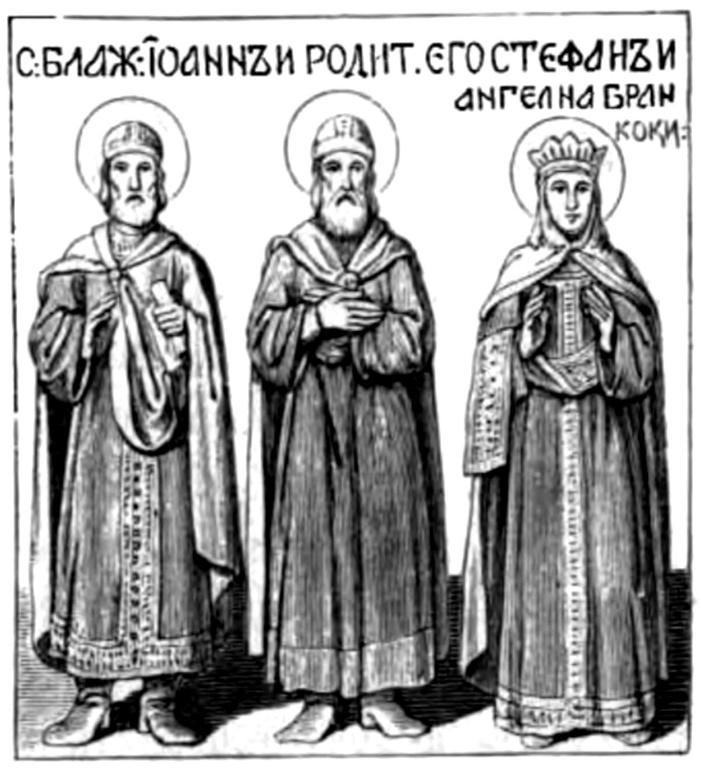
Не легко найти в истории владетельных лиц, где жизнь была бы так полна превратностями и бедами, как жизнь блаж. деспота Сербского Стефана Бранковича и семьи его155.
It is not easy to find in history ruling persons whose life was so full of vicissitudes and misfortunes as the life of the blessed Serbian Despot Stephen Branković and his family155.
В 1457 г. Турки овладели Сербией, и деспот Георгий Бранкович умер скитальцем в Белграде. Младший сын Лазарь, прогнав старшего и отравив мать, присвоил себе права деспота, но спустя месяц умер. Стефан был средний сын деспота Георгия. Он с юности отличался кротостью, почтителен был к родителям, любил братьев, образован был прекрасно, особенно же знал св. Писание. Когда отец, для покоя Сербии, принуждён был отдать дочь султану Мурату, то с сестрой отправился ко двору султана и Стефан. – Тут сильно соблазняли Стефана и роскошной жизнью, и поблажками честолюбия и суетности; но Стефан оставался твёрд. Затем придворная зависть успела возбудить политическое подозрение против сыновей деспота. Такие отважные люди, как сыновья деспота, – опасны для Турецкой власти, говорили султану. – И султан, давший клятву отцу не касаться ни жизни, ни здоровья детей деспота, велел ослепить их; Стефан отправлен в Каппадокию. По смерти брата, Стефан, услыхав, что Турки фанатики сожгли прекрасный Милешевский монастырь и готовятся разорить в конец Сербию, решился возвратить себе наследство. Сербы, удалившиеся с ним в Срем и Банат под защиту Венгрии, провозгласили (1460 г.) Стефана деспотом. Он вступил в супружество с Ангелиной, дочерью Албанского князя Георгия и внучкой св. страдальца князя Лазаря. Ему родились два сына и дочь. В Купинове построен им красивый храм Евангелиста Луки. Он жил довольно покойно. Но Туркам это очень не нравилось: они опасались силы деспота. Нанятые слуги Сербы схватили его и в оковах отправили в Далматию. Освободясь от уз, он возвращался опять в Сербию; но со скорбью увидел, что стольный город предков его Смедерево в крепких руках магометанских, а соотчичи его пали духом, с фанатиками же Турками невозможно вступать ни в какие договоры. Последний Боснийский бан сдался Туркам на слово клятвы не лишать его жизни; но фанатик шейх собственноручно умертвил его: – нет, говорил, никакой нужды соблюдать слово, данное христианину156. Потому Стефан удалился в Скендерию. Но Турки не давали ему покоя и в Албании: они и там искали его смерти, домогаясь истребить фамилию деспотов Бранновичей. Он вынужден был бежать с супругой и детьми в Италию157. Печальный скиталец, чувствуя близость кончины своей, октября 1-го 1476 г. писал к Рагузянам, с которыми в особенном союзе были предки его: «вижу, что близок конец мой. – Не скорблю о смерти моей, но болею о моей Ангелине и детях моих Георгии, Марии и Иоанне... Поручаю вам перед Богом, перед Пречистой и святыми мою Ангелину и детей моих: что вы для них сделаете, то Бог для вас сотворит. Не оставьте их, – окажите любовь к ним, какую имели вы к предкам нашим... Завещания не о чем писать мне, – не оставляю Ангелине и детям моим ни серебра, ни золота, ни населённых имений... Препоручаю их вашему господству»158. – Деспот скончался вдали от отчизны.
In 1457, the Turks seized Serbia, and Despot George Branković died a wanderer in Belgrade. His younger son Lazarus, having driven out the elder and poisoned his mother, usurped the rights of the despot, but died a month later. Stephen was the middle son of Despot George. From his youth he was distinguished by meekness, was respectful to his parents, loved his brothers, was excellently educated, and especially knew the Holy Scriptures. When his father, for the peace of Serbia, was compelled to give his daughter to Sultan Murad, Stephen also went with his sister to the Sultan's court. There Stephen was strongly tempted by the luxurious life and by the indulgences of ambition and vanity; but Stephen remained firm. Then courtly envy succeeded in arousing political suspicion against the despot's sons. Such daring men as the despot's sons were dangerous for Turkish power, they said to the Sultan. And the Sultan, who had sworn to the father not to touch the life or health of the despot's children, ordered them to be blinded; Stephen was sent to Cappadocia. Upon his brother's death, Stephen, hearing that fanatical Turks had burned the beautiful Mileševa Monastery and were preparing to utterly destroy Serbia, resolved to reclaim his inheritance. The Serbs who had withdrawn with him to Srem and Banat under the protection of Hungary proclaimed (1460 A.D.) Stephen as despot. He entered into marriage with Angelina, daughter of the Albanian Prince George and granddaughter of the holy Passion-bearer Prince Lazarus. Two sons and a daughter were born to him. In Kupinovo he built a beautiful church of the Evangelist Luke. He lived quite peacefully. But the Turks greatly disliked this: they feared the despot's power. Hired Serbian servants seized him and sent him in chains to Dalmatia. Freed from his bonds, he returned again to Serbia; but with sorrow he saw that the capital city of his ancestors, Smederevo, was in the strong hands of the Mohammedans, and that his fellow countrymen had lost heart, and that it was impossible to enter into any treaties with the fanatical Turks. The last Bosnian ban surrendered to the Turks on the word of an oath not to deprive him of his life; but a fanatical sheikh slew him with his own hands: "There is," he said, "no need to keep a word given to a Christian"156. Therefore Stephen withdrew to Scenderia. But the Turks gave him no peace even in Albania: they sought his death even there, striving to exterminate the family of the Branković despots. He was forced to flee with his wife and children to Italy157. The sorrowful wanderer, feeling the approach of his end, wrote on October 1, 1476 A.D. to the Ragusans, with whom his ancestors had been in special alliance: "I see that my end is near. I do not grieve for my death, but I sorrow for my Angelina and my children George, Maria, and John... I entrust to you before God, before the Most Pure One and the saints, my Angelina and my children: what you do for them, God will do for you. Do not abandon them—show them the love that you had for our ancestors... I have nothing to write about a testament—I leave Angelina and my children neither silver nor gold nor populated estates... I commend them to your lordship"158. The despot died far from his homeland.
Спустя 8 лет после смерти блаж. Стефана добрая Ангелина перенесла нетленные остатки супруга в Купиново, что близ Срема159. Вук Бранкович, племянник Ангелины, управлял тогда Сербией и распространял ужас и смерть в войске Магомета, когда то нападало на него. Ангелина и сыновья её, по уважению к фамилии деспотов Бранковичей, пользовались почётом соплеменников. По смерти Вука Бранковича был владетельным деспотом Георгий; но скоро передал своё право брату Иоанну, а сам принял монашество с именем Максима и был архиепископом. Иоанн, женатый на дочери Стефана Якшича и племяннице храброго Димитрия Якшича, вступил в права деспота. Якшичи храбро бились с Турками за свободу Сербов. Деспот занимался делами внутреннего правления и жил подвижнически. В 1496 г. «самодержавний господинь земле Сербскые Иоанн деспот» грамотой подарил несколько земель монастырю Крушедолу, в том числе Купиново, где лежали мощи отца его160. От частых нападение варваров деспот переселился дальше от границ, в местечко Беркасово; здесь он пожил недолго и христиански скончался в 1503 г., оставив одну дочь161.
Eight years after the death of the blessed Stephen, the good Angelina translated the incorrupt remains of her husband to Kupinovo, near Srem159. Vuk Branković, Angelina's nephew, then ruled Serbia and spread terror and death in the army of Mohammed when it attacked him. Angelina and her sons, out of respect for the family of the Branković despots, enjoyed the honor of their fellow tribesmen. After the death of Vuk Branković, George was the ruling despot; but he soon transferred his right to his brother John, and himself received monastic tonsure with the name Maximus and became an archbishop. John, married to the daughter of Stephen Jakšić and niece of the brave Demetrius Jakšić, entered into the rights of the despot. The Jakšićs fought bravely against the Turks for the freedom of the Serbs. The despot occupied himself with matters of internal administration and lived an ascetic life. In 1496 A.D., "the autocratic lord of the Serbian land, Despot John," by charter granted several lands to the Krušedol Monastery, including Kupinovo, where the relics of his father lay160. Due to frequent barbarian attacks, the despot moved further from the borders, to the town of Berkasovo; here he lived a short time and died a Christian death in 1503 A.D., leaving one daughter161.
Добрая Ангелина продолжала благодетельствовать бедным и инокам, хотя и сама жила почти бедной. Вот что писала она к вел. князю России Василию с старцем Евгением: «смиренная монахиня Ангелина кланяется до земли твоей милости. Она молит Господа и Пречистую Его Матерь, и святого деспота Иоанна, сына своего, да даруется тебе долголетнее здравие, спасение и победа над врагами, на радость христианам и на утешение прочное, а после долгой жизни вечное царствование со Христом, где радость неизъяснимая и свет немерцающий. Милость твоя, конечно, слышала о сыне моём, деспоте Иоанне, как он перешёл к Богу. По преставлении его всё имение, какое мы имели, взяли Венгры; теперь мы ничего не имеем, кроме надежды на Бога и на твоё милосердие. Потому послали мы к тебе старца своего, священноинока Евгения, с некоторыми речами, и ты благоволи внять ему и доверять. С ним послала я твоей милости броню сына моего деспота Иоанна. Ещё слово, государь! откупила я за сто золотых место и хочу соорудить церковь во имя св. Иоанна Златоустого. Потому кланяюсь тебе и прошу, пожалуй нам твою милостыню, чтобы соорудить ту церковь, да будет она твоей ктиторией в вечное поминовение. В той церкви хочу подожить мужа моего, св. деспота Стефана, и св. Иоанна, сына моего. Всеблагий Бог да дарует тебе здравие». Другой грамотой просила она вел. князя тогда же за Афонский Пантелеймонов монастырь162. Чудная жена! «За святость жизни народ поныне называет её матерью Ангелиной», говорит Сербский историк, и другой пишет, что она была украшена «всякими добродетелями»163. Третий говорит: «по смерти мужа своего создала церковь близ Крушедола и постриглась в иночество, собрала я сестрей к себе, живила Богоугодне и Богу дух предала я близ мужа своего погребена бысть»164.
The good Angelina continued to be a benefactress to the poor and to monks, although she herself lived in near poverty. Here is what she wrote to the Grand Prince of Russia, Basil, with the elder Eugene: "The humble nun Angelina bows to the ground before your grace. She prays to the Lord and His Most Pure Mother, and to the holy despot John, her son, that you may be granted long-lasting health, salvation, and victory over enemies, to the joy of Christians and for lasting consolation, and after a long life, eternal reign with Christ, where there is inexpressible joy and unfading light. Your grace has, of course, heard of my son, Despot John, how he passed on to God. After his repose, all the property we had was taken by the Hungarians; now we have nothing except hope in God and in your mercy. Therefore we have sent to you our elder, the hieromonk Eugene, with some words, and may you deign to hear him and trust him. With him I have sent to your grace the armor of my son, Despot John. One more word, Sovereign! I have bought a place for one hundred gold pieces and wish to build a church in the name of St. John Chrysostom. Therefore I bow to you and ask, grant us your alms to build that church, and may it be your foundation for eternal remembrance. In that church I wish to lay my husband, the holy Despot Stephen, and the holy John, my son. The All-good God grant you health." In another charter she at the same time asked the Grand Prince for the Athonite Panteleimon Monastery162. A wondrous woman! "For the holiness of her life the people still call her Mother Angelina," says a Serbian historian, and another writes that she was adorned "with all virtues"163. A third says: "After the death of her husband she built a church near Krušedol and received monastic tonsure, gathered sisters to herself, lived God-pleasingly, and gave up her spirit to God and was buried near her husband"164.
Описатель мученичества св. Георгия († 1515 г.) сообщает такое известие: «вот и в наши дни творит Бог Своё. Когда я грешный пришёл в себя, слышал по житию о деспоте Стефане: умер он и погребён, оставив супругу и двух детей, а спустя 8 лет проявился знамениями и чудесами; откопав гроб, нашли его целым и невредимым, как был погребён, и ещё благоухание исходит от тела его; положенный в раке остаётся поныне. Потом сын его Иоанн владел Сремской землёй; он также умер и погребён, оставив жену и одну дочь; спустя три года он также проявился, как и отец, и также чтится»165. Мощи праведного деспота Иоанна и праведных родителей его, Стефана и Ангелины, покоились в монастыре Крушедоле, на Фрушской горе, но изуверы и им не дали покоя166.
The author of the account of the martyrdom of St. George († 1515 A.D.) reports the following: "Behold, even in our days God works His own. When I, a sinner, came to myself, I heard from the life of Despot Stephen: he died and was buried, leaving a wife and two children, and after 8 years he manifested himself with signs and miracles; opening the grave, they found him whole and unharmed, as he was buried, and a fragrance still emanates from his body; placed in a reliquary, he remains to this day. Then his son John ruled the land of Srem; he also died and was buried, leaving a wife and one daughter; after three years he also manifested himself, like his father, and is likewise venerated"165. The relics of the righteous Despot John and of his righteous parents, Stephen and Angelina, rested in the Krušedol Monastery, on Mount Fruška, but the fanatics gave them no peace even there166.
Житие св. Стефана Бранковича и детей его видно в житии сына его архиеп. Максима: «это житие издано в Гласнике XI, 125–130.
The life of St. Stephen Branković and his children is evident in the life of his son, Archbishop Maximus: "This life was published in Glasnik XI, 125–130."
Служба и Синаксарь праведному Стефану новому, деспоту Сербскому, в Сербллке под 9 октября. Летопись Гласника V, 93, 108–111. – Иные принимают Ангелину за одно с Милицей, супругою кн. Лазаря; но это – грубая ошибка.
Service and Synaxarion for the Righteous Stephen the New, Despot of Serbia, in the Serbljak under October 9. Chronicle of Glasnik, vol. V, pp. 93, 108–111. — Some take Angelina to be the same as Milica, the wife of Prince Lazar; but this is a gross error.
Поздняя летопись (Шафарика памят. 2, 82) говорит, что «мощи святого страстотерпца Стефана, сына деспота Гюргя, в град Купиник» перенесены февр. 15-го 1466 г. Но описатель страданий св. Георгия, видевший мощи, пишет, что они перенесены спустя 8 лет после смерти.
A later chronicle (Šafarik, Pamjatniki, vol. 2, p. 82) says that "the relics of the holy passion-bearer Stephen, son of Despot George, were translated to the town of Kupinik" on February 15, 1466. But the writer of the account of the sufferings of St. George, who saw the relics, writes that they were translated eight years after his death.
Грамота изд. у Миклошича: monum. Serb. № 463. Грамота 1495 г. Иоанн обещал Павлову монастырю выдавать всё, что обещано было предками. Monum. Serb. № 462, в Гласнике V, 224. 225.
The charter is published in Miklošič: Monumenta Serbica, no. 463. A charter of 1495: John promised the Monastery of St. Paul to deliver everything that had been promised by his ancestors. Monumenta Serbica, no. 462, in Glasnik, vol. V, pp. 224, 225.
Раича ист. 3, 243–247. 312–324. Летоп. в Гласнике V, 111. 112. I, 169. XI, 154. В помяннике монастыря Грачаницы записано: «помяни, Господи – благочестивую и христолюбивую монахиню Ангелину, архиепископа Максима и брата его деспота Иоанна» (Изв. акад. VIII, 57). В Афонском протатском помяннике: «еще молимся о приснопамятных рабах Божиих Димитрие крале и Иоанне деспоте и с ними умерщвленных православных христианах» (Запис. поклонника св. горы, стр. 126). «Димитрий краль»-князь Димитрий Якшичь, храбрый боец с Турками, сын краля Рашского, дядя по жене Иоанна деспота (Раича ист. 3, 288–292).
Raić, History, vol. 3, pp. 243–247, 312–324. Chronicle in Glasnik, vol. V, pp. 111, 112; vol. I, p. 169; vol. XI, p. 154. In the diptych of the Monastery of Gračanica it is written: "Remember, O Lord — the pious and Christ-loving nun Angelina, Archbishop Maximus and his brother, Despot John" (Izvestija Akademii, vol. VIII, p. 57). In the Protaton diptych on Mount Athos: "We also pray for the ever-memorable servants of God Demetrius the Kral and John the Despot, and for the Orthodox Christians slain with them" (Zapiski poklonnika sv. gory, p. 126). "Demetrius the Kral" — Prince Demetrius Jakšić, a brave fighter against the Turks, son of the Kral of Raška, uncle by marriage of Despot John, through his wife (Raić, History, vol. 3, pp. 288–292).
Мученичество св. Георгия – в летоп. археол. общ. СПб. 1864 г. Сербская летопись у Шафарика в памяти. 2, 63. У Раича 3, 324–325 – неточности о мощах.
The Martyrdom of St. George — in the Letopisi Archeologičeskago Obščestva, St. Petersburg, 1864. The Serbian chronicle in Šafarik, Pamjatniki, vol. 2, p. 63. In Raić, vol. 3, pp. 324–325 — inaccuracies concerning the relics.
В 1716 г. изуверный визирь приказал сжечь мощи св. Стефана, Ангелины и Иоанна; остались только части их. Гласник V, 112. 93. Сербляк, в Белграде, 1861 г., л. 85–94. Здесь же особая служба Ангелине, под 30 июля. Но в службе прав. Иоанну восхваляются как Ангелина, так и Стефан.
In 1716, a fanatical vizier ordered the relics of St. Stephen, Angelina and John to be burned; only parts of them remained. Glasnik, vol. V, pp. 112, 93. Serbljak, Belgrade, 1861, fols. 85–94. Here also a special service to Angelina, under July 30. But in the service to the Righteous John, both Angelina and Stephen are praised.