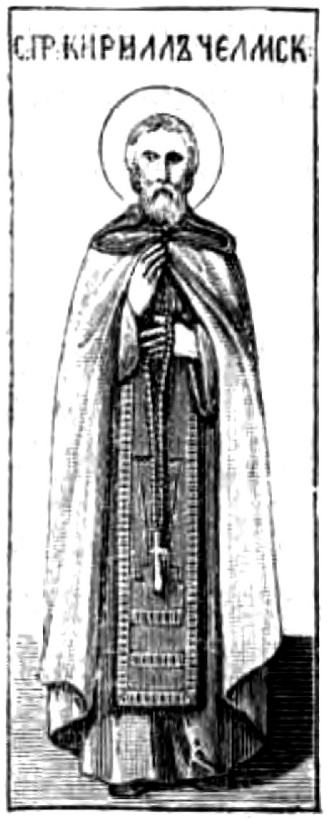
Белозерский князь, ревнуя об успехах св. веры между дикой Чудью (это был благоверный князь Глеб Васильевич † 1278 г.), после того, как наказал «Чудь белоглазую» за злодейские нападения на Белозерские поселения христиан, основал в Каркун-пуоли (в медвежьей стороне) город Каргополь146. – Искренний ученик Евангелия Христова блаженный Вассиан вскоре затем основал здесь Спасскую обитель, служа для всех примером терпеливой любви147. Спустя лет 30 после кончины Вассиановой, на горе Челме, в 50 верстах от Каргополя, поселился преп. Кирилл148. Постриженник обители преп. Антония Римлянина, он 5 лет испытывал себя в этой обители подвигами послушания, 3 года странствовал по пустыням, ища места по душе своей, наконец, пришёл в дикую Каргопольскую сторону и, по извещению Божию, избрал себе для постоянного пребывания уединённую гору Челму. Место было дикое, но красивое. При подошве горы с одной стороны – обширное озеро Лекшма, с другой – небольшое озеро Челма с протекающей через него рекой. Гора покрыта была лесом и в летнее время в траве много было ягод. Для пустынника всего дороже было то, что место было совершенно тихое и пустынное. – Пустыннолюбивая душа Кирилла предпочла дикую сторону другим, которые видел он, и оттого, что эта сторона уже была ему знакома; он решился посвятить жизнь свою на служение высшим интересам бедной, но близкой душе его, страны. По сказанию жития, брать его Корнилий, спустя три года пребывания Кириллова на горе Челме приходивший к нему и потом скоро оставивший его, удалился в Вологодскую сторону, что подаёт мысль о Белозерском крае, как родном для братьев149. Как бы то ни было, отшельник, избрав для пребывания своего Челмскую гору, первую зиму провёл в тесной пещере, которую он выкопал себе на восточной стороне горы. Потом построил он себе «келийцу» и при ней часовню. Здесь, мало заботливый об удобствах жизни временной, проводил он время в молитве и посте. Он переносил для Господа и суровость климата, и недостатки средств к жизни. Мотыгой копал он землю, садил простые овощи и питался травами. Духам злобы очень не нравился отшельник; им хотелось прогнать его с его пути. Раз поднят был около кельи страшный шум, и слышались голоса: спихнём его келью в озеро. Преподобный обратился с усердной молитвой к Господу, и молитва прогнала нечистых под гору в невылазную трясину, которая поныне называется «Кирилловой трестою». Много скорбей пришлось испытать отшельнику от Чуди белоглазой, которая, удалясь от Каргополя, жила теперь на берегах озёр – «Сыроядцы» домогались прогнать его. Они срубили деревья, росшие по горе, и запалили их; пламя приближалось к келье и часовне отшельника и готово было уничтожить его самого; но молитва веры спасла праведника; сгорели только скудные запасы пустынника, бывшие в полугоре. Отшельник возблагодарил Господа за чудное спасение и стал по-прежнему жить покойно. Чудь стала думать, что пустынник – богач. Она напала на него ночью и потребовала сокровищ. Отшельник указал на единственное своё богатство – на икону Богоматери. Не скоро, но слово кроткой веры и пример святой жизни Кирилла проникли и в сердца дикой Чуди; мало по малу «поганые сыроядцы» обращались к Евангельскому свету и принимали святое крещение150. Они приходили «к святому отцу и в сладость послушающе о вере, о св. крещении и о всех заповедях Божиих, в сытость учений его напаяхуся». Не много было христианского населения в Каргопольском крае, когда начинал подвизаться Кирилл на Челмской горе. «Бяху инии еще не крощеннии, живуще в окрестных местах, имеяху Чудский язык и веру: еще бо в то время православие начинаше процветати в месте том и распространятися благочестие». Но под влиянием многолетней подвижнической жизни и кротких наставлений Кирилла, «вси Чудяне прияша святое крещение». Преподобный провел на Челмской горе целые 52 года; в последней половине пустынной жизни своей построил он храм Богоявления Господня, и к нему собрались немногие ревнители пустынной жизни. Достигнув глубокой старости, почувствовал он близость кончины своей и просил у Господа милости видеться с духовником. По его молитве, посетил его игумен Вассиановой пустыни Иосиф; преподобный исповедался, приобщился св. Таин и усердно просил игумена ещё раз посетить его. Простясь с духовником, св. старец, будучи 82 лет, мирно предал дух свой Господу, 8 декабря 1367 г. Игумен Иосиф нашёл подвижника почившим и предал святое тело его земле151. В 1419 г. на месте подвигов его построен был новый храм в честь Богоявления Господня, с придельным в честь великомучен. Екатерины. Спустя несколько годов после кончины, написан был образ преподобного. И тогда же вот что случилось. В обители преподобного жил монах Антоний, уже несколько лет бывший слепым. Услышав, что написан образ преподобного, он вышел из своей кельи и сидя думал: как написали его? В молодых летах своих он видал преподобного, часто приходил к нему для принятия благословения и приносил ему кое-что для жизни. Он подошёл к образу, помолился со слезами и, когда приложился к нему, внезапно прозрел. «Точно таков был преподобный», сказал он, рассмотрев с восторгом образ. В последующие времена совершилось много чудес при мощах преподобного. – Раз преподобный сохранил свою обитель, когда, по неосторожности одного, она едва не истреблена была огнём.
The Belozersk prince, zealous for the success of the holy faith among the wild Chud (this was the Right-believing Prince Gleb Vasilievich † 1278), after he had punished the "white-eyed Chud" for their villainous attacks on the Christian settlements of Belozersk, founded the city of Kargopol in Karkun-puoli (the bear side)146. – The sincere disciple of the Gospel of Christ, blessed Vassian, soon after founded the Savior's monastery here, serving as an example of patient love for all147. About 30 years after the repose of Vassian, the Venerable Cyril settled on Mount Chelma, 50 versts from Kargopol148. A tonsured monk of the monastery of the Venerable Anthony the Roman, he tested himself for 5 years in that monastery through labors of obedience, wandered for 3 years through the wilderness seeking a place to his soul, and finally came to the wild Kargopol region and, by divine revelation, chose for his permanent abode the solitary Mount Chelma. The place was wild but beautiful. At the foot of the mountain on one side was the vast Lake Lekshma, on the other the small Lake Chelma with a river flowing through it. The mountain was covered with forest, and in summer there were many berries in the grass. For the hermit, the most precious thing was that the place was completely quiet and deserted. – The wilderness-loving soul of Cyril preferred this wild region to others he had seen, also because this region was already familiar to him; he resolved to devote his life to serving the higher interests of a poor land, yet one close to his heart. According to the account of his Life, his brother Cornelius, after three years of Cyril's sojourn on Mount Chelma, came to him and soon left him, withdrawing to the Vologda region, which suggests the Belozersk region as the brothers' homeland149. Be that as it may, the hermit, having chosen Mount Chelma for his abode, spent the first winter in a narrow cave which he dug for himself on the eastern side of the mountain. Then he built himself a "little cell" and a chapel beside it. Here, little concerned with the comforts of temporal life, he spent his time in prayer and fasting. For the Lord's sake he endured both the severity of the climate and the lack of means of subsistence. With a hoe he dug the ground, planted simple vegetables, and fed on herbs. The spirits of malice greatly disliked the hermit; they wanted to drive him from his path. Once a terrible noise arose near the cell, and voices were heard: "Let us push his cell into the lake." The Venerable One turned with fervent prayer to the Lord, and the prayer drove the unclean ones down the mountain into an impassable bog, which to this day is called "Cyril's quagmire." The hermit had to endure many sorrows from the white-eyed Chud, who, having withdrawn from Kargopol, now lived on the shores of the lakes – the "raw-eaters" sought to drive him away. They cut down the trees growing on the mountain and set them on fire; the flame approached the hermit's cell and chapel and was ready to destroy him; but the prayer of faith saved the righteous man; only the hermit's meager stores, which were halfway up the mountain, were burned. The hermit gave thanks to the Lord for the wondrous deliverance and continued to live peacefully as before. The Chud began to think that the hermit was a rich man. They attacked him at night and demanded treasures. The hermit pointed to his only wealth – the icon of the Mother of God. Not quickly, but the word of meek faith and the example of Cyril's holy life penetrated even the hearts of the wild Chud; little by little the "pagan raw-eaters" turned to the Gospel light and received holy Baptism150. They came "to the holy father and listened with sweetness concerning the faith, concerning holy Baptism, and concerning all the commandments of God, and were filled to satiety with his teachings." There were not many Christians in the Kargopol region when Cyril began his struggles on Mount Chelma. "There were others still unbaptized, living in the surrounding places, having the Chud language and faith: for at that time Orthodoxy was only beginning to flourish in that place and piety to spread." But under the influence of many years of ascetic life and Cyril's meek instructions, "all the Chud received holy Baptism." The Venerable One spent a full 52 years on Mount Chelma; in the latter half of his wilderness life he built a church of the Theophany of the Lord, and around him gathered a few zealots of the wilderness life. Having reached extreme old age, he felt the nearness of his end and asked the Lord for the grace to see his spiritual father. By his prayer, Abbot Joseph of the Vassian Hermitage visited him; the Venerable One made his confession, partook of the Holy Mysteries, and earnestly asked the abbot to visit him once more. Having taken leave of his spiritual father, the holy elder, being 82 years old, peacefully surrendered his spirit to the Lord, on December 8, 1367. Abbot Joseph found the ascetic reposed and committed his holy body to the earth151. In 1419, a new church was built on the site of his struggles in honor of the Theophany of the Lord, with a side-chapel in honor of the Great Martyr Catherine. Several years after his repose, an icon of the Venerable One was painted. And then this happened. In the monastery of the Venerable One lived a monk named Anthony, who had been blind for several years. Hearing that the icon of the Venerable One had been painted, he came out of his cell and, sitting down, thought: "How have they depicted him?" In his youth he had seen the Venerable One, often came to him to receive a blessing, and brought him various things for his sustenance. He approached the icon, prayed with tears, and when he venerated it, he suddenly received his sight. "Exactly so was the Venerable One," he said, having examined the icon with delight. In later times many miracles were performed at the relics of the Venerable One. – Once the Venerable One preserved his monastery when, through the carelessness of one person, it was nearly destroyed by fire.