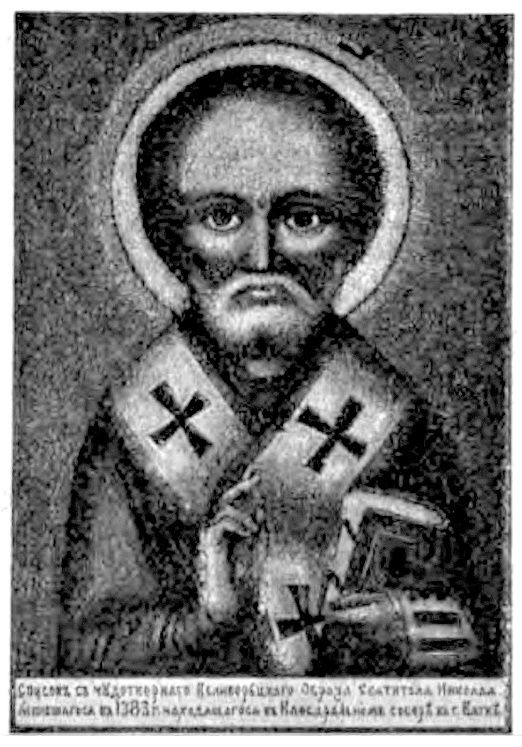
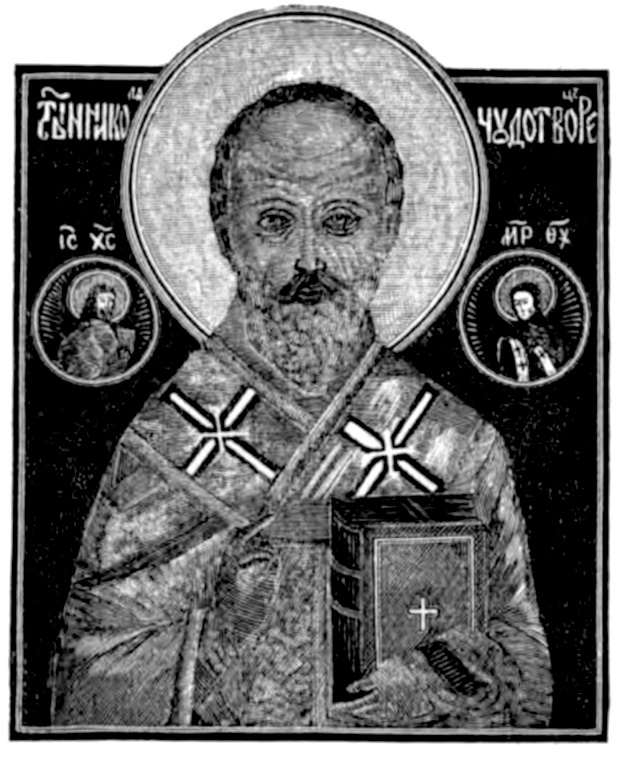
Память святителя Николая чудотворца, архиепископа Мирликийского
Commemoration of St. Nicholas the Wonderworker, Archbishop of Myra in Lycia
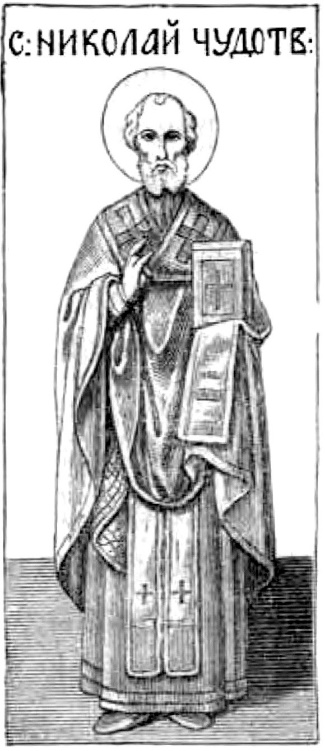
Святитель Николай родился около 280 года в Патаре, городе Ливийском, что в Малой Азии. Родители его, Феофан и Нонна, люди не бедные, отличались и благочестием. С юных лет воспитанный в страхе Божием, он в короткое время постиг и книжную мудрость и изучил священное Писание; с ранней ещё юности он удивлял всех христианским образом жизни, воздержанием и приверженностью к храму Божию.
St. Nicholas was born around the year 280 in Patara, a city of Lycia in Asia Minor. His parents, Theophanes and Nonna, were not poor and were distinguished by their piety. From his youth, raised in the fear of God, he quickly acquired both book-learning and a knowledge of the Holy Scriptures; from his earliest years he astonished everyone by his Christian way of life, his abstinence, and his devotion to the church of God.
Николай, епископ Патарский, дядя будущего святителя, видя строгую жизнь племянника, посоветовал родителям отдать его на служение Церкви и возвёл его в сан пресвитера. По смерти родителей, сделавшись обладателем значительного имущества, св. Николай употребил оное на вспомоществования бедным. Благотворительность его однажды спасла честь целого семейства.
Nicholas, the Bishop of Patara and uncle of the future saint, seeing the strict life of his nephew, advised his parents to give him over to the service of the Church and raised him to the rank of presbyter. Upon the death of his parents, having become the possessor of considerable wealth, St. Nicholas used it to assist the poor. His charity once saved the honor of an entire family.
Один, некогда богатый, житель города Патары сделался так беден, что не в состоянии был пропитать свою семью, которая состояла из трёх взрослых дочерей. Он уже вознамерился отпустить их в бесчестный дом. Св. Николай, узнав это по тайному гласу, бросил в самую полночь к бедному отцу в окно узел золота. Несчастный отец, проснувшись утром, был поражён неожиданной милостью; он пал на колена, благодарил Бога за Его милости, просил прощения в своём гнусном намерении, и вскоре за сим он честно выдал в замужество свою старшую дочь. Св. Николаю радостно было, что дар его употреблён соответственно его желанию, и он решился тем же путём устроить судьбу и остальных дочерей.
A certain once-wealthy inhabitant of the city of Patara had become so poor that he was unable to feed his family, which consisted of three grown daughters. He had already resolved to send them to a dishonorable house. St. Nicholas, learning of this by a secret voice, threw a bundle of gold through the window of the poor father at midnight. The unfortunate father, waking in the morning, was struck by the unexpected mercy; he fell to his knees, thanked God for His mercies, begged forgiveness for his vile intention, and soon thereafter honorably gave his eldest daughter in marriage. St. Nicholas was glad that his gift had been used according to his desire, and he resolved to arrange the fate of the remaining daughters in the same way.
Св. Николай и для другой дочери тайно бросил столько же золота, которое было употреблено так же, как и первое. Осчастливленный отец со слезами благодарности так молил Бога: «Боже, прежде искупивший меня кровью Своею и ныне дом мой с чадами удержавший от греха и козней лукавого! Сам покажи мне того, кто служит орудием Твоей всеблагой воли; укажи мне земного того ангела, охраняющего нас от греховной погибели, дабы я знал, кто избавляет нас от угнетающей нас нищеты и удерживает от злых намерений».
St. Nicholas also secretly threw the same amount of gold for the second daughter, which was used just like the first. The father, made happy, with tears of gratitude prayed thus to God: "O God, who didst formerly redeem me with Thy blood and now hast kept my house with my children from sin and the snares of the evil one! Do Thou Thyself show me him who serves as the instrument of Thy all-good will; point out to me that earthly angel who guards us from sinful perdition, that I may know who delivers us from the poverty that oppresses us and restrains us from evil intentions."
Твёрдо веруя, что Господь не оставит без призрения и третьей его дочери, взысканный милостями Божиими отец, желая узнать тайного благодетеля своего, не спал несколько ночей: поджидал неведомого помощника и, наконец, приметил святителя Николая с третьим приношением.
Firmly believing that the Lord would not leave his third daughter without care, the father, visited by God's mercies, desiring to know his secret benefactor, did not sleep for several nights: he waited for the unknown helper and, at last, noticed St. Nicholas with a third offering.
Бросив такой же узел золота, как и прежние, св. Николай, уже отдалившийся от дома, был настигнут отцом облагодетельствованных дочерей. Этот последний, падши перед св. Николаем на колена, узнал его и принёс ему живейшую благодарность. Св. Николай, творивший благодеяния не из славолюбия, а из человеколюбия, весьма опечалился, что был узнан, и просил хранить тайну. Но Бог восхотел, чтобы тайна сия, в назидание людям, обнаружилась.
Having thrown a bundle of gold like the previous ones, St. Nicholas, already moving away from the house, was overtaken by the father of the benefited daughters. This latter, falling on his knees before St. Nicholas, recognized him and offered him his most heartfelt thanks. St. Nicholas, who performed good deeds not out of love of glory but out of love for mankind, was greatly grieved that he had been recognized and asked him to keep the secret. But God willed that this secret, for the edification of men, should be revealed.
Архиепископ Мирский, дядя св. Николая, уважая великие дарования племянника своего, при отправлении своём в Святую Землю, вверил ему управление и всей епархией своей.
The Archbishop of Myra, the uncle of St. Nicholas, respecting the great gifts of his nephew, upon his departure for the Holy Land entrusted him with the administration of his entire diocese.
По возвращении же дяди, св. Николай пожелал и сам посетить места, освящённые жизнью Христа Спасителя и чудотворениями Его.
Upon his uncle's return, St. Nicholas himself desired to visit the places sanctified by the life of Christ the Savior and by His miracles.
На пути к Иерусалиму Господь явил в св. Николае великого чудотворца. Св. Николай отправился на корабле, и едва корабль вышел в море, как поднялась сильная буря и грозила гибелью кораблю и бывшим на нём людям. Пловцы в виду угрожающей опасности обратились с просьбой к святителю Николаю помолиться о спасении Господу Богу. «Если ты, Святче Божий», говорили они, «не поможешь нам молением твоим, то мы потонем в сей пучине и погибнем». Св. Николай увещевал их возложить надежду на Бога одного и ожидать скорого избавления от Него, а сам начал с усердием молиться Господу. Господь услышал молитву праведника; буря утишилась, и опасность миновала; На том же корабле св. Николай воскресил одного матроса, убившегося до смерти от падения с корабельной мачты.
On the way to Jerusalem, the Lord revealed St. Nicholas as a great wonderworker. St. Nicholas set out on a ship, and scarcely had the ship put out to sea when a violent storm arose, threatening destruction to the ship and to the people on it. The sailors, in view of the threatening danger, turned with a request to St. Nicholas to pray for their salvation to the Lord God. "If you, O Saint of God," they said, "do not help us with your prayer, we shall drown in this abyss and perish." St. Nicholas exhorted them to place their hope in God alone and to expect speedy deliverance from Him, and he himself began to pray fervently to the Lord. The Lord heard the prayer of the righteous man; the storm subsided, and the danger passed. On the same ship, St. Nicholas raised from the dead a sailor who had been killed by a fall from the ship's mast.
Достигши Св. Земли и посетив на ней замечательные для христианина места, святой Николай, по возвращении на родину, отправился не в родной город Патары, а в Сионскую обитель, основанную его дядей-епископом. Здесь он был принят братией с большой радостью, как Ангел Божий, посланный поучать их своими беседами и руководить своими добродетелями к благочестивой жизни. Здесь, в тихом уединении монашеской кельи, святой Николай думал найти убежище от суеты мирской и посвятить свою жизнь усердной молитве перед Богом и подвигам иноческого жития.
Having reached the Holy Land and visited the places remarkable for a Christian, St. Nicholas, upon his return to his homeland, went not to his native city of Patara, but to the Zion Monastery founded by his uncle the bishop. Here he was received by the brethren with great joy, as an Angel of God sent to instruct them by his discourses and to guide them by his virtues to a pious life. Here, in the quiet solitude of a monastic cell, St. Nicholas thought to find refuge from the vanity of the world and to devote his life to fervent prayer before God and to the labors of the monastic life.
Но Господу Богу не угодно было, чтобы такое сокровище веры и благочестия, каким был угодник Божий, скрывалось в тесной монашеской кельи. Наступило время, когда святой Николай должен был выступить верховным руководителем Ликийской Церкви, чтобы просвещать людей светом Евангельского учения и добродетельной жизни. – Когда святой Николай однажды стоял в монастырском уединении на молитве, он услышал голос, который сказал ему: «Николай! Ты должен выступить на служение народу, если желаешь получить венец от Меня». Священный ужас объял его, когда он услышал эти слова; вместе с тем он недоумевал, что именно повелевает совершить ему чудный голос. Тогда вновь тот же голос сказал: «Николай! Эта обитель не та нива, на которой можешь ты принести ожидаемый Мной от тебя плод. Уйди отсюда и пойди в мир к людям, чтобы прославилось в тебе имя Моё».
But it was not pleasing to the Lord God that such a treasure of faith and piety as the saint of God was should be hidden in a narrow monastic cell. The time had come when St. Nicholas was to come forth as the supreme guide of the Lycian Church, to enlighten men with the light of the Gospel teaching and of a virtuous life. – When St. Nicholas was once standing in monastic solitude at prayer, he heard a voice which said to him: "Nicholas! You must go forth to serve the people, if you wish to receive a crown from Me." Sacred awe seized him when he heard these words; at the same time he was perplexed as to what exactly the wondrous voice commanded him to do. Then again the same voice said: "Nicholas! This monastery is not that field on which you can bring forth the fruit I expect from you. Depart from here and go into the world to men, that My name may be glorified in you."
Тогда святой Николай понял, что чудный голос – несомненно голос Самого Господа – повелевает ему оставить обитель и идти в мир для прославления имени Божия верой и добрыми делами. Всегда послушный воле Божией, он немедленно оставил приютившую его обитель. Хотя теперь уже было несомненно и для самого св. Николая, что ему предстоит занять почётное место христианского руководителя народа, он по-прежнему старался избегнуть людской славы и почёта: поэтому, удалившись из обители, руководимый Промыслом Божиим, он местом своего жительства избрал опять не родной город Патары, где все знали святого угодника и за его святость стали бы воздавать ему особое почтение, но большой город Муры, столицу и митрополию Ливийской страны, где, никем не знаемый, он скорее мог избегнуть мирской славы. Здесь он жил, как нищий, не зная, где приклонить главу свою, но неопустительно посещая все церковные службы. Насколько угодник Божий смирял себя, настолько Господь, унижающий гордых и возвышающий смиренных, возвысил его.
Then St. Nicholas understood that the wondrous voice – undoubtedly the voice of the Lord Himself – commanded him to leave the monastery and go into the world for the glorification of the name of God by faith and good works. Always obedient to the will of God, he immediately left the monastery that had sheltered him. Although it was now unquestionable even for St. Nicholas himself that he was destined to occupy an honorable place as a Christian guide of the people, he still tried to avoid human glory and honor: therefore, having left the monastery, guided by the Providence of God, he chose as his place of residence not his native city of Patara, where everyone knew the holy saint and would have paid him special honor for his holiness, but the great city of Myra, the capital and metropolis of the Lycian country, where, unknown to anyone, he could more easily avoid worldly glory. Here he lived like a beggar, not knowing where to lay his head, but unfailingly attending all church services. As much as the saint of God humbled himself, so much did the Lord, who humbles the proud and exalts the humble, exalt him.
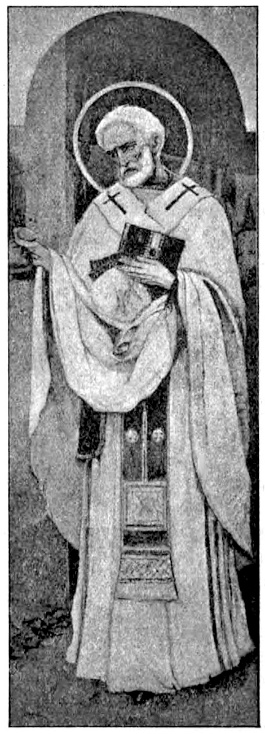
Во время пребывания святого Николая в Мирах, в этом городе скончался архиепископ всей Ликийской страны – Иоанн. Для избрания нового архиепископа собрались в Миры по обыкновению все епископы Ликийской страны. Много было предложено умных и честных людей для занятия этой высокой должности, но общего согласия в избрании кого-нибудь одного не последовало. Господь судил для занятия этой должности более достойного мужа, чем какой находился в их среде. Не пришедшие к общему согласию епископы решили, что такое важное дело, как избрание архиепископа, всецело должно зависеть от изволения Божия, и поэтому обратились к Господу с усердной молитвой указать им то лицо, которое наиболее достойно занять Мирскую архиепископию.
During St. Nicholas's stay in Myra, the archbishop of the entire Lycian country, John, died in that city. For the election of a new archbishop, all the bishops of the Lycian country gathered in Myra according to custom. Many intelligent and honest men were proposed for this high office, but no general agreement was reached on the election of any one. The Lord judged a more worthy man to occupy this office than any who was found among them. The bishops, having failed to reach a common agreement, decided that such an important matter as the election of an archbishop should depend entirely on the will of God, and therefore they turned to the Lord with fervent prayer to show them the person most worthy to occupy the see of Myra.
Господь, мудро руководивший епископами, исполнил их благочестивую просьбу. Во время горячей молитвы одному из старейших епископов явился муж, окружённый светом, и приказал ему в эту ночь стать в притворе храма и заметить, кто первый придёт в храм на утреннее богослужение: это и есть угодный Господу муж, которого епископы должны поставить своим архиепископом. Вместе с тем было открыто и имя избранника Божия, которое было Николай. Получив Божественное откровение, старец-архиерей сообщил о нём прочим архиереям, которые в виду милости Божией ещё более усилили свои молитвы, а сам, по наступлении ночи, стал в притворе храма, ожидая прихода избранника Господа Всевышнего. Наступила пора утрени, и святой Николай, по обыкновению ставши на молитву с полуночи, прежде всех пришёл в церковь. При входе в церковный притвор его остановил сподобившийся видения епископ и спросил о имени. Святой Николай, изумлённый таким вопросом старейшего из епископов, сначала молчал. Когда же архиерей неотступно стал просить об этом, он скромно и тихо отвечал: «называюсь я Николай, раб святыни твоея, владыко!»
The Lord, who wisely guided the bishops, fulfilled their pious request. During fervent prayer, a man surrounded by light appeared to one of the eldest bishops and commanded him that night to stand in the narthex of the church and to note who would be the first to come to the church for the morning service: this was the man pleasing to the Lord, whom the bishops were to appoint as their archbishop. At the same time, the name of God's chosen one was revealed, which was Nicholas. Having received the divine revelation, the elder bishop communicated it to the other bishops, who, in view of God's mercy, intensified their prayers still more, while he himself, when night came, stood in the narthex of the church, awaiting the coming of the chosen one of the Lord Most High. The time for Matins arrived, and St. Nicholas, having as usual risen for prayer from midnight, came to church before all others. As he entered the church narthex, he was stopped by the bishop who had been granted the vision, who asked his name. St. Nicholas, astonished by such a question from the eldest of the bishops, was silent at first. When the bishop persistently asked him, he replied humbly and quietly: "I am called Nicholas, a servant of your holiness, O vladyka!"
По имени и глубокому смирению прибывшего убедившись, что он есть избранник Божий, который должен занять Мирскую архиепископскую кафедру, епископ взял его за руку и привёл на собор прочих епископов. Они с радостью приняли его и поставили на средину церкви. Между тем весть о чудесном избрании архиепископа, не смотря на ночное время, разнеслась по всему городу, и церковь наполнилась множеством народа, желавшего видеть чудного избранника Божия. Епископ, сподобившийся видения, обратился ко всем присутствовавшим со следующими словами: «примите, братия, своего пастыря, которого помазал для вас Святой Дух и которому Он поручил управление ваших душ. Не человеческий собор, а суд Божий поставил его. Вот теперь мы имеем того, кого желали; обрели и приняли, кого искали. Под его мудрым руководством мы смело можем надеяться предстать Господу в день Его славы и суда». Слыша эти слова и видя избранника Божия, народ горячо благодарил Господа за Его чудесную помощь.
By the name and deep humility of the one who had come, having become convinced that he was the chosen one of God who was to occupy the archiepiscopal see of Myra, the bishop took him by the hand and led him to the council of the other bishops. They received him with joy and placed him in the midst of the church. Meanwhile, the news of the miraculous election of the archbishop, despite the night hour, spread throughout the whole city, and the church was filled with a multitude of people who wished to see the wondrous chosen one of God. The bishop who had been granted the vision addressed all those present with the following words: "Receive, brethren, your shepherd, whom the Holy Spirit has anointed for you and to whom He has entrusted the governance of your souls. Not a human council, but the judgment of God has appointed him. Behold, now we have him whom we desired; we have found and received him whom we sought. Under his wise guidance we may boldly hope to stand before the Lord on the day of His glory and judgment." Hearing these words and seeing the chosen one of God, the people fervently thanked the Lord for His miraculous help.
Святитель же Николай, узнав о высоком сане, в который хотят возвести его, долго сначала отказывался от него. Но, уступая неотступным просьбам епископов и народа, наконец согласился на принятие архиепископского сана. Святой Мефодий, патриарх Константинопольский, повествует, что угодник Божий ещё перед смертью архиепископа Ликийского Иоанна в чудесном видении был предуведомлен об ожидающем его великом сане. В одну ночь святой Николай видел, что Спаситель наш, Господь Иисус Христос в великом блеске стоит возле него и подаёт ему книгу Евангелия, оправленную в золото и жемчуг, а с другой стороны стоит Пресвятая Богородица и кладёт на плечи его святительский омофор.
St. Nicholas, learning of the high rank to which they wished to elevate him, at first long refused it. But yielding to the unceasing entreaties of the bishops and the people, he finally consented to receive the rank of archbishop. St. Methodius, Patriarch of Constantinople, relates that the man of God had even before the death of John, Archbishop of Lycia, been forewarned in a wondrous vision of the great rank awaiting him. One night St. Nicholas saw that our Savior, the Lord Jesus Christ, stood beside him in great splendor and gave him the book of the Gospel, bound in gold and pearls, while on the other side stood the Most Holy Theotokos and placed upon his shoulders the hierarch’s omophorion.
Собор епископов рукоположил святого Николая в архиепископа Мирликийской Церкви. Таким образом, находившийся ранее под спудом светильник веры и благочестия воссиял для всей Мирликийской Церкви.
The council of bishops consecrated St. Nicholas as archbishop of the Church of Myra. Thus the lamp of faith and piety, which had previously been hidden under a bushel, shone forth for the whole Church of Myra.
При вступлении в управление Мирликийской архиепископией, святой Николай сказал сам к себе: «теперь, Николай, твой сан и твоё место требуют от тебя, чтобы ты всецело жил не для себя, но для других». Поэтому, теперь он уже не стал скрывать свои добрые дела, как прежде, делая и теперь это не из гордости или тщеславия, но единственно для блага паствы и для прославления имени Божия, согласно заповеди Спасителя: так да светит свет ваш перед людьми, и чтобы они видели ваши добрые дела и прославляли Отца вашего небесного (Мф.5:16). Он был, по словам св. Димитрия Ростовского, «зерцало добрых дел стаду своему» и служил, по Апостолу Павлу, образцом для верных в слове, в житии, в любви, в духе, в вере, в чистоте (1Тим.4:12).
Upon entering upon the governance of the archdiocese of Myra, St. Nicholas said to himself: “Now, Nicholas, your rank and your place require of you that you live wholly not for yourself, but for others.” Therefore, he no longer concealed his good deeds as before, doing this now not out of pride or vainglory, but solely for the good of his flock and for the glorification of God’s name, according to the Savior’s commandment: Let your light so shine before men, that they may see your good works and glorify your Father who is in heaven (Mt. 5:16). He was, in the words of St. Demetrius of Rostov, “a mirror of good works for his flock” and served, according to the Apostle Paul, as an example to the believers in word, in conduct, in love, in spirit, in faith, in purity (1 Tim. 4:12).
Он был кроток и незлобив сердцем, смирен духом, чужд всякой надменности и своекорыстия. Несмотря на свой высокий сан, в жизни святой Николай по-прежнему соблюдал строгую умеренность и простоту: он всегда носил простую одежду, вкушал постническую пищу раз в сутки – вечером. Целый день великий Архипастырь упражнялся в делах милосердия и пастырских трудах. Двери его дома были открыты для всех: каждого принимал он с любовью и радушием, являясь для сирот отцом, для нищих – питателем, для плачущих – утешителем, для притеснённых – заступником. В этих многотрудных делах ему усердно помогали два священника – Павел Родийский и Феодор Аскалонит, «мужи известные всем Грекам», замечает св. Димитрий Ростовский, «добродетельной жизнью и просвещением». Вместе с ними и другими сотрудниками неутомимо и успешно действовал святитель Николай, и паства его процветала.
He was meek and gentle of heart, humble in spirit, a stranger to all haughtiness and self-interest. Despite his high rank, St. Nicholas in his life still observed strict moderation and simplicity: he always wore plain clothing and partook of fasting food once a day—in the evening. The whole day the great Archpastor occupied himself with works of mercy and pastoral labors. The doors of his house were open to all: he received everyone with love and cordiality, being a father to orphans, a nourisher to the poor, a comforter to the weeping, a defender to the oppressed. In these arduous labors he was zealously assisted by two priests—Paul of Rhodes and Theodore of Ascalon, “men known to all the Greeks,” notes St. Demetrius of Rostov, “for their virtuous life and enlightenment.” Together with them and other co-workers, St. Nicholas labored tirelessly and successfully, and his flock flourished.
Но завистливое око диавола, никогда не могущего спокойно смотреть на процветание Христовой Церкви и всегда старающегося причинить ей какой-нибудь вред, и на этот раз не оставило её в покое и воздвигло на неё сильное гонение. Это гонение было тем ужаснее, что оно явилось после продолжительного спокойствия, которым перед тем пользовалась Церковь Христова. Преемники Валериана, воздвигнувшего гонение на христиан в половине III-го века, часто сменявшие друг друга, были принуждены всеми силами заботиться то о своей непрочной власти, то об отражении варваров, отовсюду нападавших на Римскую империю. Им некогда было и подумать о гонении на христиан. Только император Аврелиан (270–275), отразив внешних и одолев внутренних врагов, «готов был воздвигнуть на нас гонение, – пишет Евсевий, – но едва задумал он и только что хотел подписать против нас указ, как постиг его суд Божий». А после кратковременных Аврелиановых преемников – Тацита (275 г.), Флориана – (276 г.), Прова – (276–282) и Кара – (282–283), достигший верховной власти Диоклетиан в первую половину своего царствования (285–304) занимался устройством всемирной империи и не только оставил в покое вселенскую Церковь, но даже видимо благоволил к христианам. Христиане начали окружать самого императора в должностях высших сановников государства и добросовестным исполнением своих обязанностей и преданностью императору ещё более укрепляли благосклонный взгляд Диоклетиана на христиан. Пользуясь благосклонностью императора и высших его сановником церковные предстоятели ревностно заботились о привлечении заблуждающихся язычников в лоно истинной Церкви, о построении величественных церквей для помещения многолюдных христианских собраний. Это быстрое распространение христианства до такой степени раздражало закоренелых язычников, что они, во что бы то ни стало, решили подавить его. Орудием своей цели они избрали соправителя Диоклетианова Галерия, «имевшего все пороки и все страсти язычества», который просьбами и ложными наветами склонил старого Диоклетиана сначала к удалению христиан от двора и войска, потом – к лишению их государственной службы и разрушению церквей их, и наконец – к открытому, повсеместному и ожесточённому преследованию их. В силу императорских указов христианские церкви разрушались «сверху до низу»; божественные и богослужебные книги сжигались на площадях; епископы заключались в темницы и предавались пыткам; все христиане подвергались всевозможным обидам и мучениям. Всё было позволено в отношении к христианам, В самых обыкновенных житейских делах они встречая не судей, защитников их невинности, а остервенелых врагов. По словам одного Египетского епископа-мученика, Филеаса, оскорблять христиан позволялось всякому, кто хотел: одних били палками, других розгами, иных бичами, тех плетьми, этих кнутами. Зрелище казней сменялось и содержало в себе много зла. Христианская кровь лилась потоками; срываться же гонимые не могли, если бы и хотели: в империи едва ли оставалось местечко, где бы не были выставлены и не действовали эти ужасные указы.
But the envious eye of the devil, who can never calmly look upon the flourishing of Christ’s Church and always strives to cause her some harm, did not leave her in peace this time either and raised up against her a fierce persecution. This persecution was all the more terrible in that it came after the prolonged peace which the Church of Christ had previously enjoyed. The successors of Valerian, who had raised a persecution against Christians in the middle of the third century, often replacing one another, were compelled to devote all their efforts now to their own unstable power, now to repelling the barbarians who attacked the Roman Empire from all sides. They had no time even to think of persecuting Christians. Only the Emperor Aurelian (270–275), having repelled external foes and overcome internal enemies, “was ready to raise a persecution against us,” writes Eusebius, “but scarcely had he conceived it and was about to sign a decree against us, when the judgment of God overtook him.” And after Aurelian’s short-lived successors—Tacitus (275), Florian (276), Probus (276–282), and Carus (282–283)—Diocletian, having attained supreme power, in the first half of his reign (285–304) occupied himself with the organization of the universal empire and not only left the universal Church in peace, but even visibly favored the Christians. Christians began to surround the emperor himself in the offices of the highest dignitaries of the state, and by their conscientious fulfillment of their duties and their devotion to the emperor, they further strengthened Diocletian’s favorable view of Christians. Enjoying the favor of the emperor and his highest officials, the Church’s leaders zealously concerned themselves with attracting erring pagans into the bosom of the true Church, and with building majestic churches to accommodate the numerous Christian assemblies. This rapid spread of Christianity so irritated the inveterate pagans that they resolved to suppress it at any cost. As the instrument of their purpose they chose Diocletian’s co-ruler Galerius, “who had all the vices and all the passions of paganism,” and who by entreaties and false slanders induced the aged Diocletian first to remove Christians from the court and the army, then to deprive them of state service and destroy their churches, and finally to an open, universal, and fierce persecution of them. By virtue of the imperial edicts, Christian churches were destroyed “from top to bottom”; divine and liturgical books were burned in the squares; bishops were cast into prisons and subjected to tortures; all Christians were subjected to every kind of insult and torment. Everything was permitted with regard to Christians. In the most ordinary everyday affairs they encountered not judges, defenders of their innocence, but enraged enemies. According to the words of one Egyptian bishop-martyr, Phileas, anyone who wished was allowed to insult Christians: some were beaten with clubs, others with rods, some with whips, others with scourges, still others with lashes. The spectacle of executions changed and contained much evil. Christian blood flowed in streams; the persecuted could not flee, even if they wished: there was scarcely a place left in the empire where these terrible edicts were not posted and enforced.
Это гонение, начавшееся в Никомидии, где в самый день Пасхи сожжено было в храме до 20,000 христиан, пронеслось смертоносной бурей по многим областям и дошло до Мирликийской церкви, предстоятелем которой в то время был святой Николай. В трудное для Церкви Христовой время гонения, архипастырь Ливийской церкви с неустрашимостью поддерживал в вере свою паству, громко и открыто проповедуя имя Божие. За это он подвергся преследованию и вместе со многими другими христианами был заключён в темницу. Здесь он провёл не мало времени, терпеливо перенося голод, жажду и тесноту, не допуская даже мысли об отречении от Иисуса Христа. В темничном заключении святитель не переставал заботиться о заключённых вместе с ним христианах. Голодных он питал здесь словом Божиим, жаждущих поил водами благочестия. Таким образом он возращал в них веру во Христа-Бога и утверждал их в крепком всповедании Его перед мучителями, чтобы они могли пострадать за Христа до конца. Благодаря его руководительству, многие из заключённых пребыли твёрдыми в Христовой вере до конца. Таковы сподвижники святого Николая и по церковному управлению, и по темничному заключению – Крискент, Диоскорид и Никокл, – которые, по словам св. Андрея Критского, «воодушевлением и ревностью святителя Николая соплели себе мученический венец». Сам же святитель Христов, «мученик готовностью своею», был сохранён во время Диоклетианова гонения, потому что его жизнь нужна была для дальнейшего прославления имени Божия.
This persecution, which began in Nicomedia, where on the very day of Pascha up to 20,000 Christians were burned in a church, swept like a deadly storm through many regions and reached the Church of Myra, whose primate at that time was St. Nicholas. In the difficult time of persecution for the Church of Christ, the archpastor of the Lycian Church fearlessly supported his flock in the faith, loudly and openly preaching the name of God. For this he was subjected to persecution and, together with many other Christians, was cast into prison. Here he spent no little time, patiently enduring hunger, thirst, and confinement, not even allowing the thought of denying Jesus Christ. In his imprisonment the hierarch did not cease to care for the Christians imprisoned with him. The hungry he fed here with the word of God, the thirsty he watered with the streams of piety. Thus he nurtured in them faith in Christ God and confirmed them in a firm confession of Him before the tormentors, that they might suffer for Christ to the end. Thanks to his guidance, many of the prisoners remained steadfast in the faith of Christ to the end. Such were the companions of St. Nicholas both in church governance and in imprisonment—Crescens, Dioscorides, and Nicocles—who, according to the words of St. Andrew of Crete, “by the inspiration and zeal of St. Nicholas wove for themselves a martyr’s crown.” But the hierarch of Christ himself, “a martyr by his readiness,” was preserved during the Diocletian persecution, because his life was needed for the further glorification of God’s name.
Убедившись, что жестокость по отношению к христианам не приводит к желанным результатам – уничтожению христианства, император Галерий (Диоклетиан в это время уже отказался от престола) стал ослаблять гонение на христиан. В 311-м году Галерий, мучимый страшной болезнью, посланной ему от Господа в наказание за его жестокость к христианам и распутную жизнь, открыто «оказал своё снисхождение христианам, позволяя им опять оставаться христианами и строить дома для своих собраний», где они «за такое снисхождение должны молить своего Бога о здравии» бывшего их гонителя. Повинуясь указу, градоправители выводили и освобождали заключённых в темницу. По свидетельству очевидца – Евсевия, «вслед за таким событием, вдруг, как бы из недр ночного мрака, воссиял некий свет: в каждом городе стали появляться церковные общества, многочисленные стечения христиан и вместе с тем обычные собрания для богослужения. Каждый из неверующих немало поражён был этим, дивился такому обороту дел и Бога христианского провозглашал великим и единым истинным».
Having become convinced that cruelty toward Christians did not lead to the desired result—the destruction of Christianity—the Emperor Galerius (Diocletian had by this time abdicated the throne) began to relax the persecution of Christians. In the year 311, Galerius, tormented by a terrible illness sent upon him by the Lord as punishment for his cruelty toward Christians and his dissolute life, openly “showed his indulgence to Christians, permitting them again to be Christians and to build houses for their assemblies,” where they “for such indulgence should pray to their God for the health” of their former persecutor. Obeying the edict, the city rulers brought out and freed those imprisoned. According to the testimony of an eyewitness, Eusebius, “after such an event, suddenly, as if from the depths of night’s darkness, a certain light shone forth: in every city church communities began to appear, numerous gatherings of Christians, and together with them the usual assemblies for worship. Each of the unbelievers was greatly amazed at this, marveled at such a turn of events, and proclaimed the God of the Christians great and the only true God.”
По освобождении из темницы, святой Николай, «мученик изволением» и «без крове венечник», снова занял Мирликийскую кафедру и ещё с большей ревностью отдался выполнению своих высоких обязанностей. Страшное гонение, давшее Церкви целый ряд мучеников и исповедников, в то же время причинило ей весьма много вреда. Поэтому святой Николай, кроме обычных трудов и забот своего служения, должен был понести и новые подвиги, необходимо вызванные последствиями долгого и страшного гонения. Как другим тогдашним пастырям, без сомнения и ему приходилось или возобновлять старые, или строить новые церкви, восстановлять нарушенный гонением порядок церковного богослужения и благочиния, допускать к покаянию тех, которые во время гонения ослабели в вере и отпали от Христа, после же гонения спешили исцелиться, ревностно прося спасающей десницы у сильнейших; принимать и покоить «благородных поборников богопочтения», избавленных от страданий в рудокопнях; а также оглашать и приготовлять к крещению тех язычников, которые обращались ко Христу, тронутые торжественно-умилительною радостью Христовой Церкви.
Upon his release from prison, St. Nicholas, a “martyr by intention” and a “crown-winner without blood,” again occupied the Myra cathedra and devoted himself to the fulfillment of his high duties with even greater zeal. The terrible persecution, which gave the Church a whole host of martyrs and confessors, at the same time caused it very much harm. Therefore, St. Nicholas, besides the ordinary labors and cares of his ministry, had to undertake new feats, necessarily called forth by the consequences of the long and terrible persecution. Like the other shepherds of that time, without doubt he too had either to restore old churches or build new ones, to reestablish the order of church services and decorum disrupted by the persecution, to admit to repentance those who during the persecution had grown weak in faith and fallen away from Christ, but after the persecution hastened to be healed, zealously begging the saving right hand of the stronger; to receive and give rest to the “noble champions of the worship of God,” delivered from sufferings in the mines; and also to catechize and prepare for Baptism those pagans who turned to Christ, moved by the solemnly-touching joy of the Church of Christ.
Эта радость Церкви Христовой омрачилась было сначала враждебным отношением к Церкви преемника Галериева Максимина Даии (311–313); но это грозное облако скоро исчезло, так как Максимин был низвергнут Ликинием. Однако и ещё раз Восточным христианам пришлось подвергнуться непродолжительному преследованию. Победитель Максимина и соправитель Константина Ликиний, вместе с последним издавший Миланские указы (312–313 гг.), благоприятные для Церкви, неожиданно стал теснить и преследовать их. И в Мирах, как вообще в городах православного Востока, подвластного. Ликинию, преследование это отозвалось заметно – и добрый пастырь Николай опять был готов положить душу за свою гонимую паству. По милости Божией однако гонение Ликиниево не было жестоко и продолжительно: побеждённый Константином (в 323-м г.) гонитель вскоре лишился власти и жизни. По низложении Ликиния, посетив Восточные области, победоносный Константин начал смягчать участь ни в чём неповинных страдальцев-христиан. Он возвратил домой изгнанников и заточённых; освободил осуждённых на каторгу; восстановил гражданские и военные права исповедников; имения же мучеников отдал их наследникам или, за неимением наследников, Церкви; вообще всех, так или иначе потерпевших от гонения, он вознаградил с избытком царской милости.
This joy of the Church of Christ was at first darkened by the hostile attitude toward the Church of Galerius’ successor, Maximinus Daia (311–313); but this threatening cloud soon disappeared, as Maximinus was overthrown by Licinius. Yet once more the Eastern Christians had to undergo a brief persecution. The conqueror of Maximinus and co-ruler of Constantine, Licinius, who together with the latter had issued the Edicts of Milan (312–313 A.D.), favorable to the Church, unexpectedly began to oppress and persecute them. And in Myra, as generally in the cities of the Orthodox East subject to Licinius, this persecution made itself noticeably felt—and the good shepherd Nicholas was again ready to lay down his soul for his persecuted flock. By the mercy of God, however, the persecution of Licinius was neither cruel nor prolonged: the persecutor, defeated by Constantine (in 323 A.D.), soon lost both power and life. After the deposition of Licinius, having visited the Eastern regions, the victorious Constantine began to alleviate the lot of the innocent Christian sufferers. He returned home the exiles and those imprisoned; he freed those condemned to hard labor; he restored the civil and military rights of the confessors; and the property of the martyrs he gave to their heirs, or, in the absence of heirs, to the Church; in general, all who had in any way suffered from the persecution he rewarded abundantly with imperial favor.
Недовольствуясь этим, император разослал ко всем Восточным правителям «поучение об идолопоклонническом заблуждении», а к предстоятелям церквей в каждой провинции писал, чтобы они усердно занимались созиданием церквей, либо исправляя, какие сохранились, либо распространяя их, либо по требованию нужды построяя новые – и тут же уполномочил их, «в чём встретится надобность, требовать содействия от правителей и областного начальства», которым предписано было со всем усердием исполнять их требования.
Not content with this, the emperor sent to all the Eastern rulers an “instruction concerning the idolatrous delusion,” and wrote to the primates of the churches in each province that they should diligently occupy themselves with the building of churches, either repairing those that remained, or enlarging them, or, as need required, building new ones—and at the same time he authorized them, “in whatever need might arise, to demand assistance from the rulers and provincial authorities,” who were ordered to fulfill their demands with all zeal.
Все такие распоряжения императора, по свидетельству современника Евсевия, «приходили в исполнение с великой скоростью». Таким образом предстоятели Восточных церквей – в числе их и святой Николай – получили полную свободу ревновать о славе Божией и о спасении ближних.
All such orders of the emperor, according to the testimony of the contemporary Eusebius, “were carried out with great speed.” Thus the primates of the Eastern churches—among them St. Nicholas—received full freedom to be zealous for the glory of God and for the salvation of their neighbors.
Святитель Николай в сане архиепископа Мирликийской Церкви прославился особенной ревностью по утверждению православной веры и искоренению язычества и ересей, вследствие чего Церковь по достоинству называет его «великим благочестия столпом», «твёрдым православия укреплением», «мечом, плевелы прелести посекающим».
St. Nicholas, in the rank of Archbishop of the Church of Myra, was glorified by a particular zeal for the establishment of the Orthodox faith and the eradication of paganism and heresies, in consequence of which the Church worthily calls him “the great pillar of piety,” “the firm confirmation of Orthodoxy,” “the sword that cuts down the tares of deceit.”
Спустя четыре столетия по кончине святителя Николая, св. Андрей Критский, совершая память богоносного Отца в Мирликийском храме, вот какими словами изображает его пастырскую ревность о славе Божией и о спасении ближних. «Как же назовём тебя»? обращается он к почившему архипастырю. «Земледельцем? – Так! Это имя, взятое в духовном значении, прилично тебе. Ибо ты, истребив во всей области Ликийской плевелы неверия, удобрил умные пажити, посеял на них живое слово благочестия и собрал в души, как в некие житницы, духовную жатву. – Назовём-ли тебя архитектоном? – Не погрешим. Ибо орудием слова своего ты разрушил идольские жертвенники – эти гнездилища демонов, воздвиг церкви Христу, устроил святые храмы в честь мучеников и, как трудолюбивый земледелец, соделал плодоносным виноград сей, а зодчеством духа, как мудрый архитектон Церкви, утвердил оную на основании истинной веры. – Назовём тебя воином? – Название будет справедливо: ибо, сражаясь с невидимыми силами, ты, как некий военачальник, приял всеоружие духовное: препоясал чресла твои истиной, облёкся в броню праведника и обул ноги твои в твёрдость евангельского мира (Еф.6:14,15). Отражая шлемом спасения нападения страстей, ты остался твёрдым и неподвижным, подобно камню. Защищаясь щитом веры непоколебимой надежды от стрел вражеских, ты поражал противников своими ударами и, разрушая все их коварства, мужественно ограждал от них паству свою»
Four centuries after the repose of St. Nicholas, St. Andrew of Crete, celebrating the memory of the God-bearing Father in the church of Myra, depicts his pastoral zeal for the glory of God and the salvation of his neighbors in these words. “How shall we call you?” he addresses the reposed archpastor. “A husbandman?—Yes! This name, taken in a spiritual sense, is fitting for you. For you, having destroyed throughout all the Lycian region the tares of unbelief, fertilized the spiritual pastures, sowed upon them the living word of piety, and gathered into souls, as into certain granaries, a spiritual harvest.—Shall we call you an architect?—We shall not err. For by the instrument of your word you destroyed the idolatrous altars—these lairs of demons; you raised up churches to Christ, built holy temples in honor of the martyrs, and, like a laborious husbandman, made this vine fruitful; and by the architecture of the spirit, as a wise architect of the Church, you established it upon the foundation of the true faith.—Shall we call you a warrior?—The name will be just: for, fighting against invisible powers, you, like a certain commander, took up the whole spiritual armor: you girded your loins with truth, put on the breastplate of the righteous, and shod your feet with the firmness of the gospel of peace (Eph. 6:14,15). Repelling the assaults of the passions with the helmet of salvation, you remained firm and immovable, like a rock. Defending yourself with the shield of faith of unshakable hope from the arrows of the enemy, you struck your opponents with your blows, and, destroying all their wiles, courageously guarded your flock from them.”
Святитель Николай прежде всего не мог смотреть равнодушно на то, как многие жители Ливийской области погибали в нечестивом служении идолам. В Ликии тогда ещё оставаясь языческие капища, привлекавшие многочисленных поклонников. Особенным почитанием пользовалась богиня Афродита, бесстыдное поклонение которой было повсеместно в Малой Азии. Богатый храм её красовался в самих Мирах; служившие при храме жрицы отличались развратом, которому предавались открыто и на который соблазняли приходивших на поклонение богине язычников. Конечно, с самого начала своего архипастырства святитель Николай возмущался этим непотребным местом, много препятствовавшим успешному распространению христианства, и старался уничтожить его. Но во время гонения Диоклетиана и следовавших за ним языческих императоров, которые старались восстановить язычество и подавить христианство, конечно, не могло быть и речи об уничтожении богопротивного капища. Удобное для этого время наступило только с воцарением Константина, который в своём «поучении об идолопоклонническом заблуждении», разосланном к правителям Восточной Церкви, признавал языческие капища заблуждением и тем косвенно давал разрешение на разрушение их.
St. Nicholas, first of all, could not look indifferently upon how many inhabitants of the Lycian region were perishing in the impious service of idols. In Lycia at that time there still remained pagan temples, attracting numerous worshippers. The goddess Aphrodite was held in particular honor, whose shameless worship was widespread throughout Asia Minor. Her rich temple stood in Myra itself; the priestesses serving at the temple were distinguished by debauchery, to which they gave themselves openly and by which they tempted the pagans who came to worship the goddess. Of course, from the very beginning of his archpastorship, St. Nicholas was disturbed by this unseemly place, which greatly hindered the successful spread of Christianity, and he strove to destroy it. But during the persecution of Diocletian and the pagan emperors who followed him, who tried to restore paganism and suppress Christianity, there could, of course, be no question of destroying the godless temple. A convenient time for this came only with the accession of Constantine, who in his “instruction concerning the idolatrous delusion,” sent to the rulers of the Eastern Church, acknowledged pagan temples as a delusion and thereby indirectly gave permission for their destruction.
И вот святитель Николай, пользуясь благочестивым позволением императора, разрушил все языческие капища в своей стране, в том числе и храм Афродиты, само основание его разметавши по ветру. Разрушение капищ вразумляло язычников и привлекало их в лоно истинной Христовой Церкви. «Прежние суеверные люди, – пишет церковный историк Евсевий, – увидев собственными глазами обличение своего заблуждения и на самом деле узрев пустоту бывших повсюду храмов и идолов, обращались к спасительному учению».
And so St. Nicholas, availing himself of the pious permission of the emperor, destroyed all the pagan temples in his country, including the temple of Aphrodite, scattering its very foundation to the wind. The destruction of the temples brought the pagans to their senses and attracted them into the bosom of the true Church of Christ. “Former superstitious people,” writes the church historian Eusebius, “seeing with their own eyes the refutation of their delusion and actually beholding the emptiness of the temples and idols that were everywhere, turned to the saving teaching.”
Но враг рода человеческого, с разрушением многочисленных языческих капищ в царствование Константина Великого, лишившись господства над суеверной языческой массой, не прекратил злокозненных нападений на Церковь Христову. Он посеял в ней плевелы ересей, которые скоро возросли и стали поселять в ней несогласия и раздоры. Многие из современников святителя Николая, предавшись умствованиям, сделались виновниками ересей, долгое время раздиравших Церковь Христову. Но эти шатания ума превратного, говорит высокопреосвященный Иннокентий, были совершенно чужды богопросвещенного пастыря Мирликийской Церкви. Будучи преемником Мужей Апостольских по званию пастыря душ, он был вместе и преемником их простоты по вере. Подобно им он поставлял совершенство христианского благочестия не в том, чтобы углубляться в непостижимое, но, чтобы вернее исполнять познанное; подобно им ценил веру не по словам, а по делам. Мыслить так, как мыслят все истинно верующие, учить так, как учили отцы предшествующих веков – вот тот царский путь, коим св. Николай шёл сам и вёл свою паству.
But the enemy of the human race, having lost his dominion over the superstitious pagan masses with the destruction of numerous pagan temples in the reign of Constantine the Great, did not cease his malicious attacks on the Church of Christ. He sowed in her the tares of heresies, which soon grew up and began to sow discord and dissension within her. Many of St. Nicholas’ contemporaries, having given themselves over to speculations, became the authors of heresies that for a long time tore apart the Church of Christ. But these waverings of a perverse mind, says the Most Reverend Innocent, were completely foreign to the God-enlightened shepherd of the Church of Myra. Being a successor of the Apostolic Men in the calling of a shepherd of souls, he was at the same time a successor of their simplicity in faith. Like them, he placed the perfection of Christian piety not in delving into the incomprehensible, but in more faithfully fulfilling what was known; like them, he valued faith not by words, but by deeds. To think as all true believers think, to teach as the fathers of preceding centuries taught—this is the royal path by which St. Nicholas himself walked and led his flock.
И в самом обхождении с еретиками и их вразумлении великий архипастырь поступал с кротостью и великодушием, свойственными истинному пастырю стада Христова. Первым и самым действительным средством для их обращения он считал меч духовный, т. е. слово Божие. Св. Андрей Критский приводит следующий пример такого вразумления св. Николаем одного из еретиков.
And in his very dealings with heretics and their correction, the great archpastor acted with the meekness and magnanimity proper to a true shepherd of the flock of Christ. The first and most effective means for their conversion he considered the spiritual sword, that is, the word of God. St. Andrew of Crete gives the following example of such a correction by St. Nicholas of one of the heretics.
«Некогда ты, – обращается он к святителю Николаю, – как повествуют, осматривая лозы винограда Христова и встретившись с мужем блаженной памяти Феогнием (он был тогда Маркионитским епископом), словами Писания обличал его в заблуждении до тех пор, пока не обратил от лжи к истине. Но поскольку в нём таилось раздражение, происшедшее от сего обличения, ты, заметив это, возвышенным голосом произнёс к нему сие апостольское увещание: да не зайдёт солнце в гневе нашем (Еф.4:26). Брат мой! помиримся».
“Once thou,” he addresses St. Nicholas, “as they relate, inspecting the vines of the vineyard of Christ and meeting with the man of blessed memory Theognius (he was then a Marcionite bishop), didst convict him of error with the words of Scripture until thou didst turn him from falsehood to truth. But since there remained in him an irritation arising from this reproof, thou, noticing this, didst utter to him in a raised voice this apostolic exhortation: Let not the sun go down upon our wrath (Eph. 4:26). My brother! Let us be reconciled.”
«Мечом глагола Божия, – говорит св. Андрей Критский о святителе же Николае, – ты посёк до конца ересь разделения Ариева и соединения Савеллиева. Равно и всех тех, которые дерзали разделять Единого от Единой и Святой Троицы Христа, истинного Бога, приявшего плоть для нашего спасения, неправильно понимая таинство воплощения, – или осмеливались не признавать в лице единого Христа и Бога соединения двух естеств без смешения оных, или допускали в них разделение, – всех сих неправых умствователей, уклонявшихся либо на ту, либо на другую сторону, ты, как Финеес, поразил одним ударом меча, умилостивляя всемерно Бога всяческих». – Особенно сильно в начале IV века Церковь пострадала от ереси Ария, который отвергал Божество Сына Божия и не признавал Его единосущным Богу Отцу. Ни мудрые меры равноапостольного Константина, ни отеческие попечения пастырей Церкви не могли подавить этого богопротивного учения. Оно разливалось широкой волной по всему христианскому миру. К принятию его склонялся даже сам Евсевий, просвещению которого мы обязаны историей первых веков христианства.
«With the sword of the word of God,—says St. Andrew of Crete concerning the Hierarch Nicholas likewise,—you utterly cut down the heresy of Arius’ division and Sabellius’ union. Likewise all those who dared to divide the One Christ, true God, Who took flesh for our salvation, from the One and Holy Trinity, wrongly understanding the mystery of the Incarnation,—or who dared not to acknowledge in the person of the one Christ and God the union of the two natures without their confusion, or who admitted in Him a division,—all these wrong-minded reasoners, who inclined now to the one side, now to the other, you, like Phinehas, smote with a single blow of the sword, in every way propitiating the God of all.»—Especially severely at the beginning of the fourth century did the Church suffer from the heresy of Arius, who rejected the Divinity of the Son of God and did not acknowledge Him as consubstantial with God the Father. Neither the wise measures of the Equal-to-the-Apostles Constantine, nor the fatherly cares of the pastors of the Church could suppress this God-opposing teaching. It spread in a broad wave throughout the entire Christian world. Even Eusebius himself, to whose enlightenment we are indebted for the history of the first centuries of Christianity, was inclined to accept it.
Желая водворить в стаде Христовом мир, потрясённый ересью Ариева учения, равноапостольный император, по совету Александра, епископа Александрийского, разослал окружные послания ко всем епископам своей всемирной империи, приглашая их на первый вселенский собор. Этот собор состоялся в 325-м году по Рождестве Христовом в Никее, главном городе Вифинии. Здесь, под председательством самого императора, собрались 318 епископов, между которыми первые места занимали Осия Кордубский, Евстафий Антиохийский и Макарий Иерусалимский. На этом соборе, продолжавшемся около двух месяцев, введён во всеобщее церковное употребление Символ веры, впоследствии дополненный и законченный на втором вселенском соборе, бывшем в Константинополе в 381-м году по Рождестве Христовом. Подвергнут был осуждению Мелетий, который присвоил себе права епископа, будучи сам нарушителем церковных правил. Наконец, на этом же соборе отвергнуто и торжественно предано анафеме учение Ария и его последователей. – В опровержении богопротивного Ариева учения наиболее подвизались святой Афанасий Александрийский, бывший тогда ещё диаконом и за ревностное противоборство еретикам страдавший от них целую жизнь свою, и святитель Николай. «Святитель Николай, по словам высокопреосвященного Иннокентия, не смотря на все злоухищрения еретиков, пребыл твёрд, как та вера, которую он исповедовал. Прочие святители защищали православие помощью своего просвещения; Николай защищал веру самой верой тем, что все христиане, начиная от Апостолов, постоянно веровали в Божество Иисуса Христа. Святость его жизни, всем известная, чистота намерений, признаваемая самими врагами, дар чудес, свидетельствовавший о непосредственном общении с Духом Божиим – сделали то, что святитель Николай был украшением Никейского собора и заслужил, чтобы Церковь нарекла его правилом веры». – Сохранилось предание (по Димитрию Ростовскому об этом передаёт Иоанн, монах Студийский), что в одно из соборных заседаний святитель Николай, не стерпев богохульства Ария, в присутствии всех ударил этого еретика по щеке. Отцы собора сочли такой поступок излишеством ревности, лишили святого Николая преимущества его святительского сана – омофора – и самого заключили в одну башню. Но вскоре убеждённые в правоте такого поступка великого угодника Божия видением, в котором перед очами некоторых из них Господь наш Иисус Христос подал ему Евангелие, а Пречистая Богородица возложила на рамена его омофор, они освободили его из заключения, возвратили ему прежний сан и почтили его, как великого угодника Божия.
Desiring to establish peace in the flock of Christ, shaken by the heresy of Arius’ teaching, the Equal-to-the-Apostles emperor, on the advice of Alexander, Bishop of Alexandria, sent round encyclical letters to all the bishops of his universal empire, inviting them to the First Ecumenical Council. This Council took place in the year 325 A.D. in Nicaea, the chief city of Bithynia. Here, under the presidency of the emperor himself, 318 bishops gathered, among whom the foremost places were held by Hosius of Corduba, Eustathius of Antioch, and Macarius of Jerusalem. At this Council, which lasted about two months, the Creed was introduced into universal Church use, subsequently supplemented and completed at the Second Ecumenical Council, held in Constantinople in the year 381 A.D. Meletius was subjected to condemnation, he who had arrogated to himself the rights of a bishop, being himself a violator of the Church canons. Finally, at this same Council the teaching of Arius and his followers was rejected and solemnly anathematized.—In the refutation of the God-opposing Arian teaching, St. Athanasius of Alexandria labored most of all, being then still a deacon and suffering from the heretics all his life for his zealous opposition to them, and the Hierarch Nicholas. «The Hierarch Nicholas, in the words of His Eminence Innocent, despite all the evil machinations of the heretics, remained firm, like that faith which he confessed. The other hierarchs defended Orthodoxy by the aid of their learning; Nicholas defended the faith by faith itself, in that all Christians, beginning from the Apostles, constantly believed in the Divinity of Jesus Christ. The holiness of his life, known to all, the purity of his intentions, acknowledged even by his enemies themselves, the gift of miracles, testifying to his direct communion with the Spirit of God—all this made the Hierarch Nicholas the ornament of the Nicene Council and earned him that the Church should call him the rule of faith.»—A tradition has been preserved (according to Demetrius of Rostov, John, a monk of the Studion, relates this) that at one of the sessions of the Council the Hierarch Nicholas, unable to endure Arius’ blasphemy, in the presence of all struck this heretic on the cheek. The fathers of the Council considered such an act an excess of zeal, deprived St. Nicholas of the privilege of his hierarchal rank—the omophorion—and confined him himself in a tower. But soon, convinced of the rightness of such an act of the great man of God by a vision, in which before the eyes of some of them our Lord Jesus Christ gave him the Gospel, and the Most Pure Theotokos placed the omophorion upon his shoulders, they released him from confinement, restored to him his former rank, and honored him as a great man of God.
Местное предание Никейской церкви «даже до сего дня» не только сохраняет верно память о св. Николае, но и резко выделяет его из лика 318 отцов, которых всех считает своими покровителями. Известный путешественник по святым местам, А. Н. Муравьев, при описании достопримечательностей Никеи в следующих словах передаёт о вышеприведённом предании, сохраняемом, по его словам, даже «самими Турками, имеющими глубокое уважение к святителю».
The local tradition of the Nicene church «even to this day» not only faithfully preserves the memory of St. Nicholas, but also sharply distinguishes him from the host of the 318 fathers, whom it considers all its patrons. The well-known traveler to the holy places, A. N. Muraviev, in describing the sights of Nicaea, relates the above-mentioned tradition in the following words, preserved, in his words, even «by the Turks themselves, who have deep respect for the Hierarch.»
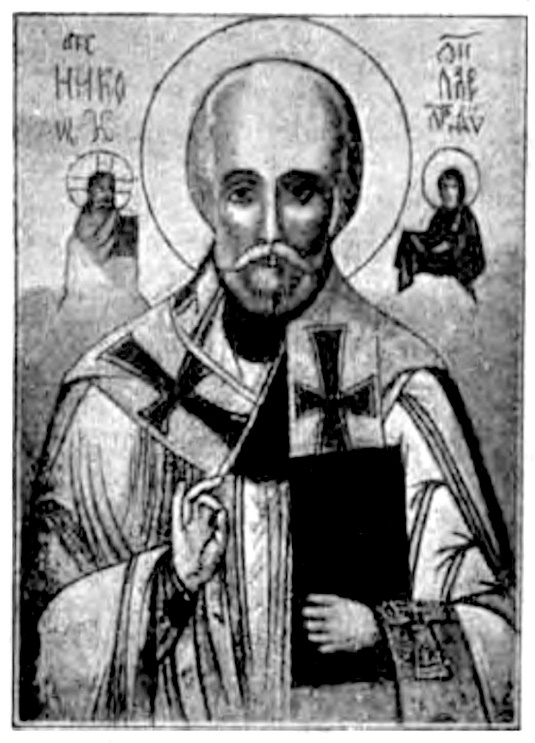
«Было уже за полночь, пишет он, когда я выехал из Никеи через третьи великолепные врата, носящие название «Цареградских», потому что ими въезжали императоры из своей столицы; ещё есть на них триумфальная надпись, над коей теперь посмеялись люди и время: «здесь конечный трофей над полчищем бесстыдных Сарацын, здесь христолюбивые императоры наши, Лев и Константин, обновили город, возобновив сию башню ценой кентария золота и семилетних трудов». Но другое священное предание сохранилось о сих вратах; сами Турки его повторяют. Сторож, присланный мне для почести от аяна или градоначальника, показал нам в одной из громадных бойниц, с правой стороны торжественных ворот, так называемую темницу святого Николая чудотворца; здесь, по местному преданию, он был заключён за то, что поразил на соборе Ария, защищая догматы веры, и содержался в узах, доколе не был оправдан свыше по небесному суду, который ознаменовался явлением Евангелия и омофора, как это пишется на его иконах. Глубокое уважение к святителю, можно по истине сказать – вселенскому, обнаруживается даже и в Магометанах: как объяснить это счастливое влияние, которое сей угодник Божий преимущественно перед всеми имеет на все племена и языки?» Рассказ об этом предании, в связи с некоторыми другими интересными историческими указаниями относительно города Никеи, мы находим у другого позднейшего, не назвавшего себя, путешественника, бывшего в Никее весной 1872-м года. «Мы направились, говорит он, по пустырю к северным воротам Никеи, называемым Константинопольскими. Они состоят из трёх рядов ворот: внутренних, средних и внешних. Древнейшие из них внутренние. Они языческой эпохи. Два привратные столба их увенчаны колоссальными головами Горгоны из белого мрамора. Одна стоит ещё на месте и живописно выглядывает из зелени смежных деревьев. Другая лежит на земле в груде камней. Средние ворота – Византийской постройки – замечательны своей красотой. Их можно бы счесть образцом Византийского искусства и этом роде. Они кладены из серого, правильно тёсаного, камня и состоят из пролёта, сведённого дугой, высокого и глубокого, и двух нишей по сторонам с обоих лиц их. В нишах ещё можно различить следы некогда бывших изображений. Так, в одной видны слабые очертания св. Николая с малыми изображениями Спасителя и Богоматери по сторонам, головы угодника, как это пишется у нас, и как редко встречается в Греческой иконописи... Из троих этих ворот собственно только средние входят в линию городской стены. В первой к востоку от них башне указывают место заключения св. Николая. Нижние части её засыпаны землёй. В верхних нет ничего, что напоминало бы темницу. Предание однако ж живо. Подтверждением ему служит и упомянутое выше изображение святителя, находящееся со стороны этой башни».
«It was already past midnight, he writes, when I rode out of Nicaea through the third magnificent gates, bearing the name “of Constantinople,” because through them the emperors entered from their capital; there is still upon them a triumphal inscription, over which men and time have now mocked: “here is the final trophy over the host of shameless Saracens; here our Christ-loving emperors, Leo and Constantine, renewed the city, restoring this tower at the cost of a centenarium of gold and seven years of labors.” But another sacred tradition is preserved concerning these gates; the Turks themselves repeat it. A guard, sent to me as an honor by the ayan or city-governor, showed us in one of the enormous embrasures, on the right side of the triumphal gates, the so-called prison of St. Nicholas the Wonderworker; here, according to local tradition, he was confined for having struck Arius at the Council, defending the dogmas of the faith, and was held in bonds until he was justified from on high by the heavenly judgment, which was signified by the appearance of the Gospel and the omophorion, as is written on his icons. Deep respect for the Hierarch—one may truly say, the universal one—is shown even by the Mohammedans: how is one to explain this blessed influence which this man of God, more than all others, has upon all tribes and tongues?» An account of this tradition, in connection with certain other interesting historical indications concerning the city of Nicaea, we find in another, later, unnamed traveler, who was in Nicaea in the spring of the year 1872. «We directed our steps, he says, across the waste ground toward the northern gates of Nicaea, called the Constantinopolitan. They consist of three rows of gates: inner, middle, and outer. The most ancient of them are the inner ones. They are of the pagan era. Their two gate pillars are crowned with colossal heads of the Gorgon of white marble. One still stands in place and picturesquely peers out from the greenery of the neighboring trees. The other lies on the ground in a heap of stones. The middle gates—of Byzantine construction—are remarkable for their beauty. One might take them as a model of Byzantine art in this kind. They are laid of gray, regularly hewn stone and consist of a span, arched over, high and deep, and two niches on the sides on both their faces. In the niches one can still distinguish traces of images that once were there. Thus, in one are visible faint outlines of St. Nicholas with small images of the Savior and the Mother of God on the sides, the head of the saint, as it is painted among us, and as is rarely encountered in Greek iconography... Of these three gates, properly only the middle ones enter the line of the city wall. In the first tower to the east of them they point out the place of St. Nicholas’ confinement. Its lower parts are filled with earth. In the upper ones there is nothing that would recall a prison. The tradition, however, is alive. Confirmation of it is also the above-mentioned image of the Hierarch, located on the side of this tower.»
По возвращении с собора, святитель Николай продолжал свою благотворную пастырскую деятельность по устройству Церкви Христовой: утверждал в вере христиан, обращал к истинной вере язычников и вразумлял еретиков, «спасая от гибели сонмы их, не колеблясь от нападений еретических и отгоняя от словесного стада Христова этих хищных волков» (св. Андрей Критский). Как мудрый земледелец, говорит св. Димитрий Ростовский, провевая на гумне своём хлеб, жито собирает в одно место, а плевелы откидывает в другое; так и благоразумный делатель гумна Христова – святой Николай – наполнил духовную житницу добрыми делами, тщательно отделив пшеницу Господню от плевелов еретического учения и далеко отбросив с своего гумна последние, почему Церковь справедливо называет его «лопатой, развевающей Ариева плевельные учения». – С такой заботливостью относясь к духовным нуждам своей паствы, святитель Николай не пренебрегал удовлетворением и телесных их нужд. Вот один из случаев подобной заботы его о телесных нуждах своей паствы. В Ливийской стране открылся сильный голод. В Мирах оскудели съестные припасы, и многие из горожан терпели крайнюю нужду в них. Ещё несколько времени такого печального положения дела, и произошло бы большое народное бедствие. Но благовременно поданная святителем Николаем чудесная помощь не довела город и страну до этого несчастия. Произошло это следующим образом. Один торговец, нагрузивши хлебом свой корабль в Италии, перед отплытием увидел во сне чудотворца Николая, который приказал ему отвезти хлеб для продажи в Линию и вручил ему в виде задатка три золотые монеты. Немедленно проснувшись, купец к изумлению своему действительно увидел у себя в руке вручённые ему во сне святителем золотые монеты. После этого он счёл своим долгом исполнить волю святого мужа, явившегося ему во сне, и отплыл в Миры, где и распродал свой хлеб, в то же время рассказавши о своём чудном видении. Граждане Мир, узнавши в явившемся купцу муже своего архипастыря святителя Николая, вознесли самую горячую благодарность Господу и Его святому угоднику, так чудно напитавшему их во время голода.
Upon his return from the Council, the Hierarch Nicholas continued his beneficent pastoral activity in the ordering of the Church of Christ: he confirmed Christians in the faith, converted pagans to the true faith, and admonished heretics, «saving their multitudes from destruction, not wavering from the attacks of heresies and driving away from the verbal flock of Christ these ravenous wolves» (St. Andrew of Crete). As a wise husbandman, says St. Demetrius of Rostov, winnowing his grain on his threshing floor, gathers the wheat into one place and casts the chaff to another; so also the prudent worker of Christ’s threshing floor—St. Nicholas—filled the spiritual granary with good works, carefully separating the Lord’s wheat from the chaff of heretical teaching and casting the latter far from his threshing floor, wherefore the Church rightly calls him «the fan that winnows Arius’ chaff-like teachings.»—Relating with such solicitude to the spiritual needs of his flock, the Hierarch Nicholas did not neglect the satisfaction of their bodily needs either. Here is one of the instances of such care of his for the bodily needs of his flock. In the Lycian country a severe famine broke out. In Myra food supplies ran short, and many of the townspeople suffered extreme need of them. A little more time of such a grievous state of affairs, and a great national calamity would have occurred. But the miraculous help timely rendered by the Hierarch Nicholas did not bring the city and the country to this misfortune. It happened in the following manner. A certain merchant, having loaded his ship with grain in Italy, before setting sail saw in a dream the Wonderworker Nicholas, who commanded him to take the grain for sale to Lycia and gave him, as a deposit, three gold coins. Immediately upon waking, the merchant, to his amazement, actually saw in his hand the gold coins given him in the dream by the Hierarch. After this he considered it his duty to fulfill the will of the holy man who had appeared to him in the dream, and sailed to Myra, where he sold his grain, at the same time telling of his wondrous vision. The citizens of Myra, recognizing in the man who had appeared to the merchant their archpastor, the Hierarch Nicholas, offered the most fervent thanksgiving to the Lord and to His holy servant, who had so wondrously fed them during the famine.
Пользуясь высоким уважением и влиянием за свою святость, святитель Николай ещё при жизни своей прославился, как умиротворитель враждующих, властный защитник невинно-осуждённых и чудный предстатель, и избавитель от напрасной смерти.
Enjoying high esteem and influence for his holiness, St. Nicholas even during his lifetime was renowned as a peacemaker of the hostile, an authoritative defender of the innocent-condemned, and a wondrous intercessor and deliverer from unjust death.
Предание сохранило следующие случаи умиротворения им враждующих и заступничества за невинно-осуждённых.
Tradition has preserved the following instances of his pacifying of the hostile and his intercession for the innocent-condemned.
В царствование Константина Великого, в стране Фригии (лежавшей на север от Ликии) вспыхнул мятеж. Для устранения его царь Константин отправил войско под начальством трёх воевод – Непотиана, Урса и Ерпилиона. Последние отплыли с войском на кораблях из Константинополя и, вследствие сильного морского волнения, не доплывши до Фригии, остановились в Ликии, у Адриатского берега, где был город.
In the reign of Constantine the Great, in the country of Phrygia (lying to the north of Lycia), a rebellion broke out. To suppress it, the Emperor Constantine sent an army under the command of three voivodes—Nepotian, Ursus, and Erpilion. The latter set sail with the army on ships from Constantinople and, owing to a violent storm at sea, not having reached Phrygia, stopped in Lycia, at the Adriatic shore, where there was a city.
Море продолжало быть неспокойным, и им пришлось здесь остановиться на продолжительное время. Между тем у войска стали истощаться припасы. Поэтому воины часто сходили на берег и, пользуясь силой, обижали жителей, отнимая у них припасы даром. Жители возмущались подобным насилием, и вот в местности, носившей название Плакомата, произошла жестокая и кровопролитная схватка между воинами и жителями.
The sea continued to be rough, and they were obliged to stop here for a considerable time. Meanwhile, the army's provisions began to run out. Therefore the soldiers often came ashore and, using force, wronged the inhabitants, taking their supplies without payment. The inhabitants were indignant at such violence, and so in the locality bearing the name Plakomata, a fierce and bloody clash occurred between the soldiers and the inhabitants.
Едва только святитель Николай услышал о происшедшем в Плакомате, как немедленно поспешил туда для усмирения мятежа. Весть о прибытии всеми почитаемого угодника Божия прекратила споры между той и другой стороной и собрала на встречу ему как жителей возмутившегося местечка, так и виновников мятежа – воинов с воеводами во главе. Узнав от последних, что они держат путь во Фригию для усмирения мятежа, святитель Николай уговорил их восстановить тишину и повиновение в своём войске и не позволять ему обижать местных жителей, причём пригласил их в город и дружески угостил.
No sooner did St. Nicholas hear of what had happened in Plakomata than he immediately hastened there to quell the disturbance. The news of the arrival of the universally revered man of God put an end to the disputes between the two sides and gathered to meet him both the inhabitants of the rebellious town and the instigators of the disturbance—the soldiers with the voivodes at their head. Learning from the latter that they were on their way to Phrygia to suppress a rebellion, St. Nicholas persuaded them to restore quiet and obedience in their army and not to allow it to wrong the local inhabitants, and he invited them into the city and entertained them in a friendly manner.
Умиротворивши враждовавших в одном месте, святой угодник Божий почти одновременно явился защитником невинно-осуждённых в другом. В то время, как он находился в Плакомате, сюда явились к нему из Мир некоторые из горожан, прося его о заступничестве за трёх ни в чём неповинных их сограждан, которых градоначальник Мирский Евстафий, подкупленный завистниками этих людей, осудил на смерть. При этом они прибавили, что этой несправедливости не произошло бы и Евстафий не решился бы на столь беззаконный поступок, если бы всеми почитаемый архипастырь находился в городе.
Having pacified the hostile in one place, the holy man of God almost simultaneously appeared as the defender of the innocent-condemned in another. While he was in Plakomata, some of the citizens came to him from Myra, asking his intercession for three of their fellow citizens who were wholly innocent, whom the governor of Myra, Eustathius, bribed by the envious of these men, had condemned to death. They added that this injustice would not have occurred, and Eustathius would not have dared such a lawless act, if the universally revered archpastor had been in the city.
Услышав об этом несправедливом поступке Мирского градоначальника Евстафия, святитель Николай немедленно поспешил в Миры, чтобы успеть освободить незаконно присуждённых к смертной казни, и попросил следовать за собой также и трёх воевод царских. Когда св. Николай прибыл в одно местечко, называемое Лев, ему сказали, что обвинённые уже выведены на поле Диоскурово для смертной казни. Ускорив шаги и достигнув церкви святого Крискента, Божий угодник увидел поле, покрытое народом, окружавшим обвинённых. Они были совершенно готовы к смертной казни: руки у них были связаны, лица закрыты, колена преклонены и обнажённые шеи протянуты в ожидании смертного удара. Казалось, что человеческая помощь была немыслима. Но в этот решительный момент является к месту казни святитель Николай и, вырвавши из рук палача обнажённый меч, бросает его на землю и освобождает невинно-осуждённых. Никто из присутствовавших не осмелился остановить его: все были уверены, что все, что он ни делает, делает по воле Божией. Освобождённые от уз три мужа, которые уже видели себя во вратах смерти, плакали слезами радости, и народ громко славил угодника Божия за его заступничество.
Hearing of this unjust act of the Myra governor Eustathius, St. Nicholas immediately hastened to Myra, in order to arrive in time to free those unlawfully sentenced to death, and he asked the three imperial voivodes also to follow him. When St. Nicholas arrived at a certain town called Lev, he was told that the accused had already been led out to the field of Dioscurus for execution. Quickening his steps and reaching the church of St. Crescentius, the man of God saw the field covered with people surrounding the condemned. They were completely ready for execution: their hands were bound, their faces covered, their knees bent, and their bare necks stretched out in expectation of the death blow. It seemed that human help was impossible. But at this decisive moment St. Nicholas appears at the place of execution and, snatching the bare sword from the hand of the executioner, casts it to the ground and frees the innocent-condemned. No one among those present dared to stop him: all were certain that whatever he did, he did by the will of God. Freed from their bonds, the three men, who already saw themselves at the gates of death, wept tears of joy, and the people loudly glorified the man of God for his intercession.
В это время к месту казни пришёл и сам начальник города Евстафий, по приказанию которого должна была состояться казнь невинно-осуждённых. Видя правоту святого угодника и сознавая собственную виновность, за которую он мог потерпеть наказание от царя, Евстафий припал к ногам святителя Николая, умоляя его о прощении. Но, по внушению врага злобы, он не хотел признать себя виновным в преступлении и свою вину в нём сваливал на двух городских старейшин – Симонида и Евдоксия. Такая ложь не укрылась от святого угодника, который в виду упорства Евстафия хотел донести на него царю и угрожал ему муками на том свете за несправедливое управление. Наконец Евстафий чистосердечно сознался, что осуждение на смерть трёх невиновных граждан – его дело, и со слезами раскаяния просил святого Николая о прощении. Искреннее раскаяние Евстафия было принято угодником Божиим, и он простил его.
At this time the city governor Eustathius himself also came to the place of execution, by whose order the execution of the innocent-condemned was to have taken place. Seeing the righteousness of the holy man of God and conscious of his own guilt, for which he might suffer punishment from the emperor, Eustathius fell at the feet of St. Nicholas, begging his forgiveness. But, at the prompting of the enemy of malice, he did not wish to acknowledge himself guilty of the crime and shifted his guilt in it onto two city elders—Simonides and Eudoxius. Such a lie did not escape the holy man of God, who, in view of Eustathius's obstinacy, wished to denounce him to the emperor and threatened him with torments in the world to come for his unjust governance. At last Eustathius sincerely confessed that the condemnation to death of three innocent citizens was his doing, and with tears of repentance asked St. Nicholas for forgiveness. The sincere repentance of Eustathius was accepted by the man of God, and he forgave him.
Дивились присутствовавшие при этом царские воеводы ревности и власти святителя Николая, не подозревая, что им он некогда окажет такую же защиту, как трём невинно осуждённым гражданам города Мир. Напутствованные на дорогу благословением святителя Господня, они быстро и успешно усмирили мятеж в Фригии и с радостью от успешного выполнения царского поручения возвратились домой. Царь был очень доволен скорым усмирением мятежа во Фригии и осыпал военачальников дарами и почестями. К несчастью, у них оказались сильные враги.
The imperial voivodes present marveled at the zeal and authority of St. Nicholas, not suspecting that he would one day show them the same protection as to the three innocent-condemned citizens of the city of Myra. Sent on their way with the blessing of the hierarch of the Lord, they quickly and successfully quelled the rebellion in Phrygia and, rejoicing at the successful fulfillment of the imperial commission, returned home. The emperor was very pleased with the swift suppression of the rebellion in Phrygia and showered the military commanders with gifts and honors. Unfortunately, they had powerful enemies.
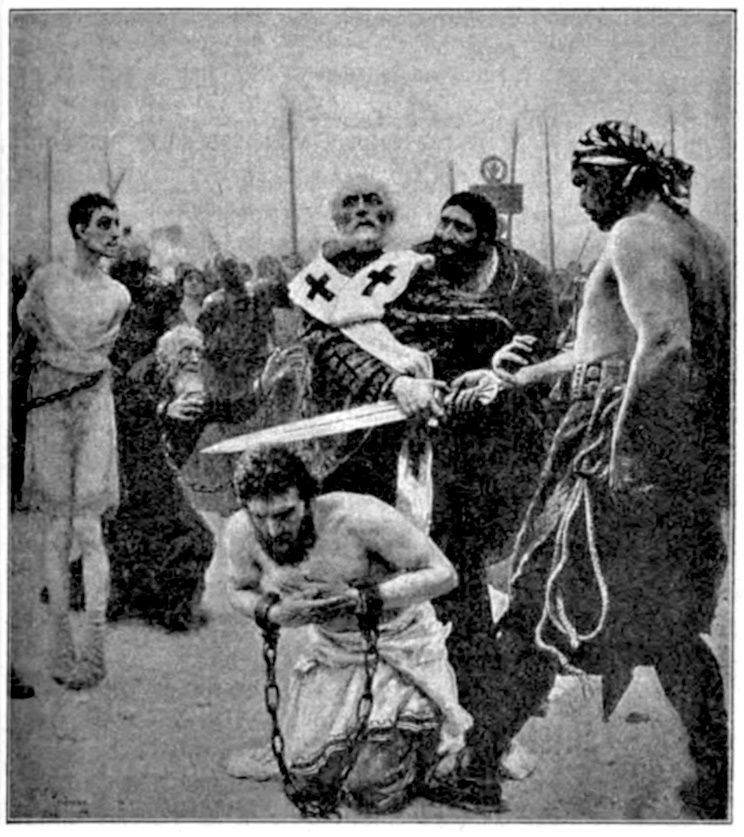
Св. Николай избавляет невинно осуждённых от меча
St. Nicholas delivers the innocent-condemned from the sword
(с картины профессора Репина, в Музее имп. Александра III)
(from a painting by Professor Repin, in the Museum of Emperor Alexander III)
Расположение царя к трём военачальникам возбудило в сердцах их врагов сильную зависть, и они решились погубить их. Для этого они оклеветали перед Константинопольским градоначальником Евлавием осыпанных царскими милостями военачальников в измене царю и желании свергнуть его с престола. Подкупленный золотом Евлавий внял их клевете и уверил в правдивости её царя. Последний, возмущённый такой чёрной неблагодарностью только что облагодетельствованных им воевод, велел заключить их в узы и бросить в темницу.
The emperor's favor toward the three military commanders aroused strong envy in the hearts of their enemies, and they resolved to destroy them. To this end, they slandered before the governor of Constantinople, Eulavius, the commanders who had been showered with imperial favors, accusing them of treason against the emperor and of wishing to cast him from the throne. Bribed with gold, Eulavius heeded their slander and convinced the emperor of its truth. The latter, outraged at such black ingratitude on the part of the voivodes he had just so recently favored, ordered them to be bound and cast into prison.
Несколько времени спустя, враги военачальников, опасаясь, как бы не раскрылась клевета их при расследовании дела, новыми подарками склонили Евлавия к тому, чтобы он испросил у императора позволение на немедленную смертную казнь военачальников. С унылым лицом и печальным взором явился корыстолюбивый градоначальник к царю. «Ни один из заключённых не хочет покаяться, сказал он царю: напротив, они твёрдо пребывают в своём гнусном намерении против тебя и питают к тебе величайшую злобу. Повели, царь, немедленно казнить их, чтобы они не выполнили своего злого умысла против тебя». – Введённый вторично в заблуждение, император страшно разгневался и приказал на следующее утро казнить оклеветанных военачальников. Первым передать узникам эту печальную весть выпало на долю темничного сторожа. Последний чрезвычайно сожалел о случившемся, уверенный в невиновности приговорённых к смертной казни, и горько оплакивал предстоящую разлуку с ними. «Лучше было бы, говорил он им, если бы я не познакомился с вами, не наслаждался бы беседой и трапезой с вами: тогда я не страдал бы так от разлуки с вами, не болел бы за постигшую вас напасть, и не было бы такой скорби в моей душе. Завтра мы разлучимся друг с другом. Горе мне! Разлука эта будет окончательная, навсегда, на веки. Никогда более не увижу я возлюбленного вашего лица и не услышу ваших прекрасных и мудрых речей. Утром назначена ваша смертная казнь. Сделайте теперь заблаговременно завещание о вашем имении. Завтра уже будет поздно».
Some time later, the enemies of the commanders, fearing that their slander might be exposed during the investigation of the case, by new gifts induced Eulavius to obtain from the emperor permission for the immediate execution of the commanders. With a dejected face and sorrowful gaze, the covetous governor appeared before the emperor. "None of the prisoners wishes to repent," he said to the emperor; "on the contrary, they firmly persist in their vile intention against you and harbor the greatest malice toward you. Command, O emperor, that they be executed immediately, lest they carry out their evil design against you." Led astray a second time, the emperor became terribly enraged and ordered that the slandered commanders be executed the next morning. The lot of being the first to convey this sad news to the prisoners fell to the prison guard. The latter exceedingly grieved over what had happened, being certain of the innocence of those sentenced to death, and bitterly lamented the impending parting from them. "It would have been better," he said to them, "if I had never made your acquaintance, had never enjoyed conversation and table fellowship with you: then I would not suffer so from parting with you, would not grieve over the calamity that has befallen you, and there would not be such sorrow in my soul. Tomorrow we shall part from one another. Woe is me! This parting will be final, forever, for all eternity. Never again shall I see your beloved faces nor hear your fine and wise words. In the morning your execution is appointed. Make now, in good time, your testament concerning your property. Tomorrow it will be too late."
Узнав о своём смертном приговоре и не зная в то же время за собой ничего дурного, военачальники пришли в отчаяние: они терзали на себе одежду и рвали волосы свои. «Какой враг позавидовал нашему житию? говорили они. За что мы умираем, будто злодеи? Что сделали мы такое, за что нас следовало бы казнить смертью?» При этом они призывали в свидетели своей невиновности всех своих родных, знакомых и Самого Бога.
Learning of their death sentence and at the same time knowing nothing evil of themselves, the commanders fell into despair: they tore their garments and rent their hair. "What enemy has envied our life?" they said. "For what do we die, as though we were malefactors? What have we done for which we should be put to death?" And they called as witnesses of their innocence all their relatives, acquaintances, and God Himself.
К счастью, один из военачальников, Непотиан, вспомнил о святителе Николае, избавившем от неминуемой смерти трёх несправедливо осуждённых граждан города Мир. В твёрдой надежде, что чудный защититель невинных не оставит и их без помощи, они обратились к Господу с горячей молитвой о заступничестве через святителя Николая. «Боже Николаев, тогда избавивший трёх мужей от напрасной смерти, призри ныне и на нас, ибо у нас нет помощника среди людей. Поднялась на нас великая напасть, и нет никого, кто бы избавил нас от неё. От страха голос замирает у нас, и язык от огня страданий прилипает к гортани нашей, так что мы уже не можем приносить Тебе обычной молитвы. Господи! Возьми нас из руки тех, которые ищут наших душ. Уже завтра хотят нас казнить: поспеши нам на помощь и избавь нас, так как мы не заслуживаем позорной смерти».
Fortunately, one of the commanders, Nepotian, remembered St. Nicholas, who had delivered from inevitable death the three unjustly condemned citizens of the city of Myra. In firm hope that the wondrous defender of the innocent would not leave them without help either, they turned to the Lord with fervent prayer for intercession through St. Nicholas. "O God of Nicholas, who then didst deliver three men from unjust death, look now also upon us, for we have no helper among men. A great calamity has risen against us, and there is no one to deliver us from it. From fear our voice fails us, and our tongue cleaves to our throat from the fire of sufferings, so that we can no longer offer Thee our accustomed prayer. O Lord! Take us out of the hand of those who seek our souls. Already tomorrow they wish to execute us: hasten to our aid and deliver us, for we do not deserve a shameful death."
Молитва их была принята Человеколюбцем, и Он избавил их от смерти через Своего угодника св. Николая. В ту же ночь угодник Божий явился во сне царю и грозно сказал ему: «освободи из темницы трёх воевод, потому что они и неправедно осуждены и невинно страдают». Затем рассказал царю, как оклеветаны были военачальники, и в заключение прибавил: «если ты не послушаешь меня и не отпустишь их, то воздвигну такой же мятеж, как во Фригии, и ты погибнешь».
Their prayer was accepted by the Lover of Mankind, and He delivered them from death through His servant St. Nicholas. That very night the man of God appeared in a dream to the emperor and said to him sternly: "Release the three voivodes from prison, for they have been unjustly condemned and suffer innocently." Then he told the emperor how the commanders had been slandered, and in conclusion added: "If you do not listen to me and do not release them, I shall raise such a rebellion as in Phrygia, and you will perish."
Удивившись властному приказанию явившегося мужа и недоумевая, как мог он ночью попасть во внутрь дворца, царь сказал ему: «кто же ты, что грозишь мне войной и гибелью?» – «Я – Николай, архиерей Мирской митрополии», был ответ явившегося мужа. После этого видения царь проснулся и стал размышлять о том, что такое оно могло бы означать. В ту же ночь святитель Николай явился во сне и начальнику города Евлавию с требованием отпустить на свободу невинно осуждённых воевод.
Marveling at the authoritative command of the man who appeared, and perplexed as to how he could have entered the inner palace by night, the emperor said to him: "Who are you, that you threaten me with war and destruction?" — "I am Nicholas, bishop of the metropolis of Myra," was the answer of the man who appeared. After this vision the emperor awoke and began to ponder what it might signify. That same night St. Nicholas also appeared in a dream to the governor of the city, Eulavius, demanding that he release the unjustly condemned voivodes.
На утро император призвал к себе Евлавия и, узнав, что и ему был такой же сон, велел привести к себе осуждённых на смерть военачальников. «Какие волхвования вы сделали, строго сказал он им, чтобы послать мне сегодня ночью мужа, который грозно требовал отпустить вас на свободу, обещая в противном случае поднять на меня гибельную междоусобную войну?» Военачальники, ничего не знавшие о явлении св. Николая во сне императору, недоумевали, слыша такие слова, и, когда царь уже более кротко велел рассказать истину, отвечали ему: «государь! мы никогда не занимались волхвованием и никогда не помыслили чего-нибудь злого против тебя. Если мы говорим ложь, то пусть погибнем не только мы, но и весь наш род. Мы с детства привыкли чтить и любить царя нашего, трудились тебе по мере возможности и сил наших и доказали свою верность к тебе тем, что усмирили во Фригии мятеж. Ты сам же прежде наградил нас почестями за нашу верность, а теперь, благодаря врагам нашим, мы осуждены невинно и терпим понапрасну, так как ничего худого против тебя не замышляли и не делали».
In the morning the emperor summoned Eulavius to him and, learning that he too had seen the same dream, ordered the commanders condemned to death to be brought before him. "What sorceries have you wrought," he said to them sternly, "to send me a man this night who threateningly demanded that I release you to freedom, promising otherwise to raise against me a destructive civil war?" The commanders, who knew nothing of the appearance of St. Nicholas to the emperor in a dream, were perplexed hearing such words, and when the emperor, now more gently, bade them tell the truth, they answered him: "Sovereign! We have never practiced sorcery, and have never conceived anything evil against you. If we speak falsely, then let us perish, not only we ourselves, but our entire kindred as well. From childhood we have been accustomed to honor and love our emperor, we labored for you to the measure of our ability and strength, and proved our loyalty to you by quelling the rebellion in Phrygia. You yourself formerly rewarded us with honors for our loyalty, but now, thanks to our enemies, we are unjustly condemned and suffer in vain, since we have neither devised nor done anything evil against you."
Выслушав эти речи, царь раскаялся, что осудил на смерть таких верных своих слуг и сделался виновником беззакония, за которое подлежит страшному суду Господню. Он милостиво и ласково стал разговаривать со своими верными слугами. В это время случилось нечто необычайное! Перед глазами воевод предстал образ святого Николая, сидящего рядом с царём и движением руки обещающего им милость и прощение. Им он был видим, а царю и Евлавию нет. Тогда военачальники громко воскликнули: «Боже Николаев, избавивший тогда в Мирах трёх мужей от напрасной смерти, избавь и нас от настоящей беды!» Поражённый этим император спросил их: «кто такой этот Николай, и каких мужей он спас от напрасной смерти?» Услышав из уст Непотиана рассказ о событии, происшедшем в Мирах, царь удивился ревности святого угодника о правде и освободил оклеветанных воевод. «Вы свободны, – сказал он им, – но не я дарую вам жизнь, а великий служитель Господень – святитель Николай, которого вы призвали себе на помощь. Идите же к нему, поблагодарите его и от меня скажите, что я исполнил повеление его». При этом царь послал архиепископу Николаю Евангелие и другие дары для его церкви.
Having heard these words, the emperor repented that he had condemned such faithful servants to death and had become the author of an iniquity for which he was subject to the terrible judgment of the Lord. He began to speak with his faithful servants mercifully and kindly. At that moment something extraordinary occurred! Before the eyes of the voivodes appeared the image of St. Nicholas, sitting beside the emperor and with a motion of his hand promising them mercy and forgiveness. He was visible to them, but not to the emperor or Eulavius. Then the commanders cried out loudly: "O God of Nicholas, who didst then deliver three men in Myra from unjust death, deliver us also from our present calamity!" Struck by this, the emperor asked them: "Who is this Nicholas, and what men did he save from unjust death?" Hearing from the lips of Nepotian the account of the event that had taken place in Myra, the emperor marveled at the zeal of the holy man of God for righteousness and released the slandered voivodes. "You are free," he said to them, "but it is not I who grant you life, but the great servant of the Lord — St. Nicholas, whom you have called to your aid. Go then to him, thank him, and tell him from me that I have fulfilled his command." At the same time the emperor sent to Archbishop Nicholas a Gospel and other gifts for his church.
Избавившись от неминуемой смерти заступничеством святого угодника Николая, военачальники тотчас же отправились в Миры Ливийские. Здесь прежде всего они горячо поблагодарили святителя за его чудесную помощь, передали ему царские дары, раздали много милостыни нищей братии и, напутствованные благословением святителя Христова, благополучно возвратились домой.
Delivered from imminent death by the intercession of the holy saint Nicholas, the commanders immediately set out for Myra in Lycia. There, first of all, they warmly thanked the Hierarch for his miraculous help, delivered to him the imperial gifts, distributed much alms to the poor brethren, and, sent on their way with the blessing of the Hierarch of Christ, returned home in safety.
Святитель во время своей жизни оказывал помощь даже людям, совершенно его не знавшим и никогда не видавшим, лишь только они обращались к нему с просьбой о помощи и с верой в действительность этой помощи. Так велика была готовность святого угодника Божия помочь людям в несчастных случаях их жизни! Вот один из многочисленных примеров этого рода.
During his life the Hierarch rendered help even to people who did not know him at all and had never seen him, as soon as they turned to him with a request for help and with faith in the reality of this help. So great was the readiness of the holy saint of God to help people in the misfortunes of their lives! Here is one of the many examples of this kind.
Один корабль, плывший из Египта в Ликию, подвергся страшной буре: сильный ветер изломал все снасти, изорвал паруса; волны почти совсем затопили судно. У корабельщиков уже не оставалось никакой надежды на спасение. Но, к счастью, в эту решительную минуту им пришла спасительная мысль обратиться с молитвой о помощи к святителю Николаю, которого они даже никогда не видали, но только слышали о нём, что он является скорым помощником всех находящихся в бедах. Надежда на помощь Божьего угодника не обманула их. После молитвы корабельщиков, обращённой к нему, он немедленно появился на корабле, стал на корме и со словами: «вы звали меня, и я пришёл к вам на помощь, теперь не бойтесь!» начал править судном. По воле угодника Божия, ветер стих, и на море наступила тишина. Так сильна была вера святителя Николая, та вера, о которой Сам Господь сказал:верующий в Меня дела, которые творю Я, и он сотворит (Ин.14:12); верой он повелевал морю и ветру, и они слушались его. По утишении морского волнения, образ святого Николая исчез. Пользуясь тихим попутным ветром, корабельщики благополучно достигли Мир и, движимые чувством глубокой благодарности к святителю, избавившему их от неминуемой смерти, сочли своим долгом лично поблагодарить его здесь. Они встретились с ним, когда он шёл в церковь, и, припавши к ногам своего спасителя, принесли ему самую искреннюю благодарность.
A certain ship sailing from Egypt to Lycia was overtaken by a terrible storm: a strong wind shattered all the rigging and tore the sails; the waves almost completely swamped the vessel. The sailors no longer had any hope of salvation. But, fortunately, at this decisive moment a saving thought came to them — to turn in prayer for help to St. Nicholas, whom they had never even seen, but had only heard of him that he is a swift helper of all who are in distress. Their hope in the help of the saint of God did not deceive them. After the prayer of the sailors addressed to him, he immediately appeared on the ship, stood at the stern, and with the words: "You called me, and I have come to your aid; now do not be afraid!" began to steer the vessel. By the will of the saint of God, the wind subsided, and calm fell upon the sea. So strong was the faith of St. Nicholas — that faith of which the Lord Himself said: he who believes in Me, the works that I do, he also will do (Jn. 14:12); by faith he commanded the sea and the wind, and they obeyed him. When the sea's agitation was calmed, the image of St. Nicholas vanished. Taking advantage of the gentle favorable wind, the sailors reached Myra in safety and, moved by a feeling of deep gratitude to the Hierarch who had delivered them from imminent death, considered it their duty to thank him personally there. They met him as he was walking to church, and, falling at the feet of their savior, offered him their most sincere gratitude.
Дивный угодник Божий, спасший их от телесной беды и смерти, захотел по своему милосердию избавить их и от духовной смерти. Своим прозорливым духом он проник в души корабельщиков и увидел, что они заражены скверной любодеяния, которая так удаляет человека от Бога и Его святых заповедей. Поэтому святитель позаботился отеческим увещанием отклонить их от этого греха и тем спасти их от вечной погибели. «Присмотритесь к себе, сказал он им, и исправьте сердца и помышления ваше, чтобы угодить Богу. Если и можно скрыть что-нибудь от людей и даже можно слыть у них при тяжких грехах за добродетельных, то от Бога ничего нельзя утаить. Необходимо строго сохранять душевную и телесную чистоту, так как, по учению Апостола Павла, вы – храм Божий, и дух Божий живёт в вас» (1Кор.3:16). Давши корабельщикам душеспасительный совет впредь избегать позорного греха, святитель Господень с благословением отпустил их домой. – Бесчисленными и другими чудотворениями всё более и более приобретал известность святитель Николай: имя его, как сейчас мы видели, призывали жившие в дальнем расстоянии от него и никогда не видавшие его, и не одни только верующие, но и неверующие. И святитель Николай отзывался неизменной чудной помощью всем, искавшим его: при этом у спасаемых им от разных телесных бед и немощей он возбуждал раскаяние во грехах и желание исправить свою жизнь. Таким образом, свидетельствует святой Андрей Критский, – «живя ещё во плоти, прежде отшествия своего ко Христу, святитель Николай являлся к обременённым различными бедствиями, подавал им скорейшую помощь в нуждах и исторгал жертвы смерти из самых её челюстей. Слово его, выражавшее чисто отеческую любовь к ближнему и вместе с тем нечеловеческую мудрость, действовало неотразимо властно; поучал он не столько словами, сколько делами своими, имевшими как бы божественную силу и значение. Своей добродетельной жизнью он сиял в Мирах, как звезда утренняя среди облаков, как месяц красивый в полнолунии своём. Для Церкви Христовой он был ярко сияющим солнцем, украшал её, как лилия при источнике, был для неё миром прекрасно благоухающим (Сир.8:6–8).
The wondrous saint of God, who had saved them from bodily calamity and death, wished by his mercy to deliver them also from spiritual death. With his discerning spirit he penetrated into the souls of the sailors and saw that they were infected with the foulness of fornication, which so alienates man from God and His holy commandments. Therefore the Hierarch took care by fatherly admonition to turn them away from this sin and thereby save them from eternal perdition. "Look to yourselves," he said to them, "and correct your hearts and thoughts, that you may please God. If anything can be hidden from men, and one can even be regarded by them as virtuous amid grievous sins, yet from God nothing can be concealed. It is necessary to strictly preserve purity of soul and body, since, according to the teaching of the Apostle Paul, ye are the temple of God, and the Spirit of God dwelleth in you" (1 Cor. 3:16). Having given the sailors this soul-saving counsel henceforth to avoid the shameful sin, the Hierarch of the Lord dismissed them home with his blessing. — By countless other miracles the Hierarch Nicholas acquired ever greater renown: his name, as we have just seen, was invoked by those who lived at a great distance from him and had never seen him, and not only by believers, but also by unbelievers. And St. Nicholas responded with invariable wondrous help to all who sought him: moreover, in those whom he saved from various bodily calamities and infirmities, he awakened repentance for sins and the desire to amend their lives. Thus, as St. Andrew of Crete testifies — "while still living in the flesh, before his departure to Christ, St. Nicholas appeared to those burdened with various calamities, gave them swiftest help in their needs, and snatched the victims of death from its very jaws. His word, expressing a pure fatherly love for his neighbor and at the same time a more than human wisdom, acted with irresistible authority; he taught not so much by words as by his deeds, which had as it were divine power and significance. By his virtuous life he shone in Myra like the morning star among the clouds, like a beautiful moon in its fullness. For the Church of Christ he was a brightly shining sun, adorned her like a lily at the spring, and was for her a beautifully fragrant myrrh (Sir. 8:6–8)."
До глубокой старости сподобил Господь дожить Своего великого угодника святителя Николая. Но наступило, наконец, время, когда и он должен был отдать общий долг человеческого естества. После непродолжительной болезни он мирно скончался, с радостью отходя в ожидавшую его блаженную жизнь. Душу его, как великого угодника Божия, святые Ангелы отнесли к Господу; честное же тело его, при многочисленном собрании епископов Ливийской страны, клириков, иночествующих и народа, было погребено 6-го декабря в соборной Мирской церкви. «Величаю тебя, митрополия Ливийская, говорил в соборном храме города Мир св. Андрей, архиепископ Критский, в начале VIII-го века перед гробницей святителя Николая, – ты стяжала пастыря чадолюбивого; ты прияла на главу свою дорогой и нетленный венец. Кто это? – Николай, в нуждах предстающий с небесными утешениями, неукоснительный защитник в обидах, великий в чудесах и страшный в явлениях, спасающий невинных от погибели, разрушающий сновидениями неправедные предприятия. Блажен ты из городов, Миры! Ты вмещаешь в недрах столь великого благодетеля. Приидите, пойдем светом его» (Ис.2:5).
The Lord vouchsafed His great saint, St. Nicholas, to live to a deep old age. But at last the time came when he too had to pay the common debt of human nature. After a brief illness he peacefully reposed, departing with joy to the blessed life that awaited him. His soul, as that of a great saint of God, was borne by the holy Angels to the Lord; his honorable body, however, in the presence of a great gathering of the bishops of the Lycian country, of the clergy, monastics, and the people, was buried on the 6th of December in the cathedral church of Myra. "I magnify thee, metropolis of Lycia," said St. Andrew, Archbishop of Crete, in the cathedral church of the city of Myra at the beginning of the eighth century, before the tomb of St. Nicholas, "thou hast acquired a child-loving shepherd; thou hast received upon thy head a precious and incorrupt crown. Who is this? — Nicholas, who in needs appears with heavenly consolations, an unfailing defender in wrongs, great in miracles and terrible in apparitions, saving the innocent from destruction, destroying by dreams unrighteous enterprises. Blessed art thou among cities, O Myra! Thou dost contain within thy bosom so great a benefactor. Come ye, and let us walk in his light" (Is. 2:5).
При жизни святитель Николай был благодетелем рода человеческого, не перестал он быть им и по своей смерти. Господь сподобил его честное тело нетления и особой чудотворной силы. Его мощи начали источать благоуханное миро, обладающее даром чудотворений. Мажущимся им с верой в святителя Божия оно сообщало исцеление от всех болезней, не только телесных, но и духовных, отгоняя также нечистых духов, которых так часто побеждал Святитель ещё при своей жизни.
During his life St. Nicholas was a benefactor of the human race; he did not cease to be so after his death. The Lord vouchsafed his honorable body incorruption and a special wonderworking power. His relics began to pour forth fragrant myrrh, possessing the gift of miracles. To those anointing themselves with it in faith in the saint of God, it imparted healing from all diseases, not only bodily but also spiritual, while also driving away unclean spirits, whom the Hierarch had so often vanquished even during his life.
Прошло 700 слишком лет после блаженной кончины угодника Божия Николая, великого Мирликийского чудотворца. Родная ему Ликия стала подвергаться частым нашествиям Сарацин и была опустошаема их мечом и огнём. В конце XI века Сарацины произвели страшное опустошение в Восточных областях Римской империи: начавши от Херсона, страшные враги прошли до Антиохии и Иерусалима. Все лежавшие на пути города, сёла, церкви и монастыри они предавали огню в мечу, жителей брали в плен, умерщвляли и разгоняли, так что все места, пройденные ими, надолго оставались дикой пустыней. Вследствие таких опустошительных Сарацинских набегов древние Миры запустели: остаток их жителей переселился на другое место, в 13 стадиях (около 2½ вёрст) от прежнего города, где впрочем ещё оставался Сионский храм, таивший в себе сокровище честных мощей тёплого заступника и скорого помощника Николая, охраняемое лишь немногими монахами. «Неужели», спрашивает один современный перенесению мощей летописец, «преподобный и великий архиерей не мог умолить Господа, чтобы Он не погубил города Мир и не привёл в запустение церковь с мощами Его угодника?» «Конечно, мог», отвечает он. «Но это бедствие», продолжает он, «ниспослано на нас за грехи наши, которыми мы раздражаем долготерпение Божие, и должно было служить к нашему же уврачеванию».
More than seven hundred years had passed since the blessed repose of the man of God, St. Nicholas, the great Wonderworker of Myra. His native Lycia began to suffer frequent incursions by the Saracens and was laid waste by their sword and fire. At the end of the eleventh century, the Saracens wrought a terrible devastation in the Eastern regions of the Roman Empire: beginning from Cherson, these dread enemies advanced as far as Antioch and Jerusalem. All the cities, villages, churches, and monasteries that lay in their path they consigned to fire and sword; the inhabitants they took captive, slew, or scattered, so that all the places they had passed through remained for a long time a desolate wilderness. As a result of these devastating Saracen raids, ancient Myra fell into desolation; the remnant of its inhabitants moved to another place, thirteen stadia (about 2½ versts) from the former city, where, however, the Sion temple still remained, concealing within itself the treasure of the honorable relics of the warm intercessor and speedy helper Nicholas, guarded only by a few monks. “Could it be,” asks a chronicler contemporary with the translation of the relics, “that the Venerable and great hierarch could not entreat the Lord not to destroy the city of Myra and not to bring desolation upon the church containing the relics of His saint?” “Of course he could,” he answers. “But this calamity,” he continues, “has been sent upon us for our sins, by which we provoke the long-suffering of God, and it was meant to serve for our own healing.”
Но, предав на разорение город, прославленный мощами угодника Божия, Господь предопределил перенести их на Запад в многолюдный город, называемый «Бар». Угодно же было Господу сделать это перенесение мощей, по словам св. Димитрия Ростовского, как для того, «чтобы мощи такого светильника миру, душа которого в светлостях небесных приемлет достойную себе честь, и на земле не были без почитания и под спудом, и чтобы обильный источник чудесных исцелений не был без почерпающих из него», так и для того, «чтобы и Западу не лишиться благодеяний Божиих, получаемых благодаря ходатайству великого архиерея». – Само перенесение мощей произошло при следующих обстоятельствах. В 1087-м году, при царе Греческом и самодержце Константина града Алексее I-м Комнине (1081–1118) и патриархе его Николае III-м Грамматике (1083–1111), в лето Русских князей христолюбивого и великого князя Всеволода в Киеве (1078–1093) и благородного сына его Владимира в Чернигове (1078–1094), святитель Христов Николай явился во сне одному честному и благоговейному священнику Апулийского города Бара, бывшего двести лет средоточием Греческой власти в Италии и только незадолго перед тем покорившегося Норманнам. «Поди и скажи клиру и народу», повелел явившийся святитель священнику, «чтобы они взяли из Мир Ливийских мощи мои и перенесли в здешний город; ибо Господу не угодно, чтобы я оставался там в пустыне». Священник утром пошёл в церковь и рассказал о своём видении клиру церковному и народу. Последние, услышав о такой милости к ним Господа и Его угодника св. Николая, исполнились великой радости, говоря: «Господь послал теперь Свою милость на людей и город наш». Немедленно снарядили они три корабля и отправили на них священников, клириков и других благочестивых и богобоязненных мужей для привезения мощей святителя Николая. Всех, отправившихся за мощами угодника Божия, по словам Западного летописца Сигеберта, современника перенесения мощей, было 47 человек (не считая прислуги и матросов). Посланные, опасаясь, чтобы кто-нибудь другой прежде их не успел воспользоваться многоценным сокровищем чудотворений, которое волей Божией было предназначено для них, придумали скрыть цель своего путешествия под видом торгового предприятия и для этого нагрузили свои корабли пшеницей. Благополучно достигли они Антиохии, где продали свою пшеницу и купили других товаров, как бы намереваясь продолжать торговлю. Но здесь они получили неприятное для себя известие, что Венецианские купцы, находившиеся в это время в Антиохии, также намерены отправиться в Миры для перенесения мощей святителя Николая в свой город. Решивши предупредить последних, Баряне немедленно отплыли от берегов Антиохии и, благодаря попутному ветру, благополучно достигли берегов Линии и остановились в Андриане, пристани города Мир.
But, having given over to destruction the city glorified by the relics of the man of God, the Lord ordained that they be translated to the West, to a populous city called “Bari.” This translation of the relics was pleasing to the Lord, according to the words of St. Demetrius of Rostov, both so that “the relics of such a luminary of the world, whose soul in the splendors of heaven receives the honor due to it, might not remain on earth without veneration and under a bushel, and that the abundant source of miraculous healings might not be without those who draw from it,” and also so that “the West might not be deprived of the blessings of God received through the intercession of the great hierarch.” – The translation of the relics itself took place under the following circumstances. In the year 1087, under the Greek Emperor and Autocrat of Constantinople, Alexius I Comnenus (1081–1118), and his Patriarch Nicholas III Grammaticus (1083–1111), in the year of the Russian princes, the Christ-loving and Grand Prince Vsevolod in Kiev (1078–1093) and his noble son Vladimir in Chernigov (1078–1094), the Hierarch of Christ Nicholas appeared in a dream to a certain honorable and reverent priest of the Apulian city of Bari, which for two hundred years had been the center of Greek power in Italy and had only shortly before been conquered by the Normans. “Go and tell the clergy and the people,” commanded the appearing hierarch to the priest, “that they should take my relics from Myra in Lycia and translate them to this city; for it is not pleasing to the Lord that I should remain there in the wilderness.” In the morning the priest went to the church and told of his vision to the clergy and the people. The latter, hearing of such mercy shown to them by the Lord and His saint, St. Nicholas, were filled with great joy, saying: “The Lord has now sent His mercy upon the people and our city.” Immediately they outfitted three ships and sent upon them priests, clerics, and other pious and God-fearing men to bring the relics of St. Nicholas. According to the Western chronicler Sigebert, a contemporary of the translation of the relics, all those who set out for the relics of the man of God numbered forty-seven men (not counting servants and sailors). The envoys, fearing that someone else might succeed before them in making use of the precious treasure of miracles, which by the will of God was destined for them, devised to conceal the purpose of their voyage under the guise of a commercial enterprise, and for this they loaded their ships with wheat. They reached Antioch safely, where they sold their wheat and bought other goods, as if intending to continue trading. But here they received unpleasant news: the Venetian merchants who were then in Antioch also intended to go to Myra to translate the relics of St. Nicholas to their city. Deciding to forestall them, the men of Bari immediately set sail from the shores of Antioch and, thanks to a favorable wind, safely reached the shores of Lycia and stopped at Andriake, the port of the city of Myra.
Отсюда они прежде всего послали на берег 2-х Иерусалимских паломников, взятых ими с собой из Антиохии, одного родом Грека, другого Француза, чтобы они разузнали, нет ли около местонахождения мощей угодника Турок, которые могли бы помешать им. Посланные, не встретя в городе ничего подозрительного и только 4-х монахов у церкви, в которой покоилась желанная святыня, возвратившись на корабль, объявили Барянам, что они беспрепятственно могут выполнить своё желание. Тогда 47 человек Барян берут оружие и, оставив матросов и прислугу стеречь свои суда, отправляются в храм святителя Николая. Достигши его, они смиренно вошли в храм и поклонились святому престолу. Мощи святого угодника охраняли всего только четыре сторожа-монаха, к которым прибывшие Баряне и обратились с просьбой – указать им местонахождение тела св. угодника. Когда Баряне открывают монахам своё намерение – перенести мощи чудотворца в Апулию и, чтобы скорее получить их согласие, предлагают им выкуп в 300 золотых, последние отказываются от денег и даже делают попытку убежать из храма, чтобы известить об этом жителей г. Мир. Но Баряне, заметив попытку монахов бежать в город, связали их и у дверей храма поставили своих сторожей, чтобы обезопасить себя от нежеланных свидетелей.
From there they first sent ashore two Jerusalem pilgrims whom they had taken with them from Antioch—one a Greek by birth, the other a Frenchman—to find out whether there were any Turks near the place where the relics of the saint lay, who might hinder them. The envoys, encountering nothing suspicious in the city and seeing only four monks at the church in which the desired shrine rested, returned to the ship and announced to the men of Bari that they could carry out their wish without hindrance. Then the forty-seven men of Bari took up arms and, leaving the sailors and servants to guard their ships, set out for the church of St. Nicholas. Having reached it, they humbly entered the church and bowed before the holy altar. The relics of the holy saint were guarded by only four monk-wardens, to whom the arriving men of Bari turned with a request to show them the location of the body of the holy saint. When the men of Bari revealed to the monks their intention to translate the relics of the Wonderworker to Apulia and, to obtain their consent more quickly, offered them a ransom of three hundred gold pieces, the latter refused the money and even made an attempt to flee from the church to inform the inhabitants of the city of Myra. But the men of Bari, noticing the monks’ attempt to flee into the city, bound them and placed their own guards at the doors of the church to secure themselves against unwanted witnesses.
В это время один из двух Барских пресвитеров, прибывших в храм св. Николая, державший в руках своих стеклянный сосуд, который он наполнил святою влагою, пожелал принять участие в занимавшем товарищей деле (переговорах со сторожами) и поставил сосуд на вершине одной, не очень высокой колонны, бывшей в преддверии алтаря… Случилась вещь весьма чудная: пузырёк тот вдруг упал со своей высоты и с великим треском ударился о мрамор, под которым истекала влага. На необычайный стук его сбежались все присутствовавшие и, найдя пузырёк, упавший с такой высоты и с таким шумом, совершенно целым, удивились этому и воздали хвалу Богу. В этом знамении они увидели выражение воли св. угодника на немедленное перенесение его мощей. Тогда один, наиболее смелый юноша, по имени Матфий, стал угрожать смертью стражу, если он не укажет местонахождения тела великого святителя. Другой сторож, желая избавить своего товарища от смерти, указал рассвирепевшему юноше местонахождение мощей. При этом он сказал, что было много попыток, даже со стороны императоров, перенести отсюда св. останки, но все они оказались безуспешны. Очевидно, святителю было не угодно оставить Миры. Только в прошлом году, по словам сторожа, святитель дал знать, что в скором времени последует его переселение из Мир-Ликийских. Он явился в видении трём человекам, приказывая им объявить жителям города Мир, которые из страха Турок ушли отсюда на гору (отстоящую на 12 стадий), чтобы они или возвратились жить и стеречь город, или знали, что он переселится в другое место, что, по мнению сторожа, он и начинает приводить в исполнение.– Ободрённый этим рассказом, юноша Матфий взял в руки железный молоток и сильно ударил им о мраморную плиту помоста, которая от удара разбилась в мелкие куски. Вынувши разбитую плиту, товарищи Матфия начали рыть под ней землю и в скором времени нашла белый саркофаг (раку), покрытый каменной треугольной крышкой. Они совсем его откопали, но боялись ударить по нем, чтобы не случилось с ними какой-нибудь беды. Тогда смельчак Матфий, не будучи в силах сдерживать долее горячность своего духа, сильно ударил по крышке я разбил её в куски. Когда он снял её, то увидел, что рака была полна святой влаги. Вдруг распространился такой благоуханный запах, что всем присутствовавшим казалось, что они находятся в раю. И не для одних только присутствовавших в храме был ощутим этот чудный запах, но, благоприятствуемый ветром, он донёсся до самого моря, отстоявшего на 3 мили: и здесь ощутили его прочие товарищи их и исполнились радости, так как в этом они увидели согласие угодника Божия на исполнение задуманного ими предприятия.
At this time, one of the two Bari presbyters who had come to the church of St. Nicholas, holding in his hands a glass vessel which he had filled with holy moisture, wished to take part in the matter that occupied his companions (the negotiations with the wardens) and placed the vessel on the top of a certain not very high column that stood in the forecourt of the altar… A most wondrous thing occurred: that little vessel suddenly fell from its height and struck the marble with a great crash, beneath which the moisture flowed forth. At its extraordinary noise, all those present ran together and, finding the little vessel, which had fallen from such a height and with such a noise, completely intact, they marveled at this and gave praise to God. In this sign they saw an expression of the will of the holy saint for the immediate translation of his relics. Then one, the boldest youth, named Matthew, began to threaten the warden with death if he did not show the location of the body of the great hierarch. Another warden, wishing to save his comrade from death, pointed out to the enraged youth the location of the relics. At the same time he said that there had been many attempts, even by emperors, to translate the holy remains from there, but all had been unsuccessful. Evidently, the hierarch was not pleased to leave Myra. Only in the past year, according to the warden, the hierarch had given a sign that his departure from Myra in Lycia would soon take place. He appeared in a vision to three men, commanding them to announce to the inhabitants of the city of Myra, who had fled from there to the mountain (distant twelve stadia) out of fear of the Turks, that they should either return to live and guard the city, or know that he would depart to another place—which, in the warden’s opinion, he was now beginning to fulfill. Encouraged by this account, the youth Matthew took an iron hammer in his hands and struck a mighty blow upon the marble slab of the pavement, which shattered into small pieces from the blow. Having removed the broken slab, Matthew’s companions began to dig the earth beneath it and soon found a white sarcophagus (a reliquary) covered with a triangular stone lid. They completely uncovered it, but feared to strike it lest some misfortune befall them. Then the bold Matthew, unable to restrain the ardor of his spirit any longer, struck the lid forcefully and shattered it into pieces. When he removed it, he saw that the reliquary was full of holy moisture. Suddenly such a fragrant odor spread that all present thought they were in paradise. And not only those present in the church perceived this wondrous fragrance, but, carried by the wind, it reached as far as the sea, three miles away; and there their other companions perceived it and were filled with joy, for in this they saw the consent of the man of God to the fulfillment of the enterprise they had conceived.
Смелый юноша Матфий спускается в раку и, погрузив свои ладони в находившуюся в ней влагу, находит святые мощи плавающими и превосходящими своим ароматом всякие благоухания. Сторожа, видя, что св. угодник даёт согласие на перенесение его мощей, предаются горьким сетованиям. Между тем юноша взял из раки мощи святителя Николая и передал пресвитеру, который тщательно завернул их в новую бумажную одежду своего тела. Некоторые из Барян хотели взять в храме ещё одну древнюю чудотворную икону святителя Николая, но это не удалось им, так как св. угодник не хотел совершенно оставить Ливийской страны.
The bold youth Matthew descends into the reliquary and, plunging his hands into the moisture contained therein, finds the holy relics floating and surpassing all fragrances with their aroma. The wardens, seeing that the holy saint was giving his consent to the translation of his relics, gave themselves over to bitter lamentations. Meanwhile, the youth took the relics of St. Nicholas from the reliquary and handed them to the presbyter, who carefully wrapped them in the new cotton garment of his body. Some of the men of Bari wished to take from the church also an ancient wonderworking icon of St. Nicholas, but this did not succeed, for the holy saint did not wish to leave the Lycian land completely.
Радостные Баряне с мощами св. Николая отправились к своим кораблям, где также радостно встретили их оставшиеся товарищи, все вместе восхваляя всемогущего Бога, увенчавшего их желание успехом.
The joyful men of Bari set out with the relics of St. Nicholas for their ships, where their remaining companions also received them with joy, all together praising Almighty God, who had crowned their desire with success.
Между тем граждане Мирские узнали от сторожей о перенесении их святыни Барянами на свой корабль и, видя в этом волю св. угодника, в громадном количестве собрались к Барским кораблям и громким плачем выражали своё горе. Будучи не в состоянии сдерживать себя, они в одежде и обуви шли в море и здесь хватались за рули и вёсла кораблей, говоря: «отдайте отца нашего и господина нашего, своим покровительством берегшего нас от видимых врагов! Если не всего, то хотя часть от него дайте нам, чтобы не совсем лишиться нам такого покровителя».
Meanwhile, the citizens of Myra learned from the watchmen that the Bariotes had carried their sacred treasure onto their ship, and, seeing in this the will of the holy wonderworker, they gathered in vast numbers at the Bariote ships and expressed their grief with loud lamentation. Unable to contain themselves, they went into the sea in their clothing and footwear, and there clung to the rudders and oars of the ships, saying: "Give back our father and our lord, who by his protection kept us from visible enemies! If not all of him, then at least a part of him give us, that we may not be utterly deprived of such a protector."
Баряне утешают плачущих Мирян тем, что у них остаётся гроб Святителя, полный святой влаги, и икона его, от которой много получается исцелений, а сами поспешно отплывают от пристани. Баряне сознавались, что почти у на 2 мили слышен был плач стоявших на берегу Мирян, и что не много было самих Барян, которые не плакали бы, и сочувствуя их горю.
The Bariotes comforted the weeping citizens of Myra by saying that they still had the tomb of the Hierarch, full of holy moisture, and his icon, from which many healings are received, while they themselves hastily set sail from the harbor. The Bariotes confessed that for nearly two miles the weeping of the citizens standing on the shore could be heard, and that there were few among the Bariotes themselves who did not weep, sympathizing with their grief.
Выехали из Мир Баряне в апреле месяце 1087-го года. Сначала, в 1-й день по выезде из Мир, Барянам помогал плыть домой попутный ветер. Но на следующий день подул северный ветер и повернул их корабль по направлению к городу Патарам (родине св. Николая). Баряне устрашились, думая, что угодник не хочет расстаться с берегами Ливии; а вместе с тем они боялись преследования, потому что Патары находились недалеко от Мир. Поэтому Баряне, уже утомлённые дорогой, причалили на время к пристани Макри. Здесь они стали рассуждать, отчего так мало подвинулись вперёд во время трёхдневного пути. Одни спрашивали, точно ли это мощи святителя Николая; другие боялись, что прогневали святителя смелым своим поступком; третьим, наконец, пришло на мысль, не взял ли кто из товарищей, по чувству усердия и веры, частицу мощей св. угодника.
The Bariotes set out from Myra in the month of April in the year 1087. At first, on the first day after leaving Myra, a favorable wind helped the Bariotes sail homeward. But on the following day a north wind arose and turned their ship in the direction of the city of Patara (the homeland of St. Nicholas). The Bariotes were frightened, thinking that the wonderworker did not wish to part from the shores of Lycia; and at the same time they feared pursuit, because Patara was not far from Myra. Therefore the Bariotes, already weary from the journey, put in for a time at the harbor of Macri. Here they began to reason why they had advanced so little during their three days' voyage. Some asked whether these were truly the relics of St. Nicholas; others feared that they had angered the Hierarch by their bold deed; still others, finally, conceived the thought that perhaps one of their companions, out of zeal and faith, had taken a portion of the relics of the holy wonderworker.
Тогда остановились на этой последней догадке, принесли Евангелие, и каждый из мореплавателей обязан был поклясться, что не похитил ни малейшей части мощей. Пятеро признались в этом проступке и отдали похищенные части. Тогда море успокоилось, и подул благоприятный ветер. Мореплаватели поняли, что их священный долг привезти в Бар драгоценный клад в целости, и с тех пор путь их продолжался счастливо.
Then they settled upon this last conjecture, brought the Gospel, and each of the sailors was obliged to swear that he had not stolen even the smallest portion of the relics. Five confessed to this transgression and returned the stolen portions. Then the sea grew calm, and a favorable wind arose. The sailors understood that their sacred duty was to bring the precious treasure to Bari intact, and from that time their voyage continued happily.
Когда мореплаватели миновали залив Трахеи, одному из пловцов в глубоком сне явился святитель Николай и сказал: «не бойтесь, я с вами! Через 20 дней мы придём в город Бар». Проснувшись, мореплаватель рассказал, что видел, товарищам, и они исполнились глубокой радости.
When the sailors had passed the Gulf of Trachea, St. Nicholas appeared to one of the voyagers in a deep sleep and said: "Fear not, I am with you! In twenty days we shall arrive at the city of Bari." Upon waking, the sailor told his companions what he had seen, and they were filled with deep joy.
На дальнейшем пути произошла следующая удивительная вещь. Одна маленькая ласточка села на правом руле судна, на котором везли святое тело. Ходя по нему без всякого страха, как будто была привычной жительницей его, она тихо вспрыгнула на руку одного из мореплавателей, который в то время правил рулём. Оттуда перелетела к месту, где покоилось святое тело и, напевая тихонько, носом своим клевала тот сосуд, в котором сокрыты были святые мощи. «Благосклонные братья», замечает по поводу этого события современник события, западный писатель Никифор, оставивший нам рассказ о перенесении мощей. «Сколь хвален всемогущий Бог, побуждавший к хвалению и почитанию Своего святого исповедника не только людей, но и немых животных. Ибо пение птицы было хваление, а прикосновение клювом означало лобзание, которое она верно приносила св. телу. Напевая, она облетала каждое из суден и всех людей, и видна была всем, воздавая хвалу блаженства им за то, что они везли такого великолепного и дивного пастыря. Исполнив долг своего послушания, она отлетела и скрылась из виду».
On the further course of the voyage, the following wondrous thing occurred. A small swallow alighted upon the right rudder of the ship on which the holy body was being carried. Walking upon it without any fear, as though it were an accustomed inhabitant of the vessel, it quietly hopped onto the hand of one of the sailors who was then steering the rudder. From there it flew to the place where the holy body lay and, singing softly, pecked with its beak at the vessel in which the holy relics were concealed. "Kindly brethren," remarks concerning this event a contemporary of the event, the Western writer Nicephorus, who has left us the account of the translation of the relics, "how praiseworthy is Almighty God, Who moved to praise and venerate His holy confessor not only men, but also dumb animals. For the bird's song was praise, and the touch of its beak signified the kiss which it faithfully offered to the holy body. Singing, it flew around each of the ships and all the men, and was visible to all, rendering praise to them for their blessedness in that they were carrying such a magnificent and wondrous shepherd. Having fulfilled the duty of its obedience, it flew away and vanished from sight."
Наконец, после продолжительного путешествия, Баряне 8-го мая пришли в пристань св. Георгия, Христова мученика, отстоявшую на 4 мили от города Бар. Отсюда они дали знать жителям Бара о скором прибытии в их город мощей знаменитого чудотворца Востока, а сами занялись приготовлением деревянного ковчега, в который и были положены мощи святителя.
Finally, after a long voyage, the Bariotes arrived on the 8th of May at the harbor of St. George, martyr of Christ, which lay four miles from the city of Bari. From there they gave notice to the inhabitants of Bari of the imminent arrival in their city of the relics of the renowned wonderworker of the East, and they themselves set about preparing a wooden ark, into which the relics of the Hierarch were placed.
Между тем молва о прибытии Барян с мощами великого чудотворца разнеслась по всему городу, и на следующий день, 9-го мая, на столь чудное и желанное зрелище стеклась огромная толпа народа. Духовенство Барское в священных облачениях вышло на встречу принять тело св. угодника. Прибывшие уведомили своих сограждан, что они, когда брали тело святого угодника, дали священный обет воздвигнуть ему достойную церковь на дворе господском, что называется Катапани, и теперь настаивают на исполнении ими их желания. По поводу этого произошло большое разногласие: одни (большинство) одобрили их обещание, другие же хотели, чтобы святитель Николай был погребён в городском соборе (епископии).
Meanwhile, the rumor of the arrival of the Bariotes with the relics of the great wonderworker spread throughout the whole city, and on the following day, the 9th of May, a vast multitude of people streamed together for so wondrous and longed-for a spectacle. The clergy of Bari came out in sacred vestments to receive the body of the holy wonderworker. The arrivals informed their fellow citizens that, when they took the body of the holy wonderworker, they had made a sacred vow to raise up for him a worthy church on the lord's court, which is called Catapani, and now they insisted upon the fulfillment of their desire. On this account a great disagreement arose: some (the majority) approved their promise, while others wished that St. Nicholas should be buried in the city cathedral (the episcopate).
Желая мирным путём устранить такое разногласие, настоятель Бенедиктинского монастыря, по имени Илия, уговорил возвратившихся мореплавателей перенести тело угодника в церковь его обители, пока будет строиться новая. Последние согласились на это, так как настоятель Илия слыл за человека благочестивого. Вокруг обители стали моряки с оружием в руках, страшась мести противной партии, недовольной тем, что соборное духовенство не успело опередить настоятеля Илии.
Desiring to remove such disagreement by peaceful means, the superior of the Benedictine monastery, by the name of Elias, persuaded the returned sailors to carry the body of the wonderworker into the church of his monastery, while the new one was being built. The latter agreed to this, since the superior Elias was reputed to be a pious man. Around the monastery the sailors stood with weapons in their hands, fearing the vengeance of the opposing party, which was displeased that the cathedral clergy had not managed to get ahead of the superior Elias.
Между тем о прибытии такой святыни дано было знать Барскому архиепископу Урсону, которого в то время не было в городе. Услышавши об этом, он немедленно прибыл в Бар-град и первым делом поспешил поклониться мощам великого угодника. Но он настоятельно стал требовать перенесения мощей в собор и не хотел дозволить построения нового храма. Вследствие этого между двумя партиями вновь возгорелась сильная вражда, кончившаяся даже вооружённой стычкой, в которой легло четыре человека. В то время, как под стенами Бенедиктинского монастыря происходила кровавая распря, некоторые из моряков, вспомнив, а что двор Катапани, тогда уже принадлежавший герцогу Рожеру, пользуется правами патронатства, открыли незаметную дверь в монастыре со стороны моря, вынесли из него мощи угодника и поставили их в церковь св. мученика Евстахия, стоявшую в округе Катапанских чертогов и зависевшую от гражданской власти.
Meanwhile, notice of the arrival of such a sacred treasure was given to the Archbishop of Bari, Urson, who at that time was not in the city. Hearing of this, he immediately arrived in the city of Bari, and his first act was to hasten to venerate the relics of the great wonderworker. But he insistently demanded the translation of the relics to the cathedral and would not permit the building of a new church. In consequence of this, a fierce enmity again blazed up between the two parties, ending even in an armed skirmish, in which four men fell. At the very time when the bloody strife was taking place beneath the walls of the Benedictine monastery, some of the sailors, recalling that the court of Catapani, which then already belonged to Duke Roger, enjoyed the rights of patronage, opened an unnoticed door in the monastery on the seaward side, carried out from it the relics of the wonderworker, and placed them in the church of the holy martyr Eustathius, which stood in the district of the Catapanian chambers and was dependent upon the civil authority.
Тогда раздоры кончились. Архиепископ разрешил строить новый храм и торжественно шествовал в сопровождении многих епископов, всего соборного духовенства и огромной толпы народа, без обуви, до церкви мученика Евстахия на поклонение мощам великого угодника.
Then the dissensions ceased. The archbishop permitted the building of a new church and solemnly walked, accompanied by many bishops, all the cathedral clergy, and a vast multitude of the people, without footwear, to the church of the martyr Eustathius to venerate the relics of the great wonderworker.
Лишь только прибыло тело святого угодника в Бар-град, как от него стали получаться многочисленные исцеления. Всякие недужные – хромые, слепые, глухие, бесноватые – через прикосновение к мощам получали исцеление. По сказанию современника событию – Западного историка Никифора, в первую ночь по прибытии мощей и на следующий день исцелилось 47 человек различного пола и возраста. В числе их были: один из знатнейших горожан и один Армянин, имевший левый бок совсем высохшим, три лунатика, один глухонемой, двое сухоруких, два горбатых младенца, трое слепых, некто из рода Пизанцев – сухорукий и хромой, и много других, которых всех долго было бы перечислять. На третий день из множества народа, стёкшегося из деревень, городков и городов окрестных, исцелилось в монастыре 9 недужных. Из них один младенец сухорукий с бельмом на глазу, одна нищая глухая и хромая на обе ноги, младенец бесноватый, Армянская девочка бесноватая, одна женщина Ювенатянка, совсем сухая, другая женщина, страдавшая тяжким недугом, одна женщина лунатичная и расслабленная и один странник сухорукий и слепой. В тот же день, после перенесения святого тела на Каталанский двор, исцелилось ещё 14 человек. На четвёртый день исцелилось 29 недужных, сперва – некая бесноватая, вся сухая, из деревни, называемой Терлиццус, некая девица из города Битунто, женщина из города Аскуло и бесноватая из города Таранто, три лунатика, два слепых, одна горбатая, и одна из города св. Вита (что под крепостью горы Скагиоза), которая ежедневно множество раз падала тяжко, мучимая почти до смерти. Быв тщательно расспрошена мной, пишет Никифор, видевшим, как она была здорова, она сказала, что на неё налетел один большой ястреб, сел на грудь её и, распростёрши крылья, накрыл её. Когда он отлетал, вдруг разнёсся такой приятный запах, что она думала, что находится в раю. Тоже самое показали и другие исцелившиеся. Отсюда несомненно надобно верить, говорить Никифор, что это был Ангел святого исповедника, ежедневно стерегущий тело. Также исцелилась одна девица из Бара, страдавшая чрезмерной болью в коленах, и многие другие. На пятый день святитель Николай открыл себя в видении одному почтённому монаху, приказав ему сказать всем, чтобы не отчаивались относительно исцелений, ибо он по воле Бога Всемогущего отправится в Грецию. Впрочем, прежде чем он отправился, все увидели великое чудо от него. Ибо в тот же самый день, ещё прежде солнечного восхода, исцелился один юноша, пять лет одержимый бесом глухим, немым и слепым. В субботу, в десятом часу, по возвращении святого Николая, исцелилось 11 недужных.
No sooner had the body of the holy wonderworker arrived in the city of Bari, than numerous healings began to be received from it. All manner of the afflicted—the lame, the blind, the deaf, the possessed—received healing through touching the relics. According to the account of a contemporary of the event, the Western historian Nicephorus, on the first night after the arrival of the relics and on the following day, 47 persons of various sex and age were healed. Among them were: one of the most noble citizens, and one Armenian who had his left side completely withered, three lunatics, one deaf-mute, two with withered arms, two hunchbacked infants, three blind persons, one of the race of the Pisans—with a withered arm and lame—and many others, whom it would take long to enumerate. On the third day, from the multitude of people who had streamed together from villages, towns, and cities round about, 9 afflicted persons were healed in the monastery. Among them were one infant with a withered arm and a cataract on the eye, one beggar woman deaf and lame in both legs, a possessed infant, an Armenian girl possessed, one woman of Juventia, completely withered, another woman suffering from a grievous ailment, one woman lunatic and paralyzed, and one pilgrim with a withered arm and blind. On the same day, after the translation of the holy body to the Catapanian court, another 14 persons were healed. On the fourth day, 29 afflicted persons were healed: first, a certain possessed woman, completely withered, from a village called Terlizzus; a certain maiden from the city of Bitonto; a woman from the city of Ascoli; and a possessed woman from the city of Taranto; three lunatics, two blind persons, one hunchbacked woman, and one from the city of St. Vitus (which lies beneath the fortress of Mount Scagiosa), who daily fell heavily many times, tormented almost to death. "Having been carefully questioned by me," writes Nicephorus, "having seen how healthy she was, she said that a great hawk flew upon her, settled upon her breast, and, spreading its wings, covered her. When it flew away, suddenly such a pleasant fragrance spread abroad that she thought she was in paradise." The same was also testified by others who were healed. "From this," says Nicephorus, "one must undoubtedly believe that it was the Angel of the holy confessor, daily guarding the body." Also healed was a certain maiden from Bari who suffered from excessive pain in her knees, and many others. On the fifth day, St. Nicholas revealed himself in a vision to a certain venerable monk, commanding him to tell all not to despair concerning healings, for he, by the will of Almighty God, would depart for Greece. However, before he departed, all beheld a great miracle from him. For on that very same day, even before sunrise, a certain youth was healed who for five years had been possessed by a deaf, dumb, and blind demon. On Saturday, at the tenth hour, after the return of St. Nicholas, 11 afflicted persons were healed.
Такое обилие чудес от мощей святителя Николая и данное ранее обещание моряками расположили Барян построить новую каменную церковь в честь святителя Николая. Начались работы по перестройке здания Corte del Catapano, которое тогда же было пожертвовано герцогом Рожером с тем, чтобы оно обращено было в храм святителя Николая. (Вероятно, во время этой перестройки вышеупомянутая церковь во имя св. Евстахия была уничтожена, так как в непродолжительном времени мощи св. Николая перенесены были во временную церковь, в коей находился алтарь во имя св. первомученика Стефана). Для надзора за ходом постройки храма и для сбора пожертвований избран был упомянутый выше игумен Бенедиктинского монастыря Илия. Через 2 года в 1089-м году постройка храма была окончена. К этому же времени была приготовлена для мощей Святителя серебряная рака, украшенная драгоценными камнями.
Such an abundance of miracles from the relics of St. Nicholas and the promise previously given by the sailors disposed the people of Bari to build a new stone church in honor of St. Nicholas. Work began on the reconstruction of the building of the Corte del Catapano, which was at that time donated by Duke Roger on condition that it be turned into a church of St. Nicholas. (Probably, during this reconstruction the aforementioned church in the name of St. Eustace was destroyed, since shortly thereafter the relics of St. Nicholas were transferred to a temporary church, in which there was an altar in the name of the holy Protomartyr Stephen.) For the supervision of the progress of the church’s construction and for the collection of donations, the aforementioned abbot of the Benedictine monastery, Elias, was chosen. After two years, in the year 1089, the construction of the church was completed. By this same time, a silver reliquary, adorned with precious stones, was prepared for the relics of the Hierarch.
По построении церкви, клир и народ Бар-града отправили в Рим к папе Урбану II-му просьбу, чтобы он со своим священным собором пришёл в Бар-град, освятил новую церковь во имя святителя Николая и своими священными руками положил в новую раку честные мощи угодника Божия. Папа Урбан II-й с радостью согласился на исполнение этой благочестивой просьбы и немедленно со своим собором прибыл в Бар-град. Здесь он переложил мощи в новую раку и перенёс их в новосозданную церковь святителя Николая и поставил в алтаре. В новой же церкви был поставлен и гроб, в котором ранее лежали мощи святого угодника и в который была отделена и положена часть его мощей. Затем была освящена самая церковь в честь святителя Николая. Освящение это последовало 1-го октября, причём освящена была нижняя церковь, в которой и до сих пор находятся мощи св. угодника. (Верхняя же церковь могла быть освящена не ранее, как 22 июня 1197 года епископом Вюрцбургским Конрадом, с разрешения папы Целестина III (1196–1198).
Upon the building of the church, the clergy and people of the city of Bari sent a request to Rome to Pope Urban II, that he, together with his sacred council, should come to the city of Bari, consecrate the new church in the name of St. Nicholas, and with his own sacred hands place the precious relics of the man of God into the new reliquary. Pope Urban II gladly agreed to fulfill this pious request and immediately arrived in the city of Bari with his council. There he transferred the relics into the new reliquary and carried them into the newly-built church of St. Nicholas and placed them in the altar. In the new church was also placed the coffin in which the relics of the holy man had previously lain, and into which a portion of his relics was separated and placed. Then the church itself was consecrated in honor of St. Nicholas. This consecration took place on the 1st of October, and the lower church was consecrated, in which the relics of the holy man are still located. (The upper church could not have been consecrated earlier than June 22, 1197, by Conrad, Bishop of Würzburg, with the permission of Pope Celestine III (1196–1198).
Несколько времени спустя святитель Николай явился во сне одному благочестивому монаху и сказал ему: «благоволением всесильного Бога я пришёл к вам в город Бар; теперь я хочу, чтобы мощи мои были положены под престолом». Воля святого угодника немедленно была исполнена, и тело его положено под престол, где оно находится и в настоящее время.
Some time later, St. Nicholas appeared in a dream to a certain pious monk and said to him: “By the good pleasure of Almighty God, I have come to you in the city of Bari; now I desire that my relics be placed under the altar.” The will of the holy man was immediately fulfilled, and his body was placed under the altar, where it remains to the present day.
Вот вкратце история новосозданной церкви, в которой положены и теперь почивают мощи святителя Николая. По смерти архиепископа Барского Урсона, последовавшей незадолго до освящения нижней церкви во имя св. Николая, в преемники ему, согласно общему желанию, поставлен был папой Урбаном II-м 30-го сентября 1089-го г. игумен Илия, которому тогда же папа дал титул «архиепископа Барского, игумена церкви св. Николая». При нём устроен был близ церкви госпиталь или приют для помещения бедных странников. Эта странноприимника существует и поныне. Иностранцам позволяется оставаться в ней бесплатно три дня, туземцам же богомольцам – один день. При нём же установлено совершать ежегодно 9-го мая крестный ход по городу.
This, in brief, is the history of the newly-built church in which the relics of St. Nicholas are placed and now repose. After the death of Ursone, Archbishop of Bari, which occurred shortly before the consecration of the lower church in the name of St. Nicholas, Abbot Elias was appointed as his successor on September 30, 1089, by Pope Urban II, according to the general desire, and the pope then gave him the title “Archbishop of Bari, Abbot of the Church of St. Nicholas.” Under him, a hospital or shelter was established near the church for the accommodation of poor pilgrims. This hospice exists to this day. Foreigners are permitted to stay in it free of charge for three days, while native pilgrims are allowed one day. Under him, it was also established to hold a procession of the cross through the city annually on the 9th of May.
По смерти Илии, последовавшей в 1105 г., преемником его по управлению храмом св. Николая был Евстафий, украсивший церковь мраморами и мозаикой. По смерти его избран был на его место Приор монастыря Всех Святых Melo, и с этого времени настоятели храма св. Николая чудотворца именуются приорами (gran priori). Папа Урбан II, почти вслед за положением в церкви мощей св. Николая, изъял её из зависимости от местной епархиальной власти и подчинил её непосредственно папскому престолу, что подтверждено было в папой Пасхалием II-м (1099–1118).
After the death of Elias, which occurred in 1105, his successor in the administration of the church of St. Nicholas was Eustathius, who adorned the church with marbles and mosaics. After his death, Melo, the Prior of the Monastery of All Saints, was chosen in his place, and from this time the rectors of the church of St. Nicholas the Wonderworker are called priors (gran priori). Pope Urban II, almost immediately after the placement of the relics of St. Nicholas in the church, removed it from dependence on the local diocesan authority and subjected it directly to the papal throne, which was confirmed by Pope Paschal II (1099–1118).
Мало церквей на Западе, которые бы пользовались таким великим и всеобщим уважением, как церковь св. Николая чудотворца в Бар-граде. Здесь, у мощей св. Николая, молился в 1094-м году знаменитый проповедник крестовых походов Пётр Пустынник и склонил герцога Боэмунда поднять оружие для освобождения Гроба Господня от неверных. В этом же именно храме папа Урбан II в октябре месяце 1098 г. убеждал созванных из нижней Италии духовных Греков признать Римское учение об исхождении Св. Духа. И владетельные особы, и простой народ соревновали в оказании благоговения своего к чудотворцу. Жители Бар-града, сдаваясь войскам, осаждавшим их город, всегда выговаривали себе у победителей условие, чтобы мощи их святого заступника оставлены были при них. Герцоги Апулии – Роберт, Рожер, Боэмунд – принимали на себя звание защитников церкви св. Николая. Императоры, короли, герцоги и князья, а также частные лица обогатили церковь щедрыми вкладами и приношениями. Благочестивые богомольцы не престают и доселе в большом количестве стекаться на поклонение св. мощам.
There are few churches in the West that enjoy such great and universal veneration as the church of St. Nicholas the Wonderworker in the city of Bari. Here, at the relics of St. Nicholas, the famous preacher of the Crusades, Peter the Hermit, prayed in the year 1094 and persuaded Duke Bohemond to take up arms for the liberation of the Holy Sepulcher from the infidels. In this same church, Pope Urban II, in October of the year 1098, urged the Greek clergy summoned from lower Italy to acknowledge the Roman teaching on the procession of the Holy Spirit. Both sovereigns and common people vied in showing their reverence for the Wonderworker. The inhabitants of the city of Bari, when surrendering to the armies besieging their city, always stipulated to the victors the condition that the relics of their holy intercessor should remain with them. The Dukes of Apulia—Robert, Roger, Bohemond—assumed the title of protectors of the church of St. Nicholas. Emperors, kings, dukes, and princes, as well as private individuals, enriched the church with generous donations and offerings. Pious pilgrims do not cease even now to flock in great numbers to venerate the holy relics.
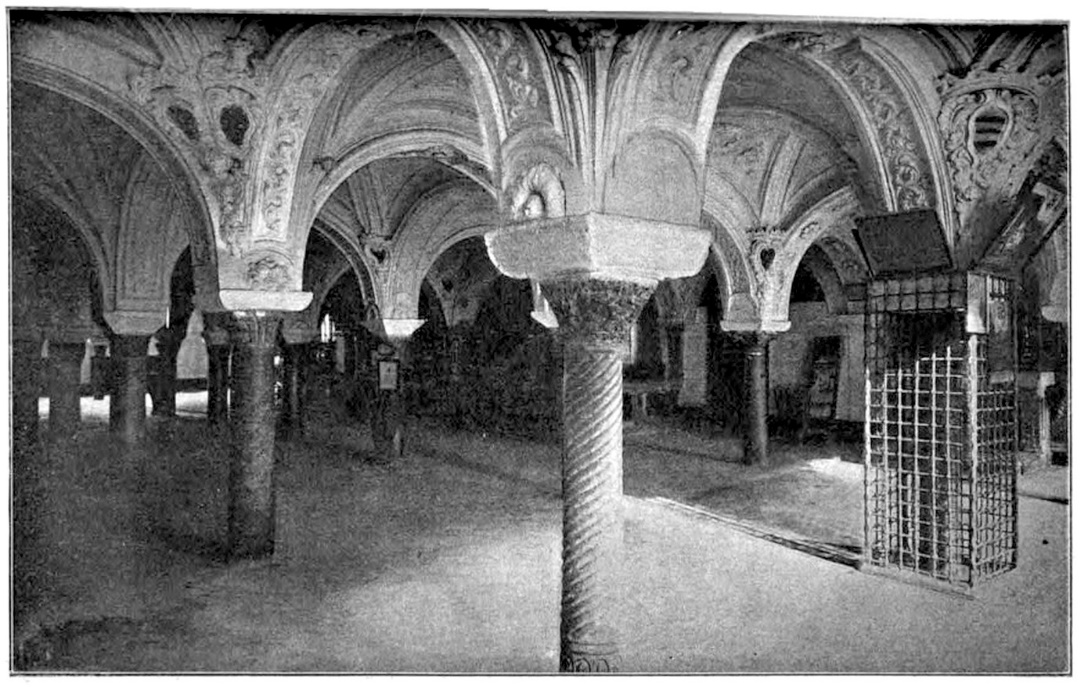
Внутренний вид нижней церкви (крипты), в которой покоятся мощи св. Николая, в Бар-граде
Interior view of the lower church (crypt) in which the relics of St. Nicholas repose, in the city of Bari
И наши Русские паломники, посещавшие святые места Востока, считали своим долгом посетить и Западный Бар-град ради его великой святыни и нередко оставляли ценные воспоминания о том, что они видели там. Так, один из них, Василий Григорович-Барский, в начале прошедшего столетия обошедший святые места в Европе, Азии и Африке, поместил в своём «Путешествии» весьма подробное описание той церкви в Баре, в которой почивают мощи святого Николая чудотворца. Этот безискусственный, но в то же время весьма интересный рассказ Русского паломника мы помещаем ниже в полном виде с изменением только книжного языка начала прошлого столетия. Что сделанное в прошлом столетии В. Г.-Барским описание церкви и обряда, учреждённого для поклонения мощам, остаётся верным и до настоящего времени, это видно из описания (также помещаемого ниже в сокращении) другого, более позднего, Русского путешественника Владимира Мордвинова, посетившего Бар-град в 1873 году.
And our Russian pilgrims, who visited the holy places of the East, considered it their duty to visit also the Western city of Bari for the sake of its great shrine, and often left valuable recollections of what they saw there. Thus, one of them, Vasily Grigorovich-Barsky, who in the beginning of the last century traversed the holy places in Europe, Asia, and Africa, included in his “Travels” a very detailed description of that church in Bari in which the relics of St. Nicholas the Wonderworker repose. This artless, yet at the same time very interesting account of a Russian pilgrim we present below in full, with only a change in the bookish language of the beginning of the last century. That the description of the church and the rite established for the veneration of the relics made in the last century by V. G.-Barsky remains accurate to the present day is evident from the description (also given below in abridged form) of another, later Russian traveler, Vladimir Mordvinov, who visited the city of Bari in 1873.
В воскресенье, 28 июля 1724 года, пишет Василий Григорович-Барский, поздно вечером прибыл я в Бар-град. В тот же день утром прибыл туда и спутник мой Иустин. Вместе пошли мы в гостиницу святителя Христова Николая, находящуюся при церкви, в которой почивают его мощи: в этой гостинице всякому чужеземному страннику в течение трёх дней даётся бесплатно обед, ужин и постель. Сошлось нас тогда в эту гостиницу человек 10 или 12, и, когда осмотрели наши виды (патенты), дали нам обильную трапезу и достаточно вина; по окончании же трапезы, заведующий гостиницей отвёл каждому из нас по постели, на которых мы и спали до утра. На другой день, в понедельник, пошли мы в церковь, в которой почивают святые мощи чудотворца Христова Николая. Сначала, как только вошли мы в неё, не могли заметить, где находятся мощи. Но потом, увидевши большую толпу народа, которая то сходила вниз по каменным ступенькам, то поднималась по ним, мы поняли, что мощи находятся внизу, и тотчас пошли вслед за толпой под спуд церкви правым входом (входов же два: один по правую и другой по левую сторону). Когда спустились мы вниз, то нашли там другую красивую церковь по величине – около половины верхней (она много короче и ниже верхней, но по ширине равна ей). Её верх поддерживается двадцатью шестью столбами, которые все одинаковы, за исключением одного – тоньше других и окружённого железной решёткой. Престолов в ней два: один – главный (начальный), другой – придельный (подначальный); на них священники каждый день – от утра до полудня – совершают литургию. Престол главный весьма искусно выкован из серебра (дар Сербского царя Уроша 1319 г.) и находится посреди церкви над гробом святителя Христова Николая. Пол нижней церкви устлан мраморными плитами, потолок же её весь украшен многочисленными серебряными лампадами: из них особенно выделяются по величине и красоте пятьдесят. Там мы слушали литургию, совершаемую на Римском (Латинском) наречии и по Римскому обряду. Помолившись по обычаю путническому, мы приложились ко гробу святого, так как Римляне не имеют обыкновения отверзать гроб, за исключением весьма важных случаев. Престол (под которым находится гроб с мощами святителя) – большой, спереди ограждён на подобие вертограда балясами, искусно иссечёнными из мрамора. На этой ограде слева стоит в потире, или серебряной чаше, манна от мощей святого Николая, истекающая, как вода. Один из священников часто подходит к ней и помазует ею крестообразно на челе тех людей, которые, по выслушании литургии, выходят из церкви. Так и мы часто подходили и мазались этою манной. Недалеко же от этого потира (с манной), на другой стороне, в стене, в малом ковчежце, за железной решёткой, есть отделённая сухая часть мощей святителя Христова Николая: богомольцы подходят и через решётку касаются его перстами и затем лобызают руки свои, чего и я сподобился быть участником. Когда затем мы снова поднялись в большую церковь, которая стоит вверху, то увидели, что построена она очень красиво, имеет трое входных врат, каменные столбы и каменный пол и очень пространна в длину, ширину и высоту. Таким образом мы пробыли в Бар-граде три дня, причём в вышеуказанной гостинице ночевали и подкрепляли себя пищей.
On Sunday, July 28, 1724, writes Vasily Grigorovich-Barsky, I arrived late in the evening in the city of Bari. On the same day in the morning, my companion Justin also arrived there. Together we went to the hospice of the Hierarch of Christ, Nicholas, which is located at the church in which his relics repose: in this hospice every foreign pilgrim is given dinner, supper, and a bed free of charge for three days. There gathered then in this hospice about ten or twelve of us, and when they had examined our documents (passports), they gave us an abundant meal and sufficient wine; and after the meal, the steward of the hospice assigned each of us a bed, on which we slept until morning. The next day, Monday, we went to the church in which the holy relics of the Wonderworker of Christ, Nicholas, repose. At first, as soon as we entered it, we could not discern where the relics were. But then, seeing a great crowd of people, who were either going down stone steps or coming up them, we understood that the relics were below, and we immediately followed the crowd down under the church by the right entrance (there are two entrances: one on the right side and the other on the left). When we descended below, we found there another beautiful church, about half the size of the upper one (it is much shorter and lower than the upper church, but equal to it in width). Its ceiling is supported by twenty-six pillars, all alike except for one—thinner than the others and surrounded by an iron grating. There are two altars in it: one—the main (principal), the other—a side altar (subordinate); at them priests celebrate the Divine Liturgy every day from morning until noon. The main altar is very skillfully wrought of silver (a gift of the Serbian King Uroš, 1319) and is located in the middle of the church above the coffin of the Hierarch of Christ, Nicholas. The floor of the lower church is paved with marble slabs, while its ceiling is entirely adorned with numerous silver lamps: among them, fifty stand out particularly for their size and beauty. There we heard the Divine Liturgy celebrated in the Roman (Latin) language and according to the Roman rite. Having prayed according to the custom of travelers, we venerated the coffin of the saint, since the Romans do not have the custom of opening the coffin except in very important cases. The altar (under which is the coffin with the relics of the Hierarch) is large, enclosed at the front like a garden with balusters skillfully carved from marble. On this enclosure, on the left, stands in a chalice, or silver cup, the manna from the relics of St. Nicholas, flowing forth like water. One of the priests frequently approaches it and anoints with it in the form of a cross on the forehead those people who, after hearing the Divine Liturgy, leave the church. So we too often approached and anointed ourselves with this manna. Not far from this chalice (with the manna), on the other side, in the wall, in a small reliquary behind an iron grating, there is a separate dry portion of the relics of the Hierarch of Christ, Nicholas: pilgrims approach and through the grating touch it with their fingers and then kiss their hands, of which I also was deemed worthy to partake. When we then ascended again into the large church, which stands above, we saw that it is built very beautifully, has three entrance doors, stone pillars and a stone floor, and is very spacious in length, width, and height. Thus we remained in the city of Bari for three days, during which we slept and refreshed ourselves with food in the aforementioned hospice.
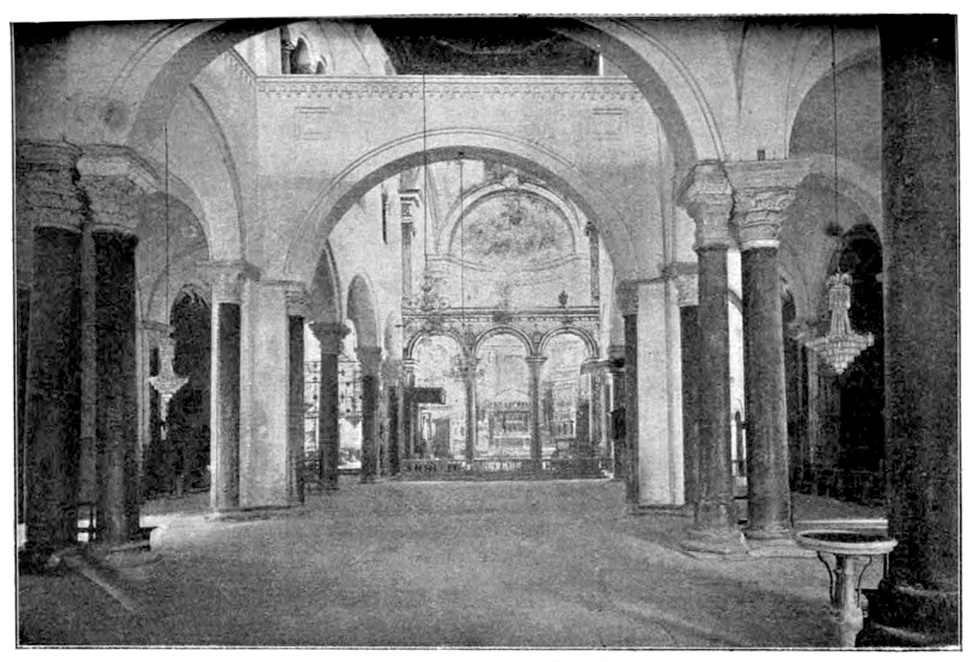
Внутренний вид верхней церкви храма св. Николая в Бар-граде
Interior view of the upper church of the temple of St. Nicholas in the city of Bari
От священников и от других людей мы узнали, что вблизи церкви находятся четыре торговые лавки, в которых продаются различного вида стеклянные сосуды, имеющие на себе изображение святителя Христова Николая: сосуды эти, продаются пустыми для наполнения их манной, истекающей от мощей св. Николая, которая в церкви его раздаётся всем желающим. Продаются также маленькие сосуды, уже наполненные манной и крепко запечатанные. И я купил несколько таких наполненных манной сосудов, и два пустых, которые я наполнил уже в церкви; то же сделал и спутник мой Иустин. Сосуды эти делаются на церковный счёт, а вырученные от их продажи деньги идут на управление церкви и снабжение необходимым гостиницы для странников. Мира или манны даётся там, сколько кто пожелает, лишь бы только были куплены из лавок церковные сосуды с изображением святителя Николая, так как в другие сосуды манны не дают. – Священники в церкви св. Николая называются «стражами» гроба святого Николая и пользуются высоким почётом; они строго блюдут себя, людей и гроб святителя Христова Николая, охраняют святыни церковные и раздают желающим указанную выше воду, которую они называют sancta manna, т. е. святая манна, и исправляют другие свои обязанности.
From the priests and from other people we learned that near the church there are four trading shops, in which are sold glass vessels of various kinds, bearing upon them the image of the Hierarch of Christ, Nicholas: these vessels are sold empty, for filling them with the manna that flows from the relics of St. Nicholas, which in his church is distributed to all who desire it. There are also sold small vessels, already filled with manna and firmly sealed. And I bought several such vessels filled with manna, and two empty ones, which I filled in the church itself; my companion Justin did the same. These vessels are made at the church's expense, and the money received from their sale goes toward the administration of the church and the supplying of necessities for the hostel for pilgrims. Myrrh or manna is given there as much as anyone desires, provided only that the church vessels with the image of St. Nicholas have been bought from the shops, for into other vessels manna is not given. – The priests in the church of St. Nicholas are called "guardians" of the tomb of St. Nicholas and enjoy great honor; they strictly keep themselves, the people, and the tomb of the Hierarch of Christ Nicholas, they guard the sacred things of the church and distribute to those who desire the above-mentioned water, which they call sancta manna, that is, holy manna, and they fulfill their other duties.
Одного из заведующих гробом св. Николая священника мы спросили о том, сколько манны, и через какое время истекает она от мощей святителя Николая? Он ответил нам, что каждое утро гроб делается полным манны и, сколько раздаётся её в день, столько опять прибывает в ночь, так как она непрестанно течёт. Передавал он нам также, что перед праздником святителя, за два или за тря дня, манны прибывает иногда очень много, иногда же мало. Отсюда безошибочно заключают, что когда много прибывает манны, то явится много богомольцев ко гробу святителя; когда же – мало, тогда и богомольцев мало соберётся. Настолько прозорлив угодник Божий, что источает столько целебной манны, сколько нужно её правоверному народу!
One of the priests in charge of the tomb of St. Nicholas we asked about how much manna, and after what interval of time, it flows from the relics of St. Nicholas. He answered us that every morning the tomb becomes full of manna, and however much is distributed during the day, so much again accrues during the night, for it flows unceasingly. He also told us that before the feast of the saint, two or three days beforehand, the manna sometimes increases very much, sometimes little. From this they conclude without error that when much manna accrues, many pilgrims will appear at the tomb of the saint; when little, then few pilgrims will gather. So discerning is the servant of God that he pours forth as much healing manna as is needed by the orthodox people!
Затем мы спросили его о вышеупомянутом мраморном столбе, стоящем в малой церкви: почему один он ограждён железной решёткой, другие же – нет? Он ответил нам следующее. Когда только ещё начинала строиться эта церковь во имя святителя и было утверждено основание, то решили утвердить её на 26 столбах и уже поставили на назначенных местах 25 столбов, иссечённых из мрамора. Но как ни искали они мрамора для 26-го столба, однако нигде не могли найти его, вследствие чего по необходимости прекратилась постройка церкви, и строитель и весь город были повергнуты в сильную печаль. Но вот, спустя несколько дней, чудесным промыслом чудотворца и святителя Христова Николая, явился мраморный столб, который вне города плавал на море, как сухое дерево. Когда увидели его рыбаки и другие люди, то хотели поймать, но никак не могли сделать этого, потому что, лишь только хотели коснуться его, он погружался в глубину, после же опять выплывал, так что принуждены были оставить его. В самую полночь, когда все спали, в городе вдруг стали звонить колокола сами собой, когда никто к ним не прикасался. В это время святитель Николай с двумя Ангелами перенёс плававший столб с моря в город и, принесши в строившуюся церковь, поставил его на приготовленном для него месте. Тотчас же в городе все пробудились и поспешили в церковь, и те, которые прежде пришли в неё, ясно видели, как св. Николай с двумя Ангелами поставил столб и затем сделался невидим. Увидевши такое чудо, притекшие в церковь жители прославили Бога и Его угодника; в вечное же воспоминание события написали образ этого чудотворения вверху на правой стене верхней церкви, где он и до сих пор пребывает. Просили было мы небольшую часть от мощей угодника Божия, но ничего не получили, потому что Римляне не имеют обычая (как Греки) отсекать части от святых мощей для раздаяния. Если же иногда и дают часть от мощей, то только царскому лицу. Мы снова спросили о вышеупомянутом столбе, почему он обнесён железной решёткой. Священник ответил, что этот столб обладает целебной силой, особенно для страдающих головной болью. Когда он прежде стоял не ограждённым, то многие для исцеления начали отсекать от него части железными орудиями; поэтому и огородили его железной решёткой, так что можно только перстами коснуться его, что теперь и делают, принимая исцеление, как и прежде. В верхней церкви на правой стороне находится также чудотворная икона святителя Христова Николая, при которой висит много знаков и свидетельств о сотворённых в Бар-граде по перенесении мощей чудесах. Видели также висящее изображение корабля, который святитель избавил на море от потопления. Затем видели большую окованную железной цепью кость, толщиной в человеческую ногу и длиной в две сажени. Об этой кости рассказали нам следующее. Один из тамошних рыбаков закинул сеть в море на имя святителя Николая, будучи уверен, что в таком случае труд его не пропадёт даром. И тотчас поймал чрезвычайно большую рыбу, так что сам никак не мог вытянуть её, и поэтому молил того же скорого помощника, который дал ему эту рыбу, помочь ему и вытащить её, опасаясь, как бы она не утащила его самого в морскую бездну. И только с большим трудом, первоначально убивши её в воде, вытащил её мёртвую. Затем, взявши одну кость из рёбер её, принёс её в церковь святителя Христова Николая и перед всеми исповедал славное чудотворение его. Видели также там повешенный на железной цепи зуб слоновый, величиной такой же, как и вышеупомянутая кость, который в знак благодарности за чудесное изловление слона принесён был в дар св. Николаю. Видели мы также много и других изображений чудес святителя Христова Николая и читали Латинские надписи, содержащие указания, как и когда произошли эти чудеса. В виду множества их – нет времена описать их, да невозможно и запомнить их всех. Поэтому я написал только о тех, о которых лучше разузнал, прочие же оставил.
Then we asked him about the above-mentioned marble column standing in the lesser church: why is it alone enclosed by an iron grating, while the others are not? He answered us as follows. When this church in the name of the saint was only just beginning to be built and the foundation had been laid, they resolved to support it on 26 columns, and they had already set in their appointed places 25 columns hewn from marble. But however they sought marble for the 26th column, they could nowhere find it, wherefore of necessity the building of the church ceased, and the builder and the whole city were cast into great sorrow. But behold, after a few days, by the miraculous providence of the Wonderworker and Hierarch of Christ Nicholas, a marble column appeared, which outside the city floated upon the sea like dry wood. When the fishermen and other people saw it, they wished to catch it, but could in no way do so, because, as soon as they wanted to touch it, it sank into the deep, and then floated up again, so that they were compelled to leave it. At midnight itself, when all were sleeping, in the city the bells suddenly began to ring of themselves, when no one touched them. At that time St. Nicholas with two Angels carried the floating column from the sea into the city and, bringing it into the church under construction, set it in the place prepared for it. Immediately all in the city awoke and hastened to the church, and those who came to it first clearly saw how St. Nicholas with two Angels set the column and then became invisible. Seeing such a miracle, the inhabitants who flocked to the church glorified God and His servant; and for the eternal remembrance of the event they painted an image of this wonderworking at the top on the right wall of the upper church, where it remains to this day. We asked for a small portion of the relics of the servant of God, but received nothing, because the Romans have not the custom (as the Greeks do) of cutting off portions from the holy relics for distribution. If sometimes they do give a portion of the relics, it is only to a royal person. We again asked about the above-mentioned column, why it is enclosed with an iron grating. The priest answered that this column possesses healing power, especially for those suffering from headache. When it formerly stood unenclosed, many for healing began to cut off parts from it with iron implements; therefore they enclosed it with an iron grating, so that one can only touch it with one's fingers, which they now do, receiving healing as before. In the upper church on the right side there is also a wonderworking icon of the Hierarch of Christ Nicholas, at which hang many tokens and testimonies of the miracles wrought in the city of Bari after the translation of the relics. We also saw hanging an image of a ship which the saint delivered on the sea from sinking. Then we saw a large bone bound with an iron chain, as thick as a human leg and two sazhens in length. Concerning this bone they told us the following. One of the local fishermen cast a net into the sea in the name of St. Nicholas, being confident that in such a case his labor would not be in vain. And immediately he caught an exceedingly large fish, so that he himself could in no way draw it out, and therefore he prayed to the same swift helper who had given him this fish to help him also to draw it out, fearing lest it drag him himself into the sea's abyss. And only with great labor, having first killed it in the water, did he draw it out dead. Then, taking one bone from its ribs, he brought it to the church of the Hierarch of Christ Nicholas and before all confessed his glorious wonderworking. We also saw there hung on an iron chain an elephant's tooth, of the same size as the above-mentioned bone, which in gratitude for the miraculous catching of an elephant was brought as a gift to St. Nicholas. We also saw many other images of the miracles of the Hierarch of Christ Nicholas and read the Latin inscriptions containing indications of how and when these miracles occurred. In view of their multitude, there is no time to describe them, nor is it possible to remember them all. Therefore I have written only of those about which I learned better, and the rest I have left.
Только не могу ещё, любезный читатель, пройти молчанием того, как я сам на себе испытал дар исцеления от угодника Божия. Ещё в день прибытия моего в Бар-град, неизвестно – от какой причины, разболелась на пути моя правая нога, так что я едва мог дойти до города. Через три дня боль ещё усилилась, и нога распухла, как бревно, так что я с величайшим трудом ходил по городу и уже не в сандалиях, но босой. Я часто приходил ко гробу святителя Христова Николая и со слезами просил его помочь мне в моей беде. И по молитве к нему через два дня без всякого врачевания опухоль на ноге исчезла, и я стал ходить, как и прежде. Я уразумел, что это исцеление произошло помощью св. Николая, и возблагодарил Бога и Его угодника.
Only I cannot yet, dear reader, pass over in silence how I myself experienced upon myself the gift of healing from the servant of God. Even on the day of my arrival in the city of Bari, from some unknown cause, my right leg began to ache on the way, so that I could scarcely reach the city. After three days the pain increased still more, and the leg swelled like a log, so that with the greatest difficulty I walked about the city, and no longer in sandals but barefoot. I often came to the tomb of the Hierarch of Christ Nicholas and with tears asked him to help me in my misfortune. And by prayer to him, after two days, without any medical treatment, the swelling on my leg disappeared, and I began to walk as before. I understood that this healing came about by the help of St. Nicholas, and I gave thanks to God and to His servant.
В Бар-граде находится восемь мужских и четыре женских монастыря. Бар-град ограждён каменной стеной с воротами, сделанными из вытесанного камня. Кругом города много миндальных и других садов, а также большое изобилие винограда и маслин; земледелием там занимаются мало, средства же к жизни получают главным образом от моря, так как к Бар-градскому берегу пристаёт много кораблей с чужестранцами и окрестными жителями.
In the city of Bari there are eight men's and four women's monasteries. The city of Bari is enclosed by a stone wall with gates made of hewn stone. Around the city there are many almond and other gardens, as well as great abundance of grapes and olives; agriculture they practice little there, and their means of livelihood they obtain chiefly from the sea, since many ships put in at the shore of Bari with foreigners and inhabitants of the surrounding region.
Когда уже мы сделали в Бар-граде всё, что нам нужно было, и хотели уйти из него, нам сделалось жалко, что мы не видели в целости мощей святителя Христова Николая, и того, как истекает из них манна, так как гроба святителя никому не отверзают. Поэтому мы усердно стали просить об этом всех стражей гроба святителя Христова, говоря, что мы пришли из таких далёких стран единственно для того, чтобы видеть и лобызать мощи угодника Божия, между тем теперь уходим, не исполнивши своего желания; что мы можем сказать другим не видевшим, не увидевши сами, и проч. Внимая нашему усердному прошению, они велели нам подождать до вечера и прийти в церковь перед вечерней, прежде чем соберётся в неё народ: они хотели нам без посторонних лиц открыть гроб, чтобы не было на них нарекания, так как мощи обыкновенно не показываются. Мы сделали, как нам сказано было, и, когда перед началом вечерни пришли в церковь, екклесиарх повёл нас в ризницу церковную, где находятся разные святыни, которых за множеством их, я не могу даже всех припомнить. Затем повёл нас в нижнюю церковь, к великому алтарю, кованному из серебра, и отворил маленькие дверцы, через которые человеку можно только вползти на чреве. Сначала до пояса вполз сам ключехранитель и зажёг небольшой светильник, чтобы видно было. После него влез я и думал, что увижу отворенную раку, как обыкновенно в наших странах повсюду рака святых отворяется, на подобие ковчега или просто сундука. Там же не так: рака со святыми мощами никогда не открывается, потому что она высечена из толстого и широкого мрамора, на подобие сосуда или ковчега, врыта в землю на 5 пядей в глубину, поставлена, неподвижно наравне с подножием престола и крепко прикрыта большой доской, также иссечённой из мрамора. В доске этой сверху высечено небольшое круглое оконце величиной в ефимок или рубль. Через это оконце на железной цепочке внутрь раки до половины её была опущена зажжённая свеча. Приложившись одним глазом над этим оконцем, я увидел, что мраморная рака наполнена, как колодезь, до половины манной, или самой светлой чистой водой, сквозь которую видны находящиеся под спудом белые кости: из этих костей и исходит беспрестанно вода, само же тело расплылось в миро. Когда я вылез оттуда, моё место занял друг мой и спутник Иустин. Священник, который позволил смотреть мне в раку, спросил меня: «видел ли я?» Я ответил, что видел, только не могу понять (что я прежде от многих слышал и о чём читал), как из правого колена истекает святое миро? Он же сказал мне, что из правого колена только начало точиться миро, теперь же оно одинаково исходит от всех костей. Когда вылез Иустин, я осмотрел вторично и лучше уразумел. Мы спросили также стража гроба святителя: «если гроб никогда не отверзается, то как почерпают миро?» Он ответил, что через маленькое оконце достают его особо устроенным орудием. Тогда мы, возблагодаривши Бога и Его святого угодника Николая за всё, что видели и слышали, вышли из Бар-града того же дня, 31 июля, в среду, перед захождением солнца.
When we had already done everything we needed in the city of Bari and wished to depart from it, we felt regret that we had not seen the relics of the Hierarch of Christ Nicholas in their entirety, and how the manna flows from them, since the coffin of the Hierarch is opened to no one. Therefore we earnestly began to entreat all the guardians of the coffin of the Hierarch of Christ concerning this, saying that we had come from such distant lands solely in order to see and kiss the relics of the saint of God, yet now we were departing without having fulfilled our desire; what could we say to others who had not seen, not having seen ourselves, and so forth. Heeding our earnest petition, they bade us wait until evening and come to the church before Vespers, before the people gathered therein: they wished to open the coffin for us without outsiders, so that no reproach might fall upon them, since the relics are not ordinarily shown. We did as we were told, and when we came to the church before the beginning of Vespers, the ecclesiarch led us into the church sacristy, where various holy things are kept, so many that I cannot even recall them all. Then he led us into the lower church, to the great altar, wrought of silver, and opened a small door through which a man could only crawl on his belly. First the key-keeper crawled in up to his waist and lit a small lamp, so that it might be visible. After him I crawled in and thought that I would see an open reliquary, as is usual in our lands everywhere—the reliquary of the saints being opened, like a chest or simply a coffer. But it is not so there: the reliquary with the holy relics is never opened, because it is hewn out of thick and wide marble, like a vessel or ark, sunk into the ground to a depth of five spans, set immovably level with the foot of the altar, and firmly covered with a large slab, also hewn from marble. In this slab, on top, a small round window is carved, the size of a Joachimsthaler or a ruble. Through this window, on an iron chain, a lit candle was lowered into the reliquary to half its depth. Pressing one eye to this window, I saw that the marble reliquary was filled, like a well, halfway with manna, or a most clear pure water, through which the white bones lying beneath the cover were visible: from these bones the water continually issues, while the body itself has dissolved into myrrh. When I crawled out from there, my place was taken by my friend and companion Justin. The priest who had allowed me to look into the reliquary asked me: “Did you see?” I answered that I had seen, only I could not understand (what I had previously heard from many and read about), how holy myrrh flows from the right knee? He said to me that from the right knee the myrrh only began to trickle, but now it issues equally from all the bones. When Justin crawled out, I examined it a second time and understood better. We also asked the guardian of the Hierarch’s coffin: “If the coffin is never opened, how do they draw the myrrh?” He answered that through the small window they extract it with a specially made instrument. Then we, having given thanks to God and His holy saint Nicholas for all that we had seen and heard, departed from the city of Bari that same day, July 31, on Wednesday, before sunset.
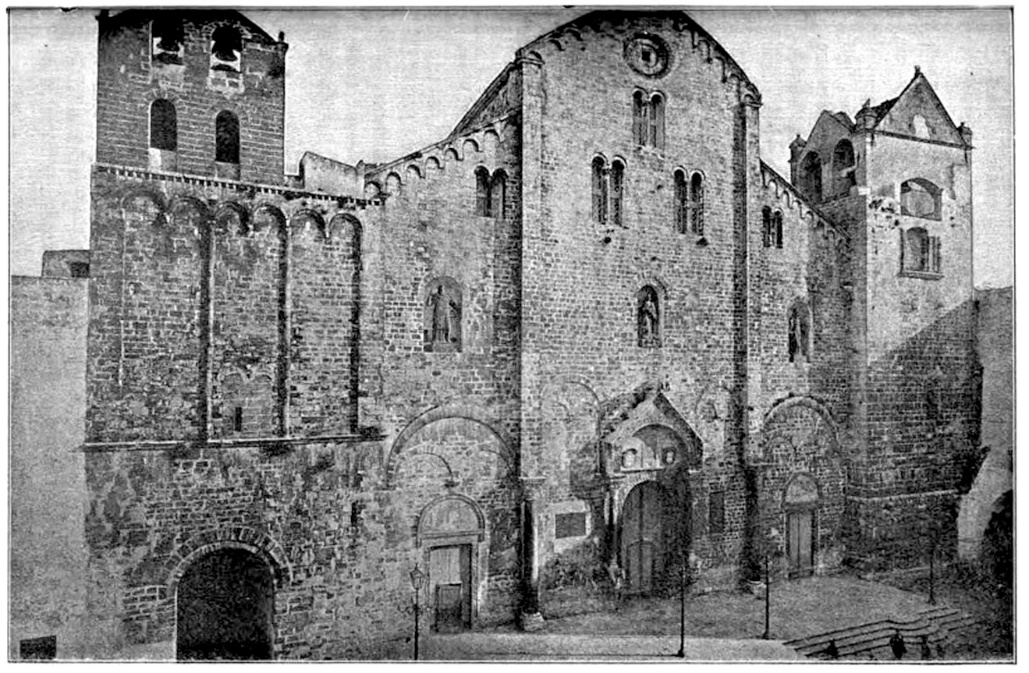
Почти так же описывает город Бар и церковь святителя Николая позднейший путешественник, Владимир Мордвинов, посетивший Бар-град в 1873-м году.
Almost in the same way does a later traveler, Vladimir Mordvinov, who visited the city of Bari in the year 1873, describe the city of Bari and the church of St. Nicholas the Hierarch.
По его словам, город Бар, находящийся на берегу Адриатического моря, большой торговый город и в последние годы очень хорошо обстроенный. При подъезде к нему он ещё издали красуется куполами и колокольнями своих церквей, напоминающими несколько архитектурой своей православные храмы на Руси. Сама церковь святого Николая представляет довольно большое здание, но без купола; с некоторых сторон пристроены к ней дома, с других имеется весьма небольшой проезд. Наружная длина храма с северной и южной сторон около 30 сажен, а с западной и восточной – около 18 сажен в каждой. Мощи святителя Николая почивают в нижней церкви, устроенной в восточной части храма. Спускаются в эту нижнюю церковь по одной из числа двух ведущих в неё каменных лестниц, в 21 ступень каждая. Внутренняя длина нижней церкви около 14 сажен, внутренняя же ширина её – около 5½ сажен. Церковь эта устроена ниже поверхности земной, так что 9 окон её приходятся наравне с мостовой, которой выложены проездные дворики, или маленькие площадки, на которые эти окна выходят. Вся и нижняя церковь устроена под сводами, которые поддерживаются 28 круглыми мраморными столбами: из них 2 вделаны на половину в стену, так что они имеют вид лишь полу-столбов. Столбы эти сделаны из серовато-красного мрамора и имеют резные капители. Один из них обнесён от пола до верху четырёхгранной чугунной решёткой. О столбе этом рассказывают, что он поставлен чудным образом самим святителем Николаем при постройке настоящего храма, взамен недостававшего у строителей столба. В решётке сделаны дверцы, которые отворяются для желающих приложиться к столбу. Пол в нижней церкви каменный, устлан цветными изразцами, подобранными под узор коврика. (В последнее время он перемощён мрамором на средства нашего государя Николая II, после посещения им Бара, ещё в бытность его наследником. Вдоль капитальной восточной стены стоят четыре прислонённые к самой стене престола, вдоль западной стороны – орган, и по бокам его – две исповедальни. На восточной же стене, в пространстве между столбом и дверью, ведущей в одну из церковных кладовых, повешен особый ящик – деревянный, резной, из орехового дерева, коричневого цвета. В нижней части этого ящика вырезан рельефно орёл Австрийской империи, а сверху ящика стоит небольшая резная из того же дерева статуя св. Николая. В боковой стороне этого ящика просверлено 10 круглых небольших дырочек для того, чтобы можно было видеть находящиеся внутри означенного ящика, заделанного наглухо, остатки того подлинного ящика, в котором привезены были честные мощи св. Николая из Мир Ливийских в Бар-град. На той же восточной стене, над дверью, ведущей в одну из церковных кладовых, висит поясной образ св. Николая в омофоре; голова его без митры; вокруг неё сияние; правой рукой святитель благословляет именословным перстосложением; в левой же он держит закрытое Евангелие, на коем три шара (эмблема трёх кошельков с золотом, поданных святителем ещё при жизни своей нуждавшемуся семейству).
According to his words, the city of Bari, situated on the shore of the Adriatic Sea, is a large commercial city and in recent years very well built up. Upon approaching it, from afar it is adorned with the cupolas and bell towers of its churches, which in their architecture somewhat recall Orthodox churches in Rus’. The church of St. Nicholas itself is a rather large building, but without a cupola; on some sides houses are attached to it, on others there is a very narrow passage. The external length of the temple on the north and south sides is about 30 sazhens, and on the west and east sides about 18 sazhens each. The relics of St. Nicholas the Hierarch repose in the lower church, built in the eastern part of the temple. One descends into this lower church by one of the two stone staircases leading into it, each of 21 steps. The internal length of the lower church is about 14 sazhens, and its internal width about 5½ sazhens. This church is built below the surface of the ground, so that its nine windows are level with the pavement with which the passage courtyards, or small squares, onto which these windows open, are paved. The entire lower church is built under vaults, which are supported by 28 round marble columns: of these, two are half set into the wall, so that they have the appearance of only half-columns. These columns are made of grayish-red marble and have carved capitals. One of them is enclosed from floor to top by a four-sided cast-iron grating. Concerning this column, it is related that it was placed in a miraculous manner by St. Nicholas himself during the construction of the present temple, in place of a column that the builders lacked. In the grating there is a door which is opened for those who wish to venerate the column. The floor in the lower church is stone, paved with colored tiles arranged in the pattern of a small rug. (In recent times it has been repaved with marble at the expense of our sovereign Nicholas II, after his visit to Bari, while he was still heir.) Along the main eastern wall stand four altars leaning against the wall itself; along the western side is an organ, and on either side of it two confessionals. On the eastern wall, in the space between the column and the door leading to one of the church storerooms, a special box is hung—wooden, carved, of walnut wood, brown in color. In the lower part of this box is carved in relief the eagle of the Austrian Empire, and on top of the box stands a small carved statue of St. Nicholas, of the same wood. In the side of this box ten small round holes are drilled, so that one may see the remains of that original box, sealed shut, which are inside the said box, in which the venerable relics of St. Nicholas were brought from Myra in Lycia to the city of Bari. On the same eastern wall, above the door leading to one of the church storerooms, hangs a half-length icon of St. Nicholas in an omophorion; his head is without a mitre; around it is a radiance; with his right hand the Hierarch blesses with the name-forming finger position; in his left he holds a closed Gospel, on which are three spheres (an emblem of the three purses of gold given by the Hierarch during his lifetime to a needy family).
Главный престол нижней церкви имеет около 3-х аршин длины и около 2-х – ширины. На престоле стоят ковчег для св. Даров и на сём последнем поясной бюст, изображающий святителя Христова Николая с открытой головой, окружённой сиянием, правой рукой преподающего благословение, а в левой держащего Евангелие закрытое и на нём три шара. На престоле горят 32 свечи, и перед ним висит 12 лампад, все одинакового размера. Сверх того, посредине церкви висят три хрустальные люстры.
The main altar of the lower church is about three arshins in length and about two in width. On the altar stand a tabernacle for the Holy Gifts, and on this latter a half-length bust depicting the Hierarch of Christ Nicholas with uncovered head, surrounded by a radiance, with his right hand imparting a blessing, and in his left holding a closed Gospel and on it three spheres. On the altar burn 32 candles, and before it hang 12 lamps, all of the same size. Moreover, in the middle of the church hang three crystal chandeliers.
Непосредственно под главным престолом нижней церкви стоит гробница из белого мрамора, о двух таковых же крышках. Из церкви она не видна, так как находится под церковным помостом. В этой-то гробнице и почивают мощи св. Николая, источающие из себя многоцелебное миро, или, по местному названию, «манну», – жидкость на подобие воды. Усердствующие обращаются к местному священнослужителю, который, облачившись в епитрахиль, прочитает перед престолом некоторые молитвы и затем раскроет находящиеся в передней доске престола двустворчатые дверцы. Во внутрь престола, который совершенно пустой, ставится свеча для света. Богомолец, подойдя к самому престолу и став на колени, пропускает свою голову и часть своего туловища почти до пояса внутрь престола, сквозь вышеупомянутые дверцы. Опустивши голову к низу, он видит круглое отверстие, коего поперечник не более 2 вершков. Это отверстие сделано в верхней крышке гробницы с мощами св. Николая, над которой и стоит главный престол. Сквозь это отверстие, равно как и через другое такой же величины, сделанное во внутренней крышке гробницы, богомолец видит при помощи маленькой восковой свечи, опускаемой предварительно на цепочке во внутрь гробницы, – лежащие на дне той гробницы святые кости Угодника Божия, перевезённые из Мир Ливийских. Так сподобился и я, (говорит Мордвинов), поклониться честным мощам святителя Николая чудотворца, 31-го января 1873-го года. Вместе с этим отслужен был, по моей просьбе местными священнослужителями и молебен, по чину Римской церкви, угоднику Божию святителю Николаю. Причт исполняет охотно это желание богомольцев, не смотря на их вероисповедание; и если бы лицу, не принадлежащему к Римской церкви, вздумалось заказать литургию, то и таковая непременно будет отслужена, по уставу Римской Церкви, на престоле, под коим почивают священные мощи св. Николая. Вместе с другими богомольцами получил и я в скляночках многоцелебного мира, или манны, истекающей из мощей угодника Божия. Извлекается эта манна из гробницы с мощами следующим образом: через упомянутые выше отверстия, находящиеся в двух крышках той гробницы, опускается в последнюю губка для того, чтобы она могла напитаться священной влагой; затем губку эту выжимают над особым сосудом, в котором ризничий обязан хранить манну, и из которого эта манна преподаётся всем просящим. Получается манна богомольцами бесплатно, но с соблюдением одного условия: в церкви склянок для получения манны не дают; каждый обязан принести свою склянку. Что-ж тут удивительного? спросите вы. А вот что: если вы принесёте простую, чистую склянку, то в нее вам манны не нальют, а вы обязаны, идя в церковь, запастись склянками, особо для этой цели продаваемыми в лавках, неподалёку от самой церкви; на склянках этих находится изображение св. Николая чудотворца. И в этом, кажется, нет ничего странного на первый взгляд. Но подождите. Склянки эти продаются в большом количестве. Поищите однако же хоть одну, на которой бы святитель Николай изображён был так, как привыкли видеть его изображаемым не только на наших православных иконах, но даже и на большей части Западных икон, – и не найдёте ни одной в целом городе. Решительно на всех здешних склянках, точно так же, как на некоторых Западных иконах, святитель изображается в облачении и с посохом епископа не Восточной, а Латинской Церкви, несмотря на то, что в той же церкви св. Николая имеются весьма древние иконы сего святителя, которые уже по самой древности своей должны были бы служить образцами для иконописцев, и на которых святитель изображается в одеянии епископа Восточной Церкви.
Directly beneath the main altar of the lower church stands a tomb of white marble, with two covers of the same material. From the church it is not visible, as it lies beneath the church floor. In this tomb repose the relics of St. Nicholas, which pour forth from themselves the all-healing myrrh, or, as it is called locally, "manna"—a liquid resembling water. The devout apply to the local clergyman, who, having vested himself in the epitrachelion, reads certain prayers before the altar and then opens the double doors set in the front panel of the altar. Into the interior of the altar, which is completely empty, a candle is placed for light. The pilgrim, approaching the altar itself and kneeling, passes his head and part of his body almost to the waist into the interior of the altar, through the aforementioned doors. Lowering his head downward, he sees a round opening, whose diameter is no more than 2 vershoks. This opening is made in the upper cover of the tomb containing the relics of St. Nicholas, above which the main altar stands. Through this opening, as well as through another of the same size made in the inner cover of the tomb, the pilgrim sees, with the aid of a small wax candle lowered beforehand on a chain into the interior of the tomb, the holy bones of the Pleaser of God lying at the bottom of that tomb, translated from Myra in Lycia. Thus was I also accounted worthy, (says Mordvinov), to venerate the precious relics of St. Nicholas the Wonderworker, on the 31st of January, 1873. Together with this, at my request, a moleben was served by the local clergy, according to the rite of the Roman Church, to the Pleaser of God, St. Nicholas. The clergy willingly fulfill this desire of the pilgrims, notwithstanding their confession of faith; and if a person not belonging to the Roman Church should think to order a Divine Liturgy, even that would without fail be served, according to the rule of the Roman Church, at the altar beneath which the sacred relics of St. Nicholas repose. Together with other pilgrims, I also received in small vessels of the all-healing myrrh, or manna, which flows from the relics of the Pleaser of God. This manna is extracted from the tomb with the relics in the following manner: through the aforementioned openings, located in the two covers of that tomb, a sponge is lowered into the latter so that it may become saturated with the sacred moisture; then this sponge is squeezed out over a special vessel, in which the sacristan is obliged to keep the manna, and from which this manna is dispensed to all who ask. The manna is received by pilgrims free of charge, but with the observance of one condition: in the church, vessels for receiving the manna are not given; each person is obliged to bring his own vessel. What is surprising about this? you will ask. And here is what: if you bring a plain, clean vessel, they will not pour manna into it for you, but you are obliged, going to the church, to provide yourself with vessels sold specially for this purpose in the shops, not far from the church itself; on these vessels is found the image of St. Nicholas the Wonderworker. And in this, it seems, there is nothing strange at first glance. But wait. These vessels are sold in great quantity. Search, however, for even one on which St. Nicholas is depicted as we are accustomed to see him depicted not only on our Orthodox icons, but even on the greater part of Western icons—and you will not find a single one in the whole city. Decidedly on all the local vessels, just as on certain Western icons, the Hierarch is depicted in the vestments and with the staff of a bishop not of the Eastern, but of the Latin Church, notwithstanding the fact that in that same church of St. Nicholas there are very ancient icons of this Hierarch, which by their very antiquity ought to serve as models for iconographers, and on which the Hierarch is depicted in the vestments of a bishop of the Eastern Church.
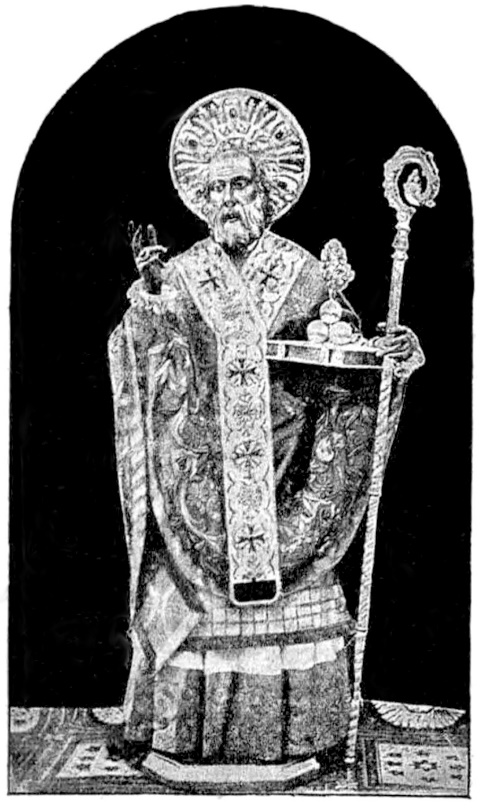
К этому прибавим ещё одну особенность, касающуюся тех же склянок. Все они хотя не дороги, но весьма низкой работы, и изображение на них святителя Николая даже более, чем жалкое. Мало-мальски порядочные склянки можно иметь лишь в одной только лавке Трифона Диаспарро, но этот последний, пользуясь, конечно, тем обстоятельством, что прочие продавцы не в состоянии соперничать с ним в деле приготовления склянок, берёт за свои изделия цены непомерные. Впрочем, миновать лавку Трифона Диаспарро трудно. Почти каждый, кто получает св. манну, желает привезти её в дар своим знакомым. Единовременно же получить в церкви большое количество её в одни руки неудобно, с одной стороны потому, что просящих всегда «лишком много, а с другой – влага эта извлекается из гробницы со св. мощами каждый раз лишь в таком количестве, каким может напитаться опускаемая туда губка. Трифон Диаспарро удовлетворяет в этом случае желанию богомольцев. Он единственный торговец, уполномоченный от местной духовной власти – иметь у себя в лавке св. манну, которую и можно получить у него в весьма маленьких, особо для этого приготовленных пузырьках; последние, уже наполненные несколькими каплями манны и запаянные, продаются весьма дёшево, так что сотню таких пузырьков можно купить франка за 4, не более.
To this let us add one more peculiarity, concerning those same vessels. All of them, though not expensive, are of very poor workmanship, and the image of St. Nicholas on them is more than pitiful. Passable vessels can be had only in the single shop of Trifon Diasparro, but this latter, taking advantage, of course, of the circumstance that the other sellers are unable to compete with him in the matter of preparing vessels, charges exorbitant prices for his wares. However, it is difficult to pass by the shop of Trifon Diasparro. Almost everyone who receives the holy manna wishes to bring it as a gift to his acquaintances. To receive at one time a large quantity of it in one's hands in the church is inconvenient, on the one hand because those asking are always too many, and on the other—this moisture is extracted from the tomb with the holy relics each time only in such quantity as the sponge lowered there can absorb. Trifon Diasparro satisfies in this case the desire of the pilgrims. He is the sole merchant authorized by the local spiritual authority to have in his shop the holy manna, which can be obtained from him in very small phials prepared specially for this purpose; the latter, already filled with a few drops of manna and sealed, are sold very cheaply, so that a hundred such phials can be bought for 4 francs, no more.
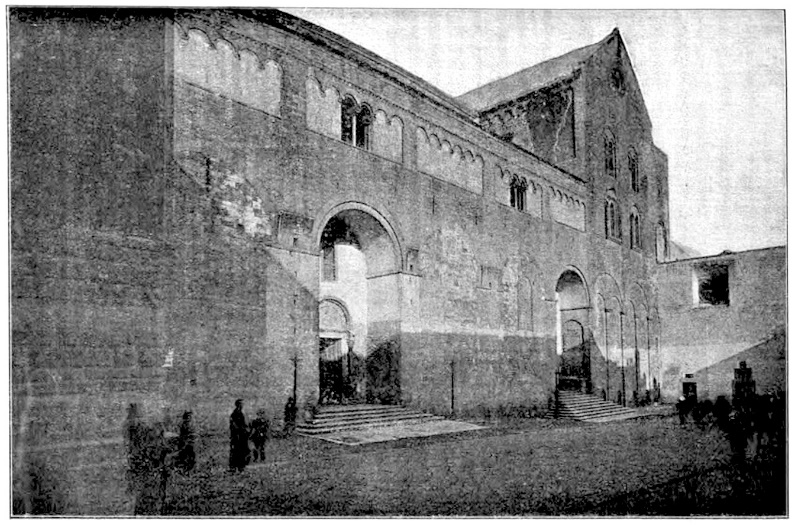
В бытность мою в Бар-граде привелось мне слышать от некоторых лиц о странном явлении, нередко случающемся: многие из притекающих на поклонение мощам св. Николая иногда сподобляются видеть честные кости святителя, почивающие на дне гробницы под престолом, иногда же не удостаиваются этой чести, и как ни напрягают они своё зрение, но рассмотреть, содержится ли что-либо в той гробнице, не могут; другим же никогда не приходится видеть своими очами святыню, сколько бы раз ни приходили для поклонения ей в церковь. Проверить личным наблюдением слышанное, после того как меня самого Господь сподобил достигнуть того, зачем приезжал я в Бар-град, я не мог. Накануне же отъезда моего из города познакомился я с Русским вице-консулом в Бар-граде г. Г... (Итальянцем). Когда на вопрос его о том, видел-ли я мощи святителя, я отвечал ему утвердительно, он сообщил мне, что, хотя он сам и не один раз припадал к гробнице, в коей почивают мощи св. Николая, но самых мощей никогда видеть не мог. При этом тот же г. Г… рассказал мне, что в недавнее время приезжала в Бар-град одна весьма высокопоставленная у нас в России особа на поклонение мощам столь чтимого у нас угодника Божия, но особа эта, как сам он от неё лично слышал, мощей не видала. Приехав из Бар-града в Неаполь, я встретился с проживающим там более 30 лет Осипом Алексеевичем Беляевым, занимающимся продажей коралловых изделий и имеющим лавку свою на самом берегу залива. Когда я рассказал ему о всём виденном и слышанном мной в Бар-граде, то и он в свою очередь сообщил мне, что сам он в жизни своей два раза имел случай быть в Бар-граде; в первое посещение Господь привёл его видеть честные мощи; когда же он приехал вторично, то святыни сей рассмотреть в гробнице уже не мог.
During my sojourn in the city of Bari it fell to me to hear from certain persons of a strange phenomenon, not infrequently occurring: many of those who flock to venerate the relics of St. Nicholas sometimes are accounted worthy to see the precious bones of the Hierarch, reposing at the bottom of the tomb beneath the altar, while at other times they are not vouchsafed this honor, and however much they strain their vision, they cannot discern whether anything is contained in that tomb; others again never succeed in seeing the shrine with their own eyes, however many times they come to the church to venerate it. To verify by personal observation what I had heard, after the Lord Himself had accounted me worthy to attain that for which I had come to the city of Bari, I could not. On the eve of my departure from the city, however, I made the acquaintance of the Russian vice-consul in Bari, Mr. G... (an Italian). When, in answer to his question whether I had seen the relics of the Hierarch, I replied in the affirmative, he informed me that, although he himself had more than once prostrated himself before the tomb in which the relics of St. Nicholas repose, he had never been able to see the relics themselves. At the same time, the same Mr. G... told me that recently a person of very high standing among us in Russia had come to the city of Bari to venerate the relics of the Pleaser of God so honored among us, but this person, as he himself had heard from her personally, had not seen the relics. Having arrived from Bari to Naples, I met with Osip Alexeevich Belyaev, who has lived there for more than 30 years, occupying himself with the sale of coral articles and having his shop on the very shore of the bay. When I told him of all that I had seen and heard in Bari, he in turn informed me that he himself in his life had twice had occasion to be in Bari; at the first visit the Lord led him to see the precious relics; but when he came a second time, he could no longer discern this shrine in the tomb.
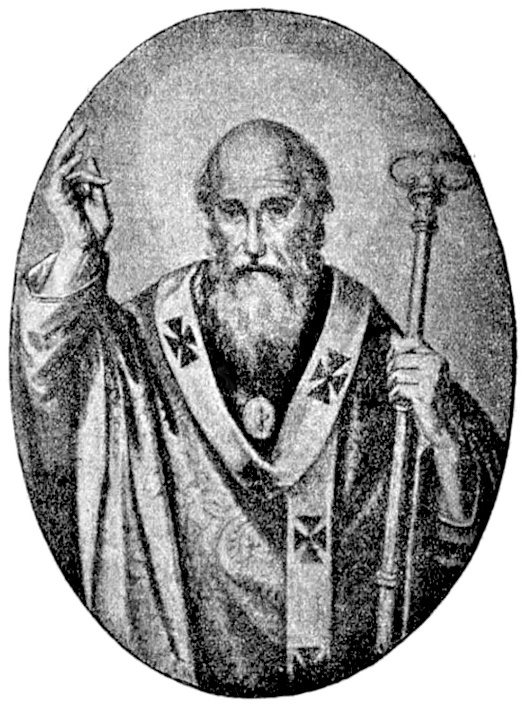
Образ св. Николая в храме чудотворца в Бар-граде
The Icon of St. Nicholas in the church of the Wonderworker in the city of Bari
Позади главного престола имеется дверь, ведущая в ризницу настоящей нижней церкви; в ризнице этой хранится книга, в которую всех богомольцев, в особенности Русского происхождения, просят вписывать свои имена. Здесь же желающие могут получить: 1) фотографические изображения св. Николая чудотворца; святитель представлен на них до пояса, без митры, облачённым в фелонь длинного древнего покроя и в омофоре; в левой руке он держит жезл с двумя рожками, загнутыми кверху по обычаю Восточному, и с крестом на верхней его оконечности; правая же рука приподнята для благословения и персты на оной сложены именословным перстосложением; 2) литографированные изображения внутренности церкви св. Николая чудотворца, в коей почивают его мощи; изображения эти продаются по воле пожертвовавшего их одного Русского богомольца, по 1 франку за экземпляр, в пользу бедных.
Behind the main altar there is a door leading to the sacristy of the present lower church; in this sacristy is kept a book, in which all pilgrims, especially those of Russian origin, are asked to inscribe their names. Here also those who desire may obtain: 1) photographic images of St. Nicholas the Wonderworker; the Hierarch is represented on them half-length, without a mitre, vested in a phelonion of long ancient cut and in an omophorion; in his left hand he holds a staff with two crooks, bent upward after the Eastern custom, and with a cross at its upper extremity; the right hand is raised for blessing, and the fingers thereon are formed in the name-forming benediction; 2) lithographed images of the interior of the church of St. Nicholas the Wonderworker, in which his relics repose; these images are sold, by the will of a certain Russian pilgrim who donated them, at 1 franc per copy, for the benefit of the poor.
В сокровищнице церковной, ход в которую не из нижней церкви, а из верхней, хранится пожертвованная приезжавшим в самом начале XIV столетия в Бар-град на поклонение мощам св. Николая православным владетельным Сербским князем Урошем икона сего святителя, которая, по древности своей, весьма чтится и выносится из сокровищницы лишь на время крестного хода, совершаемого 9-го мая (по Западному стилю). На этой иконе вместе с самим святителем изображены: в облаках небесных Господь Иисус Христос, подающий угоднику евангелие, и Божия Матерь, вручающая ему святительский омофор, а также и сам князь Урош и его супруга, стоящие на коленах перед святителем В той же сокровищнице церковной находятся части от мощей разных святых, благоугодивипих Богу, а также и другие святыни.
In the church treasury, the entrance to which is not from the lower church but from the upper, is kept an icon of this Hierarch, donated by the Orthodox sovereign Serbian Prince Urosh, who came at the very beginning of the XIV century to the city of Bari to venerate the relics of St. Nicholas; this icon, by reason of its antiquity, is held in great veneration and is carried out of the treasury only for the time of the procession of the cross, celebrated on the 9th of May (according to the Western style). On this icon, together with the Hierarch himself, are depicted: in the heavenly clouds the Lord Jesus Christ, handing to the Saint the Gospel, and the Mother of God, entrusting to him the hierarchal omophorion, as well as Prince Urosh himself and his spouse, kneeling before the Hierarch. In that same church treasury are found portions of the relics of various saints who have pleased God, as well as other sacred objects.
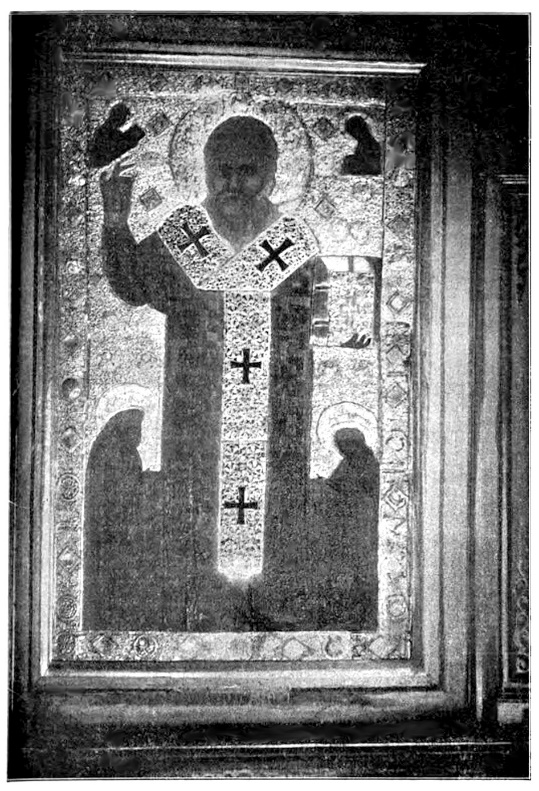
Икона св. Николая в храме чудотворца в Бар-граде
The Icon of St. Nicholas in the church of the Wonderworker in the city of Bari
Доступ в нижнюю церковь, в коей почивают мощи св. Николая чудотворца, не во всякое время свободен. Церковь эта отворена лишь утром с шестого до одиннадцатого часа и затем днём от 2-х до 3-х часов пополудни. В прочее время дня и ночи она постоянно заперта, и, помимо случаев чрезвычайных, богомольцам редко удаётся войти в неё в неуказанные часы. Празднование угоднику Божию Римская Церковь, как и Русская, совершает дважды в год: 6-го декабря и 9-го мая. Последний праздник считается большим и притом не в одном Бар-граде, по и вообще на всём Западе, и в Бари в настоящее время празднуется необычайно торжественно.
Access to the lower church, in which the relics of St. Nicholas the Wonderworker repose, is not free at all times. This church is opened only in the morning from the sixth to the eleventh hour, and then in the afternoon from two to three o’clock. At other times of day and night it is constantly locked, and, apart from extraordinary circumstances, pilgrims rarely succeed in entering it at unappointed hours. The Roman Church, like the Russian, celebrates the feast of the servant of God twice a year: on the 6th of December and the 9th of May. The latter feast is considered a great one, and not only in Bari itself but generally throughout the West; and in Bari at the present time it is celebrated with extraordinary solemnity.
«Стечение богомольцев к 8 и 9 мая в Бари бывает огромное... Толпа в соборе и Soccorpo (crypta – нижней церкви) в эти дни непроходимая; все алтари освещены, служба идёт день и ночь, не прерываясь. На площадях, примыкающих к монастырю, происходит оживлённая торговля, и два раза в сутки на длинных столах предлагается трапеза от собора всем странникам. Ночью с 8 на 9 число весь город иллюминован, то там, то сям взвиваются ракеты, вспыхивают декорации фейерверков, транспорантов, изображающие сотворённые нетленными мощами (угодника) чудеса; с террас домов, богатых и бедных, разливают свой фантастический свет бенгальские огни. Набережная, порт, всё покрыто густыми толпами народа, который тут проводить ночь. В той толпе мы видели представителей всех племён, населяющих Италию: и Сицилийцев, и Калабрийцев, и Романцев; мы слышали Славянский говор Черногорца и Серба и, наконец, Русскую речь земляка-паломника.
“The gathering of pilgrims toward the 8th and 9th of May in Bari is enormous… The crowd in the cathedral and in the Soccorpo (crypta – the lower church) on these days is impassable; all the altars are illuminated, and divine service continues day and night without interruption. On the squares adjoining the monastery there is a lively trade, and twice a day a meal is offered by the cathedral to all pilgrims at long tables. On the night of the 8th to the 9th, the whole city is illuminated; here and there rockets soar, decorations of fireworks and transparencies flash, depicting the miracles wrought by the incorrupt relics (of the saint); from the terraces of houses, both rich and poor, Bengal lights pour forth their fantastic glow. The embankment, the port—everything is covered with dense crowds of people who spend the night there. In that crowd we saw representatives of all the tribes inhabiting Italy: Sicilians, Calabrians, and Romans; we heard the Slavic speech of Montenegrins and Serbs, and, finally, the Russian speech of a fellow-countryman pilgrim.
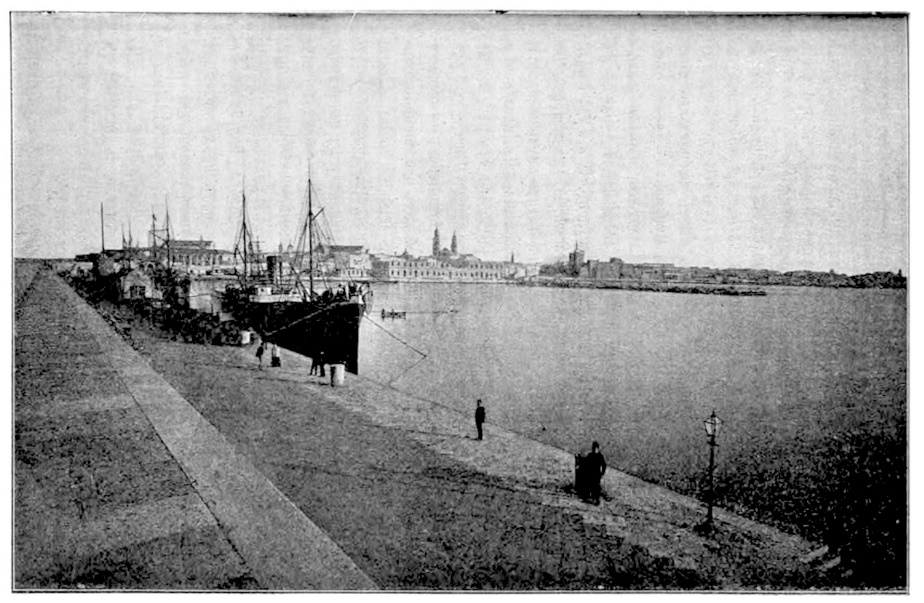
«На заре все ещё ближе теснятся к прибрежью. На пристани, богато украшенной в виде католического алтаря, появляется в полном облачении всё духовенство Бари и его окрестностей; на особо отведённом месте располагаются все гражданские и военные власти в мундирах. Диск солнца выплывает над растопленным золотом морской дали; и в этой дали, тоже с востока, выплывает, покуда чуть видимая, целая эскадра небольших судов. Эти суда заранее с вечера отправляются в море незаметно для жителей. Они возвращаются утром торжественные, богато изукрашенные: на главном судне возвышается изображение св. Николая чудотворца, окружённое духовенством; раздаётся стройное церковное пение, на которое отзываются духовные певчие с берега. Архиепископ со всем духовенством встречает изображение св. угодника на пристани, и крестный ход постепенно вытягивается от моря по улицам города. Впереди сотня детей в белых одеждах с цветами в руках. За ними в своих полумонашеских одеяниях тысячи членов разных религиозных, благотворительных конгрегаций. Колоссальная статуя св. угодника на плечах богомольцев, неисчислимые ряды духовенства, с большими свечами в руках, замыкаемые архиепископом и его штатом; волны народа, пальба из морталетти, ракеты, пение и музыка; звон всех колоколов древнего Бари и перезвон знаменитых колоколов собора св. Николая: всё это представляет картину умилительную и величественную». Такое впечатление получается от этого праздника в честь дорогого нам святителя в далёком от нас чужеземном городе, по свидетельству одного из наших православных очевидцев этого торжества.
“At dawn, the crowds press still closer to the shore. On the pier, richly adorned in the form of a Catholic altar, all the clergy of Bari and its environs appear in full vestments; in a specially designated place, all the civil and military authorities take their positions in uniform. The disk of the sun rises above the molten gold of the sea distance; and in that distance, also from the east, there emerges, as yet barely visible, a whole flotilla of small vessels. These vessels are sent out to sea unnoticed by the inhabitants the evening before. They return in the morning, solemn and richly decorated: on the main vessel rises an image of St. Nicholas the Wonderworker, surrounded by clergy; harmonious church singing resounds, answered by the spiritual singers from the shore. The archbishop with all the clergy meets the image of the holy saint at the pier, and the procession gradually stretches from the sea along the streets of the city. At the front, a hundred children in white garments with flowers in their hands. Behind them, in their semi-monastic attire, thousands of members of various religious and charitable congregations. The colossal statue of the holy saint on the shoulders of pilgrims, countless rows of clergy with large candles in their hands, closed by the archbishop and his retinue; waves of people, mortar fire, rockets, singing and music; the ringing of all the bells of ancient Bari and the chime of the famous bells of the cathedral of St. Nicholas: all this presents a picture both touching and majestic.” Such is the impression received from this feast in honor of the Hierarch so dear to us, in a foreign city far from us, according to the testimony of one of our Orthodox eyewitnesses of this celebration.
В заключение считаем не лишним сообщить следующие краткие исторические сведения о самом Бар-граде, в котором покоятся мощи св. Николая.
In conclusion, we consider it not superfluous to communicate the following brief historical information about Bari itself, in which the relics of St. Nicholas repose.
Город Бар (Bari) происхождением своим, как думают, обязан Грекам, которые издавна имели торговые свои поселения по берегам Адриатического моря в Италии. Время его основания неизвестно, но о существовании его уже во времена Римского владычества упоминает Гораций, который говорит, что город этот (Barium) изобилует рыбами (Сатир. I, 5). Область, в которой находится этот город, в древности называлась Певкетией (Peucetia), впоследствии же Апулией (Apulia). В средние века Бар-град со всей его областью был театром постоянных войн, вследствие которых он переходил из рук одних владетелей в руки других. Более всех продолжительным было господство Греков, во время которого Бар-град служил местом пребывания наместникам Византийских императоров, именовавшимся Катапанами и жившим в доме, который известен был под названием Corte del Catapano, т. е. двор Катапанов, или также publico praetorio, – общественная претория, или также corte dominicale, двор владычний. Начиная с исхода VII столетия, герцоги Беневентские не один раз исторгали этот город из рук Греков; в IX веке являются здесь Сарацины, но владычество их продолжалось недолгое время; после ряда кровопролитнейших войн Греки восторжествовали, – и Сарацины были прогнаны в 871-м году. Однако торжество Греков на этот раз не было прочно; в течение X века Сарацины не переставали частыми нападениями своими тревожить этот город, а в 1070 году им завладел герцог Норманский, Роберт Гвискард. Хотя после того Грекам удалось ещё один раз возвратить себе город Бар, но в 1156-м году он был разорён Вильгельмом «Злым», а с этим вместе прекратилось навсегда и господство Греков в означенной местности. В продолжение нескольких столетий затем Бар-град находился в руках разных владетельных герцогов; в 1588 г. он присоединён был к Неаполю, а в настоящее время он принадлежит к королевству Итальянскому.
The city of Bari owes its origin, as is thought, to the Greeks, who from ancient times had their trading settlements along the shores of the Adriatic Sea in Italy. The time of its foundation is unknown, but its existence already in the time of Roman rule is mentioned by Horace, who says that this city (Barium) abounds in fish (Satires I, 5). The region in which this city is located was called Peucetia in antiquity, and later Apulia. In the Middle Ages, Bari with all its region was the theater of constant wars, as a result of which it passed from the hands of one ruler into the hands of others. The most prolonged was the dominion of the Greeks, during which Bari served as the residence for the viceroys of the Byzantine emperors, who were called Catapans and lived in a house known under the name Corte del Catapano, i.e., the Court of the Catapans, or also publico praetorio—the public praetorium, or also corte dominicale—the lordly court. Beginning from the end of the 7th century, the Dukes of Benevento more than once wrested this city from the hands of the Greeks; in the 9th century the Saracens appeared here, but their dominion lasted a short time; after a series of most bloody wars, the Greeks triumphed, and the Saracens were driven out in the year 871. However, the triumph of the Greeks this time was not lasting; during the 10th century the Saracens did not cease to trouble this city with frequent attacks, and in 1070 the Norman Duke Robert Guiscard took possession of it. Although after that the Greeks succeeded once more in recovering the city of Bari, yet in 1156 it was destroyed by William “the Wicked,” and with this the dominion of the Greeks in that region ceased forever. For several centuries thereafter, Bari was in the hands of various ruling dukes; in 1588 it was annexed to Naples, and at the present time it belongs to the Kingdom of Italy.
Город Бар ведёт большую торговлю с Далмацией и Триестом. В средние же века торговля его была ещё значительнее. Барские купцы были в постоянных торговых сношениях с разными странами Востока. Вот в эту-то цветущую эпоху торговли Барских купцов и совершилось событие перенесения честных мощей святители Николая чудотворца из Мир Ливийских в Бар-град.
The city of Bari carries on extensive trade with Dalmatia and Trieste. In the Middle Ages, however, its trade was even more considerable. The merchants of Bari were in constant commercial relations with various countries of the East. It was precisely in this flourishing epoch of the Bari merchants’ trade that the event of the translation of the precious relics of St. Nicholas the Wonderworker from Myra in Lycia to Bari took place.