Преп. Савва родился в царствование Феодосия младшего в Каппадокии, в селении Муталаске (ныне Таласи, в восьми верстах от Кесарии); в молодых летах, именно 8 лет, удалился от худого житья у дядей во Флавианову обитель (ныне монастырь Предтечи, в деревне Зиндзидере, в верстах трёх от Таласи, на краю скалы) и жил в ней десять лет; тут он изучал св. Писание и навыкал монашеской жизни. Получив благословение от настоятеля, восемнадцатилетний Савва отправился на Богомолье в Иерусалим.
The Venerable Sabbas was born in the reign of Theodosius the Younger in Cappadocia, in the village of Mutalaska (now Talasi, eight versts from Caesarea). In his youth, at the age of eight, he withdrew from the evil life with his uncles to the monastery of Flavian (now the monastery of the Forerunner, in the village of Zindzidere, about three versts from Talasi, on the edge of a cliff) and lived there for ten years. There he studied Holy Scripture and acquired the monastic life. Having received the blessing of the abbot, the eighteen-year-old Sabbas set out on pilgrimage to Jerusalem.
Придя в Палестину и обойдя святые места, он пришёл к преп. Евфимию Великому (20 января) и просил его принять в свой монастырь; а Евфимий отослал его в дальний монастырь к преп. Феоктисту (3 сентября), где Савва и исполнял разные послушания в продолжение десяти лет. По кончине Феоктиста, подвизался один в пустынной пещере, занимаясь рукоделием (плёл кошницы), и только в субботу приходил в лавру на Богомолье. Оттуда вызвал его через пять лет Евфимий. По кончине Евфимия, имея тридцать пять лет от роду, Савва снова начал жить в пустыне, близ Иордана. Вскоре к нему начали приходить монахи и желающие монашества; таких собралось до семидесяти. Он принимал всех с радостью и на пожертвования благочестивых людей выстроил церковь и лавру, известную под его именем. Особенно благотворил ему патриарх Иерусалимский Мартирий (478–486). Несмотря на то, что число братии лаврской возросло, Савва не принимал священства по смирению, и из братии никого не возводил на степень священства, для совершения же Богослужения (раз в неделю) просил священника со стороны. Когда же возник ропот, и некоторые из братий с лукавством просили патриарха Саллюстия, преемника Мартириева, дать им игумена (желая тем устранить Савву), то патриарх, вразумив недовольных, не объявляя о том Савве, против воли рукоположил его в пресвитера и, посетив лавру, представил его всем, как Богодарованного игумена. Посему и называется Савва Освящённым, то есть по нынешнему словоупотреблению иеромонахом; ибо в те времена монахи и игумены вообще в редких случаях священство принимали.
Arriving in Palestine and visiting the holy places, he came to the Venerable Euthymius the Great (January 20) and asked him to receive him into his monastery. But Euthymius sent him to the distant monastery of the Venerable Theoctistus (September 3), where Sabbas fulfilled various obediences for ten years. After the repose of Theoctistus, he struggled alone in a desert cave, occupying himself with handiwork (weaving baskets), and only on Saturday did he come to the Lavra for worship. After five years, Euthymius summoned him from there. After the repose of Euthymius, being thirty-five years old, Sabbas again began to live in the desert, near the Jordan. Soon monks and those desiring monasticism began to come to him; as many as seventy gathered. He received all with joy, and with the donations of pious people he built a church and a lavra, known by his name. The Patriarch of Jerusalem, Martyrius (478–486), was especially generous to him. Despite the fact that the number of the Lavra's brethren increased, Sabbas, out of humility, did not receive the priesthood, nor did he raise any of the brethren to the priestly rank; for the celebration of the divine services (once a week) he would ask for a priest from outside. When murmuring arose and some of the brethren craftily asked Patriarch Sallustius, the successor of Martyrius, to give them an abbot (thereby wishing to remove Sabbas), the patriarch, having admonished the discontented, without informing Sabbas, ordained him presbyter against his will and, having visited the Lavra, presented him to all as the God-given abbot. Therefore Sabbas is called the Sanctified, that is, according to present usage, a hieromonk; for in those times monks and abbots generally rarely received the priesthood.
Преп. Савва написал первый устав последования церковных служб, известный под именем Иерусалимского (или Типика св. Саввы). Скончался в 532 году, имея 94 года от рождения.
The Venerable Sabbas wrote the first rule for the order of church services, known as the Jerusalem Typicon (or the Typicon of St. Sabbas). He reposed in the year 532, being 94 years old from birth.
Когда Турки намеревались захватить Битель, мать Николая, впоследствии Нектария101, работая на гумне, забылась кратким сном и видит: Пречистая повелевает ей бежать с мужем и детьми и скрыться где либо; Турки, говорила Пречистая, готовы захватить всю область. Когда удостоившаяся видения объявила о том мужу, – немедля ни мало вся семья оставила родное место; Турки вслед затем разграбили и опустошили Битель102, а благочестивая семья спасла жизнь свою от страшных дикарей.
When the Turks intended to seize Bitola, the mother of Nicholas, later Nectarius101, while working on the threshing floor, fell into a brief sleep and saw a vision: the Most Holy Theotokos commanded her to flee with her husband and children and hide somewhere; the Turks, said the Most Holy Theotokos, are ready to seize the whole region. When she who had been granted the vision told her husband of it, the whole family immediately left their native place; the Turks then plundered and devastated Bitola102, but the pious family saved their lives from the terrible savages.
Родитель Николая был уже в преклонных летах и потому с согласия жены поселился в обители бессребреников, находившейся на горе, соседней с Бителем; он взял с собой и сына Николая. Здесь принял он иночество с именем Пахомия и усердно подвизался для Господа. Местные христиане имели доброе обыкновение уделять часть плодов земных в пользу монастыря бессребреников, награждающих так чудно любовь к ним.
Nicholas's father was already advanced in years, and therefore, with the consent of his wife, he settled in the monastery of the Unmercenaries, which was on a mountain neighboring Bitola; he took his son Nicholas with him. There he received monastic tonsure with the name Pachomius and diligently struggled for the Lord. The local Christians had the good custom of setting aside a portion of the fruits of the earth for the benefit of the monastery of the Unmercenaries, who so wondrously reward love for them.
Николай, стремясь к жизни высшей и тревожась посещением мирян, пошёл в Афон. Здесь он просил подвижника Дионисия принять его под своё управление. Когда Дионисий спросил совета на то у старца Филофея, тот, лично незнакомый с Николаем, назвал по имени и его и отца его и с любовью принял его в свои послушники. Вскоре Николай принял иночество с именем Нектария и безусловно предал себя воле старца Филофея. Напрасно дух злобы старался возмутить Нектария против старца; не успев в том, он возбудил злобу в другом послушнике старца против самого Нектария: тот прямо стал говорить Филофею и Дионисию, что, если не отошлют Нектария, он убьёт Нектария. Напрасно старцы вразумляли несчастного и просили его усмирить сердце своё; – чтобы дать место гневу, старцы предложили Нектарию удалиться на время от них, пока придёт в себя завистливый брат.
Nicholas, striving for a higher life and troubled by the visits of laymen, went to Athos. There he asked the ascetic Dionysius to receive him under his guidance. When Dionysius sought counsel on this from the elder Philotheus, the latter, though personally unacquainted with Nicholas, called him and his father by name and lovingly received him as his novice. Soon Nicholas received monastic tonsure with the name Nectarius and unconditionally surrendered himself to the will of the elder Philotheus. In vain did the spirit of malice try to stir up Nectarius against the elder; failing in that, it aroused malice in another novice of the elder against Nectarius himself: he began to say directly to Philotheus and Dionysius that if they did not send Nectarius away, he would kill Nectarius. In vain did the elders admonish the unfortunate man and beg him to calm his heart; – to give place to wrath, the elders suggested that Nectarius withdraw from them for a time, until the envious brother came to his senses.
Нектарий перешёл к проту Даниилу. Когда же умер блаженный Филофей, Дионисий, не вынося более дурного нрава послушника, сказал ему: пусть идёт куда хочет, а к себе принял Нектария. Дионисий и Нектарий занимались рукоделием и, питая себя, уделяли милостыню бедным. Блаженный Дионисий, исполненный дней, скончался.
Nectarius went to the Protos Daniel. When the blessed Philotheus died, Dionysius, no longer able to bear the evil disposition of the novice, said to him: let him go wherever he wishes, and he received Nectarius to himself. Dionysius and Nectarius occupied themselves with handiwork and, supporting themselves, gave alms to the poor. The blessed Dionysius, full of days, reposed.
Огорчённый до глубины души разлукой с любимым старцем, Нектарий всей душой обратился к вечности: удвоил молитвы, пост и труды. В последнее время он страдал от жестокой болезни; но – переносил страдание терпеливо. Очищенный подвигами и болезнью, он мирно предал дух свой Богу, 5 дек. 1500 г.
Grieved to the depths of his soul by the separation from his beloved elder, Nectarius turned with his whole soul to eternity: he doubled his prayers, fasting, and labors. In his last days he suffered from a severe illness; but he bore the suffering patiently. Purified by his struggles and illness, he peacefully surrendered his spirit to God, on December 5, 1500 A.D.
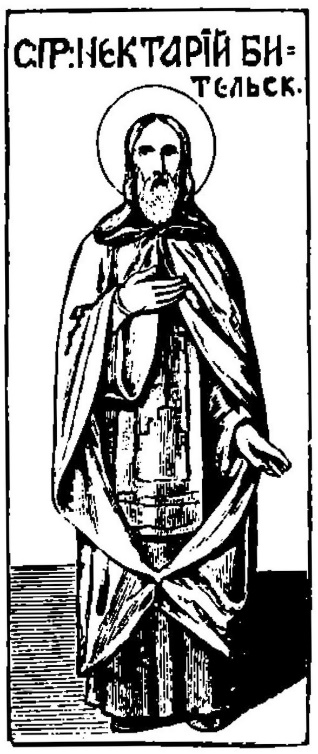
Спустя пять лет после кончины, ученики открыли гроб, и благоухание разлилось в воздухе. Мощи положены были в ковчег, и на верхней доске ковчега изображён был преподобный.
Five years after his repose, his disciples opened the grave, and a fragrance spread through the air. The relics were placed in a reliquary, and on the upper lid of the reliquary the Venerable One was depicted.
Битель, так ныне называют Болгары, у Кедрина в 1014 г. Бутель, У Араба Эдрисп (Tafel, de provinciis р. 34). Бутили был столицей Болгарского царя Гавриила. – Cedrenus 2, 460, ed. Bonn.
Bitel, as the Bulgarians now call it; in Cedrenus, in 1014, Butel; in the Arab Edrisi (Tafel, de provinciis p. 34). Butili was the capital of the Bulgarian Tsar Gabriel. – Cedrenus 2, 460, ed. Bonn.