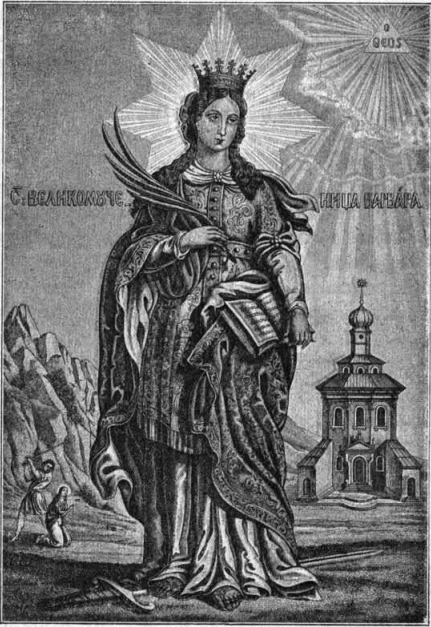
В царствование Римского царя Максимиана жил на Востоке, в городе Илиополе знатный и богатый человек, Еллин по происхождению, именем Диоскор. У него была дочь, именем Варвара, которую он берег и охранял, как «зеницу ока», тем более, что это была его единственная дочь. Она отличалась замечательною красотою, так что не было в той стране никого красивее её. Опасаясь поэтому, чтобы она не привлекла на себя внимание людей, стоявших ниже её по своему происхождению, так как он считал таких людей недостойными вступить в брак с его дочерью, Диоскор построил для неё отдельное, роскошное помещение в высокой, искусно сооружённой башне, где и поселилась Варвара, окружённая воспитательницами, заменявшими ей её скончавшуюся мать, и многими рабынями.
In the reign of the Roman Emperor Maximian, there lived in the East, in the city of Heliopolis, a noble and wealthy man, a Hellene by birth, named Dioscorus. He had a daughter, named Barbara, whom he guarded and protected as the "apple of his eye," all the more because she was his only daughter. She was distinguished by remarkable beauty, so that there was no one fairer than she in that land. Fearing, therefore, that she might attract the attention of men beneath her in birth—for he considered such men unworthy to marry his daughter—Dioscorus built for her a separate, luxurious dwelling in a high, artfully constructed tower, where Barbara took up her abode, surrounded by governesses, who took the place of her deceased mother, and by many maidservants.
Живя в этом помещении в высокой башне, Варвара могла наслаждаться видом живописнейшей местности вокруг её жилища. И в самом деле, оглядываясь вокруг из своих высоких хором, не могла она налюбоваться на красоту неба и земли, гор и долин, расстилающихся перед её глазами. Вид блистательного солнца и ночного светила – луны и неба, сияющего бесчисленными звёздами, возбуждал пытливые мысли и вопросы в уме любознательной Варвары. «Кто сотворил всю эту красоту?» – спрашивала она у своих наставниц. Смотря также на нивы, поля и луга, усеянные цветами, спрашивала она: «Кто создал все это?» «Все это сотворили наши боги», – отвечали ей окружающие её.
Living in this dwelling in the high tower, Barbara could delight in the view of the most picturesque countryside around her home. And indeed, gazing about from her lofty chambers, she could not weary of admiring the beauty of the sky and the earth, the mountains and the valleys that spread before her eyes. The sight of the radiant sun and of the night luminary—the moon—and of the sky shining with countless stars, aroused inquisitive thoughts and questions in the mind of the curious Barbara. "Who created all this beauty?" she asked her governesses. Looking also at the fields, meadows and pastures strewn with flowers, she asked: "Who made all this?" "All this was made by our gods," those around her replied.
– Те боги, которых почитает отец твой и держит их в своём доме, – золотые, серебряные, деревянные. Они сотворили все, что ты видишь, и отец твой поклоняется им.
"Those gods whom your father reveres and keeps in his house—golden, silver, wooden ones. They created everything you see, and your father worships them."
Но не верилось этим словам разумной девушке, и, в сомнении своём, она так рассуждала про себя: – боги, которых почитает отец мой, сделаны человеческими руками; золотые и серебряные сделаны золотых дел мастерами, каменные высек из камня каменосечец, деревянные выделал столяр. Как же эти боги, сами сделанные чужими руками, не могущие ни ходить, ни делать ничего, могли бы создать небесные пространства и всю земную красоту?
But the wise maiden did not believe these words, and in her doubt she reasoned thus within herself: "The gods my father reveres are made by human hands; the golden and silver ones are made by goldsmiths, the stone ones are hewn from stone by stonecutters, the wooden ones are fashioned by carpenters. How could these gods, themselves made by the hands of others, unable to walk or do anything, have created the heavenly expanses and all the beauty of the earth?"
Так размышляя, все чаще и чаще приглядывалась к природе Варвара и старалась выпытывать от самого создания ответ на свой неотступный вопрос: кто же сотворил его? И вот, в одну из таких минут её святой пытливости озарила душу её благодать небесная; умственному взору её открылось постижение единого, неизвестного и непостижимого Бога, премудро сотворившего небо и землю. Собственным разумом дошла она до такого рассуждения: – один только может быть такой Бог, Которого создала не рука человеческая, но Сам Он, имеющий собственное бытие, Своею рукою все созидает. Один только может быть Бог, Который сотворил пространство небесное и утвердил основы, на которых держится земля, и просвещает всю вселенную солнечными лучами, и лунным сиянием и звездным блистанием; Он же украшает и землю различными деревьями и цветами и напояет её реками и источниками водными. Один только может быть такой Бог, Который все содержит и все устраивает, и всему даёт жизнь и о всем промышляет. Так и отроковица Варвара через познание творения научилась познанию Творца, и на ней сбылись слова пророка Давида: «поучихся во всех делех Твоих, Господи, в творениих руку Твоею поучахся». И в этом постижении Творца мира разгорелся в её сердце огонь Божественной любви, и воспламенела душа её таким стремлением к Богу, что уже ни днём, ни ночью не знала она покоя, думая все только об одном и желая только одного: как бы и от кого узнать ей и научиться об этом Боге и Творце мира. Но не могла она иметь такого наставника, который открыл бы ей таинства святой веры и наставил бы её на путь спасения, так как отец её Диоскор, окружив её строгим надзором, запретил приближаться к ней кому бы то ни было, исключая её наставниц и рабынь. Но Сам Премудрейший учитель и наставник Дух Святой невидимо поучал её и таинственно вдохновлял Своими внушениями, которые открывали душе её познание истины. И жила отроковица Варвара в уединённой башне своей, как птица одинокая, помышляющая о высшем, а не о низменном; и не привязывалось сердце её ни к земному, не любила она ни золота, ни драгоценных камней, ни украшений нарядных и ничего, что привлекательно для других в её возрасте. И о замужестве никогда не думала она, но объятая любовью к Богу всей душою углублялась только в помышлениях о Нём.
Reflecting thus, Barbara looked more and more often at nature and tried to elicit from creation itself an answer to her persistent question: who, then, created it? And behold, in one such moment of her holy inquisitiveness, heavenly grace illumined her soul; the understanding of the one, unknown and incomprehensible God, who wisely created heaven and earth, was revealed to her mental gaze. By her own reason she arrived at this conclusion: "There can be only one such God, whom no human hand has made, but who Himself, having His own existence, creates everything with His own hand. There can be only one God, who created the heavenly expanse and established the foundations upon which the earth rests, and who illumines the whole universe with the rays of the sun, with the light of the moon and the shining of the stars; He also adorns the earth with various trees and flowers and waters it with rivers and springs. There can be only one such God, who contains everything, orders everything, gives life to everything, and provides for everything." Thus the maiden Barbara, through the knowledge of creation, learned to know the Creator, and the words of the Prophet David were fulfilled in her: "I have studied all Thy works, O Lord; I have studied the creations of Thy hands." And in this comprehension of the Creator of the world, the fire of Divine love blazed up in her heart, and her soul was inflamed with such a longing for God that she knew no rest by day or by night, thinking only of one thing and desiring only one thing: how and from whom she might learn about this God and Creator of the world. But she could have no such teacher as would reveal to her the mysteries of the holy faith and guide her on the path of salvation, for her father Dioscorus, surrounding her with strict supervision, had forbidden anyone to approach her except her governesses and maidservants. But the Most Wise Teacher and Instructor, the Holy Spirit, invisibly taught her and mysteriously inspired her with His promptings, which opened the knowledge of truth to her soul. And the maiden Barbara lived in her solitary tower like a lonely bird, thinking of the higher and not of the lowly; and her heart was attached neither to earthly things, nor did she love gold, or precious stones, or fine adornments, or anything that is attractive to others of her age. And she never thought of marriage, but, embraced by love for God, she immersed herself with her whole soul only in thoughts of Him.
Когда же наступило время выдавать её замуж, и многие богатые и знатные юноши, наслышавшись о красоте её, просили у Диоскора руки его дочери, то Диоскор взошёл однажды в башню Варвары и начал говорить ей о замужестве, о разных прекрасных женихах, которые ищут руки её, и предлагал ей обручиться с одним из них. Выслушав такое предложение, сильно смутилась целомудренная Варвара и покраснела вся, стыдясь не только слышать, но и помыслить о замужестве. Поэтому со всею силою воспротивилась она воле отца своего, так как девством своим дорожила она, как драгоценнейшим из сокровищ. Долго отец уговаривал её повиноваться воле его, она же настойчиво возражала и, наконец, сказала ему: «Отец! Если ты не перестанешь вынуждать меня к замужеству, то скоро тебе уже не придётся больше называть себя отцом: я лишу себя жизни, и ты лишишься тогда единственного своего детища».
When the time came for her to be given in marriage, and many wealthy and noble youths, having heard of her beauty, asked Dioscorus for his daughter's hand, Dioscorus once went up to Barbara's tower and began to speak to her of marriage, of various excellent suitors who sought her hand, and proposed that she betroth herself to one of them. Hearing such a proposal, the chaste Barbara was greatly troubled and blushed all over, being ashamed not only to hear but even to think of marriage. Therefore she opposed her father's will with all her might, for she treasured her virginity as the most precious of treasures. For a long time her father urged her to obey his will, but she steadfastly objected and finally said to him: "Father! If you do not cease to force me into marriage, you will soon no longer be able to call yourself a father: I will take my own life, and you will then lose your only child."
Услышав это, Диоскор ужаснулся и ушёл от своей дочери, не решаясь более принуждать ее и, рассчитывая, что, сделавшись старше, она будет рассудительнее и добровольно согласится выйти замуж, как и другие девицы, достигшие зрелого возраста. Вместе с тем он решился предпринять дальнее путешествие, имея в виду, что дочь будет скучать о нем и, обрадовавшись его возвращению, будет более расположена послушаться и исполнить его волю. Уезжая же, Диоскор распорядился, чтобы в его саду, при бывшем там источнике, была выстроена роскошная баня с двумя окнами на южную сторону, и разрешил наставницам своей дочери, чтобы они предоставляли ей выходить из башни и свободно проводить время по её желанию. Допустив это, Диоскор надеялся, что, сходясь и беседуя с подругами и видя, что многие из них охотно выходят замуж, дочь его одумается и последует их примеру.
Hearing this, Dioscorus was horrified and left his daughter, not daring to compel her further, calculating that when she grew older she would become more reasonable and would voluntarily consent to marry, as other maidens of mature age did. At the same time, he resolved to undertake a long journey, thinking that his daughter would miss him and, rejoicing at his return, would be more disposed to listen and fulfill his will. Before leaving, Dioscorus gave orders that a luxurious bathhouse be built in his garden, near the spring that was there, with two windows facing south, and he permitted his daughter's governesses to allow her to leave the tower and spend her time freely as she wished. By allowing this, Dioscorus hoped that, by meeting and conversing with her companions and seeing that many of them willingly married, his daughter would come to her senses and follow their example.
Когда же Диоскор уехал в дальнюю страну, то Варвара, получив теперь свободу выходить из дома своего и знакомиться с кем пожелает, сблизилась с некоторыми девицами-христианками и, услышав от них об Иисусе Христе, возрадовалась всею душою и старалась узнать от них как можно больше о Нем. Они же и рассказали ей о Христе, о неизреченном Божестве Его, о воплощении Его от Пречистой Девы, о добровольном страдании Его и воскресении, о будущем Суде и вечных мучениях идолопоклонников, и о нескончаемом блаженстве христиан в Царствии Небесном.
When Dioscorus had departed for a distant land, Barbara, now having the freedom to leave her house and become acquainted with whomever she wished, became close to some Christian maidens and, hearing from them about Jesus Christ, rejoiced with all her soul and strove to learn as much as possible about Him from them. And they told her about Christ, about His ineffable Divinity, about His incarnation from the Most Pure Virgin, about His voluntary suffering and resurrection, about the future Judgment and the eternal torments of idolaters, and about the endless blessedness of Christians in the Heavenly Kingdom.
В это время в эту местность случайно прибыл из Александрии один пресвитер под видом купца. Узнав о нем, Варвара пригласила его к себе и успела, тайно от всех, научиться от него познанию единого Бога Творца и Вседержителя и вере в Господа нашего Иисуса Христа, чего так жаждала душа её. Посвятив же её во все таинства веры, пресвитер крестил её во имя Отца и Сына и Святого Духа и, ещё поучив её и наставив её, возвратился в свою сторону. – А святая Варвара, просвещённая крещением, ещё более предалась любви своей к Богу и проводила дни и ночи в молитве, соблюдала пост и усердно трудилась для Господа, Которому она уневестила себя целомудренною жизнью.
At that time, a certain presbyter from Alexandria, disguised as a merchant, happened to arrive in that region. Learning of him, Barbara invited him to her and succeeded, secretly from all, in learning from him the knowledge of the one God, Creator and Almighty, and faith in our Lord Jesus Christ, which her soul so thirsted for. Having initiated her into all the mysteries of the faith, the presbyter baptized her in the name of the Father and of the Son and of the Holy Spirit and, having further taught and instructed her, returned to his own region. And St. Barbara, enlightened by Baptism, gave herself still more to her love for God and spent her days and nights in prayer, kept the fast, and labored diligently for the Lord, to whom she had betrothed herself by her chaste life.
В это время в саду Варвары строилась баня, по распоряжению отца её перед его отъездом. Однажды пошла Варвара посмотреть эту постройку и, увидев два окна, пробиваемые в стене, сказала работникам: «Почему пробиваете вы только два окна? Не лучше ли будет прибавить и третье? И стена тогда будет красивее, и баня светлее». Но работники отвечали ей: «Так отец твой нам приказал, чтобы мы устроили только два окна на южную сторону». Варвара же стала настаивать, чтобы прорублено было и третье окно (по мысли её – в изображение Святой Троицы). И когда работники, опасаясь прогневить её отца, не соглашались исполнить её повеление, то она сказала им: «Не опасайтесь, делайте, как я вам говорю, я же беру на себя ответ перед отцом и заступлюсь за вас». – Тогда они прорубили третье окно в бане по её повелению. Был там, как сказано, источник, при котором строилась баня; этот источник имел ограду из тёсаного мрамора; однажды, подойдя к ней и повернувшись на восток, святая Варвара начертала на мраморе изображение святого креста, и это изображение, начертанное рукою чистой девицы, отпечатлелось на мраморе как бы вырезанное железом. При той же бане отпечатлелся и след ноги Варвары, и из него заструилась вода, сделавшаяся целебною для всех с верою приходящих сюда. Все же это: и баня с тремя окнами, в изображение Святой Троицы устроенными, и мраморный камень при источнике с крестным изображением, и след ноги святой Варвары сохранялись до времени блаженного Симеона Метафраста, который, по Иоанну Дамаскину, описал страдания св. Варвары и говорит в своём повествовании следующее: «даже и до сего дня существует тот источник, который исцеляет болезни всех христолюбивых людей, так что если бы кто-нибудь пожелал приравнять его к струям Иорданским, или к Овчей купели, или к Силоамкому источнику, то не погрешил бы против правды, так как и в том источнике действует сила Христова, производящая многие чудеса.
At that time, a bathhouse was being built in Barbara’s garden, by order of her father before his departure. One day Barbara went to inspect this construction and, seeing two windows being cut into the wall, said to the workmen: “Why are you cutting only two windows? Would it not be better to add a third? Then the wall will be more beautiful, and the bathhouse lighter.” But the workmen answered her: “Your father ordered us thus, that we should make only two windows on the south side.” Barbara, however, began to insist that a third window be cut (in her thought, as an image of the Holy Trinity). And when the workmen, fearing to anger her father, would not agree to carry out her command, she said to them: “Do not be afraid; do as I tell you; I take upon myself the answer before my father and will intercede for you.” Then they cut a third window in the bathhouse by her order. There was there, as has been said, a spring, near which the bathhouse was being built; this spring had an enclosure of hewn marble. One day, approaching it and turning to the east, the holy Barbara traced on the marble the image of the holy cross, and this image, traced by the hand of a pure maiden, was imprinted on the marble as if cut with iron. By that same bathhouse the footprint of Barbara’s foot was also imprinted, and from it water gushed forth, which became healing for all who came there with faith. All this—the bathhouse with three windows, made in the image of the Holy Trinity, and the marble stone at the spring with the image of the cross, and the footprint of the holy Barbara—were preserved until the time of the blessed Symeon Metaphrastes, who, according to John of Damascus, described the sufferings of St. Barbara and says in his narrative the following: “Even to this day that spring exists, which heals the illnesses of all Christ-loving people, so that if anyone wished to compare it to the streams of the Jordan, or to the Sheep’s Pool, or to the Spring of Siloam, he would not sin against the truth, for in that spring also the power of Christ works, producing many miracles.”
Проходя, однажды, по комнатам в доме своего отца и увидев в одной из них идолов, поставленных на почётном месте, тяжело вздохнула Варвара при мысли о гибельном заблуждении идолопоклонников и, плюнув на лицо истуканов, сказала: «Пусть будут подобны вам все служащие вам и требующие помощи от вас, бездушных…» И сказав это, возвратилась в своё жилище в башне и предалась своей обычной молитве и посту, и углубилась всею душою своею в Богомыслие.
Passing one day through the rooms of her father’s house and seeing in one of them the idols placed in a place of honor, Barbara sighed heavily at the thought of the pernicious delusion of the idolaters and, spitting on the face of the statues, said: “Let all who serve you and seek help from you, soulless ones, be like you…” And having said this, she returned to her dwelling in the tower and gave herself to her usual prayer and fasting, and plunged with her whole soul into the contemplation of God.
Вскоре после того возвратился домой отец её Диоскор. Осматривая однажды постройки, производимые у него в доме, подошёл он и к вновь построенной бане и, увидев три окна в стене, разгневался на работников, зачем нарушили они его приказание и вместо двух вырубили в стене три окна. – Когда же Диоскор, призвав Варвару, стал спрашивать ее, зачем она велела пробить третье окно, то она отвечала ему: «Лучше три, нежели два окна. Ты, мой отец, повелел вырубить два окна в изображение, как я думаю двух светил – солнца и луны, чтобы они освещали баню; я же приказала вырубить и третье окно – в изображение Троичного Света, так как существуют три окна неприступного, неизреченного, незаходимого и немерцающего света, через которые просвещается всякий человек, приходящий в мир. – Смутился Диоскор при таких совсем новых для него, поистине удивительных и непонятных словах его дочери. Отойдя с нею в сторону и став у источника при бане, на ограде которого был крест, начертанный рукою Варвары (но Диоскор его ещё не заметил), отец спросил свою дочь: «Каким это образом светом из трёх окон просвещается всякий человек?» Отвечала ему святая: «Послушай, отец мой, и пойми, что я говорю. Три лица единого в Троице Бога, живущего во свете неприступном, просвещают и оживляют всякое создание – Отец, Сын и Святой Дух. И ради этого повелела я устроить в бане три окна, чтобы одно из них служило изображением отца, другое – Сына, а третье – Духа Святого, так чтобы и самые стены прославляли имя Святой Троицы.
Soon after this, her father Dioscorus returned home. One day, inspecting the constructions being carried out in his house, he came also to the newly built bathhouse and, seeing three windows in the wall, grew angry at the workmen for having disobeyed his order and cut three windows in the wall instead of two. When Dioscorus, summoning Barbara, began to ask her why she had ordered the third window to be cut, she answered him: “Three is better than two windows. You, my father, ordered two windows to be cut, as I think, in the image of the two luminaries—the sun and the moon—that they might light the bathhouse; I, however, ordered a third window to be cut—in the image of the Trinitarian Light, for there are three windows of the unapproachable, ineffable, unsetting and unfading light, through which every man who comes into the world is enlightened.” Dioscorus was troubled by these entirely new, truly wondrous and incomprehensible words of his daughter. Going aside with her and standing by the spring at the bathhouse, on whose enclosure was the cross traced by Barbara’s hand (but Dioscorus had not yet noticed it), the father asked his daughter: “How is it that every man is enlightened by the light from three windows?” The holy one answered him: “Listen, my father, and understand what I say. The three Persons of the one God in Trinity, Who lives in unapproachable light, enlighten and enliven every creature—the Father, the Son, and the Holy Spirit. And for this reason I ordered three windows to be made in the bathhouse, that one might serve as the image of the Father, another of the Son, and the third of the Holy Spirit, so that even the walls might glorify the name of the Holy Trinity.
Затем указала Варвара и на изображение креста на мраморной ограде и сказала: «А вот, изобразила я и знамение Сына Божия, Который благоволением Отца, действием же Святого Духа и ради спасения человеческого рода воплотился от чистой Девы Марии и добровольно пострадал на таком же кресте, который тут изображён. Ради Него и изобразила я здесь крестное знамение, чтобы силою крестною была удалена отсюда вся бесовская сила.
Then Barbara pointed also to the image of the cross on the marble enclosure and said: “And behold, I have also depicted the sign of the Son of God, Who, by the good will of the Father, by the action of the Holy Spirit, and for the salvation of the human race, was incarnate from the pure Virgin Mary and voluntarily suffered on a cross such as the one depicted here. For His sake I have depicted the sign of the cross here, that by the power of the cross all demonic power might be driven away from this place.
Выслушав это и многое ещё о Святой Троице, о воплощении и страдании Христовом, о силе крестной и о прочих таинствах святой веры от премудрой дочери своей, жестокосердый отец пришёл в яростный гнев. Забыв в эту минуту естественную любовь к дочери, он извлёк меч и хотел ударить им дочь свою, но она побежала от него; он же, как волк за овцой, гонялся за нею с обнажённым мечом в руке и уже настигал непорочную агницу Христову, так как она добежала до каменной горы, которая, как стена, преградила ей путь… Не видя, куда укрыться от меча отца своего, а вернее мучителя, и не имея другого прибежища, кроме Бога, к Нему и возвела святая свои душевные и телесные очи, прося у Него защиты и помощи. И не замедлили Господь услышать рабу Свою и явить ей помощь Свою. Перед Варварою, как некогда перед св. первомученицей Феклой, бежавшей от бесстыдных людей, расселась каменная гора, и под раздвинувшимися её глыбами святая свободно укрылась, как в пещере. А Диоскор, сердце которого было твёрже камня, не видя вдруг перед собою бежавшей дочери, удивился, каким образом скрылась она из глаз его и продолжал долго и настойчиво искать её. Обходя же ту гору и ища дочь свою, увидел он двух пастухов, пасущих на горе овец своих. Те же видели святую Варвару, взбежавшую на гору и скрывшуюся в пещере. Подойдя к ним, Диоскор спросил их, не видели ли они убежавшую дочь его. Один из пастухов, добрый человек, видя разгневанного Диоскора, пожелал спасти от него неповинную девицу и сказал, что не видал её. Но другой пастух, молча, указал на то место, где укрылась святая. И поспешил туда Диоскор, а пастуха, который указал убежище святой, постигла на том же месте кара Божия: он превратился в столп каменный, а овцы его – в саранчу…
Having heard this and much more about the Holy Trinity, about the incarnation and suffering of Christ, about the power of the cross, and about the other mysteries of the holy faith from his wise daughter, the hard-hearted father flew into a furious rage. Forgetting in that moment his natural love for his daughter, he drew his sword and wished to strike his daughter with it, but she fled from him; he, like a wolf after a sheep, chased after her with a drawn sword in his hand and was already overtaking the innocent lamb of Christ, for she had run to a stone mountain which, like a wall, barred her way… Seeing no place to hide from the sword of her father—or rather, her tormentor—and having no other refuge save God, the holy one raised her spiritual and bodily eyes to Him, begging His protection and help. And the Lord did not delay to hear His handmaiden and to show her His help. Before Barbara, as once before the holy Protomartyr Thecla, who fled from shameless men, the stone mountain split open, and under its parted masses the holy one freely hid herself, as in a cave. And Dioscorus, whose heart was harder than stone, not seeing his fleeing daughter suddenly before him, wondered how she had vanished from his sight and continued to seek her long and persistently. As he went around that mountain seeking his daughter, he saw two shepherds pasturing their sheep on the mountain. They had seen the holy Barbara run up the mountain and hide in the cave. Approaching them, Dioscorus asked if they had seen his runaway daughter. One of the shepherds, a good man, seeing the enraged Dioscorus, wished to save the innocent maiden from him and said that he had not seen her. But the other shepherd silently pointed to the place where the holy one had hidden. And Dioscorus hastened there, and the shepherd who had pointed out the saint’s refuge was overtaken on that same spot by God’s punishment: he was turned into a stone pillar, and his sheep into locusts…
Найдя дочь свою в пещере, Диоскор вывел её оттуда и стал осыпать её побоями. Ударив её о землю, он топтал её ногами и, схватив за волосы, волочил её к дому по ужасной дороге. Дома он запер её в тесный и тёмный чулан, запечатал дверь печатью, приставил сторожей и морил дочь свою голодом и жаждою. Потом пошёл к правителю той страны, именем Мартиану, и объявил ему, что дочь его отреклась от богов, уверовала в какого-то распятого, и стал упрашивать правителя, чтобы он угрозами разных пыток склонил её к отеческой вере. После того он вывел её из заключения, привёл и передал её в руки правителю, говоря: «Я отрекаюсь от неё, потому что она отреклась от моих богов; и если она снова не обратится к ним и не поклонится им вместе со мною, то она не будет мне дочерью, и я не буду ей отцом. Ты же, правитель, имеющий власть, мучь её, насколько это в твоей власти».
Having found his daughter in the cave, Dioscorus led her out from there and began to shower her with blows. Throwing her to the ground, he trampled her underfoot and, seizing her by the hair, dragged her home along a terrible road. At home he locked her in a narrow and dark closet, sealed the door with a seal, set guards, and starved his daughter with hunger and thirst. Then he went to the governor of that country, named Martianus, and declared to him that his daughter had renounced the gods, had believed in some crucified man, and began to entreat the governor to incline her by threats of various tortures to her father’s faith. After that he brought her out of confinement, led her, and handed her over to the governor, saying: “I renounce her, because she has renounced my gods; and if she does not again turn to them and worship them together with me, then she will not be my daughter, and I will not be her father. You, governor, who have authority, torture her as far as is in your power.”
Правитель, увидев Варвару, поражён был её необыкновенною красотою обратился и ласково и приветливо обратился к ней, лестно отзываясь об её красоте и благородном происхождении. Он стал уговаривать её, чтобы она не отступала от древних отеческих законов, и чтобы она не противилась воле отца своего, но чтобы поклонилась богам и слушалась во всем родителя, от которого ей предстоит наследовать все имения. В ответ на убеждения правителя святая девица Варвара разумно изобличила перед ним все ничтожество бездушных богов, исповедала и прославила Иисуса Христа, сказала что отвергается она от всякой суеты мирской, от всяких богатств и утешений земных и ищет только небесных утешений.
The governor, seeing Barbara, was struck by her extraordinary beauty and turned to her kindly and affably, speaking flatteringly of her beauty and noble birth. He began to urge her not to depart from the ancient paternal laws, and not to oppose the will of her father, but to worship the gods and obey her parent in everything, from whom she was to inherit all his possessions. In answer to the governor’s exhortations, the holy maiden Barbara wisely exposed before him all the worthlessness of the soulless gods, confessed and glorified Jesus Christ, and said that she renounced all worldly vanity, all riches and earthly comforts, and sought only heavenly comforts.
Игемон же продолжал увещевать ее, чтобы не бесчестила она рода своего и не губила своей цветущей юности. И, наконец, сказал он ей: «Будь же сама милосердна к себе, прекрасная девушка! Решись принести вместе с нами жертву богам, так как я, хотя и милосердствую к тебе и желаю пощадить тебя, жалея предать такую красоту твою на мучения и раны, но, если ты не послушаешь меня и пребудешь непокорною нам, то заставишь меня против воли предать тебя лютым истязаниям».
The hegemon continued to admonish her not to dishonor her family and not to destroy her flourishing youth. And finally he said to her: “Be merciful to yourself, beautiful maiden! Resolve to offer sacrifice with us to the gods, for I, although I am merciful toward you and wish to spare you, regretting to give such beauty of yours over to tortures and wounds, yet if you do not listen to me and remain disobedient to us, you will force me against my will to subject you to cruel torments.”
Святая же девица отвечала ему: «Я постоянно приношу жертву хваления Богу моему и сам хочу быть жертвою Ему, потому что он один есть Бог истинный, Который создал небо и землю и все, что на них; твои же боги ничтожны, бездушны и не действительны, и ничего не создали они, но их самих создаёт рука человеческая, как и говорит пророк: идолы языческие, это – серебро и золото, дела рук человеческих, и все боги языческие – бесы. Господь же есть Творец неба. Вот этим пророческим словам внимаю я и в единого Бога, Создателя всего в мире, верую, а о ваших богах знаю и говорю, что они ничтожны, и что надежда ваша на них напрасна».
The holy maiden answered him: “I constantly offer the sacrifice of praise to my God and I myself wish to be a sacrifice to Him, for He alone is the true God, Who created heaven and earth and all that is upon them; your gods are worthless, soulless, and ineffectual, and they have created nothing, but are themselves created by the hand of man, as the prophet says: the idols of the pagans are silver and gold, the work of human hands, and all the pagan gods are demons. The Lord is the Creator of heaven. It is to these prophetic words that I hearken, and in the one God, the Creator of all in the world, I believe; but concerning your gods I know and say that they are worthless, and that your hope in them is vain.”
Выслушав такие слова Варвары, разгневался правитель и сейчас же велел обнажить её. И когда предстала она нагою перед взорами всех бывших при этом, бесстыдно смотрящих на её обнажённое, чистое, девственное тело, то было это жестоким, более тяжёлым, чем всякие раны, мучением для чистой, целомудренной и святой девицы.
Having heard such words from Barbara, the governor grew angry and immediately ordered her to be stripped. And when she stood naked before the eyes of all those present, who shamelessly gazed upon her naked, pure, virginal body, this was a cruel torment, more grievous than any wounds, for the pure, chaste, and holy maiden.
После того её, распростёртую на земле, били, по повелению мучителя, воловьими жилами в продолжении многих часов, так что вся земля вокруг была залита её кровью… Тогда стали острыми черенками и жестокою волосяною тканью растирать раны её, чтобы увеличить её страдания. Однако все эти мучения, сильнее бури и вихря охватившие молодое, немощное девическое тело, не поколебали твёрдую в вере мученицу Варвару, так как вера её основана была, как на камне – на Господе Христе, ради Которого ей было сладко терпеть даже самые горькие мучения.
After this, by the command of the tormentor, she was stretched upon the ground and beaten with ox sinews for many hours, so that all the earth around was drenched with her blood... Then they began to rub her wounds with sharp potsherds and coarse haircloth, to increase her sufferings. Yet all these torments, which seized the young, weak, virginal body more violently than storm and whirlwind, did not shake the Martyr Barbara, firm in faith, for her faith was founded, as upon a rock, upon the Lord Christ, for Whose sake it was sweet for her to endure even the most bitter torments.
После того игемон приказал отвести мученицу в темницу, пока он не придумает, каким бы, ещё более жестоким испытаниям подвергнуть её…
After that the governor commanded that the martyr be led away to prison, until he should devise to what still more cruel trials he might subject her...
Тяжело израненная, едва живая брошена была Варвара в темницу и там со слезами молилась возлюбленному Жениху своему Христу, чтобы не оставил Он её, тяжело страдающую, и взывала к Нему с псалмопевцем Давидом: «Не оставь меня, Господи Боже мой! Не отступи от меня: приди на помощь ко мне!» – И вот, в полночь, среди её молитвы заблистал в темнице великий свет. И ужас, и радость ощутила святая в сердце своём, когда она увидела приближающегося к ней нетленного Жениха, пришедшего посетить свою невесту… И предстал перед ней в славе неизреченной Сам Царь славы, Господь. И как возрадовалась духом и усладилась сердцем святая, увидев Его! Он же, приветливо взирая на неё, сказал ей: «Дерзай, невеста Моя, и не бойся ничего. Я – с тобой, хранящий тебя и взирающий на подвиг твой, и облегчающий страдания твои, приготовляя тебе воздаяние за них в Моем небесном чертоге. И так, потерпи до конца, чтобы вскоре насладиться вечными благами в Царствии моем».
Grievously wounded, scarcely alive, Barbara was cast into prison, and there with tears she prayed to her beloved Bridegroom Christ, that He would not forsake her, suffering so heavily, and she cried to Him with the Psalmist David: "Forsake me not, O Lord my God! Depart not from me: come to my help!" — And behold, at midnight, in the midst of her prayer, a great light shone in the prison. And both terror and joy did the holy one feel in her heart, when she saw approaching her the incorrupt Bridegroom, come to visit His bride... And there appeared before her in ineffable glory the very King of glory, the Lord Himself. And how did the holy one rejoice in spirit and delight in heart, beholding Him! And He, looking upon her kindly, said to her: "Take courage, My bride, and fear nothing. I am with thee, preserving thee and beholding thy struggle, and easing thy sufferings, preparing for thee their reward in My heavenly bridal chamber. And so, endure to the end, that thou mayest soon delight in eternal blessings in My Kingdom."
Слушая такие вещания Христа Господа, сердце святой Варвары таяло, как воск от огня Божественного желания, и как река разливалось любовью к Нему. И таким образом утешив и любовью Своею усладив возлюбленную невесту Свою Варвару, Иисус Сладчайший исцелил её и от ран, так что не осталось и следа от них на ее теле, и тогда скрылся из глаз её, оставив в сердце её неизреченную радость. И почувствовала себя святая Варвара в темнице, как на небе, воспламеняясь ангельскою любовью к Богу, славословя Его сердцем и устами, воздавая Ему благодарение, что не презрел Он на рабу Свою, но посетил её, страждущую ради имени Его.
Hearing such words of Christ the Lord, the heart of holy Barbara melted like wax before the fire of divine desire, and spread abroad like a river in love for Him. And thus, having comforted and sweetened with His love His beloved bride Barbara, Jesus the Sweetest healed her also of her wounds, so that no trace of them remained upon her body, and then He hid Himself from her eyes, leaving in her heart ineffable joy. And holy Barbara felt herself in prison as in heaven, inflamed with angelic love for God, glorifying Him with heart and lips, rendering thanks to Him that He had not despised His handmaid, but had visited her, suffering for His name's sake.
Жила в той местности одна женщина, верующая и богобоязненная, именем Иулиания, которая, после того как взяли святую Варвару на испытания, наблюдала за нею со стороны и присутствовала при ее страданиях. И когда отведена была святая в темницу, то Иулиания присела под темничным оконцем и размышляла с изумлением, как это такая молодая девица в самом расцвете своей красоты и молодости отреклась от отца своего, и от всего рода, и от богатства, и от всех мирских благ, и не щадит даже и жизни своей ради Христа, но с усердием отдаёт её за Него…
There lived in that region a certain woman, believing and God-fearing, by name Juliana, who, after holy Barbara had been taken for trial, watched her from afar and was present at her sufferings. And when the holy one was led away to prison, Juliana sat down beneath the prison window and reflected with amazement, how it was that such a young maiden, in the very flower of her beauty and youth, had renounced her father, and all her kindred, and her wealth, and all worldly goods, and spared not even her very life for Christ's sake, but with zeal gave it up for Him...
Когда же Иулиания вскоре увидела, что Христос исцелил святую Варвару от её ран, то и сама пожелала пострадать за Него и стала приготовляться к подвигу, моля Подвигоположника Иисуса Христа, чтобы Он ниспослал ей терпение в муках. И когда, при наступлении дня, святая Варвара была выведена из темницы, чтобы снова предстать на суд и подвергнуться новым испытаниям, то Иулиания последовала за нею издалека.
And when Juliana soon saw that Christ had healed holy Barbara of her wounds, she too desired to suffer for Him, and began to prepare herself for the struggle, praying to Jesus Christ, the Author of the contest, that He would grant her patience in torments. And when, at the coming of day, holy Barbara was led out of prison, to appear again before the judgment and undergo new trials, Juliana followed her from afar.
Когда святая Варвара предстала пред игемоном, совершенно здоровая, без всякого следа от ран, нанесённых ей, и сияющая красотою больше прежнего, то игемон и все бывшие с ним были поражены удивлением. И сказал ей тогда игемон: «Не видишь ли теперь, девица, какое попечение имеют о тебе наши боги! Тебя, вчера так жестоко изъязвлённую, они сегодня вполне исцелили, и изнемогшей тебе от болезни здоровье возвратили; будь же благодарна за такое их благодеяние и, поклонившись им, соверши жертвоприношение». – Святая же отвечала ему: «Что ты говоришь, правитель, будто бы боги твои меня исцелили, когда они, сами будучи слепы, немы и бесчувственны, не могут ни слепым дать прозрения, ни немым – языка, ни слуха – глухим, ни хождения – хромым.; и если они не могут ни больных исцелять, ни мёртвых воскрешать, так как могли бы они и меня исцелить? И за что же я буду поклоняться им? Меня исцелил Господь Бог мой, Иисус Христос, Который врачует всякие болезни и даёт жизнь мертвецам. Ему и поклоняюсь я с благодарением, и сама себя в жертву Ему приношу, Ему, Которого ты нечестивыми своими глазами и ослеплённым умом видеть не можешь, так как недостоин того».
When St. Barbara stood before the governor, completely healthy, without any trace of the wounds inflicted upon her, and shining with beauty more than before, the governor and all who were with him were struck with amazement. And the governor said to her: "Do you not now see, maiden, what care our gods have for you! You, yesterday so cruelly wounded, today they have wholly healed, and to you, fainting from illness, they have restored health; be grateful then for such their beneficence, and bowing down to them, offer sacrifice." — But the holy one answered him: "Why do you say, ruler, that your gods healed me, when they, being themselves blind, dumb, and senseless, can neither give sight to the blind, nor speech to the dumb, nor hearing to the deaf, nor walking to the lame? And if they cannot heal the sick, nor raise the dead, how could they heal me? And for what shall I worship them? The Lord my God, Jesus Christ, has healed me, Who heals every disease and gives life to the dead. Him do I worship with thanksgiving, and myself I offer to Him as a sacrifice, Him Whom you, with your impious eyes and blinded mind, cannot see, for you are unworthy of it."
Эти слова святой мученицы привели в ярость правителя; он приказал повесить мученицу на дереве и строгать её тело жезлом и опалять зажжёнными свечами ребра её. Вместе с тем молотом ударяли её по голове. Но мужественно переносила Варвара все эти мучения, которых нельзя было бы перенести, если бы не укрепляла невидимо агницу Христову Божия сила.
These words of the holy martyr drove the governor into a rage; he commanded that the martyr be hung upon a tree and her body scraped with rods, and her ribs scorched with lighted candles. At the same time they struck her upon the head with a hammer. But Barbara courageously endured all these torments, which could not have been borne, had not the power of God invisibly strengthened the lamb of Christ.
Между народом, смотрящим на мучения святой Варвары, стояла невдалеке и вышеупомянутая Иулиания и горько плакала она, видя, какие жестокие истязания терпит молодая, нежная девица. Наконец, возбуждаемая святым рвением и не будучи в состоянии скрывать свои чувства, Иулиания возвысила голос среди народа и стала упрекать немилосердного правителя за его бесчеловечное мучительство и вместе с тем стала хулить языческих богов. Когда же её за это взяли и стали спрашивать, какой она веры, то она смело исповедала себя христианкой. Тогда правитель велел истязать её таким же образом, как и Варвару. И повешена она была вместе с Варварою и строгали её также железными гребнями. А святая великомученица Варвара, висящая в муках, возведя взор свой к небу, взывала к Богу: «Боже, испытующий сердца человеческие, Ты знаешь, что к Тебе стремлюсь я, и что твои святые заповеди полюбив, всю себя я тебе предала и вручила Твоей всесильной Деснице. Ты же, Господи, не оставь меня, но милостиво призрев на меня и на страждущую вместе со мною Иулианию, обеих нас подкрепи и утверди для совершения настоящего подвига, потому что, хотя и бодр наш дух, но плоть немощна». – И на такую молитву святой Господь невидимо отзывался, подавая помощь мученицам в их мужественном терпении.
Among the people looking upon the torments of holy Barbara, the aforementioned Juliana stood not far off, and she wept bitterly, seeing what cruel tortures the young, tender maiden endured. At last, stirred by holy zeal and unable to conceal her feelings, Juliana raised her voice amid the people and began to reproach the merciless governor for his inhuman tormenting, and at the same time began to revile the pagan gods. And when for this she was seized and asked of what faith she was, she boldly confessed herself a Christian. Then the governor commanded that she be tortured in the same manner as Barbara. And she was hung up together with Barbara, and they scraped her also with iron combs. And the holy Great Martyr Barbara, hanging in torments, raising her eyes to heaven, cried to God: "O God, Who triest the hearts of men, Thou knowest that to Thee do I strive, and that having loved Thy holy commandments, I have given and entrusted all myself to Thy almighty right hand. Do Thou, O Lord, forsake me not, but mercifully regarding me and Juliana suffering with me, strengthen and confirm us both for the accomplishment of the present struggle, for though our spirit is watchful, yet the flesh is weak." — And to such a prayer of the holy one the Lord invisibly responded, granting help to the martyrs in their courageous endurance.
После того мучитель велел у них обеих отрезать сосцы, и среди увеличившихся страданий снова святая Варвара воззвала к своему Врачу и исцелителю: «Не отврати лица твоего от нас, Христе, и Духа Твоего Святого не отними от нас; воздай нам, Господи, радостью спасения и духом Владычним утверди нас в любви Твоей!»
After that the tormentor commanded that the breasts of both be cut off, and amid her increased sufferings holy Barbara again cried to her Physician and Healer: "Turn not away Thy face from us, O Christ, and take not Thy Holy Spirit from us; render to us, O Lord, the joy of salvation, and with Thy sovereign Spirit establish us in Thy love!"
После этих жестоких истязаний правитель велел отвести Иулианию в темницу, а святую Варвару, ради большего её посрамления, водить её по всему городу нагой с поруганием и биением.
After these cruel tortures the governor commanded that Juliana be led away to prison, and that holy Barbara, for her greater shame, be led naked through the whole city with mockery and beating.
Святая же девица Варвара, прикрываясь стыдом, как единственною своею одеждою, обратилась к возлюбленному Жениху своему Христу Господу, взывая к Нему: «Ты, одевающий небо облаками и землю мглою, как пеленами повивающий, Ты Сам, о Царь, покрой мою наготу и сотвори невидимыми члены мои для глаз нечестивых, чтобы не до конца посмеялись люди над рабою Твоею». И тогда Христос Господь, Который со всеми Своими Ангелами взирал с высоты Своей на подвиг Своей мученицы, ускорил Свою помощь ей и послал к ней светлого Ангела, чтобы покрыл он световидной одеждой наготу её. И не могли уже тогда видеть её нечестивые зрители, и была возвращена мученица мучителю. После неё и святую Иулианию водили нагою по городу – в позор людям и ангелам. Наконец, мучитель, видя, что ничто не может ни отлучить от любви ко Христу этих мучениц, ни склонить их к поклонению идолам, осудил их обеих на усечение мечем.
But the holy maiden Barbara, covering herself with shame as with her only garment, turned to her beloved Bridegroom Christ the Lord, crying to Him: "Thou Who clothest the heavens with clouds, and swaddlest the earth with mist as with swaddling bands, do Thou Thyself, O King, cover my nakedness, and make my members invisible to the eyes of the impious, that men may not utterly mock Thy handmaid." And then Christ the Lord, Who with all His Angels looked down from on high upon the struggle of His martyr, hastened His help to her and sent to her a radiant Angel, to cover her nakedness with a light-bearing garment. And the impious onlookers could no longer see her, and the martyr was brought back to the tormentor. After her, holy Juliana also was led naked through the city — a reproach to men and angels. At last the tormentor, seeing that nothing could either separate these martyrs from the love of Christ, nor incline them to the worship of idols, condemned them both to beheading by the sword.
Родитель же святой Варвары, каменносердечный Диоскор, дошёл до такого бесовского ожесточения, что не только что не страдал сердцем, видя жестокие страдания своей дочери, но не устыдился и сам быть ее палачом. Захватив ее одною рукою, а в другой держа обнажённый меч, он повёл свою дочь на место казни, назначенное на одной горе за городом. Другой воин повёл туда же и святую Иулианию. И когда они шли, то святая Варвара молилась Богу, говоря: «Безначальный Боже, распространивший небо, как покров над землею, и землю на водах основавший, озаряющий солнечным сиянием и добрых, и злых, и дождь проливающий на праведных и неправедных, Ты и теперь услыши меня, молящуюся Тебе рабу Твою, услыши, о Царь! И даруй благодать Твою всякому человеку, который будет вспоминать меня и мои страдания. Да не приблизиться к нему внезапная болезнь и да не похитит его нечаянная смерть: Ты ведь знаешь, Господи, что мы – плоть и кровь, и создание пречистых рук Твоих». И вот, в то время, когда молилась святая, послышался голос с небес, призывающий её и Иулианию в небесную обитель и обещающий ей исполнить просимое…
But the father of holy Barbara, the stony-hearted Dioscorus, reached such demonic hardness that not only did he not suffer in heart, seeing the cruel sufferings of his daughter, but he was not ashamed to be himself her executioner. Seizing her with one hand, while holding a bare sword in the other, he led his daughter to the place of execution, appointed on a certain mountain outside the city. Another soldier led holy Juliana there as well. And as they went, holy Barbara prayed to God, saying: "O God without beginning, Who hast spread out the heaven as a covering over the earth, and hast founded the earth upon the waters, Who makest the sun to shine upon both good and evil, and sendest rain upon the righteous and the unrighteous, do Thou now also hear me, Thy handmaid praying to Thee; hear me, O King! And grant Thy grace to every man who shall remember me and my sufferings. Let not sudden illness draw near to him, and let not unexpected death snatch him away: for Thou knowest, O Lord, that we are flesh and blood, and the creation of Thy most pure hands." And behold, while the holy one prayed, a voice was heard from heaven, calling her and Juliana to the heavenly habitation, and promising her that her request should be fulfilled...
И шли на смерть обе мученицы – Варвара и Иулиания с радостью великою, желая скорее разрешиться от тела и вознестись ко Господу. Дойдя же до назначенного места, агница Христова Варвара преклонила под меч свою голову и была усечена руками немилосердного отца, так что и в этом случае сбылось по Писанию: «отец предаст на смерть дитя своё».
And both martyrs — Barbara and Juliana — went to death with great joy, desiring soon to be loosed from the body and to ascend to the Lord. And having reached the appointed place, the lamb of Christ Barbara bowed her head beneath the sword and was beheaded by the hands of her merciless father, so that even in this the Scripture was fulfilled: "the father shall deliver up his child to death."
А святую Иулианию казнил мечом другой воин, так что и она до конца совершила подвиг свой. И в ликовании вознеслись их святые души к жениху своему Христу, и на встречу Ангелам и самому Владыке, с любовью принявшему их.
And holy Juliana was executed by the sword of another soldier, so that she too accomplished her struggle to the end. And with rejoicing their holy souls ascended to their Bridegroom Christ, to meet the Angels and the Master Himself, Who received them with love.
Диоскора же и правителя Мартиана поразила внезапная Божия кара. Разразившаяся в это время молния убила одного из них в то время, как он спускался с горы, а другого – сидящего в доме своём и сожгла их так, что и праха их не нашлось…
Dioscorus and the governor Martian were struck by a sudden punishment from God. A lightning bolt that broke out at that time killed one of them as he was descending a mountain, and the other while sitting in his own house, and burned them so completely that not even their ashes were found…
В том городе жил один благочестивый человек, именем Галентиан, который, взяв останки святых мучениц, перенёс их в город, предал их погребению с подобающей честью и построил над ними церковь, в которой и стали происходить многие чудные исцеления от мощей святых мучениц по молитвам их, благодатью же Отца, и Сына, и Святого духа, Единого в Троице Бога, Ему же слава во веки веков. Аминь.
In that city there lived a certain pious man named Galentian, who, taking the remains of the holy martyresses, brought them into the city, gave them burial with due honor, and built a church over them, in which many wondrous healings began to occur from the relics of the holy martyresses through their prayers, by the grace of the Father, and of the Son, and of the Holy Spirit, the One God in Trinity, to Whom be glory unto the ages of ages. Amen.
Святые Варвара и Иулиания пострадали около 306 г. В IV же или в VI веке (с точностью неизвестно) мощи св. великомученицы Варвары были перенесены в Константинополь, где во имя её был построен величественный храм императором Львом Мудрым (886–912 гг.). В 1108 г. св. мощи великомученицы были перенесены из Царьграда в Киев греческой царевной Варварой, дочерью Алексея Комнина, вышедшей замуж за великого князя киевского Святополка II (Михаила) Изяславича, правнука св. князя Владимира, и положены были в Злато-Верхо-Михайловском монастыре, основанном Святополком. Издревле во всей России распространено было почитание св. великомученицы Варвары и много было посвящено храмов имени ее, от которых получали свои названия и прилегающие к ним местности.
The holy Barbara and Juliana suffered around the year 306. In the fourth or sixth century (the exact time is unknown), the relics of the holy Great Martyr Barbara were translated to Constantinople, where a majestic church was built in her name by the Emperor Leo the Wise (886–912). In 1108, the holy relics of the Great Martyr were translated from Constantinople to Kiev by the Greek princess Barbara, daughter of Alexius Comnenus, who was married to the Grand Prince of Kiev, Svyatopolk II (Michael) Izyaslavich, a great-grandson of the holy Prince Vladimir, and were placed in the Golden-Top St. Michael's Monastery, founded by Svyatopolk. From ancient times, the veneration of the holy Great Martyr Barbara was widespread throughout all Russia, and many churches were dedicated to her name, from which the adjoining localities also received their names.
«Разуму твоему, мудрая дево, дивящеся, глаголем, – воспевает Церковь св. великомученице Варваре, – радуйся, паче старец идолослужительных разумнейшая! Радуйся, паче мудрецов мира мудрейшая! Радуйся, яко тебе безвестная и тайная премудрости Своея Бог явил есть. Радуйся, всех звездочётцев умом Христовым превзошедшая. Радуйся, явственнее паче онех небесный круг прозревшая. Радуйся, яко в твари, аки в зерцале, Самого Творца усмотрела еси. Радуйся, яко в созданных светилах несозданный свет узрела еси!»
“Marveling at thy wisdom, O wise maiden, we cry out,” the Church sings to the holy Great Martyr Barbara, “Rejoice, O thou more understanding than the idol-serving elders! Rejoice, O thou wiser than the wise of the world! Rejoice, for God hath revealed to thee the hidden and secret things of His wisdom. Rejoice, O thou who hast surpassed all astrologers by the mind of Christ. Rejoice, O thou who hast discerned the heavenly circle more clearly than they. Rejoice, for in creation, as in a mirror, thou hast beheld the Creator Himself. Rejoice, for in the created lights thou hast seen the uncreated Light!”
«Радуйся, незлобивая голубице, от земнаго врана в покров небеснаго Орла прилетевшая. Радуйся, младому еленю на горах ароматских уподобившаяся. Радуйся, горняя паче дольних, восхождения в сердце твоем полагающи, возлюбившая. Радуйся, чрез земную темницу в небесный чертог светло вшедшая. Радуйся, от кровей твоих брачную одежду тебе исткавшая! Радуйся, яко тобою от нечаянныя и вечныя смерти сохранени быти уповаем!»
“Rejoice, O guileless dove, who hast flown from the earthly raven to the shelter of the heavenly Eagle. Rejoice, O thou who hast been likened to a young hart upon the mountains of spices. Rejoice, O thou who hast loved the things above more than those below, laying up ascents in thy heart. Rejoice, O thou who hast entered brightly through the earthly prison into the heavenly bridal chamber. Rejoice, O thou who hast woven for thyself a wedding garment from thy blood! Rejoice, for through thee we hope to be preserved from unexpected and eternal death!”
«Яко шипок краснейший из терновнаго израсла еси корене, дево Варваро, твоею за Христа излиянною обагрившеся кровию, и ныне Божественную твою память совершающыя любовию спасай от бед!»
“As a most beautiful rose thou didst spring forth from a thorny root, O maiden Barbara, having been dyed with thy blood poured out for Christ, and now save from misfortunes those who with love celebrate thy divine memory!”
Мощи св. великомученицы Варвары в настоящее время почивают в Киеве, в монастыре св. архистратига Михаила. В 1108 г. дочь греческого императора Алексея Комнина – Варвара, отправляясь из Константинополя в Россию для вступления в брак с киевским князем Святополком – Михаилом Изяславичем, взяла с собою и мощи св. великомученицы Варвары. Часть мощей св. великомученицы Варвары находятся в Москве, в храме её имени на Варварской улице.
The relics of the holy Great Martyr Barbara at the present time repose in Kiev, in the monastery of the holy Archistratigus Michael. In 1108, the daughter of the Greek Emperor Alexius Comnenus, Barbara, setting out from Constantinople to Russia to enter into marriage with the Kiev prince Svyatopolk-Michael Izyaslavich, took with her also the relics of the holy Great Martyr Barbara. A portion of the relics of the holy Great Martyr Barbara is in Moscow, in the church dedicated to her name on Varvarka Street.
Много чудес источали и источают св. мощи великомученицы Варвары. Преосвященный архиепископ Черниговский Лазарь Баранович (жил в XVII века), сам получивший исцеление от тяжкой болезни при честных мощах великомученицы, в слове своём, на 4-е декабря, прославляет её, как целительницу недугов.
Many miracles have been and are being poured forth from the holy relics of the Great Martyr Barbara. His Grace Lazar Baranovich, Archbishop of Chernigov (who lived in the 17th century), himself having received healing from a grievous illness at the venerable relics of the Great Martyr, in his homily for the 4th of December glorifies her as a healer of infirmities.
Игумен Свято-Михайловского Киевского монастыря, иеромонах Феодосий (Сафанович), в своём сказании о чудесах, бывших от мощей великомученицы, между прочим говорит: «В 1665 году прибыл ко мне благочестивый гражданин Слуцкий и, принесши из серебра руку, просил повесить её при св. мощах великомученицы Варвары. На мой вопрос: для чего он это делает? Он по совести отвечал: “От тяжкой болезни у меня так скорчило руку, что я не мог разогнуть её. Страдая сей тяжкою болезнью, вспомнил я, что при мощах великомученицы подаются исцеления, усердно помолился ей об исцелении моей руки и дал обет сходить на поклонение св. мощам её. Вскоре помощью св. варвары скорченная моя рука исцелилась. Теперь, исполняя свой обет, пришёл я с благодарением поклониться св. мощам и, в знак благодарности за исцеление моей руки, принёс сию серебряную руку».
The abbot of the Holy Michael’s Monastery of Kiev, Hieromonk Theodosius (Safanovich), in his account of the miracles that occurred from the relics of the Great Martyr, says among other things: “In the year 1665, a pious citizen of Slutsk came to me and, having brought a hand made of silver, asked that it be hung at the holy relics of the Great Martyr Barbara. To my question: why does he do this? He answered in good conscience: ‘From a grievous illness my hand was so contracted that I could not straighten it. Suffering from this grievous illness, I remembered that healings are granted at the relics of the Great Martyr, I earnestly prayed to her for the healing of my hand and made a vow to go and venerate her holy relics. Soon, by the help of holy Barbara, my contracted hand was healed. Now, fulfilling my vow, I have come with thanksgiving to venerate the holy relics, and as a sign of gratitude for the healing of my hand, I have brought this silver hand.’”
Тот же игумен Феодосий говорит: «В 1660 году, во время междоусобной войны, тревожимый размышлениями о скудости своего монастыря и об опасностях, грозивших инокам, я уснул, и вот мне снится, будто стою у св. мощей великомученицы Варвары и вижу её лежащей в елее масличном, которым исполнена была рака. Святая сказала мне: “Не смущайся, я с вами”. Пробудившись, я начал объяснять себе, что в Священном Писании елей означает милость; стало быть, наполненная елеем рака великомученицы означает, что св. её молитвами в нашем монастыре не будет опасности и недостатков, но сохранение от бед и полное во всем довольство, что и исполнилось на самом деле».
The same Abbot Theodosius says: “In the year 1660, during a time of civil war, being troubled by thoughts about the poverty of my monastery and the dangers threatening the monks, I fell asleep, and behold, I dream that I am standing at the holy relics of the Great Martyr Barbara and see her lying in olive oil, with which the reliquary was filled. The saint said to me: ‘Be not troubled, I am with you.’ Awakening, I began to explain to myself that in Holy Scripture oil signifies mercy; therefore, the reliquary of the Great Martyr filled with oil means that through her holy prayers there will be no danger or want in our monastery, but preservation from misfortunes and complete sufficiency in all things, which indeed came to pass.”
Киевский гражданин Иоанн заболел тяжкой горячкою (1670 г.); на болезненном одре он вспомнил о чудесных исцелениях, совершающихся при мощах великомученицы. Но так как по причине тяжкой болезни он не мог сам встать с постели, то и упросил одного из своих знакомых отправиться в Свято-Михайловскую церковь и взять там воды, возливавшейся на руку св. Варвары. Больной в это время был в таком жару, что и язык его ссохся. Родственники советовали ему выпить чего-либо прохладительного. Но он отвечал им: «аще бы мне и умрети, не имам пити ничесоже, дóндеже принесена будет вода от руки святыя великомученицы»; такую он имел веру к святой. И эта вера больного в помощь великомученицы скоро оправдалась. Когда вода от руки великомученицы была принесена, он с молитвой немного выпил ее и вскоре заснул, и во сне явилась ему, будто бы в церкви св. архистратига Михаила, прекрасная девица и сказала: “Я мученица Варвара. Многие не верят, что мощи мои в сём Свято-Михайловском монастыре истинны: в знамение же сего, уже здрав еси”. Сказавши это, святая положися сама в раце своей на украшенном месте стоящей. С этим видением кончилось, – и Иоанн проснулся и почувствовал себя совершенно здоровым, аки бы нимало не болел. Слух о сём чудесном исцелении Иоанна вскоре распространился по Киеву и все прославили Бога, дивного во святых своих. Чудо это было в 1670 году.
A citizen of Kiev, John, fell ill with a severe fever (1670); on his sickbed he remembered the miraculous healings that take place at the relics of the Great Martyr. But since, because of his grievous illness, he could not himself rise from his bed, he begged one of his acquaintances to go to the Church of St. Michael and take some of the water that had been poured over the hand of St. Barbara. The sick man at that time was in such a fever that even his tongue had dried up. His relatives advised him to drink something cooling. But he answered them: “Even if I were to die, I will not drink anything until the water from the hand of the holy Great Martyr is brought”; such faith he had in the saint. And this faith of the sick man in the help of the Great Martyr was soon justified. When the water from the hand of the Great Martyr was brought, he, with prayer, drank a little of it and soon fell asleep, and in his sleep a beautiful maiden appeared to him, as if in the church of the holy Archangel Michael, and said: “I am the Martyr Barbara. Many do not believe that my relics in this Monastery of St. Michael are genuine: as a sign of this, you are already well.” Having said this, the saint laid herself down in her reliquary standing in its adorned place. With this the vision ended—and John awoke and felt himself completely healthy, as if he had never been ill at all. The report of this miraculous healing of John soon spread throughout Kiev, and all glorified God, wonderful in His saints. This miracle occurred in the year 1670.
Не менее поразительные чудеса совершились и в последующее время. Так, в 1710 году, во время страшного и смертоносного поветрия в Малороссии, когда 10 месяцев сряду свирепствовала чума, когда в Киеве и окрестных селениях целые улицы и монастыри опустели, губительная язва не коснулась Михайловской обители, и никто из братьев её не умер, хотя ворота монастырские были открыты для всех приходящих. То же замечено было и при второй чуме 1770 года, и несколько раз в наше время, при холерных эпидемиях, чудесная сила мощей св. великомученицы известна не только жителям города Киева, но и всем чтущим св. Варвару.
No less astonishing miracles were also performed in subsequent times. Thus, in 1710, during a terrible and deadly pestilence in Little Russia, when for ten consecutive months the plague raged, when in Kiev and the surrounding villages entire streets and monasteries were emptied, the destructive pestilence did not touch the Monastery of St. Michael, and none of its brethren died, although the monastery gates were open to all who came. The same was observed also during the second plague of 1770, and several times in our own time, during cholera epidemics, the miraculous power of the relics of the holy Great Martyr is known not only to the inhabitants of the city of Kiev, but also to all who venerate St. Barbara.
При её мощах недостаёт честной главы, отсечённой нечестивым родителем её, Диоскором, и левой руки, которая издавна находилась в Греции. При Киевском митрополите Петре Могиле, принесена была рука в Польшу переселившимся туда греком от царского рода Кантакузенов, доктором Мозелем и положена в Братской церкви Волынского города Луцка. Отсюда руку св. великомученицы похитили жиды, раздробили и старались сжечь её в горячей печи; но злодейство нечестивых обнаружилось, и раздробленная ими святыня вложена в ковчег и Луцким епископом Гедеоном внесена в кафедральную его церковь. После, когда Гедеон, гонимый униатами, переселился в Киев, он взял с собою и святыню и положил её в соборном Софийском храме, где она находится и теперь.
At her relics there is lacking the venerable head, cut off by her impious father Dioscorus, and the left hand, which from ancient times was in Greece. During the time of the Kiev Metropolitan Peter Mogila, the hand was brought to Poland by a Greek of the royal house of the Cantacuzenes who had moved there, the physician Mozel, and was placed in the Brotherhood Church of the Volhynian city of Lutsk. From there the hand of the holy Great Martyr was stolen by Jews, who broke it into pieces and tried to burn it in a hot oven; but the wickedness of the impious was discovered, and the shattered holy relic was placed in a reliquary and brought by the Bishop of Lutsk, Gideon, into his cathedral church. Later, when Gideon, persecuted by the Uniates, moved to Kiev, he took the holy relic with him and placed it in the Cathedral Church of St. Sophia, where it remains to this day.
Ежегодно 4 декабря – в день, посвящённый празднованию св. великомученицы, мощи её торжественно обносятся вокруг церкви Михайловского монастыря при многочисленном стечении народа. В начале XVIII столетия Киевский митрополит Иоасаф Кроковский составил акафист великомученице и установил петь оный еженедельно по вторникам перед литургией, что и до сего времени неизменно совершается.
Annually on December 4—the day dedicated to the feast of the holy Great Martyr—her relics are solemnly carried around the church of the Monastery of St. Michael with a great gathering of people. At the beginning of the 18th century, the Kiev Metropolitan Joasaph Krokovsky composed an akathist to the Great Martyr and established that it be sung weekly on Tuesdays before the Divine Liturgy, which is still invariably performed to this day.
В заключение своей речи ещё раз извлечём из назидательной жизни св. великомученицы Варвары уроки для собственной нашей жизни. Св. Варвара мужественно преодолела все препятствия на пути к Царству Небесному. Ничто не могло отклонить её от Христовой веры; все принесла она в жертву Господу: и молодость, и красоту, и любовь к родителю, и богатство, и удовольствия, и, наконец, саму себя; и этим ясно доказала, что для истинно верующих христиан, ищущих сердечно спасения души своей, все возможно. Так и должно быть между нами, христианами. Нам не предстоит бороться с почитателями идолов, но искушения в твёрдости веры предстоят нередко каждому из нас и теперь; и наше время к прискорбию, страждет своего рода заблуждениями также гибельными и опасными: вера в Иисуса Христа Сына Божия в наше время заметно ослабевает, ложные учители стремятся погасить светильник веры и благочестия, и сыны нынешнего века близки к язычеству. А потому нам нужно твёрдо ограждать святое достояние православия нашего, как многоценное, ничем незаменимое сокровище; для этого необходимо не только с полным вниманием слушать в церкви, но и дома по возможности читать чаще Священное Писание, особенно же Евангелие, в котором содержится жизнь и учение нашего Господа Иисуса Христа, да будем мужами совершенными по вере, и не младенцами колеблющимися и увлекающимися всяким ветром учения по лукавству человеков, по хитрому искусству обольщения (Еф.4:13–14). Знатность рода, высокое образование, богатство, телесная красота, все удовольствия жизни, все блага земные – все это должно употреблять во славу Божию и во благо ближним, лишь бы только сохранить в чистоте свою веру и любовь к Спасителю. Не напрасно святая Варвара пожертвовала всем для веры Христовой и испила горькую чашу страданий за имя Христово: память великой страстотерпицы ублажается св. Церковью и будет ублажаться в роды родов, а ещё более слава её на небесах, в чертоге возлюбленного её Жениха Христа. Столь же вожделенная награда ожидает и каждого христианина, если он будет любить Господа Иисуса Христа выше всего земного, если он будет стоять в вере твёрдо и непоколебимо.
In concluding our discourse, let us once more draw lessons for our own life from the edifying life of the holy Great Martyr Barbara. St. Barbara courageously overcame all obstacles on the path to the Heavenly Kingdom. Nothing could turn her away from faith in Christ; she sacrificed everything to the Lord: her youth, her beauty, her love for her parent, her wealth, her pleasures, and finally, herself; and by this she clearly proved that for true believers in Christ who earnestly seek the salvation of their souls, all things are possible. So it must be among us Christians. We are not called to struggle with worshippers of idols, but temptations to the steadfastness of faith confront each of us not infrequently even now; and our time, to our sorrow, also suffers from its own kind of errors, no less ruinous and dangerous: faith in Jesus Christ the Son of God is noticeably weakening in our day, false teachers strive to extinguish the lamp of faith and piety, and the sons of this age are drawing near to paganism. Therefore we must firmly guard the holy heritage of our Orthodoxy as a precious, irreplaceable treasure; for this it is necessary not only to listen with full attention in church, but also at home, as far as possible, to read the Holy Scriptures more often, especially the Gospel, which contains the life and teaching of our Lord Jesus Christ, that we may be perfect men in faith, and no longer children tossed to and fro and carried about with every wind of doctrine, by the cunning of men, by the craftiness of deceit (Eph. 4:13–14). Nobility of birth, high education, wealth, bodily beauty, all the pleasures of life, all earthly goods—all these must be used for the glory of God and for the benefit of our neighbors, only so that we may preserve in purity our faith and love for the Savior. Not in vain did holy Barbara sacrifice everything for the faith of Christ and drink the bitter cup of suffering for the name of Christ: the memory of the great Passion-bearer is blessed by the holy Church and will be blessed throughout all generations, and even greater is her glory in heaven, in the chamber of her beloved Bridegroom Christ. A reward no less desirable awaits every Christian if he loves the Lord Jesus Christ above all earthly things, if he stands in the faith firmly and unwaveringly.
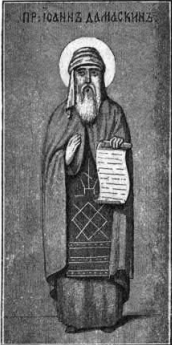
Св. Иоанн Дамаскин жил в VIII веке по Р. Х. в городе Дамаске, бывшем в то время под властью арабских халифов. Отец его Сергий, по прозванию Мансур, хотя и христианин, был однако же в милости у правителя – магометанина и занимал должность министра при его дворе. Пользуясь своим положением, он делал много добра своим единоверцам и освобождал пленных, которых захватывали сарацины во время частых набегов своих на окрестные земли. Между этими пленными, приведёнными в Дамаск, увидел он однажды на площади одного инока, к которому с особенным уважением обращались прочие пленники, между тем, как сам он, казалось, был очень печален. «О чём ты скорбишь, Божий человек? – спросил его с участием милосердый Сергий, – что может печалить тебя, отказавшегося от всех радостей мира?» «Не о радостях мира, для которого я умер, и помышляю я, – отвечал ему пленный инок, – меня мучит то, что, накопив большое богатство, не имею наследника, которому мог бы его передать…– и, видя недоумение Сергия, объяснил: – я говорю о богатстве духовном, которым владею, изучив много наук… я знаю риторику, диалектику, музыку, астрономию, философию, богословие… мне открыты многие тайны природы… Получив столько талантов, страшусь предстать пред судом Божиим, не имея ответа на вопрос: какое употребление я из них сделал?…»
St. John of Damascus lived in the eighth century A.D. in the city of Damascus, which at that time was under the rule of the Arab caliphs. His father Sergius, surnamed Mansur, though a Christian, was nevertheless in favor with the ruler, a Mohammedan, and held the office of minister at his court. Availing himself of his position, he did much good for his fellow believers and freed captives whom the Saracens took during their frequent raids into neighboring lands. Among these captives brought to Damascus, he once saw in the marketplace a monk, to whom the other prisoners turned with particular respect, while he himself seemed very sorrowful. "Why are you grieving, man of God?" asked the merciful Sergius with sympathy. "What can sadden you, who have renounced all the joys of the world?" "I am not thinking of the joys of the world, to which I am dead," answered the captive monk, "I am tormented by the fact that, having accumulated great wealth, I have no heir to whom I might leave it…" And, seeing Sergius's bewilderment, he explained: "I speak of the spiritual wealth which I possess, having studied many sciences… I know rhetoric, dialectic, music, astronomy, philosophy, theology… many secrets of nature are open to me… Having received so many talents, I fear to appear before the judgment of God, having no answer to the question: what use have I made of them?…"
Такой «богач» был именно тем человеком, в котором нуждался и какого долго безуспешно искал Сергий для доставления образования двум детям: родному своему сыну Иоанну и восприемному – Козме. И вот источник того замечательного образования и духовного развития, которым прославились впоследствии оба ученика так неожиданно доставленного им Промыслом Божиим достойного наставника, так как Сергий, немедленно освободив этого пленного инока, по имени Козму, пригласил его в свой дом и поручил ему воспитание детей, то они, и в особенности щедро наделённый способностями Иоанн, воспользовались от него уроками по всем предметам тогдашней учёности. Кончив образование, Иоанн, хотя и был расположен посвятить свою жизнь научным занятиям, но должен был принять службу при дворе полюбившего его халифа и потом, по смерти отца, был назначен градоначальником Дамаска и министром халифа.
Such a "rich man" was precisely the person Sergius needed and had long sought unsuccessfully to provide an education for his two children: his own son John and his adopted son Cosmas. And this was the source of that remarkable education and spiritual development by which both disciples of the worthy teacher, so unexpectedly provided for them by the Providence of God, were later glorified; for Sergius, immediately freeing this captive monk, named Cosmas, invited him into his home and entrusted him with the upbringing of the children, and they—especially John, who was abundantly gifted with abilities—profited from his lessons in all the subjects of the learning of that time. Having completed his education, John, although inclined to devote his life to scholarly pursuits, was obliged to accept service at the court of the caliph, who had grown fond of him, and later, after his father's death, was appointed governor of Damascus and minister of the caliph.
В это время в греческом государстве при Льве Армянине было жестокое гонение на православных почитателей святых икон. Иоанн, воспитанный в любви к вере и в твёрдом знании и преданности всем постановлениям православия, присоединился к учителям церкви, вразумлявшим и утверждавшим христиан держаться завещанного им церковью с самых времён Апостольских подобающего почитания икон. В защиту его он написал целое сочинение и послал его в Константинополь. Хотя и не было в нем ничего оскорбительного лично для Льва, но, видя сильное влияние его на народ и не имея возможности непосредственно противодействовать Иоанну, Лев, желая каким бы то ни было способом устранить такого ревностного и влиятельного защитника православия, велел подделать под его руку письмо к себе такого содержания, из которого халиф мог заключить, что Иоанн изменнически предлагает предать Дамаск в руки греческого императора… Эта гнусная клевета достигла цели: поверив сгоряча подложному письму, доставленному ему Львом, халиф велел отсечь руку изменника… Невинно пострадавший Иоанн, возвратившись в свой дом, всю ночь провёл в молитве перед иконою Богородицы, умоляя защитить его правду и исцелить его руку, чтобы она могла писать хвалы Ей и Сыну Её, хвалы, которые Она Сама да внушит написать… Когда же, в изнеможении от слез и боли Иоанн заснул, то во сне увидел изображённую на иконе Божию Матерь, Которая, с любовью смотря на него, сказала ему: «Твоя рука исцелена, не заботься об остальном; но работай ею безленостно, как ты обещал Мне…»
At this time, in the Greek Empire under Leo the Armenian, there was a fierce persecution of the Orthodox venerators of holy icons. John, raised in love for the faith and in firm knowledge of and devotion to all the ordinances of Orthodoxy, joined the teachers of the Church who were instructing and confirming Christians to hold fast to the proper veneration of icons, bequeathed to them by the Church from the very times of the Apostles. In its defense he wrote a whole treatise and sent it to Constantinople. Although there was nothing in it personally offensive to Leo, yet, seeing its strong influence on the people and having no means to oppose John directly, Leo, wishing by any means to remove such a zealous and influential defender of Orthodoxy, ordered a letter to be forged in John's handwriting to himself, of such content that the caliph might conclude that John was treacherously offering to betray Damascus into the hands of the Greek emperor… This vile slander achieved its goal: believing the forged letter, delivered to him by Leo, in the heat of the moment, the caliph ordered the traitor's hand to be cut off… The innocent sufferer John, returning to his home, spent the whole night in prayer before an icon of the Theotokos, begging Her to defend his innocence and heal his hand, that it might write praises to Her and Her Son—praises which She Herself would inspire him to write… When, exhausted from tears and pain, John fell asleep, in his sleep he saw the Mother of God depicted on the icon, Who, looking upon him with love, said to him: "Your hand is healed; do not worry about the rest; but work with it without sloth, as you promised Me…"
И, проснувшись, Иоанн почувствовал руку свою приросшей48… Неизреченною благодарностью преисполнилось тогда сердце его и вдохновилось для дивных песнопений, которые с тех пор изобильною струёй изливались до конца жизни его и обогатили сокровищницу возвышеннейших человеческих молитвословий.
And, waking up, John felt his hand restored48… Inexpressible gratitude then filled his heart, and it was inspired for those wondrous hymns which from that time flowed forth in an abundant stream until the end of his life and enriched the treasury of the most exalted human prayers.
Между тем, чудесное исцеление руки Иоанна поразило халифа и засвидетельствовало даже в глазах его о невинности пострадавшего. Возвратив своему бывшему любимцу прежние милости, халиф убеждал его остаться при дворе, ублажая его всевозможными блистательными обещаниями. Но Иоанн в постигшем его испытании и проявлении чудной помощи свыше почувствовал призвание к иному пути… И, не смотря на настояния халифа, отказался от всяких мирских почестей, всегда тяготивших его, и, раздав всё своё имущество бедным, удалился в обитель преп. Саввы Освящённого близ Иерусалима. Здесь подчинил он себя самому строгому послушанию, до такой степени, что, поступив под начало к одному почтенному, но весьма простому старцу, он принял от него строгие уставы и подчинился между прочими даже и тому, чтобы «не писать никому никаких посланий и соблюдать постоянное молчание» … Не легко это, однако же, было для него, чей ум, обогащённый знанием, и чья душа, преисполненная чувства, стремилась изливаться в слове и письме… Но Иоанн смиренно переносил это непосильное испытание, совершенно неожиданное для него… Между тем представилось ему великое искушение. В лавре скончался один инок; брат умершего, в сильной скорби о нем, умолял Иоанна написать что-нибудь в облегчение его печали… Да и сам Иоанн, сочувствуя скорби брата, чувствовал потребность излиться в словах, но колебался между этим утешением и своим прямым долгом. Наконец, не выдержав слишком томительного искушения, он выразил переполнявшие его душу впечатления в надгробных стихах49:
Meanwhile, the miraculous healing of John's hand amazed the caliph and testified even in his eyes to the innocence of the sufferer. Restoring his former favors to his former favorite, the caliph urged him to remain at court, enticing him with all kinds of brilliant promises. But John, in the trial that had befallen him and the manifestation of wondrous help from on high, felt a calling to a different path… And, despite the caliph's insistence, he refused all worldly honors, which had always weighed upon him, and, having distributed all his possessions to the poor, withdrew to the monastery of the Venerable Sabbas the Sanctified near Jerusalem. Here he subjected himself to the strictest obedience, to such a degree that, having placed himself under the direction of a venerable but very simple elder, he accepted from him strict rules and submitted, among other things, even to this: "to write no letters to anyone and to observe constant silence"… This, however, was not easy for him, whose mind, enriched with knowledge, and whose soul, filled with feeling, yearned to pour itself out in word and writing… But John humbly endured this unbearable trial, completely unexpected for him… Meanwhile, a great temptation presented itself to him. A monk died in the Lavra; the brother of the deceased, in great grief over him, begged John to write something to alleviate his sorrow… And John himself, sympathizing with the brother's grief, felt the need to pour himself out in words, but he wavered between this consolation and his direct duty. At last, unable to bear the too-painful temptation, he expressed the impressions that filled his soul in funeral verses49:
Утешил Иоанн брата, облегчил скорбь его этим задушевным излиянием её в прекрасных созвучиях, но не без страдания обошлось это удовлетворение... Однажды, когда он утолял свою душу пением этих стихов в своей кельи в отсутствии своего строгого старца, тот, неожиданно приблизившись к его келье, услышал его пение...
John comforted his brother, eased his sorrow by this heartfelt outpouring of it in beautiful harmonies, but this satisfaction did not come without suffering... Once, when he was soothing his soul by singing these verses in his cell in the absence of his strict elder, the latter, unexpectedly approaching his cell, heard his singing...
– Так ты забыл твои обеты и вместо сокрушения в безмолвии увеселяешься пением? – грозно обратился старец к Иоанну, входя в его келью.
– So you have forgotten your vows and, instead of compunction in silence, you delight yourself with singing? – the elder sternly addressed John, entering his cell.
Напрасно оправдывался перед ним Иоанн, объясняя ему причину, по которой нарушил он свой обет, напрасно со слезами молил его простить ему его непослушание, на которое решился он только ради утешения брата; суровый простец, которому подобные утешения казались недостойной слабостью, а нарушение обета – преступлением, был неумолим и изгнал его из своей кельи. И только по прошествии некоторого времени, убеждённый заступничеством за Иоанна всей братии, старец решился снова принять Иоанна, но не иначе, как по исполнении им смиреннейшего из послушаний, возлагаемых только на простых послушников. Не погнушался Иоанн исполнить и непривычное для него дело и со смирением собственноручно очистил все нечистые места в обители. И тогда старец, тронутый такой покорностью бывшего знаменитым сановником в мире, обнял его и, сказав:
In vain did John justify himself before him, explaining the reason for which he had broken his vow; in vain did he tearfully beg him to forgive him his disobedience, which he had resolved upon only for the consolation of his brother; the stern simple man, to whom such consolations seemed an unworthy weakness, and the breaking of a vow a crime, was inexorable and drove him from his cell. And only after some time, persuaded by the intercession of all the brethren for John, the elder decided to receive John again, but not otherwise than upon his fulfilling the most humble of obediences, imposed only on simple novices. John did not disdain to perform even this task, unusual for him, and with humility he personally cleansed all the unclean places in the monastery. And then the elder, moved by such submission from one who had formerly been a renowned dignitary in the world, embraced him and, saying:
– О! какого искусного в терпении я воспитал! О! какой это настоящий послушник! – позволил ему возвратиться в келью. – Но тем не менее Иоанн оставался обречённым на молчание...
– Oh! what a skillful one in patience have I raised! Oh! what a true novice this is! – allowed him to return to his cell. – But nonetheless John remained bound to silence...
Но не суждено было погаснуть священному огню... Но не суждено было утаиться под спудом свыше посланному дару... и Сама Божия Матерь вступилась за певца.
But it was not fated for the sacred fire to be extinguished... But it was not fated for the gift sent from on high to remain hidden under a bushel... and the Mother of God Herself interceded for the singer.
– Зачем ты заградил источник, из которого должна истекать сладкая и изобильная вода, та вода, которой жаждал Давид, которую Христос обещал дать самарянке? Предоставь истекать этой живой воде50, потому что она напоит вселенную, покроет море ересей, и жаждущие утолятся ею... Иоанн примет пророческие гусли, Давидов псалтирь и воспоёт новые песни Господу Богу!» – сказала Божия Матерь, явясь в сновидении строгому старцу, наложившему обет молчания на Иоанна Дамаскина. И старец с благоговением послушал Её и разрешил и благословил с умилением Иоанна «взойти на высокий Сион Боговидения и, проповедуя, благовествовать Иерусалиму»... – «Мне же прости, – прибавил смиренный, – что я, по неведению и простоте, до сих пор препятствовал тебе отверзнуть уста твои»...
– Why have you blocked up the spring from which sweet and abundant water should flow, that water which David thirsted for, which Christ promised to give the Samaritan woman? Allow this living water to flow forth50, for it shall water the universe, cover the sea of heresies, and the thirsty shall be quenched by it... John shall take up the prophetic harp, the Psalter of David, and shall sing new songs to the Lord God! – said the Mother of God, appearing in a dream to the stern elder who had imposed the vow of silence upon John of Damascus. And the elder reverently hearkened to Her and released and blessed John with compunction to «ascend the high Zion of the vision of God and, preaching, to proclaim good tidings to Jerusalem»... – «Forgive me,» added the humble one, «that I, through ignorance and simplicity, have until now hindered you from opening your mouth»...
И с тех пор полились вдохновенные песнопения Иоанна во славу Божию. Кроме песнопений, которыми и поныне украшается Богослужение православной Церкви, он составил догматическое изложение веры, много молитв, некоторые жития святых, много и смело писал в опровержение различных ересей. Вызванный патриархом Иоанном в Иерусалим и посвящённый в сан пресвитера с тем, чтобы состоять проповедником при церкви св. Воскресения, Иоанн однако же недолго оставался здесь и по смерти патриарха (в 735 г.) возвратился в свою обитель (преп. Саввы), где и продолжал свои учёные труды. Однажды совершил путешествие в Константинополь ради обличения императора Константина Копронима и преданных ему епископов, которых не побоялся назвать низкими человекоугодниками. Вознегодовавший до ярости на Иоанна Копроним на соборе в 755 г., сам с церковного амвона произнёс анафему Иоанну. Иоанн отвечал ему впоследствии двумя сильными обличениями иконоборцев51.
And from that time forth, John’s inspired hymns flowed forth to the glory of God. Besides the hymns with which the divine services of the Orthodox Church are adorned even to this day, he composed a dogmatic exposition of the faith, many prayers, several lives of the saints, and wrote much and boldly in refutation of various heresies. Summoned by Patriarch John to Jerusalem and ordained to the rank of presbyter, to serve as a preacher at the church of the Holy Resurrection, John, however, did not remain here long, and after the death of the patriarch (in 735 A.D.) returned to his monastery (of St. Sabbas), where he continued his scholarly labors. Once he made a journey to Constantinople for the purpose of rebuking the Emperor Constantine Copronymus and the bishops devoted to him, whom he did not fear to call base men-pleasers. Copronymus, enraged to fury against John, at a council in 755 A.D., pronounced an anathema against John from the church ambo. John later answered him with two powerful refutations of the iconoclasts51.
Потрудившись и «пребыв на страже веры» до конца, св. Иоанн Дамаскин скончался в лавре св. Саввы на 104-м году жизни, около 777 года.
Having labored and «remained on guard of the faith» until the end, St. John of Damascus reposed in the Lavra of St. Sabbas in the 104th year of his life, around the year 777 A.D.
Об Иоанне Дамаскине, как о сочинителе замечательных творений, так отзывается учёный Свида: – «Иоанн Дамаскин, по прозванию мансур, муж учёный и умный, не уступал никому из знаменитых учёных современников; сочинений его весьма много и между ними есть философские; он писал параллели на свящ. Писание, ямбические каноны и творения прозаические. В церковных песнях своих он и Козьма (Маиумский еп.)52 столь высоки, что остаются и останутся неподражаемыми»53.
Concerning John of Damascus as the author of remarkable works, the learned Suidas speaks thus: – «John of Damascus, surnamed Mansur, a learned and intelligent man, yielded to none of the famous scholars of his time; his works are very many, and among them there are philosophical ones; he wrote parallels on the Holy Scriptures, iambic canons, and prose works. In his church hymns, he and Cosmas (Bishop of Maiuma)52 are so exalted that they remain and will remain inimitable»53.
По этим-то творениям и называли Дамаскина «Златоструйным». «Иоанн справедливо назван «златой струёй», – пишет о нём св. Феофан, – по обилию в нём благодати Святого Духа, изливающейся и в словах его, и в жизни»55.
It was on account of these works that John was called 'Golden-Streaming'. «John is rightly called a ‘golden stream,’» writes St. Theophanes concerning him, «because of the abundance in him of the grace of the Holy Spirit, which pours forth both in his words and in his life»55.
Константин Акрополит так говорит о песнях Дамаскина: – «во-первых, украсил он своими мелодическими стихирами преславное Воскресение Спасителя; служба, составленная им на св. Пасху, это – самая торжественная и самая сладкая песнь радости о победителе смерти и ада. Равно и для прочих праздников, в которые благоговейно собираемся мы воспоминать тайны, которые совершал Господь и Искупитель наш, быв человеком, составил Иоанн множество прекрасных песней. Потом славно почтил память святых56.
Constantine Acropolites speaks thus of the hymns of John of Damascus: – «First, he adorned with his melodic stichera the most glorious Resurrection of the Savior; the service composed by him for Holy Pascha is the most solemn and the sweetest song of joy concerning the Conqueror of death and hell. Likewise, for the other feasts, on which we piously gather to commemorate the mysteries which the Lord and our Redeemer accomplished, being man, John composed a multitude of beautiful hymns. Then he gloriously honored the memory of the saints»56.
Опровергая ревностно различные ереси, смущавшие Церковь в его время, Иоанн Дамаскин и в песнях своих богословствует против них и влагает в них различные догматы православия. Важное значение имеют в этом отношении все его воскресные каноны и стихиры. В образец богатства догматических мыслей можно представитьвоскресный канон 7 гласа, в котором заключается почти вся христианская догматика:
Zealously refuting the various heresies that troubled the Church in his time, John of Damascus also theologizes against them in his hymns and places in them various dogmas of Orthodoxy. Of great importance in this regard are all his Sunday canons and stichera. As an example of the richness of dogmatic thoughts, one may present the Sunday canon of the 7th tone, which contains almost the whole of Christian dogmatics:
Ирмос. Мановением Твоим, Господи, удоборазливаемое естество вод пременилось в вид земли. И потому, сухо совершив путь, Израиль пеший поёт Тебе победную песнь,
Irmos. By Thy nod, O Lord, the easily divided nature of the waters was changed into the form of dry land. And therefore, having made the journey dry-shod, Israel on foot sings to Thee a song of victory.
Осуждена древом тиранствовавшая смерть, когда на неправедную смерть осуждён был Ты, Господи. Отселе и князь тьмы праведно изгнан, не могши преодолеть Тебя.
The death that tyrannized through the tree was condemned, when Thou, O Lord, wast condemned to an unrighteous death. Henceforth the prince of darkness is righteously cast out, being unable to overcome Thee.
Ад приближался к Тебе и не мог сокрушить тела Твоего, сокрушив челюсти свои. Разрушив, Спаситель, ужасы смерти, Ты воскрес тридневный.
Hades drew near to Thee and could not crush Thy body, having crushed its own jaws. Having destroyed, O Savior, the terrors of death, Thou didst rise on the third day.
Кончились болезни праматери Евы; Ты, избежав болезней неискусомужно родила; почему, зная Тебя, Всесвятая, Богородицей, все мы славим Тебя славно.
The pangs of the foremother Eve have ceased; Thou didst give birth without pain, O Thou who didst conceive without seed; wherefore, knowing Thee, O All-Holy One, to be the Theotokos, we all glorify Thee gloriously.
Ирмос. Спаситель Господи! в начале утвердивший всесильным словом Твоим небеса и вседействующим Божественным Духом всю силу, утверди меня на недвижимом камени заповедей Твоих.
Irmos. O Savior Lord! Who in the beginning didst establish the heavens by Thy all-powerful word, and by the all-active Divine Spirit all their host, establish me on the immovable rock of Thy commandments.
Ты восшед добровольно за нас на крест, терпишь муку, благоутробный Спаситель, несёшь язвы, подающие мир и спасение верным. Милостивый, примирились все мы с Родившим Тебя.
Having ascended willingly for us upon the Cross, Thou dost endure torment, O compassionate Savior, Thou dost bear wounds that grant peace and salvation to the faithful. O Merciful One, we have all been reconciled to Him Who begot Thee.
Ты избавил меня от язвы, Христе, уязвлённого в душе угрызением змия, и воссиял свет для лежащего издревле во тьме и тлении: путём креста сошед во гроб, оживил меня вместе с Тобою.
Thou hast delivered me from the wound, O Christ, who was wounded in soul by the bite of the serpent, and light has shone forth for him who from of old lay in darkness and corruption; by the way of the Cross, having descended into the tomb, Thou hast quickened me together with Thee.
Мольбами неискусомужной Твоей Матери подай мир миру, Спаситель наш, даруй царю победу над неприязненными варварами и удостой несказанной Твоей славы тех, которые Тебя славят.
By the prayers of Thy Mother who knew not wedlock, grant peace to the world, O our Savior, grant victory to the emperor over hostile barbarians, and vouchsafe Thine ineffable glory to those who glorify Thee.
Ирмос. Отеческих недр не оставляя, на землю сошёл Ты, Христе Боже: услышал я тайну смотрения Твоего и прославил Тебя, Едине человеколюбивый.
Irmos. Not leaving the Father’s bosom, Thou didst come down to earth, O Christ God; I heard the mystery of Thy dispensation and glorified Thee, O only Lover of mankind.
Предстоит пред судом судей беззаконных, как повинный суду обвиняется и бренною рукою заушается Тот, Кто, как Бог, создал человека и судит землю праведно.
He stands before the judgment seat of lawless judges, as one guilty He is accused, and by a mortal hand He is struck on the cheek, He Who as God created man and judges the earth righteously.
Ирмос. Не светла ночь для неверных, Христе, а для верных, при сладких Божественных словах Твоих, она – свет. Потому-то утренюю я к Тебе и воспеваю Твоё Божество.
Irmos. The night is not light for the unbelieving, O Christ, but for the faithful, amid Thy sweet Divine words, it is light. Therefore I matinate unto Thee and hymn Thy Divinity.
За рабов Твоих, Христе, прободен Ты и терпишь удары по ланитам, искупляющие нам свободу: пред Тобой утренюю и воспеваю Твоё Божество.
For Thy servants, O Christ, Thou wast pierced and dost endure blows on the cheeks, purchasing freedom for us; before Thee I matinate and hymn Thy Divinity.
Твоей Божественной силой, Христе, и в немощи плотской низложил Ты крепкого; воскресением явил меня, Спаситель, победителем смерти.
By Thy Divine power, O Christ, even in the weakness of the flesh Thou didst cast down the strong one; by Thy resurrection Thou hast shown me, O Savior, a conqueror of death.
Ирмос. Плаваю в молве житейских попечений, вместе с кораблём потопляют меня грехи, брошен я зверю душегубителю: как Иона, вопию Тебе, Христе, избавь меня из убийственной глубины.
Irmos. I am tossed in the tumult of life’s cares; together with the ship, my sins drown me; I am cast to the soul-destroying beast; like Jonah, I cry to Thee, O Christ, deliver me from the deadly depth.
Воспоминали о Тебе души, заключённые во аде, лишённые наследия праведных, и Тебе молились о спасении; Ты подал им спасение, Христе, сошедши, Благоутробный, к подземным обителям.
The souls imprisoned in hades remembered Thee, deprived of the inheritance of the righteous, and prayed to Thee for salvation; Thou didst grant them salvation, O Christ, having descended, O Compassionate One, to the nethermost abodes.
Отчаялся лик апостольский узреть одушевлённый и нерукотворенный храм Твой, когда сей был разрушен страданиями; но сверх чаяния поклонился ему и проповедал всюду воссоздание его.
The apostolic choir despaired of beholding Thy living and not-made-by-hands temple, when it was destroyed by sufferings; but beyond hope it worshipped it and preached everywhere its restoration.
Дево Богоневестная! Кто может объяснить образ рождества Твоего, совершившегося для нас? Бог Слово неописанно соединился с Тобой и стал плотью.
O Virgin Bride of God! Who can explain the manner of Thy Nativity, accomplished for our sake? God the Word ineffably united Himself with Thee and became flesh.
Ирмос. Древле у отроков огнепалящая печь источила росу, когда они пели и возглашали: благословен Ты, Бог отцов, и препрославлен.
Irmos. Of old the fire-blazing furnace distilled dew for the youths, when they sang and cried aloud: Blessed art Thou, O God of our fathers, and supremely glorified.
Древом умерщвляется Адам, произвольно совершив преслушание; послушанием Христовым воссозидается опять, – для меня распинается Сын Божий преславный.
By the tree Adam is put to death, having wilfully committed disobedience; by the obedience of Christ he is created anew — for me is crucified the Son of God, the all-glorious One.
Вся тварь воспела Тебя, Христе, воскресшего из гроба; во аде процвела Тобой. Преславный, жизнь, для мёртвых воскресение, – для омрачённых свет воссиял.
All creation sang Thee, O Christ, risen from the tomb; in hades it blossomed forth through Thee. O all-glorious One, Life, resurrection for the dead, light hath shone forth for the darkened.
Радуйся, дщерь Адама тленного. Радуйся, единая Богоневесто. Радуйся, Которой тление истреблено. Радуйся, родившая Бога; Моли Его, чистая, чтобы спаслись все мы.
Rejoice, daughter of corruptible Adam. Rejoice, O only Bride of God. Rejoice, Thou by whom corruption hath been destroyed. Rejoice, Thou who hast borne God; pray to Him, O pure One, that we all may be saved.
Ирмос. Несгорающий куст, объятый на Синае пламенем, дал знать косному языком и гугнивому Моисею о Боге; и ревность Божия соделала непреодолимыми среди огня трёх отроков певших: все дела Господни, пойте Господа и превозносите во все веки.
Irmos. The bush not consumed, enveloped in flame on Sinai, made known to Moses, slow of tongue and stammering, the things of God; and the zeal of God made the three youths invincible amid the fire, who sang: All ye works of the Lord, sing ye the Lord and exalt Him unto all the ages.
Чистый Агнец умственный, закланный за мир, положил конец приношениям законным; безгрешный, как Бог, очистил мир, всегда взывающий: все дела Господни, пойте и превозносите во все веки.
The pure spiritual Lamb, slain for the world, put an end to the offerings of the law; the sinless One, as God, cleansed the world, which ever crieth: All ye works of the Lord, sing and exalt Him unto all the ages.
Не нетленной была прежде страдания плоть наша, которую принял Создатель; но после страдания и воскресения она соделалась неприкосновенной для тления, и смертных соделала новыми; они взывают: все дела Господни, пойте и превозносите Господа во все веки.
Not incorrupt was our flesh before the suffering, which the Creator took; but after the suffering and resurrection it was made inaccessible to corruption, and made mortals new; they cry: All ye works of the Lord, sing and exalt the Lord unto all the ages.
Твоя чистота и непорочность, Дева, соделала, что очистилась от скверн и нечистот вселенная; Ты была, Пречистая, виной примирения нашего с Богом, и потому-то Деву всеми делами славим и превозносим во все веки.
Thy purity and spotlessness, O Virgin, hath caused the universe to be cleansed from defilements and impurities; Thou wast, O Most Pure One, the cause of our reconciliation with God, and therefore the Virgin we glorify in all works and exalt unto all the ages.
Ирмос. Не плод тленный по искушению изнесла в рождении; премудрому Слову плоть подала Матерь, не знавшая мужа, Дево Богородица; величаем Тебя, вместилище для Невместимого, место для Безпредельного – Зиждителя Твоего.
Not corruptible fruit did she bring forth in birth through temptation; to the all-wise Word flesh did the Mother give, who knew not man, O Virgin Theotokos; we magnify Thee, the receptacle of the Uncontainable, the place of the Boundless — of Thy Creator.
Вы, которые Божеству приписываете страдание, заградите уста свои; вы странное помышляете: мы славим Господа славы, распятого плотью, но не распятого Божеством, единого в двух естествах.
Ye who ascribe suffering to the Godhead, stop your mouths; ye think strange things: we glorify the Lord of glory, crucified in the flesh, but not crucified in the Godhead, the One in two natures.
Вы, которые не верите воскресению тел, идите к гробу Христову и учитесь; Он умерщвлён был и плоть Живодавца воскресла, в уверение в последнем воскресении, которого ожидаем.
Ye who believe not in the resurrection of bodies, go to the tomb of Christ and learn; He was put to death, and the flesh of the Life-giver rose, as assurance of the final resurrection which we await.
Мы чтим троичность не Божеств, но Лиц, и единство не Лица, но Божества; гоним и рассеиваем мы тех, которые Её разделяют; заставляем мешаться тех, которые вводят смешение в славимую нами.
We honour the trinity not of gods, but of Persons, and the unity not of Person, but of Godhead; we drive away and scatter those who divide Her; we confound those who introduce confusion into Her whom we glorify.
Там, где жил преп. Сергий с родителями, перед удалением в пустыню, в Радонежском городке родился св. Гурий, в крещении Григорий57; родители его были дворяне Руготины, бедные и не очень известные. В доме благочестивого отца сын получил благочестивое воспитание и обучен был читать и писать. Сыновья незнатных дворян обыкновенно служили тогда, если не в службе великого князя, то при домах богатых княжеских фамилий. – Так служил в доме князя Ивана Пенькова и Григорий Руготин. Григорий был умён и смышлён, нрава кроткого и уступчивого, честности неподкупной; он любил ходить в храм Божий на молитву, молился и в доме; любил целомудрие и, охраняя его, держал пост; подавал нищим милостыню, какую только мог. Ум, строгая честность и благочестивая жизнь Григория приобрели особенную доверенность к нему князя и его супруги: Григорию поручено было всё управление по княжескому дому. – Товарищи Григория стали завидовать счастью Григория. Зависть, мучившая бедных, довела их до того, что они оклеветали невинного перед князем в преступной связи его с княгиней. Гордый и вспыльчивый князь, не разобрав дела, хотел убить Григория. Сын князя был осторожен; он представил отцу, что такая расправа только опозорит дом их, и упросил не спешить исполнением приговора, столько опасного для них самих. Удержав порывы гнева, князь придумал другую меру мести. Была выкопана яма, и в ней опущен сруб; сюда-то велел он запереть Григория. Только малое отверстие сверху темницы пропускало в неё свет и в то же окошко бросали Григорию на пять дней по снопу овса и опускали немного воды. Тяжко было положение невинного страдальца: природа отвращается от страдания и неправды и – Григорий на первый раз не мог не чувствовать горькой скорби. Но благочестивая душа его скоро помирилась с темницей. Мученики, думал Григорий, терпели и не то, при всей своей святости; темница избавила меня от соблазнов и тревог мирских; это уединение оставляет мне полную свободу готовиться к вечности, – а для чего и жить на земле, если не для вечности? И вот блаженный Григорий «в таковой беде наипаче простирается на славословие Божие, терпя и благодаря Бога о всём». – Уже проходил второй год заключения, когда один из товарищей по княжескому дому, бывший другом ему, упросил сурового сторожа Григориева – дозволить подойти к окну темницы и поговорить с заключённым; добрый товарищ ночью подошёл к окошку и, спросив о состоянии заключённого. вызвался доставлять ему приличную пищу. Григорий, поблагодарив друга за участие, сказал: «без наказания, которое терплю я, душа моя могла остаться неисцелённой; благодарение Богу за всё! в пище не имею я нужды; а прошу друга моего приносить чернила и бумаги, – я стану писать азбуки, а друг будет продавать их и деньги после покупки бумаги станет раздавать нищим». Так Григорий и в темнице хотел, чтобы дети учились закону Божию, также как хотел помогать бедным, сам терпя крайние нужды. – Спустя два года неожиданно в дверях темницы блеснул свет. Григорий, сотворив молитву, толкнул дверь, – она отворилась. Страдалец понял, что Господь, дарует ему свободу. Он взял икону Божией Матери, бывшую с ним в темнице, и пошёл из темницы прямо в обитель Иосифа Волоколамского, известную тогда по строгой жизни иноков.
There where the Venerable Sergius lived with his parents, before his withdrawal into the wilderness, in the townlet of Radonezh was born St. Gurias, in baptism Gregory57; his parents were nobles of the Rugotin family, poor and not very well known. In the house of a pious father the son received a pious upbringing and was taught to read and write. Sons of obscure nobles usually served then, if not in the service of the Grand Prince, then in the households of wealthy princely families. — Thus Gregory Rugotin also served in the house of Prince Ivan Penkov. Gregory was intelligent and shrewd, of gentle and yielding disposition, of incorruptible honesty; he loved to go to the church of God for prayer, and prayed also at home; he loved chastity and, guarding it, kept the fast; he gave alms to the poor as much as he could. Gregory's intelligence, strict honesty, and pious life gained him the particular confidence of the prince and his spouse: to Gregory was entrusted the entire management of the princely household. — Gregory's companions began to envy Gregory's good fortune. Envy, which tormented the wretched, drove them to slander the innocent man before the prince, accusing him of a criminal liaison with the princess. The proud and hot-tempered prince, without examining the matter, wanted to kill Gregory. The prince's son was cautious; he represented to his father that such an execution would only disgrace their house, and begged him not to hasten the carrying out of a sentence so dangerous to themselves. Restraining his outbursts of anger, the prince devised another measure of vengeance. A pit was dug, and in it a timber frame was lowered; into this he ordered Gregory to be shut. Only a small opening at the top of the prison admitted light into it, and through that same window they threw Gregory, every five days, a sheaf of oats and lowered a little water. Grievous was the situation of the innocent sufferer: nature recoils from suffering and injustice, and — Gregory at first could not but feel bitter sorrow. But his pious soul soon became reconciled with the prison. The martyrs, thought Gregory, suffered even worse, for all their holiness; the prison has delivered me from the temptations and anxieties of the world; this solitude leaves me full freedom to prepare for eternity — and for what purpose live on earth, if not for eternity? And so the blessed Gregory, "in such misfortune stretched himself out all the more to the praise of God, enduring and thanking God for everything." — Already the second year of imprisonment was passing, when one of the companions of the princely household, who had been a friend to him, begged the stern guard of Gregory to allow him to approach the window of the prison and speak with the prisoner; the good friend came at night to the window and, having asked about the prisoner's condition, offered to bring him suitable food. Gregory, having thanked his friend for his concern, said: "Without the punishment which I endure, my soul might have remained unhealed; thanks be to God for everything! Of food I have no need; but I ask my friend to bring me ink and paper — I shall write alphabets, and my friend shall sell them, and after buying paper, shall distribute the money to the poor." Thus Gregory, even in prison, wanted children to learn the law of God, just as he wanted to help the poor, himself enduring extreme want. — After two years, unexpectedly a light shone in the door of the prison. Gregory, having made a prayer, pushed the door — it opened. The sufferer understood that the Lord was granting him freedom. He took the icon of the Mother of God that had been with him in the prison, and went from the prison straight to the monastery of Joseph of Volokolamsk, then known for the strict life of its monks.
Принятый в число братства, Григорий принял монашество и имя Гурия. – Иноческая жизнь уже знакома была ему по темнице: в темнице привык он и к посту, и к безмолвию, и к постоянному Богомыслию; от своей воли отучили его в княжеском дому. Оставалось ему возрастать в жизни духовной, а не учиться ей с азбуки. – Потому-то блаж. Гурий «бысть монах чуден и живяше по монастырскому чину и обычаю, игумену и братии повинуяся», как пишет блаж. Гермоген. – По высокой духовной жизни своей в 1542 г. он был избран в игумена обители Иосифовой. Проникнутый заботой о спасении своей души, он искренно заботился возбуждать и поддерживать в братии попечение о душе своей. Правилом его было не равнять попечения о внешнем благолепии обители попечению о спасении душ, – тем более не стараться о обогащении монастыря. «Не добро, говорил он, монастыри богатити чрез потребу, они бо сим более пустуют». Такое управление обителью привлекало в обитель и иноков и мирян. Под руководство блажен. Гурия поступил Феогност Руготин, бывшие Селижаровский игумен. Царь отличал своим вниманием блаженного Гурия и вступал в разговоры с ним. – Пробыв настоятелем обители девять лет без двух месяцев, блаженный Гурий по болезни (темничная жизнь расстроила здоровье его на всю жизнь) сложил с себя заботы начальствования и два года жил на покое, в посте и Богомыслии. Потом, по воле царя, определён он был в настоятеля Селижаровской обители; но здесь пробыл он не более года58.
Received into the number of the brotherhood, Gregory received the monastic tonsure and the name Gurias. — The monastic life was already familiar to him from the prison: in prison he had grown accustomed both to fasting, and to silence, and to constant meditation on God; from his own will he had been weaned in the princely household. It remained for him to grow in the spiritual life, not to learn it from the alphabet. — Therefore the blessed Gurias "was a wondrous monk and lived according to the monastic rule and custom, obeying the abbot and the brethren," as the blessed Hermogenes writes. — By reason of his high spiritual life, in 1542 he was chosen abbot of the monastery of Joseph. Penetrated with care for the salvation of his own soul, he sincerely strove to arouse and maintain in the brethren concern for their souls. His rule was not to equate concern for the external beauty of the monastery with concern for the salvation of souls — still less to strive for the enrichment of the monastery. "It is not good," he said, "to enrich monasteries beyond need, for by this they are the more emptied." Such governance of the monastery attracted to it both monks and laymen. Under the guidance of the blessed Gurias came Theognostus Rugotin, the former abbot of Selizharov. The Tsar distinguished the blessed Gurias with his attention and entered into conversation with him. — Having been superior of the monastery for nine years less two months, the blessed Gurias, on account of illness (the prison life had ruined his health for his whole life), laid down the cares of governance and lived for two years in retirement, in fasting and meditation on God. Then, by the will of the Tsar, he was appointed superior of the Selizharov monastery; but here he remained no more than a year58.
Для завоёванного Казанского царства собор определил избрать архиепископа. Это место служения в тогдашнее время было чрезвычайно важно: здесь надлежало быть с Апостольской ревностью и чистотой души, чтобы благоплодно проповедовать святую веру незнающим её. Потому и избрание архипастыря происходило необыкновенным образом. По совершении молебного пения митрополитом из четырёх жребиев взят был с престола один, и это был жребий Гурия; потом взят один из двух, и это был опять жребий блаженного мужа. Февраля 7-го 1555 г. св. Гурий собором архипастырей рукоположен в архиепископа Казанского. Со стороны царя для архипастыря новой и столь важной епархии назначено было особенное жалованье и пожертвованы разные церковные принадлежности; святители и богатые обители от себя подарили множество разных вещей. Отправление и путешествие первого Казанского архиепископа на свою епархию было самое торжественное. Мая 26-го митрополит с архипастырями и низшим духовенством в присутствии царя и его двора отслужил молебен в Успенском соборе и с крестным ходом сопровождал архиепископа новопросвещаемого края из Кремля на площадь. На площади опять совершенно молебствие, и архиепископ рекой Москвой отправился к Симоновой обители, где встречен был с колокольным звоном собором монашествующих и совершил литургию в храме обители. Отправясь на следующий день водой, архипастырь в каждом городе встречаем был молебствиями и сам совершал моления. Достигнув границы своей епархии, там, где назначено было построить город Чебоксары, святитель по черте города совершил крестный ход и потом служил литургию. – Ещё поныне цела здесь Владимирская икона Божией Матери, которою святитель благословил городок, – рассадник христианства между Чувашами и Черемисами59. – Всё путешествие святителя до Казани было почти непрерывным молением, и оно продолжалось два месяца60.
For the conquered Kazan Khanate, the Council determined to elect an archbishop. This place of service at that time was exceedingly important: here it was necessary to be with Apostolic zeal and purity of soul, in order to preach the holy faith fruitfully to those who knew it not. Therefore the election of the archpastor took place in an extraordinary manner. After the singing of a moleben by the Metropolitan, from four lots one was taken from the altar, and this was the lot of Gurias; then one was taken from two, and this again was the lot of the blessed man. On February 7, 1555 A.D., St. Gurias was consecrated Archbishop of Kazan by a council of archpastors. On the part of the Tsar, a special salary was appointed for the archpastor of the new and so important diocese, and various church articles were donated; the hierarchs and wealthy monasteries also presented many things from themselves. The departure and journey of the first Archbishop of Kazan to his diocese was most solemn. On May 26, the Metropolitan, together with the archpastors and lower clergy, in the presence of the Tsar and his court, served a moleben in the Dormition Cathedral and, with a cross procession, accompanied the archbishop of the newly-enlightened region from the Kremlin to the square. On the square, the moleben was again completed, and the archbishop set out by the Moscow River to the Simonov Monastery, where he was met with the ringing of bells by the assembly of monastics and celebrated the Divine Liturgy in the monastery church. Departing the following day by water, the archpastor was met in every city with molebens and himself performed prayers. Having reached the border of his diocese, at the place where the city of Cheboksary was appointed to be built, the hierarch made a cross procession along the city line and afterwards served the Divine Liturgy. – Even to this day the Vladimir Icon of the Mother of God is preserved here, with which the hierarch blessed the townlet – a nursery of Christianity among the Chuvash and Cheremis59. – The entire journey of the hierarch to Kazan was almost unceasing prayer, and it lasted two months60.
Правила, которыми надлежало руководствоваться и которым следовал святитель новопросвещаемой страны, были таковы: прежде всего поучать духовенство; новокрещённых утверждать в вере и благочестии; блуждающих магометан и язычников обращать к св. вере убеждениями, не прибегая к насилиям; более других знатные лица, обращающиеся к вере, учить истинам Евангелия в доме архипастыря; за магометанина и язычника, осуждаемого судом за преступление, но принимающего св. веру, ходатайствовать перед начальством о прощении вины его61. – Святитель, выполняя эти правила, присовокуплял к тому для успехов веры после молитв и то, что в доме его находили себе пищу и помощь всякая бедность и нужда. Неверующие видели, что жизнь его – любовь святая, любовь благотворительная для всех без различия. – На втором году служения своего святитель начал строить близ Казани Зилантов монастырь. По уставу святителя, иноки сей обители занимались обучением детей чтению и письму, преимущественно же закону Божию. Благочестивое желание знакомить детей с верой и правилами христианскими, пробудившееся ещё в темнице, теперь развилось в нём с особенной силой. Ещё и поныне, спустя 300 лет, жители Казани не начинают учить детей своих грамоте, не испросив благословения святителя у мощей его. Так известна в том краю любовь святителя к делу образования детей. И труды Евангельского проповедника в стране мрака были благоплодны. Божественный муж, свидетельствует Гермоген, один из преемников его, учением своим привёл ко Христу множество душ.
The rules by which the hierarch of the newly-enlightened country was to be guided, and which he followed, were these: first of all, to instruct the clergy; to confirm the newly-baptized in faith and piety; to convert wandering Mohammedans and pagans to the holy faith by persuasion, not resorting to violence; to teach the truths of the Gospel in the archpastor's house to those persons of rank more than others who turned to the faith; to intercede before the authorities for the forgiveness of the guilt of a Mohammedan or pagan condemned by a court for a crime, but receiving holy faith61. – The hierarch, fulfilling these rules, added to this for the success of the faith, after prayers, that in his house every poor and needy person found food and help. The unbelievers saw that his life was holy love, charitable love for all without distinction. – In the second year of his service, the hierarch began to build the Zilantov Monastery near Kazan. According to the rule of the hierarch, the monks of this monastery were occupied with teaching children reading and writing, and chiefly the law of God. The pious desire to acquaint children with the faith and Christian rules, which had awakened while he was still in prison, now developed in him with particular strength. Even to this day, after 300 years, the inhabitants of Kazan do not begin to teach their children to read and write without having asked the blessing of the hierarch at his relics. So well known in that region is the hierarch's love for the work of educating children. And the labors of the Gospel preacher in the land of darkness were fruitful. The divine man, testifies Hermogenes, one of his successors, by his teaching brought a multitude of souls to Christ.
Последние три года жизни святитель Гурий лежал на одре болезни, не мог совершать служения и даже ходить в храм; но дух его молился и молитвой низводил благодать небесную на его паству. – В великие праздники носили его к литургии в храм Благовещения Богоматери, построенный им; здесь сидел или даже лежал он, слушая службу Божию; келья его и без того была у придела страстотерпцев Бориса и Глеба; но душа его горела желанием молиться вместе с паствой своей в дни общей хвалы и молитвы. – Блаженная кончина его последовала 4 декабря 1563 г., и святое тело его положено было в Преображенской обители.
The last three years of his life, Hierarch Gurias lay on a bed of illness, unable to perform services or even to go to church; but his spirit prayed and by prayer brought down heavenly grace upon his flock. – On great feasts, they carried him to the Divine Liturgy in the church of the Annunciation of the Theotokos, which he had built; here he sat or even lay, listening to the service of God; his cell was already at the side-chapel of the Passion-bearers Boris and Gleb; but his soul burned with the desire to pray together with his flock on days of common praise and prayer. – His blessed end followed on December 4, 1563 A.D., and his holy body was placed in the Transfiguration Monastery.
Спустя 32 года после того начали строить каменный Преображенский храм на месте деревянного, и тогда открылись гробы святителей Гурия и Варсонофия. «Вся рака св. Гурия, говорит очевидец, наполнена была благоуханным миром, и мощи плавали; св. тело было нетленно; только верхней губы несколько коснулось тление. Сам я недостойный грешной моей рукой коснулся св. тела и чувствовал, как оно плавало; осязал и погребальные ризы, и они были крепки; прикасался мантии и сильно тянул её, но она была крепче новой».
Thirty-two years after that, they began to build a stone Transfiguration church on the site of the wooden one, and then the tombs of the hierarchs Gurias and Barsanuphius were opened. "The whole reliquary of St. Gurias," says an eyewitness, "was filled with fragrant myrrh, and the relics floated; the holy body was incorrupt; only the upper lip was somewhat touched by decay. I myself, unworthy, touched the holy body with my sinful hand and felt how it floated; I also felt the burial vestments, and they were strong; I touched the mantle and pulled it hard, but it was stronger than new."
Силу нетленных мощей первый испытал инок Иоасаф. Ему пришла дерзкая мысль открыть раку св. Гурия; но едва коснулся он, руки его стали гореть и их корчило нестерпимой болью; познав свой грех, молил он святителя о помиловании и был исцелён не только от новой болезни, но и от долго томившей его лихорадки. – Ключарь собора, сильно страдавший глазной болезнью, так что не мог вкушать пищи, в день памяти святителя, 4 дек., велел повести его к раке святителя и, приложась к мощам, получил исцеление. Особенно замечательно исцеление дьяка Панкратьева. – Он был так болен, что близок был к смерти. В тяжком страдании молился он Богу и призывал помощь новоявленных чудотворцев Казанских. Затем в тонком сне казалось ему, что он в соборном храме видит архиепископа Гурия; святитель хотел взять его за правую руку, но он пал на землю. Тихо приподняв его, святой сказал: «не скорби, раб Божий Иоанн; Господь помиловал тебя, и ты будешь здоров; но иди и благословись у друга моего Варсонофия». Святитель сам повёл его к правому углу собора, где стоял епископ Варсонофий, и сказал: «брат Варсонофий! благослови Иоанна и освободи его от болезни». Варсонофий, благословляя, сказал: «не скорби, чадо Иоанн! по вере твоей к Богу ты будешь здоров». – Пробудясь мгновенно от сна, Иоанн начал плакать перед иконой святителя и чувствовал себя здоровым.
The power of the incorrupt relics was first experienced by the monk Joasaph. A daring thought came to him to open the reliquary of St. Gurias; but as soon as he touched it, his hands began to burn and were twisted with unbearable pain; recognizing his sin, he prayed to the hierarch for mercy and was healed not only of the new illness, but also of the fever that had long tormented him. – The key-keeper of the cathedral, who suffered greatly from an eye disease, so that he could not eat food, on the day of the hierarch's memory, December 4, ordered himself to be led to the hierarch's reliquary, and, having venerated the relics, received healing. Especially remarkable is the healing of the clerk Pankratiev. – He was so ill that he was near death. In grievous suffering he prayed to God and called upon the help of the newly-appeared wonderworkers of Kazan. Then, in a light sleep, it seemed to him that he saw Archbishop Gurias in the cathedral church; the hierarch wanted to take him by the right hand, but he fell to the ground. Quietly raising him up, the saint said: "Grieve not, servant of God John; the Lord has had mercy on you, and you will be well; but go and receive a blessing from my friend Barsanuphius." The hierarch himself led him to the right corner of the cathedral, where Bishop Barsanuphius stood, and said: "Brother Barsanuphius! bless John and free him from his illness." Barsanuphius, blessing, said: "Grieve not, child John! according to your faith in God, you will be well." – Awakening instantly from sleep, John began to weep before the icon of the hierarch and felt himself well.
Святитель Гурий своим благочестием воспитал искренних рабов Божиих и в приближенных к нему. Царём Иоанном дан был святителю для забот о делах житейских боярин Иоанн Застолбский. Боярин был богатый человек, но служил святителю со всем усердием и под влиянием благочестия святительского боялся греха всего более, любил правду и был строго честен; особенно служил он святителю во время болезни его. Сын его Нестор, кроткий юноша, с юных дней стал вести жизнь строгую, под одеждой боярского сана носил власяницу, соблюдал пост я любил молитвы храма; с согласия доброго отца принял он монашество с именем Нектария и скончался юным иноком. Вслед затем принял монашество и отец, с именем Иовы; недолго поболев, Иона заповедал похоронить его вблизи святителя, в той палатке, которую построил он для него и где похоронил он сына. – При открытии мощей святителя Гурия, найдены нетленными тела и одеяния иноков Ионы и Нектария, верных учеников святителя62.
Hierarch Gurias, by his piety, nurtured sincere servants of God even among those close to him. By Tsar John, the boyar John Zastolbsky was given to the hierarch to care for worldly affairs. The boyar was a wealthy man, but he served the hierarch with all zeal and, under the influence of the hierarch's piety, feared sin above all, loved truth, and was strictly honest; he especially served the hierarch during his illness. His son Nestor, a meek youth, from his early days began to lead a strict life, under the clothing of boyar rank wore a hair-shirt, observed fasting, and loved the prayers of the church; with the consent of his good father, he received monasticism with the name Nektarios and died a young monk. Soon after, the father also received monasticism, with the name Job; after a short illness, Jonah commanded that he be buried near the hierarch, in that cell which he had built for him and where he had buried his son. – At the uncovering of the relics of Hierarch Gurias, the bodies and vestments of the monks Jonah and Nektarios, faithful disciples of the hierarch, were found incorrupt62.
Савватий егда на Валааме был, аз у него ученик, а он мне старец был, так говорил блаж. Геннадий Соловецкому игумену Досифею63. – Затем с 1480 г. видим Геннадия Гонзова, «мужа сановитого, умного, добродетельного и сведущего в писании» архимандритом Чудова монастыря64. В 1482 г. вместе с Ростовским архиепископом Иоасафом, бывшим князем Оболенским, держал он сторону великого князя в споре о хождении вокруг церкви во время освящения нового храма; спор окончился уступкой убеждениям митрополита65; а перед тем он подвергался строгому наказанию м. Геронтия за дозволение инокам Чудова монастыря пить Богоявленскую воду после трапезы, – но по ходатайству великого князя и бояр скоро прощён был66. В 1483 году он начал в Чудовом монастыре строить первый храм каменный, в честь святителя Алексия, – и прежде всего на место обветшавшей трапезы построил новую каменную67. Строение огромного каменного храма не могло окончиться скоро; а между тем 9 д. 1484 г. блаженный Геннадий посвящён был в архиепископа Новгородского68. Благоговевший к великому святителю России, Геннадий не оставлял и после того забот своих о храме в честь его имени. Он поручил набожным и сведущим людям оканчивать постройку и украшение храма, доставляя средства на то от себя69.
"When Sabbatius was on Valaam, I was his disciple, and he was my elder," so said the blessed Gennadius to the Solovki Abbot Dositheus63. – Then, from 1480 A.D., we see Gennadius Gonzov, "a man of dignity, intelligent, virtuous, and learned in the Scriptures," as archimandrite of the Chudov Monastery64. In 1482 A.D., together with the Archbishop of Rostov Joasaph, formerly Prince Obolensky, he took the side of the Grand Prince in a dispute about the procession around the church during the consecration of a new church; the dispute ended with a concession to the convictions of the Metropolitan65; and before that, he had been subjected to a severe punishment by Metropolitan Gerontius for allowing the monks of the Chudov Monastery to drink the Theophany water after the meal – but through the intercession of the Grand Prince and the boyars, he was soon forgiven66. In 1483 A.D., he began in the Chudov Monastery to build the first stone church, in honor of Hierarch Alexis – and first of all, in place of the dilapidated refectory, he built a new stone one67. The building of a huge stone church could not be finished quickly; and meanwhile, on December 9, 1484 A.D., the blessed Gennadius was consecrated Archbishop of Novgorod68. Reverencing the great hierarch of Russia, Gennadius did not abandon even after that his care for the church in his honor. He entrusted pious and knowledgeable people with finishing the construction and adornment of the church, supplying means for it from himself69.
Главным делом жизни его была борьба с жидовской ересью, – борьба, продолжавшаяся во все 19 лет архипастырского служения его. Едва прибыл он в Новгород (в начале 1485 г.), как узнал, что здесь скрытно действует ересь жидовствующих. Блаженный святитель запылал ревностью к святой истине Христовой. «Быв пущен, говорит преп. Иосиф, на злодейственных еретиков, он устремился на них, как лев, из чащи Божественных писаний и с красных высоких гор учения пророков и Апостолов; он разрывал ногтями скверные утробы, напоённые жидовским ядом, сокрушал и терзал зубами, и убивал о камень»70. Первое сведение о ереси дошло до архиепископа почти случайно. Четверо членов общества, в нетрезвом виде, упрекая друг друга в делах тайных, обнаружили существование нечестивого общества. Ревностный архипастырь приступил к розыску. Отобраны были показания от обвиняемых в ереси и прикосновенных к делу; допрошены свидетели хульных дел; уже становилось видимым, что ересь разрослась в обширное общество и нечестия её против христианства должны привести в ужас каждого искреннего христианина. Но четверо, отданные на поруки, убежали в Москву, не дождавшись окончания исследованиям. Святитель не медля отослал к митрополиту и великому князю обыск при своём донесении; он умолял принять должные меры против страшного зла71. На соборе 1488 года трое уличённых в ереси признаны были достойными церковного отлучения и гражданской казни, а четвёртый объявлен свободным от суда, так как против него был только один свидетель; все же возвращены к своему архипастырю для увещаний и дальнейшего расследования ереси, при том повелено отсылать нераскаянных к гражданскому суду72. Трудно было Геннадию привести дело в точную известность: общество держало дела свои в самой строгой тайне; еретики с клятвой отказались даже от собственных своих слов, тем более не хотели открывать тайных мыслей общества. Но с помощью гражданской власти отобраны были показания, подтверждённые подписями некоторых виновных и свидетелей; отысканы Богослужебные тетради еретиков, пасхалия, составленная по Иудейскому календарю, некоторые особенные книги. Особенно же много открыто священником Наумом, который прежде сам принадлежал к тайному обществу. Еретиков, искренно сознавшихся в заблуждении, Геннадий принял к церковному покаянию, прочих предал гражданскому начальству. Подробное донесение с приложением показаний препроводил к митрополиту и ожидал распоряжений, тем более, что оговорены были и некоторые Московские члены общества73. Это представление уже не имело в Москве такого успеха, как прежнее. Митрополит Геронтий умер (28 мая 1489 года); сильный при дворе дьяк Курицын, тайный член общества, возвратился из Венгрии и принял друзей своих под свою защиту. Геннадия не стали приглашать к общим делам Церкви. Новгородские еретики, узнав о всём том, бежали в Москву. Здесь, под защитой Курицына, даже запрещённые священники совершали службу, а Дионисий, придворный протоиерей, взятый из Новгорода, доходил до хулы над святым крестом в храме. Чернец Захария, главный вождь еретиков, свободно рассылал по городам грамоты, где поносил Геннадия как еретика. – Беспорядки тем свободнее росли, что по смерти Геронтия кафедра митрополита полтора года оставалась праздной (до сент. 1490 г.)74. Пламенный Геннадий не оставался бездейственным. – Он послал список прежних донесений к Сарскому епископу Прохору, управлявшему митрополией; просил посланием двух других епископов, Нифонта Суздальского и Филофея Пермского, обратить пастырскую заботливость на дело о еретиках; им описывал он и новые дерзости нечестивцев. Когда избран был новый митрополит Зосима, Геннадий, хотя недовольный некоторыми распоряжениями его, настоятельно просил Зосиму предать еретиков соборному отлучению. Геннадий тогда ещё не знал, что Зосима сам принадлежал к тайному обществу и избран был по проискам членов его. Но Зосима, хотя бы и хотел, не мог тогда отложить дело о еретиках. Епископы, бывшие на поставлении его, имели в руках донесения Геннадия. Собор открылся (18 окт. 1490 г.). На основании разысканий, представленных Геннадием, до 9 лиц духовного звания преданы проклятию; великий князь отослал одних в Новгород к Геннадию, других сослал в заточение75. Геннадий предал ересь публичному позору: еретиков водили по улицам в шлемах берестовых с мочальными кистями, с венками из соломы и с надписью: «се сатанино воинство»76. И суд Божий печатлел этих людей печатью гнева. После соборного осуждения Дионисий впал в сумасшествие, кричал на разные голоса и умер скоропостижно; у дьяка Истомы прогнило чрево; монаха Захарию постигла мучительная смерть77. Блаженному Геннадию собором поручили сделать расчисление пасхальных чисел на осьму тысячу лет78, – предмет в тогдашнее время важный по многим отношениям. С одной стороны образовалось в народе ложное убеждение, что за окончанием пасхалии, расположенной на семь тысяч лет, непременно последует кончина мира79; с другой стороны жидовствующие, ознакомясь кое-как с Еврейской хронологией, указывали на неё народу в подкрепление насмешек своих над его верой. Блаженный Геннадий, чем бы ни занимался, занимался от всей полноты души. По письму его к архиепископу Иоасафу видно, что его занимала сильная забота об ослаблении ложных толков народа касательно ожидаемой кончины мира и о пресечении соблазнов, доставлявших пищу ереси. Он не довольствовался поверхностным взглядом на предмет внимания общего, а хотел рассмотреть его со всех сторон. Он писал к другу своему: «мне думается по Еноху, что век работает человеку», – время для человека, а не человек для времени, «и 7000 лет положены для человеческого пременения», измеряют собой только перемены, последовавшие с людьми. «По Богослову, мы каждый час должны ожидать кончины». «Дай то мне мнится, продолжает Геннадий, не украли ли у нас еретики лет?» Иначе до какой степени заслуживает веру Еврейская хронология? «Правда ли то, что по нашей пасхалии время делания не исполнилось?» т. е. следует ли заменить Греческий счёт лет Еврейским? «Ты о том подробно поговори с Паисием (Ярославовым) и с Нилом (Сорским), и напишите мне о том. Также уведомь меня, нельзя ли побывать у меня Паисию и Нилу? Хорошо бы поговорить с ними о тех ересях». Блаженный Геннадий в 1492 г. составил определение пасхальных чисел на 70 лет осьмой тысячи лет и написал «коловратный ключь пасхальный на 532 года», при котором не только в целой осьмой тысяче лет, но и далее можно находить пасхальное число того и другого года80. Он разослал по своей пастве вместе с пасхалиею окружное послание с тою главною мыслию, что о дне и часе пришествия Христова не предоставлено знать людям, а потому преступно и толковать о том81. Блаженный Геннадий не только не был жестоким в отношении к еретикам. напротив был очень снисходительным, но снисходительность его еретики употребили только во зло. Преподобный Иосиф Волоколамский свидетельствует: «еретики, убоясь казни, начали каяться с клятвами; архиепископ Геннадий, поверив покаянию их, дал им свободу, а они, как только получили её, все бросились бежать и разошлись по многим городам и сёлам и рассеяли своё нечестивое учение». Тогдашнему невежеству народа вполне соответствовала наглая дерзость, с какой увлечённые ложными мнениями готовы были топтать в грязь и совесть, и веру святую. Не прошло трёх лет после строгого наказания, какому подверглись уличённые еретики, как избегшие суда еретики с бесстыдной наглостью стали вновь проповедовать свои нечестия. Оказавшееся несостоятельным ложное убеждение простодушных о кончине мира дало пищу дерзостям их. «Если Христос есть Мессия, говорили они, почему не является Он в славе, по вашему ожиданию?» Они смеялись теперь и над воскресением мёртвых. В настве Геннадия лжеучители волновали людей по сёлам и обителям. Μ. Зосима давал волю злу и даже наказывал смелых обличителей нечестия. По ходатайству дьяка Феодора Курицына, в Новгородский Юрьев монастырь прислан в архимандрита Кассиян, столько же дерзкий, сколько и дурной жизни еретик; надеясь на защиту Москвы, он стал собирать к себе убежавших из Новгорода еретиков и не хотел смотреть на Геннадия. Тяжело и говорить о том, какие нечестия проповедовались, какие мерзости творились в собраниях Новгородских еретиков82. Каково же было пламенному ревнителю православия и искреннему пастырю душ смотреть на такое положение паствы своей! Он призвал на помощь себе преп. Иосифа Волоколамского, и они оба, не смотря на силу ереси при дворе, с твёрдостью восстали против ереси. Они достигли, наконец, того, что м. Зосима (1494 г.) сложил с себя омофор. Новгородский архипастырь по ревности против ереси рассылал переводы сочинений против Иудеев – труды переводчика Димитрия Герасимова. Одной из самых важных услуг его Церкви, своего и последующих времён, было то, что заботой его собраны были все книги священного писания в один общий состав83. Это с одной стороны оградило простодушных от обманов, в какие вовлекли их еретики, выдавая сочинения подложные и даже баснословные за книги священные84. С другой доставило друзьям православия ту книгу, которая во всякое время была необходима для них, – тогда как дотоле раздробленные части её нелегко было отыскать даже самому Новгородскому архипастырю. Труд блажен. архипастыря высоко ценили в св. Церкви. Из известных ныне списков библии Геннадиевской один принадлежал м. Варлааму, который отдал его в Сергиеву лавру, как дорогой вклад, на поминовение по душе своей; другой принадлежал ц. Иоанну Грозному, который послал его кн. Острожскому в руководство при издании библии; третьим владел Рязанский епископ. – Блажен. Геннадий, при ревности к православию, был столько рассудителен, что, чувствуя нужду в полном собрании книг св. писания, но не имея возможности отыскать их все в древнем переводе с Греческого, поручил перевести некоторые из них с Иеронимова Латинского перевода, и перевод был совершён Славянином иером. Вениамином85; первые 9 глав книги Есфирь переведены прямо с Еврейского, вероятно, тем новокрещённым Евреем Даниилом, который прибыл к Геннадию из Киева, о чём упоминал он сам в послании к митрополиту86. Хотя доблестному воителю Христовой истины не пришлось участвовать в деяниях собора (с дек. 1504 г.), окончательно низложившего ересь и её защитников; но он имел утешение видеть и слышать, что подвиги его для святой веры благословлены Церковью и её Господом87.
The chief work of his life was the struggle against the Judaizer heresy—a struggle that continued throughout all the nineteen years of his archpastoral service. He had scarcely arrived in Novgorod (at the beginning of 1485) when he learned that the heresy of the Judaizers was secretly active there. The blessed Hierarch burned with zeal for the holy truth of Christ. “Having been let loose,” says the Venerable Joseph, “upon the villainous heretics, he rushed upon them like a lion from the thicket of the Divine Scriptures and from the beautiful high mountains of the teaching of the prophets and Apostles; he tore with his nails their foul bellies, soaked with Jewish poison, he crushed and rent them with his teeth, and dashed them against the stone”70. The first information about the heresy reached the archbishop almost by chance. Four members of the society, in a drunken state, reproaching one another for secret deeds, revealed the existence of the impious society. The zealous archpastor set about an investigation. Testimonies were collected from those accused of heresy and those involved in the matter; witnesses of blasphemous deeds were interrogated; it was already becoming evident that the heresy had grown into a large society and that its impieties against Christianity must horrify every sincere Christian. But the four who had been released on surety fled to Moscow, not waiting for the completion of the investigations. The Hierarch, without delay, sent the inquiry together with his report to the metropolitan and the Grand Prince; he implored that proper measures be taken against the terrible evil71. At the Council of 1488, three convicted of heresy were deemed worthy of excommunication and civil punishment, while the fourth was declared free from judgment, as there was only one witness against him; all, however, were returned to their archpastor for admonition and further investigation of the heresy, and it was ordered that the unrepentant be handed over to the civil court72. It was difficult for Gennadius to bring the matter to precise clarity: the society kept its affairs in the strictest secrecy; the heretics, under oath, denied even their own words, and all the more did they refuse to reveal the secret thoughts of the society. But with the help of the civil authorities, testimonies were collected, confirmed by the signatures of some of the guilty and witnesses; the heretics’ liturgical notebooks, a Paschal calendar compiled according to the Jewish calendar, and certain special books were found. Particularly much was revealed by the priest Naum, who had himself formerly belonged to the secret society. Those heretics who sincerely confessed their error, Gennadius received into ecclesiastical penance; the rest he handed over to the civil authorities. A detailed report, with the appended testimonies, he sent to the metropolitan and awaited instructions, all the more so since some members of the society in Moscow had also been implicated73. This submission no longer had such success in Moscow as the previous one. Metropolitan Gerontius died (May 28, 1489); the powerful court secretary Kuritsyn, a secret member of the society, had returned from Hungary and taken his friends under his protection. Gennadius was no longer invited to the general affairs of the Church. The Novgorod heretics, learning of all this, fled to Moscow. There, under Kuritsyn’s protection, even forbidden priests performed services, and Dionysius, a court protopriest brought from Novgorod, went so far as to blaspheme the holy cross in church. The monk Zachariah, the chief leader of the heretics, freely sent letters to various cities, in which he reviled Gennadius as a heretic. These disorders grew all the more freely because, after Gerontius’s death, the metropolitan see remained vacant for a year and a half (until September 1490)74. The ardent Gennadius did not remain inactive. He sent a copy of his earlier reports to Bishop Prochorus of Sarsk, who was administering the metropolis; he petitioned two other bishops, Niphon of Suzdal and Philotheus of Perm, by letter to turn their pastoral care to the matter of the heretics; to them he also described the new insolence of the impious. When the new Metropolitan Zosima was elected, Gennadius, though dissatisfied with some of his arrangements, insistently begged Zosima to subject the heretics to conciliar excommunication. Gennadius did not yet know at that time that Zosima himself belonged to the secret society and had been elected through the intrigues of its members. But Zosima, even had he wished, could not then postpone the matter of the heretics. The bishops who were present at his consecration had Gennadius’s reports in their hands. The Council opened (October 18, 1490). On the basis of the investigations presented by Gennadius, up to nine persons of the clerical rank were given over to anathema; the Grand Prince sent some to Novgorod to Gennadius, and others he exiled into confinement75. Gennadius subjected the heresy to public disgrace: the heretics were led through the streets in birch-bark helmets with bast tassels, with wreaths of straw and with the inscription: “Behold the army of Satan”76. And the judgment of God sealed these people with the seal of wrath. After the conciliar condemnation, Dionysius fell into madness, cried out in various voices, and died suddenly; the secretary Istoma’s belly rotted; the monk Zachariah was overtaken by a painful death77. The blessed Gennadius was charged by the Council with making a calculation of the Paschal numbers for the eighth thousand years78—a matter important at that time in many respects. On the one hand, a false conviction had arisen among the people that with the end of the Paschal cycle, arranged for seven thousand years, the end of the world would inevitably follow79; on the other hand, the Judaizers, having somehow become acquainted with the Jewish chronology, pointed it out to the people to reinforce their mockery of their faith. The blessed Gennadius, whatever he undertook, undertook with his whole soul. From his letter to Archbishop Joasaph, it is evident that he was deeply concerned with weakening the false rumors among the people concerning the expected end of the world and with cutting off the scandals that provided food for the heresy. He was not satisfied with a superficial view of the matter of general concern, but wished to examine it from all sides. He wrote to his friend: “It seems to me, according to Enoch, that the age works for man”—time is for man, not man for time—“and the 7000 years are set for the change of man,” they measure only the changes that have occurred among men. “According to the Theologian, we ought to expect the end every hour.” “It seems to me,” continues Gennadius, “have not the heretics stolen years from us?” Otherwise, to what degree does the Jewish chronology deserve belief? “Is it true that, according to our Paschal cycle, the time of labor has not been fulfilled?” i.e., should the Greek reckoning of years be replaced by the Jewish? “Speak about this in detail with Paisius (Yaroslavov) and with Nilus (of Sora), and write to me about it. Also inform me whether it is possible for Paisius and Nilus to visit me? It would be good to speak with them about those heresies.” The blessed Gennadius, in 1492, compiled a determination of the Paschal numbers for seventy years of the eighth thousand years and wrote a “circular Paschal key for 532 years,” by means of which, not only in the whole eighth thousand years but even beyond, one could find the Paschal number of any given year80. He sent out to his flock, together with the Paschal cycle, an encyclical letter with the main thought that the day and hour of Christ’s coming have not been granted for men to know, and therefore it is sinful even to speculate about it81. The blessed Gennadius was not only not cruel toward the heretics; on the contrary, he was very lenient, but the heretics used his leniency only for evil. The Venerable Joseph of Volokolamsk testifies: “The heretics, fearing punishment, began to repent with oaths; Archbishop Gennadius, believing their repentance, gave them freedom, but they, as soon as they received it, all rushed to flee and scattered to many cities and villages and spread their impious teaching.” The ignorance of the people at that time was fully matched by the insolent boldness with which those carried away by false opinions were ready to trample into the mud both conscience and holy faith. Not three years had passed after the severe punishment to which the convicted heretics had been subjected, when the heretics who had escaped judgment, with shameless insolence, began again to preach their impieties. The false conviction of the simple-minded about the end of the world, which had proved unfounded, gave food to their insolence. “If Christ is the Messiah,” they said, “why does He not appear in glory, according to your expectation?” They now also mocked the resurrection of the dead. In Gennadius’s flock, false teachers stirred up people in the villages and monasteries. Metropolitan Zosima gave free rein to the evil and even punished bold denouncers of impiety. Through the intercession of Secretary Theodore Kuritsyn, Cassian, a heretic as insolent as he was of evil life, was sent as archimandrite to the Novgorod Yuriev Monastery; hoping for protection from Moscow, he began to gather to himself the heretics who had fled from Novgorod and would not look to Gennadius. It is grievous even to speak of what impieties were preached, what abominations were committed in the gatherings of the Novgorod heretics82. How must it have been for the ardent zealot of Orthodoxy and sincere pastor of souls to look upon such a state of his flock! He called to his aid the Venerable Joseph of Volokolamsk, and both of them, despite the power of the heresy at court, firmly rose up against the heresy. They finally achieved that Metropolitan Zosima (in 1494) laid down his omophorion. The Novgorod archpastor, out of zeal against the heresy, sent out translations of works against the Jews—the labors of the translator Demetrius Gerasimov. One of the most important services he rendered to the Church, both in his own time and in subsequent times, was that through his care all the books of Holy Scripture were gathered into a single collection83. This, on the one hand, protected the simple-minded from the deceptions into which the heretics had led them, by passing off spurious and even fabulous writings as sacred books84. On the other hand, it provided the friends of Orthodoxy with that book which was at all times necessary for them—whereas previously its scattered parts were not easy to find even for the Novgorod archpastor himself. The labor of the blessed archpastor was highly valued in the holy Church. Of the copies of the Gennadian Bible known today, one belonged to Metropolitan Barlaam, who gave it to the Trinity–St. Sergius Lavra as a precious donation for the remembrance of his soul; another belonged to Tsar John the Terrible, who sent it to Prince Ostrogsky as a guide for the publication of the Bible; a third was owned by the Bishop of Ryazan. The blessed Gennadius, in his zeal for Orthodoxy, was so judicious that, feeling the need for a complete collection of the books of Holy Scripture, but not having the possibility of finding them all in the ancient translation from the Greek, he commissioned some of them to be translated from Jerome’s Latin translation, and the translation was carried out by the Slav Hieromonk Benjamin85; the first nine chapters of the book of Esther were translated directly from the Hebrew, probably by that newly-baptized Jew Daniel, who came to Gennadius from Kiev, as he himself mentioned in his epistle to the metropolitan86. Although the valiant warrior for Christ’s truth did not have the opportunity to participate in the acts of the Council (from December 1504) that finally overthrew the heresy and its defenders, yet he had the consolation of seeing and hearing that his labors for the holy faith were blessed by the Church and its Lord87.
О деятельности блаженного святителя по другим предметам известно следующее: Псков сильно оскорблял его при всей любви, какую оказывал ему блаж. пастырь. В 1485 г., при первом вступлении на паству, он послал Псковитянам «благословенную грамоту» с богатым подарком 88. Но когда он осенью того же года послал во Псков боярина своего и с ним игумена Евфимия, бывшего казначеем Псковским, с тем, чтобы составили они опись церквам и монастырям с их духовенством, а Евфимий остался наместником его во Пскове: «Псковичи не вдашася в волю его», не выполнили воли его89. В следующем году он сам отправился к ним и, так как они в то время волновались против вел. князя о правах рабов, то «явился он в вечевое собрание их и, преподав благословение народу, долго предлагал пастырское наставление и, наконец, оставил грамоту» той же любви90. Ещё резче нанесено было оскорбление блаженному архипастырю в 1499 г. – По обыкновению предшественников своих он прибыл во Псков, чтобы совершить пастырские молитвы за Псковскую паству свою и потом заняться рассмотрением судебных дел. Псковичи простёрли дерзость свою до того, что «запретили своим священникам служить с ним, а просфирницам готовить просфоры»91. Что-ж это значит? Что за причина такой дерзости? «Псковичи», говорит летопись, «не допустили его совершать соборного служения: «ты», говорили, «хочешь молить Бога за в. князя Василия, а наши посадники поехали по этому делу к вел. кн. Иоанну»92. Итак, дело в том, что Псковичи, объявив в своём совете несправедливым распоряжение самодержавного государя о наследнике престола, восстали и против архипастыря своего. За это грубое оскорбление впоследствии заплатили они Василию потерей вольности своей93.
Concerning the activity of the blessed Hierarch in other matters, the following is known: Pskov greatly offended him, despite all the love which the blessed pastor showed them. In 1485, upon his first entry into his flock, he sent the Pskovites a “blessed charter” with a rich gift88. But when in the autumn of that same year he sent his boyar to Pskov, and with him Abbot Euthymius, who had been the Pskov treasurer, in order that they should compile an inventory of churches and monasteries with their clergy, and Euthymius remained as his viceroy in Pskov: “the Pskovites did not submit to his will,” they did not fulfill his will89. The following year he himself went to them, and since at that time they were agitated against the Grand Prince concerning the rights of slaves, “he appeared at their veche assembly and, having given a blessing to the people, long offered pastoral instruction, and finally left a charter” of the same love90. An even sharper insult was inflicted upon the blessed archpastor in 1499. – According to the custom of his predecessors, he arrived in Pskov to offer pastoral prayers for his Pskov flock and then to occupy himself with the examination of judicial matters. The Pskovites carried their insolence so far that they “forbade their priests to serve with him, and the prosphora-bakers to prepare prosphora”91. What does this mean? What is the cause of such insolence? “The Pskovites,” says the chronicle, “did not permit him to perform conciliar service: ‘You,’ they said, ‘want to pray to God for Grand Prince Basil, but our posadniks have gone on this matter to Grand Prince John’”92. So the matter is that the Pskovites, having declared in their council the disposition of the sovereign ruler concerning the heir to the throne to be unjust, also rose up against their archpastor. For this gross insult they later paid Basil with the loss of their liberty93.
Вот ещё подвиг блаженного архипастыря, который приносит величайшую честь и уму, и сердцу его, и за который однако претерпел он много неприятностей в своё время!
Here is yet another feat of the blessed archpastor, which brings the greatest honor both to his mind and to his heart, and for which, however, he suffered many unpleasantnesses in his time!
«Я просил государя, пишет он к митрополиту, чтобы велел устроить училища; для чести своего государя и для спасения общего напоминал я о том, и нам была бы лёгкость. Когда приведут ко мне грамотного ставленника, то я велю ему выучить ектенью да и ставлю, потом научив его, как совершать Божественную службу, отпускаю тотчас же. И такие не ропщут на меня. – Но вот приводят ко мне мужика: я приказываю дать ему Апостол, а он и ступить не умеет; приказываю дать псалтирь, он и по тому едва бредёт; я отказываю ему, а они кричат извет: «земля такова, господин! не можем достать кто бы умел грамоте». Вот видите, облаял целую землю, будто нет ни одного, кого бы следовало избирать в священство. Просят меня: «пожалуй, господин, прикажи учить». И я приказываю учить ектеньи: а и к слову не умеет пристать; ты говоришь ему одно, а он – другое. Приказываю учить азбуку. Они, поучась немного, просятся домой, не хотят учиться. – Оттого-то на меня брань, по их нерадению. Не могу я ставить неучей. Потому-то умоляю государя завести училища, чтобы его разумом и грозой, а твоим благословением, пришло это дело в порядок... Мой совет о том, чему учить в училище, такой: сперва азбука с полным истолкованием и слова подтительные, потом Псалтирь с восследованием; если это изучат, могут после того проучивая, с приготовлением, и канонархать и читать всякую книгу. А без того вот невежи мужики учат за деньги и – только портят; отойдёт от мастера и ничего не умеет; – едва бредёт по книге, а церковного порядка и вовсе не знает... Православны ли будут такие? По-моему, они не годятся в попы. – О них-то сказал Бог: «ты разум Мой отверг, и Я отрину тебя, – не быть тебе служителем Моим». Господин и отец наш! попечалься об этом перед государем в. князем94. – Поздний летописец с живой признательностью говорит о бл. Геннадии: «он хиротонисал в священников и диаконов таких, которые долго учились у него; поставленные им пресвитеры и диаконы так были просвещены, что оказывались светильниками миру, истинными пастырями и учителями порученной им паствы, и все люди получали от них великую пользу»95.
“I besought the sovereign,” he writes to the metropolitan, “that he should order schools to be established; for the honor of his sovereign and for the common salvation I reminded him of this, and it would be an ease for us. When they bring to me a literate candidate for ordination, I bid him learn the ektenia and then ordain him; afterwards, having taught him how to perform the Divine service, I dismiss him at once. And such men do not murmur against me. – But behold, they bring to me a peasant: I order the Apostle to be given him, and he cannot even step; I order the Psalter to be given him, and he barely stumbles through it; I refuse him, and they cry out an excuse: ‘Such is the land, lord! We cannot find anyone who knows letters.’ Behold, you have reviled a whole land, as if there is not a single one whom it would be fitting to choose for the priesthood. They beg me: ‘Please, lord, order him to be taught.’ And I order the ektenia to be taught: but he cannot even join a word; you say one thing to him, and he says another. I order the alphabet to be taught. They, having learned a little, ask to go home, they do not want to study. – Therefore there is abuse against me, because of their negligence. I cannot ordain the ignorant. Therefore I beseech the sovereign to establish schools, so that by his reason and authority, and by your blessing, this matter might be brought into order... My counsel concerning what to teach in school is this: first the alphabet with full explanation and syllabic words, then the Psalter with the order of services; if they study this, they can afterwards, by studying with preparation, both canonarch and read every book. But without that, ignorant peasants teach for money and – only spoil; a man leaves the master and knows nothing; – he barely stumbles through a book, and the church order he does not know at all... Will such men be Orthodox? In my opinion, they are not fit to be priests. – Concerning them God said: ‘Thou hast rejected My knowledge, and I will reject thee, – thou shalt not be My minister.’ Lord and our father! Be concerned about this before the sovereign Grand Prince94. – A later chronicler with lively gratitude says of the blessed Gennadius: ‘He ordained as priests and deacons such men as had long studied under him; the presbyters and deacons appointed by him were so enlightened that they proved to be lamps to the world, true pastors and teachers of the flock entrusted to them, and all people received great benefit from them’”95.
В послании (1499 г.) к митрополиту Геннадий писал ещё: «ты, господин, говорил о иподиаконах, что которые поставлены молодыми и не женатыми, а обещаются сохранять девство, тем предоставлена свобода вступать в диаконский и иерейский сан; но которые оженятся после того, тем нельзя получить ни диаконского, ни иерейского сана». Геннадий с своей стороны предлагал ввести правило не иначе посвящать в диакона и пресвитера, как женатых. Бл. архипастырь повторил своё предложение на соборе 1501 г. и тогда постановлено требовать, дабы ищущие священства были женатыми, – а вдовым священникам и диаконам не совершать литургии96. В августе 1503 г. Геннадий подписался под определением собора не брать пошлин за ставленнические дела ни епископу, ни его казначею и дьяку (секретарю), что было полезной мерой против крика еретиков.
In an epistle (of 1499) to the metropolitan, Gennadius also wrote: “You, lord, spoke concerning subdeacons, that those who are ordained young and unmarried, and promise to preserve virginity, are granted freedom to enter the diaconal and priestly rank; but those who marry afterwards cannot receive either the diaconal or the priestly rank.” Gennadius for his part proposed to introduce a rule to ordain no one as deacon or presbyter except those who were married. The blessed archpastor repeated his proposal at the Council of 1501, and then it was decreed to require that those seeking the priesthood be married, – and that widowed priests and deacons should not celebrate the Divine Liturgy96. In August 1503, Gennadius signed the decree of the Council not to take fees for ordination matters, neither by the bishop nor by his treasurer and clerk (secretary), which was a useful measure against the clamor of the heretics.
В июне 1504 г. великий князь вызвал Геннадия в Москву, и здесь архиепископ подал владыке грамоту, которой отказался он от управления епархией и решился «жить в монастыре иночески, в покорении и послушании». У ревностного архипастыря много было врагов: и еретики, и невежи попы с их покровителями, и Псковичи. Конечно они-то воспользовались произволами дьяка его, оклеветали блаж. архипастыря перед в. князем, и он решился удалиться в уединение97. Местом уединения избрал он Чудов монастырь, где так много трудился он для св. Алексея. Здесь он «преставился к Богу» 4 дек. 1505 г.98; честное тело его положено было в Михайловском храме, на том самом месте, где лежало нетленное тело свят. Алексия, до перенесения его в новый храм св. Алексия99.
In June 1504, the Grand Prince summoned Gennadius to Moscow, and here the archbishop presented to the vladyka a charter by which he renounced the administration of the diocese and resolved “to live in a monastery monastically, in submission and obedience.” The zealous archpastor had many enemies: both heretics, and ignorant priests with their protectors, and the Pskovites. Doubtless they took advantage of the arbitrary acts of his clerk, slandered the blessed archpastor before the Grand Prince, and he resolved to withdraw into solitude97. As the place of solitude he chose the Chudov Monastery, where he had labored so much for St. Alexis. Here he “reposed unto God” on December 4, 150598; his honorable body was placed in the Michael Church, in that very place where the incorrupt body of St. Alexis had lain, before its translation to the new church of St. Alexis99.
Писания блаж. Геннадия назидательны и для времён последующих. Он не поблажал в современниках страсти к обрядной набожности и осуждал пользовавшихся этой страстью для личных выгод. Не обратят ли этого в наставление себе промышляющие наружной цивилизацией? – В прибавлении к пасхалии его написано: «обоя единако судити. Занеже трегубое аллилуия, а в четвертое – слава Тебе, Боже, являет триипостастнаго Божества и нераздельнаго. А сугубое аллилуия являет в двух естествах едино Божество. Ино как молвит человек мыслию, так и добро». В той же пасхалия член веры о Св. Духе читается так: «и в Духа Святаго Господа животворящаго100.
The writings of the blessed Gennadius are edifying also for later times. He did not indulge in his contemporaries the passion for ritual piety and condemned those who used this passion for personal gain. Will not those who trade in external civilization take this as a lesson? – In the appendix to his Paschal cycle it is written: “Both are to be judged alike. For the triple Alleluia, and at the fourth – Glory to Thee, O God, manifests the tri-hypostatic Godhead and the indivisible. And the double Alleluia manifests in two natures the one Godhead. However a man speaks with his mind, so it is good.” In the same Paschal cycle the article of faith concerning the Holy Spirit is read thus: “And in the Holy Spirit, the Lord, the Giver of Life”100.
В память своего исцеления Иоанн приделал к иконе третью ручку из серебра, отчего эта икона, до сих пор сохраняющаяся на Афонской горе, и получила название «Троеручицы».
In memory of his healing, John attached a third hand of silver to the icon, whence this icon, still preserved on Mount Athos, received the name “Of the Three Hands.”
«Оставь земле её цветы, Оставь созвучья Дамаскину!» –перелагает поэт эти слова в своём знаменитом стихотворении по поводу вышеизложенного случая из жизни св. Иоанна Дамаскина (см. соч. гр. А. Толстого).
“Leave to the earth its flowers, / Leave the harmonies of Damascus!” – the poet renders these words in his famous poem concerning the above-described event from the life of St. John of Damascus (see works of Count A. Tolstoy).
Перечисление песнопений церковных и вообще творений св. Иоанна Дамаскина, см. в «Обзоре песнопевцев Греч. Церк.», Филар., архиепископа Черниг., § 38.
An enumeration of the Church hymns and generally of the works of St. John of Damascus is found in the “Survey of the Hymnographers of the Greek Church” by Philaret, Archbishop of Chernigov, § 38.
Делаем извлечение из обширного и обработанного сочинения м. Григория: житие святителей Гурия и Варсонофия. СПб. 1853 г.
We make an extract from the extensive and well-worked composition of Metropolitan Gregory: the Life of the Hierarchs Gury and Barsanuphius. St. Petersburg, 1853.
Опись книг Иосифова монаст., стр. 12. 15, 16, в чтен. общ. ист. III, № 7. Письмо царя к Гурию в пред. др. вивл. VI, 241. Труды общ. ист. 1826 г. г. 3, 29.
Inventory of the books of the Joseph Monastery, pp. 12, 15, 16, in the Readings of the Society of History, III, No. 7. The Tsar’s letter to Gury in the Addenda to the Ancient Library, VI, 241. Works of the Society of History, 1826, vol. 3, p. 29.
Ркп. писание Гермогена о житии св. Гурия и Варсонофия. Ркп. святцы: «преп. отцы Иона и Нектарий, боляре, ученицы св. Гурия архиепископа, с ним же и мощи их обретены в л. 7104 (1595) м. окт. 4 д.».
Manuscript writing of Hermogenes on the life of Sts. Gury and Barsanuphius. Manuscript calendar: “our Venerable Fathers Jonah and Nektary, boyars, disciples of St. Gury the Archbishop, with whom also their relics were uncovered in the year 7104 (1595) on October 4.”
Пахомиево житие свят. Алексия с прибавлениями времени м. Макария. Степ. кн. 1. 475. 477. Пролог 20 мая: «сребра довольно на совершение храма того и трапезы и палат посылаше». Снегирева памятники Моск. древн., стр. 135. 136. Его же старина 3, 83. 100. В степ. кн. 4. стр. 470. 473. 475, печатали с рукописи, в которой перебиты были листы. После слов на стр. 470 «благодатию всемогущаго Бога и молитвами угодника» должно было печатать слова стр. 473 «вси невредимы сохранени быша». Теперь же там и здесь – бессмыслица.
Pachomius’ Life of St. Alexis with additions from the time of Metropolitan Macarius. Book of Degrees, 1, 475, 477. Prologue, May 20: “he sent much silver for the completion of that church and the refectory and the chambers.” Snegirev’s Monuments of Moscow Antiquity, pp. 135, 136. His Antiquity, 3, 83, 100. In the Book of Degrees, 4, pp. 470, 473, 475, they printed from a manuscript in which the leaves were disordered. After the words on p. 470 “by the grace of Almighty God and the prayers of His saint,” the words on p. 473 “all were preserved unharmed” should have been printed. Now in both places there is nonsense.
Обыск и донесение до нас не дошли, но дошла грамота митрополита к Геннадию от 15 февр. 1488 г. (Ист. акт. 1. № 286), где читаем: «писал еси к нам своиграмоты, к господину, сыну моему, к в. князю, да и ко мне, что прозябают ереси в Новгороде, хулы и поруганья от священников и от диаконов и от дьяков и от простых людей, да и списки еси на тех еретиков прислал к нам, почему еси обыскивал, как они хулили Сына Божия и Пречистую Его Богоматерь и ругались св. иконам; а величают жидовскую веру, а нашу православную христианскую веру хулят». О том же в писании к Зосиме, древн. вивл. 14, 479.
The inquiry and report have not come down to us, but the metropolitan’s charter to Gennadius of February 15, 1488, has come down (Historical Acts, 1, No. 286), where we read: “You wrote to us your letters, to my lord, my son, the Grand Prince, and also to me, that heresies are sprouting in Novgorod, blasphemies and mockeries from priests and from deacons and from clerks and from simple people, and you sent lists concerning those heretics to us, according to which you investigated, how they blasphemed the Son of God and His Most Pure Mother of God and mocked the holy icons; and they exalt the Jewish faith, and blaspheme our Orthodox Christian faith.” Concerning the same in the epistle to Zosimas, Ancient Library, 14, 479.
Геннадий в письме к архиепископу Иоасафу и в послании к Зосиме, стр. 479–481. Собр. л. VI, 238, кн. 1. Степ. 471, 476.
Gennadius in his letter to Archbishop Joasaph and in his epistle to Zosimas, pp. 479–481. Collection of Chronicles, VI, 238, Book of Degrees, 1, 471, 476.
Ист. Русск. Ц. 3, 108–111. В 1489 г. дьяк Ф. Курицын привёз с собой из Венгрии повесть о Дракуле Воложском, вероятно им же переведённую (Карамз. 6, пр. 273) и распространившуюся в списках (Востокова опис. муз. 512). Он же перевёл апокрифическое послание Лаодикийцам (Руднева ист. ерес. и раск. прим. 93). По письму блаженного Геннадия к Иосифу видим, что у Курицына и ему подобных наравне стояли пророчество и бытия с Менандром, логикою и баснословной книгой: Сильвестр папа Римский.
Hist. Russ. Ch. 3, 108–111. In 1489, the deacon F. Kuritsyn brought with him from Hungary the tale of Dracula of Wallachia, probably translated by him (Karamz. 6, note 273) and which spread in copies (Vostokov’s Description of the Museum, 512). He also translated the apocryphal Epistle to the Laodiceans (Rudnev’s History of Heresies and Schisms, note 93). From the letter of Blessed Gennadius to Joseph, we see that for Kuritsyn and those like him, prophecy and Genesis stood on an equal footing with Menander, logic, and the fabulous book: Sylvester, Pope of Rome.
Степ. кн. 1, 476. 477. Собр. л. 3, 143. 4, 158. 159. 6, 38. Просветитель Иосифа, стр. 54. 55. 570. Послание Геннадия к Зосиме в а. э. 1. № 380. Послание к собору 1490 г. в правосл. собесед. 1863.
Book of Degrees 1, 476, 477. Collection of Chronicles 3, 143; 4, 158, 159; 6, 38. Joseph’s Enlightener, pp. 54, 55, 570. Epistle of Gennadius to Zosimas in Acts of the Archaeological Expedition, 1, No. 380. Epistle to the Council of 1490 in Orthodox Interlocutor, 1863.
Карамз. 6. пр. 618. 619. Ркп. псалтырь Сергиевой лавры № 5. Собор был в сент. 7000 (1491 г.). В ноябре следующего года на соборе сделано было пасхальное расчисление праздников на 20 лет; Питирим, епископ Пермский отправил тогда же в Москву своё расчисление на 19 лет. Карамз. 6, пр. 620. Сам Геннадий писал в предисловии к своей пасхалии: «повелено бысть от господина отца нашего Зосимы митроп. всея Русии мне Гиннадию архиеп. вел. Новгорода и Пскова, учинити пасхалию на осмую тысящу и нецыи мнеша, яко скончаваеме седмой тысящи быти и скончание миру, и прежде якоже скончаваемей шестой тысящи сицевое мнение одержа люди» ... (Устав церков. Погодина, Калачева архив 1. отд. 3, стр. 4–6).
Karamz. 6, notes 618, 619. Manuscript Psalter of the Sergius Lavra, No. 5. The Council was in September 7000 (1491). In November of the following year, at the Council, a paschal reckoning of feasts for 20 years was made; Pitirim, Bishop of Perm, sent his reckoning for 19 years to Moscow at the same time. Karamz. 6, note 620. Gennadius himself wrote in the preface to his Paschalion: “It was commanded by our lord father Zosimas, Metropolitan of All Russia, to me, Gennadius, Archbishop of Great Novgorod and Pskov, to compile a Paschalion for the eighth thousand; and some thought that with the completion of the seventh thousand there would be the end of the world, and just as at the completion of the sixth thousand such an opinion held the people…” (Church Ustav of Pogodin, Kalachev’s Archive 1, section 3, pp. 4–6).
В пасхалии после 6999 г. поставлено было замечание: «зде страх, а зде скорбь, аки в распятии Христове сей круг бысть, сие лето и на конце явися, и в нем же чаем и всемирное Твое пришествие». Другие следы того же ошибочного мнения – у Шевырева в ист. Русск. словесн. IV. 82–84. О 80) Собр. л. 3. 144. 184.
In the Paschalion after the year 6999, a note was placed: “Here is fear, and here is sorrow, as in the crucifixion of Christ this cycle was; this year appeared at the end, and in it we await Thy universal coming.” Other traces of the same erroneous opinion are in Shevyrev’s History of Russian Literature, IV, 82–84. About 80) Collection of Chronicles 3, 144, 184.
Пасхалия на 70 лет с окружной грамотой, где предложены и правила, как вычислять пасхалию на все будущие времена, в уставе Моск. архива иностр. дел, у Толстого 2. № 195. 254. 1. № 63.
Paschalion for 70 years with an encyclical letter, where rules are also given for calculating the Paschalion for all future times, in the Ustav of the Moscow Archive of Foreign Affairs, in Tolstoy 2, No. 195, 254; 1, No. 63.
Старший список собрания ветхозаветных книг написан в 1499 г. «в великом Новгороде, в дворе архиепископле, повелением архиепископля архидиакона, при архиеп. Геннадиы». Опис. слав. рукоп. синод. б. 1. 1. Μ. 1855.
The oldest copy of the collection of Old Testament books was written in 1499 “in Great Novgorod, in the archbishop’s court, by command of the archbishop’s archdeacon, under Archbishop Gennadius.” Description of Slavic Manuscripts of the Synodal Library, 1, 1. M. 1855.
Геннадий в послании к архиепископу Иоасафу: «да есть ли у вас – Пророчества да Бытия, да Царство, да Притчи, – да Иисус Сирахов, да Менандр, да книга Сильвестр Римский?»
Gennadius in his epistle to Archbishop Joasaph: “Do you have the Prophecies, and Genesis, and Kings, and Proverbs, and Jesus Sirach, and Menander, and the book of Sylvester of Rome?”
Опис. рукоп. Синод. 1. 127. 128. Здесь же подробно показано, какие книги, частью все, частью в частях переведены были тогда с Латинского языка.
Description of Manuscripts of the Synodal Library, 1, 127, 128. Here it is also shown in detail which books, partly in whole, partly in parts, were then translated from the Latin language.
Ак. э. 1. № 383. В летописях (собр. л. III. 144. 184. VI, 491) ошибочно отнесено это определение к сент. 1503 г. Виленский собор 1509 г. также постановил не ставить в священники неженатых. Собор 1667 г. сказал: «издревле священными правилы не имеющие жен клири не запрещахуся». Потому отменил определение 1501 г. о вдовых священниках.
Acts of the Archaeological Expedition, 1, No. 383. In the chronicles (Collection of Chronicles III, 144, 184; VI, 491) this decree is erroneously attributed to September 1503. The Council of Vilna in 1509 also decreed not to ordain unmarried men to the priesthood. The Council of 1667 said: “From ancient times, by the sacred canons, clerics without wives were not forbidden.” Therefore, it repealed the decree of 1501 concerning widowed priests.
Степ. кн. II, 155. По одним показаниям, «пребысть в монастыре у Михайлова чуда полтретья году» (собр. л. VI, 49. 244. Русск. врем.2:199); по другим, «был на Москве два года не полны» (Собр. л. III, 147. 284); по третьим, «преставися 7014 дек. 4 д.» (Собр. л. III, 146. 184. 244); и это согласно с временем посвящения преемника его. – И так верно показание второе, а не первое, о летах покоя, хотя и то не точно. Святитель Геннадий – в числе святых по ркп. святцам б. общ. ист. № 231 и отенским 1718 г.
Book of Degrees II, 155. According to some accounts, “he remained in the monastery at the Miracle of Michael for two and a half years” (Collection of Chronicles VI, 49, 244; Russian Timepiece 2:199); according to others, “he was in Moscow for not quite two years” (Collection of Chronicles III, 147, 284); according to a third, “he reposed on December 4, 7014” (Collection of Chronicles III, 146, 184, 244); and this agrees with the time of the consecration of his successor. Thus the second account is correct, not the first, concerning the years of his repose, although that too is not exact. Hierarch Gennadius is numbered among the saints in the manuscript menologia of the Society of History, No. 231, and in the Oten menologion of 1718.