Софония, из колена Симеонова, живший в VII веке до Рождества Христова, современник пророка Иеремии и пророчицы Олдамы, жил при царе Иосии и, проповедуя покаяние народу Иудейскому, способствовал благочестивому царю в его стараниях об истреблении идолопоклонства. Удостоенный Божественных откровений, он пророчествовал о бедствиях, предстоящих жителям Иудеи и соседних с нею: Газы, Аскалона, Крита, Моавитянам, Аммонитянам и в особенности Ниневитянам: «И простру руку Мою на них, – возвещает он народу открытое ему Духом Божиим, – истреблю с места сего остатки Ваала, имя жрецов со священниками, и тех, которые отступили от Господа, не искали Господа и не вопрошали о Нем. И накажу тех, которые говорят в сердце своем: не делает Господь ни добра, ни зла».
Zephaniah, of the tribe of Simeon, who lived in the seventh century before the Birth of Christ, a contemporary of the prophet Jeremiah and the prophetess Huldah, lived under King Josiah and, preaching repentance to the Jewish people, assisted the pious king in his efforts to eradicate idolatry. Deemed worthy of Divine revelations, he prophesied of the calamities awaiting the inhabitants of Judea and her neighbors: Gaza, Ashkelon, Crete, the Moabites, the Ammonites, and especially the Ninevites: "And I will stretch out My hand against them," he declares to the people what was revealed to him by the Spirit of God, "I will destroy from this place the remnant of Baal, the name of the idolatrous priests with the priests, and those who have turned away from the Lord, who have not sought the Lord nor inquired of Him. And I will punish those who say in their heart: 'The Lord does neither good nor evil.'"
«Близок великий день Господа, близок… уже слышен голос дня Господа; горько возопиет тогда и самый храбрый! День гнева – день этот, день скорби и тесноты, день опустошения и разорения, день тьмы и мрака, день облака и мглы…»
"The great day of the Lord is near, it is near… already the voice of the day of the Lord is heard; bitterly shall the mighty man cry out then! A day of wrath is that day, a day of trouble and distress, a day of devastation and desolation, a day of darkness and gloom, a day of clouds and thick darkness…"
«Ни серебро их, ни золото их не может спасти их в день гнева Господня, и огнём ревности Его пожрана будет вся эта земля; ибо истребление, и притом внезапное, совершит Он над всеми жителями земли».
"Neither their silver nor their gold shall be able to deliver them in the day of the Lord's wrath, and the whole land shall be devoured by the fire of His jealousy; for He will make a complete, yea, a sudden end of all the inhabitants of the land."
«Взыщите Господа, все смиренные земли, исполняющие законы Его; взыщите правду, взыщите смиренномудрие; может быть, вы укроетесь в день гнева Господня».
"Seek ye the Lord, all ye meek of the earth, who do His commandments; seek righteousness, seek humility; it may be ye shall be hidden in the day of the Lord's wrath."
«Остаток народа Моего возьмёт их в добычу, и уцелевшие из людей Моих получат их в наследие. Это им за высокомерие их, за то, что издевались и величались над народом Господа Саваофа».
"The remnant of My people shall take them as spoil, and the survivors of My nation shall possess them. This shall they have for their pride, because they have mocked and magnified themselves against the people of the Lord of hosts."
«Страшен будет для них Господь, ибо истребит всех богов земли, и Ему будут поклоняться, каждый со своего места, все острова народов».
"The Lord will be terrible unto them, for He will destroy all the gods of the earth; and to Him shall worship, each from his place, all the islands of the nations."
«И прострёт Он руку Свою на север и уничтожит Ассура и обратит Ниневию в развалины, в место сухое, как пустыня. И покоиться будут среди неё стада и всякого рода животные; пеликан и ёж будут ночевать в её резных украшениях. Вот чем будет город торжествующий, живущий беспечно, говорящий в сердце своём: “Я, и нет иного, кроме меня”. И вот, он стал развалиною, логовищем зверей! Всякий, проходя мимо его, посвищет и махнёт рукою…»
"And He will stretch out His hand against the north and destroy Assyria, and will make Nineveh a desolation, dry as the wilderness. And flocks shall lie down in the midst of her, and animals of every kind; both the pelican and the hedgehog shall lodge in her capitals. This is the rejoicing city that dwelt carelessly, that said in her heart, 'I am, and there is none besides me.' How is she become a desolation, a lair for wild beasts! Everyone that passes by her shall hiss and shake his hand…"
«Горе городу нечистому и осквернённому, притеснителю!.. Не слушает голоса, не принимает наставления, на Господа не уповает, к Богу своему не приближается. Князья его посреди него – рыкающие львы, судьи его – вечерние волки, не оставляющие до утра ни одной кости. Пророки его – люди легкомысленные, вероломные; священники его оскверняют святыню, попирают закон…»
"Woe to her that is filthy and polluted, to the oppressing city! She hearkens not to the voice, she receives not correction; she trusts not in the Lord, she draws not near to her God. Her princes within her are roaring lions; her judges are evening wolves that leave not a bone till the morning. Her prophets are light and treacherous persons; her priests have polluted the sanctuary, they have done violence to the law…"
«Я говорил: “бойся только Меня, принимай наставление!” и не будет истреблено жилище его, и не постигнет его зло, какое Я постановил о нем; а они прилежно старались портить все свои действия».
"I said, 'Fear only Me, receive correction!' so her dwelling should not be cut off, nor the evil I have appointed concerning her come upon her; but they rose early and corrupted all their doings."
Но вместе с угрозою гневом Божиим Софония предсказывает и милость Божию ко всему роду человеческому. – «И так ждите Меня, – передаёт он от имени Господа, – до того дня, когда Я восстану для опустошения, ибо Мною определено собрать народы, созвать царства, чтобы излить на них всю ярость гнева Моего; ибо огнём ревности Моей пожрана будет вся земля. Тогда опять Я дам народам уста чистые, чтобы все призвали имя Господа и служили Ему единодушно. Из заречных стран Ефиопии поклонники мои, дети рассеянных Моих, принесут Мне дары».
But together with the threat of God's wrath, Zephaniah also foretells God's mercy toward the whole human race. "Therefore wait ye upon Me," he declares in the name of the Lord, "until the day that I rise up for desolation; for My determination is to gather the nations, to assemble the kingdoms, to pour upon them Mine indignation, even all My fierce anger; for all the earth shall be devoured with the fire of My jealousy. For then will I turn to the peoples pure lips, that they may all call upon the name of the Lord, to serve Him with one consent. From beyond the rivers of Ethiopia My suppliants, even the children of My dispersed, shall bring Me gifts."
«В тот день ты не будешь срамить себя всякими поступками твоими, какими ты грешил против Меня; ибо тогда Я удалю из среды твоей тщеславящихся твоею знатностью, и не будешь более превозноситься на святой горе Моей. Но оставлю среди тебя народ смиренный и простой, и они будут уповать на имя Господне».
"In that day thou shalt not be ashamed for all thy doings, wherein thou hast transgressed against Me; for then I will take away out of the midst of thee them that rejoice in thy pride, and thou shalt no more be haughty because of My holy mountain. I will also leave in the midst of thee a humble and simple people, and they shall trust in the name of the Lord."
«Остатки Израиля не будут делать неправды, не станут говорить лжи, и не найдётся в устах их языка коварного; ибо сами будут пастись и покоиться, и никто не потревожит их».
"The remnant of Israel shall not do iniquity, nor speak lies; neither shall a deceitful tongue be found in their mouth; for they shall feed and lie down, and none shall make them afraid."
«Ликуй, дщерь Сиона! Торжествуй, Израиль! Веселись и радуйся от всего сердца, дщерь Иерусалима! Отменил Господь приговор над тобою! Прогнал врага твоего».
"Sing, O daughter of Zion! Shout, O Israel! Be glad and rejoice with all the heart, O daughter of Jerusalem! The Lord hath taken away thy judgments! He hath cast out thine enemy."
«Господь, царь Израилев посреди тебя!» – возвещает боговдохновенный пророк пришествие Мессии, – «уже более не увидишь зла».
"The Lord, the King of Israel, is in the midst of thee!" — proclaims the God-inspired prophet the coming of the Messiah — "thou shalt not see evil anymore."
«Господь Бог твой среди тебя, Он силен спасти тебя; возвеселится о тебе радостию, будет милостив по любви Своей, будет торжествовать о тебе с ликованием».
"The Lord thy God in the midst of thee is mighty; He will save; He will rejoice over thee with joy; He will be merciful in His love; He will triumph over thee with singing."
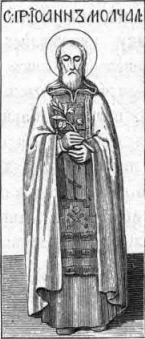
Иоанн, родом из Никополя в Римской Армении, на восемнадцатом году осиротевши, доставшуюся ему часть от имения родителей употребил на построение церкви во имя Пресвятой Девы в Никополе и, принявши монашество (в 472 г.), подвизался при той церкви с другими десятью монахами, плоть порабощая духу и укрощая страсти. И был он муж дивный по доброму житию, искусный наставник и мудрый игумен братии. Когда же достиг он двадцати восьми лет возраста своего, умер епископ города Колонии (ныне Когиласар, в 60 верстах от Никополя), и граждане обратились к митрополиту Севастийскому с просьбою поставить ему преемника. У всех на устах носилось имя Иоанна, игумена Никопольского монастыря, и митрополит, вызвавши его как бы по другому делу церковному, посвятил на Колонийскую кафедру (481 г.)
John, a native of Nicopolis in Roman Armenia, having been orphaned in his eighteenth year, used the portion of his parents' estate that fell to him to build a church in the name of the Most Holy Virgin in Nicopolis and, having received monastic tonsure (in 472 A.D.), struggled at that church with ten other monks, subduing the flesh to the spirit and taming the passions. And he was a man wondrous in his good life, a skillful teacher and a wise abbot to the brethren. When he reached the twenty-eighth year of his age, the bishop of the city of Colonia (now Kogilasar, 60 versts from Nicopolis) died, and the citizens turned to the Metropolitan of Sebaste with a request to appoint a successor. The name of John, abbot of the Nicopolis monastery, was on everyone's lips, and the metropolitan, having summoned him as if on another church matter, consecrated him to the see of Colonia (481 A.D.).
Приняв церковное правление, Иоанн не изменил своего нрава и обычаев, не отступал от правил монашеского жительствования и был для других образом доброго жития. В десятое же лето епископства его сделался правителем Римской Армении муж сестры его Пазиник, который начал озлоблять и смущать Церковь Колонийскую, мешаясь в духовные дела, силою извлекая из Церкви искавших в ней убежища, не позволяя церковным приставникам иметь попечение о церковных имуществах.
Having taken up the governance of the church, John did not change his character and habits, did not depart from the rules of monastic life, and was for others an example of a good life. In the tenth year of his episcopacy, the husband of his sister, Pazinicus, became the ruler of Roman Armenia. He began to vex and disturb the Church of Colonia, meddling in spiritual affairs, forcibly dragging out of the Church those who sought refuge in it, and not allowing the church stewards to have care for church property.
Иоанн много раз со смирением умолял его прекратить насилия и пакости; наконец, по смерти уже сестры, вынужден был идти в Константинополь просить защиты у императора Зенона (в 490 г.) и при помощи патриарха Евфимия успел в своём ходатайстве. По возвращении же, рассмотрев молву и многомятежие мира, умыслил оставить епископию и в безмолвии служить Богу. Посему, совершив Божественную литургию и отпустив пресвитеров и клириков, тайно вышел на приморье и, седши в корабль, направился к Иерусалиму.
John many times humbly begged him to cease his violence and mischief; finally, after his sister's death, he was compelled to go to Constantinople to seek protection from the Emperor Zeno (in 490 A.D.) and, with the help of Patriarch Euthymius, succeeded in his petition. Upon his return, however, having considered the clamor and great turmoil of the world, he resolved to leave the bishopric and serve God in silence. Therefore, having celebrated the Divine Liturgy and dismissed the presbyters and clergy, he secretly went to the seashore and, boarding a ship, set out for Jerusalem.
Прожив некоторое время в Иерусалимском странноприимном доме во имя святого великомученика Георгия, как один из нищих, Иоанн по особому внушению пошёл в пустынную лавру преподобного Саввы; это было на тридцать восьмом году жития его. В лавре находилось тогда до ста сорока человек братии. Преподобный Савва принял Иоанна и поручил ему монастырскому эконому для трудов и работ монастырских, и приставил его экономом к строителям странноприимницы – варить пищу, носить воду, подавать камни и т. п. А через два года сделан был начальником странноприимницы и послужил братьям со смирением, кротостью и любовью. Проходя же и иные затем послушания, во всем поступал, как искренний раб Божий, и через шесть лет по поступлении в лавру сделан был экономом. После сего хотел преп. Савва сделать его пресвитером, как достойного и совершенного монаха. И так, взявши с собой Иоанна, пошёл в Иерусалим к патриарху Илии (494–517 гг.) и просил его рукоположить Иоанна. Иоанн же, видя, что не может таить своего сана, попросил патриарха наедине выслушать его и, заклявши никому не открывать, что услышит, сказал: «Святейший отец! Я был епископом города Колонии, но поскольку умножились грехи мои, оставил епископию и бежал; теперь же, как крепкий телом, служу братьям, чтобы их молитвы помогали немощной душе моей». Патриарх ужаснулся и, призвав Савву, сказал ему: «Иоанн открыл мне некоторые сокровенные свои дела, из-за которых не может быть пресвитером; пусть он ныне безмолствует, и пусть никто не беспокоит его». Преп. Савва весьма огорчился, думая, что ошибся в Иоанне; он провёл целую неделю в молитве и услышал голос: «Епископ не может быть опять пресвитером».
Having lived for some time in the Jerusalem hospice in the name of the holy Great Martyr George, as one of the poor, John, by a special prompting, went to the desert Lavra of our Venerable Father Sabbas; this was in the thirty-eighth year of his life. At that time there were up to one hundred and forty brethren in the Lavra. Venerable Sabbas received John and entrusted him to the monastery steward for labors and monastery works, and appointed him steward to the builders of the hospice — to cook food, carry water, supply stones, and the like. And after two years he was made head of the hospice and served the brethren with humility, meekness, and love. Passing through other obediences as well, in everything he acted as a sincere servant of God, and six years after entering the Lavra he was made steward. After this, Venerable Sabbas wished to make him a presbyter, as a worthy and perfect monk. So, taking John with him, he went to Jerusalem to Patriarch Elias (494–517 A.D.) and asked him to ordain John. John, however, seeing that he could not conceal his rank, asked the patriarch to hear him in private and, having adjured him to reveal to no one what he would hear, said: "Most holy father! I was bishop of the city of Colonia, but since my sins multiplied, I left the bishopric and fled; now, being strong in body, I serve the brethren, that their prayers may help my weak soul." The patriarch was astonished and, summoning Sabbas, said to him: "John has revealed to me certain secret matters of his, because of which he cannot be a presbyter; let him now remain in silence, and let no one disturb him." Venerable Sabbas was greatly grieved, thinking that he had been mistaken about John; he spent a whole week in prayer and heard a voice: "A bishop cannot again be a presbyter."
«Добрым растением пустыни явился ты, преподобный, в юности избрав жизнь чистую, последовал духовному учителю и, по его наставлению, устремил весь ум свой к небу. И умным ты был наставником стада своего. Потому и Христос обогатил тебя чудесами, как прилично быть светлому светильнику. Савво, отче наш! Моли спастись душам нашим»25.
"A goodly plant of the desert didst thou prove thyself, O venerable one, having in youth chosen a pure life, thou didst follow a spiritual teacher and, by his instruction, didst direct all thy mind toward heaven. And a wise teacher of thy flock wast thou. Therefore Christ also enriched thee with miracles, as is fitting for a bright lamp. O Sabbas, our father, pray that our souls may be saved."25
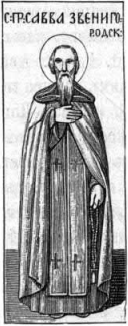
В молодых летах расставшись с миром, блаженный Савва пришёл в пустыню к дивному Сергию и здесь принял монашество. Под руководством великого наставника обучался он послушанию, смирению, чистоте мыслей и тела, строгому посту. Он избегал бесед с другими и любил беседу с Господом; старался не оставаться праздным, но то участвовал в церковном пении, то занимался рукоделием и какою-либо работою. Он казался простым в глазах людей, но приобрёл мудрость духовную; часто плакал о нищете души своей и трепетал перед строгостью суда Божия26. Такими подвигами возрастал он в жизни духовной и даже «в монастыре Сергия был духовником всему братству, старцем почтенным и весьма учительным»27.
Having parted from the world in his youthful years, blessed Sabbas came to the desert to the wondrous Sergius and here received monastic tonsure. Under the guidance of the great teacher he learned obedience, humility, purity of thoughts and body, and strict fasting. He avoided conversations with others and loved converse with the Lord; he strove not to remain idle, but would either take part in church singing or occupy himself with handiwork and some labor. He seemed simple in the eyes of men, but acquired spiritual wisdom; he often wept over the poverty of his soul and trembled before the severity of God's judgment26. By such labors he grew in the spiritual life, and even "in the monastery of Sergius he was confessor to the whole brotherhood, an honored elder and one most instructive."27
В 1380 г. великий князь Дмитрий Иоаннович, после победы над Мамаем, пришёл в обитель преп. Сергия принести благодарение Господу, даровавшему победу, и исполнить обет свой. Перед походом на Мамая говорил он Сергию: «Отче! Если поможет мне Бог, и возвращусь я здоровым, поставлю монастырь в честь Успения Пречистой Богородицы». Теперь просил он преподобного найти удобное место для обители. Святой обошел места пустынные и ему понравился уединённый остров, омываемый Дубенкою, Дубною и Быстрицею, на северо-западе от лавры, что ныне на границах Тверской и Владимирской губернии. Преподобный пригласил великого князя и, согласно с его желанием, основаны были здесь храм Успения Богоматери и общее житие иноческое. Начальником пустыни преподобный поставил ученика своего Савву, мужа, говорит блаженный Епифаний, «зело добродетельного»28. Здесь, в тихой пустыни, преп. игумен Савва жил по-прежнему, в простоте строгого подвижника: питался только растительною пищей, носил одежду грубую, спал на полу и лил слезы о грехах29.
In the year 1380, the Great Prince Demetrius Johnovich, after his victory over Mamai, came to the monastery of the Venerable Sergius to offer thanksgiving to the Lord, who had granted the victory, and to fulfill his vow. Before the campaign against Mamai he had said to Sergius: "Father! If God helps me, and I return safe, I shall establish a monastery in honor of the Dormition of the Most Pure Theotokos." Now he asked the Venerable One to find a suitable place for the monastery. The saint went about the desolate places and was pleased by a secluded island, washed by the Dubenka, Dubna and Bystritsa rivers, to the northwest of the Lavra, on what are now the borders of Tver and Vladimir provinces. The Venerable One invited the Great Prince and, in accordance with his wish, a church of the Dormition of the Mother of God and a cenobitic monastic community were founded there. The Venerable One appointed as superior of the hermitage his disciple Sabbas, a man, says the blessed Epiphanius, "most virtuous"28. Here, in the quiet hermitage, the Venerable Abbot Sabbas lived as before, in the simplicity of a strict ascetic: he ate only vegetable food, wore coarse clothing, slept on the floor, and shed tears over his sins29.
Когда в обители Сергия Никон, приняв после его кончины († 1391 г.) управление обителью, скоро пожелал жить в безмолвии, – ученики Сергия упросили преп. Савву принять на себя управление обителью, основанною общим наставником их. Это было в 1392 г.30. Преподобный пас стадо Сергия с усердием. Он оставил здесь память заботливого начальствования своего и тем, что по примеру наставника извёл молитвою источник чистой воды за северною стеною обители31. Но любитель безмолвия тяготился властью над обителью многолюдною; не могло не тревожить его и то, что, по назначению великого наставника его, блаж. Никон должен пасти стадо Сергия. Между тем, Звенигородский князь Юрий Дмитриевич, брат великого князя, часто посещавший обитель Сергия и много благодетельствовавший ей, хорошо знал преп. игумена Савву: он имел его своим духовником. Положив в душе устроить обитель в своём уделе, князь пригласил преп. Савву посетить дом его для преподания благословения Божия. Старец согласился. Князь открыл тайное желание своё и умолял святого принять на себя устроение обители близ Звенигорода, на горе Сторожевской. Преподобный осмотрел место, и оно ему весьма понравилось32. Пав перед иконою Богоматери, со слезами просил он Её покрова для пустынного места и остался на уединённой горе. Это было в 1399 г.33.
When Nikon, having taken up the governance of the monastery of Sergius after his repose († 1391), soon desired to live in silence, the disciples of Sergius entreated the Venerable Sabbas to accept the governance of the monastery founded by their common teacher. This was in the year 139230. The Venerable One tended the flock of Sergius with zeal. He left here a memory of his solicitous rule also by the fact that, following the example of his teacher, he brought forth by prayer a spring of pure water beyond the northern wall of the monastery31. But the lover of silence was burdened by authority over a populous monastery; it could not but trouble him also that, by the appointment of his great teacher, the blessed Nikon was to tend the flock of Sergius. Meanwhile, Prince George Dimitrievich of Zvenigorod, brother of the Great Prince, who often visited the monastery of Sergius and was a great benefactor to it, knew the Venerable Abbot Sabbas well: he had him as his spiritual father. Having resolved in his soul to establish a monastery in his appanage, the prince invited the Venerable Sabbas to visit his house to bestow God's blessing. The elder agreed. The prince revealed his secret desire and implored the saint to undertake the establishment of a monastery near Zvenigorod, on Mount Storozhevsk. The Venerable One examined the place, and it pleased him greatly32. Falling before the icon of the Mother of God, with tears he besought Her protection for the desolate place and remained on the solitary mountain. This was in the year 139933.
На горе святой поставил себе хижину и близ неё устроил небольшой деревянный храм в честь Рождества Богородицы. Скоро слух о его высокой жизни призвал к нему многих, искавших безмолвной жизни. Преподобный с любовью принимал приходивших к нему и устроил общежитие. В 1399 г. князь Юрий должен был, по воле великого князя, идти воевать с Болгарами. Перед выступлением в поход, благочестивый князь пришёл за благословением к духовному отцу своему. Святой старец помолился о нем, благословил его крестом и сказал: «Иди, князь, – Господь с тобою; ты победишь врагов и возвратишься здоровым». Юрий с войсками, своим и великого князя, в продолжение трёх недель взял несколько городов: великие Болгары, Жукотин, Казань, Кременчуг и другие и с богатою добычею возвратился в отчизну34. С радостью благодарил теперь князь преп. Савву за его молитву столько благоуспешную. Смиренный старец относил счастье к милости Божией и к добродетелям князя, особенно же к благотворительной любви его. Князь поспешил доказать благодарность свою делами, – он доставил обители Саввы разные пособия и дары. Каменный прекрасный храм в Саввиной обители остаётся поныне памятником трудов преп. Саввы и благотворительности князя Юрия35. Грамотою от 4-го мая 1409 г. князь Юрий Дмитриевич пожертвовал «в дом Пречистой отцу своему игумену Савве с братией» три села с деревнями и дома крестьян, которые будут жить в уступаемых землях, освободил от своих податей и суда36. Не смотря на богатые пособия духовного сына, преподобный не переставал сам трудиться для обители. Обнесши монастырь деревянною оградою, он сам выкопал колодезь под горою, который поныне доставляет прекрасную воду для обители; а для безмолвных подвигов своих выкопал себе пещерную келью в овраге, в версте от монастыря37. Ещё цела в обители риза, в которой преподобный совершал служение перед престолом Божиим; она белая тафтяная, с оплечьем темным, шитым струйками серебра и шелка38. Апостол писал: «всегда более усовершайтесь в деле Господнем, зная, что труд ваш не тщетен пред Господом» (1Кор.15:58). Так жил он сам и к тому же побуждал учеников своих. Он достиг глубокой старости и мирно почил 3 декабря 1406 г.39.
On the mountain the saint set up a hut for himself and near it built a small wooden church in honor of the Nativity of the Theotokos. Soon the report of his lofty life drew to him many who sought a life of silence. The Venerable One lovingly received those who came to him and established a cenobitic community. In 1399, Prince George was obliged, by the will of the Great Prince, to go to war against the Bulgars. Before setting out on the campaign, the pious prince came for a blessing from his spiritual father. The holy elder prayed for him, blessed him with the cross, and said: "Go, prince—the Lord is with you; you will vanquish your enemies and return safe." George, with his own troops and those of the Great Prince, took several cities in the space of three weeks: Great Bolgary, Zhukotin, Kazan, Kremenchug, and others, and returned to his patrimony with rich booty34. With joy the prince now thanked the Venerable Sabbas for his prayer, which had been so successful. The humble elder ascribed the success to God's mercy and to the prince's virtues, especially to his charitable love. The prince hastened to prove his gratitude by deeds—he provided the monastery of Sabbas with various subsidies and gifts. The beautiful stone church in the monastery of Sabbas remains to this day a monument to the labors of the Venerable Sabbas and the beneficence of Prince George35. By a charter dated May 4, 1409, Prince George Dimitrievich donated "to the house of the Most Pure One, to my father Abbot Sabbas and the brethren" three villages with hamlets and the homes of the peasants who would live on the granted lands, and freed them from his taxes and jurisdiction36. Despite the rich subsidies of his spiritual son, the Venerable One did not cease to labor himself for the monastery. Having surrounded the monastery with a wooden fence, he himself dug a well under the mountain, which to this day provides excellent water for the monastery; and for his silent ascetic labors he dug himself a cave cell in a ravine, a verst from the monastery37. Still preserved in the monastery is the phelonion in which the Venerable One served before the throne of God; it is of white taffeta, with a dark shoulder-piece embroidered with threads of silver and silk38. The Apostle wrote: "Always strive to perfect yourselves in the work of the Lord, knowing that your labor is not in vain before the Lord" (1 Cor. 15:58). Thus he lived himself, and to the same he urged his disciples. He reached a deep old age and peacefully reposed on December 3, 140639.
Спустя много лет после кончины блаженного Саввы, как говорит составленное в половине XVI века описание чудес преподобного, игумен Дионисий, окончив вечернее правило, лёг заснуть. И вот является ему старец и говорит: «Дионисий! Вставай и напиши лик мой на иконе». – «Кто ты и как зовут тебя?» – спросил Дионисий. «Я Савва, начальник сего места», – отвечал явившийся. Дионисий, поражённый видением, призвал ветхого старца Аввакума, который в юности своей видел блаженного Савву живым, расспросил у него, каков был видом преп. Савва? Аввакум рассказал о виде и росте его. «Точно таким явился мне ныне тот, кто велел мне написать лик его», – сказал Дионисий. Так как игумен был искусный иконописец и муж благочестивый, то он вслед за тем написал икону преподобного. – При том же игумене исцелился в обители Саввы бесноватый. Но более замечательно было третье событие при игумене Дионисии. Братия обители зароптали на игумена и сделали на него донос великому князю Иоанну. Дионисий испугался строгого князя, боялся явиться к нему и обратился с молитвою к преп. Савве. Явившийся во сне преподобный сказал Дионисию: «О чём скорбишь ты, брат мой? Иди, говори смело, не боясь ничего: Господь – твой помощник». В ту же ночь преподобный являлся и роптавшим на игумена. «Затем ли оставили мир, – говорил он строго, – чтобы с ропотом иночествовать? Вы ропщете, а игумен молится: что одолеет? В строптивых сердцах не живёт ни смирение, ни благодать Божия». После сна рассказали они видение друг другу в сильном смущении. Явившись к великому князю, ничего не могли они рассказать верного против игумена и остались в стыде. Сличая это сказание о чудесах преподобного с другими памятниками, должны мы положить, что чудесные события времени игумена Дионисия происходили не ранее 1480 г. и не позже 1490 г.40.
Many years after the repose of the blessed Sabbas, as says the account of the miracles of the Venerable One compiled in the mid-16th century, Abbot Dionysius, having finished the evening rule, lay down to sleep. And behold, an elder appeared to him and said: "Dionysius! Arise and paint my likeness on an icon." "Who are you, and what is your name?" asked Dionysius. "I am Sabbas, the superior of this place," replied the one who had appeared. Dionysius, struck by the vision, summoned the very old elder Habakkuk, who in his youth had seen the blessed Sabbas alive, and asked him what the Venerable Sabbas had looked like. Habakkuk described his appearance and stature. "Exactly thus did the one who commanded me to paint his likeness appear to me tonight," said Dionysius. Since the abbot was a skilled iconographer and a pious man, he thereupon painted an icon of the Venerable One. — Under the same abbot, a demoniac was healed in the monastery of Sabbas. But more remarkable was the third event under Abbot Dionysius. The brethren of the monastery murmured against the abbot and made a denunciation against him to the Great Prince John. Dionysius was afraid of the stern prince, feared to appear before him, and turned in prayer to the Venerable Sabbas. Appearing to Dionysius in a dream, the Venerable One said: "Why are you sorrowful, my brother? Go, speak boldly, fearing nothing: the Lord is your helper." That same night the Venerable One also appeared to those who had murmured against the abbot. "Is it for this that you left the world," he said sternly, "to be monks with murmuring? You murmur, while the abbot prays: which will prevail? In stubborn hearts there dwells neither humility nor the grace of God." After the dream, they recounted the vision to one another in great confusion. When they appeared before the Great Prince, they could report nothing certain against the abbot and were put to shame. Comparing this account of the Venerable One's miracles with other records, we must conclude that the miraculous events of Abbot Dionysius's time occurred no earlier than 1480 and no later than 149040.
По всей вероятности, с того же времени в обители Саввы, как и в обители Сергия, где был он игуменом, началось благоговейное почитание преподобного Саввы. Это было как по обиходу Сергиевой лавры, так и по продолжению описания чудес41.
In all probability, from that same time, in the monastery of Sabbas, as in the monastery of Sergius where he had been abbot, the reverent veneration of the Venerable Sabbas began. This is evident both from the customary practice of the Sergius Lavra and from the continuation of the account of miracles41.
При игумене Каллисте приведён был ко гробу преподобного бесноватый. На первый раз он бежал из обители в лес и там залез на дерево. Когда с трудом привели его в обитель, игумен стал петь молебен преподобному у его раки, и бесноватый становился тише и тише, а потом и совсем исцелился. – Один инок, страдавший болью глаз до того, что не мог смотреть, молился со слезами при гробе преподобного об исцелении боли своей и отёр глаза покровом, лежавшим при гробе преподобного. Другой сказал с насмешкой: «Только запорошит глаза». Болевший глазами тотчас исцелел, а смеявшийся ослеп. Последний пришёл в себя и стал плакать и молить о прощении греха его и также был исцелён. Один мирянин до трёх раз был исцелён от болезни; болезнь возвращалась каждый раз, как только возвращался он в свой дом. Поняв из того, что преподобный призывает его к себе навсегда, он после третьего раза не возвратился в дом и в обители преподобного жил в добром здоровье42. Раз игумен Мисаил был очень болен. Пономарь Гурий шёл звонить к утрени. Благолепный старец спрашивает его: «Здоров ли игумен?». «Он болен», – сказал Гурий. «Скажи ему, – сказал старец, – пусть призовёт на помощь св. Богородицу и начальника обители Савву и будет здоров; а мне отвори двери». Пономарь, не зная, что это за человек, не хотел отворять дверей. Но тот пошёл сам в отворившиеся двери. Пономарь в страхе призвал товарища и стал укорять его: «Зачем ты оставил двери не запертыми?» Товарищ отвечал, что он запер двери. Когда же оба подошли к дверям, нашли их запертыми. – После утрени пономарь рассказал брату и игумену, что видел и слышал он. Игумен велел нести себя ко гробу и здесь после молебна выздоровел. Игумен Мисаил писал и в юридическом акте 1539 г., что он купил землю «в доме Пречистой и чудотворца Саввы»43.
Under Abbot Callistus, a demoniac was brought to the tomb of the Venerable One. At first he fled from the monastery into the forest and climbed a tree. When with difficulty they brought him back to the monastery, the abbot began to sing a moleben to the Venerable One at his reliquary, and the demoniac grew quieter and quieter, and then was completely healed. — One monk, suffering from eye pain so severe that he could not see, prayed with tears at the tomb of the Venerable One for healing from his pain and wiped his eyes with the veil that lay on the Venerable One's tomb. Another said mockingly: "That will only get dust in your eyes." The one with the eye pain was immediately healed, while the mocker was struck blind. The latter came to himself and began to weep and beg forgiveness for his sin, and he too was healed. One layman was healed of an illness up to three times; the illness returned each time as soon as he returned to his home. Understanding from this that the Venerable One was calling him to himself forever, after the third time he did not return home and lived in good health in the monastery of the Venerable One42. Once Abbot Misael was very ill. The sexton Gury was going to ring for Matins. A comely elder asked him: "Is the abbot well?" "He is ill," said Gury. "Tell him," said the elder, "to call upon the help of the holy Theotokos and the superior of the monastery, Sabbas, and he will be well; and open the doors for me." The sexton, not knowing who this man was, did not want to open the doors. But the other went himself through the doors, which opened. The sexton in fear summoned his companion and reproached him: "Why did you leave the doors unlocked?" The companion replied that he had locked the doors. When both approached the doors, they found them locked. — After Matins, the sexton told the brother and the abbot what he had seen and heard. The abbot ordered himself to be carried to the tomb, and there, after a moleben, he recovered. Abbot Misael also wrote in a legal document of 1539 that he had bought land "for the house of the Most Pure One and the Wonderworker Sabbas"43.
Игумен Афанасий, известный по грамотам 1542–1555 гг.44, был муж благочестивый и крепко верующий. Таков же был и келарь его Геронтий. «Приспела память преподобного отца Саввы, – говорит Маркел, – келарь Геронтий взял благословение у игумена и пошёл сказать, чтобы готовили праздничную пищу в день памяти преподобного». Но сосуд с маслом разбился. Когда келарь, сказав о том игумену Афанасию, прибавил, что в другом сосуде есть масло, но его слишком мало, верующий игумен отвечал: «Надобно возложить упование на Господа и на Его угодника, чудотворца Савву, который может умножить и немногое; пусть готовят пищу». Действительно масла не только достало для пищи, но ещё осталось в избытке45.
Abbot Athanasius, known from charters of 1542–155544, was a pious man of firm faith. So too was his cellarer Gerontius. "The commemoration of the Venerable Father Sabbas was approaching," says Marcellus; "the cellarer Gerontius took a blessing from the abbot and went to give orders to prepare festal food for the day of the Venerable One's memory." But the vessel with oil broke. When the cellarer, having told Abbot Athanasius of this, added that there was oil in another vessel, but too little of it, the faithful abbot replied: "We must place our hope in the Lord and in His saint, the Wonderworker Sabbas, who can multiply even a little; let them prepare the food." Indeed, the oil not only sufficed for the food, but still remained in abundance45.
Много других чудес совершилось по молитвам преподобного Саввы и в последующее время46. Самое замечательное из них было при царе Алексии. Инок Леонтий просил Бога послать ему страдание, чтобы тем заслужить венец. По окончании обычной молитвы его, входит в его келью старец с седою бородою и несколько сгорбленный, от которого изливался свет; он прикоснулся к устам дерзкого молитвенника, и Леонтий упал на пол без чувств. – Братия, узнав, что Леонтий лежит без чувств, и, признав его за угоревшего, отливали его водою; но он оставался в прежнем состоянии, так что готовили его к похоронам. Но мало-помалу больной стал показывать в себе жизнь и в первый день Пасхи опамятовался, но оставался без языка. В утрени Фомина воскресного дня подошёл к нему старец и, толкнув, сказал: «Встань, что сидишь?» Во время чтения второй кафизмы было то же самое, и в этот раз разрешился язык Леонтия. «Кто ты?» – спросил Леонтий явившегося. Старец говорил что-то в наставление Леонтию, но Леонтий в страхе не мог удержать в памяти слов его. После утрени из церкви прямо прибежал он к архимандриту Варлааму, в слезах восхищения упал к ногам его и сказал: «Благослови, отче!» Потом в присутствии брата рассказал он, как началась болезнь его и что с ним было. Это происходило в 1650 г., когда Варлаам первый из настоятелей обители произведён в архимандрита. Преподобный Савва раз спас жизнь самого царя Алексия. – На звериной охоте, до которой Алексей Михайлович был страстный охотник, на одинокого царя набежал огромный медведь; беззащитный царь счёл себя погибшим; но неожиданно явился старец и прогнал медведя. На вопрос царя: «Кто спас его?», старец отвечал: «Савва, инок Сторожевской обители». – В обители между живыми иноками, как узнал царь, не было тогда ни одного Саввы – и царь понял, что спас его преп. Савва.
Many other miracles were performed through the prayers of the Venerable Sabbas also in later times46. The most remarkable of them occurred under Tsar Alexis. The monk Leontius asked God to send him suffering, that thereby he might earn a crown. After the conclusion of his customary prayer, an elder with a gray beard and somewhat stooped, from whom light streamed forth, entered his cell; he touched the lips of the presumptuous supplicant, and Leontius fell to the floor unconscious. The brethren, learning that Leontius lay unconscious and supposing him to have been overcome by fumes, poured water over him; but he remained in the same state, so that they prepared him for burial. Little by little, however, the sick man began to show signs of life, and on the first day of Pascha he regained consciousness, but remained speechless. At Matins on Thomas Sunday, an elder approached him and, nudging him, said: "Arise, why do you sit?" During the reading of the second kathisma the same thing occurred, and this time Leontius's tongue was loosed. "Who are you?" asked Leontius of the one who had appeared. The elder spoke something as instruction to Leontius, but Leontius in fear could not retain his words in memory. After Matins, he ran straight from the church to Archimandrite Barlaam, fell at his feet in tears of rapture, and said: "Bless, father!" Then, in the presence of a brother, he related how his illness had begun and what had happened to him. This occurred in the year 1650, when Barlaam, the first of the monastery's superiors, was elevated to archimandrite. The Venerable Sabbas once saved the life of Tsar Alexis himself. – During a bear hunt, of which Alexis Mikhailovich was a passionate hunter, a huge bear rushed upon the solitary Tsar; the defenseless Tsar considered himself lost; but unexpectedly an elder appeared and drove the bear away. In answer to the Tsar's question: "Who saved him?", the elder replied: "Sabbas, a monk of the Storozhevsk monastery." – In the monastery, as the Tsar learned, there was then no monk named Sabbas among the living – and the Tsar understood that the Venerable Sabbas had saved him.
Никон. л. 4. 235. Епифаний в житии пр. Сергия: «вручи игуменство от ученик своих Савве именем, мужу зело добродетельну». Маркелл: «прииде на речку зовомую Дубенку, – созда церковь во имя успения и избра от стада ученик своих сего блаженнаго Савву, о нем же повесть сия предложися». О месте Дубенской пустыни в чтен. Моск. общ. ист. 1860 г., кн. 1.
Nikon Chronicle 4. 235. Epiphanius in the Life of the Venerable Sergius: "he entrusted the abbacy to one of his disciples named Sabbas, a man very virtuous." Marcellus: "he came to a river called Dubenka, – built a church in the name of the Dormition and chose from the flock of his disciples this blessed Sabbas, of whom this account is presented." On the location of the Dubensk hermitage in Readings of the Moscow Society of History, 1860, book 1.
Симон Азарьин в опис. чудес, гл. 12. Предисл. к чудесам изд. во времен. общ. ист., кн. X, смесь, стр. 8. По описи Сергиевой Лавры 1642 г. за Конюшенными воротами, что ныне Каличьи, у конюшенного двора пруд «да посторонь его колодезь чудотворца Саввы». Колодезь и поныне называется Саввиным; он близ Воскресенской церкви, что в Какуеве.
Simon Azaryin in the Description of Miracles, ch. 12. Preface to the Miracles published in the Proceedings of the Society of History, book X, Miscellany, p. 8. According to the inventory of the Sergius Lavra of 1642, behind the Stables Gate, now Kalichy, at the stable yard there was a pond "and beside it a well of the Wonderworker Sabbas." The well is still called Sabbas's; it is near the Church of the Resurrection in Kakuyevo.
Маркелл «яко же небесный рай благовонными насажден цветы, сие место обрет и зело возлюби е». По этим словам, Савва пришёл на Сторожу летом.
Marcellus: "like a heavenly paradise planted with fragrant flowers, he found this place and greatly loved it." According to these words, Sabbas came to Storozha in the summer.
По Маркеллу пр. Савва был игуменом Сергиевой обители около шести лет; след. с 1392 г. до половины 1398 г. сл. пр. 12.
According to Marcellus, the Venerable Sabbas was abbot of the Sergius monastery for about six years; consequently from 1392 to the middle of 1398, cf. Venerable 12.
Маркеллово житие св. Саввы; о построении каменного храма говорится и в службе св. Савве. Путешествие п. Макария 1656 г.: «соборная ц. в честь рожд. Пресв. Богородицы современна пр. Савве; первоначальная была деревянная малых размеров». В ист. иер. 2. 550 сказано, что каменный храм Сторожевской обители построен по образцу Троицкого Сергиевой обители. Но последний строился с 1422 г., а пр. Савва скончался в 1406 г., след. Сторожевский храм мог служить образцом для Троицкого, а не наоборот.
Marcellus's Life of St. Sabbas; the building of the stone church is also mentioned in the service to St. Sabbas. Journey of Patriarch Macarius in 1656: "the cathedral church in honor of the Nativity of the Most Holy Theotokos is contemporary with the Venerable Sabbas; the original was a small wooden one." In History of the Hierarchy 2. 550 it is said that the stone church of the Storozhevsk monastery was built after the model of the Trinity church of the Sergius monastery. But the latter was built from 1422, while the Venerable Sabbas reposed in 1406; consequently the Storozhevsk church could have served as a model for the Trinity church, and not the reverse.
Смирнова опис. Савв. мон., стр. 59, 60, прим. 108. В описи 1684 г. показывали полное облачение пр. Саввы кроме ризы, подризник, епитрахиль, поручи и пояс. В описи 1662 г. показан «канонник чудотворца Саввы». Но, к сожалению, и его ныне нет в обители Саввы.
Smirnov's Description of the Sabbas Monastery, pp. 59, 60, note 108. In the inventory of 1684 they showed the full vestments of the Venerable Sabbas except the phelonion: the sticharion, epitrachelion, cuffs, and belt. In the inventory of 1662 a "canon book of the Wonderworker Sabbas" is shown. But, unfortunately, it is no longer in the monastery of Sabbas.
Ркп. житие у Толстого 2. № 190. Ркп. святцы: «преп. Савва игумен Сторожевский Звенигородский, чудотворец, бысть ученик пр. Сергия, преставися в л. 6915 мес. декабря в 3 день».
Manuscript Life at Tolstoy 2. No. 190. Manuscript Saints' Calendar: "the Venerable Sabbas, abbot of Storozhevsk of Zvenigorod, wonderworker, was a disciple of the Venerable Sergius, reposed in the year 6915, month of December, on the 3rd day."
Грамотой от 30 января 1490 г., данной Сторожевскому игумену Дионисию, Звенигородский князь Андрей Васильевич определил, какие когда брать пошлины с монастырских сёл (Ист. ак. 1. № 100). Князь Андрей Васильевич, владевший Звенигородом, Угличем с 1491 г. лишился всех прав владетельного князя; в 1491 г. для Саввина монастыря он дал несколько грамот и одну в 1470 г. (Смирнова опис. Саввина монаст., стр. 14. Я 15, прим. 31–33. 139. 144). В грамоте 1490 г., между прочим, писал он «а что была пошлина келарю да подкеларнику, и ты тое пошлины имать не вели». Не это ли ограничение доходов келара и подкеларника подняло бурю ропота против игум. Дионисия? Г. Смирнов допускает странность – выставляет двух игуменов Дионисиев, одного около 1430 г., показывая его иконописцем, написавшим образ Саввы; другого относит к 1490 г. и ставит его на суд перед в. князем. Но у Маркелла не только нет никакого основания для мысли о двух Дионисиях, напротив в описании первого явления Саввы говорит он: «многим летом прешедшим по преставлении пр. Саввы», и след. по его словам игум. Дионисий иконописец жил много лет спустя после св. Саввы, а не какие-нибудь 25 лет; иначе он был тот же Дионисий, который в 1490 г. был на суде пред в. князем.
By a charter of January 30, 1490, given to the Storozhevsk abbot Dionysius, the Zvenigorod prince Andrew Vasilievich determined what dues were to be collected from the monastery's villages at what times (Historical Acts 1. No. 100). Prince Andrew Vasilievich, who held Zvenigorod and Uglich, lost all rights of a sovereign prince after 1491; in 1491 he gave several charters to the Sabbas monastery and one in 1470 (Smirnov's Description of the Sabbas Monastery, p. 14. And 15, notes 31–33. 139. 144). In the charter of 1490, among other things, he wrote: "and as for the dues that went to the cellarer and the sub-cellarer, do you not allow those dues to be taken." Was it not this limitation of the cellarer's and sub-cellarer's revenues that stirred up a storm of murmuring against Abbot Dionysius? Mr. Smirnov admits a peculiarity – he presents two abbots named Dionysius, one around 1430, showing him as an iconographer who painted an icon of Sabbas; the other he assigns to 1490 and brings him to trial before the Grand Prince. But in Marcellus there is not only no basis for the idea of two Dionysiuses; on the contrary, in describing the first appearance of Sabbas he says: "many years having passed after the repose of the Venerable Sabbas," and consequently, according to his words, Abbot Dionysius the iconographer lived many years after St. Sabbas, and not merely some 25 years; otherwise he was the same Dionysius who in 1490 was on trial before the Grand Prince.
У г. Смирнова игум. Каллист поставлен преемником Евфросина, известного в 1454 г. и именно на основании записи Соломониды Бартеневой (стр. 81, пр. 141). – Но Бартенева говорит только, что отдаёт игум. Каллисту селище Михайловское в том виде, в каком покойный муж её купил у Сторож. игумена Евфросина. А по Маркеллову описанию чудес св. Саввы игум. Каллист был после игум. Дионисия, т. е. после 1490 г. В духовной своей грамоте 1515 г. пр. Иосиф Волоколамский признаёт «Каллиста, бывшего Сторожевского игумена», способным к управлению монастырскому. Ясно, что Каллист был игуменом Сторожевским 1495–1512 г.
In Mr. Smirnov's work, Abbot Callistus is placed as the successor of Euphrosynus, known in 1454, and precisely on the basis of the record of Solomonida Barteneva (p. 81, note 141). – But Barteneva only says that she gives to Abbot Callistus the settlement Mikhailovskoye in the condition in which her late husband bought it from the Storozhevsk abbot Euphrosynus. And according to Marcellus's description of the miracles of St. Sabbas, Abbot Callistus was after Abbot Dionysius, i.e., after 1490. In his spiritual testament of 1515, the Venerable Joseph of Volokolamsk acknowledges "Callistus, the former Storozhevsk abbot," as capable of monastic administration. It is clear that Callistus was abbot of Storozhevsk from 1495 to 1512.
В настольной грамоте 1592 г. игумену Герману читаем: «преподобный отец Савва Сторожевский» (Юр. ак. № 383). В грамоте апр. 28 N 1595 г. «преподобного игумена Саввы Сторожевского монастыря строитель Нафанаил» (Ист. ак. 1. № 248). Келарь Симон в своём описании новых чудес пр. Сергия передаёт несколько случаев, в которых пр. Савва является действующим чудесно то один, то вместе с пр. Сергием.
In the charter of appointment of 1592 to Abbot German we read: "the Venerable Father Sabbas of Storozhevsk" (Legal Acts No. 383). In a charter of April 28, 1595: "of the Venerable Abbot Sabbas of the Storozhevsk monastery, the builder Nathanael" (Historical Acts 1. No. 248). The cellarer Simon in his description of new miracles of the Venerable Sergius recounts several instances in which the Venerable Sabbas appears acting miraculously, sometimes alone, sometimes together with the Venerable Sergius.