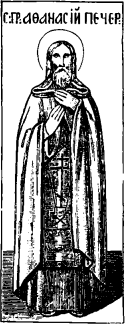
Был, рассказывает Симон1, в святом Печерском монастыре один брат, проводивший святое и богоугодное житие, именем Афанасий. После долгой болезни он скончался. Два брата обмыли его тело, одели его, как нужно, но не похоронили: приходили и другие, но, посмотрев на него, также уходили. Мертвец оставался непогребённым. Он был очень беден, и никто не хотел позаботиться о нем. Ночью некто явился игумену и сказал: «Человек Божий два дня лежит непогребённый, а ты веселишься». Поутру игумен со всей братией пришёл к умершему и нашёл, что он сидит и плачет. Все ужаснулись, видя его живым, и спрашивали, как он ожил и что видел? На их вопросы он не отвечал ничего, а только говорил: «Спасайтесь». Они просили его сказать им что-нибудь на пользу, с клятвою обещаясь выполнить слова его. Тогда Афанасий сказал: «Имейте во всем послушание к игумену, кайтесь ежечасно и молитесь Господу нашему Иисусу Христу и Пречистой Его Матери и преподобным Антонию и Феодосию, чтобы скончать живот свой здесь. Более не спрашивайте». Вслед затем он вошёл в пещеру, заклал у себя дверь и пробыл тут 12 лет. Так как блаженный Афанасий «жил при святом игумене Поликарпе»2, то время само объясняет нам проповедь его. В 1169 году северный князь Мстислав с 12 другими князьями взял Киев, и Киев отдан был на разграбление войску. Подол, Гора, София, Десятинная церковь «были ограблены», говорит Киевская летопись. Не было никому и ничему пощады: церкви горели, люди были убиваемы или вязали их, жены шли в плен, разлучаемые силою с мужьями. Множество имения было взято; из церквей забрали иконы, книги, ризы, колокола. –«Зажжён был и Печерский монастырь Богородицы язычниками» Берендеями, но «Бог сохранил от такой беды»3. – Итак, проповедь Афанасия о покаянии не было бесплодна в Печерской обители; иноки её, по внушению Афанасия, удвоили молитвы свои и покаянием отклонили от обители грозившее страшное бедствие. Что творил преподобный Афанасий в затворе?
There was, as Simon relates1, in the holy Monastery of the Kiev Caves a certain brother who led a holy and God-pleasing life, by the name of Athanasius. After a long illness, he reposed. Two brothers washed his body, clothed it as was fitting, but did not bury him; others came as well, but, having looked upon him, they also departed. The dead man remained unburied. He was very poor, and no one wished to care for him. By night, someone appeared to the abbot and said: "The man of God has lain unburied for two days, while you make merry." In the morning, the abbot with all the brethren came to the deceased and found him sitting and weeping. All were horrified, seeing him alive, and asked how he had come back to life and what he had seen. To their questions he answered nothing, but only said: "Save yourselves." They begged him to say something profitable to them, swearing with an oath to fulfill his words. Then Athanasius said: "Have obedience in all things to the abbot, repent every hour, and pray to our Lord Jesus Christ and His Most Pure Mother and the Venerable Anthony and Theodosius, that you may end your life here. Ask no more." Thereupon he entered the cave, closed the door upon himself, and remained there for 12 years. Since the blessed Athanasius "lived under the holy abbot Polycarp"2, the time itself explains his preaching to us. In the year 1169, the northern prince Mstislav, with 12 other princes, took Kiev, and Kiev was given over to the army for plunder. The Podol, the Hill, St. Sophia, the Church of the Tithes "were plundered," says the Kiev Chronicle. There was mercy for no one and nothing: churches burned, people were killed or bound, wives were led into captivity, forcibly separated from their husbands. A multitude of goods was taken; from the churches they seized icons, books, vestments, and bells. – "The Monastery of the Kiev Caves of the Theotokos was also set on fire by the pagans," the Berendei, but "God preserved it from such a calamity"3. – Thus, the preaching of Athanasius concerning repentance was not fruitless in the Caves monastery; its monks, at the prompting of Athanasius, redoubled their prayers and by repentance averted the terrible disaster that threatened the monastery. What did the Venerable Athanasius do in seclusion?
«В продолжение всего времени – 12 лет – продолжает Симон об Афанасии, – он не сказал ни с кем ни слова», время само говорило; он «плакал день и ночь, мало вкушал хлеба, через день немного пил воды. Когда наступило время его кончины, созвав всю братию, он опять повторил им наставление о важности послушания и покаяния. Он с миром отошёл ко Господу и положен был с честью в той же пещере, где подвизался. После своей кончины известил он чудесами о своём блаженстве. Брат Вавила, много лет страдавший ногами, исцелился при мощах его. «Однажды лежал я, – говорил он братии, – и кричал от сильной боли. Внезапно вошёл ко мне блаженный Афанасий и сказал: “Приди ко мне, и я исцелю тебя”. Я хотел спросить его: как и когда пришёл он? Но он стал невидим. Однако, я поверил явившемуся и постарался о том, чтобы принесли меня к его мощам, и вот, я исцелился». Блаженный Симон прибавляет, что он «слышал об этом от исцелённого Вавилы». Потому надобно положить, что блаженный Афанасий почил около 1176 года; так определяет время кончины его и митрополит Сильвестр4.
"During the whole time – 12 years – Simon continues concerning Athanasius – he spoke not a single word with anyone"; the time itself spoke; he "wept day and night, ate little bread, and every other day drank a little water. When the time of his end drew near, having summoned all the brethren, he again repeated to them his instruction on the importance of obedience and repentance. He departed in peace to the Lord and was honorably laid to rest in the same cave where he had struggled. After his repose, he made known his blessedness through miracles. The brother Vavila, who had suffered for many years from his legs, was healed at his relics. 'Once I lay,' he said to the brethren, 'and cried out from severe pain. Suddenly the blessed Athanasius entered my cell and said: "Come to me, and I will heal you." I wished to ask him: how and when did he come? But he became invisible. However, I believed him who had appeared and took care that I should be brought to his relics, and behold, I was healed.' The blessed Simon adds that he 'heard this from the healed Vavila.' Therefore it must be supposed that the blessed Athanasius reposed around the year 1176; Metropolitan Sylvester also determines the time of his end thus4.
Блаженный Симон оканчивает свою жизнь о преподобном Афанасии так: «если кажется тебе невероятным написанное здесь, прочти житие Антония и Феодосия, начальников русского монашества, и тогда веруй. А если и после того останешься сомневающимся, я не виноват в том. Пусть сбудется притча, сказанная господом: изыде сеяй сеяти семени своего, ово паде при пути, а другое посреде терния (Лк.8:5–7). О таких пророк говорит: одебеле сердце людий сих (Ис.6:10). Нет, не следуй таким, сын и брат мой! Не для них я пишу о сём, но, чтобы тебя приобрести для Христа. – Советую тебе, – утвердись благочестием в святом монастыре Печерском; не домогайся ни власти, ни игуменства, ни епископства; довольно будет для тебя, если скончаешься в обители. Ты знаешь сам, что я мог бы привести тебе подобное из других книг; но для меня и для тебя лучше, что кое-что передаю тебе из дел, совершившихся в святом Печерском монастыре».
The blessed Simon concludes his account of the Venerable Athanasius thus: "If what is written here seems incredible to you, read the lives of Anthony and Theodosius, the founders of Russian monasticism, and then believe. And if even after that you remain in doubt, I am not to blame for it. Let the parable spoken by the Lord be fulfilled: A sower went out to sow his seed; and some fell by the wayside, and other fell among thorns (Lk. 8:5–7). Of such the prophet says: The heart of this people is waxed gross (Is. 6:10). No, do not follow such men, my son and brother! It is not for them that I write these things, but that I might gain you for Christ. – I counsel you – be confirmed in piety in the holy Monastery of the Caves; do not seek after power, nor the abbacy, nor the episcopacy; it will be enough for you if you end your life in the monastery. You know yourself that I could bring you similar examples from other books; but for me and for you it is better that I relate to you something of the deeds that were accomplished in the holy Monastery of the Kiev Caves."
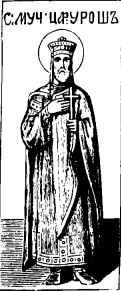
Единственный сын Сербского царя Душана, Урош, родился в 1337 году5. В 1346 г. он венчан был королевским венцом, тогда как отец венчался царским венцом6. – Никогда Сербия не была так сильна и обширна, как при царе Душане Сильном. Вся Болгария была тогда под властью владетеля Сербии; греческие города Македонии, Эпира и Фессалии также были покорены Душаном. Душан, могущественный властитель, просил руки дочери французского короля для сына; но папа настоял, чтобы дочь короля не изменяла латинского исповедания, а Душан не хотел видеть в семье поклонницу папы. Урош, сын Душана, вступил в брак с дочерью Влада, могущественного князя Валахии. Казалось империя Душана проживёт века. Но Душан сам потряс основания своей империи и приготовил печальную судьбу для сына. Он при жизни своей, надеясь на свою силу, дал много силы шести областным правителям своей империи. Например, Оливер, «великий начальник» Сербский и Струмский, чеканил монету со своим именем, как независимый властитель. В Кратовском монастыре на картине представлены областные правители Душана (шесть), а внизу читаются слова, как бы от Душана: «отсюда большая вина падения царства моего»7. Мысль давно поверенная опытами; но люди не слушают и опыта. – Когда бы южные славяне долгим рядом страданий твёрдо убедились в том, что политические беды их всегда зависели от их раздробленного правления и не кончатся дотоле, доколе не соединятся они под одно твёрдое правление твёрдого единовластия! Душан, не безвинный в смерти отца своего, умер среди замыслов о славе, на 45 году жизни, в декабре 1355 г.8
The only son of the Serbian Tsar Dušan, Uroš was born in the year 13375. In 1346 he was crowned with the royal crown, while his father was crowned with the imperial crown6. – Never was Serbia so strong and extensive as under Tsar Dušan the Mighty. All Bulgaria was then under the authority of the ruler of Serbia; the Greek cities of Macedonia, Epirus, and Thessaly were also subdued by Dušan. Dušan, the mighty sovereign, sought the hand of the daughter of the French king for his son; but the pope insisted that the king's daughter should not change the Latin confession, and Dušan did not wish to see a worshiper of the pope in his family. Uroš, the son of Dušan, entered into marriage with the daughter of Vlad, the mighty prince of Wallachia. It seemed that Dušan's empire would endure for centuries. But Dušan himself shook the foundations of his empire and prepared a grievous fate for his son. During his lifetime, trusting in his own strength, he gave much power to the six regional governors of his empire. For example, Oliver, the "great commander" of Serbia and Struma, minted coin with his own name, like an independent ruler. In the monastery of Kratovo, on a painting, the regional governors of Dušan (six) are depicted, and below are read words, as if from Dušan: "hence the great guilt for the fall of my kingdom"7. A thought long confirmed by experience; but men do not heed experience either. – Would that the southern Slavs, through a long series of sufferings, might be firmly convinced that their political calamities have always depended upon their fragmented rule and will not end until they unite under one firm government of firm autocracy! Dušan, not guiltless in the death of his own father, died amidst plans for glory, in the 45th year of his life, in December of 13558.
По смерти отца Урош принял в своё управление Сербию. Он писался: «Стефан Урош, благоверни царь Сербьлем и Грьком»9. На первое время власти ему пришлось иметь дело с претендентом на царский престол. Синиш, дядя его, правитель Фессалии, поднялся с сильным войском, чтобы согнать племянника с престола Сербии; он занял Зету и осадил Скутарь. Но Сербия поднялась за Уроша, и Синиш смирился. Явился другой искатель власти. Никифор Ангел, даже с согласия царицы, матери Урошевой, с мечом в руке занял Фессалию, оттого, что с ним обручена было сестра царицы. Но греческих интриг не любили в Сербии, и Никифор усмирён был10.
After the death of his father, Uroš took Serbia under his governance. He styled himself: "Stefan Uroš, the right-believing Tsar of Serbs and Greeks"9. At the very beginning of his rule, he had to deal with a pretender to the imperial throne. Siniša, his uncle, the ruler of Thessaly, rose up with a strong army to drive his nephew from the throne of Serbia; he occupied Zeta and besieged Scutari. But Serbia rose up for Uroš, and Siniša was humbled. Another seeker of power appeared. Nikephoros Angelos, even with the consent of the Tsarina, Uroš's mother, with sword in hand occupied Thessaly, because the Tsarina's sister was betrothed to him. But Greek intrigues were not loved in Serbia, and Nikephoros was subdued10.
В первые годы правления Урош являлся сколько независимым, столько и деятельным правителем Сербии. В 1357 г. в Сербии был сильный голод11. Урош старался ослабить бедствие покупкой хлеба в Дубровнике. В 1357–1358 гг. он дал Дубровнику несколько грамот – о торговле, судоустройстве, землях, повинностях12. Особенно замечательно обязательство, взятое с Рагузян, платить каждый год 1000 перпер иерусалимской церкви арх. Михаила, куда удалились вытесненные из Стона папизмом иноки обители св. Николая13. В 1362 г. он смирил Рагузян, воевавших с Которским наместником его. Им предписано в случае споров представлять дело на суде царя, а не расправляться самим с наместником его; Воислав по его воле выдал грамоту Дубровнику с обещанием, – не нарушать условий соляного откупа, а республике сделано внушение исправно платить подать царю14. По примеру предков своих построил он себе Задушбину – монастырь Рождества Богородицы в Скопле. «От юности предан он был Господу, отечески покоил вдов и сирот, усмирял ссоры и утверждал мир, миловал нищих, защищал обижаемых»15.
In the first years of his reign, Uroš appeared as both an independent and an active ruler of Serbia. In 1357 there was a severe famine in Serbia11. Uroš strove to alleviate the calamity by purchasing grain in Dubrovnik. In 1357–1358 he gave Dubrovnik several charters – concerning trade, judicial organization, lands, and obligations12. Especially noteworthy is the obligation taken from the Ragusans to pay each year 1000 perpers to the Jerusalem church of the Archangel Michael, where the monks of the monastery of St. Nicholas, driven out of Ston by papism, had withdrawn13. In 1362 he subdued the Ragusans, who had warred with his viceroy of Kotor. They were ordered, in case of disputes, to present the matter for judgment before the tsar, and not to take vengeance themselves upon his viceroy; Vojislav, by his will, issued a charter to Dubrovnik with a promise – not to violate the terms of the salt tax-farm, and the republic was admonished to pay the tsar's tribute regularly14. Following the example of his ancestors, he built for himself a zadušbina – the monastery of the Nativity of the Theotokos in Skopje. "From his youth he was devoted to the Lord, fatherly cared for widows and orphans, quelled quarrels and established peace, showed mercy to the poor, defended the wronged"15.
Между тем росло и зло – своеволие наместников. Каждый из них действовал по личным видам и хотел быть независимым. Умные, христианские патриоты советовали Урошу заменить разбогатевших и зазнавшихся наместников людьми, умеренными в желаниях. – Но Урош не имел довольно твёрдости против гордых магнатов. – Он доверился особенно Вулкашину. Вулкашина и Душан отличал доверием более, чем других магнатов. Он и брат его Углеш были великими дворниками Душана16. Но страсти наши, если не видят узды себе, даже и помимо нашей воли, даже и помимо сознания, увлекают нас на дорогу порока и злодейств. Так было с Вулкашином. – Сперва он взял себе в управление Босну, чтобы быть ближе к центральному правлению Сербии. Потом объявил себя королём Боснии, а брат Углеш оказался деспотом Романии17. Только правитель Срема, князь Лазарь, с зятем Вулком Бранковичем оставался искренним в отношении к Урошу. Блаженный царь видел это и страдал особенно за ожидаемые беды родины. Вот явился грозный меч на восточных и южных христиан. Султан Мурат овладел Одрином и перенёс сюда столицу из Бруссы. Орды турецкие ограбили Болгарию18. Теперь более, чем когда-либо, нужен был для Сербии Душан. У Вулкашина было столько же страсти к власти, сколько было у Душана; только не было у него ни ума, ни храбрости Душана. Болгарский пришелец, он не имел и любви к стране, которая так много дала ему; он весь предался себялюбивым замыслам; было бы ему хорошо и его семье, думал он, а прочее пусть идёт, как идёт. Он забрал себе власть у доброго Уроша; потом, не краснея, назначил на содержание его только незначительную провинцию. Чем далее, тем грознее становились опасности для Уроша. Чтобы охранить жизнь свою, Урош удалился на Дунай к князю Лазарю; с ним он был в родственной связи по Милице, жене Лазаря, происходившей из рода Неманичей. – Удельные правители, которым Урош заявил о наглостях Вулкашина, дали ему слово в следующем году силою оружия смирить Вулкашина. Вулкашин, узнав о том, обратился к сестре своей и матери Уроша с пышными обещаниями – сделать все для Уроша; он успел столько уверить сестру в своей преданности к Урошу, что та, по желанию Вулкашина, настоятельно требовала и вызвала сына к себе в Скопле для примирения с Вулкашином. – Вулкашин встретил Уроша с почестями, как царя19. Между тем коварный злодей приготовил товарищей задуманного злодейства. – Он позвал Уроша на охоту, на Косово поле. – Утомлённый охотой, Урош сошёл с коня у колодца и нагнулся, чтобы достать воды. В эту минуту Вулкашин ударил его булавой по голове, и тот упал мёртвым. В тёмный вечер с наёмными товарищами Вулкашин перенёс убитого в монастырский Успенский храм, что вблизи Пестрича. В монастыре, понятно само собой, сказали, что – неожиданно умерший охотник. Почивший страдалец положен в усыпальнице храма, издавна готовой; печальный храм поныне цел, хотя и запустел. – Блаженный, будучи 31 года, пострадал 2 декабря 1367 года20.
Meanwhile, evil also grew – the self-will of the viceroys. Each of them acted according to his own designs and wished to be independent. Wise, Christian patriots advised Uroš to replace the viceroys, who had grown rich and arrogant, with men moderate in their desires. – But Uroš did not have sufficient firmness against the proud magnates. – He placed particular trust in Vukašin. Dušan also had distinguished Vukašin with his trust more than other magnates. He and his brother Uglješa were great courtiers of Dušan16. But our passions, if they see no bridle, even apart from our will, even apart from consciousness, draw us onto the path of vice and villainy. So it was with Vukašin. – First he took Bosnia under his administration, in order to be closer to the central government of Serbia. Then he declared himself king of Bosnia, and his brother Uglješa became despot of Romania17. Only the ruler of Srem, Prince Lazar, with his son-in-law Vuk Branković, remained sincere toward Uroš. The blessed tsar saw this and suffered especially for the expected calamities of his homeland. Then a terrible sword appeared against the eastern and southern Christians. Sultan Murad seized Odrin and transferred the capital there from Brussa. Turkish hordes plundered Bulgaria18. Now more than ever Serbia needed Dušan. Vukašin had as much passion for power as Dušan had; only he had neither the intelligence nor the courage of Dušan. A Bulgarian newcomer, he had no love for the country which had given him so much; he gave himself entirely to selfish designs; it would be well for him and his family, he thought, and let the rest go as it may. He seized power for himself from the good Uroš; then, without blushing, he assigned him only an insignificant province for his maintenance. The further it went, the more threatening the dangers became for Uroš. To protect his life, Uroš withdrew to the Danube to Prince Lazar; he was related to him through Milica, Lazar's wife, who was descended from the Nemanjić line. – The appanage rulers, to whom Uroš reported Vukašin's insolence, gave him their word to subdue Vukašin by force of arms the following year. Vukašin, learning of this, turned to his sister and Uroš's mother with lavish promises – to do everything for Uroš; he succeeded so thoroughly in convincing his sister of his devotion to Uroš that she, at Vukašin's desire, insistently demanded and summoned her son to her in Skopje for reconciliation with Vukašin. – Vukašin met Uroš with honors, as a tsar19. Meanwhile, the treacherous villain prepared accomplices for the planned villainy. – He invited Uroš to a hunt, on the Field of Kosovo. – Weary from the hunt, Uroš dismounted from his horse at a well and bent down to draw water. At that moment Vukašin struck him on the head with a mace, and he fell dead. On a dark evening, with hired accomplices, Vukašin carried the slain man to the monastery church of the Dormition, near Peštrič. In the monastery, it goes without saying, they said that he was a hunter who had died unexpectedly. The departed sufferer was laid in the crypt of the church, long prepared; the mournful church remains intact to this day, though it has fallen into desolation. – The blessed one, being 31 years old, suffered on December 2, 136720.
Вулкашин недолго пользовался плодами тайного злодейства. Хотя силой заставил он признать себя главным властителем Сербии, тогда как даже мать не знала об убийце сына, но скоро потеряно было все. – Султан Сулейман явился в Сербию с 70 тысячами войска. Необходимость собрала сербов около Вулкашина. На Косовом поле сербы были разбиты; братья Вулкашина, Углеш и Гойко, были убиты; Вулкашина вынес из кровавой сечи конь; но, когда злодей лёг отдохнуть, оруженосец, прельщённый богатым нарядом его, отрубил ему голову. Это было в сентябре 1370 г. на том же месте, где злодей носился со злодейским замыслом21.
Vukašin did not long enjoy the fruits of his secret villainy. Although he forced recognition of himself as the chief ruler of Serbia by force, while even the mother did not know about the murderer of her son, soon everything was lost. – Sultan Suleiman appeared in Serbia with 70,000 troops. Necessity gathered the Serbs around Vukašin. On the Field of Kosovo the Serbs were defeated; Vukašin's brothers, Uglješa and Gojko, were killed; Vukašin was carried out of the bloody battle by his horse; but when the villain lay down to rest, his squire, seduced by his rich attire, cut off his head. This was in September 1370, on the same spot where the villain had rushed about with his villainous design21.
Между тем, тело праведного страдальца оказалось нетленным, и слава его проявлялась в исцелениях. Его с почестью положили в Неродимльском храме. Впоследствии от ужасов магометанского фанатизма перенесено оно было в Сремский Язакский монастырь22.
Meanwhile, the body of the righteous sufferer proved to be incorrupt, and his glory was manifested in healings. He was honorably placed in the church at Nerodimlje. Later, from the horrors of Mohammedan fanaticism, it was transferred to the Srem monastery of Jazak22.
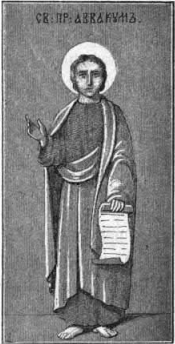
Аввакум, из колена Левиина, был певцом при храме и пророчествовал около 650-го года до Рождества Христова о нашествии Вавилонян, которое и совершилось при нем и во время которого он удалялся в Аравию, откуда возвратился в своё отечество по удалении от него врагов. Предсказывал и о падении врагов и ободрял благочестивых надеждою на спасение, готовое для них у Бога.
Habbakuk, of the tribe of Levi, was a singer at the temple and prophesied around the year 650 before the Birth of Christ concerning the invasion of the Babylonians, which took place in his time and during which he withdrew into Arabia, whence he returned to his fatherland after the enemies had withdrawn from it. He also foretold the fall of the enemies and encouraged the pious with the hope of salvation, prepared for them with God.
– Доколе, Господи, я буду взывать к Тебе, и Ты не слышишь, буду вопиять к Тебе о насилии, и Ты не спасаешь? – обращается к Богу Аввакум, изнывающий душою о нечестии своего народа, – для чего даёшь мне видеть злодейство и смотреть на бедствия?
– How long, O Lord, shall I cry to Thee, and Thou wilt not hear, shall I cry unto Thee of violence, and Thou wilt not save? – Habbakuk turns to God, his soul languishing over the iniquity of his people, – why dost Thou show me iniquity and cause me to behold trouble?
«Посмотрите между народами и внимательно вглядитесь, и вы сильно изумитесь… – прозирает пророк ответ Господа, – ибо Я сделаю во дни ваши такое дело, которому вы не поверили бы, если бы вам рассказывали… Ибо, вот, Я подниму Халдеев, народ жестокий и необузданный, который ходит по широтам земли, чтобы завладеть не принадлежащими ему селениями. Страшен и грозен он; быстрее барсов кони его и прытче вечерних волков; издалека прибывают всадники его, прилетают, как орёл, бросающийся на добычу. Весь он идёт для грабежа; устремив лицо своё вперёд, он забирает пленников, как песок. И над царями он издевается, и князья служат ему посмешищем; над всякою крепостью он смеётся: насыплет осадный вал и берет её… Тогда надмевается дух его, и он ходит и буйствует; сила его – бог его».
“Look among the nations and regard, and wonder marvelously… – the prophet foresees the Lord's answer, – for I will work a work in your days, which ye will not believe, though it be told you… For, lo, I raise up the Chaldeans, that bitter and hasty nation, which walketh through the breadth of the earth, to possess dwelling places that are not theirs. They are terrible and dreadful; their horses are swifter than leopards and more fierce than evening wolves; their horsemen come from far; they fly as an eagle that hasteth to devour. They come all for violence; their faces are set forward, and they gather captives as the sand. And they scoff at kings, and princes are a derision unto them; they laugh at every stronghold; they heap up earth and take it… Then his mind is puffed up, and he walketh and is wanton; his might is his god.”
– «Но не Ты ли издревле Господь Бог мой, Святой мой! – взывает к Богу пророк, содрогаясь от ужаса видения, – мы не умрём! Ты, Господи, только для суда попустил его. Скала моя! Для наказания Ты назначил его…»
– “Art Thou not from everlasting, O Lord my God, my Holy One! – the prophet cries out to God, shuddering with terror at the vision, – we shall not die! Thou, O Lord, hast ordained him for judgment. O my Rock! Thou hast appointed him for chastisement…”
«Чистым очам Твоим несвойственно глядеть на злодеяния, и смотреть на притеснение Ты не можешь; для чего же Ты смотришь на злодеев и безмолствуешь, когда нечестивец поглощает того, кто праведнее его?»
“Thou art of purer eyes than to behold evil, and canst not look on oppression; wherefore lookest Thou upon them that deal treacherously, and holdest Thy peace when the wicked devoureth the man that is more righteous than he?”
«Надменный человек, как бродящее вино, не успокаивается, так что расширяет душу свою, как ад, и как смерть он ненасытен, и собирает к себе все народы, и захватывает себе все племена».
“He who is proud, like unsettled wine, is not at rest, so that he enlargeth his desire as hell, and is as death and cannot be satisfied, and gathereth unto him all nations, and heapeth unto him all people.”
«Но не все ли они будут произносить о нем притчу и насмешливую песнь: горе тому, кто без меры обогащает себя не своим – надолго ли? И обременяет себя залогами!»
“Shall not all these take up a parable against him, and a taunting proverb against him: Woe to him that increaseth that which is not his! how long? and to him that ladeth himself with thick clay!”
«Так как ты ограбил многие народы, то и тебя ограбят все остальные народы за пролитие крови человеческой, за разорение страны, города и всех живущих в нем».
“Because thou hast spoiled many nations, all the remnant of the people shall spoil thee; because of men's blood, and for the violence of the land, of the city, and of all that dwell therein.”
«Камни из стен возопиют и перекладины из дерева будут отвечать им: – горе строящему город на крови и созидающему крепости неправдою!»
“The stone shall cry out of the wall, and the beam out of the timber shall answer it: – Woe to him that buildeth a town with blood, and establisheth a city by iniquity!”
«Господи! Услышал я слух Твой и убоялся, – молитвенно взывает пророк. – Господи! Соверши дело Твоё среди лет, среди лет яви его; во гневе вспомни о милости».
“O Lord! I have heard Thy report and was afraid, – the prophet cries out in prayer. – O Lord! Accomplish Thy work in the midst of the years, in the midst of the years make it known; in wrath remember mercy.”
«Бог от Фема грядёт и святой – от горы Фаран. Покрыло небеса величие Его, и славою Его наполнилась земля. Блеск ее, как солнечный свет; от руки Его лучи, и здесь тайник Его силы».
“God came from Teman, and the Holy One from Mount Paran. His glory covered the heavens, and the earth was full of His praise. His brightness was as the light; He had rays coming forth from His hand; and there was the hiding of His power.”
«Он стал, и поколебал землю; воззрел, и в трепет привёл народы; вековые горы распались, первобытные холмы опали; пути Его вечные».
“He stood, and measured the earth; He beheld, and drove asunder the nations; the everlasting mountains were scattered, the perpetual hills did bow; His ways are everlasting.”
«Ты выступаешь для спасения народа Твоего, для спасения помазанного Твоего. Ты сокрушаешь главу нечестивого дома, обнажая его от основания до верха».
“Thou wentest forth for the salvation of Thy people, for salvation with Thine anointed. Thou woundedst the head out of the house of the wicked, by laying open the foundation unto the neck.”
«Хотя бы не расцвела смоковница, и не было бы плода на виноградных лозах, и маслина изменила, и нива не дала пищи… но и тогда я буду радоваться о Господе и веселиться о Боге спасения моего».
“Although the fig tree shall not blossom, neither shall fruit be in the vines; the labour of the olive shall fail, and the fields shall yield no meat… yet I will rejoice in the Lord, I will joy in the God of my salvation.”
Пророк Аввакум умер в глубокой старости и погребён был на своей родине. Об обретении мощей его так говорит Созомен (кн. 7, гл. 29): «Тогда (при Феодосии Младшем) обретены были пророки – Аввакум и, спустя немного, Михей».
The prophet Habbakuk died in extreme old age and was buried in his homeland. Concerning the uncovering of his relics, Sozomen speaks thus (Book 7, ch. 29): “At that time (under Theodosius the Younger) the prophets were uncovered – Habbakuk and, a little later, Micah.”
«Тела обоих, как я слышал, указаны были Божественным сновидением Зевенну, бывшему в то время епископом церкви Элевферопольской. Имя месту, где обретён Аввакум, было Кела или прежний город Кила. От того города на 10 стадий отстоит местечко Вирафсатия, близ которого находился гроб Михея»23.
“The bodies of both, as I have heard, were revealed by a divine dream to Zebennus, who was at that time bishop of the church of Eleutheropolis. The name of the place where Habbakuk was uncovered was Kela, or the former city of Kila. At a distance of 10 stadia from that city lies the place called Viraphsatia, near which was the tomb of Micah”23.
Исе, родом из Антиохии Сирийской, был из числа тех 13-ти отцов Сирских, память которых святая Церковь чествует 7-го мая. Он жил в VI веке. Рукоположенный в епископа Цикланского24, он в плачевном состоянии нашёл свою паству, в которой преобладали языческие обычаи и суеверия, и где христианство, насаждённое здесь св. Ниною и процветавшее около двухсот лет после неё, теперь почти совершенно упало и нравственности христианской не оставалось почти и следов. Деятельно и ревностно предался святитель искоренению языческих суеверий и восстановлению благочестия, и неутомимые труды его Бог благословил успехом. Для утверждения веры в народе, он построил несколько новых храмов и основал несколько монастырей; а для ограждения своей паствы от влияния соседних народов-язычников Исе отправился с проповедью слова Божия к Осетинам и другим жителям, обитавшим в центре Кавказского хребта, и многих из них обратил ко Христу.
Ise, a native of Syrian Antioch, was one of those thirteen Syrian fathers whose memory the holy Church honors on May 7. He lived in the sixth century. Ordained Bishop of Tsilkani24, he found his flock in a lamentable state, in which pagan customs and superstitions prevailed, and where Christianity, planted here by St. Nina and flourishing for about two hundred years after her, had now almost completely fallen, and scarcely a trace of Christian morality remained. The Hierarch devoted himself actively and zealously to uprooting pagan superstitions and restoring piety, and God blessed his tireless labors with success. To strengthen the faith among the people, he built several new churches and founded several monasteries; and to protect his flock from the influence of neighboring pagan peoples, Ise set out to preach the word of God to the Ossetians and other inhabitants dwelling in the center of the Caucasus range, and converted many of them to Christ.
Не смотря на эти подвиги Апостольского служения, святитель никогда не оставлял и своих иноческих, аскетических подвигов. Труженическая и произрастившая богатые плоды жизнь его была увенчана мирною, блаженною кончиною. Предузнав её по откровению свыше, святитель собрал свой церковный клир, в последний раз преподал им своё духовное наставление, приобщился Святых Таин и, с воздетыми к небу руками, предал Богу свою душу. – Он был погребён в храме Божией Матери (в том, где древняя икона Её), и прославленный многими чудесами (продолжающимися и поныне) от нетленных останков его, причтён Церковью к лику святых.
Despite these labors of Apostolic service, the Hierarch never abandoned his monastic, ascetic struggles. His toilsome life, which produced abundant fruit, was crowned with a peaceful, blessed end. Having foreseen it through a revelation from on high, the Hierarch gathered his church clergy, gave them his spiritual instruction for the last time, partook of the Holy Mysteries, and, with his hands raised to heaven, commended his soul to God. — He was buried in the church of the Mother of God (the one containing Her ancient icon), and, glorified by many miracles (continuing to this day) from his incorrupt relics, he was numbered by the Church among the ranks of the saints.
Patericon. р. 144. В словаре святых (СПб. 1836 г., стр. 47), в указателе Киев. святыни (стр. 45) и в месяцеслове Вершинского (стр. 192. 375) – странности: «преставился 1264 г.», тогда как и повествователь Симон почил в 1226 г., а вышел из Печерской обители около 1204 г. См. мая 10 д.
Patericon, p. 144. In the Dictionary of Saints (St. Petersburg, 1836, p. 47), in the Index of Kiev Sanctity (p. 45), and in the Menologion of Vershinsky (pp. 192, 375) — there are oddities: "he reposed in 1264," whereas the narrator Simon reposed in 1226, and left the Kiev Caves monastery around 1204. See May 10.
О годе смерти Душана справедливы замечания Майкова, стр. 241. 242. В грамоте 10 января 1356 г. пишется: «царская власть моя предписывает и повелевает, что если мать царского величества моего, государыня царица, захочет взять что-либо у них (Дубровичан) из торга: то царское величество моё даёт им за то что-нибудь и без выкупа не берёт». (Споменн. № 44). Мать Уроша была царица, а мать Душана – королева. След. янв. 10-го 1356 г. был царём и распоряжался с властью царской Урош, а Душана уже не было на свете. В синаксаре (л. 74) – странная ошибка и о времени смерти Душана и о летах его. У Миклошича мать Уроша первая царица Елисавета, в монашестве Евгения (Monum. № 234).
On the year of Dušan's death, the remarks of Maikov, pp. 241, 242, are correct. In a charter of January 10, 1356, it is written: "my royal authority prescribes and commands that if the mother of my royal majesty, the Lady Tsaritsa, wishes to take anything from them (the people of Dubrovnik) from the market: then my royal majesty gives them something for it and does not take it without payment." (Spomennitsy, No. 44). Uroš's mother was a tsaritsa, while Dušan's mother was a queen. Consequently, on January 10, 1356, Uroš was tsar and exercised authority with tsarist power, and Dušan was no longer alive. In the Synaxarion (fol. 74) — a strange error both about the time of Dušan's death and about his years. In Miklosich, Uroš's mother is the first tsaritsa Elizabeth, in monasticism Eugenia (Monum. No. 234).
Так в грамоте 1357 г. на монетах: Urosius imperator, Урош царь. Гласник III, 231–233. VI, 195–198. VII, 208–215. Зап. археол. общ. IX, 175. 176.
Thus in a charter of 1357, on coins: Urosius imperator, Uroš Tsar. Glasnik III, 231–233; VI, 195–198; VII, 208–215; Notes of the Archaeological Society, IX, 175, 176.
В памятниках Аврамовича № 45. 49. 50. 53. 54. В грамоте № 47. от 24 апр. 1357 г.: «кнезове царьства ми, кои дрьжеть кукю царьства ми».
In the Monuments of Avramović, Nos. 45, 49, 50, 53, 54. In charter No. 47, of April 24, 1357: "the knezes of my tsardom, who hold the court of my tsardom."
Миклошича топит. № 148. Гласник II, 197–199. В 1332 г. Душан уступил Рагузянам Стон, с тем, чтобы платили за него 1000 перпер в год. Фанатизм папизма скоро потребовал, дабы иноки обители св. Николая оставили Стон; при этом обещали давать им 400 перпер за два года. В 1347 г. те переселились в Иерусал. обитель св. Михаила, построенную кн. Милютиным. Скоро православие и совсем вытеснено было из Стона. Макушев о Рагузе, стр. 10. 11. 69–71. В Чтен. общ. ист. 1865 г. Об отношении ц. Душана к православию летоп. в Гласнике V, 67. 68. У Норова триодь цветная 1374 г., писанная «святому архистратигу Церкве Сербскые у Ерусалиме», (Жур. мин. просв. 1836 г., ч. XI, 537).
Miklosich, Monumenta, No. 148. Glasnik II, 197–199. In 1332, Dušan ceded Ston to the Ragusans, on condition that they pay 1000 perpers annually for it. The fanaticism of papism soon demanded that the monks of the monastery of St. Nicholas leave Ston; they promised to give them 400 perpers for two years. In 1347, they moved to the Jerusalem monastery of St. Michael, built by Prince Milutin. Soon Orthodoxy was completely driven out of Ston. Makushev on Ragusa, pp. 10, 11, 69–71. In Readings of the Society of History, 1865. On the relation of Tsar Dušan to Orthodoxy, chronicle in Glasnik V, 67, 68. In Norov, a Pentecostarion of 1374, written "to the holy Archistrategos of the Serbian Church in Jerusalem" (Journal of the Ministry of Public Education, 1836, part XI, 537).
Изв. акад. V, 400. О советах Урошу летоп. у Раича II, 792. Шафарика памят., стр. 54. Arkiu za povestu. III, 54. Византийцы у Стриттера Serbica р. 334. 350.
Bulletin of the Academy, V, 400. On the counsels to Uroš, chronicle in Rajić II, 792. Šafárik, Monuments, p. 54. Arkiu za povestu, III, 54. Byzantine writers in Stritter, Serbica, pp. 334, 350.
У о. Порфирия (стр. 55) хрисовул деспота Иоанна Углеша о построении Симонопетрского монастыря, по случаю исцеления дочери, в октябре 6872 (1364 г.). Грамота деспота Иоанна Углеша 1368 г. о подчинении церквей Греческому патриарху – inter acta patriar. constant. 1, 558=566. Vinidub. 1860. У Григоровича (стр. 52) «кесарь Углешь, господарь Серблем и Подунавию» в 6931 (1423) даёт Хиландарю село Вране. Но здесь в означении года, ошибка; по летописи Углешь был убиен на Косовом поле в 1370 г. (Гласник V, 76).
In Fr. Porfiry (p. 55), a chrysobull of Despot John Uglješa on the construction of the Simonopetra Monastery, on the occasion of the healing of his daughter, in October 6872 (1364). Charter of Despot John Uglješa of 1368 on the subordination of churches to the Greek Patriarch — inter acta patriarch. constant. 1, 558=566. Vinidub. 1860. In Grigorovich (p. 52), "Caesar Uglješ, lord of the Serbs and the Danube region" in 6931 (1423) gives the village of Vrane to Hilandar. But here there is an error in the indication of the year; according to the chronicle, Uglješ was killed on the Field of Kosovo in 1370 (Glasnik V, 76).
Раича ист. 2, 613. 648. 676. Серб. летоп. в Гласнике V, 68–72. В Трескавце камень с надписью: «м. генвара успе рабь Бож. Дабиживь, инохиарь (виночерпий) цара Уроша вьсе Срьбскые земьле, Грьчьские и Поморьские, в л. 6875» (1367), за 10 месяцев до страдальческой кончины царя. (Григоровича, стр. 139). В 1320 г. кнез Дабижив» посол короля в Рагузы (Споменницы из Дубровачке архиве 2, 2. Белгр. 1862). Дабижив внесён и в Сапочанский синодик. См. Гильфердинга Сербские имена запис. в помяннике Сопочанском – в изв. акад. VII, 325–330.
Rajić, History, 2, 613, 648, 676. Serbian chronicle in Glasnik V, 68–72. In Trescavac, a stone with the inscription: "In the month of January, the servant of God Dabiživ, inochiar (cupbearer) of Tsar Uroš of all Serbian lands, Greek and Maritime, reposed, in the year 6875" (1367), 10 months before the martyric end of the tsar. (Grigorovich, p. 139). In 1320, Knez Dabiživ was an envoy of the king to Ragusa (Spomennitsy from the Dubrovnik Archive, 2, 2. Belgrade, 1862). Dabiživ is also entered in the Sopoćani Synodicon. See Hilferding, Serbian names recorded in the Sopoćani memorial book — in Bulletin of the Academy, VII, 325–330.
Выписка из жития Урошева – у Гильфердинга, в зап. геогр. общ. XIII, 223–225. Летоп. в Гласнике V, 72–75. Заметка в типике у Миклошича: monumenta Serbica р. 177.
Extract from the Life of Uroš — in Hilferding, Notes of the Geographical Society, XIII, 223–225. Chronicle in Glasnik V, 72–75. A note in the Typikon in Miklosich: Monumenta Serbica, p. 177.
Зап. геогр. общ. XIII, 325. Летопись в Гласнике V, 76. 77. «Исайя мниха о крале Влъкашине» у Миклошича: «chrestomathia palæoslovenica, Vindob. 1864. По цароставнику (Раич II, 693) убит сент. 26-го 6879 (1370).
Notes of the Geographical Society, XIII, 325. Chronicle in Glasnik V, 76, 77. "Isaiah the Monk on King Vukašin" in Miklosich: Chrestomathia palaeoslovenica, Vindob. 1864. According to the Tsarostavnik (Rajić II, 693), he was killed on September 26, 6879 (1370).
«Город Цилкани находился в Карталинии у подошвы гор, носящих название Тини, близ речки Нареквави, впад. в Арагву: теперь на месте прежнего города существует большое и довольно богатое селение, в котором уцелел храм во имя Божией Матери, построенный ещё в IV стол. сыном царя Мириана. В этом храме есть сокровище первых веков христианства: ветхая икона Божией Матери древнейшего письма на доске, как известно по преданию, из яслей Вифлеемских и относящаяся ко времени принятия Грузинами веры христианской».
"The city of Tsilkani was located in Kartalinia at the foot of the mountains bearing the name Tini, near the river Narekvari, which flows into the Aragvi; now on the site of the former city there is a large and rather wealthy village, in which a church in the name of the Mother of God has survived, built back in the 4th century by the son of King Mirian. In this church there is a treasure from the first centuries of Christianity: an ancient icon of the Mother of God of the most ancient painting on a board, as is known from tradition, from the manger of Bethlehem and dating to the time of the Georgians' acceptance of the Christian faith."