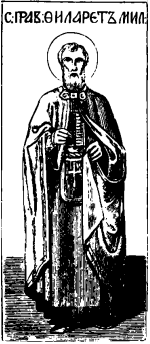
«Блаженны милостивые, так как они помилованы будут» (Мф.5:7), – сказал Господь. И это сбылось на блаженном, милостивом Филарете, который за свою великую милость к нищим и сам получил от Бога превеликое помилование и богатое воздаяние и в настоящей жизни и в будущей, как и свидетельствует об этом его блаженная жизнь.
"Blessed are the merciful, for they shall obtain mercy" (Mt. 5:7), said the Lord. And this was fulfilled upon the blessed, merciful Philaret, who for his great mercy to the poor himself received from God great mercy and rich recompense both in this life and in the life to come, as his blessed life bears witness.
Этот блаженный Филарет, родом из Галатии, жил в Пафлагонии (провинции Малой Азии). В городе Амнии. Благородные родители его, Георгий и Анна, с детства воспитали его в благочестии и страхе Божием, и потому жизнь его украсилась целомудрием и всякими другими добродетелями.
This blessed Philaret, a native of Galatia, lived in Paphlagonia (a province of Asia Minor), in the city of Amnia. His noble parents, George and Anna, raised him from childhood in piety and the fear of God, and therefore his life was adorned with chastity and every other virtue.
Достигнув совершенного возраста, он вступил в супружество с честной, благородной и богатой девицей, по имени Феозвою, и Бог благословил их рождением трёх детей, сына – Иоанна и дочерей – Ипатии и Еванфии. Благословил Бог блаженного Филарета, как и в прежние времена праведного Иова, и умножением его имущества, и изобильным богатством. Были у него и многочисленные стада, и села, и нивы плодоносные, и изобилие во всем, и многое множество рабов и рабынь, служивших при доме его. И был известен Филарет, как один из знаменитых вельмож той страны.
Having reached full age, he entered into marriage with an honorable, noble, and wealthy maiden named Theosebia, and God blessed them with the birth of three children: a son, John, and daughters, Hypatia and Evanthia. God blessed the blessed Philaret, as in former times He had blessed the righteous Job, with an increase of his possessions and abundant wealth. He had numerous herds, villages, fruitful fields, abundance in everything, and a great multitude of male and female servants who served in his house. And Philaret was known as one of the famous nobles of that land.
Обладая великим богатством и видя, как в то же время бедствуют многие от крайней нищеты, блаженный Филарет чувствовал к ним сострадание и в умилении души говорил себе: – неужели так много благ принял я от руки Господней только ради того, чтобы самому жить в наслаждении и в угождении своему чреву? Не должен ли я разделить дарованное мне Богом великое богатство с нищими, вдовами, сиротами, странниками и убогими, которых Господь на Страшном суде перед ангелами и людьми не постыдится назвать Своими братьями, так как Он говорит: «поелику вы сделали сие одному из сихбратьев Моих меньших, то сделали Мне» (Мф.25:40). И какую пользу в день Суда принесут мне все имения мои, если я, по скупости своей, их для себя одного сохраню, так как не получат милости те, кто не сотворил милости; будут ли мои имения для меня в будущей жизни бессмертною пищей и питием? Послужит ли мне там моя мягкая одежда нетленным одеянием? Нет, этого не будет. Ибо так говорит Апостол: «мы ничего не принесли в мир; явно, что ничего не можем и вынести из него» (1Тим.6:7).
Possessing great wealth and seeing how many at that same time suffered from extreme poverty, the blessed Philaret felt compassion for them and said to himself with compunction of soul: "Have I received so many good things from the hand of the Lord only to live in pleasure and gratify my own belly? Ought I not to share the great wealth given me by God with the poor, the widows, the orphans, the strangers, and the needy, whom the Lord at the Dread Judgment, before angels and men, will not be ashamed to call His brothers, for He says: 'Inasmuch as ye have done it unto one of the least of these my brethren, ye have done it unto me' (Mt. 25:40). And what profit will all my possessions bring me on the day of judgment, if I, through my stinginess, keep them for myself alone, since those who have not shown mercy will not obtain mercy? Will my possessions become for me immortal food and drink in the life to come? Will my soft clothing serve me there as an incorruptible garment? No, this will not be. For the Apostle says: 'For we brought nothing into this world, and it is certain we can carry nothing out' (1 Tim. 6:7)."
И так, если ничего из нашего земного имущества взять с собою мы отсюда не можем, то самое лучшее, это – отдать его Богу как бы взаймы руками нищих, а Бог никогда не оставит ни меня, ни жены моей, ни детей моих. В этом уверяет меня пророк Давид, говоря: «я был молод и состарился, и не видел праведника оставленным и потомков его просящими хлеба» (Пс.36:25).
"And so, if we can take nothing from our earthly possessions with us from here, the best thing is to give it to God, as it were on loan, through the hands of the poor, and God will never forsake either me, or my wife, or my children. Of this the Prophet David assures me, saying: 'I have been young, and now am old; yet have I not seen the righteous forsaken, nor his seed begging bread' (Ps. 36:25)."
И таким образом размышляя в глубине души своей, блаженный Филарет стал милостив к нищим, как отец к своим детям, пропитывал голодных, одевал нагих, принимал в свой дом странников и с любовью и радостью доставлял им всякое успокоение. И был этот праведный человек подобен древнему странноприимцу Аврааму и нищелюбцу Иову. Поэтому невозможно было утаиться под спудом такому светильнику, украшенному делами милосердия, и прославился он по всей стране, как город, красующийся на вершине горы. И к нему в дом, поистине, как в город – надёжное прибежище, спешили приютиться все нищие и убогие. И каждому из них чего требовалось: пищи ли, одежды ли, коня, вола, осла или другой какой-либо вещи, то и доставлял ему Филарет с благотворительною щедростью.
And thus reflecting in the depths of his soul, the blessed Philaret became merciful to the poor, as a father to his children: he fed the hungry, clothed the naked, received strangers into his house, and with love and joy provided them with every comfort. And this righteous man was like the ancient hospitable Abraham and the lover of the poor, Job. Therefore it was impossible for such a lamp, adorned with works of mercy, to remain hidden under a bushel, and he became renowned throughout the whole country, like a city set on a hill. And to his house, truly as to a city—a sure refuge—all the poor and needy hastened to find shelter. And whatever each of them required—whether food, clothing, a horse, an ox, a donkey, or any other thing—Philaret provided with charitable generosity.
Но вот пришло время, когда все на пользу человека устраивающий человеколюбец Господь допустил и Филарета праведного, подобно древнему угоднику своему Иову, подвергнуться искушению, ради того, чтобы и его терпение могло проявиться подобно терпению Иова, и ради того, чтобы очищенный искушением, как золото в горниле, и он явился бы достойным рабом Божиим. Началось с того, что блаженный Филарет впал в нищету; однако же это не изменило его сострадательности и милосердия к нищим, он продолжал делиться всем, что имел, с нуждавшимися.
But the time came when the Lord, the Lover of mankind, who orders all things for man's benefit, allowed even the righteous Philaret, like His ancient servant Job, to be subjected to temptation, so that his patience might be manifested like that of Job, and so that, purified by temptation as gold in a furnace, he might appear a worthy servant of God. It began with the blessed Philaret falling into poverty; yet this did not change his compassion and mercy toward the poor; he continued to share everything he had with those in need.
В это время, попущением Божиим, напали Измаильтяне на ту страну, в которой жил Филарет, и, подобно вихрю сокрушающему и пламени пожигающему, опустошили её и пленили при том многое множество всякого народа; уведены были и у Филарета все его стада овец и волов, коней и ослов, и забраны были в плен многие из рабов его. Тогда дошёл он до такого разорения, что у него осталось, наконец, только двое рабов, пара волов, лошадь и корова, так как все его имущество было или роздано бедным его щедрою рукою, или разграблено Измаильтянами; сёлами его и садами, и нивами овладели живущие вокруг земледельцы, иные – мольбами, иные – насилием. И осталась у Филарета только одна нива, да тот дом, в котором он жил. И, претерпевая нищету и лишения, никогда не скорбел и не роптал этот добрый человек, и, как второй Иов праведный, ни в чём не согрешил перед Богом (ни даже словом), и «не произнёс ничего неразумного о Боге» (Иов.1:22). – Но радовался он нищете своей не менее того, как радуется богатый человек богатству своему, так как мудро разумел в душе своей, что бедность есть более верный путь к спасению, чем богатство, как и Господь сказал, что «трудно богатому войти в Царство Небесное» (Мф.19:23).
At that time, by God's permission, the Ishmaelites attacked the country where Philaret lived, and like a destroying whirlwind and a consuming flame, they laid it waste and took captive a great multitude of people. All of Philaret's herds of sheep, oxen, horses, and donkeys were carried off, and many of his servants were taken captive. He was reduced to such ruin that at last he had only two servants, a pair of oxen, a horse, and a cow, for all his property had either been distributed to the poor by his generous hand or plundered by the Ishmaelites; his villages, gardens, and fields were taken over by the neighboring farmers, some by entreaty, others by force. Only one field remained to Philaret, and the house in which he lived. And enduring poverty and deprivation, this good man never grieved or murmured, and like the second righteous Job, he sinned in nothing before God (not even in word), and "did not charge God foolishly" (Job 1:22). Rather, he rejoiced in his poverty no less than a rich man rejoices in his wealth, for he wisely understood in his soul that poverty is a surer path to salvation than wealth, as the Lord said: "It is hard for a rich man to enter the kingdom of heaven" (Mt. 19:23).
Однажды, взяв своих двух волов, Филарет пошёл орать оставшуюся у него ниву. Работая, он восхвалял и радостно благодарил Бога, что начинает, по заповеди Его святой, в поте лица своего есть хлеб свой, и что труд спасает его от лености и праздности, этих учительниц всякому злу. Вспоминал он и слова Апостола, возбраняющего есть ленивому и любящему праздность человеку: «если кто не хочет трудиться, тот и не ешь» (2Фес.3:10).
Once, taking his two oxen, Philaret went to plow the field that remained to him. While working, he praised and joyfully thanked God that he was beginning, according to His holy commandment, to eat his bread in the sweat of his brow, and that labor saved him from idleness and sloth, those teachers of every evil. He also recalled the words of the Apostle, who forbids the lazy and idle man to eat: "If any would not work, neither should he eat" (2 Thess. 3:10).
И возделывал свою землю блаженный, чтобы не оказаться ему недостойным есть хлеб свой.
And the blessed one tilled his land, lest he be found unworthy to eat his bread.
В тот же день орал свою ниву и один поселянин. И вот, внезапно один из волов его захворал и пал. Горько плакал земледелец и скорбел неутешно, тем более, что и волы те не принадлежали ему; но он попросил их на время у соседа. Тогда вспомнил он о блаженном Филарете и сказал: «Ах, если бы не обнищал сам этот милостивый нищелюбец, то я пошёл бы к нему и получил бы от него, наверное, не только одного, но даже двух волов; но он и сам теперь беден и убог, и не имеет чем помочь нуждающимся. Однако же, всё-таки пойду к нему, он хотя поскорбит вместе со мной и хоть словом своим утешит меня и облегчит мою тяжёлую скорбь». – И взяв свой посох, поселянин отправился к блаженному Филарету и, встретив его за работой в поле, поклонился ему и со слезами рассказал ему о своём горе – неожиданной гибели вола. Блаженный же Филарет, видя, как огорчён этот человек, сейчас же выпряг из-под ярма своего вола и отдал его этому человеку, говоря: «Возьми, брат, этого моего вола и иди обрабатывать свою землю, благодаря Бога». С благодарностью поклонился блаженному поселянин, принимая его милосердное подаяние и сказал: «Господин мой! Велико и дивно твоё решение, и угодно Богу твоё милосердие, но не хорошо разлучать двух волов, трудившихся вместе, и с одним трудно будет обойтись тебе самому.
On the same day, a certain peasant was also plowing his field. And suddenly one of his oxen fell sick and died. The farmer wept bitterly and grieved inconsolably, all the more because the oxen were not his own; he had borrowed them from a neighbor. Then he remembered the blessed Philaret and said: "Ah, if only this merciful lover of the poor had not himself become impoverished, I would go to him and would surely receive from him not one, but even two oxen; but he himself is now poor and needy, and has nothing with which to help those in need. Yet I will go to him nonetheless; he will at least grieve with me and comfort me with his word, and lighten my heavy sorrow." And taking his staff, the peasant set out for the blessed Philaret, and meeting him at work in the field, he bowed to him and with tears told him of his misfortune—the unexpected death of his ox. The blessed Philaret, seeing how distressed this man was, immediately unyoked his own ox from the plow and gave it to the man, saying: "Take, brother, this ox of mine and go till your land, giving thanks to God." The peasant bowed to the blessed one with gratitude, accepting his merciful gift, and said: "My lord! Great and wonderful is your resolve, and your mercy is pleasing to God, but it is not good to separate two oxen that have labored together, and with only one it will be difficult for you yourself to manage."
Праведник же отвечал: «Возьми, брат, вола, которого я тебе дарю, и иди с миром, у меня же остаётся ещё один вол». Поклонился земледелец блаженному до земли и, взяв вола, отошёл, славя Бога и благодаря милостивого человека. А Филарет, взяв оставшегося вола и взвалив ярмо на свои плечи, пошёл домой. Когда же он подходил к воротам своего дома, то жена его, увидев вола, идущего впереди, а мужа своего, следующего за ним с ярмом на своих плечах, сказала ему: «Господин мой! Где же у тебя другой вол?» Он же отвечал: «В то время, как я отдыхал после работы, а волы паслись на свободе, то один из них отделился и заблудился, а может быть, что кто-нибудь и взял его, и увёл к себе».
The righteous man replied: "Take, brother, the ox which I give you, and go in peace; I still have one ox left." The farmer bowed to the blessed one to the ground, and taking the ox, departed, glorifying God and thanking the merciful man. And Philaret, taking the remaining ox and placing the yoke on his own shoulders, went home. When he approached the gate of his house, his wife, seeing the ox walking ahead and her husband following with the yoke on his shoulders, said to him: "My lord! Where is your other ox?" He replied: "While I was resting after work, and the oxen were grazing freely, one of them separated and got lost, or perhaps someone took it and led it away."
Услышав это, сильно огорчилась жена Филарета и поспешила послать сына своего разыскать пропавшего вола. Мальчик же, обойдя многие нивы и поля, нашёл, наконец, отцовского вола в ярме у того земледельца и, признав своего вола, с гневом сказал земледельцу: «Как смел ты чужого вола под своё ярмо подвести? Где и каким образом ты достал этого вола и к своему припрёг? Разве это не тот самый вол, который затерялся у моего отца? А ты, найдя его, похитил, как волк, и присвоил его себе… Отдай мне вола, а если не отдашь, то тебя будут судить, как вора…»
Hearing this, Philaret's wife was greatly distressed and hastened to send her son to search for the lost ox. The boy, having gone around many fields and meadows, finally found his father's ox yoked to the peasant's plow, and recognizing his ox, said angrily to the peasant: "How dare you put another man's ox under your yoke? Where and how did you get this ox and yoke it with your own? Is this not the very ox that was lost from my father? And you, finding it, stole it like a wolf and took it for yourself... Give me back the ox, and if you do not, you will be tried as a thief..."
Земледелец же кротко ему сказал: «Не гневайся на меня, юноша, сын святого отца, и не согреши, подымая на меня руку! Ведь это отец твой сам на мою беду и нищету обратил своё милосердие и добровольно дал мне этого вола своего, так как мой вол, работая под ярмом, вдруг неожиданно пал».
The peasant said to him gently: "Do not be angry with me, young man, son of a holy father, and do not sin by raising your hand against me! For your father himself, out of mercy for my misfortune and poverty, freely gave me this ox of his, since my ox, while working under the yoke, suddenly and unexpectedly died."
Услышав это, юноша устыдился своих гневных слов неповинному человеку и поспешил возвратиться домой и рассказать обо всем этом своей матери. Она же, выслушав его, со слезами воскликнула: «Горе мне, бедной жене немилостивого мужа!» И рвала на себе волосы и, с криком и воплями прибежав к своему мужу, упрекала его: «Жестокий ты и бесчеловечный человек! Зачем ты задумал преждевременно уморить нас голодом? Вот, за грехи наши, лишились мы всех наших имений, но милующий и грешников Господь оставил нам двух волов, чтобы с помощью их могли мы пропитать детей наших; ты же, живший прежде в большом богатстве и никогда не работавший своими руками, обленился и не хочешь трудиться и возделывать землю, но хочешь отдыхать и сладко почивать в своей комнате, – и потому не ради Бога отдал ты своего вола поселянину, но себя самого ради: чтобы не трудиться впрягать его в ярмо, а жить в лености и праздности. Однако же, какой ответ ты дашь Богу, если я и дети твои погибнем по причине твоей лености?»
Hearing this, the youth was ashamed of his angry words to the innocent man and hastened to return home and tell his mother all about it. She, having heard him, cried out with tears: "Woe is me, the poor wife of a merciless husband!" And she tore her hair and, running to her husband with cries and lamentations, reproached him: "Cruel and inhuman man! Why have you planned to starve us to death prematurely? Behold, for our sins we have been deprived of all our possessions, but the Lord, Who has mercy even on sinners, left us two oxen, that with their help we might feed our children; but you, who formerly lived in great wealth and never worked with your own hands, have grown lazy and do not wish to labor and till the earth, but wish to rest and sleep sweetly in your room—and therefore you gave your ox to the peasant not for God's sake, but for your own sake: so that you might not trouble yourself to yoke him to the plow, but live in idleness and sloth. Yet what answer will you give to God, if I and your children perish because of your laziness?"
Взглянув на жену свою, с кротостью отозвался блаженный Филарет: «Послушай, что повелевает нам Бог, богатый милостью: воззрите на птиц небесных, которые не сеют, не жнут и в житницы не собирают, а Отец ваш Небесный питает их (Мф.6:26); не пропитает ли Он же и нас, более дорогих в глазах Его, Отец наш, Который обещает сторицею воздать тем, которые ради Него и Евангелия раздают имущество своё бедным? Размысли же ты, о, жена моя, если за одного вола мы приобретём сто, то зачем нам скорбеть о том воле, которого мы во имя господа отдали нуждавшемуся? – Говорил же это милостивый человек не потому, что он утешал себя надеждою на воздаяние сторицей в земной жизни, но для того, чтобы успокоить малодушную жену свою. И она замолкла, не находя возражений на благоразумные слова своего мужа.
Looking upon his wife, the blessed Philaret answered with meekness: "Listen to what God, rich in mercy, commands us: Behold the birds of the air, which neither sow, nor reap, nor gather into barns, and your heavenly Father feeds them (Mt. 6:26); will He not also feed us, who are more precious in His eyes, our Father, Who promises to repay a hundredfold those who, for His sake and the Gospel's, distribute their goods to the poor? Consider then, O my wife, if for one ox we gain a hundred, why should we grieve over that ox which we gave in the name of the Lord to one in need?"—The merciful man spoke thus not because he consoled himself with the hope of a hundredfold reward in this earthly life, but in order to calm his faint-hearted wife. And she fell silent, finding no reply to her husband's wise words.
Не прошло после того и пяти дней, как и тот вол, которого подарил блаженный Филарет поселянину, съевши в поле ядовитое растение (называемое чемерица-еллевор), пал и издох. Это привело в недоумение поселянина, и снова придя к Филарету, он сказал ему: «Господин, согрешил я пред тобою и перед детьми твоими, что разлучил пару волов твоих; верно, потому и не допустил меня Праведный Бог получить пользу от вола твоего: вот, объелся он какого-то зелья и издох…
Not five days had passed after that, when the ox which the blessed Philaret had given to the peasant, having eaten a poisonous plant in the field (called hellebore), fell and died. This perplexed the peasant, and coming again to Philaret, he said to him: "Master, I have sinned against you and against your children, in that I separated the pair of your oxen; surely for this reason the Righteous God did not permit me to receive benefit from your ox: behold, he ate some herb and died…"
Ничего не отвечал на это поселянину боголюбивый и милостивый нищелюбец, блаженный Филарет, но поспешил привести к нему оставшегося вола и, отдав его ему, сказал: «Возьми, брат, этого вола и уведи его; я же должен отбыть в дальнюю страну и не хочу, чтобы рабочий вол оставался без меня в дому моем праздным». И сказал это блаженный ради того, чтобы тот человек не отказался принять от него и другого вола. И принял вола поселянин и возвратился в дом свой, удивляясь милосердию великому блаженного человека. Когда же узнали об этом домашние Филарета, то стали горько плакать дети его и мать их и говорили: «По всей правде не милосерд отец наш и не любит детей своих, потому что он расточает наше последнее имущество; один только вол оставался у нас в доме, чтобы не умереть нам от голода, и того отдал он чужому человеку».
The God-loving and merciful lover of the poor, the blessed Philaret, answered the peasant nothing to this, but hastened to bring him the remaining ox and, giving it to him, said: "Take, brother, this ox and lead it away; for I must depart to a distant country, and I do not wish that a working ox should remain idle in my house without me." And the blessed one said this so that the man might not refuse to accept the other ox from him as well. And the peasant took the ox and returned to his house, marveling at the great mercy of the blessed man. When Philaret's household learned of this, his children and their mother began to weep bitterly and said: "Truly our father is not merciful and does not love his children, for he squanders our last possessions; only one ox remained in our house, that we might not die of hunger, and that he has given to a stranger."
Видя скорбь и слезы детей своих, почтенный отец обратился к ним с такими словами: «Что скорбите вы, дети мои, и себя и своё сердце надрываете? Зачем называете меня безжалостным и думаете, что я хочу уморить вас голодом? А я, между тем, сохраняю в одном месте, которое неизвестно вам, такое богатство и такие сокровища, которых достанет вам, даже если вы и сто лет проживёте без труда и не заботясь ни о чём, так как и сам я не знаю и счета тому сокрытому богатству…
Seeing the grief and tears of his children, the venerable father turned to them with these words: "Why do you grieve, my children, and tear yourselves and your hearts? Why do you call me heartless and think that I wish to starve you? Yet I am keeping in a place unknown to you such wealth and such treasures as will suffice for you, even if you live a hundred years without labor and without care for anything, for I myself do not know the count of that hidden wealth…"
И говоря это, не обманывал детей своих праведник, но по истине прозирал своим духовным зрением то, чему предстояло сбыться впоследствии.
And in saying this, the righteous man did not deceive his children, but truly foresaw with his spiritual sight what was to come to pass afterward.
В это время последовало царское повеление, чтобы всем воинам собраться в свои полки и выступить против нечестивых варваров, восставших на Греческую империю, и чтобы всякий воин имел хорошее вооружение и по два коня. Причислен был к одному из тех полков и один бедный воин, именем Мусилий, у которого был только один конь, и тот за день до представления в полк заболел и пал. Не имея средств купить коня, бедный воин явился к Филарету и сказал ему: господин мой Филарет, сжалься надо мною, помоги мне. Знаю я, что ты сам обнищал и у тебя самого только один конь, но все-таки прошу тебя, умилосердись надо мною, дай мне и того твоего коня, чтобы не попасться мне в руки тысящника, и чтобы не избил он меня жестоко…
At this time a royal decree went forth that all soldiers should assemble in their regiments and march against the impious barbarians who had risen against the Greek Empire, and that every soldier should have good equipment and two horses. To one of those regiments was assigned a certain poor soldier, named Musilius, who had only one horse, and that horse fell ill and died the day before he was to report to the regiment. Having no means to buy a horse, the poor soldier came to Philaret and said: "My master Philaret, have mercy on me, help me. I know that you yourself have become poor and have only one horse, but still I beseech you, have compassion on me, give me even that horse of yours, that I may not fall into the hands of the captain, and that he may not beat me cruelly…"
И сказал ему на это блаженный Филарет: «Возьми, брат, коня моего и иди с миром, но только знай, что не ради страха наказания от тысящника даю я его тебе, а ради милости Божией». И принял воин коня от святого и ушёл от него, славя Господа.
And the blessed Philaret said to him: "Take, brother, my horse and go in peace, but know that I give it to you not out of fear of punishment from the captain, but for the sake of God's mercy." And the soldier took the horse from the saint and departed from him, glorifying the Lord.
И осталось тогда у святого Филарета всего имущества только корова с телёнком, да осел, да пчёл несколько ульев. Между тем один бедняк из дальней стороны, услышав о милостивом Филарете, пришёл к нему и стал просить, говоря: «Господин мой, желаю, чтобы дал ты мне одного телёнка из стада твоего, чтобы и мне послужил твой дар в благословение от тебя, потому что мне известно, что даяние твоё приносит благословение в дом и обогащает его всячески».
Then of all his possessions, the holy Philaret had left only a cow with a calf, a donkey, and a few hives of bees. Meanwhile, a certain poor man from a distant region, hearing of the merciful Philaret, came to him and began to beg, saying: "My master, I desire that you give me one calf from your herd, that your gift may serve me as a blessing from you, for I know that your giving brings a blessing upon the house and enriches it in every way."
С радостью привёл тогда своего единственного телёнка блаженный Филарет и отдал его просящему, говоря: «Господь да ниспошлёт тебе великое благословение, брат, и да даст тебе изобилие во всем, что тебе требуется!» И поклонился Филарету тот человек и ушёл от него, уведя с собой телёнка.
With joy the blessed Philaret then brought his only calf and gave it to the supplicant, saying: "May the Lord send you a great blessing, brother, and grant you abundance in all that you need!" And the man bowed to Philaret and departed from him, leading away the calf.
Между тем корова, не видя своего телёнка, стала искать его и, не находя нигде, громко мычала, как бы возбуждая сожаление в домашних. И в самом деле, сильно огорчилась жена Филарета и со слезами упрекала его: «Кому и сколько ещё придётся терпеть от тебя? И кто не посмеётся над твоим безрассудством? Вижу я и верю теперь, что ты нисколько не заботишься обо мне, жене твоей, и детей своих заморил ты; не пожалел даже и бессловесного животного, корящего дитя своё, но без милосердия оторвал телёнка от сосцов матери, – и кого же ты этим облагодетельствовал? Дом свой лишил и озлобил, а того, кто выпросил у тебя телёнка, не обогатил, потому что и у него дитя без матери погибнет и у нас без телёнка своего корова тужить и реветь будет, какая же польза и нам и тому?»
Meanwhile, the cow, not seeing her calf, began to seek it, and finding it nowhere, lowed loudly, as if arousing pity in the household. And indeed, Philaret's wife was greatly grieved and reproached him with tears: "How many more must suffer from you, and for how long? Who will not mock your folly? I see and now believe that you care nothing for me, your wife, and you have starved your children; you did not even spare a dumb animal, mourning for its young, but mercilessly tore the calf from its mother's teats—and whom have you benefited by this? You have deprived and embittered your own house, and you have not enriched him who begged the calf from you, for his child will perish without its mother, and our cow will grieve and bellow without her calf—what profit then to us or to him?"
Слыша такие слова от жены своей, почтенный Филарет с кротостью ей отвечал: «Вот теперь ты истинную правду сказала, о, жена моя! Это правда, что не милостив я и не милосерд, так как я отлучил малого телёнка от его матери; но теперь я лучше поступлю…» И поспешив вслед за человеком, уведшим телёнка, Филарет стал звать его: «Возвратись человек, возвратись с телёнком, так как мать его не даёт нам покоя: мычит и ревёт у ворот дома».
Hearing such words from his wife, the venerable Philaret answered her meekly: "Now you have spoken the real truth, O my wife! It is true that I am not merciful and not compassionate, for I have separated the little calf from its mother; but now I will do better…" And hastening after the man who had led away the calf, Philaret began to call him: "Return, man, return with the calf, for its mother gives us no peace: she lows and bellows at the gate of the house."
Бедняк же, услышав это, подумал, что, верно, блаженный хочет отнять у него подаренного телёнка, и сказал сам себе: вот, горе моё, что не достоин я иметь в благословение от этого блаженного даже этого ничтожного животного; вероятно, он пожалел о нем и завет меня, чтобы отнять его у меня…
The poor man, hearing this, thought that the blessed one surely wished to take back the calf he had given, and said to himself: Behold, my misfortune, that I am not worthy to have even this insignificant animal as a blessing from this blessed man; doubtless he has regretted it and calls me back to take it from me…
И возвратился в дом Филарета человек с телёнком, который, увидев мать свою, побежал к ней, также и мать с радостным мычанием бросилась к нему, и он, припав к сосцам её, долго не отходил от неё. Увидев это, радовалась Феозва, жена Филарета, что телёнок был возвращён в дом. Блаженный же Филарет, увидев бедняка, печально стоявшего и не осмеливающегося даже выговорить ни слова, сказал ему: «Брат, жена моя сказала мне, что я согрешил, разлучив телёнка со своею матерью, и это она правду сказала. Поэтому возьми вместе с телёнком и мать его и иди себе; и Господь да благословит тебя и да умножит и в твоём доме, как в прежнее время и моё, стадо». – И принял человек корову с телёнком и пошёл к себе в радости. И благословил Бог дом его ради угодника Своего Филарета, и вскоре так умножил стадо его, что в нем насчитывалось уже до двухсот волов и дойных коров.
And the man returned to Philaret's house with the calf, which, seeing its mother, ran to her, and the mother also rushed to him with a joyful lowing, and he, pressing to her teats, did not leave her for a long time. Seeing this, Theozva, Philaret's wife, rejoiced that the calf had been brought back to the house. But the blessed Philaret, seeing the poor man standing sadly and not daring even to utter a word, said to him: "Brother, my wife told me that I sinned in separating the calf from its mother, and she spoke the truth. Therefore take the mother together with the calf and go your way; and may the Lord bless you and multiply your herd as He did mine in former times."—And the man took the cow with the calf and went home in joy. And God blessed his house for the sake of His servant Philaret, and soon multiplied his herd so that it numbered up to two hundred oxen and milk cows.
Вскоре после того наступил голод в той стране, где жил Филарет, и этот почтенный человек дошёл до последней крайности нищеты; ему уже не оставалось чем пропитать свою жену и детей, и тогда, взяв своего единственного осла, он пошёл в другую страну к одному другу своему и, взяв у него взаймы пшеницы 6 мер и навьючив её на осла, в радости возвратился в дом свой и насытил жену и детей. Когда он отдохнул дома после пути, то пришёл к нему нищий и попросил дать ему одно решето пшеницы. «Жена! – сказал тогда этот достойный подражатель Авраама, обращаясь к ней в то время, как она сеяла пшеницу, – я хотел бы дать этому нищему одну меры пшеницы…» Она же отвечала ему: «Подожди, пока насытятся твои дети и твоя жена, и прежде всего дай мне одну меры, и твоим детям по мере, и также – работнице нашей, а что останется сверх того, то отдай, кому хочешь». Он же, посмотрев на неё, засмеялся и сказал: «А на мою-то долю ты ничего не полагаешь?» Она же возразила: «Да ты ведь ангел, а не человек, и тебе пищи не требуется; если бы ты нуждался в пище, то не раздавал бы другим взятую взаймы пшеницу…»
Soon after that, a famine came upon the land where Philaret lived, and this venerable man reached the utmost extremity of poverty; he had nothing left with which to feed his wife and children. Then, taking his only donkey, he went to another country to a certain friend of his, and borrowing from him six measures of wheat and loading them on the donkey, he returned with joy to his house and fed his wife and children. When he had rested at home after the journey, a beggar came to him and asked him to give him one sieve of wheat. "Wife!" said this worthy imitator of Abraham, turning to her as she was sifting the wheat, "I would like to give this beggar one measure of wheat..." She answered him: "Wait until your children and your wife are satisfied, and first give me one measure, and your children each a measure, and also our maidservant; and what remains beyond that, give to whom you will." He, looking at her, laughed and said: "And for my portion you set aside nothing?" She retorted: "But you are an angel, not a man, and you need no food; if you needed food, you would not give away to others the wheat you borrowed..."
Он же, отсыпав 2 меры пшеницы, отдал их нищему. Тогда, выйдя из себя от огорчения и досады, жена Филарета закричала на него: «Ну, отсыпай нищему и третью меру, так как у тебя так много её». – Так и сделал блаженный Филарет: он отсыпал и третью меру, и отдал нищему, и отпустил его. А раздражённая жена его разделила оставшуюся пшеницу между собою и своими детьми. – Когда пшеница вся вышла, то, снова терпя голод с детьми, Феозва пошла к соседям, попросила у них полхлеба, приварила к нему лебеды и дала голодным детям и сама напиталась с ними, а старика-отца даже и не вспомнили они позвать покушать вместе с ними.
He, having measured out two measures of wheat, gave them to the beggar. Then, beside herself with grief and vexation, Philaret’s wife cried out at him: “Well, then, measure out a third measure to the beggar as well, since you have so much of it!” – And the blessed Philaret did so: he measured out a third measure as well, and gave it to the beggar, and sent him away. But his irritated wife divided the remaining wheat between herself and her children. – When the wheat was all gone, then, suffering hunger again with her children, Theozva went to the neighbors, asked them for half a loaf, boiled goosefoot into it, and gave it to the hungry children, and she herself ate with them, but they did not even remember to call the old father to eat together with them.
Между тем, услышав о бедственном положении блаженного Филарета, один из старых друзей его, богатый человек, послал ему 4 воза, нагруженных пшеницею, каждый по 10 мер (спудов), и при этом написал ему: «Возлюбленный брат наш, человек Божий, посылаю тебе 40 мер пшеницы на пропитание тебе и домашним твоим, а когда ты её издержишь, то пошлю тебе еще столько же; тебя же прошу молить за нас Бога».
Meanwhile, hearing of the distressed condition of the blessed Philaret, one of his old friends, a rich man, sent him four wagons loaded with wheat, each of ten measures (spudas), and wrote to him: “Our beloved brother, man of God, I send you forty measures of wheat for your sustenance and that of your household; and when you have spent it, I will send you as much again; and I beg you to pray to God for us.”
Приняв этот дар, блаженный поклонился до земли и, подняв руки и с благодарностью возведя глаза свои к небу, сказал: «Славлю и благодарю Тебя, Господи Боже мой, что не оставил меня, раба Твоего, и не презрел уповающего на Тебя!»
Receiving this gift, the blessed one bowed to the ground and, raising his hands and lifting his eyes to heaven with thanksgiving, said: “I praise and thank Thee, O Lord my God, that Thou hast not forsaken me, Thy servant, and hast not despised him who hopes in Thee!”
Видя такую милость Божию, успокоилась жена Филарета и с кротостью обратилась к нему: «Господин мой, дай мне пшеницы достаточно для меня и для детей наших, и также – чтобы возвратить соседям взятую у них в долг; ты же возьми свою часть и поступай с нею, как хочешь».
Seeing such mercy of God, Philaret’s wife grew calm and turned to him meekly: “My lord, give me enough wheat for myself and for our children, and also to repay the neighbors what we borrowed from them; but take your portion and do with it as you wish.”
Филарет так и поступил, по словам жены своей: разделил пшеницу и, взяв себе 5 мер, в продолжение двух дней раздал всю свою долю бедным. Это снова разгневало жену его, и она не захотела даже вместе с ним кушать, но обедала с детьми отдельно и скрытно от него. Однажды нечаянно застал их за обедом блаженный Филарет и сказал им: «Дети, примите и меня пообедать вместе с вами, не как отца вашего, но как гостя и странника». – Они рассмеялись и приняли его, и в то время, как кушали вместе, жена его сказала ему: «Господин Филарет, до каких пор ты будешь скрывать от нас твоё сокровище, которое, как ты говоришь, где-то хранится у тебя? Уж не смеёшься ли ты над нами и дразнишь нас, как неразумных детей, ложными обещаниями? Но если ты говоришь правду, то покажи нам твоё сокровище, дай нам его, и мы купим себе пищи и опять будем обедать вместе, по-прежнему». Блаженный же отвечал: «Подожди немножко, и в скором времени вам будет показано и дано великое сокровище».
Philaret did so, according to his wife’s words: he divided the wheat and, taking five measures for himself, distributed his entire share to the poor over the course of two days. This angered his wife again, and she did not even wish to eat together with him, but dined separately with the children and secretly from him. Once the blessed Philaret accidentally came upon them at dinner and said to them: “Children, receive me to dine with you, not as your father, but as a guest and stranger.” – They laughed and received him, and while they were eating together, his wife said to him: “Master Philaret, how long will you hide from us your treasure, which, as you say, is stored up somewhere for you? Are you not mocking us and teasing us like foolish children with false promises? But if you speak the truth, show us your treasure, give it to us, and we will buy ourselves food and dine together again, as before.” The blessed one answered: “Wait a little, and soon a great treasure will be shown and given to you.”
Дошёл, наконец, святой Филарет до такой нищеты, что не имел уже больше ничего, кроме нескольких пчелиных ульев, и только мёдом от них пропитывались он, и жена его, и дети их. Но и в такой нужде он не отказывал просящему бедному и, не имея хлеба, делился с ним мёдом. Домашние же его, видя, что таким образом они лишаются и последнего пропитания, потихоньку отправились к пчёлам, чтобы выбрать весь мёд, но они нашли только один улей, из которого и взяли себе весь запас. А на другое утро опять пришёл нищий к преподобному и просил у него милостыни. Филарет отправился к улью и когда увидел, что он пуст и что ему нечего дать нищему, то снял с себя верхнюю одежду и отдал ему. «Где же твоя одежда? Неужели и ту ты отдал нищему? – спросила Филарета жена его, когда он пришёл домой без верхней одежды. Он же отвечал: «Ходил я по ульям, там и оставил её».
Finally, the holy Philaret came to such poverty that he had nothing left but a few beehives, and only by the honey from them did he, his wife, and their children sustain themselves. But even in such need he did not refuse a beggar who asked, and having no bread, he shared honey with him. His household, seeing that in this way they were losing even their last sustenance, secretly went to the bees to take all the honey, but they found only one hive, from which they took the entire supply. And the next morning a beggar again came to the Venerable One and asked alms of him. Philaret went to the hive, and when he saw that it was empty and that he had nothing to give the beggar, he took off his outer garment and gave it to him. “Where is your garment? Surely you did not give that to a beggar as well?” Philaret’s wife asked him when he came home without his outer garment. He answered: “I went about the hives and left it there.”
Тогда сын его отправился в пчельник поискать отцовской одежды, но не найдя там, сказал об этом матери. Неприятно ей быдл видеть мужа своего в неподобающем виде, и она из собственного платья сшила ему новое и одела его.
Then his son went to the apiary to look for his father’s garment, but not finding it there, told his mother. It was unpleasant for her to see her husband in an unseemly state, and she sewed him a new garment from her own clothing and dressed him.
В те времена престол Греческой империи занимала христолюбивая царица Ирина с сыном своим Константином. Так как он приближался уже к совершеннолетию, то разосланы были по всем владениям Греческой империи избранные надёжные люди, чтобы разыскать красивую, добрую и хорошего рода девицу, достойную вступить в брак с царевичем Константином. Усердствуя успешно исполнить царское поручение, они тщательно и неленостно обходили все области и города и даже глухие местечки, и таким образом достигли города Амнии в Пафлагонии. Приближаясь к нему, они издали увидели высоко стоявший и красивый дом Филарета. Полагая, что в нем живёт какой-нибудь богатый вельможа, они послали туда слуг своих, чтобы они приготовили им там помещение и стол. Но один из воинов, сопровождавших царских послов, сказал им: «Не ходите в дом тот, господа, потому что, хотя он и велик и красив по наружности, но внутри пуст, и ничего нет в нем для удовлетворения вашего, так как живёт в нём беднейший из всех людей. – Не поверили, однако же, словам воина царские посланные и повторили слугам своим приказание исполнить то, что им было поручено.
In those times the throne of the Greek Empire was occupied by the Christ-loving Empress Irene with her son Constantine. Since he was approaching manhood, chosen and trustworthy men were sent throughout all the dominions of the Greek Empire to seek out a beautiful, virtuous, and well-born maiden worthy to enter into marriage with the prince Constantine. Zealous to fulfill the imperial commission successfully, they carefully and diligently traversed all the regions and cities and even remote hamlets, and thus they reached the city of Amnia in Paphlagonia. Approaching it, they saw from afar the tall and beautiful house of Philaret. Supposing that some rich nobleman lived in it, they sent their servants there to prepare lodging and a table for them. But one of the soldiers accompanying the imperial envoys said to them: “Do not go to that house, my lords, for though it is large and beautiful in appearance, it is empty within, and there is nothing in it to satisfy you, since the poorest of all men lives in it.” The imperial envoys, however, did not believe the soldier’s words and repeated to their servants the command to do what had been entrusted to them.
Истинный же страннолюбец, боголюбивый человек Филарет, как только увидел подходящих к его дому людей, то, взяв посох свой, вышел к ним на встречу, поклонился им до земли, принял их с радостью и сказал им: «Господь, верно, привёл вас, господа мои, ко мне, рабу вашему; почитаю великою честью для себя, что удостоился принять таких гостей в убогом доме моем». И поспешив к своей жене, блаженный сказал ей: «Хозяйка моя, Феозва, приготовь хороший ужин, чтобы угостить почётных гостей, прибывших издалека; очень они полюбились мне». Она же возразила: «Из чего же мне приготовить хороший ужин? Разве в нашем нищенском доме найдётся хоть один барашек или цыплёнок? Только и могу я сварить лебеду, которою мы сами питаемся, и то без масла; о масле же и о вине я и вспомнить не могу: когда они были в нашем доме?»
But the true lover of strangers, the God-loving man Philaret, as soon as he saw people approaching his house, took his staff, went out to meet them, bowed to the ground before them, received them with joy, and said to them: “The Lord has surely brought you, my lords, to me, your servant; I consider it a great honor that I have been deemed worthy to receive such guests in my poor house.” And hastening to his wife, the blessed one said to her: “My mistress, Theozva, prepare a good supper to entertain the honored guests who have arrived from afar; I have taken a great liking to them.” She objected: “From what am I to prepare a good supper? Is there even a single lamb or chicken to be found in our beggarly house? All I can do is boil the goosefoot on which we ourselves live, and that without oil; as for oil and wine, I cannot even remember them: when were they ever in our house?”
Но муж снова просил её: «Разведи хотя только огонь и прибери верхнюю палату, вымой наш старый из слоновой кости обеденный стол, а Господь, питающий всякую плоть, даст и нам пищу, которой мы угостим наших гостей».
But her husband again begged her: “At least kindle a fire and put the upper chamber in order, wash our old dining table of ivory, and the Lord, Who feeds every creature, will give us food with which to entertain our guests.”
Феозва принялась исполнять повеление своего мужа. В это время прибыли старейшины той области и принесли праведному Филарету овец и баранов, кур и голубей, хлеб и вино и прочее, нужное для принятия стольких гостей. Приняв эти приношения, Феозва стала стряпать из них разные кушанья и приготовила ужин в верхней палате. Сюда и собрались ужинать послы царские и удивлялись и великолепию комнаты в доме совершенно бедного человека, и роскошному круглому обеденному столу из слоновой кости, блистающему золотом. Но более всего поражало их искреннее страннолюбие блаженного, который и видом своим, и обращением напоминал им самого Авраама-странноприимца. В то время, как они садились за стол, вошёл сюда сын хозяина – Иоанн, похожий на своего отца, и собрались также внуки блаженного, которые и стали усердно прислуживать гостям за столом. Смотря на них, гости любовались их чинным и приличным обхождением и спросили Филарета: «Почтеннейший хозяин, жива ли твоя супруга?» Он же отвечал: «Имею супругу, а это все мои дети и внуки». И сказали ему послы царские: «Пусть же придёт сюда супруга твоя и приветствует нас!» Феозва пришла. Видя её, хотя и красивую ещё, но уже пожилую женщину, они спросили: «А есть ли у вас дочери?» Отвечал им блаженный Филарет: «У старшей моей дочери есть три отроковицы-дочки. – Тогда предложили гости: «Пусть придут сюда те отроковицы, и мы познакомимся с ними, так как мы имеем повеление от пославших нас царей наших осмотреть всех молодых девушек во всех Греческих областях и избрать из них прекраснейшую, достойную царского брака.
Theozva set about carrying out her husband’s command. At that time the elders of that region arrived and brought to the righteous Philaret sheep and rams, chickens and pigeons, bread and wine, and everything else needed for receiving so many guests. Accepting these offerings, Theozva began to prepare various dishes from them and made ready a supper in the upper chamber. The imperial envoys gathered there for supper and marveled both at the splendor of the room in the house of a completely poor man and at the luxurious round ivory dining table gleaming with gold. But most of all they were struck by the sincere hospitality of the blessed one, who in his appearance and manner reminded them of Abraham himself, the receiver of strangers. As they sat down at the table, the master’s son, John, who resembled his father, entered, and the blessed one’s grandchildren also gathered and began zealously to serve the guests at table. Looking at them, the guests admired their orderly and seemly behavior and asked Philaret: “Most honored host, is your wife alive?” He answered: “I have a wife, and these are all my children and grandchildren.” And the imperial envoys said to him: “Let your wife come here and greet us!” Theozva came. Seeing her, though still handsome, yet already an elderly woman, they asked: “Do you have any daughters?” The blessed Philaret answered: “My eldest daughter has three young granddaughters.” Then the guests proposed: “Let those young maidens come here, and we will make their acquaintance, for we have a command from our emperors who sent us to examine all the young girls in all the Greek regions and to choose from them the fairest, worthy of an imperial marriage.”
Блаженный же сказал: «Не относится это слово к нам, господа наши и властители, так как мы – рабы ваши, нищие и убогие. Однако же, кушайте пока и пейте, что Бог послал, и повеселитесь, и отдохните от пути, и поспите, а утром увидим, какая воля Божия, и да будет по ней».
The blessed one said: “This word does not apply to us, our lords and masters, for we are your servants, poor and needy. However, eat and drink for now what God has sent, and be merry, and rest from the journey, and sleep; and in the morning we shall see what the will of God is, and let it be according to it.”
При наступлении утра и восхода солнца проснулись царские посланные, призвали Филарета и сказали ему: «Повели, господин, представить нам твоих внучек, чтобы мы увидели, каковы они». – «Как приказываете вы, господа мои, так и будет; однако же, при этом прошу вас, выслушайте меня милостиво, благоволите сами посетить нас в нашем помещении, где вы и увидите девиц наших, так как они ещё никогда не выходили из бедного жилья нашего».
At the approach of morning and sunrise, the imperial envoys awoke, summoned Philaret, and said to him: “Command, sir, that your granddaughters be presented to us, that we may see what they are like.” – “As you command, my lords, so shall it be; yet in this matter I beg you, hear me graciously: be pleased to visit us yourselves in our dwelling, where you will see our maidens, for they have never yet gone out of our poor home.”
Отзываясь на это приглашение, гости встали и приветливо пошли за своим хозяином в его семейные покои, где встретили их девицы, скромно и почтительно поклонившись им. Когда же послы царские увидели при этом, что внучки их хозяина самые красивые из всех девиц, виденных ими во всех Греческих областях, то они были очень довольны и сказали: «Благодарим Бога, что мы нашли наконец-то, что желали, потому что одна из этих девиц может быть достойною невестою царя нашего, так как лучше их мы и во всем мире не можем встретить». И сообразно с возрастом царевича они избрали в невесты для него старшую внучку блаженного Филарета, именем Марию. Довольные успехом своего дела послы царские пригласили её с отцом её и матерью, и с дедом, и со всеми близкими – в числе тридцати человек – сопутствовать им в Константинополь. При них же находились и ещё десять избранных в других местах девиц, между которыми была и красивая дочь известного сановника Геронтия. Во время этого путешествия разумная и смиренная внучка блаженного Филарета обратилась к подругам своим, другим девицам, с такими словами: «О, сёстры мои, девицы! Так как мы все собраны здесь по одной и той же причине – чтобы быть представленными царю, то сговоримся между собою, как поступить, когда наш Царь Небесный даст одной из нас царство земное, назначив ее в супруги царю. Так как невозможно всем нам взойти на эту высоту, но только одна из нас будет избрана, то пусть и не забывает она всех остальных, когда сделается могущественною царицею, и да будет она милостива к нам». На это отвечала Марии дочь вельможи Геронтия: «Да будет вам известно, что ни одна из вас не может быть избранною в супруги царя, кроме меня, так как я выше вас всех и по благородному происхождению, и по богатству, и по благообразию, и по разуму; вам же, при вашей нищете и простоте и невысоком роде, надеющимся только на красоту лица, какая может быть надежда войти в царские чертоги? – Услыхав эти безумные и гордые слова, промолчала отроковица Мария, но предала себя Богу и положилась на молитвы святого старца, деда своего.
Responding to this invitation, the guests rose and amiably followed their host into his family quarters, where the maidens met them, bowing to them modestly and respectfully. When the imperial envoys saw that their host’s granddaughters were the most beautiful of all the maidens they had seen throughout the Greek regions, they were well pleased and said: “We thank God that we have at last found what we desired, for one of these maidens may be a worthy bride for our emperor, since we could meet none better than them in all the world.” And in accordance with the age of the prince, they chose for him as bride the elder granddaughter of the blessed Philaret, named Maria. Satisfied with the success of their mission, the imperial envoys invited her, together with her father and mother, her grandfather, and all her relatives—thirty persons in all—to accompany them to Constantinople. With them also were ten other maidens chosen from other places, among whom was the beautiful daughter of the notable dignitary Gerontius. During this journey, the wise and humble granddaughter of the blessed Philaret turned to her companions, the other maidens, and said to them: “O my sisters, maidens! Since we are all gathered here for the same reason—to be presented to the emperor—let us agree among ourselves how to act when our Heavenly Tsar gives to one of us an earthly kingdom, appointing her as the emperor’s spouse. Since it is impossible for all of us to ascend to this height, and only one of us will be chosen, let her not forget all the rest when she becomes a powerful empress, and let her be merciful to us.” To this, the daughter of the dignitary Gerontius answered Maria: “Let it be known to you that none of you can be chosen as the emperor’s bride except me, for I surpass you all in noble birth, in wealth, in comeliness, and in understanding; as for you, with your poverty, simplicity, and lowly lineage, relying only on the beauty of your face, what hope can you have of entering the royal chambers?” Hearing these foolish and proud words, the maiden Maria remained silent, but committed herself to God and relied on the prayers of the holy elder, her grandfather.
Вот, прибыли, наконец, девицы в столицу, были доставлены в царский дворец и было доложено о приезде их. По царскому повелению прежде всех представлена была приближенному царя и заведующему его дворцом Ставрикию дочь Геронтия. Увидав и испытав ее, он заметил, что в ней много гордости и сказал ей: «Ты хороша и красива, девица, но супругою царя ты на можешь быть». – И щедро одарив её, отпустил домой. – Таким-то образом «всякий, возвышающий сам себя, унижен будет; а унижающий себя возвысится» (Лк.18:14).
And so, at last, the maidens arrived in the capital, were brought to the imperial palace, and their arrival was announced. By the emperor’s command, the daughter of Gerontius was presented first to Stavrikius, the emperor’s confidant and steward of his palace. Seeing and examining her, he noticed that there was much pride in her and said to her: “You are good and beautiful, maiden, but you cannot be the emperor’s wife.” And having generously gifted her, he sent her home. Thus, “everyone who exalts himself will be humbled, but he who humbles himself will be exalted” (Lk. 18:14).
После всех представлена была Ставрикию и Мария, внучка почтенного Филарета – с матерью ее и дедом, и со всеми близкими её. Увидев их, поражены были и душевным, и телесным благообразием их и царь, и мать его, и Ставрикий. Особенно поразила их красотою Мария, на лице которой ясно были выражены кротость, смирение и страх Божий. Девственно-скромная она стояла перед царем, опустив глаза и ярко зарумянившись. И сильно понравилась она царю, и он обручил ее себе в невесты. Вторую же сестру ее избрал себе в невесты один из приближенных к царю вельмож, знатный патриций Константикий, а третья сестра была препровождена в невесты правителю Лонгобардов, так как союз этот мог содействовать умиротворению его.
Last of all, Maria, the granddaughter of the esteemed Philaret—along with her mother, her grandfather, and all her relatives—was presented to Stavrikius. Seeing them, the emperor, his mother, and Stavrikius were struck by their spiritual and bodily comeliness. Maria especially amazed them with her beauty, on whose face meekness, humility, and the fear of God were clearly expressed. With virginal modesty she stood before the emperor, her eyes cast down and her cheeks brightly flushed. And she greatly pleased the emperor, and he betrothed her to himself as his bride. Her second sister was chosen as a bride by one of the emperor’s close dignitaries, the noble patrician Constantikius, while the third sister was sent as a bride to the ruler of the Lombards, for this union could contribute to his pacification.
Таким образом состоялся брак царя с внучкою блаженного Филарета. И сопровождался он большими увеселениями, в которых принимали участие и вельможи царские, и народ, и вся семья блаженного Филарета, которого царь посадил возле себя с правой стороны и приветливо обнимал его и целовал его почтенную голову. Похвалив же его за благочестие его и жены его и за хорошее воспитание их прекрасных детей, царь окружил их большим почётом и одарил серебром и золотом, и драгоценными каменьями, и роскошною одеждою, и большими и красивыми домами, и другим имуществом. И таким образом почтив и целовав блаженного, царь отпустил его и семейство его, предоставив им поселиться в дарованных им домах.
Thus the marriage of the emperor with the granddaughter of the blessed Philaret was concluded. And it was accompanied by great festivities, in which the imperial dignitaries, the people, and the entire family of the blessed Philaret took part. The emperor seated him at his right side and affectionately embraced him and kissed his venerable head. Having praised him for his piety, that of his wife, and the good upbringing of their beautiful children, the emperor surrounded them with great honor and gifted them with silver and gold, precious stones, luxurious garments, large and beautiful houses, and other possessions. And having thus honored and kissed the blessed one, the emperor dismissed him and his family, allowing them to settle in the houses granted to them.
Тогда-то жена Филарета и дети его, и все домашние его, получившие такие богатые дары, вспомнили слова Филарета, не раз говорившего им, что у него сохраняются в тайном месте сокровища, которые он приготовил для них… И припав к ногам святого, они сказали ему: «Прости ты нам, господин и владыко наш, в чём так безумно мы все согрешили перед тобою! Прости, что мы осуждали тебя и упрекали за твою щедрую милостыню нищим и убогим. Теперь только мы уразумели, что истинно «блажен, кто помышляет о бедном и нищем»! (Пс.40:2) Так как все, что он даёт нищему, то даёт Самому Богу, Который сторицею воздаст ему и в земной жизни и дарует ему и блаженную жизнь в вечности. Вот и ради твоей милостыни бедным, человек Божий, послал тебе Господь богатую милость Свою, а ради тебя и всем нам».
Then Philaret’s wife, his children, and all his household, having received such rich gifts, remembered Philaret’s words, which he had often spoken to them—that he kept treasures in a secret place, which he had prepared for them… And falling at the feet of the saint, they said to him: “Forgive us, our lord and master, for all the ways in which we have so foolishly sinned against you! Forgive us for judging you and reproaching you for your generous almsgiving to the poor and needy. Now only have we understood that truly ‘blessed is he who considers the poor and needy’ (Ps. 40:2)! For whatever one gives to the poor, he gives to God Himself, Who will repay him a hundredfold both in this earthly life and grant him a blessed life in eternity. Behold, because of your almsgiving to the poor, O man of God, the Lord has sent you His rich mercy, and through you, to all of us as well.”
Блаженный же старец, возведя руки к небу, сказал: «Да благословен Бог, Которому было это угодно! Да будет имя Господне благословенно отныне и во веки!» (Пс.112:2). – И, обращаясь к семье своей, он предложил: «Послушайте совета моего, приготовим хороший обед и умолим прийти к нам на пир царя и владыку нашего со всеми вельможами его».
The blessed elder, raising his hands to heaven, said: “Blessed be God, to Whom this was pleasing! Blessed be the name of the Lord from now and forever!” (Ps. 112:2). And turning to his family, he proposed: “Hearken to my counsel: let us prepare a good feast and entreat our emperor and lord, with all his dignitaries, to come to us for a banquet.”
Они же отвечали: «Как хочешь ты, так пусть и будет!» – И когда все приготовлено было для торжественного пира, то вышел блаженный из дома своего и стал ходить по городу и по окрестностям, разыскивая нищих, прокажённых, слепых, хромых, старых, немощных и, собрав их до 200 человек, привёл их в свой дом и, оставив сначала перед воротами, пошёл один к своим домашним и сказал им: «Дети мои, царь приближается к нашему дому со своими вельможами, готово ли у вас угощение?»
They answered: “As you wish, so let it be!” And when everything was prepared for the solemn feast, the blessed one went out from his house and began to walk through the city and the surrounding areas, seeking out the poor, the leprous, the blind, the lame, the aged, the infirm; and having gathered up to two hundred of them, he brought them to his house. Leaving them first before the gates, he went alone to his household and said to them: “My children, the emperor is approaching our house with his dignitaries; is your refreshment ready?”
«Готово, почтенный отец, – отвечали ему, и тогда он привёл в дом свой многочисленных своих гостей; некоторых из них пригласил сесть за стол, другим предложил возлечь на полу и сам поместился с ними. Увидев это, уразумели домашние его, что высокий гость, Бог Христос, по словам Филарета, является к ним в доме в образе нищих, а вельможи Царя Небесного это – вся убогая братия, которая много может у Бога молитвами своими. И удивлялись они великому смирению его, так как, и достигнув такой славы, и будучи дедом царицы, он не забыл своей любви к милостыне, продолжает общение с нищими и бедными, и теперь, как один из них, среди них возлежит, и как раб – служит им. И сказали они: «Поистине человек это – весь Божий человек и истинный ученик Христов, хорошо научившийся заповеди Христа, сказавшего: «научитесь от Меня, ибо Я кроток и смирен сердцем» (Мф.11:29).
“It is ready, venerable father,” they answered him; and then he brought his numerous guests into his house. Some of them he invited to sit at table, others he bade recline on the floor, and he himself took his place among them. Seeing this, his household understood that the high Guest, God Christ, according to Philaret’s words, was coming to them in the house in the guise of the poor, and that the dignitaries of the Heavenly Tsar were all the wretched brethren, who can do much with God through their prayers. And they marveled at his great humility, for, having attained such glory and being the grandfather of the empress, he had not forgotten his love for almsgiving, continued his fellowship with the poor and needy, and now, as one of them, he reclined among them and served them like a servant. And they said: “Truly this man is wholly a man of God and a true disciple of Christ, having well learned the commandment of Christ, Who said: ‘Learn from Me, for I am meek and lowly in heart’ (Mt. 11:29).”
Повелел же блаженный и сыну своему Иоанну, бывшему уже спафарием, а также и внукам своим – быть при обеденном столе и прислуживать нищей братии. И также, призвав всю свою семью, сказал: «Вот, дети мои, совершенно неожиданно для вас досталось вам получить богатство от Бога, которое я обещал вам, уповая на милость Божию. Это обещание исполнилось. Скажите мне, не остаётся ли ещё долга за мной?» Они же, припомнив его давнишние слова, заплакали и все единодушно сказали ему: «По истинной правде ты, господин наш, провидишь будущее, как угодник Божий, а мы были безумны, что раздражали тебя, почтенного старца, и поэтому умоляем тебя, не вспоминай о грехах нашего неведения!»
The blessed one also commanded his son John, who was already a spatharius, as well as his grandsons, to be at the dinner table and to serve the poor brethren. And also, summoning his whole family, he said: “Behold, my children, quite unexpectedly you have received wealth from God, which I promised you, trusting in God’s mercy. This promise has been fulfilled. Tell me, does any debt still remain with me?” They, recalling his words of long ago, wept and all with one accord said to him: “In very truth, our lord, you foresee the future, as a servant of God, while we were foolish to vex you, the venerable elder; therefore we beseech you, remember not the sins of our ignorance!”
Блаженный же им сказал: «Милостив и щедр Господь и воздал нам сторицею за то немногое, что мы подавали нищему во имя Его. Если же вы хотите и жизнь вечную наследовать, то пусть каждый из вас отложит из своего имущества по десяти золотых монет на долю этой убогой братии, и Бог примет их от вас, как две лепты вдовицы» (Мк.12:42).
The blessed one said to them: “The Lord is merciful and bountiful, and has repaid us a hundredfold for the little that we gave to the poor in His name. If you also wish to inherit eternal life, let each of you set aside from your possessions ten gold coins for the portion of these wretched brethren, and God will accept them from you as the two mites of the widow” (Mk. 12:42).
И они от всей души исполнили совет его.
And they fulfilled his counsel with all their hearts.
Блаженный же Филарет, достаточно угостив нищих, дал каждому из них по золотой монете и отпустил их.
The blessed Philaret, having sufficiently feasted the poor, gave each of them a gold coin and dismissed them.
Через несколько времени снова призвал жену свою и детей блаженный Филарет и сказал им: «Господь наш сказал: «употребляйте их (мины серебра) в оборот, пока Я возвращусь» (Лк.19:13). И я хочу сделать оборот, и часть мою, которую даровал мне царь, я хочу продать, вы же купите её у меня и дайте мне золото, которое мне требуется, – если же вы согласны купить, то я все раздам моим братьям нищим, так как мне достаточно того, чтобы называться дедом царицы. – Они же, освидетельствовав имущество его, оценили его и купили его за 60 литр (фунт.) золота. Блаженный, получив это золото, раздал его нищим.
After some time, the blessed Philaret again summoned his wife and children and said to them: “Our Lord said: ‘Put them (the minas of silver) to work until I return’ (Lk. 19:13). And I wish to put my portion to work—the portion which the emperor granted me—I want to sell it, and do you buy it from me and give me the gold I require; if you agree to buy it, then I will distribute it all to my brethren the poor, for it is enough for me to be called the grandfather of the empress.” They, having examined his property, appraised it and bought it from him for sixty litras (pounds) of gold. The blessed one, receiving this gold, distributed it to the poor.
Когда царь и вельможи его узнали об этом, то были очень довольны щедростью его и милосердием ко всем нуждающимся, и с тех пор стали давать праведнику значительные суммы для раздачи нищим. А блаженный устроил три одинаковые ящика и наполнил один из них золотыми монетами, другой – серебряными, а третий – медными. И поручил он надзор за ними своему верному слуге Каллисту с тем, что когда придёт к нему бедняк просить милостыню, то чтобы он подавал ему. Когда же слуга его спрашивал, из какого ящика он должен помочь просящему, то святой отвечал ему: «А из того, из какого тебя Бог вразумит, так как Бог знает нужду каждого, и бедного, и богатого, и насыщает каждое животное Своим благоволением. – Сказал же это праведный ради того, чтобы показать разницу между бедняками, просящими милостыни: например, бывают такие, которые прежде были богаты, но, вследствие несчастных случайностей, разорились и лишились имущества и даже хлеба, но, сохранив кое-что из прежней одежды, скрывают под нею нужду свою, стыдясь её, и только ради крайности просят о помощи. Бывают и другие просители, вовсе не бедные, но, желая увеличить свои средства, они одеваются нарочно в бедную одежду и, потом под видом бедности, выманивают пособие; этих уж можно назвать лихоимцами и идолослужителями.
When the emperor and his nobles learned of this, they were well pleased with his generosity and mercy toward all the needy, and from that time they began to give the righteous man considerable sums for distribution to the poor. And the blessed one made three identical boxes, filling one with gold coins, another with silver, and the third with copper. He entrusted the care of them to his faithful servant Callistus, with the instruction that when a poor man came to him asking alms, he should give to him. And when his servant asked from which box he should help the petitioner, the saint answered him: “From that one from which God shall prompt you, for God knows the need of each, both poor and rich, and satisfies every living creature with His good pleasure.” The righteous man said this in order to show the difference among the poor who ask alms: for example, there are those who were formerly rich, but through unfortunate accidents have been ruined and deprived of their property and even of bread, yet, having preserved something of their former clothing, they conceal their need beneath it, being ashamed of it, and only out of extreme necessity do they ask for help. There are also other petitioners who are not poor at all, but, desiring to increase their means, they deliberately dress in poor clothing and then, under the guise of poverty, extort assistance; these may well be called extortioners and idolaters.
Соображая все это в уме своём, милостивый Филарет сказал: «Бог знает нужду каждого, и Он, как Ему угодно, так и направляет руку подающего милостыню. Таким образом и сам этот блаженный нищелюбец опускал руку за деньгами, не разбирая в какой ящик… и что случайно вынет из ящика – медь, серебро или золото, то и подавал просящему. И рассказывал этот почтенный человек с клятвою, призывая Бога в свидетели, что много раз случалось, что когда к нему приходил просить о помощи человек в хорошей одежде, и он, не считая его бедным, хотел помочь ему из ящика с медными деньгами, то невольно рука его опускалась в ящик с серебром или золотом, которое и выдавал он тому просителю… В то же время случалось, что когда к нему приходил проситель в ветхой и разорванной одежде, и он желал помочь ему позначительнее, то рука его, как будто, упорствовала и мало захватывала. И это все велось Промыслом Божиим, которому одному известны наши настоящие нужды.
Pondering all this in his mind, the merciful Philaret said: “God knoweth the need of each, and He, as it pleaseth Him, so doth He direct the hand of him who giveth alms.” Thus this blessed lover of the poor himself would put his hand into the money without distinguishing which box… and whatever he chanced to draw out of the box—copper, silver, or gold—that he gave to the petitioner. And this honorable man related with an oath, calling God to witness, that many times it happened that when a man in fine clothing came to him asking help, and he, not considering him poor, wished to help him from the box of copper coins, his hand involuntarily reached into the box of silver or gold, which he then gave to that petitioner… At the same time it happened that when a petitioner came to him in worn and tattered clothing, and he wished to help him more substantially, his hand, as it were, resisted and grasped but little. And all this was ordered by the Providence of God, to Whom alone our true needs are known.
Прибывая в царский дворец для посещения своей внучки-царицы через каждые 4 года, этот блаженный человек никогда не облачался в пурпуровую одежду с золотым поясом. И когда его принуждали одеваться в подобающую роскошную одежду, то он говорил: «Оставьте меня, я благодарю Бога моего и славлю великое и дивное имя Его за то, что Он воздвиг меня из моего убожества и вознёс меня на такую высоту, что я теперь дед царицы, и этого для меня достаточно, и я не требую ничего более. – И в таком же смирении пребывал блаженный, что не хотел даже пользоваться никаким саном, ни титулом, именуясь просто Филаретом Амниатским. И так, проводя всю жизнь свою в смирении и благотворительности, приблизился он к блаженному концу своей блаженной жизни. Будучи ещё здоровым, предупреждён был он о том от Бога и, тайно от всех, взяв с собою своего верного слугу, отправился в один из монастырей Цареградских, называемый Родольфия, где спасались в подвижнической чистой жизни почтенные монахини. Вручив игуменьи значительную сумму золота на монастырские нужды, попросил он доставить ему новый гроб и сказал: «Хочу я, чтобы вы знали, но никому об этом не сообщали, что через несколько дней я покину эту жизнь и переселюсь в иной мир и к иному Царю. И прошу вас о том, чтобы тело моё было положено в этом новом гробе». И слуге своему запретил он говорить об этом кому-либо, пока он сам не откроет о том. Вскоре после того, раздав все своё имущество нищим и убогим, захворал он в том девическом монастыре и слег в постель; на 9-й день болезни призвал он к себе свою жену и детей, и всю семью свою, и сказал им приветливо, тихим голосом: «Да будет вам известно, дети мои, что Царь святой призывает меня теперь к Себе, и вот уже, оставив вас, я иду к Нему». Они же, не понимая этих слов, но думая, что он говорит о земном царе, возразили ему: «Невозможно тебе теперь отправляться к царю, так как ты лежишь больной». Он же им отвечал: «Но уже готовы те, которые хотят меня взять и представить царю». Тогда уразумели они, что он говорит им об его отшествии к Небесному Царю, и подняли громкий плач, как в былые времена Иосиф и братья его над Иаковом. Он же, сделав им знак рукою, чтобы они помолчали, стал их поучать и утешать, говоря: «Знали и видели вы, дети мои, какую жизнь от юности моей я проводил, также, как и Бог знает, что я не чужим трудом жил, но своим трудом зарабатывал хлеб мой; богатством же, которое имел я от Бога, я не возносился, но, гордость далеко отогнав, возлюбил смирение ради послушания Апостолу, который запрещает «богатым в настоящем деле высоко думать о себе» (1Тим.6:17). Также, когда и в нищету я впал, то не заскорбел и не хулил Бога, а вместе с праведным Иовом благодарил Его, что по любви Своей Он наказал меня, а видев моё благодарное терпение, снова извёл меня из убожества и возвёл меня в почётное общение и родство с царями и князьями. Когда же и на такую высоту я был возведён, то всегда в глубоком смирении пребывало сердце моё, «не надмевалось сердце моё и не возносились очи мои, и я не входил в великое и для меня недосягаемое» (Пс.130:1). А богатства, которыми одарил меня царь земной, я не употребил на блага земные, но передал их Царю Небесному руками убогих. Так и вас прошу и молю, возлюбленные мои, подражайте мне и, как видели вы, что поступал я, так и вы поступайте; если же сделаете ещё больше добра, то удостоитесь ещё большего блаженства. Не дорожите вы скоропреходящим богатством, но пошлите его в другой мир, в тот, куда я уже отхожу. Не оставляйте имения вашего здесь, чтобы не воспользовались им чужие люди или враги, ненавидящие вас. Не забывайте страннолюбия, заступайтесь за вдовиц, помогайте сиротам, посещайте болящих и заключённых в темницы. Общения с церковью не оставляйте, чужого не похищайте, никого не обижайте, не злословьте, не радуйтесь чужой или постигшей врага вашего скорби. Мёртвых погребайте и совершайте память о них в святых церквях; также и меня недостойного поминайте в молитвах ваших, пока и сами не перейдёте в блаженную вечную память».
Coming to the imperial palace to visit his granddaughter the empress every four years, this blessed man never clothed himself in purple raiment with a golden girdle. And when they urged him to dress in befitting luxurious attire, he would say: “Leave me; I thank my God and praise His great and wondrous name, for He hath raised me from my poverty and exalted me to such a height that I am now the grandfather of the empress, and this is enough for me, and I require nothing more.” And in such humility did the blessed one abide, that he would not even avail himself of any rank or title, calling himself simply Philaret of Amnia. And so, passing all his life in humility and beneficence, he drew near to the blessed end of his blessed life. While still in health, he was forewarned of it by God and, secretly from all, taking with him his faithful servant, he set out to one of the monasteries of Constantinople, called Rodolphia, where honorable nuns were being saved in ascetic and pure life. Having given the abbess a considerable sum of gold for the needs of the monastery, he asked her to procure for him a new coffin and said: “I desire that you should know, but tell no one, that in a few days I shall leave this life and pass over to another world and to another King. And I ask of you that my body be laid in this new coffin.” And he forbade his servant to speak of this to anyone until he himself should reveal it. Soon after that, having distributed all his possessions to the poor and needy, he fell ill in that convent of nuns and took to his bed; on the 9th day of his illness he called to himself his wife and children and all his household, and said to them kindly, in a quiet voice: “Be it known to you, my children, that the holy King is now calling me to Himself, and behold, leaving you, I go to Him.” But they, not understanding these words, but thinking that he spoke of the earthly emperor, answered him: “It is impossible for you now to go to the emperor, for you lie sick.” But he answered them: “Yet already ready are those who wish to take me and present me to the emperor.” Then they understood that he spoke to them of his departure to the Heavenly King, and they raised a loud lamentation, as in former times Joseph and his brethren did over Jacob. But he, making a sign to them with his hand to be silent, began to instruct and comfort them, saying: “Ye have known and seen, my children, what a life from my youth I have led; likewise God knoweth that I lived not by another’s labor, but by my own toil I earned my bread; and with the wealth which I had from God I was not puffed up, but, having driven pride far away, I loved humility in obedience to the Apostle, who forbids ‘them that are rich in this world to be high-minded’ (1 Tim. 6:17). Likewise, when I fell into poverty, I did not grieve nor blaspheme God, but together with the righteous Job I thanked Him, that in His love He chastened me, and having seen my thankful patience, He again brought me forth from want and raised me to honorable fellowship and kinship with emperors and princes. And when I was raised to such a height, my heart ever abode in deep humility; ‘my heart is not haughty, nor mine eyes lofty, neither do I exercise myself in great matters, or in things too wonderful for me’ (Ps. 130:1). And the riches with which the earthly emperor gifted me I used not for earthly goods, but delivered them to the Heavenly King through the hands of the poor. So also I ask and entreat you, my beloved, imitate me, and as ye have seen me do, so do ye also; and if ye do yet more good, ye shall be vouchsafed yet greater blessedness. Prize not the fleeting riches, but send them on to the other world, to that place whither I now depart. Leave not your possessions here, lest strangers or enemies who hate you make use of them. Forget not hospitality; intercede for widows; help orphans; visit the sick and those imprisoned in dungeons. Forsake not the fellowship of the Church; seize not what is another’s; wrong no one; speak evil of no one; rejoice not at another’s misfortune or at sorrow that befalls your enemy. Bury the dead and perform their remembrance in the holy churches; and also remember me, the unworthy one, in your prayers, until ye yourselves pass over into blessed eternal remembrance.”
Окончив своё душеполезное поучение, сказал блаженный Филарет сыну своему Иоанну: «Приведи ко мне детей твоих, внуков моих». И когда они пришли, то он им сказал о том, что произойдёт в жизни их. Старшему сыну Иоанна он сказал: «Ты изберёшь себе подругу из дальней стороны и поживёшь с ней благочестиво и разумно». Второму сказал: «Ты 24 года будешь нести имя Христово и, богоугодно пожив, отойдёшь ко Господу». Также и третьему внуку сделал предсказание, и все то сбылось. И, подобно патриарху Иакову в древние времена, с пророческой прозорливостью беседовал этот блаженный человек на смертном одре своём, и сбылись впоследствии на его потомках все вещие слова его. Пришли к нему вместе с другими и две внучки его, девицы, и просили его благословить и их. Он же сказал им: «И вас благословит Господь! В девстве проведёте вы жизнь вашу, отчуждённые от этого грехолюбивого мира, и не осквернитесь вы плотскими страстями, но долгое время в чистоте послуживши Господу, удостоитесь принять от Него великие блага!» Сбылись и эти предсмертные слова праведника. Поступили эти благонравные девицы в монастырь девический Пресвятой Богородицы, бывший в Цареграде, и после 12-летнего подвижничества в девственной чистоте, посте, молитвенном бдении и других иноческих трудах обе одновременно успокоились и мирной кончиной.
Having finished his soul-profiting instruction, the blessed Philaret said to his son John: “Bring to me your children, my grandsons.” And when they came, he told them what would come to pass in their lives. To the eldest son of John he said: “You shall choose for yourself a spouse from a far country and shall live with her piously and wisely.” To the second he said: “You shall bear the name of Christ for 24 years and, having lived in a God-pleasing manner, shall depart to the Lord.” Likewise to the third grandson he made a prediction, and all came to pass. And like the patriarch Jacob in ancient times, with prophetic insight did this blessed man converse on his deathbed, and all his prophetic words were afterward fulfilled upon his descendants. Together with the others, his two granddaughters, maidens, also came to him and asked him to bless them as well. But he said to them: “And you the Lord shall bless! In virginity shall ye pass your life, estranged from this sin-loving world, and ye shall not be defiled by fleshly passions, but having long served the Lord in purity, ye shall be vouchsafed to receive from Him great blessings!” These deathbed words of the righteous man also came to pass. Those well-disposed maidens entered the convent of the Most Holy Theotokos which was in Constantinople, and after 12 years of ascetic struggle in virginal purity, fasting, prayerful vigil, and other monastic labors, both at the same time fell asleep in a peaceful death.
Помолившись же о своей супруге и о детях, и о всех родных своих, и о всем мире, блаженный Филарет, просиявший лицом, озарившимся как бы светом небесным, стал радостно воспевать псалом царя Давида: «милость и суд буду петь тебе, Господи» (Пс.100:1) И в это время вся комната наполнилась чудным благоуханием… После псалма того стал он произносить молитву: «Отче наш, Иже еси на небесех!» И когда произнёс: «Да будет воля Твоя!» – то, подняв руки к небу и вытянувшись на одре, предал душу свою Господу, имея от роду 90 лет.
Having prayed for his spouse and for his children, and for all his kindred, and for the whole world, the blessed Philaret, his face shining and illumined as it were with heavenly light, began joyfully to chant the psalm of King David: “I will sing of mercy and judgment unto thee, O Lord” (Ps. 100:1). And at that time the whole room was filled with a wondrous fragrance… After that psalm he began to recite the prayer: “Our Father, Who art in heaven!” And when he had uttered: “Thy will be done!”—raising his hands to heaven and stretching himself out upon his bed, he committed his soul to the Lord, being 90 years of age.
Однако же и при таких преклонных годах не изменилось лицо его, но блистало благообразием, как роскошный зрелый плод.
Yet even at such an advanced age his face had not changed, but shone with comeliness, like a luxuriant ripe fruit.
Услышав об отшествии его к Богу, поспешил прибыть в монастырь царь с царицею и вельможами своими и с благоговением приложились к нему. И плакали все о кончине его и подавали щедрую милостыню бедным в память его.
Hearing of his departure to God, the emperor hastened to come to the monastery with the empress and his nobles, and with reverence they venerated him. And all wept over his death and gave generous alms to the poor in his memory.
Когда же понесли гроб его к приготовленной могиле, то представилось поразительное и трогательное зрелище: к погребению его собралось из разных городов и местечек бесчисленное множество нищих и убогих, и все они с воплями и рыданиями, как муравьи, теснились вокруг гроба его, иные – хромая, иные – ползая и взывая: «О Господи Боже! Зачем ты лишил нас такого отца и кормильца нашего; кто без него напитает и оденет нас, нагих и голодных? Кто приютит в своём доме странников? Кто приберёт застигнутых смертью на улице бедняков и предаст их честному погребению? Лучше бы всем нам умереть прежде него, чем лишиться нам благодетеля нашего!» – И, видя слезы и слыша вопли этих убогих, умилялись и плакали, и сам царь, и царица, и вельможи их, шедшие вместе с ними за гробом.
When they bore his coffin to the prepared grave, a striking and moving spectacle presented itself: an innumerable multitude of beggars and paupers gathered for his burial from various cities and towns, and all of them, with wailing and sobbing, like ants, thronged around his coffin—some limping, some crawling—and cried out: “O Lord God! Why hast Thou deprived us of such a father and our provider? Who without him will feed and clothe us, naked and hungry? Who will shelter strangers in his home? Who will gather up the poor overtaken by death in the street and give them an honest burial? It would be better for all of us to have died before him than to lose our benefactor!” And, seeing the tears and hearing the cries of these wretched ones, even the emperor himself, and the empress, and their nobles, who walked together with them behind the coffin, were moved to tears.
Был между ними и один убогий человек, именем Кавококос, которому часто помогал милостивый Филарет в его тяжком положении (так как тот от самого рождения своего был одержим нечистым духом, много раз повергавшим его то в огонь, то в воду во время беснования его в новолуние). И вот, когда услышал он о кончине блаженного Филарета и пришёл, когда стали полагать во гроб тело святого, то не стерпел злой дух, бывший в нем, такого усердия его ко святому и начал мучить его, и возбудил его к хуле на святого; и лаял больной, как собака, и так крепко ухватился за одр, на котором лежало тело усопшего, что невозможно было его оторвать от него. Когда же тело было положено во гроб, то злой дух, повалив на землю страждущего, вышел из него, и тот стал здоровым, хваля и славя Бога. Весь же народ дивился этому чуду и прославлял Бога, даровавшего такую благодать рабу Своему Филарету. Затем положено было его честное тело в предназначенном гробе в монастыре девическом на том самом месте, которое он избрал себе ещё при жизни.
Among them was also a certain poor man, named Kavokokos, whom the merciful Philaret had often helped in his grievous condition (for from his very birth he was possessed by an unclean spirit, which many times cast him into fire or into water during his fits of frenzy at the new moon). And so, when he heard of the repose of the blessed Philaret and came at the time when they were placing the saint’s body in the coffin, the evil spirit within him could not endure such devotion to the saint and began to torment him, rousing him to blaspheme against the saint; and the afflicted man barked like a dog and clutched the bier on which the body of the deceased lay so firmly that it was impossible to tear him away from it. When the body was placed in the coffin, the evil spirit threw the sufferer to the ground, departed from him, and the man became healthy, praising and glorifying God. And all the people marvelled at this miracle and glorified God, who had granted such grace to His servant Philaret. Then his honorable body was laid in the appointed coffin in the women’s monastery, in that very place which he had chosen for himself while still alive.
Так ублажает Бог милостивого и в настоящей жизни, о чём слышат люди, и в будущей, о чём они услышат.
Thus does God bless the merciful—both in this present life, of which men hear, and in the future life, of which they shall hear.
Некто из близких Филарета, человек разумный, благочестивый и богобоязненный, сообщил с клятвою, призывая Бога в свидетели, следующее: «Однажды, через несколько времени по кончине блаженного Филарета, – рассказывает он, – ночью с ужасом почувствовал я себя перенесённым в какое-то место, которого нельзя и описать, и увидел какого-то человека, светлого видом, который показал мне огненную реку, протекающую так шумно и грозно, что зрелища этого не мог вынести никто из человеческого рода. По другую же сторону реки виден был прекрасный рай, великолепный видом, полный невыразимой радости и веселия, благоухающий невыразимым ароматом; громадные, красивые и увешанные плодами деревья колыхались там под влиянием тихого ветра и производили чудный шелест. И невозможно даже перечислить всех красот и благ этого рая, которые приготовил там Бог для любящих Его. И там увидел я множество людей в светлых одеждах, радостно ликующих и вкушающих плоды тех райских деревьев; присмотревшись к тем людям, я увидел одного из них (то был Филарет, но я не узнал его, облечённого в светлую одежду, сидящего на золотом престоле среди тех садов); с одной стороны, возле него стояли новопросвещённые дети со свечами в руках, с другой стороны – множество нищих и убогих в белых одеждах, которые теснились вокруг него, так как каждый из них хотел быть поближе к нему. И вот, явился там какой-то юноша, светлый, но страшный видом, державший в руке своей золотой жезл. Тогда я и многие со страхом и трепетом дерзнули спросить его: “Господи! Кто тот, что сидит на пресветлом престоле посреди тех светообразных мужей? Не Авраам ли это?”
A certain close acquaintance of Philaret, a sensible, pious, and God-fearing man, reported under oath, calling God as witness, the following: “Once, some time after the repose of the blessed Philaret,” he relates, “at night I felt myself, with terror, transported to some place which cannot be described, and I saw a certain man, bright in appearance, who showed me a river of fire flowing so noisily and menacingly that no one of the human race could bear the sight of it. On the other side of the river was visible a beautiful paradise, magnificent in appearance, full of inexpressible joy and gladness, fragrant with an indescribable aroma; huge, beautiful trees laden with fruit swayed there under the influence of a gentle breeze and produced a wondrous rustling. And it is impossible even to enumerate all the beauties and blessings of this paradise, which God has prepared there for those who love Him. And there I saw many people in bright garments, joyfully rejoicing and partaking of the fruit of those paradise trees; looking closely at those people, I saw one of them (it was Philaret, but I did not recognize him, clad in a bright garment, sitting on a golden throne amidst those gardens); on one side, near him stood newly-enlightened children with candles in their hands, on the other side, a multitude of beggars and paupers in white garments, who crowded around him, for each of them wished to be closer to him. And then, a certain youth appeared there, bright but terrible in appearance, holding a golden rod in his hand. Then I and many others, with fear and trembling, dared to ask him: ‘Lord! Who is that sitting on the most luminous throne amidst those light-bearing men? Is it not Abraham?’”
И отвечал мне светлый юноша: “Это Филарет Амниатский, который за великую любовь свою к нищим и милостыню, и за чистую свою жизнь, подобно Аврааму, здесь водворяется”.
And the bright youth answered me: “This is Philaret of Amniata, who, for his great love for the poor and his almsgiving, and for his pure life, like Abraham, is now dwelling here.”
Также и новый это Авраам, святой и праведный Филарет, посмотрев на меня своим светлым взглядом, начал звать меня к себе потихоньку, говоря: “Чадо, приди и ты сюда, чтобы насладиться теми же благами”.
And this new Abraham, the holy and righteous Philaret, looking at me with his bright gaze, began to call me to him softly, saying: “Child, come thou also here, to enjoy the same blessings.”
Я же отвечал: “Не могу, о преблаженный, дойти туда: страшит и препятствует мне вот эта огненная река… проход через неё узкий и мост неудобопроходимый, и множество людей сжигаются огнём; боюсь, чтобы и мне не попасть в огненные волны, и кто извлечёт меня тогда из них?”
I answered: “I cannot, O most blessed one, reach there: this river of fire frightens and hinders me… the passage across it is narrow and the bridge difficult to cross, and many people are being burned by the fire; I fear that I too might fall into the fiery waves, and who then would draw me out of them?”
Святой же сказал: “Не бойся и переходи смело, так как все, которые теперь здесь, пришли сюда тем же путем, и нет иного пути, кроме этого. Так и ты, чадо, без всякого страха переходи к нам, я же тебе и помогу”. – И простёр он ко мне руки, призывая меня. Я же, почувствовав смелость, начал благополучно переходить через реку, и когда приблизился к руке святого и коснулся её, то это чудное видение исчезло, и я проснулся и, горько заплакав, сказал себе: как же перейду я ту страшную реку и как достигну райской обители…»
The saint said: “Fear not, and cross boldly, for all who are now here came by the same path, and there is no other way but this. So you also, child, cross to us without any fear, and I will help you.” And he stretched out his hands to me, calling me. And I, having taken courage, began to cross the river safely, and when I drew near to the saint’s hand and touched it, this wondrous vision vanished, and I awoke and, weeping bitterly, said to myself: how shall I cross that terrible river and how shall I reach the abode of paradise…”
С клятвою подтверждал этот рассказ один из родственников блаженного Филарета, чтобы мы знали, какой милости удостаиваются от Бога подающие милостыню бедным во имя Его.
This account was confirmed under oath by one of the relatives of the blessed Philaret, so that we might know what grace is granted by God to those who give alms to the poor in His name.
Блаженная же Феозва, жена святого Филарета, по погребении честного тела мужа своего, возвратилась из Цареграда в своё отечество, Пафлагонию, и там употребила богатство своё, полученное от царя и царицы, на построение о возобновление храмов Божиих, сожжённых персами во время их нападений на страну. Снабдила она также те храмы и священными сосудами, и украшениями, и одеждою для церковнослужителей; учредила ещё там и монастыри, и странноприимные дома, и убежища для нищих и больных, и тогда отправилась снова в Константинополь к внучке своей, царице Марии. Здесь, в угождении Богу проведя остальное время своей жизни, она мирно скончалась и погребена была при могиле своего праведного мужа.
The blessed Theozva, the wife of the holy Philaret, after the burial of her husband’s honorable body, returned from Constantinople to her homeland, Paphlagonia, and there she used her wealth, received from the emperor and empress, for the construction and restoration of the churches of God that had been burned by the Persians during their incursions into the country. She also furnished those churches with sacred vessels, ornaments, and vestments for the clergy; she further established monasteries there, hospices, and shelters for the poor and the sick, and then she set out again for Constantinople to her granddaughter, the Empress Maria. There, having spent the remainder of her life in pleasing God, she peacefully reposed and was buried beside the grave of her righteous husband.
Молитвами их да получим и мы в день суда помилование от единого, щедрого и милостивого Господа нашего Иисуса Христа, Емуже со безначальным Его Отцом и Святым Духом подобает честь и слава во веки веков. Аминь.
By their prayers may we also, on the day of judgment, receive mercy from our one, bountiful, and merciful Lord Jesus Christ, to whom, together with His eternal Father and the Holy Spirit, honor and glory are due unto the ages of ages. Amen.