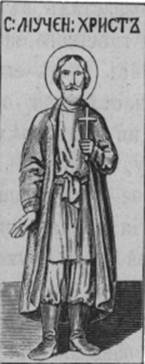
Св. преподобномуч. и исповедн. Стефана Нового
St. Venerable Martyr and Confessor Stephen the New
Стефан, родившийся в Константинополе в 715 г., с детства посвящен был Богу своею благочестивою матерью и в юношеском возрасте отведен был родителями к Иоанну, подвизавшемуся на горе св. Авксентия, напротив Константинополя, при Никомидийском заливе. Здесь, усердно исполняя все иноческие послушания, Стефан сверх того ревностно занимался изучением Свящ. Писания и в особенности творений св. Иоанна Златоуста, что и вооружило его сильным орудиём в той борьбе за православие, которая впоследствии предстояла ему.
Stephen, born in Constantinople in the year 715, was from childhood consecrated to God by his pious mother, and in his youth was taken by his parents to John, who was asceticising on Mount St. Auxentius, opposite Constantinople, on the Nicomedian Gulf. Here, diligently fulfilling all monastic obediences, Stephen also zealously devoted himself to the study of Holy Scripture and especially the works of St. John Chrysostom, which armed him with a mighty weapon for that struggle for Orthodoxy which later awaited him.
Похоронив своего отца, Стефан, с согласия своей матери, роздал все оставшееся после отца имущество бедным, приютил мать и сестру свою в женском монастыре, основанном св. Авксентием, и возвратился в обитель, где поддерживал свое существование переписыванием духовных книг. Стремясь к уединению, он удалился на вершину горы и устроил себе келию в тесной пещере, но и сюда многие приходили к нему, привлекаемые святостию его жизни и ища советов и поучений просвещенного инока, а некоторые, пожелав жить при испытанном подвижнике, устроили при пещере иноческие келии и просили Стефана быть игуменом таким образом основавшегося монастыря.
Having buried his father, Stephen, with the consent of his mother, distributed all the property left by his father to the poor, placed his mother and sister in a convent founded by St. Auxentius, and returned to his monastery, where he supported himself by copying spiritual books. Striving for solitude, he withdrew to the summit of the mountain and made himself a cell in a narrow cave; but even here many came to him, drawn by the holiness of his life and seeking counsel and instruction from the enlightened monk, while some, desiring to live near the proven ascetic, built monastic cells by the cave and asked Stephen to be abbot of the monastery thus founded.
Между тем свирепствовала тогда иконоборческая ересь. После императора Льва III Исаврянина (717–741) Константин Копроним еще с большею яростию стал преследовать иконопочитание и, обличаемый многими благочестивыми иноками, обратил свой гнев в особенности на них. Собрав множество народа, он повелел ему присягнуть с клятвою при Кресте, Евангелии и Таинствах Христовых, что не будет никто покланяться иконам и не будет иметь никакого общения с иноками, а встретив их на дороге, будет побивать их каменьями... В то же время, самовластно поставив патриархом единомышленника своего, инока Константина, составил в 754 г. иконоборный собор. И совершились тогда в Византии безбожные дела, святотатственное поругание над иконами и над всякой святыней: сосуды церковные, в которых Божественные Тайны совершались, попирались ногами; иконы сожигались и выбрасывались в море; в церкви Богородицы во Влахернах, стены которой были украшены живописными изображениями земной жизни Спасителя, была уничтожена вся эта живопись, а вместо нее намалеваны звери и птицы... Не пощажены были и мощи святых, которые с бесчестием уничтожались или выбрасываемы были в море; тех же, кто восставал против такого кощунства, убивали и трупы их выбрасывали на съедение зверям.
Meanwhile, the iconoclastic heresy was raging. After the Emperor Leo III the Isaurian (717–741), Constantine Copronymus with even greater fury began to persecute the veneration of icons, and, being denounced by many pious monks, turned his wrath especially upon them. Having gathered a great multitude of people, he commanded them to swear with an oath upon the Cross, the Gospel, and the Mysteries of Christ that no one would venerate icons or have any communion with monks, and that meeting them on the road, they would stone them... At the same time, having autocratically appointed his like-minded man, the monk Constantine, as patriarch, he convened an iconoclastic council in 754. And then there were committed in Byzantium godless deeds, sacrilegious mockery of icons and of every holy thing: church vessels, in which the Divine Mysteries were celebrated, were trampled underfoot; icons were burned and thrown into the sea; in the Church of the Theotokos at Blachernae, whose walls were adorned with painted images of the earthly life of the Savior, all this painting was destroyed, and in its place beasts and birds were daubed... Nor were the relics of the saints spared, which were dishonourably destroyed or thrown into the sea; and those who rose up against such blasphemy were killed and their corpses thrown out to be devoured by wild beasts.
В этой великой скорби и угнетении православные во множестве собирались на гору Авксентиеву к славному подвижнику Стефану, и он утешал и ободрял их, и наставлял твердо стоять за святыню и в случае, если бы кто не чувствовал в себе достаточно мужества, скрываться в чужих землях...
In this great sorrow and oppression, the Orthodox gathered in multitudes to Mount Auxentius, to the renowned ascetic Stephen, and he comforted and encouraged them, and instructed them to stand firmly for the holy faith, and if anyone did not feel sufficient courage within himself, to hide in foreign lands...
Зная о таком влиянии на народ свято почитаемого им Стефана, император желал иметь его на своей стороне и потребовал, чтобы он подписал определения составленного им иконоборного собора; но когда Стефан, отказавшись от богатых даров, присланных с тою целию, чтобы задобрить его, отказался и исполнить неправедное требование и велел через посланного ответить Копрониму, что «не подпишет его собора, исполненного лжи и празднословия», – то его силою вывели из келии и заключили под крепким надзором в темнице. Во время войны с Болгарами, сделавшими нападение на империю, Стефан был освобожден, но по окончании войны гонение на почитателей икон возобновялось, и Стефан снова подвергся преследованию. Посредством подкупа являлись доносчики, которые свидетельствовали, что он возмущает народ против императора; пострижение же Стефаном в монашество одного из царедворцев, который, под видом искреннего желания иночества, добивался только предлога обвинить Стефана как бы в насильственном пострижении его, – послужило поводом к окончательному обвинению праведного человека и, «по истреблении огнем Авксентьева монастыря, Стефан был отправлен в Хрисополь, в монастырь Филиппика, и пробыв здесь 16 дней, после этого сослан в ссылку на о-в Проконнес. В 765 или 766 г. был возвращен в Константинополь, где содержался в темнице Фиалы»435, Но нигде не умолкал правдивый голос исповедника и везде привлекал иоследователей, которые в наставлениях его и благословении почерпали силу мужественно стоять за веру и предавать себя мученической кончине за нее. Наконец, «после всенародного обличения царя, после месячного заключения в претории, 28-го ноября 767 г. Стефан скончался мученически»436. По повелению Константина Копронима его убить, придворные его вывели Стефана из монастыря, повлекли его но улице, били его палками, топтали ногами и, наконец, один из злодеев нанес ему смертельный удар по голове437.
Knowing of such influence over the people of Stephen, whom he held in holy reverence, the emperor desired to have him on his side and demanded that he sign the decrees of the iconoclastic council he had convened; but when Stephen, having refused the rich gifts sent for the purpose of winning him over, also refused to fulfil the unrighteous demand and sent word through the messenger to answer Copronymus that "he would not sign his council, filled with lies and idle talk," – then they forcibly led him out of his cell and imprisoned him under strict guard in a dungeon. During the war with the Bulgarians, who had attacked the empire, Stephen was released, but after the war the persecution of the venerators of icons was renewed, and Stephen again fell under persecution. Through bribery, informers appeared who testified that he was stirring up the people against the emperor; and the tonsuring by Stephen of one of the courtiers, who, under the guise of a sincere desire for monasticism, sought only a pretext to accuse Stephen of forcibly tonsuring him, served as the occasion for the final condemnation of the righteous man, and "after the burning of the Auxentius monastery by fire, Stephen was sent to Chrysopolis, to the monastery of Philippicus, and having remained there for sixteen days, was then exiled to the island of Proconnesus. In 765 or 766 he was returned to Constantinople, where he was kept in the prison of Phiale."435 But nowhere did the truthful voice of the Confessor fall silent, and everywhere it drew followers who, in his instructions and blessing, drew strength to stand courageously for the faith and to surrender themselves to a martyric end for it. Finally, "after a public denunciation of the emperor, after a month's imprisonment in the praetorium, on the 28th of November, 767, Stephen died a martyr's death."436 By the command of Constantine Copronymus to kill him, the courtiers led Stephen out of the monastery, dragged him through the street, beat him with clubs, trampled him underfoot, and finally one of the malefactors dealt him a mortal blow to the head.437
«Постнически предподвизався на горе, – воспевает Церковь св. Стефану, – умная врагов ополчения всеоружием креста погубил еси, всеблаженне! Паки же ко страдальчеству мужески облекся еси, убив Копронима мечом веры, и обоих ради венчался еси от Бога, преподобномучениче Стефане приснопамятне!» (Троп.).
"Having ascetically struggled on the mountain, you destroyed the mental hosts of the enemy with the all-weapon of the Cross, O all-blessed one! Again, you manfully clothed yourself in martyrdom, slaying Copronymus with the sword of faith, and for both you were crowned by God, O Venerable Martyr Stephen, ever memorable!" (Troparion).
«Троицы рачителя и Божественного Стефана восхвалим верно песньми, празднолюбцы, от сердца, яко почествовавша начертание красное Владыки и Матере Его, – и согласно ныне от любве возопиим ему радующеся: радуйся, отче приснославне!» (Конд.).
"Let us faithfully praise with hymns from the heart, O lovers of feasts, the zealot of the Trinity and divine Stephen, for he honoured the beautiful image of the Master and His Mother, – and now with one accord from love let us cry to him with joy: Rejoice, O father ever-glorious!" (Kontakion).