Григорий, родом из села Претории в шести верстах от Акрагаса (ныне Агригента) в Сицилии, имел богатых родителей, которые его восьмилетнего отдали на воспитание искусному учителю. Когда же отрок научился хорошо читать и писать, понимать и петь церковную службу, то, по достижении двенадцати лет, епископ Потамион, восприемник его от купели крещения, причислил его к клиру и поручил архидиакону и библиотекарю Донату для руководства в подвигах духовных и добродетельном жительствовании, с обозначением книг для чтения и внушением обращать внимание на содержание читаемого. И упражнялся Григорий в молитве и чтении непрестанном, читая священные писания и жития святых отцов и пламенея сердцем к последованию стопам угодников Божиих».
Gregory, a native of the village of Praetoria, six versts from Akragas (now Agrigento) in Sicily, had wealthy parents who, when he was eight years old, placed him in the care of a skilled teacher. When the youth had learned to read and write well, and to understand and sing the church services, upon reaching the age of twelve, Bishop Potamion, his godfather from the baptismal font, numbered him among the clergy and entrusted him to the archdeacon and librarian Donatus for guidance in spiritual struggles and virtuous living, designating books for reading and instructing him to pay attention to the content of what he read. And Gregory exercised himself in unceasing prayer and reading, perusing the sacred scriptures and the lives of the holy fathers, his heart burning to follow in the footsteps of God's saints.
Прочитавши не раз и не два о подвигах св. Василия Великого и его путешествии на Богомолье в Сирию и Иерусалим, сам начал помышлять о посещении святых мест, откуда воссиял свет веры Христовой, и молился Богу об исполнении своего благочестивого желания. И вот ночью слышит он голос, повелевавший ему выйти на берег; здесь он (в июле 669 года) нашел корабль, готовый плыть в Карфаген, п отиравился на нем. Ему было двадцать два года. Из Карфагена, где прожил при доме архиепископа около трех месяцев, в январе 670 года, с тремя иными монахами, прибыл в Триполь Финикийский, а отсюда в Иерусалим; тут провел больше семи лет, поставленный во диакона патриархом Иерусалимским, посещал монастыри и подвизался в посте и молитвах. Затем, посетивши Антиохию и прожив в ней год, прибыл в Константинополь, удержан на несколько времени патриархом Феодором и присутствовал на Шестом Вселенском соборе (680 года).
Having read more than once or twice about the struggles of St. Basil the Great and his pilgrimage to Syria and Jerusalem, he himself began to think about visiting the holy places whence the light of the faith of Christ had shone forth, and he prayed to God for the fulfillment of his pious desire. And behold, at night he heard a voice commanding him to go to the shore; there (in July of the year 669) he found a ship ready to sail to Carthage, and he set out on it. He was twenty-two years old. From Carthage, where he lived at the house of the archbishop for about three months, in January of the year 670, together with three other monks, he arrived at Tripoli in Phoenicia, and from there to Jerusalem; here he spent more than seven years, being ordained a deacon by the Patriarch of Jerusalem, visiting monasteries and laboring in fasting and prayers. Then, having visited Antioch and lived there for a year, he arrived in Constantinople, was detained for some time by Patriarch Theodore, and was present at the Sixth Ecumenical Council (in the year 680).
В 681 году отправился из Константинополя в Рим, поклонился гробам св. Апостолов Петра и Павла и стал жить в Греческом монастыре св. Саввы. В это время скончался Феодор, епископ Акрагантийский, преемник Потамиона, и между гражданами образовались три партии, из коих каждая предлагала своего кандидата на упразднившийся престол. Папа Агафон, по личному убеждению и по хорошим отзывам других, предпочел своего избранника, и это был Григорий.
In the year 681 he set out from Constantinople for Rome, venerated the tombs of the holy Apostles Peter and Paul, and began to live in the Greek monastery of St. Sabbas. At this time Theodore, Bishop of Akragas, the successor of Potamion, reposed, and three factions formed among the citizens, each proposing its own candidate for the vacant see. Pope Agatho, from personal conviction and on the good reports of others, preferred his own chosen one, and this was Gregory.
Григорий, по прибытии в Акрагас, приветствован всеми гражданами и еще обрадован был свиданием с родителями своими. Был он пастырь учительный, отец вдов и сирот, питатель нищих и молитвенник к Богу неусыпный. Но клеветы не избежал; ибо лет через десять епископства своего был оклеветан пред гражданами и правителем Сицилии (жившим в Сиракузах) в нечистой жизни и, вытребованный в Рим, жил там около двух лет, ожидая суда. Наконец из Константинополя присланы в Рим два епископа и хартофилакс патриарха Константинопольского для совместного разбора дела (по особым распоряжениям императоров, Сицилия, хотя состояла в округе Римского папы, но, как область с населением Греческим, в церковных делах подлежала вмешательству Константинопольского патриарха). Оправданный Григорий после сего отправился в Константинополь и от императора Юстиниана II-го был почтен дарами и отпущен с честию. Скончался после 710 года. Памятником его учительности служат говоренные к пастве беседы встолковательные на книгу Екклесиаста.
Gregory, upon his arrival in Akragas, was greeted by all the citizens and was further overjoyed by a meeting with his parents. He was a teaching shepherd, a father to widows and orphans, a nourisher of the poor, and an unceasing intercessor before God. But he did not escape slander; for about ten years into his episcopacy, he was slandered before the citizens and the governor of Sicily (who lived in Syracuse) concerning an impure life, and, being summoned to Rome, he lived there for about two years awaiting trial. Finally, from Constantinople two bishops and the chartophylax of the Patriarch of Constantinople were sent to Rome for a joint examination of the case (by special orders of the emperors, Sicily, although it belonged to the district of the Pope of Rome, as a region with a Greek population, was subject in church matters to the intervention of the Patriarch of Constantinople). After this, Gregory, having been acquitted, set out for Constantinople and was honored with gifts by the Emperor Justinian II and dismissed with honor. He reposed after the year 710. A monument to his teaching is the explanatory homilies on the book of Ecclesiastes which he delivered to his flock.
Уроженец Кесарии Каппадокийской, современник и друг Василия Великого и Григория Богослова, сорок лет провел в монашестве прежде рукоположения своего в епископа. Присутствовал на Втором Вселенском соборе (381 г.) и много содействовал искоренению ересей не только в своей епархии, но и в других церквах. Скончался в 395 году, оставив после себя много сочинений, полезных для Церкви.
A native of Caesarea in Cappadocia, a contemporary and friend of Basil the Great and Gregory the Theologian, he spent forty years in monasticism before his ordination as bishop. He was present at the Second Ecumenical Council (381 A.D.) and greatly contributed to the eradication of heresies not only in his own diocese but also in other churches. He reposed in the year 395, leaving behind many writings useful for the Church.
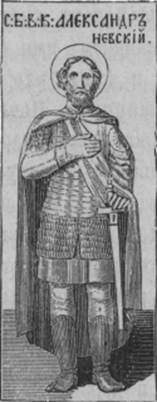
Благоверный князь Александр Невский341, сын великого князя Ярослава Всеволодовича, родился в 1220 г., когда отец его был удельным Переяславским князем. Род его был замечательный по любви к благочестию: было от кого научиться добру. Дед его – Всеволод, умный и помнивший вечность, бабка – Мария, с юности благочестивая, отец – Ярослав, просветитель Корелов, пострадавший от Татар, мать – Феодосия, в иночестве Евфросиния, называется в летописях святою, дядя – Георгий, мученик, другой дядя – Святослав-Гавриил, благочестивый, двоюродный брат – Василько, мученик, двоюродные племянники также – святые342.
The Right-believing Prince Alexander Nevsky341, son of Grand Prince Yaroslav Vsevolodovich, was born in the year 1220, when his father was the appanage Prince of Pereslavl. His lineage was remarkable for its love of piety: there was from whom to learn goodness. His grandfather was Vsevolod, wise and mindful of eternity; his grandmother was Maria, pious from youth; his father was Yaroslav, enlightener of the Karelians, who suffered from the Tatars; his mother was Theodosia, in monasticism Euphrosyne, called a saint in the chronicles; his uncle was George, a martyr; another uncle was Svyatoslav-Gabriel, pious; his cousin was Vasilko, a martyr; his cousins' children were also saints342.
В первый раз говорит летопись о кн. Александре в 1228 г., когда Ярослав оставил его и старшего брата Феодора в Новгороде; в следующем году братья удалились из Новгорода; в 1230 г. опять прибыли сюда. – Первые годы жизни в Новгороде молодой кн. Александр не мог сам управлять делами, у него управляли бояры отца; но с 1236 г., когда отец удалился в Киев, он предоставлен был самому себе.
The chronicle first mentions Prince Alexander in the year 1228, when Yaroslav left him and his elder brother Theodore in Novgorod; the following year the brothers withdrew from Novgorod; in 1230 they arrived here again. – In the first years of his life in Novgorod, the young Prince Alexander could not govern affairs himself; his father's boyars governed for him; but from 1236, when his father withdrew to Kiev, he was left to his own devices.
На другом году самостоятельного правления Александра в Новгороде приходилось князю вступить в грозную борьбу с Татарами. Батый, опустошив княжества Рязанское и Владимирское, быстро шел к Новгороду. В начале 1238 г. разорены были Волоколамск, Тверь и Торжок. Когда Батый был у Торжка, в Новгороде трепетали. Татары были ближе 100 верст от Новгорода; но, говорит летопись, «молитвами Новгородских святителей, князей и преподобных, Господь защитил от них Новгород; от Игнатова креста (нынешних Крестцов) Батый неожиданно поворотил на Козельск343.
In the second year of Alexander's independent rule in Novgorod, the prince had to enter into a terrible struggle with the Tatars. Batu, having devastated the principalities of Ryazan and Vladimir, was advancing swiftly toward Novgorod. At the beginning of 1238, Volokolamsk, Tver, and Torzhok were ravaged. When Batu was at Torzhok, they trembled in Novgorod. The Tatars were less than 100 versts from Novgorod; but, says the chronicle, "by the prayers of the Novgorod hierarchs, princes, and venerable ones, the Lord protected Novgorod from them; from the Cross of Ignatius (the present Kresttsy) Batu unexpectedly turned toward Kozelsk343."
В 1239 г. кн. Александр вступил в брак с дочерью Полоцкого князя Брячислава – Александрою; брак совершен в Торжке и в Новгороде344. – Понятно, что свадебный пир в Новгороде был собственно оттого, что умный и добрый князь хотел делиться своею радостию с народом; он хотел, чтобы народ был его семьею, и домашняя жизнь его была нераздельна с жизнью государственною. Князь вслед затем показал другим опытом, что дела домашней жизни у него не подавляют заботы о Новгороде. В том же году, по совету с вечем, он занялся построением крепостей по Шелони. Забота о построении крепостей по Шелони тогда была необходима. Литва и Немцы год от году усиливались и год от году чаще врывались в Новгородские и Псковские владения; а Новгородцы теперь со стороны не могли ожидать себе подкрепления. Немцы скоро поняли Александра. Весною 1240 г.345 Андрей Вильвен, магистр Ливонских рыцарей, или, как выразительно говорят о них наши летописи, «иже нарицаются слуги Божии», прибыл в Новгород для свидания о кн. Александром. Без сомнения, вели они переговоры о неудовольствиях, так нередко возникавших тогда между Новгородом и Ливониею. Летописцы, для которых не всегда известны были тайные предметы сношений князя с соседями, знали только об отзыве, какой произнес вслух Вильвен об Александре. – «Я видел много стран, говорил Вильвен, знаю людей и государей; но должен отдать преимущественную честь Александру».
In the year 1239, Prince Alexander entered into marriage with Alexandra, the daughter of Prince Bryachislav of Polotsk; the marriage was performed in Torzhok and in Novgorod344. – It is understandable that the wedding feast in Novgorod was held precisely because the wise and good prince wished to share his joy with the people; he desired that the people should be his family, and his domestic life was inseparable from the life of the state. The prince then showed by another experience that the affairs of domestic life did not suppress his care for Novgorod. In the same year, on the advice of the veche, he undertook the building of fortresses along the Shelon River. The concern for building fortresses along the Shelon was then necessary. The Lithuanians and Germans grew stronger year by year and more frequently broke into the Novgorod and Pskov domains; and the Novgorodians could now expect no reinforcement from outside. The Germans soon understood Alexander. In the spring of 1240345, Andrew von Velven, the Master of the Livonian Knights, or, as our chronicles expressively say of them, "those who call themselves servants of God," arrived in Novgorod for a meeting with Prince Alexander. Without doubt, they conducted negotiations about the grievances that so often arose at that time between Novgorod and Livonia. The chroniclers, for whom the secret subjects of the prince's dealings with his neighbors were not always known, knew only of the remark that von Velven made aloud about Alexander. – "I have seen many lands," said von Velven, "I know men and sovereigns; but I must give preeminent honor to Alexander."
Слава Александра, переданная магистром западу, возбудила в Шведском короле тревоги зависти и боязливого властолюбия. Биргер-Ярл, ближайший родственник короля Эрика, рассчитывая, по бездетству Эрика, на престол Шведский, воспользовался этими тревогами для своих целей. Отважными подвигами на границах Новгородских и в Финляндии он надеялся приобресть любовь народную, более же поднял Шведов против России папа, вызвавший крестовый поход против схизматиков. В войске Биргера, составленном из Шведов, Норвежцев и Финнов, было несколько бискупов с их вассалами, что придавало ополчению полное значение священной войны. Св. Александр не ожидал нападений и получил известие, что Шведы идут к Ладоге; это было в том же году, как лукавый Немец рассыпался пред ним в похвалах его достоинствам. Биргер прислал гордый вызов: «защищайся, если можешь, а я – на твоей земле» – Нечаянность нападения придавала духу заносчивому Биргеру. Горько было князю, что в готовности не было у него войска; твердо надеясь на Бога, решился он идти против Шведов и с малою дружиною. Дожидаться, пока соберутся все войска, значило дать время врагам стать твердою ногою на Новгородской земле. Он поспешил в храм Божий, где архиепископ Спиридон уже молился с народом о помощи Божией против врагов чистой веры и отчизны. Блаж. Александр в молитве своей призывал суд на тех, которые хотят похищать чужое и оскорблять невиновных пред ними. Затем он вступил в брань с слугами папы в день равноапостольного Владимира, столько знавшего папу, призывая в помощь его и его св. сыновей – Бориса и Глеба. «Нас не много, сказал он весело дружине: но Бог не с многими, а с правыми». Одушевленное живое благочестие Александра одушевило всех. Кто только мог из народа, присоединялся к дружине военной. Надежды Александра были не обманчивы.
The fame of Alexander, conveyed by the Master to the West, aroused in the Swedish king anxieties of envy and fearful lust for power. Birger Jarl, a close relative of King Eric, calculating on the childlessness of Eric to attain the Swedish throne, used these anxieties for his own purposes. By bold exploits on the borders of Novgorod and in Finland, he hoped to win popular love, but even more did the pope stir up the Swedes against Russia, having proclaimed a crusade against the schismatics. In Birger's army, composed of Swedes, Norwegians, and Finns, there were several bishops with their vassals, which gave the campaign the full character of a holy war. St. Alexander did not expect the attack and received news that the Swedes were marching toward Ladoga; this was in the same year that the crafty German had lavished praises of his virtues before him. Birger sent a proud challenge: "Defend yourself if you can, for I am already on your land." – The unexpectedness of the attack gave spirit to the arrogant Birger. It was bitter for the prince that he had no army ready; trusting firmly in God, he resolved to go against the Swedes even with a small retinue. To wait until all the troops gathered would mean giving the enemy time to gain a firm foothold on Novgorod land. He hastened to the church of God, where Archbishop Spiridon was already praying with the people for God's help against the enemies of the pure faith and the fatherland. Blessed Alexander in his prayer called for judgment upon those who wish to seize what is another's and to offend those innocent before them. Then he entered into battle with the servants of the pope on the day of the Equal-to-the-Apostles Vladimir, who had known the pope so well, calling upon him and his holy sons – Boris and Gleb – for help. "We are not many," he said cheerfully to his retinue, "but God is not with the many, but with the right." Alexander's living, fervent piety inspired everyone. Whoever could from the people joined the military retinue. Alexander's hopes were not deceived.
В ночь на 15 июля (1240 г.) Ижорянин Пелгусий, в крещении Филипп, муж благочестивый, удостоился видения. Когда князь приблизился к месту брани, Пелгусий, высмотревший наперед расположение сил Биргера, сообщил ему нужные сведения. Св. Александр поручил ему продолжать наблюдения. На этой-то страже ночной, к утру, при первом всходе солнца, вдруг слышит он шум от плывущей по воде лодки. Он думал, не враги ли это, и стал зорче всматриваться. Гребцы как будто покрыты были мглою. Видны были только витязи, стоящие на лодке. Светлые лица их кажутся известными ему: черты их, как и одежды, напоминают ему св. лики страстотерпцев Бориса и Глеба! Вот слышит он, как старший говорит младшему: «брат Глеб, прикажи гресть; надобно помочь сроднику нашему Александру». Слух подтвердил то, что видели глаза. И Пелгуоий с радостию пересказал благоверному князю, что видел и слышал он. Князь в тот же день и напал на Шведов. Битва была упорная, она продолжалась с утра до вечера. Разбитые на всех пунктах неприятели, потеряв храбрейших, не посмели даже остаться на поле битвы до утра: наполнив две ямы своими трупами и взяв знаменитых мертвецов на суда с собою, они ночью поспешили удалиться от берегов негостеприимных. Урон со стороны князя был незначительный. Благоверный князь заключил высокий подвиг свой живою благодарностию пред Господом, которую принес он торжественно в Софийском храме. Победа на Неве навсегда оставила за Александром имя Невского. Она обрадовала все отечество наше уже и тем, что одержана во время самое горькое для России. Дружинники Новгородские своими глазами видели мужество и ум кн. Александра в бою; весь Новгород видел, как незначительна была дружина, с которою отправился Александр против врага, сильного и огромным числом и средствами своими. Потому-то Новгород был в восторге от этой победы. И что было бы с Новгородским краем, если бы он попал в руки усердных слуг папы? Папизм везде вносил с собою насилия и расстройство. Потому-то проигранную битву на Неве очень помнили и рыцари Ливонские346.
On the night of July 15 (1240), the Izhorian Pelgusius, in baptism Philip, a pious man, was granted a vision. When the prince drew near to the place of battle, Pelgusius, who had beforehand reconnoitered the disposition of Birger's forces, communicated to him the necessary information. St. Alexander entrusted him with continuing the watch. While on this night watch, toward morning, at the first rising of the sun, he suddenly heard the noise of a boat sailing on the water. He thought, could it be enemies, and began to peer more intently. The rowers seemed as if shrouded in mist. Only the warriors standing in the boat were visible. Their bright faces seemed familiar to him: their features, as well as their garments, reminded him of the holy countenances of the passion-bearers Boris and Gleb! Then he heard the elder say to the younger: "Brother Gleb, bid them row; we must help our kinsman Alexander." Hearing confirmed what his eyes had seen. And Pelgusius joyfully recounted to the right-believing prince what he had seen and heard. The prince that very day attacked the Swedes. The battle was stubborn; it lasted from morning until evening. Broken at every point, the enemy, having lost their bravest men, did not even dare to remain on the field of battle until morning: filling two pits with their corpses and taking their notable dead onto ships with them, they hastened by night to withdraw from the inhospitable shores. The loss on the prince's side was insignificant. The right-believing prince concluded his lofty feat with a living thanksgiving before the Lord, which he offered solemnly in the Church of St. Sophia. The victory on the Neva forever left Alexander with the name of Nevsky. It gladdened all our fatherland, if only because it was won at a time most bitter for Russia. The Novgorodian warriors saw with their own eyes the courage and wisdom of Prince Alexander in battle; all Novgorod saw how insignificant was the retinue with which Alexander set out against an enemy strong both in its vast numbers and its resources. For this reason Novgorod was enraptured by this victory. And what would have become of the Novgorod region had it fallen into the hands of the zealous servants of the pope? Papism everywhere brought with it violence and disorder. For this reason the lost battle on the Neva was long remembered also by the Livonian knights346.
Всегда беспокойные и дерзкие Новгородцы скоро оскорбили Невского победителя, – подняли за что-то ропот на него, так что дело дошло до мятежа. Столько же кроткий, сколько и мужественный, князь-христианин не хотел оставаться там, где более не считали его нужным. Зимою того же года (1240 г.), как одержана им столько важная для Новгорода победа, он вместе с материю, супругою и двором выехал из Новгорода в Переяславль.
The ever restless and insolent Novgorodians soon offended the Nevsky victor—they raised some sort of murmur against him, so that it came to rebellion. As meek as he was courageous, the Christian prince did not wish to remain where he was no longer considered necessary. In the winter of the same year (1240), in which he had won so important a victory for Novgorod, he, together with his mother, his wife, and his court, departed from Novgorod for Pereyaslavl.
Легкомыслие Новгородцев изумительно! Кроме того, что, удаляя Александра, показывали они черную неблагодарность к нему, они слишком невнимательны были к своему положению. Победа Невская взволновала рыцарей Ливонии. Они поспешили ослабить грозную для них силу Новгорода. В то самое время, как Новгородцы крамольничали против св. князя, Немцы, взяв Изборск347, подступили к Пскову, выжгли предместия его, посадили в нем главным начальником изменника Твердилу Ивановича, который начал распоряжаться здесь, как подручник Немцев; многие семейства Псковичей вынуждены были бежать в Новгород. Ободренные этою удачею рыцари зимою вступили в Водскую пятину, обложили ее данью, построили в Копорском погосте крепость, взяли Тесов, в 50 верстах от Новгорода, производили грабежи и убийства – даже в 30 верстах от Новгорода, простирали набеги по реке Луге до Сабельского погоста348. Новгородцы пришли в себя, но еще не совсем. Глупая гордость не дозволила на первый раз просить прямо князя Александра, чтобы поспешил защитить их от бед. Они послали просить только помощи у великого князя Ярослава. Ярослав послал к ним войско с третьим сыном своим Андреем. Войско без умного военачальника – не много значит. Нельзя было не видеть того и Новгородцам. У них довольно было дружин, и однако Немцы свободно гуляли по Водской пятине, забирали по р. Луге лошадей и весь скот, так что на весну не на чем было и пахать. Нужда научила и Новгородцев смирению. Они отправили архиепископа и бояр – просить у Ярослава необходимого для них князя Александра Ярославича. Христианский князь забыл оскорбление; зимою 1241 г. прибыл он в Новгород, «и рады быша Новгородцы». С приездом его все переменилось. Князь собрал дружины из Новгородцев, Ладожан, Корелов и Ижорян и повел их к Копорью; взял и разрушил Немецкую крепость, сидевших в ней Немцев частию побил, частию взял в плен, а изменников Чухонцев повесил349.
The frivolity of the Novgorodians is astonishing! Besides showing black ingratitude toward Alexander by driving him away, they were far too heedless of their own situation. The Neva victory had stirred up the knights of Livonia. They hastened to weaken the power of Novgorod, which was formidable to them. At the very time when the Novgorodians were fomenting sedition against the holy prince, the Germans, having taken Izborsk347, approached Pskov, burned its suburbs, placed the traitor Tverdila Ivanovich as chief commander there, who began to act as a vassal of the Germans; many families of Pskovites were forced to flee to Novgorod. Emboldened by this success, the knights in winter entered the Vodskaya Pyatina, imposed tribute upon it, built a fortress in the Koporye churchyard, took Tesovo, fifty versts from Novgorod, carried out robberies and murders—even within thirty versts of Novgorod, and extended their raids along the Luga River as far as the Sabelsky churchyard348. The Novgorodians came to their senses, but not yet entirely. Foolish pride did not permit them at first to ask Prince Alexander directly to hasten to defend them from calamities. They sent only to ask help from Grand Prince Yaroslav. Yaroslav sent them a force with his third son, Andrew. An army without a wise commander is worth little. The Novgorodians could not fail to see this. They had enough retinues, and yet the Germans freely roamed the Vodskaya Pyatina, seizing horses and all livestock along the Luga River, so that in the spring there was nothing with which to plow. Need taught the Novgorodians humility. They sent the archbishop and boyars to ask Yaroslav for the prince they needed, Alexander Yaroslavich. The Christian prince forgot the insult; in the winter of 1241 he arrived in Novgorod, "and the Novgorodians rejoiced." With his arrival everything changed. The prince gathered retinues from the Novgorodians, Ladogans, Korels, and Izhorians, and led them to Koporye; he took and destroyed the German fortress, killing some of the Germans who were in it, taking others captive, and hanging the Chud traitors349.
К сожалению своему, Александр скоро должен был выехать из Новгорода, не кончив всех дел. Батый ждал его к себе. «Мне покорил Бог народы; ужели ты один не хочешь покориться мне? Если хочешь сберечь свою землю, приходи на поклон», так поручил сказать, ему Батый. Благоговейный князь повиновался воле Провидения и был у Батыя350.
To his regret, Alexander soon had to leave Novgorod without finishing all his affairs. Batu was expecting him. "God has subdued peoples to me; will you alone not submit to me? If you wish to preserve your land, come to pay homage"—so Batu ordered him to be told. The devout prince submitted to the will of Providence and went to Batu350.
В отсутствие его Немцы наложили тяжелую руку на Псков; они посадили своих тиунов во Пскове и стали хозяйничать в Псковокой стороне. Он разделался бы с ними вслед за срытием Копорья; тогда еще рвался он проучить их за хвастливые выходки: «Славяне ничем другим не могут быть, как нашими данниками», говорили они. Теперь он выпросил у отца низовые полки и поспешил с ними в Новгород. Отдав приказание собирать Новгородские дружины, а низовым занять Псковские дороги, он в храме Софии пролил теплые молитвы со слезами за страждущую отчизну. Затем быстро двинулся к Пскову и овладел им, прежде чем магистр прислал помощь; 70 рыцарей – названных хозяев Пскова, сложили головы, множество других Немцев скованных послал князь в подарок Новгороду и очистил родину благоверной Ольги от нечисти Немецкой. На этом однако не остановился он. Надобно было упрочить покой северного края и задать урок Немцам. Князь вошел в Ливонию, пустил отряды в поселения Чудские, над которыми властвовали Немцы; что стоило брать, брали, другое жгли, Немцев били; но один отряд Александра был разбит и обращен в бегство. Князь остановился со всеми силами на Чудском озере, которое покрыто было твердым льдом. Ему хотелось выманить Немцев из их пор каменных – из замков; в чистом поле жидка их сила. Он знал это, если они не знали. Расчет его удался. Немцы высыпали и собрались в огромном числе. «Пойдем, говорили, захватим Александра, чтоб кончить с ним расчет». Датский король прислал им от себя помощь. Благоговейный князь молился: «суди, Боже, и разсуди прю мою с языком велеречивым». Дружины Русские рвались на Немцев; «бяху сердца их яко сердца львов», говорит современник. «Дорогой князь! говорили они, вот теперь нам время положить головы за тебя». В 1 д. апреля (1242 г.), в похвальную субботу, на восходе солнца начался бой, известный в летописях под именем ледового. Немцы с Чудью врезались «свиньею» – острою колонною в Русское войско: это не мешало бить их как свиней. Потерявшие строй рыцари бросились бежать: их били вдогонку на протяжении 7 верст; Чуди побито без числа, 500 рыцарей пали под секирами Русскими, 50 взяты живыми. Из огромного числа неприятелей немногие воротились к своим. Пораженный ужасом магистр Герман Валк ждал Александра под стенами Риги и послал просить сильной помощи у короля. Но Александр – не Немец, – не искал чужого; он славил Господа за спасение своих. Он доволен был тем, что будут помнить урок его дерзкие враги351. «В полку его было множество пленных; называвших себя рыцарями Божиими (Gottesritter) вели босыми подле лошадей». На встречу победителю вышел весь Псков «с крестами, иконами и хоругвями», и пели хвалы Господу и кн. Александру: «пособивый, Господи, кроткому Давиду победити иноплеменника и верному князю нашему, оружием крестным освободи град Псков от иноязычник рукою Александровою». Кн. Александр хотел верить, что Псковитяне не забудут этого благодеяния его, будут благодарны и к поздним потомкам его. «Если вы забудете это и при правнуках Александра», говорил он им: «вы будете походить на Жидов, которых чудесно прокормил Господь в пустыне, а они забыли о Том, Кто извел их из Египта»352. В Новгороде и в 16 веке молились об упокоении павших «в ледовом бою». Немцы спешили просить мира и свободы пленным; они не только отказались от Пскова, Луги и Водской области, но возвратили Новгороду и часть Летгаллии, где Латыши давно были крещены православною Церковию353.
In his absence, the Germans laid a heavy hand on Pskov; they placed their stewards in Pskov and began to rule in the Pskov region. He would have dealt with them right after the destruction of Koporye; even then he was eager to teach them a lesson for their boastful outbursts: 'The Slavs can be nothing other than our tributaries,' they said. Now he asked his father for the lower regiments and hastened with them to Novgorod. Having given orders to gather the Novgorodian retinues and for the lower troops to occupy the Pskov roads, he poured forth fervent prayers with tears in the Church of St. Sophia for the suffering fatherland. Then he swiftly moved toward Pskov and took it before the master sent help; seventy knights—the so-called masters of Pskov—laid down their heads; many other Germans, bound, the prince sent as a gift to Novgorod, and cleansed the homeland of the right-believing Olga from the German filth. He did not stop there, however. It was necessary to secure the peace of the northern region and give the Germans a lesson. The prince entered Livonia, sent detachments into the Chud settlements, over which the Germans ruled; what was worth taking, they took, other things they burned, and they struck the Germans; but one of Alexander's detachments was defeated and put to flight. The prince halted with all his forces on Lake Chud, which was covered with solid ice. He wanted to lure the Germans out of their stone lairs—out of their castles; in the open field their strength was weak. He knew this, even if they did not. His calculation succeeded. The Germans poured out and gathered in vast numbers. 'Let us go,' they said, 'let us seize Alexander, to finish our reckoning with him.' The Danish king sent them help from his side. The devout prince prayed: 'Judge, O God, and decide my cause against the boastful tongue.' The Russian retinues yearned for the Germans; 'their hearts were as the hearts of lions,' says a contemporary. 'Dear prince!' they said, 'now is the time for us to lay down our heads for you.' On April 1 (1242), on the Saturday of Praise, at sunrise, the battle began, known in the chronicles under the name of the Battle on the Ice. The Germans and the Chud drove in like a 'pig'—a sharp wedge—into the Russian army: this did not prevent them from being beaten like swine. The knights, having lost formation, fled; they were struck in pursuit for seven versts; countless Chud were slain, five hundred knights fell under Russian axes, fifty were taken alive. Of the vast number of enemies, few returned to their own. Struck with terror, Master Hermann von Balk awaited Alexander under the walls of Riga and sent to ask the king for strong reinforcements. But Alexander—not a German—did not seek what belonged to others; he glorified the Lord for the salvation of his own. He was content that the insolent enemies would remember his lesson351. 'In his army there were many captives; those who called themselves knights of God (Gottesritter) were led barefoot beside the horses.' All Pskov came out to meet the victor 'with crosses, icons, and banners,' and they sang praises to the Lord and to Prince Alexander: 'Who didst help, O Lord, the meek David to conquer the foreigner, and our faithful prince, by the weapon of the Cross to free the city of Pskov from the foreigners by the hand of Alexander.' Prince Alexander wished to believe that the Pskovites would not forget this benefaction of his, and would be grateful even to his later descendants. 'If you forget this even under the great-grandsons of Alexander,' he said to them, 'you will be like the Jews, whom the Lord miraculously fed in the wilderness, yet they forgot Him Who brought them out of Egypt.'352 In Novgorod, even in the sixteenth century, they prayed for the repose of those who fell 'in the Battle on the Ice.' The Germans hastened to ask for peace and the release of prisoners; they not only renounced Pskov, Luga, and the Vodskaya region, but also returned to Novgorod a part of Letgallia, where the Latvians had long been baptized by the Orthodox Church353.
Низовые полки благов. Александр отпустил к отцу с братом Андреем, а сам, не дождавшись посольства Немецкого, отправился против Литвы, другого врага, тревожившего Новгородские области. В один и тот же поход разбил одну за другою семь Литовских ратей, взял в плен несколько князьков и заставил дикую, но воинственную Литву бояться его имени354. В следующем году в Юрьевой обители похоронил он благочестивую мать свою, которая, как видно, постоянно жила с ним в Новгороде, любя доброго Алекеандра и любимая им355. В 1245 г. Литва, отдохнув от своих поражений, в огромном числе явилась для грабежа в Новгородских владениях, вблизи Бежецка и Торжка. Появление ее привело в движение вес край. Прежде других ударили на Литовцев Новоторжцы, но были разбиты; счастливее были Тверитяне и Дмитровцы; соединясь с Новоторжцами, они догнали Литву под Торопцем; после боя Литовцы принуждены были запереться в Торопце. Между тем спешил грозный Александр с своею дружиною и Новгородцами; с его появлением на утро, дела приняли счастливый оборот. Торопец взят; Литовцы разбиты, потеряв 8 князьков; все, что награбили они, было отнято. Новгородцы, довольные этим успехом, воротились в домы свои. Александр с одною своею дружиною нагнал бегущих Литовцев у озера Жизца и окончательно уничтожил их: все князьки их легли, и некому было воротиться домой – сказать своим о бедствии. Под Усвятом встретился он с другою ратью Литовскою, спешившею, как вероятно, на помощь своим, и ту разбил на голову и без урона возвратился в Новгород356.
The regiments from the lower lands the Right-believing Alexander sent back to his father with his brother Andrew, and himself, without waiting for the German embassy, set out against Lithuania, another enemy that troubled the Novgorod regions. In one and the same campaign he defeated one after another seven Lithuanian forces, took captive several petty princes, and made the wild but warlike Lithuania fear his name354. In the following year, in the Yuriev monastery, he buried his pious mother, who, as is evident, constantly lived with him in Novgorod, loving the good Alexander and beloved by him355. In 1245, Lithuania, having recovered from its defeats, appeared in vast numbers for plunder in the Novgorod domains, near Bezhetsk and Torzhok. Its appearance set the whole region in motion. Before others, the men of Torzhok struck at the Lithuanians, but were defeated; more fortunate were the men of Tver and Dmitrov; joining with the men of Torzhok, they overtook the Lithuanians under Toropets; after the battle the Lithuanians were forced to shut themselves up in Toropets. Meanwhile the formidable Alexander hastened with his retinue and the Novgorodians; with his appearance in the morning, affairs took a fortunate turn. Toropets was taken; the Lithuanians were defeated, losing 8 petty princes; all that they had plundered was taken back. The Novgorodians, satisfied with this success, returned to their homes. Alexander with his retinue alone overtook the fleeing Lithuanians at Lake Zhiztsa and utterly destroyed them: all their petty princes fell, and there was no one to return home—to tell their own of the calamity. Near Usvyat he encountered another Lithuanian force, hastening, as is probable, to the aid of their own, and that too he smote utterly, and without loss returned to Novgorod356.
В 1246 году Александр оплакал смерть отца своего, скончавшегося на пути от хана. Престол великого князя утвержден Батыем за князем Святославом Воеволодовичем Благочестивый и благотворительный Святослав, известный построением каменного храма в Юрьеве и крестом357, не мог обижать несправедливостию своих племянников. Он дал им уделы по назначению отца их. Князь Александр почтительно принял распоряжение дяди. Младший брат его, Андрей, ни в чем не походил на старшего. Во всю жизнь глупое властолюбие тревожило его и принесло России горе и беды кровавые. И теперь, считая себя в праве на престол отца своего, при дяде и при старшем брате, он отправился к Батыю. Благоверный Александр уже поведением брата вынужден был идти в Орду. Батый принял Александра с честию, очень довольный тем, что в другой раз является он к нему. Но в душе более довольный враждою князей Русских, Батый послал обоих братьев к великому хану. Целые три года длилось тяжелое путешествие Александра по пустынным степям.
In 1246 Alexander mourned the death of his father, who had reposed on the way from the khan. The throne of the Grand Prince was confirmed by Batu to Prince Svyatoslav Vsevolodovich. The pious and beneficent Svyatoslav, known for the building of a stone church in Yuriev and a cross357, could not offend his nephews by injustice. He gave them appanages according to the designation of their father. Prince Alexander respectfully accepted the disposition of his uncle. His younger brother, Andrew, in nothing resembled his elder. All his life foolish love of power troubled him and brought to Russia grief and bloody woes. And now, considering himself entitled to the throne of his father, with his uncle and elder brother living, he set out to Batu. The Right-believing Alexander was already compelled by his brother's conduct to go to the Horde. Batu received Alexander with honor, very pleased that for a second time he came to him. But in his soul more pleased with the enmity of the Russian princes, Batu sent both brothers to the great khan. For fully three years Alexander's arduous journey through the desolate steppes lasted.
Андрей возвратился с именем великого князя Владимирского, Александр – с именем великого князя Киевского. Непонятно, на чем основалось такое решение хана о братьях: на том ли, что добрый Александр не хотел лишить дяди данного ему престола, или на том, что в Орде боялись дать сильное княжество и без того грозному Александру, а дали ничтожному Андрею. Как бы то ни было, в Киеве, разграбленном и сожженном, где при том кочевала хищная Орда, князю Александру делать было нечего; в 1250 году он явился в Новгород, «и бысть радость велика в Новгороде»358. Хотя имя великого князя не принесло с собою ни власти, ни доходов князю Александру, но в Батыевой Орде, кочевавшей на Волге, произвело оно могущественное действие. Имя Александра, грозного победителя Немцев и Литвы, теперь князя великого, стало страшно: «молчи, великий князь Александр едет», говорили Татарки крикливым детям своим. Андрей и с властию и с именем великого князя оставался ничтожным, как был он ничтожен и до того времени359.
Andrew returned with the title of Grand Prince of Vladimir, Alexander—with the title of Grand Prince of Kiev. It is incomprehensible on what such a decision of the khan concerning the brothers was based: whether on the fact that the good Alexander did not wish to deprive his uncle of the throne given him, or on the fact that in the Horde they feared to give a strong principality to the already formidable Alexander, and gave it to the insignificant Andrew. Be that as it may, in Kiev, plundered and burned, where moreover the predatory Horde roamed, Prince Alexander had nothing to do; in 1250 he appeared in Novgorod, "and there was great joy in Novgorod"358. Although the title of Grand Prince brought with it neither power nor revenues to Prince Alexander, yet in Batu's Horde, which roamed on the Volga, it produced a powerful effect. The name of Alexander, the formidable conqueror of the Germans and the Lithuanians, now a Grand Prince, became terrible: "Be still, the Grand Prince Alexander is coming," the Tatar women said to their noisy children. Andrew, even with power and with the title of Grand Prince, remained as insignificant as he had been insignificant before that time359.
В 1251 году благоверный князь с благоговейною любовию принимал в Новгороде святителей – Кирилла митрополита и другого Кирилла, Ростовского епископа, посвятивших для Новгорода архиепископа Далмата; вслед затем он был тяжко болен, так что начинали сомневаться, останется ли он жив; но «умножи Бог живота ему: бе бо любя чин церковный, священники, митрополиты, епископы чтяше яко Самого Христа и вся христианы любяше», говорит летопись360. Едва выздоровев, попечительный князь отправил посольство к Норвежскому королю Гакону о том, чтобы король запретил Финмаркским своим подданным грабить Лопь и Карелию; вследствие того заключен был мир; посольству поручено было еще лично видеть дочь Гакона, Христину, которую Александр думал видеть в супружестве за сыном своим Василием, но окончание сего дела князь вынужден был отложить до времени361.
In 1251 the Right-believing prince with reverent love received in Novgorod the hierarchs—Cyril the metropolitan and another Cyril, Bishop of Rostov, who consecrated for Novgorod Archbishop Dalmat; immediately after this he was grievously ill, so that they began to doubt whether he would remain alive; but "God multiplied life unto him: for he loved the churchly order, priests, metropolitans, bishops he honored as Christ Himself, and all Christians he loved," says the chronicle360. Scarcely recovered, the solicitous prince sent an embassy to the Norwegian king Hakon, that the king should forbid his Finnmark subjects to plunder the Lapps and Karelians; in consequence of this a peace was concluded; the embassy was also charged to see in person Hakon's daughter, Christina, whom Alexander thought to see in marriage with his son Basil, but the conclusion of this matter the prince was compelled to defer to a later time361.
Властолюбие князя Андрея призвало только бедствия на Россию. Князь Святослав, принесший Сартаку жалобу на обиду, нанесенную ему Андреем, вероятно донес хану, что Андрей не выполняет всего должного в отношении к хану. Это возбудило гнев хана против Андрея, и он послал Неврюя с сильным войском выгнать Андрея из Владимира; между тем, в феврале 1252 года умер Святослав, и Александр вслед затем отправился к Сартаку, который предоставил ему престол великого княжества Владимирского362. С радостию и торжеством приняли нового великого князя во Владимире. М. Кирилл со всем духовенством и народ с икон ними встретили его за золотыми воротами. И благоверный Александр не обманул собою надежд ни государства, ни Церкви. Он начал служение свое подвигами человеколюбия и благочестия, собрал народ, рассеянный нападением жестокого Неврюя, помогал разоренным, чем мог, и восстановил пострадавшие храмы363.
The love of power of Prince Andrew brought only calamities upon Russia. Prince Svyatoslav, who brought to Sartak a complaint of the wrong done him by Andrew, probably informed the khan that Andrew was not fulfilling all that was due in relation to the khan. This aroused the khan's wrath against Andrew, and he sent Nevryuy with a strong army to drive Andrew out of Vladimir; meanwhile, in February 1252, Svyatoslav died, and Alexander immediately after set out to Sartak, who granted him the throne of the Grand Principality of Vladimir362. With joy and triumph the new Grand Prince was received in Vladimir. Metropolitan Cyril with all the clergy and the people with icons met him beyond the Golden Gate. And the Right-believing Alexander did not deceive the hopes either of the state or of the Church. He began his service with deeds of philanthropy and piety, gathered the people scattered by the attack of the cruel Nevryuy, helped the ruined as he could, and restored the churches that had suffered363.
Папа, после того как меры насилия его так победоносно отражены были на Неве и на Чудском озере, решился испытать твердость великого князя Александра ласками и льстивыми обещаниями. Оп отправил к нему двух ученых проповедников и с ними свое послание. Начав послание ложью, будто отец Александра, князь Ярослав, по донесению посла его, «обещал повиновение Римской Церкви», и убеждая вступить в соединение с Римскою церковию, папа писал: «просьба наша обещает тебе выгоды. Мы заступаем место Бога на земле. В повиновении нам нет никакого унижения для чести государя; напротив, этим путем возрастает временная и вечная свобода. Мм будем считать тебя самым знаменитым между всеми католическими князьями и всегда с особенною заботливостию будем стараться об увеличении твоей славы». В ответ на это послание послано было православное изложение веры, а проповедникам сказали: мы знаем историю веры от начала мира до Рождества Христова и от Рождества Христова до своего времени; к чему же нам новые проповедники364?
The pope, after his measures of violence had been so victoriously repelled on the Neva and on Lake Chudskoe, resolved to test the firmness of the Grand Prince Alexander with caresses and flattering promises. He sent to him two learned preachers and with them his epistle. Beginning the epistle with a lie, as if Alexander's father, Prince Yaroslav, according to the report of his legate, "had promised obedience to the Roman Church," and urging him to enter into union with the Roman Church, the pope wrote: "our request promises you advantages. We take the place of God on earth. In obedience to us there is no humiliation for the honor of a sovereign; on the contrary, by this path temporal and eternal freedom increases. We shall consider you the most renowned among all Catholic princes and shall always with especial care strive for the increase of your glory." In answer to this epistle there was sent an Orthodox confession of faith, and to the preachers it was said: we know the history of the faith from the beginning of the world to the Nativity of Christ and from the Nativity of Christ to our own time; what need have we then of new preachers364?
Благочестивый князь утешен был вестями о победах, одержанных Новгородцами и сыном его, князем Василием, над Литвою и Немцами365. Но в 1255 году своевольный и неблагодарный Новгород изгнал князя Василия и принял беспокойного Ярослава. Оскорбленный великий князь привел войска в Торжок и, не проливая крови, после долгих переговоров, заставил Новгородцев принять Василия366.
The pious prince was consoled by tidings of victories won by the Novgorodians and his son, Prince Basil, over the Lithuanians and the Germans365. But in 1255 the self-willed and ungrateful Novgorod expelled Prince Basil and received the restless Yaroslav. The offended Grand Prince brought troops to Torzhok and, without shedding blood, after long negotiations, compelled the Novgorodians to receive Basil again366.
В 1256 году начались самые важные по своим последствиям труды благоверного Александра. Полномочный хана, Берки, и его родственник, Улавчий, явился в Россию объявить распоряжение великого хана Монголии о налогах и почте. Великий князь являлся сам к Улавчию в Нижний и отправил к нему дары с князем Борисом. Затем видим его в том же году уже в Новгороде и не для одного надзора за положением дел. Папа (в 1255 году) облек Рижского архиепископа правом открыть бискупскую епархию в Водской земле, Ижоре и Карелии. Альберт, не доверяя жадным Ливонским рыцарям, обратился за помощию к Шведам. Биргер-Ярл в 1256 году отправил в Водскую землю войско, с тем, чтобы на берегу р. Наровы построило оно прочную крепость. Александр, лишь только прибыл в Новгород, повел войско в Водскую землю. Шведы поспешили уйти. Александр, умножив свое войско в Копорье, повел его на Емь или Тавасландию, незадолго пред тем (1249 г.) покоренную Шведами. Пройдя горы и болота, Александр неожиданно явился в стране вражеской. Шведы, пораженные неожиданностию и быстротою похода Александрова, ничего не могли сделать в защиту свою; мало того, туземцы, раздраженные жестоким управлением их, помогали Русским дружинам преследовать и бить шведов. Александр возвратился с пленниками, заставив Альберта и папу отказаться от мечты своей и надолго усмирив беспокойных соседей367.
In 1256 began the most important labors of the Right-believing Alexander in their consequences. The plenipotentiary of the khan, Berke, and his kinsman, Ulavchiy, appeared in Russia to declare the decree of the great khan of Mongolia concerning taxes and the postal service. The Grand Prince himself appeared before Ulavchiy in Nizhny and sent him gifts with Prince Boris. Then we see him in the same year already in Novgorod, and not merely for oversight of the state of affairs. The pope (in 1255) had invested the Archbishop of Riga with the right to open a bishop's diocese in the Vodskaya land, Izhora, and Karelia. Albert, not trusting the greedy Livonian knights, turned for aid to the Swedes. Birger Jarl in 1256 sent an army into the Vodskaya land, with the purpose that on the bank of the Narova River it should build a solid fortress. Alexander, as soon as he arrived in Novgorod, led his army into the Vodskaya land. The Swedes hastened to withdraw. Alexander, having increased his army at Koporye, led it against the Em or Tavastland, shortly before (1249) conquered by the Swedes. Having passed through mountains and swamps, Alexander unexpectedly appeared in the enemy's country. The Swedes, struck by the unexpectedness and swiftness of Alexander's march, could do nothing in their own defense; moreover, the natives, irritated by their cruel rule, helped the Russian forces to pursue and beat the Swedes. Alexander returned with captives, having compelled Albert and the pope to renounce their dream and having long subdued the restless neighbors367.
В 1257 году Александр был вместе с несколькими князьями в Орде и вел денежные переговоры с Улавчием; других князей отправил он с подарками к верховному хану и его министрам, все для переговоров о положении, в каком быть России в отношении к Орде. Необходимы были сила ума и гибкость воли, чтобы понять важность времени с его последствиями и извлечь все возможное для блага несчастной России. Вслед за Александром приехали в Россию «численники» и переписали земли Суздальскую, Муромскую и Рязанскую. В перепись не внесено духовенство; введены сборщики податей, но у Русских остались – своя вера, свои законы, свой язык, своя народность, свое правительство. Россия впоследствии окрепнет, откажется платить дань Орде и все древнее Русское окажется у нее в неприкосновенной целости. И всем этим она будет обязана уму благоверного своего князя Александра368. Едва кончилась перепись трех княжеств, как в 1258 году Александр опять отправился в Орду к Улавчию честить его дарами. Теперь дело шло о переписи великого Владимирского княжества: оно оставлено было без переписки не для себя, а для Новгорода. Александр понимал, что Новгород своим необузданным своеволием может навлечь страшные беды на всю Россию. Новгородцы, услышав в 1257 году, что и до них дойдет перепись, провели целое лето в мятежах и волнениях, доходивших до убийств. Когда в 1258 году св. Александр пошел к Новгороду с численниками, оказалось, что и сын его, Василий, князь Новгородский, увлекся по неопытности внушениями мятежных людей и бежал во Псков. Новая скорбь для отца – скорбь о сыне. Великий князь умел уговорить численников, в они согласились на первый раз взять с Новгорода только дары хану. Он вразумил потом и Новгородцев, и они, поняв ум и любовь Александра, спешили загладить пред ним вину свою ласками любви и уважения. Он вызвал из Пскова ослушного сына, чтобы отослать его в наказание в Суздальскую землю, а его мятежных советников приказал судить по всей строгости градского закона, внушая спасительный страх другим369.
In 1257 Alexander was together with several princes in the Horde and conducted monetary negotiations with Ulavchiy; he sent other princes with gifts to the supreme khan and his ministers, all for negotiations concerning the position in which Russia was to stand in relation to the Horde. Strength of mind and flexibility of will were necessary in order to understand the importance of the time with its consequences and to extract all that was possible for the good of unfortunate Russia. Following Alexander, “enumerators” came to Russia and registered the lands of Suzdal, Murom, and Ryazan. The clergy were not included in the census; tax collectors were introduced, but the Russians retained their own faith, their own laws, their own language, their own nationality, their own government. Russia would later grow strong, refuse to pay tribute to the Horde, and all that was ancient and Russian would be found in her inviolate integrity. And for all this she would be indebted to the wisdom of her Right-believing Prince Alexander368. Scarcely had the census of the three principalities ended when in 1258 Alexander again set out for the Horde to Ulavchiy to honor him with gifts. Now the matter concerned the census of the great Vladimir principality: it had been left without a census not for its own sake, but for Novgorod’s. Alexander understood that Novgorod, with its unbridled self-will, could bring terrible calamities upon all Russia. The Novgorodians, having heard in 1257 that the census would reach them as well, spent an entire summer in riots and disturbances that went as far as murder. When in 1258 St. Alexander went to Novgorod with the enumerators, it turned out that his son Basil, the Prince of Novgorod, had also been carried away by inexperience through the instigations of rebellious men and had fled to Pskov. A new grief for the father—grief over his son. The Grand Prince was able to persuade the enumerators, and they agreed for the time being to take only gifts for the khan from Novgorod. He then admonished the Novgorodians as well, and they, understanding Alexander’s wisdom and love, hastened to atone for their guilt before him with caresses of love and respect. He summoned his disobedient son from Pskov in order to send him into punishment to the Suzdal land, and he ordered his rebellious counselors to be judged with all the severity of the city law, instilling saving fear in others369.
В 1259 году на дороге из Новгорода благочестивый князь был в Ростове поклониться Богоматери и видеться, для совета, с князьями. Зимою, когда великий князь был во Владимире, пронесся слух до Новгорода, что хан приготовил грозное войско на Новгород, если не примет он численников его. Устрашенные Новгородцы приняли явившихся, вслед затем, ханских чиновников, с которыми прибыл в Новгород и великий князь. И, однако, дело не обошлось без мятежа. Виною его было и своеволие чиновников. Но великий князь понимал, что пред сильным всегда виноват слабый и что гнев хана может иметь грозные последствия; он решился неожиданною мерою привесть в себя мятежных. Вместе с чиновниками хана и с своею дружиною он выехал из Новгорода, давая понять, что после того против Новгорода – и хан и князь великий. Это сильно подействовало на буйный народ: скрепя сердце, согласился он на перепись. Впрочем, князь, любивший Новгородцев, с которыми так долго жил он, с которыми делил славу и труды, успел оставить за Новгородом преимущество, которым не пользовались другие города, оставил право доставлять дань или прямо к хану, или чрез великого князя, а не чрез баскаков370. Последним благодеянием св. князя для Новгорода был договор, заключенный им в 1259 году с послами Ганзейского союза о свободной торговле Новгородцев в городах Ганзы и Ганзейцев в Новгороде371.
In 1259, on the road from Novgorod, the pious prince was in Rostov to venerate the Mother of God and to meet with the princes for counsel. In winter, when the Grand Prince was in Vladimir, a rumor spread to Novgorod that the khan had prepared a fearsome army against Novgorod if it did not receive his enumerators. The terrified Novgorodians received the khan’s officials who appeared soon after, and with them the Grand Prince also arrived in Novgorod. And yet the matter did not proceed without a riot. The self-will of the officials was also to blame for it. But the Grand Prince understood that before the strong the weak are always guilty and that the khan’s wrath could have terrible consequences; he resolved to bring the rebels to their senses by an unexpected measure. Together with the khan’s officials and his own retinue, he rode out of Novgorod, giving to understand that after this both the khan and the Grand Prince were against Novgorod. This had a powerful effect on the unruly people: gritting their teeth, they agreed to the census. However, the prince, who loved the Novgorodians with whom he had lived so long, with whom he had shared glory and labors, managed to secure for Novgorod a privilege that other cities did not enjoy: he left them the right to deliver the tribute either directly to the khan or through the Grand Prince, and not through the baskaks370. The last benefaction of the holy prince for Novgorod was the treaty he concluded in 1259 with envoys of the Hanseatic League concerning free trade for Novgorodians in the cities of the Hanse and for the Hanseatics in Novgorod371.
Последующие два года были годами отдыха душевного для св. князя. По всей вероятности, в это время построена им была во имя его ангела женская обитель в Суздале, где в 1262 году опочила княгиня Мария, в инокинях Марфа372.
The following two years were years of spiritual rest for the holy prince. In all likelihood, at this time a women’s monastery was built by him in Suzdal in the name of his angel, where in 1262 Princess Maria, in monasticism Martha, reposed372.
Еще предстоял ему один подвиг любви за отчизну и уже последний. Татары почему-то решились заменить в России своих сборщиков откупщиками-Хивинцами. За их жадность к корысти и жестокость, Русский народ прозвал их бесерменами. Ища своих выгод, раскладывали они подать по своему усмотрению и вымогали ее без всякого милосердия. Народ страдал и терпел, но потерял терпение. В 1262 году жители Владимира, Суздаля, Переяславля, Ростова, Ярославля, по звуку вечевых колоколов, восстали на бесчеловечных притеснителей своих и всех перебили, не думая о последствиях. Уже страшное полчище поднялось из Орды, чтобы пройти с огнем и мечом Русскую землю за бунт против хана. Великий князь поспешил в Орду ходатайствовать за народ, или положить там голову. Отправив сына Димитрия и брата Ярослава против Немцев к Дерпту, он поехал в Орду в 1262 году, а возвращался оттуда уже осенью 1263 года. Понятно, как много стоило трудов, просьб, подарков, поклонов, переговоров, чтобы умилостивить разгневанные Татарские власти. Успех превзошел ожидания. Благоверный князь успел выпросить не только прощение простодушному народу в его преступлении, но и свободу от обязанности воевать вместе с Монголами, которой выполнение для истощенного народа было бы тягостию невыносимою373.
One more feat of love for the fatherland still lay before him, and it was the last. For some reason the Tatars decided to replace their own tax collectors in Russia with tax-farmers from Khiva. For their greed for gain and cruelty, the Russian people called them “besermen.” Seeking their own profit, they apportioned the tribute according to their own discretion and extorted it without any mercy. The people suffered and endured, but lost patience. In 1262 the inhabitants of Vladimir, Suzdal, Pereyaslavl, Rostov, and Yaroslavl, at the sound of the veche bells, rose up against their inhuman oppressors and killed them all, not thinking of the consequences. Already a terrible horde had risen from the Horde to pass through the Russian land with fire and sword for the rebellion against the khan. The Grand Prince hastened to the Horde to intercede for the people, or to lay down his head there. Having sent his son Demetrius and his brother Yaroslav against the Germans toward Dorpat, he set out for the Horde in 1262, and returned from there only in the autumn of 1263. It is understandable how much labor, entreaty, gifts, prostrations, and negotiations it cost to appease the enraged Tatar authorities. The success exceeded expectations. The Right-believing prince succeeded in obtaining not only forgiveness for the simple-hearted people for their crime, but also freedom from the obligation to wage war together with the Mongols, the fulfillment of which would have been an unbearable burden for the exhausted people373.
Он возвращался в отечество с радостною вестию. Но, отправясь из России с расстроенным здоровьем, он в Нижнем почувствовал себя нездоровым; отдохнув здесь, поехал далее, но, не доехав до Городка, занемог так сильно, что остановился. Ему было еще 43 года; но кто из князей понес столько трудов, подвигов и мук душевных за Россию, сколько понес Александр? Предчувствуя, что близок конец его, он принял ангельский образ с именем Алексия и ноября 14-го 1263 года блаженно почил.
He was returning to the fatherland with joyful news. But, having set out from Russia with shattered health, he felt unwell in Nizhny; having rested there, he traveled on, but before reaching Gorodok he fell so gravely ill that he stopped. He was only 43 years old; but which of the princes had borne as many labors, feats, and soulful sufferings for Russia as Alexander had borne? Foreseeing that his end was near, he received the angelic schema with the name Alexis and on November 14, 1263, blissfully reposed.
Во Владимире не знали о кончине св. князя. Во время Богослужения святитель Кирилл внезапно возвещает народу: «уже зашло солнце земли Русской». Народ не понял или не хотел понять этих слов. Сокрушенный скорбию, святитель, помолчав, прибавил: «благоверный великий князь Александр ныне преставился». При этой вести исторглись из уст и сердец народа слова выразительные: «мы погибаем». Так выразилось чувство народное о великой потере для России со смертию Александра! За десять верст вышел весь Владимир встретить погребальное шествие защитника земли Русской! Во время отпевания князя в соборе Рождественской обители, вопль народа был невыразимый. И здесь же к утешению осиротевшей России Господь показал, что защитник ее жив пред Ним. Когда м. Кирилл, при окончании погребального пения, подошел к усопшему, чтобы вложить в его руку прощальную грамоту, блаженный князь простер руку, принял хартию и сложил опять крестообразно руки свои. На первые мгновения ужас объял все сердца, но потом они слились в благодарной хвале благости небесной к блаженному князю и ко всей России. Это было 23 ноября374.
In Vladimir they did not know of the holy prince’s death. During the Divine service, Hierarch Cyril suddenly announces to the people: “The sun of the Russian land has set.” The people did not understand or did not wish to understand these words. Crushed by grief, the hierarch, after a pause, added: “The Right-believing Grand Prince Alexander has now reposed.” At this news, words expressive of feeling burst from the lips and hearts of the people: “We are perishing.” Thus did the national feeling express itself concerning the great loss for Russia with the death of Alexander! From ten versts away, all Vladimir came out to meet the funeral procession of the defender of the Russian land! During the prince’s funeral service in the cathedral of the Nativity Monastery, the wailing of the people was inexpressible. And here, for the consolation of orphaned Russia, the Lord showed that her defender is alive before Him. When Metropolitan Cyril, at the conclusion of the funeral chant, approached the deceased to place a letter of absolution in his hand, the blessed prince stretched out his hand, took the scroll, and again folded his hands crosswise. For the first moments terror seized every heart, but then they merged into grateful praise of heavenly goodness toward the blessed prince and toward all Russia. This was on November 23374.
В 1380 году, когда великий князь Димитрий вступал в решительную Куликовскую битву с Мамаем за свободу России, благоговейный инок в тиши ночной молился в храме Рождественской обители. И вот он видит, у гроба благоверного князя свечи зажглись сами собою, ко гробу подошли два светолепных старца и говорили св. князю: «возстань, Александр, поспеши на помощь сроднику своему великому князю Димитрию; его одолевают ипоплеменники». Св. Александр встал, и все стали невидимы. Смиренный инок, пораженный страхом, умолчал было о видении. Но, когда оказалось, что видение было именно в ночь знаменитой битвы Куликовской, он уже боялся молчать и сказал о всем митрополиту. Святитель возвестил о том великому князю и открыл гроб св. князя. Спустя 117 лет после погребения св. тело оказалось нетленным. С честию положили его в раке поверх земли. И от него потекли различные исцеления: слепые прозирали, расслабленные укреплялись, бесные освобождались от духов нечистых375.
In 1380, when Grand Prince Demetrius was entering the decisive Battle of Kulikovo with Mamai for the freedom of Russia, a pious monk was praying in the church of the Nativity Monastery in the stillness of the night. And behold, he saw that at the tomb of the Right-believing prince the candles lit of themselves, two radiant elders approached the tomb and said to the holy prince: 'Arise, Alexander, hasten to the aid of your kinsman, Grand Prince Demetrius; the foreigners are overcoming him.' St. Alexander arose, and all became invisible. The humble monk, struck with fear, kept silent about the vision at first. But when it turned out that the vision had occurred precisely on the night of the famous Battle of Kulikovo, he no longer dared to remain silent and told everything to the metropolitan. The hierarch announced it to the Grand Prince and opened the tomb of the holy prince. After 117 years from burial, the holy body was found incorrupt. With honor they placed it in a reliquary above ground. And from it flowed various healings: the blind received sight, the paralyzed were strengthened, the possessed were freed from unclean spirits375.
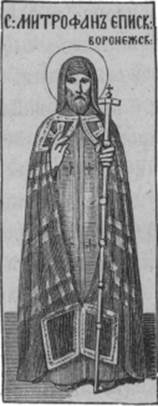
«Родился я от благочестивых родителей и был ими воспитан в непорочном благочестии Восточной Церкви, в православной вере», так говорит святитель Митрофан в духовном завещании своем376. Он родился в 1623 году от родителей духовного звания; род его, записанный в синодиках, начинается лицами, облеченными в иерейский сан. Мирское имя его было Михаил, и был он обязан узами брака; в письме к архимандриту Шартрошского монастыря говорит он о сыне своем Иване Михайлове.
“I was born of pious parents and was raised by them in the immaculate piety of the Eastern Church, in the Orthodox faith,” so says Hierarch Mitrophan in his spiritual testament376. He was born in 1623 to parents of the clerical rank; his lineage, recorded in the synodika, begins with persons vested with the priestly rank. His secular name was Michael, and he was bound by the ties of marriage; in a letter to the archimandrite of the Shartrosh Monastery he speaks of his son John Mikhailov.
Большая половина жизни его прошла в быту семейном; потеряв жену, на 40 году отрекся он от мирской жизни и вступил в общежительную Золотниковскую обитель, что невдали от Суздаля. Скоро стали говорить о строгой жизни инока Митрофана. Братия соседней Яхромской обители просила духовное начальство назначить им в игумена доброго старца Митрофана и Митрофан посвящен в игумена Крутицким митрополитом, блюстителем патриаршей кафедры. Игуменом Яхромской обители был он 10 лет. Заботясь о благолепии дома Божия, он приобрел дли обители богато-украшенное Евангелие377. Видя тесноту храма, с пособиями благотворителей построил более просторный храм в честь Спасителя и снабдил его новою утварью. Эти памятники ревности его о доме Божием еще целы. В 1675 году патр. Иоаким поручил ему другую более известную обитель, Унженскую, преп. Макария. Здесь он пробыл 7 лет378. Здесь попечением его сооружены теплый храм в честь Благовещения Богоматери с трапезою и колокольнею. В соборном Троицком храме целы писанные по его заботе местные иконы Спасителя, пр. Макария, Успения Богоматери, Сошествия Св. Духа, Иоанна Предтечи; в храме пр. Макария образ Спасителя с надписью: «1680 года, по обещанию монаха Митрофана». Все прочие помянутые иконы писаны, по надписям, 1679 и 1680 гг. при игумене Митрофане. Патриарх с любовию видел в игумене Митрофане инока ревностного к духовной жизни, настоятеля попечительного, мужа опытного в жизни и образовавшего себя усердным чтением полезных книг. Он поручил его надзору соседние обители и храмы, для поддержания в них принадлежащего им порядка и благочиния. Унженская обитель находилась тогда в особенном внимании царского дома, и царь Феодор имел случай не раз видеть игумена Митрофана. Из царедворцев особенно любил обитель Макариеву и ее игумена боярин Богдан Матвеевич Хитрово: когда только бывал игумен в Москве, он всегда принимаем был с любовию набожным боярином и игумен любил его за любовь его к обители.
The greater half of his life passed in the family way; having lost his wife, in his fortieth year he renounced the worldly life and entered the cenobitic Zolotnikovskaya Monastery, which is not far from Suzdal. Soon they began to speak of the strict life of the monk Mitrophan. The brethren of the neighboring Yakhroma Monastery asked the spiritual authorities to appoint the good elder Mitrophan as their abbot, and Mitrophan was consecrated abbot by the Metropolitan of Krutitsy, the guardian of the patriarchal throne. He was abbot of the Yakhroma Monastery for 10 years. Caring for the beauty of the house of God, he acquired for the monastery a richly adorned Gospel377. Seeing the crampedness of the church, with the aid of benefactors he built a more spacious church in honor of the Savior and furnished it with new vessels. These monuments of his zeal for the house of God are still intact. In 1675, Patriarch Joachim entrusted him with another, more renowned monastery, the Unzhensk Monastery of Venerable Macarius. Here he remained for 7 years378. Here, through his care, a warm church was built in honor of the Annunciation of the Mother of God, with a refectory and a bell tower. In the cathedral Trinity Church, the local icons of the Savior, Venerable Macarius, the Dormition of the Mother of God, the Descent of the Holy Spirit, and John the Forerunner, painted through his efforts, are still intact; in the church of Venerable Macarius there is an icon of the Savior with the inscription: “1680, by the vow of the monk Mitrophan.” All the other aforementioned icons were painted, according to the inscriptions, in 1679 and 1680 under Abbot Mitrophan. The Patriarch saw with love in Abbot Mitrophan a monk zealous for the spiritual life, a solicitous superior, a man experienced in life and one who had educated himself by diligent reading of useful books. He entrusted to his oversight the neighboring monasteries and churches, for the maintenance of proper order and decorum in them. The Unzhensk Monastery was then under the special attention of the royal house, and Tsar Theodore had occasion more than once to see Abbot Mitrophan. Among the courtiers, the boyar Bogdan Matveyevich Khitrovo especially loved the Macarian Monastery and its abbot: whenever the abbot was in Moscow, he was always received with love by the devout boyar, and the abbot loved him for his love for the monastery.
В 1682 году, когда нужно было избрать первого епископа Воронежского, царь Феодор, благоговейный к пр. Макарию, избрал «ученика и наместника его, игумена Митрофана, мужа истинно праведного и святого», так говорит современная монастырская записка379. Новые епархии, в том числе и Воронежская, открыты были тогда с тем, чтобы ближайший надзор святителей мог во время видеть замыслы раскола и вовремя принимать меры для противодействия расколу. Митрофан посвящен в епископа Воронежского 2 апреля 1682 года патриархом с 16 архипастырями. Скоро в самой Москве пришлось ему видеть, что значит для Церкви и отечества раскол. Так как благочестивый царь Феодор скоро скончался, а епископу новой епархии надобно было приготовить многое для новой кафедры, запастись и советами и вещами нужными для архиерейского служения (много утвари и книг получил он от архипастыря соседней – Рязанской епархии), то святитель Митрофан. присутствовал при венчании царей Иоанна и Петра Алексеевичей. Вместе с тем, в его глазах происходили и кровавые неистовства стрельцов против бояр и следовавший затем бунт Пустосвята с теми же стрельцами, домогавшийся передать все высшие правительственные меры в заведывание раскола. Он был в Кремле в тот страшный день (5 июля 1682 года), когда Хованский от имени раскольников объявил Софии, что если патриарх и архиереи не явятся на площадь к раскольникам, они ворвутся во дворец, убьют патриарха и всех духовных. Он был в тот же день на соборе в грановитой палате, когда раскольники, иные и пьяные, ворвались в палату с шумом, с образами, налоями, свечами и подали челобитную, которую надлежало слушать. Он видел, как Пустосвят Никита, которому волею царскою запрещено было говорить, говорил дерзости патриарху, и когда Холмогорский архиепископ Афанасий заметил ему грубость его, пьяный Пустосвят, в порыве ярости, бросился ва архипастыря, стал бить его и едва удержан был силою. Твердость правительницы Софии и ум патриарха спасли тогда Церковь и отечество от страшных бед380. Нельзя было не удержать до гроба в душе этих страшных сцен буйства людей испорченных. И святитель Митрофан до гроба был столько же твердым обличителем своеволий невежественного раскола, сколько ревностным попечителем о благе государственном.
In 1682, when it was necessary to choose the first bishop of Voronezh, Tsar Theodore, reverent toward Venerable Macarius, chose “a disciple and vicar of his, Abbot Mitrophan, a man truly righteous and holy,” as a contemporary monastic record says379. New dioceses, including that of Voronezh, were then opened so that the close oversight of the hierarchs might timely perceive the designs of the schism and take timely measures to counteract the schism. Mitrophan was consecrated Bishop of Voronezh on 2 April 1682 by the Patriarch together with 16 archpastors. Soon, in Moscow itself, he had occasion to see what the schism meant for the Church and the fatherland. Since the pious Tsar Theodore soon reposed, and the bishop of the new diocese needed to prepare many things for the new see, to furnish himself both with advice and with items necessary for hierarchal service (he received many vessels and books from the archpastor of the neighboring Ryazan diocese), St. Mitrophan was present at the crowning of the Tsars John and Peter Alexeyevich. At the same time, before his eyes occurred the bloody outrages of the streltsy against the boyars and the subsequent rebellion of Pustosvyat with the same streltsy, which sought to transfer all higher governmental measures into the management of the schism. He was in the Kremlin on that terrible day (5 July 1682), when Khovansky, on behalf of the schismatics, declared to Sophia that if the Patriarch and the bishops did not appear on the square before the schismatics, they would break into the palace, kill the Patriarch and all the clergy. He was on that same day at the council in the Palace of Facets, when the schismatics, some of them drunk, burst into the hall with noise, with icons, lecterns, and candles, and presented a petition which had to be heard. He saw how Pustosvyat Nikita, whom the tsar’s will had forbidden to speak, spoke insolently to the Patriarch, and when Archbishop Athanasius of Kholmogory remarked on his rudeness, the drunken Pustosvyat, in a fit of rage, rushed at the archpastor, began to beat him, and was scarcely restrained by force. The firmness of the regent Sophia and the wisdom of the Patriarch then saved the Church and the fatherland from terrible calamities380. It was impossible not to retain in the soul until the grave those terrible scenes of the riot of corrupt men. And St. Mitrophan was until the grave as firm a denouncer of the lawlessness of the ignorant schism as he was a zealous guardian of the state’s welfare.
Прибыв на место архипастырского служения своего, святитель прежде всего обратился с окружным посланием к пастырям местных церквей. «Честные иереи Бога Вышнего! писал святитель, вожди стада Христова! Вы должны иметь светлые умные очи, просвещенные светом разумения, чтобы вести других по правому пути; по слову Господа, вы должны быть самым светом: вы есте свет миру. Вы, как пастыри, должны преподавать овцам манну слова Божия, подобно как ангелы приготовляли чувственную манну в пустыне. Вы, как ходатаи, должны в молитвах ваших подражать Моисею и Павлу, которые с такою ревностию молились Богу за людей своих! Моисей говорил Богу: Господи! ныне аще оставиши грехи их, то остави: аще ли ни, изглади мя из книг, в них же вписал еси. Павел говорил: молился бых сам аз отлучен быти от Христа по братии моей, сродницех по плоти, иже суть Изральтяне. Так и вам надобно ревновать о спасении людей Божиих. Добрые пастыри были таковы, что готовы были положить свои души за овец. Так и вы устрояйте себя. Пасите, еже в вас стадо Божие не нуждею, но волею и по Бозе, ниже неправедными прибытки, но усердно. Христос Спаситель, когда вручал св. Ап. Петру пасение овец своих, трижды говорил: паси. Это, очевидно, и для того, что пастыри трояко пасут врученное им стадо – словом учения, молитвою и силою св. Таин, и образом жизни. Три эти вида пасения и вы усердно выполняйте: преподавайте людям слово учения, показывайте в себе пример жизни, усердно возносите молитвы к Богу о врученной вам пастве, старайтесь назидать их святыми тайнами, т. е. просвещайте неверующих св. крещением, согрешивших после крещения старайтесь приводить к покаянию и исправлению жизни, достойных сподобляйте пречистых Таин Тела и Крови Христовой, заботьтесь о больных, чтобы особенно не отходили из этой жизни без св. Таин и не лишались последнего елеосвящения. Вместе с Божественным Павлом свидетельствую пред Богом Господом Иисусом Христом: проповедуйте слово, настойте благовременно и безвременно, обличайте, запрещайте, умоляйте с терпением и учением. Умоляю вас, братия, вразумляйте бесчинных, утешайте малодушных, защищайте немощных, будьте терпеливы ко всем, непрестанно молитесь, за все благодарите, ибо такова воля Божия о вас во Христе Иисусе. Будьте примером для верных в слове, в жизни, в любви, в духе, в вере, в чистоте; не подавайте соблазна никому, чтобы служение ваше было беспорочно; во всем представляйте себя как Божиих слуг. Если все это соблюдете, то, когда явится Пастыреначальник, получите неувядаемый венок славы. О! когда бы получить всем нам сию славу, благодатию Господа нашего Иисуса Христа, Которому принадлежит слава и держава со Отцем и Св. Духом во веки веков! Благословение Господне на вас, благодатию Его, всегда, ныне и присно и во веки веков. Аминь».
Having arrived at the place of his archpastoral service, the hierarch first of all addressed a circular epistle to the pastors of the local churches. “Honorable priests of the Most High God!” wrote the hierarch, “leaders of the flock of Christ! You ought to have bright eyes of the mind, enlightened by the light of understanding, to lead others along the right path; according to the word of the Lord, you yourselves ought to be light: Ye are the light of the world. You, as shepherds, ought to impart to the sheep the manna of the word of God, just as the angels prepared the physical manna in the wilderness. You, as intercessors, ought in your prayers to imitate Moses and Paul, who with such zeal prayed to God for their people! Moses said to God: Lord, if Thou wilt forgive their sin, forgive; but if not, blot me out of Thy book which Thou hast written. Paul said: I could wish that myself were accursed from Christ for my brethren, my kinsmen according to the flesh, who are Israelites. So you too must be zealous for the salvation of God’s people. The good shepherds were such that they were ready to lay down their lives for the sheep. So also do you conduct yourselves. Feed the flock of God which is among you, not by constraint, but willingly, and for God; not for filthy lucre, but of a ready mind. Christ the Savior, when He entrusted to the holy Apostle Peter the feeding of His sheep, said three times: feed. This is evidently also because shepherds feed the flock entrusted to them in three ways—by the word of teaching, by prayer and the power of the holy Mysteries, and by the example of life. These three kinds of feeding do you also diligently fulfill: impart to the people the word of teaching, show in yourselves an example of life, earnestly offer up prayers to God for the flock entrusted to you, strive to edify them with the holy Mysteries, that is, enlighten the unbelieving with holy Baptism, strive to bring those who have sinned after Baptism to repentance and correction of life, deem the worthy worthy of the most pure Mysteries of the Body and Blood of Christ, care for the sick, that especially they may not depart from this life without the holy Mysteries and be deprived of the last anointing. Together with the divine Paul, I testify before God the Lord Jesus Christ: preach the word, be instant in season and out of season, reprove, rebuke, exhort with all longsuffering and doctrine. I beseech you, brethren, admonish the unruly, comfort the faint-hearted, support the weak, be patient toward all, pray without ceasing, in everything give thanks, for this is the will of God in Christ Jesus concerning you. Be an example to the believers in word, in conduct, in love, in spirit, in faith, in purity; give no offense to anyone, that your ministry may be blameless; in all things present yourselves as servants of God. If you keep all this, then when the Chief Shepherd appears, you will receive an unfading crown of glory. Oh, that we all might obtain this glory, by the grace of our Lord Jesus Christ, to Whom belong glory and dominion with the Father and the Holy Spirit, unto the ages of ages! The blessing of the Lord be upon you, by His grace, always, now and ever and unto the ages of ages. Amen.”
Это послание показывает, какою живою, какою отеческою любовию исполнено было сердце святителя, как высоко понимал он долг пастыря и как старался выполнить его сам!
This epistle shows with what living, what fatherly love the heart of the hierarch was filled, how highly he understood the duty of a shepherd, and how he himself strove to fulfill it!
Новое место иераршеской кафедры, доселе не видавшее архипастырского служения, требовало от архипастыря многих и разных забот, тем более, что Воронеж в те времена подвергался и нападениям Татар. Вот распоряжение, которое содержанием своим показывает, как много было и других еще распоряжений архипастыря! Правитель духовных дел, Воскресенский священник, «по указу от 29 июля 1688 года, преосвященнейшего Митрофана, епископа Воронежского», писал: «стрелецкому голове Селену Федосеевичу. По правилам 1 св. Апостол и св. отцов архиереи Божии со всем освященным собором должны в праздник происхождения Честного Креста выходить из города на источник для освящения воды. Голова Семен Федосеевич имеет приказать, в предохранение города и всех людей от набега неприятельских людей, в 1 числе августа, на происхождение Честного Креста, быть Воронежским стрельцам с ружьями и наблюдать, как бы не случилось какого несчастия с Воронежом и городскими людьми. Преосвященный приказал также, чтобы на р. Воронеже к показанному числу построена была Иордань, а в Иордани обычный ковчег (ящик), как бывает у прочих архиереев Божиих, чтобы можно было погружать Честный и Животворящий Крест»381.
The new place of the hierarchal see, which had never before seen archpastoral service, required from the archpastor many and varied cares, all the more because Voronezh in those times was also subject to attacks by the Tatars. Here is a directive which, by its content, shows how many other directives the archpastor also had! The administrator of spiritual affairs, the priest of the Resurrection Church, ‘by decree of 29 July 1688, of the Most Reverend Mitrophan, Bishop of Voronezh’, wrote: ‘To the streltsy commander Semyon Fedoseyevich. According to the rules of the 1st holy Apostles and the holy Fathers, the bishops of God with the entire consecrated council are to go out of the city to a spring on the feast of the Procession of the Precious Cross for the blessing of water. Commander Semyon Fedoseyevich is to order, for the protection of the city and all people from an incursion of enemy forces, on the 1st of August, on the Procession of the Precious Cross, that the Voronezh streltsy be present with their weapons and keep watch, lest some misfortune befall Voronezh and its townspeople. The Most Reverend also ordered that on the Voronezh River, by the appointed date, a Jordan be built, and in the Jordan the customary ark (chest), as is done by other bishops of God, so that the Precious and Life-giving Cross may be immersed’381.
Вскоре по прибытии своем в Воронеж, святитель начал строить каменный кафедральный собор Благовещения Богоматери. В этом храме ему не суждено было совершать служений: он служил в деревянном храме Ап. Петра и Павла. Много заботился он, чтобы утварь и облачение были приличные святилищу Божию; довольно утвари устроил он на свой счет. Он зорко смотрел и за тем, чтобы все жертвуемое храму Божию хранилось бережно и благоговейно. Смиренный инок в келии и в душе своей, он в храме Божием пред паствою являлся облеченным знаками высокого сана своего.
Soon after his arrival in Voronezh, the hierarch began to build a stone cathedral church of the Annunciation of the Mother of God. In this church he was not destined to celebrate services: he served in the wooden church of the Holy Apostles Peter and Paul. He took great care that the vessels and vestments should be befitting the sanctuary of God; he provided a fair amount of vessels at his own expense. He also watched vigilantly that everything offered to the church of God should be kept carefully and reverently. A humble monk in his cell and in his soul, in the church of God before his flock he appeared vested with the insignia of his high rank.
В начале епархия его, кроме Воронежа, заключала в себе шесть городов: Елец, Костенский, Землянск, Орлов, Урыв и Коротояк. Епархия не обширная! Так как тогда содержание кафедры со всем ее клиром зависело от сбора определенной, но незначительной суммы с церквей и обителей, то понятно, что Воронежский святитель не мог быть богатым и боролся с нуждами в содержании дома своего. Правда, в дому приписаны были кое-какие земли и именно угодья Боршевского монастыря; но они мало приносили пользы, по их отдаленности. В письме от 17 апреля 1692 года к Острогожскому полковнику Петру Алексеевичу Буларту святитель просит скорее взять в арендное содержание известную вотчину за прежнюю цену382. В письме в Острогожскому полковнику Феодору Ивановичу Куколю пишет: «приходит праздник Благовещения Пресвятой Богородицы. Сделай милость, Феодор Иванович, прикажи для такого праздника и для прибытия государева достать свеженького осетра и свежей белужины, или и новопросольной; здесь в Воронеже и сомины взять негде»383. Не смотря на малое число городов новой епархии, духовные управители Рязанской епархии, к которой прежде принадлежали и города новой епархии, входили с жалобами на присвоения некоторых церквей Воронежским начальством, и дело доведено было до патриарха384. Иоаким грамотою от 30 января 1696 года, с точностию определяя границы Воронежской епархии, писал, что в ее круге должны состоять и поселившиеся по р. Осереду, Битюку и Икорцу; это было не столько расширение границы Воронежской епархий, сколько точное обозначение ее в пунктах не ясно определенных. Далеко более сделал царь Петр Великий. Сам часто бывая в Воронеже для строения кораблей, он близко видел нужды новой кафедры, видел и местности Воронежского края, как и характер жителей385. Места по Усерду и часть Коротоякского уезда заселены были Малороссиянами Острогожского полка. Полковой город принадлежал к Белогородской епархии. Таким образом некоторые церкви Острогожского полка состояли в ведении Воронежского святителя, самая же большая часть казаков относилась по духовным делам к отдаленному Белогородскому архипастырю. Царь Петр в жалованной грамоте 1699 года писал: «поелику Белогородская и Рязанская епархии не бедны, а Воронежская недостаточна, и при том некоторые города от них стоят вдали, то приписать еще к Воронежской епархии от Рязанской города: Усмань, Острожки, Белоколоцк и Демшин, а от Белогородской епархии город Острогожск и с их уездами». Для содержания архипастырского дома даны были еще мельницы и село Боерак в Лебедянском уезде386.
At the beginning, his diocese, besides Voronezh, comprised six towns: Yelets, Kostensk, Zemlyansk, Orlov, Uryv, and Korotoyak. A diocese of no great extent! Since at that time the maintenance of the cathedra with all its clergy depended upon the collection of a fixed but insignificant sum from the churches and monasteries, it is understandable that the Hierarch of Voronezh could not be wealthy and struggled with the needs of maintaining his household. True, certain lands were attached to the house, namely the estates of the Borshevsky Monastery; but they brought little profit, owing to their remoteness. In a letter of 17 April 1692 to the Ostrogozhsk Colonel Peter Alexeevich Bulart, the Hierarch asks that a certain votchina be taken into leasehold without delay at the former price382. In a letter to the Ostrogozhsk Colonel Theodore Ivanovich Kukol he writes: 'The feast of the Annunciation of the Most Holy Theotokos is approaching. Do me the kindness, Theodore Ivanovich, order that for such a feast and for the sovereign's arrival a fresh sturgeon and fresh beluga be procured, or even newly salted; here in Voronezh one cannot get even a sheatfish'383. Notwithstanding the small number of towns in the new diocese, the spiritual administrators of the Ryazan diocese, to which the towns of the new diocese had formerly belonged, lodged complaints concerning the appropriation of certain churches by the Voronezh authorities, and the matter was brought before the Patriarch384. Joachim, by a charter of 30 January 1696, precisely defining the boundaries of the Voronezh diocese, wrote that within its circuit should also be included those settled along the rivers Osered, Bityug, and Ikorets; this was not so much an extension of the boundary of the Voronezh diocese as an exact designation of it at points not clearly defined. Far more was done by Tsar Peter the Great. Being himself often in Voronezh for the building of ships, he saw at close hand the needs of the new cathedra; he saw also the localities of the Voronezh region, as well as the character of its inhabitants385. The places along the Userd and part of Korotoyak district were settled by Little Russians of the Ostrogozhsk regiment. The regimental town belonged to the Belgorod diocese. Thus certain churches of the Ostrogozhsk regiment were under the jurisdiction of the Voronezh Hierarch, while the greater part of the Cossacks were referred in spiritual matters to the distant Belgorod archpastor. Tsar Peter, in a grant of 1699, wrote: 'Since the Belgorod and Ryazan dioceses are not poor, while the Voronezh one is insufficient, and moreover some towns lie at a distance from them, let there be added to the Voronezh diocese from Ryazan the towns: Usman, Ostrozhki, Belokolotsk, and Demshin, and from the Belgorod diocese the town of Ostrogozhsk with their districts.' For the maintenance of the archpastor's house there were also given mills and the village of Boerak in the Lebedyan district386.
Блаженный архипастырь, проникнутый духом учения Христова, был искренним чтителем власти царской и усердным попечителем о благе православного царства. Государь Петр Великий готовился тогда к войне с Магометанским царством и, для нанесения решительных ударов с моря Азовской крепости, строил (с 1694 года) на Воронежской верфи корабли разных размеров. Святитель Божий старался помогать святому делу и молитвою и словом увещания. Он объяснял при каждом случае, как благодетельны намерения государя для отчизны и Церкви, столько лет страждущих от дикого магометанства. Когда же строение кораблей встретило себе затруднение, вопреки стараниям царя, в недостатке денег, святитель поспешил отвратить это препятствие. Собрав все деньги, какие были у него при кафедре, он принес их государю и сказал: всякий сын отечества должен от своего достатка помогать нужде государственной; прими же, государь, от моих издержек оставшиеся деньги и употреби их против неверных». Тронутый Петр принял это пособие из рук святителя, как залог благоволения Божия к его предприятию. Постройка кораблей пошла быстро. С наступлением весны 1696 года царь имел утешение спустить на Дон флот свой: 2 военных корабля и 30 малых судов с 4,000 войска. Азов пал к стопам царя. Признательный Петр, торжествуя покорение Азова, повелел святителю Митрофану называться Воронежским и Азовским. И в последующее время св. Митрофан жертвовал достояние оное на нужды государства. Во время Шведской войны, расходы военные истощали казну до крайности. В 1700 году святитель Митрофан послал от себя 4,000 р. на остановившееся строение кораблей в Воронежском адмиралтействе. В следующем году он пожертвовал 3,000 р. на жалованье воинам. Петр Великий писал в грамоте святителю: «донесено нам, что для общей пользы христиан, на вспоможение войне с врагами святого креста, по доброжелательному усердию к нашему царскому величеству, на строение кораблей и ратным людям морского военного флота ты дал из своей домовой казны 4,000 р. в Воронеже. Мы, великий государь, усердие твое ко всему христианскому народу милостиво принимаем и хвалим. За то и вперед милость нашего царского величества неотъемлемо пребудет с тобою, нашим богомольцем, в чем будь благонадежен навсегда». Эта грамота писана от 20 апреля 1700 года, а другая такого же содержания писана 18 мая 1701 года387.
The blessed archpastor, penetrated with the spirit of Christ's teaching, was a sincere reverer of the royal authority and a zealous guardian of the welfare of the Orthodox realm. Sovereign Peter the Great was then preparing for war with the Mohammedan kingdom and, in order to deal decisive blows from the sea against the fortress of Azov, was building (from 1694) ships of various sizes at the Voronezh shipyard. The Hierarch of God strove to aid the holy cause both by prayer and by the word of exhortation. He explained on every occasion how beneficent were the sovereign's intentions for the fatherland and the Church, which had suffered for so many years from wild Mohammedanism. When, however, the building of the ships encountered an obstacle, contrary to the tsar's efforts, in a shortage of money, the Hierarch hastened to remove this hindrance. Having gathered all the money that he had at the cathedra, he brought it to the sovereign and said: "Every son of the fatherland ought from his own means to aid the need of the state; accept then, sovereign, the money remaining from my expenditures and use it against the infidels." Touched, Peter accepted this assistance from the hands of the Hierarch as a pledge of God's favor toward his undertaking. The building of the ships proceeded swiftly. With the coming of spring in 1696, the tsar had the consolation of launching his fleet upon the Don: 2 warships and 30 small vessels with 4,000 troops. Azov fell at the tsar's feet. Grateful Peter, triumphing over the conquest of Azov, commanded that Hierarch Mitrophan be called Voronezh and Azov. And in subsequent times St. Mitrophan offered his substance for the needs of the state. During the Swedish War, military expenditures exhausted the treasury to the utmost. In 1700 Hierarch Mitrophan sent from himself 4,000 rubles for the halted construction of ships at the Voronezh Admiralty. In the following year he donated 3,000 rubles for the pay of the soldiers. Peter the Great wrote in a charter to the Hierarch: "It has been reported to us that for the common benefit of Christians, in aid of the war against the enemies of the holy cross, out of your benevolent zeal toward our royal majesty, for the building of ships and for the servicemen of the naval military fleet, you gave from your household treasury 4,000 rubles in Voronezh. We, the great sovereign, graciously accept and praise your zeal toward the whole Christian people. For this, henceforth the favor of our royal majesty shall remain inseparably with you, our supplicant, in which be fully assured forever." This charter was written on 20 April 1700, and another of the same content was written on 18 May 1701387.
Человек Божий, благоговея к помазаннику Божию, твердо хранил в душе, что св. воля Божия выше всего и спасение душ христианских, врученных сею волею христианскому пастырю, должно быть предметом ревности пастырской. Пророк Илия ревновал против соблазнов, посеваемых в народе, и говорил о нечестии соблазна царям Израиля. И святитель Митрофан не боялся говорить правду царю, в виду опасностей грозного царского гнева. Петр Великий проживал по временам по нескольку недель в Воронеже для надзора за постройкою военного флота. Вблизи адмиралтейства стоял дворец его. По обычаю иноземному, здание царское было украшено изваниями языческих богов. Раз царь пригласил к себе святителя. Старец, по простоте Евангельской, пешим пошел к царю. Уже перешел он мост и вступил на остров р. Воронежа, где находилось адмиралтейство, как взор его встретил изваяния языческие у ворот дворца. Целомудренный взор святителя оскорбился и благоговение его к высоте христианства, заменяемого здесь язычеством, возмутилось. Святитель не пошел далее, а воротился в свои келии. Государь, которому сказали, что архиерей был у дворца и ушел, по светскому направлению мыслей, оскорбился поступком архипастыря. Он послал опять звать его к себе. Святитель отвечал посланному: «пока государь не повелит низвергнуть идолов, которые соблазняют народ, не могу явиться во дворец пред его царския очи». Услышав столь решительный ответ, Петр пришел в негодование. Как смеет он не слушаться царской власти? говорил гневный Петр. Царь послал сказать, что если не явится сейчас же, как преступник царской воли, подвергнется казни. «Жизнь моя во власти царя, отвечал святитель посланному: но для меня лучше умереть, чем нарушить долг святительского сана моего. Лучше умереть, чем присутствием своим или боязливым молчанием одобрять язычество. Неприлично государю православному ставить языческие болваны и тем соблазнять простые сердца народа Гнев Петра, между тем, несколько остыл и, когда передали ему слова святителя, он терпеливо выслушал их. С своей стороны, свят. Митрофан, хорошо зная строгость Петра, зная, что царское слово, возвестившее ему смерть, не исполнится разве по чуду Божию, спешил приготовить душу свою к вечности. Он распорядился, чтобы благовестили ко всенощному бдению в большой колокол. Государь, услышав благовест, спросил: « что за праздник завтра?» Ему отвечали, что нет никакого. Он послал спросить о причине благовеста к архиерею. Святитель отвечал посланному: «мне, как преступнику, словом царским назначена смерть; готовясь к смерти, хочу я совершить соборное моление с Церковию о прощении грехов моих, чтобы Господь явил надо мною милость Свою». Петр изумился решимости святителя умереть по ревности к делу Божию. Он немедленно послал успокоить его милостивым словом своим и просил не тревожить народа необычайным звоном. Затем, немедля велел снять статуи, оскорбившие пастыря. Услышав о последнем, святитель на другой день пришел к царю и смиренно благодарил его за уничтожение изваяний, соблазнительных для народа. Так, пастырь Божий совершил исповеднический подвиг. Государь видел по этому опыту величие духа в святителе и еще более, чем прежде, стал уважать его388.
The man of God, reverencing the anointed of God, firmly kept in his soul that the holy will of God is above all things, and that the salvation of Christian souls, entrusted by that will to the Christian pastor, must be the object of pastoral zeal. The Prophet Elijah was zealous against the temptations sown among the people, and spoke of the iniquity of temptation to the kings of Israel. And Hierarch Mitrophan was not afraid to speak the truth to the tsar, in the face of the dangers of terrible royal wrath. Peter the Great sometimes lived for several weeks at a time in Voronezh to supervise the construction of the military fleet. Near the admiralty stood his palace. After the foreign custom, the royal building was adorned with images of the pagan gods. Once the tsar invited the Hierarch to himself. The elder, in evangelical simplicity, went on foot to the tsar. He had already crossed the bridge and set foot upon the island of the Voronezh River where the admiralty stood, when his gaze met the pagan images at the gates of the palace. The chaste gaze of the Hierarch was offended, and his reverence for the height of Christianity, here replaced by paganism, was stirred. The Hierarch went no further, but returned to his cell. The sovereign, to whom it was reported that the bishop had been at the palace and had left, being of a worldly cast of mind, was offended by the archpastor's conduct. He sent again to summon him to himself. The Hierarch answered the messenger: 'So long as the sovereign does not command the idols that tempt the people to be cast down, I cannot appear at the palace before his royal eyes.' Hearing such a resolute answer, Peter was moved to indignation. How dare he disobey the royal authority? said the angry Peter. The tsar sent word that if he did not appear at once, as a transgressor of the royal will he would suffer execution. 'My life is in the power of the tsar,' answered the Hierarch to the messenger: 'but for me it is better to die than to violate the duty of my hierarchal rank. Better to die than by my presence or by fearful silence to approve paganism. It is unseemly for an Orthodox sovereign to set up pagan idols and thereby tempt the simple hearts of the people.' Peter's anger, meanwhile, had somewhat cooled, and when the Hierarch's words were conveyed to him, he heard them patiently. For his part, St. Mitrophan, knowing well Peter's severity, knowing that the tsar's word which had announced death to him would not be fulfilled save by a miracle of God, hastened to prepare his soul for eternity. He gave orders that the great bell be rung for the All-night Vigil. The sovereign, hearing the ringing, asked: 'What feast is tomorrow?' He was answered that there was none. He sent to ask the bishop the reason for the ringing. The Hierarch answered the messenger: 'As a transgressor, I have been sentenced to death by the tsar's word; preparing for death, I wish to perform with the Church a conciliar supplication for the forgiveness of my sins, that the Lord may show His mercy upon me.' Peter marveled at the Hierarch's resolve to die out of zeal for the cause of God. He immediately sent to reassure him with his gracious word, and asked him not to disturb the people with the unusual ringing. Then, without delay, he ordered the statues that had offended the pastor to be removed. Hearing of this, the Hierarch on the next day came to the tsar and humbly thanked him for the destruction of the images that were a temptation to the people. Thus the pastor of God accomplished a confessor's feat. The sovereign saw from this experience the greatness of spirit in the Hierarch and began to respect him even more than before388.
Святитель Митрофан и во всякое другое время близко к душе держал мысль о смерти. Доказательством тому служит синодик его. Здесь помещены увещания не увлекаться счастием временным, ни богатством, ни властию, ни честями, а помнить, что надобно умереть и явиться на суд Божий. Этот синодик служит памятником и твердой веры святителя в нужду и благотворное действие молитв за усопших. Здесь видим и то, как сердце святителя было просторно, оно обнимало и овец паствы своей и людей верно служивших отчизне православной. Здесь поминаются воины из полку боярина Алексея Семеновича Шеина, скончавшиеся на пути к Азову и убитые под стенами сего города, воины из полку боярина Бориса Петровича Шереметева, убиенные в сражении и умершие в плену. Святитель и другими опытами показывал, что любовь христианская была жизнию души его. Дом его был отдыхом для всех, утомленных жизнию, – в нем находили помощь себе бедняки всякого вида, вдовы и сирые. После того вполне естественно видеть и то, что в письме к игумену Унженскому (от 16 сентября 1693 г.) св. Митрофан смиренно просит игумена не лишить любви своей сына его Ивана и поберечь его от обид и от всяких худых людей389, а в письме к Шартомскому архимандриту просит оказать сыну его покровительство, когда тот будет у него в обители, на пути из Воронежа в Унженский монастырь, к своей должности, к должности подъячего обители390. Пастырскою заботливостию его основались в епархии его две обители: в 1690 году Донщинская и в 1693 году Битюгская, и сам он нередко проживал в первой391. Блаженный архипастырь был прост в обхождении: к нему открыт был доступ для каждого, богатого и бедного, знатного и безъизвестного.
St. Mitrophan also at every other time kept the thought of death close to his soul. Proof of this is his synodicon. Herein are placed exhortations not to be carried away by temporal happiness, nor by wealth, nor by power, nor by honors, but to remember that one must die and appear at the judgment of God. This synodicon also serves as a monument to the Hierarch’s firm faith in the necessity and beneficial effect of prayers for the departed. Here we also see how spacious the Hierarch’s heart was; it embraced both the sheep of his flock and the people who faithfully served the Orthodox fatherland. Here are commemorated the soldiers from the regiment of the boyar Alexei Semenovich Shein, who died on the way to Azov and were slain under the walls of that city, and the soldiers from the regiment of the boyar Boris Petrovich Sheremetev, who were killed in battle and died in captivity. The Hierarch also showed by other experiences that Christian love was the life of his soul. His house was a place of rest for all who were weary of life—in it the poor of every kind, widows and orphans, found help. After this it is entirely natural to see also that in a letter to the Abbot of Unzha (of September 16, 1693), St. Mitrophan humbly asks the abbot not to deprive his son John of his love and to protect him from offenses and from all evil people389, and in a letter to the Archimandrite of Shartom he asks him to show his son protection when he is at his monastery, on the way from Voronezh to the Unzha Monastery, to his duty, to the duty of a clerk of the monastery390. Through his pastoral solicitude two monasteries were founded in his diocese: in 1690 the Donshchinskaya and in 1693 the Bityugskaya, and he himself often lived in the former391. The blessed archpastor was simple in his manner: access to him was open to everyone, rich and poor, noble and unknown.
Двадцать лет св. Митрофан управлял Воронежскою паствою и достиг глубокой старости. Предчувствуя близкое исшествие из мира земного, приготовил он духовное завещание. Завещание его – поучительно и назидательно.
For twenty years St. Mitrophan governed the Voronezh flock and reached a deep old age. Foreseeing his imminent departure from the earthly world, he prepared a spiritual testament. His testament is instructive and edifying.
«Судьбами Божиими, говорит он, дошел я до семидесятилетней старости и уже изнемогаю в силах телесных. Потому, помня о смерти, рассудил я написать последнее мое писание, чтобы оказать помощь душе и телу моему». С глубоким смирением Божий архиерей исповедует пред всеми свою веру, которой служителем остается до последнего вздоха. «Когда грешная душа моя, продолжает он, разрешится от уз плоти, вручаю ее благости премудрого Бога, создавшего ее, да приимет ее милостиво, как дело рук Своих; а грешные кости предаю матери всех, ожидая воскресения мертвых». Затем обращает отеческую заботу свою к пастырям церкви и убеждает их ходить достойно звания. «Простец согрешивший даст ответ только за свою душу; а иереи будут истязаны за многих, – те, которые не радели о овцах, собирая с них млеко и волну». Обращаясь к судиям, говорит: «судиям епархии нашей заповедую пещись о правосудии в делах гражданских: пусть совершают праведный суд. Неправда в судах и коварство между людьми очень умножились; очень много плачущих от бедности и оскорблений, – люди всякого звания терпят оскорбления, вдовы, сироты, немощные. Завещаваю судиям – по воле государя управлять людьми правдиво, чтобы жили о Боге духом, без напрасной молвы и ни к чему ненужной суетности»... Всей пастве своей говорит: «всем живущим по городам и селам епархии моей предлагаю – строго сохранять благочестие и смотреть за спасением душ своих. Пусть все православные христиане пребывают в прародительской вере, во всем добром, в чистоте, воздержании, святости и покаянии. Заповедую иметь вседушевную любовь к православно-кафолической вере, чтить единую во всей вселенной Церковь как матерь и в ней пребывать неуклонно, крепко держаться предания и учения св. отцов, – ни в чем не уклоняясь от них. Как без правильной веры нельзя угодить Богу, так и вне св. Восточной Церкви и без светлого ее учения, преданного Богом, нельзя никому спастись». Потом обращается к самому себе и пишет: «если каким бы то ни было образом согрешил я, как человек, если кого-либо оскорбил в моем сане, со слезами прошу каждого простить меня: прошу прощения у всей Церкви Божией и у всего священного собора; прошу молитв всего православного народа за мою грешную душу, чтобы помиловал ее Господь предстательством Пречистой Своей Матери и сподобил меня Царствия Небесного. Сотворите милость для меня, принесите последний долг Богу для пользы души моей: помяните грешную мою душу, чтобы и вы были помянуты Господом в день праведного суда. Сей глагол мой предстанет пред вами в день праведного суда. Не отриньте прошения моего, – последней любви вашей ко мне грешному, со слезами прошу, – не забудьте меня грешного в молитвах своих, но заповеди Апостола: братия, молитесь друг задруга». В конце всего, просит похоронить его в Архангельском приделе, а не в самом соборе, и непременно облечь его пред кончиною в схиму.
“By the judgments of God,” he says, “I have reached the age of seventy years and am already failing in bodily strength. Therefore, remembering death, I have resolved to write my final document, in order to render help to my soul and body.” With deep humility, the bishop of God confesses before all his faith, whose servant he remains until his last breath. “When my sinful soul,” he continues, “is loosed from the bonds of the flesh, I entrust it to the goodness of the all-wise God, who created it, that He may receive it mercifully as the work of His hands; and my sinful bones I commit to the mother of all, awaiting the resurrection of the dead.” Then he turns his fatherly care to the pastors of the Church and exhorts them to walk worthily of their calling. “A layman who sins will give answer only for his own soul; but priests will be tormented for many—those who have been negligent of the sheep, gathering from them milk and wool.” Turning to the judges, he says: “To the judges of our diocese I command that they care for justice in civil matters: let them render righteous judgment. Injustice in courts and deceit among men have greatly multiplied; there are very many weeping from poverty and insults—people of every rank suffer insults, widows, orphans, the infirm. I command the judges—according to the will of the sovereign to govern the people truthfully, that they may live in God in spirit, without vain rumor and useless vanity in anything.”... To all his flock he says: “To all living in the cities and villages of my diocese I propose—strictly to preserve piety and to watch over the salvation of your souls. Let all Orthodox Christians abide in the ancestral faith, in all that is good, in purity, temperance, holiness and repentance. I command you to have wholehearted love for the Orthodox Catholic faith, to honor the one Church throughout the whole universe as a mother and to abide in her unswervingly, to hold firmly to the tradition and teaching of the holy fathers—in nothing deviating from them. As without right faith one cannot please God, so outside the holy Eastern Church and without her luminous teaching, delivered by God, no one can be saved.” Then he turns to himself and writes: “If in any way whatsoever I have sinned as a man, if I have offended anyone in my rank, with tears I ask each one to forgive me: I ask forgiveness of the whole Church of God and of all the sacred council; I ask the prayers of all the Orthodox people for my sinful soul, that the Lord may have mercy on it through the intercession of His Most Pure Mother and vouchsafe me the Kingdom of Heaven. Show mercy to me, render the last debt to God for the benefit of my soul: remember my sinful soul, that you also may be remembered by the Lord on the day of righteous judgment. This my word shall stand before you on the day of righteous judgment. Do not reject my petition—the last love of you for me a sinner, with tears I ask—do not forget me a sinner in your prayers, but according to the Apostle’s commandment: Brethren, pray for one another.” At the end of all, he asks to be buried in the Archangel chapel, and not in the cathedral itself, and without fail to clothe him before his end in the schema.
Святитель скончался 23 ноября 1703 г. По воле Божией случилось, что в тот самый день прибыл в Воронеж государь. По обычаю своему, поспешил он посетить доброго архипастыря, но уже застал его при последнем издыхании; царь поцеловал его руку и остался ждать кончины, которая не замедлила. Государь сам закрыл глаза его и велел приготовить вое нужное для погребения почетного. Декабря 4 все собрались в собор, явился и Петр Великий со всеми чинами адмиралтейства, отпевание совершил Алексеевский архимандрит Никанор, с игуменами и священниками. Когда надобно было выносить тело и священники подошли, чтобы поднять тело, государь, обратясь к чинам морским, сказал: «нам стыдно будет, если не засвидетельствуем признательности нашей сему благодетельному пастырю отданием последней почести; мы сами вынесем тело его». И с этими словами государь поднял гроб святителя и с старшими военачальниками понес в собор; потом сам же нес тело в усыпальницу и опустил в могилу. «Не осталось у меня такого святого старца, – буди ему вечная память!» сказал царь благодарный.
The Hierarch reposed on November 23, 1703. By the will of God it happened that on that very day the sovereign arrived in Voronezh. According to his custom, he hastened to visit the good archpastor, but found him already at his last breath; the Tsar kissed his hand and remained to await the end, which was not long in coming. The sovereign himself closed his eyes and ordered everything necessary for an honorable burial to be prepared. On December 4, all gathered in the cathedral; Peter the Great also appeared with all the ranks of the Admiralty. The funeral service was performed by Archimandrite Nicanor of the Alexeevsky Monastery, with abbots and priests. When it was time to carry out the body and the priests approached to lift it, the sovereign, turning to the naval ranks, said: “It would be shameful for us if we did not testify our gratitude to this beneficent pastor by rendering him the last honor; we ourselves will carry out his body.” And with these words the sovereign lifted the coffin of the Hierarch and, together with the senior military commanders, carried it into the cathedral; then he himself carried the body into the crypt and lowered it into the grave. “I have no such holy elder left—eternal memory to him!” said the grateful Tsar.
Дивны пути Божии! Собор, строенный святителем целые пятнадцать лет, оказался ненадежным и остался без употребления392. К чему это? Для земного человека, кто бы он ни был, нужна скорбь, чтобы очистить душу его. Она нужна была и для блаженного Митрофана. Но вместе с тем непрочный храм назначен был и к славе Митрофана, очищенного скорбями времени. Архангельский придел собора, где положено было тело святителя, потребовал многих поправок. Гроб святителя пришлось перенесть в другой храм и перенесли в храм, бывший под колокольнею; потом, спустя 15 лет, поставили его в новом Благовещенском соборе. В тот и другой раз тело святителя видели нетленным. Потому паства его ожидала полного прославления его, – и между тем, по его же воле, часто совершала панихиды о упокоении блаж. архипастыря. С 1820 г. число почитателей памяти святителя увеличилось, – являлись совершать панихиды и из соседних епархий. В 1830 г. доведено было о том до сведения Синода. Положено было ожидать ясной воли Божией. – Осенью 1831 г., при починке фундамента соборного, открылось нетленное тело святителя. 1832 г. апреля 19-го совершено было свидетельствование мощей; сведения о чудесах подвергнуты были строгому исследованию еще прежде того. Чудес совершалось множество. Вот некоторые из них:
Wonderful are the ways of God! The cathedral built by the Hierarch over a full fifteen years proved unreliable and remained unused392. To what end? For an earthly man, whoever he may be, sorrow is needed to purify his soul. It was needed also for the blessed Mitrophan. But at the same time, the unstable temple was also destined for the glory of Mitrophan, purified by the sorrows of the time. The Archangel chapel of the cathedral, where the Hierarch’s body was laid, required many repairs. The Hierarch’s coffin had to be transferred to another church, and it was transferred to the church that was under the bell-tower; then, fifteen years later, it was placed in the new Annunciation Cathedral. On both occasions the Hierarch’s body was seen to be incorrupt. Therefore his flock awaited his full glorification—and meanwhile, according to his own will, they often performed panikhidas for the repose of the blessed archpastor. From 1820, the number of venerators of the Hierarch’s memory increased—people came to perform panikhidas even from neighboring dioceses. In 1830, this was brought to the attention of the Synod. It was decided to await the clear will of God. In the autumn of 1831, during repairs to the cathedral foundation, the incorrupt body of the Hierarch was uncovered. On April 19, 1832, the examination of the relics was performed; information about miracles had been subjected to strict investigation even before that. Many miracles were performed. Here are some of them:
В 1829 г. Липецкий помещик Иоанн Ладыгин, расслабленный до того, что носили его на простынях, после молебна пред иконою Богоматери, стоявшею над гробом святителя, и после панихиды о вечном покое его с праведными, получил возможность выйти на костылях, а спустя несколько месяцев, посетив опять гроб блаж. Митрофана, совсем выздоровел. – На следующем году одиннадцатилетней дочери его, лежавшей в горячке, явился во сне Митрофан в святительском облачении и она с той ночи выздоровела.
In 1829, the Lipetsk landowner John Ladygin, paralyzed to the point that he was carried on sheets, after a moleben before the icon of the Mother of God that stood over the Hierarch’s coffin, and after a panikhida for his eternal repose with the righteous, received the ability to walk on crutches; and a few months later, having again visited the coffin of the blessed Mitrophan, he was completely healed. — The following year, his eleven-year-old daughter, lying ill with a fever, saw Mitrophan in his hierarchal vestments in a dream, and from that night she recovered.
Воронежский помещик Солнцев, после возобновившейся нервной горячки, присужден был врачами к смерти: но, покрытый мантиею святителя, заснул и спустя неделю стал совсем здоровым.
The Voronezh landowner Solntsev, after a recurring nervous fever, was condemned to death by the physicians; but, covered with the Hierarch’s mantle, he fell asleep and after a week became completely healthy.
Дочь однодворца с октября 1829 г. от застуженной кори вся покрыта была струпьями: но, быв помазана елеем из лампады святителя, в половине поста оздоровела, а к Пасхе все тело ее совсем очистилось.
The daughter of a odnodvorets, from October 1829, from a chill caught during measles, was entirely covered with scabs; but, having been anointed with oil from the Hierarch’s lamp, she recovered in the middle of Lent, and by Pascha her whole body was completely cleansed.
Осмилетняя благородная девица Мария страдала витовою пляскою и потом совсем лишилась употребления рук и ног. Три дня возлагали на нее мантию святителя Митрофана и каждый раз чувствовала она облегчение; в третий день видела она у своей кровати старца в иноческой одежде и выздоровела, а по иконе святителя Митрофана узнала виденного ею старца.
An eight-year-old noble maiden, Maria, suffered from St. Vitus’ dance and then completely lost the use of her hands and feet. For three days they placed the mantle of St. Mitrophan upon her, and each time she felt relief; on the third day she saw at her bedside an elder in monastic garb and was healed, and by the icon of St. Mitrophan she recognized the elder she had seen.
Пятнадцатилетний отрок Феодор потерпел великие страдания за Христа от Юлиана отступника. По освобождении из темницы вместе со многими другими, уже по смерти Юлиана, на расспросы родных и знакомых, какую боль он чувствовал во время истязаний, после долгих отказов он, как свидетельствует Феодорит, сказал: «явился мне некто и, постоянно отирая пот с моего лица мягким и холодным полотенцем, повелевал мне мужаться, так что когда палачи прекращали свое дело, я не радовался, а начинал чувствовать боль»...
The fifteen-year-old youth Theodore suffered great torments for Christ from Julian the Apostate. After his release from prison together with many others, after Julian’s death, when his relatives and acquaintances asked him what pain he had felt during the tortures, after long refusals he said, as Theodoret testifies: “Someone appeared to me and, constantly wiping the sweat from my face with a soft and cold towel, commanded me to be of good courage, so that when the torturers ceased their work, I did not rejoice, but began to feel pain”...
Беляева в. кн. Александр Невский, во времен. общ. ист. кн. 4. М. 1849 г. Кирилла жизнь св. князя Александра Невского – в Хр. чт. 1852 г., 2, 437–460. То и другое сочинение – с указаниями на источники, между которыми первое место принадлежит сказанию о благ. кн. Александре, писанному современником (нап. у Полевого в прил. IV т. ис. стр. 42–61).
Belyaev, Grand Prince Alexander Nevsky, in the Transactions of the General Historical Society, Book 4. Moscow, 1849. Kirill's Life of the Holy Prince Alexander Nevsky – in Christian Reading, 1852, 2, 437–460. Both works contain references to sources, among which the first place belongs to the account of the Right-believing Prince Alexander, written by a contemporary (printed in Polevoi's appendix, Vol. IV, pp. 42–61).
В Хр. чт. 1852 г. 2, 446 дядя кн. Александра Василий Всеволодович напрасно сочтен за того св. кн. Василия, кот. мощи в Ярославле, точно также и св. Константин Всеволод. – не дядя кн. Александра. – Ом. 3 июля.
In Christian Reading, 1852, 2, 446, Prince Alexander's uncle, Basil Vsevolodovich, is mistakenly taken for that holy Prince Basil whose relics are in Yaroslavl; likewise, St. Constantine Vsevolodovich is not Prince Alexander's uncle. – See July 3.
Собр. л. IV, 33. 34. Здесь сказано, что Татары были «у Игнача креста, – за 100 верст от Новгорода». По шоссейной линии от Крестцов до Новгорода 78 верст: но это – линия без объездов и поворотов, а не таковы были дороги отдаленного от нас времени.
Collection of Chronicles, IV, 33, 34. Here it is said that the Tatars were "at the Ignach Cross, – 100 versts from Novgorod." Along the highway from Kresttsy to Novgorod is 78 versts: but this is a straight line without detours and turns, whereas the roads of that distant time were not so.
Hiärn Lifland. Chronik. in Monum. Livoniæ p. 123. Гиерн относит дело с Шведами к 1245 г., а Гадебуш к 1244 г. В пов. о св. Александре (собр. л. 1, 204–206. 5, 2–6. 176–179) замечен только день победы 15 июня; но и здесь она предшествует Конорск. делу, а победа на Чудск. оз. показана двумя годами позже Невск. победы. В 1 и 4 Новгор. лет. (Собр. л. 352. 53. 4, 35–37) Невск. победа прямо поставлена под 1240 г. и две другие также следуют за нею. Сл. Bonnelt Chronogr. 1. s. 58. 2, 76.
Hiärn, Lifland. Chronik, in Monum. Livoniae, p. 123. Hiärn dates the affair with the Swedes to 1245, and Gadebusch to 1244. In the account of St. Alexander (Collection of Chronicles, 1, 204–206; 5, 2–6, 176–179) only the day of the victory, June 15, is noted; but even there it precedes the Koporye affair, and the victory on Lake Chudskoe is shown two years later than the Neva victory. In the 1st and 4th Novgorod Chronicles (Collection of Chronicles 352, 53; 4, 35–37) the Neva victory is placed directly under 1240, and the other two also follow it. Cf. Bonnelt, Chronogr., 1, p. 58; 2, 76.
Собр. л. 3, 5. 4. 37. 179. 5, 4. 179. О путешествии Александра в орду в 1246 г. и летопись говорит: «езди другое к Батыю» 4, 37.
Collection of Chronicles, 3, 5; 4, 37, 179; 5, 4, 179. Concerning Alexander's journey to the Horde in 1246, the chronicle also says: "he went a second time to Batu" 4, 37.
Собр. л. 3, 54. 5, 182. По одной летописи скончалась 5 мая, по другой – 4 мая; но если скончалась «на память св. Ирины», то 5 мая. «Положена бысть по сторону сына своего князя Феодора». Никон. л. 4, 12: «1244 преставися в. кн. Ярослава Всеволодовича Феодосия в Новгороде и положена бысть в Юрьеве монастыре; а во мнишеском чину наречена бысть Евфросиния, понеже тогда даваху имена не с первого слова».
Collection of Chronicles, 3, 54; 5, 182. According to one chronicle she died on May 5, according to another – on May 4; but if she died "on the memory of St. Irene," then it was May 5. "She was laid beside her son, Prince Theodore." Nikon Chronicle, 4, 12: "In 1244, Theodosia, the wife of Grand Prince Yaroslav Vsevolodovich, reposed in Novgorod and was laid to rest in the St. George Monastery; and in the monastic rank she was named Euphrosyne, for at that time names were given not from the first word."
Беляев отчетливо опроверг обвинение Татищева против кн. Александра, будто по его просьбе Неврюй опустошил Владимирскую область и выгнал Андрея (врем. общ. ист. 4. 18–20). Прибавим в подкрепление, что о занятии Владимирского престола Андреем в 1250 г. летопись говорит: «прогна Андрей Святослава, а сам седе». Ясно, что оскорбленным считался Святослав (собр. л.4:38). По Суздальск. летописи (собр. л.1:202) осенью в 1250 г. Святослав с сыном отправился в орду и конечно как оскорбленный с жалобою. Смерть Святослава в Соф. лет. внесена под 1251 г. и указано на 3 февраля (5, 187). Но в Суздальской летописи поставлена она под 1252 г. (1, 202); то же и в Троицкой летописи (1, 226). И это без сомнения вернее. В ркп. описании святых: кв. Святослав – Гавриил Всеволодович – святой Юрьева Польского и память его – 3 февраля.
Belyaev has clearly refuted Tatishchev's accusation against Prince Alexander, that at his request Nevryui devastated the Vladimir region and drove out Andrew (Transactions of the General Historical Society, 4, 18–20). We add in support that concerning Andrew's occupation of the Vladimir throne in 1250, the chronicle says: "Andrew drove out Svyatoslav and sat himself down." It is clear that Svyatoslav was considered the offended one (Complete Collection of Russian Chronicles, 4, 38). According to the Suzdal Chronicle (Complete Collection, 1, 202), in the autumn of 1250 Svyatoslav with his son set out for the Horde, and of course as the offended one, with a complaint. The death of Svyatoslav is entered in the Sophia Chronicle under 1251, with the date of February 3 indicated (5, 187). But in the Suzdal Chronicle it is placed under 1252 (1, 202); the same in the Trinity Chronicle (1, 226). And this is without doubt more correct. In the manuscript description of the saints: Prince Svyatoslav – Gabriel Vsevolodovich – is a saint of Yuriev Polskii, and his memory is February 3.
Собр. л. V, 187. Послание павы, писанное к в. князю, in monum. Bossiae. Petropoli 1841. 1, 68. 69. И по ркп. житию св. Александра посольство прислано было в 1258 г. Соф. лет. «списав к нему папе». Но помещенное в ркп. житии изложение веры – вымысл 16 в., так как заключает опровержение лютеранских мыслей о поклонении иконам и о почитании святых. Если у кого достанет охоты читать подобные нескладные выдумки, может найти в житиях за ноябрь, стр. 255–259. Спб. 1856 г.
Collection of Chronicles, V, 187. The epistle of the pope, written to the Grand Prince, in Monum. Russiae. Petropoli 1841, 1, 68, 69. And according to the manuscript Life of St. Alexander, the embassy was sent in 1258. The Sophia Chronicle: "the pope having written to him." But the confession of faith contained in the manuscript Life is a fabrication of the 16th century, since it contains a refutation of Lutheran ideas about the veneration of icons and the honoring of saints. If anyone has the inclination to read such clumsy inventions, he may find them in the Lives for November, pp. 255–259. St. Petersburg, 1856.
Собр. л. 1. 203. Указ Мунке о налогах и почте, для России, присланный к Берке еще в 1253 г., у Иакинфа о Монголии 3, 182.
Collection of Chronicles, 1, 203. The decree of Munk about taxes and the postal service, for Russia, sent to Berke as early as 1253, in Iakinf on Mongolia, 3, 182.
Собр. л. III, 55. 56. V, 188. Север. арх. 1825 г. ч. 3, 196. 1824 г. № 8. Bonnelt Chr. 1, 71. Только спустя 37 лет после сего похода Александрова Шведы осмелились вновь тревожить Новгородские владения. Собр. л. 1, 65.
Collection of Chronicles, III, 55, 56; V, 188. Northern Archive, 1825, part 3, 196; 1824, No. 8. Bonnell, Chronologie, 1, 71. Only 37 years after this campaign of Alexander did the Swedes dare again to disturb the Novgorod possessions. Collection of Chronicles, 1, 65.
Собр. л. 3, 58. 4, 180. 5, 6. 191. Снегирева Русск. стар. 3, 139–141. Городок, где скончался св. Александр, – н. Касимов, получивший это имя в 1471 г., когда отдан был царевичу Касиму. Ряз. губ. вед. 1846 г. № 13.
Collection of Chronicles, 3, 58; 4, 180; 5, 6, 191. Snegirev, Russian Antiquities, 3, 139–141. The town where St. Alexander reposed is present-day Kasimov, which received this name in 1471, when it was given to Tsarevich Kasim. Ryazan Provincial Gazette, 1846, No. 13.
Степ. кн. 1, 374. О последовавших затем чудесах см.Хр. чт. 1852 г. 2, 507–511. Служба св. Александру – у Румянцева № 397, у Царского № 563. Синод. 234. Л. 402: «сотворено смиренным иноком Михаилом тояж обители, идеже блаженного тело лежит» Канонов два.
Book of Degrees, 1, 374. Concerning the miracles that followed, see Christian Reading, 1852, 2, 507–511. The service to St. Alexander – in Rumyantsev, No. 397; in Tsarskii, No. 563; Synodal, 234. L. 402: "composed by the humble monk Michael of that same monastery where the blessed one's body lies." There are two canons.
Надпись на евангелии: «л. 7174 (1666) мар. 25 д. выменено сие евангелие Володим. уезду Пречистыя Богородицы и преподобного отца Козмы Яхринского чудотворца, при игумене Митрофане, что взят из Золотниковския пустыни; а выменил на казенныя деньги». Влад. сборн. стр. 116. М. 1857.
Inscription on the Gospel: "In the year 7174 (1666), March 25, this Gospel was exchanged in Vladimir district for the Most Pure Theotokos and the Venerable Father Kozma of Yakhroma the Wonderworker, under Abbot Mitrophan, who was taken from the Zolotnikovo Hermitage; and it was exchanged for treasury money." Vladimir Collection, p. 116. Moscow, 1857.
Споры возникли и из того, что только в 1675 г. собор определит каждому архипастырю заведовать церквами, согласно разделению местностей в писц. книгах по уездам (Ряз. грам. № 41. Спб. 1854 г.), – а до того очень перепутаны были церковные ведомства; к новому же порядку еще не успели привыкнуть, чтобы не обращаться при случае и к старому.
The disputes also arose from the fact that only in 1675 did a council determine that each archpastor should administer the churches according to the division of localities in the scribal books by districts (Ryazan Documents, No. 41. St. Petersburg, 1854) – and before that, church jurisdictions were very much confused; and people had not yet had time to become accustomed to the new order, so as not to turn on occasion to the old one as well.
О пребывания государя Петра и в Воронеже – Щекатова в словаре 7, 1047–1058. Сл. Воронеж. губ. вед. 1848 г. .V, 20. 24.
Concerning the sojourns of Sovereign Peter in Voronezh – Shchekatov in his Dictionary, 7, 1047–1058. Cf. Voronezh Provincial Gazette, 1848, Nos. 20, 24.
Письмо в Моск. 1842 г. IX, 154–155. Собств.-ручн. п. святит к настоят. Спасоевфим. мон. еще не издано. Зач. р. арх. общ. 1, 93. Спб. 1851 г.
Letter in The Muscovite, 1842, IX, 154–155. The Hierarch's own handwritten letter to the superior of the St. Euthymius Monastery has not yet been published. Notes of the Russian Archaeological Society, 1, 93. St. Petersburg, 1851.