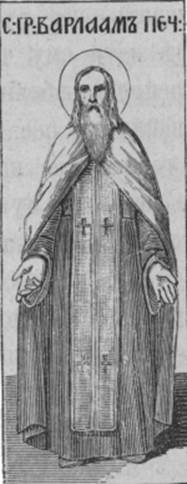
Удивительный пример стойкости в убеждении, осуществленной с безусловным самоотвержением, представляет случай во время страданий за веру воспоминаемого сегодня св. мученика Варлаама, скончавшегося в муках в 304 году в Кесарии Каппадокийской.
A remarkable example of steadfastness in conviction, carried out with absolute self-sacrifice, is presented by the case of the holy Martyr Barlaam, commemorated today, who suffered for the faith and reposed in torments in the year 304 in Caesarea in Cappadocia.
Когда, имея в виду в особенности то, чтобы пример измены христианской вере со стороны всеми уважаемого старца мог сильнее подействовать на других, гонители подвергли жестоким истязаниям христианина из Антиохии – Варлаама, то, не успев принудить его к отречению от своего исповедания, они, чтобы сделать его хотя невольным участником в идолослужении, заставили его держать над пылающим жертвенником свою руку, в которую положили горячие уголья с ладаном и смирною. Боль и малейшая невыдержанность могли заставить проповедника выронить невольно на жертвенник положенное в его руку курение и тем подать повод врагам сказать, что он почтил языческих богов...
When the persecutors, having in view especially that the example of apostasy from the Christian faith on the part of a universally respected elder might more strongly influence others, subjected the Christian from Antioch, Barlaam, to cruel tortures, and, not having succeeded in forcing him to renounce his confession, they, in order to make him at least an unwilling participant in idol-worship, forced him to hold his hand over a blazing altar, having placed in it hot coals with incense and myrrh. Pain, or the slightest lack of endurance, could have caused the preacher involuntarily to drop the incense placed in his hand onto the altar and thereby give the enemies cause to say that he had honored the pagan gods...
Но старец имел силу непоколебимо выдержать протянутую над огнем руку; он не произвел ни малейшего движения ею и не выпустил из нее угольев до тех пор, пока не стали отваливаться сожженные составы в пальцах...
But the elder had the strength to hold his outstretched hand unwaveringly over the fire; he made not the slightest movement with it and did not let fall the coals until the burnt joints in his fingers began to fall away...
Таким образом, «имея десницу свою вместо алтаря Господня», – как выражается св. Василий Великий в похвальном слове своем этому мученику, Варлаам не только не оправдал расчетов язычников, но примером своей твердости усилил свое влияние над верующими и даже в самих противниках веры Христовой возбудил внимание и уважение к христианам, между которыми были такие сильные и непобедимые исповедники гонимого ими учения...
Thus, "having his right hand as the altar of the Lord," as St. Basil the Great expresses it in his eulogy to this martyr, Barlaam not only did not justify the calculations of the pagans, but by the example of his firmness strengthened his influence over the faithful and even in the opponents of the faith of Christ themselves aroused attention and respect for Christians, among whom there were such strong and invincible confessors of the teaching they persecuted...
Примеры их жизни благотворны для тех, которые и в настоящее время готовы отозваться на слова Апостола: «бодрствуйте, братия, стойте в вере, мужайтеся, утверждайтеся!» (1Кор.16:13). Но им предстоят иные способы послушания. – «Прошло время гонений, – говорит еще св. Иоанн Златоуст, – но мученичество продолжается; не истязают люди, но преследуют искушения: не действует палач, но действует лютейший из всех мучителей; не опаляешься углями горящими, но опаляешься пламенем страстей. Мученики разожженные уголья презрели, а ты огонь естества презри; они со зверями боролись, а ты гнев яростного и неукротимого этого зверя обуздай; они выдерживали непобедимо нестерпимые боли, а ты скверные и лукавые мысли, которые из сердца исходят, победи... Тогда будешь мучеником»...
The examples of their life are beneficial for those who even at the present time are ready to respond to the words of the Apostle: "watch, brethren, stand firm in the faith, be courageous, be steadfast!" (1 Cor. 16:13). But other means of obedience await them. — "The time of persecution has passed," says St. John Chrysostom further, "but martyrdom continues; men do not torture, but temptations pursue; the executioner does not act, but the most cruel of all tormentors acts; you are not scorched by burning coals, but you are scorched by the flame of passions. The martyrs despised red-hot coals, but do you despise the fire of nature; they fought with beasts, but do you curb the anger of this furious and untamable beast; they invincibly endured unbearable pains, but do you conquer the foul and crafty thoughts that arise from the heart... Then you will be a martyr"...
У князя Изяслава, повествует пр. Нестор, был первым из бояр Иоанн». Это отец пр. Варлаама, знаменитый полководец Ян Вышатич, известный военными подвигами против Половцев282, как и брат его Путята283. Отец Яна и Путяты Вышата был в силе при в. к. Ярославе284. Ян Вышатич был не только искусный полководец, но и рассудительный христианин, умевший вразумлять людей подобных волхвам285. Пр. Нестор, пользовавшийся сведениями его для летописи, называет его добрым и смышленным286. Пр. Феодосий, будучи игуменом, любил Яна и жену его Марию, так как они, говорит Нестор, жили по заповедям Господним и любили друг друга287. Не дивно, что сын таких родителей был добрый молодой человек. Он часто приходил к пр. Антонию и Никону слушать наставления их и сердце его разгоралось любовию к Господу. Наконец, он «решился, повествует Нестор, жить в пещере, презрев все в жизни сей и ни во что вменив славу и богатство. Сердца его коснулось слово Господне, «яко удобь есть вельбуду сквозе иглине уши проити, нежели богату в Царство Небесное внити» (Мф.19:24). Он объявил намерение свое одному Антонию. «Хотел бы я, отче, говорил он, если Богу угодно, быть монахом и жить с вами». Старец говорит ему: «доброе хотение, сын мой, и мысль благодатная; но берегись, чадо, чтобы богатство и слава мира сего не возвратили тебя назад. Когда Господь сказал: никто же, возложь руку на рало изря вспять, управлен есть в Небеснем (Лк.9:62); то и монах, возвращающийся к мирской мысли и пекущийся о мирском, не может достигнуть жизни вечной». И о многом другом старец беседовал с молодым человеком и сердце его еще более возгорелось любовию к Богу. Молодой человек пошел домой. На другой день, одевшись в светлую и славную одежду, сел на коня и поехал к старцу. Отроки окружили его, а другие вели коня, богато убранного. Так он пышно проехал к пещере отцов. Когда же они выпили и поклонились ему до земли, как прилично вельможе, то и он поклонился им до земли. Потом, сняв с себя боярскую одежду, положил пред старцем; представил и коня убранного и сказал: «вот, отче, все красивые прелести мира сего; что хочешь, то и делай с ними; поскольку я, презрев все это, хочу быть монахом и жить с вами в пещере сей, и уже не возвращусь в свой дом». Старец ему говорит: «смотри, сын, кому обещаешься? чьим хочешь быть воином? Ибо вот невидимо предстоят ангелы Божии, приемля обещание твое. Когда придет отец твой, он повлечет тебя отселе насилием власти, и мы не можем помочь тебе; смотри же, не явишься ли ты пред Богом лжецом и отступником?» Молодой человек сказал ему: верую в Бога моего, отче, что если отец мой начнет и мучить меня, не послушаю его в том, чтобы возвратиться в мир. Прошу тебя, отче, скорее постричь меня». Тогда пр. Антоний повелел великому Никону постричь его и облечь в монашескую одежду. Сей, по обычаю совершив молитвы, постриг его в иноческий чин, облек его в черные одежды и наименовал его Варлаамом».
Prince Iziaslav, relates the Venerable Nestor, had as the first of his boyars John. This is the father of the Venerable Barlaam, the famous voivode Ian Vyshatich, known for his military exploits against the Polovtsy282, as was his brother Putyata283. The father of Ian and Putyata, Vyshata, was in power under Grand Prince Iaroslav284. Ian Vyshatich was not only a skilled voivode, but also a judicious Christian, who knew how to admonish people like sorcerers285. The Venerable Nestor, who used his information for the chronicle, calls him good and intelligent286. The Venerable Theodosius, when he was abbot, loved Ian and his wife Maria, because, says Nestor, they lived according to the commandments of the Lord and loved each other287. It is not surprising that the son of such parents was a good young man. He often came to the Venerable Anthony and Nikon to hear their instructions, and his heart burned with love for the Lord. Finally, he "resolved, relates Nestor, to live in the cave, despising everything in this life and counting glory and wealth as nothing. The word of the Lord touched his heart, 'It is easier for a camel to go through the eye of a needle than for a rich man to enter the kingdom of heaven' (Mt. 19:24). He declared his intention to Anthony alone. 'I would like, Father,' he said, 'if it be pleasing to God, to become a monk and live with you.' The elder said to him: 'It is a good desire, my son, and a blessed thought; but beware, child, lest the wealth and glory of this world turn you back. When the Lord said: No one who puts his hand to the plow and looks back is fit for the kingdom of heaven (Lk. 9:62); so also a monk who returns to worldly thoughts and cares for worldly things cannot attain eternal life.' And the elder spoke with the young man about many other things, and his heart burned even more with love for God. The young man went home. The next day, having dressed in bright and splendid clothing, he mounted his horse and rode to the elder. Youths surrounded him, while others led the horse, richly caparisoned. Thus he rode in splendor to the cave of the fathers. When they came out and bowed to him to the ground, as is fitting for a nobleman, he also bowed to them to the ground. Then, having taken off his boyar's clothing, he laid it before the elder; he also presented the caparisoned horse and said: 'Here, Father, are all the beautiful charms of this world; do with them as you wish; for I, despising all this, wish to become a monk and live with you in this cave, and I will not return to my home.' The elder said to him: 'See, son, to whom do you promise yourself? Whose soldier do you wish to be? For behold, the angels of God stand invisibly before us, receiving your promise. When your father comes, he will drag you away from here by the force of his authority, and we cannot help you; see then, will you not appear before God as a liar and an apostate?' The young man said to him: 'I trust in my God, Father, that even if my father begins to torture me, I will not obey him in returning to the world. I beg you, Father, to tonsure me quickly.' Then the Venerable Anthony commanded the great Nikon to tonsure him and clothe him in the monastic habit. He, having performed the prayers according to custom, tonsured him into the monastic order, clothed him in black garments, and named him Barlaam."
«Боярин Иоанн воспламенился гневом за сына своего. Взяв множество отроков, отправился к святому стаду, чтобы разогнать его. Вошед в пещеру, он взял сына своего, благоговейного Варлаама, и вывел из нее вон. Потом снял с него святую мантию и бросил ее в лес; также снял шлем спасения, находившийся на главе его, забросил и его, и в то же время облек его в светлую и славную одежду, как прилично боярам. Сын сбросил ее на землю, не желая и видеть се, и это сделал несколько раз. Потом отец его в гневе приказал связать ему руки, одеть в помянутую одежду и в таком виде идти ему чрез город в свой дом. Варлаам, пламенея искреннею любовию к Богу, на дороге увидел яму и, поспешно войдя в нее, при Божией помощи сбросил с себя одежду и топтал ее ногами в грязи, попирая, вместе с тем, и злые помыслы лукавого врага. После того, когда вошли в дом, то отец приказал ему сесть с собою за стол. Он сел за стол, но нисколько не вкусил пищи и во все время, наклонившись, смотрел вниз. По окончании стола отец отпустил его в свои покои и приставил отроков смотреть за ним, чтобы не ушел. А жене его приказал одеться в блестящее платье для прельщения молодого человека и служить пред ним. Но раб Христов Варлаам вошел в одну комнату и сел в углу. Жена его, как ей приказано, ухаживала около него и просила его сесть на одре своем. Увидев наглость жены своей и узнав, что отец приготовил это для прельщения его, он молился в глубине своего сердца к премудрому Богу, могущему спасти от прелести. Пробыл он на том месте три дня и не вставал с него, не вкушал пищи и не одевался в одежду, но был в одной монашеской рубашке. Пр. Антоний с находящимися с ним и с блаж. Феодосием в скорби молились Христу Богу об нем. Благий Бог, увидев смирение и терпение молодого человека, обратил твердое сердце отца его на милость. Отроки пришли к боярину я возвестили ему: вот уже настал четвертый день, а сын твой не вкушает пищи и не хочет одеваться в одежду. Услышав это, отец сжалился над ним, опасаясь, чтобы он не умер от голода и холода. Призвав его, приветливо целовал и отпустил его. Случилось тогда изумительное дело; был великий плач, как по мертвом. Рабы и рабыни плакали о нем, что отходит от них господин их; отец и мать плакали, что разлучались с сыном, и все проводили его с великим плачем. Христов воин вышел из своего дома и как птица, освободившаяся из сети, или как серна из тенет (Прит.6:5), так он скоро бежал и достиг пещеры. Увидев его, отцы возрадовались, встали и прославили Бога, что услышал молитву их».
"The boyar John was inflamed with anger on account of his son. Taking many youths, he set out for the holy flock to disperse it. Entering the cave, he took his son, the devout Barlaam, and led him out. Then he removed the holy mantle from him and threw it into the forest; he also removed the helmet of salvation that was on his head, cast it away, and at the same time clothed him in bright and splendid garments, as befits a boyar. The son threw them to the ground, not wishing even to see them, and did this several times. Then his father, in anger, ordered his hands to be bound, to be dressed in the aforementioned garments, and to be led in that state through the city to his home. Barlaam, burning with sincere love for God, saw a pit on the road and, quickly entering it, with God's help threw off the garments and trampled them in the mud, trampling thereby also the evil thoughts of the crafty enemy. Afterwards, when they entered the house, the father ordered him to sit with him at table. He sat at table, but partook of no food and all the while, bending down, looked at the ground. After the meal, the father sent him to his own chambers and set youths to watch him, so that he would not run away. And he ordered his wife to dress in brilliant attire to tempt the young man and to serve before him. But the servant of Christ, Barlaam, entered one room and sat in a corner. His wife, as she was ordered, attended to him and begged him to sit on his bed. Seeing the shamelessness of his wife and knowing that his father had prepared this to tempt him, he prayed in the depths of his heart to the all-wise God, who can save from delusion. He remained in that place for three days and did not rise from it, did not eat food, and did not clothe himself in garments, but was in only a monastic shirt. The Venerable Anthony, with those who were with him and with the blessed Theodosius, prayed in sorrow to Christ God for him. The good God, seeing the humility and patience of the young man, turned the hard heart of his father to mercy. The youths came to the boyar and announced to him: 'The fourth day has already come, and your son does not eat food and does not wish to clothe himself in garments.' Hearing this, the father took pity on him, fearing that he might die of hunger and cold. Calling him, he kissed him affectionately and let him go. Then a wondrous thing happened: there was great weeping, as for the dead. Slaves and maidservants wept for him, that their master was leaving them; father and mother wept that they were parting with their son, and all accompanied him with great weeping. The soldier of Christ went out of his house and, like a bird freed from a net, or like a doe from a snare (Prov. 6:5), so he ran quickly and reached the cave. Seeing him, the fathers rejoiced, rose up, and glorified God, that He had heard their prayer."
Когда в пещере умножилось число братии до пятнадцати человек, «преп. Антоний затворился в келье пещерной, а на свое место поставил начальником братии благоговейного Варлаама, сына боярина Иоанна». Блаж. Варлаам устроил над пещерою небольшую церковь во имя св. Богородицы, повелев братии собираться в нее для Божественного славословия. «С того времени это место стало на виду всех, а прежде оно многим было неизвестно»; в дремучем лесу, которым покрыта была гора Берестовская, не легко было находить пещеру, скрывавшую отшельников от глаз мира; когда же поставлен был храм на горе, над пещерою, он указывал собою на пещерников. Блаж. Варлаам не долго пробыл игуменом пещерной братии; по воле великого князя, он переведен был «в монастырь св. м. Димитрия и в нем поставлен был игуменом»288. Это было в 1057 году289. Монастырь св. Димитрия построен был великим князем Изяславом в честь ангела своего великомуч. Димитрия290. В XVII веке «видно место Димитриева монастыря не вдали от лавры»291. Блаж. Варлаам старался ввести в новой обители дух и правила преподобных отцов Печерских. Так как в его время в России христианство еще было явлением новым и многое из древних правил восточной Церкви надлежало вводить еще, а занимать надлежало с Востока; то блаж. Варлаам, имея средства, два раза странствовал на Восток, сколько для пользы своей души, столько для блага Церкви. Эти труды вместе с подвигами иноческими так были тяжелы для боярского сына Вышатича, что изнуренный болезнию он скончался на пути. «Блаж. Варлаам, говорит преп. Нестор, сын боярина Иоанна, игумен монастыря св. Димитрия, построенного христолюбивым Изяславом, отправился в св. город Иерусалим и, обойдя св. места, возвратился в свой монастырь. Спустя несколько времени поехал он в Константинополь. Здесь обошел все монастыри и, купив все полезное для монастыря своего, отправился на лошадях в свою страну. Во время пути он сильно заболел, так что, достигши города Владимира (Волынского), вошел в монастырь, находящийся близ города, называемый Святою горою, и в нем, с миром почив, окончил жизнь свою. Он дал заповедь находящимся с ним проводить тело его в монастырь св. Феодосия и в нем положить; а все, что купил он в Константинополе, иконы и кое-что другое необходимое, повелел отдать блаженному. По приказанию Никона, тело его принесли в монастырь блаж. отца нашего Феодосия и положили в нем, на правой стороне церкви, где и поныне находится гроб его292.
When the number of brethren in the cave increased to fifteen men, "the Venerable Anthony shut himself up in a cave cell, and in his place appointed as head of the brethren the devout Barlaam, son of the boyar John." Blessed Barlaam built over the cave a small church in the name of the Most Holy Theotokos, commanding the brethren to gather in it for divine praise. "From that time this place became known to all, whereas before it was unknown to many"; in the dense forest which covered Mount Berestovskaya, it was not easy to find the cave that hid the hermits from the eyes of the world; but when a church was built on the mountain, above the cave, it pointed to the cave-dwellers. Blessed Barlaam did not long remain abbot of the cave brethren; by the will of the Grand Prince, he was transferred "to the monastery of the holy Martyr Demetrius and in it was appointed abbot"288. This was in the year 1057289. The monastery of St. Demetrius was built by Grand Prince Izyaslav in honor of his angel, the Great Martyr Demetrius290. In the 17th century, "the site of the Demetrius monastery is visible not far from the Lavra"291. Blessed Barlaam strove to introduce into the new monastery the spirit and rules of the Venerable Fathers of the Caves. Since in his time Christianity in Russia was still a new phenomenon and much from the ancient rules of the Eastern Church had yet to be introduced, and it was necessary to borrow from the East, Blessed Barlaam, having the means, journeyed twice to the East, as much for the benefit of his own soul as for the good of the Church. These labors, together with his monastic struggles, were so heavy for the son of the boyar Vyshata that, exhausted by illness, he died on the way. "Blessed Barlaam," says the Venerable Nestor, "son of the boyar John, abbot of the monastery of St. Demetrius, built by the Christ-loving Izyaslav, set out for the holy city of Jerusalem and, having visited the holy places, returned to his monastery. After some time he went to Constantinople. There he visited all the monasteries and, having bought everything useful for his monastery, set out on horseback for his own country. During the journey he fell grievously ill, so that, having reached the city of Vladimir (Volynsk), he entered a monastery near the city, called the Holy Mountain, and in it, having reposed in peace, ended his life. He gave a command to those with him to convey his body to the monastery of St. Theodosius and to lay it there; and all that he had bought in Constantinople, icons and some other necessary things, he ordered to be given to the blessed one. By the command of Nikon, his body was brought to the monastery of our blessed father Theodosius and laid in it, on the right side of the church, where his tomb remains to this day"292.
Так как умирающий Варлаам поручал доставить св. иконы преп. Феодосию и, вместе с тем, св. тело его принесено в пещерную церковь «по приказанию Никона», – то земной подвиг преп. Варлаама окончился, без сомнения, в 1065 году, когда Никои приходил из Тмутаракани в Киев и, но воле Феодосия, иногда распоряжался в его обители293.
Since the dying Barlaam entrusted the delivery of the holy icons to the Venerable Theodosius and, at the same time, his holy body was brought to the cave church "by the command of Nikon," the earthly struggle of the Venerable Barlaam ended, without doubt, in the year 1065, when Nikon came from Tmutarakan to Kiev and, by the will of Theodosius, sometimes managed affairs in his monastery293.
Св. пророка Авдия. Авдий пророк, современник Иеремии, угрожал Идумеям бедствиями за злорадство их и ненависть к Иудеям, тогда покоренным от Халдеев, которые разорили Иерусалим (сн. Иер.49:7–22), и предсказывал радостную будущность для Иудеев: гора Сион будет святыня, говорил он, и там будет спасение.
The holy prophet Obadiah. The prophet Obadiah, a contemporary of Jeremiah, threatened the Edomites with calamities for their gloating and hatred toward the Jews, then subdued by the Chaldeans, who destroyed Jerusalem (cf. Jer. 49:7–22), and foretold a joyful future for the Jews: Mount Zion shall be a sanctuary, he said, and there shall be salvation.
Память св. мученика Илиодора, который в Памфилии, около 273 года, многие муки претерпел от правителя (епарха) за веру Христову и скончался от меча.
Commemoration of the holy martyr Heliodorus, who in Pamphylia, about the year 273, endured many torments from the governor (eparch) for the faith of Christ and died by the sword.
От духовного наставника научився, царю Иоасафе, Бога познати, крещением же просветився, люди к вере обратил еси, и отцу твоему от купели приимник быв, царство оставив, пустыню достигл еси, и в ней трудолюбно подвизался еси. Моли Христа Бога со учителем твоим Варлаамом – спастися душам нашим!» (Троп.).
"Having learned from a spiritual teacher, O King Joasaph, to know God, and having been enlightened by baptism, thou didst turn the people to the faith, and having become the sponsor of thy father at the font, thou didst forsake the kingdom and attain the desert, and therein didst labor diligently. Pray to Christ God, together with thy teacher Barlaam, that our souls may be saved!" (Troparion).
«Ведый твое из младенства благое изволение, Иоасафе, един сердцеведец Бог, ибо от царствия земного в монашеское пребывание Приведый тя, великому Варлааму последовати сподоби; с ним же и ныне горний Иерусалим веесветлый отечество имея, желаемые доброты красно наслаждаяся Святые Троицы, молим тя, царская красото, поминай нас, верою чтущих тя!» (Конд.).
"Knowing from childhood thy good will, O Joasaph, God, the only Knower of hearts, for He brought thee from an earthly kingdom to the monastic life, and made thee worthy to follow the great Barlaam; with him, even now having the all-bright heavenly Jerusalem as thy fatherland, and delighting in the desired beauties of the Holy Trinity, we pray thee, O royal beauty, remember us who honor thee with faith!" (Kontakion).
Таким образом воспевает св. Церковь воспоминаемых сегодня Варлаама, Иоасафа и Авенира, которых причислила она к лику святых своих на основании жития их, сочинитель которого пишет, что «составил его на основании сведений, полученных от достоверных свидетелей»294.
Thus does the holy Church sing of Barlaam, Joasaph, and Abenner, commemorated today, whom she has numbered among her saints on the basis of their Life, whose author writes that "he composed it on the basis of information received from trustworthy witnesses"294.
Подлинность и достоверность этого жизнеописания защищает также и ученый Ламбеций на основании надписей в древних экземплярах Греческих рукописей и на других основаниях, – так что несправедливо почитать это житие легендарным житием Будды на том только основании, что обстоятельства, расположившие царевича Иоасафа к принятию христианства, напоминают подобные же обстоятельства в жизни царевича Сиддарта из рода Шакья (за 600 л. до Р. Хр.), который, познав суету земных благ, сделался пустынником и положил основание буддизму295.
The authenticity and reliability of this biography is also defended by the scholar Lambecius, on the basis of inscriptions in ancient copies of Greek manuscripts and on other grounds, so that it is unjust to consider this Life a legendary life of the Buddha solely on the ground that the circumstances which disposed Prince Joasaph to accept Christianity resemble similar circumstances in the life of Prince Siddhartha of the Shakya clan (600 years before the birth of Christ), who, having learned the vanity of earthly goods, became a hermit and laid the foundation of Buddhism295.
Итак, на основании повествования, «встречающегося в Греческих рукописях по большей части под именем Иоанна Дамаскина296, против которого ученая критика не представляет сильных возражений», – известно, что Иоасаф был сын могущественного царя Индийского Авенира – идолопоклонника, ненавидевшего и гнавшего христиан, которые уже начали распространяться в Индии со времени проповедания слова Божия в этой стране, как говорит предание, св. Апостолом Фомою, но, по случаю преследования их в это время, многие скрывались и подвизались в пустынях, а иные, не утвердившиеся, устрашась гонения, изменяли вере Христовой. Поэтому опасность предстояла всему благому насаждению в стране, и только промышлением Божиим могло оно сохраниться, и вечно действующее промышление Божие бодрствавало и теперь и явило спасение чудным образом...
Thus, on the basis of the narrative "found in Greek manuscripts for the most part under the name of John of Damascus296, against which scholarly criticism offers no strong objections," it is known that Joasaph was the son of the mighty king of India, Abenner, an idolater who hated and persecuted the Christians, who had already begun to spread in India since the preaching of the word of God in that country, as tradition says, by the holy Apostle Thomas; but, due to the persecution at that time, many hid themselves and struggled in the deserts, while others, not firmly established, being frightened by the persecution, betrayed the faith of Christ. Therefore, danger threatened all the good planting in the land, and only by the providence of God could it be preserved; and the ever-active providence of God watched even now and manifested salvation in a wondrous manner...
В то время, как родился необыкновенный по красоте лица царевич Иоасаф, отец его, соблюдая обычай страны, созвал знаменитейших волхвов и мудрецов, чтобы спросить их о судьбе новорожденного младенца. Все они поспешили предсказать ему всевозможные блага земные...
At the time when the prince Joasaph, extraordinary in the beauty of his face, was born, his father, observing the custom of the country, summoned the most renowned magi and wise men to ask them about the fate of the newborn child. All of them hastened to foretell for him every possible earthly good...
– Да, ребенок твой вырастет для обладания величайшими благами! – подтвердил один из мудрецов, – но обогащенною и умудренною душою своею он будет обитать не в твоем царстве, а в ином, несравненно обширнейшем... Предвижу я, что он примет гонимую тобою веру христианскую... и верю, что оправдается мое предсказание...
"Yes, your child will grow up to possess the greatest goods!" confirmed one of the wise men, "but with his enriched and enlightened soul he will dwell not in your kingdom, but in another, incomparably more vast... I foresee that he will accept the Christian faith which you persecute... and I believe that my prophecy will be fulfilled..."
Испугали и опечалили царя слова мудреца, и он решился употребить все меры, чтобы они не сбылись. Поселил он царевича в отдаленном роскошном дворце, окруженном великолепными садами, где среди любящих воспитателей и веселых товарищей ему должно было житься так хорошо, чтобы и на мысль ему не приходило желать чего-нибудь лучшего; здесь должно было тщательно скрываться от него все печальное в жизни: о болезни, старости и смерти никто не должен был даже и упоминать, но в особенности никто не должен был давать ему ни малейшего понятия о Христе или христианах, не произносить даже этого имени... А чтобы уничтожить всякую возможность доступа во дворец влияния христиан, Авенир издал строжайший указ беспощадно истреблять их во всем своем царстве.
The king was frightened and saddened by the words of the wise man, and he resolved to use every measure to prevent them from coming true. He settled the prince in a distant, luxurious palace, surrounded by magnificent gardens, where, among loving tutors and cheerful companions, he was to live so well that he would never even think of desiring anything better; here everything sad in life was to be carefully hidden from him: no one was even to mention sickness, old age, or death, but especially no one was to give him the slightest notion of Christ or Christians, nor even utter that name... And to destroy every possibility of Christian influence entering the palace, Abenner issued a most strict decree to mercilessly exterminate them throughout his entire kingdom.
Так и жил до своего юношеского возраста царевич Иоасаф в этом заповеданном, безвыходном кругу. От воспитателей своих он между тем приобретал различные познания, и в нем возникали и развивались постепенно мысли я чувства, свойственные по природе человеческой душе, не смотря на его ограниченную, однообразную и одностороннюю обстановку...
Thus Prince Joasaph lived until his youthful years in this prescribed, inescapable circle. From his tutors he meanwhile acquired various knowledge, and in him there arose and gradually developed thoughts and feelings proper by nature to the human soul, despite his limited, monotonous, and one-sided surroundings...
Пришла наконец минута, когда тесно и неудовлетворительно показалось юноше в его прекрасном жилище и ему захотелось познакомиться с тем, что было за пределами его... Недоумевал он, почему назначено ему вести затворническую жизнь. Тогда, желая разъяснить огорчавшее разумного царевича недоумение, одни из его воспитателей, под условием тайны, объяснил ему побуждения царя – отделить его от мира, среди которого он мог встретиться с христианами и принять их веру, как было об этом предсказано при его рождении. Задумался царевич над словами своего воспитателя, но не успокоился; напротив того, стал просить своего отца позволить ему выходить из дворца. Напрасно убеждал его отец, что нигде ему не может быть лучше, чем в устроенном для него жилище, где все приспособлено и все живут только для его удовольствия, – и предостерегал сына, что в мире он может встретить то, что оскорбит его или нарушит спокойствие его, – царевич настаивал на желании своем узнать неизвестное для него...
At last the moment came when the youth felt cramped and unsatisfied in his beautiful dwelling, and he wished to become acquainted with what lay beyond its limits... He wondered why he was destined to lead a secluded life. Then, wishing to resolve the perplexity that grieved the intelligent prince, one of his tutors, under condition of secrecy, explained to him the king's motives—to separate him from the world, where he might encounter Christians and accept their faith, as had been prophesied at his birth. The prince pondered his tutor's words, but was not reassured; on the contrary, he began to ask his father to allow him to go out of the palace. In vain did his father persuade him that nowhere could he be better than in the dwelling prepared for him, where everything was arranged and everyone lived only for his pleasure, and warned his son that in the world he might encounter what would offend him or disturb his peace—the prince insisted on his desire to learn the unknown...
Царь согласился, наконец, предоставить ему свободу выезжать из дворца, приняв однако же все предосторожности, чтобы не встречалось ему ничего неприятного. Не смотря на то, Иоасаф поражен был однажды во время прогулки своей видом одного прокаженного и одного слепца, встретившихся ему. Не имея понятия ни об изувечении человеческой природы, ни о болезни (так как всех заболевавших немедленно удаляли из его дворца), царевич с ужасом спросил, что это за люди, и отчего они – такие?
The king finally agreed to grant him freedom to leave the palace, taking every precaution, however, that nothing unpleasant should meet him. Despite this, Joasaph was once struck during his walk by the sight of a leper and a blind man who met him. Having no idea of the disfigurement of human nature or of illness (since all who fell ill were immediately removed from his palace), the prince asked in horror what these people were, and why they were such?
– Всякий ли человек может быть поражен болезнью? и может ли он ее предвидеть, или она неожиданно поражает его? – расспрашивал Иоасаф. И, выслушав ответы, раздумывал над сведениями, впервые представлявшимися ему...
– Can every man be struck by illness? And can he foresee it, or does it strike him unexpectedly? – inquired Joasaph. And, having heard the answers, he pondered over the information, which presented itself to him for the first time...
В другой раз встретился царевичу дряхлый, расслабленный старец. С удивлением получил Иоасаф первое понятие о старости, о том, что она неизбежна для каждого, пережившего известное число лет, и что она кончается смертью, как и вообще жизнь каждого человека – рано или поздно...
Another time the prince met a decrepit, feeble old man. With astonishment Joasaph received his first notion of old age, of the fact that it is inevitable for everyone who has lived a certain number of years, and that it ends in death, just as, in general, the life of every man ends – sooner or later...
– Если это так, то очень печальное явление – человеческая жизнь с ее страданиями! – воскликнул юноша, – и кто же может почитать себя счастливым, если постоянно должен ожидать смерти?... – И с этих пор стал он часто и глубоко раздумывать о новых предметах, открывшихся ему, и главное – о поразившей его недолговечности всего земного. – Если все должны умереть, – размышлял он, – то и я умру, хотя и не знаю, когда... когда же умру, то через несколько времени все и забудут, что я жил, как будто я и не жил никогда; поэтому стоит ли дорожить этою жизнью, которая проходит? стоит ли привязываться к чему-нибудь, если смертию все кончается?... Но нет ли другой жизни, кроме этой? Не перейдет ли человек в другой мир, когда смертию прекратится его существование на земле?
– If this is so, then human life with its sufferings is a very sad phenomenon! – exclaimed the youth, – and who can consider himself happy, if he must constantly await death?... – And from that time he began often and deeply to reflect upon the new subjects that had been revealed to him, and above all – upon the transience of everything earthly, which had struck him. – If all must die, – he reasoned, – then I too shall die, though I know not when... and when I die, then after a short time all will forget that I lived, as if I had never lived at all; therefore, is it worth cherishing this life, which passes away? Is it worth attaching oneself to anything, if everything ends with death?... But is there no other life besides this? Does man not pass into another world, when his existence on earth is ended by death?
Смущаясь и волнуясь всеми новыми понятиями, возбужденными в его душе, царевич обратился однажды к своему любимому воспитателю и, не получив от него удовлетворительного ответа на все свои вопросы, просил его указать ему такого человека, который мог бы ему их объяснить и вразумить о том, что ему хочется знать.
Troubled and agitated by all the new concepts awakened in his soul, the prince once turned to his beloved tutor and, not having received from him a satisfactory answer to all his questions, begged him to point out a man who could explain them to him and instruct him concerning that which he wished to know.
– Были в вашем царстве такие мудрые пустынники, которым известны были эти предметы, – отвечал воспитатель, – их называли христианами, они верили в вечную жизнь за гробом, отказывались ради нее от всех земных благ, проводили жизнь в посте и молитве.... но я уже тебе говорил, что отец твой изгнал этих пустынников из всей земли, и никого из них здесь теперь не найти....
– There were in your kingdom such wise hermits, to whom these matters were known, – answered the tutor, – they were called Christians, they believed in eternal life beyond the grave, for its sake they renounced all earthly goods, spending their life in fasting and prayer... but I have already told you that your father banished these hermits from the whole land, and no one of them can now be found here....
Между тем, жил в это время в отдаленной Сенаридской пустыне один святой старец, именем – Варлаам, по сану – священник. По внушению свыше, он пожелал видеть царевича Иоасафа, оставил свою пустыню и прибыл в Индию; под видом купца, продающего драгоценные камни необычайной ценности и красоты, он был допущен во дворец, так как окружающие Иоасафа пользовались всеми случаями развлечь постоянно задумчивого теперь и печального царевича.
Meanwhile, at that time there lived in the distant Senaar desert a certain holy elder, named Barlaam, by rank a priest. By inspiration from on high, he desired to see the prince Joasaph, left his desert, and arrived in India; under the guise of a merchant selling precious stones of extraordinary value and beauty, he was admitted into the palace, since those surrounding Joasaph made use of every opportunity to distract the prince, who was now constantly pensive and sad.
– Царевич! правду я сказал твоему воспитателю, что у меня есть один камень необычайной цены, – отвечал Варлаам, – но прежде чем я тебе его покажу, я должен видеть, как ты примешь те слова, которые я тебе хочу сказать, ради которых я пришел издалека... Выслушай же притчу, которую сказал людям их Бог и их Учитель: «вышел сеятель сеять, и когда сеял, то иное семя его упало на дорогу и птицы поклевали его; другое упало на камень и высохло, потому что оно не имело корня; иное упало в терние, и было заглушено им; иное же упало на добрую землю и принесло плод сторицею»... Какую же землю представляет сердце твое? Если – плодоносную и добрую, то не поленюсь я посеять на ней Божественное семя, не поленюсь сказать слово, которое сердце твое способно принять, и тогда ты увидишь мой камень бесценный... просветишься зарею истинного света, и плод принесешь сторицею...
– Prince! I spoke the truth to your tutor, that I have a stone of extraordinary price, – answered Barlaam, – but before I show it to you, I must see how you receive those words which I wish to speak to you, for the sake of which I have come from afar... Hear then the parable which their God and their Teacher spoke to men: "A sower went out to sow, and as he sowed, some of his seed fell by the wayside, and the birds devoured it; other fell upon the rock, and withered away, because it had no root; other fell among thorns, and was choked by them; other fell upon good ground, and brought forth fruit a hundredfold"... What kind of ground does your heart represent? If it be fruitful and good, then I will not be too weary to sow upon it the Divine seed, I will not be too weary to speak the word which your heart is capable of receiving, and then you shall see my priceless stone... you shall be enlightened by the dawn of the true light, and shall bring forth fruit a hundredfold...
– О, старец почтенный! – воскликнул Иоасаф, – я давно уже жажду услышать новое слово... давно уже хочу узнать об иной жизни, но до сих пор я не встречал человека, который мог бы поведать мне желанную истину о том, что тревожит душу мою... Если бы я встретил такого человека, то услышанные от него слова не предал бы ни птицам, ни зверям, не оказался бы каменным или исполненным тернием, как ты говоришь, но принял бы их с благодарностию и сохранил бы в своем сердце. И потому не скрывай от меня того, что ты знаешь, так как едва только |' увидел я тебя, то сердце мое наполнилось радостию и надеждою...
– O venerable elder! – exclaimed Joasaph, – I have long thirsted to hear a new word... I have long wished to know of another life, but until now I have met no man who could tell me the longed-for truth concerning that which troubles my soul... If I were to meet such a man, I would not give the words heard from him either to the birds or to the beasts, I would not prove to be stony or filled with thorns, as you say, but would receive them with gratitude and preserve them in my heart. And therefore hide not from me that which you know, for scarcely had I |' seen you when my heart was filled with joy and hope...
И тогда, как бы вдохновенный Богом, отшельник стал просвещать юношу познанием истинного Бога, Творца всего мира; он рассказал ему обо всем, что было от создания мира, о преступлении Адама и изгнании его из рая, о праотцах и пророках, о воплощении Сына Божия от Святой Девы Марии, о вольной Его страсти и о воскресении; о Троице Святой и о крещении, и о всех тайнах святой веры.
And then, as if inspired by God, the hermit began to enlighten the youth with the knowledge of the true God, the Creator of all the world; he told him of everything that had been from the creation of the world, of the transgression of Adam and his expulsion from paradise, of the forefathers and prophets, of the incarnation of the Son of God from the Holy Virgin Mary, of His voluntary passion and resurrection; of the Holy Trinity and of baptism, and of all the mysteries of the holy faith.
Душевное красноречие, с которым возвещал старец высшие истины, как освежительная роса, охватывало душу жаждущего их молодого царевича; все неясные предчувствия его иного мира теперь осуществлялись; все томления его в порыве к высшему знанию – разрешались и, озаренный Божественным светом, он понял, каким драгоценным камнем обладает назвавший себя продавцом необычайной цены и достоинства драгоценностей... Со слезами умиления обнимал юноша своего учителя и осыпал его бесконечными вопросами, и всею душою вслушивался в его дивные ответы, открывающие перед ним чудный мир христианства... и привязался к нему великою любовию, и пожелал не расставаться с ним никогда, потому что чувствовал, что беседа с ним утоляет его душу и сладких слов его ему не наслушаться никогда. Услышав от старца с изумлением о жизни отшельников, об их отвержении от суеты мирской, о произвольной нищете и непрестанной молитве, блаженнейшею показалась ему эта жизнь в пустыне, и устремился он немедленно последовать туда за своим старцем, и облечься в такую же власяницу, и разделять с ним и нищету земную и богатство небесное...
The spiritual eloquence with which the elder proclaimed the highest truths, like refreshing dew, enveloped the soul of the young prince who thirsted for them; all his unclear presentiments of another world were now realized; all his yearnings in the impulse toward higher knowledge were resolved, and, illumined by the Divine light, he understood what a precious stone was possessed by him who had called himself a seller of jewels of extraordinary price and worth... With tears of tenderness the youth embraced his teacher and showered him with endless questions, and with all his soul he listened to his wondrous answers, which opened before him the marvelous world of Christianity... and he became attached to him with great love, and desired never to part from him, because he felt that conversation with him satisfied his soul and that he could never hear enough of his sweet words. Having heard from the elder with astonishment of the life of the hermits, of their rejection of worldly vanity, of voluntary poverty and unceasing prayer, this life in the desert seemed to him most blessed, and he immediately yearned to follow his elder thither, and to clothe himself in a like hair-shirt, and to share with him both earthly poverty and heavenly riches...
– Еще не время теперь исполниться твоему желанию, – возразил ему на это Варлаам, – если ты поступишь таким образом, то разгневишь отца твоего и он воздвигнет на вас, христиан, новое говение. Ты же приими теперь св. крещение и оставься здесь. Я один возвращусь в пустыню мою, и когда Богу угодно будет, то и ты придешь ко мне: верую, что и в этом веке и в будущем будем жить вместе...
– The time is not yet come for your desire to be fulfilled, – Barlaam objected to this, – if you act thus, you will anger your father and he will raise a new persecution against you Christians. Do you now receive holy baptism and remain here. I alone will return to my desert, and when God wills it, you too shall come to me: I believe that both in this age and in the future we shall live together...
– Богатые дают убогим, а не убогие богатым; мы, исповедующие Христа, уже обогащены небесными дарами, и малейший из них драгоценнее всех богатств земных. Ты же еще беден... Вот, если сам обогатишься таким же богатством, то можешь тогда щедро делиться им с другими, – и прибавил в объяснение недоумевающему вновь просвещенному: «золото бывает причиной греха, и потому мы уклоняемся от него, как от ядовитой змеи.., а ты хочешь, чтобы я эту змею отнес моей братии, которая должна ее попирать ногами»...
– The rich give to the poor, not the poor to the rich; we who confess Christ are already enriched with heavenly gifts, and the least of them is more precious than all earthly riches. You, however, are still poor... Behold, if you yourself become enriched with the same riches, then you may generously share them with others, – and he added in explanation to the newly-enlightened one, who was perplexed: "Gold is the cause of sin, and therefore we flee from it as from a poisonous serpent.., and you wish me to carry this serpent to my brethren, who ought to trample it underfoot"...
Просветив царевича, Варлаам посещал его еще несколько времени для приготовления его к принятию таинств крещения и причащения; затем, окрестив его в купели, стоявшей в дворцовом саду, удалился в свою пустыню, оставив ему по просьбе его свою власяницу.
Having enlightened the prince, Barlaam visited him for some time longer to prepare him for the reception of the mysteries of baptism and communion; then, having baptized him in a font standing in the palace garden, he withdrew to his desert, leaving him, at his request, his hair-shirt.
С великим рвением предался Иоасаф исполнению новых своих христианских обязанностей, что не могло не выразиться во многих переменах в его жизни, и потому не ускользнуло от внимания царя. Великим гневом воспламенился он, когда узнал об обращении сына своего в христианскую веру... Повелел повсюду разыскивать обратившего его пустынника и, возобновив преследование христиан, многих из них погубил в это время. Между тем, употреблял все усилия, чтобы отклонить царевича от нового учения; созвал собор из волхвов и мудрецов, на которых надеялся, что они будут иметь силу опровергнуть в ученом совещании все доводы христианского вероучения. Ожидания эти однако же не оправдались, и именно, самый ученый из волхвов, по имени Нахор, внезапно силою свыше прозревший истину, вместо того чтобы опровергать, стал красноречивейшим образом защищать веру во Христа, так что обратил даже к ней многих неверующих..., которые стали прибегать к Иоасафу, ища его спасительных наставлений, а сам Нахор, приняв крещение, посвятил остальную свою жизнь подвижничеству в пустыне.
With great zeal Joasaph gave himself over to the fulfillment of his new Christian duties, which could not but be expressed in many changes in his life, and therefore did not escape the notice of the king. He was inflamed with great wrath when he learned of his son's conversion to the Christian faith... He commanded that the hermit who had converted him be sought everywhere, and, renewing the persecution of Christians, he destroyed many of them at that time. Meanwhile, he used every effort to turn the prince away from the new teaching; he summoned a council of magi and wise men, hoping that they would have the power to refute all the arguments of Christian doctrine in a learned debate. These expectations, however, were not fulfilled, and precisely the most learned of the magi, named Nachor, suddenly, by a power from on high, having perceived the truth, instead of refuting it, began in the most eloquent manner to defend the faith in Christ, so that he even converted many unbelievers to it..., who began to resort to Joasaph, seeking his saving instructions, while Nachor himself, having received baptism, devoted the rest of his life to asceticism in the desert.
Не имев успеха с этой стороны, царь Авенир надеялся всевозможными удовлетворениями мирскими отвлечь душу своего сына от любви к христианскому Богу; между прочим, собрал он в столицу самых блистательных девиц, среди которых предложил царевичу избрать себе невесту, но ничто мирское уже больше не привлекало его; его посещали нередко видения райского блаженства, после которых весь земной мир казался ему мрачен и тесен, и только пустыня привлекала его своим безмолвием и уединением, среди которого он мог беспрепятственно возноситься к Богу всеми своими чувствами и помышлениями. Но недоступна была для него вожделенная пустыня; вместо этого единственного удовлетворения, которым могла утолиться душа Иоасафа, ему приходилось вести тяжелую борьбу с своим отцом, настаивавшим на его отречении от Распятого Христа.
Having had no success from this side, King Abenner hoped by all manner of worldly gratifications to divert his son's soul from love for the Christian God; among other things, he gathered into the capital the most brilliant maidens, among whom he proposed that the prince choose a bride, but nothing worldly any longer attracted him; he was often visited by visions of paradise bliss, after which the whole earthly world seemed to him gloomy and narrow, and only the desert attracted him by its silence and solitude, in the midst of which he could freely ascend to God with all his feelings and thoughts. But the longed-for desert was inaccessible to him; instead of this sole satisfaction by which Joasaph's soul could be assuaged, he had to wage a heavy struggle with his father, who insisted on his renunciation of the Crucified Christ.
– Отец! – обратился он однажды к царю, изнемогая если не душевными, то телесными силами под гнетом этой борьбы, – зачем ты стараешься вовлечь мою душу в погибель? Зачем ты запрещаешь мне идти прямым, правым путем? Знай, что если бы не помогал мне Бог Израилев, то могла бы погибнуть моя душа. О, если твои уши еще закрыты, чтобы слышать правду, которую я тебе говорю, то не препятствуй хотя мне стоять на правом пути и желать всего доброго.., а желаю я того, чтобы, оставив все в мире, отойти туда, где пребывает угодник Христов Варлаам, и с ним вместе провести мою жизнь до конца... Если же ты, отец, будешь насильно удерживать меня здесь, то скоро увидишь меня умершим от печали...
“Father!” he once addressed the king, exhausted, if not in soul, then in bodily strength under the burden of this struggle, “why do you strive to draw my soul into perdition? Why do you forbid me to walk the straight and right path? Know that if the God of Israel had not helped me, my soul would have perished. Oh, if your ears are still closed to hearing the truth which I speak to you, then at least do not hinder me from standing on the right path and desiring all that is good… and I desire this: to leave everything in the world and depart to where the servant of Christ, Barlaam, abides, and with him to spend the rest of my life… But if you, father, forcibly detain me here, you will soon see me dead of grief…”
Не понимая в своем ослеплении благодатного состояния своего сына, Авенир, по совету одного из своих приближенных, прибегнул к последнему средству отвлечь Иоасафа от обладающих им мыслей: он передал ему в управление половину своего царства, рассчитывая, что разносторонняя и обширная деятельность рассеет и даст иное направление его мыслям.
Not understanding in his blindness the grace-filled state of his son, Abenner, on the advice of one of his close associates, resorted to a final means of diverting Joasaph from the thoughts that possessed him: he entrusted him with the governance of half his kingdom, hoping that varied and extensive activity would distract him and give a different direction to his thoughts.
Действительно, произошла успокоительная перемена в жизни царевича. Увидев, как много добра можно делать при помощи царской власти, он вспомнил слова, которые сказал ему, между прочим, Варлаам, что «и в миру можно послужить Богу».., и с полным рвением предался великим царственным заботам о благосостоянии своих подданных; но главною его заботою было – искоренение идолопоклонства и просвещение своего народа христианскою верою.
Indeed, a calming change occurred in the prince’s life. Seeing how much good could be done with the help of royal authority, he recalled the words which Barlaam had spoken to him among other things, that “even in the world one can serve God”… and with full zeal he devoted himself to the great royal cares for the welfare of his subjects; but his chief concern was the eradication of idolatry and the enlightenment of his people with the Christian faith.
Усердно молился он о помощи Божией в этом труде его, усердно молился и о просвещении отца своего, и молитва его была услышана. Наконец и царь Авенир уразумел истину, и сам сын, приготовив его к принятию крещения, иринял отца своего от купели. Тогда, по примеру царя, быстро последовало обращение ко Христу и его подданных.
He prayed fervently for God’s help in this labor of his, and fervently prayed also for the enlightenment of his father, and his prayer was heard. At last King Abenner also understood the truth, and his son himself, having prepared him for the reception of baptism, received his father from the font. Then, following the example of the king, the conversion of his subjects to Christ quickly followed.
Царь Авенир, просветившись верою Христовой, последние годы своей жизни провел в покаянии, посте и молитве, предоставив сыну своему управление всем государством. По смерти же Авенира Иоасаф, передав правление в надежные руки, отрешился от мира ради давно желанной пустыни. Заменив свою царскую одежду жесткою власяницею, он отправился отыскивать Варлаама и, найдя его, наконец, в пещере, в одной отдаленной пустыне, поселился с ним здесь навсегда.
King Abenner, having been enlightened by the faith of Christ, spent the last years of his life in repentance, fasting, and prayer, entrusting the governance of the entire kingdom to his son. After Abenner’s death, Joasaph, having handed over the rule into reliable hands, renounced the world for the sake of the long-desired desert. Exchanging his royal garments for a rough hair-shirt, he set out to seek Barlaam, and having at last found him in a cave in a remote desert, he settled there with him forever.
После многолетних иодвигов под руководством святого отшельника, Иоасаф присутствовал и при блаженной кончине столетнего старца Варлаама и, похоронив его, до конца жизни продолжал подвизаться одиноко. Когда же наступило время и его преставления, то был предан погребению и положен возле своего наставника подвизавшимся невдалеке отшельником. – Время жизни и кончины Иоасафа – неизвестно.
After many years of ascetic labors under the guidance of the holy hermit, Joasaph was also present at the blessed end of the hundred-year-old elder Barlaam, and having buried him, he continued to struggle alone until the end of his life. When the time of his own repose came, he was buried and laid beside his teacher by a hermit who was struggling not far away. – The time of Joasaph’s life and death is unknown.
Собр. л. I, 94. Ян Вышатич умер 90 лет, в 1106 г., а жена его Мария скончалась в 1091 г. Ян положен в притворе великой Печерской церкви, а жена его Мария, согласно с пророчеством пр. Феодосия, похоронена была близ гроба пр. Феодосия, в самой церкви. – Собр. л. I. 91. 120.
Collection of Chronicles I, 94. Yan Vyshatich died at the age of 90 in 1106, and his wife Maria reposed in 1091. Yan was buried in the narthex of the great Pechersk church, and his wife Maria, according to the prophecy of Venerable Theodosius, was buried near the tomb of Venerable Theodosius, inside the church itself. – Collection of Chronicles I, 91, 120.
Нестор в житии преп. Феодосия. Записки акад. книг. 2, стр. 141–146. В Никон. л. 1, 142 вместо: «Варлааму же шедшу в Дмитриев монастырь», сказано: «Варлааму же шедшу к старцу Антонию». Могло быть то и другое.
Nestor in the Life of Venerable Theodosius. Notes of the Academy, Book 2, pp. 141–146. In the Nikon Chronicle I, 142, instead of: “Barlaam having gone to the Dmitriev monastery,” it says: “Barlaam having gone to the elder Anthony.” Both could have occurred.
Коссова патерик, стр. 56. Иосифа Тризны патерик: «житие прев. Варлаама, игумена Печерского, восем св. Димитрия монастыря, бывшего игумена монастыря Изяславля, иже на Клове – Житие св. отца нашего Исаии чудотворца, игумена бывшего монастыря св. Дымитрия, иже на Клове». Коссов и о Кловском Стефановом монастыре говорит, что он был невдали от лавры. Потому слова Тризны, не равнореча с словами Коссова, точнее определяют место Димитриева монастыря, – указывают ему место близ монастырей Стефана и Германа. Старожилы Киевские говорят, что Димитриев монастырь находился на крутом берегу Печерской горы, там, где ныне кирха.
Kossov’s Paterikon, p. 56. Joseph Tryzna’s Paterikon: “The Life of Venerable Barlaam, Abbot of the Pechersk, of the holy Monastery of St. Demetrius, who was abbot of the monastery of Izyaslavl, which is on Klov – The Life of our holy father Isaiah the Wonderworker, who was abbot of the monastery of St. Demetrius, which is on Klov.” Kossov also says of the Klov Stefanov monastery that it was not far from the Lavra. Therefore, Tryzna’s words, not contradicting Kossov’s words, more precisely define the location of the Dmitriev monastery – they indicate its place near the monasteries of Stefan and German. The old residents of Kiev say that the Dmitriev monastery was located on the steep bank of the Pechersk hill, where the Lutheran church now stands.
Собр. л. 1, 71. 72. Несторово житие пр. Феодосия, стр. 155. По ркп. святцам пр. Варлаам «преставися ноября в 19 д.».
Collection of Chronicles 1, 71, 72. Nestor’s Life of Venerable Theodosius, p. 155. According to manuscript menologia, Venerable Barlaam “reposed on November 19.”
И также – жизнеописания их с именем Иоанна Дамаскина, переписанного каллиграфом Евстафием в 1057 г. и находящегося в Ескуриальской библиотеке («Месяцесл. Вост.»).
And also – their lives under the name of John of Damascus, copied by the calligrapher Eustathius in 1057 and located in the Escorial Library (“Mesyatseslov Vostoka”).