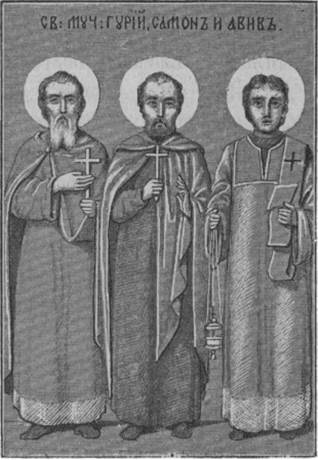
Гурий и Самон, урожденцы города Едессы, в гонение Диоклитианово и Максимианово удалились в некое пустынное место, не переставая угождать Богу и наставляя в вере, кого могли. Узнал о них правитель Антонин и велел разыскать их. Посему взяты были Гурий и Самон и с ними множество верующих. Антонин велел всем принесть жертву идолам; но ни один не захотел отступать от Господа. Тогда, помыслив, что если преклонит учителей к отступничеству, то и прочие последуют их примеру, приказал высечь розгами всех остальных и отпустить, а Гурия и Самона оставить на истязание и заключить в темницу.
Gourias and Samonas, natives of the city of Edessa, during the persecution of Diocletian and Maximian, withdrew to a certain desert place, ceaselessly pleasing God and instructing in the faith whomever they could. The governor Antoninus learned of them and ordered them to be sought out. Therefore Gourias and Samonas were taken, and with them a multitude of believers. Antoninus commanded all to offer sacrifice to the idols; but not one wished to renounce the Lord. Then, thinking that if he could incline the teachers to apostasy, the rest would follow their example, he ordered all the others to be scourged with rods and released, while Gourias and Samonas were kept for torture and cast into prison.
В это время прибыл в Едессу сановник Музоний, нарочито посланный для наблюдения за исполнением указов о христианах. Он потребовал их на суд и, после жестоких пыток, велел обезглавить (304 года).
At this time, a dignitary named Musonius arrived in Edessa, specially sent to oversee the execution of the edicts concerning Christians. He demanded them for trial and, after cruel tortures, ordered them to be beheaded (304 A.D.).
Авив диакон пострадал там же, лет чрез пятнадцать после Гурия и Самона, именно – в гонение Ликиния. Гонение касалось преимущественно распространителей веры христианской. Узнавши, что его ищут для суда, Авив добровольно явился к градоначальнику и был предан пыткам железом, а потом и огнем. В сих муках и предал душу свою Богу (около 320 года). Верные похоронили его у мощей Гурия и Самона.
Abibas, a deacon, suffered there likewise, about fifteen years after Gourias and Samonas, namely, during the persecution of Licinius. The persecution was directed chiefly against the spreaders of the Christian faith. Learning that he was being sought for trial, Abibas voluntarily appeared before the city prefect and was subjected to tortures with iron, and then with fire. In these torments he gave up his soul to God (about 320 A.D.). The faithful buried him near the relics of Gourias and Samonas.
Господь прославил святых мучеников многими чудесами, содеянными по вере прибегавших к ним с молитвою; из них вспомянем одно преславное.
The Lord glorified the holy martyrs with many miracles wrought through the faith of those who had recourse to them in prayer; among them let us recall one most glorious.
В 395 году полчища Гуниов Ефталитов (так называемых белых Гуинов, или Гайтал, в нынешних Мерве и Афганистане) делали великие опустошения в Сирии и Месопотамии, угрожали и городу Едессе. Император, для усиления стоявших там войск Греко-Римских, послал новые полки туда. В числе воинов, прибывших в состав гарнизона Едесского, был и некто родом Готф. Он жил в доме вдовы, именем Софии, которая имела единственную дочь, прекрасную душою и телом, воспитанную в страхе Божием. Случилось же тому Готфянину увидеть Евфимию (как называлась дочь вдовы); прельстившись красотою ее, он просил мать отдать ему дочь в жену. Но мать оказала: «не отдам единственной дочери моей в чужую землю; ты – человек иностранный и отведешь ее в свою землю, а я останусь в печали и горести, потому что не могу жить без нее». Он же, то угрозами (потому что был влиятелен по чину своему), то ласками и мольбами, то и подарками, как человек не бедный, не переставал склонять вдову согласиться на брак. А как дошли до ней слухи, что навязчивый жених имеет уже жену на своей родине, то она сказала ему: «я слышала, что у тебя есть жена и дети в твоей стране». Готф, плененный красотою девицы, с клятвою именем Божиим заверил, что никогда не имел жены, что любит только дочь ее и сделает ее госпожою всего имения своего. София поверила обманщику и согласилась на брак, предав себя воле Божией.
In the year 395, the hordes of the Huns of the Ephthalites (the so-called White Huns, or Haytal, in present-day Merv and Afghanistan) wrought great devastation in Syria and Mesopotamia, and threatened the city of Edessa as well. The emperor, to reinforce the Greco-Roman troops stationed there, sent new regiments thither. Among the soldiers who arrived to form part of the Edessan garrison was a certain man of Gothic origin. He lodged in the house of a widow named Sophia, who had an only daughter, beautiful in soul and body, raised in the fear of God. It happened that this Goth saw Euphemia (as the widow's daughter was called); captivated by her beauty, he asked the mother to give him her daughter in marriage. But the mother replied: "I will not give my only daughter to a foreign land; you are a foreigner and will take her to your own country, while I will remain in sorrow and grief, for I cannot live without her." He, however, by threats (for he was influential by virtue of his rank), by caresses and entreaties, and by gifts, as a man not poor, did not cease to incline the widow to consent to the marriage. And when reports reached her that the persistent suitor already had a wife in his homeland, she said to him: "I have heard that you have a wife and children in your country." The Goth, captivated by the maiden's beauty, swore by the name of God that he had never had a wife, that he loved only her daughter and would make her mistress of all his property. Sophia believed the deceiver and consented to the marriage, committing herself to the will of God.
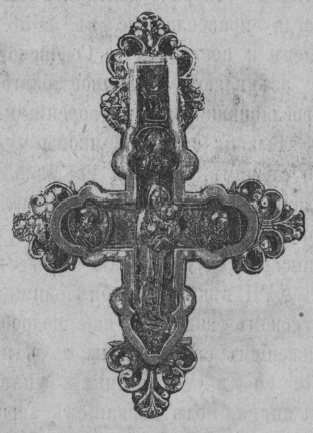
Между тем Гунны, потерпев поражение от Персов (так как вторжение их касалось главным образом Персидских областей), ушли в свою страну, а потому и прибывшие к Едессе войска отозваны правительством; в том числе и Готф имел и возвратиться. Неутешная мать покушалась оставить дочь, но не могла же расторгнуть брачных уз. Пред отправлением в путь она повела обоих в церковь святых страстотерпцев Гурия, Самона и Авива и. поставивши их пред ковчегом с мощами, сказала зятю: «не отпущу с тобою дочери моей, если не дашь за себя поручителями сих святых, страдавших за Христа; возьмись за священный ковчег и клянись, что не нанесешь зла дочери моей, но будешь любить ее и держать в чести». Готфянин, считая это маловажным, тотчас небоязненно взялся за ковчег и произнес: «от ваших рук, святые, принимаю отроковицу, вас представляю матери ее в поручители и свидетели, что не сделаю никакого зла этой моей супруге, никогда не оскорблю ее, но буду любить и честно хранить до конца». Так говорил Готфянин; а мать после сего возопила к святым мученикам: «вам после Бога вручаю дочь мою и чрез вас вдаю этому чужестранному человеку!» После молитвы и последнего прощания, София воротилась в дом свой, а супруги отправились в путь. Но чтобы тайна не огласилась на его родине, Готфянии дал свободу рабу, которого имел при себе.
Meanwhile, the Huns, having suffered defeat by the Persians (for their invasion chiefly concerned the Persian regions), departed to their own country, and therefore the troops that had arrived at Edessa were recalled by the government; the Goth also had to return. The inconsolable mother attempted to keep her daughter, but could not break the marriage bonds. Before setting out on the journey, she led them both to the church of the holy Passion-bearers Gourias, Samonas and Abibas, and, placing them before the reliquary with the relics, said to her son-in-law: "I will not let my daughter go with you unless you give these saints, who suffered for Christ, as your guarantors; take hold of the sacred reliquary and swear that you will do no harm to my daughter, but will love her and hold her in honor." The Goth, considering this of little importance, immediately and fearlessly took hold of the reliquary and pronounced: "From your hands, O saints, I receive the maiden; I present you to her mother as guarantors and witnesses that I will do no evil to this my wife, will never insult her, but will love and honorably keep her to the end." Thus spoke the Goth; and the mother, after this, cried out to the holy martyrs: "To you, after God, I entrust my daughter, and through you I give her to this foreign man!" After prayer and a final farewell, Sophia returned to her house, and the spouses set out on their journey. But so that the secret might not be divulged in his homeland, the Goth gave freedom to the slave he had with him.
Когда же приближались они к местожительству Готфянина (в нынешней северной Болгарии), этот варвар, забывши любовь и клятвы свои, совлек с несчастной Евфимии дорогие одежды и облачил в рубища, как пленницу и рабу, и сказал ей: «если хочешь оставаться в живых, то, войдя в § мой дом, никому не говори о том, что между нами было; потому что я имею жену и детей, и ты будешь рабою жене моей». С невыразимою горестию приняла эту весть Евфимия и только в уповании на промысл Божий и заступничество святых Гурия, Самона и Авива находила поддержку и ободрение.
When they drew near to the Goth's place of residence (in present-day northern Bulgaria), this barbarian, forgetting his love and his oaths, stripped the unfortunate Euphemia of her costly garments and clothed her in rags, like a captive and a slave, and said to her: "If you wish to remain alive, then, upon entering my house, tell no one of what has passed between us; for I have a wife and children, and you will be a slave to my wife." With inexpressible grief Euphemia received this news and found support and encouragement only in her hope in the providence of God and the intercession of the holy Gourias, Samonas and Abibas.
Жена Готфянина, увидя отроковицу и рассмотревши красоту лица ее, спросила мужа: «что это за девушка? откуда ты привел ее?» Муж: «это – пленница; я привел ее из Едессы, чтобы она была рабою у тебя». Жена: «по красоте лица заметно, что она нс раба, а свободная». Муж: «хотя и свободна была в земле своей, но теперь – твоя раба». Евфимия не осмелилась прекословить и повиновалась Готфянке, как раба госпоже своей; в сердце же непрестанно молилась Богу и святым страстотерпцам об избавлении.
The Goth's wife, seeing the maiden and observing the beauty of her face, asked her husband: "Who is this girl? From where have you brought her?" The husband: "She is a captive; I brought her from Edessa to be your slave." The wife: "By the beauty of her face it is evident that she is not a slave, but a free woman." The husband: "Though she may have been free in her own land, now she is your slave." Euphemia did not dare to contradict and obeyed the Goth's wife as a slave obeys her mistress; in her heart, however, she ceaselessly prayed to God and to the holy Passion-bearers for deliverance.
Чрез несколько времени госпожа заметила, что раба ее непраздна, и из ревности стала отягчать ее работами с целию уморить ее. Когда же исполнилось время, то Евфимия родила младенца, по виду схожего на Готфянина, отца его. Госпожа, приметив это, воспылала еще большим гневом и положила в уме своем погубить младенца. И вот некогда, удалив мать на работу, влила яд в уста его, и он тотчас умер. Воротившись, мать увидела сына мертвым и терзалась сердцем от безмерной печали. Прибирая же мертвого, заметила слюну на устах его, припомнила, что когда-то госпожа грозила смертию ей и дитяти, и уразумела, что она была виновницею смерти младенца, но не смела говорить о том; а взявши мало волны, отерла текущий из уст мертвого яд и сохранила ту волну у себя. Младенец был похоронен.
After some time, the mistress noticed that her slave was with child, and out of jealousy began to burden her with labors, with the intention of killing her. When the time was fulfilled, Euphemia gave birth to an infant who, in appearance, resembled the Goth, his father. The mistress, perceiving this, burned with even greater anger and resolved in her mind to destroy the child. And so, on one occasion, having sent the mother away to work, she poured poison into the infant's mouth, and he died at once. Returning, the mother saw her son dead and was tormented in heart by immeasurable grief. While preparing the dead body, she noticed saliva on his lips, recalled that the mistress had once threatened her and the child with death, and understood that she was the cause of the infant's death, but dared not speak of it; taking a little wool, she wiped the poison flowing from the dead child's mouth and kept that wool by her. The infant was buried.
Чрез несколько дней случилось Готфянину созвать друзей своих на пир, и Евфимия прислуживала. Когда пришло время подать чашу госпоже, Евфимия, желая уведать истину, действительно ли уморено было дитя госпожею, омочила волну и выжала в чашу с питьем. Госпожа выпила, и в ту же ночь умерла. На утро, при вести о неожиданной смерти, стеклись родные и знакомые, и после обычных приготовлений великолепно схоронили ее, не подозревая бывшего. Но чрез семь дней сродникам пришла на ум приведенная из Едессы девушка, и они решили: «не другой кто, а та пленница виновна в смерти покойницы». И как на то время не было судьи дома, то собственным судом порешили схоронить ее в гробе умершей. Итак, открывши гроб, всадили Евфимию к трупу, гниющему и кипевшему червями, привалили камень и поставили сторожей, чтобы кто не освободил осужденную от лютой смерти. Кто мог бы изобразить скорбь и тугу, страх и ужас, плач и рыдание несчастной! В последней крайности она возопила к Богу и призывала святых родины своей.
Several days later, the Goth happened to invite his friends to a feast, and Euphemia served. When the time came to present the cup to the mistress, Euphemia, wishing to ascertain the truth—whether the child had indeed been killed by the mistress—dipped the wool and squeezed it into the drink in the cup. The mistress drank, and that same night she died. In the morning, upon hearing of the unexpected death, relatives and acquaintances gathered, and after the usual preparations, they buried her splendidly, suspecting nothing of what had occurred. But after seven days, the relatives thought of the girl brought from Edessa, and they decided: "No one else, but that captive, is guilty of the deceased woman's death." And as there was no judge at home at that time, they decided by their own judgment to bury her in the coffin of the deceased. So, opening the coffin, they thrust Euphemia in with the corpse, which was rotting and seething with worms, rolled a stone over it, and set guards so that no one might free the condemned woman from a cruel death. Who could depict the sorrow and anguish, the fear and terror, the weeping and sobbing of the unfortunate woman! In her extreme distress, she cried out to God and called upon the saints of her homeland.
И вдруг она видит трех светоносных мужей; тотчас исчез смрад и опустилось благоухание. И сказали ей явившиеся: «ободрись, дочь, и не бойся; скоро найдешь спасение». От радости она забылась и уснула, а во время сна невидимою силою перенесена была в Едессу в церковь святых мучеников и положена у гробницы их. Была ночь и в церкви шло утреннее Богослужение. Вставши, рассматривала, где она? ибо познала, что уже не в гробе. И увидев стены церкви и иконы, свечи и ковчег с мощами мучеников, слыша и пение клириков, познала, что находится в Едессе, в церкви поручителей своих, святых Гурия, Самона и Авива. Обрадовавшись, со слезами благодарила Бога и святых Его за оказанную ей милость. Священник, услышав слова и плач, приступил к ней и спрашивал: «кто ты? отчего так плачешь?» Она начала сказывать о себе подробно, как выдана была Готфянину при гробе мучеников материю своею, как пострадала от того клятвопреступника, как вчера была заключена в гробе при трупе, и о явлении мучеников и неизъяснимом перенесении сюда. Священник, не доверяя еще рассказу, спросил: «кто же мать твоя?» И узнав, что это София вдова, послал пригласить ее в церковь. Ничего не ведавшая мать скоро пришла в церковь и, увидев дочь в рубищах, ужаснулась, бросилась к ней и плакала на вые ее; плакала и Евфимия, и обе не могли от плача произнесть слова. Наконец, утоливши рыдание, мать спросила: «как ты, дорогая, оказалась здесь, и в таком рубище?» Она же сказала о себе все бывшее от мужа и о преславном спасении своем. Мать таяла от жалости, и все случившиеся тут чудились и прославляли Бога. Падши пред мощами святых, обе воздали благодарение и воротились домой с радостию и славословием Тому, Чья десница спасла, сверх всякого человеческого ожидания, и избавила обманутую и поруганную.
And suddenly she saw three radiant men; immediately the stench vanished and a fragrance descended. And the apparitions said to her: "Take courage, daughter, and fear not; soon you will find deliverance." From joy she lost consciousness and fell asleep, and during her sleep she was transported by an invisible power to Edessa, into the church of the holy martyrs, and laid at their tomb. It was night, and the morning service was proceeding in the church. Awakening, she looked about to see where she was, for she knew that she was no longer in the coffin. And seeing the walls of the church and the icons, the candles and the reliquary with the martyrs' relics, and hearing the singing of the clergy, she knew that she was in Edessa, in the church of her guarantors, the holy Gourias, Samonas and Abibas. Rejoicing, she thanked God and His saints with tears for the mercy shown her. The priest, hearing her words and weeping, approached her and asked: "Who are you? Why do you weep so?" She began to relate everything about herself in detail: how she had been given to the Goth at the tomb of the martyrs by her mother, how she had suffered from that perjurer, how yesterday she had been shut in the coffin with the corpse, and about the appearance of the martyrs and her inexpressible transportation thither. The priest, still not trusting the account, asked: "Who, then, is your mother?" And learning that it was Sophia the widow, he sent to invite her to the church. The mother, knowing nothing, quickly came to the church and, seeing her daughter in rags, was horrified, rushed to her and wept on her neck; Euphemia also wept, and both could not utter a word for weeping. At last, having assuaged their sobbing, the mother asked: "How, my dear, have you come to be here, and in such rags?" She told her everything that had happened from her husband and about her glorious deliverance. The mother melted with pity, and all present marvelled and glorified God. Falling down before the relics of the saints, both gave thanks and returned home with joy and praise to Him Whose right hand had saved, beyond all human expectation, and delivered the deceived and outraged woman.
Спустя некоторое время пограничью Римской империи вновь грозило вторжение Гуннов, уже в союзе с Персами, и потому снова послано войско извнутри империи на защиту Едессы; прибыл с этим войском и клятвопреступный Готфянин. Думая, что никто не ведает о бывшем, и уверенный, что Евфимия умерла во гробе, он бесстыдно явился в дом Софии и передал ей поклон от дочери, которая только по неожиданности выступления войска не могла прибыть вместе с ним. София, слыша это, не смогла сдержать своего негодования и при бывших тут сродниках обличила злодея и клятвопреступника. Схваченный и представленный военачальнику, он сознался в своем преступлении, был осужден и обезглавлен. Так клятвопреступничество было отомщено, и упование веры не осталось тщетным.
Some time later, the borders of the Roman Empire were again threatened by an invasion of the Huns, now in alliance with the Persians, and therefore a force was again sent from within the empire to defend Edessa; the perjured Goth also arrived with this army. Thinking that no one knew of what had happened, and confident that Euphemia had died in the tomb, he shamelessly appeared at the house of Sophia and gave her greetings from her daughter, who, only because of the unexpected departure of the army, could not come with him. Hearing this, Sophia could not contain her indignation and, in the presence of her relatives who were there, denounced the villain and perjurer. Seized and brought before the military commander, he confessed his crime, was condemned, and beheaded. Thus perjury was avenged, and the hope of faith was not left vain.