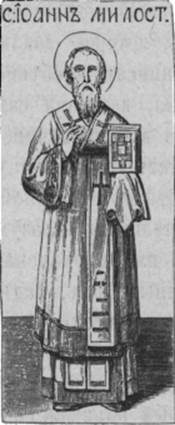
Иоанн, родом из Кипра, сын благочестивых, богатых и знатных родителей, доставивших ему хорошее образование и главным образом воспитавших его в христианской любви к Богу и людям, проявил в своей жизни блистательнейшие плоды такого воспитания, так как всю жизнь свою посвятил делам самой драгоценной в глазах Божиих добродетели – милосердия, почему св. Церковь, причислив его к лику святых, чествует его при этом особенным наименованием «Милостивого».
John, a native of Cyprus, the son of pious, wealthy, and noble parents who gave him a good education and, above all, raised him in Christian love for God and man, manifested in his life the most brilliant fruits of such an upbringing, for he devoted his entire life to the works of that virtue most precious in the eyes of God—mercy. Wherefore the holy Church, having numbered him among the saints, honors him with the special title "the Merciful."
С детства предрасположенный к добру, в молодых годах Иоанн удостоился особенного откровения во сне, направившего его окончательно на тот путь, на котором, просияв на земле, он созрел и для небесной славы. Однажды среди ночного сна явилась ему девица, сияющая красотою, в светлой одежде и с венком из масличных листьев на голове: «я – старшая дочь Великого Царя и приятнейшая Ему между всеми, – сказала она, улыбаясь, Иоанну; – если ты будешь служить мне, то я испрошу у Него для тебя великие милости и введу тебя в дом Его, потому что никто не имеет к Нему больше дерзновения, чем я: ради меня Бог сошел на землю и облекся в плоть человеческую»... И после этих слов стала невидима.
From childhood predisposed to good, in his youth John was vouchsafed a special revelation in a dream, which finally directed him onto that path on which, having shone upon the earth, he matured also for heavenly glory. Once, in the midst of a night's sleep, there appeared to him a maiden, radiant with beauty, in a bright garment and with a wreath of olive leaves on her head. "I am the eldest daughter of the Great King and the most pleasing to Him among all," she said, smiling, to John; "if you will serve me, I will obtain for you great mercies from Him and will lead you into His house, for no one has greater boldness before Him than I: for my sake God came down to earth and clothed Himself in human flesh." And after these words she became invisible.
Размышляя о дивном видении, Иоанн понял, что под этим образом ему представилась и призывала его к подражанию ей любимая Божия добродетель – милосердие, то милосердие, ради которого Он сошел с небес, чтобы спасти погибающий человеческий род... и проникся он навсегда сознанием этого Божественного призвания и пламенным желанием следовать ему; поэтому во всю свою жизнь он не пропускал случая делать добро и совершал его с полною любовию! Вся жизнь его представляет ряд свидетельств необычайного и неистощимого милосердия, которым он был воодушевлен.
Reflecting on the wondrous vision, John understood that under this image there was presented to him, and called him to imitate her, the beloved virtue of God—mercy, that mercy for the sake of which He came down from heaven to save the perishing human race. And he was forever penetrated with the consciousness of this divine calling and with a fervent desire to follow it; therefore, throughout his whole life he let slip no opportunity to do good, and performed it with complete love! His whole life presents a series of testimonies of extraordinary and inexhaustible mercy, by which he was inspired.
В молодости своей, по воле родителей своих, Иоанн был женат, но недолго продолжалась его семейная жизнь, он вскоре лишился жены и детей и тогда, отрешившись от мира, предался строгому подвижничеству и, вместо детей своих, сделался милостивым отцом всех нуждающихся, так как оказывал им щедрую благотворительность. Сделавшись также известным и по своему благочестию, Иоанн, по желанию жителей Александрии, в правление Ираклия (610–641) был, хотя и против воли своей, избран патриархом Александрийским. Достойно святительствовал он, служа твердым оплотом православия и защищая Церковь от различных еретических учений; об отношениях же его к возлюбленной им своей пастве предание удержало в вечном воспоминании, что «был Иоанн милосерд и милостив ко всем в нищете бедствующим».
In his youth, by the will of his parents, John was married, but his family life did not last long; he soon lost his wife and children, and then, having renounced the world, he gave himself up to strict asceticism and, instead of his own children, became a merciful father to all the needy, showing them generous charity. Having also become known for his piety, John, at the desire of the inhabitants of Alexandria, during the reign of Heraclius (610–641), was, though against his own will, chosen Patriarch of Alexandria. Worthily did he exercise his hierarchal office, serving as a firm bulwark of Orthodoxy and defending the Church from various heretical teachings; and concerning his relations with his beloved flock, tradition has preserved for eternal remembrance that "John was compassionate and merciful to all suffering in poverty."
В начале своего вступления на кафедру Александрийскую Иоанн, призвав к себе настоятелей церквей, сказал им: «пройдите весь город и перепишите мне господ моих». – «Кто же эти господа твои, владыко?» – спросили церковнослужители. – «Господа мои, это те, которых вы называете нищими и убогими, – отвечал патриарх, – потому что они могут принять меня в вечныя кровы и подать мне помощь ко спасению».
At the beginning of his accession to the Alexandrian see, John, having summoned the rectors of the churches, said to them: "Go through the whole city and write down for me my lords." "Who are these lords of yours, Vladyka?" asked the clergy. "My lords are those whom you call the poor and needy," answered the patriarch, "for they can receive me into the eternal dwellings and give me help unto salvation."
Воля святителя была исполнена и число убогих и не имеющих крова оказалось до 7,500, и всем им было назначено постоянное пособие.
The hierarch's will was fulfilled, and the number of the poor and homeless was found to be up to 7,500, and a permanent allowance was assigned to them all.
Не ограничивался ближайшею паствою своею жалостливый святитель; душа его болела и о дальних бедствующих, и когда Персы, в то время овладев Сириею и предав огню Иерусалим, забрали в плен множество христиан, святитель Александрийский выслал корабли с пшеницею и золотом для выкупа пленных и для пособия разоренным.
The compassionate hierarch did not limit himself to his immediate flock; his soul grieved also for the distant suffering, and when the Persians, having at that time taken possession of Syria and set fire to Jerusalem, took many Christians captive, the Alexandrian hierarch sent out ships with wheat and gold for the ransom of the captives and for aid to the ruined.
Строго заботясь о том, чтобы служащие при нем не отстраняли от него никого из нуждающихся, и будучи слишком занят, чтобы постоянно иметь досуг принимать всех приходящих просителей, Иоанн два раза в неделю, по средам и по пятницам, сам сидел у церковных ворот, чтобы и не пропустить никого из приходящих к нему по нужде. Когда же некоторые из окружающих его удивлялись такому его труду и терпению, то он говорил: «если я сам никогда не лишен доступа к Господу Богу моему Иисусу Христу, и в молитвах беседую с Ним и прошу Его о всех моих нуждах, то как же могу возбранить доступ и к себе моему ближнему, чтобы и он мог сказать мне и о своей обиде и нужде и попросить меня о том, чего желает»... И никогда, ни ради какого спешного дела не откладывал святитель дела милосердия. Таким образом однажды, когда одна бедная вдова подошла к нему в то время, как он шел совершать служение в храме, и бывшие при нем хотели отстранить ее, советуя святителю принять ее после службы, то он не допустил этого и выслушал ее немедленно, и распорядился удовлетворением ее, сказав провожавшим его: «послушает ли и меня Бог, если я откажусь послушать бедного?»...
Strictly concerned that those serving him should not turn away from him any of the needy, and being too occupied to have constant leisure to receive all who came as petitioners, John twice a week, on Wednesdays and Fridays, himself sat at the church gates, so as not to let pass anyone who came to him in need. And when some of those around him marveled at such his labor and patience, he said: "If I myself am never denied access to the Lord my God Jesus Christ, and in prayers I converse with Him and ask Him for all my needs, how then can I forbid access to myself to my neighbor, that he also may tell me of his grievance and need and ask me for what he desires." And never, for the sake of any urgent business, did the hierarch put off a work of mercy. Thus, once, when a poor widow approached him as he was going to perform the service in the church, and those with him wished to turn her away, advising the hierarch to receive her after the service, he did not allow this, but heard her immediately, and gave orders for her relief, saying to those accompanying him: "Will God hear me if I refuse to hear the poor?"
Однажды предупредили Иоанна, что среди нищих, приходящих за подаянием, являются и не бедные, по-видимому, так как одежда на них хорошая, и потому не следует ли таким в подаянии отказать? – «Если вы рабы Христовы, – возразил святитель, – то подавайте, как Христос повелел, не взирая на лица, потому что мы не свое даем, а Христово»...
Once they warned John that among the poor coming for alms there appeared some who were apparently not poor, since their clothing was good, and asked whether such should be refused alms. "If you are servants of Christ," the hierarch replied, "then give as Christ commanded, without respect of persons, for we give not our own, but Christ's."
Когда же представляли ему, что ни перед чем не останавливающаяся его щедрость может истощить средства его, то Иоанн отвечал: «не хочу быть причастником в вашем маловерии, так как я уверен, что если бы даже бедные со всего мира пришли к нам в Александрию, то и тогда Божиим промышлением не оскудело бы церковное и патриаршее достояние»...
And when they suggested to him that his unrestrained generosity might exhaust his means, John answered: "I do not wish to be a partaker in your little faith, for I am confident that if even the poor from all the world came to us in Alexandria, even then, by God's providence, the church and patriarchal possessions would not be diminished."
Но будучи беспредельно милостивым и щедрым для других, патриарх был в такой же степени строг к самому себе и воздержен относительно своих собственных удобств, Однажды посетил его богатый вельможа и, заметив, каким старым и негодным одеялом покрыта постель его, прислал ему в подарок новое, довольно ценное, одеяло. Чтобы постичь усердие подарившего, святитель принял его приношение, но, покрывшись теплым, дорогим одеялом, не мог заснуть во всю ночь: «горе мне, роскошествующему, – смущался он мысленно, – вот, я покрыт шелковым, мягким одеялом, а братия Христовы – нищие цепенеют от стужи, не имея иные и ничего, чем покрыться», – и на другой же день послал продать дорогое покрывало, чтобы на вырученные деньги прикрыть нескольких бедных. Вельможа, между тем, узнав свое одеяло на рынке, купил его и снова отослал Иоанну, а тот снова продал его в пользу бедных, и это повторилось несколько раз, и на просьбу вельможи, чтобы Иоанн не отказывался пользоваться его приношением, святитель, продав его снова, сказал ему: посмотрим, кто из нас скорее устанет: ты ли – покупать покрывало, я ли – его продавать? – И таким образом усердие к себе богатого человека обратил в средство для благотворительности бедным...
But while being boundlessly merciful and generous to others, the patriarch was equally strict with himself and abstemious regarding his own comforts. Once a rich nobleman visited him and, noticing with what an old and worn-out blanket his bed was covered, sent him as a gift a new, rather valuable blanket. To honor the zeal of the giver, the hierarch accepted his offering, but, having covered himself with the warm, costly blanket, he could not sleep the whole night. "Woe is me, who live in luxury," he troubled himself in thought; "behold, I am covered with a silken, soft blanket, while Christ's brethren—the poor—are numb with cold, having not even anything with which to cover themselves." And the very next day he sent to sell the costly coverlet, so that with the money received he might cover several poor people. The nobleman, meanwhile, recognizing his blanket in the market, bought it and again sent it to John, who again sold it for the benefit of the poor; and this was repeated several times. And in response to the nobleman's request that John not refuse to use his gift, the hierarch, having sold it again, said to him: "Let us see which of us will tire sooner: you in buying the coverlet, or I in selling it." And thus he turned the zeal of the rich man for himself into a means of charity for the poor.
Блаженный Иоанн старался и скупых привлекать к подаянию милостыни и исправлять их от недуга сребролюбия. Узнав, что один епископ, по имени Троил, никогда не помогал бедным, хотя и располагает значительными средствами, святитель пригласил его вместе с ним обойти больницы, где много было больных и убогих.
Blessed John also tried to draw the stingy to the giving of alms and to correct them from the malady of avarice. Learning that a certain bishop, named Troilus, never helped the poor, although he possessed considerable means, the hierarch invited him to go with him through the hospitals, where there were many sick and needy.
– Вот удобный случай помочь беднякам, – сказал он сопровождавшему его Троилу, и тот, стесняясь обнаружить скупость свою перед святителем, раздал убогим довольно много денег, но, возвратясь домой, стал сокрушаться об этой издержке до такой степени, что даже захворал... Поняв причину расстройства Троила, Иоанн, скорбя о нем, пожелал излечить его от еще худшего – нравственного недуга. И вот, придя к больному, возвратил он ему издержанные им деньги в больнице и сказал: «я принес тебе те деньги, которые ты по моей просьбе издержал в больнице, – получи их, но только напиши своею рукою, что ты предоставляешь мне получить от Господа то воздаяние, которое следовало тебе»... – Сребролюбец, обрадованный возвращением своих денег, не вразумился внушением, которое заключалось в предложении Иоанна, и поспешил написать требуемое Иоанном, не вникнув в смысл того лишения, которому сам он подвергал себя, и так успокоился, что вскоре почувствовал себя здоровым.
"Here is a convenient opportunity to help the poor," he said to Troilus who accompanied him, and he, being ashamed to reveal his stinginess before the hierarch, distributed a considerable amount of money to the needy. But, returning home, he began to grieve over this expenditure to such a degree that he even fell ill. Understanding the cause of Troilus's distress, John, grieving for him, wished to heal him of an even worse—a moral—malady. And so, coming to the sick man, he returned to him the money he had spent in the hospital and said: "I have brought you that money which, at my request, you spent in the hospital—receive it, but only write with your own hand that you grant me to receive from the Lord that reward which would have been due to you." The lover of money, rejoicing at the return of his money, was not enlightened by the admonition contained in John's proposal, and hastened to write what John required, without penetrating the meaning of the deprivation to which he himself was subjecting himself, and so was calmed that he soon felt himself well.
Но любящий святитель со скорбию ушел от душевнобольного и молил Бога об его душевном исцелении. И Бог не оставил Троила спасительным вразумлением. В ту же ночь немилостивый епископ имел знаменательное сновидение: ему представился великолепный дом, над дверями которого золотыми буквами было начертано: «здесь – обитель и вечное успокоение для епископа Троила». Приятно ему было видеть такое загробное свое воздаяние... Но вдруг является величественный и грозный муж, который объявляет Троилу, что Царь всего мира повелел ему изгладить имя его, а вместо него начертать имя Иоанна, который приобрел этот дом ценою тридцати литр золота... – Это и была та сумма, которую истратил епископ в больнице и которую возвратил ему Иоанн...
But the loving hierarch departed in sorrow from the spiritually sick man and prayed to God for his soul's healing. And God did not leave Troilus without saving admonition. That same night the unmerciful bishop had a significant dream: there appeared to him a magnificent house, over whose doors was inscribed in golden letters: "Here is the abode and eternal rest for Bishop Troilus." It was pleasant for him to see such his recompense after death. But suddenly a majestic and terrible man appeared, who declared to Troilus that the King of the whole world had commanded him to erase his name and instead inscribe the name of John, who had acquired this house at the price of thirty litras of gold. This was the sum which the bishop had spent in the hospital and which John had returned to him.
Вразумился тогда сребролюбец и в скорби своей пошел к Иоанну и рассказал ему о своем сновидении. Отозвался на его скорбь любвеобильный святитель и успокоил, вразумив окончательно наставительными беседами, которые наконец смягчили сердце немилостивого.
Then the lover of money was enlightened, and in his sorrow he went to John and told him of his dream. The love-filled hierarch responded to his grief and comforted him, finally instructing him with edifying conversations, which at last softened the heart of the unmerciful one.
Полная любви душа Иоанна не могла вмещать в себе никакого чувства, нарушающего мир с ближним. Таким образом всегда спешил он примирением с теми, кто по какому-нибудь поводу был возбужден против него. Однажды, когда в праздничный день он был в церкви и готовился совершать Богослужение, вспомнил он, что один из клириков, на которого наложил он, впрочем, заслуженное наказание, был огорчен и сохранял неудовольствие против него. Руководясь буквально словами Христа: «если принесешь дар твой к алтарю и тут вспомнишь, что брат твой имеет нечто на тя, оставь дар твой и поди прежде всего помирись с братом твоим», святитель действительно вышел из алтаря, подозвал к себе гневающегося на него клирика и в присутствии всех поклонился ему в ноги и попросил у него прощения, – и таким смирением возбудил раскаяние в самом виновном и совершенно обезоружил его.
The soul of John, full of love, could contain within itself no feeling that disturbs peace with one’s neighbor. Thus he always hastened to reconciliation with those who, for some reason, were aroused against him. Once, when on a feast day he was in church and preparing to celebrate the Divine Service, he remembered that one of the clergy, upon whom he had imposed a punishment—though a deserved one—was grieved and retained displeasure against him. Guided literally by the words of Christ: “If thou bring thy gift to the altar, and there rememberest that thy brother hath aught against thee, leave thy gift before the altar, and go thy way; first be reconciled to thy brother,” the Hierarch indeed went out from the altar, called to him the clergyman who was angry with him, and in the presence of all bowed down at his feet and asked his forgiveness—and by such humility aroused repentance in the guilty one himself and completely disarmed him.
Тем более скорбел и старался искупить свою вину Иоанн, если, по человеческой немощи, впадал в заблуждение и сознавал себя неправым. Так, поверив однажды клевете на одного инока, обвиненного в тяжком преступлении, он осудил его на заключение в темницу, но, успев разузнать, что тот был невинен, с великим смущением и огорчением умолял его о прощении и, желая вознаградить, предлагал ему значительное денежное пособие, однако же при этом случае только окончательно мог убедиться в чистоте и правоте невинно пострадавшего инока, когда тот отказался от денежного вознаграждения, говоря, что «если инок верует, что Господь о нем заботится, то ему не нужно золота; если же он имеет потребность в золоте, то это значит, что он не верует, что Сам Бог промышляет о нуждах его»...
All the more did John grieve and strive to atone for his fault if, through human weakness, he fell into error and recognized himself as wrong. Thus, having once believed a slander against a certain monk accused of a grave crime, he condemned him to imprisonment; but having managed to learn that he was innocent, with great distress and sorrow he begged his forgiveness and, wishing to make amends, offered him a considerable monetary assistance. Yet on this occasion he could only fully be convinced of the purity and righteousness of the innocently suffering monk when the latter refused the monetary reward, saying that “if a monk believes that the Lord cares for him, then he has no need of gold; but if he has need of gold, this means that he does not believe that God Himself provides for his needs”...
Еще осмотрительнее стал относиться с этих пор к осуждению святитель и часто предупреждал в этом и других: «дети, не будем осуждать никого! – говорил он, – потому что, во 1-х, осуждая ближнего, мы Божию заповедь нарушаем, – во 2-х, может быть даже и клевещем на брата, потому что, если и были мы свидетелями его согрешения, то кто может знать, не совершил ли он внутреннего покаяния перед Богом»?
From that time on, the Hierarch became even more cautious in judging, and often warned others about this: “Children, let us judge no one!” he would say, “because, firstly, in judging our neighbor we transgress God’s commandment; secondly, we may even be slandering our brother, for if we have been witnesses of his sin, who knows whether he has not offered inward repentance before God?”
Но и к виноватым был Иоанн крайне милостив, часто воздавая им за зло одним только благодеянием; напр., выслушав жалобу своего племянника на сильно оскорбившего его одного человека, Иоанн сказал своему родственнику, что он накажет оскорбившего его так, что удавятся вся Александрия... Вместе с тем стал убеждать обиженного, что если он хочет именоваться его племянником, то чтобы был готов переносить без досады всякие оскорбления – ради Господа и прощать обидчикам своим... Между тем, призвав эконома церковного, распорядился, чтобы он отныне не брал ни копейки церковной подати от того человека, который нанес оскорбление его племяннику... Действительно, удивилась тогда вся Александрия такому наказанию...
But even toward the guilty, John was exceedingly merciful, often repaying evil with good alone. For example, having heard the complaint of his nephew against a man who had greatly insulted him, John said to his relative that he would punish the offender in such a way that all Alexandria would be astonished... At the same time, he began to persuade the offended one that if he wished to be called his nephew, he should be ready to bear all insults without vexation—for the Lord’s sake—and to forgive his offenders... Meanwhile, summoning the church steward, he ordered that from then on he should take not a single kopek of church tax from that man who had insulted his nephew... Indeed, all Alexandria marveled at such a punishment...
Вникая в положение человека сообразно и с внешними его обстоятельствами и внутренними достоинствами, Иоанн Милостивый не ограничивался иногда временным пособием ему в затруднительном положении, но вполне устраивал всю дальнейшую судьбу отесненного, но заслуживающего участие человека. Так, узнав об одном юноше, находившемся в крайней нищете, потому что благочестивые родители его раздали почти что все имение свое бедным, оставив ему в наследство только икону Богородицы и незначительную сумму денег, которую он и сам пожертвовал бедным, – святитель принял в нем истинно-отеческое участие и пожелал облегчить его участь. Чтобы сделать это под благовидным предлогом – так, чтобы юноша не мог отказаться от пособия, Иоанн решился назвать себя родственником отца его и по праву родства пригласил к себе юношу, приласкал его, содействовал его женитьбе на хорошей девушке и обеспечил их средствами, достаточными для скромной жизни.
Entering into a man’s situation in accordance both with his external circumstances and inner worth, John the Merciful sometimes did not limit himself to temporary assistance in a difficult position, but fully arranged the entire future fate of an oppressed but deserving person. Thus, learning of a youth who was in extreme poverty because his pious parents had given away almost all their property to the poor, leaving him as inheritance only an icon of the Theotokos and an insignificant sum of money, which he himself had also donated to the poor—the Hierarch took truly fatherly interest in him and wished to ease his lot. To do this under a plausible pretext—so that the youth could not refuse assistance—John decided to call himself a relative of the youth’s father, and by right of kinship invited the youth to him, caressed him, helped him marry a good girl, and provided them with means sufficient for a modest life.
Проявляя в течение всей своей жизни во всех видах любовь Евангельскую, одушевлявшую его, Иоанн не только помогал, но и сам лично ухаживал за больными, присутствовал при умирающих, напутствуя их молитвами своими, молился и за умерших, сам часто совершая Божественную литургию, убежденный и сам убеждая других, что много содействует облегчению душ усопших литургия, совершаемая за них.
Manifesting throughout his whole life in every form the Gospel love that animated him, John not only helped but also personally cared for the sick, attended the dying, giving them guidance with his prayers, and prayed for the dead, often himself celebrating the Divine Liturgy, convinced and convincing others that the Liturgy celebrated for the departed greatly aids in the relief of their souls.
Св. Иоанн Милостивый скончался в 619 году на родине, куда заставили его удалиться Персы, овладевшие Египтом. Умирая, он молился: «благодарю Тебя, Господи, что Ты сподобил меня все Твое принести Тебе?»
St. John the Merciful reposed in the year 619 in his homeland, whither he was forced to withdraw by the Persians, who had taken possession of Egypt. Dying, he prayed: “I thank Thee, O Lord, that Thou hast vouchsafed me to offer all Thine own to Thee?”
Впоследствии мощи святителя были перенесены в Константинополь; в 1200 г. видел их здесь паломник Антоний: «св. Иоанн Милостивый в теле у Испигаса (стр. 143 и 159); после того перенесены в Буду, оттуда – в Пресбург в Венгрии, где и ныне»211.
Later, the relics of the Hierarch were translated to Constantinople; in the year 1200 the pilgrim Anthony saw them there: 'St. John the Merciful in the body at Ispigas (pp. 143 and 159); afterwards they were translated to Buda, from there to Pressburg in Hungary, where they remain to this day'211.
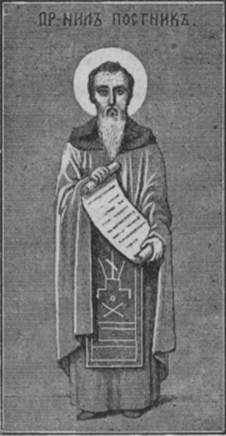
Нил, происходивший из знатного и богатого рода, по образованию своему и по личным достоинствам возведенный на степень префекта столицы Греческой империи, не дорожил однако же преимуществами своего блистательного положения. Пороки, господствовавшие среди столичной жизни вообще и в особенности при дворе императора, смущали страхом за свое спасение его душу, полную стремления к высшим предметам и любви к Богу, развившихся в нем особенно под влиянием наставлений и бесед св. Иоанна Златоустого, которого он имел случай слушать, когда еще он был проповедником в Антиохии. И вот, среди разгара мирских и даже семейных удовольствий, в Ниле созрело и воспламенилось иное стремление... стремление послужить единому Богу в тишине уединения; и в особенности привлекал его к себе священный Синай.
Nilus, who came from a noble and wealthy family, and by his education and personal merits was raised to the rank of prefect of the capital of the Greek Empire, did not, however, value the advantages of his brilliant position. The vices that prevailed in the life of the capital generally, and especially at the court of the emperor, troubled his soul—full of striving for higher things and love for God, which had developed in him particularly under the influence of the teachings and conversations of St. John Chrysostom, whom he had the opportunity to hear when he was still a preacher in Antioch—with fear for his salvation. And so, in the midst of the fervor of worldly and even family pleasures, another striving matured and kindled in Nilus... a striving to serve the one God in the silence of solitude; and the sacred Sinai especially drew him to itself.
«Какое-то сильное, неудержимое желание влекло меня к священным Синайским местам, – вспоминает впоследствии сам преп. Нил об этом перевороте жизни его, – весь окрылен я был помыслом о безмолвии, кроме этого ни о чем не мог думать, ни на что и смотреть, – ибо когда любовь к чему-нибудь овладевает душою, тогда с великою силою отвлекает ее от всего, даже достойного ее внимания, и уносит к тому, что возлюбила она... Эта-то любовь и предписывала мне собраться в путь, и не мог я противоречить ей, повелевавшей мною так самоуправно. И вот беру детей (а они были еще очень малы), привожу к матери, и одного отдаю ей, другого удерживаю при себе; сказываю ей, на что я решился, и строго подтверждаю, что не переменю намерения... Она же, и прежде не приучившись противоречить, и тогда по лицу моему увидя, что не послушаю просьбы, но – и принуждения не вынося и слез не удерживая, соглашается на путешествие, уступая более необходимости, чем в сущности одобряя меня. Ибо видя, что решение мое безусловно, и представляя себе скорбь разлуки, не позаботилась о печали своей, но поставила для себя целию угодное мне, и пожелала уступить победу в том, в чем не могла бы одержать победы, если бы и захотела...
“A certain strong, irresistible desire drew me to the sacred places of Sinai,” the Venerable Nilus himself later recalls of this turning point in his life, “I was wholly winged with the thought of stillness; I could think of nothing else, nor look at anything else—for when love for something takes possession of the soul, it then with great power draws it away from everything, even from what is worthy of its attention, and carries it to that which it has loved... This love it was that commanded me to set out on the journey, and I could not contradict it, which ruled over me so autocratically. And so I take my children (for they were still very small), bring them to their mother, and give one to her, keeping the other with me; I tell her what I have resolved, and strictly affirm that I will not change my intention... She, who had not before been accustomed to contradict, and then seeing from my face that I would not heed her entreaty, but—neither enduring compulsion nor restraining tears—agreed to the journey, yielding more to necessity than in truth approving of me. For seeing that my decision was unconditional, and picturing to herself the grief of separation, she took no thought for her own sorrow, but set as her goal what was pleasing to me, and wished to yield the victory in that in which she could not have gained the victory, even had she wished...
«Но знаете ли, какова разлука для тех, которые однажды навсегда по закону соединены союзом брака, по таинственному смотрению Сочетавшего соделались единым телом? Какую боль причиняет меч, рассекающий тело, такую же причиняет и разлука для ставших единою плотию. Дивился я тогда силе духовного вожделения, когда видел, что преодолевало оно и природу и долговременную привязанность. Об этой силе заключил я по тому, что разрешала она неразрешимые узы, которые может расторгать одна только смерть, делая расторжение это неболезненным, потому что приводит в бесчувствие. А в живых чувство делает болезнь эту еще невыносимее, напоминая и о привычке, и о расположении друг к другу, если только вожделение высшего блага не притупит вдруг жала прежнего пожелания.
“But do you know what separation is for those who are once and for all united by the law of marriage, who by the mysterious dispensation of Him Who joined them have become one flesh? What pain a sword that cuts the body causes, such pain does separation cause for those who have become one flesh. I marveled then at the power of spiritual desire, when I saw that it overcame both nature and long-standing attachment. I concluded of this power from the fact that it loosed indissoluble bonds, which only death can sever, making this severance painless, because it brings insensibility. But in the living, feeling makes this pain even more unbearable, reminding one of habit and of mutual affection, unless the desire for the highest good suddenly blunts the sting of former longing.
Здесь поселился Нил в пещере, выкопанной собственными руками, и в продолжение 40 лет предаваясь самому строгому подвижничеству, по примеру других Синайских отшельников, проводивших истинно высокую жизнь, и сам достиг высокаго совершенства в духовной жизни, в особенности же, после трудной борьбы, развил в себе глубокое смирение. Молва о нем распространилась, и в тот век, когда люди не равнодушно, но с чуткою впечатлительностию относились к христианским истинам; многие лица всякого звания и состояния стали обращаться за наставлениями и молитвою к прославившемуся, умудренному пустынею, подвижнику. И всем отзывался он: из глубины своего уединения беседовал с государственными лицами и простыми ремесленниками, возвышал голос в защиту православия и в опровержение язычников и еретиков. Когда он услышал о ссылке в заточение Иоанна Златоустого (в 405 г.), то немедленно обличил императора Аркадия, смело написав ему: «ты изгнал Иоанна, епископа Византийского, великое светило вселенной, и изгнал без вины, неосмотрительно послушал некоторых епископов, которые не имели приличных своему сану мыслей. Сознайся, что ты сделал худое дело, лишив Церковь учителя, предлагавшего такое чистое и православное учение». И в другой раз, когда Аркадий, устрашенный бедствиями, постигшими Константинополь, просил Нила умилостивить Бога своими молитвами, подвижник отвечал ему: «как хочешь ты, чтобы Константинополь не страдал от землетрясений и огня небесного, когда он полон преступлений, когда неправда усилилась в нем до того, что изгнан блаженный епископ Иоанн, столп Церкви, светильник истины, труба Христова? Как просишь ты меня молиться о городе, караемом Самим Богом, тогда как сердце мое горит огнем скорби, и душа моя возмущается от тех пороков, которым предан теперь Константинополь».
Here Nilus settled in a cave, dug out with his own hands, and for the space of 40 years, giving himself over to the strictest asceticism, following the example of the other Sinai hermits who led a truly exalted life, he himself attained to high perfection in the spiritual life; in particular, after a difficult struggle, he developed in himself deep humility. His fame spread, and in that age when men were not indifferent but responded with keen sensitivity to Christian truths, many persons of every rank and station began to turn for instruction and prayer to the ascetic who had become renowned and had been made wise by the desert. And to all he responded: from the depths of his solitude he conversed with statesmen and simple artisans, he raised his voice in defense of Orthodoxy and in refutation of pagans and heretics. When he heard of the exile of John Chrysostom (in A.D. 405), he immediately rebuked the Emperor Arcadius, boldly writing to him: "You have banished John, the bishop of Byzantium, the great luminary of the universe, and banished him without cause, heedlessly hearkening to certain bishops who had thoughts unbefitting their rank. Confess that you have done an evil deed, depriving the Church of a teacher who offered such pure and Orthodox doctrine." And another time, when Arcadius, terrified by the calamities that had befallen Constantinople, asked Nilus to propitiate God by his prayers, the ascetic answered him: "How do you wish that Constantinople should not suffer from earthquakes and fire from heaven, when it is full of crimes, when unrighteousness has so increased in it that the blessed bishop John, the pillar of the Church, the lamp of truth, the trumpet of Christ, has been banished? How do you ask me to pray for a city chastised by God Himself, when my heart burns with the fire of sorrow, and my soul is troubled by those vices to which Constantinople is now given over?"
Кроме тягостей внутренней борьбы, с которою в особенности нераздельно сопряжена подвижническая жизнь в пустыне, Бог посетил Нила и еще великим сердечным испытанием, которое перенес он достойно человека, достигшего полной преданности воле Божией.
Besides the burdens of the inward struggle, which is inseparably bound up with the ascetic life in the desert, God visited Nilus also with a great trial of the heart, which he bore worthily of a man who had attained complete surrender to the will of God.
Дикие варвары Сарацины, часто опустошавшие восточные части империи, напали однажды и на Синайскую гору, убили множество иноков, а других увели в плен, в том числе и возлюбленного сына преп. Нила – Феодула. В молитве о спасении сына, соединенной с несокрушимым упованием на Бога, изливал старец великую скорбь свою, – и не было посрамлено его упование. После долгих исканий он наконец встретил своего сына, купленного в Емесе епископом; нашел его, чудно спасенного Богом от участи, предстоявшей ему: быть принесенным варварами в жертву звезде Венере... После того и отец и сын, посвященные в пресвитеры благочестивым Емесским епископом, полные благодарности Богу, в усиленных иноческих подвигах до самой кончины изливали радость своего соединения.
The wild barbarians, the Saracens, who often laid waste the eastern parts of the empire, once attacked Mount Sinai as well, killed many monks, and led others away into captivity, among them the beloved son of the Venerable Nilus—Theodulus. In prayer for the salvation of his son, joined with unshakable hope in God, the elder poured out his great sorrow—and his hope was not put to shame. After long searching, he at last met his son, who had been bought in Emesa by a bishop; he found him, miraculously saved by God from the fate that had awaited him: to be sacrificed by the barbarians to the star Venus... After that, both father and son, ordained presbyters by the pious bishop of Emesa, full of gratitude to God, poured out the joy of their reunion in intensified monastic labors until their very end.
Мощи его с Синая перенесены были в Константинополь и положены в храме св. Апостолов при Юстине Младшем; потом они хранились на Афоне.
His relics were translated from Sinai to Constantinople and placed in the church of the Holy Apostles under Justin the Younger; afterwards they were preserved on Athos.
По смерти преп. Нила остались многие его сочинения, написанные в назидание христиан, и которые пользовались большим уважением последующих отцов Церкви.
After the death of the Venerable Nilus, many of his writings remained, composed for the edification of Christians, and they were held in great esteem by the later Fathers of the Church.
O молитве говорит преп. Нил, что «она есть беседа ума с Богом; а потому в какое состояние должен придти ум, чтобы он мог быть неуклонно обращен к Богу и беседовать с Ним без всякого посредника»! «Молитвенное состояние есть состояние, свободное от страстей, посредством высшей любви восхищающее мудрый и чистый ум на высоту духовную». «Молись сперва о приобретении слез, чтобы плачем смягчить жестокость души твоей»...
On prayer the Venerable Nilus says that "it is a converse of the mind with God; therefore, what a state must the mind attain, that it may be able to turn unswervingly to God and converse with Him without any mediator"! "The state of prayer is a state free from passions, which, by means of the highest love, ravishes the wise and pure mind to the spiritual height." "Pray first for the acquisition of tears, that by weeping you may soften the hardness of your soul"...
«С великою радостию приемлет Бог молитву, принесенную в слезах». «Если во время молитвы ты проливаешь потоки слез, то ни мало не превозносись сам в себе, будто бы ты выше многих. Молитва твоя привлекла тебе помощь в том, чтобы мог ты усердно исповедовать грехи свои и умилостивлять Бога слезами».
"With great joy does God receive prayer offered in tears." "If during prayer you shed streams of tears, do not exalt yourself at all within, as though you were above many. Your prayer has drawn you help, that you might earnestly confess your sins and propitiate God with tears."
«Стой неутомимо, молись усиленно, избегай всякой мысли о заботах и житейских расчетах: они смущают и тревожат тебя, чтобы ослабить напряжение сил»...
"Stand untiringly, pray earnestly, avoid every thought of cares and worldly calculations: they disturb and trouble you, so as to weaken the tension of your powers"...
«Молись не о том, чтобы исполнились твои желания, потому что они не во всяком случае согласны с волею Божиею, но молись так, как ты научен, говоря: да будет воля Твоя во мне (Мф.6:10)! Да и во всяком деле проси доброго и полезного душе; сам же ты не во всяком случае этого домогаешься».
"Pray not that your desires may be fulfilled, for they are not in every case in accord with the will of God; but pray as you have been taught, saying: Thy will be done in me (Mt. 6:10)! And in every matter ask for what is good and profitable for the soul; you yourself do not always seek this."
«Молясь, часто я просил себе того, что мне казалось хорошим, и упорствовал в прошении, неразумно принуждая Божию волю и не предоставляя Богу устроить, как лучше и что Сам Он признает полезным; во, получив просимое, впоследствии крайне скорбел, зачем просил, чтобы исполнилась моя воля, потому что дело оказывалось для меня не таким, как я думал».
"When praying, I often asked for what seemed good to me, and persisted in my petition, unreasonably constraining the will of God and not leaving it to God to arrange what is better and what He Himself recognizes as profitable; but having received what I asked, I afterwards grieved exceedingly that I had asked for my own will to be done, because the matter turned out for me not as I had thought."
«Не домогайся немедленно получить просимое, как бы приобретая это силою; Богу угодно – если долго пребудешь в молитве, оказать тебе большее благодеяние. А что выше того, чтобы беседовать с Богом и быть привлекаемым к общению с Ним?»
"Do not seek to receive what you ask for immediately, as though acquiring it by force; it is pleasing to God—if you remain long in prayer—to bestow upon you a greater benefit. And what is higher than to converse with God and to be drawn into communion with Him?"
О гибельном действии гнева говорит преп. Нил: «лисицы живут в душе злопамятной и логовищем зверей служит сердце смятенное»...
Of the destructive effect of anger the Venerable Nilus says: "foxes dwell in a soul that bears grudges, and a troubled heart is the lair of wild beasts"...
«Как дым от тлеющей соломы беспокоит глаза, так и памятозлобие – ум во время молитвы. Помыслы раздраженного – ехиднины порождения, пожирают породившее их сердце. Молитва раздраженного – мерзостное курение, псалмопение гневного – неприятный звук; дар злопамятного – червивая жертва, и да не приблизится к очистительным алтарям».
"As smoke from smoldering straw troubles the eyes, so does remembrance of wrongs trouble the mind during prayer. The thoughts of an irritated man are the offspring of vipers, devouring the heart that gave them birth. The prayer of an irritated man is abominable incense; the psalmody of an angry man is an unpleasant sound; the gift of a spiteful man is a worm-eaten sacrifice, and let it not approach the altars of purification."
Об унынии пишет подвижник: «уныние есть изнеможение души, а в изнеможении душа не имеет того, что ей свойственно, и не выдерживает мужественно искушений. Что – пища для здорового тела, то – искушение для мужественной души. Северный ветер питает произрастение, а искушения подкрепляют душевную твердость. Безводное облако уносится ветром, а не имеющий терпения ум – духом уныния»…
Concerning despondency the ascetic writes: "despondency is a weakening of the soul, and in weakness the soul does not have what is proper to it, and does not bear temptations courageously. What food is for a healthy body, that temptation is for a courageous soul. The north wind nourishes plants, and temptations strengthen spiritual firmness. A cloud without water is carried away by the wind, and a mind without patience is carried away by the spirit of despondency"…
Против гордости предостерегает преп. Нил, что «как ставший на паутину падает и уносится вниз, так падает и полагающийся на свои собственные силы»...
Against pride the Venerable Nilus warns that "as he who steps on a spider's web falls and is carried downward, so falls he who relies on his own strength"...
Говоря о борьбе с искушениями, опытный подвижник внушает не смущаться ими и сохранять благодушие: «злой дух, – говорит он, – оскорбляя искушениями, через это самое заставляет тебя прибегать под защиту и покров Божий, потому что всякий, видя врага, бежит к могущему избавить от него. Так малые дети, увидев что-нибудь страшное, бегут к матери и так крепко хватаются за одежду ее, что только силою можно оторвать их; но когда не видят ничего страшного, то часто не идут к ней даже и когда она зовет их... Под именем матери разумей благопопечительный образ Божий. Как разбойники подкапывают не те храмины, где лежит трава, или мякина, или солома, но те, где находится золото или серебро: так и враги истины и правды нападают более всего на людей добродетельных и старающихся просиять делами Богоугодными. Не желай скоро освободиться и от искушений и бедствий; но терпи до тех пор, пока Богопромышляющий о тебе Христос не освободит тебя. Он пришел к Своим ученикам, бывшим в великом страхе от волнения морского, не в первую, не во вторую или третью, но в четвертую стражу»... (Мф.14:25).
Speaking of the struggle with temptations, the experienced ascetic teaches not to be troubled by them and to preserve cheerfulness: "the evil spirit," he says, "by afflicting you with temptations, through this very thing compels you to flee for refuge and protection to God, because everyone, seeing an enemy, runs to him who can deliver him from him. Thus little children, when they see something frightening, run to their mother and cling so tightly to her garment that they can only be torn away by force; but when they see nothing frightening, they often do not go to her even when she calls them... By the name 'mother' understand the providential image of God. As robbers undermine not those storehouses where grass, or chaff, or straw lies, but those where gold or silver is found: so the enemies of truth and righteousness attack most of all virtuous people who strive to shine forth in deeds pleasing to God. Do not desire to be quickly freed from temptations and calamities; but endure until Christ, who provides for you, delivers you. He came to His disciples, who were in great fear from the storm on the sea, not in the first, not in the second or third, but in the fourth watch"… (Mt. 14:25).
Между многочисленными мыслями, выраженными умудренным духовною опытностию, заметим хотя немногие: «памятуй всегда о Боге, и ум твой сделается небом». «Веруй, что при каждом твоем деле присутствует Сам Бог». «Если простираешь руку к работе, то пусть язык поет, а ум молится, потому что Бог требует, чтобы мы всегда памятовали о Нем».
Among the numerous thoughts expressed by one made wise through spiritual experience, let us note at least a few: "Remember God always, and your mind will become heaven." "Believe that at every deed of yours God Himself is present." "If you stretch out your hand to work, let your tongue sing and your mind pray, because God requires that we always remember Him."
«Терпи скорби, потому что в них, как розы в терниях, растут и воспитываются добродетели». «Наследникам Евы необходимо страдать; но когда перенесем скорби с благодарением, то клятва обращается для нас в благословение»...
"Bear sorrows, because in them, as roses among thorns, virtues grow and are nurtured." "It is necessary for the heirs of Eve to suffer; but when we bear sorrows with thanksgiving, the curse is turned for us into a blessing"...
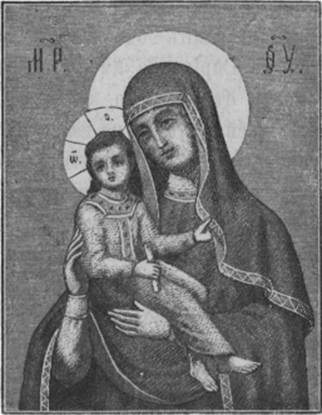
Две из трех икон Богородицы, написанных св. Евангелистом Лукою и удостоившихся благословения Самой Владычицы, именуются милостивыми, потому что Богоматерь изображена на них умоляющею Сына Своего Иисуса Христа о помиловании нас грешных. Одна из них, на которой Пресвятая Дева изображена держащею Единородного с правой стороны, для отличия от другой иконы, на которой Божия Матерь представлена без Сына Своего, называется Милостивая Еиккская (η Ελεουσα του Κυκκου), от горы на Северо-западной стороне Кипра, называемой Коккос или Киккос. Поэтому, вероятно, и надписано на серебряной ризе сей иконы, устроенной В 1576 году: Κυκκιοτισσα (Киккиотянка).
Two of the three icons of the Theotokos painted by the holy Evangelist Luke and deemed worthy of the blessing of the Lady Herself are called merciful, because the Mother of God is depicted on them entreating Her Son Jesus Christ for mercy upon us sinners. One of them, on which the Most Holy Virgin is depicted holding the Only-begotten on the right side, to distinguish it from the other icon, on which the Mother of God is represented without Her Son, is called the Merciful of Kykkos (η Ελεουσα του Κυκκου), from the mountain on the northwestern side of Cyprus called Kokkos or Kykkos. Therefore, it is probably also inscribed on the silver riza of this icon, made in the year 1576: Κυκκιοτισσα (the Kykkotissa).
Первоначально, как свидетельствует предание, сии три иконы посланы были божественным Лукою в Египет, может быть к Назареям, благочестивым христианам, жившим там и научившимся прежде всех образу ангельского жития у Евангелиста Марка, как упоминает о том церковный историк Евсевий. Икона Милостивая, после названная Киккскою, долго оставалась в Египте; но впоследствии, по причине возникших там смятений, некоторые христиане вознамерились препроводить ее для сохранения на какой-либо остров и, благоговейно взяв на корабль, отплыли в Константинополь. Здесь св. икона поставлена была в царских чертогах и пребывала до времен императора Алексия Комнина (1082–1118). По чудесном исцелении дочери его, он, исполняя обет свой – возвратить чудотворную икону на остров Кипр, если дочь его исцелится от болезни, с честию препроводил св. икону в Кипр. Здесь на горе Киккской устроены в честь Богоматери храм от щедрот императора Алексия и при церкви монастырь. Св. икона прославилась многими чудесами. В ее чудодейственную силу веруют не только христиане, но и иноверцы, и притекают к ней отовсюду в болезнях и скорбях.
Originally, as tradition testifies, these three icons were sent by the divine Luke to Egypt, perhaps to the Nazarenes, pious Christians who lived there and who, before all others, learned the form of angelic life from the Evangelist Mark, as the church historian Eusebius mentions. The Merciful Icon, later called the Kykkos Icon, remained in Egypt for a long time; but afterwards, because of disturbances that arose there, certain Christians resolved to convey it for safekeeping to some island, and, reverently taking it onto a ship, sailed to Constantinople. Here the holy icon was placed in the imperial palace and remained there until the time of the Emperor Alexius Comnenus (1082–1118). After the miraculous healing of his daughter, he, fulfilling his vow—to return the wonderworking icon to the island of Cyprus if his daughter should be healed of her illness—sent the holy icon with honor to Cyprus. Here, on Mount Kykkos, a church was built in honor of the Mother of God from the bounty of the Emperor Alexius, and a monastery was attached to the church. The holy icon was glorified by many miracles. Not only Christians, but also those of other faiths believe in its wonderworking power, and they flock to it from everywhere in illnesses and sorrows.
Икона сия, неизвестно – с какого времени, закрыта пеленою до половины, – с верхнего левого угла до правого нижнего, так что лика Богоматери и лика Божественного Младенца никто никогда не может и не дерзает видеть. Не осмелились на это ни патриарх Антиохийский Сильвестр, ни патриарх Александрийский Косьма, ни архиепископ Кипрский Филофей, жившие в ΧVΙΙΙ в. За дерзновенное приподнимание пелены многие подвергались тяжкому наказанию.
This icon, it is unknown from what time, has been covered with a veil halfway—from the upper left corner to the lower right—so that the face of the Mother of God and the face of the Divine Infant no one can ever see, nor dares to see. Neither the Patriarch of Antioch Sylvester, nor the Patriarch of Alexandria Cosmas, nor the Archbishop of Cyprus Philotheus, who lived in the 18th century, dared to do this. For the audacious lifting of the veil, many have suffered severe punishment.