Мина, родом Египтянин христианской веры, служил в войске, но когда изданы были указы Диоклитиана против исповедующих христианство, оставил военную службу и в пустыне угождал Богу. Однажды в городе Котуане совершался праздник языческий, сопровождавшийся, по обычаю, пьянством и распутством. Среди неистовой толпы появился Мина и стал обличать идолопоклонников. Его узнали сослуживцы, и градоначальник, после краткого допроса, велел отвесть его в тюрьму.
Menas, an Egyptian by birth of the Christian faith, served in the army; but when the edicts of Diocletian were issued against those who confessed Christianity, he left military service and in the desert pleased God. Once, in the city of Cotuana, a pagan festival was being celebrated, accompanied, as was customary, by drunkenness and debauchery. In the midst of the frenzied crowd Menas appeared and began to reprove the idolaters. He was recognized by his fellow soldiers, and the city governor, after a brief interrogation, ordered him to be taken to prison.
В следующее утро его вывели на суд, и градоначальник, не могши преклонить его к нечестию словами, приказал бить его воловьими жилами и жечь тело огнем. Наконец оказал: «Мина! выбирай одно из двух: или будь нашим, и мы перестанем тебя мучить, или оставайся Христовым и гибни». Мина отвечал: «я был Христовым, остаюсь и останусь Христовым». Тогда велено его влачить по земле, усыпанной крючками, трезубцами и гвоздями железными, наконец обезглавить и сжечь (304 года). Это было во Фригии.
The next morning he was brought out for trial, and the city governor, being unable to incline him to impiety by words, ordered him to be beaten with ox sinews and his body burned with fire. Finally he said: "Menas! Choose one of two things: either be one of ours, and we shall cease tormenting you, or remain Christ's and perish." Menas answered: "I was Christ's, I remain and shall remain Christ's." Then he was ordered to be dragged along the ground strewn with hooks, tridents, and iron nails, and finally to be beheaded and burned (304 A.D.). This was in Phrygia.
Некоторые останки тела его собраны верными и принесены в Египет, в отечество его – в город Александрию, и положены в честном месте, на котором впоследствии устроена и церковь (см. жизнь св. Аполлинарии 5-го января).
Some of the relics of his body were gathered by the faithful and brought to Egypt, to his homeland — to the city of Alexandria — and placed in an honorable place, upon which a church was afterwards built (see the life of St. Apollinaria, January 5th).
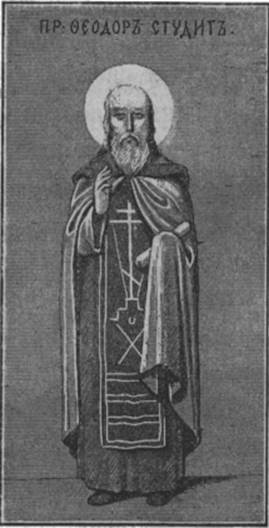
Феодор, по прозванию Студит, как восстановитель и настоятель впоследствии Студийского монастыря163, – родился в Константинополе в 758 году и стараниями своих благородных и богатых родителей получил хорошее многостороннее образование, которое самостоятельно, при помощи избранного чтения, значительно дополнил и утвердил. Усовершенствовавшись вместе с тем и в благочестии, Феодор на 32-м году своей жизни вместе с супругою своею Анною решились посвятить себя иноческой жизни. Удалясь вместе с своим родным дядею по матери – Платоном (пам. его – 5-го апреля) – в уединенное место, пленившее их своим живописным положением – Саккудиан, близ Константинополя, Феодор под руководством благочестивого Платона, участвовавшего на 7-м Вселенском соборе, предался здесь самым строгим подвигам иночества и притом ревностно продолжал изучать священное Писание, толкования св. отцов и творения Василия Великого. Заслужив своею святою жизнью общее уважение и любовь и посвященный в пресвитера, Феодор еще при жизни своего дяди, хотя и против своей воли, был избран игуменом, как самый достойный и способный для управления обителию и самый желательный для руководства братиею, признанный всеми единодушно, подвижник. И действительно, с неутомимым и беспредельным усердием предался Феодор новой деятельности; под его влиянием строго соблюдались монастырские уставы и быстро подвигалось внутреннее устройство монастыря. Между тем, вскоре предстоял ему новый подвиг... подвиг противодействия нарушителям правды и истины Христовой, подвиг самопожертвования в борьбе с сильными мира, и не устрашился, не уклонился от него строгий ревнитель Божиего закона.
Theodore, surnamed the Studite, as restorer and superior of the subsequently named Studion Monastery163, was born in Constantinople in the year 758, and through the efforts of his noble and wealthy parents received a good and varied education, which he himself, by means of select reading, considerably supplemented and confirmed. Having likewise perfected himself in piety, Theodore, in the 32nd year of his life, together with his wife Anna, resolved to devote themselves to the monastic life. Withdrawing together with his maternal uncle — Plato (his commemoration is April 5th) — to a solitary place that captivated them by its picturesque position, Saccudion, near Constantinople, Theodore, under the guidance of the pious Plato, who had participated in the 7th Ecumenical Council, devoted himself there to the most strict labors of monasticism, and moreover zealously continued to study the Holy Scriptures, the commentaries of the holy fathers, and the works of Basil the Great. Having earned by his holy life universal respect and love, and having been ordained presbyter, Theodore, even during the lifetime of his uncle, although against his own will, was chosen abbot, as the most worthy and capable for the governance of the monastery and the most desirable for the guidance of the brethren, an ascetic recognized by all unanimously. And indeed, with tireless and boundless zeal did Theodore devote himself to his new activity; under his influence the monastic rules were strictly observed and the internal organization of the monastery advanced rapidly. Meanwhile, soon there awaited him a new feat... the feat of opposing the violators of righteousness and the truth of Christ, the feat of self-sacrifice in struggle with the mighty of this world — and the strict zealot of God's law did not take fright, did not shrink from it.
Константин, сын благочестивой царицы Ирины, достигнув совершеннолетия, отстранил мать свою от правления, а сам, необузданно преданный своим страстям, не стеснялся нарушением законов, которых он должен был быть первым охранителем и исполнителем. Таким образом насильно заставил он свою жену Марию, бывшую внуку праведного Филарета, принять пострижение в монастыре, а сам женился на бывшей приближенной ее и своей родственнице Феодосии. Не давал своего благословения на этот брак святой патриарх Тарасий, но нашелся пресвитер Иосиф, который, ради угождения царю, решился обвенчать его вопреки церковного закона. На расторжение же незаконного брака не решался патриарх – из опасения навлечь большие бедствия на Церковь, так как Константин угрожал ему, в случае его противодействия, восстановить иконоборство.
Constantine, the son of the pious Empress Irene, having reached maturity, removed his mother from governance, and himself, unrestrainedly given over to his passions, did not scruple to violate the laws of which he ought to have been the first guardian and executor. Thus he forcibly compelled his wife Maria, who was the granddaughter of the Righteous Philaretus, to receive the tonsure in a monastery, and himself married her former attendant and his own relative, Theodosia. The holy Patriarch Tarasius did not give his blessing to this marriage, but there was found a presbyter, Joseph, who, to please the emperor, dared to perform the wedding contrary to church law. As for the dissolution of the unlawful marriage, the patriarch did not venture upon it — out of fear of bringing great calamities upon the Church, since Constantine threatened him, in case of his opposition, with restoring iconoclasm.
Между тем пример беззакония, совершившегося в царском доме, не оставался без подражателей, и между приближенными ко двору стали повторяться случаи разводов и незаконных браков.
Meanwhile, the example of lawlessness committed in the imperial house did not remain without imitators, and among those close to the court cases of divorces and unlawful marriages began to be repeated.
Услышав об этом, Феодор не захотел оставаться безучастным свидетелем поругания святыни и пренебрежения уставами Церкви и неустрашимо выступил обличителем неправды царя. Возвестив по монастырям о беззаконии императора, он объявил его «отлученным от Церкви, как разорителя закона Божия». – Сначала Константин, не пренебрегая всеми уважаемым подвижником, попытался ласками и приношениями склонить его на свою сторону, но когда Феодор, не приняв ничего от царя, не принял даже и его самого, велев при его посещении запереть монастырские ворота, то разгневанный Константин велел заключить его в темницу, откуда Феодор, едва живой после вынесенных им жестоких истязаний, в 796 г. был вместе с 10-ю иноками его монастыря сослан в заточение в г. Солунь. Но и здесь не умолкал его обличающий голос, к которому присоединились многие и в других монастырях и также сделались жертвами царского гнева. Вскоре однако же умер ослепленный придворными заговорщиками Константин и вновь воцарившаяся мать его Ирина поспешила освободить из заточения Феодора и в 798 г. предоставила ему управление упраздненным во время иконоборства Студийским монастырем. При вступлении Феодора в эту обитель, в ней было не более 12-ти иноков, но, привлекаемые славою об его святой жизни, к нему стали собираться иночествующие из разных обителей, которых вскоре собралось до 1000 человек, и тогда Феодор благоустроил и оградил их иноческое житие строгим уставом, известным с тех пор под именем Студийского, который введен был впоследствии и во многих других монастырях, между прочим и в Печерском Киевском монастыре – при преп. Феодосие.
Hearing of this, Theodore did not wish to remain an indifferent witness to the desecration of the sacred and the contempt for the statutes of the Church, and fearlessly came forth as a reprover of the emperor's unrighteousness. Having announced to the monasteries the emperor's lawlessness, he declared him "excommunicated from the Church, as a destroyer of the law of God." — At first Constantine, not disregarding the ascetic respected by all, attempted by caresses and gifts to win him to his side; but when Theodore, having accepted nothing from the emperor, did not receive even him himself, ordering the monastery gates to be shut at his visit, then the enraged Constantine ordered him to be cast into prison, whence Theodore, barely alive after the cruel tortures he had endured, was in the year 796, together with ten monks of his monastery, sent into exile to the city of Thessalonica. But even here his reproving voice did not fall silent, and many in other monasteries joined it and likewise became victims of the emperor's wrath. Soon, however, Constantine, blinded by court conspirators, died, and his mother Irene, who reigned anew, hastened to free Theodore from exile and in the year 798 entrusted to him the governance of the Studion Monastery, which had been abolished during the time of iconoclasm. Upon Theodore's entry into this monastery, there were in it no more than twelve monks; but, attracted by the fame of his holy life, monastics from various monasteries began to gather to him, of whom there soon gathered up to 1000 men, and then Theodore well-ordered and fenced their monastic life with a strict rule, known since then under the name of the Studite, which was afterwards introduced also into many other monasteries, among others into the Kiev-Pechersk Monastery — under the Venerable Theodosius.
По этому уставу монахам воспрещена была всякая собственность; они должны были обучаться различным, нужным для монастыря мастерствам и сами обязательно производить все нужные для их обихода работы. Сам Феодор трудился более всех и своим примером возбуждал общее соревнование и усердие к труду. Но недолго продолжалась благодатная и производительная иноческая жизнь под управлением такого высокого подвижника, каким был Феодор. Новые испытания отвлекли его от монастырских трудов. Никифор, отнявший престол у Ирины, восстановил всех пострадавших по смерти Константина, принудил патриарха разрешить пресвитера Иосифа, венчавшего Константина с Феодосиею, и когда Феодор восстал против этого, то снова подвергся преследованию и сослан был в 809 г. в заточение со всеми своими последователями, и только в 811 г., по смерти Никифора, убитого на войне (как предсказал ему Феодор), возвращен был в столицу. Когда же, через три года после того, настало гонение на иконы при Льве Армянине, то Феодор снова заявил себя неустрашимым исповедником и защитником истины. Он строго обличал заблуждения царя: «не нарушай, император, мира Церкви! – сказал он ему, между прочим, – Апостол сказал: Бог поставил в Церкви иных – Апостолами, других – пророками, некоторых – пастырями и учителями для созидания Церкви, но не упомянул о царях. Оставь Церковь пастырям и учителям. Когда же не так, то поверь, что если бы и сам ангел, сойдя с неба, стал извещать истребление веры нашей, не послушаем и его»... Иконоборцы заставляли Феодора молчать и не вмешиваться в рассуждения и споры о вере. Он отвечал им: «лучше пусть отрежут язык мой, нежели мне молчать и не помогать истинной вере». И действительно, не смотря ни на какие угрозы, Феодор не ослабевал в борьбе с иконоборцами за почитание икон и, чтобы возбудить бодрость в угнетаемых и смущающихся поклонниках православия, в неделю ваий торжественно совершил крестный ход с иконами вокруг монастыря и с пением: «Пречистому Твоему образу покланяемся, Благий!» – За это, после страшных пыток, Лев сослал Феодора в отдаленное заключение в г. Метоп – место болотистое, нездоровое, где он и протомился несколько времени в гнилой, смрадной темнице; отсюда в 815 г. переведен в Анатолию в Бонит, где никого не допускали к нему, но Феодор письменными посланиями продолжал действовать в пользу православия и успел обратить многих иконоборцев; за это избили его и томили голодом и жаждою в сырой темнице, но он все с терпением переносил, говоря, что « не о хлебе едином жив будет человек», а укреплялся и утешался приобщением св. Таин. – Переходя из одного места заточения в другое, Феодор спокойно говорил: «с радостию принимаю я свое перехождение с места на место, потому что не имею истинного помещения для себя на земле: куда буду приведен, там и будет место мое – Бог везде. Но где бы я ни был, молчать я не могу, когда следует отстаивать правую веру. В этом не послушаюсь никого и не убоюся никаких запретов»... Страдания же свои переносил так, что когда палач являлся наносить ему многочисленные удары, от которых все тело его покрывалось ранами, угрожавшими смертельною опасностию и долго не заживавшими, страдалец благодушно сам снимал с себя одежду и, подставляя плечи, говорил мучителю, что «приятно было бы ему, чтобы с этими ранами и все тело отложилось бы от него, чтобы разрешенною от тела душою отойти к желанному Господу», и все пытки ради православия переносил радостно.
According to this rule, monks were forbidden all personal property; they were obliged to learn various crafts needed for the monastery and themselves necessarily to perform all the work needed for their daily needs. Theodore himself labored more than all, and by his example aroused universal emulation and zeal for labor. But not for long did the gracious and fruitful monastic life continue under the governance of such a lofty ascetic as Theodore was. New trials diverted him from monastic labors. Nicephorus, who had taken the throne from Irene, restored all those who had suffered after the death of Constantine, compelled the patriarch to absolve the presbyter Joseph who had married Constantine to Theodosia; and when Theodore rose up against this, he again underwent persecution and was sent into exile in the year 809 with all his followers, and only in the year 811, after the death of Nicephorus, slain in war (as Theodore had predicted to him), was he returned to the capital. When, three years after that, the persecution against icons began under Leo the Armenian, Theodore again showed himself a fearless confessor and defender of the truth. He strictly reproved the errors of the emperor: "Do not disturb, O emperor, the peace of the Church!" he said to him, among other things. "The Apostle said: God hath set some in the Church as apostles, others as prophets, some as pastors and teachers, for the edifying of the Church, but he made no mention of emperors. Leave the Church to pastors and teachers. But if not so, then believe that even if an angel himself, coming down from heaven, should begin to proclaim the destruction of our faith, we would not listen even to him"... The iconoclasts forced Theodore to be silent and not to interfere in discussions and disputes about the faith. He answered them: "Better that my tongue be cut out, than that I should be silent and not help the true faith." And indeed, notwithstanding all threats, Theodore did not weaken in the struggle with the iconoclasts for the veneration of icons; and, in order to arouse courage in the oppressed and troubled worshippers of Orthodoxy, on the Sunday of the Palms he solemnly performed a procession with icons around the monastery, singing: "We worship Thy most pure image, O Good One!" — For this, after terrible tortures, Leo exiled Theodore to a distant confinement in the city of Metopa — a marshy, unhealthy place, where he languished for some time in a rotten, stinking prison; from there in the year 815 he was transferred to Anatolia, to Bonita, where no one was allowed to approach him; but Theodore by written epistles continued to act in favor of Orthodoxy and succeeded in converting many iconoclasts; for this they beat him and tormented him with hunger and thirst in a damp prison, but he endured all with patience, saying that "man shall not live by bread alone," and was strengthened and consoled by communion of the Holy Mysteries. — Passing from one place of exile to another, Theodore calmly said: "With joy I accept my passing from place to place, because I have no true abode for myself on earth: wherever I shall be led, there will be my place — God is everywhere. But wherever I may be, I cannot be silent when it is fitting to defend the right faith. In this I shall obey no one and shall fear no prohibitions"... And he bore his sufferings thus: when the executioner appeared to inflict upon him numerous blows, from which his whole body was covered with wounds threatening mortal danger and long in healing, the sufferer good-heartedly himself removed his clothing and, baring his shoulders, said to the tormentor that "it would be pleasing to him that with these wounds his whole body should fall away from him, that with his soul released from the body he might depart to the desired Lord," and he endured all tortures for the sake of Orthodoxy joyfully.
Наконец, со смертию зверски убитого в 820 г. Льва Армянина, кончилось и семилетнее страдальческое изгнание Феодора Студита. Преемник Льва – Михаил, хотя также противник почитания икон, однако же не одобрял гонения и возвратил православных из заточения. Отдохнули освобожденные, и иночествующие, и все почитатели святых икон... – «Следует восхищаться, – писал по этому поводу Феодор Студит, – не городу такому-то или такому-то, но почти, можно сказать, всей подсолнечной, ибо истребил Господь не Сиона, царя Амморейского, и не Ога, царя Вассанского, царей малых и угнетавших малую часть вселенной, а новоявленного и великого дракона, опустошавшего великую часть вселенной, змия коварного и шипевшего богохульством, мерзостью запустения, сосуд гнева... полноту нечестия, гонителя Христова, врага Богородицы, противника всех святых. Да возвеселятся небеса и радуется земля! Да искаплют горы сладость и холмы – правду! Пал враг; сокрушен мучитель наш; заградились уста, говорившие несправедливо; обуздана рука Авессалома, погиб жестокосердый фараон. Отступнику подобало именно таким образом лишиться жизни; сыну тьмы надлежало встретить смерть ночью; обнажавшему Божественные храмы надлежало в храме Господнем увидеть обнаженные против него мечи164; разрушившему Божественный жертвенник следовало не получить пощады у жертвенника; надлежало подвергнуться отсечению руки, посягавшей на святыню, пролиться нечестивой крови за пролитие крови праведных»...
Finally, with the death of Leo the Armenian, who was brutally murdered in 820, the seven-year suffering exile of Theodore the Studite also came to an end. Leo's successor, Michael, although also an opponent of the veneration of icons, nevertheless did not approve of the persecution and returned the Orthodox from captivity. The freed ones, both monastics and all venerators of the holy icons, breathed freely... "One must marvel," wrote Theodore the Studite on this occasion, "not at this or that city, but at almost the whole inhabited world, so to speak, for the Lord destroyed not Sihon, king of the Amorites, nor Og, king of Bashan, small kings who oppressed a small part of the universe, but a newly-appeared and great dragon, who laid waste a great part of the universe, a crafty serpent hissing blasphemy, the abomination of desolation, a vessel of wrath... the fullness of impiety, the persecutor of Christ, the enemy of the Theotokos, the adversary of all the saints. Let the heavens rejoice and the earth be glad! Let the mountains distil sweetness and the hills, righteousness! The enemy has fallen; our tormentor is crushed; the lips that spoke unrighteousness are stopped; the hand of Absalom is restrained; the hard-hearted Pharaoh has perished. It was fitting for the apostate to lose his life in precisely this manner; it was fitting for the son of darkness to meet death by night; it was fitting for him who stripped the Divine churches to see swords unsheathed against him in the temple of the Lord164; it was fitting for him who destroyed the Divine altar to receive no mercy at the altar; it was fitting for his hand that laid hold of the sanctuary to be cut off, and for his impious blood to be shed for the shedding of the blood of the righteous"...
Возвратясь в Константинополь, Феодор однакоже не остался там; ему тяжело было пребывать безучастным свидетелем продолжающейся ереси, так как хотя и запрещено было говорить против икон, но вместе с тем, по предписанию индифферентного к догматам Церкви императора, никто не должен был осмеливаться говорить и в защиту почитания их, и не были восстановлены они в Константинопольских храмах. – После безуспешных стараний со стороны патриарха и Феодора убедить царя отказаться от ереси, Феодор удалился в уединенное место – на мыс Акрит, близ Никомидии, и тут с несколькими учениками жил при церкви св. Трифона до смерти своей – в 826 г. Он скончался при пении псалма: «блаженни непорочнии в пути, ходящии в законе Господни», и сам произнеся: «во век не забуду оправданий Твоих!» отошел к Господу.
Upon returning to Constantinople, Theodore, however, did not remain there; it was grievous for him to remain an indifferent witness of the continuing heresy, for although it was forbidden to speak against icons, at the same time, by order of the emperor, who was indifferent to the dogmas of the Church, no one was to dare to speak in defense of their veneration either, and they were not restored in the churches of Constantinople. — After fruitless efforts on the part of the patriarch and Theodore to persuade the emperor to renounce the heresy, Theodore withdrew to a solitary place—to Cape Akritas, near Nicomedia—and there, with a few disciples, he lived at the church of St. Tryphon until his death in 826. He reposed while chanting the psalm: "Blessed are the blameless in the way, who walk in the law of the Lord," and himself uttering: "I will never forget Thy justifications!" he departed to the Lord.
Существует предание, что в самое время кончины Феодора, блаженному Илариону она представилась в таинственном откровении: услышав чудное пение, он взглянул на небо и увидел множество светлых ангелов в движении к кому-то навстречу. Вместе с тем послышался голос: «вот душа Феодора, игумена Студийского, много пострадавшего за истину, восходит на небо, встречаемая небесными силами»...
There is a tradition that at the very hour of Theodore's death, it was revealed to the blessed Hilarion in a mystical vision: hearing a wondrous chant, he looked up to heaven and saw a multitude of bright angels moving to meet someone. At the same time, a voice was heard: "Behold, the soul of Theodore, the abbot of the Studion, who suffered much for the truth, ascends to heaven, met by the heavenly hosts"...
По смерти Феодора осталось много сочинений, которые писал он, в особенности ради назидания душевного, и писал с таким усердием к их спасительному значению, что один из церковных писателей, преп. Феостирикт, называл его «пламенным учителем Церкви». Впрочем, кроме сочинений нравственного содержания, писал Феодор Студит также и догматические, и много песней церковных и описаний жизни святых. В числе сочинений находятся и письма; некоторые из них – писанные по случаю заключения незаконного брака в императорском доме. К Феофану, епископу ефесскому, который требовал смертной казни для манихеев, писал Феодор: «что ты это говоришь? Господь запретил это в Евангелии (Мф.13:29), «чтобы, выбирая плевелы, не выдергали вместе с ними и пшеницы»... Мы должны молиться за еретиков, как Господь молился на кресте за врагов Своих. Не указывай на Финееса и Илию: надобно различать состояние ветхозаветных от состояния нов. Завета. Когда ученики хотели поступить (против Самарян) в том духе, Господь показал Свое неудовольствие на то, так как они не согласовались с кротким и благим судом Его, Учителя своего»...
After Theodore's death, many writings remained, which he composed especially for spiritual edification, and he wrote with such zeal for their salvific significance that one of the Church writers, the Venerable Theosterictus, called him "the fiery teacher of the Church." Besides writings of a moral content, Theodore the Studite also wrote dogmatic works, many Church hymns, and descriptions of the lives of the saints. Among his works are also letters; some of them were written on the occasion of an unlawful marriage in the imperial house. To Theophanes, Bishop of Ephesus, who demanded the death penalty for the Manichaeans, Theodore wrote: "What are you saying? The Lord forbade this in the Gospel (Mt. 13:29), 'lest while ye gather up the tares, ye root up also the wheat with them'... We must pray for heretics, as the Lord prayed on the Cross for His enemies. Do not point to Phinehas and Elijah: one must distinguish the state of the Old Testament from that of the New. When the disciples wished to act (against the Samaritans) in that spirit, the Lord showed His displeasure at it, because they did not agree with the meek and good judgment of Him, their Teacher"...
В стихирах, составленных Феодором на неделю мясопустную, поется: «приидите прежде конца, братия, посмотрим на персть нашу и уразумеем немощь естества нашего. Проникнем в гроб... Где слава? Где красота взора? Где язык благоглаголивый? Где брови? Где око? Все – прах, все – тень... Спасителю наш! пощади нас!» – «Для чего обольщает себя человек, возвышая себя хвалами? Для чего напрасно возмущается брение кратковременное? Для чего не помышляет перстный, что он смешение праха? Гной и тление его исчезнут. Если мы, люди – брение, для чего прилепились мы к земле? Если мы сродны Христу, отчего не спешим к Нему? Отвергнем текущую жизнь, последуем жизни нетленной, которая есть Христос, просвещение душ наших»..
In the stichera composed by Theodore for Meatfare Sunday, it is sung: "Come before the end, brethren, let us look upon our dust and understand the weakness of our nature. Let us peer into the grave... Where is glory? Where is the beauty of the countenance? Where is the eloquent tongue? Where are the eyebrows? Where is the eye? All is dust, all is shadow... O our Savior, spare us!" — "Why does man delude himself, exalting himself with praises? Why does the fleeting clay vainly trouble itself? Why does the man of dust not consider that he is a mixture of ashes? His corruption and decay will vanish. If we men are clay, why have we cleaved to the earth? If we are akin to Christ, why do we not hasten to Him? Let us reject the present life, let us follow the incorruptible life, which is Christ, the enlightenment of our souls"...
О силе Креста Христова преп. Феодор воспевает (в каноне на 3-ю неделю Вел. поста): «Того, Коего древле Моисей прообразовал дланьми, Крест Твой ныне лобызаем и побеждаем умного Амалика, Владыко Христе, и им спасаемся». «Гряди, Елисее пророче, возвести, что знаменует древо, которое положил ты в воду? Сие древо – Крест Христов, которым исхищены мы из глубины гибели, ему мы покланяемся верно». «Древле Иаков проображал крест Твой, Христе; Иосиф покланялся верху священного жезла, предвидя в нем страшный сей скипетр царствия Твоего. Ему ныне покланяемся во веки».
Of the power of the Cross of Christ, the Venerable Theodore sings (in the canon for the 3rd Sunday of Great Lent): "Him Whom of old Moses prefigured with his hands, Thy Cross we now kiss and overcome the spiritual Amalek, O Lord Christ, and by it we are saved." "Come, O prophet Elisha, declare what the wood signifies which you cast into the water? This wood is the Cross of Christ, by which we have been drawn out of the depth of perdition; to it we bow down in faith." "Of old Jacob prefigured Thy Cross, O Christ; Joseph bowed down to the top of the sacred staff, foreseeing in it this terrible scepter of Thy kingdom. To it we now bow down forever."
О свойстве и достоинстве своих писаний определил пояснение сам преп. Феодор, явясь по смерти своей, – как рассказывает ученик его Михаил, составивший жизнеописание его, – в видении одному благочестивому, но не твердому в разуме жителю Сардинии, который перестал было читать его сочинения, потому что, как ему показалось, не было в них красот ораторских... – «Не пышные слова, не нарядные выражения сокрушают сердце, – сказал явившийся не оценившему его, – но слово смиренное, составленное на пользу и по всему здравое; такое слово предпочитаю я всякой учености, всякому нежному стихотворению, трогающему только один слух»165...
The Venerable Theodore himself gave an explanation of the nature and worth of his writings, appearing after his death—as his disciple Michael, who composed his biography, relates—in a vision to a certain pious but unstable in mind inhabitant of Sardinia, who had ceased to read his works because, as it seemed to him, they lacked oratorical beauties... — "It is not pompous words, not ornate expressions that crush the heart," said the one who appeared to him who had not appreciated him, "but a humble word, composed for edification and sound in all respects; such a word I prefer to all learning, to all delicate poetry that only tickles the ear"165...
Виктор, родом из Италии, по званию воин, принадлежал к числу христиан и не скрывал своей веры, хотя и сопряжена была она в те времена (во второй половине II столетия) в большинстве случаев с мученическою смертию. Но перед мученическою смертию не отступали первобытные последователи Христа. Так и юный по возрасту, но созревший для подвига любви к Богу – Виктор неустрашимо отказался исполнить приказ царя (Антонина) участвовать во всеобщем жертвоприношении языческим богам. Не поколебался он в твердости исповедничества и среди многих и изощренных истязаний, которым подвергнули его за то, что он не хотел отречься от Христа: у него вытягивали жилы, бросали его в кипящее масло, вешали на дереве и жгли тело свечами, но даже и приняв яд, силою Божиею он пребывал невредим... Таким поразительным явлением многие были обращены ко Христу; но когда уверовали в чудную силу Христову и воины, бывшие при истязаниях мученика, то ярость мучителей дошла до крайних пределов, и они с ослепленного, израненного, повешенного стремглав, но еще живого страдальца велели содрать кожу...
Victor, a native of Italy and a soldier by rank, was numbered among the Christians and did not conceal his faith, although in those times (in the second half of the 2nd century) it was in most cases accompanied by a martyr's death. But the early followers of Christ did not shrink from martyrdom. Thus Victor, young in age but mature for the feat of love for God, fearlessly refused to obey the emperor's (Antoninus's) order to participate in the universal sacrifice to the pagan gods. He did not waver in the firmness of his confession even amidst the many and refined tortures to which he was subjected for refusing to deny Christ: they stretched his sinews, cast him into boiling oil, hung him on a tree and burned his body with candles, but even after drinking poison, by the power of God he remained unharmed... By such a striking manifestation many were converted to Christ; but when even the soldiers who were present at the martyr's tortures believed in the wondrous power of Christ, the fury of the tormentors reached its utmost limits, and they ordered the skin to be flayed from the blinded, wounded, head-hanging but still living sufferer...
– Блажен ты, Виктор! и блаженны твои за Христа страдания! – воскликнула тогда молодая христианка Стефанида, бывшая только год в замужестве с сослуживцем Виктора, – чувствую, что и я, видя твои страдания и чудную силу Божию над тобою, готова теперь положить души мою за нашего Бога...
"Blessed are you, Victor! and blessed are your sufferings for Christ!" exclaimed then the young Christian woman Stephanida, who had been married for only a year to Victor's fellow soldier. "I feel that I also, seeing your sufferings and the wondrous power of God over you, am now ready to lay down my soul for our God"...
И напрасно думал мучитель отклонить от безумия воспламенившуюся Божественным порывом христианку, желая пощадить ее красоту, – она мужественно исповедала веру и за это была растерзана между двумя финиковыми деревьями, к которым, наклонив их, ее привязали... А Виктор после того был обезглавлен.
And in vain did the tormentor think to turn the Christian woman, inflamed with a Divine impulse, from her madness, wishing to spare her beauty—she courageously confessed the faith and for this was torn apart between two palm trees, to which, having bent them down, they tied her... And Victor was beheaded afterwards.
Сын знаменитого консула Агреста и матери, по имени Енолы, из г. Оски, Викентий с молодых лет воспламенился желанием посвятить себя на служение Богу и предал себя руководству благочестивого епископа Августопольского Валерия, который, поняв и оценив высокие стремления юноши, посвятил его в диакона и, видя его способности, поручил ему, так как сам был косноязычен, проповедовать народу слово Божие. Молодой диакон исполнял это с великим усердием и успехом, так что когда прибыл в город Валенцию в 305 г. исполнитель указа Диоклитианова о преследовании христиан, некто Грек родом, по имени Датиан, то, услышав об успешной христианской деятельности проповедника Викентия, послал за ним воинов, также как и за епископом Валерием, и когда они были приведены к нему в оковах, велел их отвести в темницу и томить их пыткою голода. Но истомлениая немощная плоть не воспрепятствовала преданным с горячностию Христу сохранить во всей бодрости преобладание Духа, живущего в них, и когда призваны были они через несколько дней на суд, то не устрашились грозного обращения к ним Датиана. Слыша, что епископ Валерий кротко и тихо отвечает на его строгий допрос, которым язычник рассчитывал навести страх на младшего из подсудимых христиан, Викентий не только не смутился, но неустрашимо понудил епископа: «смело и громко исповедуй силу Христову и свободным языком обличай безумие этого человека». Пораженный смелостию Викентия, Датиан приказал предать его истязаниям. Жестоки, разнообразны, продолжительны были эти истязания; пригвоздив исповедника ко кресту, ему наносили беспощадные удары; когда же тело его было истерзано, члены переломлены, жилы вытянуты, его бросили в темницу и положили на острых черепках. Все это с невозмутимым терпением и неземным ликованием перетерпел мученик; но ярость мучителя не утолилась и изобрела еще более жестокую пытку: Викентия положили на раскаленную железную решетку, и среди этих мук он отошел к Тому, Кого любил и славил, и воспевал всю свою жизнь до последней минуты. Тело его, преданное на добычу зверям, но оставшееся неприкосновенным, было выброшено в море, но, прибитое волнами к берегу, было взято сторожившими христианами, которые и похоронили его в небольшой церкви за городом.
The son of the renowned consul Agrestus and a mother named Enola, from the city of Osca, Vincent from his youth was inflamed with the desire to devote himself to the service of God and gave himself over to the guidance of the pious Bishop Valerius of Augustopolis, who, having understood and appreciated the youth’s lofty aspirations, ordained him a deacon and, seeing his abilities, entrusted him—since he himself was tongue-tied—with preaching the word of God to the people. The young deacon fulfilled this with great zeal and success, so that when an executor of Diocletian’s edict concerning the persecution of Christians, a certain Greek by birth named Dacian, arrived in the city of Valencia in the year 305, and heard of the successful Christian activity of the preacher Vincent, he sent soldiers for him, as also for Bishop Valerius, and when they were brought before him in chains, he ordered them to be taken to prison and tormented with the torture of hunger. But the weakened, infirm flesh did not hinder those devoted with fervor to Christ from preserving in full vigor the dominion of the Spirit dwelling in them, and when they were summoned to judgment after several days, they were not frightened by Dacian’s menacing address. Hearing that Bishop Valerius answered his stern interrogation meekly and quietly—by which the pagan hoped to strike fear into the younger of the Christian defendants—Vincent not only was not dismayed, but fearlessly urged the bishop: “Boldly and loudly confess the power of Christ, and with a free tongue denounce the madness of this man.” Struck by Vincent’s boldness, Dacian ordered him to be subjected to tortures. Cruel, varied, and prolonged were these tortures; having nailed the confessor to a cross, they inflicted merciless blows upon him; and when his body was lacerated, his limbs broken, his sinews stretched, they cast him into prison and laid him on sharp potsherds. All this the martyr endured with imperturbable patience and unearthly rejoicing; but the fury of the tormentor was not appeased, and he devised an even more cruel torture: Vincent was laid upon a red-hot iron grating, and amidst these torments he departed to Him Whom he loved and glorified, and Whom he had hymned all his life until his last moment. His body, given over as prey to wild beasts but remaining untouched, was cast into the sea, but, washed ashore by the waves, it was taken by Christians who were keeping watch, and they buried it in a small church outside the city.
О сказании о мученике Викентие, составленном на основании свидетельств достоверных людей, видно, между прочим, из четырех похвальных слов блаженного Августина в честь его. Существуют также обширные повествования о перенесениях мощей его и о чудесах от них бывших. В настоящее время мощи святого находятся в Риме, в церкви его имени, в загородном монастыре Трех Фонтанов167.
That the account of the Martyr Vincent was composed on the basis of the testimonies of trustworthy men is evident, among other things, from four panegyric sermons of Blessed Augustine in his honor. There also exist extensive narratives of the translations of his relics and of the miracles wrought by them. At the present time, the relics of the saint are in Rome, in the church dedicated to him, in the suburban monastery of the Three Fountains167.
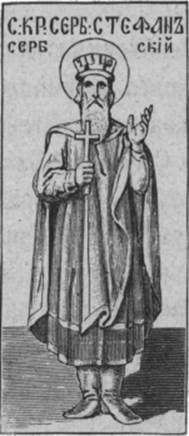
Блажен. Стефан, сын кор. Милютина, значительную часть жизни своей провел под гнетом разных бед и, наконец, умер страдальцем168. Когда было ему только 10 лет, отец, желая отклонить вторжение в Сербию страшного Ногая, опустошившего Болгарию, послал сына к Ногаю, в залог мирных отношений своих к хану. В дикой орде Ногая юный Стефан пробыл около трех лет169. Вступив в брак с Мариею, дочерью князя Болгарского, получил он в управление Зетскую землю170. Ласковый, добрый, кроткий, щедрый к бедности, он располагал каждого любить его искренно. Мачеха, коварная Гречанка, желавшая предоставить престол сыну своему, Константину, с женскими ласками внушала супругу королю, что сын Стефан замышляет недоброе на отца; не довольная тем, она, наконец, со слезами говорила, будто Стефан покушался даже на ее супружескую чистоту. Стефану давали знать о кознях против него, но вместе коварно расстраивали и его любовь к отцу. На несчастие, некоторые областные начальники, негодовавшие на замыслы хитрой Гречанки, выказали непокорность королю; это поспешили выставить пред королем-отцом, как дело нечуждое замыслов сына. Король явился с войском в Зету и усмирил мятеж. Сын, обвиненный партизанами мачехи в участии о мятежниками, замедлил явиться к отцу по его требованию, чем усилил подозрения отца против него. Когда явился он с полною сыновнею покорностию, отец сперва принял его ласково, как и обещал. Но потом партия Гречанки до того расстроила доброго отца, что он, не отобрав ответов у сына против обвинений, повелел ослепить его в замке Скопле и отослал его с детьми к императору в заточение171. На дороге в Овчеполье, где был храм св. Николая, является святитель и говорит: «не теряй духа; вот очи твои на моей длани», и показал ему глаза. Это видение утешило страдальца и облегчило боль страшной операции.
Blessed Stephen, son of King Milutin, spent a significant part of his life under the weight of various misfortunes and, at last, died a sufferer168. When he was only ten years old, his father, wishing to avert the invasion of Serbia by the fearsome Nogai, who had devastated Bulgaria, sent his son to Nogai as a pledge of his peaceful relations with the khan. In the wild horde of Nogai, the young Stephen remained for about three years169. Having entered into marriage with Maria, the daughter of the Bulgarian prince, he received the land of Zeta in his governance170. Affectionate, kind, meek, and generous to the poor, he disposed everyone to love him sincerely. His stepmother, a cunning Greek woman who desired to secure the throne for her own son, Constantine, with feminine caresses insinuated to her husband the king that his son Stephen was plotting evil against his father; not content with that, she finally said with tears that Stephen had even attempted her marital purity. Stephen was given to know of the intrigues against him, but at the same time his love for his father was craftily undermined. Unfortunately, certain regional governors, indignant at the schemes of the wily Greek woman, showed disobedience to the king; this was hastily presented before the king-father as a matter not unconnected with his son’s designs. The king appeared with an army in Zeta and quelled the rebellion. The son, accused by the partisans of his stepmother of involvement with the rebels, delayed in appearing before his father at his summons, thereby strengthening his father’s suspicions against him. When he appeared with full filial submission, his father at first received him kindly, as he had promised. But afterwards, the party of the Greek woman so disturbed the good father that he, without taking his son’s answers to the accusations, ordered him to be blinded in the castle of Skopje and sent him with his children to the emperor into exile171. On the road to Ovče Polje, where there was a church of St. Nicholas, the Hierarch appeared and said: “Do not lose heart; behold, your eyes are in the palm of my hand,” and showed him the eyes. This vision comforted the sufferer and alleviated the pain of the terrible operation.
Когда прибыл страдалец в Царьград, то заперт был во дворце с строгим приказанием не допускать никого до него. Потом заключили его в монастыре Вседержителя, под строгий надзор настоятеля. В это время хитрый сторонник запада Варлаам тревожил Царьград своими схоластическими выходками о свете Фаворском. Блаж. патриарх Афанасий осудил Варлаама на соборе; но пронырливый Варлаам нашел себе сторонников при дворе и волновал столицу. Император, узнав терпение Стефана и его искреннюю любовь к вере, оказывал ему ласки. При одном свидании, Кантакузен спросил мнения Стефана о Варлааме. «Ненавидящия Тя, Господи, возненавидех», отвечал умный страдалец и прибавил: «вредных людей надобно выгонять из общества». Кантакузен поступил по его отзыву172. Упражнения в церковной молитве, посте, слушании книг, смирении так полюбил Стефан, что приводил иноков в изумление, и они с любовию выслушивали советы его о духовной жизни. Один из добрых вельмож Сербских, зная тесное житье страдальца, прислал ему значительную сумму денег; но он передал ее игумену, а посланному сказал наедине: «благодарю за любовь доброго господина, – но лучшим утешением для меня будет, если назначаемое для меня раздавать он будет бедным».
When the sufferer arrived in Constantinople, he was shut up in the palace with a strict order that no one be allowed to approach him. Afterwards, they confined him in the Monastery of the Pantocrator, under the strict supervision of the abbot. At this time, the cunning Western partisan Barlaam was troubling Constantinople with his scholastic outbursts concerning the Taboric Light. The blessed Patriarch Athanasius condemned Barlaam at a council; but the crafty Barlaam found supporters at court and stirred up the capital. The emperor, learning of Stephen’s patience and his sincere love for the faith, showed him kindness. At one meeting, Cantacuzene asked Stephen’s opinion of Barlaam. “Those that hate Thee, O Lord, I have hated,” answered the wise sufferer, and added: “Harmful people ought to be driven out of society.” Cantacuzene acted according to his opinion172. Stephen so came to love the exercises of churchly prayer, fasting, the hearing of books, and humility, that he amazed the monks, and they lovingly listened to his counsels on the spiritual life. One of the good Serbian nobles, knowing the sufferer’s constrained circumstances, sent him a considerable sum of money; but he gave it to the abbot, and said privately to the messenger: “I thank you for the love of the good lord—but it will be a greater consolation for me if he will distribute to the poor what was intended for me.”
На пятом году заключения, когда совершалось всенощное празднование св. Николаю, Стефан, утомленный трудом, вздремнул в седалище церковном. И вот являвшийся ему прежде говорит: «обещание мое пришел я исполнить» и, ознаменовав его крестным знамением, коснулся очей его. Стефан стал ясно видеть173. Возблагодарив святителя сердцем полным, Стефан, для безопасности от врагов своих, продолжал носить повязку на глазах. На испытание терпения вслед затем умер один из сыновей страдальца: ои перенес дорогую потерю терпеливо. Так прошло еще два года174.
In the fifth year of his confinement, when the All-night Vigil for St. Nicholas was being celebrated, Stephen, wearied by his labors, dozed off on his seat in the church. And behold, the one who had appeared to him before said: “I have come to fulfill my promise,” and, marking him with the sign of the cross, touched his eyes. Stephen began to see clearly173. Having given thanks to the Hierarch with a full heart, Stephen, for safety from his enemies, continued to wear a bandage over his eyes. As a test of his patience, soon afterwards one of the sufferer’s sons died: he bore the precious loss patiently. Thus another two years passed174.
Нужды потребовали от Кантакузена послать доверенных лиц к кор. Милютину, и послан был умный и благочестивый игумен обители Вседержителя. Когда краль при разговоре с игуменом спросил о сыне своем, игумен отвечал: «ты спрашиваешь меня, король, о втором Иове; да будет известно, что нищета его выше королевского величия твоего». И рассказал ему об изумительном терпении и благочестии Стефана175. В то же время явились к королю ходатаи за Стефана. По его просьбе епископ Даниил, живший тогда в Хиландаре, и великие Афонские старцы пришли к королю и просили возвратить отеческую любовь страдальцу сыну. Добрый отец давно желал видеть сына и теперь рад был, что снимают тяжесть с души его. При свидании отец и сын плакали навзрыд. Король пожелал, чтобы внук Душан оставался при нем на утешение его; а сыну Стефану снова поручил он в управление отдельную область176; это было в 1316 г. 177.
Necessity required Cantacuzene to send trusted persons to King Milutin, and the wise and pious abbot of the Monastery of the Pantocrator was sent. When the king, in conversation with the abbot, asked about his son, the abbot replied: “You ask me, O king, about a second Job; let it be known that his poverty is greater than your royal majesty.” And he told him of Stephen’s astonishing patience and piety175. At the same time, intercessors for Stephen appeared before the king. At his request, Bishop Daniel, who was then living in Hilandar, and the great Athonite elders came to the king and asked that fatherly love be restored to the suffering son. The good father had long desired to see his son, and now was glad that the burden was lifted from his soul. At their meeting, father and son sobbed aloud. The king wished that his grandson Dušan remain with him for his consolation; and to his son Stephen he again entrusted a separate region for governance176; this was in the year 1316177.
Когда умер отец, блаженный Милютин († окт. 30-го 1320 года), мачеха, явившаяся незадолго пред тем в Сербию из Константинополя, подняла бурю при гробе мужа; сторонники сына ее вступили в спор и потом в рукопашный бой с преданными старшему сыну покойного; полилась кровь и начались грабежи. Явившийся архиепископ едва успел своими увещаниями прекратить постыдные сцены при гробе короля178. После погребения блаженного Милютина, все лучшие люди Сербии заявляли вслух, что признают они наследником Милютина старшего сына его и никого другого. Стефан только тогда, как узнал о расположении к нему Сербии, явился в кафедральную обитель архиепископа, куда собрались и представители народа. «Я был венчан, говорит он сам, богодарованным венцем в один день с сыном моим в 1321 г. генваря 6 д., благословением и рукою преосвященного архиепископа Никодима, всех епископов и всего собора, чтобы называться мне Стефаном, Богом помилованным и Богом просвещенным кралем, Урошем третьим»179. Повязка с глаз теперь была снята, и все уверились, что он видит все так же хорошо, как прочие180. Он принял название Уроша, как чистый потомок Уроша, родоначальника Неманичей.
When his father, the blessed Milutin, died († October 30, 1320), the stepmother, who had appeared in Serbia from Constantinople shortly before, stirred up a storm at her husband’s grave; the supporters of her son entered into dispute and then into hand-to-hand combat with those devoted to the deceased’s elder son; blood was shed and plundering began. The archbishop who appeared barely succeeded by his exhortations in putting an end to the shameful scenes at the king’s grave178. After the burial of the blessed Milutin, all the best men of Serbia declared aloud that they recognized as Milutin’s heir his elder son and no one else. Only then, when Stephen learned of the disposition of Serbia toward him, did he appear at the cathedral monastery of the archbishop, where the representatives of the people had also gathered. “I was crowned,” he himself says, “with a God-given crown on the same day as my son, on January 6, 1321, by the blessing and hand of His Grace Archbishop Nikodim, of all the bishops, and of the entire council, that I should be called Stephen, by God’s mercy and God-enlightened King, Uroš the Third”179. The bandage was now removed from his eyes, and all were assured that he saw as well as everyone else180. He adopted the name Uroš, as a pure descendant of Uroš, the founder of the Nemanjić dynasty.
Сын Гречанки Симониды Константин собрал войско, чтобы отнять престол краля для себя. Стефан писал к нему: «Стефан, Божиею милостию краль Сербий, любезнейшему брату державы нашей Константину желаю здравствовать. Ты слышал, что случилось со мною, по устроению промысла Божия, строящего все во благое. Помилованный Богом, наследовал я жребий родительский, чтобы владеть людьми со страхом Божиим и правдою, по примеру предков. Удержись от своих предприятий, приди, увидимся друг с другом; прими второе место в кралевстве, как второй сын, а не восставай с иноплеменными на свое отечество; обширной земли нашей довольно для меня и для тебя. Я не Каин братоубийца, а друг братолюбивому Иосифу. Словами последнего говорю тебе: не бойся; я – Божий: вы совещали о мне злое, а Бог устроил доброе»181. Константин не захотел послушаться призыва любви. Произошла жаркая битва. Сражение проиграно Конотантином; он был убит вместе со многими; иные из сторонников рассеялись, другие покорились Стефану182. Являлся и другой претендент на Сербскую корону, и также без пользы для себя. Это – двоюродный брат Владислав, сын краля Сремского Драгутина. Другой сын чудного Драгутина Урошич, сохранявший целомудренную чистоту и в супружестве и скончавшийся молодым, «толико угоди Господеви, говорит древнее известие, яко от гроба его миро истекает»183. Владислав должен был покориться Стефану, когда увидал, что Сербия не за него, а против него184.
The son of the Greek Simonis, Constantine, gathered an army to seize the throne of the king for himself. Stephen wrote to him: “Stephen, by the mercy of God King of Serbia, to the most beloved brother of our realm Constantine, I wish health. You have heard what happened to me, by the ordering of God’s providence, who arranges all things for good. Having been shown mercy by God, I have inherited the lot of my parents, to rule the people with the fear of God and righteousness, after the example of my forefathers. Refrain from your undertakings; come, let us see one another; accept the second place in the kingdom, as a second son, and do not rise up with foreigners against your own fatherland; our spacious land is sufficient for me and for you. I am not a fratricidal Cain, but a friend to the brother-loving Joseph. With the words of the latter I say to you: fear not; I am God’s: you devised evil against me, but God has arranged good”181. Constantine did not wish to heed the call of love. A fierce battle ensued. The engagement was lost by Constantine; he was killed together with many; some of his supporters scattered, others submitted to Stephen182. Another pretender to the Serbian crown also appeared, and likewise to no avail for himself. This was his cousin Vladislav, son of Dragutin, King of Srem. The other son of the wondrous Dragutin, Urošić, who preserved chaste purity even in marriage and died young, “so pleased the Lord, says an ancient account, that myrrh flows from his grave”183. Vladislav had to submit to Stephen when he saw that Serbia was not for him, but against him184.
Когда умерла первая жена Дечанского, княжна Болгарская, блаж. краль женился на дочери князя Валахского, за которою получил в приданое Банат. Король Венгерский, домогаясь того, чтобы произвольно распоряжаться Валахиею, повел войска в Валахию. Стефан в защиту тестя выслал войско. Венгерский напрасно похвалился: «потеряю бороду, а завтра приволоку за бороду из диких лугов Влайка». С полками Стефана Влайко разбил короля, и тот едва не потерял головы185.
When the first wife of Dečanski, the Bulgarian princess, died, the blessed king married the daughter of the Prince of Wallachia, for whom he received the Banat as a dowry. The King of Hungary, seeking to dispose of Wallachia at his own will, led troops into Wallachia. Stephen, in defense of his father-in-law, sent out an army. The Hungarian boasted in vain: “I will lose my beard, but tomorrow I will drag Vlaiko by the beard from the wild meadows.” With Stephen’s regiments, Vlaiko defeated the king, and he nearly lost his head185.
«Вот я Стефан, краль всей Сербской земли, взяв несколько городов, которыми владели Греки, взял и город Прилеп, где монастырь св. Богородицы, называемый Трескавицею», так писал король в грамоте 1326 г., которою он закреплял за монастырем села и угодья186. Вслед за тем поручал он сыну своему Душану смирить оружием бабунов- богомилов, которых поселения были невдали от Прилепа и которые из диких ущелий своих распространяли свои заблуждения между православными187. Писавший Евангелие 1329 г. говорил о крале Дечанском: «Господь избрал и прославил его для отчизны, как звезду светлую и ярко сияющую; он утвердил родину свою, овладел многими городами и областями, рассеял врагов своих. Он послал на безбожных и нечестивых бабунов сына своего. Тот, с Божиею помощию, одержал победу над ними; пролив много крови, взял в плен весьма многих и возвратился к отцу своему»188.
“Behold, I, Stephen, king of all the Serbian land, having taken several cities which the Greeks held, took also the city of Prilep, where the monastery of the Holy Theotokos, called Treskavica, is,” so wrote the king in a charter of 1326, by which he confirmed villages and lands to the monastery186. Thereafter, he entrusted his son Dušan with subduing by arms the Babuns—Bogomils, whose settlements were not far from Prilep and who from their wild gorges spread their errors among the Orthodox187. The writer of the Gospel of 1329 said of the King of Dečani: “The Lord chose and glorified him for the fatherland, as a bright and brilliantly shining star; he established his homeland, took possession of many cities and regions, scattered his enemies. He sent his son against the godless and impious Babuns. He, with God’s help, gained victory over them; having shed much blood, he took very many captive and returned to his father”188.
Но вот открылась необходимость защищаться против неприятеля отважного, сильного и умного. Болгарский князь Михаил нанес тяжкое оскорбление Стефану, прогнав невинную жену свою Неду, сестру Стефана. Блаж. Стефан и после того старался отклонить войну, к которой готовились в Болгарии и Константинополе за умершего Константина: он посылал способного посла в Царьград, и к Михаилу – блаж. епископа Даниила. Михаил показался на тот раз удовлетворенным190, но зависть к успехам Сербского короля не дала ему покоя. Он собрал многолюдное войско, нанял Татар и Молдаван; вызвал войско императора на границу Сербии. Сербский краль увидал против себя грозных врагов, которые беспощадно опустошали пограничные места Сербии. Не желая проливать крови для пустой славы, Стефан писал князю Михаилу: «вспомни, дорогой и любезный брат мой, что никаким злом не платил я тебе за твои недобрые дела. Однако, как слышу, ты ведешь много иноплеменников и идешь против отечества моего. Пойми значение любви христианской, смири гнев; пусть любовь, какую имели между собою наши родители, будет и между нами. Перестань лить христианскую кровь. Обрати оружие на врагов имени Христова, а не на христиан. Вспомни, как тяжко придется отвечать за невинную кровь. Знай и то, что отваживающийся похищать чужое, потеряет и свое». Михаил, гордый первыми успехами оружия, отвечал надменно: «если Сербский король завтра утром не явится ко мне на поклон, то его приведут связанным и он предан будет смерти». У Михаила было 80 тысяч войска, а у Стефана 15: но Бог с правыми, а не с сильными191. Стефан поручил войско сыну своему, а себе предоставил надзор за ходом дел. Произошла битва, одна из самых кровопролитных. Михаил разбит был на голову и весь израненный умер. Стефан повел войско в Болгарию. С дороги утешил он сестру письмом о суде Божием над мужем; потом, по своему усмотрению, назначил князя для Болгарии. Император, после несчастной участи Михаила, поспешил убраться в Царьград; но Византия поплатилась за свою коварную политику. От нее отобраны были города: Велес, Просек, Штип, Трешта и Добрунь, давно славянские. За счастливые победы вся Сербия благодарила Господа, по распоряжению благочестивого короля. Это было в 1380 и 1331 годах192.
But now arose the necessity of defending himself against a bold, strong, and clever enemy. The Bulgarian prince Michael inflicted a grievous insult upon Stephen by driving away his innocent wife Neda, Stephen’s sister. Even after that, the blessed Stephen tried to avert the war for which preparations were being made in Bulgaria and Constantinople over the deceased Constantine: he sent a capable envoy to Constantinople, and to Michael—the blessed bishop Daniel. Michael appeared satisfied for that time190, but envy of the Serbian king’s successes gave him no peace. He gathered a numerous army, hired Tatars and Moldavians; he summoned the emperor’s troops to the border of Serbia. The Serbian king saw against him formidable enemies who mercilessly ravaged the border regions of Serbia. Not wishing to shed blood for empty glory, Stephen wrote to Prince Michael: “Remember, my dear and beloved brother, that I have repaid you with no evil for your unkind deeds. Yet, as I hear, you are leading many foreigners and are coming against my fatherland. Understand the meaning of Christian love, calm your anger; let the love that our parents had for one another be also between us. Cease to shed Christian blood. Turn your weapons against the enemies of Christ’s name, and not against Christians. Remember how grievously you will have to answer for innocent blood. Know also that he who ventures to seize what is another’s will lose his own.” Michael, proud of the first successes of his arms, replied arrogantly: “If the Serbian king does not come to me tomorrow morning to pay homage, he will be brought bound and put to death.” Michael had 80 thousand troops, and Stephen 15; but God is with the righteous, not with the mighty191. Stephen entrusted the army to his son, and reserved for himself the oversight of affairs. A battle ensued, one of the bloodiest. Michael was utterly defeated and died, covered with wounds. Stephen led the army into Bulgaria. On the way, he consoled his sister with a letter about God’s judgment upon her husband; then, at his own discretion, he appointed a prince for Bulgaria. The emperor, after the unfortunate fate of Michael, hastened to withdraw to Constantinople; but Byzantium paid for its treacherous policy. The cities of Veles, Prosek, Štip, Trešta, and Dobrun, long Slavic, were taken from it. For the happy victories, all Serbia gave thanks to the Lord, by order of the pious king. This was in the years 1380 and 1331192.
Благочестивый краль еще в 1327 г. начал строить памятник благодарности своей Господу – Дечанский храм. По окончании Болгарской войны он, выражавший благодарность за нее в разных видах193, особенно горел желанием оставить в Дечах памятник самый достойный и прочный. И он оставил его, на изумление векам.
The pious king had already in 1327 begun to build a monument of his gratitude to the Lord—the Dečani church. After the conclusion of the Bulgarian war, he, who expressed gratitude for it in various forms193, was especially burning with desire to leave in Dečani the most worthy and lasting monument. And he left it, to the amazement of the ages.
«В трех часах пути от патриаршей обители находится Дечанский монастырь, прекрасная и самая знаменитая обитель Сербская, лучший памятник древнего Сербского величия и благочестия. Печская церковь массивна и тяжела; Дечанский храм изумительно легок и светел. Этот храм есть одно из совершеннейших произведении Византийского искусства. Когда вы войдете в него, вами овладевает какое-то чувство светлой отрады; вам в этой церкви легко, покойно, весело, но радость ваша торжественная. Церковь обширная и высокая построена крестообразно, с одним круглым, высоким куполом. Уже внешние стены поражают своим величием: они, с низу до верху, состоят из мраморных плит, расположенных горизонтальными полосами; нижний этаж из белого мрамора, второй из розового, третий опять из белого, четвертый из серого. Крыша церкви свинцовая. Над южною дверью надпись: «фрад Вита, мали брат, протомаистор, из Котора, града кралева, созида церковь св. Пандократора господину кралю Стефану Урошу 3-му... созидасе за 8 годищ и доспела есь церковь в лето 6843 (1335)». По надписи, художник строитель – Славянин Которский, подданный короля, но который хорошо знает приемы и западного и восточного искусства. Главный престол храма – во имя вознесения Господня; правый – в честь св. Николая, левый – во имя великомуч. Димитрия Солунского194.
“Three hours’ journey from the patriarchal monastery is the Dečani monastery, a beautiful and most famous Serbian cloister, the finest monument of ancient Serbian greatness and piety. The church of Peć is massive and heavy; the Dečani church is astonishingly light and bright. This church is one of the most perfect works of Byzantine art. When you enter it, a certain feeling of bright solace takes hold of you; in this church you feel easy, peaceful, joyful, but your joy is solemn. The spacious and lofty church is built in the form of a cross, with a single round, high dome. Even the outer walls strike one with their grandeur: they, from bottom to top, consist of marble slabs arranged in horizontal bands; the lower tier is of white marble, the second of rose-colored, the third again of white, the fourth of gray. The roof of the church is of lead. Above the southern door is an inscription: ‘Fra Vita, a minor brother, protomaster, from Kotor, the king’s city, built the church of the holy Pantocrator for the lord king Stephen Uroš III... it was built in 8 years and the church was completed in the year 6843 (1335).’ According to the inscription, the artist-builder is a Slav from Kotor, a subject of the king, but one who knows well the techniques of both Western and Eastern art. The main altar of the church is dedicated to the Ascension of the Lord; the right side-altar in honor of St. Nicholas, the left in the name of the Great Martyr Demetrius of Thessalonica194.
Теперь и храм и обитель Дечанские уже многого, очень многого не имеют из того, чем одарил их св. ктитор. «Создав храм, говорил он в грамоте своей, украсил я его всякими украшениями, внутренними и наружными, и назвал игуменством и общежитием иноческим, по благословению отца моего и владыки Даниила, всех епископов и всего собора. Сколько возможно было, определил ему села в пределах Волошских и Молдавских, книги, кресты, окованные и позлащенные, с бисером и дорогими каменьями, разные иконы, покрытые золотом и серебром, с разным украшением, честные сосуды, рипиды, кандила, кадильницы, свечники, нарядные ризы, фелони и завесы. Еще же дал имущество для питания и одевания всех служителей церковных, больных, странников». Далее описываются села, виноградники, деревни, которые, как видно, предназначены были еще до войны Болгарской. Затем говорится: «обещал я Господу, моему Пандократору, да поможет мне на сопротивника моего, царя Болгарского, и Он помог мне». Описываются обетные села195.
Now the Dečani church and monastery already lack much, very much of what the holy ktetor endowed them with. “Having built the church,” he said in his charter, “I adorned it with every adornment, internal and external, and established it as an abbacy and a coenobitic monastic community, with the blessing of my father and lord Daniel, of all the bishops, and of the entire council. As far as possible, I assigned to it villages within the Wallachian and Moldavian borders, books, crosses, bound and gilded, with pearls and precious stones, various icons covered with gold and silver, with various adornment, sacred vessels, ripidia, lamps, censers, candlesticks, ornate vestments, phelonia, and curtains. Moreover, I gave property for the nourishment and clothing of all the church servants, the sick, and strangers.” Further, villages, vineyards, and hamlets are described, which, as is evident, were designated even before the Bulgarian war. Then it is said: “I made a vow to the Lord, my Pantocrator, that He would help me against my adversary, the Bulgarian Tsar, and He helped me.” The votive villages are described195.
Цароставник говорит: «созда храм Вседержителя и другий чудотворца Николая... И округ – град (ограду) каменный и к стенам – келлии монахов, на месте Дечани. И сам ту пребываше, дóндеже вся соверши и всеми потребами исправи»196.
The Tsarostavnik says: “He built a church of the Almighty and another of the Wonderworker Nicholas... And around it a walled enclosure and against the walls—cells for monks, at the place Dečani. And he himself remained there until he completed everything and furnished it with all necessities”196.
Ныне нет и следа обители больных с храмом св. Николая. Но о ней твердо помнят на небе. Она была устроена в трех верстах от Дечанской обители; заведовал ею иеромонах строитель. Блаженный Стефан собирал сюда со всей Сербии беспомощных страдальцев; кроватей в ней было множество. Он сам часто приходил осматривать больницу и больных; от иных больных бывал удушливый смрад; король с улыбкою утешал страждущих и делал распоряжения, нужные для покоя больных.
Now there is no trace of the infirmary cloister with the church of St. Nicholas. But it is firmly remembered in heaven. It was built three versts from the Dečani monastery; it was administered by a hieromonk-builder. The blessed Stephen gathered here from all of Serbia the helpless sufferers; there were many beds in it. He himself often came to inspect the hospital and the sick; from some of the sick there was a suffocating stench; the king with a smile comforted the suffering and made the arrangements needed for the repose of the sick.
Дечанский в 1330 году предоставил Венецианцам свободную торговлю в Сербии197. Это доставило ему лучшие материалы для храма. Хотя Сербия и ныне богата самым лучшим белым мрамором, – из рудников ее добывали железо, олово, серебро и золото198: но расходы по построению храма были очень велики. Это заставило краля продать (в 1334 г.) Плешанец богатой деньгами, но не землею, республике Дубровника, с условием не оскорблять православия местного199. поскольку же Римский фанатизм употреблял в Рагузе насилия для совращения православных с прямого пути, то св. король для укрощения фанатизма наложил более тяжелую подать на Рагузян, чем платили они при отце его, некоторых князей их послал в заточение, бискупа и законников (монахов) выгнал из Рагузы и старался возвратить к православию отступивших от него200.
In 1330, Dečani granted the Venetians free trade in Serbia197. This provided him with the best materials for the church. Although Serbia even now abounds in the finest white marble—and from its mines they extracted iron, tin, silver, and gold198—the expenses for the construction of the church were very great. This compelled the king to sell (in 1334) Pleshanets to the money-rich but land-poor republic of Dubrovnik, on condition that they not offend the local Orthodoxy199. Since Roman fanaticism in Ragusa employed violence to seduce the Orthodox from the straight path, the holy king, to curb that fanaticism, imposed a heavier tax on the Ragusans than they had paid under his father, sent some of their princes into exile, drove out the bishop and the lawgivers (monks) from Ragusa, and strove to return to Orthodoxy those who had fallen away from it200.
Не задолго до смерти явился блаженному королю св. Николай и сказал: «Стефан! готовься к своему исходу; скоро предстанешь Господу». Кончина его была страдальческая. Дурные люди, своекорыстные аристократы, настойчиво требовали от Душана, чтобы вступил он на престол на место ослабевшего отца. Благо отечества требует того, говорили они; а на деле требовала того жажда больших удобств жизни. Молодой князь, по их внушениям и по своим страстям, делал оскорбления отцу. Отец проучил беспокойных советников Душана оружием; а сыну дал наставление подождать недалекой смерти его. Но бояры не унялись. Зетская страна волновалась. Советники Дечанского предлагали ему взяться за оружие. Но старец не хотел верить, чтобы сын и после урока дозволил себе увлечься мыслями худых людей; «впрочем», прибавлял он, «если придется и пострадать, почему не страдать? Довольно наслаждался я счастием: надобно потерпеть и горькое»201. Бояре Зетские сели на коней и молодой Душан с ними. Король с супругою находился во дворце Породимском. Он был схвачен и отправлен в замок Звенчан. Не остановились и на том; опасаясь, как бы сын не переменил мыслей, поспешили задушить венчанного старца202. Это совершалось в ноябре 1336 г.203. Породимле, место благословенное, место плодородия, стало после того для народа Неродимлем, местом проклятым204.
Not long before his death, St. Nicholas appeared to the blessed king and said: “Stephen! Prepare for your departure; soon you shall stand before the Lord.” His end was a martyr’s. Evil men, self-seeking aristocrats, insistently demanded of Dušan that he ascend the throne in place of his enfeebled father. “The good of the fatherland demands it,” they said; but in reality, it was the thirst for greater comforts of life that demanded it. The young prince, following their promptings and his own passions, offered insults to his father. The father taught Dušan’s restless counselors a lesson with arms; and to his son he gave instruction to await his own not-distant death. But the boyars did not calm down. The land of Zeta was in turmoil. The counselors of Dečani suggested that he take up arms. But the elder did not want to believe that his son, even after the lesson, would allow himself to be carried away by the thoughts of evil men; “however,” he added, “if it comes to suffering, why not suffer? I have enjoyed happiness enough; I must also endure bitterness.”201 The Zetan boyars mounted their horses, and young Dušan with them. The king and his wife were in the Porodim Palace. He was seized and sent to the castle of Zvečan. They did not stop even there; fearing that the son might change his mind, they hastened to strangle the crowned elder202. This took place in November 1336203. Porodimlje, the blessed place, the place of fruitfulness, became thereafter for the people Nerodimlje, a place accursed204.
Тело блаж. короля погребено было в его Задушбине – в Дечанской обители. Спустя 7 лет является экклесиарху муж, озаренный светом, и приказывает взять из земли тело страдальца Стефана. Экклесиарх в страхе пересказал о видении игумену. «Не мечта ли это?» сказал тот. Немного спустя видение повторилось; а в третий раз таинственный муж являлся с грозным приказанием не одному экклесиарху, но и самому игумену. Игумен донес архипастырю. Собор духовных лиц, совершив моление в Дечанской обители, открыл гроб и от нетленного тела распространилось благоухание в храме. Сленец едва мог добраться сквозь народ до гроба св. Стефана, но лишь только положил лицо на грудь святого, прозрел. Из ряда чудес святого выдается особенно одно. Начальник полка, стоявшего в окрестности Дечанской, отличался необузданностию страстей и дерзостями, иногда оскорблявшими все святое. Раз видится ему, что входит он в храм Дечанский с железною палкою в руке. Его встречает король с долгою бородою, в которой пробивается седина; лампадою бьет его по лицу и груди так сильно, что лампада ломается и половина ее падает на пол. Юнец обращается в бегство; грозный король, догнав его, ударяет копьем в спину и по правой руке. «Вот тебе плата, говорит грозный, чтобы ты вперед не злодействовал против моей обители». Полковник в ужасе проснулся; семь недель лежал он потом больной в монастыре, – все тело его гнило, и он умер с гнилым телом205. Поздний летописец также говорит о мощах краля: «многая показуют чудеса силою Христа Бога, якоже и неверним варваром боятися имене святого и славити его того ради»206.
The body of the blessed king was buried in his Zadušbina—in the Dečani monastery. Seven years later, a man radiant with light appeared to the ecclesiarch and commanded him to take the body of the sufferer Stephen from the earth. The ecclesiarch, in fear, recounted the vision to the abbot. “Is this not a delusion?” said the abbot. A little later the vision was repeated; and a third time the mysterious man appeared with a stern command, not only to the ecclesiarch but also to the abbot himself. The abbot reported to the archpastor. A council of clergy, having performed a prayer service in the Dečani monastery, opened the grave, and a fragrance spread through the church from the incorrupt body. A blind man could barely make his way through the crowd to the grave of St. Stephen, but as soon as he placed his face on the saint’s chest, he received his sight. Among the miracles of the saint, one stands out especially. The commander of a regiment stationed near Dečani was distinguished by unbridled passions and insolence, sometimes offending everything holy. Once he saw himself entering the Dečani church with an iron staff in his hand. He was met by the king with a long beard, in which gray was appearing; with a lamp he struck him so hard on the face and chest that the lamp broke and half of it fell to the floor. The youth turned to flee; the terrible king, overtaking him, struck him with a spear in the back and on the right hand. “Here is your payment,” said the terrible one, “so that you may no longer do evil against my monastery.” The colonel awoke in terror; for seven weeks he lay ill in the monastery—his whole body festered, and he died with a rotting body205. A later chronicler also says of the king’s relics: “They show many miracles by the power of Christ God, so that even unbelieving barbarians fear the name of the saint and glorify him for this reason.”206
Святое дело, дело угодное Господу – свободною волею обещать Господу то или другое пожертвование, избирать тот или другой путь спасения. «В жертву Богу принеси хвалу и соверши пред Всевышним обеты твои» (Пс.49:14). Обетом отнимаем у себя приятную собственность и приносим ее Богу; обетом изменчивая воля наша удерживается и утверждается на добром пути для славы имени Божия. Давать или не давать обет – в нашей воле: «если ты ничего не обещаешь, греха нет. Но что раз вышло из уст твоих, то должен ты хранить и выполнять, как обещал ты Господу Богу твоему» (Втор.23:22, 23). Благий Бог не останется в долгу за принесенную Ему жертву; но и правда Его накажет обманщика за обман (Втор.23:21).
A holy deed, a deed pleasing to the Lord—to promise the Lord, of one’s own free will, this or that offering, to choose this or that path of salvation. “Offer to God the sacrifice of praise, and pay thy vows to the Most High” (Ps. 49:14). By a vow we deprive ourselves of a pleasant possession and offer it to God; by a vow our changeable will is restrained and established on the good path for the glory of God’s name. To make a vow or not is in our will: “If thou shalt forbear to vow, it shall be no sin in thee. But that which is gone out of thy lips thou shalt keep and perform, as thou hast vowed unto the Lord thy God” (Deut. 23:22–23). The good God will not remain in debt for the sacrifice offered to Him; but His justice will punish the deceiver for his deceit (Deut. 23:21).
Блаж. Максим положил пред Господом подвизаться для вечной жизни на• пути юродства. И шел избранным путем до гроба, верный обету своему. Тяжел был путь, избранный им. Какая твердая воля нужна, чтобы ходить нагим в морозы и еще терпеть голод! Блаж. Максим вел такую жизнь до гроба. «Хоть люта зима, да сладок рай», говорил он, бегая по улицам Москвы почти нагишом; «оттерпимся, и мы люди будем; исподволь и сырые дрова загораются. За терпение даст Бог спасение». Да, порабощая с такою твердостию грешную плоть духу, он соделался со временем жилищем Святого Духа, – так видели и современники. Добровольное страдание его служило ко спасению не ему только, а и многим. Время его было бедственное для России: то Татары, то засуха и голод, то черная смерть томили народ. Блаженный вольным терпением своим учил невольно страдавший народ терпению, переносил мысли людей к раю, для которого охотно переносил он все на земле. Он говаривал народу: «не все по шерсти, ино и напротив. Блудливой чушке полено на шею. Не верти головой, как бешеная коза: не продали бы Татарам. За дело побьют, повинись да ниже поклонись. Не плачь битый, плачь небитый». Купцам и знати Москвы говаривал: «божница домашня, а совесть продажна. По бороде Авраам, а по делам Хам. Всяк крестится, да не всяк молится». Строг он бывал к нечистым женщинам и говорил им: «аминь, аминь, а головою в овин (на распутство). Бог всякую неправду сыщет. Ни Он тебя, ни ты Его не обманешь». Блаж. Максим почил от тяжких подвигов своих в ноябре 1433 г. и погребен был у церкви св. Бориса и Глеба на Варварской улице. В летописи под 1501 г. записали исцеление человека со скорченною ногою, совершившееся при гробе блаж. Максима. В 1547 году собором определено местно чтить память его, вследствие чудес, совершавшихся при его гробе. В 1568 году при построении нового храма нашли нетленными мощи его и стали праздновать обретение их. В 1698 при году, построении нового храма, св. мощи положены открыто в новой раке и храм освящен в его имя208.
The blessed Maximus set before the Lord to struggle for eternal life on the path of foolishness. And he walked the chosen path to the grave, faithful to his vow. Hard was the path he chose. What firm will is needed to go naked in the frosts and also endure hunger! The blessed Maximus led such a life to the grave. “Though the winter is fierce, yet paradise is sweet,” he said, running through the streets of Moscow almost naked; “let us endure, and we too shall be men; in time even damp wood catches fire. For endurance God will grant salvation.” Yes, subduing sinful flesh to the spirit with such firmness, he became in time a dwelling place of the Holy Spirit—so even his contemporaries saw. His voluntary suffering served for the salvation not only of himself, but of many. His time was calamitous for Russia: now the Tatars, now drought and famine, now the Black Death tormented the people. The blessed one, by his voluntary endurance, taught the involuntarily suffering people patience, and lifted men’s thoughts to paradise, for which he willingly endured everything on earth. He would say to the people: “Not everything goes with the grain; sometimes it goes against. A lewd sow gets a log around her neck. Don’t toss your head like a mad goat, or they’ll sell you to the Tatars. If you’re beaten for a cause, confess and bow low. Don’t weep, you who are beaten; weep, you who are un-beaten.” To the merchants and nobles of Moscow he would say: “A chapel at home, but a conscience for sale. By his beard Abraham, but by his deeds Ham. Everyone crosses himself, but not everyone prays.” He was strict with unclean women and said to them: “Amen, amen, but head in the barn (to debauchery). God will find out every injustice. Neither you will deceive Him, nor He you.” The blessed Maximus reposed from his heavy labors in November 1433 and was buried at the church of Sts. Boris and Gleb on Varvarka Street. In the chronicle under the year 1501, they recorded the healing of a man with a contracted leg, which took place at the grave of the blessed Maximus. In 1547, a council decreed that his memory be venerated locally, on account of the miracles performed at his grave. In 1568, during the construction of a new church, his relics were found incorrupt, and they began to celebrate their uncovering. In 1698, during the construction of a new church, the holy relics were placed openly in a new reliquary, and the church was consecrated in his name208.
«Ты звезда светлая среди тины страстей, приводящая к жизни; нечистых жен заставляешь жить целомудренно и прогоняешь тяжкие недуги»209.
“Thou art a bright star in the mire of passions, leading to life; thou dost compel unclean women to live chastely and dost drive away grievous ailments.”209
«Ты зноем солнечным и морозом лютым был опаляем. Мы опаляемся страстями грешными. Ороси нас твоими молитвами я избавь от гнева и скорбей, блаженный Максим»210.
“Thou wast scorched by the heat of the sun and the fierce frost. We are scorched by sinful passions. Water us with thy prayers and deliver us from wrath and sorrows, O blessed Maximus.”210
Студийский монастырь, в котором, уже после своего подвижничества в Саккуденской обители и после заточения в ссылке, подвизатся Феодор, был основав в V веке Римским вельможею Студием. По разрушении его крестоносцами, был великолепно возобновлен и обведен каменною стеною Константином, братом императора Андроника Старшего. Впоследствии Студийский храм с Корифскими колоннами из зеленой яшмы, между семибашенным замком и песочными воротами, обращен в мечеть (См. «Путешествие Всеволожского», ч. 1, стр. 189).
The Studite monastery, in which, after his asceticism in the Sakkudion monastery and after his exile in banishment, Theodore struggled, was founded in the 5th century by the Roman nobleman Studios. After its destruction by the Crusaders, it was magnificently restored and surrounded by a stone wall by Constantine, brother of the Emperor Andronicus the Elder. Later, the Studite church, with Corinthian columns of green jasper, between the Seven Towers castle and the Sand Gate, was turned into a mosque (See “Travels of Vsevolozhsky,” part 1, p. 189).
В Деяниях св. (Май, III. 265–271) помещены акты их из Момбриция и они считаются достовернейшими (см. «Месяцесл. Вост.» т. II, ч. 2, стр. 355).
In the Acts of the Saints (May, III. 265–271) their acts from Mombritius are included and are considered the most reliable (see “Mesyatseslov Vost.” vol. II, part 2, p. 355).
Житие св. Стефана Дечанского, описанное Григорием Цамблаком, когда он был иеромонахом Дечанским, изд. в Гласнике XI, 43–118. Краткое житие его было напечатано в сборнике, или общей минее, изд. в Венеции 1538 г.
The Life of St. Stephen of Dečani, written by Gregory Tsamblak when he was a hieromonk of Dečani, published in Glasnik XI, 43–118. A brief life of him was printed in a collection, or general menaion, published in Venice in 1538.
Фрески Сопочанские в зап. геогр. общ. XIII. 147. 148. Григорий цароставник гл. 203. Летописи у Шафарика в памятн. 61. 70. В Гласнике, V, 61. X, 265. Житие Милютина и Даниил говорят, что сын Дечанский участвовал в бунте Зетских бояр (Раич 2, 502. 503). Сам Дечанский в грамоте Дечанскому монастырю: «сатана вселился в злонравных и зломышленных людей, коих воспитал родитель мой и моя любовь как детей и братьев. Они, забыв Бога и любовь вашу, начали мало по малу сеять злые плевелы между мною и родителем, коварно являясь верными вам, во будучи хуже неверных. Советом злым и уродливым навели родителя на такое страшное дело, что не легко и слышать о нем. Выслушав их, лишил он меня света очей, тогда как не исследовал истины и не рассудил на суде. Послал меня в заточение с детьми моими и отдал под стражу ц. Андронику, чтобы ни мне, ни детям моим не видать более земли отечественной». То же в грамоте Добрушской храму (прим. 193). О происках Гречанки в письме к Константину. Болтовня Майкова стр. 233 скучна: он не помнит, что говорил прежде, стр. 23. 229. Труд г. Майкова (Ист. Сербского языка, М. 1857 г.) – труд дорогой для истории Сербин тем, что пересмотрены в нем древние грамоты (хотя и не все), показано содержание их (хотя и не совсем достаточно, а для иных и вовсе не показано), определено время их. Но г. Майков напрасно не сдержал обещания своего говорить об исторических событиях только по грамотам. При занятии специальным предметом, не имея ни летописей по руками, ни даже времени справляться с лучшими из них, он пускался говорить как будто по летописям и сказаниям о событиях и лицах. И что вышло? За недостатком былого, небылицы!
Frescoes of Sopoćani in Zap. geog. obshch. XIII. 147. 148. Gregory the Tsarostavnik, ch. 203. Chronicles in Šafarik’s Pamiatnikam, 61. 70. In Glasnik, V, 61. X, 265. The Lives of Milutin and Daniel say that the son of Dečani took part in the rebellion of the Zetan boyars (Raich 2, 502. 503). Dečani himself in a charter to the Dečani Monastery: “Satan entered into the evil-natured and evil-minded men whom my parent raised and my love cherished as children and brothers. They, having forgotten God and your love, began little by little to sow evil tares between me and my parent, craftily appearing faithful to you, yet being worse than the unfaithful. By an evil and monstrous counsel they led my parent to such a terrible deed that it is not easy even to hear of it. Having heeded them, he deprived me of the light of my eyes, without having examined the truth or judged in court. He sent me into exile with my children and placed me under the guard of Emperor Andronikos, so that neither I nor my children might ever again see our fatherland.” The same in the charter to the Dobrušta church (note 193). Concerning the intrigues of the Greek woman in a letter to Constantine. Maikov’s chatter, p. 233, is tedious: he does not remember what he said before, pp. 23, 229. The work of Mr. Maikov (History of the Serbian Language, M. 1857) is a work precious for the history of the Serbs in that it has reviewed the ancient charters (though not all), shown their content (though not quite sufficiently, and for some not at all), and determined their time. But Mr. Maikov in vain failed to keep his promise to speak of historical events only according to the charters. While occupied with a special subject, having neither the chronicles at hand nor even the time to consult the best of them, he set out to speak as if according to chronicles and narratives about events and persons. And what came of it? For lack of truth, fables!
П. Афанасий вторично восходил на кафедру в 1309 г., и в 1311 г. опять оставил ее. Итак, заточение блаж. королевича в Царьграде последовало никак не позже 1310 г.
Patriarch Athanasius ascended the see a second time in 1309, and in 1311 he left it again. Thus, the exile of the blessed prince in Constantinople took place no later than 1310.
Кроме Цамблака сам Дечанский: «благий Бог – зная правоту сердца моего в отношении к родителю, явил на мне великое Свое милосердие, просветил меня и возвратил свет очам моим». Сл. грамоту Добрушскому храму в прим. 36 летоп. в гласнике X, 266. 267.
Besides Camblak, Dečani himself: “the good God—knowing the righteousness of my heart toward my parent, showed great mercy upon me, enlightened me and restored the light to my eyes.” See the charter to the Dobrušta church in note 36 of the chronicle in Glasnik X, 266. 267.
Симонида, по примирении сына с отцом, удалилась в Константинополь под предлогом свидания с умирающей материю и потом не хотела явиться к мужу. Милютин вынудил тестя выслать ее к нему (Грегорас у Раича 2, 513). О кровавых сценах при гробе Милютина Даниил у Раича 2, 509 и яснее летопись в гласнике V, 62, 63.
Simonis, after the reconciliation of the son with the father, withdrew to Constantinople under the pretext of visiting her dying mother and later did not wish to return to her husband. Milutin compelled his father-in-law to send her to him (Gregoras in Raich 2, 513). Concerning the bloody scenes at the tomb of Milutin, Daniel in Raich 2, 509 and more clearly the chronicle in Glasnik V, 62, 63.
Письмо Дечанского (у Цамблака) к Константину, ясно говоря о кознях Гречанки Симониды, показывает и то, что Константин был законный сын Милютина и Гречанки; то же говорят о Константине житие Милютина и летописи (гласник V, 59). Майкову хочется считать и Константина и Стефана незаконными детьми (Ист. Серб. яз. 23). Но он сам же показывает, что это доселе никому не приходило и в голову. Странная же страсть у него придумывать небылицы! Ведь история – не то, что сказка какой-нибудь нянюшки.
The letter of Dečani (in Camblak) to Constantine, clearly speaking of the machinations of the Greek woman Simonis, also shows that Constantine was the lawful son of Milutin and the Greek woman; the Life of Milutin and the chronicles say the same of Constantine (Glasnik V, 59). Maikov wishes to consider both Constantine and Stephen illegitimate children (Hist. of the Serbian Lang. 23). But he himself shows that this has never occurred to anyone before. What a strange passion he has for inventing fables! For history is not the tale of some nursemaid.
Цароставник у Раича 2, 537–541. Серб. летоп. в гласнике V, 62. Симонида после прославления мощей св. Милютина удалилась в Царьград и там вступила в монастырь. Даниил у Раича 2, 518, 519.
Tsarostavnik in Raich 2, 537–541. Serbian chronicle in Glasnik V, 62. Simonis, after the glorification of the relics of St. Milutin, withdrew to Constantinople and there entered a monastery. Daniel in Raich 2, 518, 519.
Раич 2, 432. Никон. летоп. 2, 288. Серб. летоп., в гласнике V, 58. X, 264. Летопись у Шафарика (памятн.2:52): «ть же урошнць светло в благочьстыи кончину премь гробу предасть се, положень бысть в митрополии Ахильской и благодатию Светого Духа миро истечаеть, якоже есть ведомо вьсемь». Изображения обоих братьев в Грачанице. Зап. геогр. общ. XIII, 237.
Raich 2, 432. Nikon Chronicle 2, 288. Serbian chronicle in Glasnik V, 58. X, 264. Chronicle in Šafarik (Pamiatnikam 2:52): “And this Urošić brightly in piety ended his life, was given to the grave, was laid in the Metropolitanate of Achrida, and by the grace of the Holy Spirit myrrh flows forth, as is known to all.” Images of both brothers in Gračanica. Zap. geog. obshch. XIII, 237.
Раич 2, 549–552. Луккари Annali di Rausa 49–61. Чертков o переселении Фракийцев за Дунай во времен. общ. ист. X, 66.
Raich 2, 549–552. Luccari, Annali di Rausa, 49–61. Chertkov, On the Migration of the Thracians beyond the Danube, in Transactions of the Society of History X, 66.
У Григоровича 138 Трескавицкая грамота без года. В ней в числе сел: «Небрегово, у Богомили, в Бабуны стась... метохь у Охриде св. Иоанна Феолога». Здесь упоминается о сыне короля, т. е. том, который воевал с Бабунами. Итак, Бабуны жили невдали от Прилепа. Недавний путешественник пишет: «опасная теперь своими ущелиями гора Бабуна в древности, как говорит предание, была убежищем Бабунов или Богомилов. До сих пор в ея ущельях есть село Богомили». Григорович 139.
In Grigorovich 138, the Treskavica charter without a year. In it, among the villages: “Negrehovo, at Bogomili, in Babuna there is a stas... a metochion in Ohrid of St. John the Theologian.” Here mention is made of the son of the king, i.e., the one who fought with the Babuni. Thus, the Babuni lived not far from Prilep. A recent traveler writes: “The mountain Babuna, now dangerous with its gorges, was in ancient times, as tradition says, a refuge of the Babuni or Bogomils. To this day there is a village of Bogomili in its gorges.” Grigorovich 139.
Евангелие писано в «епископьи Срьбского Дьбра при преосвящ. всечестнем кир Николае, иже многые труды и поты прие, зижде храм падши св. архиереа чудотворца Христова Николая». Писал Евангелие «многогрешны монах Никола, бывь игумень св. лавры Студеничскые». Григоровича пут. 20–22. Заметки поклонника св. горы, стр. 251. К. 1864 г.
The Gospel was written “in the bishopric of Serbian Debar under the most reverend and all-honorable kyr Nicholas, who endured many labors and sweats, building the church of the fallen holy hierarch and wonderworker of Christ, Nicholas.” The Gospel was written by “the much-sinful monk Nicholas, formerly abbot of the holy Lavra of Studenica.” Grigorovich, Travels, 20–22. Notes of a Pilgrim to the Holy Mountain, p. 251. K. 1864.
В 1327 г. король дал Хиландару храм Богородицы за городом Призреном и 4 села. Грамота у Аврамовича № 8, у Григоровича стр. 48.
In 1327, the king gave to Hilandar the church of the Theotokos outside the city of Prizren and four villages. Charter in Avramović no. 8, in Grigorovich p. 48.
Грамота Душана: «июня 19, 1330 г. царь Греческий, Михаил (Страшимирович, Виддинский князь) с братом Белауром, Александр князь Болгарский, Бессараба Иванко тесть Александра, смежно живущие черные Татары, господарь Яковь с другими – все вошли в землю нашу, в местечко Вельбуждь, всего до 80 тысячь и наделали много зла тому краю... Мы собрались из отчизны своей, готовые на брань, всего до 15 тысяч» и пр. Летопись 1828 г. ч. IV. Слова Дечанского в прим. 193. По Троношской летописи V, 63. 64, Михаил и Андроник хотели мстить Дечавскому за смерть Константина, который был братом новой жены Михаиловой Феодоры и сыном сестры Андрониковой Симониды. Итак, не участвовала ли и здесь интригами своими добрая Симонида? Даниил не упоминает о Симониде и говорит только о злости и зависти Михаила. У Раича 2, 555–561. Но он не редко покрывает грехи людские.
Charter of Dušan: “June 19, 1330. The Greek Emperor Michael (Strasimirović, Prince of Vidin) with his brother Belaur, Alexander Prince of Bulgaria, Bessarab Ivanko, father-in-law of Alexander, the neighboring Black Tatars, Lord Jacob with others—all entered our land, at the town of Velbužd, up to 80 thousand in all, and did much evil to that region... We gathered from our patrimony, ready for battle, up to 15 thousand,” etc. Chronicle of 1828, part IV. Words of Dečani in note 193. According to the Tronoša Chronicle V, 63. 64, Michael and Andronikos wished to avenge Dečani for the death of Constantine, who was the brother of Michael’s new wife Theodora and the son of Andronikos’s sister Simonis. So, did the good Simonis not also take part here with her intrigues? Daniel does not mention Simonis and speaks only of the malice and envy of Michael. In Raich 2, 555–561. But he not infrequently covers human sins.
Современная заметка: «съверши книгу в дни древысокого краля Уроша Стефана, егоже отец ослепи и посла в Грецию и по седми летех изшед, прие кралевство всея Срьпскыя земли и Поморскыя и Подунавскыя, не по силе, но по изволению Божию, и Греческую землю опустоши и градове приимь. И сильного даря Михаила Болгарского уби, – в то же лето сьвершися книга сия». Изв. акад. VI, 19. 196. Дечанский в грамоте: «кто объяснит чудесную милость Божию к вам? Побежден царь Болгарский Михаил Шишманик с другими 4 сильными царями. С иноплеменниками и народом языческим вышел он на брань, чтобы взять у меня Сербскую землю. – Я вышел против него с сыном, молодым кралем Стефаном, и с начальными людьми кралевства. И с помощию Божиею истребил ц. Михаила, снял с себя поношение его, победил и других царей, разбил и взял достояние их, на месте называемом Вельбужде, в л: 6838 (1330) м. июля 28 д.». Изв. акад. VII, 239. 240. Сл. Даниила у Раича 2, 562–578.
A contemporary note: “He completed the book in the days of the most high King Uroš Stephen, whose father blinded him and sent him to Greece, and after seven years having come forth, he received the kingship of all the Serbian land and the Maritime and the Danubian lands, not by force but by the will of God, and he laid waste to the Greek land and took cities. And he slew the mighty Emperor Michael of Bulgaria—in the same year this book was completed.” Izv. Acad. VI, 19. 196. Dečani in a charter: “Who can explain the wondrous mercy of God to you? The Bulgarian Emperor Michael Shishmanik was defeated, together with four other mighty emperors. With foreigners and a pagan people he came out to battle, to take from me the Serbian land. — I went out against him with my son, the young King Stephen, and with the chief men of the kingdom. And with the help of God I destroyed Emperor Michael, cast off his reproach, defeated the other emperors as well, broke and took their possessions, at a place called Velbužd, in the year 6838 (1330), on the 28th day of July.” Izv. Acad. VII, 239. 240. Cf. Daniel in Raich 2, 562–578.
Так как Добрун или Добрушта взят был у Греции в 1331 г., то Хиландарская грамота (у Аврамовича № 7) о Добрушском храме св. Николая должна быть отнесена к 1331 г. Здесь король молится св. Николаю и вспоминает о прошлом несчастии своем: «яко раждеженна устроити утробу родителя кралевства ми и вьврещи ме хоте в ровь погыбелни, яко не быти ми наследника столу отчства моего». Король писал к архиепис. Даниилу: «вестно буди, яко помощию Божиею и заступлением святого господина иреп. отца вашего Симона и Саввы и молитвами вашими заступляемь и укрепляемь и силою Св. Духа вооружаемь, защищаемо королевство ми и с возлюбленным сыном кралевства ми Стефаном (Душаном) и свими моими, яже реку чада отечествия ми, оного злоковарного врага царя Болгаром, пришедша с многими силами язык иноплеменных – в месте Земльин, Богу помогшу ми, силы тоя мощныя и многия победих. – Да о сем убо возрадовавшеся, якоже и достойно есть, воздадите хвалу Богу в помощь нашу».
Since Dobrun or Dobrušta was taken from Greece in 1331, the Hilandar charter (in Avramović no. 7) concerning the Dobrušta church of St. Nicholas must be assigned to 1331. Here the king prays to St. Nicholas and recalls his past misfortune: “that they inflamed the heart of the parent of my kingdom and wished to cast me into a pit of perdition, so that I should not be heir to the throne of my fatherland.” The king wrote to Archbishop Daniel: “Let it be known that with the help of God and the intercession of the holy lord and venerable father of yours, Simon and Sava, and by your prayers, being defended and strengthened and armed by the power of the Holy Spirit, my kingdom is protected, together with my beloved son of my kingdom, Stephen (Dušan), and all whom I call the children of my fatherland, that evil-crafty enemy, the Emperor of the Bulgarians, who came with many forces of foreign peoples—at the place Zemljin, with God’s help, I defeated that mighty and numerous force. — Therefore, rejoicing, as is fitting, give praise to God for our help.”
Гильфердинг в зап. геогр. обид. XIII, 184–187. Сербский летописец XVI в. передавал такой отзыв современных Сербов: «Призренске церкве патось (размер) и Дечанскаа церкви и Пекскаа припрать (западный притвор) и Банско злато (Милютинова Банского храма архид. Стефана) и Ресавско писание не обретаеть се нигде же»; во о Призренском храме Душана уже он говорил: «такова доброта, грехь ради моихь, близь есть разорениа». Schafarik Pamatky стр. 61. Призренский Душанов храм совсем разобран, а Банский опустошен и обращен в мечеть. Гильфердинг в зап. геогр. общ. XIII, 205. 301–303.
Hilferding in Zap. geog. obshch. XIII, 184–187. A Serbian chronicler of the 16th century transmitted such a judgment of contemporary Serbs: “The measure of the Prizren church and the Dečani church and the western narthex of Peć and the gold of Banjska (Milutin’s Banjska church of the Archdeacon Stephen) and the writing of Resava are found nowhere”; and concerning the Prizren church of Dušan he already said: “Such beauty, because of my sins, is near destruction.” Šafarik, Pamiatnikam, p. 61. Dušan’s Prizren church was completely dismantled, and the Banjska church was devastated and turned into a mosque. Hilferding in Zap. geog. obshch. XIII, 205. 301–303.
Обширная грамота напечатана в изв. акад. VII, 223–240; у Миклошича monum. № 83. В Гласнике доказано (1, 155. 156), что эта грамота, ныне довольно испорченная, состоит из двух грамот не одного времени. По окончании первой была и особая подпись короля. Вторая грамота начиналась словами: «и аще приложить кралевство ми». Соборное совещание «и нарекохь его игумения обьще место чрьньцем, сь благословениемь господина ми отьца Данила и всех епискупь и вьсего сбора Србскаго».
The extensive charter is printed in Izv. Acad. VII, 223–240; in Miklosich, Monumenta, no. 83. In Glasnik it is proven (1, 155. 156), that this charter, now rather damaged, consists of two charters from different times. At the end of the first there was a separate signature of the king. The second charter began with the words: “and if my kingdom adds.” The conciliar deliberation: “and I appointed him abbot of the common place for monks, with the blessing of my lord father Daniel and of all the bishops and of the whole Serbian council.”
Цароставник у Раича, II, 580. У Миклошича (monum. Serb. № 95) надпись на Дечанском храме: «прими, владыко Господи о пандократоре, приносимое моление раба Твоего Стефана краля. Се бо приношу церковь Божественную сь сыном моимь кралемь Стефаномь: взираю на тленное ми тело надь гробомь своим и боюсе страшного Ти судища, кь Тебе припадаю, Вседержителю, помилуй ме день судны».
The Tsarostavnik in Raič, II, 580. In Miklosich (Monum. Serb. no. 95) the inscription on the Dečani church: “Receive, O Lord Master Pantocrator, the prayer offered by Thy servant King Stephen. For behold, I bring this Divine church together with my son King Stephen: I look upon my corruptible body above my grave and fear Thy terrible judgment seat; to Thee I fall down, O Almighty, have mercy on me on the day of judgment.”
Летоп. в Гласнике V, 67. Строгие требования короля платить назначенную дань – в памятн. Рагузского архива 2, 8–13. Белградь, 1862 г. Грамота Рагузянам на права торговли 1326 г. у Миклошича № 81. Хлопоты Венеции за Рагузян пред Дечанским – в Гласнике X, 7–9. Майков и после того поет с чужого голоса клеветы о к. Дечанском, будто он готов был изменить православию (О Серб. яз. стр. 2321. Видно, что г. Майков вовсе не знаком ни с языком, ни с духом папизма. А пора бы изучить папизм. Даже и ныне, не взирая на вековые происки Римской пропаганды и на тяжелую власть Австрийскую, в приморских городах Далматии в ведении Задрского епископа считается до 80 т. православных и 11 монастырей; а у папизма 350 т., 1 архиепископ (в Задре) и 5 бискупов (в Которе, Дубровнике, Шебенике, Сплете и Лези). «Епархиа православна у Далмации» – в Сербско-Далматинском магазине за лето 1850. Загреб.
Chronicle in Glasnik V, 67. The strict demands of the king to pay the appointed tribute – in Pamjatn. Raguzskogo arhiva 2, 8–13. Belgrade, 1862. The charter to the Ragusans on trading rights of 1326 in Miklosich, no. 81. The efforts of Venice on behalf of the Ragusans before Dečanski – in Glasnik X, 7–9. Maikov even after that sings from another’s voice the slanders about King Dečanski, as if he were ready to betray Orthodoxy (O Serb. jaz. p. 2321. It is evident that Mr. Maikov is entirely unacquainted either with the language or with the spirit of papism. And it is high time to study papism. Even now, notwithstanding the age-old intrigues of Roman propaganda and the heavy power of Austria, in the maritime cities of Dalmatia, under the jurisdiction of the Bishop of Zadar, up to 80,000 Orthodox and 11 monasteries are counted; while in papism there are 350,000, 1 archbishop (in Zadar) and 5 bishops (in Kotor, Dubrovnik, Šibenik, Split, and Lezhë). “Eparhija pravoslavna u Dalmaciji” – in the Srpsko-Dalmatinski magazin for the summer of 1850. Zagreb.
Цамблак не говорить (Гласник XI, 76–79), на каком году страдалец краль скончался. Но если Дечанский был первым плодом брака Милютинова, бывшего в 1271 г., то скончался он не старше, как на 64 году жизни. – Старость не глубокая.
Camblak does not say (Glasnik XI, 76–79) in what year the suffering king died. But if Dečanski was the first fruit of Milutin’s marriage, which took place in 1271, then he died no older than at 64 years of age. – Not a deep old age.
Цароставник у Гильфердинга в зап. геогр. общ. XIII, 228. После Цамблака, житие д. Уроша: «оболгания и наветы творяху кралю Стефану (Душану) на родителя его, – и многа зла подьят оть сына своего... Пристанииде сего блаженного бяше не постоянное, овогда в граде Петричу, а овогда в Звенчану, идеже и конець жития его прият». Согласно с тем говорят о смерти Серб. летоп. в Гласнике 1, 195; V, 46, 65; X, 267. XI, 147. Душан в послесловии к законнику пишет: «диавол шед развея лукавая словеса – посреди людей отечества нашего: скорбна сотвориша о мне родителя моего и тако наустиша его на мя, яко весьма да не будет имене моего, ни живота». Бояры Дечанского готовы были покуситься и па свободу и на жизнь Душана; это вероятно. – Но Душан не договорил всей правды; не сказал, что говорили ему Зетские бояры его. Потом, если бы Дечанский послушался своих бояр, конечно, не застали бы его не готовым к защите.
The Tsarostavnik in Hilferding in Zapiski Geogr. Obšč. XIII, 228. After Camblak, the Life of King Uroš: “Slanders and calumnies were made to King Stephen (Dušan) against his parent, – and he suffered many evils from his son... The dwelling of this blessed one was not constant, sometimes in the city of Petrič, and sometimes in Zvečan, where also the end of his life came.” In agreement with this, the Serbian chronicles speak of his death in Glasnik 1, 195; V, 46, 65; X, 267; XI, 147. Dušan in the afterword to the Law Code writes: “the devil went and scattered evil words – among the people of our fatherland: they made my parent sorrowful toward me and thus incited him against me, so that my name and my life should be utterly no more.” The boyars of Dečanski were ready to attempt both the freedom and the life of Dušan; this is probable. – But Dušan did not tell the whole truth; he did not say what the Zetan boyars told him. Moreover, if Dečanski had listened to his boyars, surely they would not have found him unprepared for defense.
О годе смерти надпись в Дечанской обители: «доспеше совсем церковь в л. 6843 (1335), единым летом предь смертию своею». Раича II, 581. 596. То же цароставник у Раича, II, 706. 724. Летопись: «в л. 6844 (1336) престави се краль Стефан, удави бо сын его в граду Звенчану». Гласник 1, 165. Против этого показания воюют (Гласник VII, 98–103), но безуспешно: показания Крапивникской летописи не точны и в других случаях. У Цамблака не показан день мученической смерти св. краля; только житие поставлено под 11 ноября (Гласник XI, 38. 43. 80). В Хиландарском типике «ноебра 3 престави се Урошь краль третий (Миклошича Monum р. 115). При таких показаниях надобно положить, что страдальческая смерть в Звенчане последовала 3 ноября, а ноября 11 ов. тело погребено было в Дечанской обители.
Concerning the year of death, an inscription in the Dečani monastery: “The church was completed entirely in the year 6843 (1335), one year before his death.” Raič II, 581, 596. The same Tsarostavnik in Raič, II, 706, 724. The chronicle: “In the year 6844 (1336) King Stephen reposed, for his son strangled him in the city of Zvečan.” Glasnik 1, 165. They argue against this testimony (Glasnik VII, 98–103), but unsuccessfully: the testimonies of the Krapivnik chronicle are inaccurate in other cases as well. In Camblak the day of the martyr’s death of the holy king is not shown; only the Life is placed under November 11 (Glasnik XI, 38, 43, 80). In the Hilandar Typikon, “November 3, King Uroš the Third reposed” (Miklosich, Monum. p. 115). With such testimonies, it must be supposed that the martyr’s death in Zvečan occurred on November 3, and on November 11 the holy body was buried in the Dečani monastery.
Троношская лет. в Гласнике V, 65. На монетах: краль с умеренною бородою и усами, с надписью: «трети Сгефан Уроше кр.» Гласник III, 220. 221. На наружной стене Неродимльского храма изображен «краль сты Стефан». Зап. геогр. общ. XIII, 230. Икона – в Павловом Афонском монастыре у Григоровича стр. 101.
The Tronoša chronicle in Glasnik V, 65. On coins: the king with a moderate beard and moustache, with the inscription: “Stephen Uroš the Third, King.” Glasnik III, 220, 221. On the outer wall of the Nerodimlje church is depicted “the holy King Stephen.” Zapiski Geogr. Obšč. XIII, 230. An icon – in the Athonite monastery of St. Paul, in Grigorovič, p. 101.
Служба св. Стефану Дечанскому в ркп. Гласнике XI, 38. Григоровича стр. 33. «Молебное пение в память св. вм. краля Сербского Стефана Дечанскаго», Белград 1850 г. Тут две службы, но обе ожидают замены лучшими.
Service to St. Stephen of Dečani in the manuscript of Glasnik XI, 38; Grigorovič, p. 33. “Molebnoe penie v pamjat’ sv. vm. kralja Serbskogo Stefana Dečanskago,” Belgrade 1850. Here there are two services, but both await replacement by better ones.
«Того же (6942) м. нояб. 22 преставись Максим уродивый». Спб. лет. VIII, 99. Русск. врем. 2, 192. В ркп. Румянцева XVI в. № 397 под 21 янв. «преставление св. чудотворца Максима уродиваго». Здесь а) служба ему, которой нет в печ. минее; б) краткое житие, которого нет в прологе. В другой ркп. № 364. «о житии и страдании Максима Христа ради юродиваго». Здесь же о обретении мощей, о построении храма в 1698 г. Далее л. 632, м. нояб. 11 д. «сказание вкратце о житии и перенесении мощей св. блаж. Максима Москов. чудотворца». У Толстого (2 № 368) служба ему на 13 августа, нап. в авг. минее М. 1646 г. По ркп. святцам, «преставися 1433 г. ноябр. 11, мощи обретены 1568 г. мая 13, перенесены авг. 13». О праздновании А. Э. 1. 203: пролог 11 нояб.
“In the same (6942) year, month of November, on the 22nd, Maximus the Fool-for-Christ reposed.” St. Petersburg Chronicle VIII, 99. Russk. Vrem. 2, 192. In a 16th-century manuscript of Rumyantsev, no. 397, under January 21: “The repose of the holy wonderworker Maximus, Fool-for-Christ.” Here a) a service to him, which is not in the printed Menaion; b) a brief Life, which is not in the Prologue. In another manuscript, no. 364: “On the life and suffering of Maximus, Fool-for-Christ.” Here also about the uncovering of the relics, about the building of the church in 1698. Further, fol. 632, month of November, day 11: “A brief account of the life and translation of the relics of the holy blessed Maximus, Wonderworker of Moscow.” In Tolstoy (2, no. 368) a service to him on August 13, printed in the August Menaion, Moscow 1646. According to manuscript saints’ calendars, “He reposed in 1433, November 11; his relics were uncovered in 1568, May 13; translated on August 13.” Concerning the celebration, A. E. 1, 203: Prologue, November 11.