Павел – Солунянин, архиепископ Цареградский, был из жертв той смуты, которою долго потрясала православную Церковь гибельная Ариева ересь.
Paul was a Thessalonian, Archbishop of Constantinople, and was one of the victims of that turmoil with which the pernicious Arian heresy long shook the Orthodox Church.
Несколько раз восходил Павел и был низвергаем с престола патриаршего, смотря по тому, чье влияние преобладало в ожесточенной и часто кровопролитной борьбе между арианами и православными. Но и в ссылке, и на престоле он всегда одинаково заявлял себя твердым и непоколебимым исповедником и столпом православия, что и послужило наконец причиною его мученической смерти: сосланный императором Констанцием, приверженцем Ариева учения, в Каппадокию, в город Кукуз, Павел был задушен арианами во время Богослужения собственным его омофором...
Several times Paul ascended and was cast down from the patriarchal throne, according to whose influence prevailed in the bitter and often bloody struggle between the Arians and the Orthodox. But both in exile and on the throne he always equally showed himself a firm and unshakable confessor and pillar of Orthodoxy, which finally became the cause of his martyr's death: exiled by the Emperor Constantius, a follower of the Arian teaching, to Cappadocia, to the city of Cucussus, Paul was strangled by the Arians during the Divine Service with his own omophorion...
Это было в 350 г. – В 381 г. мощи его были перенесены в Константинополь, а оттуда в Венецию в 1326 г., где и находятся в настоящее время.
This was in 350 A.D. – In 381 A.D. his relics were translated to Constantinople, and from there to Venice in 1326 A.D., where they are at the present time.
«Божественные веры исповеданием, другаго Павла, тя Церковь ревнителя во священницех показа; свозопиет ти и Авель ко Господу, и Захариина кровь праведная, отче преподобне, Христа Бога моли дароватися нам велией милости!» (Тропарь).
By the confession of the divine faith, the Church hath shown thee to be another Paul, a zealot among the priests; Abel crieth out with thee to the Lord, and the righteous blood of Zacharias, O Venerable Father; entreat Christ God to grant us great mercy!" (Troparion).
«Облиставый на земле, яко звезда небосветлая, кафолическую просвещаеши Церковь ныне, о нейже и страдальчествовал еси, душу твою, Павле, предложив; и якоже Захариина и Авелева, ясно вопиет твоя кровь ко Господу!» (Кондак).
"Having shone upon the earth like a bright star from heaven, thou dost now enlighten the Catholic Church, for which thou didst also suffer, O Paul, laying down thy soul; and like the blood of Zacharias and Abel, thy blood crieth clearly to the Lord!" (Kontakion).
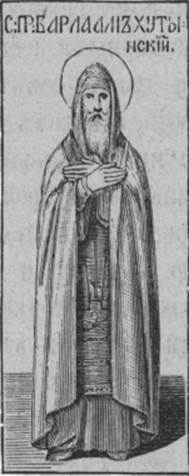
По вкладной преп. Варлаама видно, что он был сын богатых родителей и от них получил богатое наследство. «Се же все дал Варлаам Михалев сын», говорит преподобный70. По синодикам, родители его – Михаил и Анна. По твердому местному преданию, они жили в Новгороде, на Софийской стороне, в прежнем Неревском конце. Здесь родился и проводил юные годы свои Алексий Михайлович, будущий подвижник Варлаам. Это место впоследствии отличено было каменным крестом, а потом часовнею. В грамоте патр. Никона читаем: «устроена часовня 1645 г. на Досланной улице, где прежде того стоял каменный крест, а в древнее время жил чудотворец Варлаам»71.
From the deed of gift of the Venerable Barlaam it is evident that he was the son of wealthy parents and received a rich inheritance from them. "All this did Barlaam, son of Michael, give," says the Venerable One70. According to the synodica, his parents were Michael and Anna. According to firm local tradition, they lived in Novgorod, on the Sophia side, in the former Nerev End. Here Alexius Michaelovich, the future ascetic Barlaam, was born and spent his youthful years. This place was later marked by a stone cross, and then by a chapel. In a charter of Patriarch Nikon we read: "a chapel was built in 1645 on Doslannaya Street, where formerly stood a stone cross, and in ancient times the Wonderworker Barlaam lived"71.
По древнему житию72, Алексей Михайлович еще при жизни родителей занимался не земным, а небесным, постился и молился. В дом родителей пришли странники и из числа их инок Порфирий особенно возбудил в душе Алексия горячую ревность к подвигам. Алексий удалился после того в Лисичий монастырь, где нашли себе вечный покой и родители его. Не довольствуясь монастырскою жизнию, Алексий, в иночестве Варлаам, решился подвергнуть себя более строгим подвигам в уединении.
According to the ancient Life72, Alexius Michaelovich, even during the lifetime of his parents, occupied himself not with earthly but with heavenly things, fasting and praying. Wanderers came to the house of his parents, and among them the monk Porphyry especially aroused in the soul of Alexius a fervent zeal for ascetic labors. After that, Alexius withdrew to the Lisichy Monastery, where his parents also found eternal rest. Not content with the monastic life, Alexius, having taken monastic vows as Barlaam, resolved to subject himself to more severe ascetic labors in solitude.
Уединенный холм в лесу, на берегу Волхова, в 10 вер. от Новгорода, понравился пустыннику. И точно, Хутынский холм – самое красивое место из всех окрестностей Новгорода: с холма, даже и при чаще лесной, видны окрестности на дальнее расстояние. – Правда, в народном мнении не высоко стояла эта местность: Хутынь – худынь, худое место, место нечистой силы; тут же болото Видень, где видятся нечистые. Но раб Божий призван на то, чтобы не бояться нечистого, ему дано оружие – крест; он должен гнать нечистое и из сердец человеческих. – В таких мыслях преподобный поставил себе в Хутыне кедию и стал подвизаться в посте и молитвах73. Как строга была пустынная жизнь его, показывают памятники, доселе целые. Во власянице его – 18 фунтов, в веригах 8 фунтов74. Итак, 26 фунтов тяжести постоянно было на теле его, и жесткая власяница постоянно чесала и драла тело его.
A solitary hill in the forest, on the banks of the Volkhov, ten versts from Novgorod, pleased the hermit. And indeed, the Khutyn Hill is the most beautiful place of all the environs of Novgorod: from the hill, even with the thick forest, the surroundings are visible for a great distance. – True, in popular opinion this locality was not highly regarded: Khutyn – khudyn, a bad place, a place of unclean spirits; there was also the swamp Viden, where unclean things were seen. But the servant of God is called to not fear the unclean; he is given a weapon – the Cross; he must drive out the unclean even from human hearts. – With such thoughts, the Venerable One set up a cell for himself in Khutyn and began to struggle in fasting and prayers73. How strict his hermit life was is shown by memorials still intact. His hair shirt weighed 18 pounds, his chains 8 pounds74. Thus, 26 pounds of weight were constantly on his body, and the coarse hair shirt constantly scratched and chafed his body.
О строгом пустыннике, как ни скрывался он от людей, узнали люди и воздыхающие о небесной отчизне приходили слушать наставления его. Строгий к себе, отшельник не мог отказать благой просьбе тех, которые желали жить с ним. А таких оказывалось не мало. Не мало тогда было обителей в ведении Новгородского владыки: но они были городские, стояли или в самом городе или верстах в двух от шумного торгового города. Хутынь был местом пустынным, где нечем было развлекаться, где было тихо и безмолвно, любезный простор для безмолвного подвижничества и молитв. Когда собралось к преподобному довольно пустыннолюбивых людей, он поставил небольшой деревянный храм Преображения Господня и при храме несколько келий75. Так было и после в пустынях! – В пустыне преп. Сергия и до самого конца долгой жизни его не было каменного храма. Пустыня Варлаама начала цвести подвижниками. Пример и наставления преподобного вели их к совершенству. Варлаам сам копал землю и отправлял другие работы: еще цел колодезь, выкопанный им вблизи келии его, которая была построена также его руками76. Преподобный не щадил себя ни в посте, ни в бдении молитвенном, ни в терпении скорбей. Обитель впоследствии чтила преп. Варлаама как одного из великих постников, признавая постничество отличительною чертою его77. Оскорбления наносили ему люди, опасавшиеся ущерба для своей корысти. Преподобный прощал обиды бескорыстной душе своей78.
About the strict hermit, however much he hid himself from people, people learned, and those sighing for the heavenly homeland came to hear his instructions. Strict with himself, the recluse could not refuse the good request of those who wished to live with him. And there were not a few such. There were not a few monasteries then under the jurisdiction of the Novgorod bishop: but they were urban, standing either in the city itself or two versts from the noisy trading city. Khutyn was a desolate place, where there was nothing to distract, where it was quiet and still, a beloved expanse for silent asceticism and prayer. When a sufficient number of desert-loving people had gathered to the Venerable One, he built a small wooden church of the Transfiguration of the Lord and several cells near the church75. So it was later in the deserts! – In the desert of the Venerable Sergius, until the very end of his long life, there was no stone church. The desert of Barlaam began to flourish with ascetics. The example and instructions of the Venerable One led them to perfection. Barlaam himself dug the earth and performed other labors: the well he dug near his cell, which was also built by his hands, is still intact76. The Venerable One did not spare himself either in fasting, or in prayerful vigil, or in the endurance of sorrows. The monastery later honored the Venerable Barlaam as one of the great fasters, recognizing fasting as his distinctive trait77. Insults were inflicted on him by people who feared loss to their own profit. The Venerable One forgave the offenses with his disinterested soul78.
Поныне целая в обители Хутынской грамота преп. Варлаама показывает, что он, еще не быв игуменом, дал ее и следовательно, не быв еще игуменом, старался оградить покой ее от нужд земной жизни и от притязаний корысти. Вот что пишет он в своей грамоте: «я Варлаам дал св. Спасу землю, огород, рыбные и гоголиные ловли и пожни: 1) Рель (поемный луг) против села за Волховом, 2) на Волховце рыбную ловлю, называемую Кол, 3) ловлю Корь, 4) ловлю Лозу, 5) землю Вольмину и землю на острове с нивами; всю ту землю я отдал св. Спасу с челядью (поселянами) и скотом. Поселяне же: 1) молодой человек с женою, 2) Власий, 3) девка Февронья с двумя сыновьями, 4) Недачь; к тому шесть лошадей и корова. Еще я дал св. Спасу другое село на Слудице, в котором церковь св. Георгия, с пашнями и сенокосами, рыбными ловлями и со всем, что в нем есть. Все это я, Варлаам, сын Михаилов, дал св. Спасу. Если же кто, по научению диавола и злых людей, захочет отнять что-либо, из пашень ли, из сенокосов ли, из ловлей ли, да будет ему противником св. Спас в сем веке и будущем»79.
To this day, a charter of the Venerable Barlaam, preserved whole in the Khutyn Monastery, shows that he gave it even before becoming abbot, and consequently, even before becoming abbot, he strove to safeguard its peace from the needs of earthly life and from the claims of covetousness. Here is what he writes in his charter: "I, Barlaam, gave to the Holy Savior land, a garden, fishing and goldeneye-duck hunting grounds, and hayfields: 1) Rel (a flood meadow) opposite the village beyond the Volkhov, 2) on the Volkhovets a fishing ground called Kol, 3) the fishing ground Kor, 4) the fishing ground Loza, 5) the land Volmina and the land on the island with fields; all that land I gave to the Holy Savior with the serfs (peasants) and cattle. The serfs: 1) a young man with his wife, 2) Vlasius, 3) the girl Febronia with two sons, 4) Nedach; besides that, six horses and a cow. I also gave to the Holy Savior another village on Sluditsa, in which is a church of St. George, with arable lands and hayfields, fishing grounds, and everything that is in it. All this I, Barlaam, son of Michael, gave to the Holy Savior. If anyone, by the teaching of the devil and evil men, should wish to take away anything, whether from the arable lands, or from the hayfields, or from the fishing grounds, may the Holy Savior be his adversary in this age and the future"79.
В обители преподобного поныне цел крест из серебристой меди, с надписью: «Михаила образ» и другою над распятием: «Црь славы Ись Хс.». Это – памятник уважения преподобного к родителю. Этот крест уже известен был по описанию чуда 1460 г. Целы также священническая риза преподобного из мухояра кофейного цвета, подризник, поручи80 и служебник81, памятники благоговения его к достойному священнослужению.
In the monastery of the Venerable One, a cross of silvery copper is preserved to this day, with the inscription: "The image of Michael" and another above the Crucifixion: "King of Glory, Jesus Christ." This is a memorial of the Venerable One's respect for his parent. This cross was already known from the description of a miracle in 1460. Also preserved are the priestly vestment of the Venerable One made of coffee-colored mohair, the under-vestment, the cuffs80, and a service book81, memorials of his reverence for worthy priestly service.
Преп. Варлаам дал для обители своей устав; но, к сожалению, драгоценный устав святого не сохранился для нашего времени во всей целости. Известно, что уставом его предписано было раздавать милостыню бедным и всех странных кормить и поить82. Один иностранец записал статью устава о настоятеле: «сперва братия, так говорит устав, просят князя о избрании достойного настоятеля и руководителя по заповедям Господним. Избранный, до утверждения в звании своем от начальства, обязывается клятвою и подпискою жить в той обители по правилам св. отцов, честно и благоговейно; ко всякой должности и ко всякому монастырскому послушанию определять людей верных и быть заботливым о пользе монастыря; о нуждах и делах советоваться с тремя или четырьмя из старшей братии, а потом предлагать дела на общее рассуждение братии и не иначе приводить в исполнение, как с общего согласия; жизнь вести трезвую и ничего лишнего против прочих для своего продовольствия не держать, а потому всегда ходить на общую трапезу и довольствоваться пищею общею с братиею; все годовые приходы и расходы вести неопустительно и прибытки полагать в казну без утайки. Все это обещает он выполнять под опасением взыскания от начальства и лишения звания своего. В то же время и старшие из братии дают клятву в точном исполнении всего вышесказанного и в совершенном повиновении своему настоятелю»83.
The Venerable Barlaam gave a rule for his monastery; but, unfortunately, the precious rule of the saint has not been preserved for our time in its entirety. It is known that his rule prescribed the distribution of alms to the poor and the feeding and giving drink to all strangers82. A foreigner recorded an article of the rule concerning the superior: "First the brethren, so the rule says, ask the prince for the election of a worthy superior and guide according to the commandments of the Lord. The elected one, before confirmation in his rank by the authorities, binds himself by oath and signature to live in that monastery according to the rules of the holy fathers, honorably and reverently; to appoint faithful men to every office and every monastic obedience, and to be solicitous for the benefit of the monastery; to consult about needs and affairs with three or four of the elder brethren, and then to present matters for the general deliberation of the brethren and not to carry them out otherwise than with common consent; to lead a sober life and to keep nothing superfluous beyond the others for his own sustenance, and therefore always to go to the common refectory and be content with the common food with the brethren; to keep all annual incomes and expenditures without fail and to place the profits in the treasury without concealment. All this he promises to fulfill under pain of punishment by the authorities and loss of his rank. At the same time, the elders among the brethren also give an oath for the exact fulfillment of all the above and for perfect obedience to their superior"83.
Дела открывали людям великого подвижника Варлаама. К нему приходили вельможные люди и простолюдины, богатые купцы и бездомные иноки, все с надеждою получить душевную пользу. Его строгая, нестяжательная жизнь, его опытность в распознании душевных болезней, его слово, исполненное силы и духа, оставляли глубокое впечатление в слушавших его. Он каждому говорил свое: богатым внушал не забывать, что есть вечность с муками для веселых и забывчивых, начальствующим предлагал помнить, что начальствуют они над подобными себе и должны дать отчет Господу.
His deeds revealed the great ascetic Barlaam to people. Noble people and commoners, rich merchants and homeless monks came to him, all with the hope of receiving spiritual benefit. His strict, non-acquisitive life, his experience in discerning spiritual illnesses, his word, filled with power and spirit, left a deep impression on those who heard him. He spoke his own word to each: to the rich he admonished not to forget that there is an eternity with torments for the merry and forgetful; to those in authority he reminded that they rule over those like themselves and must give an account to the Lord.
Раз шел он в Новгород к владыке. На мосту народ готов был сбросить в Волхов уличенного преступника. – Преподобный, взглянув на бедного осужденного, сказал народу: «он загладит вины своя в Хутыне, отдайте мне его». И народ отдал уважаемому пустыннику. – В другое время точно такая же случилась встреча с Варлаамом; в этот раз даже просили преподобного спасти осужденного от смерти, но он молча прошел мимо. – «Что это значит? Отчего одного спас, а другому не хотел оказать той же милости?» спросили его изумленные ученики. «Господь всем хочет спасения, сказал преподобный. Первый осужденный был осужден по правде: но ему, кающемуся, Господь дал время очиститься покаянием и он совершает покаяние в обители. Последний осужден несправедливо: но за невинное страдание получил он венец праведника, тогда как иначе земная лесть могла испортить душу его».
Once he was going to Novgorod to the vladyka. On the bridge, the people were ready to throw a convicted criminal into the Volkhov. The Venerable one, glancing at the poor condemned man, said to the people: "He will atone for his offenses in Khutyn; give him to me." And the people gave him to the revered hermit. At another time, exactly the same encounter happened with Barlaam; on this occasion, they even asked the Venerable one to save the condemned man from death, but he silently passed by. "What does this mean? Why did you save one, and not wish to show the same mercy to the other?" his astonished disciples asked him. "The Lord desires the salvation of all," said the Venerable one. "The first condemned man was condemned justly; but to him, repenting, the Lord gave time to be purified by repentance, and he is completing his repentance in the monastery. The last was condemned unjustly; but for his innocent suffering he received the crown of the righteous, whereas otherwise earthly flattery could have corrupted his soul."
Князь Ярослав прибыл в пустыню к преподобному. «Будь здоров, добрый князь, и с сыном твоим», сказал преподобный при первой встрече. Князь изумился, но потом узнал, что у него родился сын. По просьбе князя, преподобный крестил новорожденного. Признательный князь дал обители преподобного земли84. Это было в 1190 г. 85.
Prince Yaroslav arrived at the hermitage to the Venerable one. "Be well, good prince, and with your son," said the Venerable one at their first meeting. The prince was astonished, but later learned that a son had been born to him. At the prince's request, the Venerable one baptized the newborn. The grateful prince gave lands to the Venerable one's monastery84. This was in the year 1190 A.D.85.
Монастырские рыболовы, вытянув удачную тоню, скрыли большего осетра и принесли обители только мелкую рыбу. Преподобный с улыбкою сказал им: «вы принесли ко мне детей, где же мать их?» Смущенные рыбаки исповедали грех свой.
The monastery fishermen, having made a successful catch, hid a large sturgeon and brought only small fish to the monastery. The Venerable one said to them with a smile: "You have brought me the children; where is their mother?" The abashed fishermen confessed their sin.
Благоговейный селянин по усердию доставлял обители нужное и неожиданно лишился единственного сына. Он привез мертвого в обитель и преподобный возвратил его отцу живым. В другое время плыли люди по Волхову и один упал из лодки в воду; его вытащили бездыханного и принесли к Варлааму. Преподобный помолился и утопленник ожил86.
A devout villager, out of zeal, supplied the monastery with necessities and unexpectedly lost his only son. He brought the dead boy to the monastery, and the Venerable one returned him alive to his father. At another time, people were sailing on the Volkhov, and one fell from a boat into the water; they pulled him out lifeless and brought him to Barlaam. The Venerable one prayed, and the drowned man revived86.
Один опыт прозорливости преподобного запечатлен общественною хвалою Бога. Преподобному случилось быть у архиепископа, и святитель (это был блаж. Григорий, брат великого Иоанна), отпуская его после беседы, оказал, чтобы побывал у него старец спустя неделю. «Если Господу угодно, отвечал преподобный, в пятницу первой недели поста св. Апостолов приеду к твоей святыне на санях». – Архиепископ удивился, но не требовал объяснения. – В ночь пред показанною пятницею выпал глубокий снег и был сильный мороз. – Преподобный прибыл к владыке на санях. – Архипастырь скорбел о том, что мороз может повредить хлеб. «Не скорби, святой владыка, сказал преподобный: надобно благодарить Господа за милость, – мороз истребил червей, которые погубили бы хлеб в корне, – а снег только напоит жаждущую землю». Действительно на другой день жар дневной растопил снег и вода напоила сухую землю, а при корнях ржи найдены погибшие от мороза черви; вследствие того и другого был такой урожай хлебов, какого давно не видали. – В благодарную память об этом событии в пятницу на первой неделе Петрова поста совершается крестный ход из Новгорода в Хутынь монастырь87.
One experience of the Venerable one's foresight was sealed with the public praise of God. The Venerable one happened to be with the archbishop, and the Hierarch (this was the blessed Gregory, brother of the great John), dismissing him after a conversation, said that the elder should visit him in a week. "If it be pleasing to the Lord," replied the Venerable one, "on the Friday of the first week of the Fast of the Holy Apostles, I shall come to your holiness on a sleigh." The archbishop was astonished but did not demand an explanation. On the night before the appointed Friday, deep snow fell and there was a severe frost. The Venerable one arrived at the vladyka's on a sleigh. The archpastor grieved that the frost might harm the grain. "Grieve not, holy vladyka," said the Venerable one; "we must thank the Lord for mercy—the frost has destroyed the worms that would have ruined the grain in the root, and the snow will only water the thirsty earth." Indeed, on the next day the daytime heat melted the snow, and the water watered the dry earth, while at the roots of the rye were found worms killed by the frost; as a result of both, there was such a harvest of grain as had not been seen for a long time. In grateful memory of this event, on the Friday of the first week of Peter's Fast, a cross-procession is made from Novgorod to the Khutyn Monastery87.
Деянием последнего года жизни преподобного было построение каменного храма в обители. – При освящении храма во славу Спасителя, преподобный почтен был саном игумена. – Не удивимся тому, что так поздно преп. Варлаам облечен был саном игумена. Преп. Антоний Новгородский, предшественник его, также только при освящении каменного храма своей обители посвящен был в игумена (1130 г.), хотя до того времени он уже 24 года подвизался над устроением обители88. Как Антоний, так и преп. Варлаам, не нося по смирению имени игумена, по жизни своей были начальники над совестию братии и братия покорялись им. – Преп. Варлаам, чувствуя близость кончины своей, назначил ученика своего Антония в преемники себе и мирно почил 6-го ноября 1192 г.89.
The deed of the last year of the Venerable one's life was the building of a stone church in the monastery. At the consecration of the church in glory of the Savior, the Venerable one was honored with the rank of abbot. Let us not be surprised that the Venerable Barlaam was invested with the rank of abbot so late. The Venerable Anthony of Novgorod, his predecessor, was likewise only at the consecration of the stone church of his monastery ordained as abbot (1130 A.D.), although before that time he had already labored for 24 years in the establishment of the monastery88. Like Anthony, so also the Venerable Barlaam, out of humility not bearing the name of abbot, were in their lives leaders over the conscience of the brethren, and the brethren obeyed them. The Venerable Barlaam, feeling the nearness of his end, appointed his disciple Anthony as his successor and peacefully reposed on the 6th of November, 1192 A.D.89.
В 1461 г. освящен был в Москве первый храм во имя пр. Варлаама Хутынокого. С того времени, говорит летопись, начали праздновать в Москве память пр. Варлаама. – Но в Новгороде храм в честь пр. Варлаама Хутынского видим за 50 лет прежде того, в 1410 г.90.
In 1461 A.D., the first church in the name of the Venerable Barlaam of Khutyn was consecrated in Moscow. From that time, says the chronicle, they began to celebrate the memory of the Venerable Barlaam in Moscow. But in Novgorod, a church in honor of the Venerable Barlaam of Khutyn is seen 50 years before that, in 1410 A.D.90.
Мощи преподобного, говорит древнее житие, видел нетленными блаж. архиепископ Евфимий (1429–1458 г.). Это было так: святитель, призвав Хутынского игумена Тарасия, заповедал три дня поститься и совершать келейно молитвы, дабы узнать волю Божию об основателе обители. – Спустя три дня архиепископ, игумен и с ним иподиакон Иаков вошли в храм, сняли каменную крышу с гроба и увидели нетленное тело, лице и брада оказались сходными с изображением преподобного на иконе, стоявшей над гробом. Святитель прославил Бога, а иподиакон, пораженный чудом, принял иночество. Это было после того, как явившийся святитель Иоанн заповедал чтить великих мужей Русской Церкви91.
The relics of the Venerable one, says the ancient Life, were seen incorrupt by the blessed Archbishop Euthymius (1429–1458 A.D.). This happened thus: the Hierarch, summoning the Khutyn abbot Tarasius, commanded a three-day fast and the performance of prayers in the cell, that they might know the will of God concerning the founder of the monastery. After three days, the archbishop, the abbot, and with him the subdeacon James entered the church, removed the stone cover from the coffin, and saw the incorrupt body; the face and beard proved to be similar to the image of the Venerable one on the icon standing above the coffin. The Hierarch glorified God, and the subdeacon, struck by the miracle, received monasticism. This was after the appearing Hierarch John had commanded that the great men of the Russian Church be honored91.
Мощи преподобного остались и после того закрытыми. В 1471 г. великий князь Иоанн III, предав опустошению Новгородскую область, взошел в Новгород грозным победителем. Он прибыл и в Хутынь поклониться, как говорил, преподобному92. – «Почему, спросил он, не открывают гроба св. Варлаама?» – «Издавна никто не смеет», отвечал игумен Нафанаил, «видеть мощи чудотворца: ни для князей, ни для архиепископов, ни для бояр не открывают их, пока Господь не соблаговолит изъявить на то Свою волю». Великий князь, думая, что тогда, как вручен ему меч, может он ненаказанно распоряжаться и святыми, с грозным гневом приказал открыть мощи. Но, видно, если есть грозные на земле, есть они и на небе, и с последними первым спорить не под силу. Едва только начали, по приказанию грозному, поднимать каменную доску и копать землю, как из гроба чудотворца вырвался дым и за дымом пламень, опаливший стены. – Великий князь в ужасе бросился вон из храма со всею свитою, так что выронил в монастыре и трость свою93; трость эта поныне цела в обители; цела и обожженная пламенем дверь94.
The relics of the Venerable one remained hidden even after that. In 1471 A.D., the Grand Prince John III, having laid waste to the Novgorod region, entered Novgorod as a fearsome conqueror. He also came to Khutyn to venerate, as he said, the Venerable one92. "Why," he asked, "do they not open the coffin of St. Barlaam?" "From of old no one dares," answered Abbot Nathanael, "to see the relics of the Wonderworker: neither for princes, nor for archbishops, nor for boyars are they opened, until the Lord is pleased to manifest His will concerning this." The Grand Prince, thinking that since the sword had been entrusted to him he could with impunity dispose even of the saints, with fearsome anger commanded that the relics be opened. But it is evident that if there are fearsome ones on earth, there are also fearsome ones in heaven, and with the latter the former cannot contend. Scarcely had they begun, at the fearsome command, to lift the stone slab and dig the earth, when from the coffin of the Wonderworker burst forth smoke, and after the smoke a flame that scorched the walls. The Grand Prince, in terror, rushed out of the church with all his retinue, so that he even dropped his staff in the monastery93; this staff is preserved to this day in the monastery; the door scorched by the flame is also preserved94.
Трудно описать все чудеса, какие совершал преп. Варлаам. Не раз и начинали составлять описание их95. Преподобный исцелял больных всякого рода, иноков своей обители и мирян. Его видим теплым молитвенником то за Новгород, то за целую Россию. – Последнее было в 1521 г. во время нападения Магмет-Гирея96 и в 1610 г. в бедственное занятие Москвы Ляхами97. – Относительно Новгорода вот что рассказывает повесть современника. Инок Тарасий ночью приготовлял в храме свечи для утреннего служения. И вот видит: сами собой зажглись свечи, фимиамом наполнился храм, из гроба своего встает преподобный Варлаам и, став среди храма, молится вслух за Новгород, дабы человеколюбивый Господь отвратил от него гнев Свой. – Тарасий в ужасе пал на землю. Преподобный, подняв его, сказал: «не бойся, Тарасий; хочу открыть тебе горе, готовое для Новгорода, неправды которого вопиют на небо; ступай, взойди на церковную кровлю и посмотри, что делается в Новгороде?» Тарасий побежал и увидал, что воды озера Ильменя поднялись и готовы затопить город; в страхе прибежав, рассказал, что видел. Преподобный со слезами молился Господу о спасении города. Потом опять послал инока смотреть на город. Тарасий увидел множество ангелов, бросающих огненные стрелы на толпы мужчин, женщин, детей. – Когда сказал он о том, преподобный снова слезно молился. Затем сказал: «молитвами Богородицы и святых избавлен Новгород от потопления, но в нем сильный мор на людей». И опять послал Тарасия смотреть. Иноку представилась огненная туча, наступающая на город. В трепете сказал он о том святому. «После мора будет пожар в Новгороде и вся Торговая сторона его сгорит», сказал преподобный и лег опять в гроб свой и свечи погасли. Летопись замечает, что мор и пожар были в 1509 году, при архиепископе Серапионе, а откровение Тарасию было за 4 года пред тем, в 1505 г.98
It is difficult to describe all the miracles that the Venerable Barlaam performed. More than once they began to compile a description of them95. The Venerable one healed the sick of every kind, both monks of his monastery and laymen. We see him as a fervent intercessor, now for Novgorod, now for all Russia. The latter occurred in 1521 A.D. during the invasion of Mehmed Giray96 and in 1610 A.D. during the calamitous occupation of Moscow by the Poles97. Concerning Novgorod, the following is related in a narrative by a contemporary. The monk Tarasius was preparing candles in the church at night for the morning service. And behold, he sees: the candles lit of themselves, the church was filled with incense, and from his coffin the Venerable Barlaam arose, and standing in the midst of the church, he prayed aloud for Novgorod, that the man-loving Lord might turn away His wrath from it. Tarasius fell to the ground in terror. The Venerable one, raising him up, said: "Fear not, Tarasius; I wish to reveal to you the grief prepared for Novgorod, whose iniquities cry out to heaven; go, ascend to the church roof and see what is happening in Novgorod." Tarasius ran and saw that the waters of Lake Ilmen had risen and were ready to flood the city; in fear he ran back and told what he had seen. The Venerable one prayed with tears to the Lord for the salvation of the city. Then he again sent the monk to look at the city. Tarasius saw a multitude of angels casting fiery arrows upon crowds of men, women, and children. When he told of this, the Venerable one again prayed tearfully. Then he said: "Through the prayers of the Theotokos and the saints, Novgorod has been delivered from flooding, but there will be a severe plague upon the people." And again he sent Tarasius to look. The monk saw a fiery cloud advancing upon the city. Trembling, he told the saint of this. "After the plague there will be a fire in Novgorod, and all the Trade Side of it will burn," said the Venerable one, and he lay down again in his coffin, and the candles went out. The chronicle notes that the plague and fire occurred in 1509 A.D., under Archbishop Serapion, while the revelation to Tarasius was four years before that, in 1505 A.D.98
В обители своей преподобный является бдительным настоятелем, иногда очень строгим. Двух игуменов обители своей он жестоко наказал посохом игуменским и один, после наказания, больным и умер, другой перенес сильную болезнь. Казначей Тарасий, живший сперва строго, потом начавший употреблять монастырскую собственность на веселое угощение подобных ему, был также наказан палкою и едва выздоровел, принесши покаяние, а веселый собеседник его умер расслабленным. Келарь Иоасаф, наказанный, но не исправившийся, с заздравною чашею в руке испустил дух. – Для иноков внимательных к себе преподобный являлся весьма милостивым. К иноку Иринарху, три года страдавшему от грыжи и уже готовившемуся к смерти, явился он в одеянии пресвитера с иеродиаконом и несколькими иноками как бы в крестном ходе. Окадив иконы, благословил он больного и сказал: «вот ты и здоров, брат мой; вкуси пищи», которая тогда же принесена, была. Больной встал здоровым. Это было в Пасху99.
In his monastery, the Venerable one appears as a vigilant abbot, sometimes very strict. Two abbots of his monastery he severely punished with the abbot's staff; one, after the punishment, fell ill and died; the other endured a severe illness. The treasurer Tarasius, who at first lived strictly but later began to use monastic property for merry entertainment of those like him, was also punished with a stick and barely recovered, having brought forth repentance, while his merry companion died paralyzed. The cellarer Joasaph, punished but not corrected, with a health-giving cup in his hand gave up the ghost. To monks attentive to themselves, the Venerable one appeared very merciful. To the monk Irenarchus, who had suffered from a hernia for three years and was already preparing for death, he appeared in the vestments of a presbyter with a hierodeacon and several monks, as if in a procession of the cross. Having censed the icons, he blessed the sick man and said: "Behold, you are well, my brother; taste of the food," which was then brought. The sick man arose healthy. This was at Pascha99.
В 1408 г. Константин Дмитриевич, князь Новгородский, больным привезен был в обитель преподобного и уже думали готовить погребение его. Совершив молебен, оставили больного в храме и здесь мало-помалу он ожил: когда игумен пришел из трапезы в храм, князь уже сам прикладывался к раке преподобного100.
In 1408 A.D., Constantine Dmitrievich, Prince of Novgorod, was brought ill to the monastery of the Venerable one, and they already thought to prepare for his burial. Having performed a moleben, they left the sick man in the church, and there little by little he revived: when the abbot came from the refectory into the church, the prince was already venerating the reliquary of the Venerable one100.
Чудо, совершившееся над молодым постельничим князя, поучительно и по частностям своим. Добрый молодой человек сделался тяжко болен и желал поклониться преп. Варлааму в его обители. Явившийся преподобный обещал исцелить его; когда повезли больного в Хутынь, на дороге он умер; но когда подвезли к воротам обители, очнулся и при мощах преподобного совсем выздоровел. – Спрошенный о том, что с ним было, он рассказал следующее: «я видел около себя множество бесов и один из них держал свиток, где записаны грехи мои. Явившийся св. Николай сказал: немногие добрые дела его более значат, чем грехи его, открытые при том духовному врачу. Бесы скрылись. Явились ангелы и великий из них с ласкою повел меня в какое-то светлое место, где много прекрасных дерев и цветов. – Вот вижу преп. Варлаама чудотворца с посохом в руке, как написан он на иконе. «Григорий!» подойдя сказал он, «я не успел придти к тебе при исходе твоем, теперь ты хочешь ли остаться здесь?» «Хочу здесь пребывать», отвечал я. Сам Варлаам сказал: «хорошо было бы остаться тебе здесь; но будут скорбеть родители твои, – иди, утешь отца и мать, я – твой помощник». Взяв за руку, повел он меня, а впереди шел тот ангел в диаконском одеянии. – Пройдя мимо цветущих дерев, ангел скрылся, а св. Варлаам, оградив меня крестным знамением и иконою св. Николая, сказал: «Григорий! ты молился великому чудотворцу Николаю и меня призывал на иомощь; молись ему и вперед, а я – помощник твой». Отойдя немного, оглянулся и сказал: «спустя 7 лет ты будешь у меня» – и стал невидим»101.
A miracle that took place over the young bedchamberlain of the prince is instructive even in its particulars. The good young man fell grievously ill and wished to venerate the Venerable Barlaam in his monastery. The Venerable one, appearing, promised to heal him; when they were bringing the sick man to Khutyn, he died on the road; but when they brought him to the gates of the monastery, he regained consciousness and at the relics of the Venerable one was completely healed. – Asked about what had happened to him, he related the following: ‘I saw around me a multitude of demons, and one of them held a scroll where my sins were written down. St. Nicholas, appearing, said: “His few good deeds mean more than his sins, which were revealed at the same time to the spiritual physician.” The demons vanished. Angels appeared, and the greatest of them led me with kindness to a certain bright place, where there are many beautiful trees and flowers. – Then I saw the Venerable Barlaam the Wonderworker with a staff in his hand, as he is depicted on the icon. “Gregory!” he said, approaching, “I did not manage to come to you at your departure; now, do you wish to remain here?” “I wish to abide here,” I answered. Barlaam himself said: “It would be good for you to remain here; but your parents will grieve – go, comfort your father and mother; I am your helper.” Taking me by the hand, he led me, and before us went that angel in a deacon’s vestment. – Having passed by the flowering trees, the angel vanished, and St. Barlaam, having signed me with the sign of the cross and with the icon of St. Nicholas, said: “Gregory! You prayed to the great Wonderworker Nicholas and called upon me for help; pray to him also in the future, and I am your helper.” Having stepped back a little, he looked around and said: “In seven years you will be with me” – and became invisible’101.
«Взяв крест Господа, преподобный Варлаам, ты твердо следовал за Распявшимся на кресте за нас: все оставив, возлюбил ты единого Христа. Предстоя пред Ним с ангелами, моли ущедрить мир и спаси души наши»102.
“Having taken up the cross of the Lord, Venerable Barlaam, you steadfastly followed Him Who was crucified on the cross for us: having left all, you loved Christ alone. Standing before Him with the angels, pray that He may have mercy on the world and save our souls”102.
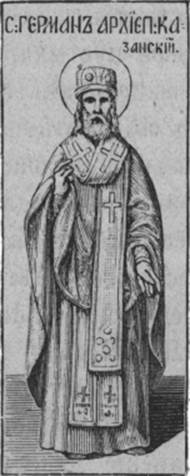
Блаженный Герман, в крещении Григорий103, был из фамилии Полевых, происходившей от князей Смоленских. Полевы отличались и усердною службою гражданскою и ревностию к благочестию. Александр Борисович Полев был боярином великого князя Василия Дмитриевича. Внук его Феодор Дмитриевич служил у Волоколамского князя Бориса, духовного друга преп. Иосифу. Василий Феодорович старший служил в Угличе у князя Дмитрия Ивановича; а сын его Никифор постригся у преп. Иосифа с именем Нила104. Сын Афанасия Феодоровича, брата Василиева, Феодор был отцом блаженного Григория105. В Иосифовой обители подвизались еще Полевы Серапион и Симеон106. Это, как вероятно, были племянники Афанасия Феодоровича, Иван и Владимир Васильевичи107. Под влиянием благочестивых родственников и обители Иосифовой, блаж. Григорий еще в доме родителей соблюдал строгий пост и любил молитву, а потом удалился в Иосифов монастырь и здесь принял иночество с именем Германа. Сюда же поступил и родитель его, принял иночество с именем Филофея и пожертвовал обители свою деревню108. В Волоколамской обители Герман подвизался под руководством игумена Гурия Руготина, впоследствии первого святителя Казанского. По его благословению, «последний в иноках», так называл себя Герман, трудился над списыванием книг. Так известны списанные им Богородичник109 и Евангелие; а кроме того в Иосифовой обители были «псалмы печатные в честь архиепископа Германа Казанского»110. Хотя Волоколамская обитель и была местом самого сурового заточения для блаженн. Максима Грека, но блаженн. Герман с любовию изучал наставления блаж. Максима, как мужа просвещения высокого и страдальца невинного111. Старицкая братия вызвала к себе Германа для управления обителию и он посвящен был (в нач. 1551 г.) в архимандрита Тверским епископом Акакием. Пробыв два года с половиною в Старице, возвратился он в Иосифов монастырь, чтобы быть под начальством других и обучать себя смирению. В 1553 г. архимандрит Герман был на соборе против Матвея Башкина и этот злой враг христианства отдан был ему на увещание в Волоколамский монастырь112.
Blessed Germanus, in baptism Gregory103, was of the family of the Polevs, descended from the princes of Smolensk. The Polevs were distinguished both by zealous civil service and by zeal for piety. Alexander Borisovich Polev was a boyar of Grand Prince Basil Dmitrievich. His grandson Theodore Dmitrievich served under the Prince of Volokolamsk, Boris, a spiritual friend of the Venerable Joseph. Basil Feodorovich the elder served in Uglich under Prince Demetrius Ivanovich; and his son Nicephorus was tonsured at the monastery of the Venerable Joseph with the name Nilus104. The son of Athanasius Feodorovich, brother of Basil, Theodore was the father of blessed Gregory105. In the monastery of Joseph there also labored the Polevs Serapion and Simeon106. These, as is probable, were the nephews of Athanasius Feodorovich, John and Vladimir Vasilievich107. Under the influence of his pious relatives and of the monastery of Joseph, blessed Gregory, while still in his parents’ home, observed strict fasting and loved prayer, and afterwards withdrew to the monastery of Joseph and there received the monastic tonsure with the name Germanus. His father also entered there, received the monastic tonsure with the name Philotheus, and donated his village to the monastery108. In the Volokolamsk monastery Germanus labored under the guidance of Abbot Gury Rugotin, afterwards the first Hierarch of Kazan. With his blessing, “the last among monks,” as Germanus called himself, he labored at copying books. Thus are known the Bogorodichnik109 and the Gospel copied by him; and besides these, in the monastery of Joseph there were “printed psalms in honor of Archbishop Germanus of Kazan”110. Although the Volokolamsk monastery was a place of the harshest imprisonment for the blessed Maximus the Greek, blessed Germanus lovingly studied the instructions of blessed Maximus, as a man of high enlightenment and an innocent sufferer111. The brethren of Staritsa summoned Germanus to themselves to govern the monastery, and he was consecrated (at the beginning of 1551) as archimandrite by Akakios, Bishop of Tver. Having spent two and a half years in Staritsa, he returned to the monastery of Joseph, in order to be under the authority of others and to train himself in humility. In 1553, Archimandrite Germanus was at the council against Matthew Bashkin, and this evil enemy of Christianity was given to him for admonition in the Volokolamsk monastery112.
Собором 1555 г. блаж. Гурий избран и посвящен был в архиепископа Казанского, а блаж. Герману поручено было устроить обитель в Свияжске, чтобы была она рассадником благочестия и веры св. в стране магометанской. Получив богатые пособия от царя и святителей, блаж. Герман ревностно занялся исполнением возложенного на него поручения: он построил каменный храм успения Богоматери с колокольнею и келии для монашествующих. По переписке его с св. Гурием, работы по построению монастыря производились поденщиками, которым платилось по денежке за день работы, и однако преподобный жаловался святителю, что цена работе очень высока. – Это показывает, как дороги были тогда деньги! Недавно еще цела была келья, где св. Герман проводил время в молитве и трудах. Келья под колокольнею не более трех квадратных аршин. На этом нешироком пространстве помещалась и печка; одно окно, менее аршина в вышину. В переднем углу икона Богоматери и пред нею фонарь из слюды. Иглы, нитки, наперсток, которые употреблял он при келейном занятии, оставались при его гробнице113. Так была проста жизнь Свияжского настоятеля! Так был строг к себе преподобный! Слух о добродетельной жизни его разнесся по окрестностям Свияжска и вдали от него. В новую обитель, к ее подвижнику-настоятелю, приходили многие: одни, чтобы принять благословение человека Божия, другие принимали иночество от рук его. Строгий к себе самому, преподобный был милостив и щедр ко всем нуждающимся. Христианская благотворительность его, не различавшая ни своего, ни чужого, ни верного, ни неверного, ни друга, ни врага, сама собою показывала неверным, каков дух христианского закона. А для того, чтобы благотворениями проповедовать о вере детям природы, блаженному Герману даны были достаточные средства114: ни блаженный Герман, ни другие не думали тогда, что не иначе, как наставлениями, надобно преобразовывать души дикие; напротив, хорошо понимали тогда, что нельзя учить детей философии Платоновой, им нужна азбука. «Иноки должны уподобляться Апостолам, которых послал Господь учить и крестить», писал царь архиепископу Гурию. Блаж. Герман вполне был таким иноком. Слушатель наставлений мудрого Максима был в состоянии предлагать с отчетливую проповедь о св. вере и магометанам и язычникам. Свияжская обитель была средоточием, откуда распространялась проповедь св. веры по правому берегу Волги, и в ней преимущественно принимали крещение оглашаемые чада веры. Такое значение за обителию Германа осталось на долгое время и после Германа. По писцовой книге 1568 г. видим, что заботливостию блаж. Германа собрано было в его обители до 152 книг разного содержания; из них 8 были писаны на пергаменте: Псалтирь, книга Антиоха, пролог и пр.115. Блажен. Герман был усердным помощником святому архипастырю своему по делам веры и усердно выполнял поручения его по епархии. С своей стороны св. Гурий оказывал ему особенное доверие свое, – поручал суду его все сельские церковные причты Свияжского уезда, а монастырь его освободил от своего суда116.
By the council of 1555, blessed Gury was chosen and consecrated as Archbishop of Kazan, and blessed Germanus was entrusted with establishing a monastery in Sviyazhsk, that it might be a nursery of piety and holy faith in a Mohammedan land. Having received rich assistance from the Tsar and the Hierarchs, blessed Germanus zealously set about fulfilling the commission laid upon him: he built a stone church of the Dormition of the Mother of God with a bell-tower and cells for the monastics. According to his correspondence with St. Gury, the work of building the monastery was carried out by day-laborers, who were paid one denga per day’s work, and yet the Venerable one complained to the Hierarch that the price of labor was very high. – This shows how dear money was then! Not long ago the cell was still intact where St. Germanus spent his time in prayer and labors. The cell was under the bell-tower, no more than three square arshins. In this narrow space there was also a stove; one window, less than an arshin in height. In the front corner was an icon of the Mother of God and before it a lantern of mica. The needles, thread, and thimble which he used in his cell work remained at his tomb113. So simple was the life of the Sviyazhsk abbot! So strict was the Venerable one with himself! The report of his virtuous life spread throughout the environs of Sviyazhsk and far beyond. Many came to the new monastery, to its ascetic abbot: some to receive the blessing of the man of God, others received the monastic tonsure from his hands. Strict with himself, the Venerable one was merciful and generous to all in need. His Christian charity, which distinguished neither one’s own nor another’s, neither believer nor unbeliever, neither friend nor foe, of itself showed the unbelievers what the spirit of the Christian law is. And for this, that by his benefactions he might preach the faith to the children of nature, blessed Germanus was given sufficient means114: neither blessed Germanus nor others thought then that it was only by teachings that wild souls must be transformed; on the contrary, they understood well then that one cannot teach children Platonic philosophy – they need an alphabet. “Monks must be likened to the Apostles, whom the Lord sent to teach and to baptize,” wrote the Tsar to Archbishop Gury. Blessed Germanus was fully such a monk. A hearer of the instructions of the wise Maximus, he was able to offer a clear sermon on the holy faith both to Mohammedans and to pagans. The Sviyazhsk monastery was the center from which the preaching of the holy faith spread along the right bank of the Volga, and in it the catechumens, children of faith, were chiefly baptized. Such significance remained with Germanus’s monastery for a long time even after Germanus. According to the cadastral book of 1568, we see that by the care of blessed Germanus up to 152 books of various contents were gathered in his monastery; of these, eight were written on parchment: a Psalter, the book of Antiochus, a Prologue, and others115. Blessed Germanus was a zealous helper to his holy archpastor in matters of faith and diligently fulfilled his commissions in the diocese. For his part, St. Gury showed him special trust – he entrusted to his judgment all the rural church clergy of the Sviyazhsk district, and freed his monastery from his own judgment116.
Так протекло 8 лет жизни в Казанской стране, когда скончался св. Гурий. Собор 1564 г. признал блаж. Германа достойным занять кафедру св. Гурия, и он был посвящен (марта 1?) в Москве в архиепископа Казанского. Он «пас Церковь Божию три лета и восемь месяцев»117. Собственно в Казани пришлось ему жить не более двух годов; но и в эти немногие годы он оставил по себе память великого святителя. Так в Зилантовой пустыни, где дети обучались грамоте и закону Божию, введено им общежитие, что дало возможность более прежнего содержать братии и учеников118. В 1566 г. (мая 12) митрополит Афанасий по болезни отказался от кафедры. Блаж. Герман находился тогда в Москве и был ходатаем за знаменитого князя Воротынского пред царем119. Царь знал высокие добродетели святителя. «Герман, так писал бывший царедворец Иоанна, князь Курбский, был человек знатного рода Полевых и столько же высок умом, сколько ростом, муж жизни чистой и святой, ревностный исследователь священного Писания, подвижник духовный; он несколько перенял и учение Максима философа; был человек простой, искренний и твердый, готовый на помощь застигнутым бедою и напастию и усердный попечитель о бедных»120. – Иоанн в это время иногда приходил в себя, но уже страдал душевною немочию, которая терзала его и особенно подданных его. Он назначил Германа в митрополита; блажен. Герман не мог желать высокой кафедры уже и потому, что с диким зверем, каким бывал тогда Иоанн, жить было не легко; но по воле царя занял митрополичий дом. Высоко уважая обязанности сана, которым готовились облечь его в храме, Герман не хотел связать себе рук молчанием; прежде чем облечен будет высоким саном, он решился переговорить с царем. Раз Иоанн посетил его в митрополичьем доме. Во время разговора блаж. пастырь обратил речь к высоким и необходимым предметам жизни, тихо и кротко говорил царю о страшном суде Божием, пред которым должны дать отчет вое, подданные и цари, и пред которым страшно будет презрителям закона Божия, кто бы они ни были. Царь задумался и вышел от Германа мрачным, в тревоге души, страдавшей подозрительностию. Он пересказал грязным любимцам своим речи святителя и спросил: что думают они? Они знали Германа и понимали, что при первом случае будет он настаивать пред царем прогнать негодяев, как бесчестие царю и страшное зло государству, и потому в один голос отвечали: «Боже тебя сохрани, царь, от такого советника; ужели ты хочешь быть в неволе, более тяжкой, чем был у Сильвестра и Адашева?» Они стали упрашивать царя на коленях, и более всех Алексей Басманов с сыном, не допускать Германа до высокой кафедры. Иоанн послал сказать Герману, чтобы выехал из митрополичьего дома, и поручил передать ему такие слова царя: «ты еще не возведен на митрополию, а уже отнимаешь у меня свободу»121. – Опозорив верного своему долгу святителя, не отпустили его в Казань, но в первое время тайно держали его где-то в заключении, почему не было его на соборе, избиравшем св. Филиппа в митрополита; оттого-то думали, что он или отравлен, или задушен122. Но он был на посвящении св. Филиппа в митрополита123. – «Преставися в л. 7075 ноябр. 6 д. в Москве, во время морового поветрия, погребен в чину святительском, якоже повеле, в церкви св. Николая, иже зовется мокрый, паствы своея архимандритом Иродионом (Свияжским) и Спасским (Казанским) Иеремиею, который последи бысть архиепископ Казанский»: так говорит Казанское известие124.
Thus passed eight years of life in the Kazan land, when St. Gury reposed. The Council of 1564 recognized blessed Germanus as worthy to occupy the cathedra of St. Gury, and he was consecrated (March 1?) in Moscow as Archbishop of Kazan. He "shepherded the Church of God for three years and eight months"117. Actually in Kazan he had to live no more than two years; but even in those few years he left behind him the memory of a great hierarch. Thus in the Zilantov Hermitage, where children were taught reading and writing and the law of God, he introduced the cenobitic rule, which made it possible to support the brethren and the students better than before118. In 1566 (May 12), Metropolitan Athanasius, due to illness, resigned from the cathedra. Blessed Germanus was then in Moscow and was an intercessor before the Tsar for the renowned Prince Vorotynsky119. The Tsar knew the high virtues of the hierarch. "Germanus," so wrote the former courtier of John, Prince Kurbsky, "was a man of the noble line of the Polevs, and as lofty in mind as he was in stature, a man of pure and holy life, a zealous investigator of the Sacred Scriptures, a spiritual ascetic; he had also partly adopted the teaching of Maximus the philosopher; he was a simple, sincere, and firm man, ready to help those overtaken by misfortune and calamity, and a diligent caretaker of the poor"120. – John at this time sometimes came to himself, but already suffered from a spiritual infirmity which tormented him and especially his subjects. He appointed Germanus as metropolitan; blessed Germanus could not desire the high cathedra already for this reason, that to live with a wild beast, such as John was then, was not easy; but by the will of the Tsar he occupied the metropolitan's house. Highly respecting the duties of the rank with which they were preparing to invest him in the church, Germanus did not want to bind his hands with silence; before he would be invested with the high rank, he resolved to speak with the Tsar. Once John visited him in the metropolitan's house. During the conversation the blessed pastor turned his speech to the high and necessary subjects of life, and quietly and meekly spoke to the Tsar of the terrible judgment of God, before which all must give account, subjects and Tsars alike, and before which it will be terrible for the despisers of the law of God, whoever they may be. The Tsar became thoughtful and left Germanus gloomy, in turmoil of soul, suffering from suspicion. He recounted the hierarch's words to his filthy favorites and asked: what did they think? They knew Germanus and understood that at the first opportunity he would insist before the Tsar that the scoundrels be driven away, as a dishonor to the Tsar and a terrible evil to the state, and therefore with one voice they answered: "God preserve you, Tsar, from such a counselor; do you indeed want to be in bondage heavier than you were under Sylvester and Adashev?" They began to beg the Tsar on their knees, and more than all Alexei Basmanov with his son, not to allow Germanus to reach the high cathedra. John sent to tell Germanus to leave the metropolitan's house, and charged them to convey to him these words of the Tsar: "You have not yet been raised to the metropolitanate, and already you are taking away my freedom"121. – Having disgraced the hierarch faithful to his duty, they did not let him go to Kazan, but at first secretly kept him somewhere in confinement, which is why he was not at the council that elected St. Philip as metropolitan; for this reason they thought that he had been either poisoned or strangled122. But he was at the consecration of St. Philip as metropolitan123. – "He reposed in the year 7075, November 6, in Moscow, during the time of the plague, and was buried in hierarchal rank, as he commanded, in the church of St. Nicholas, which is called the Wet, by the archimandrite of his flock Herodion (of Sviyazhsk) and the Spassky (of Kazan) Jeremiah, who afterwards was Archbishop of Kazan": so says the Kazan account124.
Спустя 27 лет, 1595 г., Свияжские граждане выпросили у царя и патриарха дозволение перенесть св. тело архипастыря их в Свияжск. Архиепископ Гермоген свидетельствовал и нашел тогда нетленными мощи святителя. Когда ставили их (25 сент.) в алтаре созданного им монастырского храма, то не только в храме, но и по всей обители разлилось благоухание. Тогда же истекли от них исцеления нескольким больным, в том числе прозрели два слепца. Затем еще исцелились при иконе святителя двое подьячих Свияжска, один глухонемой и расслабленный, другой страдавший от пьянства125.
Twenty-seven years later, in 1595, the citizens of Sviyazhsk obtained from the Tsar and the Patriarch permission to translate the holy body of their archpastor to Sviyazhsk. Archbishop Hermogenes examined and then found the relics of the hierarch incorrupt. When they were placed (September 25) in the altar of the monastery church he had founded, a fragrance spread not only through the church but throughout the whole monastery. At that time healings also flowed from them to several of the sick, including two blind men who received their sight. Then two clerks of Sviyazhsk were also healed at the icon of the hierarch, one deaf-mute and paralyzed, the other suffering from drunkenness125.
В Минее 1438 г. указывают житие и канон пр. Варлаама, изв. акад. VI, 295. По описанию чуда 1640 г. пр. Варлаам говорит больному: «ты прибываешь меня на помощь, не зная меня, как жилец далекой стране, списал себе канон и житие мое». Собр. лет. VI, 325. След. канон и житие были написаны прежде того. Пахомий написал похвальное слово и пересматривал житие в 1641 г. См. о св. Ионе.
In the Menaion of 1438 they point to the life and canon of Venerable Barlaam, known from the Academy VI, 295. According to the account of the miracle of 1640, Venerable Barlaam says to the sick man: "You summon me to help, not knowing me, as a resident of a distant land, having copied out for yourself a canon and my life." Collection of Chronicles VI, 325. Consequently, the canon and life were written before that. Pachomius wrote a eulogy and revised the life in 1641. See on St. Jonah.
Все ризничные вещи, как и крест, показаны в монастырской описи 1642 г., притом хранящимися в особом сундуке, с надписью: «ризница Варлаама чудотворца». Записки археол. общ. IX, 508. По описанию чуда 1460 г. «знаменаша отрока честным крестом воздвизальным святого Варлаама». Собр. л. VI, 322.
All the sacristy items, like the cross, are shown in the monastery inventory of 1642, moreover as kept in a special chest, with the inscription: "the sacristy of Barlaam the Wonderworker." Notes of the Archaeological Society IX, 508. According to the account of the miracle of 1460, "they signed the youth with the honorable cross for elevation of holy Barlaam." Collection of Chronicles VI, 322.
На служебнике, на обороте 1 л. надпись ХУ в. «служебник чудотворца Варлаама» (Саввы указатель синод. б. стр. 251. М. 1858 г.). По описи 1642 г. «служебник чудотворцев харатейный, оболочен в тафту». Зап. археол. общ. IX, 512.
On the service book, on the reverse of the first leaf, there is an inscription of the 15th century: "the service book of the Wonderworker Barlaam" (Savva's Index of the Synodal Library, p. 251. M. 1858). According to the inventory of 1642, "the service book of the wonderworkers on parchment, covered in taffeta." Notes of the Archaeological Society IX, 512.
Герберштейн rer. moscov. comm. р. 20. ed. Starzexscy. В Хутынской обители пролог с припискою: «в л. 6087 (1479) края достиже книга сия десною рукою – Евфимия инока, повелением священноинока Германа, игумена дому св. Спаса и преподобнаго и богоноснаго, иже в постницех великаго, чудотворца Варлаама, при нем (Германе) и община сотворися, от него же и аз убогы пострижен бых». – Не изменен ли устав преподобного о настоятеле при Германе и измененный попал в руки Герберштейна?
Herberstein, Rerum Moscoviticarum Commentarii, p. 20, ed. Starzexscy. In the Khutyn monastery there is a Prologue with the addition: "in the year 6087 (1479) this book reached its end by the right hand of – Euthymius the monk, by the command of the hieromonk Germanus, abbot of the house of the Holy Savior and of the Venerable and God-bearing, who among the fasters was great, Wonderworker Barlaam, under him (Germanus) also the community was established, by whom I, the poor one, was also tonsured." – Was not the rule of the Venerable One about the superior changed under Germanus, and the changed one fell into the hands of Herberstein?
По повести о чудесах пр. Варлаама крестный ход из Новгорода в Хутынь в первый пяток Апостольского поста совершался не только при архиеп. Макарие, но и при архиеп. Геннадие († 1505). При первом во время хода исцелен глухонемой и слепой мальчик. При втором также во время хода, расслабленный, лежа при раке, видел: преподобный вышел из раки Η как бы опалил все члены расслабленного и больной вскричал: помилуй мя, раб Божий. После того больной встал здоровым. – Повесть о санном пути напеч. в памят. стар. литер. 1, 277–280.
According to the tale of the miracles of Venerable Barlaam, the procession of the cross from Novgorod to Khutyn on the first Friday of the Apostles' Fast was performed not only under Archbishop Macarius, but also under Archbishop Gennadius († 1505). Under the former, during the procession, a deaf-mute and blind boy was healed. Under the latter, also during the procession, a paralyzed man, lying at the shrine, saw: the Venerable One came out of the shrine and as it were scorched all the limbs of the paralyzed man, and the sick man cried out: have mercy on me, servant of God. After that the sick man rose up healthy. – The tale of the sleigh journey is printed in Monuments of Ancient Literature 1, 277–280.
В старшей Новгор. летоп. под 1193 г. читаем: «в то же лето постави цьрьковь вънизу на Хутыне Варлаам цьрнец, а мирским именем Алекса Михалевич, в имя св. Спаса Преображения и святи владыка архиеп. Гаврила па праздник (т. е. 6 августа)» (Собр. л. III, 20). То же сказано в трех младших летописях, только здесь означено: «церковь камяну» (Собр. летоп. III, 127, 217. IV, 17). В 4 летописи и в летописях Софийской и Воскресенской: «того же (6701) л. заложи церковь Преображение чудотворец Варлаам Хутынский; того же лета и преставися» (Собр. л. IV, 17. У, 169. VII, 102). – Сочинитель степенной книги видел в летописях запись: «6751 г. (1243) преставися раб Божий Варлаам, а мирскы Вячеслав Прокшинич, на Хутыне у св. Спаса, м. мая в 4 д.» (Собр. л. III, 54) и приняв Варлаама Прокофьевича за одно лице с основателем Хутынского монастыря, отнес ковчину преп. Варлаама к 1243 г. (Степ. κ. 1, 354). Это повторяли многие, напр. словарь святых. Но преп. Варлаам по крещению назывался Алексий, а не Вячеслав, по отцу был Михайлович, а не Прокофьевич, умер 6 ноября, а не 4 мая. По летописи в 1230 году видим на Хутыне игуменом Алексия, а не пр. Варлаама (Собр. л. III, 47).
In the older Novgorod chronicle under 1193 we read: "in the same year Barlaam the monk, and by his worldly name Alexa Mikhalevich, built a church down below at Khutyn, in the name of the Holy Savior's Transfiguration, and Vladyka Archbishop Gabriel consecrated it on the feast (i.e., August 6)" (Collection of Chronicles III, 20). The same is said in the three younger chronicles, only there it is noted: "a stone church" (Collection of Chronicles III, 127, 217. IV, 17). In the 4th chronicle and in the Sophia and Resurrection chronicles: "in the same (6701) year the Wonderworker Barlaam of Khutyn laid the foundation of the church of the Transfiguration; in the same year he also reposed" (Collection of Chronicles IV, 17. V, 169. VII, 102). – The author of the Book of Degrees saw in the chronicles the record: "in the year 6751 (1243) the servant of God Barlaam reposed, and by his worldly name Vyacheslav Prokshinich, at Khutyn at the Holy Savior, in the month of May on the 4th day" (Collection of Chronicles III, 54) and, taking Barlaam Prokofievich for the same person as the founder of the Khutyn Monastery, attributed the repose of Venerable Barlaam to 1243 (Book of Degrees 1, 354). This was repeated by many, for example, the Dictionary of Saints. But Venerable Barlaam was called Alexis at baptism, not Vyacheslav; by his father he was Mikhailovich, not Prokofievich; he reposed on November 6, not May 4. According to the chronicle, in 1230 we see Alexis as abbot at Khutyn, not Venerable Barlaam (Collection of Chronicles III, 47).
Собр. л. III, 104. 235. IV, 112. VI, 184. Пахомиева служба преп. Варлааму – у Царского 564, у Румянцева № 154. В 1446 г. «постави архиепископ вел. Новгорода Евфимий церковь каменную св. Варлаама на Хутине, а на верху колокольницю». Соб. л. IV, 123.
Collection of Chronicles III, 104, 235. IV, 112. VI, 184. Pachomius' service to Venerable Barlaam – in Tsarsky 564, in Rumyantsev No. 154. In 1446, "Archbishop Euthymius of Great Novgorod built a stone church of St. Barlaam at Khutyn, and on top a belfry." Collection of Chronicles IV, 123.
Повесть о посещении Хутыня в. князем помещена в ркп. летописи после повести о взятии Новгорода в. к. Иоанном. Последняя начинается так: «в л. 6979 князь великий ходил ратию на великий Новгород». Затем известие о посещении Хутыни начинается так: «того же лета прииде в. к. – в обитель – Варлаама». Ясно, что в Хутыне был Иоанн 3 в 1471 г. В печатном издании 3 Новгор. л. (Собр. лет. III, 241) повесть о взятии Новгорода не помещена, как напечатанная в Софийск. врем. Строева. – От того при чтении печатной летоп. легко подумать, что рассказывается событие 1562 г. Так и подумал о. Макарий (древности 1, 434). И в печ. прологе посещение Хутыня отнесено к 1564 году – к грозному царю. – Это – ошибка.
The tale of the Grand Prince's visit to Khutyn is placed in the manuscript chronicle after the tale of the taking of Novgorod by Grand Prince John. The latter begins thus: "in the year 6979 the Grand Prince went with an army against Great Novgorod." Then the account of the visit to Khutyn begins thus: "in the same year the Grand Prince came – to the monastery – of Barlaam." It is clear that John III was at Khutyn in 1471. In the printed edition of the 3rd Novgorod chronicle (Collection of Chronicles III, 241) the tale of the taking of Novgorod is not included, as having been printed in the Sophia Times of Stroev. – For this reason, when reading the printed chronicle, it is easy to think that the event of 1562 is being told. So Father Macarius thought (Antiquities 1, 434). And in the printed Prologue the visit to Khutyn is also attributed to 1564 – to the Terrible Tsar. – This is an error.
Трость Иоанна длиною 1½ арш., толщиною в 1½ вер. с хрустальною головкою. Макария древн. 1, 434. 2, 258. Ист. иер. VI, 616.
The staff of John is 1½ arshins in length, 1½ vershoks in thickness, with a crystal knob. Macarius, Antiquities 1, 434; 2, 258. History of the Hierarchy VI, 616.
Собр. л. III. 245–257. По описи 1642 г. «Образ видение преподобного Варлаама чудотворца о погибели вел. Новгорода и о граде ко Господу моление его». Записки археол. общ. IX, 435.
Collection of Chronicles III, 245–257. According to the inventory of 1642: “The Image of the Vision of the Venerable Barlaam the Wonderworker concerning the destruction of Great Novgorod and his prayer to the Lord for the city.” Notes of the Archaeological Society IX, 435.
Елисеева жизнеописания святителей Гурия, Германа и Варсонофия Казанских, Казань 1847 г. Рукоп. житие свят. Германа, составл. по воле митр. Лаврентия (1658–1673 г.).
Yeliseev's Lives of the Hierarchs Gurias, Germanus and Barsanuphius of Kazan, Kazan 1847. Manuscript Life of St. Germanus, compiled by the will of Metropolitan Laurentius (1658–1673).
Родословная книга во времен. м. общ. ист. X, 179, 263. Опись книг Иосифом в 1573 г. стр. 8, 12.
Genealogical Book in the Transactions of the Imperial Society of Russian History and Antiquities X, 179, 263. Inventory of books by Joseph in 1573, pp. 8, 12.
Акт. ист. 3, 154. Запись на Волокол. часовнике № 134. «Да с ним (с Гурием) – в Свияжский город Герман; прежде был в архимандритех на городке на Старице полтретья года, да оставя архимандритство, в Иосифове жил более году без архимандритства, потом (послан) в Свияжский город; а постриженник Иосифова монастыря, Феодоров сын Полева, по прозвищу Садырев и во иноцех Филофей (т. е. сын Феодора Полева, по прозвищу Садырева, в иноках Филофея).
Acts of History 3, 154. Inscription in the Volokolamsk horologion No. 134: “And with him (with Gurias)—to the city of Sviyazhsk went Germanus; before that he was archimandrite at the town of Staritsa for two and a half years, and leaving the archimandrite-ship, he lived in the Joseph monastery for more than a year without the archimandrite-ship, then (was sent) to the city of Sviyazhsk; and he was a tonsured monk of the Joseph monastery, Theodore's son Polev, by nickname Sadyrev, and in monasticism Philotheus (i.e., the son of Theodore Polev, by nickname Sadyrev, in monasticism Philotheus).”
Волокол. ркп. № 68. «Богородичник, написанный благословением игумена Гурия последним во иноцех Германом Садыревым, в л. 7052 (1544)».
Volokolamsk manuscript No. 68: “A Theotokion, written by the blessing of Abbot Gurias, last among the monks Germanus Sadyrev, in the year 7052 (1544).”
Волокол. часовник № 134. «Лета 7061 (1554) м. июля явился еретик Матвей Башкин и иные; осудили их – собором в л. 7062 декабря (1553) и в заточение их разослали... Привезли его (Башкина) в Иосифов монастырь декабря 22 в пятницу, – привез Герман архимандрит». Сл. пр. 116.
Volokolamsk horologion No. 134: “In the year 7061 (1554), in the month of July, the heretic Matthew Bashkin and others appeared; they were condemned by a council in the year 7062, December (1553), and were dispersed into confinement... They brought him (Bashkin) to the Joseph monastery on December 22, on Friday—Archimandrite Germanus brought him.” Cf. note 116.
«В Свияжской архимандриту Герману государева жалованья: денег 500 р., ржи 500 четьи, муки ржаные 500 четьи, пшеницы 200 четьи, муки пшеничные 100 четьи, круп грешневых 50 четьи, круп овсянных 80 четьи» и пр. А. э. I, 261.
"To Germanus, archimandrite of Sviyazhsk, the sovereign's allowance: money 500 rubles, rye 500 chetverts, rye flour 500 chetverts, wheat 200 chetverts, wheat flour 100 chetverts, buckwheat groats 50 chetverts, oat groats 80 chetverts," etc. Acts of the Empire I, 261.
Писцовая книга в библ. Казанского унив. См. ж. м. просв. ч. 83 отд. III. 10. 11. Казанск. губерн. ведом. 1846 г. № 7–10. Продол. древн. вивлиоф. 5, 241.
Scribe's book in the library of Kazan University. See Journal of the Ministry of Public Education, part 83, section III, 10, 11. Kazan Provincial Gazette 1846, No. 7–10. Continuation of the Ancient Bibliotheca 5, 241.
Слова Гермогена в житии Гурия. То же говорит Казанская иерархия архим. Платона Любарского, летоп. у Карамз. IX, пр. 268, ист. ак. 1, 233.
The words of Hermogenes in the Life of Gurias. The same is said by the Kazan Hierarchy of Archimandrite Plato Lyubarsky, chronicle in Karamzin IX, note 268, Acts of History 1, 233.
Иерархия Любарского. Годом кончины был 1567. Так по счету лет иераршества. Ист. иер. VI, 54, сл. выше пр. 108. Что касается до того, будто Герман защищал св. Филиппа на соборе, о чем пишет Муравьев (ноябр. 67. 77. 78), то этого не могло быть, потому что собор был в 1568 г. См. января 9 ч.
Hierarchy of Lyubarsky. The year of his death was 1567. So according to the count of years of his hierarchal service. History of the Hierarchy VI, 54, cf. above note 108. As for the claim that Germanus defended St. Philip at the council, of which Muraviev writes (November 67, 77, 78), this could not have been, because the council was in 1568. See January 9.