Они пострадали во время гонения, воздвигнутого Персидским царем Сапором в половине IV века, на христиан, бывших в его подданстве, которых он подозревал в тайных отношениях с их единоверцами, его политическими врагами, и потому беспощадно преследовал их. В 345 г. погибло кроме вышеупомянутых мучеников еще до 7000 человек, вновь уверовавших в Иисуса Христа, потому что были свидетелями терпения и непоколебимости в муках за имя Христово святых Акиндина, Пигасия и Анемподиста, служивших при дворе царя и преданных на истязания за веру по доносу завистников. Страдания этих мучеников были поразительны также по чудным явлениям, сопровождавшим их; так напр. в древних актах, записанных очевидцем, передается: и когда мученики молились, явилось великое множество ангелов, которых красота повергла нас, смотревших – на землю; когда мы, долго поверженные, лежали, святые стояли на молитве; а когда мы встали и стали смотреть, то услышали голоса бесчисленных воинств небесных»...1
They suffered during the persecution raised by the Persian king Shapur in the middle of the fourth century against the Christians who were his subjects, whom he suspected of secret relations with their fellow believers, his political enemies, and therefore mercilessly persecuted them. In the year 345, besides the aforementioned martyrs, up to 7,000 people perished who had newly come to believe in Jesus Christ, because they had witnessed the patience and steadfastness in torments for the sake of Christ's name of the holy Martyrs Akindinos, Pigasios and Anempodistos, who served at the king's court and were given over to tortures for the faith by the denunciation of envious men. The sufferings of these martyrs were also remarkable for the wondrous phenomena that accompanied them; thus, for example, in the ancient acts recorded by an eyewitness, it is related: "And when the martyrs were praying, a great multitude of angels appeared, whose beauty cast us, who were watching, to the ground; when we lay prostrate for a long time, the saints stood at prayer; and when we arose and began to look, we heard the voices of countless heavenly hosts..."1
Разнообразны были испытания Акиндина, Пигасия и Анемподиста, от которых Сапор, как от служивших при его дворе, в особенности требовал подчинения его воле и не мог им простить их сопротивления. Один из мучителей их, Аффоний, пораженный терпением их и чудесами, с негодованием откинув орудие казни, начал открыто исповедовать христианского Бога и обличать царя в несправедливости и жестокости. За это был обезглавлен и принял с радостию мученическую смерть, напутствуемый молитвами и благословениями предстоящих мучеников, которые вслед за ним были сожжены.
Diverse were the trials of Akindinos, Pigasios and Anempodistos, from whom Shapur, as from those who had served at his court, especially demanded submission to his will and could not forgive them their resistance. One of their torturers, Affonios, struck by their patience and the miracles, cast aside the instrument of execution with indignation, and began openly to confess the Christian God and to denounce the king for his injustice and cruelty. For this he was beheaded and received a martyr's death with joy, being sped on his way by the prayers and blessings of the martyrs who stood by, who were burned immediately after him.
Был усекнут мечом и Елпидифор, царедворец и знатный вельможа, также возмущенный зрелищем мученичества христиан и дерзнувший порицать царя за бесчеловечное гонение невинных людей.
Elpidiphoros, a courtier and noble magnate, was also put to the sword, being likewise outraged by the spectacle of the Christians' martyrdom and daring to reproach the king for his inhuman persecution of innocent people.
В числе 7000 преданных смертной казни уверовавших во Христа не была пощажена и мать Сапора – Савфия, до сих пор втайне исповедовавшая христианскую веру.
Among the 7,000 condemned to death who had come to believe in Christ, the mother of Shapur, Savthia, who until then had secretly professed the Christian faith, was not spared either.
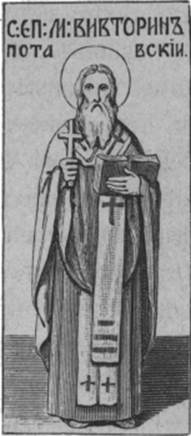
Патава, место кафедры св. Викторина, находилась на реке Дрине, на самой границе Паннонии с Норикою, среди поселений Славянских. Так и ныне Петтау в Штирии, стране Славянцев2.
Patava, the see of St. Victorinus, was situated on the river Drina, on the very border of Pannonia with Noricum, among Slavic settlements. Thus it is now Pettau in Styria, a land of Slavs2.
Блаженный Иероним писал: «Викторин, епископ Петавский, не так хорошо знал по Латыни, как по Гречески. Потому сочинения его, важные по мыслям, по строю слов кажутся не богатыми (viliora). Сочинения его – следующие: комментарии на Бытие, на Исход, на Левит, на Исаию, на Езекииля, на Аввакума, на Екклезиаста, на Песнь песней, на Апокалипсис Иоанна, против всех ересей, и многое другое. Наконец увенчался он мученичеством»3.
Blessed Jerome wrote: "Victorinus, Bishop of Poetovio, did not know Latin as well as he knew Greek. Therefore his writings, though important in thought, seem poor (viliora) in their verbal structure. His writings are the following: commentaries on Genesis, on Exodus, on Leviticus, on Isaiah, on Ezekiel, on Habakkuk, on Ecclesiastes, on the Song of Songs, on the Apocalypse of John, against all heresies, and many other things. Finally he was crowned with martyrdom."3
При другом случае блаж. Иероним, поставляя св. Викторина между «столпами Церкви», говорит: «мученик Викторин одобряет тем простоту свою, что не мыслит ни на кого зла4; он может сказать с Апостолом: хотя не искусен я в слове, но не в ведении»5.
On another occasion, Blessed Jerome, placing St. Victorinus among the "pillars of the Church," says: "The martyr Victorinus shows his simplicity by this, that he thinks no evil of anyone4; he can say with the Apostle: though I am not skilled in speech, yet I am not so in knowledge."5
Если по словам Иеронима Викторин лучше знал по Гречески, чем по Латыни, то это значит, что он не был природным Латинянином; а что он не был Греком, показывает имя его. В отрывке из толкования его, как и в замечаниях на Апокалипсис, не только нет чистоты Латинского языка, а попадаются и грамматические неправильности. Итак, самые сочинения говорят, что св. Викторин не был Латинянин, а был уроженец Славянской страны и природный Славянин.
If, according to Jerome's words, Victorinus knew Greek better than Latin, this means that he was not a native Latin speaker; and that he was not a Greek is shown by his name. In a fragment of his commentary, as well as in his remarks on the Apocalypse, not only is there no purity of Latin, but grammatical irregularities also occur. Thus the writings themselves testify that St. Victorinus was not a Latin, but was a native of a Slavic land and a Slav by birth.
По мыслям сочинения Викторина важны, говорил Иероним. Выслушаем сохранившееся размышление его о устройстве мира7; оно познакомит и с некоторыми местными обыкновениями христианскими того времени.
In thought, the writings of Victorinus are important, as Jerome said. Let us listen to a preserved reflection of his on the ordering of the world7; it will also acquaint us with some local Christian customs of that time.
«Размышляя об устройстве мира, где живем мы, останавливаюсь на скорости устройства его, показанной Моисеем в его книге Бытия. Всю эту громаду устроил Бог в шесть дней, украсив ее знамениями величия Своего, а седьмой день освятил благословением покоя. Так как по сему известию седмеричным числом дней управляется земное и небесное, то сею седмерицею измерю отношение всех седмиц и постараюсь, сколько могу, объяснить деятельность Божественной силы».
"Reflecting on the ordering of the world in which we live, I dwell on the swiftness of its ordering shown by Moses in his book of Genesis. God built this whole vastness in six days, adorning it with signs of His greatness, and sanctified the seventh day with the blessing of rest. Since, according to this account, the earthly and the heavenly are governed by the septenary number of days, I will measure the relation of all weeks by this septenary and will endeavor, as much as I am able, to explain the activity of the Divine power."
«Вначале сотворил Бог свет и разделил его на двенадцать часов дня и ночи; это с тем, чтобы день, полный трудов людских, заменялся покоем ночи и затем опять был день; так труд облегчаться должен покоем ночи – и покой должен умеряться занятием дня. В четвертый день сотворил два светила на небе, большое и малое, чтобы одно служило днем, а другое ночью, – солнце и луну и прочие звезды поставил на небе, чтобы светили земле и разделяли времена, годы, месяцы, дни и часы стояниями.
"In the beginning God created light and divided it into twelve hours of day and night; this was so that the day, full of human labors, might be replaced by the rest of night and then again by day; thus labor should be lightened by the rest of night, and rest should be moderated by the occupation of day. On the fourth day He created two luminaries in the sky, a great and a small one, so that one might serve by day and the other by night—the sun and the moon—and placed the other stars in the sky to shine upon the earth and to divide the seasons, years, months, days and hours by their stations.
«Спрашивается, почему в этот день, называемый четвертым, должны мы поститься до девятого часа или до вечера, или даже продолжать пост до следующего дня?... Человек Христос Иисус, Он же и виновник всего, в четвертый день (в среду) был взят нечестивыми8. Ради того плена и для величия дел Его для времени столько спасительного людям, столько плодоносного и благотворного, совершаем мы усугубление поста.
"It is asked, why on this day, called the fourth, must we fast until the ninth hour or until evening, or even continue the fast until the following day?... The man Christ Jesus, who is also the Author of all, was taken by the wicked on the fourth day (Wednesday)8. Because of that captivity and for the greatness of His deeds for a time so salutary for men, so fruitful and beneficent, we perform an intensification of the fast.
«В пятый день земля и вода выставили свои порождения. В шестой день создано то, чего еще недоставало; Бог создал человека из земли, владыку тварей, какие живут на земле и в воде. При том прежде сотворил ангелов и архангелов, потом человека, давая преимущество духовному пред земным. Прежде создан свет, потом земля. День шестой называется параскеви, приготовлением земли к царству. Введена порча Адамом, которого создал Он по образу и подобию Своему. Прочие дела совершены прежде, чем сотворил ангелов и образовал человека, дабы не думали, что они были помощниками. – В этот день ради страданий Господа нашего Иисуса Христа совершаем стояние пред Богом или пост.
"On the fifth day the earth and water brought forth their offspring. On the sixth day that which was still lacking was created; God created man from the earth, the lord of the creatures that live on the earth and in the water. Moreover, He first created angels and archangels, then man, giving precedence to the spiritual over the earthly. First light was created, then the earth. The sixth day is called parasceve, the preparation of the earth for the kingdom. Corruption was introduced by Adam, whom He created in His own image and likeness. The other works were completed before He created the angels and formed man, lest they be thought to have been His helpers. – On this day, because of the sufferings of our Lord Jesus Christ, we perform a standing before God, or a fast.
«В седьмой день Бог успокоился от всех дел Своих и благословил его и освятил. В этот день имеем обыкновение отлагать (вкушение пищи) для того, чтобы в день Господень приступить с благодарением к хлебу. В пяток назначается отложение (пищи) для того, чтобы не казалось, будто с Иудеями отправляем субботу9: Сам Господь субботы говорит чрез пророков Своих, что ненавидит субботы их душа Его (Ос.6:3), и уничтожил Он субботу плотию Своею, а еще прежде повелел Моисею, чтобы обрезание не переходило на осьмой день, когда придется оно в субботу... И Иисус Навин, преемник Моисея, также нарушил субботу, – ибо в день субботний повелел сынам Израиля обходить стены Иерихона с звуком труб и объявить войну иноплеменным. Маттафия, вождь Иудейский, также нарушил покой субботы, ибо умертвил в субботу военачальника Антиоха, царя Сирского. И Давид с своими товарищами нарушил субботу, как читаем у Матфея XII, 3 (Мф.12:3). Так должна быть истинная и праведная суббота в седьмое тысячелетие. Господь назначил для тех седьми дней по тысяче лет на каждый». Выставив затем примеры важного значения седмеричного числа, продолжает: «виновник всего творения Иисус праведный. Он называется Словом... Сие Слово, когда создало свет, называется Мудростию; когда – небо, – Разумом, когда землю и море, – Советом; когда образовало человека, – Благочестием... Кто, наученный закону Божию, полный Духа Святого, не изумляется душою, что ангел Гавриил благовествовал Деве Марии в тот ясе день, в который змей прельстил Еву, – в тот же Святой Дух осенил Деву Марию, в который создан свет; жил Он во плоти в такие же дни, в какие созданы земля и вода?.. Пред Иудеями доказал Он человечество Свое, когда алчет, жаждет, принимает пищу и питье, когда ходит и удаляется, когда спит, когда ходит ногами по бурной воде и повелевает ветрам, исцеляет больных, выправляет хромых, возвращает зрение слепым и слух глухим».
"On the seventh day God rested from all His works and blessed it and sanctified it. On this day we have the custom of putting off (the taking of food) so that on the Lord's Day we may approach the bread with thanksgiving. On Friday the putting off (of food) is appointed so that it may not seem that we are keeping the Sabbath with the Jews9: The Lord of the Sabbath Himself says through His prophets that His soul hates their Sabbath (Hos. 6:3), and He abolished the Sabbath by His own flesh, and even earlier commanded Moses that circumcision should not be postponed to the eighth day when it would fall on the Sabbath... And Joshua, the successor of Moses, also broke the Sabbath—for on the Sabbath day he commanded the sons of Israel to go around the walls of Jericho with the sound of trumpets and to declare war on the foreigners. Mattathias, the Jewish leader, also broke the rest of the Sabbath, for he slew the general of Antiochus, the king of Syria, on the Sabbath. And David with his companions broke the Sabbath, as we read in Matthew 12:3 (Mt. 12:3). Thus the true and righteous Sabbath shall be in the seventh millennium. The Lord appointed for those seven days a thousand years each." Then, setting forth examples of the important significance of the septenary number, he continues: "The Author of all creation is the righteous Jesus. He is called the Word... This Word, when it created light, is called Wisdom; when it created the heaven, Understanding; when it created the earth and sea, Counsel; when it formed man, Piety... Who, taught by the law of God, filled with the Holy Spirit, does not marvel in his soul that the angel Gabriel announced to the Virgin Mary on the same day on which the serpent deceived Eve; that the same Holy Spirit overshadowed the Virgin Mary on which light was created; that He lived in the flesh on the same days on which the earth and water were created?.. Before the Jews He proved His humanity, when He hungers, thirsts, takes food and drink, when He walks and withdraws, when He sleeps, when He walks with His feet on the stormy water and commands the winds, heals the sick, straightens the lame, restores sight to the blind and hearing to the deaf."
Мартиролог Адона под 2 нояб.: «рождение святого Викторина, епископа Петавионского, который увенчался мученичеством в гонение Диоклитиана». По словам Иеронима (Ер. 45 ad. Paylin.) «Викторин увенчался славным (inclyto) мученичеством». Но деяния мученичества его не дошли до нас. Weiss Leben d. Heiligen. 16, 79, 80.
The Martyrology of Ado under Nov. 2: "The birth of St. Victorinus, Bishop of Poetovio, who was crowned with martyrdom in the persecution of Diocletian." According to the words of Jerome (Ep. 45 ad Paulin.) "Victorinus was crowned with a glorious (inclyto) martyrdom." But the acts of his martyrdom have not come down to us. Weiss Leben d. Heiligen. 16, 79, 80.
Оно изд. y Рута: Reliquiæ sacræ, vol. III. Oxonii 1815 p. 235–241. Латинский текст сильно испорчен от невежд писцов. С новыми поправками из. у Голланда: bibl. Patr. t. 4. Здесь же и замечания Викторина на Апокалипсис.
It is published in Routh: Reliquiæ sacræ, vol. III. Oxonii 1815 p. 235–241. The Latin text is greatly corrupted by ignorant scribes. With new corrections it is published in Holland: bibl. Patr. t. 4. Here also are the remarks of Victorinus on the Apocalypse.
Постан. Апост. 7, 23. «Вы поститесь или пять дней, или в среду и пятницу; потому что в среду последовало осуждение Господа, когда Иуда обещал продать Его за деньги; а в пятницу Господь потерпел страдание на кресте, при Понтийском Пилате». Пост. Апост. 5, 14. В четвертый день (в среду) определили вознесть Его на крест. Эго знал и Иуда... Иуда ушел и сказал священникам: что хотите вы дать мне? Я вам предам Его». Так говорит о среде св. Евангелие Мф.26:3, 15. В мыслях синедриона и Иуды Иисус в среду уже взят был в плен; но выполнение страшной мысли совершалось в четверг, после таинственной вечери.
Apostolic Constitutions 7, 23. "You fast either five days, or on Wednesday and Friday; because on Wednesday the condemnation of the Lord took place, when Judas promised to sell Him for money; and on Friday the Lord suffered on the cross, under Pontius Pilate." Apostolic Constitutions 5, 14. "On the fourth day (Wednesday) they determined to raise Him on the cross. This Judas also knew... Judas went away and said to the priests: What do you want to give me? I will deliver Him to you." Thus the holy Gospel speaks of Wednesday, Mt. 26:3, 15. In the thoughts of the Sanhedrin and of Judas, Jesus was already taken captive on Wednesday; but the execution of the terrible thought took place on Thursday, after the Mystical Supper.
Parasceve superpositio flat. Superponere, superpositio – технические слова, означающие отложение пищи. По мыслям св. Викторина, пощение пятка – пощение ради страданий Господа; прибавление к тому воздержания дня субботнего допускалось собственно как приготовление к приобщению св. Таин, совершавшемуся в воскресный день. Впоследствии на Западе составили пост субботний, хотя уже и не приобщались св. Таин в воскресенье.
"Parasceve superpositio fiat." Superponere, superpositio are technical words meaning the setting aside or postponement of food. According to the thought of St. Victorinus, the fasting of Friday is fasting in honor of the Lord's sufferings; the addition of abstinence on the Sabbath day was permitted precisely as a preparation for partaking of the Holy Mysteries, which were received on the Lord's Day. Later, in the West, a Saturday fast was established, even though the Holy Mysteries were no longer received on Sunday.