Зиновий и сестра его Зиновия родились в г. Эгах (в Киликии) во II пол. III стол. и, воспитанные в законе христианском благочестивыми родителями, достигнув совершенного возраста, раздали всё имение своё бедным и проводили истинно-Богоугодную жизнь – в назидание и утешение всех местных жителей, которые до такой степени уважали их, что пожелали иметь Зиновия своим епископом. Когда это избрание состоялось, то Зиновий только продолжал и расширил свою благотворительную деятельность и ревностно наставлял свою паству и вместе с тем увеличивал её постоянно, присоединяя к ней вновь просвещённых им язычников.
Zenobius and his sister Zenobia were born in the city of Aegae (in Cilicia) in the second half of the third century and, having been raised in the Christian law by pious parents, upon reaching full age they distributed all their possessions to the poor and led a truly God-pleasing life—to the edification and consolation of all the local inhabitants, who respected them to such a degree that they desired to have Zenobius as their bishop. When this election took place, Zenobius only continued and expanded his charitable activity and zealously instructed his flock, and at the same time constantly increased it, adding to it the pagans he had newly enlightened.
Между тем началось страшное гонение на христиан от императора Диоклитиана. Между прочим и в Киликию был прислан царский сановник Лисий с предписанием отклонить народ от веры христианской и с полномочием беспощадно карать и истреблять непокорных.
Meanwhile, a terrible persecution of Christians began under the Emperor Diocletian. Among other places, a royal official named Lysias was sent to Cilicia with an order to turn the people away from the Christian faith and with the authority to punish and destroy the disobedient without mercy.
Не мог в это время укрыться озаряющий всю местность христианский светильник – епископ Зиновий, прославленный уже от Бога даром чудотворений, которым привлекал он неверующих и утверждал привлечённых им к вере Христовой. Послав за этим влиятельным христианином, Лисий сказал ему: – «нахожу излишним вдаваться с тобой в долгие рассуждения, и потому в коротких словах предлагаю тебе избрать одно из двух: жизнь, если признаешь богов наших, или – смерть, если не поклонишься им».
At this time, the Christian lamp illuminating the whole region—Bishop Zenobius, already glorified by God with the gift of wonderworking, by which he attracted unbelievers and confirmed those drawn by him to the faith of Christ—could not remain hidden. Having sent for this influential Christian, Lysias said to him: "I find it superfluous to enter into lengthy discussions with you, and therefore I propose to you in few words to choose one of two things: life, if you acknowledge our gods, or—death, if you do not worship them."
Узнав об этом, сестра епископа – Зиновия поспешила на место мучения и неустрашимо обратилась к Лисию: – я также христианка, – сказала она, – я также, как и брат мой, исповедую Бога истинного – Иисуса Христа и желаю пострадать за Него вместе с братом моим...
Learning of this, the bishop's sister—Zenobia—hastened to the place of torment and fearlessly addressed Lysias: "I also am a Christian," she said, "I also, like my brother, confess the true God—Jesus Christ—and desire to suffer for Him together with my brother..."
Напрасно убеждал Лисий Зиновию отречься от того, что он почитал заблуждением, напрасно думал устрашить её, представляя позор и ужас казни в глазах всего народа. Потеряв надежду склонить её к отречению от Христа, он велел подвергнуть её вместе с братом её – пытке огнём. Но и среди жестоких страданий мученики радостно воспевали Божественные псалмы. С радостью пошли они на смертную казнь и, с благодарением к Богу преклонив под меч головы, предали свои души единому и несомненному Источнику блаженной вечной жизни.
In vain did Lysias urge Zenobia to renounce what he considered a delusion; in vain did he think to frighten her by presenting the shame and horror of execution before the eyes of all the people. Having lost hope of inclining her to renounce Christ, he ordered her to be subjected, together with her brother, to torture by fire. But even amidst cruel sufferings, the martyrs joyfully sang divine psalms. With joy they went to their execution and, bowing their heads under the sword with thanksgiving to God, surrendered their souls to the one and undoubted Source of blessed eternal life.
«Истины свидетелей и благочестия проповедников, двоицу достойно почтим в Боговдохновенных песнях: Зиновия вместе с мудрой Зиновией, вместе живших и отшедших, и мучениями стяжавших венец нетленный!» (Конд.).
"Let us worthily honor in God-inspired hymns the pair of witnesses of truth and preachers of piety: Zenobius together with the wise Zenobia, who lived together and departed together, and through sufferings obtained an incorruptible crown!" (Kontakion).
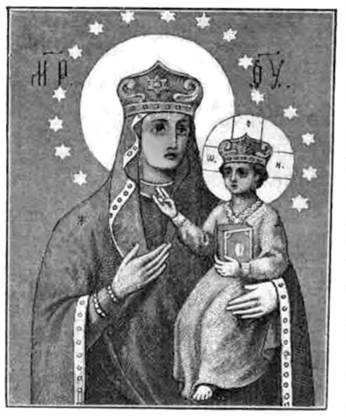
Сия чудотворная икона находится близ Харькова, в Куряжском монастыре. Первоначально прославилась она в селе Озерянке, верстах в тридцати от Харькова, во второй половине XVII века, и находилась в Озерянской мужской пустынной обители; а по упразднении обители в 1786 году перенесена в Куряжскую. С 1843 года, по ходатайству преосвященного Иннокентия, икона сия переносится на зимнее время в Покровский кафедральный собор города Харькова; посему и учреждены два
This wonderworking icon is located near Kharkov, in the Kuryazh Monastery. It was first glorified in the village of Ozerianka, about thirty versts from Kharkov, in the second half of the 17th century, and was kept in the Ozerianka men's hermitage; and upon the abolition of the hermitage in 1786, it was transferred to Kuryazh. Since 1843, at the petition of the Right Reverend Innocent, this icon has been transferred for the winter season to the Protection Cathedral of the city of Kharkov; therefore two
«Иди со мной, говорил св. Георгий магометанину, я покажу тебе краля Милютина, лежащего в этом городе – Софии; он почивает, как уснувший, и, как цветок, издаёт благоухание»390.
"Come with me," said St. George to a Mohammedan, "I will show you King Milutin, lying in this city—Sofia; he reposes as one asleep, and, like a flower, emits a fragrance."390
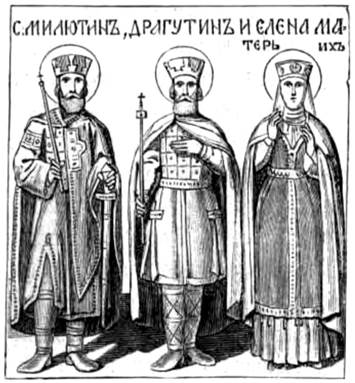
Старший брат его Драгутин недолго управлял всей Сербией (1270–1275 г.). Сломав себе ногу, он отяготился в душе тем, что для него отец удалён был с престола, и добровольно предоставил престол Сербии брату своему Милютину, а сам поселился в Среме392. – Драгутин, мало виновный в печальной участи отца, действовал так не только по голосу нежной своей совести, но и по убеждениям Сербского народа, весьма строгого чтителя заповеди Божией: чти отца твоего и матерь твою. Вот что пишет Серб биограф блаженного Стефана деспота: «уважение Сербов к родителям так велико, что ни один сын, хотя бы и в своём доме, не смеет вкушать пищу вместе с отцом своим, а стоит у стола, как слуга. Это можно видеть как у богатых, так и у бедных, не исключая крайней нищеты. И не слышно, чтобы кто-либо оскорбил отца своего или мать»393. После того понятно, что не легко было Драгутину примирить с собой и мать свою; но он, наконец, примирил её с собой. Младший брат, хотя и король всей Сербии, уважал старшего, предоставив ему титул короля Сремского, и они соединяли свои силы, когда нужно было действовать против сторонних врагов. Драгутин много трудился над обращением Босанских еретиков – Богомилов к правоверию и был чудным подвижником Божиим, закрытым от взора людей. По известию духовника его, после немногих годов супружества, не касался он тела жены своей, а жил с ней, как брат с сестрой; милостыню нищим, обителям иноческим и храмам раздавал щедрой рукой; между прочим посылал он дары и храмам России, столько страдавшей от Татар; он был в дружеской связи с великим князем Василием Ярославичем († 1276 г.). Для тайных подвигов выкопана была у него могила; в ней набросаны были каменья и черепья; здесь-то проливал он слёзы о грехах и проводил ночи в молитвах; когда от утомления засыпал, острые каменья скоро пробуждали его. Перед смертью († марта 22-го 1316 года) принял монашество с именем Феоктиста. Когда готовили его к гробу, «обретоша его препоясавшася острою тростью по нагу и во власяное вретище облеченна и тростину влепшуся до внутренния кости; хотяще отъяти от тела его, не возмогоша, и на мнозе мыюще водою, едва разлучиша оную от тела сего блаженнаго» 394.
His elder brother Dragutin did not rule all Serbia for long (1270–1275). Having broken his leg, he was burdened in soul because through him his father had been removed from the throne, and he voluntarily yielded the throne of Serbia to his brother Milutin, while he himself settled in Srem.392 — Dragutin, little guilty in the sad fate of his father, acted thus not only by the voice of his tender conscience, but also by the convictions of the Serbian people, very strict observers of God's commandment: Honor thy father and thy mother. Here is what the Serbian biographer of blessed Stephen the Despot writes: "The respect of the Serbs for their parents is so great that no son, even in his own house, dares to eat food together with his father, but stands at the table like a servant. This can be seen both among the rich and among the poor, not excluding extreme poverty. And it is not heard that anyone has insulted his father or mother."393 After that, it is understandable that it was not easy for Dragutin to reconcile even his mother with himself; but he finally reconciled her with himself. The younger brother, although king of all Serbia, respected the elder, granting him the title of King of Srem, and they united their forces when it was necessary to act against external enemies. Dragutin labored much over the conversion of the Bosnian heretics—the Bogomils—to Orthodoxy and was a wondrous ascetic of God, hidden from the sight of men. According to the account of his confessor, after a few years of marriage, he did not touch the body of his wife, but lived with her as a brother with a sister; he distributed alms to the poor, to monastic abodes and churches with a generous hand; among other things, he sent gifts also to the churches of Russia, which suffered so much from the Tatars; he was in friendly relations with Grand Prince Basil Yaroslavich († 1276). For his secret ascetic labors, a grave was dug for him; in it were thrown stones and potsherds; there he shed tears for his sins and spent nights in prayers; when he fell asleep from exhaustion, the sharp stones quickly awakened him. Before his death († March 22, 1316) he received monasticism with the name Theoctistus. When they prepared him for the grave, "they found him girded with a sharp reed upon his bare body and clothed in a hair shirt, and the reed had stuck even to the inner bone; wishing to remove it from his body, they could not, and after much washing with water, they barely separated it from the body of this blessed one."394
Дубровницкая торговая республика поспешила выпросить у нового короля грамоту о свободе торговли её в Сербии. Краль Милютин в 1276 году писал: а) «какую оказал им милость брат мой Стефан (Драгутин), ту же оказывает и моё королевство; б) купцы их могут свободно торговать в моей земле, пока не оскорблена будет правда; в) они дают королевству 2000 перпер каждый год, на Димитриев день; г) если окажутся виновными перед моим королевством, то разбирает дело суд по закону; если судом не решится дело, то за три месяца объявляется срок, к которому купцы их должны выехать из Сербии с своим имуществом»395.
The trading republic of Dubrovnik hastened to request from the new king a charter for the freedom of its trade in Serbia. King Milutin wrote in 1276: a) "what favor my brother Stephen (Dragutin) showed them, the same does my kingdom also show; b) their merchants may freely trade in my land, as long as justice is not offended; c) they give the kingdom 2000 perpers each year, on St. Demetrius' day; d) if they are found guilty before my kingdom, the court judges the case according to law; if the case is not decided by the court, then a term of three months is announced, by which their merchants must depart from Serbia with their property."395
Недолго после того Милютину пришлось начать войны с соседями. Того требовали дела отчизны и веры. Войны шли одна за другой в продолжение 20 лет и все были изумительно счастливы. Признательный перед благодеющим Господом, благочестивый краль сам описывает эти дела в одной грамоте, и нам остаётся прибавлять только пояснения к его известию.
Not long after that, Milutin had to begin wars with his neighbors. The affairs of the fatherland and the faith demanded it. Wars followed one after another for 20 years and all were astonishingly successful. Grateful to the beneficent Lord, the pious king himself describes these deeds in one charter, and it remains for us only to add explanations to his account.
«Будучи рабом Господа моего Спаса Христа, так пишет он, я, Стефан Урош, по милости Божией король и самодержец всех Сербских и Поморских земель, уразумел сладкие для меня слова Твои, Иисусе, поучающие нас в святом Евангелии: да просветится свет ваш перед людьми, чтобы видели добрые дела ваши и прославили Отца Небесного. Узнав, что ничего нет лучше для царей и архиереев, как объяснять с благоговением закон Божий на соборах, пришёл я в соборную Печскую церковь и, поклонившись иконам, лобызал честную руку Предтечи Иоанна, приняв благословение отца моего духовного кир Никодима, архиепископа Сербского, и сущего с ним собора, полагаю на соборе, чтобы не остались в забвении чудные дела Божии: совершить обновление Хиландаря, возобновить писание в Жидичской обители, отдать селище Улиарское для Печской обители». Дела Божии были таковы.
"Being a servant of my Lord Savior Christ," thus he writes, "I, Stephen Uroš, by the mercy of God king and autocrat of all Serbian and Maritime lands, have understood Thy sweet words to me, O Jesus, teaching us in the holy Gospel: Let your light so shine before men, that they may see your good works and glorify your Father which is in heaven. Knowing that there is nothing better for kings and hierarchs than to explain the law of God with reverence at councils, I came to the cathedral church of Peć and, having venerated the icons, kissed the honorable hand of the Forerunner John, having received the blessing of my spiritual father, kyr Nicodemus, Archbishop of Serbia, and of the council with him, I decree at the council that the wondrous works of God should not be forgotten: to accomplish the renewal of Hilandar, to restore the writing in the Žiča monastery, to give the settlement of Ulijar to the monastery of Peć." The works of God were as follows.
«Греческая империя простиралась до Липляны, и Греки делали насилия». Столько говорит король о причинах войны с Греками. Очевидно, он не вполне высказался. – С одной стороны, за Сербскими горами, на равнине Македонской, были поселения Славянские; когда-то входили они в состав Болгарского царства, а теперь были во власти Греков. Это для Славянской души было ненормально, оскорбительно. С другой, Михаил Палеолог в 1274 году составлял в Константинополе собор о принятии унии с папой. За исключением придворной партии, все другие были против папизма. Михаил обратился к мерам насилия против несоглашавшихся с его мыслью. Жестокости по местам и по временам были бесчеловечные; особенно сильно страдали Афонцы, посылавшие смелое обличение Михаилу; в 1279 году жестокости усилились396. И вот благочестивый король объявляет мечом протест против папизма. Он решил избавить от папизма по крайней мере дорогих Славян.
"The Greek Empire extended as far as Lipljan, and the Greeks committed outrages." Thus much the king says about the causes of the war with the Greeks. Evidently, he did not fully express himself. — On the one hand, beyond the Serbian mountains, on the Macedonian plain, there were Slavic settlements; once they had been part of the Bulgarian kingdom, but now they were under the power of the Greeks. This was abnormal and offensive to the Slavic soul. On the other hand, Michael Palaeologus in 1274 convened a council in Constantinople concerning the acceptance of union with the pope. Except for the court party, all others were against papism. Michael resorted to violent measures against those who disagreed with his thought. Cruelties in various places and at various times were inhuman; the Athonites suffered especially severely, having sent a bold rebuke to Michael; in 1279 the cruelties intensified.396 And so the pious king declared a protest by the sword against papism. He resolved to deliver at least the beloved Slavs from papism.
«Благословясь, говорит он, пошёл я в пределы Греческого царства и, когда никто не противился, занял оба Полога с городами и округами, славный городСкопле, потом Овчеполе*, Златову, Шанец; покорил все места и выслал Греческие власти из тех пределов. – Озлившиеся, лукавые Греческие начальники обнесли меня перед царём Палеологом. Он набрал Татар, Турков, Франков и пошёл войной на короля; но, дойдя до *Илангыфа, где храм св. Георгия, внезапно скончался и похоронен в Силиврии. – Военачальники его устремились с войском на Сербию; доходили до Липляны иПризрена и, наделав много бед, воротились. Одна часть Татарского ополчения доходила до реки Дрима, но, переплывая её, частью побита, частью потонула; голова старейшины их Черноглава принесена была королю. – Приняв смелость и благословение, с помощью брата моего Стефана, краля Сремского, пошёл я опять в пределы Греческие, дошёл до места на суде и, отпраздновав там Рождество Христово, дошёл до св. Афонской горы. Заняв все пределы Струмские иСерские, Хрисополь и другие ближние места и взяв богатства и имущества, возвратился на родину. – Отпустив краля Стефана опять на Грецию, взяли мы землю Дебрскую, державу земли Кичавскую, землю Поречскую и всё это присоединили к нашему королевству. Потом воевали мы Влахиотскую землю (Эпир) и взяли там неисчислимые богатства».
“Having been blessed,” he says, “I went into the borders of the Greek kingdom and, when no one opposed me, I occupied both Pologs with their cities and districts, the glorious city of Skopje, then Ovchepole, Zlatova, Shanets; I subdued all places and expelled the Greek authorities from those borders. – The enraged, crafty Greek leaders slandered me before the Emperor Palaeologus. He gathered Tatars, Turks, and Franks and went to war against the king; but, having reached Ilangyf, where the church of St. George is, he suddenly died and was buried in Selymbria. – His commanders rushed with the army into Serbia; they advanced as far as Liplyana and Prizren and, having done much harm, returned. One part of the Tatar host reached the river Drim, but, while crossing it, was partly slain, partly drowned; the head of their elder, Chernoglav, was brought to the king. – Having taken courage and received a blessing, with the help of my brother Stephen, the king of Srem, I went again into the Greek borders, reached a place called na sude [at the judgment], and, having celebrated the Nativity of Christ there, I went as far as the Holy Mountain of Athos. Having occupied all the Strumian and Serrian borders, Chrysopolis and other nearby places, and taken riches and possessions, I returned to my homeland. – Having sent King Stephen again into Greece, we took the Debar land, the dominion of the Kichevo land, the Porech land, and joined all this to our kingdom. Afterwards we waged war on the Vlachiot land (Epirus) and took there incalculable riches.”
Все эти военные действия в краях империи, имевшие своим последствием присоединение Славянских поселений к Сербскому королевству, происходили в 1382–1385 г.397. Цена этих приобретений Славянства возвышалась ещё отношением их к папизму. Палеологовы бродячие толпы крестоносцев немного нанесли вреда Сербии; но что они делали на Афоне? Они предавали пыткам и смертям разным исповедников православия. Милютин оградил Славян от свирепых произволов романизма398.
All these military actions in the regions of the empire, which had as their consequence the annexation of Slavic settlements to the Serbian kingdom, took place in the years 1382–1385 A.D.397 The value of these acquisitions for Slavdom was further heightened by their relation to papism. Palaeologus’s roving bands of crusaders did little harm to Serbia; but what did they do on Athos? They subjected various confessors of Orthodoxy to tortures and deaths. Milutin shielded the Slavs from the savage lawlessness of Romanism.398
«В Браничеве два брата вельможные Куделин и Дремав с своими силами нападают на брата Стефана короля, присоединив к себе много Татарских войск. Тогда Стефан приходит к моему королевству и, став станом на Мораве у Мачковцы, просит помощи. Моё кралевство, немедля, идёт с войсками на тех безбожных и достигает желаемого; дурные эти люди обратились в бегство, переходят Дунай и погибают. – Затем поднялся князь Шишман Болгарский, живший в городе Бдыне (Виддине) и владевший многими соседними Болгарскими городами. Он, присоединив к себе проклятый Татарский народ, дошёл до места Хвостна и хотел занять место Ждрело. – Тут случилось великое чудо: явились огненный столп и мужи огненного вида и прогнали Болгар – Тогда мы пошли до города Бдына. Он на деревьях переходит реку Дунай. Заняв все его владения, моё кралевство готово было разорить все жилья и город, где был дворец его. Но он униженно умоляет, как самый последний из слуг, обещаясь быть в полном послушании моему кралевству. От меня предложено, чтобы взял себе в жену дочь вельможи моего, великого жупана Драгоши, и он так и поступил. Потом выдал я дочь мою за сына его Михаила».
“In Branichevo two noble brothers, Kudelin and Dremav, with their forces attacked the king’s brother Stephen, having gathered many Tatar troops to themselves. Then Stephen came to my kingdom and, encamping on the Morava near Machkovtsi, asked for help. My kingdom, without delay, went with its armies against those godless men and attained the desired result; those evil men turned to flight, crossed the Danube, and perished. – Then the Bulgarian prince Shishman arose, who lived in the city of Bdin (Vidin) and ruled many neighboring Bulgarian cities. He, having joined to himself the accursed Tatar people, advanced as far as the place Khvostna and wished to occupy the place Zhrelo. – There a great miracle occurred: a pillar of fire appeared and men of fiery appearance, and they drove the Bulgarians away. – Then we went as far as the city of Bdin. He crossed the river Danube on trees. Having occupied all his domains, my kingdom was ready to destroy all the dwellings and the city where his palace was. But he humbly begged, like the lowliest of servants, promising to be in full obedience to my kingdom. It was proposed by me that he take for himself as wife the daughter of my nobleman, the great župan Dragoš, and he did so. Afterwards I gave my daughter in marriage to his son Michael.”
Война с западной Болгарией происходила в 1292 году. Шишману вздумалось поживиться на счёт Сербии, как Милютин усиливался на счёт империи; но Стратимир не расчёл, что у него далеко не те средства, что у Милютина399.
The war with western Bulgaria took place in the year 1292. Shishman conceived the idea of enriching himself at the expense of Serbia, just as Milutin was strengthening himself at the expense of the empire; but Stratimir did not reckon that his resources were far from equal to those of Milutin.399
«Сильный, нечестивый царь Татарский Ногай поднимается против меня со всеми силами. Моё кралевство посылает ему дары. Беззаконный царь, спешивший против меня, возвращается назад. Послал я к нему на службу сына Стефана с знаменитыми начальниками. Когда уже отчаивались в возвращении его, он воротился невредимый; закипело междоусобие у нечестивых».
“The mighty, impious Tatar Tsar Nogai rose up against me with all his forces. My kingdom sent him gifts. The lawless tsar, who was hastening against me, turned back. I sent my son Stephen to him for service, together with renowned commanders. When they had already despaired of his return, he returned unharmed; civil strife broke out among the impious.”
Татарин Ногай*,* столько известный России, в 1294 году свергнул с Болгарского престола Тертера и посадил Смильцу; – гордый хан грозил тем же и Милютину. Недолго после того закипело междоусобие между сыновьями Ногая; старший сын Тшуке (Цока) разбил наголову младшего; тот обратился с жалобой к х. Тохтаге; война кончилась пленом и смертью Ногая, в 1299 году400.
The Tatar Nogai, so well known to Russia, in 1294 overthrew Terter from the Bulgarian throne and set up Smilets; – the proud khan threatened the same to Milutin as well. Not long after that, civil strife broke out among the sons of Nogai; the elder son Tshuke (Tsoka) utterly defeated the younger; the latter turned with a complaint to Khan Tokhta; the war ended with the capture and death of Nogai in 1299.400
«Безбожные Персы иАрабы вооружились на христианский род. Они поселились в великой Романии и укоренились тут на полной свободе, живя 20 лет. Моё кралевство призывает некоторую часть их на службу, к зависти соседей царей. Когда же задумали они погибель моему кралевству, тогда я смирил их в конец не только в моём кралевстве, но и в Романии; города их были разрушены; никого не осталось из этого нечестивого рода во всей Романии, за исключением тех, которые стали рабами Сербских начальников».
“The godless Persians and Arabs armed themselves against the Christian race. They settled in Great Romania and took root there in complete freedom, living there for 20 years. My kingdom summoned a certain part of them into service, to the envy of neighboring tsars. When, however, they plotted the destruction of my kingdom, then I utterly humbled them, not only in my kingdom but also in Romania; their cities were destroyed; not one of that impious race remained in all Romania, except for those who became slaves of the Serbian commanders.”
Выгнанные из Палестины крестоносцы, смешавшиеся там с Арабами, явились во Фракии с именем Арабов; сперва терпели их, дали им земли в Романии. Но, обжившись, они стали хозяйничать на манер разбойников: захватывали чужую собственность, похищали жён и девушек. Преследовавшие их магометане увеличивали страдания православных. бессильная империя не могла совладать с буйными бродягами – фонами. Когда обязавшиеся служить Милютину составили заговор на жизнь его, Милютин решился рассчитаться с незваными гостями по-своему. Он выгнал всех их за Дунай, за исключением лучших, оставшихся в числе прислуги401.
The crusaders driven out of Palestine, who had mixed there with Arabs, appeared in Thrace under the name of Arabs; at first they were tolerated and given lands in Romania. But, having settled in, they began to act like robbers: they seized others’ property, abducted wives and maidens. The Muslims who pursued them increased the sufferings of the Orthodox. The powerless empire could not cope with the violent vagabonds—the phonoi. When those who had bound themselves to serve Milutin formed a conspiracy against his life, Milutin decided to settle accounts with the uninvited guests in his own way. He drove them all beyond the Danube, except for the better ones, who remained among the servants.401
«Кир Андроник Палеолог, Вселенский царь, умолил искреннего сына державного царства послать войско против Персов в Анатолию. Убеждённый молением тестя, отрядил он дружину с великим воеводой Новаком Гребестрекой. Она, дойдя до города Ираклии, радостно встречена была Андроником и, войдя на суда, перешла в Анатолию. После многих сражений одержала победу и с благодарностью Андроника возвратилась».
“Kyrios Andronicus Palaeologus, the Ecumenical Emperor, besought the sincere son of the sovereign kingdom to send an army against the Persians in Anatolia. Persuaded by the entreaty of his father-in-law, he dispatched a company with the great voivode Novak Grebestreka. It, having reached the city of Heraclea, was joyfully received by Andronicus and, having embarked on ships, crossed into Anatolia. After many battles it gained the victory and returned with the gratitude of Andronicus.”
Милютин не упоминает в грамоте о своей войне с Андроником403, начавшейся с 1298 г. Лучший Греческий полководец заперся тогда в Солуне и боялся выйти из крепости. Сербы свободно заняли все места от Вардара до Афона; полководец Андроников писал, наконец, в столицу, что нет никакой надежды одержать оружием победу над королём и единственное средство спасти империю – мир с Сербией, тем более, что империи грозит ещё опасность от магометан. Тогда началась борьба Греческой хитрости с открытым Славянским умом. После долгих переговоров император предложил королю руку дочери своей Симониды. Милютин, вдовец после первого брака, согласился404. Война с магометанами, упоминаемая в грамоте, была в 1303 г., и после неё Милютин венчался с Симонидой405. – Несомненно, что Греческая империя окончила бы своё существование ещё при Милютине, если бы Милютин захотел того. Его великодушию одолжены были тем, что истощённая империя продолжала ещё влачить своё существование. Но едва ли не лучше было бы для всех, если бы умный и полный жизни король Сербский взял в своё управление империю. Турки не окрепли бы в силах, на несчастье христианскому миру. И близкие следствия примирения с империей были горьки для Сербии. – Испорченная Гречанка Симонида наделала много бед Сербии и Милютину. Интригами своими она довела мужа до того, что старший сын Стефан, наследник престола, был ослеплён и отослан в Цареград под стражу406.
Milutin does not mention in his charter his war with Andronicus,403 which began in 1298. The best Greek commander then shut himself up in Thessalonica and feared to come out of the fortress. The Serbs freely occupied all places from the Vardar to Athos; Andronicus’s commander finally wrote to the capital that there was no hope of gaining a victory over the king by arms, and the only means of saving the empire was peace with Serbia, especially since the empire was also threatened by danger from the Muslims. Then began a struggle between Greek cunning and the open Slavic mind. After long negotiations, the emperor offered the king the hand of his daughter Simonis. Milutin, a widower after his first marriage, agreed.404 The war with the Muslims mentioned in the charter was in 1303, and after it Milutin was married to Simonis.405 – There is no doubt that the Greek empire would have ended its existence already under Milutin, if Milutin had so desired. The exhausted empire owed it to his magnanimity that it continued to drag out its existence. But it would perhaps have been better for all if the wise and vigorous Serbian king had taken the empire under his governance. The Turks would not have grown strong, to the misfortune of the Christian world. And the immediate consequences of the reconciliation with the empire were bitter for Serbia. – The corrupt Greek woman Simonis caused much harm to Serbia and to Milutin. By her intrigues she brought her husband to the point that his eldest son Stephen, the heir to the throne, was blinded and sent to Constantinople under guard.406
Последние военные дела Милютина относились к 1318 г. Папа сильно негодовал на благочестивого и умного короля. Да и было за что! Папа совсем собрался было причислить Милютина и его королевство к числу подданных своих, написал Милютину послание с исповеданием веры, какое тот должен принять, – назначил полномочных послов своих для совершения соединения с Римской Церковью, – в один день подписал целых шесть грамот о Милютине. А Милютин не только отверг предложение папы об унии, но укрощал папизм везде, где только мог. Силой оружия смирив Рагузян, захватывавших православные города для себя и папизма, он «наложи и даньки Рогузянам двояки ради исповедания Римскаго», а от Венгрии отобрал несколько пограничных мест407. Сборы папы присоединить Милютина и его подданных к числу слуг папы, если не были одной комедией, где всё было фальшь, – означали неумный шаг высокомерия, не думавшего встретить отпора своим желаниям. Во всяком случае неуспех Римской манифестации был горек, особенно когда Милютин подбавил горечи распоряжениями в Рагузе и Мачве. Такого удара самолюбию гордому не могли простить в Риме. С 1314 года папа начал проповедовать крестовый поход против Милютина; он поднимал против него едва не половину Европы – императора Немецкого, королей Польского, Венгерского, Богемского, Неаполитанского. В 1318 г. Роберт Венгерский соединился с Карлом Сицилийским и графами Бребирскими. Роберт занял Босну и Мачву. Сицилийцы вступили в Эпир. Но бунт, поднявшийся в Венгрии, заставил Роберта поспешить в Венгрию. Сицилийцы выгнаны были из Эпира. Мечты папы об унии Эпира рассеялись, хотя он благодарил трёх Эпирских вельмож за противодействие «схизматику королю Сербскому». Так прошла буря, поднятая папой408.
Milutin’s last military actions related to the year 1318. The pope was greatly incensed at the pious and wise king. And with good reason! The pope had fully prepared to number Milutin and his kingdom among his subjects, wrote an epistle to Milutin with a confession of faith which he was to accept, appointed his plenipotentiary legates for the accomplishment of union with the Roman Church, and in a single day signed as many as six charters concerning Milutin. But Milutin not only rejected the pope’s proposal of union, but curbed papism wherever he could. Having subdued by force of arms the Ragusans, who were seizing Orthodox cities for themselves and for papism, he “imposed even a double tribute upon the Ragusans on account of the Roman confession,” and from Hungary he took back several border places.407 The pope’s preparations to add Milutin and his subjects to the number of the pope’s servants, if they were not merely a comedy where everything was false, signified an unwise act of arrogance that did not expect to meet opposition to its wishes. In any case, the failure of the Roman manifestation was bitter, especially when Milutin added bitterness by his measures in Ragusa and Mačva. Such a blow to proud self-love could not be forgiven in Rome. From 1314 the pope began to preach a crusade against Milutin; he stirred up against him nearly half of Europe—the German Emperor, the Kings of Poland, Hungary, Bohemia, and Naples. In 1318 Robert of Hungary united with Charles of Sicily and the Counts of Bribir. Robert occupied Bosnia and Mačva. The Sicilians entered Epirus. But a revolt that broke out in Hungary forced Robert to hasten back to Hungary. The Sicilians were driven out of Epirus. The pope’s dreams of a union of Epirus were dispelled, although he thanked three Epirus nobles for opposing “the schismatic Serbian king.” Thus passed the storm raised by the pope.408
Подвиги благочестия краля Милютина были изумительные. Сказав в грамоте своей о решимости принести жертвы для трёх храмов Божиих, он сказал только о начале дела. С 1304 г. деятельность его посвящалась преимущественно на устроение внутреннего быта королевства.
The deeds of piety of King Milutin were astonishing. Having said in his charter of his resolve to offer sacrifices for three churches of God, he spoke only of the beginning of the work. From 1304 his activity was devoted chiefly to the ordering of the internal life of the kingdom.
Всех храмов каменных построено им более 40 и при многих устроены иноческие обители, а при других поставлены и кафедры. Самые видные и самые богатые храмы его: храм Богородицы в Трескавице с иноческой обителью409, кафедральный храм архид. Стефана в Банске, назначенный строителем для своего погребения, изумивший массами золота410, кафедральный монастырь с больницами в Призрене, своей столице411, кафедральный храм Богоматери на р. Грачанице412, храм св. Георгия в Кичаевском округе413. Храмы короля Милютина – Византийского стиля, с четырьмя или 8 колоннами, поддерживающими купол, или купола, с фресками Панселиновой школы, с крещальней на западе; южная колонна поныне увешивается волосами, обрезываемыми при крещении и напоминающими об обете крещения, – прекрасное отличие414! Милютин и в чужих местах строил храмы молитвы и дома призрения. В Константинополе построен им храм и при нём обширный странноприимный дом, а на содержание их назначены были земли. В Солуне построены храмы св. Николая и Св. Троицы415. Особенно же обеспечен был им Хиландарь, хотя не забывались и другие монастыри Афона416. – «Как часто, говорит новый западный писатель и притом протестант, западные писатели смеялись над множеством Сербских монастырей! Но государство Сербских кралей пало, а монастыри, ими основанные, связуя собой народность с религией, наиболее содействовали к сохранению той и другой; справедливо объясняют переход Босняков к исламизму тем, что в Боснии было менее монастырей, нежели в Сербии... Монастыри древних королей пользовались почитанием всех Сербских племён»417. Этот урок истории особенно должны затвердить непонятливые ученики Лютера, бессознательно повторяющие слова недовольства его монашеством, тогда как и история обличает их несогласие с Евангелием.
He built more than forty stone churches in all, and at many of them he established monastic communities, while at others he also set up episcopal sees. The most notable and richest of his churches were: the church of the Theotokos at Trescavica with a monastic community409; the cathedral church of the Archdeacon Stephen at Bansko, which the builder intended for his own burial and which astonished all with its masses of gold410; the cathedral monastery with hospitals at Prizren, his capital411; the cathedral church of the Mother of God on the river Gračanica412; and the church of St. George in the Kičevo district413. The churches of King Milutin are in the Byzantine style, with four or eight columns supporting a dome or domes, with frescoes of the Panselinos school, and with a baptistery in the west; the southern column is to this day hung with hair cut off at baptisms, reminding one of the vow of baptism—a beautiful distinction414! Milutin also built churches of prayer and almshouses in foreign lands. In Constantinople he built a church and with it a spacious hospice, and lands were assigned for their maintenance. In Thessalonica he built churches of St. Nicholas and of the Holy Trinity415. He provided especially for Hilandar, though the other monasteries of Mount Athos were not forgotten416. — “How often,” says a modern Western writer, and a Protestant at that, “have Western writers mocked at the multitude of Serbian monasteries! But the kingdom of the Serbian kings fell, while the monasteries they founded, binding together nationality and religion, did most to preserve both; the conversion of the Bosnians to Islam is rightly explained by the fact that Bosnia had fewer monasteries than Serbia… The monasteries of the ancient kings were venerated by all Serbian tribes.”417 This lesson of history should be especially impressed upon the dull-witted disciples of Luther, who unconsciously repeat his words of discontent with monasticism, even as history itself convicts them of being at odds with the Gospel.
Историк блаженного краля и духовник его пишет: «бедные и нищие шли к нему не только из его отечества, но из стран заморских и с островов, и из града Иерусалима. Из Азии приходили к нему странники, хромые, слепые, больные, и никогда никто не отходил без пособия. Трудно знать, сколько раздавал он денег. Когда наступала ночь, чудный государь снимал с себя королевскую одежду и, надев простую и дырявую, а лицо закутав, с двумя или с тремя верными слугами шёл отыскивать бедность, одним давал деньги, другим одежду и пищу. – Он твёрдо помнил слова Боговдохновенные: блажен призираяй на нища и убога: в день лют избавит его Господь... Надобно ещё знать подвиги Милютина, известные нам, продолжает духовник, изнурения тела, ночные бдения, тёплые слёзы, незлобивый и приветливый нрав. Богатства его в серебре, золоте, скотах, конях, нивах – неисчислимые. И однако всё это не изменяло доброй души его, и гордость не доступна к нему была до смерти»418. – Блаж. Милютин, при всём счастье, сохранял простую жизнь, какую любил отец его. Замечателен следующий случай. Михаил Палеолог, научившийся у папы употреблять всякие средства для достижения цели, хотел обманом запутать в свой союз короля Уроша. Он отправил великолепное посольство в Сербию и с ним дочь свою, предлагая её в супругу сыну короля Милютину. «Что это такое? К чему это? говорил король пышному посольству. Мы не привыкли к такой жизни». И указав рукой на девушку, одетую очень просто и сидевшую за прялкой, продолжал: «вот в каком наряде водим мы снох своих». Послы умники потоптались, потоптались и – обратили оглобли назад, чтобы доставить Михаилу незавидное имя глупца419.
The historian of the blessed king and his spiritual father writes: “The poor and needy came to him not only from his own fatherland, but from lands beyond the sea and from the islands, and from the city of Jerusalem. From Asia came to him strangers, the lame, the blind, the sick, and never did anyone depart without aid. It is hard to know how much money he distributed. When night fell, the wondrous sovereign would take off his royal garments and, putting on a simple and tattered one, and covering his face, would go with two or three faithful servants to seek out poverty, giving money to some, clothing and food to others. — He firmly remembered the God-inspired words: ‘Blessed is he that considereth the poor and needy: the Lord will deliver him in the evil day’… One must also know the ascetic labors of Milutin, known to us,” continues the spiritual father, “the mortifications of the body, the nightly vigils, the warm tears, the meek and affable disposition. His wealth in silver, gold, cattle, horses, and fields was incalculable. And yet all this did not change his good soul, and pride was inaccessible to him until death.”418 — Blessed Milutin, amidst all his good fortune, preserved the simple life that his father had loved. The following incident is noteworthy. Michael Palaiologos, who had learned from the pope to use every means to achieve his goal, wished by deceit to entangle King Uroš in his alliance. He sent a magnificent embassy to Serbia and with it his daughter, offering her as a wife to the king’s son Milutin. “What is this? What is it for?” said the king to the splendid embassy. “We are not accustomed to such a life.” And pointing with his hand to a girl, very simply dressed and sitting at a spinning wheel, he continued: “This is the attire in which we keep our daughters-in-law.” The clever ambassadors shuffled about, shuffled about, and — turned their shafts back, to give Michael the unenviable name of a fool.419
Благочестивый король приблизился к смерти тяжкой болезнью, постигшей его в дворце Породимльском, и, скончавшись октября 29-го 1320 г.420, погребён был в Баньской обители, согласно с давним желанием его421. – Спустя два года с половиной, после нескольких знамений, откопали гроб, и тело короля оказалось нетленным до того, что не спал и волос с головы его422. – Мощи его положены были в богатой раке и перенесены в великолепный храм Софии, построенный им самим423.
The pious king drew near to death through a grievous illness that overtook him in the palace of Porodimlje, and having reposed on October 29, 1320 A.D.420, he was buried in the monastery of Bansko, according to his long-standing wish421. — Two and a half years later, after several signs, the coffin was opened, and the king’s body was found incorrupt to such a degree that not a hair had fallen from his head422. — His relics were placed in a rich reliquary and translated to the magnificent church of St. Sophia, which he himself had built423.
Мать блаженного краляЕлена, по общему отзыву, также была примерной христианкой. Она была умна и добра, вела жизнь воздержную и чистую. В Скутаре, где жила она после супруга своего, она строила дома для бедных поселян, обители для девственников и воспитала в местных жителях страх Божий. Так близ Спича устроен был ею Речский монастырь и наделён угодьями424. Перед смертью, в глубокой старости, приняла она иночество, и скончалась 8 февраля 1306 г. Тело её похоронено было в монастыре Градце архиепископом Саввой II в присутствии короля-сына. Спустя три года тело найдено нетленным, и Рашский епископ Павел поставил раку с мощами в храме перед иконостасом425.
The mother of the blessed king, Helen, by common account, was likewise an exemplary Christian. She was wise and good, and led a temperate and pure life. In Shkodër, where she lived after her husband, she built houses for poor peasants, monasteries for virgins, and instilled the fear of God in the local inhabitants. Thus, near Spič, she founded the monastery of Reč and endowed it with lands424. Before her death, in extreme old age, she received the monastic habit, and reposed on February 8, 1306 A.D. Her body was buried in the monastery of Gradac by Archbishop Sava II in the presence of her son the king. Three years later, the body was found incorrupt, and Bishop Paul of Raška placed a reliquary with her relics in the church before the iconostasis425.
Св. Клеопа был меньшой брат св. Иосифа, обручника св. Девы Марии, и, по свидетельству историка Георгия Кедрина, был женат на дочери св. Иосифа – Марии, которую Иосиф выдал за него через пять лет по возвращении своём с Иисусом Христом и Богоматерью из Египта в Назарет. От этого брака произошёл сын Симеон, который был также причтён к лику 70 Апостолов426.
St. Cleopas was the younger brother of St. Joseph, the betrothed of the Holy Virgin Mary, and, according to the testimony of the historian George Kedrenos, was married to the daughter of St. Joseph—Mary—whom Joseph gave to him in marriage five years after his return with Jesus Christ and the Mother of God from Egypt to Nazareth. From this marriage was born a son, Simeon, who was also numbered among the Seventy Apostles426.
О Клеопе упоминает св. Евангелист Лука, что он был вместе с ним, когда на пути в Еммаус «приблизился к ним Сам Иисус и пошёл с ними, но они Его не узнали сначала, а узнали уже после того, как Он, возлежав с ними, взял хлеб, благословил, преломил, подал им и – стал невидим для них» (Лк.24:13–35).
St. Luke the Evangelist mentions Cleopas, that he was with him when on the road to Emmaus “Jesus Himself drew near and went with them, but they did not recognize Him at first, and recognized Him only after He, having reclined with them, took bread, blessed it, broke it, gave it to them, and—became invisible to them” (Lk. 24:13–35).
О Марии, жене Клеопы, упоминает св. Ап. Иоанн Богослов, что она стояла при кресте Иисуса вместе с Матерью и Его и Марией Магдалиной (Ин.19:25).
St. John the Theologian mentions Mary, the wife of Cleopas, that she stood at the cross of Jesus together with His Mother and Mary Magdalene (Jn. 19:25).
Кончил жизнь свою св. Ап. Клеопа, приняв мученическую и смерть от неверующих Иудеев – в том самом доме, где беседовал и возлежал на вечери с ним и Ап. Лукой воскресший Христос.
St. Cleopas ended his life by suffering a martyr’s death at the hands of unbelieving Jews—in that same house where the risen Christ conversed and reclined at supper with him and the Apostle Luke.
Св. Ап. Терций (Тертий), писавший послание Павлово к Римлянам, как известно из собственных слов его (Посл. Рим.16:22), был епископом в Иконии после св. Апостола Сосипатра и скончался мученической смертью.
St. Tertius (Tertius), who wrote the Epistle of Paul to the Romans, as is known from his own words (Rom. 16:22), was bishop in Iconium after St. Sosipater and died a martyr’s death.
Св. Ап. Марк или Марко, именуемый также Иоанном, племянник св. Ап. Варнавы и спутник свв. Апп. Павла и Варнавы во время их путешествий с проповедью о Христе, был епископом в Самарийском городе Аполлониаде. Скончался мирно.
St. Mark or Mark, also called John, the nephew of St. Barnabas and a companion of Sts. Paul and Barnabas during their journeys preaching Christ, was bishop in the Samaritan city of Apollonias. He reposed in peace.
Св. Ап. Иосиф, называемый Варсавой и прозванныйИустом (Деян.1:23), поставлен был Апостолами вместе с Матфием при избрании в число 12 Апостолов на место Иуды, что доказывает, что он был из числа тех 70 Апостолов, которых избрал Сам Иисус Христос, так как св. Ап. Пётр перед избранием двенадцатого Апостола говорил, что «так надобно, чтобы был избран один из тех, которые находились с ними во всё время, когда пребывал и обращался с ними Господь Иисус, начиная от крещения Иоаннова до того дня, в который вознёсся Он, и тот, который вместе с и прочими учениками был свидетелем воскресения Иисуса Христа. И тогда поставили двоих: Иосифа, называемого Варсавой, и Матфия» (Деян.1:21–23).
St. Joseph, called Barsabbas and surnamed Justus (Acts 1:23), was set forth by the Apostles together with Matthias at the election to the number of the Twelve Apostles in place of Judas, which proves that he was among those Seventy Apostles whom Jesus Christ Himself chose, since St. Peter before the election of the twelfth Apostle said that “it is necessary that one be chosen from among those who were with us all the time that the Lord Jesus went in and out among us, beginning from the baptism of John until the day He was taken up, and that he, together with the other disciples, be a witness of the resurrection of Jesus Christ. And they put forward two: Joseph called Barsabbas, and Matthias” (Acts 1:21–23).
Некоторые считают Иосию – сыном Иосифа обручника. Он был епископом в Иудейском городе Елевферополе и скончался мученическою смертью за проповедование веры Христовой.
Some consider Joses to be the son of Joseph the Betrothed. He was bishop in the Judean city of Eleutheropolis and died a martyr’s death for preaching the faith of Christ.
О св. Ап.Артеме, о котором упоминает св. Ап. Павел в послании своём к Титу: «когда пришлю к тебе Артему или Тихика, поспеши прийти ко мне в Никополь, ибо я положил провести там зиму» (Тит.3:12), – известно также, что он был епископом в Ликаонском городе Листре; скончался мирно.
Of St. Artemas, whom St. Paul mentions in his Epistle to Titus: “When I send Artemas or Tychicus to you, hasten to come to me at Nicopolis, for I have decided to spend the winter there” (Titus 3:12), it is also known that he was bishop in the Lycaonian city of Lystra; he reposed in peace.
Один из преемников св. Григория чудотворца, Астерий, воспитание получил в Антиохии, занимал сначала должность адвоката; поступив впоследствии на кафедру Амасийскую, был «проповедником православия, трудолюбивым наставником добродетели, жилищем благочестия», исправлял нравы, испорченные арианством, поучал народ назидательнейшими проповедями, сохранившими своё значение и в настоящее время, и скончался в глубокой старости, около 404 г.
One of the successors of St. Gregory the Wonderworker, Asterius received his education in Antioch, and first held the office of advocate; later, having ascended the see of Amasea, he was “a preacher of Orthodoxy, a diligent teacher of virtue, a dwelling-place of piety”; he corrected the morals corrupted by Arianism, instructed the people with most edifying sermons, which have preserved their significance even to the present day, and reposed in extreme old age, around 404 A.D.
«Великую пользу бывает возможно получить даже от самых знатных и непримиримых врагов, – говорит Астерий в своём слове – похвале святым мученикам; – если бы злой дух не преследовал христиан и не воздвигал брани на Церковь, то мы не имели бы мучеников, а если бы не было мучеников, то жизнь наша была бы угрюма и без празднеств. Теперь же, что может сравниться с настоящими нашими торжествами (в дни памяти мучеников)? Что может быть величественнее и прекраснее зрелища – видеть весь город выступающим из городских стен и облегающим святое место, чтобы совершить там пречистые тайны с искреннейшим благочестием, к которому относится и почитание, и чествование тех, которые с твёрдостью перенесли страдания за Господа, противостали самой крайней опасности – опасности умереть, славной смертью стяжали бессмертие, презрением к жизни приобрели жизнь вечную, ценой крови купили Царство Небесное и превратили козни плоти в источник благ для души?»
“Great benefit may be obtained even from the most notable and irreconcilable enemies,” says Asterius in his word—a eulogy of the holy martyrs; “if the evil spirit had not persecuted Christians and raised war against the Church, we would not have had martyrs, and if there were no martyrs, our life would be gloomy and without feasts. But now, what can compare with our present celebrations (on the days of commemoration of the martyrs)? What can be more majestic and beautiful than the sight—to see the whole city issuing forth from its walls and surrounding the holy place, to celebrate there the pure mysteries with the most sincere piety, to which belongs both the veneration and the honoring of those who with steadfastness endured sufferings for the Lord, who withstood the utmost danger—the danger of death, who by a glorious death acquired immortality, who by contempt for life gained eternal life, who by the price of blood purchased the Kingdom of Heaven, and who turned the wiles of the flesh into a source of blessings for the soul?”
«Итак мы имеем мучеников, которые не только что поучают нас доброй жизни, но и обличают нас в грехе. Как же мученик может быть обличителем? Выслушай. Мученик с твёрдостью победил пламя огненное; как же ты не укрощаешь невоздержания целомудрием? Мученик ни во что вменил богатство и деньги; отчего же ты не пожертвуешь малой суммы на добрые дела? Мученик не предпочёл Богу семейства, но расстался с женой, с друзьями, с детьми; как же ты не обуздываешь пристрастия, и для лиц, сделавшихся тебе близкими неожиданно, попираешь справедливость и не помышляешь о страхе Божием? Мученик для Бога совлёк даже тело; а ты не хочешь расстаться даже с одной из одежд, чтобы прикрыть нагого».
«Thus we have martyrs who not only teach us a good life, but also reprove us for sin. How can a martyr be a reprover? Hearken. The martyr steadfastly overcame the flame of fire; how then do you not tame intemperance by chastity? The martyr counted wealth and money as nothing; why then will you not sacrifice a small sum for good deeds? The martyr did not prefer family to God, but parted with wife, with friends, with children; how then do you not restrain your attachments, and for the sake of persons who have unexpectedly become dear to you, do you trample justice and take no thought of the fear of God? The martyr for God's sake put off even his body; but you will not part even with one of your garments to cover the naked.»
«Противопоставления такого рода изобличают нашу испорченность. Итак, будем, с одной стороны, благоговеть к святым, как к нашим учителям, а с другой – бояться их, как обличителей; будем подражать в жизни своей чтимым нами святым и повиноваться Богу так же, как повиновались заповедям Его и твёрдо надеялись на обетования Его святые».
«Comparisons of this kind expose our corruption. Therefore, let us on the one hand reverence the saints as our teachers, and on the other fear them as reprovers; let us imitate in our life the saints whom we honor, and obey God even as they obeyed His commandments and firmly hoped in His promises.»
Надежда духовных благ есть наилучшая наставница мужества и твёрдости. Как какой-нибудь верный залог и надёжный задаток, находящийся в мыслях, она заставляет нас смотреть на всякую опасность бестрепетно и переносить её мужественно. Поэтому, внимая обетованию Спасителя, Который, увещевая святых ратоборцев и Боголюбцев, говорит, что «всякого, кто исповедает Его перед людьми, исповедает и Он перед Отцом Небесным» (Мф.10:32), все мученики, ради этого исповедания, с непоколебимым духом переносили острые железные орудия, восходили на костры, отдавали тело на съедение зверям, подставляли спины под бичи, а рёбра – на растерзание острыми когтями, переносили железные узы и мрачную жизнь в темницах, мучились голодом и изнывали от жажды, подставляли лица, как бы камни, бьющим их, выслушивали обиды, как бы глухие молчали перед поносившими и оскорблявшими их, как бы немые выводились для поругания в собрания народа и на зрелища, и водились по площадям и по улицам совершенно нагие не только мужчины, но и – что всего безжалостнее – женщины; одни сгорели в огне, другие замёрзли от стужи, – в разных видах оставили нам свои славные подвиги, чтобы и в смерти явиться победителями.
Hope in spiritual blessings is the best instructress of courage and steadfastness. Like some sure pledge and reliable earnest, dwelling in the thoughts, it causes us to look upon every danger without trembling and to bear it courageously. Therefore, hearkening to the promise of the Savior, Who, exhorting the holy warriors and lovers of God, says that "whoever confesses Him before men, him will He also confess before His Father in heaven" (Mt. 10:32), all the martyrs, for the sake of this confession, with unwavering spirit endured sharp iron instruments, ascended funeral pyres, gave their bodies to be devoured by beasts, offered their backs to scourges and their ribs to be torn by sharp claws, endured iron fetters and the gloomy life of prisons, were tormented by hunger and wasted with thirst, offered their faces like stones to those who struck them, listened to insults, and like the deaf were silent before those who reviled and insulted them, like the mute were led forth to be mocked in assemblies of the people and at spectacles, and were led about through squares and streets utterly naked—not only men, but also, what is most pitiless of all, women; some were consumed by fire, others froze from cold—in various forms they left us their glorious struggles, that even in death they might appear as victors.
«Поэтому, прилично украсив благочестивые тела их, мы храним эти избранные сосуды, орудия блаженных душ, жилища любителей мудрости, как драгоценнейшее сокровище в продолжение всей жизни, и ограждаемся ими, как собственными стяжаниями, и Церковь ограждается мучениками, как храбрыми оруженосцами; учреждаются всенародные торжества, и мы наслаждаемся праздничным веселием, а претерпевающие свойственные людям несчастья или бедствия спешат к месту покоя блаженных, как к какому-нибудь убежищу. По премногому дерзновению их, мы обращаемся к их ходатайству в молитвах и прошениях. Помощью их облегчается бедность, исцеляются болезни, смягчаются угрозы князей, а священные храмы мучеников служат тихими пристанями от всех житейских волнений и бурь».
«Therefore, having fittingly adorned their pious bodies, we preserve these chosen vessels, instruments of blessed souls, dwellings of lovers of wisdom, as a most precious treasure throughout all our life, and we are fenced about by them as by our own possessions, and the Church is fenced about by the martyrs as by brave armor-bearers; public celebrations are established, and we enjoy festive gladness, while those suffering the misfortunes or calamities proper to men hasten to the place of rest of the blessed, as to some refuge. By reason of their great boldness, we have recourse to their intercession in prayers and supplications. By their help poverty is relieved, diseases are healed, the threats of princes are softened, and the sacred churches of the martyrs serve as quiet havens from all the waves and storms of life.»
«Так, отец или мать, взяв больное дитя и заключив его в объятия, минуя врачебницы и врачей, обращается к необученной наукой помощи, приходит к одному из мучеников, возносит через него молитву ко Господу, взывает к ходатаю своему так: «пострадавший за Христа! помолись об исцелении от страдания и болезни. Имеющий дерзновение! промолви слово за сорабов; хотя ты и оставил нашу жизнь, но тебе известны страдания человечества; и ты некогда, прежде чем сам сделался мучеником, призывал мучеников; тогда ты просил, и получал; а теперь имеешь, и даруй, да уврачуемся язвами твоими, как уврачевался мир язвами Христовыми».
«Thus a father or mother, taking a sick child and clasping it in their arms, passing by physicians and their offices, has recourse to help untaught by science, comes to one of the martyrs, offers up through him prayer to the Lord, and cries out to their intercessor thus: "You who suffered for Christ! pray for healing from suffering and sickness. You who have boldness! speak a word for your fellow servants; though you have left our life, yet the sufferings of mankind are known to you; and you yourself once, before you became a martyr, called upon martyrs; then you asked and received; but now you have, and grant, that we may be healed by your wounds, even as the world was healed by the wounds of Christ."»
«Семейства бедных и толпы нищих почитают места, где покоятся мученики, общим прибежищем. Мучеников повсюду прославляют – на земле и на море. И справедливо, и достойно, – потому что они исполнили долг свой не так, как большая часть людей, но понесли крест на самом теле, не деньги роздали, но пролили кровь, не пожалели о бедных, но не пощадили самих себя, не страждущего в темнице посетили, но сами понесли узы, почему и славу, и честь стяжали соответственные их терпению и озлоблениям».
«The households of the poor and the throngs of beggars regard the places where the martyrs repose as a common refuge. The martyrs are glorified everywhere—on land and on sea. And justly and worthily—because they fulfilled their duty not as the greater part of men do, but bore the cross upon their very body; they did not distribute money, but poured out their blood; they did not have compassion on the poor, but spared not themselves; they did not visit the sufferer in prison, but themselves bore bonds; wherefore they have acquired glory and honor corresponding to their patience and afflictions.»
«Таковы мученики! Где же их мучители и убийцы, мудрствовавшие высоко, грозившие с надмением, восседавшие на высоких престолах и не познавшие своего Начальника? В своё время они рычали сильнее львов, преследовали быстрее тигров, терзали свирепее медведей, проливали кровь, как волки, хитрили, как лисицы; а теперь их положение отвратительнее, чем положение трупов; жизнь их предана забвению, гробом для них служит ад, памятником – нечестия, поминовением – бесчестие; их раскаяние бесполезно, стенания тщетны. И напротив того: те, кого они бесчестили, стяжали память нескончаемую, похвалу неувядаемую, потому что повествования о них и чествования их, переходя преемственно от предков к потомкам, делают прославление их бессмертным. И время преемственно сохраняет в честь мучеников праздники, как какое-нибудь неподверженное никакой опасности наследство или, вернее, как стяжание, драгоценнейшее наследства. Наследственные блага то вором уносятся, то неприятелем разграбляются, то от несчастных случаев утрачиваются; но празднества в честьсвятых не уничтожит ни один год, пока будут существовать годы, пока будет бежать время, пока на небе будет солнце, и даже, когда прекратится деятельность стихий, слава мучеников, вопреки мнению некоторых, не угаснет, и ничто, касающееся прославления их, не умрёт вместе с видимым миром, а напротив, тогда они процветут ещё более, потому что природа человеческая начнёт тогда жить нетленной жизнью».
«Such are the martyrs! Where then are their tormentors and murderers, who thought lofty thoughts, threatened with arrogance, sat upon high thrones, and knew not their own Master? In their time they roared louder than lions, pursued swifter than tigers, tore more fiercely than bears, shed blood like wolves, and cunningly devised like foxes; but now their condition is more abominable than that of corpses; their life is given over to oblivion; their grave is hell, their monument—impiety, their remembrance—dishonor; their repentance is useless, their lamentations vain. And on the contrary: those whom they dishonored have acquired endless memory and unfading praise, because the narratives concerning them and the honors paid to them, passing successively from ancestors to descendants, make their glorification immortal. And time successively preserves in honor of the martyrs their feasts, like some inheritance subject to no danger, or rather, like a possession more precious than inheritance. Inherited goods are sometimes carried off by a thief, sometimes plundered by an enemy, sometimes lost through misfortunes; but the feasts in honor of the saints no year shall abolish, as long as years shall exist, as long as time shall run, as long as the sun shall shine in heaven; and even when the activity of the elements shall cease, the glory of the martyrs, contrary to the opinion of some, shall not be extinguished, and nothing pertaining to their glorification shall die together with the visible world; but on the contrary, then they shall flourish even more, because human nature shall then begin to live an incorruptible life.»
«Впрочем, неверующие и сомневающиеся относительно будущей надежды нашей могут найти верные залоги доброго упования нашего в том, что совершается в настоящей жизни».
«Moreover, the unbelieving and those who doubt concerning our future hope may find sure pledges of our good hope in that which is accomplished in the present life.»
«Ратоборцами Христовыми наполнена вселенная; память святых совершается на всяком месте; всякое время года доставляет празднующим память мучеников больше радости, чем дары и плоды земные, так что, если бы кто был столь ревностным любителем мучеников, что захотел бы праздновать страдания всех их, то он и дня в году не прожил бы без праздника. Всякий день имеет украшение лучшее, нежели солнечный диск, разумею – подвиги доблестных христиан. Утешаемые откровениями, наученные свыше терпению и мужеству, они подвизались новым и необычным подвигом, потому что одерживали победы не поражениями или разбитием, но мужеством среди страданий, когда их самих избивали».
«The universe is filled with Christ's warriors; the memory of the saints is celebrated in every place; every season of the year affords those celebrating the memory of the martyrs more joy than the gifts and fruits of the earth, so that if anyone were so zealous a lover of the martyrs that he should wish to celebrate the sufferings of them all, he would not live a single day in the year without a feast. Every day has an adornment better than the solar disc—I mean the struggles of valiant Christians. Comforted by revelations, taught from on high patience and courage, they contended in a new and unusual struggle, because they gained victories not by defeats or routs, but by courage amid sufferings, when they themselves were beaten.»
«Не поклоняемся мы мученикам, но чтим их, как истинных поклонников Божиих; не боготворим людей, но дивимся тем, которые во время искушений славно принесли себя в честь Богу. Мы полагаем их в богато-украшенные раки и воздвигаем на местах упокоения их великолепные церкви, чтобы ревновать почестям скончавшихся с такой славой. И не бесплодным остаётся наше попечение о них, но мы пользуемся их предстательством у Бога».
«We do not worship the martyrs, but we honor them as true worshippers of God; we do not deify men, but we marvel at those who during temptations gloriously offered themselves in honor to God. We place them in richly adorned reliquaries and raise magnificent churches at the places of their repose, that we may emulate the honors of those who departed with such glory. And our care for them does not remain fruitless, but we enjoy their intercession before God.»
Объясняя таким образом православное верование в почитание святых, христианский ревнитель славы святых продолжает, обращаясь к возражающим или отвергающим это верование: – «И какой же порок в том, что мы, чествуя мучеников, и сами стараемся угодить Богу? Какое преступление – прибегать к предстателям? Святые много могут, хотя и скончались они; хотя и отошли из этой жизни, но благотворят людям. Великое дело – праведник! Прежде всего он приносит пользу себе самому, а потом он – богатое сокровище для последующих поколений. Хотя он невидим, но всегда присущ другим и научает их самыми делами; хотя он давно почил, но славой дел своих жив до сих пор. Он – прекрасное и неподверженное никакой опасности наследство детей, которого ни время не уничтожает, ни вор не уносит, потому что оно бестелесно и невещественно, обитает в бестелесных душах».
Explaining in this manner the Orthodox belief in the veneration of the saints, the Christian zealot for the glory of the saints continues, addressing those who object to or reject this belief: – «And what vice is there in this, that we, honoring the martyrs, ourselves also strive to please God? What crime is it to have recourse to intercessors? The saints can do much, although they have departed this life; although they have gone from this life, they do good to men. Great is the righteous man! First of all he brings benefit to himself, and then he is a rich treasure for succeeding generations. Though he is invisible, yet he is ever present to others and teaches them by his very deeds; though he reposed long ago, yet by the glory of his deeds he lives to this day. He is a beautiful inheritance for children, subject to no danger, which neither time destroys nor a thief carries off, because it is incorporeal and immaterial, and dwells in incorporeal souls.»
И каждый день явно совершаются одно за другим различные благодеяния мучеников, которыми освобождаются страждущие от злого духа: кто недавно подвержен был невыразимым несчастьям бешенства, те стали теперь здравомыслящими, и мы видим на них силу предстательства святых, засвидетельствованную самым делом. Как очищенные от проказы и исцелённые от слепоты, или как какой-нибудь расслабленный, получив восстановление и крепость членов, беспрепятственно ходили среди народа Еврейского, как несомненные доказательства силы Спасителя нашего, так и теперь, понёсшие крест ради Распятого на кресте представляют очевидные доказательства благодати, полученной ими от Господа, исцеляя различные и разнообразные болезни сорабов. Так Павел и Пётр обратили Евреев и язычников в послушание Евангелию совершением чудес, тот – изгнанием прорицательного духа (Деян.6:16), а этот – восстановлением хромого при дверях храма (Деян.3:2–8). Но нечестивое и несчастное полчище еретиков и неверующих, злобно возмущающее настоящую жизнь нашу, не благоговеет к мученикам, не смотря даже на величие чудес, а украшенные пещеры и гробницы святых называет обыкновенными могилами и гробами, гнушается даже самыми входами в них, как скверной какой, говоря: «не человек ли был тот, кто здесь погребён? Не истощилось ли тело его? Неужели память мучеников в небольших и притом погребённых останках?» ... и не припоминает Божественного изречения, воспеваемого устами каждого христианина: «честна перед Господом смерть преподобных Его» (Пс.115:6).
And each day, one after another, various benefactions of the martyrs are manifestly accomplished, by which those suffering from the evil spirit are set free: those who but recently were subject to the inexpressible misfortunes of madness have now become sound of mind, and we see upon them the power of the saints' intercession, witnessed by the deed itself. As those cleansed of leprosy and healed of blindness, or as some paralytic, having received the restoration and strength of his limbs, walked unhindered among the Jewish people as undoubted proofs of the power of our Savior, so also now, those who have borne the cross for the sake of the Crucified present evident proofs of the grace received by them from the Lord, healing various and manifold diseases of their fellow servants. Thus Paul and Peter turned Jews and pagans to obedience to the Gospel by the working of miracles—the one by the expulsion of a spirit of divination (Acts 16:16), and the other by the restoration of the lame man at the gate of the temple (Acts 3:2–8). But the impious and wretched multitude of heretics and unbelievers, which maliciously disturbs our present life, shows no reverence for the martyrs, even despite the greatness of the miracles; and the adorned caves and tombs of the saints they call ordinary graves and sepulchres, and they abhor even the very entrances to them as some defilement, saying: "Was not that one who is buried here a man? Has not his body wasted away? Is the memory of the martyrs in small and moreover buried remains?" ... and they do not recall the Divine saying, sung by the lips of every Christian: "Precious in the sight of the Lord is the death of His saints" (Ps. 115:6).
По известию Гласника XI, 39 в Сербской ркп. «Житие Богоноснаго Стефана, правещаго скиптры кралевства въсее Сьрбскые земли» Милютина. Это житие, с заменой Сербских выражений Славянскими, напечатано в Сербляке. – Оно писано не раньше 1360 г. и потому не без ошибок. См. прим. 395. 399. И декаб. 20 прим.
According to the account in Glasnik XI, 39, in a Serbian manuscript, the "Life of the God-bearing Stephen, ruling the sceptres of the kingdom of all the Serbian lands," Milutin. This life, with Serbian expressions replaced by Slavonic ones, is printed in the Serbljak. — It was written no earlier than 1360 and therefore is not without errors. See notes 395, 399. And December 20, note.
Летопись (Гласн. V, 49–58) выставляет управление Драгутина в прекрасном виде. Об отношениях сына к отцу говорит так: Венгерский король Владислав выдавал дочь свою за Драгутина с тем, чтобы отец вслед за браком передал управление сыну Драгутину, и условие было принято Урошем. Когда же Урош не выполнял условия и думал передать престол Милютину, то Венгерский король начал войну, войско его вынудило Уроша удалиться на границу Сербии, а Сербское перешло к Драгутину. Время смерти Уроша в летописи – 1270 г. Гласник XI. 146. V, 59. На монетах Драгутин в таком виде: первом. Стефан передаёт Драгутину Стефану хоругвь с звездой на конце; король без венца, в мантии. Гласник III, 212–214.
The chronicle (Glasnik V, 49–58) presents Dragutin's rule in a favorable light. Concerning the relations of son to father, it says: The Hungarian King Vladislav gave his daughter in marriage to Dragutin on the condition that the father, immediately after the marriage, transfer the rule to his son Dragutin, and the condition was accepted by Uroš. When Uroš did not fulfill the condition and thought to transfer the throne to Milutin, the Hungarian king began a war; his army forced Uroš to withdraw to the border of Serbia, and the Serbian [throne] passed to Dragutin. The time of Uroš's death in the chronicle is 1270. Glasnik XI, 146; V, 59. On coins Dragutin appears in this form: Stephen the First hands to Dragutin Stephen a banner with a star at its end; the king is without a crown, in a mantle. Glasnik III, 212–214.
Слова Даниила у Раича 2, 423–429. Троношская летопись (Гласник V, 55–58) говорит ещё, что Сремский король: а) устроил несколько каналов; б) построил монастырь Рачу над Дривою, монастырь Ловницу, украшенный зелёным мрамором, храм в Невесинском окружии; в) супруга его создала после него в Ядарском округе монастырь Тронощу; г) сыновьями его построен в Зворническом округе мои. Томна, – Другая летопись (у Шафарика памятн.2:52) о Драгутине: «на любовь Божию и на православие распаляе се, – пожить богоугодно житие, инокыих любе, старцы почитае, младых питее, въсяку правду и истину исполняе, к сим же постом и молитвою свое тело удручае». – Гильфердинг: «в церкви (Юрьевых столпов) на право от дверей находилась гробница с мощами короля Драгутина, в монашестве Феоктиста, обновителя обители Юрьевых столпов. Они лежали невредимы долго после запустения монастыря, пока святотатственная рука каких-то новопазарских христиан Знобичей не похитила их для распродажи по частям». Зап. Геогр. Общ. XIII, 140. «Житие благ. краля Стефана Сремского, монаха Феоктиста», писанное Георгием Грамматиком, в Серб. ркп. Здесь сказано: «бысть же преставление сего блаженного м. мартиа в 22 день». Гласник XI, 39. 41. Служба св. Милютину в Сербляке воспевает обоих братьев королей и матерь их Елену.
The words of Daniel in Raič 2, 423–429. The Tronoša chronicle (Glasnik V, 55–58) further says that the King of Srem: a) constructed several canals; b) built the monastery Rača above the Drina, the monastery Lovnica, adorned with green marble, and a church in the Nevesinje district; c) his spouse, after his death, founded in the Jadar district the monastery Tronoša; d) his sons built in the Zvornik district the monastery Tomna. — Another chronicle (in Šafárik's Památky 2:52) about Dragutin: "inflamed with love for God and for Orthodoxy, he lived a God-pleasing life, loved monks, honored elders, nourished the young, fulfilled all righteousness and truth; moreover, by fasting and prayer he afflicted his body." — Hilferding: "in the church (of the Pillars of George), to the right of the doors, there was a tomb with the relics of King Dragutin, in monasticism Theoctistus, the restorer of the monastery of the Pillars of George. They lay incorrupt long after the desolation of the monastery, until the sacrilegious hand of certain Novi Pazar Christians, the Znobiči, stole them for sale piece by piece." Notes of the Geographical Society XIII, 140. "The Life of the Right-believing King Stephen of Srem, the monk Theoctistus," written by George the Grammarian, in a Serbian manuscript. Here it is said: "The repose of this blessed one was on the 22nd day of March." Glasnik XI, 39, 41. The service to St. Milutin in the Serbljak hymns both brother kings and their mother Helen.
Сербскии споменници № 24. Этот уговор возобновлён был спустя 5 лет другой грамотой, 1281 г. № 31. По житию Милютин «владяше аки краль и самодержец уже от 1275 лета».
Serbian memorials, No. 24. This agreement was renewed five years later by another charter, of 1281, No. 31. According to the Life, Milutin "ruled as king and autocrat already from the year 1275."
См. октября 10 ч. Родослов Даниила, повторяя слова грамоты, называет имп. Михаила мужем кровей, человеком лукавой веры. У Раича 2, 441–445.
See October 10. The genealogist Daniel, repeating the words of the charter, calls Emperor Michael a man of blood, a man of crafty faith. In Raič 2, 441–445.
Даниил у Раича 2, 442–450 не многое прибавляет к известиям грамоты. Пахимер 2, 45. 174, и Никифор Грегорас hist. 1. 98. 113. 125, только в общих чертах указывают на эти войны Сербии: так они приятны были на вкус Греческий. – Stritteri Serbica § 81. 85.
Daniel in Raič 2, 442–450 adds little to the accounts of the charter. Pachymeres 2, 45, 174, and Nicephorus Gregoras hist. 1, 98, 113, 125, only point to these wars of Serbia in general terms: so pleasing were they to the Greek taste. — Stritteri Serbica § 81, 85.
Грек замечает, что преемник Михаила дозволил наёмному войску вступить в Сербию всего более из опасения, что иначе беспокойные толпы могли пускаться на грабежи в империи. Житие Милютина: «устремишася на Сербскую землю, плена ради, – обаче разсыпани быша поспешествующу Господу». Даниил: «противу толикова множества и силы не сотворити толики пакости отечествию благочестиваго». – Афонский патерик 1, 232–234. См. октяб. 10 ч. Михаил Палеолог скоропостижно умер в конце 1283 г. Пахимер, кн. 6, гл. 36.
The Greek notes that Michael's successor permitted the mercenary army to enter Serbia chiefly out of fear that otherwise the restless hordes might turn to plunder within the empire. The Life of Milutin: "they rushed upon the Serbian land for the sake of plunder—yet they were scattered, the Lord helping." Daniel: "against such a multitude and force, they did not do so much harm to the fatherland of the pious one." — The Athonite Patericon 1, 232–234. See October 10. Michael Palaeologus died suddenly at the end of 1283. Pachymeres, Book 6, ch. 36.
Житие Милютина: «вниде с силами своими до Хвостна, недалече от Печьския патриархии, которую опленити хотяше». Родослов у Раича II, 452–457. Ждрело – жерло, узкая долина между параллельными горами, по которой протекает река – в Пожеравичском округе. Гласник IV, 192–194. Догадка Раича о времени войны против Куделина и Дремана (2, 454) – не верна; надобно отнести войну эту к 1291 г.; при том более, чем вероятно, что эти разжившиеся аристократы Драгутина действовали по внушениям Шишмана, завидовавшего, как говорит Даниил, Милютину и после уничтожения их хотевшего завладеть их уделом.
The Life of Milutin: "he entered with his forces as far as Hvostno, not far from the Patriarchate of Peć, which he wished to plunder." The Genealogy in Raič II, 452–457. Ždrelo—a gorge, a narrow valley between parallel mountains through which a river flows—in the Požarevac district. Glasnik IV, 192–194. Raič's conjecture about the time of the war against Kudelin and Dremen (2, 454) is not correct; this war must be assigned to 1291; moreover, it is more than probable that these enriched aristocrats of Dragutin acted at the instigation of Shishman, who, as Daniel says, envied Milutin and, after their destruction, wished to seize their appanage.
Грамота напеч. у Григоровича, стр. 32–45. Она дошла без конца и потому без года. Но так как в ней говорится о войне с Персией 1303 г. и король называет императора тестем своим, то надобно положить, что писана она не прежде 1304 г.
The charter is printed in Grigorovich, pp. 32–45. It has come down without an ending and therefore without a year. But since it speaks of the war with Persia in 1303 and the king calls the emperor his father-in-law, it must be supposed that it was written no earlier than 1304.
О времени войны с Греками Пахимер у Раича II, 463. Грегорас и Пахимер (Stritteri Serbica § 83–91) бьются из всех сил закрыть то молчанием, то нарядными словами и клеветой униженную Милютином империю. Клеветы их слишком пошлы. Впрочем, злость Пахимера и Грегоры на Милютина – понятны. Но странно, что не только Рейхель (Зап. Археол. Общ. 1, 352. 353), но и Майков (Ист. Сербск. языка, Μ. 1857 г.) повторяет клеветы известных людей о многожёнстве Милютина. Отчего это так? Бредут вслед за Дю-Канжем, тогда как в устаревшем Дю-Канжевом сочинении оказываются ныне ошибки едва не на каждой строке. Майков даже запутался в противоречия: то говорит (стр. 226), что Милютин вступил в брак с Елисаветой Венгерской, то называет (стр. 231) Дечанского, сына Елисаветы, незаконным сыном Милютина. Майков думает, что Милютин по политическим видам дозволял себе поступки оскорбительные для христианской нравственности. – Нет, искренний христианский король не мог быть так легкомыслен. Закон Христов для него выше всего. Да и политика, нравящаяся Майкову, самая ненадёжная политика, которой следуют только жалкие глупцы. Майков до того странен, что пишет: «Милютин вступил в брак с сестрой Драгутиновой супруги Екатерины». Да ведь даже ни один ксёндз не согласился бы венчать такого брака, не только православный священник! Сербскому священнику известен был закон первовенчанного, – читал он и Библию. По древнему житию св. краля, Екатерина, супруга Драгутина, была дочь Венгерского короля Владислава, а Елисавета, жена Милютина, была дочь короля Андрея Венацианца (Сербляк л. 55). Кроме Цамблака (Гласник X, 41) все летописи называют Дечанского сыном первого брака Милютинова, совершившегося в 1271 г. (у Раича II, 439. 440. Гласник X, 265; I, 165; V, 61. 68; XI, 147). В надписях над стенными изображениями первая супруга Милютина называется кралицей Еленой (Зап. Геогр. Общ. XIII, 139. 140. 148. 236); но и жена царя Душана, сестра Болгарского царя Александра, называлась то Рогозной (у Орбини и Луккари), то Еленой (в надписях и грамотах). Имя Елены было любимым именем королей Славянских.
On the time of the war with the Greeks, Pachymeres in Raič II, 463. Gregoras and Pachymeres (Stritteri Serbica § 83–91) strain with all their might to conceal, now by silence, now by ornate words and slander, the empire humiliated by Milutin. Their slanders are too vulgar. The malice of Pachymeres and Gregoras toward Milutin is, however, understandable. But it is strange that not only Reichel (Notes of the Archaeological Society 1, 352, 353) but also Maikov (History of the Serbian Language, M. 1857) repeats the slanders of well-known men about Milutin's polygamy. Why is this so? They follow Du Cange, whereas in the outdated work of Du Cange errors are now found on almost every line. Maikov has even become entangled in contradictions: at one point he says (p. 226) that Milutin entered into marriage with Elizabeth of Hungary, and at another (p. 231) he calls Dečanski, the son of Elizabeth, an illegitimate son of Milutin. Maikov thinks that Milutin, for political reasons, permitted himself acts offensive to Christian morality. — No, a sincere Christian king could not be so frivolous. The law of Christ was above all for him. And the politics that pleases Maikov is the most unreliable politics, followed only by pitiable fools. Maikov is so strange that he writes: "Milutin entered into marriage with the sister of Dragutin's wife Catherine." But not even a single Catholic priest would agree to solemnize such a marriage, let alone an Orthodox priest! The Serbian priest knew the law of the First-Crowned, and he had read the Bible as well. According to the ancient Life of the holy king, Catherine, the wife of Dragutin, was the daughter of the Hungarian King Vladislav, while Elizabeth, the wife of Milutin, was the daughter of King Andrew the Venetian (Serbljak, fol. 55). Apart from Camblak (Glasnik X, 41), all the chronicles call Dečanski the son of Milutin's first marriage, which took place in 1271 (in Raič II, 439, 440; Glasnik X, 265; I, 165; V, 61, 68; XI, 147). In the inscriptions above the wall paintings, Milutin's first wife is called Queen Helen (Notes of the Geographical Society XIII, 139, 140, 148, 236); but the wife of Tsar Dušan, the sister of the Bulgarian Tsar Alexander, was called both Rogozna (in Orbini and Luccari) and Helen (in inscriptions and charters). The name Helen was a favorite name among the Slavic kings.
Раич II. 487. Обручение кн. Милютина с Симонидой совершено было Охридским архиепископом Макарием в 1300 г., а брак отложен был до брачного возраста Симониды (Pachimer de Andronico 4, 4).
Raič II, 487. The betrothal of Prince Milutin to Simonis was performed by the Archbishop of Ohrid, Macarius, in 1300, and the marriage was deferred until Simonis reached marriageable age (Pachymeres de Andronico 4, 4).
Цамблак в житии Дечанского: «да не кто възнить ме, сия слыше, Стефана похваляти и того достохвальнаго и светого нашими словесы безчестити. Да не будет таковаго безместья. Таковаго бо отьца яко благочьстыва и правиа веры поборника с светыми имамы и яко от Бога того мощемь нетленно соблюдаемым покланяемьсе тем и целуем, освещение приемлюще... Нъженьское обличаем еже с диаволом съгласие. И зазору малу подлежить: зане, послушавь ту, немилосердия суду отдасть первородного». Гласник XI, 47. 48. То же летопись в Гласнике X, 265. Житие Милютина выставляет вполне правым Милютина и вполне виновным сына. Неловкий приём биографа! Ложь не красит никого. Милютинович (история Сербского народа I, 135–147. Београду 1833 г.) пишет: «если судить беспристрастно, то видно, что согрешили оба – отец и сын; сын тем, что поднял руку на отца, а отец тем, что не освободил сына от казни ослепления». Милютинович дополняет суд свой известиями, что как сын не без основания доверял врагам Греческой партии, – так и отец боролся с интригами той же партии, возвратив братцев Симониды к их матери. – Мнения Дечанского о партии Симониды оправдались и событиями, следовавшими за смертью Милютина. – Блаженный же Милютин в отношении к сыну точно увлёкся злостными наговорами Симонидовой партии. Такова земная святость людей!
Tsamblak, in the Life of Dečanski: “Let no one accuse me, hearing this, of praising Stephen and of dishonoring that praiseworthy and holy one with our words. Let there be no such folly. For such a father, as a pious champion of the true faith, we hold among the saints, and as his body is preserved incorrupt by God, we bow down to it and kiss it, receiving sanctification... But we denounce the natural alliance with the devil. And he is subject to little reproach: for, having heeded that, he delivered his firstborn to a judgment of mercilessness.” Glasnik XI, 47, 48. The same chronicle in Glasnik X, 265. The Life of Milutin presents Milutin as entirely in the right and his son as entirely guilty. An awkward device of the biographer! Falsehood adorns no one. Milutinović (History of the Serbian People I, 135–147. Belgrade, 1833) writes: “If one judges impartially, it is evident that both sinned—father and son; the son in that he raised his hand against his father, and the father in that he did not release his son from the punishment of blinding.” Milutinović supplements his judgment with the information that, just as the son not without reason trusted the enemies of the Greek party, so the father struggled against the intrigues of that same party, having returned the brothers of Simonis to their mother. The opinions of Dečanski concerning the party of Simonis were also justified by the events that followed the death of Milutin. The blessed Milutin, however, in his relation to his son, was indeed carried away by the malicious slanders of Simonis’s party. Such is the earthly holiness of men!
Раич II, 487. 488. Троношская летоп. в Гласнике V. 60. 67. 68. Здесь неприязненные отношения к Дубровнику относятся к событиям, следовавшим после 1303 г. Венеция присылала послов и грамоту к Милютину в 1309 г. (Гласник XI. 321. 326). Письма папы об унии писаны в 1308 г. (Monumenta Slavorum merid. р. 124. 127. Акты истор. о России из иностр. архивов 2. 353–362). – Кто лгал на Милютина, будто он изъявлял желание унии, как писал папа, послы ли Рагузинские, доставившие папе послание Милютина (Марк Луккари и Трифон – очевидно Рагузинцы), или за одно с ними и коллегия папская, столько всегда совестливо и смиренно объяснявшая учтивости государей, – остаётся неизвестным; но несомненно то, что Милютин никогда не желал унии; – он не любил папизма и при всей кротости своей стеснял его даже в Рагузе, – двойная подать, наложенная им на Рагузских папистов, отменена была только Душаном (Тронош. лет. 67). – За хлопоты папы король отплатил одним тем, что подтвердил дар деда своего Млетскому Бенедиктинскому монастырю (Аврамовича памят. № 52).
Raič II, 487, 488. The Tronoša Chronicle in Glasnik V, 60, 67, 68. Here the hostile relations with Dubrovnik refer to events that followed after 1303. Venice sent envoys and a letter to Milutin in 1309 (Glasnik XI, 321, 326). The Pope’s letters concerning the union were written in 1308 (Monumenta Slavorum merid., pp. 124, 127; Acts of History concerning Russia from Foreign Archives 2, 353–362). Who lied about Milutin, that he expressed a desire for union, as the Pope wrote—whether the Ragusan envoys who delivered Milutin’s message to the Pope (Mark Lukary and Tryphon, evidently Ragusans), or together with them the papal curia, which always so conscientiously and humbly explained the courtesies of sovereigns—remains unknown; but it is certain that Milutin never desired union; he did not love papism and, for all his meekness, even constrained it in Ragusa—the double tax imposed by him on the Ragusan papists was abolished only by Dušan (Tronoša Chronicle, 67). For the Pope’s efforts, the king repaid only by confirming his grandfather’s donation to the Benedictine monastery on Mljet (Avramović, Monuments, No. 52).
О Трескавице грамота Душана: «его же дед и родитель – посетите благыми милостынями». Гласник XIII, 359. О нынешнем состоянии Григорович 137–139.
Concerning Trescavica, a charter of Dušan: “whose grandfather and parent—visit with good alms.” Glasnik XIII, 359. Concerning its present state, Grigorovich, 137–139.
Летопись – «баньско злато – не обретаетьсе нигде же» (Шафарика памяти. 61). Другая летопись (ibid. 53): «св. прьвом. Хр. Стефана при граду Звечани, еже есть Баньска, идеже и светые его мощи лежать, и вьсе стени златом украси, яко же мнети се полите или позлащене быти».
Chronicle—“the Banjska gold is found nowhere” (Šafarik, Monuments, 61). Another chronicle (ibid., 53): “St. First-Martyr Stephen at the town of Zvečani, which is Banjska, where also his holy relics lie, and he adorned all the walls with gold, so that they seem to be gilded or overlaid with gold.”
Троношская летоп.: «во Призрену многиа церкви и больницы созда» (Гласник V, 60). Житие: «в своем престольном граде Призрене храм успения Богородицы и многия больницы (воздвиже)». Даниил у Раича II, 494: «созда церковь успения – яже глаголется епископия Призренска».
The Tronoša Chronicle: “In Prizren he built many churches and hospitals” (Glasnik V, 60). The Life: “In his capital city of Prizren he raised a church of the Dormition of the Theotokos and many hospitals.” Daniel in Raič II, 494: “He built the church of the Dormition—which is called the Bishopric of Prizren.”
Дарствен. грамота кн. Милютина Грачанице напеч. в изв. акад. VII, 155–159. Король пишет: «увидав разрушение и упадок храма св. Богородицы Грачаницкого, епископии Липлянской, – создал его с основания, расписал, украсил снаружи и внутри... Вот я Стефан грешный, король Урошь второй, пишу ей хризовул. Вот люди, которых призвал епископ Игнатий... В Сухогреле, которые вписаны в хризовуле, взял и дал я св. Николаю,епископии Дебрской... Краль земель по своей милости дает, епископии ли Призренской или Липлянской». Троношская летоп.: «новую шестотрулную (с шестью куполами) на реци Грачаницы созида». Гласник V, 60.
The donation charter of Prince Milutin to Gračanica is printed in Izvestiya Akademii VII, 155–159. The king writes: “Having seen the ruin and decay of the church of the Holy Theotokos of Gračanica, of the Bishopric of Lipjan, I built it from the foundations, had it painted, and adorned it inside and out... Here I, Stephen the sinful, King Uroš the Second, write this chrysobull for it. Here are the men whom Bishop Ignatius summoned... In Suhogrl, which are inscribed in the chrysobull, I took and gave to St. Nicholas, of the Bishopric of Debar... The king of the lands gives by his grace, to the Bishopric either of Prizren or of Lipjan.” The Tronoša Chronicle: “He built a new six-domed one on the river Gračanica.” Glasnik V, 60.
Житие: «в области Кучи храм св. великом. Георгию с драгоценными утварьми». Даниил у Раича II, 494. 496, указывает ещё три храма в Скопле – Троеручицы, ц. Константина и м. Никиты, в Сераве цер. св. Георгия, в Нагоричном св. Георгия, в Студенице св. Иоакима и Анны, в Ораховице св. Георгия. Житие прибавляет ещё храм Божией премудрости в Средце. Сл. летоп. в Гласнике V, 60. X. 146. Памяти. Шафарика 2. 53. 60. 61. 70.
The Life: “In the region of Kuči, a church of the Holy Great Martyr George with precious vessels.” Daniel in Raič II, 494, 496, indicates three more churches in Skopje—of the Three-Handed, the church of Constantine, and of the Martyr Niketas; in Serava, a church of St. George; in Nagoričino, of St. George; in Studenica, of Sts. Joachim and Anna; in Orahovica, of St. George. The Life adds also a church of the Divine Wisdom in Sredets. Cf. Chronicle in Glasnik V, 60; X, 146; Šafarik, Monuments 2, 53, 60, 61, 70.
Ser biene-byzantinische Monumente – von Kanitz 1862. Гильфердинг о Грачанпце в зап. геогр. общ. XIII. 236. 237, о Сопочанском храме, который возобновляем был кн. Милютиным: «на наружной стене колокольни – замечательная картина: одни тешут камень, другие месят известь, третьи носят воду; над одним, который управляет работой, написано: «Васта»; в другом месте надпись: «агонисате» – подвизайтесь. Тут костюмы Сербского простонародья XIII стол», стр. 143. 147.
Serbisch-byzantinische Monumente—von Kanitz, 1862. Hilferding on Gračanica in Zapiski Geograficheskogo Obshchestva XIII, 236, 237; on the Sopoćani church, which was restored by Prince Milutin: “On the outer wall of the bell-tower—a remarkable picture: some hew stone, others mix lime, others carry water; above one who directs the work is written: ‘Vasta’; in another place an inscription: ‘agonisate’—strive. Here are the costumes of the Serbian common people of the 13th century,” pp. 143, 147.
Летоп. у Шафарика в памят. 2, 53. 60. 70. В Солунской обители св. Николая жили Сербы ещё в 1185 г., как видно из слов Евстафия Солунского (Tafel de Thessalonica р. 142). Ныне в Солуни храм св. Николая τ. αρχόντων, т. е. королей Сербских. Григорович 104. «Станноприимный дом крали» в Константинополе известен и по Греческим рукоп. Du-Cangii Constant. Christ, р. 263. В Баре в 1319 г. в честь св. Николая Милютин устроил серебряную икону святителя с серебряными подсвечниками (Гласник VII, 95).
Chronicle in Šafarik, Monuments 2, 53, 60, 70. In the monastery of St. Nicholas in Thessalonica, Serbs lived as early as 1185, as is evident from the words of Eustathius of Thessalonica (Tafel, De Thessalonica, p. 142). Today in Thessalonica there is a church of St. Nicholas τ. αρχόντων, i.e., of the Serbian kings. Grigorovich, 104. “The hostel of the kralj” in Constantinople is known also from Greek manuscripts (Du Cange, Constant. Christ., p. 263). In Bar, in 1319, in honor of St. Nicholas, Milutin had a silver icon of the Hierarch made, with silver candlesticks (Glasnik VII, 95).
В Карее Евангелие 1316 г. с припиской: «господин наш Стефан краль, сын великого краля Уроша, унук первовенчаннаго краля Стефана Немани, иже многы победы сотвори, сии книги повеле написати при архиепископе осмом Савве, рукою Георгия дьяка Радослава 6824 (1316)». – Григорович, стр. 28; четыре грамоты Милютина Хиландарю у Аврамовича в опис. древн. № 2.6. 3. 4, у Григоровича, стр. 41. 45. 46. Замечательны особенно две (у Аврамовича № 2. 3). Здесь говорит Милютин, что им сооружён при Хиландаре в Хрусии пирг, большой и крепкий, ограждённый стеной, для защиты Хиландаря от морских разбойников; внутри стен храм Вознесения Господня и кельи, из которых одна для самого краля; старец, управляющий пиргом избирается из Хиландарских братий, общим советом, и без вины не удаляется от управления; в пользу пирга даётся село Куцево со всеми доходами. Первая грамота 1302 г. Житие Милютина: «прежде всех церковь Хиландарскую, до основания разорив, большую созда и украси». То же Даниил у Раича 2, 489. (пирга – сущ. (греч. πύργος) башня (Иез.27:11; 1Макк.4:60; 2Макк.10:18). – Редакция Азбуки веры.)
In Karyes, a Gospel of 1316 with a note: “Our lord Stephen, kralj, son of the great kralj Uroš, grandson of the First-Crowned kralj Stephen Nemanja, who performed many victories, ordered this book to be written under Archbishop Sava the Eighth, by the hand of George the deacon Radoslav, in the year 6824 (1316).” Grigorovich, p. 28; four charters of Milutin to Hilandar in Avramović, Description of Antiquities, Nos. 2, 6, 3, 4; in Grigorovich, pp. 41, 45, 46. Particularly remarkable are two (in Avramović, Nos. 2, 3). Here Milutin says that he built at Hilandar, in Chroussia, a pyrgos, large and strong, surrounded by a wall, for the defense of Hilandar against sea pirates; within the walls, a church of the Ascension of the Lord and cells, one of which is for the kralj himself; the elder who governs the pyrgos is chosen from among the Hilandar brethren by common counsel, and is not removed from governance without cause; the village of Kutsevo with all its revenues is given for the benefit of the pyrgos. The first charter is of 1302. The Life of Milutin: “First of all, he tore down the Hilandar church to its foundations, built a larger one, and adorned it.” The same in Daniel, Raič 2, 489. (pyrgos – noun (Greek πύργος) tower (Ezek. 27:11; 1 Macc. 4:60; 2 Macc. 10:18). —Editorial board of Azbuka very.)
Год смерти его определяется вступлением сына его на престол, которое последовало 6 янв. 1321 г. Грегорас (у Раича 2, 413) также пишет, что кн. Милютин умер в 1320 г., вынудив пред тем тестя своего выслать к нему Симониду, не возвращавшуюся к нему после смерти матери своей.
The year of his death is determined by the accession of his son to the throne, which took place on January 6, 1321. Gregoras (in Raič 2, 413) also writes that Prince Milutin died in 1320, having first compelled his father-in-law to send him Simonis, who had not returned to him after the death of her mother.
Даниил у Раича 2, 518. В Грачанице изображение его: король старец с длинной седой бородой. То же в мон. Юрьевых столбов (Зап. геогр. общ. XIII, 236. 136). Вероятно, тогда же написана служба ему, на 30-ое октября (у Григоровича, стр. 33). В Гласнике XI, 38. 39, у Царского № 563.
Daniel in Raič 2, 518. In Gračanica, his image: an old king with a long gray beard. The same in the monastery of the Pillars of St. George (Zapiski Geograficheskogo Obshchestva XIII, 236, 136). Probably the service to him was written at the same time, for October 30 (in Grigorovich, p. 33). In Glasnik XI, 38, 39; in Tsarsky, No. 563.
Мощи поныне в Софии... Григорович, стр. 161. Сербляк, л.57.58. Луккари видел их здесь же и писал, что нетленны и волосы его. Милютиновича нст. I, 143.
The relics are still in Sofia... Grigorovich, p. 161. Srbljak, ff. 57, 58. Lukary saw them there and wrote that they are incorrupt, and his hair as well. Milutinović, History I, 143.
В зап. акад. III, 365, нап. хризовул 1313 г. кор. Милютина. Здесь говорит король: «сие прилагаю св. монастырю Богороды Рьтчской – Дубровину... от Списа... какоеотдала мати моя, госпожа кралица Елена ищо... она дала и записала».
In Zapiski Akademii III, 365, a chrysobull of 1313 of King Milutin is printed. Here the king says: “This I add to the holy monastery of the Theotokos of Rtica—Dubrovina... from Spis... which my mother, the lady kraljica Helena, gave... she gave and bequeathed it.”
Раича 2, 408–410. На стене Сопочанского храма изображена «света Елена монахея». Зап. геогр. общ. XIII, 147. 151. В древней Сербской рукописи (Гласник XI, 39. 40) «житие богоугодно и жизнь непорочна благочестивые и христолюбивые госпожи нашее блаженные монахеи Елены». Это – из родослова Даниилова (Румянц. муз., стр. 156).
Raič 2, 408–410. On the wall of the Sopoćani church is depicted “St. Helena the nun.” Zapiski Geograficheskogo Obshchestva XIII, 147, 151. In an ancient Serbian manuscript (Glasnik XI, 39, 40): “The godly life and blameless conduct of our pious and Christ-loving lady, the blessed nun Helena.” This is from Daniel’s Genealogy (Rumyants Museum, p. 156).
Поликарп в посл. к Акиндину, Печ. патерик. Мелетий Сириг в каноне: «Никодиме, постником сияние, иже никогдаже устне возбранил еси воспевати в псалмех Владыку! не престай моляся Ему прилежно избавити вся от тли и бед и скорбей, преподобне». Акафисты. К. 1674 г.
Polycarp in his Epistle to Akindynus, Pechersky Patericon. Meletius Syrigus in the canon: “Nicodemus, glory of ascetics, who never forbade your lips to sing of the Lord in psalms! Cease not to pray to Him diligently to deliver all from corruption and woes and sorrows, O Venerable One.” Akathists. Kiev, 1674.