Вот – христианский юноша, о коем см. в житии Димитрия Солунского. Когда перед единоборством царь, жалея юность его, сказал: «как осмеливаешься идти против славного во всём мире борца?? – он отвечал: «велика и непобедима сила Христа моего!» Услышав имя Христово, царь разгневался и велел ему идти на единоборство. Оградив себя крестным знамением, юноша вступил в борьбу и победил противника, но, по повелению разгневанного императора, был тотчас обезглавлен (в 306 году).
Here is a Christian youth, of whom see in the Life of Demetrius of Thessalonica. When, before the single combat, the emperor, pitying his youth, said: "How dare you go against a wrestler famous throughout the whole world?" – he answered: "Great and invincible is the power of my Christ!" Hearing the name of Christ, the emperor became angry and ordered him to go into single combat. Having armed himself with the sign of the cross, the youth entered the struggle and defeated his opponent, but, by order of the enraged emperor, was immediately beheaded (in the year 306).
Память святых мучениц Капитолины иЕротииды, которые пострадали в Каппадокии, в гонение Диоклитианово. Еротиида была рабой Капитолины и схвачена после того, как бросила камнем в правителя, осудившего Капитолину на смерть. Обе скончались после пыток от меча.
Memory of the holy martyrs Capitolina and Erotidia, who suffered in Cappadocia, in the persecution of Diocletian. Erotidia was a servant of Capitolina and was seized after she threw a stone at the governor who had condemned Capitolina to death. Both died after tortures by the sword.
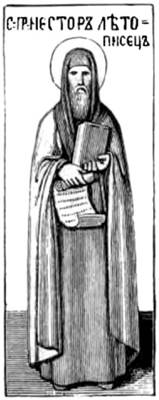
Тот, кто описал прекрасным пером и деяния первых князей Русских, и подвиги первых подвижников Русской Церкви, и страдания первых мучеников её, остался едва не забытым потомками, если бы благость небесная не оставила нам нетленных мощей его. Говорим о преп. Несторе летописце, о котором так мало заботились знать последующие времена317.
He who described with a beautiful pen both the deeds of the first Russian princes and the struggles of the first ascetics of the Russian Church and the sufferings of her first martyrs, remained almost forgotten by posterity, had not heavenly goodness left us his incorrupt relics. We speak of the Venerable Nestor the Chronicler, about whom later times cared so little to know317.
Родиной преп. Нестора был Киев: здесь видим его по летописи в 1064 году, когда он ещё жил в миру318. По собственным словам его, он поступил в Печерскую обитель 17 лет, ещё при жизни преп. Феодосия; но при нём жил недолго, – проходил только путь послушнической жизни319. В монашество пострижен уже преемником Феодосия, преп. Стефаном. По Греческому церковному правилу поступающие в монастырь три года остаются на испытании, «не удостаиваясь монашеского образа», а посвящаемому в диакона следует быть не меньше 25 лет320. И преп. Феодосий установил: поступающего в монастырь не спешить постригать, а велеть ему ходить в своей одежде, пока ознакомится с монастырским чином, после одевать его в чёрную одежду и испытывать послушаниями, а затем уже облекать в монашескую мантию. Так и для блаж. Нестора трёхгодичный искус окончился уже при преп. Стефане, при котором удостоен он и сана диаконского, не раньше 1078 г.321. В Печерской обители было тогда много высоких мужей, у которых можно было обучиться духовному совершенству. Обитель процветала тогда духовной жизнью. Блаж. Нестор так пишет об этом сам: «когда Стефан управлял монастырём и блаженным стадом, которое собрал Феодосий, чернецы как светила сияли в Руси. Одни были крепкими наставниками, другие тверды были на бдении или на коленопреклонной молитве; иные постились через день и через два дня, другие вкушали только хлеб с водой, иные – варёное зелье, другие – только сырое. Все пребывали в любви: младшие покорялись старшим, не смея и говорить перед ними и изъявляя полную покорность и послушание; а старшие оказывали любовь к младшим, наставляли и утешали их, как отцы детей малых. Если какой-либо брат впадал в какое-нибудь прегрешение, утешали его и по великой любви делили епитимию одного на двух и на трёх. Такова была любовь взаимная, при строгом воздержании! Если брат выходил из монастыря, то все братия скорбели о том, посылали за ним и звали брата в монастырь, потом шли к игумену, кланялись и упрашивали принять брата, и принимали с великой радостью»322. Блаженный Нестор, под влиянием таких примеров, под управлением таких наставников, при своей ревности к подвижничеству, спешно возрастал в духовной жизни. Как было глубоко смирение его, – это видно каждый раз, как только касается он своей личности в своих писаниях. Иначе не называет он себя, как худым, недостойным, грешным Нестором, меньшим из всех в монастыре преп. отца Феодосия323, или окаянным, с грубым и неразумным сердцем, Нестором грешным324. Если напоминает он другим о нужде покаяния, о потребности помнить отношения свои к Богу, то спешит обратиться к себе самому с укоризной. Так, рассказав о победе Половцев, последовавшей накануне памяти св. Бориса и Глеба, говорит он: «бысть плач в граде, а не радость, грех наших ради... В лепоту паче инех казнями есмы. Се бо аз грешный и много и часто согрешаю во вся дни»325. Опытом высокого успеха его в жизни духовной служит и то, что он участвовал (около 1088 г.) в молитвах, исцеливших обольщённого Никиту326. В 1091 г. ему поручил игумен Иоанн отыскивать мощи преп. Феодосия, и это поручение выполнено им с полным усердием, которое и увенчалось успехом. «Истинно и верно расскажу вам, так говорит он в описании обретения мощей, – не от других слышал о том, а сам был совершителем дела. Пришёл ко мне игумен Иоанн и сказал: пойдём в пещеру к Феодосию, и я пошёл с игуменом, тогда как никто не знал; осмотрев, куда бросать землю, и назначив место, где копать, кроме отверстия, игумен сказал мне: никому не сказывай из братии, чтобы никто не знал; возьми, кого хочешь, в помощь себе. Я уже приготовил в 7 дней заступы (рогалии), которыми надлежало копать. Во вторник вечером взял с собой двух братьев, а прочие не знали; пришёл в пещеру и, пропев псалмы, начал копать. Утомясь, дал другому брату, и копали мы до полуночи; утомились, но не могли докопаться. Я начал скорбеть, не в сторону ли копаем мы. Взяв заступ (рогалию), начал я выше; друг мой отдыхал перед пещерой и сказал мне: ударили в било; а я в ту же минуту прокопал до мощей Феодосия. Он говорил мне: ударили в било, – а я говорю ему: уже прокопал. Когда докопался я, то страх напал на меня, и я начал взывать: Господи, помилуй!» Рассказав о знамениях, которые в то же время видели другие, продолжает: «когда докопался я, то послал сказать игумену: иди, и вынесем мощи. Игумен пришёл с двумя братьями. Я же раскопал широко, и войдя увидели мы: лежит мощами, составы не распались, волосы на голове присохли; мы положили их на мантию и вынесли перед пещеру»327. В летописи преп. Нестор упоминает о себе ещё при описании событий 1096 и 1106 г.328. Блаженная кончина его последовала, по всей вероятности, в 1114 г.329. Таким образом, если положим, что блаж. Нестор поступил в обитель только за год до кончины преп. Феодосия († 1074 г.), тогда окажется, что он провёл в Печерской обители 41 год, а умер 58 лет. Поликарп уже около 1226 г. писал архимандриту Акиндину: «если повелит твоё преподобие, напишем для пользы тех, которые будут жить после нас, – по тому примеру, как блаж. Нестор писал в летописце о преподобных отцах Дамиане, Иеремии, Матфее и Исааке». Ясно, что Нестора уже чтили тогда, как мужа святой жизни. В ркп. святцах читаем: «преп. Нестор летописец преставися октября в 27 день». Мощи преп. Нестора летописца почивают нетленными в пещере Антония330.
The homeland of the Venerable Nestor was Kiev: here we see him in the chronicle in the year 1064, when he still lived in the world318. According to his own words, he entered the Pechersk monastery at the age of 17, still during the life of the Venerable Theodosius; but he lived under him only a short time – he only passed through the path of the novice's life319. He was tonsured into monasticism already by the successor of Theodosius, the Venerable Stephen. According to the Greek Church rule, those entering a monastery remain on probation for three years, "not being deemed worthy of the monastic habit," and one being ordained a deacon should be no less than 25 years old320. And the Venerable Theodosius established: not to hasten to tonsure one entering the monastery, but to bid him go in his own clothes until he becomes acquainted with the monastic order, then to clothe him in black garments and test him with obediences, and then to vest him in the monastic mantle. Thus also for the blessed Nestor the three-year probation ended already under the Venerable Stephen, under whom he was also deemed worthy of the rank of deacon, not earlier than 1078321. In the Pechersk monastery there were then many lofty men from whom one could learn spiritual perfection. The monastery then flourished in spiritual life. The blessed Nestor himself writes thus about this: "When Stephen governed the monastery and the blessed flock which Theodosius had gathered, the monks shone like lights in Rus'. Some were strong teachers, others were steadfast in vigil or in kneeling prayer; some fasted every other day or every two days, others ate only bread with water, some – boiled herbs, others – only raw food. All abided in love: the younger submitted to the elder, not daring even to speak before them and showing complete submission and obedience; and the elder showed love to the younger, instructing and comforting them, as fathers do to little children. If any brother fell into some transgression, they comforted him and out of great love divided the penance of one among two or three. Such was mutual love, with strict abstinence! If a brother left the monastery, all the brethren grieved over him, sent after him and called the brother back to the monastery, then went to the abbot, bowed and begged him to receive the brother, and they received him with great joy"322. The blessed Nestor, under the influence of such examples, under the guidance of such teachers, with his zeal for asceticism, grew quickly in spiritual life. How deep was his humility – this is evident every time he touches upon his own person in his writings. He calls himself nothing other than the poor, unworthy, sinful Nestor, the least of all in the monastery of the Venerable Father Theodosius323, or the wretched one, with a coarse and unwise heart, the sinful Nestor324. If he reminds others of the need for repentance, of the necessity to remember one's relationship to God, he hastens to turn to himself with reproach. Thus, having told of the victory of the Polovtsy, which occurred on the eve of the memory of Sts. Boris and Gleb, he says: "There was weeping in the city, and not joy, because of our sins... It is fitting that we, more than others, are punished. For behold, I, sinful one, sin much and often every day"325. The experience of his high success in spiritual life is also evidenced by the fact that he participated (around 1088) in the prayers that healed the deluded Nikita326. In 1091, Abbot John entrusted him with finding the relics of the Venerable Theodosius, and this commission was carried out by him with full zeal, which was crowned with success. "Truly and faithfully I will tell you," he says in the description of the uncovering of the relics, "I did not hear it from others, but I myself was the doer of the deed. Abbot John came to me and said: let us go into the cave to Theodosius, and I went with the abbot, while no one knew; having examined where to throw the earth, and having designated the place to dig, except for the opening, the abbot said to me: tell no one of the brethren, so that no one may know; take whomever you wish to help you. I had already prepared in seven days the spades (rogalii) with which to dig. On Tuesday evening I took with me two brethren, but the others did not know; I came into the cave and, having sung psalms, began to dig. Growing weary, I gave to another brother, and we dug until midnight; we grew weary, but could not dig through. I began to grieve, whether we were digging in the wrong direction. Taking a spade (rogalia), I began higher up; my friend was resting before the cave and said to me: they have struck the semantron; and I at that very moment dug through to the relics of Theodosius. He said to me: they have struck the semantron, – and I say to him: I have already dug through. When I dug through, fear fell upon me, and I began to cry out: Lord, have mercy!" Having told of the signs which others saw at the same time, he continues: "When I dug through, I sent word to the abbot: come, and let us bring out the relics. The abbot came with two brethren. I then dug wide, and entering we saw: he lies in relics, the joints had not fallen apart, the hair on the head had dried; we placed them on a mantle and brought them out before the cave"327. In the chronicle, the Venerable Nestor mentions himself also in the description of the events of 1096 and 1106328. His blessed repose followed, in all probability, in the year 1114329. Thus, if we suppose that the blessed Nestor entered the monastery only a year before the repose of the Venerable Theodosius († 1074), then it would appear that he spent 41 years in the Pechersk monastery, and died at the age of 58. Polycarp already around 1226 wrote to Archimandrite Akindinus: "If your reverence commands, we will write for the benefit of those who will live after us – following the example of how the blessed Nestor wrote in the chronicle about the Venerable Fathers Damian, Jeremiah, Matthew and Isaac." It is clear that Nestor was already then honored as a man of holy life. In the manuscript Menologia we read: "The Venerable Nestor the Chronicler reposed on October 27." The relics of the Venerable Nestor the Chronicler rest incorrupt in the cave of Anthony330.
Первое из его сочинений по времени было житие св. князей Бориса и Глеба, «чтение на пользу повиновения младших старшим»331. В этой повести, написанной тогда, как ещё не довольно богат был Нестор историческими сведениями, встречается несколько таких известий, которые сам он после поправляет в своей летописи332. Это – неважные неточности, которые не мешают признать сочинение и вполне назидательным, и драгоценным для истории. Оно писано с живым, благочестивым чувством, человеком, в котором проницательность ума и без пособия свидетелей угадывает историческую истину. Самая лучшая страница в этом сочинении – это начало повести, где после молитвы о просвещении сердца его говорит он о сотворении человека, о падении его, о распространении на земле идолопоклонства, о явлении Сына Божия на земле, о распространении Евангелия в мире и в России. «Между тем, как повсюду умножались христиане и идольские жертвенники были упраздняемы, страна Русская оставалась в прежней прелести идольской, потому что не слышала ни от кого слова о Господе нашем Иисусе Христе; не приходили к ним Апостолы и никто не проповедовал им слова Божия». Прекрасно изображены свойства святых князей, и рассказ о мученической смерти оканчивается словами: «это я грешный Нестор написал о жизни и страдании блаженных страстотерпцев Бориса и Глеба; но если Бог велит, скажем кое-что и о чудесах во славу и честь великому Богу». Отдельная повесть о чудесах оканчивается известием о двух чудесах, последовавших за перенесением святых мощей в 1072 г. Итак эта повесть написана вскоре после 1072 года. Сама надпись сей повести: «чтение о жизни и погублении блаж. Бориса и Глеба» – показывает, что она предлагаема была в Церкви.
The first of his works in time was the Life of the holy princes Boris and Gleb, "a reading for the benefit of the obedience of the younger to the elder"331. In this narrative, written at a time when Nestor was not yet sufficiently rich in historical knowledge, there occur several such accounts which he himself later corrects in his chronicle332. These are unimportant inaccuracies, which do not prevent the work from being recognized as both fully edifying and precious for history. It was written with a living, pious feeling, by a man in whose perspicacity of mind, even without the aid of witnesses, one discerns historical truth. The very best page in this work is the beginning of the narrative, where after a prayer for the enlightenment of his heart he speaks of the creation of man, of his fall, of the spread of idolatry on earth, of the appearance of the Son of God on earth, of the spread of the Gospel in the world and in Russia. "Meanwhile, as Christians multiplied everywhere and the idolatrous altars were being abolished, the Russian land remained in its former idolatrous delusion, because it had heard from no one the word about our Lord Jesus Christ; the Apostles did not come to them and no one preached to them the word of God." The qualities of the holy princes are beautifully depicted, and the account of their martyric death concludes with the words: "This I, the sinful Nestor, wrote about the life and suffering of the blessed passion-bearers Boris and Gleb; but if God wills, we shall say something also about the miracles for the glory and honor of the great God." A separate account of the miracles concludes with the news of two miracles that followed the translation of the holy relics in 1072. Thus this account was written soon after the year 1072. The very title of this account: "a reading about the life and destruction of the blessed Boris and Gleb" – shows that it was offered in the Church.
«После того, как написано о жизни и убиении и чудесах Бориса и Глеба, я грешный Нестор понудил себя обратиться к другому повествованию», так говорит преподобный в начале жития преп. Феодосия. Это сочинение – образец превосходного жизнеописания и по духу, и по слогу, и по изложению. Преподобный в начале и в конце его говорит, что благоговейная любовь к преподобному Феодосию управляла им в этом занятии. И точно, всё говорит в этом сочинении, что оно написано любовью святою. Преподобный старался собрать самые подробные и верные сведения о преп. Феодосии, и слово льётся потоком из сердца, одушевлённого святым предметом; он следит за жизнью Феодосия с самого детства шаг за шагом, передаёт события в порядке и с поучительной занимательностью; труды и подвиги великого игумена изображает с особенной подробностью: не оставляет и лиц, с которыми был в сношениях Феодосий. Сочинение писано с целью, «чтобы будущие после нас черноризцы, читая житие его и увидев доблести мужа, прославили Бога, прославили и угодника Его и укрепились на подвиг, особенно тем, что в сей стране явился такой муж и угодник Божий». Несторово житие преп. Феодосия во все века служило самым назидательным чтением и для иноков, и для всех православных христиан. Оно драгоценно и для науки, как один из древнейших и самых достоверных источников истории333.
"After I had written about the life and murder and miracles of Boris and Gleb, I, the sinful Nestor, compelled myself to turn to another narrative," thus says the Venerable at the beginning of the Life of the Venerable Theodosius. This work is a model of excellent biography, both in spirit, in style, and in exposition. The Venerable says at the beginning and at the end of it that reverent love for the Venerable Theodosius guided him in this labor. And indeed, everything in this work testifies that it was written by holy love. The Venerable strove to gather the most detailed and reliable information about the Venerable Theodosius, and his word flows like a stream from a heart animated by a holy subject; he follows the life of Theodosius from his very childhood step by step, relates events in order and with edifying interest; he depicts the labors and exploits of the great abbot with particular detail; he does not leave out even the persons with whom Theodosius was in contact. The work was written with the aim "that the monks who come after us, reading his life and seeing the valor of the man, might glorify God, glorify also His saint, and be strengthened for the exploit, especially because in this land such a man and saint of God has appeared." Nestor's Life of the Venerable Theodosius served throughout the ages as the most edifying reading both for monks and for all Orthodox Christians. It is also precious for scholarship, as one of the most ancient and most reliable sources of history333.
«Нестор написа летописец, – блаженный Нестор в летописце написа о блаженных отцех», так писал Печерский инок в самом начале XIII века. В одном списке летописи Нестор, говоря о обретении мощей преп. Феодосия, пишет: «аз грешный, иже и летописанье се в то время написах»334. Эта заметка, если бы не принадлежала только одному списку, показала бы, что Нестор около 1091 г. начал писать свою летопись, после того как написаны два жизнеописания. Летопись преп. Нестора писана столько же красноречиво, с одушевлением истинного благочестия, сколько с осмотрительностью, которая весьма дорожит правдой. О древних временах говорит она кратко, слухи и известия подвергает поверке. Рассказами 90-летнего Яна, рассказами Русских торговцев, воинов и путешественников дополняются в ней краткие письменные записки прежнего времени, в пособие взяты повествования Греческие, переведённые в Болгарии, Палея (исторический сборник), летописи Малалы и Георгия Амартола. – Критика новейшая доказала, что летопись Нестора превосходит подобные ей летописи Запада и исторической верностью, и изложением событий335. Мы оскорбили бы и преподобного и правду, если бы сказали, что летопись его важна и нужна преимущественно для гражданской истории. Напротив, без его летописи мы не знали бы и обстоятельств просвещения земли Русской св. верой. То, что говорит монах Иаков о крещении Владимира, и очень мало было и оказалось неверным во многом. В летописи Нестора св. Владимир может быть назван главным лицом летописи. Подвиги его изображены со всей подробностью и с живым одушевлением; обращение его к вере, крещение народа Русского описаны так, как никем другим в древнее время. Не оскорбим мы правды лишь тогда, когда скажем, что летопись Нестора столько же важна для гражданской, сколько для церковной истории, и что она по характеру своему не есть ни летопись церковная, ни летопись гражданская, а летопись народа Русского, летопись его жизни в её положениях самых важных. Потому-то с такой любовью читали её во все времена, и имя Нестора заменялось именем летописца336.
"Nestor wrote the chronicle," "the blessed Nestor wrote in the chronicle about the blessed fathers," thus wrote a monk of the Kiev Caves at the very beginning of the 13th century. In one copy of the chronicle, Nestor, speaking of the uncovering of the relics of the Venerable Theodosius, writes: "I, the sinful one, who also wrote this chronicle at that time"334. This note, if it did not belong to only one copy, would show that Nestor around the year 1091 began to write his chronicle, after he had written the two Lives. The chronicle of the Venerable Nestor is written as eloquently, with the inspiration of true piety, as it is with the circumspection that greatly values truth. Of ancient times it speaks briefly; rumors and reports it subjects to verification. The accounts of the ninety-year-old Yan, the accounts of Russian merchants, soldiers, and travelers supplement in it the brief written notes of earlier times; for assistance were taken Greek narratives translated in Bulgaria, the Palaea (a historical collection), the chronicles of Malalas and George Hamartolos. – Modern criticism has proven that Nestor's chronicle surpasses similar chronicles of the West both in historical accuracy and in the exposition of events335. We would offend both the Venerable and the truth if we said that his chronicle is important and necessary primarily for civil history. On the contrary, without his chronicle we would not know even the circumstances of the enlightenment of the Russian land with the holy faith. What the monk James says about the baptism of Vladimir was both very little and proved to be inaccurate in many respects. In Nestor's chronicle, St. Vladimir may be called the main figure of the chronicle. His exploits are depicted with all detail and with lively inspiration; his conversion to the faith, the baptism of the Russian people are described as by no one else in ancient times. We will not offend the truth only when we say that Nestor's chronicle is as important for civil as for Church history, and that by its character it is neither a Church chronicle nor a civil chronicle, but a chronicle of the Russian people, a chronicle of its life in its most important circumstances. For this reason it was read with such love in all ages, and the name of Nestor was replaced by the name of the Chronicler336.
«Чудные времена и лета Церкви, жития и добродетели начальных отцов писанием изобразивший для нас ревнитель их усердный, славный Нестор! ублажая тебя в ряду отцов, поём мы: благословен Бог отцов наших337.
"The wondrous times and years of the Church, the lives and virtues of the first fathers, having depicted for us in writing, their zealous emulator, glorious Nestor! Blessing thee among the ranks of the fathers, we sing: Blessed is the God of our fathers337."
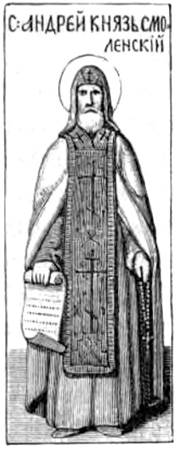
В 1540 г. преп. Даниил Переяславский338, быв в Москве, предложил в. кн. Иоанну Грозному, что Переяславские храмы св. Предтечи и св. Николая, стоящие у городских ворот, очень обветшали, так что необходимо построить новые; при этом преподобный известил, что у ветхого храма св. Николая в земле лежать мощи св. князя Андрея Смоленского, которому в прежние времена, как он твёрдо помнит и знает, была служба со стихирами и каноном, и лик его писался на иконах, но почему ныне не отправляется пение – неизвестно. Об этом же преподобный доложил и святителю Иоасафу. Великий князь и митрополит приказали построить новые храмы и вместе дозволили преподобному вместе с местным духовенством осмотреть гроб св. князя Андрея. В Переяславле очень обрадовались вести Даниила о гробе князя и хотели звонить, чтобы собрать народ. «Повременим, заметил один из священников, пока Богу угодно будет явить мощи раба Своего; совершим без звона молебное пение». Благоразумный совет был выполнен. После молебна разобрали надгробный памятник и начали копать могилу. Народ собрался во множестве – и иные из духовных пришли со свечами; все молили Господа об откровении благой воли Его. Наконец открыли гроб и в нём мощи, обвёрнутые берестой, мощи нетленные и издававшие благоухание: волосы русые и долгие, одежда целая с медными пуговицами, положенная на стороне. Крупицы бересты, осыпавшиеся при отгребании земли, с верою брали недужные и исцелялись. Преподобный послал священника Константина известить о том митрополита и великого князя. Из Москвы присланы были Чудовский архимандрит Иона, впоследствии Суздальский епископ, и Богородский протоиерей Гурий для поверки донесения и перенесения мощей в храм. После молебна в соборе архимандрит спросил Даниила: «по какой причине и с чьего дозволения начал он отыскивать мощи?» Старец отвечал, что предварительно извещал о том митрополита и государя и с их дозволения открыл мощи св. князя; причём представил архимандриту древнюю икону князя и службу ему прежних времён. «Немного это написано, прибавлял преподобный, – книга старая, как видите; спросите и народ, что он знает, и как исцелялись больные». Призваны исцелившиеся. Пристав Иван Окляча заявил, что он много лет страдал головной болью так, что не мог кланяться, – и как только прикоснулся к мощам, перестала боль. Женщина из Переяславля сказала, что три года болело у неё горло, так что не могла говорить; но когда, по обретении мощей, проглотила несколько крупиц от бересты, которой обёрнуто св. тело, внезапно перестала боль, и она проговорила, что могут подтвердить соседи. Другая женщина объявила, что её слепую привели к св. мощам, и она стала видеть. Архимандрит Иона и после того говорил Даниилу, будто бы «владыка митрополит ничего не знает о том и ничего не приказывал». Старец заплакал и сказал: «не будем искушать Духа Святого, действующего в чудных рабах Своих. Не говори также, будто ничего не известно великому отцу нашему и святителю. Бог мне свидетель, что извещал я его сам и не только его, но благочестивого самодержца, и, по их воле, осмелился я открыть святые мощи». Преподобный сказал потом, что излишне-пытливые, или по другим более худым побуждениям противодействующие св. делу будут наказаны; митрополит лишится престола, архимандрит и протоиерей жестоко пострадают. – Слово св. старца впоследствии исполнилось. Это слово сперва смутило следователей, но потом объявили они его за плод дряхлой старости. – Впрочем, очевидность дела вынудила кончить преступный спор. Мощи блаженного князя положили в новый гроб, обвили их плащаницей и совершили службу. Храм св. Николая с того времени стали называть храмом св. князя Андрея, Переяславского чудотворца; существовавший при нём женский монастырь закрыт в 1764 г.339.
In the year 1540, the Venerable Daniel of Pereslavl338, being in Moscow, proposed to the Grand Prince Ivan the Terrible that the Pereslavl churches of St. John the Forerunner and St. Nicholas, standing at the city gates, had become very dilapidated, so that it was necessary to build new ones; at the same time the Venerable informed him that at the dilapidated church of St. Nicholas, in the ground, lay the relics of the holy Prince Andrew of Smolensk, for whom in former times, as he firmly remembered and knew, there was a service with stichera and a canon, and his face was painted on icons, but why the singing is not now performed is unknown. The Venerable also reported this to the Hierarch Joasaph. The Grand Prince and the Metropolitan ordered the building of new churches and together permitted the Venerable, together with the local clergy, to examine the tomb of the holy Prince Andrew. In Pereslavl they greatly rejoiced at Daniel's news about the prince's tomb and wanted to ring the bells to gather the people. "Let us wait," remarked one of the priests, "until God is pleased to reveal the relics of His servant; let us perform a moleben without the ringing." The prudent counsel was carried out. After the moleben they dismantled the tomb monument and began to dig the grave. The people gathered in great numbers – and some of the clergy came with candles; all prayed to the Lord for the revelation of His good will. At last they opened the coffin and in it the relics, wrapped in birch bark, the relics incorrupt and emitting a fragrance: the hair was light brown and long, the clothing whole with copper buttons, placed at the side. Crumbs of birch bark that had fallen off when the earth was cleared away were taken with faith by the sick and they were healed. The Venerable sent the priest Constantine to inform the Metropolitan and the Grand Prince of this. From Moscow were sent the Archimandrite of the Chudov Monastery, Jonah, later Bishop of Suzdal, and the Protopriest of the Bogorodsky (Theotokos) Church, Gury, to verify the report and to translate the relics into the church. After a moleben in the cathedral, the archimandrite asked Daniel: "For what reason and with whose permission did you begin to search for the relics?" The elder answered that he had previously informed the Metropolitan and the Sovereign of this and with their permission had uncovered the relics of the holy prince; at the same time he presented to the archimandrite the ancient icon of the prince and the service to him from former times. "This is little written," added the Venerable, "the book is old, as you see; ask also the people what they know, and how the sick were healed." The healed were summoned. The official Ivan Oklyacha declared that he had suffered for many years from a headache so that he could not bow – and as soon as he touched the relics, the pain ceased. A woman from Pereslavl said that for three years her throat had ached so that she could not speak; but when, after the uncovering of the relics, she swallowed a few crumbs from the birch bark with which the holy body was wrapped, the pain suddenly ceased, and she spoke, which the neighbors could confirm. Another woman declared that she, being blind, was led to the holy relics, and she began to see. Archimandrite Jonah even after that said to Daniel that "the vladyka metropolitan knows nothing about it and gave no orders." The elder wept and said: "Let us not tempt the Holy Spirit, Who works in His wondrous servants. Do not say either that nothing is known to our great father and hierarch. God is my witness that I informed him myself, and not only him, but the pious autocrat, and by their will I dared to uncover the holy relics." The Venerable then said that those who are overly inquisitive, or from other, worse motives oppose the holy work, will be punished; the metropolitan will lose his see, the archimandrite and the protopriest will suffer severely. – The word of the holy elder was later fulfilled. This word at first confused the investigators, but later they declared it to be the fruit of decrepit old age. – However, the evidence of the matter forced them to end the sinful dispute. The relics of the blessed prince were placed in a new coffin, wrapped in a shroud, and a service was performed. The church of St. Nicholas from that time began to be called the church of the holy Prince Andrew, Wonderworker of Pereslavl; the women's monastery that existed at it was closed in 1764339.
По повествованию о нём, после смерти его нашли записку: «аз есмь Андрей, един от Смоленских князей»; нашли также золотую цепь и перстень, которые потом взял себе вел. князь Иоанн Васильевич и за то дал жалованье для церкви свят. Николая. По преданию, князь удалился из родной стороны по крамолам; в Переяславле жил он, как никем незнаемый бедняк, и исправлял должность пономаря при церкви св. Николая; от бедности терпел всякую нужду, но был усердным молитвенником храма, вёл жизнь чистую и строгую. Так провёл он 30 лет340! Таковы данные о жизни того, кто не хотел быть знаемым во время земной жизни своей!
According to the narrative about him, after his death a note was found: "I am Andrew, one of the princes of Smolensk"; a gold chain and a ring were also found, which later the Grand Prince John Vasilievich took for himself and for that gave a salary for the church of St. Nicholas. According to tradition, the prince withdrew from his native land because of seditions; in Pereslavl he lived as an unknown poor man, and performed the duty of a sexton at the church of St. Nicholas; from poverty he endured every need, but was a zealous man of prayer for the church, leading a pure and strict life. Thus he spent 30 years340! Such are the data about the life of him who did not wish to be known during his earthly life!
По этим данным видно, что благоверный князь Андрей Смоленский жил прежде вел. кн. Иоанна III (1464–1506 г.). По родословным спискам Смоленских князей известны два князя Андрея, жившие прежде в. кн. Иоанна, – князь Андрей Владимирович и князь Андрей Феодорович Фоминский. Но первый убит в 1224 г. на р. Калке и след. не кончил дней подвижником в Переяславле. Отец князя Андрея Фоминского, князь Феодор слепой Фоминский, был современником в. кн. Симеону Гордому († 1353 г.), тогда как Смоленское княжество, при умножении князей Смоленских (их было в одно и то же время до 17), раздроблено было на мелкие части. Не удивительно, что при дележе достояний произошли ссоры между родичами, как это бывало тогда. По древнему памятнику, сын кн. Андрея Феодор удалился в Тверь341. Конечно в то же время и блаж. кн. Андрей, наскучив тревогами жизни и их нравственной тяготой, скрылся из Смоленска, чтобы в неизвестности совершать подвиги благочестия. Время кн. Андрея Феодоровича Фоминского не далеко от времени в. кн. Иоанна III, так что до последнего легко могли сохраниться перстень и цепь первого. По таким соображениям кончина св. кн. Андрея последовала не раньше 1390 года. Около того же времени полагается кончина блаженного князя и в ркп. святцах342.
From these data it is evident that the Right-believing Prince Andrew of Smolensk lived before the time of the Grand Prince John III (1464–1506 A.D.). According to the genealogical lists of the Princes of Smolensk, two princes named Andrew are known who lived before the Grand Prince John—Prince Andrew Vladimirovich and Prince Andrew Feodorovich Fominsky. But the former was killed in 1224 on the Kalka River and consequently did not end his days as an ascetic in Pereslavl. The father of Prince Andrew Fominsky, Prince Theodore the Blind of Fominsk, was a contemporary of the Grand Prince Simeon the Proud († 1353 A.D.), whereas the Principality of Smolensk, with the multiplication of the Smolensk princes (there were as many as seventeen at one time), had been broken up into small parts. It is not surprising that in the division of possessions quarrels arose among kinsmen, as was then customary. According to an ancient record, the son of Prince Andrew Theodore withdrew to Tver341. Doubtless at the same time the blessed Prince Andrew, weary of the anxieties of life and their moral burden, hid himself from Smolensk, that in obscurity he might perform deeds of piety. The time of Prince Andrew Feodorovich Fominsky is not far from the time of the Grand Prince John III, so that the ring and chain of the former could easily have been preserved until the latter. On such considerations, the repose of St. Prince Andrew occurred no earlier than 1390. About the same time the repose of the blessed prince is placed also in the manuscript Menologia342.
Собр. л. 1, 71. «Бысть детищ ввержен в Сетомль, егоже вывылокоша рыболове в неводе, егоже позоровахом до вечера». По другой летописи (Карамз. 2, пр. 329) Сетомль «на болоне» – на выгоне, у Олеговой могилы; это от Печерского монастыря в 4½ верстах.
Collection of Chronicles, I, 71. "A child was cast into the Setoml, whom fishermen drew out in a net, and we gazed upon him until evening." According to another chronicle (Karamzin, II, note 329) the Setoml "on the meadow"—on the common pasture, near Oleg's grave; this is four and a half versts from the Kiev Caves Monastery.
Собр. л. I, 69. «К нему же (Феодосию) и аз приидох худый» (в Переслав. летоп. на поле: «Нестер») «и прият мя, лет ми сущу семнадцати от рождения моего». В другом месте (собр. 1, 91), обращаясь к пр. Феодосию, говорит: «аз же грешный, твой раб и ученик, недоумею, чим похвалити добраго житья».
Collection of Chronicles, I, 69. "To him (Theodosius) I also came, wretched as I am" (in the Pereslavl Chronicle in the margin: "Nestor") "and he received me, I being seventeen years of age from my birth." In another place (Complete Collection, I, 91), addressing the Venerable Theodosius, he says: "I, a sinner, your servant and disciple, know not how to praise your goodly life."
Житие Феодосия: «прият же в онь преп. Стефаном, якоже от того пострижен быв и монашеския одежды сподобився, якоже на диаконский сан от него возведен сый, емуже и не бех достоин». Там же о Феодосиевом правиле.
Life of Theodosius: "He was received into it by the Venerable Stephen, as by him he was tonsured and deemed worthy of the monastic habit, and as he was raised by him to the rank of deacon, though I was not worthy of it." Ibid. concerning the Rule of Theodosius.
См. прим. 319. Житие Феодосия: «оно превышает мои силы; я недостоин того, будучи груб и неразумен, к тому же и не обученный наукам... Я грешный Нестор положил начало... Не описал я грешный Нестор, меньший из всех в монастыре пр. отца нашего Феодосия».
See note 319. Life of Theodosius: "It exceeds my strength; I am unworthy of it, being rude and unlearned, and moreover not instructed in letters... I, the sinful Nestor, have made a beginning... I, the sinful Nestor, the least of all in the monastery of our Venerable Father Theodosius, have not described..."
Чтение о жизни и погублении св. Бориса и Глеба: «призри на смирение мое и подай же разум сердцу моему, да исповем окаянный аз... О Владыко! Веси грубость и неразумие сердца моего... Послушайте, братия, не зазрите грубости моей. – Се же списал аз грешный о житьи; –се аз Нестор грешный». Востокова опис. муз., стр. 200. 201.
Reading on the Life and Destruction of Sts. Boris and Gleb: "Look upon my humility and grant understanding to my heart, that I, the accursed one, may confess... O Lord! Thou knowest the rudeness and ignorance of my heart... Hearken, brethren, and condemn not my rudeness. — This have I, a sinner, written concerning the life; — I, Nestor the sinner." Vostokov, Description of the Museum, pp. 200, 201.
1096 г. «придоша (Половцы) в монастырь Печерский, нам сущим по кельям, почивающим по заутрени». Собр. л. 1, 99. «В се же (1106) л. преставися Ян, старец добрый, – от негоже и аз многа словеса слышал, еже и вписал в летописании сем». Собр. л. 1, 120.
In the year 1096: "The Polovtsy came to the Pechersk Monastery, while we were in our cells, resting after Matins." Collection of Chronicles, I, 99. "In this same year (1106) reposed Yan, a good elder—from whom I also heard many words, which I have written in this chronicle." Collection of Chronicles, I, 120.
Собр. л. 1, 8. «Тем же от смерти Святославли до смерти Ярославля лет 86; а от смерти Ярославля до смерти Святополчи лет 60». В. кн. Святополк скончался 19 апреля 1114 г. Собр. 1, 127.
Collection of Chronicles, I, 8. "Therefore from the death of Svyatoslav to the death of Yaroslav is 86 years; and from the death of Yaroslav to the death of Svyatopolk is 60 years." The Grand Prince Svyatopolk died on April 19, 1114. Collection, I, 127.
Опис. лавры 109. 292. У Гербения Kiowia subterranea, Ienæ. 1675. Nestor chronographus, у Кальнофойского «св. инок Нестор летописец».
Description of the Lavra, pp. 109, 292. In Herbienius, Kiowia subterranea, Jena, 1675. "Nestor chronographus," in Kalnofoysky, "the holy monk Nestor the Chronicler."
Части сочинения напеч. Кубаревым в истор. сборн., кн. IV, стр. 440–446. Востоковым в опис. муз., стр. 200–202. Всё сочинение – Срезневским: св. князья Борис и Глеб, СПб. 1861 г.
Parts of the work printed by Kubarev in the Historical Collection, Book IV, pp. 440–446. By Vostokov in the Description of the Museum, pp. 200–202. The whole work by Sreznevsky: Sts. Princes Boris and Gleb, St. Petersburg, 1861.
В повести говорит он, будто Владимир крестился в 982 г., будто Глеб по смерти отца находился в Киеве и бежал от Святополка на север. – Чит. Буткова разбор трёх древних памятников Русской духовной литературы, СПб. 1852 г.
In the narrative he says that Vladimir was baptized in 982, that Gleb after the death of his father was in Kiev and fled from Svyatopolk to the north. — See Butkov's Analysis of Three Ancient Monuments of Russian Spiritual Literature, St. Petersburg, 1852.
После обороны летописи Буткова (СПб. 1840 г.) лучшее сочинение летописи – Сухомлинова: о древней Русской летописи, СПб. 1856 г.
After the defense of the chronicle by Butkov (St. Petersburg, 1840), the best work on the chronicle is that of Sukhomlinov: On the Ancient Russian Chronicle, St. Petersburg, 1856.
Ркп. повествование; степ. кн. 2, 230. 231. Русск. времен. 2, 312–314. В ркп. Румянцева № 371 служба бл. князю.
Manuscript narrative; Book of Degrees, II, 230, 231. Russian Chronograph, II, 312–314. In the manuscript of Rumyantsev No. 371, a service to the blessed prince.
Родословн. книга изд. кн. П. Долгоруковым, 1, 141–143. СПб. 1854 г. По древней родословной (времен. общ. ист. X, 106. 107. 54. 174. 247. 251): «у другого сына княж Константинова, у князя Феодора Слепого сын Андрей Коробья; а у Андрея сын Феодор и тот во Тверь пришёл». Здесь же сказано, что в. кн. Симеон Гордый выдал за старшего брата Феодора Слепого, за Феодора Красного свою сестру Евдокию; а кн. Константин, родоначальник князей Фоминских, был сын кн. Юрия, только не Святославича, а Константиновича. Таким образом видно, что отец кн. Андрея, кн. Феодор Константинович, скончался никак не позже 1370 г.
Genealogical Book, published by Prince P. Dolgorukov, I, 141–143. St. Petersburg, 1854. According to the ancient genealogy (Proceedings of the Society of History, X, 106, 107, 54, 174, 247, 251): "Of the other son of Prince Constantine, Prince Theodore the Blind, the son was Andrew Korobya; and of Andrew the son was Theodore, and he came to Tver." Here it is also said that the Grand Prince Simeon the Proud gave his sister Eudocia in marriage to the elder brother of Theodore the Blind, to Theodore the Red; and Prince Constantine, the founder of the Fominsky princes, was the son of Prince George, not Svyatoslavich, but Konstantinovich. Thus it is evident that the father of Prince Andrew, Prince Theodore Konstantinovich, reposed no later than 1370.