Нотариями назывались чиновники при дворе патриарха, состоявшие под начальством главного нотария, в ведении которого состояла переписка по делам, подлежащим вместе суду церковному и гражданскому, напр. по части завещаний, отпуска рабов на волю, найма церк. имений и т. п. Маркиан чтец и Мартирий иподиакон были при этом доверенными лицами патриарха Павла исповедника (6 ноября), писали его послания в защиту православной веры и сами были великими проповедниками веры. По изгнании и смерти Павла ариане старались привлечь их на свою сторону и, когда не успели в том, обвинили перед императором Констанцием (которым эти еретики управляли) в государственном преступлении и довели до смерти; оба обезглавлены в 355 году.
Notaries were officials at the court of the patriarch, subordinate to the chief notary, whose purview included correspondence on matters subject jointly to ecclesiastical and civil jurisdiction, for example, concerning wills, the manumission of slaves, the leasing of church properties, and the like. Marcian, a reader, and Martyrius, a subdeacon, were at that time trusted men of Patriarch Paul the Confessor (November 6); they wrote his epistles in defense of the Orthodox faith and were themselves great preachers of the faith. After Paul’s exile and death, the Arians sought to win them over to their side, and when they did not succeed, they accused them before the Emperor Constantius (whom these heretics controlled) of a state crime and brought them to their death; both were beheaded in the year 355.
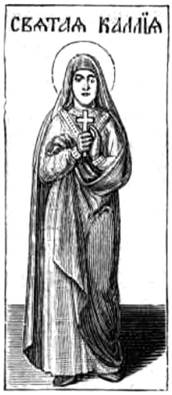
«Блаженны милостивые: они помилованы будут», сказал Господь (Мф.5:7). «Кто сеет скупо, для того и жатва скупа; а кто сеет щедро, для того щедра и жатва». Доброхотно дающего любит Бог, учит Апостол (2Кор.9:6,7). Всё это видим исполнившимся над св. Каллией. Она прославлена на земле и на небе за подвиги искреннего милосердия. Муж её был богатый купец. Каллия с юности любила благотворить бедным, богатство мужа доставляло ей средства помогать нищете. Но муж её, сколько был богат, столько же и жаден до денег. Раз целые три года плавал он по морю, занимаясь торговыми оборотами. Милостивая супруга его щедро раздавала без него милостыню. Она твёрдо выполняла наставления Господа: «продавайте имения и давайте милостыню; приготовляйте себе влагалища неветшающие, сокровище не оскудевающее на небесах, куда вор не приближается и где моль не съедает» (Лк.13:39). «Какая польза человеку, если он приобретёт весь мир, а душе своей повредит? Или какой выкуп даст человек за душу свою» (Мф.16:26). Возвратившийся муж, увидев, что жена растратила для нуждающихся очень и очень много денег, столько любимых им, И до того рассвирепел на жену, что замучил её до смерти. Бог прославил щедрую жену нетлением тела её308. Блаж. патриарх Антоний (893–895 г.) выстроил женскую обитель для мощей св. Каллии309. «Хромий и больнии гробу её кланяются и исцеляются», говорит Русский поклонник, поклонявшийся белице Каллии в 1420 г.310.
“Blessed are the merciful, for they shall be shown mercy,” said the Lord (Mt. 5:7). “He who sows sparingly, for him the harvest is also sparing; but he who sows generously, for him the harvest is generous.” “The Lord loves him who gives willingly,” teaches the Apostle (2 Cor. 9:6–7). All this we see fulfilled in St. Callia. She was glorified on earth and in heaven for her deeds of sincere mercy. Her husband was a wealthy merchant. From her youth, Callia loved to do good to the poor; her husband’s wealth provided her the means to help the needy. But her husband, as rich as he was, was equally greedy for money. Once he spent three whole years sailing the sea, engaged in commercial ventures. His merciful wife generously distributed alms in his absence. She firmly fulfilled the Lord’s instructions: “Sell your possessions and give alms; prepare for yourselves imperishable purses, a treasure that does not diminish in heaven, where no thief approaches and where the moth does not devour” (Lk. 13:39). “What profit is it to a man if he acquires the whole world but harms his soul? Or what ransom can a man give for his soul?” (Mt. 16:26). When her husband returned and saw that his wife had spent very, very much money on the needy—money so beloved by him—he became so enraged at his wife that he tortured her to death. God glorified the generous wife by the incorruption of her body308. The blessed Patriarch Anthony (893–895 A.D.) built a women’s monastery for the relics of St. Callia309. “The lame and the sick bow before her tomb and are healed,” says a Russian pilgrim who venerated the white-robed nun Callia in 1420 A.D.310.
Священник позван был к ней, умирающей, для приобщения св. Таин; в то же время звали его за тем же к богатому князю. Он пренебрёг бедной вдовой и пошёл к богачу. Возвратясь от князя, нашёл он нового посланного звать к умирающей вдове. Гордый и корыстолюбивый, не пошёл он к нищете. Диакон его, Богобоязненный и благочестивый, выпросил у него дозволение идти и приобщить умиравшую. Придя к ней, к изумлению, видит тут Пресвятую Деву, и чистые девы одевают бедную больную в чистые одежды. К новому изумлению, Небесная Царица благоговейно поклонилась пресвятому телу Христову. Чистые девы пали перед ним на землю. Встав, девы дали знать диакону, чтобы он совершил своё служение. Когда больная приобщена была святых Таин, девы приняли святую душу её и вознеслись на небо. Диакон пошёл потом в дом богача. Здесь видит он при постели умирающего страшных темных духов, и один из них насильно вытащил душу из грешного тела. В ужасе диакон упал на землю. Является Пресвятая и говорит: «не бойся, возлюбленный служитель! сохраняй заповеди Сына Моего, и духи злобы не будут иметь власти над тобой; тебе готово Царство Небесное». Диакон пал перед Царицей Небесной, и Она удалилась311.
A priest was summoned to her, who was dying, to administer the Holy Mysteries; at the same time, he was summoned for the same purpose to a wealthy prince. He neglected the poor widow and went to the rich man. Upon returning from the prince, he found a new messenger summoning him to the dying widow. Proud and covetous, he did not go to the poor woman. His deacon, God-fearing and pious, asked his permission to go and administer the Holy Mysteries to the dying woman. Arriving at her, to his astonishment, he saw the Most Holy Theotokos there, and pure maidens were clothing the poor sick woman in clean garments. To his further amazement, the Queen of Heaven reverently bowed before the most holy Body of Christ. The pure maidens fell to the ground before It. Rising, the maidens signaled to the deacon to perform his service. When the sick woman had received the Holy Mysteries, the maidens received her holy soul and ascended to heaven. The deacon then went to the rich man’s house. There he saw terrible dark spirits at the bedside of the dying man, and one of them forcibly dragged the soul from the sinful body. In terror, the deacon fell to the ground. The Most Holy Theotokos appeared and said: “Fear not, beloved servant! Keep the commandments of My Son, and the spirits of malice shall have no power over you; the Heavenly Kingdom is prepared for you.” The deacon fell before the Queen of Heaven, and She departed311.
«Блажен человек, который переносит искушение, потому что он, усовершаясь искушением, получил венец жизни, который обещал Господь любящим Его» (Иак.1:12). «Мы хвалимся и скорбями, зная, что от скорби происходит терпение, от терпения опытность, от опытности надежда, – а надежда не постыждает» (Рим.5:3–5). «Если остаётесь без наказания, которое всем общее, то вы не законные дети и не сыны» (Евр.12:8). Таково учение слова Божия.
“Blessed is the man who endures temptation, because he, being perfected by temptation, has received the crown of life which the Lord promised to those who love Him” (Jas. 1:12). “We boast even in our sorrows, knowing that from sorrow comes patience, from patience experience, from experience hope—and hope does not put to shame” (Rom. 5:3–5). “If you remain without the chastisement which is common to all, then you are not lawful children nor sons” (Heb. 12:8). Such is the teaching of the Word of God.
В субботу перед 26 числом октября, так называемую Дмитриевскую, Церковью в XIV столетии установлено поминовение православных воинов. Дмитрий Иоаннович Донской, родившийся 26 октября, по одержании славной победы над Мамаем на Куликовском поле в 1380 г. 8-го сентября, путешествовал в Московскую обитель Живоначальной Троицы к преподобному Сергию, игумену этой обители, из которой были и пали на брани два инока, Александр Пересвет и Ослабя, и, совершив там поминовение убиенных воинов, предложил Церкви творить сие поминовение ежегодно в субботу Дмитриевскую. С того времени эта суббота причислена Церковью к родительским. Впрочем, в эту субботу православные христиане, посещая кладбища умерших, творят память не только православных воинов, за веру и отечество живот свой в брани положивших, но купно с ними и всех вообще усопших своих.
On the Saturday before the 26th day of October, the so-called Demetrius Saturday, the Church established in the 14th century the commemoration of Orthodox warriors. Demetrius Ioannovich Donskoy, born on October 26, after gaining the glorious victory over Mamai on the Field of Kulikovo on September 8, 1380, journeyed to the Moscow monastery of the Life-Giving Trinity to the Venerable Sergius, the abbot of that monastery, from which two monks, Alexander Peresvet and Osliabia, had gone forth and fallen in battle; and having there performed the commemoration of the slain warriors, he proposed that the Church hold this commemoration annually on Demetrius Saturday. From that time, this Saturday has been numbered by the Church among the parental Saturdays. On this Saturday, Orthodox Christians, visiting the cemeteries of the departed, commemorate not only the Orthodox warriors who laid down their lives for faith and fatherland in battle, but together with them all their own departed in general.
Подвизался св. Мартирий в XIV веке в Киево-Печерской обители; угодив Богу великой чистотой и строгой постнической жизнью, прославлен был даром чудотворений ещё при жизни своей. – Другой св. Мартирий подвизался в затворе. Оба стяжали нетление и покоятся в Феодосиевых пещерах в Киеве.
St. Martyrius struggled in the 14th century in the Kiev Caves Monastery; having pleased God by great purity and a strict ascetic life, he was glorified by the gift of wonderworking even during his lifetime. – Another St. Martyrius struggled in seclusion. Both acquired incorruption and repose in the Theodosian Caves in Kiev.
Дю-Канж Const. ehr. р. 153. Он говорит, что монастырь называли то μονή του Καολεα, то μονή Καλεως – (чит. Κολλιας), и оставляет нерешённым, не назывался ли п. Антоний, строитель обители, Антонием Кавлеем по монастырю своему. Дю-Канж не называет и того, женский или мужской был монастырь Калии. Но Зосима говорит: «подалее стоит монастырь женский Повасильяс (чит. Кавлеас): ту лежит св. Калия белица».
Du Cange, Const. chr. p. 153. He says that the monastery was called both μονή του Καολεα and μονή Καλεως – (read Κολλιας), and leaves it undecided whether Patriarch Anthony, the builder of the monastery, was not called Anthony Kaoleas after his monastery. Du Cange does not say whether the monastery of Callia was a women’s or a men’s monastery. But Zosima says: “Further on stands a women’s monastery, Povasilias (read Kaoleas): there lies St. Callia, a white-robed nun.”
Ἀγαπίου ἁμορτολῶν σωτηρία, S. 380. 381. Ἐν ἔτησιν 1803· Имя терпеливой вдовицы не показано у Агапия; не показано и время жизни её; но так как св. дары относит к больной диакон, а это бывало в древнее время и сохранялось в IX ст., то событие, описанное Агапием, относим к IX стол.
Ἀγαπίου ἁμορτολῶν σωτηρία, pp. 380–381. In the year 1803. The name of the patient widow is not given by Agapius; nor is the time of her life given; but since the holy gifts were brought to the sick woman by a deacon, which was done in ancient times and was preserved into the 9th century, we assign the event described by Agapius to the 9th century.