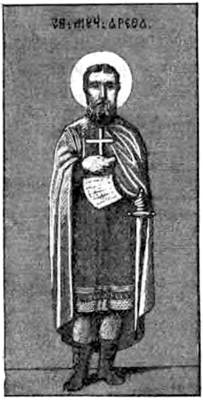
В пятое лето царствования христолюбивого Иустина, императора Римского, в стране Эфиопов царствовал Елезвой, справедливейший государь, живший в Авксуме, городе той страны. В то же время был царём Гомеритов некто Дунаан, еврей. Страна Гомеритская называется в священном Писании Сава, а писателями внешними – Счастливой Аравией. Тогда как по всему миру уже чтили и славили Христа, истинного Бога нашего, царствующего со Отцом и Святым Духом, одна только Гомеритская страна, называемая и Сава, предана была идолам и постановлениям Иудейства; Бога не боялись, а чтили идолов. Оттого происходили частые войны между царём Эфиопским и царём Гомеритским, который был данником Эфиопского.
In the fifth year of the reign of the Christ-loving Justin, Emperor of the Romans, in the land of the Ethiopians there reigned Elesbaan, a most just sovereign, who lived in Axum, the city of that country. At the same time, a certain Dunaan, a Jew, was king of the Homerites. The country of the Homerites is called Sheba in Holy Scripture, and by external writers, Arabia Felix. Whereas throughout the whole world they already honored and glorified Christ, our true God, who reigns with the Father and the Holy Spirit, the Homerite country alone, also called Sheba, was given over to idols and the ordinances of Judaism; they feared not God, but honored idols. Hence frequent wars arose between the Ethiopian king and the Homerite king, who was a tributary of the Ethiopian.
Есть в царстве Гомеритов Негран, город многолюдный; этот город чтил единосущную и Святую Троицу, принявши эту веру и учение в давние времена от святых и Богоносных отцов. Случилось же в то время, что царь Гомеритских Евреев, потерпев поражение, бежал и укрылся в недоступных горных местах, а Эфиопский царь Елезвой воротился в своё царство, оставив для охранения страны полководца с войском. Но ненавистник добра демон, противодействующий хотящим жить благочестиво, опять вооружил царя Гомеритов против Эфиопов, оставленных царём Елезвоем. Он истребил их и воздвиг бесчеловечное гонение на всех чтителей имени Христова, были ли то Греки, или Персы, или Римляне, или Эфиопы, и, как бы воплощённый демон, вооружился против христиан в своих владениях. После сего, собравши всех христиан, велел их избить. Наконец, двинул войско своё против сказанного христолюбивого города Неграна, чтобы разорить его.
There is in the kingdom of the Homerites the city of Najran, a populous city; this city honored the consubstantial and Holy Trinity, having received this faith and teaching in ancient times from the holy and God-bearing fathers. It happened at that time that the king of the Homerite Jews, having suffered defeat, fled and hid himself in inaccessible mountain places, while the Ethiopian king Elesbaan returned to his own kingdom, leaving a commander with an army to guard the country. But the demon, the hater of good, who opposes those who wish to live piously, again armed the king of the Homerites against the Ethiopians left by King Elesbaan. He destroyed them and raised up an inhuman persecution against all worshipers of the name of Christ, whether they were Greeks, or Persians, or Romans, or Ethiopians, and, like an incarnate demon, he armed himself against the Christians in his dominions. After this, having gathered all the Christians, he ordered them to be slain. Finally, he moved his army against the said Christ-loving city of Najran, to destroy it.
По случаю наступления зимы царь Эфиопский и его войско не могли выступить на брань против Еврея, воюющего честный и славный город. Царь Еврейский приближается и ставит на древе знамение честного креста Господа нашего Иисуса Христа. Потом высылает глашатаев и, окруживши город войском, повелевает им возгласить: «кто не порицает Распятого и не презирает сего древа, которое есть знамение проклятия, тот погибнет от огня и меча. А кто будет одних мыслей со мной, отрёкшись Троицы, как её называют ученики Галилеянина, тот удостоится многих почестей и великих преимуществ в царстве моём. Я уже предал огню и мечу всех оставленных царём в столичном городе, и христиан, сущих в моём царстве, и так называемых монахов; а так называемые церкви христианские во всех моих владениях, окрест лежащих, сжёгши и разрушивши до земли, обратил в прах. И теперь вот иду к вам, Неграняне, с силой многой и мышцей высокой, собравши для войны с вами сто двадцать тысяч отборного войска».
By reason of the onset of winter, the Ethiopian king and his army could not go forth to battle against the Jew, who was warring against the honorable and glorious city. The Jewish king draws near and sets up on a tree the sign of the honorable cross of our Lord Jesus Christ. Then he sends out heralds and, having surrounded the city with his army, commands them to proclaim: "Whoever does not revile the Crucified One and does not despise this wood, which is a sign of a curse, shall perish by fire and sword. But whoever shall be of one mind with me, having renounced the Trinity, as the disciples of the Galilean call it, shall be deemed worthy of many honors and great privileges in my kingdom. I have already given over to fire and sword all those left by the king in the capital city, and the Christians who are in my kingdom, and the so-called monks; and the so-called Christian churches in all my dominions, lying round about, I have burned and razed to the ground and turned to dust. And now I come to you, men of Najran, with great power and a high arm, having gathered for war against you one hundred and twenty thousand chosen troops."
Тогда граждане ответили с городских стен: «царь! мы научены чтить и поклоняться Богу Вседержителю и Слову Его, Которым всё сотворено, и Его Святому Духу, оживотворяющему всё, не вводя многих богов, ни умаляя единоначалия, но почитая единого Бога в трёх ипостасях. Той единой Силе покланяемся и почитаем, которую чтили отцы наши Авраам, Исаак и Иаков, Моисей, Аарон, Самуил и все пророки». Тогда царь Гомеритский, беззаконнейший между держащимися закона Моисеева, раздражился, и на многие дни держал их в осаде, употребляя машины и страшнейшие орудия военные; но не мог повредить городу, державшемуся на камне веры Христовой (Мф.7:25), как замок Сион в Иерусалиме, окружённом горами, и Господь окрест народа Своего отныне и до века (Пс.124). Вот что делал земной и тленный (σκιώδης – призрачный) царь, не попуская никому выходить, а всех, живших на предместьях, городских полях и владениях, выгнал и некоторых погубил, а других роздал в рабы своим вельможам, вождям и начальникам племён. Узнавши же, что не может взять города, подражает человекоубийце змию, всегда завидующему хотящим жить благочестиво, начинает клясться и свидетельстоваться Богом неба и закона и святыми силами: «не нанесу вреда никому из граждан, ни буду принуждать к оставлению чтимой вами веры, а только хочу иметь вас в подданстве, чтобы мне отворили город, и я вошёл туда для осмотра его и собрания следующей мне на этот год дани, по обычаю взимаемой с каждой души, живущей в городе, и которая составляет один елкас». Елкас же есть царская Гомеритская монета, слитая из золота, весом в двенадцать керат; так что ежегодной дани с города Неграна было сто тридцать талантов золотом. Талант же в стране Эфиопов и Гомеритов имеет тринадцать фунтов.
Then the citizens answered from the city walls: "O king! We have been taught to honor and worship God the Almighty and His Word, by whom all things were made, and His Holy Spirit, who gives life to all, not introducing many gods, nor diminishing the sole rule, but honoring one God in three hypostases. That one Power we worship and honor, which our fathers Abraham, Isaac and Jacob, Moses, Aaron, Samuel, and all the prophets honored." Then the Homerite king, the most lawless among those holding to the law of Moses, was enraged, and for many days he kept them under siege, using machines and the most terrible engines of war; but he could not harm the city, which was founded upon the rock of the faith of Christ (Mt. 7:25), like the stronghold of Zion in Jerusalem, surrounded by mountains, and the Lord is round about His people from henceforth and forever (Ps. 124). This is what the earthly and corruptible (σκιώδης, illusory) king did, not allowing anyone to go out, but driving out all who lived in the suburbs, the city fields and domains, and destroying some, and giving others as slaves to his nobles, leaders, and chiefs of the tribes. But learning that he could not take the city, he imitates the man-slaying serpent, who always envies those who wish to live piously, and begins to swear and call to witness the God of heaven and the law and the holy powers: "I will do no harm to any of the citizens, nor will I compel them to abandon the faith you honor, but I only wish to have you as subjects, that they might open the city to me, and I might enter there to inspect it and to collect the tribute due to me for this year, according to the custom levied upon every soul living in the city, which amounts to one elkas." An elkas is a royal Homerite coin, cast of gold, weighing twelve kerats; so that the annual tribute from the city of Najran was one hundred and thirty talents of gold. A talent in the land of the Ethiopians and Homerites has thirteen pounds.
А жители города, всегда повинуясь святым заповедям Спасителя нашего Бога, сказали: «царь! от закона, пророков и святых Апостолов мы научены чтить Бога и повиноваться царям земным в должном (1Пет.2:17; Рим.13:7); и вот, доверяя клятвенному твоему обещанию, отворяем город, и ты можешь взойти, с кем хочешь. Но да будет тебе известно, что. если обманешь нас, Бог поможет нам и всю злобу твою обратит на главу твою и на царство твоё. А если нет, то и мы объявляем тебе словами Анании, Азарии и Мисаила, что содержим веру не по единоначалию твоему, и кощунству твоему не согласуемся, но считаем приобретением смерть и жизнь во Христе, умершем за нас и воскресшем; и да живёт в нас Христос!» Сказавши это, отворили город. И вошёл коварный змий, царь Гомеритский, поклявшийся, что «не обижу и не трону вас, если добровольно предадите мне этот город».
But the inhabitants of the city, ever obedient to the holy commandments of our Savior God, said: "O king! From the law, the prophets, and the holy Apostles we have been taught to honor God and to obey earthly kings in what is fitting (1 Pet. 2:17; Rom. 13:7); and behold, trusting in your sworn promise, we open the city, and you may enter, with whom you will. But let it be known to you that if you deceive us, God will help us and turn all your malice upon your head and upon your kingdom. But if not, we also declare to you with the words of Ananias, Azarias, and Misael, that we hold the faith not according to your sole rule, and to your blasphemy we do not consent, but we consider death and life in Christ, who died for us and rose again, as gain; and may Christ live in us!" Having said this, they opened the city. And the crafty serpent, the Homerite king, who had sworn, "I will not harm nor touch you, if you voluntarily surrender this city to me," entered.
На другой день, открывши ворота, вышли все старейшины (ἀρχηγοί) их, вместе с Арефой, к царю, и поклонились ему до земли. Он же приказал всех их схватить и сперва расхитить имущество их, а потом показать ему Павла, епископа города. Все старейшины ответили, что он умер за два года перед сим. Царь не поверил им, но послал на место, где лежало честное тело его, и приказал, выкопавши кости, сжечь огнём и пепел лопатами развеять по ветру.
On the next day, having opened the gates, all their elders (ἀρχηγοί) went out, together with Aretas, to the king, and bowed down to the ground before him. He ordered them all to be seized and first to plunder their property, and then to show him Paul, the bishop of the city. All the elders answered that he had died two years before. The king did not believe them, but sent to the place where his honorable body lay, and ordered that, having dug up the bones, they should burn them with fire and scatter the ashes with shovels to the wind.
На следующий день велел всему войску собрать дров и зажечь огромнейший костёр, занимающий пространства одну стадию, и бросить туда всех священников городских, диаконов и остальных служителей Церкви, и избравших монашескую жизнь, и так называемых канонисс и девственниц и певиц, поющих в домах Божиих днём и ночью: всех таковых, найденных в городе и окрестностях, без исследования сжёг, с целью запугать остальных христиан. Сожжённых было числом четыреста двадцать семь душ. После сего велит заковать в цепи Арефу, мужа знатнейшего, и прочих старейшин города; а глашатай возгласил наречием Гомеритским: «отрекитесь так называемого Христа, иудействуйте, согласитесь со мной, и будете жить». Святые мученики сказали: «да не будет нам отречься от веры, в которой мы крещены». – И сказал царь: «ведь Римляне знали, что отцы наши в Иерусалиме, священники и законоучители распяли человека, и его, как хульника Божия, бичевали, позорили и предали гнусной смерти, как человека, а не Бога. Для чего ж вы заблуждаетесь, следуя тому человеку? Не лучше ж вы несториан, которые доселе есть между нами, и говорят, что считают его не Богом, а пророком Божиим. Неграняне! Я не требую от вас, чтобы вы отреклись Бога неба и земли, или поклонялись солнцу, луне и светилам небесным, или творениям, находящимся в земле, море и реках; хочу только, чтоб вы отреклись так называемого Иисуса, хулившего так и представлявшего себя Богом, и чтоб вы только сказали, что распятый был человек, а не Бог».
On the following day he commanded the whole army to gather wood and kindle a very great fire, occupying the space of one stadium, and to cast into it all the priests of the city, the deacons, and the rest of the ministers of the Church, and those who had chosen the monastic life, and the so-called canonesses and virgins and chantresses, who sang in the houses of God day and night: all such, found in the city and its environs, without investigation he burned, with the aim of frightening the remaining Christians. Those burned were in number four hundred and twenty-seven souls. After this he orders Aretas, a most noble man, and the rest of the elders of the city, to be bound in chains; and a herald proclaimed in the Homerite tongue: "Renounce the so-called Christ, become Jews, agree with me, and you shall live." The holy martyrs said: "May it not be for us to renounce the faith in which we were baptized." And the king said: "For the Romans knew that our fathers in Jerusalem, the priests and teachers of the law, crucified a man, and him, as a blasphemer of God, they scourged, reviled, and delivered to a shameful death, as a man, and not as God. Why then do you err, following that man? Are you not better than the Nestorians, who are still among us, and say that they consider him not God, but a prophet of God? Men of Najran! I do not require of you that you renounce the God of heaven and earth, or worship the sun, the moon, and the heavenly lights, or the creatures that are in the earth, the sea, and the rivers; I only wish that you renounce the so-called Jesus, who blasphemed thus and represented himself as God, and that you only say that the Crucified One was a man, and not God."
А святые мученики Христовы отвечали: «за себя, всё племя наше и весь наш город, и всех далёких наших друзей отстаиваем, свидетельствуем и исповедуем доброе наше исповедание, по вере в которое крестились мы во имя Отца и Сына и Святого Духа, и не отрицаем воплощения; Иисус, злословимый тобой, единый от Троицы, Бог Слово, в последние дни для нашего спасения воплотившийся от Духа Святого и Марии Девы, научил нас, что поведут вас к правителям и царям за Меня, для свидетельства перед ними и язычниками (Мф.10:18). А тебя и твоё правление (πολιτείαν) отвергаем, потому что преступаешь закон Божий и клевещешь на истину».
But the holy martyrs of Christ answered: "For ourselves, for all our tribe and our whole city, and for all our distant friends, we maintain, testify, and confess our good confession, according to the faith in which we were baptized into the name of the Father and of the Son and of the Holy Spirit, and we do not deny the Incarnation; Jesus, reviled by you, one of the Trinity, God the Word, who in these last days for our salvation was incarnate of the Holy Spirit and Mary the Virgin, taught us that they will lead you before rulers and kings for My sake, for a testimony against them and the Gentiles (Mt. 10:18). But you and your rule (πολιτείαν) we reject, because you transgress the law of God and slander the truth."
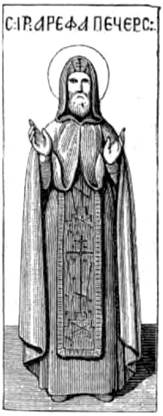
Тогда повелел он ласковыми и учтивыми речами убеждать их к отступничеству от Христа. Но они не обольстились и сказали: «хотя бы ты погубил нас в огне и муках, мы не отречёмся веровать в Троицу; для нас жизнь – Христос, и смерть – приобретение». Началовождем их, истолкователем и вещателем исповедания был святой Арефа, сын Ханефа, который и в привремённой сей жизни был правителем (ἐθνάρχης) города и всего округа его. Многие же, зная вероломство беззаконного и преступного царя, искали убежища в горах, пещерах и ущельях земных, не из боязни мученичества, но в надежде, что поражённые и стеснённые и наготующие, блуждая в пустынях, когда возопиют к Тому, Который слышит глас птенцов ворона и даёт им пищу (Пс.146:9), и таким образом спасутся, то сделаются останком и семенем Господа Саваофа (Ис.6:13), и не потребятся от беззаконника, как Содом и Гоморра.
Then he commanded them to be persuaded to apostasy from Christ with gentle and courteous words. But they were not deceived and said: "Even if you destroy us in fire and torments, we will not renounce faith in the Trinity; for us life is Christ, and death is gain." Their leader, interpreter, and spokesman of the confession was the holy Aretas, son of Chaneff, who in this temporal life was also the ruler (ἐθνάρχης) of the city and all its district. Many, however, knowing the treachery of the lawless and criminal king, sought refuge in the mountains, caves, and clefts of the earth, not from fear of martyrdom, but in the hope that, being smitten and distressed and naked, wandering in the deserts, when they cry out to Him who hears the voice of the young ravens and gives them food (Ps. 146:9), and thus be saved, they might become a remnant and a seed of the Lord of Sabaoth (Is. 6:13), and not be destroyed by the lawless one, like Sodom and Gomorrah.
Собраны же были из города и окрестностей мужи и жёны, юноши и старцы, числом четыре тысячи двести пятьдесят два, которые друг за другом, принимая смерть, оставили временную сию жизнь, не отрёкшись доброго исповедания (1Тим.6:12). В том числе были на первом месте священники и прочие мученики, и Арефа праведник. Но скажем о бесчеловечии всепагубного зверя. Ибо, собравши жён и детей первенствующих граждан, которые были в узах, и уже начавших своё мученичество, поставил их вместе с детьми насупротив мужей их и коварными увещаниями покушался склонить всех мучеников, чтоб они покорились ему и отреклись Христа. Но женщины вместе с детьми единодушно воскликнули: «сохрани нас Бог от этого; но и детей, и родителей, и отечества, и имений отрекаемся, и так приемлем крест Христов и следуем Тому, Который при Понтии Пилате свидетельствовал доброе исповедание». – Тогда опять обратился к мученикам с льстивыми словами: «не блуждайте вслед так называемого Христа, Которого отцы наши погубили через Римских воинов, но покоритесь мне и иудействуйте, и будете жить вместе с детьми вашими. А если этого не сделаете, лютой смертью погибнете». Тогда все святые жёны с детьми своими, всхлипывая и рыдая, сказали: «мы готовы умереть за Христа. Христос, Бог наш, есть Сын Бога живого; мы Ему принадлежим, Его кресту кланяемся и умираем за Него. Итак, царь, да не будет, чтоб мы отреклись Христа, Царя вечного, и жили ещё после смерти мужей наших». Царь сказал: «о, глупые женщины! ужели хотите умереть за чародея и обманщика?»
Then were gathered together from the city and its environs men and women, youths and elders, to the number of four thousand two hundred and fifty-two, who, one after another, receiving death, departed this temporal life, not denying the good confession (1 Tim. 6:12). Among them were foremost the priests and the other martyrs, and Aretas the righteous. But let us speak of the inhumanity of the all-destructive beast. For, having gathered the wives and children of the chief citizens, who were in bonds and had already begun their martyrdom, he set them together with their children opposite their husbands, and by crafty exhortations attempted to persuade all the martyrs to submit to him and deny Christ. But the women together with their children cried out with one accord: "God preserve us from this; but both children, and parents, and country, and possessions we renounce, and thus we take up the cross of Christ and follow Him Who under Pontius Pilate witnessed the good confession." — Then again he turned to the martyrs with flattering words: "Do not wander after the so-called Christ, Whom our fathers destroyed through the Roman soldiers, but submit to me and Judaize, and you will live together with your children. But if you do not do this, you will perish by a cruel death." Then all the holy women with their children, sobbing and weeping, said: "We are ready to die for Christ. Christ, our God, is the Son of the living God; we are His, we worship His cross and die for Him. Therefore, O king, let it not be that we should deny Christ, the eternal King, and live after the death of our husbands." The king said: "O foolish women! would you indeed die for a sorcerer and deceiver?"
Из них десять женщин, которые были канониссы и носили покрывало девственниц, сказали ему: «да заградятся уста твои, говорящие неправду против Царя неба и земли!» Тогда царь с великой яростью повелевает всех их привести к некоторой яме и избить мечом на том же месте, где обезглавлены были предшествовавшие мученики. И вот слуги мучителя повлекли их за волосы; а женщин числом было двести двадцать семь. Канониссы же, когда пришли на место, просили имевших пострадать с ними, говоря: «Богобоязненные жёны, позвольте прежде нам принять награду мученичества, так как мы, хотя и недостойны, украшаемся печатью девства и знаком ангельской чистоты. Известно нам, что и во время принятия святых Таин мы допускаемся (προεκαλούμεθα) прежде, по установленному обычаю Церкви, а потом вы – мирянки. Посему прилично прежде нам вкусить и от части смертной». А женщины сказали с силой: «не так; но поскольку мы – жёны и матери мучеников, то умрём прежде, чтоб не видеть смерти наших мужей и детей». Так каждая была упрашиваема и влекущего её побуждала скорее нанести ей смерть! Оттого всякий народ, племя и язык из собравшихся вместе с беззаконником, при виде сего, ударяли себя в лицо, и горький плач свой оканчивали скрежетом зубов. Таким образом обезглавлены были все сии святые жёны, призывая имя Отца и Сына и Святого Духа. Тогда царь с усмешкой сказал вельможам своим: «видите, какое заблуждение распространил по всему миру тот распятый чародей!»
Ten of them, who were canonesses and wore the veil of virgins, said to him: "May your lips be shut, that speak falsehood against the King of heaven and earth!" Then the king with great fury commands that they all be brought to a certain pit and slain with the sword in the same place where the preceding martyrs had been beheaded. And behold, the servants of the tormentor dragged them by the hair; and the women numbered two hundred and twenty-seven. The canonesses, when they came to the place, besought those who were to suffer with them, saying: "God-fearing women, permit us first to receive the reward of martyrdom, since we, though unworthy, are adorned with the seal of virginity and the sign of angelic purity. We know that even at the reception of the Holy Mysteries we are admitted (προεκαλούμεθα) first, according to the established custom of the Church, and then you, the laywomen. Wherefore it is fitting that we first taste also of the portion of death." But the women said with force: "Not so; but since we are wives and mothers of martyrs, we shall die first, that we may not behold the death of our husbands and children." Thus each was entreated, and urged him who dragged her to inflict death upon her the sooner! Wherefore every people, tribe, and tongue of those gathered together with the lawless one, at the sight of this, smote their faces, and ended their bitter lamentation with gnashing of teeth. Thus were beheaded all these holy women, invoking the name of the Father and of the Son and of the Holy Spirit. Then the king said with a sneer to his nobles: "You see what delusion that crucified sorcerer has spread throughout the whole world!"
Тогда же приведена была знатнейшая (ή πρωτεύουσα) во всём городе жена. Адский змий оный велит ввести её и поставить перед собой со всяким уважением и честью, думая убедить её словами. А она была красоты неподражаемой; и велел он стеречь её вместе с двумя дочерями её. Ибо коварный так рассуждал с собой: «всеконечно она пощадит себя, дочерей и имение своё, и потому согласится изречь хулу на Сына Божия». Она же и её дочери были в печали и тоске, что не умерли вместе с другими жёнами. И на третий день послал царь некоего сановника в тюрьму сказать ей: «если покоришься мне и отречёшься· называемого Христом, то в почёте будет жить душа твоя и дочерей твоих, и обрящите милость у меня; а если нет, то погибнешь худой смертью». Услышавши это, она сказала: «ведите меня к царю, и я повинуюсь ему в его требовании». Слуги царские повели её закрытую зонтиком (ὑπὸ σκιαδίου), или в шатре носильном; потому что никогда не видело её солнце, кроме как сквозь окно. И стала она с дочерями своими перед бесчеловечным царём. И сказал он: «жена! не обольщайся чарами Распятого, и не увлекайся безумием сограждан твоих, мужей и жён, которые умерщвлены. Ты женщина почётная и сенаторша (συγκλητικὴ). По причине рода твоего, достоинства и богатства щажу тебя, а особенно ради красоты твоей дочерей твоих. Дошло до нас, что ты никогда не познала мужа, кроме бывшего законного супруга твоего, хотя до нынешнего дня, когда предстоишь нам, держала в доме своём более трёхсот мужчин, занимавшихся делами хозяйства твоего. Послушайся же меня, и будешь осыпана почестями во дворце от меня и царицы моей». А святая жена отвечала: «не могу принимать почестей от человека, который преступил закон Бога своего, и не могу жить в одном доме с клеветником, который и других принуждает клеветать и называть обманщиком Бога нашего, даровавшего ему сие царство».
Then was brought forth a woman of the highest rank (ή πρωτεύουσα) in all the city. That infernal serpent commands her to be brought in and set before him with all respect and honor, thinking to persuade her by words. And she was of incomparable beauty; and he commanded that she be guarded together with her two daughters. For the crafty one reasoned thus within himself: "Surely she will spare herself, her daughters, and her possessions, and therefore will consent to utter blasphemy against the Son of God." But she and her daughters were in sorrow and distress that they had not died together with the other women. And on the third day the king sent a certain dignitary to the prison to say to her: "If thou wilt submit to me and deny the so-called Christ, then in honor shall thy soul live, and the souls of thy daughters, and ye shall find mercy from me; but if not, thou shalt perish by an evil death." Hearing this, she said: "Lead me to the king, and I will obey him in his demand." The king's servants led her, covered by a canopy (ὑπὸ σκιαδίου), or in a portable tent; for the sun had never beheld her, save through a window. And she stood with her daughters before the inhuman king. And he said: "Woman! be not deceived by the sorceries of the Crucified One, and be not carried away by the madness of thy fellow citizens, men and women, who have been put to death. Thou art an honorable woman and a senator (συγκλητικὴ). By reason of thy lineage, dignity, and wealth I spare thee, and especially for the beauty of thy daughters. It hath reached us that thou hast never known a man, save thy lawful husband, although until this day, when thou standest before us, thou hast kept in thy house more than three hundred men occupied with the affairs of thy household. Hearken then to me, and thou shalt be laden with honors in the palace from me and from my queen." But the holy woman answered: "I cannot receive honors from a man who hath transgressed the law of his God, and I cannot dwell in one house with a slanderer who compels others also to slander and to call our God, Who hath granted him this kingdom, a deceiver."
Тогда приказал царь раскрыть голову ей и дочерям её выставить с распущенными волосами перед всем войском, святая, обратившись и видя множество женщин, плачущих рыдающих и бьющих себя в грудь, сказала: «честные и свободные женщины, единомысленные со мной, и живущие между нами Иудеянки и язычницы! послушайте слов моих. Вы знаете, что я христианка, как и всё сродство моё, знаете мою сановитость и великое богатство в золоте и серебре, рабах и рабынях, стяжаниях и стадах, так что я ни в чём не терплю лишения; и если бы я захотела во временной сей жизни, по смерти моего сожителя, выйти замуж, то никто не осмеял бы мою молодость, как будто я преступила закон Божий; ибо учение святых Апостолов повелевает лучше вступить в брак, нежели разжигаться (1Кор.7:9). И вот говорю вам, что у меня теперь есть более десяти тысяч клеймёных монет золотом и серебром. Знаете также, что для женщины не бывает большей радости, как в день брака своего; а с того дня и потом настают волнения, болезни, воздыхания, скорби, особенно когда рождают детей и оплакивают их смерть. Итак, с нынешнего дня я отрекаюсь от всего этого и радуюсь, как во дни брачные».
Then the king commanded that her head be uncovered and that she and her daughters be exposed with loosened hair before the whole army. The holy woman, turning and seeing a multitude of women weeping, wailing, and beating their breasts, said: "Honorable and free women, of one mind with me, and you Jewesses and pagans dwelling among us! Hearken to my words. You know that I am a Christian, as is all my kindred; you know my rank and great wealth in gold and silver, in slaves and handmaidens, in possessions and herds, so that I suffer no lack in anything; and if I had wished in this temporal life, after the death of my consort, to marry again, no one would have mocked my youth, as though I had transgressed the law of God; for the teaching of the holy Apostles commands that it is better to marry than to burn (1 Cor. 7:9). And behold, I say to you that I now have more than ten thousand stamped coins in gold and silver. You know also that for a woman there is no greater joy than on the day of her marriage; but from that day onward come tumults, sicknesses, sighings, sorrows, especially when they bear children and lament their death. Therefore, from this day I renounce all this and rejoice as in the days of marriage."
«Вот и дочери мои девственницы, не умерщвлённые вместе с жёнами, призывавшими имя Христово, потому что царь законопреступный не велел брать нас, а только жён и детей мучеников, которые прежде были схвачены и теперь в узах; я же, как вдова, и мои две девственные дочери не присоединены к ним. И вот через мученичество, сие сопрягаемся истинному Жениху, Иисусу Христу, Сыну Бога живого, уготовавшему чертог Свой пяти мудрым девам. И знайте, сёстры мои возлюбленные! уже вторично видите лицо моё открытым: раз, когда я праздновала брак тленный и привременный, и теперь, когда следую в вечный и духовный чертог брачный. Глядите же на меня и дочерей моих, что мы не хуже вас по красоте, и не думайте, что мы из-за неприглядного лица преимуществуем над вами, свободными женщинами, и всем предстоящим множеством; но дерзаем о красоте целомудрия своего, при покровительстве Господа нашего Иисуса Христа, и потому, что соблюли непорочным девство – как дочери мои, так и я, кроме сожительства о Христе с супругом своим: свидетельствуюсь Богом и совестью своею! И не опорочили себя отступничеством по предложению законопреступника, потому что не может человек прельстить нас к оставлению Христа, чему и вы свидетели в нынешний день. А моё золото и серебро будут обо мне свидетельствовать в будущем веке, что я не прилеплялась к ним, но уделяла каждому. по нужде».
"Behold, my daughters also are virgins, not slain together with the women who invoked the name of Christ, because the lawless king commanded not to take us, but only the wives and children of the martyrs, who were seized before and are now in bonds; but I, as a widow, and my two virgin daughters have not been joined to them. And behold, through martyrdom we are now espoused to the true Bridegroom, Jesus Christ, the Son of the living God, Who hath prepared His bridal chamber for the five wise virgins. And know, my beloved sisters! Already for the second time you behold my face uncovered: once, when I celebrated a corruptible and temporary marriage, and now, when I go to the eternal and spiritual bridal chamber. Look then upon me and my daughters, that we are not inferior to you in beauty, and think not that we take precedence over you, free women, and over all this present multitude because of an uncomely face; but we take courage in the beauty of our chastity, under the protection of our Lord Jesus Christ, and because we have kept virginity undefiled — my daughters as well as I, save for cohabitation in Christ with my husband: I call God and my own conscience to witness! And we have not defiled ourselves with apostasy at the suggestion of the lawless one, because no man can seduce us to forsake Christ, of which you also are witnesses this day. And my gold and silver shall bear witness concerning me in the age to come, that I clung not to them, but gave to each according to his need."
Царь же, узнав от некоторых Иудеев христоненавистных, что жена та с дочерями своими, стоя, держит речь к народу и возбуждает токи слёз у мужчин и женщин, слушающих её, приказывает ввести её с дочерями к себе, и говорит ей: «вот сколько времени терпел я, давши тебе свободу говорить к народу, что хотела, – чтобы, видя слёзы и участие сожалеющих о тебе, хоть теперь пожалела себя и послушалась меня». – Святая отвечает ему: «царь! советуешь мне отречься вечной жизни и продлить временную; но боюсь огня вечного и червя неусыпающего и срама отступничества. Нам лучше умереть, чем покориться; ибо, если в сём исповедании умрём, будем жить». И, обратившись, заплакала, говоря: «да не будет нам, Царю Небесный, Иисусе Христе, Сыне Божий, сидящий на херувимах и славословимый серафимами, отречься Царства и Божества Твоего!» Тогда с гневом сказал ей царь: «ты богохульствуешь, проклятая женщина! Но коснусь плоти твоей и внутренностей твоих и посмотрю, придёт ли обаятель Назорей исхитит вас из рук моих».
But the king, having learned from certain Christ-hating Jews that that woman with her daughters, standing, was addressing the people and stirring up streams of tears among the men and women who heard her, commands that she be brought with her daughters before him, and says to her: "Behold, how long have I endured, having given you freedom to speak to the people whatever you wished — that, seeing the tears and sympathy of those who pity you, you might even now take pity on yourself and hearken to me." — The holy woman answers him: "O king! You counsel me to renounce eternal life and to prolong the temporal; but I fear the eternal fire and the undying worm and the shame of apostasy. It is better for us to die than to submit; for if we die in this confession, we shall live." And, turning, she wept, saying: "Let it not be unto us, O Heavenly King, Jesus Christ, Son of God, Who sittest upon the cherubim and art glorified by the seraphim, to deny Thy Kingdom and Thy Divinity!" Then the king said to her in anger: "You blaspheme, accursed woman! But I will touch your flesh and your bowels, and I shall see whether the Nazarene enchanter will come and snatch you out of my hands."
А меньшая дочь святой, почти двенадцати лет, приблизившись и наполнивши рот свой слюной, плюнула в лицо законопреступника. Тогда царские телохранители, обнаживши мечи, отсекли главы обеим дочерям святой; а царь приказал некоему из присутствовавших собрать кровь их рукой и насильно приложить к устам матери. Она же, отведавши, сказала: «благодарю Тебя, Сыне Божий, что ублажил рабу Твою и удостоил меня вкусить от жертвы смиренных дочерей моих». Потом царь повелел и её обезглавить, и с клятвой сказал вельможам своим: «очень прискорбна была душа моя из-за красоты жены сей и дочерей её; потому что никогда не видел такого подобия. Удивляюсь, откуда такое, безумие у христиан, что веруют в умерщвлённого человека, называвшего себя Богом».
But the younger daughter of the saint, being almost twelve years old, drew near and, filling her mouth with spittle, spat in the face of the transgressor. Then the royal bodyguards, drawing their swords, cut off the heads of both daughters of the saint; and the king commanded one of those present to gather their blood with his hand and forcibly apply it to the mother's lips. She, having tasted it, said: "I thank Thee, O Son of God, that Thou hast blessed Thine handmaiden and hast vouchsafed me to taste of the sacrifice of my humble daughters." Then the king commanded that she also be beheaded, and with an oath said to his nobles: "My soul was very sorrowful because of the beauty of this woman and her daughters; for never have I seen such likeness. I marvel whence comes such madness among the Christians, that they believe in a slain man who called himself God."
На следующий день повелевает явиться святому Арефе с прочими соузниками его, числом 340, и говорит ему: «ты, Арефа, давний плут и злодей! Для чего не подражал отцу своему, управлявшему городом и всем его округом, пользовавшемуся честью от бывших прежде меня царей, а вздумал похитить власть и быть государем в Негране и его округе, уповая на человека обманчивого и лживого, и надеялся убежать от рук моих? Пощади же старость свою и сжалься над сединами твоими, как человек почтенной древности, и таким образом даруй жизнь себе и вместе с тобой схваченным и связанным, и отвергнись называемого Христом; иначе умрёшь лютой смертью, как и оные женщины и те, кои умерли прежде них. Потому что сын Марии и Иосифа не возмог спасти погубленных мной как в моём царствующем граде, так и во всей стране Гомеритской». Тогда ответствовал славный Арефа, говоря: «по истине весьма сокрушаюсь я о христианах, которые в этом городе; говорил я им не отворять городских ворот и не доверять тебе, а они не захотели послушаться меня. Опять – советовал я им выйти против тебя и воевать за народ Христов; но и этого не сделали. Ибо уповал я на Владыку Христа, что одолею и сокрушу тебя, как Гедеон с тремя стами мужей, по глаголу Божию, обратил в бегство имевшего десятки тысяч. Но да будет воля Божия! Знаю, что за грехи свои пострадали мы и преданы в руки твои. Ибо никогда истина не проходила чрез уста твои».
On the following day he commands the holy Aretas to appear with the rest of his fellow prisoners, numbering 340, and says to him: "You, Aretas, are an old rogue and malefactor! Why did you not imitate your father, who governed the city and all its district, enjoying honor from the kings who were before me, but thought to seize power and be sovereign in Najran and its district, trusting in a man deceitful and lying, and hoped to escape from my hands? Spare then your old age and have compassion on your gray hairs, as a man of venerable antiquity, and thus grant life to yourself and to those seized and bound together with you, and renounce him who is called Christ; otherwise you shall die a cruel death, like those women and those who died before them. For the son of Mary and Joseph could not save those destroyed by me both in my reigning city and throughout the whole Homerite land." Then the glorious Aretas answered, saying: "In truth I grieve greatly over the Christians who are in this city; I told them not to open the city gates and not to trust you, but they would not hearken to me. Again — I counselled them to go out against you and to fight for the people of Christ; but even this they did not do. For I trusted in the Master Christ that I should overcome and crush you, as Gideon with three hundred men, by the word of God, put to flight him who had tens of thousands. But the will of God be done! I know that for our sins we have suffered and have been delivered into your hands. For never has truth passed through your lips."
Говорит вельможа, сидевший подле царя: «так ли учат вас христианские Писания оскорблять владык земных? Разве не знаешь, что цари Еврейские суть помазанники Божии?» Отвечал святой: «ты, господин патриций, внял ли написанному о пророке Илии? Ибо, когда сказал ему Ахаав, царь Израильский: «тебя ли вижу, возмутитель Израиля?» то он ответил ему: «не я возмущаю Израиля, а ты и дом отца твоего» (3Цар.8:17–18). Так что не грешит тот, кто обличает царя за преступление закона. Ибо, не краснея, сказал нам отречься Слова Бога, Которым всё сотворено на небе и на земле, видимое и невидимое, – Который, видя своё создание в плену у диавола, не презрел его, но умилосердился и дал закон заповеди в научение всех людей, для вразумления и удержания от зла; и опять, наказавши Израиля за преступные мерзости, умилосердился и вызвал его из Вавилонии. И поскольку растлилось в преступлении заповедей созданное по образу Создавшего, то Сам Бог Слово, по благоволению Отца сшедши с небес, восприял падшее и в собственном теле пригвоздил грех ко кресту, сделавшись в воспринятом от нас теле жертвой за весь наш род человеческий Богу и Отцу. И как теперь нам отречься Его? И тогда как, может быть, мне не осталось и одного часу ещё прожить, ты хочешь отчуждить меня от Царства Небесного?»
The nobleman sitting beside the king says: "Do the Christian Scriptures so teach you to insult earthly sovereigns? Do you not know that the Jewish kings are the anointed of God?" The saint answered: "You, lord patrician, have you heeded what is written concerning the prophet Elijah? For when Ahab, the king of Israel, said to him: 'Is it thou, thou troubler of Israel?' he answered him: 'I do not trouble Israel, but thou and thy father's house' (3 Kgdms. 18:17–18). So that he does not sin who reproves a king for transgression of the law. For without blushing you have told us to renounce the Word of God, by Whom all things were created in heaven and on earth, visible and invisible — Who, seeing His creation captive to the devil, did not despise it, but had mercy and gave the law of commandment for the instruction of all men, for correction and restraint from evil; and again, having chastised Israel for its abominable transgressions, He had mercy and called it forth from Babylonia. And since that which was created in the image of the Creator was corrupted in the transgression of the commandments, God the Word Himself, by the good pleasure of the Father, descending from heaven, took up the fallen and in His own body nailed sin to the cross, becoming in the body taken from us a sacrifice for our whole human race to God and the Father. And how now can we renounce Him? And whereas perhaps not even one hour remains for me to live, you would alienate me from the Heavenly Kingdom?"
«А царь, который лжёт, не сильный царь. Поклявшись нам и давши слово, ты не соблюл его. Видел я царей великих, которые превосходнее тебя были, в Индии, Персии, Эфиопии и в этой самой стране, но ничего такого они не делали, и слово их было истинно. Потому народы и племена, области и города и полки воинов называли их богами, повинуясь им, как Богу, давшему им царствовать. Да будет же тебе известно, что не покоряемся тебе, который злословишь Господа славы; ибо душа моя в моей власти и я не отступаю от веры во Христа, но подвизаюсь за имя Его. И воистину блажен я, что в старости моей, когда уже переступил я девяносто пятый год, Владыка Христос удостоил меня умереть за Него. Ныне познал я, что Господь любит меня; ибо много дней прожил я в суетной жизни, и родил сынов, и видел сынов сыновей моих до четвёртого рода, и в разных войнах оказал доблестное мужество. И теперь радуюсь, о, царь, что и старость моя оканчивается совместно со святыми мучениками, и уповаю, что память обо мне не исчезнет в сём городе. Я убеждён, что как виноград, обрезываемый в своё время, даёт больший плод, так в сём городе и во всей стране Гомеритской Бог умножит народ христианский. Ибо вот перед Богом говорю тебе: воздвигнется Церковь, сожжённая тобой, и восставится царство иное в стране сей и возобладают христиане. А твоё царство скоро сокрушится и упразднится верование твоё».
"But a king who lies is not a mighty king. Having sworn to us and given your word, you have not kept it. I have seen great kings, who were superior to you, in India, Persia, Ethiopia, and in this very land, but they did nothing of the sort, and their word was true. Therefore peoples and tribes, regions and cities, and regiments of warriors called them gods, obeying them as God, Who gave them to reign. Be it known to you, then, that we do not submit to you, who revile the Lord of glory; for my soul is in my own power, and I do not depart from faith in Christ, but I strive for His name's sake. And verily I am blessed that in my old age, when I have already passed my ninety-fifth year, the Master Christ has vouchsafed me to die for Him. Now I have known that the Lord loves me; for many days have I lived in vain life, and begot sons, and saw my sons' sons to the fourth generation, and in various wars showed valiant courage. And now I rejoice, O king, that my old age also ends together with the holy martyrs, and I trust that my memory will not perish in this city. I am persuaded that as a vine, pruned in its season, yields greater fruit, so in this city and throughout the whole Homerite land God will multiply the Christian people. For behold, before God I say to you: the Church which you have burned shall be raised up, and another kingdom shall be established in this land, and Christians shall prevail. But your kingdom shall soon be shattered, and your faith shall be abolished."
И, обратясь, воззвал великим гласом к святым мученикам, сподвижникам своим, говоря: «слышали ли, братья, сказанное мной царю?» – Они же единогласно отвечали: «слышали, честной отец, слышали». И сказал опять: «как вам кажется мученичество сие? Если кто из вас боится повеления сего беззаконника, пусть отделится». А святые мученики сказали: «мужайся, отец, мужайся в сём подвиге; все с тобой умрём за имя Христово, и никто из нас не отделится от тебя». Тогда святой Арефа сказал: «послушайте меня, мужи христиане, Иудеи и Еллины! Кто из сродников моих или близких моих пребудут твёрдыми в непорочной вере и не отрекутся, те да будут моими наследниками. Но три лучшие поместья мои дарю святейшей Церкви».
And turning, he cried with a loud voice to the holy martyrs, his fellow combatants, saying: "Have ye heard, brethren, what I have said to the king?" — And they answered with one accord: "We have heard, honorable father, we have heard." And he said again: "How does this martyrdom seem to you? If any of you fears the command of this lawless one, let him separate himself." And the holy martyrs said: "Take courage, father, take courage in this contest; we will all die with you for the name of Christ, and none of us will separate himself from you." Then the holy Arethas said: "Hearken to me, men — Christians, Jews, and Greeks! Whoever of my kinsmen or those near to me shall remain steadfast in the immaculate faith and shall not deny, let them be my heirs. But my three best estates I give to the most holy Church."
И опять сказал святой старец тирану: «за одно только хвалю тебя, что соблюл преданный издревле царями и князьями обычай, терпел и не прервал речей моих. Теперь ты слышал, что я хотел сказать; не спрашивай же нас более! ибо приблизилось время мученической кончины нашей. А всякий, кто откажется от этой мученической смерти, будет отринут Сотворившим его. Да погибнет от лица живых, кто со всякой готовностью не идёт на это торжество, не исповедует, что Христос есть Сын Божий и Творец всякого создания; да будет отчуждён будущей вечной жизни, кто отрицается креста Христова. Царь! да не наследит будущих благ единомыслящий с тобой и со всеми общниками твоими Иудеями; Да будет ему, как Дафану и Авирону, которых пожрала разверзшаяся земля (Числ.16). Ибо вот говорю тебе: подобно как, когда стоял я между братьями, мне прежде других подавалась чаша, так и ныне я первый вкушу от чаши мучения сего. Итак, запечатлеваю сущих со мною знамением креста во имя Отца и Сына и Святого Духа». И каждый из мучеников осенил себя, склоняя голову крестообразно, так как руки их были связаны назад. И восклицали: «да приняты будут души наши, как миро, излиянное на главу иереев Божиих, и кровь наша, как жертва хваления на краях жертвенника». И ещё воскликнули: «честный наш отче, се патриарх Авраам приемлет тебя. Да не будет нам жить после смерти твоей».
And again the holy elder said to the tyrant: "For one thing only I praise you, that you have kept the custom handed down from of old by kings and princes, and have endured and not cut short my words. Now you have heard what I wished to say; ask us no more! for the time of our martyric end is at hand. And whosoever refuses this martyric death shall be rejected by Him Who created him. Let him perish from the face of the living who does not go with all readiness to this triumph, who does not confess that Christ is the Son of God and the Creator of every creature; let him be alienated from the future eternal life who denies the cross of Christ. O king! let him who is of one mind with you and with all your companions the Jews not inherit the future blessings; let it be to him as to Dathan and Abiram, whom the opened earth swallowed up (Num. 16). For behold, I say to you: as when I stood among the brethren the cup was given to me before the others, so now I shall first taste of the cup of this suffering. And so, I seal those who are with me with the sign of the cross in the name of the Father and of the Son and of the Holy Spirit." And each of the martyrs signed himself, bowing his head crosswise, for their hands were bound behind them. And they cried out: "Let our souls be received as myrrh poured upon the head of the priests of God, and our blood as a sacrifice of praise upon the edges of the altar." And again they cried: "Our honorable father, behold, the patriarch Abraham receives you. Let us not live after your death."
Царь, видя это, узнал, что уже нельзя, надеяться на совращение их, и повелел отвести их к потоку, называемому Вади, где была вырыта яма для прежде умерщвлённых мучеников, – но главы сих велел бросить на землю и священные их останки оставить в пищу птицам небесным и зверям земным. Когда же святые мученики Христовы пришли на сие место, то, возведши очи к небу и мысль к Богу Вышнему, молились и говорили: «Иисусе Христе, приди нам в помощь и уготовь нас. Иисусе Христе, укрепи нас совершить сие мученичество. Иисусе Христе, да будет кровь рабов Твоих во умилостивление и облегчение христианам, которых преследует и убивает законопреступник. Иисусе Христе, се мы исповедали Тебя перед человеками; и Сам исповеждь нас перед святыми ангелами Твоими. Иисусе Христе, воздвигни храм Твой, поверженный и сожжённый злодеем. Иисусе Христе, сотвори милость поминающим нас и благослови всех, дорожащих свидетельством нашим (о имени Твоём), даруя им оставление прегрешений. Иисусе Христе, возвыси рог христиан, укрепи царство Римлян и Эфиопов, и сие царство нечестивых Иудеев предаждь христианам, которые творят волю Твою. Иисусе Христе, порази беззаконника сего и корень его, как фараона и Амалика, Сиона и Ога. Иисусе Христе, сподоби нас видеть славу Твою, и от святых ангелов Твоих приять благую весть о наступающем падении беззаконника и ниспровержении превозношения Иудейского!» После того все со слезами сказали друг другу: «мир вам в лобзании святом» (1Фес.5:26). А святой Арефа сказал им: «мир, данный распятым Христом святым Его ученикам, да будет с вами, братия. Аминь». И наклонил голову, как и все святые мученики; только четыре из них поддерживали его грудь и мышцы, как некогда Моисея на горе два (Исх.17:12), а один из воинов вышел и отсек ему голову. И стеклось всё множество мучеников и помазывали тела свои кровью святого Арефы, так что дивились и много плакали те самые, коим поручено было умертвить их. И таким образом святые, наклонивши головы, все скончались мученически, в мясяце иперверетее, который есть октябрь, 24-го дня, второго индикта.
The king, seeing this, knew that there was no longer any hope of perverting them, and commanded that they be led to the stream called Wadi, where a pit had been dug for the martyrs previously slain — but he commanded that the heads of these be cast upon the ground and their sacred remains be left as food for the birds of heaven and the beasts of the earth. When the holy martyrs of Christ came to that place, lifting up their eyes to heaven and their mind to God Most High, they prayed and said: "Jesus Christ, come to our aid and prepare us. Jesus Christ, strengthen us to accomplish this martyrdom. Jesus Christ, let the blood of Thy servants be for propitiation and relief to the Christians whom the transgressor persecutes and slays. Jesus Christ, behold, we have confessed Thee before men; and do Thou Thyself confess us before Thy holy angels. Jesus Christ, raise up Thy temple, cast down and burned by the evildoer. Jesus Christ, show mercy to those who remember us, and bless all who cherish our testimony (for Thy name's sake), granting them remission of transgressions. Jesus Christ, exalt the horn of the Christians, strengthen the kingdom of the Romans and the Ethiopians, and deliver this kingdom of the impious Jews to the Christians who do Thy will. Jesus Christ, smite this lawless one and his root, as Pharaoh and Amalek, Sihon and Og. Jesus Christ, vouchsafe us to see Thy glory, and from Thy holy angels to receive the good tidings of the impending fall of the lawless one and the overthrow of the pride of the Jews!" After that, all said to one another with tears: "Peace be to you in the holy kiss" (1 Thess. 5:26). And the holy Arethas said to them: "The peace given by the crucified Christ to His holy disciples, be with you, brethren. Amen." And he bowed his head, as did all the holy martyrs; only four of them supported his breast and arms, as once two supported Moses on the mount (Ex. 17:12), and one of the soldiers came out and cut off his head. And the whole multitude of the martyrs gathered and anointed their bodies with the blood of the holy Arethas, so that even those very men who were charged with putting them to death marveled and wept much. And thus the saints, bowing their heads, all died as martyrs, in the month Hyperberetaeus, which is October, on the 24th day, of the second indiction.
Некоторая женщина, держа сына своего лет четырёх или пяти и видя, как предстоящие благословляли святых, и они помазывали лица свои кровью святого Арефы, подбежала и, взявши от крови его, помазала себя и сына своего и воскликнула: «да будет с царём Еврейским, как с фараоном!» Тотчас схватили её и повели к царю Еврейскому. А царь велел выкопать яму, набросать туда дров, серы и смолы и, зажегши это, бросить туда женщину. Когда же прислужники связывали её, дитя, увидав царя сидящим на высоком месте, подбежало к нему до великого шатра (потому что не хотел он оставаться в городе, а жил в кущах), и обвилось у ног царя, лобызая его. Царь, простёрши руки, взял его на колени свои и ласково сказал ему: «скажи мне, дитя, что предпочтёшь – уйти с матерью, или оставаться со мной?» Дитя отвечало: «лучше желаю быть с матерью, ибо она сказала: «пойдём, сын, будем мучениками, как все». И я сказал ей: «мать, что значит быть мучеником?» И она ответила: «умереть и снова жить». Потом сказал мальчик: «пусти меня к матери; я вижу людей, которые влекут её». И вскричал: «мама, мама!» (ἀμμᾷ, ἀμμᾷ). – Сказал ему царь: «знаешь ли Того, Кого называют Христом?» Он ответил: «знаю». И сказал ему царь: «как ты знаешь Его?» Мальчик отвечал: «истинно, каждый день видел Его в церкви, когда ходили туда с матерью своей; если хочешь идти со мной, я тебе покажу Его».
A certain woman, holding her son of four or five years, and seeing how those present blessed themselves before the saints and they anointed their faces with the blood of the holy Arethas, ran up and, taking some of his blood, anointed herself and her son and cried out: “Let it be with the Jewish king as with Pharaoh!” Immediately they seized her and led her to the Jewish king. And the king ordered a pit to be dug, wood, brimstone and pitch to be thrown in, and, setting it on fire, to cast the woman in. And when the servants were binding her, the child, seeing the king sitting on a high place, ran to him up to the great tent (for he did not wish to remain in the city, but lived in booths), and clung to the king’s feet, kissing them. The king, stretching out his hands, took him on his knees and said kindly to him: “Tell me, child, what would you prefer—to go with your mother, or to stay with me?” The child answered: “I would rather be with my mother, for she said: ‘Let us go, son, let us be martyrs, like all the rest.’ And I said to her: ‘Mother, what does it mean to be a martyr?’ And she answered: ‘To die and to live again.’” Then the boy said: “Let me go to my mother; I see men who are dragging her.” And he cried out: “Mama, mama!” (ἀμμᾷ, ἀμμᾷ). The king said to him: “Do you know Him Whom they call Christ?” He answered: “I know.” And the king said to him: “How do you know Him?” The boy answered: “Truly, I saw Him every day in the church, when I went there with my mother; if you wish to come with me, I will show Him to you.”
Опять сказал ему царь: «меня любишь, или Того, Кого называете Христом?» А мальчик: «люблю Христа, потому что мы кланяемся Ему». Царь опять: «меня любишь, или матерь свою?» Тот отвечал: «матерь свою; но уже пусти меня к ней». «Для чего ж ты оставил её», говорит царь, «и подошёл ко мне, целуя ноги мои? Разве не знаешь, что я Иудей?» – Мальчик: «я думал, что ты христианин, и подошёл, чтоб ты освободил мать мою». И сказал ему царь: «я – Иудей: но если хочешь оставаться при мне, то дам тебе орехов, миндалю и винных ягод и чего иного пожелаешь». – Отвечал мальчик: «пусти меня к матери моей; ничего я не беру от тебя, потому что ты – Иудей». Тогда сказал царь своим вельможам: «видите этот злой корень, как разумно отвечает?» А один из предстоящих: «иди со мной, дитя; я поведу тебя к царице». Он же ответил: «нет». И увидев издали, что мать его приведена и брошена в пламень, заплакал, говоря: «хочу к матери». Но его заставили стоять, и царь удержал его. Тогда мальчик схватился за бедро царя и укусил его; и передал его царь одному из сановников своих, говоря: «возьми его и воспитай, и научи Иудейскому закону». Тот повёл мальчика, держа его за руку, и, встретившись с другими вельможами, передавал им ответы его, и как он укусил царя; а в это время, будучи недалеко от разведённого пламени, мальчик вырвался от них, побежал и бросился в пламень и пострадал вместе с матерью своей. Тогда все вельможи и старейшины приступили к царю и просили его оставить в покое остальных христиан, и, если угодно, возобновить преследование их спустя некоторое время.
Again the king said to him: “Do you love me, or Him Whom you call Christ?” And the boy: “I love Christ, because we worship Him.” The king again: “Do you love me, or your mother?” He answered: “My mother; but now let me go to her.” “Why then did you leave her,” says the king, “and come to me, kissing my feet? Do you not know that I am a Jew?” The boy: “I thought that you were a Christian, and I came so that you would free my mother.” And the king said to him: “I am a Jew; but if you wish to stay with me, I will give you nuts, almonds, and figs, and whatever else you desire.” The boy answered: “Let me go to my mother; I take nothing from you, because you are a Jew.” Then the king said to his nobles: “Do you see this evil root, how wisely he answers?” And one of those present: “Come with me, child; I will lead you to the queen.” He answered: “No.” And seeing from afar that his mother was brought and cast into the flame, he wept, saying: “I want to go to my mother.” But they made him stand, and the king held him back. Then the boy seized the king’s thigh and bit him; and the king handed him over to one of his dignitaries, saying: “Take him and raise him, and teach him the Jewish law.” That man led the boy, holding him by the hand, and, meeting with other nobles, he told them his answers, and how he had bitten the king; and at that time, being not far from the kindled flame, the boy tore himself away from them, ran and threw himself into the flame, and suffered together with his mother. Then all the nobles and elders approached the king and begged him to leave the remaining Christians in peace, and, if it pleased him, to renew the persecution of them after some time.
Царь же, собравши всех детей от пятнадцати лет и ниже, мужеского пола и женского, от родителей благородных, горожан, земледельцев, ремесленников и рабов – все христиан, тысяча двести девяносто семь, разделил их и роздал в рабство всем вельможам своим и прочим пособникам своим в преследовании христиан. И раб греха обращает в рабство детей свободы и обетования, о которых сказал Христос: пустите детей, и не препятствуйте им приходить ко Мне; ибо таковых есть Царство Небесное (Мф.19:14). Законопреступник отдаёт в рабство чад Авраамовых по вере, которых Христос искупил от клятвы закона честной Своей кровью! Поистине, велики и чудны дела Твои, Господи, и кто может выследить тайны смотрения Твоего!
The king, having gathered all the children from fifteen years and below, male and female, from noble parents, townspeople, farmers, craftsmen and slaves—all Christians, one thousand two hundred and ninety-seven—divided them and gave them into slavery to all his nobles and the rest of his accomplices in the persecution of the Christians. And the slave of sin enslaves the children of freedom and promise, of whom Christ said: *Suffer the little children, and forbid them not to come unto Me; for of such is the Kingdom of Heave*n (Mt. 19:14). The transgressor of the law gives into slavery the children of Abraham according to faith, whom Christ redeemed from the curse of the law by His precious blood! Truly, great and wonderful are Thy works, O Lord, and who can trace the mysteries of Thy dispensation!
Как говорит пророк (Ам.1:3) о трёх нечестиях, и здесь всезлобный царь подражает нечестью второму и третьему, и делает то, за что не отменяет Бог гнева Своего. В том нечестии и поразил Господь Бог нечестивца и беззаконника, как некогда фараона в море Чермном. Ибо через год Дунаан погиб в войне с царём Елезвоем, который казнил нечестивого царя и семь сродников его, взывая: да воскреснет Бог, и расточатся врази Его! И, поставивши на месте победы жертвенник, вознёсмолитвы Богу, и в городе Негране возобновил святейшую Церковь. И поставил в нём вождём и начальником сына святого Арефы. Церкви же подарил из царских земель пять поместий и, по завету святого Арефы, три поместья из имений его. Место, на котором лежали сожжённые и поверженные тела святых, сделал местом чтимым с правом убежища.
As the prophet says (Amos 1:3) concerning three transgressions, so here the all-evil king imitates the second and third transgression, and does that for which God does not turn away His wrath. In that transgression the Lord God smote the impious and lawless one, as once Pharaoh in the Red Sea. For after a year Dunaan perished in war with King Elesboam, who executed the impious king and seven of his kinsmen, crying out: Let God arise, and let His enemies be scattered! And, having set up an altar on the place of victory, he offered prayers to God, and in the city of Negran he restored the most holy Church. And he appointed as leader and governor in it the son of the holy Arethas. To the Church he gave five estates from the royal lands and, according to the testament of the holy Arethas, three estates from his possessions. The place on which the burnt and cast-down bodies of the saints lay, he made a place of honor with the right of asylum.