† Преставление св. Илариона, епископа Мглинского
† Repose of St. Hilarion, Bishop of Mglinsk
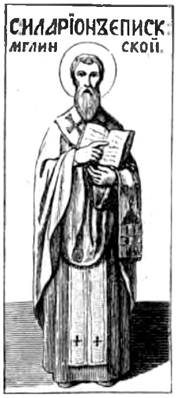
Блаж. Иларион происходил от родителей знатных и благочестивых270. Они искренно старались жить по заповедям Господним и были усердные молитвенники Божии. – У них долго не было детей. Это печалило их. Особенно скорбела мать о своём неплодии и часто изливала скорбь свою перед Матерью Божией. Царица Небесная, сострадательная к скорбям сердец христианских, испросила ей у Сына и Бога утешение. Раз в сонном видении Пресвятая сказала ей: «не скорби, – родишь сына, и он обратит многих к свету истины». – Слова Пречистой исполнились. Родившийся сын назван Иларионом, в означение того, что составил радость для скорбных родителей. Трёх лет дитя пело: Свят, Свят, Свят Господь. Мальчика учили книжному чтению, и он оказал быстрые успехи. На 18 году оставил он мир и принял монашество. В обители проходил послушания с ревностью, и настоятель утешался им. Так прошло несколько лет. Настоятель на смертном одре собрал братию и передал её попечению блаж. Илариона. В звании настоятеля Иларион был умным наставником и продолжал строгую жизнь. Изучив правила преп. Пахомия, часто целые ночи проводил он без сна – в молитве и чтении полезного душе271. Заботливый о спасении порученных ему душ, он побуждал их не терять дорогого времени на грехи. Особенно не терпел он нетрезвости и строго гнал её из обители. Случился сильный голод в стране. Иларион молился Богу, и пустые житницы его наполнились зерном; он кормил не только своих, но и чужих, приходивших к нему. Строгая жизнь прославила блаж. Илариона, и знаменитость его привлекла многих в обитель; иные приходили за советами Илариона, другие оставались жить под его руководством.
The blessed Hilarion was born of noble and pious parents270. They sincerely strove to live according to the Lord's commandments and were zealous in their prayers to God. For a long time they had no children. This grieved them. The mother especially sorrowed over her barrenness and often poured out her grief before the Mother of God. The Queen of Heaven, compassionate toward the sorrows of Christian hearts, obtained for her from Her Son and God a consolation. Once in a dream the Most Holy One said to her: "Grieve not—you shall bear a son, and he will turn many to the light of truth." The words of the Most Pure One were fulfilled. The son who was born was named Hilarion, signifying that he brought joy to his sorrowing parents. At three years of age the child sang: Holy, Holy, Holy is the Lord. The boy was taught to read, and he showed rapid progress. At the age of eighteen he left the world and received monastic tonsure. In the monastery he fulfilled his obediences with zeal, and the abbot took comfort in him. Thus several years passed. The abbot, on his deathbed, gathered the brethren and entrusted them to the care of the blessed Hilarion. In the rank of abbot, Hilarion was a wise instructor and continued his strict life. Having studied the rules of the Venerable Pachomius, he often spent entire nights without sleep—in prayer and reading what was beneficial to the soul271. Careful for the salvation of the souls entrusted to him, he urged them not to waste precious time on sins. He especially could not abide intemperance and strictly drove it from the monastery. A severe famine occurred in the land. Hilarion prayed to God, and his empty granaries were filled with grain; he fed not only his own but also strangers who came to him. His strict life glorified the blessed Hilarion, and his fame attracted many to the monastery; some came for Hilarion's counsel, others remained to live under his guidance.
По внушению Богоматери, Болгарский архиепископ Евстафий посвятил блаж. Илариона в епископа Мглинского, в 1134 году272. Благое небо вступилось за Церковь свою и посылает нужного деятеля в Болгарию, тогда как людская политика, по слепоте своей, наделала себе самой страшные беды. Манихеи, живя в Армении среди магометанства, мало вредили христианству. Имп. Цимисхий (969–976 г.) переселил их из Армении в Болгарию, тогда как и без того здесь уже были богомилы. Если бы Цимисхий был злодеем св. веры и империи, – такой поступок был бы для него естествен. Но и не будучи таким, а оставаясь плохим хозяином империи, он перенёс разрушительное начало в среду империи и Церкви273. Мглин (Μεγλενα, Μογλενα) на северо-востоке от Водины – Греческой Эдессы, главный город области274, и соседняя Славянская область Дроговичей во время св. Илариона приобрели печальную известность. Сами ересеучители богомилов писали: «общества наши Римские, Дреговицкие, Мглинские, Булгарские, Далматские разделены местами, но не в противоречии ни в чём между собой»275. По другому отзыву их же, все общества богомилов, распространившиеся по разным странам Запада, произошли от Болгарских и Дроговичских богомилов276. Дроговичская партия дуалистов держалась старой теории исконного бытия зла, равного добру: в Болгарской богомильской партии держались новой теории дуализма, соединяя двуначалие с единоначалием277. В сущности как манихейство, так и богомильство – то же, что впоследствии известно стало с именем протестантства: там и здесь гордый произвол, одетый в одежду
At the prompting of the Mother of God, the Bulgarian Archbishop Eustathius consecrated the blessed Hilarion as Bishop of Mglinsk in the year 1134272. A benevolent heaven interceded for its Church and sent a needed worker to Bulgaria, while human politics, in its blindness, brought terrible calamities upon itself. The Manichaeans, living in Armenia amidst Mohammedanism, did little harm to Christianity. The Emperor Tzimiskes (969–976 A.D.) transplanted them from Armenia to Bulgaria, even though the Bogomils were already there. If Tzimiskes had been a villain toward the holy faith and the empire, such an act would have been natural for him. But not being such, while remaining a poor steward of the empire, he transferred a destructive element into the midst of the empire and the Church273. Mglinsk (Μεγλενα, Μογλενα), to the northeast of Vodina—the Greek Edessa—the chief city of the region274, and the neighboring Slavic region of the Dregovichs, acquired a sad notoriety during the time of St. Hilarion. The heretical teachers of the Bogomils themselves wrote: "Our societies—the Roman*, the Dregovich, the Mglinsk, the Bulgarian, the Dalmatian*—are separated by place, but are in no contradiction with one another"275. According to another testimony of theirs, all the Bogomil societies that spread throughout various countries of the West originated from the Bulgarian and Dregovich Bogomils276. The Dregovich party of dualists held to the old theory of the primordial existence of evil, equal to good; the Bulgarian Bogomil party held to a new theory of dualism, uniting a twofold principle with a single principle277. In essence, both Manichaeism and Bogomilism are the same as what later became known under the name of Protestantism: in both, a proud willfulness, clothed in the garb
преобразователя христианства, толкующий откровение Божие, как ему угодно, и подчиняющий Божье человеческому.
of a reformer of Christianity, interpreting divine revelation as it pleases, and subordinating the divine to the human.
Тому, кто дорожил небесной истиной, славой Божьей и спасением людей, надлежало вести жестокую борьбу с людьми гордого произвола и надобно было иметь много благодати, чтобы вести борьбу с успехом. Св. Иларион вооружился Апостольской ревностью и усердными молитвами. Он неутомимо обличал нечестие богомилов, снимая с них личину лицемерной благости, которой обманывали они других. Проповедь его, подкрепляемая живым благочестием, оказывала чудесное действие. Число оставлявших заблуждение время от времени возрастало. Предводители ереси злились и употребляли разные нечистые меры в поддержание своего общества. Но истина доходила до сердец, передаваемая живым словом искреннего благочестия. Пособием святителю в борьбе с богомилами служили современные определения Константинопольской Церкви. На православном Востоке, после того как в 1110 году сожжён был лекарь Василий за распространение манихейства278, продолжали зорко смотреть за каждым проявлением манихейства. Охридский архиепископ, современный блаж. Илариону, два раза присутствовал на соборах в Цареграде против богомилов. На первом, в 1140 г., осуждены были сочинения Константина Хризомала, заразившегося учением богомилов, а в другой раз, в 1144 г., подвергся осуждению и темничному заключению инок Нифонт, увлёкшийся преступной строгостью манихейства против тела и отвергавший Еврейского Бога; в 1147 г. низвели с престола самого патриарха Козму за то, что тот по простоте своей хвалил строгого Нифонта279.
For one who cherished heavenly truth, the glory of God, and the salvation of men, it was necessary to wage a fierce struggle with men of proud willfulness, and he needed to have much grace in order to wage the struggle with success. St. Hilarion armed himself with apostolic zeal and fervent prayers. He tirelessly denounced the impiety of the Bogomils, stripping from them the mask of hypocritical goodness with which they deceived others. His preaching, supported by living piety, worked a miraculous effect. The number of those abandoning error increased from time to time. The leaders of the heresy grew angry and employed various unclean measures to support their society. But truth reached hearts, conveyed by the living word of sincere piety. The Hierarch was aided in his struggle with the Bogomils by the contemporary decrees of the Church of Constantinople. In the Orthodox East, after the physician Basil was burned in 1110 for spreading Manichaeism278, they continued to watch vigilantly for every manifestation of Manichaeism. The Archbishop of Ohrid, a contemporary of the blessed Hilarion, twice attended councils in Constantinople against the Bogomils. At the first, in 1140, the writings of Constantine Chrysomalus, who had been infected by the Bogomil teaching, were condemned; and another time, in 1144, the monk Niphon, who was carried away by the Manichaean criminal severity against the body and who rejected the God of the Hebrews, was condemned and imprisoned; in 1147, Patriarch Cosmas himself was deposed because, in his simplicity, he had praised the strict Niphon279.
Предводители ереси отважились вступить в открытый спор со святителем Иларионом. Почему, говорили они святому, не принимаете вы очевидной истины – мысли о двух началах, добром и злом, когда добро и зло перед глазами каждого в этом мире? Почему не отличаете благого Творца неба от злого строителя вещества? Святитель отвечал: некоторые из нас и само небо считают творением врага. Как же Бог почивает на небе – творении лукавого? Надобно учиться всему у вечной истины – Бога, надобно мыслить и верить так, как учит откровение Божие. А откровение Божие говорит нам об одном Творце мира, всего видимого и невидимого. Отче наш, Иже еси на небесех, – да будет воля Твоя яко на небеси и на земли (Мф.6:9–10): так повелел нам молиться Господь Иисус. Не ясно ли тем показывает Он нам, что один есть Господь неба и земли, один есть Бог истинный, всемощный и вседержитель. Да и Бог истинный может быть только один: два всемощные не могут быть мыслимы; один чем-нибудь должен быть ниже другого; а в таком виде он уже не Бог. Зло, существующее в мире, произошло не от Творца мира; оно явилось в мире после того, как сотворён мир. Зачем оскорблять и Бога и историю не умной мыслью начале зла?
The leaders of the heresy ventured to enter into an open dispute with Hierarch Hilarion. Why, they said to the saint, do you not accept the obvious truth—the idea of two principles, good and evil—when good and evil are before everyone's eyes in this world? Why do you not distinguish the good Creator of heaven from the evil builder of matter? The Hierarch replied: Some among us even consider heaven to be the creation of the enemy. How then does God dwell in heaven—the creation of the evil one? One must learn everything from the eternal truth—God; one must think and believe as divine revelation teaches. And divine revelation speaks to us of one Creator of the world, of all that is visible and invisible. Our Father, Who art in heaven—may Thy will be done, as in heaven, so on earth (Mt. 6:9–10): so the Lord Jesus commanded us to pray. Does He not thereby clearly show us that there is one Lord of heaven and earth, one true God, almighty and all-powerful? Indeed, the true God can only be one: two almighty beings cannot be conceived; one must in some way be inferior to the other; and in such a state he is no longer God. The evil that exists in the world did not come from the Creator of the world; it appeared in the world after the world was created. Why insult both God and history with an unwise idea of a principle of evil?
Богомилы говорили, что плоть Христова принесена с неба. Иларион отвечает: «откуда взяли вы это учение? Кто из Апостолов или Евангелистов учил так? Никто. Если бы тело Христа Иисуса было небесное, оно не испытывало бы ни алчбы, ни жажды, ни утомления, ни страдания, и не подлежало бы крестной смерти».
The Bogomils said that the flesh of Christ was brought from heaven. Hilarion replies: "From where did you take this teaching? Which of the Apostles or Evangelists taught thus? No one. If the body of Christ Jesus were heavenly, it would not have experienced hunger, nor thirst, nor weariness, nor suffering, and would not have been subject to death on the cross."
Богомилы говорили, что Ветхий Завет произведение лукавого.
The Bogomils said that the Old Testament was the work of the evil one.
Если бы от лукавого, говорил святитель, происходил Ветхий Завет, то Христос не сказал бы: испытайте Писания, яко вы мните в них имети живот вечный (Ин.5:39). Христос Господь признал самыми высшими заповедями заповеди о любви к Богу и ближнему, данные Моисею. Не думайте, говорил Он ещё, что пришёл Я разорить закон, – не разорить, а исполнить пришёл Я.
If the Old Testament came from the evil one, said the Hierarch, then Christ would not have said: Search the Scriptures, for you think that in them you have eternal life (Jn. 5:39). The Lord Christ recognized as the highest commandments those concerning love for God and neighbor, given to Moses. Do not think, He also said, that I have come to destroy the law—I have come not to destroy, but to fulfill it.
Богомилы высказывали вражду на крест Христов. Что станем мы думать, говорил святитель, когда явится на небе знамение Сына Человеческого, крест Его, и восплачутся все колена земли, не веровавшие кресту или не жившие по воле о кресте? Бедные люди сами себя уличают во лжи, – говорят, что вся беда от материи злой, и однако не хотят поклониться тому древу, которым освящён вещественный мир.
The Bogomils expressed enmity toward the Cross of Christ. What shall we think, said the Hierarch, when the sign of the Son of Man, His Cross, appears in the sky, and all the tribes of the earth that did not believe in the Cross or did not live according to the will concerning the Cross will weep? Wretched men convict themselves of falsehood—they say that all misfortune comes from evil matter, and yet they do not wish to bow down to that wood by which the material world was sanctified.
Зачем вы, богомилы, продолжал святитель, обманываете себя и других, называетесь христианами, когда вы вовсе не христиане, – враждуете против креста Христа Спасителя, не признаёте Бога единого, как веруют христиане, поносите древнее откровение, чтимое по слову Господа христианами? Простых добрых людей обманываете вы лицемерной кротостью, когда дышите гордостью. Быть не может истинного благочестия в тех, кто не признаёт в себе сердечной порчи самолюбием и не испрашивает благодати Божией молитвой и смиренной покорностью порядку спасения, установленному Господом! К чему посты ваши? Поверьте себя искренно – и увидите, что злые мысли – зависть, тщеславие, суетность, коварство, ложь, обманы – не дело в нас злого вещества, и не побеждаются постом, а они – плод испорченного самолюбия и потому требуют для себя духовных лекарств и духовных подвигов.
Why do you, Bogomils, continued the Hierarch, deceive yourselves and others, calling yourselves Christians, when you are not Christians at all—you are hostile to the Cross of Christ the Savior, you do not acknowledge the one God as Christians believe, you revile the ancient revelation honored by Christians according to the Lord's word? You deceive simple, good people with hypocritical meekness, while you breathe pride. There can be no true piety in those who do not acknowledge in themselves a corruption of the heart by self-love and do not beseech the grace of God through prayer and humble submission to the order of salvation established by the Lord! What are your fasts for? Examine yourselves sincerely—and you will see that evil thoughts—envy, vainglory, vanity, cunning, falsehood, deceit—are not the work of evil matter in us, and are not overcome by fasting; rather, they are the fruit of corrupted self-love and therefore require for themselves spiritual medicines and spiritual struggles.
Внимая пастырскому увещанию, многие из богомилов умилились сердцем и, осудив прежнее нечестие своё, соединились с Христовой Церковью280.
Heeding the pastoral exhortation, many of the Bogomils were moved in heart and, condemning their former impiety, united with the Church of Christ280.
Ревностному пастырю Мглинской Церкви надлежало ещё бороться с Армянами. Эти всесветные торгаши явились в Болгарию, по расчётам торговли281; но они же были спутниками павликиан, переселённых Цимисхием из Армении, – Учители Армянские досадовали на то, что святитель Иларион так успешно действовал на богомилов, – Они отважились вступить в спор с Иларионом о преимуществах своей Церкви; хвалились, что «содержат они древнейшие предания, святые службы, посты и всё, что от первых времён предала Апостольская Церковь». «Хорошо, отвечал святитель, удерживать древние обряды. Ещё более важно, что вы до IV Вселенского собора держались учения, передававшегося в Церкви от Апостолов; но беда вам от того, что после Халкидонского собора отделились вы от Церкви, удержав нечестивое Евтихиево учение». Святитель обличал Армян за то, что не смешивают в евхаристии вина с водой. Крест, говорил он, из чего бы он ни был сделан, не прежде начинаете вы чествовать, как окрестите его, как человека, вонзите в него гвозди и помажете его кровью жертвенной. Если крест, воображаемый рукою, во всяком случае освящает предметы, осеняемые им, к чему же крестите и мажете его кровью? Откуда у вас пост Арцыбуриев? Он вовсе не пост отцов.
The zealous pastor of the Church of Mglin had yet to contend with the Armenians. These universal traders had come into Bulgaria for commercial reasons281; but they were also companions of the Paulicians, resettled by Tzimiskes from Armenia. The Armenian teachers were vexed that Hierarch Hilarion acted so successfully upon the Bogomils. They ventured to enter into a dispute with Hilarion about the advantages of their Church; they boasted that "they preserve the most ancient traditions, holy services, fasts, and everything that the Apostolic Church handed down from the earliest times." "It is good," replied the Hierarch, "to preserve ancient rites. It is even more important that you held to the teaching transmitted in the Church from the Apostles until the Fourth Ecumenical Council; but your misfortune is that after the Council of Chalcedon you separated from the Church, retaining the impious teaching of Eutyches." The Hierarch reproached the Armenians for not mixing wine with water in the Eucharist. The Cross, he said, whatever it may be made of, you do not begin to venerate until you have baptized it, like a man, driven nails into it, and anointed it with sacrificial blood. If the Cross, imagined by the hand, in any case sanctifies the objects overshadowed by it, why do you baptize it and anoint it with blood? Whence do you have the fast of Ardzibouri? It is not at all a fast of the fathers.
Обличаемые Армяне жестоко злились на святителя. Раз дошли они до того, что, побеждённые ответами его, в порыве ярости взялись за камни и замертво избитым оставили святителя в поле, близ того места, куда любил он удаляться на безмолвие. Бог оживил его; он пришёл в чувство и кое-как дошёл до пустынной кельи своей. Православные Мглитяне, узнав о всём том, хотели было перебить Армян: но святитель удержал их. «Каждый поднимающий нож от ножа погибнет», сказал он словами Господа. – Армяне, услыхав о таком решении святителя, пришли в раздумье и потом разбирались в мнениях. «Это – добрый, истинный пастырь», говорили одни; «нет, говорили другие, он хитрит и обманывает людей». Некоторые из Армян присоединились к православию.
The reproached Armenians were fiercely enraged at the Hierarch. Once they went so far that, being defeated by his answers, in a fit of fury they seized stones and left the Hierarch for dead in a field, near the place where he loved to withdraw for silence. God revived him; he came to his senses and somehow made his way to his hermit cell. The Orthodox of Mglin, learning of all this, wanted to kill the Armenians; but the Hierarch restrained them. "Every one who takes up the sword will perish by the sword," he said with the words of the Lord. The Armenians, hearing of such a decision of the Hierarch, fell into reflection and then debated among themselves. "This is a good, true pastor," said some; "no," said others, "he is cunning and deceives people." Some of the Armenians joined Orthodoxy.
Имп. Мануил в это время был против Армян. Тероз, Армянский князь, делал много оскорблений империи, и Мануил в 1156 году вынужден был укрощать дерзости его силой оружия282. В таком расположении, узнав о подвигах Мглинского святителя против Армян, император послал послание, которым, побуждая продолжать дело своё, предоставлял блаженному Илариону выгнать непокорных и беспокойных Армян из края. Воля императора имела то действие, что и остававшиеся с приверженностью к ложным мнениям Армяне приняли православие.
Emperor Manuel at this time was opposed to the Armenians. Teros, the Armenian prince, inflicted many insults upon the empire, and Manuel in 1156 was compelled to curb his insolence by force of arms282. In such a disposition, learning of the exploits of the Mglin Hierarch against the Armenians, the emperor sent a letter, by which, urging him to continue his work, he granted the blessed Hilarion authority to drive the disobedient and troublesome Armenians out of the region. The emperor's will had the effect that even those Armenians who remained with adherence to false opinions accepted Orthodoxy.
Блаженный Иларион на месте еретического собрания построил великолепный храм св. Апостолов и устроил монастырь. Начальником над иноками поставлен был Пётр, ученик святого, муж духовной жизни. Блаженный Иларион и сам зорко смотрел за жизнью иноков; особенно не терпел он между ними нетрезвости.
The blessed Hilarion built a magnificent church of the Holy Apostles on the site of the heretical gathering and established a monastery. Peter, a disciple of the saint, a man of spiritual life, was appointed superior over the monks. The blessed Hilarion himself also kept a watchful eye on the life of the monks; especially he could not tolerate intemperance among them.
Блаженный Иларион мирно почил в 1164 году.
The blessed Hilarion peacefully reposed in the year 1164.
После смерти его стали нарушать в его обители заповедь его о трезвости. Игумен Пётр увещевал слабых и скорбел о их невнимании к себе. В сонном видении видит он, что Иларион одних грозно обличал, а иных жестоко наказывал палкой. Оказалось, что первые долго пролежали больными, но выздоровели, а другие скоро умерли. – По соборному определению открыты были мощи его, оказавшиеся нетленными. Многие больные получили исцеление при мощах его283.
After his death, they began to violate his commandment concerning sobriety in his monastery. Abbot Peter admonished the weak and grieved over their inattention to themselves. In a dream vision he sees Hilarion sternly reproving some and severely punishing others with a staff. It turned out that the former lay ill for a long time but recovered, while the others soon died. By a conciliar decree his relics were uncovered, and they were found to be incorrupt. Many sick received healing at his relics283.
При Болгарском царе Иоанне Ясене, в 1206 г., мощи перенесены были в Тернов, а при сыне его положены были в новом храме 40 мучеников284. При нападении Турок опустили их в подземелье, и, недавно открытые, они тайно перенесены в Константинополь285.
Under the Bulgarian Tsar John Asen, in 1206, the relics were translated to Tarnovo, and under his son they were placed in the new church of the Forty Martyrs284. At the attack of the Turks they were lowered into a crypt, and, having been recently uncovered, they were secretly translated to Constantinople285.