Св. пророк Иоиль, сын Вафуила, из колена Рувимова, жил, как предполагается, при Иудейских царях Ахазе и Езекии. И его устами предупреждал Господь Свой избранный, любимый народ, так часто погружавшийся в нечестие, и, угрожая ему пленом Вавилонским, вместе с тем взывал к Израилю, чтобы «обратился к Нему всем сердцем своим в посте, плаче и рыдании, ибо Он благ и милосерд, долготерпелив и многомилостив, и сожалеет о бедствии».
St. Prophet Joel, the son of Bethuel, of the tribe of Reuben, lived, as is supposed, during the reigns of the Judean kings Ahaz and Hezekiah. Through his lips the Lord warned His chosen, beloved people, who so often sank into impiety, and, threatening them with the Babylonian captivity, at the same time called out to Israel to "turn to Him with all their heart, with fasting, weeping, and mourning, for He is gracious and merciful, longsuffering and abundant in lovingkindness, and He relents from bringing calamity."
Особенно же важным для христиан было пророчество Иоиля о сошествии Святого Духа на Апостолов и вообще на христиан в следующих словах его: «и узнаете, что Я – посреди Израиля, и Я – Господь Бог ваш, и нет другого, и Мой народ не посрамится вовеки. И будет после того, изолью от Духа Моего на всякую плоть, и будут пророчествовать сыны ваши и дочери ваши; старцам вашим будут сниться сны, и юноши ваши будут видеть видения. И также на рабов и на рабынь в те дни изолью от Духа Моего» (Иоил.2:27–29). «И покажу знамения на небе и на земле: кровь, и огонь, и столпы дыма. Солнце и луна померкнут, и звёзды потеряют блеск свой. И возгремит Господь с Сиона и даст глас Свой из Иерусалима; содрогнутся небо и земля, но Господь будет защитой для народа Своего и обороной для сынов Израилевых. Тогда узнаете, что Я – Господь Бог ваш, обитающий на Сионе, на святой горе Моей; и будет Иерусалим святыней, и не будут уже иноплеменники проходить через него... И будет жить вечно Иуда и Иерусалим – в роды родов. Я смою кровь их, которую не смыл ещё, и Господь будет обитать на Сионе»... заключает своё пророчество о будущем вечном мире Боговдохновенный Иоиль.
Especially important for Christians was Joel's prophecy concerning the descent of the Holy Spirit upon the Apostles and upon Christians in general, in the following words: "And you shall know that I am in the midst of Israel, and that I am the Lord your God, and there is no other; and My people shall never be put to shame. And it shall come to pass afterward that I will pour out My Spirit on all flesh; your sons and your daughters shall prophesy; your old men shall dream dreams, and your young men shall see visions. And also on My menservants and on My maidservants in those days I will pour out My Spirit" (Joel 2:27–29). "And I will show wonders in the heavens and on the earth: blood and fire and pillars of smoke. The sun and the moon shall be darkened, and the stars shall lose their brightness. And the Lord shall roar from Zion and utter His voice from Jerusalem; the heavens and the earth shall shake, but the Lord will be a shelter for His people and a stronghold for the sons of Israel. Then you shall know that I am the Lord your God, dwelling in Zion, My holy mountain; and Jerusalem shall be holy, and strangers shall no longer pass through her... And Judah shall abide forever, and Jerusalem from generation to generation. I will cleanse their blood, which I have not yet cleansed, and the Lord shall dwell in Zion"... thus the God-inspired Joel concludes his prophecy concerning the future eternal peace.
Уар был воин, начальник отряда в Египте в начале IV столетия, и принадлежал к числу христиан, втайне исповедовавших веру свою. Во время гонения на христиан в царствование Максимиана Геркулия, когда множество христиан были преданы мученической смерти и в Египте, другие томились в тюремном заключении, в ожидании истязаний, Уар. подкупая сторожей, посещал ночью узников, доставлял им всякую помощь, утешал и укреплял их. Однажды, найдя в темнице новых заключённых (то были семь учителей христианских, захваченных в пустыне, где они скрывались), Уар с особенным усердием ухаживал за ними, освободил их от оков, доставил им пищу, которой они были лишены уже в продолжении 8-ми дней, и среди беседы с ними был застигнут стражами, пришедшими взять мучеников для представления их на суд.
Ouar was a soldier, a commander of a detachment in Egypt at the beginning of the fourth century, and belonged to the number of Christians who secretly confessed their faith. During the persecution of Christians in the reign of Maximian Herculius, when many Christians were put to a martyr's death in Egypt, and others languished in prison awaiting tortures, Ouar, bribing the guards, visited the prisoners by night, gave them every kind of help, comforted and strengthened them. Once, finding in the prison newly incarcerated men (these were seven Christian teachers, captured in the desert where they were hiding), Ouar tended them with particular zeal, freed them from their chains, brought them food, of which they had been deprived for eight days, and while conversing with them was caught by the guards who had come to take the martyrs to be presented for trial.
– Что ты тут делаешь? – спросили они Уара, – уже не обольщаешься ли баснями этих безумных христиан? Разве ты не знаешь, что за это можешь лишиться воинского чина и даже быть предан истязаниям и смерти?
"What are you doing here?" they asked Ouar. "Are you not being deceived by the fables of these insane Christians? Do you not know that for this you may lose your military rank and even be subjected to tortures and death?"
– Вы не захотите донести на меня, – отвечал воинам начальник отряда, – но если бы и донесли, то я готов пострадать вместе с этими мучениками, потому что я и сам – христианин.
"You would not wish to inform on me," the commander answered the soldiers, "but even if you did inform, I am ready to suffer together with these martyrs, because I myself am a Christian."
Ничего не ответили воины, но, взяв шестерых исповедников (седьмой же лежал в предсмертном изнеможении и вскоре скончался в темнице), они повели их на суд. Вслед за ними пришёл на суд и Уар, и на вопрос судьи: где же седьмой узник? – отвечал: Он уже предстоит Христу, а вместо него пришёл я, чтобы разделить участь исповедников Христовых...
The soldiers answered nothing, but, taking six of the confessors (the seventh lay in mortal exhaustion and soon died in prison), they led them to the trial. Ouar also came to the trial after them, and when the judge asked, "Where is the seventh prisoner?" he answered: "He already stands before Christ, and I have come in his place to share the fate of the confessors of Christ..."
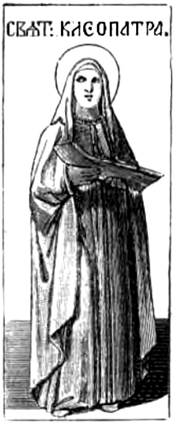
Разгневанный до ярости открытием, что и храбрейший и надежнейший начальник совращён в безумную веру во Христа, и приписывая это влиянию христианских учителей, судья предал их истязаниям и потом, отослав их снова в темницу, велел беспощадно мучить Уара, так что среди истязаний, после того как суковатыми палками были у него выбиты внутренности и упали на землю, мученик скончался. – На другой день были обезглавлены и шестеро христианских учителей и преданы погребению христианами. – Тело же Уара, выброшенное за городом на съедение зверям, ночью тайно взяла одна благочестивая вдова христианка, по имени Клеопатра, и сохраняла его временно в своём доме. По окончании же гонения в 312 г., эта женщина, родом из Палестины, вдова военачальника, умершего в Египте, выпросила позволение у правительства перевезти на родину останки своего мужа и, под видом их, перевезла в Палестину мощи св. муч. Уара, к которым относилась она с благоговейной верой. Там положила она их в свою фамильную пещеру в селении Эдре262 и каждый день молилась при мощах Уара, мучений которого она была свидетельницей в Египте. Благословение Божие видимо пребывало в доме благочестивой христианки; единственный сын её Иоанн благополучно достигал совершенного возраста и готовился поступить на царскую службу. – Между тем, усердная почитательница святого мученика возымела желание построить храм в честь его. Бог помог ей совершить это благочестивое дело; храм был окончен её стараниями; на освящение его был приглашён епископ с духовенством, и собралось множество народа. С торжеством были перенесены в него мощи св. Уара. Преисполненная радостью, дождавшись исполнения своего заветного желания, Клеопатра во время совершения литургии в новоосвящённом храме усердно молилась мученику, чтобы он исходатайствовал у Бога всё полезнейшее и спасительнейшее для неё и для её сына. По окончании Божественной службы Клеопатра предложила угощение духовенству, народу, нищим и странникам, собравшимся на чествование мученика, и сама вместе с сыном радушно прислуживала всем при угощении. – Между тем, к вечеру, когда кончилось отрадное празднество, юноша Иоанн внезапно заболел, быстро развился непостижимый недуг и, пометавшись несколько часов в горячешном жару, в полночь скончался сын Клеопатры...
Enraged to fury at the discovery that even the bravest and most reliable commander had been led astray into the insane faith in Christ, and attributing this to the influence of the Christian teachers, the judge subjected them to tortures and then, sending them back to prison, ordered Varus to be mercilessly tormented, so that during the tortures, after his entrails were beaten out with knotty clubs and fell to the ground, the martyr died. The next day the six Christian teachers were also beheaded and were given burial by Christians. The body of Varus, thrown outside the city to be devoured by beasts, was secretly taken at night by a certain pious Christian widow named Cleopatra, and she kept it temporarily in her house. After the end of the persecution in 312 A.D., this woman, a native of Palestine, the widow of a military commander who had died in Egypt, obtained permission from the government to transport her husband's remains to her homeland, and under the guise of them, she transported to Palestine the relics of St. Martyr Varus, toward which she had reverent faith. There she placed them in her family cave in the village of Edre262 and prayed daily at the relics of Varus, whose martyrdom she had witnessed in Egypt. The blessing of God visibly abode in the house of the pious Christian woman; her only son John successfully reached full age and was preparing to enter the imperial service. Meanwhile, the zealous devotee of the holy martyr conceived the desire to build a church in his honor. God helped her to accomplish this pious work; the church was completed through her efforts; for its consecration a bishop with the clergy was invited, and a multitude of people gathered. The relics of St. Varus were solemnly translated into it. Filled with joy, having lived to see the fulfillment of her cherished desire, Cleopatra during the celebration of the Divine Liturgy in the newly consecrated church earnestly prayed to the martyr that he would obtain from God everything most profitable and salvific for herself and for her son. After the conclusion of the divine service, Cleopatra offered a feast to the clergy, the people, the poor, and the strangers who had gathered to honor the martyr, and she herself together with her son cordially served everyone at the feast. Toward evening, when the joyful celebration had ended, the youth John suddenly fell ill; an incomprehensible malady rapidly developed, and after tossing for several hours in a feverish heat, at midnight Cleopatra's son died...
Поражённая неожиданной, неутешной скорбью, мать бросилась в церковь святого Уара и, припав ко гробу мученика, отчаянно взывала к нему: «угодник Божий! такого ли горя могла я ожидать за всё усердие моё к тебе... Как же не испросил ты у Господа не лишать меня моего единственного сына! За что отнята у меня вся моя надежда... кто теперь будет моей опорой в старости? Кто положит в гроб тело моё... Возврати мне моего сына, как некогда Елисей воскресил сына Соманитской жены, или возьми в этот час и мою душу...».
Struck by unexpected, inconsolable grief, the mother rushed to the church of St. Varus and, falling down at the martyr's tomb, cried out to him in despair: "O servant of God! Could I have expected such grief for all my zeal toward you... Why did you not ask the Lord not to deprive me of my only son! For what reason has all my hope been taken from me... Who now will be my support in old age? Who will lay my body in the grave... Return my son to me, as Elisha once raised the son of the Shunammite woman, or take my soul also at this hour..."
Среди томительных страданий осиротевшая мать изнемогла и впала в лёгкое забытьё. Тогда явились ей св. муч. Уар и сын её Иоанн в блистательных одеждах, озарённые чудным светом.
Amidst her tormenting sufferings, the bereaved mother grew faint and fell into a light slumber. Then St. Martyr Varus and her son John appeared to her in radiant garments, illumined by a wondrous light.
– Зачем ты с ропотом взываешь ко мне? – сказал мученик Клеопатре: – я знаю и ценю твоё почитание и всегда молю Бога о родных твоих, среди которых ты положила меня, – и о сыне твоём я умолил Господа, чтобы Он сопричислил его к лику святых Своих, и вот, он призван к блаженству. Разве это не та спасительная участь, которую ты испрашивала для него у Бога? Если ты хочешь, то возьми сына твоего и отдай на служение царю земному вместо того, и чтобы предстоять ему Царю Небесному.
"Why do you cry out to me with murmuring?" said the martyr to Cleopatra. "I know and value your veneration and always pray to God for your relatives, among whom you have placed me—and for your son I have besought the Lord that He would number him among His saints, and behold, he has been called to blessedness. Is this not that salvific lot which you asked of God for him? If you wish, then take your son and give him to serve an earthly king instead, and to stand before the Heavenly King."
– Нет, не возвращай меня в мир, полный неправд и беззаконий, – умолял Иоанн мученика и, обратясь к своей матери, сказал: – зачем ты скорбишь, мать моя? Если любишь меня, то радуйся моему счастью и не отвлекай от небесного блаженства ради земного убожества...
"No, do not return me to the world, full of falsehoods and iniquities," John implored the martyr, and turning to his mother, said: "Why do you grieve, my mother? If you love me, then rejoice in my happiness and do not draw me away from heavenly blessedness for the sake of earthly poverty..."
Таким чудным видением утешил Бог в скорби благочестивую рабу Свою, и, преисполненная радостью и веселием, она торжественно похоронила тело своего сына при гробе мученика, «проводив его в могилу, не как мертвеца, но как жениха в чертог брачный» ... Остальное время жизни своей Клеопатра проводила в уединённой кельи при храме св. муч. Уара, посвятив себя молитве и благотворительности и в спокойном ожидании вечного соединения с своим сыном. Отрешившись от всего земного, предвкушая духом иную жизнь, утешаемая нередкими явлениями ей её сына и мученика Уара, мирно и радостно скончалась она через семь лет по кончине Иоанна (октября 327 г.) и похоронена была рядом со своим сыном в храме св. Уара.
With such a wondrous vision God comforted His pious handmaid in her sorrow, and, filled with joy and gladness, she solemnly buried her son's body at the martyr's tomb, "escorting him to the grave, not as a dead man, but as a bridegroom to the bridal chamber"... The remaining time of her life Cleopatra spent in a solitary cell at the church of St. Martyr Varus, devoting herself to prayer and charity, and in peaceful expectation of eternal reunion with her son. Having detached herself from all earthly things, anticipating in spirit another life, comforted by frequent appearances to her of her son and the martyr Varus, she peacefully and joyfully reposed seven years after the death of John (October 327 A.D.) and was buried next to her son in the church of St. Varus.
В Московском Архангельском соборе в Кремле, в приделе св. мученика Уара, устроенном в честь его при Иоанне Грозном, существует местная икона св. Уара, к которой с верой приходят матери молиться об исцелении своих детей от болезни.
In the Moscow Archangel Cathedral in the Kremlin, in the side-chapel of St. Martyr Varus, built in his honor under Ivan the Terrible, there exists a local icon of St. Varus, to which mothers come with faith to pray for the healing of their children from illness.
Благодетельный Промысл Божий, по всегда премудрому изволению Своему, и заблуждения человеческие превращает иногда в орудие спасения человека. Таким образом, иные люди, впав в заблуждение и сознав его по благодати Божией, становятся самыми ревностными, самыми энергичными обличителями того заблуждения, злые последствия которого они на себе самих испытали и, не испытав их, может быть, не нашли бы в себе той силы к опровержению их и к защите истины, которой изумляют они, когда, как бы в искупление своего уклонения от правды, начинают в общее просвещение и назидание открыто и убедительно проповедовать её и увлекают за собой многочисленных последователей, ограждая их от опасности впасть в недостаточно до тех пор обличённые и опроверженные заблуждения.
The beneficent Providence of God, according to His ever-wise will, sometimes turns even human errors into an instrument of man's salvation. Thus, some people, having fallen into error and having recognized it through the grace of God, become the most zealous, the most energetic denouncers of that error, the evil consequences of which they themselves have experienced, and without experiencing them, perhaps, they would not have found in themselves that strength for refuting them and for defending the truth, at which they astonish others when, as if in expiation of their deviation from the truth, they begin, for the general enlightenment and edification, to preach it openly and convincingly, and draw after them numerous followers, guarding them from the danger of falling into errors insufficiently exposed and refuted until then.
Так, по следам первого образца в этом отношении – св. Апостола Павла, подвизались и многие, и в числе их – воспоминаемый сегодня Церковью святой Леонтий философ, «по родине – Византийский, по должности – схоластик или адвокат, который, хитростью быв завлечён в, секту несториан, но уразумев своё заблуждение, отказался от светской должности и в лавре св. Саввы263 проводил с тех пор жизнь подвижническую – в посте, молитве и изучении тайн Святой веры»264.
Thus, following the example of the first model in this regard—the holy Apostle Paul—many labored, and among them is the saint commemorated today by the Church, Leontius the philosopher, “by birth a Byzantine, by office a scholastic or advocate, who, having been cunningly drawn into the sect of the Nestorians, but having recognized his error, renounced his secular position and from that time led an ascetic life in the Lavra of St. Sabbas263—in fasting, prayer, and the study of the mysteries of the holy Faith”264.
Уяснив себе наконец всю чистоту православия и всю гибель уклонения от него в виде ересей, Леонтий все силы и все обширные познания свои употребил на то, чтобы и письменно и изустно обличать современные заблуждения. Памятником деятельности, которой он посвятил себя, остались многочисленные его сочинения в обличение различных еретических учений (о них см. кн. «Учение истор. об. Отц. Церкви» Филар., архиеп. Черниг., § 247).
Having at last fully grasped all the purity of Orthodoxy and all the ruin of deviating from it into heresies, Leontius employed all his strength and all his extensive knowledge to denounce contemporary errors both in writing and orally. The monuments of the activity to which he devoted himself are his numerous works refuting various heretical teachings (concerning them, see the book The Historical Teaching of the Holy Fathers of the Church by Philaret, Archbishop of Chernigov, § 247).
Дочь благочестивого и богатого Палестинского дома, Клеопатра выдана была в замужество за военного начальника265. Он умер на службе царской в Египте, оставив юного сына Иоанна. Для матери вдовы осталось одно утешение – сын. Она воспитала его со всей нежной любовью и за него молилась. Когда Уар (Вар), начальник Египетской сотни военной, за свободное исповедание Христова имени был мучен и замучен, а тело его брошено было между трупами животных, Клеопатра, без страха и с участием любви смотревшая на подвиги мученика, тайно со слугами своими скрыла святое тело в доме своём, где благоговейно положила его в пещере под своей спальней. Это было в гонение Максимина Геркулия в 310 г. При Константине кончились гонения. Благочестивая Клеопатра, возвращаясь на родину, благоговейно взяла с собой мощи мученика, а это стоило ей многих забот. Мощи положила она в фамильной пещере «в своём поселении Эдре»266. Каждый день молилась она при мощах мученика и решилась построить храм мученику. Между тем сын пришёл в возраст, воспитанный зоркой любовью матери; это был прекрасный молодой человек, добрый, послушный, готовый на всё доброе. Любящая мать озаботилась определить его в военную службу. По просьбе матери и за заслуги отца сын принят был с офицерским чином, для него прислан был военный пояс. Мать очень рада была счастью сына, но сказала: «пусть милый сын мой вместе со мной перенесёт святые мощи в новый храм и тогда отправится он на службу». На освящение храма приглашён был епископ с духовенством, собралось множество народа. Когда совершилось освящение и мощи были перенесены в храм, во время литургии мать горячо молила мученика испросить у Господа для сына то, что угодно святой воле Божией, благой и мудрой; более того, говорила она, ничего не смею просить, Господь знает полезное для нас.
The daughter of a pious and wealthy Palestinian family, Cleopatra was given in marriage to a military commander265. He died in the royal service in Egypt, leaving a young son, John. For the widowed mother, one consolation remained—her son. She raised him with all tender love and prayed for him. When Uar (Varus), the commander of an Egyptian military century, was tortured and martyred for freely confessing the name of Christ, and his body was thrown among the carcasses of animals, Cleopatra, who had watched the martyr’s struggles without fear and with loving sympathy, secretly hid the holy body in her house with the help of her servants, where she reverently placed it in a cave beneath her bedchamber. This occurred during the persecution of Maximian Herculius in 310 A.D. Under Constantine, the persecutions ceased. The pious Cleopatra, returning to her homeland, reverently took the martyr’s relics with her, which cost her much care. She placed the relics in the family cave “in her settlement of Edre”266. Every day she prayed at the martyr’s relics and resolved to build a church in honor of the martyr. Meanwhile, her son came of age, raised by the watchful love of his mother; he was a handsome young man, kind, obedient, and ready for every good deed. The loving mother took care to enroll him in military service. At the mother’s request and for the father’s merits, the son was accepted with an officer’s rank, and a military belt was sent for him. The mother was very glad of her son’s good fortune, but said: “Let my dear son, together with me, transfer the holy relics to the new church, and then he shall depart for service.” For the consecration of the church, the bishop with the clergy was invited, and a multitude of people gathered. When the consecration was completed and the relics were transferred to the church, during the Divine Liturgy the mother fervently prayed to the martyr to ask the Lord for her son that which is pleasing to the holy will of God, which is good and wise; “more than that,” she said, “I dare not ask; the Lord knows what is beneficial for us.”
Для гостей нового храма приготовлено было богатое угощение. Христианская любовь сделала более: мать сама прислуживала при столе, и сын по её воле также прислуживал; «мы с тобой после покушаем», сказала она сыну. При конце обеда, сын почувствовал головную боль и лёг в постель. Мать собралась вместе с ним покушать, но оказалось, что он в сильном огне. Мать встревожилась и осталась при постели больного сына. К полночи сын умер. Неутешно рыдала мать о потере единственного сына, единственной радости её; в волнении души роптала она на мученика за его холодность к её судьбе. Измученная страданием душевным, она впала в лёгкий сон. Являются ей мученик и сын её, оба в блестящем военном наряде и в чудном свете. Мученик говорит матери: «напрасно ты жалуешься на меня. Знаю и ценю все дела благочестивой любви твоей, – и те, что совершила ты в Египте, и те, что творила тут. Молился и молюсь я за тебя. По молитве моей, Господь простил грехи родных твоих, покоящихся в фамильной пещере твоей. Для сына твоего выпросил я у Господа, что он теперь со мной в чине воинов Царя Небесного, близких к престолу Его. Разве это не благая воля Божия, которой желала ты для сына? Если хочешь, сын может поступить и в службу царю земному. Выбирай, но не обманись». Сын просил мученика не возвращать его в мир, полный грехов и бед, хотя бы мать и хотела того. Клеопатра, видя сына в такой невиданной славе, сказала: «возьмите и меня с собой». Святой отвечал: «возьмём, когда придёт время». И стали невидимы оба. Придя в себя, Клеопатра нашла сердце своё полным радости и веселия. Она рассказала видение священникам, и тело сына положено было близ мощей мученика.
A rich feast was prepared for the guests of the new church. Christian love did even more: the mother herself served at table, and her son, at her wish, also served; “you and I will eat afterward,” she said to her son. At the end of the meal, the son felt a headache and lay down on a bed. The mother prepared to eat together with him, but it turned out that he was in a high fever. The mother became alarmed and remained at the bedside of her sick son. By midnight, the son died. Inconsolably, the mother wept over the loss of her only son, her only joy; in the agitation of her soul, she murmured against the martyr for his coldness toward her fate. Exhausted by spiritual suffering, she fell into a light sleep. The martyr and her son appeared to her, both in brilliant military attire and in wondrous light. The martyr said to the mother: “In vain do you complain of me. I know and value all the deeds of your pious love—both those you performed in Egypt and those you performed here. I have prayed and do pray for you. Through my prayer, the Lord has forgiven the sins of your relatives who rest in your family cave. For your son, I have obtained from the Lord that he is now with me in the rank of soldiers of the Heavenly King, near His throne. Is this not the good will of God, which you desired for your son? If you wish, your son may enter the service of an earthly king. Choose, but do not be deceived.” The son begged the martyr not to return him to the world, full of sin and sorrow, even if his mother wished it. Cleopatra, seeing her son in such unprecedented glory, said: “Take me with you as well.” The saint replied: “We shall take you when the time comes.” And both became invisible. Coming to herself, Cleopatra found her heart full of joy and gladness. She related the vision to the priests, and her son’s body was placed near the martyr’s relics.
Теперь блаженная поняла, что ей надобно ещё трудиться над собой для Господа; небесные не говорят неправды. И она удвоила труды свои. Она раздала имение своё бедным и стала жить только для искреннего благочестия. В постановлениях Апостольских предписывалось: «да будет всякая вдовица кротка, молчалива, тиха, незлобива, не гневлива, не болтлива, не двуязычница, не охотница мешаться в чужие дела... Как премудрая Юдифь, известная целомудрием, ночью и днём умоляла Бога за Израиля (Иудиф.9:1), так и подобная ей вдовица непрестанно возносит к Богу моление за Церковь... её и око непорочно, и слух чист, и руки не запачканы, и ноги покойны, и уста говорят должное... Она воздержна, благоговейна, стыдлива – поёт псалмы, молится, читает священное, постится»267. Так жила блаженная Клеопатра. Она день и ночь молилась и соблюдала пост. Иначе, она вела теперь жизнь посвятивших себя Богу. Современный ей Палестинский епископ Евсевий так писал об этой жизни: «в Церкви Божией два рода жизни. Один течёт выше природы и обычной жизни, не заботится ни о браке, ни о рождении детей, ни о земном счастье, совершенно и во всём отделяется от обычного житья, посвящает себя на служение Богу, по полной любви к небесному; избирающие эту жизнь представляются умершими для смертной жизни, остаются на земле по телу, но духом они на небе»268. При такой жизни преподобной Клеопатры, сын и мученик часто являлись ей с неба. В подвигах высокой духовной жизни провела она семь лет и мирно переселилась к мученику и сыну. Тело её положено было близ мощей мученика. Это было не позже 327 года.
Now the blessed one understood that she still needed to labor over herself for the Lord; the heavenly ones do not speak falsehood. And she doubled her labors. She distributed her property to the poor and began to live only for sincere piety. In the Apostolic Constitutions it was prescribed: “Let every widow be meek, silent, gentle, not evil-minded, not wrathful, not talkative, not double-tongued, not fond of meddling in others’ affairs... As the wise Judith, renowned for chastity, besought God night and day for Israel (Jth. 9:1), so likewise a widow like her unceasingly offers up prayer to God for the Church... her eye is blameless, her hearing pure, her hands unstained, her feet at peace, and her lips speak what is fitting... She is temperate, reverent, modest—she sings psalms, prays, reads the Scriptures, fasts”267. Thus lived the blessed Cleopatra. She prayed day and night and kept the fast. In other words, she now led the life of those who have consecrated themselves to God. Her contemporary, Eusebius, the Palestinian bishop, wrote thus of this life: “In the Church of God there are two kinds of life. One flows above nature and ordinary life, cares neither for marriage nor for the bearing of children nor for earthly happiness, is completely and in all things separated from ordinary living, and devotes itself to the service of God, out of full love for the heavenly; those who choose this life appear dead to mortal life, remaining on earth in body, but in spirit they are in heaven”268. In such a life of the Venerable Cleopatra, her son and the martyr often appeared to her from heaven. She spent seven years in the struggles of the high spiritual life and peacefully departed to the martyr and her son. Her body was placed near the martyr’s relics. This occurred no later than 327 A.D.
Метафраст: «положила в своём селе Эдре, близь горы Фавора». Тут ошибка или неточность. Если имение Клеопатры было близ Фавора, то оно называлось Эндор, лежавший между Наином и Фавором, в 5 верстах от первого. Если же это была Эдраи то это место – не вблизи Фавора. Эдра, Эдрин, Драа, в древности собственность полколена Манассиина в 7 милях на юго-запад от Бокры и почти в 8 милях от северного края Геннисаретского озера, в 4 в. была местом епископской кафедры. Rosenmuller bibl. Alterth. 2, 287. Allioli bibl. Erdkunde 2, 272–273. Le-Quien Or. chr. 3,713–775. Вероятно, здесь разумеется Эдра, а не Эндор, так как далее говорится о местном епископе, которого не было в Эндоре.
Metaphrastes: “she placed them in her village of Edre, near Mount Tabor.” Here there is an error or inaccuracy. If Cleopatra’s estate was near Tabor, it would have been called Endor, which lay between Nain and Tabor, 5 versts from the former. If, however, this was Edrei, then this place is not near Tabor. Edra, Edrin, Draa, in antiquity the property of the half-tribe of Manasseh, 7 miles southwest of Bostra and almost 8 miles from the northern shore of the Sea of Gennesaret, was in the 4th century the site of an episcopal see. Rosenmüller, Bibl. Alterth. 2, 287; Allioli, Bibl. Erdkunde 2, 272–273; Le-Quien, Or. chr. 3, 713–775. Probably Edra is meant here, and not Endor, since further on a local bishop is mentioned, which Endor did not have.