Карп был священником в Фиатире, а Папила диаконом. В гонение Декиево правитель области обратил на них внимание и, не найдя в числе присутствующих на некоем языческом празднике, призвал и спросил: «отчего вы не явились принесть жертву богам? Перед моими глазами тотчас исправьте погрешность вашу!» Они отвечали: «неприлично нам, господин, прогневлять Бога и оказывать неблагодарность к Создателю нашему, оставить истинного Бога и почитать богов ложных». Тогда судья велел обнажить их и с железными цепями провести по городу. Когда же и за сим исповедники пребыли твёрдыми в вере, то он отдал имущество их донёсшим на них, а самих, привязавши к коням, велел гнать в город Сарды. За ними добровольно последовали слуга их Агафодор и сестра Папилы, Агафоника.
Carpus was a priest in Thyatira, and Papylus a deacon. In the Decian persecution, the governor of the region turned his attention to them and, not finding them among those present at a certain pagan festival, summoned them and asked: “Why did you not appear to offer sacrifice to the gods? Correct your error immediately before my eyes!” They answered: “It is unseemly for us, O lord, to anger God and to show ingratitude toward our Creator, to forsake the true God and to worship false gods.” Then the judge ordered them to be stripped and led through the city with iron chains. And when, even after this, the confessors remained steadfast in the faith, he gave their property to those who had informed against them, and ordered them to be tied to horses and driven to the city of Sardis. Their servant Agathodorus and Papylus’s sister Agathonice voluntarily followed them.
В Сардах измученные страдальцы брошены в темницу, и тут прислуживали им Агафодор и Агафоника. Но вскоре Агафодора велел мучитель забить до смерти воловьими жилами, а Карпа и Папилу, после пыток, обезглавить вместе с Агафоникой. Тела всех повержены были на съедение зверям, но верные тайно взяли их и похоронили с честью.
In Sardis, the exhausted sufferers were thrown into prison, and there Agathodorus and Agathonicē ministered to them. But soon the tormentor ordered Agathodorus to be beaten to death with ox sinews, and Carpus and Papylus, after tortures, to be beheaded together with Agathonicē. The bodies of all were cast out to be devoured by wild beasts, but the faithful secretly took them and buried them with honor.
Флорентий был уроженцем города Солуни и по ревности к славе Божией обличал тьму идолослужения, приводил многих к свету истинного Боговедения и научал творить волю Божию. Схваченный местным градоначальником и спрошенный о вере, исповедал себя христианином и, как противник богов, наказан сперва на деревянной кобыле оловянными прутьями, а потом сожжён на костре. Пострадал в III веке.
Florentius was a native of the city of Thessalonica, and out of zeal for the glory of God he denounced the darkness of idolatry, led many to the light of true knowledge of God, and taught them to do the will of God. Seized by the local governor and questioned about his faith, he confessed himself a Christian and, as an opponent of the gods, was first punished on a wooden rack with tin rods, and then burned at the stake. He suffered in the third century.
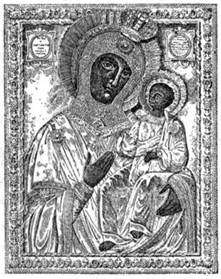
В 1647 году Никон, Новоспасский архимандрит, а впоследствии патриарх Всероссийский, по случаю пребывания в Москве Иверского Афонского архимандрита Пахомия для сбора милостыни в пользу Афонских монастырей, с дозволения царского просил его прислать в Москву верный список с тамошней древней и чудотворной Иверской иконы. Совершенно точный список, начертанный при посте и молитвах и по принесении всей братией обители усердных молитв, отправлен из Афона. Св. икона, сопровождаемая Афонскими иноками, прибыла в Москву в 13 день октября 1648 года. В первопрестольной столице у Воскресенских ворот св. икона торжественно встречена была самим царём со всем его семейством, патриархом Иосифом, духовными, боярами и многочисленным народом всякого возраста и звания. Прибывшая с Афона в Москву, св. Иверская икона первоначально поставлена в Никольском монастыре, основанном Афонскими иноками, отчего монастырь стали называть Греческим. Потом она перенесена и в 1669 году 19 мая поставлена в Москве в особую часовню, для неё устроенную у Воскресенских ворот, вероятно, в воспоминание того, что в Афонской обители Пресвятая Владычица избрала место для Своей иконы на вратах монастырских. Сообразно с сим и в Москве Она представляет Небесную Вратарницу, охранявшую главные ворота первопрестольного города.
In the year 1647, Nikon, the Archimandrite of Novospassky and later Patriarch of All Russia, on the occasion of the presence in Moscow of Pachomius, the Archimandrite of the Iveron Monastery on Mount Athos, who had come to collect alms for the Athonite monasteries, with the Tsar’s permission asked him to send to Moscow a faithful copy of the ancient and wonderworking Iveron Icon that was there. A completely exact copy, painted with fasting and prayers and after the offering of fervent prayers by the entire brotherhood of the monastery, was sent from Mount Athos. The holy icon, accompanied by Athonite monks, arrived in Moscow on the 13th day of October, 1648. In the capital city, at the Resurrection Gate, the holy icon was solemnly met by the Tsar himself with all his family, by Patriarch Joseph, the clergy, the boyars, and a multitude of people of every age and station. Having arrived from Mount Athos in Moscow, the holy Iveron Icon was initially placed in the St. Nicholas Monastery, founded by Athonite monks, for which reason the monastery came to be called the Greek Monastery. Later it was transferred and, on the 19th of May, 1669, placed in Moscow in a special chapel built for it at the Resurrection Gate, probably in remembrance of the fact that in the Athonite monastery the Most Holy Lady chose a place for Her icon at the monastery gates. In accordance with this, in Moscow as well She represents the Heavenly Gatekeeper, guarding the main gates of the capital city.
Московская Иверская икона прославлена многими благодатными знамениями. Жители Москвы и все православные христиане имеют к ней великое благоговение. В 1812 году, во время нашествия Французов, Московская Иверская чудотворная икона, по Высочайшему повелению, препровождена была из Москвы во Владимир. В часовне перед св. чудотворной Иверской Московской иконой, по словам очевидцев, ежедневно стекается из разных мест множество Богомольцев всякого возраста и чина. Православные цари и прочие лица из царского дома, при посещениях своих древней столицы, останавливаются у часовни Воскресенских ворот для поклонения святому лику Приснодевы.
The Moscow Iveron Icon has been glorified by many gracious signs. The inhabitants of Moscow and all Orthodox Christians have great reverence for it. In 1812, during the invasion of the French, the Moscow Iveron wonderworking icon, by Imperial command, was sent from Moscow to Vladimir. Before the holy wonderworking Moscow Iveron Icon in the chapel, according to eyewitnesses, a multitude of pilgrims of every age and rank from various places gather daily. Orthodox Tsars and other members of the imperial house, when visiting the ancient capital, stop at the chapel at the Resurrection Gate to venerate the holy countenance of the Ever-Virgin.
Весьма часто подымают икону в дома: тогда она, везомая по улицам столицы, хотя сокровенно, в своей особо-устроенной колеснице, представляет умилительное зрелище; все встречающие икону – идущие и едущие – немедленно постороняются для беспрепятственного её следования; все осеняют себя знамением креста и поклоняются.
Very often the icon is taken into homes: then, carried through the streets of the capital, though concealed in its specially constructed carriage, it presents a touching spectacle; all who meet the icon—those walking and those riding—immediately step aside to allow it unhindered passage; all make the sign of the cross and bow.
Когда Иверскую икону, явившую многие чудеса, стали часто носить в дома болящих и страждущих, то, чтобы часовня не оставалась без святыни, написан другой подобный образ, находящийся в часовне вместе с чудотворной иконой. См. также 12 февраля и 27 апреля.
When the Iveron Icon, which had manifested many miracles, began to be frequently carried into the homes of the sick and suffering, so that the chapel might not remain without its sacred object, another similar image was painted, which is kept in the chapel together with the wonderworking icon. See also February 12 and April 27.
Семизерская икона Богоматери пребывает в Семиезерской Богородицкой пустыни, основанной в 17 верстах от Казани, в ΧVII веке, на семи озёрах, которые ныне составляют одно. По изображению своему эта икона есть Смоленская. Первоначально Семиезерскую икону принёс в пустынь из Устюга основатель её – инок Евфимий (1615–1646) и благословил её св. иконой. Память этого перенесения ознаменована празднованием в честь Семиезерской иконы Богоматери13 октября. См. 26 июня.
The Semiozernaya Icon of the Mother of God is kept in the Semiozernaya Hermitage of the Mother of God, founded 17 versts from Kazan in the 17th century, on seven lakes which now form one. According to its depiction, this icon is of the Smolensk type. The Semiozernaya Icon was originally brought to the hermitage from Ustyug by its founder, the monk Euthymius (1615–1646), who blessed it with this holy icon. The memory of this transfer is marked by a feast in honor of the Semiozernaya Icon of the Mother of God on October 13. See June 26.
Преп. Вениамина, постника Печерского. Вениамин, бывший богатым купцом, роздал всё своё имущество бедным и, поступив в Киево-Печерский монастырь, подвизался здесь в посте и молитве до самой своей кончины – в XII веке и почивает нетленно в Феодосиевых пещерах.
Venerable Benjamin, Faster of the Kiev Caves. Benjamin, who had been a wealthy merchant, distributed all his possessions to the poor and, entering the Kiev-Pechersk Monastery, struggled there in fasting and prayer until his death—in the 12th century—and reposes incorrupt in the Theodosian Caves.