Косма, родом из Иерусалима, оставшись в детстве сиротой после бедных родителей, был принят в дом вельможи Дамасского калифа и воспитан наравне с сыном его – Иоанном (Дамаскиным, память 4 декабря). Довершили же образование своё оба юноши под руководством пленного инока Космы. С 732 года Косма и Иоанн, связанные тесной дружбой, подвизались в Иерусалимской обители св. Саввы, где оба они усердно предавались и научным трудам. Разделял Косма и любовь своего друга Иоанна к духовным песням и сам впоследствии получил известность, и как составитель многих церковных песен, за что и называется «Песнопевцем». Около 743 г., после кончины святого Петра, епископа Маиюмского, замученного магометанами, Косма против желания своего был избран собором и поставлен в епископа Маиюмского, но, и разлучённый с Иоанном, был до конца жизни соединён с ним братской дружбой. Скончался в глубокой старости, пережив своего друга Иоанна, преставившегося около 776 года.
Cosmas, a native of Jerusalem, having been left an orphan in childhood after the death of his poor parents, was received into the house of a nobleman of the Damascus caliph and was brought up together with his son—John (of Damascus, commemorated December 4). Both youths completed their education under the guidance of a captive monk, Cosmas. From the year 732, Cosmas and John, bound by close friendship, asceticised in the Jerusalem monastery of St. Sabbas, where both diligently devoted themselves also to scholarly labors. Cosmas shared the love of his friend John for spiritual hymns and himself later gained renown as a composer of many church songs, for which he is called the "Hymnographer." Around 743, after the repose of St. Peter, Bishop of Maiuma, who had been tortured to death by the Mohammedans, Cosmas, against his own will, was chosen by a council and appointed Bishop of Maiuma; but, though separated from John, he remained united with him in brotherly friendship until the end of his life. He reposed in extreme old age, having outlived his friend John, who had reposed around the year 776.
В Греческой службе св. Косме (о канонах которого, равно как и о канонах друга его св. Иоанна Дамаскина, существует такой отзыв, что «они не имели себе равных между гимнами других песнопевцев, да и никогда не будут иметь») – говорится: «вот духовная цитра, лира священная, созывает всех к тайной трапезе; Косма священный и славный предлагает медоточные, священнозвучащие песни.... Начальника песнопевцев, равного учителям, правый образ духовных песней гармонических, трубу доброгласную, прекрасный исток песней мелодических, ревнителя песнопения ангельского, Косму песнями хочу я украсить» ...
In the Greek service to St. Cosmas (concerning whose canons, as well as those of his friend St. John of Damascus, there exists such a judgment that "they had no equal among the hymns of other hymnographers, nor shall they ever have") it is said: "Behold the spiritual cithara, the sacred lyre, summons all to the mystical table; Cosmas, sacred and glorious, offers honey-flowing, sacred-sounding songs.... The chief of hymnographers, equal to the teachers, the right model of spiritual harmonious songs, the sweet-sounding trumpet, the beautiful fount of melodic songs, the zealot of angelic hymnody, Cosmas, I desire to adorn with songs"...
В древней же Слав. рукописной службе так изображается у св. Косма: «смиренномудр и кроток, тих и доброглаголив, приветлив и незлобен, целомудр и праведен, прост и чист был ты, преподобный Косма; и Бог явил тебя святителем, и ты упас стадо твоё, Богомудрый, на траве, орошаемой водами спасительными». «В воздержании жил ты, в бдении и посте, в смиренномудрии и смирении, славный, обогатился ведением у дольного и временного, и горнего и светлого». «Слова твои, как сот сладкий, явились для благочестивых сердец, поющих крещение Спасово, сретение и отпущение Симеоново». «Не на словах, а как на деле, изобразил ты, блаженный, воскресение Лазарево, хвалу детей изависть Иудейскую в твоих песнях». «Как высокий умом, Косма, описал тывечерню, на которой Господь предал живоносные Тайны, и страшное нечестивое предание Иудино, которого избегать поучал ты». «Осияваемый светом ума невещественным, Косма преподобный, пречистые описал ты страсти, погребение и восстание, и преображение Христово».
In the ancient Slavonic manuscript service, St. Cosmas is thus depicted: "Humble-minded and meek, gentle and of good speech, affable and guileless, chaste and righteous, simple and pure wast thou, O Venerable Cosmas; and God revealed thee as a hierarch, and thou didst shepherd thy flock, O God-wise one, on grass watered by saving waters." "In abstinence didst thou live, in vigil and fasting, in humble-mindedness and humility, O glorious one, thou wast enriched with knowledge of things below and temporal, and of things above and bright." "Thy words, like a honeycomb, appeared to pious hearts that sing of the Baptism of the Savior, the Meeting and the Dismissal of Simeon." "Not in words, but as in deed, didst thou depict, O blessed one, the Resurrection of Lazarus, the praise of the children and the envy of the Jews in thy songs." "As one lofty in mind, O Cosmas, thou didst describe the Supper, at which the Lord delivered the life-giving Mysteries, and the terrible impious betrayal of Judas, from which thou didst teach us to flee." "Illumined by the immaterial light of the mind, O Venerable Cosmas, thou didst describe the most pure Passions, the Burial and the Resurrection, and the Transfiguration of Christ."
Лучшая между песнями Космы – на неделю Ваий: – «Духи праведников восклицают радостно: ныне новый завет постановляется для мира; да обновляется народ через окропление Божественной кровью. Веселись, Иерусалим! торжествуйте, любящие Сион! Вечно царствующий Господь сил предстал. Благоговей, вся земля, перед лицом Его, восклицай: славьте Господа, все создания. Воссев на осла юного, явился Христос, Царь твой, Сион! Он пришёл истребить бессмысленное заблуждение идолослужения и укротить необузданные порывы язычников, дабы они пели: славьте Господа, все создания! Язычники! почто вы возмутились? книжники и священники, к чему земное замыслили? Кто Сей, вопрошаете вы, Которому дети восклицают?.. Сей есть Бог наш и нет равного Ему!.. Упорные! Зачем вы полагаете нам преткновения? Ноги ваши спешат пролить кровь Владыки. Но верьте: восстанет Он для спасения вопиющих: благословен грядый Господь Спаситель наш!»
The best among Cosmas's songs is that for the Sunday of the Palms: "The spirits of the righteous cry out rejoicing: now a new covenant is established for the world; let the people be renewed through the sprinkling of Divine blood. Rejoice, O Jerusalem! Triumph, ye who love Zion! The Lord of hosts, who reigneth forever, hath appeared. Let all the earth tremble before His face, crying: praise ye the Lord, all ye works. Seated upon a young foal, Christ hath appeared, O Zion, thy King! He hath come to destroy the senseless delusion of idolatry and to tame the unbridled impulses of the pagans, that they may sing: praise ye the Lord, all ye works! Ye pagans, why have ye raged? Scribes and priests, why have ye devised earthly things? Who is This, ye ask, to Whom the children cry out?... This is our God, and there is none like unto Him!... O stubborn ones, why do ye lay stumbling blocks before us? Your feet hasten to shed the blood of the Master. But believe: He shall arise for the salvation of those who cry: blessed is He that cometh, the Lord our Savior!"
«Первый из человеков вкусил от древа и подвергся тлению, – изображает Косма в каноне св. Кресту, – осуждённый на бесславную утрату жизни, он сообщил болезнь, подобно губительной для тела язве, всему потомству. Но мы земнородные обрели врачевство в древе Креста. Подземные силы, враги трепещут, видя знамение начертавшимся в воздухе, где их жилище... Древо возносится, окроплённое кровью воплощённого Бога Слова. Воспевайте торжественно, небесные силы, восстановление смертных! Поклоняйтесь, народы, кресту Христову! От него воскресение миру во веки!»
"The first of men tasted of the tree and underwent corruption," Cosmas depicts in the canon to the Holy Cross, "condemned to a dishonorable loss of life, he transmitted the disease, like a plague destructive to the body, to all his posterity. But we, earth-born ones, have found a remedy in the tree of the Cross. The powers of the underworld, the enemies, tremble, seeing the sign traced in the air, where their dwelling is... The tree is raised up, sprinkled with the blood of the incarnate God the Word. Sing solemnly, O heavenly powers, the restoration of mortals! Worship, O peoples, the Cross of Christ! From it is resurrection to the world forever!"
«Смотрите, други! говорил Ты, не ужасайтесь. Уже близок час... Оттрясите сон от веждей, бдите и молитесь, чтобы не впасть вам в искушение и особенно тебе, Симон! На слова Петра ответ: человек! ещё не всю глубину Божественной премудрости и ведения ты исследовал; ещё не постиг ты бездны судеб Моих; не хвались ты, плоть! трижды отречёшься от Меня, Которого вся тварь славит во веки» ...
"Behold, friends!" Thou didst say, "be not terrified. The hour is already near... Shake off sleep from your eyelids, watch and pray, that ye enter not into temptation, and especially thou, Simon!" To Peter's words the answer: "Man! Thou hast not yet searched out all the depth of Divine wisdom and knowledge; thou hast not yet comprehended the abyss of My judgments; boast not, O flesh! Thrice shalt thou deny Me, whom all creation glorifies forever"...
Песнь Божией Матери: «Честнейшую херувим» приписывается также св. Косме (Никифором Феотокием). Каллист прибавляет известие, дошедшее до него через других об этой песни, что 1) она была сочинена в Страстную пятницу и 2) что Матерь Божия, явясь преп. Косме, сказала ему: «приятны Мне песни твои, но эта – приятнее всех других; приятны Мне те, которые поют духовные песни, но никогда Я столь близка не бываю к ним, как когда поют они эту новую песнь твою».
The hymn to the Mother of God: "More honorable than the Cherubim" is also attributed to St. Cosmas (by Nikephoros Theotokis). Kallistos adds an account that has come down to him through others concerning this hymn: 1) that it was composed on Good Friday, and 2) that the Mother of God, appearing to the Venerable Cosmas, said to him: "Thy songs are pleasing to Me, but this one is more pleasing than all others; those who sing spiritual songs are pleasing to Me, but I am never so close to them as when they sing this new song of thine."
Далее Каллист замечает, что способные к созерцанию духовных предметов неоднократно видели Матерь Божию благословлявшей певших песнь эту...
Further, Kallistos notes that those capable of contemplating spiritual things have repeatedly seen the Mother of God blessing those who sang this hymn...
В самый разгар гонения на христиан в царствование Диоклитиана и Максимиана жестоко пострадали за исповедание Христа старец Тарах Римлянин, бывший воин, Пров – родом из Сиды Памфилийской, и молодой Андроник, сын Ефесского гражданина. В трёх частях сохранившихся мученических актов этих святых содержится описание трёх истязаний их (в Тарсе, в Мопсуестии и в Аназарве), составленное нотариусами (судейскими писцами) со слов мучеников и мучителей; оно было куплено христианами за 200 динариев у одного чиновника и тщательно переписано. Четвёртая часть актов, содержащая описание последних страданий мучеников и их погребения в Аназарве, составлена очевидцами их страданий и теми, которые предали их погребению: Макарием, Феликсом и Верием.
At the very height of the persecution of Christians during the reign of Diocletian and Maximian, the elder Tarachus, a Roman and former soldier, Probus, a native of Side in Pamphylia, and the young Andronicus, son of a citizen of Ephesus, suffered cruelly for confessing Christ. In three parts of the preserved acts of the martyrs of these saints is contained a description of their three tortures (in Tarsus, in Mopsuestia, and in Anazarbus), compiled by the notaries (court scribes) from the words of the martyrs and their tormentors; it was purchased by Christians from an official for 200 denarii and carefully copied. The fourth part of the acts, containing a description of the final sufferings of the martyrs and their burial in Anazarbus, was compiled by eyewitnesses of their sufferings and by those who committed them to burial: Macarius, Felix, and Berius.
Жестоко избитый после того, как воспротивился принести жертву богам по принуждению анфипата Нумерия Максима, старец Тарах в цепях был заключён в темницу. Затем, потребованный к допросу Пров с такой же твёрдостью исповедал веру свою в истинного Бога.
After being severely beaten for refusing to offer sacrifice to the gods under compulsion from the proconsul Numerius Maximus, the elder Tarachus was bound in chains and cast into prison. Then, when summoned for interrogation, Probus with equal firmness confessed his faith in the true God.
– Неужели ты – так безумен, что предпочтёшь истязания милостям императора, которые предстоят тебе, если почтёшь тех богов, которым поклоняются сами императоры? – спросил Прова судья, указывая ему на выставленные орудия пытки.
"Are you so foolish as to prefer tortures to the favors of the emperor, which await you if you honor those gods whom the emperors themselves worship?" the judge asked Probus, pointing to the instruments of torture that had been set out.
Призвали Андроника. И он, не смотря на молодой возраст, пребыл твёрд до конца: не прельстился блестящими обещаниями, не устрашился никаких угроз. Выдержав истязания, был также брошен в темницу.
Andronicus was summoned. And he, despite his youth, remained steadfast to the end: he was not seduced by brilliant promises, nor frightened by any threats. Having endured the tortures, he was likewise cast into prison.
– Безумен ты, угрожающий смертью рабам Господа, страдающим за Него... Умирают только те, которые творят зло, мы же оживём в вечном Царстве Отца, потому что Он – Воскресение наше... – возразили мученики, и продолжали непоколебимо терпеть разнообразные истязания: им выкололи глаза, отрубили уши, раны их опаляли огнём, сдирали с них кожу и, наконец, бросили на растерзание хищным зверям. Ко к удивлению многочисленной толпы, собравшейся на зрелище казни ненавистных христиан, звери не коснулись мучеников, хотя и растерзали мгновенно других, осуждённых на ту же казнь... Тогда анфипат Максим велел умертвить копьями Тараха, Прова и Андроника, и приставил воинов стеречь тела их, чтобы не могли их взять христиане. Однако не удалось ему лишить их этого утешения... Поднявшаяся к вечеру сильная буря разогнала сторожей, и христиане успели взять останки мучеников и предали их погребению в каменной пещере, и известили о них верующих в других городах.
"You are foolish, threatening with death the servants of the Lord, who suffer for Him... Only those who do evil die; we shall live in the eternal Kingdom of the Father, because He is our Resurrection..." the martyrs replied, and they continued to endure unshakably various tortures: their eyes were gouged out, their ears cut off, their wounds were seared with fire, their skin was flayed, and finally they were thrown to be devoured by wild beasts. But, to the astonishment of the vast crowd that had gathered for the spectacle of the execution of the hated Christians, the beasts did not touch the martyrs, although they instantly tore apart others condemned to the same punishment... Then the proconsul Maximus ordered Tarachus, Probus, and Andronicus to be put to death with spears, and stationed soldiers to guard their bodies, so that the Christians could not take them. However, he did not succeed in depriving them of this consolation... A violent storm that arose toward evening scattered the guards, and the Christians managed to take the remains of the martyrs and committed them to burial in a stone cave, and informed the faithful in other cities about them.
«Измученич. актов Никиты Готфянина (15 сент. 372 г.) видно, что епископ Авксентий II, подписавшийся в 451 году на Халкидонском соборе, выстроил в Мопсуестии, своей кафедре, церковь этим мученикам и получил из Аназарва часть их мощей, послав в Аназарв часть мощей св. Никиты. – В 484 году Мартирий, патриарх Иерусалимский, при освящении храма в Евфимиевом монастыре, положил под престолом мощи этих трёх мучеников»154.
From the acts of the martyrdom of Nicetas the Goth (September 15, 372) it is evident that Bishop Auxentius II, who signed the Council of Chalcedon in 451, built a church to these martyrs in Mopsuestia, his see, and received a portion of their relics from Anazarbus, having sent a portion of the relics of St. Nicetas to Anazarbus. — In 484, Martyrius, Patriarch of Jerusalem, at the consecration of the church in the monastery of Euthymius, placed the relics of these three martyrs under the altar"154.
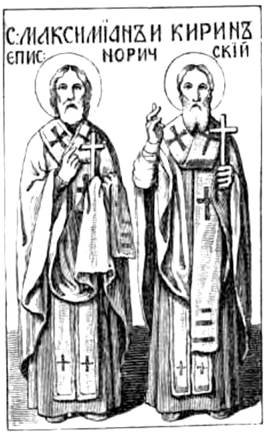
Местом проповеднического служения святых Максимилиана и Кирина была Норика155. Это была страна Славян – Норичей, получивших своё название от пребывания в горных норах, в пещерах и ущельях156. «Норцы суть Словене», говорит и преп. Нестор. Норичи – часть Вендов, занимавших, под разными частными названиями, обширную страну между Адриатикой и Дунаем и от вершины Дуная далеко на запад157. Имп. Август, покорив Норичей, построил в стране Норичей несколько крепостей, в том числе Лерх (Lavreacum)158. Ныне родина св. Максимилиана называется Краиной, как крайняя страна Славян, оттеснённых Немцами на юг. Ныне в Каринтии до 400,000 Вендов или Словенцев и до полутора миллиона Кроато-Сербов159.
The place of the preaching ministry of Sts. Maximilian and Quirinus was Noricum155. This was the land of the Slavs – the Norici, who received their name from dwelling in mountain burrows, in caves and gorges156. “The Norici are Slavs,” says the Venerable Nestor as well. The Norici are a part of the Wends, who occupied, under various particular names, a vast country between the Adriatic and the Danube and from the headwaters of the Danube far to the west157. The Emperor Augustus, having subdued the Norici, built several fortresses in the land of the Norici, among them Lorch (Lavreacum)158. Today the homeland of St. Maximilian is called Carniola, as the borderland of the Slavs, pushed southward by the Germans. Today in Carinthia there are up to 400,000 Wends or Slovenes and up to one and a half million Croato-Serbs159.
Блаж, Максимилиан родился в гор. Зелье (Celeius), при вершине р. Савы. – Сын богатых родителей, на 7 году имел наставником священника Орания (пахаря), человека образованного и искреннего христианина. На 19 году лишившись матери (отец его ещё за 6 лет перед тем умер мучеником при Декии), Максимилиан остался наследником богатого имения; но он раздал его бедным и, дав свободу рабам, предал всего себя на служение Господу.
Blessed Maximilian was born in the city of Celeia (Celeius), near the headwaters of the Sava River. – The son of wealthy parents, at the age of seven he had as his teacher the priest Oranius (the ploughman), an educated man and a sincere Christian. At the age of nineteen, having lost his mother (his father had died a martyr six years earlier under Decius), Maximilian remained the heir to a rich estate; but he distributed it to the poor and, having given freedom to his slaves, devoted himself entirely to the service of the Lord.
Около 260 г. св. Максимилиан избран и посвящён был в епископа Норичского, для которого кафедра назначена была в г. Лерхе. – В этом звании он с полной ревностью трудился над распространением св. веры между Славянами. Он не только просвещал Евангельским учением родной свой край, но путешествовал на запад в нынешнюю Баварию, тогда населённую Славянами. Плодами трудов его пользовались целые века и после него. Здесь найден пергаменный сборник X века: в нём две исповеди и поучение Славянского языка, с отличиями Сербского наречия, писаны Латинскими буквами. Поучение то самое, которое читается в прологе под 25 апреля. Исповеди и поучение по содержанию назначены для новокрестившихся Славян160. – Блаж. святитель с любовью заботился о возможном успокоении больных и бедных, особенно же тех, которые терпели гонение за св. веру от язычников. Когда имп. Нумериан объявил гонение на христиан, префект Норики своей жестокостью навёл ужас на христиан и не малое число их от страха приносили жертвы. – Святитель поспешил в родной свой край, чтобы присутствием своим и живым словом ободрить добрых родичей. Явясь к префекту, он в присутствии других сказал: «не для того ли ты прислан сюда, чтобы защищать страну от врагов? А ты оказываешься самым жестоким врагом». Префект смутился; потом с важностью сказал: «ведите почтенного в храм Марса, для принесения жертвы». Не заставили святителя поступить в оскорбление имени Христову никакие угрозы префекта. И префект приказал отсечь Максимилиану голову. Определение выполнено 12 октября 282 года161.
About the year 260, St. Maximilian was chosen and consecrated Bishop of Noricum, for whom the see was appointed in the city of Lorch. – In this office he labored with full zeal for the spread of the holy faith among the Slavs. He not only enlightened his native land with the Gospel teaching, but traveled westward into present-day Bavaria, then inhabited by Slavs. The fruits of his labors were enjoyed for whole centuries after him. Here a parchment collection of the 10th century was found: in it are two confessions and a homily in the Slavic language, with features of the Serbian dialect, written in Latin letters. That homily is the very one which is read in the Prologue under April 25. The confessions and the homily, by their content, are intended for newly-baptized Slavs160. – The blessed hierarch lovingly cared for the possible relief of the sick and the poor, especially those who suffered persecution for the holy faith from the pagans. When the Emperor Numerian declared a persecution against Christians, the prefect of Noricum, by his cruelty, brought terror upon the Christians, and no small number of them, out of fear, offered sacrifices. – The hierarch hastened to his native land, that by his presence and living word he might encourage his good kinsmen. Appearing before the prefect, he said in the presence of others: “Were you not sent here to defend the land from enemies? Yet you prove to be the most cruel enemy.” The prefect was troubled; then he said with gravity: “Lead the honorable one to the temple of Mars, to offer sacrifice.” No threats of the prefect compelled the hierarch to act in insult to the name of Christ. And the prefect ordered Maximilian’s head to be cut off. The sentence was carried out on October 12, 282161.
Мученическая кончина святителя содействовала распространению христианства между Славянами на р. Саве и на берегу Адриатики. Вскоре после святителя (в 297 г.) в прибрежной Норике некоторые из воинов вытерпели самые жестокие мучения за св. веру162.
The martyric death of the hierarch contributed to the spread of Christianity among the Slavs on the Sava River and on the shore of the Adriatic. Soon after the hierarch (in 297), in coastal Noricum, some of the soldiers endured the most cruel tortures for the holy faith162.
Блаж. Иероним в своей хронике почтительно говорит о святителе и мученике Паннонском Кирине; Пруденций воспел его в стихах; третий древний учитель относит его к знаменитейшим свидетелям Христовым. О мученичестве его сохранилась и древняя запись163.
Blessed Jerome in his chronicle speaks with reverence of the hierarch and martyr of Pannonia, Quirinus; Prudentius sang of him in verse; a third ancient teacher ranks him among the most illustrious witnesses of Christ. An ancient record of his martyrdom has also been preserved163.
Когда префект нижней Паннонии Максим поднял жестокое гонение против христиан, св. Кирин удалился из города своего. По приказанию префекта, долго искали его и, схватив, представили к начальнику. «Зачем ты бегал?» спросил Максим. «Напрасно думают, отвечал епископ, будто страх гонял меня; я исполнял волю Господа моего, Который сказал: когда гонят вас в одном городе, уходите в другой». «Кто это предписал?» спросил префект. «Христос, истинный Бог», отвечал Кирин. «А ты не знаешь того, говорил Максим, что указы императоров найдут тебя везде? Тот, Которого называешь ты Богом, не избавит тебя; вот ты теперь пойман». Кирин отвечал: «Он всегда с нами, где бы мы ни были, и Он может помочь, когда захочет. Он был со мной, – и теперь Он укрепляет меня». – «Ты уклоняешься от исполнения воли государей наших, говорил Максим; непослушание – преступное». Епископ отвечал: «не исполняю оттого, что та воля противна воле Божией; боги ваши – пустота; а Бог, Которому служу я, – на небе и на земле, Он выше всего и всё держит, всё Им создано и Им же сохраняется». – Максим сказал: «ты выжил из ума и бредишь; слушайся, иначе готовы муки и смерть». – Епископ отвечал: «напасти, которыми грозишь ты, считаю за славу, и обещаемая смерть даст мне жизнь вечную; поклоняюсь Богу моему и Ему приношу достойную жертву, но не земным царям». – Префект приказал жестоко бить его. Потом сказал, что, если Кирин послушается, признает могущество богов, которым подчинена Римская империя, предоставлена ему будет должность жреца в храме Юпитера; иначе отослан будет к префекту верхней Паннонии. Епископ отвечал: «я и без того истинный священник, приношу себя Богу моему». Максим велел держать его в темнице и в тяжёлых оковах.
When Maximus, the prefect of Lower Pannonia, raised a fierce persecution against the Christians, St. Quirinus withdrew from his city. By order of the prefect, they long sought him and, having seized him, brought him before the commander. “Why did you flee?” asked Maximus. “In vain do they think,” answered the bishop, “that fear drove me; I was fulfilling the will of my Lord, Who said: When they persecute you in one city, flee to another.” “Who commanded this?” asked the prefect. “Christ, the true God,” answered Quirinus. “But do you not know,” said Maximus, “that the edicts of the emperors will find you everywhere? He Whom you call God will not deliver you; behold, you are now caught.” Quirinus answered: “He is always with us, wherever we may be, and He can help when He wills. He was with me, and now He strengthens me.” – “You are evading the fulfillment of the will of our sovereigns,” said Maximus; “disobedience is criminal.” The bishop answered: “I do not fulfill it because that will is contrary to the will of God; your gods are vanity; but the God Whom I serve is in heaven and on earth, He is above all and upholds all, all things were created by Him and are preserved by Him.” – Maximus said: “You have lost your mind and are raving; obey, otherwise tortures and death are ready.” – The bishop answered: “The calamities with which you threaten I count as glory, and the death you promise will give me eternal life; I worship my God and offer Him worthy sacrifice, but not to earthly kings.” – The prefect ordered him to be severely beaten. Then he said that if Quirinus would obey, acknowledge the power of the gods to whom the Roman Empire is subject, the office of priest in the temple of Jupiter would be granted him; otherwise he would be sent to the prefect of Upper Pannonia. The bishop answered: “I am already a true priest, I offer myself to my God.” Maximus ordered him to be kept in prison and in heavy chains.
В темнице святитель славил Господа за участь свою и молился. В полночь темница озарена была сильным светом. Начальник темницы Маркелл, увидав это, пал к ногам епископа и со слезами говорил: «помолись за меня Господу; верю, что нет другого Бога, кроме чтимого тобой». Блаженный епископ наставил его и запечатлел его именем Иисуса Христа. Спустя три дня Максим велел отправить Кирина к префекту первой Паннонии164.
In prison the hierarch glorified the Lord for his lot and prayed. At midnight the prison was illumined with a strong light. The prison warden, Marcellus, seeing this, fell at the bishop’s feet and said with tears: “Pray for me to the Lord; I believe that there is no other God besides Him Whom you honor.” The blessed bishop instructed him and sealed him with the name of Jesus Christ. After three days, Maximus ordered Quirinus to be sent to the prefect of First Pannonia164.
По всем городам Придунайским вели епископа в оковах. – Префект Паннонии возвращался из Чепрега (de civ. Scarabetensi) и ему представили Кирина; но он велел вести Кирина в Сабарию, где сам будет. Благочестивые жёны принесли тут епископу пищу и питьё; он благословил приношение за веру их, а они лобызали оковы его. Когда покушал он, стражи повели его в Сабарию (ныне Сарвар, при Рабе). Префект был в театре, когда представили ему Кирина. Прочитав уведомление, спросил он: «правда ли всё то?» Епископ отвечал: «в Сиске исповедал я Бога истинного; Ему всегда поклонялся и Его ношу в сердце; Он единственный истинный Бог, и от Него никто не отлучит меня». Префект употребил всё, чтобы поколебать твёрдость святого; говорил, что жалеет старость его и что не умно пренебрегать жизнью. Всё было напрасно. «Не похожу я на безумных, говорил исповедник; они, по желанию жизни отрекаясь от Бога, истинно умирают; а я, исповедуя, перехожу к вечной жизни; законы ваши не удовлетворяют меня, и я исполняю повеления Христа Бога моего, возвещённые для верных». Префект решил бросить Кирина в реку с камнем на шее. Когда он был брошен, то ещё долго оставался на поверхности воды, убеждал зрителей быть твёрдыми в вере и не страшиться ни мук, ни смерти; наконец, только по молитве его, волны скрыли его. Святой увенчался мученическим венцом в 309 г.165.
Through all the cities along the Danube they led the bishop in chains. – The prefect of Pannonia was returning from Chepreg (de civ. Scarabetensi) and they presented Quirinus to him; but he ordered Quirinus to be led to Sabaria, where he himself would be. Pious women brought the bishop food and drink there; he blessed the offering for their faith, and they kissed his chains. When he had eaten, the guards led him to Sabaria (now Sárvár, on the Rába). The prefect was in the theater when they presented Quirinus to him. Having read the notification, he asked: “Is all this true?” The bishop answered: “In Siscia I confessed the true God; Him I have always worshiped and Him I bear in my heart; He is the only true God, and from Him no one shall separate me.” The prefect used every means to shake the steadfastness of the saint; he said that he pitied his old age and that it was unwise to despise life. All was in vain. “I am not like the foolish,” said the confessor; “they, by renouncing God out of desire for life, truly die; but I, by confessing, pass over to eternal life; your laws do not satisfy me, and I fulfill the commands of Christ my God, proclaimed for the faithful.” The prefect decided to throw Quirinus into the river with a stone around his neck. When he was thrown in, he remained on the surface of the water for a long time, urging the onlookers to be steadfast in the faith and to fear neither tortures nor death; finally, only at his prayer did the waves conceal him. The saint was crowned with the martyr’s crown in the year 309165.
Мученическая кончина святителя Кирина, как и страдание св. Максимилиана, не только вызвали подражателей святому примеру между верующими166, но содействовали распространению веры между Славянами на р. Саве и на берегу Адриатики: епископ Мурсы, что на р. Саве, защищал православие на Сердикском соборе 347 г.; епископ Ядрский с Адриатики был на Аквилейском соборе 381 года167.
The martyric death of Hierarch Quirinus, like the suffering of St. Maximilian, not only called forth imitators of the holy example among the faithful166, but also contributed to the spread of the faith among the Slavs on the Sava River and on the shore of the Adriatic: the bishop of Mursa, on the Sava River, defended Orthodoxy at the Council of Serdica in 347; the bishop of Jadera on the Adriatic was at the Council of Aquileia in 381167.
Перенесение части Креста Господня, Филермского образа Богоматери и десной руки Иоанна Предтечи из Мальты в Гатчину
Translation of a Portion of the Cross of the Lord, the Philermos Icon of the Mother of God, and the Right Hand of John the Forerunner from Malta to Gatchina
В конце XV века султан Баязет или Баезид, уважая мужество и благочестие великого магистра странноприимного ордена Родосских или Мальтийских рыцарей, – Петра Обюсона, в знак дружества с ним и надежды на него прислал к нему (1484 г.) десную руку Крестителя, которая хранилась сначала на острове Родосе, а потом, когда сей остров в начале XVI столетия завоёван был Турками, – на острове Мальте. В конце XVIII века, в 1798 году, когда оружие Французской революции обратилось и на защитников христианства на Востоке Мальтийских рыцарей и обманом овладело островом и столицей их, они прибегли под покровительство и защиту России и императора Павла Петровича, с юности питавшего особенное уважение к доблестям Мальтийских рыцарей, упросив его принять сан великого магистра и покровителя ордена, и посему поднесли ему в 1799 году 12 октября, в Гатчине, долго хранимую ими святыню: крест из части древа животворящего Креста Господня, чудотворный образ Богоматери, писанный св. Ев. Лукой, и десную руку мощей свят. Иоанна Крестителя. Из Гатчины в день бракосочетания великой княжны Елены Павловны – эта древняя святыня перенесена и в С.-Петербург, в церковь Спаса нерукотворенного образа, находящуюся в Зимнем дворце, откуда к 12 октября она переносится ежегодно в Гатчину и там пребывает до 18 октября.
At the end of the 15th century, Sultan Bayezid, respecting the courage and piety of the Grand Master of the Hospitaller Order of the Knights of Rhodes or Malta, Pierre d’Aubusson, as a sign of friendship with him and hope in him, sent to him (in 1484) the right hand of the Forerunner, which was kept first on the island of Rhodes, and later, when that island was conquered by the Turks at the beginning of the 16th century, on the island of Malta. At the end of the 18th century, in 1798, when the arms of the French Revolution turned also against the defenders of Christianity in the East, the Knights of Malta, and by deceit seized their island and capital, they had recourse to the patronage and protection of Russia and of Emperor Paul Petrovich, who from his youth had borne particular respect for the valor of the Knights of Malta, having besought him to accept the rank of Grand Master and Protector of the Order, and therefore presented to him in 1799, on October 12, in Gatchina, the holy shrine long preserved by them: a cross from a portion of the wood of the Life-giving Cross of the Lord, the wonderworking icon of the Mother of God painted by St. Luke the Evangelist, and the right hand of the relics of St. John the Forerunner. From Gatchina, on the day of the marriage of Grand Duchess Elena Pavlovna, this ancient shrine was transferred to St. Petersburg, to the church of the Savior Not-Made-by-Hands, located in the Winter Palace, whence by October 12 it is transferred annually to Gatchina and remains there until October 18.
В память перенесения десной руки мощей Крестителя из Мальты в Гатчину, которого Церковь наша прославляет, яко честнейшего пророков, установлен 12 октября праздник Крестителю, подобно тому, как в Константинополе почтен день перенесения туда десницы Крестителя из Антиохии.
In memory of the translation of the right hand of the relics of the Forerunner from Malta to Gatchina, which our Church glorifies as the most honorable of the prophets, a feast to the Forerunner was established on October 12, similar to how in Constantinople the day of the translation thither of the Forerunner’s right hand from Antioch was honored.
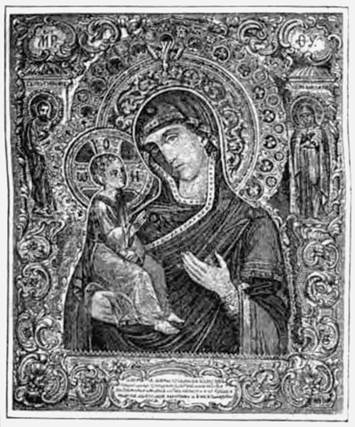
Сия икона, известная под именем Одигитрии Филермской, по сказанию древнего предания, написана св. Ев. Лукой и впоследствии перенесена в Иерусалим, а из Иерусалима в Константинополь, где она с честью поставлена была во Влахернской церкви. Отсюда св. икона Одигитрии взята была западными христианами в XIII веке, когда они овладели Константинополем; после досталась рыцарям Иоанна Иерусалимского, которые принесли её с собой на остров Родос. Когда этот остров в начале XVI века завоёван был Турками, рыцари переселились на остров Мальту и сюда перенесли Филермскую икону. В конце XVIII века, когда оружие Французской революции обратилось и против защитников христианства на Востоке – рыцарей Мальтийских, и Французы обманом овладели Мальтой, – рыцари прибегли под покровительство Российского императора Павла I-го и избрали его своим великим магистром и защитником ордена, и в 1799 году октября 12 прислали в Гатчину и чудотворную Филермскую икону Богоматери вместе с частью древа Господня и десною рукой Иоанна Крестителя. Сии священные предметы внесены были в Гатчинский придворный храм, а отсюда перенесены в С.-Петербург в церковь Зимнего дворца. Празднование св. Иоанну Крестителю 12 октября на память перенесения из Мальты в Гатчину креста, чудотворного образа Богоматери и десницы Крестителя установлено в 1800 году.
This icon, known under the name of the Hodigitria of Philermos, according to the account of ancient tradition, was painted by St. Luke the Evangelist and afterwards translated to Jerusalem, and from Jerusalem to Constantinople, where it was placed with honor in the Blachernae church. From there the holy Hodigitria icon was taken by Western Christians in the 13th century, when they seized Constantinople; afterwards it fell to the Knights of St. John of Jerusalem, who brought it with them to the island of Rhodes. When this island was conquered by the Turks at the beginning of the 16th century, the knights moved to the island of Malta and transferred the Philermos icon there. At the end of the 18th century, when the arms of the French Revolution were turned also against the defenders of Christianity in the East – the Knights of Malta – and the French by deceit took possession of Malta, the knights had recourse to the protection of the Russian Emperor Paul I and chose him as their Grand Master and protector of the Order, and on October 12, 1799, they sent to Gatchina the wonderworking Philermos Icon of the Mother of God together with a portion of the Wood of the Lord and the right hand of John the Baptist. These sacred objects were brought into the Gatchina court church, and from there were transferred to St. Petersburg into the church of the Winter Palace. The celebration of St. John the Baptist on October 12 in memory of the translation from Malta to Gatchina of the cross, the wonderworking icon of the Mother of God, and the right hand of the Baptist was established in 1800.
Иерусалимская икона Богородицы, по сказанию предания, написана св. Евангелистом Лукой, в 15 лето по вознесении Господнем, в Гефсимании. В 463 году Иерусалимская икона перенесена из Иерусалима в Царьград Греческим царём Львом первым или Великим и поставлена в храме Богородицы – Пигии, т. е. источника, и пребывала здесь до благочестивого царя Ираклия. Когда помощью её Скифы, воевавшие против Царьграда, были совершенно побеждены и прогнаны, – икона Иерусалимская перенесена во Влахернскую Константинопольскую церковь. В этом храме она пребывала до царя Льва VI Философа, при котором она по случаю нашествия Руссов перенесена в Херсон или Корсунь в 988 году, в дар великому князю св. Владимиру, когда он покорил этот город и крестился в нём. А святым Владимиром дарована святыня Корсунская Новгородцам, по обращении их в христианскую веру. В Новгородском Софийском соборе она пребывала до времён царя Иоанна Васильевича IV, который в 1571 году оттуда перенёс её в Московский Успенский собор. Во время нашествия Наполеона этот образ похищен и на место его поставлен верный список, взятый из Московской церкви Рождества Богородицы, что на Сенях.
The Jerusalem Icon of the Mother of God, according to the account of tradition, was painted by St. Luke the Evangelist in the 15th year after the Ascension of the Lord, in Gethsemane. In 463 the Jerusalem Icon was translated from Jerusalem to Constantinople by the Greek Emperor Leo the First, or the Great, and placed in the church of the Mother of God – Pigē, that is, of the Spring, and remained there until the pious Emperor Heraclius. When, by its aid, the Scythians who were warring against Constantinople were completely defeated and driven away, the Jerusalem Icon was translated to the Blachernae church of Constantinople. In this church it remained until the time of Emperor Leo VI the Philosopher, when, on the occasion of an incursion of the Rus, it was translated to Cherson, or Korsun, in 988, as a gift to the holy Grand Prince Vladimir, when he conquered that city and was baptized in it. And by holy Vladimir this Korsun sanctuary was given to the Novgorodians, after their conversion to the Christian faith. In the Novgorod Cathedral of St. Sophia it remained until the time of Tsar John Vasilievich IV, who in 1571 translated it from there to the Moscow Dormition Cathedral. During the invasion of Napoleon this image was stolen, and in its place was set a faithful copy taken from the Moscow church of the Nativity of the Mother of God, which is on the Senya.
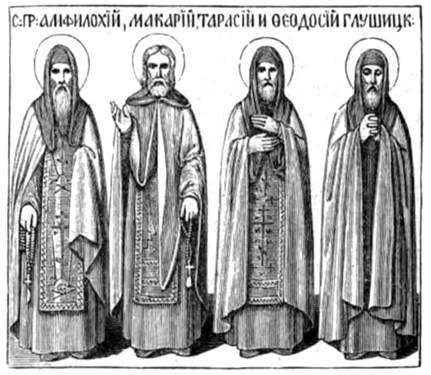
Блаж. Амфилохий168 уже иноком пришёл из Устюга к преп. Дионисию Глушицкому, когда у него основались обители Глушицкая и Сосновец. «Отче! спаси меня», сказал Амфилохий Дионисию при первой встрече. «Зачем ты принял на себя труд такой, чтобы прийти сюда?» отвечал Дионисий. «Я пришёл, говорил Амфилохий, поклониться Пречистой Богоматери и просить молитв твоих». Дионисий призвал ученика Макария и сказал: «пришёл к нам в монастырь наставляемый Богом инок Амфилохий и хочет с нами приносить молитвы Богу». Макарий отвечал: «прости меня невежду, отче, не понимаю, что говорить?» – «Говори, послушник, что Бог положит на сердце», сказал Дионисий, и Макарий произнёс: «благословен Бог, хотящий всем человеком спастися». «Да даст тебе Бог говорить полезное», прибавил игумен. Видя такую простоту наставника и ученика, Амфилохий пал к ногам Дионисия и сказал: «понимаю теперь пути твои, отче, и как, не ища славы человеческой, ищешь ты только славы Божией». Дионисий, подняв его, сказал: «зачем ты, брат мой, отягчаешь грешного человека? Богу – слава. Он один может спасти и меня и тебя». Амфилохий со слезами объявил, что он решился быть послушником Дионисия. Игумен не скрыл, что жизнь в его обители – сурова и трудна. «Если хочешь пребывать здесь, прибавил Дионисий, сотворим завет не разлучаться друг с другом, пока останемся на земле». Амфилохий решился на всё и со всей точностью исполнял устав общежития. Он был помощником Дионисию при построении нового, более обширного, храма. Кротость и смирение его были примерные и забота его относилась только к душе. Перед кончиной своей преп. Дионисий, призвав Амфидохия, сказал ему: «вижу, что смерть близка ко мне, тебе же велит Господь жить, – предай тело моё земле; не оставляй сего места, подвизайся каждый день. Кто из нас может заплатить чем-нибудь Владыке Христу?» Когда Амфилохий стал плакать о разлуке с учителем, – «ты ещё не довольно подвизался, сказал он, для получения назначенной тебе награды», – и поручил ему управление обителью169. По рук. описанию святых, преп. Амфилохий скончался спустя 15 лет после преп. Дионисия и след. в 1452 году. В обители замечен день кончины его 12 октября. Преподобный был роста среднего, с бородой невеликой и серебристой170. Мощи его почивают под спудом, рядом с мощами учителя его, в храме, посвящённом их имени. Рака над мощами устроена в 1645 г. усердием гостя Бахтеяра Булгакова171.
Blessed Amphilochius168, already a monk, came from Ustyug to Venerable Dionysius of Glushitsa, when the monasteries of Glushitsa and Sosnovets had been founded by him. “Father! save me,” said Amphilochius to Dionysius at their first meeting. “Why have you taken upon yourself such a labor as to come here?” answered Dionysius. “I have come,” said Amphilochius, “to venerate the Most Pure Mother of God and to ask for your prayers.” Dionysius called his disciple Macarius and said: “A monk, Amphilochius, instructed by God, has come to our monastery and wishes to offer up prayers to God together with us.” Macarius answered: “Forgive me, an ignorant man, father; I do not understand what to say.” – “Speak, novice, what God puts upon your heart,” said Dionysius, and Macarius uttered: “Blessed is God, Who wills that all men should be saved.” “May God grant you to speak what is profitable,” added the abbot. Seeing such simplicity in the teacher and the disciple, Amphilochius fell at the feet of Dionysius and said: “Now I understand your ways, father, and how, not seeking human glory, you seek only the glory of God.” Dionysius, raising him up, said: “Why, my brother, do you burden a sinful man? To God be the glory. He alone can save both me and you.” Amphilochius with tears declared that he was resolved to be a novice of Dionysius. The abbot did not conceal that life in his monastery was harsh and difficult. “If you wish to remain here,” added Dionysius, “let us make a covenant not to be separated from one another as long as we remain on earth.” Amphilochius resolved upon everything and fulfilled the rule of the cenobitic life with all exactness. He was a helper to Dionysius in the building of a new, more spacious church. His meekness and humility were exemplary, and his care was directed only toward the soul. Before his death, Venerable Dionysius, calling Amphilochius, said to him: “I see that death is near to me, but the Lord commands you to live – commit my body to the earth; do not leave this place, struggle each day. Which of us can repay anything to the Master Christ?” When Amphilochius began to weep over the separation from his teacher, – “You have not yet struggled enough,” he said, “to receive the reward appointed for you,” – and he entrusted him with the governance of the monastery169. According to the manuscript description of the saints, Venerable Amphilochius reposed 15 years after Venerable Dionysius, and consequently in 1452. In the monastery the day of his repose is noted as October 12. The venerable one was of medium stature, with a small and silvery beard170. His relics lie hidden, next to the relics of his teacher, in the church dedicated to their name. A shrine over the relics was built in 1645 by the zeal of the guest Bakhteyar Bulgakov171.
По житию преп. Дионисия, блаж. Макарий, рождённый в Ростове, ещё двенадцатилетним Матфеем взят был из дома родительского в обитель Дионисия и пострижен был в иночество; он жил в келье игумена и под его надзором обучался иноческой жизни. Авва полюбил его за чистоту души и по его просьбе Макарий посвящён был в иеромонаха Ростовского архиепископом Дионисием (1396–1416 г.). Блаж. Макарий до самой кончины преподобного наставника своего жил при его кельи. После Амфилохия он был игуменом Глушицкой обители. Мощи его почивают под спудом, осенённые ракой. Служба ему отправляется общая с другими Глушицкими преподобными по древней рукописной монастырской книге172.
According to the Life of Venerable Dionysius, Blessed Macarius, born in Rostov, was taken from his parental home into the monastery of Dionysius while still a twelve-year-old named Matthew, and was tonsured into monasticism; he lived in the abbot’s cell and under his supervision learned the monastic life. The abba loved him for the purity of his soul, and at his request Macarius was ordained a hieromonk by Dionysius, Archbishop of Rostov (1396–1416). Blessed Macarius lived near the cell of his venerable teacher until his very end. After Amphilochius he was abbot of the Glushitsa monastery. His relics lie hidden, overshadowed by a shrine. A service to him is celebrated in common with the other Glushitsa venerable ones according to an ancient manuscript monastic book172.
Блаженный Тарасий был игуменом Пермской обители, но добровольно оставил начальство, чтобы быть в послушании другого. – Когда сказали Дионисию о прибытии его в Глушицкую лавру, он вышел на встречу к Тарасию. «Издавна желал я видеть лицо твоё, честный отче, и много молил о том Господа», сказал Тарасий при встрече с Дионисием. «Благословен Бог, пославший к нам недостойным мужа, опытного и благоговейного», отвечал Дионисий. «Тебя прославил Господь по делам твоим, сказал Тарасий; позволь же моему смирению подражать тебе и исполнять твою волю; вот небольшое имение, которое принёс я с собой; причисли меня к твоей пастве». «Не ты ли, как подражатель истинного Пастыря Христа, говорил Дионисий, был сам пастырем и целителем людей, блуждавших во мраке язычества в земле Пермской?» Тарасий сказал, что чувствует нужду быть учеником другого, опытнейшего. С того времени игумен Тарасий проводил суровую пустынную жизнь наравне с прочими, сохранял строгий пост и приобрёл благодатные слёзы умиления, тёкшие часто из очей его. Он прожил при преп. Дионисии 10 лет и преставился при игум. Амфилохии, вскоре после наставника своего, в 1440 году. Служба ему общая с преп. Макарием. Мощи его осенены ракой.
Blessed Tarasius was abbot of the Perm monastery, but voluntarily gave up his authority in order to be in obedience to another. – When they told Dionysius of his arrival at the Glushitsa Lavra, he went out to meet Tarasius. “Long have I desired to see your face, honorable father, and I have prayed much to the Lord for this,” said Tarasius at his meeting with Dionysius. “Blessed is God, Who has sent to us, the unworthy, a man experienced and reverent,” answered Dionysius. “The Lord has glorified you according to your works,” said Tarasius; “allow then my humility to imitate you and to fulfill your will; here is a small property which I have brought with me; number me among your flock.” “Are you not,” said Dionysius, “as an imitator of the true Shepherd Christ, yourself a shepherd and healer of people who wandered in the darkness of paganism in the land of Perm?” Tarasius said that he felt the need to be a disciple of another, more experienced one. From that time Abbot Tarasius led a harsh desert life on a par with the others, observed strict fasting, and acquired the grace-given tears of compunction, which often flowed from his eyes. He lived with Venerable Dionysius for 10 years and reposed under Abbot Amphilochius, soon after his teacher, in 1440. A service to him is celebrated in common with Venerable Macarius. His relics are overshadowed by a shrine.
Жизнь св. Максимилиана, описанная в XIII стол. Патавским пресвитером, изд. int. script. rerum austr. T. 1, и с объяснениями Ганзена: Germania sacra t. 1. Извлечения у Вейса: Leben d. Heiligen. В. 14, 546–559. Leben u. Werken d. Heiligen. B. 2. 427. Regensburg. 1840.
The Life of St. Maximilian, written in the 13th century by a priest of Passau, published in int. script. rerum austr. T. 1, and with explanations by Hansen: Germania sacra t. 1. Extracts in Weiss: Leben d. Heiligen. B. 14, 546–559. Leben u. Werken d. Heiligen. B. 2. 427. Regensburg. 1840.
Известия Страбона, Птоломея, Т. Ливия, Плиния – у Черткова: Фракийские племена в Италии, времени. 16 ч. 69–86 у Савельева в Славян. сборнике 122–135. Дионисий периэгет: «Норики, Панноны и Мизы, живущие на южной стороне Дуная, все происхождением Фраки, выходцы из северной Фракии; все берега Истры, по всему её течению, заселены одними Фраками». П. Григорий в 600 г. писал к Салонскому епископу: de Slavorum gente, quae vobis valde imminet, affligor et conturbor; affligor in his, quae iam in vobis patior; contristor, quia per Histriae aditum iam in Italiam intrare caeperunt. О хорутанских Славянах Шафарика древн. III, 83–110.
Reports of Strabo, Ptolemy, T. Livy, Pliny – in Chertkov: Thracian Tribes in Italy, Vremennik 16, pp. 69–86, in Savelyev’s Slavonic Collection 122–135. Dionysius Periegetes: “The Norici, Pannonians and Mysians, living on the southern side of the Danube, are all Thracians by origin, emigrants from northern Thrace; all the banks of the Ister, along its entire course, are settled by Thracians alone.” Pope Gregory in 600 wrote to the Bishop of Salona: de Slavorum gente, quae vobis valde imminet, affligor et conturbor; affligor in his, quae iam in vobis patior; contristor, quia per Histriae aditum iam in Italiam intrare caeperunt. On the Carinthian Slavs, see Schafarik, Antiquities III, 83–110.
У Канизия Antiqu. lect. VI, 113 ed. Ingolst., в житии Руперта: «св. Максимилиан из Зелья – прекрасно управлял Лерхской церковью... Он пришёл на родину и здесь – лишается головы». В прибавлениях κ Усуардову мартирологу Гревенский мартиролог: «12 окт. Максимилиана Лерхского епископа и мученика, который при имп. Каре и Нумериане принял мученический венец... потом перенесённый Баварским графом в Потавию весьма чтится». Моланово издание: «в Зелье (Celenoe), что в Паннонии, Максимилиана, Лерхского епископа и исповедника; тело его перенёс в Лерх Руперт, баварский апостол (590 г.), построивший много церквей в честь его; наконец, в Потавию (на р. Драве) перенёс имп. Генрих 2» († 1024 г.). Patrol. 124, 569. 570.
In Canisius, Antiqu. lect. VI, 113 ed. Ingolst., in the Life of Rupert: “St. Maximilian of Zellia – governed the church of Lorch excellently... He came to his homeland and there – lost his head.” In the additions to Usuard’s Martyrology, the Greven Martyrology: “Oct. 12, of Maximilian, Bishop of Lorch and Martyr, who under the Emperors Carus and Numerian received the martyr’s crown... afterwards translated by a Bavarian count to Passau, is greatly venerated.” The Molanus edition: “In Zellia (Celenoe), which is in Pannonia, of Maximilian, Bishop of Lorch and Confessor; his body was translated to Lorch by Rupert, the Apostle of Bavaria (590), who built many churches in his honor; finally, to Passau (on the Drava) translated by Emperor Henry II” († 1024). Patrol. 124, 569. 570.
В актах префект первой Паннонии Аманций. У Пруденция: Hic sub Galerio duce, qui tunc Illyricos sinus urgebat ditionibus. Так как Иллирия заключала под собой как верхнюю, так и нижнюю Паннонию, то Галерий был начальником и над Максимом; последний, не имея права на жизнь подсудимого, отсылает его к Галерию. Префект Иллирика назывался и Амавцием и Галерием: два имени одному лицу – обыкновенное дело.
In the acts, the prefect of Pannonia Prima is Amantius. In Prudentius: Hic sub Galerio duce, qui tunc Illyricos sinus urgebat ditionibus. Since Illyricum comprised both Upper and Lower Pannonia, Galerius was also the superior of Maximus; the latter, having no authority over the life of the accused, sends him to Galerius. The prefect of Illyricum is called both Amantius and Galerius: two names for one person – a common occurrence.
Chronicon b. Hieronymi ad an. 310: «Кирин, Сисьский епископ, славно умирает за Христа. Ибо когда с жерновным камнем на шее брошен был в реку, то весьма долго плавает на поверхности, разговаривает с зрителями, чтобы не устрашались примером его, и едва молитвой достигает того, чтобы был погружён».
Chronicon b. Hieronymi ad an. 310: "Quirinus, Bishop of Siscia, dies gloriously for Christ. For when he was thrown into the river with a millstone around his neck, he floated on the surface for a very long time, conversing with the onlookers that they should not be frightened by his example, and only with difficulty did he obtain through prayer that he might be submerged."
Проспер в хронике о св. Кирине: cum sociis gloriose pro Christo interficitur. – В Иеронимовом мартирологе в один день с св. Кирином in sabaria civitate Rustuli cum aliis duobus.
Prosper in his chronicle concerning St. Quirinus: cum sociis gloriose pro Christo interficitur. – In the Hieronymian Martyrology, on the same day as St. Quirinus, in sabaria civitate Rustuli cum aliis duobus.
Wiltsch kirchl. Statist. 1, 42, 129. О состоянии православия и папизма в прибрежных городах Адриатики – «епархеа православна у Далмации» в Сербо-Далматинском магазине за лето 1850 г. Загреб, стр. 1–50.
Wiltsch kirchl. Statist. 1, 42, 129. On the state of Orthodoxy and Papism in the coastal cities of the Adriatic – "the Orthodox diocese in Dalmatia" in the Serbo-Dalmatian Magazine for the summer of 1850. Zagreb, pp. 1–50.
Ист. иер. 3, 701. 702. – В Синод. ркп. XVII в. № 610, кроме службы одному пр. Дионисию, общая служба Дионисию и Амфилохию. Буслаева словес. и искус. 2, 351.
Hist. Hier. 3, 701, 702. – In a Synodal manuscript of the 17th century, No. 610, besides the service to the Venerable Dionysius alone, there is a common service to Dionysius and Amphilochius. Buslaev, Literature and Art, vol. 2, p. 351.
Ркп. житие Дионисия; ист. иер. 5. 38. По ркп. святцам Макарий преставился 13 мая. – В святцах устава XVI в. (Толстого 1 № 100) под 13 мая «преп. Макарий Глушицкий».
Manuscript life of Dionysius; Hist. Hier. 5, 38. According to manuscript saints' calendars, Macarius reposed on 13 May. – In the saints' calendar of a 16th-century Typicon (Tolstoy 1, No. 100), under 13 May: "Venerable Macarius of Glushitsa."