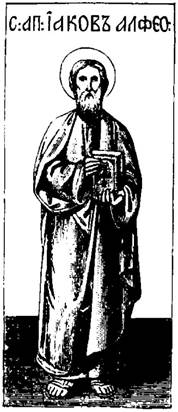
Иакова Алфеева некоторые признают за одно лицо с Ап. Иаковом меньшим, – братом Господним по плоти. Но Церковь, на основании Писания (Мф.10:3; Мк.3:18; Лк.6:15), ясно отличает Иакова Алфеева от Иакова, брата Господня по плоти, назначая сему последнему празднование 23-го октября и 4-го января и причисляя его к лику 70 Апостолов. Святого же Апост. Иакова Алфеева Церковь причисляет к славным и всехвальным Апостолам и называет братом Евангелиста Матфея.
Some identify James, son of Alphaeus, with the Apostle James the Less, the brother of the Lord according to the flesh. But the Church, on the basis of Scripture (Mt. 10:3; Mk. 3:18; Lk. 6:15), clearly distinguishes James, son of Alphaeus, from James, the brother of the Lord according to the flesh, appointing the latter's commemoration for October 23 and January 4, and numbering him among the Seventy Apostles. St. James the Apostle, son of Alphaeus, the Church numbers among the glorious and all-praised Apostles and calls him the brother of the Evangelist Matthew.
По сошествии Святого Духа, свои Апостольские труды Иаков Алфеев совершал вместе с прочими Апостолами (Деян.6:2) в Иудее, Эдесе, где был он с Апостолом Андреем Первозванным, во время третьего его путешествия, и также странствовал для проповеди, по сказанию Никифора Каллиста, вГазу, Елевферополь и в сопредельные места. Отсюда св. Апостол для благовестия Евангелия удалился в Египет и в городе Острацыне, после немалого в нём пребывания, запечатлел свои Апостольские подвиги мученическою смертью на кресте.
After the descent of the Holy Spirit, James, son of Alphaeus, performed his Apostolic labors together with the other Apostles (Acts 6:2) in Judea and Edessa, where he was with the Apostle Andrew the First-Called during his third journey; and he also traveled for preaching, according to the account of Nikephoros Kallistos, in Gaza, Eleutheropolis and the neighboring regions. From there the holy Apostle withdrew to Egypt for the preaching of the Gospel, and in the city of Ostrakine, after a considerable stay there, he sealed his Apostolic labors by a martyr's death on the cross.
В IX веке Феофан Никейский написал канон св. Апост. Иакову Алфееву, поемый ныне Православной Церковью в день его памяти. В этот день Церковь между прочим взывает нам: «твёрдо мудрости догматы в души благочестивых вложившего похвалами да ублажаем, яко Боговещателя».
In the ninth century, Theophanes of Nicaea composed a canon to St. James the Apostle, son of Alphaeus, which is sung today by the Orthodox Church on the day of his memory. On this day the Church, among other things, calls out to us: "Let us bless with praises him who firmly placed the dogmas of wisdom in the souls of the pious, as one who spoke of God."
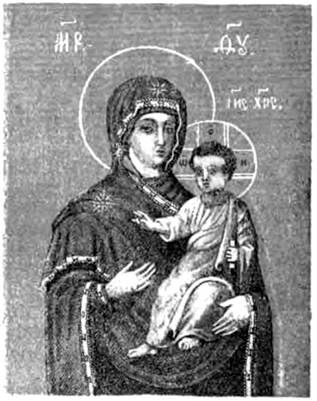
Эфесская или Корсунская икона Богородицы, по преданию, писана св. Лукой. В 988 году в 9-й день октября она принесена великим князем Владимиром из Херсона в Киев; а по другому сказанию, из Греции в Россию – Предиславой или Предславой, – в монашестве Евфросинией, – дочерью Полоцкого князя Георгия. Предислава, одарённая высокими совершенствами души и тела, в летах цветущей юности отвергнув блестящие увеселения не только княжеского двора, но и всего мира, тайно оставила отеческий дом и облеклась в одежду иноческую. Евфросиния, так названа. Предислава по её пострижении, подвизалась сперва, по дозволению Полоцкого епископа Илии, в кельи, пристроенной к Софийскому Полоцкому собору. Спустя несколько времени, она, по любви к безмолвию, избрала себе для жительства принадлежавшее к архиерейскому дому подворье или сельцо, где находилась деревянная церковь во имя Спаса. Испросив себе это место, Евфросиния основала здесь девичью обитель, воздвигла около 1162 года каменный храм всемилостивому Спасу, и в этом монастыре была первой начальницей. Слыша о писанных св. Лукой ещё при жизни Богоматери иконах, из коих одна находилась в Иерусалиме, другая в Царьграде, а третья в Ефесе, преподобная желала иметь одну из них в своей обители и, помолившись Богу со слезами об исполнении своего желания, отправила нарочного к Греческому императору Мануилу и патриарху Луке Хрисовергию с дарами и просьбой доставить ей икону Богоматери. Император и патриарх приняли прошение благосклонно и, взяв икону из Ефеса в Царьград, отпустили к преподобной с нарочным, присланным от неё. Сию знаменитую икону поставила она в Спасской церкви монастыря и украсила золотом и дорогими камнями.
The Ephesian or Korsun Icon of the Mother of God, according to tradition, was painted by St. Luke. In the year 988, on the 9th day of October, it was brought by the Great Prince Vladimir from Cherson to Kiev; and according to another account, from Greece to Russia by Predislava or Predslava—in monasticism, Euphrosyne—the daughter of the Polotsk Prince George. Predislava, gifted with high perfections of soul and body, in the years of blooming youth, having rejected the brilliant amusements not only of the princely court but of the whole world, secretly left her father's house and clothed herself in the monastic habit. Euphrosyne, as Predislava was named after her tonsure, first struggled, with the permission of the Polotsk Bishop Elias, in a cell attached to the St. Sophia Cathedral of Polotsk. After some time, out of love for silence, she chose for her dwelling a farmstead or village belonging to the bishop's house, where there was a wooden church in the name of the Savior. Having obtained this place for herself, Euphrosyne founded a convent here, erected around the year 1162 a stone church to the All-Merciful Savior, and was the first superior in this monastery. Hearing of the icons painted by St. Luke while the Mother of God was still alive, of which one was in Jerusalem, another in Constantinople, and a third in Ephesus, the Venerable one desired to have one of them in her monastery; and having prayed to God with tears for the fulfillment of her desire, she sent a messenger to the Greek Emperor Manuel and Patriarch Luke Chrysoberges with gifts and a request to deliver to her an icon of the Mother of God. The emperor and patriarch received the petition favorably and, taking the icon from Ephesus to Constantinople, sent it to the Venerable one with the messenger she had sent. This renowned icon she placed in the Savior Church of the monastery and adorned it with gold and precious stones.
В XIII веке великий князь Ярослав Всеволодович, бывший прежде Новгородский, после войны с Литовцами за Смоленск, благословил сына своего Александра Невского вступить в Торопце – городе Псковской губернии – в брак с дочерью князя Полоцкого Брячислава – Александрой. Она в 1239 году принесла с собой образ Матери Божией Ефесской и поставила его в Богородицком соборе Торопца, где он и доселе известен у жителей под именем Корсунского и почитается чудотворным. В Торопце сохраняется предание, что этот образ в XII веке прислан был из Царьграда императором Мануилом и патриархом Лукой в дар и благословение преподобной Евфросинии, княжне Полоцкой, по основании её девичьей обители.
In the thirteenth century, the Great Prince Yaroslav Vsevolodovich, who had previously been Prince of Novgorod, after a war with the Lithuanians over Smolensk, blessed his son Alexander Nevsky to enter into marriage in Toropets—a city of the Pskov province—with the daughter of the Polotsk Prince Bryachislav, Alexandra. She, in 1239, brought with her the image of the Mother of God of Ephesus and placed it in the Cathedral of the Mother of God in Toropets, where it is still known to the inhabitants under the name of the Korsun Icon and is venerated as wonderworking. In Toropets a tradition is preserved that this image was sent in the twelfth century from Constantinople by the Emperor Manuel and Patriarch Luke as a gift and blessing to the Venerable Euphrosyne, Princess of Polotsk, upon the founding of her convent.
Антиохия – в начале христианства – столица Востока, с 500,000 жителей. Нигде язычество не являлось в такой полноте безобразия своего, как в Антиохии. Здесь был сброд магов, мим, жрецов, город плясок, вакханалий, оргий исступлённых, разврата наглого, роскоши бешеной. Когда явилось тут христианство, чудная перемена произошла в роскошной столице Востока. При св. Златоусте в Антиохии и её окрестностях были уже целые сонмы чистых дев. Вот что говорит он в одной беседе Антиохианам: «девы, ещё не достигшие двадцатилетнего возраста, проводившие всё время в своих покоях, воспитанные в неге, почивавшие на мягком ложе, пропитанные благовониями и дорогими мастями, нежные по природе и ещё более изнеженные от усердных ухаживаний, не знавшие в продолжении целого дня другого занятия, как только украшать свою наружность, носить на себе золотые уборы и предаваться сластолюбию, не делавшие ничего даже для себя, но имевшие множество служанок, носившие одежды более нежные, чем само их тело, у потреблявшие тонкие и мягкие покрывала, постоянно наслаждавшиеся запахом роз и подобных благовоний, – эти девы, быв внезапно объяты огнём Христовым, бросили всю эту роскошь и пышность; забыв о своей нежности, о своём возрасте, расстались со всеми удовольствиями и, подобно храбрым борцам, вступили на поприще подвигов. По-видимому, говорю я невероятное, однако ж верное. Я слышал, что эти столь нежные девы достигли такой строгости в жизни, что надевали на свои нагие тела самые грубые власяницы; ноги их оставались босыми и ложем их были тростниковые прутья, большую часть ночи проводили они без сна. Трапеза у них бывает только вечером, трапеза, на которой нет ни трав, ни хлеба, а только бобы, горох, елей и смоквы. Постоянно заняты они прядением шерсти и другими более трудными рукоделиями, чем какими занимались у них служанки. Они взяли на себя труд лечить больных, носить одры их, умывать ноги им. Многие из них занимаются и приготовлением пищи. Такую имеет силу огонь Христов!»132
Antioch—in the early days of Christianity—was the capital of the East, with 500,000 inhabitants. Nowhere did paganism appear in such fullness of its ugliness as in Antioch. Here was a rabble of magicians, mimes, priests—a city of dances, bacchanalias, frenzied orgies, shameless debauchery, and mad luxury. When Christianity appeared there, a wondrous change took place in the luxurious capital of the East. In the time of St. Chrysostom, in Antioch and its environs, there were already whole hosts of pure virgins. This is what he says in one homily to the Antiochenes: "Virgins, not yet twenty years of age, who spent all their time in their chambers, brought up in luxury, reclining on soft couches, steeped in perfumes and costly ointments, tender by nature and even more pampered by diligent attentions, who knew no other occupation throughout the whole day than to adorn their appearance, to wear gold ornaments and to indulge in sensual pleasure, who did nothing even for themselves but had a multitude of maidservants, who wore garments more delicate than their own bodies, who used fine and soft veils, constantly delighting in the scent of roses and similar fragrances—these virgins, being suddenly seized by the fire of Christ, abandoned all this luxury and splendor; forgetting their tenderness, their age, they parted with all pleasures and, like brave wrestlers, entered the arena of struggles. In appearance, I speak of something incredible, yet it is true. I have heard that these so tender virgins attained such strictness of life that they put on their naked bodies the coarsest hair-shirts; their feet remained bare and their bed was reeds; they spent the greater part of the night without sleep. Their meal is only in the evening, a meal on which there are neither herbs nor bread, but only beans, peas, oil and figs. They are constantly occupied with spinning wool and other more difficult handiwork than that which their maidservants used to do. They have taken upon themselves the labor of tending the sick, carrying their beds, washing their feet. Many of them also occupy themselves with preparing food. Such is the power of the fire of Christ!"132
При Златоусте в Антиохии явились даже и порицатели девства, точно такие же, каковы они и ныне. Нового не придумали новые умники, а повторяют старое, изношенное. Для них св. Златоуст писал в Антиохию обширное сочинение о девстве. Дав понятие об истинных девах, показав и то, что между еретиками не может быть истинных дев, как не было их между язычниками, он пишет: «скажет кто-нибудь: если лучше не касаться жены, то к чему же введён в мир брак? Что помешает быть истреблену людскому роду, если на место умерших не будет рождающихся? Род наш держится не силой брака, а силой Господа, сказавшего: раститеся*и множитися*... Без воли Божией брак не умножит людей и девство не уменьшит... Не девство грозит гибелью людскому роду, а грозят беззаконные сожития. Это показано в быстром истреблении всех животных при Ное. Если бы сыны Божии воспротивились гнусной похотливости и не смотрели преступными очами на дщерей человеческих, погибель не пришла бы. Когда мир весь наполнился людьми, остаётся одна причина брака – предотвращение нечестивой похотливости». Выставив те неудобства, какие влечёт за собой второй брак, и показав, что всякий брак есть неотвратимое рабство, картинно изображает, как легче деве, чем замужней, достигать Царства Небесного, и решает кое-какие недоумения133.
In the time of Chrysostom, there even appeared in Antioch detractors of virginity, exactly the same as they are today. The new clever ones have invented nothing new, but repeat the old, worn-out things. For them St. Chrysostom wrote an extensive treatise on virginity in Antioch. Having given a concept of true virgins, and having shown also that among heretics there cannot be true virgins, just as there were none among the pagans, he writes: "Someone will say: if it is better not to touch a wife, then why was marriage introduced into the world? What will prevent the human race from being destroyed if no one is born to replace the dead? Our race is sustained not by the power of marriage, but by the power of the Lord, who said: Increase**and multiply... Without the will of God, marriage will not multiply people, and virginity will not diminish them... It is not virginity that threatens the human race with destruction, but lawless cohabitations threaten it. This was shown in the swift destruction of all animals at the time of Noah. If the sons of God had resisted vile lust and had not looked with sinful eyes upon the daughters of men, destruction would not have come. When the whole world was filled with people, there remains one reason for marriage—the prevention of ungodly lust." Having set forth the inconveniences which a second marriage entails, and having shown that every marriage is an unavoidable slavery, he vividly depicts how much easier it is for a virgin than for a married woman to attain the Kingdom of Heaven, and resolves certain perplexities133.
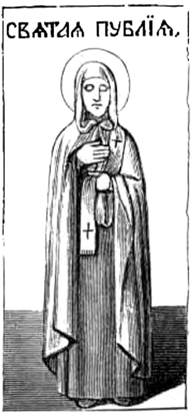
Дочь благородных родителей, по их желанию, выдана была. замуж за благородного Антиохийца; но с мужем жила недолго, – он скоро умер. Благословенным плодом честного брака был сын Иоанн. Мать воспитала его, как искренняя христианка. Оттого вышло, что Иоанн «немало времени начальствовал над пресвитерами Антиохийскими и, быв много раз избираем на Апостольскую кафедру, всегда уклонялся от начальствования»134. Блаженная Публия со времени вдовства своего вела жизнь строгую, в посте и в молитве. При такой жизни почтенная священным саном диакониссы135, она собрала себе дев и вдов, решившихся, подобно ей, жить для Господа; с ними проводила она жизнь точно так, как писал святой Златоуст, снявший свою картину дев и с общины благородной Публии; с ними постоянно славила она Творца и Спасителя Бога136. Так прожила она подвижнически несколько лет. На престол империи взошёл Юлиан и открыто стал на сторону язычества; гордый умом своим, он старался дать языческому богослужению великолепие и возможно-лучший смысл; на словах выставлял из себя защитника всякой истины и человечности, а на деле нагло осмеивал святую веру, дозволял гнать и сам гнал христиан. Он прибыл в Антиохию и здесь поступал, как фанатик язычества; велел выбросить мощи св. Вавилы из храма, «обещался стереть с лица земли всю породу Галилеян», – так называл он христиан и велел не иначе называть их137. Раз он должен был проходить мимо молитвенного дома Публии. Подвижницы пели утренние хвалы Богу. Когда отступник шёл мимо обители дев, подвижницы громче обыкновенного запели все вместе, считая гонителя достойным презрения и осмеяния. Идоли*язык сребро и злато, дела рук человеческих, возглашали они с Давидом и, его словами изобразив бесчувственность их, с его негодованием пели: *подобны им да будут творящии я и вси надеющиися на ня (Пс.113:16). Слыша это, нечестивец вспыхнул и с гневом запретил петь псалмы, когда он будет проходить мимо. Тот, кто сердится на правду, выказывает только свою слабость и вызывает против себя новую смелость правды. Когда Юлиан снова проходил мимо обители, св. Публия велела петь: да воскреснет Бог и расточатся врази Его (Пс.67:1). Юлиан в бешенстве приказал привести к себе начальницу хора. Перед ним предстала старица, достойная всякого почтения и по летам своим и пользовавшаяся общим уважением в Антиохии за высокие добродетели свои. И однако он приказал одному из слуг бить по щекам проповедницу правды, и тот обагрил свои руки кровью её. Бестрепетная диаконисса говорила Юлиану, что жалеет о больной душе его, но считает истину Божию выше всего. С хвалой Богу на устах возвратилась она в свою обитель. Считая Юлиана за одержимого злым духом, как одержим был Саул, она продолжала петь для него священные песни с теми мыслями, что авось либо и отступник придёт в себя138. Недолго после того длилась жизнь её: она с миром предала дух свой Господу, а Юлиан погиб на войне139.
The daughter of noble parents, at their wish, was given in marriage to a noble Antiochene; but she did not live long with her husband—he soon died. The blessed fruit of an honorable marriage was a son, John. His mother raised him as a sincere Christian. Hence it came about that John "for no small time presided over the presbyters of Antioch and, having been many times chosen for the Apostolic see, always declined the office"134. Blessed Publia, from the time of her widowhood, led a strict life, in fasting and prayer. Honored with the sacred rank of deaconess135, she gathered to herself virgins and widows who had resolved, like her, to live for the Lord; with them she spent her life exactly as St. Chrysostom wrote, having drawn his picture of virgins also from the community of the noble Publia; with them she constantly glorified the Creator and Savior God136. Thus she lived ascetically for several years. Julian ascended the imperial throne and openly sided with paganism; proud in his mind, he strove to give pagan worship splendor and the best possible meaning; in words he set himself forth as a defender of all truth and humanity, but in deeds he insolently mocked the holy faith, permitted persecution, and himself persecuted Christians. He arrived in Antioch and here acted as a fanatic of paganism; he ordered the relics of St. Babylas to be cast out of the church, "promised to wipe out the whole race of Galileans from the face of the earth"—so he called Christians and ordered them to be called nothing else137. Once he had to pass by the prayer-house of Publia. The ascetics were singing morning praises to God. When the apostate passed by the dwelling of the virgins, the ascetics sang louder than usual, all together, considering the persecutor worthy of contempt and mockery. The idols of the nations are silver and gold, the work of men's hands, they proclaimed with David, and, having depicted their insensibility with his words, sang with his indignation: May those who make them become like them, and all who trust in them (Ps. 113:16). Hearing this, the impious man flared up and angrily forbade them to sing psalms when he should pass by. He who is angered at the truth only shows his own weakness and provokes against himself a new boldness of the truth. When Julian again passed by the dwelling, St. Publia ordered them to sing: Let God arise, let His enemies be scattered (Ps. 67:1). Julian, in a rage, ordered the leader of the choir to be brought before him. Before him stood an aged woman, worthy of all respect both for her years and enjoying general esteem in Antioch for her high virtues. And yet he ordered one of his servants to strike the preacher of truth on the cheeks, and he stained his hands with her blood. The fearless deaconess said to Julian that she pitied his sick soul, but considered the truth of God above all things. With praise to God on her lips, she returned to her dwelling. Considering Julian as possessed by an evil spirit, as Saul was possessed, she continued to sing sacred songs for him, hoping that perhaps even the apostate might come to himself138. Not long after that did her life continue: she peacefully surrendered her spirit to the Lord, and Julian perished in war139.
Из жития Андроника и Афанасии, написанного Метафрастом на основании древнего сказания, – так как во всём «житии» – полное согласие с другими историческими данными в отношении к лицам, местам и времени140, – известно, что это были супруги, жившие в V-м веке и угодившие Богу сначала праведностью их жизни в мире, а потом благодушным перенесением посланного им испытания, именно: лишения обоих любимых детей, и наконец – посвящением себя иноческой жизни, ради которой они решились на разлуку, хотя и были преданы друг другу.
From the life of Andronicus and Athanasia, written by Metaphrastes on the basis of an ancient account—since in the whole "life" there is complete agreement with other historical data in relation to persons, places, and time140—it is known that these were spouses who lived in the 5th century and pleased God, first by the righteousness of their life in the world, and then by the cheerful endurance of the trial sent to them, namely: the loss of both beloved children, and finally—by dedicating themselves to the monastic life, for the sake of which they resolved on separation, although they were devoted to each other.
Не могло быть ничего для любящих родителей тяжелее смерти детей их. И эта скорбь поразила Андроника и Афанасию среди различных подвигов в христианских добродетелях, ради которых, казалось, что могли быть избавлены от такой великой скорби те, которые только и помышляли о том, чтобы избавлять от скорби других, проводя всю жизнь в попечениях о больных, странных и убогих, сопровождая свои добрые дела постническим воздержанием во всём и молитвой.
Nothing could be harder for loving parents than the death of their children. And this grief struck Andronicus and Athanasia amidst various labors in Christian virtues, for the sake of which it seemed that those who only thought of relieving others from sorrow, spending their whole life in care for the sick, strangers, and the poor, accompanying their good deeds with fasting abstinence in all things and prayer, might have been spared such great sorrow.
Но в то время, когда эти супруги – истинные христиане – заботились об утешении других, их собственные дети – Иоанн – 12-ти лет и Мария – десяти захворали, и некому было помочь им, и они умерли от болезни. Все жители Антиохии, где это случилось, сочувствовали горю родителей, пользовавшихся общим уважением в городе; сам патриарх с клиром торжественно совершал обряд погребения детей Андроника и Афанасии при храме св. муч. Иулиана, причём присутствовало и множество мирян.
But at the time when these spouses—true Christians—were concerned with comforting others, their own children—John, 12 years old, and Mary, ten—fell ill, and there was no one to help them, and they died of the illness. All the inhabitants of Antioch, where this happened, sympathized with the grief of the parents, who enjoyed general respect in the city; the patriarch himself, with the clergy, solemnly performed the burial rite for the children of Andronicus and Athanasia at the church of the holy Martyr Julian, and a multitude of laymen were also present.
Не смотря однако же на заявление такого общего участия, Афанасия была неутешна в горе своём и не хотела даже возвращаться в дом свой, пребывая неотлучно при могиле, в которую навеки опустила детей своих, драгоценное сокровище сердца своего...
Notwithstanding, however, this expression of such general sympathy, Athanasia was inconsolable in her grief and did not even wish to return to her house, remaining constantly at the grave into which she had forever lowered her children, the precious treasure of her heart...
Но не оставил Бог без утешения и вразумления праведностью жизни угодивших Ему. В чудном видении открыто было плачущей матери, что не о детях, но только о своём греховном состоянии в мире следует проливать такие обильные слёзы... – «Точно так же, как человек, по естеству своему, требует пищи для тела, – присовокупил чудный вестник, представший перед погружённой в печаль матерью, – и невозможно отказать ему в удовлетворении этой потребности, таким же образом и милосердый Бог не может отказать в духовной пище Своим созданиям, и питает детей твоих небесными благами Тот праведный Судия, Который воззвал их от пользования благами земными»... – И возрадовалась мать этой чудной вести о блаженном состоянии детей своих в небесных обителях, – и возвратилась в дом свой, и разделила радость с мужем своим, и решились оба они, отказавшись от всех радостей земных, посвятить свою дальнейшую жизнь на служение Единому Богу. – Поручив тестю всё имение, нажитое честным трудом (Андроник был золотых дел мастером), для употребления его в пользу бедных, Андроник и Афанасия оставили дом, прося Бога, «чтобы Он, ради Которого оставляют они дом свой открытым для всех нуждающихся, не закрыл для них двери Своего Царства Небесного» ...
But God did not leave without consolation and admonition those who had pleased Him by the righteousness of their life. In a wondrous vision it was revealed to the weeping mother that it was not for her children, but only for her own sinful state in the world, that she should shed such abundant tears... — "Just as a man, by his nature, requires food for the body," added the wondrous messenger who appeared before the mother immersed in sorrow, "and it is impossible to deny him the satisfaction of this need, in the same way the merciful God cannot deny spiritual food to His creatures, and He nourishes your children with heavenly blessings, that righteous Judge Who called them away from the enjoyment of earthly blessings"... — And the mother rejoiced at this wondrous news of the blessed state of her children in the heavenly dwellings—and returned to her house, and shared the joy with her husband, and they both resolved, renouncing all earthly joys, to dedicate their remaining life to the service of the One God. — Entrusting to his father-in-law all the property acquired by honest labor (Andronicus was a goldsmith), for use in behalf of the poor, Andronicus and Athanasia left the house, praying to God "that He, for Whose sake they left their house open to all the needy, would not close to them the doors of His Heavenly Kingdom"...
Отойдя из города своего в Иерусалим для поклонения св. местам, посетили они и Александрию; на пути своём встретили скитского подвижника Даниила и по благословению его решили вести иноческую жизнь: Афанасия поступила в женскую Тавенисиотскую обитель, а Андроник остался в скиту у старца Даниила. – Двенадцать лет пребывал он тут в безмолвии, трудах и молитве, спасаясь под руководством опытного подвижника, и ничего не слыхал в это время об Афанасии. Случилось же после того, что Андроник, отправившись в новое странствие с благочестивыми целями, встретил жену свою в Египте, но не узнал её, потому что она, оставив также обитель для поклонения св. местам, путешествовала, скрывая себя под мужской одеждой, и сверх того совершенно изменилась наружностью вследствие изнурения от тяжёлой иноческой жизни.
Having departed from their city to Jerusalem to worship the holy places, they also visited Alexandria; on their way they met the skete ascetic Daniel and, by his blessing, resolved to lead the monastic life: Athanasia entered the female Tabennesiot monastery, and Andronicus remained in the skete with the elder Daniel. — Twelve years he dwelt there in silence, labors, and prayer, being saved under the guidance of an experienced ascetic, and during this time he heard nothing of Athanasia. It happened after that, that Andronicus, having set out on a new pilgrimage with pious intentions, met his wife in Egypt, but did not recognize her, because she, having also left the monastery to worship the holy places, was traveling, concealing herself in male attire, and moreover had completely changed in appearance due to exhaustion from the heavy monastic life.
Афанасия же узнала своего мужа; тем не менее, не открылась ему, а только согласилась на предложение его путешествовать вместе на условии соблюдения ненарушимого безмолвия. Таким образом и совершили супруги это вторичное путешествие их на поклонение св. местам, по окончании которого решились они и получили благословение от старца Даниила проводить дальнейшую жизнь в общей кельи в скиту Данииловом – на условии соблюдения того же безмолвия, – и таким образом духовным единением в общем подвижничестве соединились вновь разлучившиеся добровольно ради пребывания в едином Боге супруги. И так прожили они вместе двенадцать лет. – Когда же приблизилась кончина той, которую все принимали за инока Афанасия, то пришедший напутствовать умирающего Даниил, застав его в слезах, увещевал не плакать, но радоваться наступающему соединению со Христом.
But Athanasia recognized her husband; nevertheless, she did not reveal herself to him, but only agreed to his proposal to travel together on condition of maintaining unbroken silence. Thus the spouses made this second pilgrimage of theirs to worship the holy places, after the completion of which they resolved and received a blessing from the elder Daniel to spend their remaining life in a common cell in Daniel's skete—on condition of maintaining the same silence—and thus, by spiritual union in common asceticism, the spouses, who had voluntarily separated for the sake of abiding in the one God, were reunited. And so they lived together for twelve years. When the end drew near for her whom all took for the monk Athanasius, Daniel came to give the last rites to the dying one, and finding him in tears, exhorted him not to weep, but to rejoice at the approaching union with Christ.
«Не о себе плачу, но об Андронике»... – загадочно для старца излилась из души умирающей естественная скорбь её о разлуке с мужем, с которым не переставала соединять её святая любовь, – «прошу тебя, отче, – прибавила Афанасия, – возьми после погребения моего письмо под изголовьем моим и, прочитав, передай его отцу Андронику»...
"I weep not for myself, but for Andronicus"... — enigmatically for the elder, the natural sorrow of the dying woman at separation from her husband, with whom holy love had not ceased to unite her, poured forth from her soul—"I beg you, father," added Athanasia, "after my burial, take the letter under my head and, having read it, give it to Father Andronicus"...
Старец Даниил исполнил просьбу мнимого брата, и тогда открылось, что в кельи с Андроником жила бывшая жена его. Он только семью днями пережил её и был похоронен вместе с ней.
The elder Daniel fulfilled the request of the supposed brother, and then it was revealed that the former wife of Andronicus had lived with him in the cell. He outlived her by only seven days and was buried together with her.
«Авраам – великий отец множества народов, и не было подобного ему в славе», – говорит Иисус, сын Сирахов (Сир.44:19), и продолжает: «он сохранил закон Всевышнего и был в завете с Ним, а на своей плоти утвердил завет, и в испытании оказался верным. Поэтому Господь с клятвой обещал ему, что в семени его благословятся все народы, обещал умножить его, как прах земли, и возвысить семя его, как звёзды, и дать им наследство от моря до моря и от реки до края земли. – И Исааку ради Авраама, отца его, Он также подтвердил благословение всех людей и завет. И оно же почило на голове Иакова. Он ущедрил его Своими благословениями и дал ему в наследие землю» ... (Сир.44:20–26).
"Abraham was a great father of a multitude of nations, and there was none like him in glory," says Jesus, son of Sirach (Sir. 44:19), and continues: "he kept the law of the Most High and was in covenant with Him; in his flesh he established the covenant, and in trial he was found faithful. Therefore the Lord swore to him with an oath that in his seed all nations should be blessed; He promised to multiply him as the dust of the earth, and to exalt his seed as the stars, and to give them an inheritance from sea to sea and from the river to the ends of the earth. — And to Isaac, for Abraham's sake, his father, He also confirmed the blessing of all people and the covenant. And it rested upon the head of Jacob. He blessed him with His blessings and gave him the land for an inheritance" ... (Sir. 44:20–26).
Прославляя Авраама, ветхозаветный «премудрый» Иисус сын Сирахов ещё не мог измерить всего значения Авраама, как «отца верующих», которое могло проявиться только в течении многих грядущих веков, когда успело выразиться и оправдаться во всей полноте и значение веры в человечестве, и то, к чему она его уже привела, и, по Высшему обетованию, должна окончательно привести, – и что составляет единственное спасение мира.
Glorifying Abraham, the Old Testament “wise” Jesus, son of Sirach, could not yet measure the full significance of Abraham as the “father of the faithful,” which could only be manifested over the course of many future centuries, when both the meaning of faith in humanity and that to which it had already led it, and, according to the Supreme promise, must finally lead it, had time to be expressed and justified in all its fullness—and which constitutes the sole salvation of the world.
По миновании почти четырёх тысячелетий с тех пор, как жил Авраам, можно уже ясно видеть теперь значение его веры, за которую избрал его Бог, чтобы сделать родоначальником потомства, из которого должен был произойти Сам Спаситель мира и все спасшиеся по образцу своего родоначальника Авраама верой в Него.
After the passing of almost four millennia since Abraham lived, the significance of his faith can now be clearly seen—that faith for which God chose him, to make him the progenitor of a lineage from which the Savior of the world Himself was to come, and all those who are saved according to the pattern of their progenitor Abraham by faith in Him.
Вера ветхозаветного избранника Божьего Авраама, которая по силе своей вменена была даже ему в праведность, за которую чествует его и Новозаветная Церковь, обнаружилась последовательно в следующих обстоятельствах его жизни: – когда идолопоклонство и нечестие в то время, как жил Авраам, распространились в таких широких размерах, что угрожали совсем заглушить веру в истинного Бога и таким образом прервать единственную связь человечества с Божеством, тогда Авраам один сохранил ту веру в Единого невидимого Бога, которая заменяла ветхозаветному человечеству веру в Бога воплотившегося, которой одной спасается новозаветный народ. – И видя веру Авраама, Бог избрал и отделил его от своего племени и повелел ему идти в чужую, неизвестную землю, обещав ему при этом произвести от него многочисленное потомство и благословенную землю ту предоставить в наследие ему.
The faith of the Old Testament chosen one of God, Abraham, which by its power was even reckoned to him as righteousness, and for which the New Testament Church also honors him, was revealed successively in the following circumstances of his life:—when idolatry and impiety at the time Abraham lived had spread to such a wide extent that they threatened to completely stifle faith in the true God and thus break the only bond of humanity with the Godhead, then Abraham alone preserved that faith in the One invisible God, which for Old Testament humanity replaced faith in the incarnate God, by which alone the New Testament people are saved.—And seeing Abraham’s faith, God chose and separated him from his tribe and commanded him to go to a foreign, unknown land, promising him at the same time to produce from him a numerous posterity and to grant that blessed land as an inheritance to him.
И, не усомнился 75-ти-летний старец в возвещённом ему, оставил своё отечество (город Ур в Халдее или Месопотамии) и переселился в землю Ханаанскую, указанную ему Богом, с женой своей Саррой и племянником Лотом. Здесь, окружённый со всех сторон идолопоклонниками, продолжал свято хранить веру свою в истинного Бога, и сам был чудно храним Богом тот, кто «верою повиновался призванию идти в страну, которую имел получить в наследие, и пошёл, не зная, куда идёт, – и верою обитал на земле обетованной, как на чужой, и жил в шатрах..., ибо он ожидал города, имеющего основания, которого художник и строитель – Бог» ... (Посл. к Евр.11:8–10).
And the 75-year-old elder did not doubt what was announced to him; he left his fatherland (the city of Ur in Chaldea or Mesopotamia) and moved to the land of Canaan, which God had shown him, with his wife Sarah and his nephew Lot. Here, surrounded on all sides by idolaters, he continued to keep his faith in the true God holy, and he himself was wondrously preserved by God—he who “by faith obeyed the call to go out to the country which he was to receive as an inheritance, and went out, not knowing where he was going—and by faith he dwelt in the land of promise as in a foreign country, living in tents…, for he looked for the city which has foundations, whose builder and maker is God”… (Heb. 11:8–10).
С верою принял Авраам обещание Божие, что родится у него сын от престарелой жены его Сарры; и когда явившийся Аврааму Господь, «выведя его из палатки, сказал ему: посмотри на небо и сосчитай звёзды, если ты можешь счесть их, – и сказал ему: столько будет у тебя потомков, то Авраам поверил Господу, и Он вменил ему это в праведность» (Быт.15:5–6).
With faith Abraham received God’s promise that a son would be born to him from his aged wife Sarah; and when the Lord, appearing to Abraham, “brought him outside and said, ‘Look now toward heaven, and count the stars, if you are able to number them’—and said to him, ‘So shall your descendants be,’ then Abraham believed in the Lord, and He accounted it to him for righteousness” (Gen. 15:5–6).
Долго не исполнялось это обещание, долго испытывалась вера Авраамова, но он не поколебался в ней, и вот, снова Господь посетил Авраама, явился ему у дубравы Мамре в виде трёх странников однажды, когда столетний старец «сидел при входе в шатёр свой во время зноя дневного», и подтвердил ему обещание, что у него родится сын, от которого произойдёт «народ великий и сильный, в котором благословятся все народы земные» (Быт.18:18). – «И сверх надежды поверил Авраам с надеждой: не поколебался в обетовании Божием неверием, но пребыл твёрд в вере, воздав славу Богу и будучи вполне уверен, что Он силён и исполнить обещанное. Потому и вменилось ему в праведность» (Посл. к Рим.4:18–22).
This promise was long in being fulfilled; Abraham’s faith was long tested, but he did not waver in it. And behold, the Lord again visited Abraham, appearing to him at the oak of Mamre in the form of three travelers one day when the hundred-year-old elder “was sitting at the tent door in the heat of the day,” and confirmed to him the promise that a son would be born to him, from whom would come “a great and mighty nation, and in him all the nations of the earth shall be blessed” (Gen. 18:18).— “And contrary to hope, Abraham believed in hope: he did not waver at the promise of God through unbelief, but was strengthened in faith, giving glory to God, and being fully convinced that what He had promised He was also able to perform. Therefore it was accounted to him for righteousness” (Rom. 4:18–22).
Но крепчайшему из всех людей в вере предстояло и испытание тягчайшее, единственное от начала и до конца существования людей на земле, за то и послужившее прообразованием иной жертвы – не человеческой, а Божественной...
But the strongest of all people in faith was to undergo the most grievous trial, unique from the beginning to the end of mankind’s existence on earth, and for that reason it served as a type of another sacrifice—not human, but Divine…
Когда наконец последовало долго, но с непоколебимой верой, ожидаемое исполнение Божьего обещания: родился наследник Авраама – сын Исаак, и возрос он, и довалось сердце отца, видящего в сыне своём сосуд обетоаний и благословений Божественных из рода в род, то, да искусил Господь верность раба Своего последним испытанием: – «Бог сказал Аврааму: возьми сына твоего, единственного твоего, которого ты любишь, Исаака, и пойди в землю Мориа, и там принеси его во всесожжение на одной из гор, о которой Я скажу тебе.
When at last the long-awaited fulfillment of God’s promise, awaited with unshakable faith, came: Abraham’s heir—his son Isaac—was born, and he grew up, and the father’s heart rejoiced, seeing in his son the vessel of Divine promises and blessings from generation to generation, then the Lord tested the faithfulness of His servant with a final trial:— “And God said to Abraham: ‘Take now your son, your only son, whom you love, Isaac, and go to the land of Moriah, and offer him there as a burnt offering on one of the mountains of which I shall tell you.’
Авраам встал рано утром, оседлал осла своего, взял с собой двоих из отроков своих и Исаака, сына своего; наколол дров для всесожжения я, встав, пошёл на место, о котором сказал ему Бог.
So Abraham rose early in the morning, saddled his donkey, took two of his young men with him, and Isaac his son; he split the wood for the burnt offering, and arose and went to the place of which God had told him.
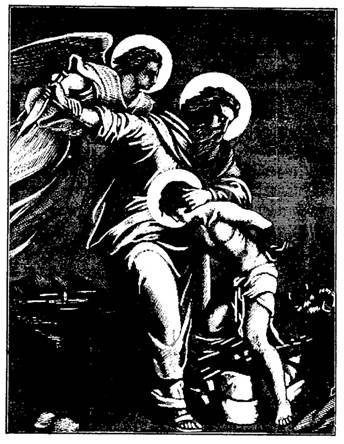
На третий день Авраам возвёл очи свои и увидел то место издалека. – И сказал Авраам отрокам своим: останьтесь вы здесь с ослом; а я и сын пойдём туда и поклонимся, и возвратимся к вам. – И взял Авраам дрова для всесожжения и возложил на Исаака, сына своего; взял огонь и нож, и пошли оба вместе. И начал Исаак говорить Аврааму, отцу своему, и сказал: отец мой! Он отвечал: вот я, сын мой. Он сказал: вот огонь и дрова, где же агнец для всесожжения? Авраам сказал: Бог усмотрит Себе агнца для всесожжения, сын мой, – И шли далее, оба вместе. – И пришли на место, о котором сказал Аврааму Бог, и устроил там Авраам жертвенник, разложил дрова и, связав сына своего Исаака, положил его на жертвенник поверх дров. И простёр Авраам руку свою и взял нож, чтобы заколоть сына своего...
Then on the third day Abraham lifted his eyes and saw the place from afar. — And Abraham said to his young men, ‘Stay here with the donkey; the lad and I will go yonder and worship, and we will come back to you.’ — So Abraham took the wood of the burnt offering and laid it on Isaac his son; and he took the fire and the knife, and the two of them went together. And Isaac spoke to Abraham his father and said, ‘My father!’ And he said, ‘Here I am, my son.’ Then he said, ‘Look, the fire and the wood, but where is the lamb for a burnt offering?’ And Abraham said, ‘My son, God will provide for Himself the lamb for a burnt offering.’ — So the two of them went on together. — Then they came to the place of which God had told him. And Abraham built an altar there and placed the wood in order; and he bound Isaac his son and laid him on the altar, upon the wood. And Abraham stretched out his hand and took the knife to slay his son…
Но ангел Господень воззвал к нему с неба и сказал: Авраам! Авраам! Он сказал: вот я. Ангел сказал: не поднимай руки твоей на отрока и не делай над ним ничего; ибо теперь Я знаю, что ты боишься Бога, и не пожалел сына твоего, единственного твоего, для Меня.
But the Angel of the Lord called to him from heaven and said, ‘Abraham! Abraham!’ So he said, ‘Here I am.’ And He said, ‘Do not lay your hand on the lad, nor do anything to him; for now I know that you fear God, since you have not withheld your son, your only son, from Me.’
И возвёл Авраам очи свои и увидел: и вот назади овен, запутавшийся в чаще рогами своими. Авраам пошёл, взял овна и принёс его во всесожжение вместо Исаака, сына своего.
Then Abraham lifted his eyes and looked, and there behind him was a ram caught in a thicket by its horns. So Abraham went, took the ram, and offered it up for a burnt offering instead of his son Isaac.
И вторично воззвал к Аврааму ангел с неба и сказал: Мною клянусь, говорит Господь, что так как ты сделал сие дело и не пожалел сына твоего, единственного твоего, для Меня: то Я благословляя благословлю тебя, и умножая умножу семя твоё, как звёзды небесные и как песок на берегу моря; и овладеет семя твоё городами врагов своих; и благословятся в семени твоём все народы земли за то, что ты послушался гласа Моего.
And the Angel called to Abraham a second time from heaven, and said: ‘By Myself I have sworn, says the Lord, because you have done this thing, and have not withheld your son, your only son, from Me: blessing I will bless you, and multiplying I will multiply your descendants as the stars of the heaven and as the sand which is on the seashore; and your descendants shall possess the cities of their enemies. And in your seed all the nations of the earth shall be blessed, because you have obeyed My voice.’
Об этом же свидетельствует новозаветное Писание: «верою Авраам, будучи искушаем, принёс в жертву Исаака; и имея обетование, принёс единородного, о котором было сказано: в Исааке наречётся тебе семя. Ибо он думал, что Бог силен и из мёртвых воскресить. Почему и получил его в предзнаменование» (Посл. к Евр.11:17–19).
The New Testament Scripture also bears witness to this: “By faith Abraham, when he was tested, offered up Isaac; and he who had received the promises offered up his only begotten son, of whom it was said, ‘In Isaac your seed shall be called.’ For he considered that God was able to raise him up, even from the dead. Therefore he also received him in a figurative sense” (Heb. 11:17–19).
«Познайте же, что верующие суть сыны Авраама, – говорит св. Апостол Павел в послании своём к Галатам, – и Писание, провидя, что Бог верою оправдывает язычников, предвозвестило Аврааму, что в нём благословятся все народы. И так верующие благословляются с верным Авраамом» (Гал.3:9).
“Know then that those who are of faith are sons of Abraham,” says the holy Apostle Paul in his Epistle to the Galatians, “and the Scripture, foreseeing that God would justify the Gentiles by faith, preached the gospel to Abraham beforehand, saying, ‘In you all the nations shall be blessed.’ So then those who are of faith are blessed with believing Abraham” (Gal. 3:9).
Вот в чём великое, несравненное и вечное значение веры Авраама: он был сосудом и образцом веры в истинного Бога, сохранившим её для потомства из рода в род. В вере Авраама, привлёкшей Божественные благословения и обетования и открывшей путь к вере в пришедшего в мир по обетованию Христа – пример той незыблемой веры в Бога, соединённой с послушанием, т. е. деятельным применением её, без которой не могло бы совершиться спасение всего человеческого рода.
Herein lies the great, incomparable, and eternal significance of Abraham’s faith: he was a vessel and a model of faith in the true God, preserving it for posterity from generation to generation. In the faith of Abraham, which drew down Divine blessings and promises and opened the way to faith in Christ, who came into the world according to the promise—there is an example of that unshakable faith in God, united with obedience, i.e., its active application, without which the salvation of the entire human race could not have been accomplished.
Вследствие таких высоких качеств, за которые Бог возлюбил Авраама и называет Себя Богом Авраама, а в св. Писании называется он «другом Божиим», как ветхозаветные потомки его и даже сами святые перед Богом Моисей и Давид призывали Авраама в ходатаи перед Богом, так и Новозаветная Церковь взывает к Богу о помиловании ради возлюбленного Им праотца Авраама. Сам Иисус Христос в Своей притче о богаче и Лазаре указывает на Авраама, как на обитателя блаженного жилища в Царствии Небесном (Лк.16:19–31).
As a result of such high qualities, for which God loved Abraham and calls Himself the God of Abraham, and in Holy Scripture he is called the “friend of God,” just as his Old Testament descendants and even the very saints before God, Moses and David, called upon Abraham as an intercessor before God, so also the New Testament Church cries out to God for mercy for the sake of His beloved forefather Abraham. Jesus Christ Himself, in His parable of the rich man and Lazarus, points to Abraham as an inhabitant of the blessed dwelling in the Kingdom of Heaven (Lk. 16:19–31).
О племяннике АвраамаЛоте, который последовал за дядей своим в неизвестную обетованную страну и сохранил своё благочестие, несмотря на то, что жил в погибающей от разврата Содомской стране, известно ещё из свящ. Пис., что Господь не оставил уповающего на Него и вывел Лота с семьёй его невредимыми из Содома, когда были попалены огнём и серой нечестивые города, на месте которых образовалось серное озеро, названное впоследствии Мёртвым морем...
Concerning Abraham’s nephew Lot, who followed his uncle into the unknown promised land and preserved his piety despite living in the perishing, depraved land of Sodom, it is further known from Holy Scripture that the Lord did not forsake him who hoped in Him, and brought Lot out with his family unharmed from Sodom when the ungodly cities were consumed by fire and brimstone, in whose place a sulfurous lake was formed, later called the Dead Sea…
«Праведного Лота, – свидетельствует св. Апостол Пётр (2Пет.2:7–8), – утомлённого обращением между людьми неистово-развратными, избавил Господь, ибо сей праведник, живя между ними, ежедневно мучился в праведной душе, видя и слыша дела беззаконные» ...
“And delivered righteous Lot,” the holy Apostle Peter bears witness (2 Pet. 2:7–8), “who was oppressed by the filthy conduct of the wicked (for that righteous man, dwelling among them, tormented his righteous soul from day to day by seeing and hearing their lawless deeds)”…
Указывая на спасение Лота в то время, как были обречены на истребление Содомские и Гоморрские города за крайнее нечестие обитавших в них, св. Ап. Пётр поясняет, что «конечно знает Господь, как избавлять благочестивых от искушения, а беззаконников соблюдать ко дню суда, для наказания» ... (2Пет.2:9).
Pointing to the salvation of Lot at the time when the cities of Sodom and Gomorrah were doomed to destruction for the extreme impiety of their inhabitants, the holy Apostle Peter explains that “the Lord knows how to deliver the godly out of temptations and to reserve the unjust under punishment for the day of judgment”… (2 Pet. 2:9).
Так говорит бл. Феодорит, Ист. 3, 16. Краткий менолог: «родила того чудного Иоанна, называемого Златоуст». Это неправда. Мать Златоуста называлась Анфусой (Сократа ист. 6, 3). Вероятно, что сын св. Публии был тот Иоанн, которого св. Мелетий посвятил в Апамейского епископа (Феодорита ист. 5, 4). В Славянском прологе 9 октяб.: «приближися браку, родивши Феодора, святого пресвитера». Что это значит? Не более, как ошибка писца, перешедшая в печать. Менолог Василия: «на короткое время связанная узами брака родила святейшего пресвитера Иоанна».
So says Blessed Theodoret, Hist. 3, 16. The brief Menologion: "she gave birth to that wondrous John, called Chrysostom." This is untrue. The mother of Chrysostom was named Anthusa (Socrates, Hist. 6, 3). It is probable that the son of St. Publia was that John whom St. Meletius consecrated as bishop of Apamea (Theodoret, Hist. 5, 4). In the Slavonic Prologue for October 9: "she entered into marriage, giving birth to Theodore, a holy presbyter." What does this mean? Nothing more than a scribal error that passed into print. The Menologion of Basil: "bound for a short time by the bonds of marriage, she gave birth to the most holy presbyter John."
Св. Златоуст в слове о святом Вавиле. Юлиан следовал эпикурейцу Лукиану, который говорит (in Philopatr.) об Апостоле Павле: «когда встретится со мною тот Галилеянин, плешивый, с орлиным носом, восходивший с земли на третье небо». Раз Юлиан писал в Артабию (Ер. 7): «клянусь богами, я не умерщвлял Галилеян и не хочу, чтобы терпели они неприятности не по правде». Но он лгал. Когда один префект наказал язычников за умерщвление нескольких христиан: Юлиан жестоко наказал его за это. В Антиохии пострадали при Юлиане Евгений и Макарий февр. 19, Феодорит пресвитер март. 8, Евсигней авг. 5, Ювентин и Максим сент. 5, Артемий окт. 20, Феодор ноябр. 23.
St. Chrysostom in his homily on St. Babylas. Julian followed the Epicurean Lucian, who says (in Philopatr.) of the Apostle Paul: "when that Galilean meets me, bald-headed, with an aquiline nose, who ascended from earth to the third heaven." Once Julian wrote to Artabius (Ep. 7): "I swear by the gods, I have not put Galileans to death, nor do I wish them to suffer unjustly." But he lied. When a certain prefect punished pagans for killing several Christians, Julian severely punished him for this. In Antioch, under Julian, there suffered: Eugenius and Macarius on February 19, Theodore the presbyter on March 8, Eusignius on August 5, Juventinus and Maximus on September 5, Artemius on October 20, Theodore on November 23.
Феодорита ист. 3, 12. То же в обоих менологах. Мартиролог Барония под 3 окт.: «в Антиохии (кончина) святой игуменьи Публии; она, когда отступник Юлиан проходил мимо, пела со своими девами Давидову песнь: идоли язык сребро и злато, – подобни им да будут творящий я; по приказанию императора били ее по щекам и жестоко обругали».
Theodoret, Hist. 3, 12. The same in both Menologia. The Martyrology of Baronius under October 3: "in Antioch (the repose) of the holy abbess Publia; she, when the apostate Julian passed by, sang with her virgins the Davidic song: 'The idols of the nations are silver and gold—like them be those who make them'; by the emperor's command she was struck on the cheeks and severely reviled."
Оба менолога на 9 окт. Мартиролог Усуарда, умноженный под 8 июня: «Публии вдовы и игуменьи, о которой причастная история в гл. 36 шестой книги». Римский мартиролог Барония под 9 октября.
Both Menologia on October 9. The Martyrology of Usuard, augmented, under June 8: "of Publia, widow and abbess, concerning whom the relevant history is in chapter 36 of the sixth book." The Roman Martyrology of Baronius under October 9.