Родом римляне, знатные сановники при императоре Максимиане, пользовавшиеся его доверием. Сергий был начальником полка союзников (инородцев), а Вакх вторым по нём. Так как Максимиан не любил христиан, то Сергий и Вакх скрывали веру свою. Но вот завистники доносят царю, что его доверенные вельможи христиане и не почитают богов. Максимиан, желая увериться в справедливости доноса, однажды в языческий праздник позвал Сергия и Вакха в храм и велел им принесть жертву. Они отвечали: «мы чтим Бога единого и Ему поклоняемся! Он есть Бог истинный и живой, тогда как ваши боги суть идолы бесчувственные». Тогда царь велел снять с них знаки их сана, облечь в женские одежды и с железными обручами на шеях водить по городу на посмеяние. Затем позвал их и дружески советовал «не прельщаться христианскими баснями и обратиться к богам Римским». Но святые исповедали Божественность христианской веры и советовали самому царю познать истину. Тогда царь решил отослать их к правителю восточной Сирии, у Евфрата, Антиоху, который сам получил эту должность через Сергия и Вакха. Антиох был ненавистник христиан, и Максимиан надеялся, что исповедники либо от стыда, либо от мук доведены будут до отступничества.
They were Romans by birth, noble dignitaries under the Emperor Maximian, enjoying his trust. Sergius was the commander of a regiment of allies (foreigners), and Bacchus was second to him. Since Maximian did not love Christians, Sergius and Bacchus concealed their faith. But then envious men reported to the emperor that his trusted nobles were Christians and did not honor the gods. Maximian, wishing to ascertain the truth of the report, once on a pagan feast day summoned Sergius and Bacchus to the temple and ordered them to offer sacrifice. They answered: "We honor the one God and worship Him! He is the true and living God, whereas your gods are senseless idols." Then the emperor ordered the insignia of their rank to be removed, that they be clothed in women's garments, and with iron collars on their necks be led through the city for mockery. Then he summoned them and advised them in a friendly manner "not to be deceived by Christian fables and to turn to the Roman gods." But the saints confessed the divinity of the Christian faith and advised the emperor himself to know the truth. Then the emperor decided to send them to the governor of eastern Syria, near the Euphrates, Antiochus, who had himself received this office through Sergius and Bacchus. Antiochus was a hater of Christians, and Maximian hoped that the confessors would be brought to apostasy either through shame or through torments.
Когда святых привели в Барбалис (в 60 верстах от Алеппо), где жил Антиох, то этот сначала содержал их за почётной стражей, а когда нашёл их непреклонными в вере, то Сергия велел заключить в темницу, а Вакха бичевать без милосердия. Он скончался в этих муках, и тело его брошено за город в добычу зверям; но верующие похоронили его в пещере, в которой сами скрывались.
When the saints were brought to Barbalis (60 versts from Aleppo), where Antiochus lived, he at first kept them under honorable guard, and when he found them unyielding in the faith, he ordered Sergius to be cast into prison and Bacchus to be scourged without mercy. Bacchus died from these torments, and his body was thrown outside the city as prey for wild beasts; but the faithful buried him in a cave in which they themselves were hiding.
Сергий, услышав о кончине Вакха, плакал и молился Богу. Антиох, отправляясь в город Суру, велел и Сергия везти за собой; здесь он снова убеждал его принесть жертву идолам и, получив отказ, велел обуть его в железные сапоги с гвоздями и гнать до города Ресафы (в 20 верстах от Суры). В Ресафе он осудил исповедника на обезглавление (около 309 года).
Sergius, hearing of the death of Bacchus, wept and prayed to God. Antiochus, setting out for the city of Sura, ordered Sergius to be taken along with him; here he again urged him to offer sacrifice to idols and, receiving a refusal, ordered him to be shod in iron boots with nails and driven to the city of Resapha (20 versts from Sura). In Resapha he condemned the confessor to beheading (about the year 309).
Память сих мучеников издревле весьма чтилась на Востоке, и сам город Ресафа, по знаменитому в нём монастырю св. Сергия, назывался Сергиополем. Хозрой 2-й, царь Персидский, прислал в этот монастырь золотой крест, с приписью на нём: «так как слышно было, что святой, всечестный и именитый Сергий всем подаёт по прошению, то, полагаясь на милость, мы в первый год нашего царствования (591-й) седьмого числа января стали просить его и дали обет, что, если всадники наши умертвят бунтовщика Задестрама, или возьмут его живого, от нас всечестному имени Сергия посвящён будет золотой, украшенный камнями, крест и отошлётся в дом его. И вот в девятый день месяца февраля действительно принесли нам голову Задестрама» ... и проч.
The memory of these martyrs has been greatly honored in the East from ancient times, and the city of Resapha itself, after the famous monastery of St. Sergius there, was called Sergiopolis. Khosrow II, the Persian king, sent to this monastery a golden cross with an inscription on it: "Since it was heard that the holy, all-honorable and renowned Sergius grants all according to their petition, then, trusting in his mercy, we, in the first year of our reign (591), on the seventh day of January, began to entreat him and made a vow, that if our horsemen should kill the rebel Zadestram, or take him alive, a golden cross adorned with stones would be consecrated by us to the all-honorable name of Sergius and sent to his house. And behold, on the ninth day of the month of February, the head of Zadestram was indeed brought to us" ... and so forth.
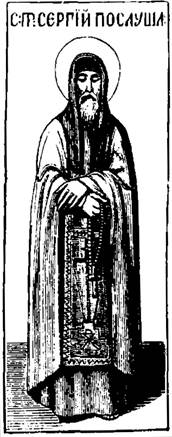
Имя послушливого, с которым преподобный Сергий почивает в Антониевой пещере96, сто́ит повести. – Оно показывает нам, что послушание-великое дело в христианской жизни, подвиг, прославляемый Господом. – С недавнего времени стали и у нас говорить, как говорила несчастная реформация, что «в наше время покорность чужой воле – дело лишнее, ныне каждый сам в состоянии избирать лучшее». Полно, тому ли учит нас откровение Божие? Не говорит ли оно, что самоволие – самое опасное дело, дело, погубившее не только людей, но и духов более сильных, чем люди? О! да избавит Господь каждую христианскую душу от мыслей и дел сатаны! Как совершается в душе спасительное преобразование блаженным послушанием? Самолюбие – самое страшное зло в душе нашей: все грехи – отрасли его. Послушание – бич самолюбию. По мере отвержения своей воли и преданности воле Божией самолюбие стесняется, ослабляется, подавляется в душе. Болезненно это стеснение самолюбия послушанием: гордость возмущается против чужой воли и хочет отстаивать свою волю. Но чем менее щадит себя послушливый, тем более одерживает побед над господствующим злом души. В послушливом вместо любви к себе развивается и крепнет любовь к Господу: для кого, как не для Господа, отрекается он от своей воли? Так бичевал самолюбие послушанием во всю свою жизнь и почил св. рабом Божиим Сергий Печерский и почивает нетленный!
The name "the Obedient," with which the Venerable Sergius reposes in the Anthony Cave96, is worthy of a narrative. – It shows us that obedience is a great thing in the Christian life, a feat glorified by the Lord. – Of late, even among us they have begun to speak, as the unhappy Reformation spoke, that "in our time submission to another's will is a superfluous matter; nowadays each one is himself able to choose what is better." But is that what divine revelation teaches us? Does it not say that self-will is the most dangerous thing, a thing that has destroyed not only men, but also spirits stronger than men? O! may the Lord deliver every Christian soul from the thoughts and deeds of Satan! How is the salvific transformation accomplished in the soul through blessed obedience? Self-love is the most terrible evil in our soul: all sins are its offshoots. Obedience is the scourge of self-love. In proportion to the rejection of one's own will and devotion to the will of God, self-love is constrained, weakened, and suppressed in the soul. This constraint of self-love through obedience is painful: pride rebels against another's will and wants to defend its own will. But the less the obedient one spares himself, the more victories he gains over the ruling evil of the soul. In the obedient one, instead of love for self, love for the Lord develops and grows strong: for whom, if not for the Lord, does he renounce his own will? Thus did the Venerable Sergius of the Kiev Caves scourge self-love through obedience all his life, and he reposed as a holy servant of God and reposes incorrupt!
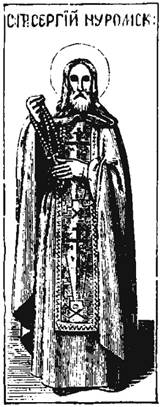
Преп. Сергий Нуромский97 полагал начало иноческой жизни на Афоне. Потом немалое время провёл он в обители преп. Сергия Радонежского, под руководством сего великого подвижника. Любя безмолвие, удалился он, по благословению Радонежского наставника, в Вологодские леса. Здесь, на утесистом берегу р. Нурмы, поселился он тогда, как Павел Обнорский жил ещё в дупле дерева. Водрузив крест и построив часовню с кельей, подвизался он в глубоком безмолвии. Два раза нападали на него здесь недобрые люди. В первый раз избили они его до того, что оставили его едва живым; но по молитве своей он скоро выздоровел. – В другой раз хотели напасть на него во время полунощной молитвы его. У них были в руках орудия смерти: у Сергия были только чётки. «Боже, в помощь мою вонми», взывал отшельник. Страх напал на разбойников, и они бежали из кельи его, никем не преследуемые. – О строгом отшельнике прошла молва, и стали приходить к нему жаждущие спасения душевного. Одни приходили, чтобы получить наставление для жизни, обуреваемой заботами земными, и – из них иные приносили ему пищу; другие оставались у креста Сергиева, чтобы подвизаться по его наставлениям. Мало-помалу собрались к нему до 40 человек братии. Он построил храм Преображения Господня и обитель общежития. – По временам ходил он для бесед любви к преп. Павлу Обнорскому, жившему не вдали от пустыни; в другое время посещал его Павел. – Пр. Павел так уважал Сергия, что провожал его более, чем на две трети расстояния от своей обители. Место, до которого обыкновенно доходил Павел с Сергием, ознаменовано часовней. – Чувствуя близость кончины своей, преп. Сергий приобщился свят. Таин и предал чистую душу свою Богу, 7 октября 1412 года. По внешнему виду преподобный Сергий был седой, с бородой редкой, с волосами на голове густыми98.
The Venerable Sergius of Nurom97 began his monastic life on Mount Athos. Afterwards he spent a considerable time in the monastery of the Venerable Sergius of Radonezh, under the guidance of this great ascetic. Loving silence, he withdrew, with the blessing of his Radonezh instructor, into the Vologda forests. Here, on the rocky bank of the Nurma River, he settled at a time when Paul of Obnora was still living in the hollow of a tree. Having set up a cross and built a chapel with a cell, he struggled in deep silence. Twice evil men attacked him here. The first time they beat him so severely that they left him barely alive; but through his prayer he soon recovered. – The second time they intended to attack him during his midnight prayer. They had instruments of death in their hands; Sergius had only his prayer rope. "O God, attend unto my help," the hermit cried out. Fear fell upon the robbers, and they fled from his cell, pursued by no one. – Rumors about the strict hermit spread, and those thirsting for the salvation of their souls began to come to him. Some came to receive instruction for a life tossed about by earthly cares, and some of these brought him food; others remained at Sergius's cross to struggle according to his instructions. Little by little, up to 40 brethren gathered to him. He built a church of the Transfiguration of the Lord and a cenobitic monastery. – From time to time he would go for loving conversations to the Venerable Paul of Obnora, who lived not far from his hermitage; at other times Paul would visit him. – The Venerable Paul so respected Sergius that he would accompany him more than two-thirds of the distance from his own monastery. The place to which Paul usually went with Sergius is marked by a chapel. – Sensing the nearness of his end, the Venerable Sergius partook of the Holy Mysteries and surrendered his pure soul to God, on October 7, 1412. In outward appearance, the Venerable Sergius was gray-haired, with a sparse beard and thick hair on his head98.
Несколько лет спустя после кончины, Сергий явился одному благоговейному иноку обители его, ночью, когда тот находился в тонком, сне, и велел сказать игумену и братии, чтобы открыли гроб его, по воле Божией на то. «Кто ты?» спросил смущённый инок. «Я грешный Сергий, начальник сего места», отвечал явившийся, и указал на место гроба своего. Видение повторялось в другой и в третий раз. – Инок стал сильно болен и тогда решился открыть настоятелю видение, дотоле опасаясь, не обмануться бы мечтой. Гроб открыли под церковной папертью, и здесь над гробом болящий инок получил исцеление от своей болезни. Когда поставлена была над мощами рака с иконой преподобного, потекли исцеления для Богомольцев. До 1584 г. описано было до 80 чудес преподобного. – Обитель преп. Сергия, закрытая в 1764 г., находилась в 4 верстах от Павловской обители, ниже по течению Нурми, в Грязовецком уезде. Ныне мощи преподобного почивают в храме под балдахином99.
Several years after his repose, Sergius appeared to a certain devout monk of his monastery at night, while he was in a light sleep, and ordered him to tell the abbot and the brethren to open his coffin, for such was the will of God. "Who are you?" asked the troubled monk. "I am the sinful Sergius, the head of this place," answered the one who appeared, and he pointed to the place of his coffin. The vision was repeated a second and a third time. – The monk fell grievously ill and then decided to reveal the vision to the superior, having previously feared lest he be deceived by a dream. The coffin was opened under the church porch, and there, over the coffin, the ailing monk received healing from his illness. When a reliquary with an icon of the venerable one was placed over the relics, healings began to flow for pilgrims. Up to the year 1584, up to 80 miracles of the venerable one were recorded. – The monastery of the Venerable Sergius, closed in 1764, was located 4 versts from the Paul's monastery, downstream along the Nurma, in Gryazovets District. Today the relics of the venerable one repose in the church under a baldachin99.
«Умоляю вас», говорит нам преп. Сергий своей жизнью, «поступайте сообразно званию, в которое вы призваны, со всяким смиренномудрием, кротостью и великодушием, снисходя друг к другу из любви, стараясь соблюдать единство духа в союзе мира» (Еф.4:1–3).
"I beseech you," the Venerable Sergius says to us through his life, "to walk worthy of the calling with which you were called, with all lowliness and gentleness, with longsuffering, bearing with one another in love, endeavoring to keep the unity of the Spirit in the bond of peace" (Eph. 4:1–3).
Марк был ученик преп. Силвана или Силуана, подвизавшегося сначала в Нижнем Египте, в скиту или пустыне, лежавшей к юго-западу от Александрии, и переселившегося в половине IV века с 12-ю учениками своими на Синайскую гору. Этот любимый ученик аввы-подвижника отличался необыкновенным послушанием и покорностью; в каноне, составленном в память его, он и называется «благопокорным и благопослушным».
Mark was a disciple of the Venerable Silvanus (or Silouan), who struggled first in Lower Egypt, in the skete or desert lying to the southwest of Alexandria, and moved in the middle of the fourth century with his twelve disciples to Mount Sinai. This beloved disciple of the ascetic abba was distinguished by extraordinary obedience and submission; in the canon composed in his memory, he is called "well-submissive and well-obedient."
Видя особенное расположение к Марку старца-наставника, остальные 11 учеников его роптали и жаловались на пристрастие аввы другим скитским старцам, которые собрались однажды все вместе к Силуану и укоряли его за неравное расположение к ученикам. Тогда Силуан предложил им пойти с ним вместе к кельям учеников; в дверь каждой из них он постучался, вызывая ученика и прося выйти к нему; но ни один из них не поспешил выйти на вызов старца, исключая Марка, который немедленно вышел на зов Силуана и исполнил данное ему поручение.
Seeing the elder-instructor's particular favor toward Mark, the remaining eleven of his disciples murmured and complained of the abba's partiality to other skete elders, who once gathered all together to Silvanus and reproached him for his unequal disposition toward his disciples. Then Silvanus proposed that they go with him to the cells of the disciples; at the door of each one he knocked, calling the disciple and asking him to come out to him; but not one of them hastened to come out at the elder's call, except Mark, who immediately came out at Silvanus's summons and carried out the task given him.
– Где же, отцы, прочие братия? – сказал Силуан и вошёл со старцами в келью Марка, где они увидели, что Марк в то время, когда позвали, его, занят был переписыванием книги для своего наставника, но, услышав голос его, бросил перо, не дописав даже буквы, и поспешил выйти к нему.
– Where, then, fathers, are the other brethren? – said Silvanus, and he entered with the elders into Mark's cell, where they saw that Mark, at the time when he was called, was occupied with copying a book for his instructor, but, hearing his voice, he dropped his pen, without even finishing a letter, and hastened to go out to him.
Опис. Киевск. лавры 110. 289. 291. Ркп. святцы: «препод. отец Сергий постник». У Кальнофойского: «пр. отец Сергий»; в каноне «Сергий едино нравный Нектарию послушливому».
Description of the Kiev Lavra, pp. 110, 289, 291. Manuscript menology: "the Venerable Father Sergius the Faster." In Kalnofoisky: "the Venerable Father Sergius"; in the canon: "Sergius, of like character with Nectarius the Obedient."
Ркп. житие пр. Сергия, описанное многословно иноком Ионой в 1584 г, – У Царского № 154 и 487. Послесловие: «написано бысть житие се святаго, – преосвященному митрополиту тогда бывшему Дионисию и епископу Варлааму Вологодскому, в лето 7092 (1584). Написа же житие се чудотворца Сергия инок Иона, иже бысть в та лета у покрова пречистыя обители Дионисия чудотворца, иже на Глушице, игумен». Житие составлено по запискам Обнорского игумена Протасия, открывшего мощи пр. Павла в 1546 г.
Manuscript life of the Venerable Sergius, described at length by the monk Jonah in 1584, – at the Tsar's Nos. 154 and 487. Afterword: "this life of the saint was written – when the most reverend Metropolitan Dionysius and Bishop Barlaam of Vologda were living, in the year 7092 (1584). And this life of the wonderworker Sergius was written by the monk Jonah, who in those years was abbot at the Protection of the Most Pure Monastery of Dionysius the Wonderworker, which is on Glushitsa." The life was compiled from the notes of the Obnora Abbot Protasius, who uncovered the relics of the Venerable Paul in 1546.