Маленькая девочка Харитина, оставшаяся сиротой, была взята неким богатым и сострадательным человеком Клавдием и воспитана им, как дочь. Когда она пришла в возраст, то отличалась не только красотой телесной, но и добротой нрава, кротостью, целомудрием, разумом и верой во Христа Бога. Верующие, которые посещали её, радовались о ней, а неверующим она проповедовала о Христе и указывала путь истины.
The little girl Charitina, left an orphan, was taken in by a certain wealthy and compassionate man named Claudius and raised by him as a daughter. When she came of age, she was distinguished not only by bodily beauty, but also by goodness of character, meekness, chastity, intelligence, and faith in Christ the Lord. The faithful who visited her rejoiced in her, while to the unbelieving she preached concerning Christ and pointed out the path of truth.
Настало гонение Диоклитианово, и комит (округа начальник) потребовал её на суд, вследствие доноса о её христианской ревности. Он спросил её: «правда ли, что ты – христианка, и прельщаешь других, приводя их к той же вере?» Харитина отвечала: «действительно, я христианка; но не прельщаю людей, а от прелести отвращаю, и от вашей нечистой веры привожу ко Христу моему». То слышав, правитель велел бить её нещадно и отослал на суд к правителю области.
The persecution of Diocletian began, and the comes (district governor) summoned her to trial, following a denunciation of her Christian zeal. He asked her: "Is it true that you are a Christian and that you seduce others, leading them to the same faith?" Charitina answered: "Indeed, I am a Christian; but I do not seduce people; rather, I turn them away from delusion, and from your impure faith I lead them to my Christ." Hearing this, the ruler ordered her to be beaten mercilessly and sent her for trial before the governor of the province.
Этот после напрасных убеждений отречься Христа велел остричь волосы ей, сыпать горячие уголья на голову и всё тело, и наконец осудил на растление (так часто поступали судьи, особенно в Египте). Но святая помолилась Господу и скончалась, сохранивши девство непорочным. Тело её было вложено в мех с песком и брошено в море; но через три дня морские волны вынесли его на берег, и Клавдий похоронил его.
The latter, after vain exhortations to renounce Christ, ordered her hair to be cut off, hot coals to be poured upon her head and entire body, and finally condemned her to defilement (as judges often did, especially in Egypt). But the saint prayed to the Lord and reposed, having preserved her virginity undefiled. Her body was placed in a sack with sand and cast into the sea; but after three days the waves cast it ashore, and Claudius buried it.
Дионисий родился в г. Александрии от родителей – язычников; обращён в христианство уже в зрелых годах, под влиянием Оригена, к которому он был всегда сердечно расположен. Впрочем, сам Дионисий говорит о себе, что «обратился ко Христу путём свободного исследования, беспристрастно испытывая учения человеческие». Став после Оригена наставником в Александрийском огласительном училище, а по смерти Иеракла (пам. 15-го окт.) епископом Александрийским (в 247 г.), Дионисий, по-прежнему, читал и исследовал сочинения еретиков и отвергал их системы не прежде, как по личному убеждению дознавал их несостоятельность.
Dionysius was born in the city of Alexandria to pagan parents; he was converted to Christianity already in his mature years, under the influence of Origen, to whom he was always warmly disposed. However, Dionysius himself says of himself that "he turned to Christ by way of free investigation, impartially testing human teachings." Having become, after Origen, a teacher at the Catechetical School of Alexandria, and after the death of Heraclas (commemorated October 15th) Bishop of Alexandria (in A.D. 247), Dionysius, as before, read and examined the writings of heretics and rejected their systems only after he had personally ascertained their unsoundness.
Такое произвольное отношение Дионисия к подобному предмету приводило в сомнение одного пресвитера, который поэтому и предупреждал его, что близкое знакомство с еретическими книгами, доставляя случай осваиваться с ложными понятиями, может вредно отразиться на своём собственном образе мыслей. Как бы в разрешение этого вопроса Дионисий имел видение, в котором ему было возвещено, что он может читать еретические книги, как способный обсуживать подобные предметы; при этом ему указано было и на то, что, и первоначально действуя таким образом, он приобрёл случай к обращению.
Such an independent attitude of Dionysius toward this subject caused doubt in a certain presbyter, who therefore warned him that close acquaintance with heretical books, by providing occasion to become familiar with false notions, might have a harmful effect on one's own way of thinking. As if in resolution of this question, Dionysius had a vision in which it was announced to him that he might read heretical books, as one capable of judging such matters; at the same time, it was pointed out to him that, by acting in this manner from the very beginning, he had gained an opportunity for conversion.
– «Я принял душой это видение, – говорит Дионисий, – как согласное с Апостольским изречением, относящимся к сильным: умейте всегда находить свою выгоду, или умейте отличать настоящую монету от подложной»72.
– "I received this vision in my soul," says Dionysius, "as being in accord with the Apostolic saying referring to the strong: know always how to find your advantage, or know how to distinguish genuine coin from counterfeit"72.
Во время жестокого гонения от Декия Дионисий уже был взят на мучение, но чудным промыслом Божиим был освобождён из рук гонителей и, защищённый сначала тайной убежища, а потом отосланный в Мареотскую пустыню, он три года пробыл хотя и в отдалении от паствы, но управлял ею через послания и через доверенных пресвитеров, управлял ею всегда неизменно в духе кротости и умеренности, но с твёрдостью вёл борьбу с еретическими учениями, которые раздирали тогда Церковь. – К Новациану, внёсшему новый раскол, Дионисий писал: – «не менее славно умереть ради того, чтобы только не раздирать Церкви, как и ради того, чтобы не принести жертвы идолам. По моему суждению первое даже выше, потому что в последнем случае умирают ради спасения своей души, а там – ради блага целой Церкви».
During the fierce persecution under Decius, Dionysius was already seized for torture, but by a wondrous Providence of God he was freed from the hands of the persecutors and, protected first by a secret refuge and then sent away to the Mareotic desert, he remained for three years, though distant from his flock, yet governing it through epistles and through trusted presbyters, always governing it unwaveringly in a spirit of meekness and moderation, but with firmness waging war against the heretical teachings that were then rending the Church. – To Novatian, who introduced a new schism, Dionysius wrote: – "It is no less glorious to die for the sake of not rending the Church than for the sake of not offering sacrifice to idols. In my judgment, the former is even higher, because in the latter case one dies for the salvation of one's own soul, while there – for the good of the whole Church."
В 261 г., при Галлиене, Дионисий возвратился в Александрию. Здесь ожидали его новые и великие труды и скорби: сначала в городе открылось кровавое междоусобие, затем последовал голод, за голодом – опустошительная моровая болезнь. Это всё были как бы личные бедствия для любвеобильного и великодушного христианского пастыря, и он расточал свои попечения и заботливость безразлично о верующих и об язычниках и к тому же возбуждал и других христиан. В одном из писем Дионисия изображена дивная картина деятельности христиан во время общественного бедствия, поразившего город: – «многие из братьев наших, – пишет он, – по сильной любви, оставя заботу о своей жизни, а заботясь друг о друге, смело посещают больных, служат им постоянно, врачуют о Христе; добровольно они умерли вместе с ними, принимая на себя страдания их, как бы привлекая к себе болезнь и охотно стирая с них язвы. Многие из тех, которые так пеклись о больных и возвратили им здоровье, сами умерли... Так пять лучших братий наших, в том числе – диаконы и пресвитеры, и самые знаменитые из народа искали себе смерти, и этот род смерти по благочестию и твёрдости веры – никак не ниже мученичества. Они брали руками своими и на свои колена тела святых, закрывали им глаза и уста, несли их на своих плечах, обмывали их и одевали в одеяния... А язычники совсем иначе поступали. Вот что значит христианство»73.
In A.D. 261, under Gallienus, Dionysius returned to Alexandria. Here new and great labors and sorrows awaited him: first, a bloody civil strife broke out in the city; then followed famine; after the famine, a devastating plague. All these were as personal calamities for the loving and magnanimous Christian pastor, and he lavished his care and solicitude indiscriminately upon the faithful and upon the pagans, and also urged other Christians to do the same. In one of his epistles, Dionysius depicts a wondrous picture of the activity of Christians during the public calamity that had struck the city: – "Many of our brethren," he writes, "out of strong love, leaving aside care for their own lives, and caring for one another, boldly visit the sick, serve them constantly, and heal them in Christ; they voluntarily died together with them, taking upon themselves their sufferings, as if drawing the illness to themselves and willingly wiping away their sores. Many of those who so cared for the sick and restored them to health themselves died... Thus five of our best brethren, including deacons and presbyters, and the most renowned among the people, sought death for themselves, and this kind of death, by piety and firmness of faith, is in no way inferior to martyrdom. They took with their own hands and onto their own knees the bodies of the saints, closed their eyes and mouths, carried them on their shoulders, washed them and clothed them in garments... But the pagans acted quite differently. Such is Christianity"73.
До конца бодрый духом, Дионисий, хотя и ослабевший телесными силами к концу 17-ти-летнего управления паствой, продолжал неутомимо защищать Церковь против раздирающих её ересей и много содействовал водворению мира в ней; действовал постоянно в духе любви и многих успел привести к единению церковному.
Vigorous in spirit to the end, Dionysius, though weakened in bodily strength toward the close of his 17-year administration of the flock, continued tirelessly to defend the Church against the heresies rending her and greatly contributed to the establishment of peace within her; he acted constantly in a spirit of love and succeeded in bringing many to ecclesiastical unity.
В 264 г. приглашали его на собор Антиохийский против Павла Самосатского, но, чувствуя себя уже очень слабым, он только письменно доставил своё мнение против Павла и вскоре после того скончался – в 265 г.
In 264 he was invited to the Council of Antioch against Paul of Samosata, but, feeling himself already very weak, he only delivered his opinion against Paul in writing, and soon after that he died – in 265.
Дионисий, известный в Церковной Истории под именем Великого, оставил после себя многие сочинения, в которых между прочим изложены современные ему бедствия, благочиние церковное и изъяснение св. Писания. – В одном из догматических его сочиненийо природе Дионисий почерпает доказательства зависимости мира от всеблагого Бога из устройства мира и человека: – «когда строится дом и город, – рассуждает он, – то камни не ложатся сами в основание и не летят вверх на стены, но зодчий кладёт их – каждый на своё место... Когда говорят, что из атомов составилось прекраснейшее целое и устроилось ими без намерений и мысли: как можно слушать их? Атомы неустроенные не далеко ли ниже паука, когда тот делает дело своё так старательно? Как равнодушно слышать, будто этот дом, состоящий из земли и неба, по свыше-умному устройству, называемый космос (мир), получил свой порядок и устройство от атомов, носящихся без порядка, и сам порядок будто изменился в мире? Кто допустит, что постоянные эти движения и перевороты произошли из какого-то беспутного ношения? Кто согласится, что совершеннейшая гармония небес образовалась из инструментов вовсе не мусикийских и нестройных?»
Dionysius, known in Church History under the name of the Great, left behind many writings, in which, among other things, are set forth the calamities of his time, church order, and the explanation of Holy Scripture. – In one of his dogmatic works On Nature, Dionysius draws proofs of the dependence of the world upon the all-good God from the order of the world and of man: – "When a house and a city are being built," he reasons, "the stones do not lay themselves in the foundation and do not fly up onto the walls, but the builder places them – each in its own place... When they say that the most beautiful whole was composed of atoms and was arranged by them without intention or thought: how can one listen to them? Are not disordered atoms far inferior to a spider, when the latter does its work so diligently? How can one hear with indifference that this house, consisting of earth and sky, according to a super-mental order called cosmos (world), received its order and arrangement from atoms moving about without order, and that order itself supposedly changed in the world? Who will admit that these constant motions and revolutions arose from some kind of disorderly drifting? Who will agree that the most perfect harmony of the heavens was formed from instruments that are not at all musical and are discordant?"
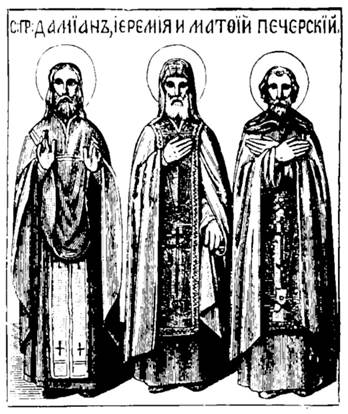
Преп. Дамиан, пишет преп. Нестор, ревностно подражал житию и смирению преподобного отца Феодосия. Многие свидетельствуют о его добром житии, послушании и покорности ко всем; особенно жившие с ним в келье видели кротость его и как не спал он по целым ночам, прилежно читая книги и возвращаясь не раз к молитвам; они рассказывали и многое другое о сём муже74. Пресвитер и чудотворец Дамиан был такой строгий постник, что кроме хлеба с водой ничего не вкушал до смерти. Когда приносили в монастырь к блаженному Феодосию больное чем-либо дитя, или возрастный человек одержим был каким-либо недугом, то Феодосий приказывал Дамиану совершить молитву над больным. Дамиан немедля совершал молитву, мазал елеем, и приходившие получали исцеление75. Наконец он сильно захворал и был уже при конце жизни. «Господи Иисусе Христе! так молился он тогда, удостой меня быть сообщником славы святых Твоих; не разлучи меня, Владыко, с отцом, и наставником моим, преподобным Феодосием». Когда он так молился, то внезапно предстал у одра его блаж. Феодосий, пал на грудь его, с любовью целовал его и говорил: «сын мой! о чём ты молишься Господу, теперь я послан известить тебя о том, – прошение твоё исполнится, ты будешь причтён к святым и с ними будешь в Царстве Небесного Владыки, – мы будем вместе в том свете». Сказав это, стал невидим. – Так как Дамиан не видел Феодосия входящим в двери и явившийся, на котором месте явился, на том и стал невидим, – то отселе Дамиан понял, что это было явление от Бога. – Потом, позвав служившего ему, послал за блаж. Феодосием. Когда вскоре пришёл блаженный, то он с весёлым лицом сказал ему: «отче! будет ли так, как ныне, явившись, обещал мне?» Блаженный, не зная, что с ним было, отвечал: «сын мой! я не знаю, о каком обещании говоришь ты?» Тогда он пересказал, как молился он и как явился ему сам преподобный. Выслушав это, Феодосий, несколько улыбнувшись и прослезясь, сказал: «сын мой! будет тебе, как обещал тебе явившийся в образе моём ангел». Когда собрались братия, он простился со всеми и таким образом с миром предал в руки Богу душу свою, когда пришли за ней ангелы. Тогда блаженный повелел ударить в било, чтобы собралась прочая братия, и таким образом с пристойной честью и пением похоронили честное тело его, где хоронят всю братию76.
The Venerable Damian, writes the Venerable Nestor, zealously imitated the life and humility of our Venerable Father Theodosius. Many bear witness to his good life, obedience, and submission to all; especially those who lived with him in the cell saw his meekness and how he did not sleep through whole nights, diligently reading books and returning again and again to prayers; they also related many other things about this man74. The presbyter and wonderworker Damian was such a strict faster that he partook of nothing but bread and water until his death. When a child suffering from some ailment was brought to the monastery to the blessed Theodosius, or when a person of mature age was afflicted with some infirmity, Theodosius would bid Damian to perform a prayer over the sick one. Damian would immediately perform the prayer, anoint with oil, and those who came would receive healing75. Finally, he fell gravely ill and was already near the end of his life. "Lord Jesus Christ!" he prayed then, "deign to make me a partaker of the glory of Thy saints; do not separate me, O Master, from my father and teacher, the Venerable Theodosius." As he prayed thus, the blessed Theodosius suddenly appeared at his bedside, fell upon his breast, kissed him lovingly, and said: "My son! That which you pray of the Lord, I am now sent to inform you of – your petition shall be fulfilled; you will be numbered among the saints and with them you will be in the Kingdom of the Heavenly Master – we shall be together in that light." Having said this, he became invisible. – Since Damian had not seen Theodosius enter through the door, and the one who appeared became invisible on the very spot where he had appeared, Damian understood from this that it was a manifestation from God. – Then, calling the one who served him, he sent for the blessed Theodosius. When the blessed one soon came, he said to him with a cheerful face: "Father! Will it be as the one who appeared to me today promised me?" The blessed one, not knowing what had happened to him, answered: "My son! I do not know of what promise you speak." Then he recounted how he had prayed and how the venerable one himself had appeared to him. Having heard this, Theodosius, smiling slightly and shedding tears, said: "My son! It shall be for you as the angel who appeared in my likeness promised you." When the brethren had gathered, he took leave of all and thus peacefully surrendered his soul into the hands of God, when the angels came for it. Then the blessed one ordered the semantron to be struck, so that the rest of the brethren might assemble, and thus with fitting honor and singing they buried his honorable body, where all the brethren are buried76.
По этому описанию видно, что преп. Дамиан скончался прежде преп. Феодосия и вероятно в 1070 г. По ркп. святцам, днём преставления его было 5 число октября. Мощи его почивают в Антониевой пещере77.
From this account it is evident that the Venerable Damian reposed before the Venerable Theodosius, and probably in the year 1070. According to the manuscript menologia, the day of his repose was the 5th of October. His relics rest in the Anthony Cave77.
О преп. Иеремии Нестор так пишет в летописи: «был и другой брат, именем Иеремия, который помнил крещение Русской земли. Ему дан был Богом дар: он предсказывал будущее и, если в ком видел худые помыслы, обличал его тайно и увещевал беречься диавола;. Если брат хотел выйти из монастыря, то, посмотрев на него, приходил к нему, обличал помысл его и утешал брата; если и говорил ему, что будет с ним приятное или неприятное, слово старца сбывалось»78. Так как преп. Иеремия помнил ещё крещение земли Русской 988 г. и жил при игуменстве преп. Феодосия, то, если положим, что скончался он в 1070 г., жизнь его продолжалась до 90 лет. Мощи его почивают в Антониевой пещере79.
Of the Venerable Jeremiah, Nestor writes thus in the Chronicle: "There was also another brother, named Jeremiah, who remembered the Baptism of the Russian land. To him was given a gift from God: he foretold the future, and if he saw evil thoughts in anyone, he would rebuke him secretly and admonish him to beware of the devil. If a brother wished to leave the monastery, he would look at him, go to him, rebuke his thought, and comfort the brother; and if he told him that something pleasant or unpleasant would befall him, the elder's word came true"78. Since the Venerable Jeremiah still remembered the Baptism of the Russian land in 988 and lived during the abbacy of the Venerable Theodosius, then if we suppose that he reposed in 1070, his life extended to ninety years. His relics repose in the Anthony Cave79.
«Был и ещё старец Матфей, пишет преп. Нестор. Он был прозорливец. Раз, когда стоял он в церкви на своём месте, подняв очи, смотрел он на своих, которые стояли и пели по сторонам. – И вот видит он беса в образе, ляха, в луде80 и в поле с цветками, называемыми липок. Он обходил братию; брал из лона (из приполья) липок81, бросал на того или другого и, если цветок прилипал к кому-либо из поющих, то, постояв немного и расслабев мыслью, под каким-либо предлогом выходил из церкви, шёл в келью, засыпал и не возвращался в церковь до конца пения. Если же на иного и бросал, но цветок не прилипал к нему, то тот стоял крепко на пении и тогда только уходил в свою келью, когда оканчивалась утреня. Видя это, старец рассказал о том братии своей. И ещё старец видел вот что: по обычаю, когда оканчивалась утреня перед зарёю, братия шли по кельям, а старец выходил после других из церкви. Раз по выходе из церкви сидел он, отдыхая под билом, так как келья его была вдали от церкви. И вот видит он, что идёт толпа от ворот. – Подняв глаза, увидел он, что один сидит на свинье, а другие идут около него. «Куда идёте?» спросил старец. – Сидящий на свинье бес отвечал: «за Михаилом Тольбековичем». Старец оградил себя крестным знамением и пошёл в свою келью. –Когда рассвело, старец сказал келейнику: иди, узнай, в келье ли Михаил? Ему сказали, что ушёл через ограду после утрени. – Старец рассказал тогда своё видение игумену и братии. – При этом старце преставился Феодосий и был игуменом Стефан, а после Стефана Никон, – старец ещё жив был. Раз во время утрени, подняв очи, хотел он видеть игумена Никона и увидал осла, стоящего на месте игумена; он понял, что игумен не встал. Многое и другое прозревал старец и почил в этом (Печерском) монастыре, в глубокой старости»82. – По известью Поликарпа, преп. Матфей прозорливый при игумене Никоне (1074–1088 г.) молился вместе с другими об исцелении обольщённого Никиты83. Блаж. кончина а его последовала, вероятно, в 1088 г. Мощи его почивают в Антониевой пещере84.
“There was also another elder, Matthew,” writes the Venerable Nestor. “He was a clairvoyant. Once, when he was standing in church in his place, he raised his eyes and looked at his brethren, who were standing and singing on either side. And behold, he saw a demon in the likeness of a Pole, in a luda80 and in a field with flowers called lipok. He went around the brethren; taking a lipok81 from his bosom (from the fold of his garment), he threw it at one or another, and if the flower stuck to any of the singers, then, after standing a little and becoming weak in mind, under some pretext he would leave the church, go to his cell, fall asleep, and not return to the church until the end of the singing. But if he threw it at another and the flower did not stick to him, then that one would stand firmly through the singing and would only go to his cell when Matins was finished. Seeing this, the elder told the brethren about it. And the elder also saw the following: according to custom, when Matins ended before dawn, the brethren would go to their cells, and the elder would leave the church after the others. Once, after leaving the church, he sat resting under the semantron, since his cell was far from the church. And behold, he saw a crowd coming from the gate. Lifting up his eyes, he saw that one was sitting on a pig, and others were walking around him. ‘Where are you going?’ asked the elder. The demon sitting on the pig answered: ‘For Michael Tolbekovich.’ The elder made the sign of the cross over himself and went to his cell. When it grew light, the elder said to his cell-attendant: ‘Go, find out whether Michael is in his cell.’ They told him that he had gone over the fence after Matins. The elder then told his vision to the abbot and the brethren. – While this elder was alive, Theodosius reposed, and Stephen was abbot, and after Stephen, Nikon; the elder was still alive. Once during Matins, raising his eyes, he wished to see Abbot Nikon and saw a donkey standing in the abbot’s place; he understood that the abbot had not risen. The elder foresaw many other things as well and reposed in this (Pechersk) monastery in extreme old age”82. – According to the account of Polycarp, the Venerable Matthew the Clairvoyant, under Abbot Nikon (1074–1088), prayed together with others for the healing of the deluded Nikita83. His blessed repose followed, probably, in 1088. His relics rest in the Anthony Cave84.
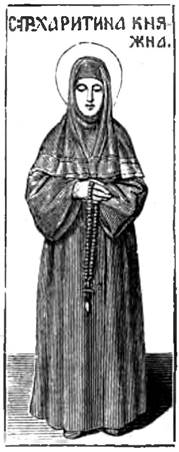
По памятникам, преп. Харитина была урождённая княжна Литовская и подвизалась в Новгородском девичьем монастыре св. Апостолов Петра и Павла на Синичьей горе85. Время подвигов её неопределённо показано в памятника86, так я что остаётся определять его соображением; а между тем это время может показать особенность и в духовной жизни княжны. Известно, что каменный храм обители, где почивают мощи преподобной, построен в 1192 г.87. Если же храм Петра и Павла существовал уже тогда, как блаж. Харитина начала жить в Новгороде, то время жизни её в Новгороде надобно отнести к XIII столетию; с другой стороны известно, что вторая половина XIII стол. Была бурным, кровавым временем для Литвы. В 1265 году многие лица княжеского Литовского дома поспешно удалились из Литвы в Россию, князь Довмонт – во Псков, а сын князя Товтивилла с двором своим убежал из Полоцка в Новгород88. По летописи, Новгородцы хотели тогда перебить прибежавших к ним Литовцев, за прежние обиды Литвы Новгороду; но кн. Ярослав не допустил их до того89. Таким образом открывается, что Литовская княжна Харитина была из числа лиц, гонимых бурей времени, помимо личных дел своих. Оттолкнутая миром, она не искала более ничего в мире и посвятила всю жизнь свою на служение Господу. Приняв иночество, она за добродетельную жизнь поставлена была в начальницу обители и до самой кончины своей была образцом смирения, чистоты и строгого воздержания для подчинённых ей. Так христианская добродетель не имеет нужды в счастье для своих успехов; она и от несчастья крепнет и растёт, и переводит чтителя своего с земли на небо. По памятникам, кн. Харитина почила 5 окт. 6000 л. или 7000 л. Обращая это неопределённое время в определённое, после сказанного по летописям, полагаем, что св. княжна игуменья окончила подвиги свои в 6790 – 1281 окт. 5 д. С 1764 г. храм Ап. Петра и Павла, где почивают мощи её под спудом, – кладбищный Софийской стороны. Память её местно чтится 5 октября90.
According to the records, the Venerable Charitina was a born Princess of Lithuania and asceticised in the Novgorod Convent of the Holy Apostles Peter and Paul on Sinichya Hill85. The time of her ascetic labors is shown indefinitely in the records86, so that it remains to determine it by reasoning; and yet this time may reveal a particular feature in the spiritual life of the princess. It is known that the stone church of the convent, where the relics of the venerable one rest, was built in 119287. If the church of Peter and Paul already existed when the blessed Charitina began to live in Novgorod, then the time of her life in Novgorod must be assigned to the 13th century; on the other hand, it is known that the second half of the 13th century was a stormy, bloody time for Lithuania. In 1265, many persons of the princely Lithuanian house hastily withdrew from Lithuania into Russia: Prince Dovmont went to Pskov, and the son of Prince Tovtivil with his court fled from Polotsk to Novgorod88. According to the Chronicle, the Novgorodians then wanted to kill the Lithuanians who had fled to them, because of the former wrongs done by Lithuania to Novgorod; but Prince Yaroslav did not allow them to do so89. Thus it becomes clear that the Lithuanian Princess Charitina was among those persons driven by the storm of the times, apart from her own personal affairs. Pushed away by the world, she sought nothing more in the world and devoted her whole life to the service of the Lord. Having received the monastic tonsure, for her virtuous life she was appointed superior of the convent and until her very end was a model of humility, purity, and strict abstinence for those under her. Thus Christian virtue has no need of happiness for its success; it grows strong and increases even from misfortune, and translates its worshiper from earth to heaven. According to the records, Princess Charitina reposed on October 5 of the year 6000 or 7000. Converting this indefinite time into a definite one, after what has been said from the chronicles, we suppose that the holy princess-abbess ended her labors in the year 6790 – October 5, 1281. Since 1764, the church of the Apostles Peter and Paul, where her relics lie hidden, has been a cemetery church of the Sophia Side. Her memory is locally venerated on October 590.
Подобно празднованию трём Вселенским учителям и святителям Василию Великому, Григорию Богослову и Иоанну Златоусту, совершаемому и порознь каждому, и всем вместе в один день, Церковь совершает также празднование и каждому порознь из Всероссийских святых святителей, и всем им купно в один день, воздавая им равную честь, какую прежде установления им общего праздника православные христиане по обычаю воздавали. Прежде установления праздника в честь Всероссийских святителей они все совокупно и равночестно называемы были у православных великими чудотворцами и молитвенниками. Празднование трём Всероссийским святителям, Петру, Алексию и Ионе, всем в один день 5 октября, установлено в 1596 году, повелением благочестивейшего царя и великого князя Феодора Иоанновича, всея России самодержца, по благословению святейшего патриарха Московского Иова и всего священного Собора. Во имя равночтимых трёх святых святителей Всероссийских Петра, Алексия и Ионы сооружён был храм на патриаршем дворе в Москве. Св. Филипп причислен к ним в 1875 году.
Just as the feast of the three Ecumenical Teachers and Hierarchs, Basil the Great, Gregory the Theologian, and John Chrysostom, is celebrated both separately for each and all together on one day, so also the Church celebrates the feast both of each separately of the All-Russian holy hierarchs, and of all of them together on one day, rendering them equal honor, such as Orthodox Christians were accustomed to render them before the establishment of a common feast for them. Before the establishment of the feast in honor of the All-Russian hierarchs, they were all collectively and equally honored by the Orthodox as great wonderworkers and intercessors. The celebration of the three All-Russian hierarchs, Peter, Alexis, and Jonah, all together on one day, October 5, was established in the year 1596, by command of the most pious Tsar and Grand Prince Theodore Ioannovich, Autocrat of All Russia, with the blessing of the Most Holy Patriarch Job of Moscow and the entire Sacred Council. In the name of the three equally-honored holy hierarchs of All Russia, Peter, Alexis, and Jonah, a church was built on the patriarchal court in Moscow. St. Philip was added to them in the year 1875.
Церковь величает трёх святых святителей Петра, Алексия и Иону первопрестольниками Российскими, истинными хранителями Апостольских преданий, столпами непоколебимыми, православия наставниками, благочестивыми святителями, прославленными от Бога нетлением и чудесами. «Имея душу милостиву и чист помысл, и сердце несмущенно, и веру непорочну, и любовь нелицемерну, учительство изрядно, и святительства достоинство, Петр, лику святителей сопричислен на небесех. Досточудный и премудрый Алексий иноческим житием Богу угодил, и Бог избрал его от юности пастырем овец словесных и учителем великим; он явился священникам наставник и всей стране Российской звезда пресветлая, чудесы осиявающая всех верою припадающих к раце его мощей. Иона, Богомудрый святитель, измлада Христа возлюбил и, от Него Пресвятого Духа Божественными зарями сердце своё просветив, световиден во истину был».
The Church magnifies the three holy hierarchs Peter, Alexis, and Jonah as the First-Enthroned of Russia, true keepers of the Apostolic traditions, unshakable pillars, instructors of Orthodoxy, pious hierarchs glorified by God through incorruption and miracles. "Having a merciful soul and a pure thought, and an untroubled heart, and an unblemished faith, and unfeigned love, excellent teaching, and the dignity of the hierarchy, Peter was numbered with the choir of hierarchs in the heavens. The most wondrous and most wise Alexis pleased God by his monastic life, and God chose him from youth as a shepherd of rational sheep and a great teacher; he appeared as an instructor to priests and as a most radiant star for the whole Russian land, illumining with miracles all who with faith fall down before the reliquary of his relics. Jonah, the God-wise hierarch, from childhood loved Christ, and having enlightened his heart from Him with the divine rays of the Holy Spirit, he was truly luminous."
Св. священно мученика и святителя Филиппа Церковь нарицает преемником первопрестольников, столпом православия, поборником истины, новым исповедником, положившим душу за паству.
The holy Hieromartyr and Hierarch Philip the Church calls the successor of the First-Enthroned, a pillar of Orthodoxy, a champion of truth, a new Confessor, who laid down his soul for the flock.
Апостольское изречение, приводимое Дионисием, есть апостольское предание; как изречение Спасителя, оно приводится в постановл. апост. 2, 36, у Оригена, у Златоуста, у Сократа, у Иеронима, его приводили и многие другие (см. «Ист. ѵч. об отц. Ц.» Филар., архиеп. Черниг., § 63, примеч.).
The Apostolic saying cited by Dionysius is an Apostolic tradition; as a saying of the Savior, it is cited in the Apostolic Constitutions 2, 36, by Origen, by Chrysostom, by Socrates, by Jerome, and many others also cited it (see "Historical Teaching concerning the Fathers of the Church" by Philaret, Archbishop of Chernigov, § 63, note).
Ркп. святцы: «преп. отец иерей Дамиан целебник преставися мес. окт. в 5 д.» Опис. лавры 104. 290. 292.
Manuscript menologia: "The Venerable Father Damian the Priest-Healer reposed on the 5th day of the month of October." Description of the Lavra 104. 290. 292.
Опис. Киев. лавры, стр. 105. 290. 292. Ркп. святцы: «преподобный Иеремия прозорливый: память его – мес. окт. в 5 д.».
Description of the Kiev Lavra, pp. 105. 290. 292. Manuscript menologia: "The Venerable Jeremiah the Clairvoyant: his memory – the 5th day of the month of October."
Наружный вид, приписываемый бесу по луде, показывает, что луду носили ляхи; это была одежда, в которой бес походил на ляха. Нестор: «и Якун ту (на сражении) отбеже (лишился) луды златые». Выше чтение летописи о Якуне должно быть следующее: «и бе Якун с леп луда бе у него золотом исткана», и был сей Якун прекрасен (статен), луда у него была выткана золотом. Смысл – ясный, простой, согласный и с буквой и с связью мыслей. – Потому напрасно из статного Якуна делали слепого Якуна. «Луда, говорит Сенковский, носилась на груди и на спине; это род Польского панцыря» (Библиот. для чт. 1 отд. III, 7. 6). У нас лудить значит покрывать.
The outward appearance attributed to the demon by the luda shows that the luda was worn by Poles; it was a garment in which the demon resembled a Pole. Nestor: "and Yakun there (in battle) lost his golden luda." The above reading of the chronicle about Yakun should be as follows: "and Yakun was with a fine luda; his luda was woven with gold," and this Yakun was handsome (stately), his luda was woven with gold. The meaning is clear, simple, consistent both with the letter and with the connection of thoughts. – Therefore it is in vain that from a stately Yakun they made a blind Yakun. "The luda," says Senkovsky, "was worn on the chest and on the back; it is a kind of Polish armor" (Library for Reading 1, sec. III, 7. 6). In our language, ludit means to cover.
Бередвиков читает в др. летописи: «взимая изло на лепок», и замечает: «изло, может быть, узел». Но тут не видно смысла. Простое и ясное чтение др. сп. «взимая из лона лепок»; а в Никоновой лет. это пояснено так: «взимая из припола лепок».
Beredvikov reads in another chronicle: "taking izlo on a lepok," and remarks: "izlo may mean a knot." But here no sense is seen. The simple and clear reading of another manuscript is "taking a lepok from the bosom"; and in the Nikon Chronicle this is explained thus: "taking a lepok from the fold of the garment."
Описание Киев. лавры 105. 290. 292. Ркп. святцы: «пр. Матфей прозорливый; память его м. октябр. в 6 д.» Ныне – 5 окт.
Description of the Kiev Lavra 105. 290. 292. Manuscript menologia: "The Venerable Matthew the Clairvoyant; his memory on the 6th day of the month of October." Now – October 5.
Ркп. святцы: «святая княжна инокиня Харитина, иже в девичьем (Отен. Петровском) монастыре, бысть в л. 6000 мес. окт. в 5 д.» По поздней надписи на раке она – «княжна Чехиня» и вместе «из рода королей Литовских» (Макария древн.1:556): явная несообразность.
Manuscript menologia: "The holy princess-nun Charitina, who was in the maiden (Oten-Petrovsk) monastery, was in the year 6000, month of October, on the 5th day." According to a later inscription on her reliquary, she is "a princess of the Czechs" and at the same time "from the line of the Lithuanian kings" (Macarius, Antiquities 1:556): an evident incongruity.
По ркп. святцам показано время её – 6000 л. (пр. 85), а на раке преподобной – «7000 л. окт. 5 д.».
According to the manuscript menologia, her time is indicated as the year 6000 (no. 85), while on the reliquary of the Venerable one it is "the year 7000, October 5th."