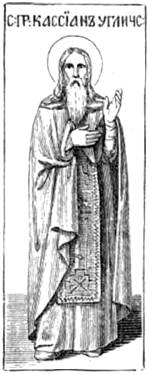
Преп. Кассиан, в мире Константин, был из иностранного княжеского рода и прибыл в Москву вместе с Софией, невестой в. кн. Иоанна, дочерью Морейского владельца22. Долго ли пробыл он при дворе великой княгини, неизвестно. Жизнеописатель говорит только, что жизнь придворная не была по душе его, и что он любил жизнь тихую и строго наблюдал за своей совестью23. По не раннему ркп. житию пр. Паисия Угличского, блаж. Константин, до поступления своего к Ростовскому архиепископу, живал у пр. Паисия Угличского24. В 1481 г. избрал он себе скромное место боярина при Ростовском архиепископе Иоасафе, бывшем князе Исааке Михайловиче Оболенском, хотя и предлагали ему место при дворе самого великого князя. Так он уже не искал более на земле счастья, после того как родина его стала страдать от нечестивых Турок. – Выбор его был вполне рассудительный! Вот что писал умный современник его: «зимой (1482 г.) возвратилась из бегства великая княгиня София; она бегала от Татар на Белоозеро, а не гонял её никто. Тем местам, где ходили, досталось хуже, чем от Татар, от боярских холопов и от кровопийцев христианских. Воздай им, Господи, по их делам! – Там проживали жёны их; а они любили жён более, чем святую веру; они готовы были предать святые церкви, в которых просветились святым крещением. – Милостивый Бог не презрел слёз христианских. – Храбрые воины Русские! старайтесь охранять отчизну свою, Русскую землю, от нечестивых, – чтобы очи ваши не узрели разграбления святых церквей и ваших домов, убиения детей и позора жён и дочерей, как это потерпели от Турок Болгары, Греки, Трапезонцы, Морейцы, Албанцы, Хорваты, Босняки, Манкуццы и жители Кафы. Они скитаются по чужим сторонам бедственно, достойно укоряемые за малодушие. Иные убегали с большим имуществом, с жёнами и детьми, но вместе с золотом потеряли земное счастье. Бог – свидетель, своими глазами видев я государей, убегших от Турок, с имением, скитающихся странниками и просящих смерти как милости»25. Это описание даёт нам видеть, с какими расположениями души был в России бедный и благородный чужестранец Константин: за прошлое он не мог упрекать себя, потому что был ещё молод, когда прибыл в Россию, и едва ли не дитятей был, когда Турки захватили христианский юго-восток. Но он чувствовал и над собой гнев Божий и считал грехом искать весёлой жизни; он хотел трудиться и молиться. В 1489 г. блаж. Иоасаф, отягчённый несправедливым гневом великого князя, отказался от кафедры и удалился в Ферапонтов монастырь, на место иноческих подвигов своих26. Сюда вместе с ним перешёл и кн. Константин. Здесь в молитве и чтении книг находил он покой душе. «Кассиан, бывый князь, добродетельный зело, пострижен преп. отцем Мартинианом», говорит древнее известие27. Это было не при жизни пр. Мартиниана († 1483 г.) и не по воле кн. Константина. – Последнему не хотелось принять на себя иночества, хотя и уговаривали его блаж. Иоасаф и другие; явившийся ему в сонном видении Мартиниан грозил подвергнуть его строгому наказанию за сопротивление доброму совету. «Видел я во сне, рассказывал он Иоасафу и старцу Филарету, благолепную церковь с иноками; посреди её как бы кафедра и на ней пр. игумен Мартиниан, с жезлом в руке. «Постригись», говорит мне игумен. – Не постригусь, отвечал я. «Если не послушаешься, продолжал он, буду бить тебя жезлом», и хотел ударить меня. От страха я проснулся и кричал: Филарет, Филарет». Константин тогда же, по его просьбе, пострижен был с именем Кассиана28.
The Venerable Cassian, in the world Constantine, was of a foreign princely lineage and arrived in Moscow together with Sophia, the bride of Grand Prince John, the daughter of the Despot of the Morea22. How long he remained at the court of the Grand Princess is unknown. His biographer says only that courtly life was not to his liking, and that he loved a quiet life and strictly watched over his conscience23. According to an early manuscript Life of the Venerable Paisius of Uglich, the blessed Constantine, before entering the service of the Archbishop of Rostov, lived with the Venerable Paisius of Uglich24. In 1481 he chose for himself the humble position of a boyar under the Archbishop of Rostov, Joasaph, the former Prince Isaac Mikhailovich Obolensky, although he was offered a place at the court of the Grand Prince himself. Thus he no longer sought happiness on earth, after his homeland had begun to suffer from the impious Turks. — His choice was entirely prudent! Here is what an intelligent contemporary wrote: "In the winter (of 1482) the Grand Princess Sophia returned from flight; she had fled from the Tatars to Beloozero, though no one pursued her. Those places through which they passed fared worse than from the Tatars, from the boyars' servants and from the blood-drinkers of Christians. Render unto them, O Lord, according to their deeds! — Their wives lived there; and they loved their wives more than the holy faith; they were ready to betray the holy churches in which they had been enlightened by holy Baptism. — The merciful God did not despise the tears of Christians. — Brave Russian warriors! Strive to guard your fatherland, the Russian land, from the impious — lest your eyes behold the plundering of holy churches and of your homes, the slaying of children and the shame of wives and daughters, as the Bulgarians, Greeks, Trapezuntines, Moreans, Albanians, Croats, Bosnians, Mankupians, and the inhabitants of Caffa suffered from the Turks. They wander in foreign lands in misery, justly reproached for their faint-heartedness. Some fled with great possessions, with wives and children, but together with gold they lost earthly happiness. God is witness, I have seen with my own eyes rulers who fled from the Turks with their property, wandering as strangers and begging for death as a mercy"25. This description allows us to see with what dispositions of soul the poor and noble foreigner Constantine was in Russia: for the past he could not reproach himself, because he was still young when he arrived in Russia, and was scarcely a child when the Turks seized the Christian southeast. But he felt the wrath of God also upon himself and considered it a sin to seek a merry life; he wished to labor and to pray. In 1489 the blessed Joasaph, burdened by the unjust anger of the Grand Prince, resigned his see and withdrew to the Ferapontov Monastery, to the place of his monastic struggles26. Prince Constantine transferred there together with him. Here in prayer and the reading of books he found peace for his soul. "Cassian, formerly a prince, most virtuous, was tonsured by the Venerable Father Martinian," says an ancient account27. This was not during the life of the Venerable Martinian († 1483) nor by the will of Prince Constantine. — The latter did not wish to take monasticism upon himself, although the blessed Joasaph and others urged him; Martinian, who appeared to him in a dream, threatened to subject him to severe punishment for resisting good counsel. "I saw in a dream," he told Joasaph and the elder Philaret, "a beautiful church with monks; in its midst was something like a cathedra, and on it the Venerable Abbot Martinian, with a staff in his hand. 'Be tonsured,' the abbot says to me. — I will not be tonsured, I answered. 'If you do not obey,' he continued, 'I will strike you with the staff,' and he wanted to strike me. From fear I awoke and cried out: Philaret, Philaret." Constantine was then, at his request, tonsured with the name Cassian28.
В обители Ферапонтовой жил он недолго. С несколькими братиями он удалился с Белоозера в удел доброго Угличского князя Андрея, с которым был дружен ещё в мире29. В 15 верстах от Углича, на берегу Волги и р. Учмы водрузил он крест, поставил кельи и по благословению Ростовского архиепископа построил храм в честь Успения Богоматери. – Но храм повреждён был разливом Волги. Добрый князь Андрей доставил ему средства построить храм и кельи на новом месте и назначил ещё пособия на содержание обители. Всё это было не позже 1491 г., так как в сентябре этого года князь Андрей заключён был великим князем в темницу, из которой уже не выходил до близкого гроба. В Угличе духовным другом и собеседником Кассиана был преп. Паисий. – Блаж. игумен Покровский перед кончиной своей поручил надзирать за его обителью «преп. Кассиану, начальнику пустыни на Учме»30. Столько Паисий уважал Кассиана! Блаженный основатель Учемской обители «поживе в своей обители и лета довольна», представляя в себе образец иноческих добродетелей. Предузнав своё отшествие ко Господу, он преподал наставление братии31 и, приобщившись св. Таин, преставился 2 октября 1504 г.32.
He did not live long in the Ferapontov Monastery. With several brethren he withdrew from Beloozero to the appanage of the good Prince Andrew of Uglich, with whom he had been friendly while still in the world29. Fifteen versts from Uglich, on the bank of the Volga and the River Uchma, he set up a cross, built cells, and, with the blessing of the Archbishop of Rostov, constructed a church in honor of the Dormition of the Mother of God. — But the church was damaged by the flooding of the Volga. The good Prince Andrew provided him with the means to build a church and cells on a new site and also assigned subsidies for the maintenance of the monastery. All this was no later than 1491, since in September of that year Prince Andrew was imprisoned by the Grand Prince, from which he did not emerge until his near grave. In Uglich, the spiritual friend and companion of Cassian was the Venerable Paisius. — The blessed abbot of the Pokrovsky Monastery, before his death, entrusted the oversight of his monastery to "the Venerable Cassian, founder of the hermitage on the Uchma"30. So greatly did Paisius respect Cassian! The blessed founder of the Uchma Monastery "lived in his monastery for a sufficient number of years," presenting in himself a model of monastic virtues. Having foreseen his departure to the Lord, he gave instruction to the brethren31 and, having partaken of the Holy Mysteries, reposed on October 2, 150432.
Углицкая летопись, говоря о событиях 1609–1611 г., пишет: «жалкие Ляхи, ворвавшись в обитель чудотворца Кассиана, встретили здесь немногих граждан; одни из них бросились к соборной церкви, с намерением выломать двери; но по ходатайству преп. Кассиана поражены были слепотой и в ужасе, не зная, куда идти, едва отведены были своими и все ушли назад33». В первом из 25 описанных чудес, за год до нашествия Ляхов видели пр. Кассиана в белых ризах и с возожжёнными в руках свечами, обходящим монастырь свой. Седьмое чудо: игум. Герман долго страдал ногами и исцелился тем, что присыпал к ранам землю с гроба преподобного. Священнику живописцу, желавшему написать образ преподобного как можно точнее (9 чудо), преподобный сказал: «пиши мою браду долее, чем у кн. Романа, но седины должны быть чуть видны». Священник написал, но чувствовал, что не точно. Преподобный явился ему в монашеском облачении, с брадою до персей, которая была не черна и не раздвоивалась надвое, а как бы обложена серебром. В конце XVII в. называли пр. Кассиана великим между чудотворцами34. Ныне мощи его почивают под спудом, в храме обители его, закрытой с 1764 г.35.
The Uglich Chronicle, speaking of the events of 1609–1611, writes: "The wretched Poles, having burst into the monastery of the Wonderworker Cassian, met here a few citizens; some of them rushed to the cathedral church, intending to break down the doors; but through the intercession of the Venerable Cassian they were struck with blindness and in terror, not knowing where to go, were barely led away by their own men and all withdrew33." In the first of the twenty-five described miracles, a year before the invasion of the Poles, the Venerable Cassian was seen in white vestments and with lighted candles in his hands, walking around his monastery. The seventh miracle: Abbot German suffered for a long time from his legs and was healed by applying earth from the grave of the Venerable One to his sores. To a priest-painter who wished to paint an icon of the Venerable One as accurately as possible (the 9th miracle), the Venerable One said: "Paint my beard longer than that of Prince Roman, but the grey hairs should be barely visible." The priest painted it, but felt that it was not accurate. The Venerable One appeared to him in monastic garb, with a beard reaching to his chest, which was not black and did not divide in two, but was as if trimmed with silver. At the end of the 17th century, the Venerable Cassian was called great among the wonderworkers34. Now his relics rest under a bushel, in the church of his monastery, which was closed in 176435.
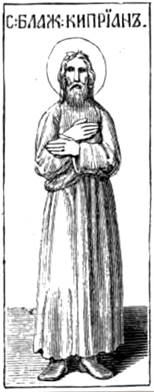
По ркп. святцам, «святый блаженный Киприан, Христа ради юродивый, бысть в Воскресенском селе на Увоти р., Суждальский чудотворец, преставися в л. 7130 октября во 2 д.», след. в 162236. Блаж. Киприан жил на небольшом острове при устье р. Уводи (в Ковровском уезде), а в воскресные и праздничные дни приходил молиться в храм села Воскресенского. Место, где пребывал он, в 7 верст. от Воскресенского, известно ныне под именем пустыни Киприановой, а ямы местности называются пещерами Киприана. Иначе это памятники подвижничества его, тогда как для большинства казался он малоумным, или простяком. «Простота – верный вождь для праведных, а лукавство законопреступников губит их», говорит премудрый (Притч.11:3). Это испытал на себе бл. Киприан. Гроб его и ныне видят под полом Воскресенской церкви37. В 1751 г. в память его построен храм в Воскресенском38. О юродстве ещё преп. Никон Чёрной горы писал в своём 38 послании и преп. Кирилл Белозерский записал это в своём сборнике: «о юродстве и прежние отцы говорили, что это – путь не обязательный, а дело благорассуждения, – оно может служить даже соблазном и во вред. В житии св. Симеона юродивого для Христа пишется, что он молился за соблазняющихся, да не вменится им в грех. – Потому св. собор запретил, чтобы ныне не было того»39. – Не погрешим, если прибавим к сему, что самое вредное для нас дело – страсть к просторной жизни. – Пусть боятся более всего этой страсти на всяком пути.
According to manuscript menologia: "The holy blessed Cyprian, a Fool-for-Christ, was in the village of Voskresenskoye on the River Uvod, a Suzdal wonderworker; he reposed in the year 7130, on October 2," consequently in 162236. The blessed Cyprian lived on a small island at the mouth of the River Uvod (in Kovrov District), and on Sundays and feast days he would come to pray in the church of the village of Voskresenskoye. The place where he dwelt, seven versts from Voskresenskoye, is now known by the name of Cyprian's Hermitage, and the pits of the locality are called Cyprian's Caves. Otherwise these are monuments of his asceticism, whereas to the majority he seemed simple-minded, or a simpleton. "The integrity of the upright guides them, but the crookedness of the treacherous destroys them," says the Wise One (Prov. 11:3). The blessed Cyprian experienced this himself. His grave is still seen under the floor of the Voskresenskoye church37. In 1751 a church was built in Voskresenskoye in his memory38. Concerning foolishness-for-Christ, the Venerable Nikon of the Black Mountain wrote in his 38th epistle, and the Venerable Cyril of Beloozero recorded this in his collection: "Concerning foolishness-for-Christ, the fathers of old also said that this is a path not obligatory, but a matter of right judgment — it can even serve as a stumbling block and be harmful. In the Life of St. Symeon the Fool-for-Christ it is written that he prayed for those who were offended, that it might not be imputed to them as sin. — Therefore the holy Council forbade that this should be done now"39. — We shall not err if we add to this that the most harmful thing for us is the passion for a spacious life. — Let them fear this passion above all on every path.
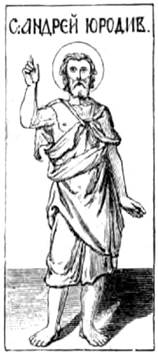
Богатый Константинопольский вельможа купил в числе других рабов и блаж. Андрея40. Раб Андрей был Славянин и оказался выше современных умников и богачей Греков. Он отличался красотой телесной, смышлёностью и хорошим поведением. Господин полюбил его и отдал его учиться книжной мудрости. При хороших способностях и старании Андрей скоро выучился и, ходя в церковь, читал книги и молился; мирской рассеянности и весёлости не любил он, а искал нужного для вечности.
A wealthy Constantinopolitan nobleman bought the blessed Andrew among other slaves40. The slave Andrew was a Slav and proved himself superior to the contemporary wise men and rich Greeks. He was distinguished by bodily beauty, intelligence, and good conduct. His master loved him and sent him to study bookish wisdom. With good abilities and diligence, Andrew soon learned, and going to church, he read books and prayed; he did not love worldly distraction and merriment, but sought what was necessary for eternity.
Особенным видением призванный на путь подвижнический, разодрал он на себе одежду и, покрытый лохмотьями, стал казаться помешавшимся в смысле. Господин жалел о нём и велел скованного отвести к храму св. Анастасии, целительницы лишённых ума; здесь прожил он четыре месяца, и господин его, увидев, что Андрей остаётся в прежнем виде, предоставил ему полную свободу жить, как хочет.
Called by a special vision to the path of asceticism, he tore his clothing and, covered in rags, began to appear as one who had lost his mind. His master pitied him and ordered him to be taken in chains to the church of St. Anastasia, the healer of those deprived of reason; here he lived for four months, and his master, seeing that Andrew remained in his former state, gave him complete freedom to live as he wished.
Юродивый Андрей ходил по улицам, как потерянный; над ним смеялись, его толкали и били: он как бы не понимал и не чувствовал того. Если кто подавал ему милостыню, отдавал её нищим и при том в виде шутки или с бранью. Дня по три обыкновенно не ел он ничего; если же не дадут куска хлеба, то бывал без пищи неделю и две. У него не было никакого пристанища; в сильный холод, в одних лохмотьях, ложился он где случалось; бывало и то, что в сильную стужу ложился он между собаками, но и те иногда убегали от него. Это – подвиг нового мученичества.
The Fool Andrew walked through the streets as if lost; they laughed at him, pushed him, and beat him: he seemed not to understand or feel it. If anyone gave him alms, he gave it to the poor, and that in a joking manner or with abuse. For three days at a time he ordinarily ate nothing; if no one gave him a piece of bread, he would go without food for a week or two. He had no shelter at all; in severe cold, in only rags, he would lie down wherever it happened; it also happened that in severe frost he would lie down among dogs, but even they sometimes ran away from him. This was the struggle of a new martyrdom.
Раз один недобрый человек решился ограбить погребённую богатую девственницу. Андрей, встретясь с ним, говорил: «не кради, не увидишь солнца». Вор понял угрозу и, однако, откопав могилу, стащил дорогую одежду с девственницы, но потерял зрение. Этот несчастный собирал потом милостыню и сам говорил о своём грехе.
Once an evil man decided to rob a rich maiden who had been buried. Andrew, meeting him, said: "Do not steal, or you will not see the sun." The thief understood the threat, yet, having dug up the grave, he stripped the costly clothing from the maiden, but lost his sight. Afterwards this unfortunate man begged for alms and himself spoke of his sin.
Несли богатого мертвеца к могиле; похороны были великолепные. Но Андрей видит в воздухе сотни злых духов, злобно радующихся мертвецу, как своей добыче. За что попался бедный во власть демонов? думал с горестью Андрей. «Он был, говорил ангел Андрею, человек жестокий, сладострастный, не знавший ничего святого: до 300 девушек лишены им невинности, несколько человек убил он тайно».
A rich dead man was being carried to the grave; the funeral was magnificent. But Andrew sees in the air hundreds of evil spirits, maliciously rejoicing over the dead man as over their prey. "For what has the poor man fallen into the power of demons?" thought Andrew with grief. "He was," an angel said to Andrew, "a cruel, voluptuous man, who knew nothing holy: up to 300 maidens were deprived of their innocence by him, and he secretly killed several people."
Один инок вёл жизнь постническую и усердно молился; по строгой жизни его многие приходили к нему за советами и приносили подаяния. Мало-помалу инок пристрастился к деньгам и стал копить их. Святый Андрей видит светлого и чёрного духа, спорящих о душе инока. Чёрный говорит: он – мой, потому что сребролюбив; нет, он – мой, говорит светлый, потому что постится. Небесный голос объявляет светлому: «оставь его, он предался сатане». В скорби о душе инока Андрей наедине показывает ему состояние души его и умоляет переменить жизнь. Инок роздал все собранные у него деньги. Ему приносили снова деньги, с просьбой оделять ими неимущих; но он не брал более ничего. «Что мне за польза, говорил, возиться с чужим терновником?»
A certain monk led a life of fasting and prayed fervently; because of his strict life many came to him for advice and brought alms. Little by little the monk became attached to money and began to hoard it. St. Andrew sees a bright spirit and a dark spirit arguing about the monk's soul. The dark one says: "He is mine, because he is avaricious." "No, he is mine," says the bright one, "because he fasts." A heavenly voice declares to the bright one: "Leave him; he has given himself over to Satan." In sorrow for the monk's soul, Andrew in private shows him the state of his soul and beseeches him to change his life. The monk distributed all the money he had collected. Money was brought to him again, with a request that he distribute it to the needy; but he took nothing more. "What profit is it to me," he said, "to meddle with another's thorns?"
Последнее, чудное видение Андрея было в 909 г. Октября 1 с учеником своим Епифанием стоял он во Влахернском храме, во время ночного Богослужения. И вот видит на воздухе Пресв. Богородицу, окружённую пророками, Апостолами и ангелами и покрывающую омофором народ. – «Видишь ли, говорит он ученику, Царицу-Богородицу, молящуюся за мир?» – Вижу и ужасаюсь, отвечал Епифаний. Вслед за тем святой скончался41.
The last, wondrous vision of Andrew was in the year 909. On October 1, with his disciple Epiphanius, he stood in the Blachernae church during the night service. And behold, he sees in the air the Most Holy Theotokos, surrounded by prophets, Apostles and angels, and covering the people with her omophorion. "Do you see," he says to his disciple, "the Queen-Theotokos praying for the world?" "I see and I am awestruck," answered Epiphanius. Immediately after this the saint reposed41.
Писали, что по видению св. Андрея Греческая Церковь скоро стала праздновать Покрову Богоматери42. Но в Греческой Церкви не знали и не знают сего праздника43. Празднование Покрову Богородицы – праздник Славянский, как Славянин – св. Андрей, видевший Богоматерь молящуюся. В Славянском прологе читаем: «се убо егда слышах, помышлях, како страшное и милосердное видение (заступления за нас) бысть без празднества. Тем восхотех, да не без праздника останет святый покров Твой, Преблагая». Кто говорит это? Конечно один из тех, кто имел право установлять праздник в Церкви – митрополит Русский, или архиепископ Сербский, или первопрестольник Болгарский, или князь благочестивый. Кто же именно из них? Кн. Андрей Боголюбский в 1164 г. устроил обитель в честь Покрова Богоматери44. Праздник Покрова показан в Русском месяцеслове XIII в.45. В минее Макария видим кроме сказания два слова на Покров Богоматери46. По одному памятнику, в Константинопольском предместье существовал Болгарский храм Покрова Богоматери; но Болгарские и Сербские памятники пока ещё не столько известны, чтобы составлять решительное заключение о существовании праздника между Болгарами и Сербами47.
It has been written that, according to the vision of St. Andrew, the Greek Church soon began to celebrate the Protection of the Mother of God42. But the Greek Church did not know and does not know this feast43. The celebration of the Protection of the Theotokos is a Slavic feast, just as St. Andrew, who saw the Mother of God praying, is a Slav. In the Slavic Prologue we read: "When I heard this, I thought how such a fearful and merciful vision (of intercession for us) should be without a feast. Therefore I desired that Thy holy Protection, O Most Gracious One, should not remain without a feast." Who says this? Surely one of those who had the right to establish a feast in the Church—a Russian metropolitan, or a Serbian archbishop, or a Bulgarian primate, or a pious prince. Which one precisely among them? Prince Andrew Bogolyubsky in 1164 founded a monastery in honor of the Protection of the Mother of God44. The feast of the Protection is shown in the Russian menologion of the 13th century45. In the Menaion of Macarius, besides the account, we see two homilies on the Protection of the Mother of God46. According to one monument, in a suburb of Constantinople there existed a Bulgarian church of the Protection of the Mother of God; but Bulgarian and Serbian monuments are as yet not sufficiently known to form a definitive conclusion about the existence of the feast among the Bulgarians and Serbs47.
Сказание о свв. мучениках Киприане и Иустине существует с глубокой древности; отечеством Киприана предполагается Антиохия, в северной части Сирии. Жили Киприан и Иустина в конце III века. – Из сказания известно, что Киприан обучался «философии и волхвованию», которые изучал между прочим и в Египте, – и удивлял всех своими познаниями в «тайных науках», когда путешествовал по разным странам и проявлял перед народом различные чудеса своего знания.
The account of the holy martyrs Cyprian and Justina has existed from deep antiquity; the homeland of Cyprian is supposed to be Antioch, in the northern part of Syria. Cyprian and Justina lived at the end of the third century. From the account it is known that Cyprian studied "philosophy and sorcery," which he studied, among other places, also in Egypt—and he amazed everyone with his knowledge of the "secret sciences" when he traveled through various countries and manifested before the people various wonders of his knowledge.
В то время, когда этот «мудрец» прибыл в свой отечественный город Антиохию, где также поражал всех, действуя неизвестной силой, в этом городе жила со своими родителями дочь языческого жреца – Иустина. Она уже была просвещена христианской верой, первое понятие о которой получила, выслушав случайно речи о Христе от одного диакона здешней церкви, проходившего мимо дома её родителей в то время, как она сидела у окна. Молодая язычница постаралась узнать, кто тот Христос, первая весть о Котором глубоко запала в её душу, – и, успев в этом, полюбила ходить в христианскую церковь, изучила учение Христа и, уверовав в Него, приняла св. крещение. В скором времени убедила и мать свою и даже отца в истине христианской веры.
At the time when this "wise man" arrived in his native city of Antioch, where he also amazed everyone, acting by an unknown power, in this city there lived with her parents the daughter of a pagan priest—Justina. She had already been enlightened by the Christian faith, the first notion of which she received by accidentally hearing speeches about Christ from a certain deacon of the local church, who was passing by the house of her parents at the time when she was sitting by the window. The young pagan woman tried to learn who that Christ was, the first news of Whom had sunk deeply into her soul—and, having succeeded in this, she grew to love going to the Christian church, studied the teaching of Christ, and, having believed in Him, received holy Baptism. Soon she convinced her mother and even her father of the truth of the Christian faith.
Между тем Иустина, обладавшая замечательною красотой, обратила на себя внимание одного богатого языческого юноши, по имени Аглаид. Он стал просить её согласиться быть его женой, но Иустина, посвятив всю свою любовь Богу-Христу, отказалась от брака с язычником и тщательно избегала даже встречи с ним. Он однако же настойчиво преследовал её; но, видя неуспешность всех своих стараний сблизиться с Иустиной, Аглаид, разделяя языческие суеверия своего времени, обратился к знаменитому своими волхвованиями Киприану, думая, что всё доступно его таинственному знанию, и убеждал его подействовать своим искусством на обращение к нему сердца Иустины...
Meanwhile Justina, who possessed remarkable beauty, attracted the attention of a rich pagan youth named Aglaidas. He began to ask her consent to be his wife, but Justina, having devoted all her love to God-Christ, refused marriage with a pagan and carefully avoided even meeting him. He, however, persistently pursued her; but, seeing the failure of all his efforts to draw near to Justina, Aglaidas, sharing the pagan superstitions of his time, turned to Cyprian, famous for his sorceries, thinking that everything was accessible to his mysterious knowledge, and urged him to use his art to turn Justina's heart to him...
Киприан, имея в виду богатое вознаграждение, действительно употребил все средства, которые мог почерпнуть в своей науке «волхвования», и попытался убедить Иустину всеми орудиями своей таинственной силы – сделаться женой полюбившего её юноши.
Cyprian, having in view a rich reward, indeed used all the means he could draw from his science of "sorcery," and attempted to persuade Justina by all the instruments of his mysterious power to become the wife of the youth who loved her.
Между тем, в городе появилось моровое поветрие. Распущен был слух, что могущественный волхв Киприан, которому не удаются его волхвования относительно Иустины, мстит ей за свой неуспех в лице целого города, послав на народ смертельную болезнь...
Meanwhile, a pestilence appeared in the city. A rumor was spread that the powerful sorcerer Cyprian, whose sorceries regarding Justina were unsuccessful, was taking vengeance on her through the whole city, sending a deadly disease upon the people...
Перепуганный народ приступил к Иустине, как к виновнице общественного бедствия, и убеждал её удовлетворить волхва согласием выйти замуж за Аглаида... Иустина успокаивала народ и, твёрдая упованием на помощь Божию, обещала ему скорое освобождение от губительной болезни, и действительно, как только помолилась она Богу своей чистой и крепкой молитвой, болезнь прекратилась...
The frightened people approached Justina as the cause of the public calamity, and urged her to satisfy the sorcerer by agreeing to marry Aglaidas... Justina calmed the people and, firm in her hope of God's help, promised them speedy deliverance from the deadly disease; and indeed, as soon as she prayed to God with her pure and strong prayer, the disease ceased...
Эта победа и торжество христианки были в то же время полным посрамлением Киприана, выдававшего себя за могущественного волхва, похвалявшегося знанием тайн природы, но это же послужило и к спасению действительно одарённого сильным умом человека, который, главным образом, по заблуждению растрачивал его на недостойное употребление. Киприан понял, что есть что-то высшее, чем его знания и таинственное искусство, чем та тёмная сила, на содействие которой он рассчитывал, чтобы поражать непросвещённую толпу. Он понял, что всё это – ничто перед познанием того Бога, Которого исповедует Иустина...
This victory and triumph of the Christian woman was at the same time a complete humiliation for Cyprian, who gave himself out as a powerful sorcerer, boasting of knowledge of the secrets of nature; but this also served for the salvation of a man truly endowed with a strong mind, who, chiefly through error, had wasted it on unworthy employment. Cyprian understood that there is something higher than his knowledge and mysterious art, higher than that dark power on whose assistance he had counted in order to astonish the unenlightened crowd. He understood that all this is nothing before the knowledge of that God Whom Justina confesses...
Увидев ясно, что все его средства – бездейственны относительно слабого существа, молодой девушки, вооружённой только молитвой да крестным знамением, Киприан постиг значение этих двух христианских, действительно всемогущих орудий. Он пришёл к христианскому епископу Анфиму (пам. его 3 сент.), рассказал ему о своих заблуждениях и обманах, просил научить его истинам христианской веры и, подготовясь к единому истинному пути, открытому Сыном Божиим, принял св. крещение.
Having clearly seen that all his means were ineffective against a weak being, a young girl armed only with prayer and the sign of the cross, Cyprian grasped the significance of these two Christian, truly all-powerful weapons. He came to the Christian bishop Anthimus (his commemoration is September 3), told him of his errors and deceptions, asked to be taught the truths of the Christian faith, and, having been prepared for the one true path revealed by the Son of God, received holy Baptism.
Через год был он поставлен иереем, а потом епископом, между тем как Иустина, Богом которой был привлечён Киприан, посвящена была им в диакониссы и поставлена начальницей общины христианских дев.
After a year he was ordained a priest, and later a bishop, while Justina, by whose God Cyprian had been drawn, was ordained by him a deaconess and appointed head of a community of Christian virgins.
Продолжая одушевлённую пламенной любовью к Богу деятельность, Киприан и Иустина много послужили к распространению и утверждению христианского учения. Это не могло не привлечь на них внимание противников и гонителей христианства. Получив донос с обвинением христианских подвижников в том, что Киприан и Иустина отвращают народ от богов, областеначальник Евтолмий, повелев истязать их за веру во Христа, которую они непоколебимо исповедали, отослал их к императору, бывшему в то время в Никомидии, по приказанию которого и были они усекнуты мечом около 304 г.
Continuing their activity, animated by a fervent love for God, Cyprian and Justina greatly served the spread and establishment of Christian teaching. This could not but draw upon them the attention of the opponents and persecutors of Christianity. Having received a denunciation accusing the Christian ascetics that Cyprian and Justina were turning the people away from the gods, the provincial governor Eutolmius, having ordered them to be tortured for their faith in Christ, which they unwaveringly confessed, sent them to the emperor, who was at that time in Nicomedia, by whose command they were beheaded by the sword around the year 304.
Память о них была славна в древней Церкви. Григорий Назианзен говорит о них в своём слове, хотя отчасти смешивает Киприана с другим, известным писателем Карфагенским. Императрица Евдокия, супруга Феодосия Младшего, около 425 года написала в честь их стихотворенье (оно в сокращении в библиотеке Фотия 184. Издано Бандинием в Catal. Bibl. Laur. 228)48.
Their memory was glorious in the ancient Church. Gregory of Nazianzus speaks of them in his homily, although he partly confuses Cyprian with another, the well-known writer of Carthage. The Empress Eudocia, wife of Theodosius the Younger, around the year 425 wrote a poem in their honor (it is in abridged form in the library of Photius 184. Published by Bandini in Catal. Bibl. Laur. 228)48.
«От художества волшебного обратився, Богомудре, к познанию Божественному, – молитвенно воспоминает св. Церковь свв. мучеников, – показался еси миру врач мудрейший, исцеления даруя чествующим тя, Киприане со Иустиною, с нею-же молися человеколюбцу Владыце спасти души наша!»
"Having turned from the art of magic, O God-wise one, to divine knowledge, — the holy Church prayerfully recalls the holy martyrs, — you appeared to the world as a most wise physician, granting healings to those who honor you, O Cyprian with Justina; with her pray to the Lover of Mankind, our Lord, to save our souls!"
Пролог 21 мая: «бяше от Италийския страны, от Амория, рода княжеска, Мавнукскаго града». Но: а) Мавнуком Крымским до 1475 г. владели Готфы (родословная Головиных, стр. 8. Μ. 1847 г.), б) Морея – не часть Италии, а Мавнука не было ни в Морее, ни в Италии. Остаётся признать за верное только то, что Константин родился в Морее от благородной фамилии; а вероятным надобно сочесть, что он был Славянин, так как в Морее жили тогда большей частью Славяне.
Prologue, May 21: "He was from the Italian country, from Amoria, of princely lineage, of the city of Mavnuk." But: a) Mavnuk in the Crimea was ruled by the Goths until 1475 (Genealogy of the Golovins, p. 8. M. 1847), b) the Morea is not a part of Italy, and there was no Mavnuk either in the Morea or in Italy. It remains to accept as certain only that Constantine was born in the Morea of a noble family; and it must be considered probable that he was a Slav, since at that time the Morea was inhabited for the most part by Slavs.
По полному житию Паисия блаж. Константин был в Паисиевой обители при заложении каменного Покровского храма в 1479 г. и при освящении его в 1482 г. и при том был в сношениях с Угличским князем Андреем.
According to the full Life of Paisius, the blessed Constantine was in the monastery of Paisius at the laying of the stone Church of the Intercession in 1479 and at its consecration in 1482, and at that time he was in communication with Prince Andrew of Uglich.
Геннадий в письме к Иоасафу: «дошло до моего слуха, что вел. князь посылал за тобой не раз и ты не поехал... Если Бог положит на сердце государя послать за тобой, не отказывайся, ступай к нему: ты можешь показать твёрдость в своём деле, как тебе угодно – только бы спросил тебя государь». Русск. времен. 2, 136. 150.
Gennady, in a letter to Joasaph: “It has come to my hearing that the Grand Prince sent for you more than once and you did not go… If God places it upon the heart of the sovereign to send for you, do not refuse; go to him. You may show firmness in your matter as you wish—only let the sovereign ask you.” Russian Chronograph, vol. 2, pp. 136, 150.
По прологу Кассиан крестил у князя Андрея сына Димитрия; но Димитрий родился в 1477 г., и след. Кассиан воспринимал его от купели ещё тогда, как был в мире.
According to the Prologue, Cassian baptized a son, Demetrius, for Prince Andrew; but Demetrius was born in 1477, and consequently Cassian received him from the font while he was still in the world.
По ист. иер. 4, 358 преп. Кассиан преставился 2 окт. 7072 (1553 г.), по ркп. святцам – 2 окт. 7076 (1567 г.). Но то и другое показание неверно. Если Константин в 1472 г. прибыл в Москву, будучи 30 лет, и тогда в 1520 г. ему было 68 лет, а в 1562 г. было бы 120 лет, между тем ни в прологе, ни в других памятниках нет и намёка на такую необыкновенную старость его; напротив по видению он был не старее 65 лет. Жалованная грамота от 1 июня 1552 г. Учемскому Богородичному монастырю дана была при игумене Пахомии (ак. э. 1. № 171), и след. она решает, что пр. Кассиан скончался прежде 1520 г. 1504 г. поставлен годом кончины его в слов. святых, стр. 146.
According to the History of the Hierarchy, vol. 4, p. 358, the Venerable Cassian reposed on October 2, 7072 (1553 A.D.); according to manuscript saints’ calendars, on October 2, 7076 (1567 A.D.). But both indications are incorrect. If Constantine arrived in Moscow in 1472 at the age of 30, then in 1520 he would have been 68 years old, and in 1562 he would have been 120 years old; yet neither in the Prologue nor in other memorials is there any hint of such extraordinary old age; on the contrary, according to a vision, he was no older than 65. A grant charter of June 1, 1552, to the Uchema Monastery of the Mother of God was given under Abbot Pachomius (Acts of the Empire, vol. 1, no. 171), and consequently it decides that the Venerable Cassian died before 1520. The year 1504 is given as the year of his death in the Dictionary of Saints, p. 146.
По другому известию «святый Киприан, Христа ради юродивый, Суздальский, бе л. 7140 (1632), июля в 25 д.» Едва ли в этом году и в это число не удостоверялись в нетлении мощей.
According to another account: “The holy Cyprian, Fool-for-Christ of Suzdal, was in the year 7140 (1632), on July 25.” It is doubtful whether in that year and on that date they did not verify the incorruption of the relics.
Жизнь св. Андрея, описанная Софийским священником Никифором, духовником его, нап. in Act. Sanet. Maii, append. t. VI p. 1–111, сокращённое описание в четьи минее 2 окт. Части его в разных числах октябрьского пролога. Полное житие в четьи минее Макария. Писатель говорит: «описал я чудную и достославную жизнь благочестивейшего и святейшего отца Андрея, собрав и изложив в порядке, что частью своими глазами видел, частью узнал от Епифания».
The Life of St. Andrew, written by the Sophia priest Nicephorus, his spiritual father, printed in Acta Sanctorum Maii, appendix, vol. VI, pp. 1–111; an abbreviated account in the Cheti-Minei for October 2. Parts of it are found in various numbers of the October Prologue. The full Life is in the Cheti-Minei of Macarius. The writer says: “I have described the wondrous and glorious life of the most pious and most holy father Andrew, having gathered and set forth in order what I partly saw with my own eyes and partly learned from Epiphanius.”
Обиходник XIII в. в музее Румянцева № 284. Но ни в Остромировом, ни в Мстиславовом Евангелии нет его. Изв. акад. X, 114.
A Typikon of the 13th century in the Rumyantsev Museum, no. 284. But it is found neither in the Ostromir Gospel nor in the Mstislav Gospel. News of the Academy, vol. X, p. 114.
В Сербском месяцеслове XIII в. (у поклонника горы, стр. 311) нет сего праздника. По житию пр. Параскевы, в предместье Константинопольском – Болгарский храм покрова Богоматери. См. окт. 14 д. Но у Дю-Канжа не показано Покровского монастыря в Ираклийском предместье, где был монастырь живоносного источника. Constant, lib. 4, p. 174. 183. Только в Киприановом Сербском сборнике 1721 г. написано: «окт. в. 16 покров пресвятые Богородице». Гласник IX, 245.
In a Serbian menologion of the 13th century (from the Pilgrim of the Holy Mountain, p. 311) this feast is not present. According to the Life of the Venerable Paraskeva, in the suburb of Constantinople there was a Bulgarian church of the Protection of the Mother of God. See October 14. But Du Cange does not indicate a Monastery of the Protection in the Heracleian suburb, where there was a monastery of the Life-giving Spring. Constant., book 4, pp. 174, 183. Only in Cyprian’s Serbian Collection of 1721 is it written: “October 16, Protection of the Most Holy Theotokos.” Glasnik, vol. IX, p. 245.