Преподобный Кириак, Коринфянин, сын священника, восемнадцати лет от роду (около 465 года) тайно от родителей отправился в Иерусалим и, св. места, перезимовал в одном монастыре близ а потом пошел в пустынную лавру преп. Евфимия (20 января), который, испытав, постриг в иночество и послал на Иордан к преп. Герасиму (4 марта). Герасим велел ему жить в общем монастыре на различных послушаниях. По смерти же преп. Герасима (475 года), Кириак возвратился в лавру преп. Евфимия (умершего несколько прежде) и испросил у игумена Илии позволения жить в уединенной келии. Это было на двадцать седьмом году возраста его. Он имел собеседником только монаха Фому, совершенного житием, но и с тем скоро разлучился. Ибо посланный в Египет по монастырским делам, Фома был удержан Александрийским патриархом Тимофеем и посвящен во епископа Абиссинии.
The Venerable Cyriacus, a Corinthian, the son of a priest, at eighteen years of age (about A.D. 465) secretly departed from his parents to Jerusalem and, after venerating the holy places, spent the winter in a monastery nearby, and then went to the desert Lavra of the Venerable Euthymius (January 20), who, having tested him, tonsured him into monasticism and sent him to the Jordan to the Venerable Gerasimus (March 4). Gerasimus commanded him to live in the common monastery at various obediences. After the death of the Venerable Gerasimus (A.D. 475), Cyriacus returned to the Lavra of the Venerable Euthymius (who had died a little earlier) and asked the abbot Elias for permission to live in a solitary cell. This was in the twenty-seventh year of his age. He had as a companion only the monk Thomas, a man of perfect life, but he soon parted even from him. For, having been sent to Egypt on monastery business, Thomas was detained by Timothy, the Patriarch of Alexandria, and was consecrated bishop of Abyssinia.
Десять лет пробыл он в лавре и сделан был диаконом; затем, по случаю раздора между монахами, удалился в монастырь Сукийский (Ветхую Лавру), где, только после четырехлетнего искуса, допущен к диаконскому служению, а через три года после сего и пресвитерства удостоен. Пробыв тут тридцать лет, семидесятилетний Кириак удалился на безмолвное житие в пустыню и провел там 15 лет. Затем возвратился в Сукийскую обитель и преставился тут, более 107 лет от роду, в 557 году.
He remained in the Lavra for ten years and was made a deacon; then, on account of a dispute among the monks, he withdrew to the Soukian monastery (the Old Lavra), where, only after a four-year probation, he was admitted to the diaconal service, and three years after this he was deemed worthy of the priesthood as well. Having remained there for thirty years, the seventy-year-old Cyriacus withdrew to a life of silence in the desert and spent fifteen years there. Then he returned to the Soukian monastery and reposed there, being more than 107 years old, in A.D. 557.
Была чтицею при храме Воскресения во Иерусалиме; злой дух уязвлял многих ее красотою. Узнав о сем, она отошла в пустыню; где прожила 18 лет, питаясь мочеными бобами и водою, взятыми при отшествии ее в. пустыню, но которые благодатию Божиею не истощались до ее кончины, последовавшей в 553 году. Подробно ее жизнь см. 7-го февраля, вместе с житием св. Мастридии и двух неизвестных по имени подвижниц.
She was a reader at the Church of the Resurrection in Jerusalem; the evil spirit wounded many through her beauty. Learning of this, she withdrew into the desert, where she lived for eighteen years, nourished by soaked beans and water, which she had taken at her departure into the desert, but which by the grace of God were not exhausted until her end, which occurred in A.D. 553. For a detailed account of her life, see February 7, together with the life of St. Mastridia and two unknown ascetics.
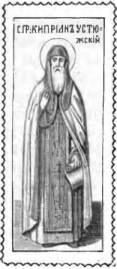
Во время Ростовского князя Константина Всеволодовича, так говорит Устюжский летописец, землевладелец Двинской трети и Устюжской волости, презрев прелести мира, принял на себя иноческий образ и назван Киприаном. Когда принял он иночество, граждане Великого Устюга убедили его устроить святую обитель иноческую близ города Устюга на удобном месте. – Обойдя город, осмотрев места удобные для жития иноков, избрал он место при озерках, за Острожскою осыпью. Здесь поставил он себе малую келийцу. С 1212 г. инок Киприан начал строить обитель в честь Введения Богоматери во храм и св. архистратига Михаила. Граждане, видя Богоугодную жизнь его, приносили нужное для устроения и содержания обители; а иные стали и жить вместе с ним. Он принимал всех с радостию и любовию, а примером жизни учил тому, как достигать спасения и избавиться вечных мук. – Впоследствии отдал он обители все свое имущество, села, деревни, пахотную и сенокосную землю, которая была у него в Устюжской и во многих других волостях. С того времени святая обитель его стала распространяться и не имела ни в чем нужды. – Преподобный отец Киприан признан был начальником святой обители и пастырем Христова стада». Так говорит летописец461. Поныне сохраняется в обители дикий камень – памятник подвигов преподобного: этот камень то служил ему возглавием, то держал он его в руке, во время уочи, чтобы не давать себе сна и бодро молиться духом462. «В 1279 г. сентября 29 дня, продолжает летописец, инок Киприан, начальник архангельского монастыря, скончался и погребен был в обители своей близ св. ворот. Впоследствии над гробом его построен храм Преполовения, и гроб его остался внутри церкви, за левым клиросом, у стены; над ним устроена гробница»463.
During the time of Constantine Vsevolodovich, Prince of Rostov, so says the Ustiug chronicler, a landowner of the Dvina third and the Ustiug district, despising the allurements of the world, took upon himself the monastic habit and was named Cyprian. When he received the monastic tonsure, the citizens of Great Ustiug persuaded him to establish a holy monastic dwelling near the city of Ustiug in a suitable place. – Having walked around the city and examined places suitable for the dwelling of monks, he chose a place by the little lakes, beyond the Ostrog earthwork. Here he built himself a small cell. From 1212, the monk Cyprian began to build a monastery in honor of the Entry of the Mother of God into the Temple and of the holy Archangel Michael. The citizens, seeing his God-pleasing life, brought what was necessary for the building and maintenance of the monastery; and others began to live together with him. He received all with joy and love, and by the example of his life taught them how to attain salvation and be delivered from eternal torments. – Afterwards, he gave to the monastery all his property: villages, hamlets, arable and haymaking land, which he had in the Ustiug district and in many other districts. From that time, his holy monastery began to spread and had need of nothing. – "The Venerable Father Cyprian was recognized as the superior of the holy monastery and the shepherd of Christ's flock." So says the chronicler461. To this day, a wild stone is preserved in the monastery—a memorial of the venerable one's ascetic labors: this stone sometimes served him as a headrest, sometimes he held it in his hand during vigil, so as not to give himself sleep and to pray vigilantly in spirit462. "In the year 1279, on the 29th day of September," continues the chronicler, "the monk Cyprian, the superior of the Archangel monastery, died and was buried in his monastery near the holy gates. Afterwards, a church of Mid-Pentecost was built over his grave, and his grave remained inside the church, behind the left choir, against the wall; a tomb was built over it"463.
По известию XVII в., в 1621 г. один из монастырских слуг, возвращаясь из Верхотурья, под Пыскорским монастырем, неосторожно грыз корень какого-то растения, данный ему в виде лекарства, и от того сделался так болен желудком, что его, едва живого, с трудом могли довесть до своего монастыря. Здесь он лежал больным целый год. Перепытав разные лекарства и не получив пользы, он обратился с усердною молитвою к преп. Киприану, «обещался отслужить в часовне над гробом его панихиду и положить покров на гробницу». Лишь только окончена была панихида и положен был покров, больной Иоанн стал так здоров, как бы никогда и не был больным464.
According to a 17th-century account, in 1621 one of the monastery servants, returning from Verkhoturye, near the Pyskor monastery, carelessly gnawed the root of some plant given to him as a medicine, and from this became so ill in his stomach that he, barely alive, could with difficulty be brought to his own monastery. Here he lay sick for a whole year. Having tried various medicines and received no benefit, he turned with fervent prayer to the Venerable Cyprian, "promising to serve a panikhida in the chapel over his grave and to place a cover on the tomb." As soon as the panikhida was finished and the cover was placed, the sick John became as healthy as if he had never been ill464.