Благочестивый гражданин города Иконии преподобный Харитон в гонение Ликиниево взят был, как именитейший из жителей, на допросе, за непоколебимость в вере пытан был два раза дичеванием и огнем, и отпущен, когда пришла весть о низложении гонителя (в сентябре 323 года) и единовластительстве Константина.
The pious citizen of the city of Iconium, the Venerable Chariton, was taken during the persecution of Licinius as the most notable of the inhabitants. At his interrogation, for his steadfastness in the faith, he was tortured twice with scourging and fire, and was released when news came of the overthrow of the persecutor (in September of the year 323) and of the sole rule of Constantine.
Излечившись от ран, Харитон отвергся мира и пошел на богомолье в Иерусалим. Верстах в десяти от сего города захватили его разбойники и заключили в пещеру ущелья Фаре, где имели свой притон; не успели же сделать ему никакого зла, потому что поспешили на другой грабеж, а в отсутствие их змий ядом свои отравил сосуд с вином, и они, по возвращении, все по одному с жаждой напились вина того и погибли. Харитон же освободился от уз, и, найдя в пещере много богатства, частью роздал церквам и нищим, а остальное употребил (около 330 года) на устройство монастыря, и пещеру разбойников обратил в церковь. Он первый ввел обряд пострижения желающих вести монашескую жизнь. Дал он устав монастырю, которым предотвращались леность и праздность, а заповедывались воздержание, молитва и трудолюбие.
Healed of his wounds, Chariton renounced the world and went on pilgrimage to Jerusalem. About ten versts from that city, robbers seized him and confined him in a cave of the Pharan gorge, where they had their lair; but they did not succeed in doing him any harm, because they hastened off to another robbery, and in their absence a serpent poisoned with its venom a vessel of wine, and they, upon their return, all drank of that wine one after another in their thirst and perished. Chariton was freed from his bonds, and finding much wealth in the cave, he distributed part to the churches and the poor, and used the remainder (around the year 330) to establish a monastery, turning the robbers' cave into a church. He was the first to introduce the rite of tonsure for those desiring to lead the monastic life. He gave a rule to the monastery, by which sloth and idleness were prevented, and abstinence, prayer, and diligence were enjoined.
Бегая славы человеческой, он удалился на безмолвное житие в пустыню Иерихонскую; но и тут нашли его ревнители пустынных подвигов и составили новый монастырь. Тогда ушел он в пустыню Сукийскую, но и там нашли его случайно некие подвижники и умоляли позволить им остаться при нем. После сего и другие начали собираться к нему, и составился третий монастырь (известный под именем Ветхой Лавры). Преподобный же после сего взошел на верх находящейся там горы и поселился в малой пещере, и оттуда назирал за собранным стадом; ибо со всех трех монастырей приходили к нему за наставлениями. Достигши глубокой старости и чувствуя приближение смерти, перешел, по просьбе братии, в первый свой монастырь и мирно предал дух свой в руки Божии (около 350 года).
Fleeing human glory, he withdrew to a life of silence in the wilderness of Jericho; but even there zealots of the desert ascetic life found him and formed a new monastery. Then he went away to the wilderness of Souki, but even there certain ascetics chanced upon him and begged him to allow them to remain with him. After this, others also began to gather to him, and a third monastery was formed (known under the name of the Old Lavra). After this, the Venerable One ascended to the top of the mountain there and settled in a small cave, and from there he watched over the gathered flock; for from all three monasteries they came to him for instructions. Having reached a deep old age and feeling the approach of death, he moved, at the request of the brethren, to his first monastery and peacefully surrendered his spirit into the hands of God (around the year 350).
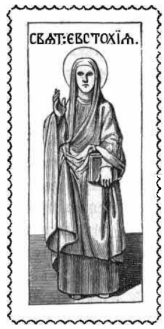
Хотя Евстохия и воспитывалась под надзором благочестивой вдовы Маркеллы,440 но не легко было дочери сенаторской, девушке из самого аристократического и богатого дома, решиться на нищету Христову, тем более, что Евстохия – первая из благородных дев Рима решалась посвятить себя девству.441 Родные восстали с силой против ее монашества. Тетка Протекстата, аристократка высшего полета, по воле мужа, сбросила с Евстохии смиренную одежду ее и пышно нарядила ее, «желая победить решимость дочери и желание матери». Что же случилось? Бог – помощник добру и против греха. По известию блаженного Иеронима, «в ту же ночь видит она – тетка, явился ей грозный ангел и говорит: «ты ли смела предпочесть волю мужа воле Христовой? Ты коснулась святотатственными руками главы девы Божьей. Руки твои будут сохнуть, чтобы почувствовала ты себя; 5 месяцев приблизишься ты к гробу. Если будешь упорствовать в нечестии, лишишься и мужа и детей». Все выполнилось в свое время, и позднее раскаяние запечатлела смерть».442 Мужественная девушка твердо шла своим путем и не смотрела на суд гордого мира. Иероним справедливо писал: «кто храбрее Евстохии, которая обетом девства взяла в плен ворота благородства и гордость консульского рода».443
Although Eustochium was brought up under the supervision of the pious widow Marcella,440 it was not easy for a senator's daughter, a maiden from the most aristocratic and wealthy house, to resolve upon the poverty of Christ, the more so because Eustochium was the first of the noble maidens of Rome to resolve to consecrate herself to virginity.441 Her relatives rose up with force against her monasticism. Her aunt, Protekstata, an aristocrat of the highest flight, by the will of her husband, cast off Eustochium's humble garment and dressed her sumptuously, "desiring to overcome the daughter's resolve and the mother's desire." What happened? God is the helper of good and the opponent of sin. According to the account of Blessed Jerome, "that same night she sees—her aunt—a fearsome angel appeared to her and says: 'Did you dare to prefer the will of a husband to the will of Christ? You have touched the head of a virgin of God with sacrilegious hands. Your hands will wither, so that you may feel yourself; in five months you will draw near to the grave. If you persist in impiety, you will lose both husband and children.' All was fulfilled in its time, and death sealed her late repentance."442 The courageous maiden walked firmly on her path and paid no heed to the judgment of the proud world. Jerome rightly wrote: "Who is braver than Eustochium, who by her vow of virginity took captive the gates of nobility and the pride of a consular family."443
Блаженные Иероним, содействовавший советами Евстохии в решимости жить девой для Господа, в 383 году написал для нее обширное сочинение о девстве. «Пока мы живем в этом хрупком теле», писал он, «пока носим сокровище в глиняном сосуде (2Кор.4:7), и плоть борется с духом, как дух с плотью (Гал.5:17), дотоле нет верной победы. Потому постоянно необходимы смирение и труд. Особенно для молодого тела нужно воздержание: смирение и труд. Особенно для молодого тела нужно воздержание: свобода, какую дозволяют себе многие в этом отношении, вызывает жалкие последствия. Надобно уклоняться от сношения с лицами, от которых веет мирщиной. Редко ходите и на поклонение мученикам, покланяйтесь им в келье вашей. Трудно, чтобы душа человеческая не любила ничего, не увлекалась какими-нибудь чувствами. Путь же плотская любовь побеждается любовью духовной, пусть одно желание ослабляется другим. Обливайте, обмывайте ложе ваше, бодрствуйте в уединении; пойте сердцем и устами: «благослови, душе моя, Господа и не забывай всех воздаяний Его, очищающего вся беззакония твоя, исцеляющего вся недуги твоя». Преимущества девственной жизни слишком высоки, чтобы не уважать и не любить их полной душой». Указывая на средства охранять дорогое сокровище, предлагает как можно более оставаться в уединении, заниматься молитвой, не слушать льстецов. «Не уверяйте себя, будто вы молоды, нежны, слабы и потом не можете заниматься рукоделием. Не отзывайтесь ни о ком дурно; попостясь несколько дней, не думайте, будто превосходите тем в добродетели людей, которые не постятся. Пусть Вы и поститесь, но можете быть нетерпеливы, заносчивы; а другой не постится, за то кроток и смирен». Надобно притом опасаться и тщеславия, не выставлять из себя особенности. «Когда поститесь, будьте веселы лицем. Одеяние ваше пусть будет довольно чисто, а не гнусно, чтобы проходящие не указывали пальцем». «Как и тщеславие, скупость – вещь дурная». Изобразив жизнь разных подвижников Востока, говорит: «не смотрите на тех, которые заботливы о плоти, о приобретении имущества, считают доходы. Не говорите: «та и та пользуется своей собственностью, в почете у людей, к ней собираются братья и сестры, и перестала ли она быть девой?» Бог смотрит на нас не так, как люди. Если по телу она и дева, но не знаю, дева ли она по душе? Апостол так определил деву: да будет святой по телу и по душе (1Кор.7:34)… Надобно нам смотреть не на жизнь грешных, а на жизнь святых, мучеников, апостолов».444
Blessed Jerome, who assisted Eustochium with his counsels in her resolve to live as a virgin for the Lord, wrote for her in the year 383 an extensive treatise on virginity. "As long as we live in this fragile body," he wrote, "as long as we bear the treasure in earthen vessels (2 Cor. 4:7), and the flesh fights against the spirit, as the spirit against the flesh (Gal. 5:17), so long there is no sure victory. Therefore humility and labor are constantly necessary. Especially for a young body is abstinence needed: humility and labor. Especially for a young body is abstinence needed: the freedom that many allow themselves in this regard brings about pitiable consequences. One must avoid intercourse with persons from whom the spirit of the world breathes. Go but rarely even to venerate the martyrs; venerate them in your cell. It is difficult for the human soul to love nothing, not to be carried away by some feelings. Let carnal love be overcome by spiritual love, let one desire be weakened by another. Water, wash your bed, keep vigil in solitude; sing with heart and lips: 'Bless the Lord, O my soul, and forget not all His rewards, Who cleanses all your iniquities, Who heals all your infirmities.' The advantages of the virginal life are too high not to respect and love them with a full soul." Pointing out the means to guard the precious treasure, he advises remaining as much as possible in solitude, occupying oneself with prayer, not listening to flatterers. "Do not assure yourself that you are young, delicate, weak, and therefore cannot engage in handiwork. Speak ill of no one; having fasted a few days, do not think that you thereby surpass in virtue those who do not fast. You may fast, but you may be impatient, haughty; while another does not fast, but is meek and humble." Moreover, one must also beware of vainglory, not to put oneself forward. "When you fast, be cheerful of countenance. Let your clothing be quite clean, not filthy, so that passers-by do not point a finger at you." "Like vainglory, avarice is an evil thing." Having depicted the life of various ascetics of the East, he says: "Do not look at those who are careful for the flesh, for the acquisition of property, who count their incomes. Do not say: 'So-and-so enjoys her own property, is honored among men, brothers and sisters gather to her, and has she ceased to be a virgin?' God does not look at us as men do. If in body she is a virgin, I do not know whether she is a virgin in soul. The Apostle thus defined the virgin: that she may be holy both in body and in spirit (1 Cor. 7:34)... We must look not at the life of sinners, but at the life of the saints, the martyrs, the apostles."444
Прибыв в Иерусалим с матерью, посетив святые места его, побывав у пустынников Востока, Евстохия от имени своего и своей матери писала в Рим к Маркелле письмо,445 приглашая ее на Восток.
Having arrived in Jerusalem with her mother, having visited its holy places, having visited the hermits of the East, Eustochium, on behalf of herself and her mother, wrote a letter to Marcella in Rome,445 inviting her to the East.
«Начиная со времени вознесения Господня и до сего дня», писала она, «как многие епископы, мученики, красноречивые учители посещали Иерусалим. Им как бы недоставало чего-то в их благочестии, уме, добродетели, если бы не поклонились Христу в тех местах, откуда распространился свет Евангельский, зажегшийся с креста. И в самом деле, если оратора осуждают за то, что не изучал он греческих наук в Афинах, а в Ливии, и с латинскими знакомился не в Риме, а в Сицилии, так как каждая провинция имеет сови преимущества, которых нет у другой, – как же верить, что, не посещая христианских Афин, могут восходить на высоту христианской мудрости?
"Beginning from the time of the Lord's Ascension until this day," she wrote, "how many bishops, martyrs, eloquent teachers have visited Jerusalem. They seemed to lack something in their piety, understanding, virtue, if they did not worship Christ in those places from which the light of the Gospel spread, kindled from the cross. And indeed, if an orator is condemned for not having studied Greek learning in Athens, but in Libya, and for having become acquainted with Latin not in Rome, but in Sicily, since each province has its own advantages which another does not have—how can one believe that, without visiting the Christian Athens, they can ascend to the height of Christian wisdom?
«Не отвергаем, что Царство Божие внутреннее должно быть внутри нас и что есть великие, святые люди и в других странах. Но мы хотим сказать, что первые, лучшие люди всего света собираются здесь. Мы не принадлежим к первым, а к последним, и пришли сюда, чтобы видеть первых всех стран. Лучшие цветы, дорогие камни – это лики иноков. Британия, отделенная от нашей страны, так как хочет успевать в христианском благочестии, должна присылать своих с Запада на Восток, чтобы они могли видеть месть, которое знают только по слуху и по описанию святого Писания. Что сказать об Армении, Персии, Индии, Египте, столько плодовитом иноками, о Понте и Каппадокии, о Сирии и Месопотамии, о всем Востоке? Со всех сторон спешат сюда, и мы можем видеть разные образцы добродетели. Языки разные, а благочестие одно. Почти столько же ликов поющих, сколько разностей племенных. При этом первая добродетель христиан – обращение далекое от гордости и суетности; спорят только о том, чтобы превзойти в смирении».
"We do not deny that the inward Kingdom of God must be within us and that there are great, holy people in other countries as well. But we wish to say that the first, best people of the whole world gather here. We do not belong to the first, but to the last, and we have come here to see the first of all countries. The best flowers, the precious stones—these are the faces of monks. Britain, separated from our country, since it wishes to advance in Christian piety, must send its people from the West to the East, so that they may see the place which they know only by hearsay and by the description of Holy Scripture. What shall I say of Armenia, Persia, India, Egypt, so fruitful in monks, of Pontus and Cappadocia, of Syria and Mesopotamia, of all the East? From all sides they hasten here, and we can see various models of virtue. The languages are different, but the piety is one. There are almost as many choirs of singers as there are differences of tribes. At the same time, the first virtue of Christians—their conduct is far from pride and vanity; they contend only to surpass one another in humility."
Описав другие добродетели, которые видятся в опытах, обращается к Вифлеему. «Эти ясли, где лежало Божественное Дитя! Ах! Их надобно чтить более молчанием, чем словами. – Куда годятся обширные портики, великолепные комнаты, покрытые золотом, высокие здания, убранные трудом голодных и слезами рабов?... Вот в этой пещерке земной родился Творец мира; здесь повит пеленами, посещен пастырями, показан звездой, принял поклонение волхвов. Конечно, и в Риме есть церковь… Но самое величие города, его могущество и слава, надобность видеться и видеть, поздравлять и поздравляться, хвалить и бранить, слушать, или говорить, видеть такое множество людей – очень далеки от тишины и покоя иноческого. Если видим приходящих, теряем молчание; если не видим, считают это за гордость. Отдавая визит за визит, переступаем гордый вход, под бранью слуг входим в золоченые двери».
Having described other virtues which are seen in practice, she turns to Bethlehem. "This manger, where the Divine Child lay! Ah! It must be honored more by silence than by words. — What use are spacious porticoes, magnificent rooms covered with gold, lofty buildings adorned by the labor of the hungry and the tears of slaves?... Here in this little cave the Creator of the world was born; here He was wrapped in swaddling clothes, visited by shepherds, shown by a star, received the worship of the Magi. Of course, there is also a church in Rome... But the very grandeur of the city, its might and glory, the necessity of seeing and being seen, of congratulating and being congratulated, of praising and blaming, of listening or speaking, of seeing such a multitude of people—these are very far from the silence and peace of the monastic life. If we see those who come, we lose silence; if we do not see them, it is considered pride. Returning visit for visit, we cross a proud threshold, and through the abuse of servants we enter gilded doors."
«В городке Христовом сельская простота и молчание; их нарушают только звуки псалмов. Куда ни посмотришь, слышишь хвалы Богу. Поселянин за плугом поет: аллилуия. Жнец, покрытый потом, оглашает себя псалмами, и виноградарь, обрезывающий лозу, издает звуки Давидовой песни. Псалмы – единственная песня в этой стороне; это – любимые песни здесь; это и песнь пастуха, и песнь пахаря».
"In the little town of Christ there is rural simplicity and silence; they are disturbed only by the sounds of psalms. Wherever you look, you hear praises to God. The ploughman at his plough sings: Alleluia. The reaper, covered with sweat, fills the air with psalms, and the vinedresser pruning the vine utters the sounds of David's song. Psalms are the only song in this region; they are the beloved songs here; they are the song of the shepherd and the song of the ploughman."
«О! когда же ангел-путник принесет нам весть: наша Маркелла в гавани Палестинской! Когда лики иноков и инокинь суетливо будут готовиться к ее приему!... Вот наступает день, когда рука об руку вступаем в пещеру Спасителя, плачем на гробе Господа, плачем с сестрою, плачем с матерью; лобызаем крест; входим па Елеонскую гору и летим на крыльях духа вслед возносящегося Спасителя; видим Лазаря, обвернутого пеленами; видим реку Иордан, который так весел был при крещении Иисуса; посещаем пещеры пастухов и молимся в гробнице Давидовой446; видим пророка Амоса, как он на свале играет на пастушеской свирели. Спешим к Аврааму, Исааку и Иакову и к памятникам жен их447; видим поток, в котором Филипп крестил евнуха... Идем в Назарет и, по значению имени его, видим прекрасные цветы Галилеи448. Невдали отсюда встречаем Kawy, где Спаситель претворил воду в вино449. Потом идем на Фавор и желаем видеть пребывание Спасителя не с Моѵсеем и Илиею, как Петр, а с Отцом и Св. Духом. Потом мы на Геннисаретском озере и отселе в пустыне, где накормлены раз пять тысяч, в другой четыре тысячи четырьмя и семью хлебами (Мф.14:22, 15:38). Идем далее и видим городок Наин, при воротах которого воскрешен сын вдовы; далее в виду гора Хеврон и поток Эндор, при котором побежден Сисара450, еще Капернаум, избранное место чудес Христовых451. Теперь возвращаемся мы, сопровождаемые Христом, чрез Силом, Вефиль и другие места, где построены церкви, – победные знаки Иисуса, возвращаемся в свою пещеру. Кончив путешествие, мы будем часто плакать и еще чаще петь, молиться непрерывно и, уязвленные любовию к Иисусу, станем повторять: «я нашла Его, Которого любит душа моя; я нашла Его и держу Его и никогда не отпущу Его» (Песнь песн. III, 4).
«Oh, when will the angel-wayfarer bring us the news: our Marcella is in the harbour of Palestine! When will the ranks of monks and nuns bustle to prepare for her reception!... Behold, the day is coming when, hand in hand, we enter the cave of the Saviour, weep at the Lord’s tomb, weep with the sister, weep with the mother; we kiss the cross; we ascend the Mount of Olives and fly on the wings of the spirit after the ascending Saviour; we see Lazarus, wrapped in his grave-clothes; we see the River Jordan, which was so joyful at the baptism of Jesus; we visit the caves of the shepherds and pray in the tomb of David446; we see the prophet Amos, as he plays on a shepherd’s pipe on a slope. We hasten to Abraham, Isaac and Jacob, and to the monuments of their wives447; we see the stream in which Philip baptised the eunuch... We go to Nazareth and, by the meaning of its name, we see the beautiful flowers of Galilee448. Not far from here we come to Cana, where the Saviour turned water into wine449. Then we go to Tabor and wish to see the abiding of the Saviour not with Moses and Elijah, as Peter did, but with the Father and the Holy Spirit. Then we are on the Lake of Gennesaret and from there into the wilderness, where five thousand were fed, and on another occasion four thousand with four and seven loaves (Mt. 14:22, 15:38). We go further and see the town of Nain, at whose gates the widow’s son was raised; further on, in view, Mount Hebron and the brook of Endor, where Sisera was defeated450; also Capernaum, the chosen place of Christ’s miracles451. Now we return, accompanied by Christ, through Shiloh, Bethel and other places where churches have been built – the triumphal signs of Jesus – and return to our cave. Having finished the journey, we shall often weep and yet more often sing, pray without ceasing and, wounded with love for Jesus, we shall repeat: “I have found Him Whom my soul loves; I have found Him and I hold Him and I will never let Him go” (Song of Songs 3:4).
Маркелла была уже дряхла для дальних путешествий; но письмо к ней о Востоке без сомнения произвело в Риме сильные движения. Оно может принесть пользу и тем жалким больным, которые больны сомнениями о Евангельской истории.
Marcella was already too frail for distant journeys; but the letter to her about the East undoubtedly produced strong emotions in Rome. It may also bring benefit to those pitiable sick ones who are sick with doubts about the Gospel history.
«И слово и походка и жизнь ее – училище добродетели», писал Иероним к Лете о Евстохии, советуя отослать дочь к ее тетке452. Павла точно воспитывалась у тетки, когда еще жива была св. бабка Павла, и внучка языческого жреца была потом искреннею инокинею.
“Her word, her gait, and her life are a school of virtue,” wrote Jerome to Laeta about Eustochium, advising her to send her daughter to her aunt452. Paula was indeed brought up by her aunt while the holy grandmother Paula was still alive, and the granddaughter of a pagan priest was afterwards a sincere nun.
Когда в 404 г. умерла св. Павла, потеря такой матери горько была оплакиваема дочерью. В утешение Евстохии Иероним красноречивым пером описал жизнь св. Павлы.
When St. Paula died in 404 A.D., the loss of such a mother was bitterly mourned by her daughter. To console Eustochium, Jerome described the life of St. Paula with an eloquent pen.
Евстохия теперь начальница общины, чем была мать. Надобно было заботиться о содержании обителей. Но было ли чем содержать? «Свидетель Иисус, писал Иероним, мать не оставила для дочери ни копейки; все роздано бедным; осталась только чужая медь, долги и множество братий и сестер. Содержать их трудно, а отсылать грешно. Но будь покойна, Евстохия: ты богата великим наследством, часть твоя – Господь»453.
Eustochium was now the superior of the community, as her mother had been. It was necessary to provide for the maintenance of the monasteries. But was there anything to maintain them with? “Jesus is witness,” wrote Jerome, “the mother left not a single penny for her daughter; everything was given to the poor; only foreign copper, debts and a multitude of brothers and sisters remained. It is difficult to support them, and sinful to send them away. But be at peace, Eustochium: you are rich with a great inheritance; your portion is the Lord”453.
Только с надеждою на Господа Иисуса и управляла общиною Евстохия. Блаж. Иероним продолжал помогать ей советами, ободрял ее утешениями небесными. Он перевел для Вифлеемских обителей иноческие правила св. Пахомия. Толкования на пророков Иезекииля и Исаию посвятил Евстохии, которая, под его руководством, давно изучила Еврейский язык. После молитвы изучение подлинного смысла св. Писания было для Евстохии самым приятным и освежающим трудом. Современник Палладий писал: «дочь блаженной Павлы, Евстохия, и ныне подвизается в Вифлееме; она, говорят, жена самая целомудренная и содержит общежитие 50 дев454.
Only with hope in the Lord Jesus did Eustochium govern the community. Blessed Jerome continued to help her with advice and encouraged her with heavenly consolations. He translated for the Bethlehem monasteries the monastic rules of St. Pachomius. He dedicated his commentaries on the prophets Ezekiel and Isaiah to Eustochium, who, under his guidance, had long since studied the Hebrew language. After prayer, the study of the authentic meaning of Holy Scripture was for Eustochium the most pleasant and refreshing labour. The contemporary Palladius wrote: “The daughter of blessed Paula, Eustochium, still struggles in Bethlehem; she is, they say, a most chaste woman and maintains a community of fifty virgins”454.
В 416 г. Пелагиане, в бешенстве гнева на обличителя их Иеронима, ворвались в его монастырь, убили нескольких людей, в том числе диакона, ограбили и сожгли монастырь его; потом ворвались в монастырь Евстохии, ограбили, что могли захватить; инокини спаслись бегством, но вся прислуга была перебита остервенелыми. Блаженная Евстохия и младшая Павла писали в тоне весьма умеренном о постигшем их несчастии к п. Иннокентию; не называя по имени бунтовавших, они выставляли только беззащитное свое положение. Папа писал настойчивое требование к Иерусалимскому патриарху Иоанну – обуздать дерзости еретиков455. «Если ты не сделаешь того, то сам потребован будешь к церковному суду»456. Но Иоанн уже умер. Пелагиане усмирены были no соборному определению патр. Проилием457. В следующем 418 году страшное землетрясение навело ужас на всех в Палестине, – многие ожидали кончины мира458. Ряд скорбей приготовил подвижницу к переходу в блаженную вечность. Незадолго пред смертию глубокого старца-наставника, 28 сентября 419 г., почила преподобная Евстохия459.
In 416 A.D., the Pelagians, in a frenzy of rage against Jerome, their accuser, broke into his monastery, killed several people, including a deacon, plundered and burned his monastery; then they broke into Eustochium’s monastery, plundered whatever they could seize; the nuns escaped by flight, but all the servants were killed by the enraged men. Blessed Eustochium and the younger Paula wrote in a very moderate tone about the misfortune that had befallen them to Pope Innocent; without naming the rebels, they only set forth their defenceless position. The Pope sent a peremptory demand to the Patriarch of Jerusalem, John, to curb the insolence of the heretics455. “If you do not do this, you yourself will be summoned to an ecclesiastical court”456. But John had already died. The Pelagians were subdued by the conciliar decree of Patriarch Proilus457. In the following year, 418, a terrible earthquake struck terror into all in Palestine – many expected the end of the world458. A series of sorrows prepared the ascetic for her passage into blessed eternity. Shortly before the death of her deeply aged teacher, on 28 September 419 A.D., the Venerable Eustochium reposed459.
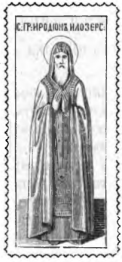
Преподобный Иродион был учеником преп. Корнилия Комельского и им был пострижен в иночество. Под руководством великого подвижника ученик созрел в духовной жизни. – По кончине наставника своего (1537 г.), когда многие из братии стали расходиться по пустыням, блаж. Иродион удалился в Белозерскую страну и сперва жил в убогой хижине на берегу озера Удро, где провел довольно времени в уединении. Потом, по внушению высшему, перешел на остров Илоозера, купил у крестьянина остров, издавна называвшийся Озадским, в 15 верстах от Белоозера, построил на нем кельи и храм в честь Рождества Богоматери. Это было началом Илоозерской Озадской пустыни. Так как окрестные жители не имели приходских храмов, то они сходились в храм обители для молитв. Здесь же крестили детей их, отпевали усопших и венчали браки. По временам шумные собрания мирян тревожили преподобного, и он затворялся в своей келье; но он терпел эти неудобства для нужд св. веры, а нарушавших благоговение лишал своего благословения, которым дорожила простые сердца. Преподобный изнурял тело свое постом, проводил ночи в молитве и каждую субботу приобщался святых Таин, – Ангел возвестил ему о близкой кончине его; приняв схиму и приобщившись св.Таин, мирно почил он 28 сентября 1541 г. и похоронен был в часовне, построенной им. Некто Софоний неблагоговейно воткнул посох в могилу преподобного и внезапно ослеп; долго пробыв слепым, усердно молился он в часовне о прощении грехов своих; явившийся Иродион возвратил ему зрение; обрадованный Софоний велел написать икону преподобного в том виде, в каком явился он ему, и поставил ее в часовне. Инок Вассиан, иконописец, плыл по озеру в лодке. Поднялась страшная буря; отчаиваясь в жизни, Вассиан призывал на помощь блаженного Иродиона; на одной доске принесен он к берегу, и здесь явившийся ему Иродион сказал: «вот ты и спасен, брат мой! иди – живи у старца Иродиона». – В 1653 г., по благословению митрополита Никона, Белозерский архимандрит свидетельствовал чудеса, по временам совершавшиеся именем Иродиона. После того на месте часовни построен был каменный храм в честь Рождества Богородицы с приделом в честь преп. Иродиона Илоозерского460.
The Venerable Herodion was a disciple of the Venerable Cornelius of Komel and was tonsured into monasticism by him. Under the guidance of the great ascetic, the disciple matured in spiritual life. – After the repose of his teacher (1537), when many of the brethren began to disperse into the wilderness, the Venerable Herodion withdrew to the Belozersk region and at first lived in a poor hut on the shore of Lake Udro, where he spent a considerable time in solitude. Then, by a higher inspiration, he moved to the island of Ilozero, bought from a peasant the island long called Ozadskoy, 15 versts from Beloozero, and built cells and a church in honour of the Nativity of the Mother of God. This was the beginning of the Ilozero Ozadskoy Hermitage. Since the surrounding inhabitants had no parish churches, they gathered in the monastery church for prayers. Here they also baptised their children, held funeral services for the departed, and solemnised marriages. At times, the noisy gatherings of the laity disturbed the Venerable one, and he would shut himself up in his cell; but he endured these inconveniences for the needs of the holy faith, and those who disturbed reverence he deprived of his blessing, which simple hearts valued. The Venerable one exhausted his body with fasting, spent nights in prayer, and every Saturday partook of the Holy Mysteries. – An angel announced to him his approaching end; having received the schema and partaken of the Holy Mysteries, he peacefully reposed on 28 September 1541 and was buried in the chapel he had built. A certain Sophonius irreverently thrust his staff into the grave of the Venerable one and suddenly became blind; having remained blind for a long time, he prayed fervently in the chapel for forgiveness of his sins; the appearing Herodion restored his sight; the overjoyed Sophonius had an icon of the Venerable one painted in the form in which he had appeared to him, and placed it in the chapel. The monk Bassian, an iconographer, was sailing on the lake in a boat. A terrible storm arose; despairing of his life, Bassian called upon the blessed Herodion for help; he was carried to the shore on a single plank, and there the appearing Herodion said to him: “Behold, you are saved, my brother! Go – live with the elder Herodion.” – In 1653, with the blessing of Metropolitan Nikon, the Archimandrite of Belozersk attested to the miracles that from time to time were performed by the name of Herodion. After that, a stone church was built on the site of the chapel in honour of the Nativity of the Mother of God, with a side-altar in honour of the Venerable Herodion of Ilozero460.
Гробницы Иудейских царей на Сионе в царском саду. 3Цар.11:43; 25, 4. 2Пар.26:23; 28, 27; 32, 33. Деян.2:29. Ныне известные царские гробницы, на расстоянии 90 шагов от Дамасских ворот, принадлежат Иродовой фамилии. Иос. Флавий de bello lud. 5, 3, 2; 5, 4. 2.
The tombs of the Jewish kings on Zion in the royal garden. 3 Kgdms. 11:43; 25, 4. 2 Chr. 26:23; 28, 27; 32, 33. Acts 2:29. The royal tombs now known, at a distance of 90 paces from the Damascus Gate, belong to the Herodian family. Jos. Flavius de bello Jud. 5, 3, 2; 5, 4. 2.
Быт.49, 51. О пещере Авраамовой довольно говорит Даниил, который замечает: «а Рахиль лежит у Вифлиома на пути», стр. 64. То же, Зосима (Путеш., стр. 66, изд. 1849 г.).
Gen. 49, 51. Daniel speaks sufficiently of the Cave of Abraham, noting: “and Rachel lies near Bethlehem on the way,” p. 64. Likewise, Zosima (Travels, p. 66, ed. 1849).
Игум. Даниил полагал Кану Евангельскую в 9 верстах от Назарета. Г. Норов думает, что Кана эль Джемиль есть Кана И. Навина, 19, 28, расположенная в 2 часах пути от Назарета, а Евангельская Кана – есть Кана-Кефр, находящаяся в расстоянии одного часа пути от Назарета (Путеш. Д. 134. 136). Но Робинсон и старые западные паломники оправдывают Даниила Allioli Altherth. 2, 447. 448.
Abbot Daniel placed the Gospel Cana 9 versts from Nazareth. Mr. Norov thinks that Cana el-Jemil is the Cana of Joshua, 19, 28, situated 2 hours’ journey from Nazareth, while the Gospel Cana is Cana-Kefr, at a distance of one hour’s journey from Nazareth (Travels of D. 134. 136). But Robinson and the old Western pilgrims justify Daniel Allioli Altherth. 2, 447. 448.
Наин на долине Езраелевой, в 2 час. от Фавора на юго-запад от него; Эндор между Наином и Фавором. О Фаворе Даниил, 126–128. Allioli. 164–168. 435. 436.
Nain on the Valley of Jezreel, 2 hours from Tabor to the south-west; Endor between Nain and Tabor. On Tabor, Daniel, 126–128. Allioli. 164–168. 435. 436.
Капернаум, по частому пребыванию в нем Сласителя, называется Его городом. Мф.9:1; 17:21. Лк.2:28. Мк.2:1. Кафар-Наум поселение Наумово, во время Иеронима город, в VII веке уже без стен, при Данииле – село (стр. 120), с XVI столетия – развалины. Исследование о нем Норова в путеш. Даниила 123–125.
Capernaum, from the frequent sojourn of the Saviour there, is called His city. Mt. 9:1; 17:21. Lk. 2:28. Mk. 2:1. Kaphar-Naum, the village of Nahum, in Jerome’s time a city, in the 7th century already without walls, in Daniel’s time a village (p. 120), from the 16th century – ruins. Norov’s investigation in the travels of Daniel 123–125.
Папа от 21 сент. 417 г. писал в Карфаген: «вот у нас послание Проилия Иерусалимского епископа, поставленного на место Иоанна, который был когда-то защитником Пелагия... на соборе, где председательствовал св. Феодот, епископ Антиохийский, Пелагий уличен обвинителями, и его выгнали из св. мест Иерусалимских». То же, Марий Меркатор Common. 6.3.
The Pope wrote to Carthage on 21 September 417: “Here we have the epistle of Proilius, Bishop of Jerusalem, placed in the see of John, who was once a defender of Pelagius... at the council, where St. Theodotus, Bishop of Antioch, presided, Pelagius was convicted by the accusers, and he was driven out of the holy places of Jerusalem.” Likewise, Marius Mercator Common. 6.3.
По Римскому мартирологу, сент. 28: «кончина св. Евстохии девы, дочери блаженной Павлы; она, воспитанная при яслях Господа с другими девами, сияла многими добродетелями и переселилась ко Господу». Усуардов умноженный мартиролог, сентября 28: «кончина девы Евстохии, дочери св. Павлы вдовицы; сколько уважал ее св. Иероним, показывают его к ней письма и к матери ее, равно и то, что называет он ее дорогим украшециеи девства и Церкви» р. 518 ed. Migne.
According to the Roman Martyrology, September 28: "The repose of St. Eustochium, virgin, daughter of blessed Paula; she, having been raised at the manger of the Lord with other virgins, shone with many virtues and departed to the Lord." Usuard's augmented Martyrology, September 28: "The repose of the virgin Eustochium, daughter of St. Paula the widow; how much St. Jerome esteemed her is shown by his letters to her and to her mother, as well as by the fact that he calls her the precious ornament of virginity and of the Church" p. 518 ed. Migne.
Ркп. житие ир. Иродиона в импер. биб. № 726. Ркп. святцы: «пр. Иродион пустынник, иже бысть на Иле озере, ученик пр. Корнилия, преставися в л. 7050 сент. 28 д.». Сведен. о монаст. 403.
Manuscript life of the monk Hrodion in the Imperial Library, No. 726. Manuscript menology: "The Venerable Hrodion the hermit, who was on Lake Ilo, a disciple of the Venerable Cornelius, reposed in the year 7050, September 28." Information on monasteries, 403.