† Преставление преподобного Григория Пельшемского
† The Repose of the Venerable Gregory of Pelshem
Сын галичских дворян Лопотовых, воспитанный в благочестии, преп. Григорий с юности возлюбил Господа465. На 15 году возраста его родители хотели сочетать его браком; но прежде чем выполнили намерение, несогласное с расположениями сына, переселились в вечность. Григорий, раздав имение бедным, поступил в Галичский Богородичный монастырь, что у озера. Здесь, приняв иночество, охотно служил он братии, смирял тело трудами и жил Богоугодно. Здесь же за чистую жизнь свою удостоился он сана священства. Подвиги искреннего благочестия, при известности рода его, скоро доставили ему уважение многих, так что детям Галичского князя был он восприемным отцом. – Тяготясь известностию и близостию родных, оставил он обитель родины своей и отправился на поклонение св. Леонтию Ростовскому. Келья Аврамиевой обители понравилась ему своею тишиною, и он остался здесь подвизаться. Иноки Ростовского Спасского монастыря, что на песках (ныне в стенах Яковлевской обители), узнав Григория, пожелали иметь его своим настоятелем; Ростовский архиепископ Дионисий присоединил к их желанию свою волю; преподобный отклонял от себя почесть и только от послушания архипастырю не отстранил ее от себя; приняв звание настоятеля, он удвоил труды свои, и назидательная жизнь его привлекла в обитель многих посетителей. Поелику же дух его постоянно стремился к безмолвной жизни, то спустя два года тайно оставил он Спасскую обитель и удалился в Вологодские леса. В келье Сосновецкой пустыни нашел он себе желаемый покой и в духовной дружбе с преп. Дионисием Глушицким стал совершать подвиги, освещаемые советами опыта. Здесь в течение нескольких лет собрал он довольно духовной опытности не для одного себя. – Приятна была ему тишина уединенной жизни; но он почувствовал нужду послужить и спасению других. Духовный друг и наставник его Дионисий одобрил мысли его466.
The son of Galich nobles, the Lopotovs, raised in piety, the Venerable Gregory from his youth loved the Lord465. In the fifteenth year of his age, his parents wished to join him in marriage; but before they could carry out their intention, which was not in accord with their son's inclinations, they departed into eternity. Gregory, having distributed his estate to the poor, entered the Galich Monastery of the Mother of God, which is by the lake. There, having received the monastic tonsure, he willingly served the brethren, humbled his body with labors, and lived in a God-pleasing manner. There also, for his pure life, he was deemed worthy of the rank of the priesthood. The exploits of sincere piety, together with the renown of his family, soon won him the respect of many, so that he became the godfather to the children of the Prince of Galich. – Burdened by fame and by the proximity of his relatives, he left the monastery of his homeland and set out to venerate St. Leontius of Rostov. The cell of the Monastery of Abraham pleased him with its quietness, and he remained there to struggle. The monks of the Rostov Monastery of the Savior, which is on the Sands (now within the walls of the Yakovlev Monastery), having come to know Gregory, desired to have him as their abbot; Dionysius, the Archbishop of Rostov, added his will to their desire; the venerable one declined the honor and only out of obedience to the archpastor did not set it aside from himself; having accepted the rank of abbot, he doubled his labors, and his edifying life attracted many visitors to the monastery. But since his spirit constantly yearned for the solitary life, after two years he secretly left the Monastery of the Savior and withdrew into the forests of Vologda. In the cell of the Sosnovets Hermitage he found the peace he desired, and in spiritual friendship with the Venerable Dionysius of Glushitsa he began to perform feats of asceticism, illumined by the counsels of experience. Here, over the course of several years, he gathered no small measure of spiritual experience, not for himself alone. – The silence of the solitary life was pleasant to him; yet he felt the need to serve also for the salvation of others. His spiritual friend and guide, Dionysius, approved his thoughts466.
С крестом на плечах отправился Григорий искать в лесной стороне место удобное для иноческого пребывания и на берегу р. Пельшемы водрузил крест в основание обители. Первым пришел в пустынную келию его священник Алексий и был пострижен им с именем Александра; затем стали приходить другие. Благоговейный и богатый поселянин Мартин пожертвовал землю и лес для новой обители. И в 1426 г. построен был первый храм.
With a cross upon his shoulders, Gregory set out to seek in the forested region a place suitable for monastic habitation, and on the bank of the Pelshma River he planted a cross as the foundation of a monastery. The first to come to his hermit cell was the priest Alexis, and he was tonsured by him with the name Alexander; then others began to come. A devout and wealthy peasant, Martin, donated land and timber for the new monastery. And in the year 1426, the first church was built.
Преп. Дионисий, с любовию посетив духовного друга своего, принес для нового храма его «иконы праздников Господних и книги пролога, поныне, говорит древнее житие, видимые в обители». По благословению святителя Ефрема, Дионисий освятил новый храм в честь собора Богоматери. Преподобный Григорий сам списывал разные священные книги для обители. Такие книги умножались преподобными для пользы других, – Это не те книги и книжонки, которых такое множество плодится ныне и из которых нечему перейти в бессмертную душу, кроме пустоты и суеты, кроме пищи растлевающей и отравляющей Богосозданную природу нашу. Преподобными предлагались книги то примерами святой жизни, то с врачевствами против того или другого греха нашего. – Под влиянием наставлений преп. Григория, обитель его цвела братскою любовию и иноческими подвигами. Потому многие христолюбцы усердно жертвовали ей плоды трудов своих. Много пришлось ему потерпеть и неприятностей за обитель свою. Раз ночью похищены были разные хозяйственные орудия обители. Братия сильно опечалились; но преподобный, утешая их, сказал, что все возвращено будет, – и действительно скоро у пойманных воров все было отобрано.
The Venerable Dionysius, having lovingly visited his spiritual friend, brought for his new church "icons of the feasts of the Lord and books of the Prologue, which, says the ancient Life, are still to be seen in the monastery." With the blessing of Hierarch Ephraim, Dionysius consecrated the new church in honor of the Synaxis of the Mother of God. The Venerable Gregory himself copied various sacred books for the monastery. Such books were multiplied by the venerable ones for the benefit of others – These are not those books and little books, of which such a multitude are produced nowadays and from which nothing can pass into the immortal soul except emptiness and vanity, except food that corrupts and poisons our God-created nature. The venerable ones offered books both by the examples of a holy life and with remedies against this or that sin of ours. – Under the influence of the instructions of the Venerable Gregory, his monastery flourished in brotherly love and monastic struggles. Therefore many Christ-lovers zealously offered to it the fruits of their labors. He had to endure many unpleasantnesses for his monastery. One night, various household implements of the monastery were stolen. The brethren were greatly grieved; but the venerable one, comforting them, said that everything would be returned – and indeed, soon everything was taken back from the captured thieves.
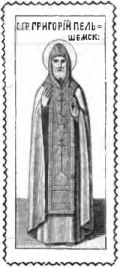
Чья душа полна была любовию к Господу, тот не мог быть равнодушен к тревогам и бедам отчизны. В 1433 г. преп. Григорий отправлялся в Москву, где тогда князь Юрий Димитриевич управлял великим княжеством, выгнав Василия Васильевича из Москвы. Преподобный убеждал Юрия возвратить Василию на следственную собственность его, к общему покою, и Юрий возвратился в Галич. В следующем году сын Юрия, князь Димитрий Шемяка, стал опустошать Вологодскую страну, принадлежащую Василию; жители оставляли свои жилища и иные умирали с голоду, другие скитались, не зная, где приклонить голову. Толпы народа собрались за пищею в обитель Григория, и он щедро подавал помощь. Воспламененный святою ревностию, отправился он к Шемяке. «Князь Димитрий!, – говорил пустынник, – ты творишь дела язычника, – ступай в сторону язычников, к незнающим Бога; христианские вдовы и сироты вопиют против тебя пред Богом: сколько людей гибнет от тебя и голодом и стужею!» Шемяка, взбешенный гордостию, приказал брооить старца с моста. Преподобный несколько часов лежал без чувств, сильно разбитый. Придя в себя, сказал он окружавшим: «каков господин, таковы и слуги, но несчастные погибнут они». Шемяка, как ни был черств, уступил обличениям преподобного и оставил Вологду467. Это мужественное ходатайство святого за несчастных, награжденное так прекрасно Шемякою, усилило в народе уважение к преподобному и его обители.
Whose soul was filled with love for the Lord could not be indifferent to the anxieties and calamities of the fatherland. In 1433, the Venerable Gregory set out for Moscow, where Prince Yury Demetrievich was then ruling the Grand Principality, having driven Basil Vasilievich out of Moscow. The venerable one urged Yury to return to Basil his hereditary property, for the common peace, and Yury returned to Galich. The following year, Yury's son, Prince Demetrius Shemyaka, began to lay waste the Vologda region, which belonged to Basil; the inhabitants abandoned their dwellings, and some died of hunger, while others wandered, not knowing where to lay their heads. Crowds of people gathered for food at Gregory's monastery, and he generously gave aid. Inflamed with holy zeal, he set out to Shemyaka. "Prince Demetrius!" said the hermit, "you do the deeds of a pagan – go to the land of the pagans, to those who know not God; Christian widows and orphans cry out against you before God: how many people perish because of you, both from hunger and from cold!" Shemyaka, enraged with pride, ordered the elder to be thrown from a bridge. The venerable one lay for several hours without consciousness, badly bruised. Coming to himself, he said to those around him: "As is the master, so are the servants, but the wretches shall perish." Shemyaka, however hardened he was, yielded to the reproofs of the venerable one and left Vologda467. This courageous intercession of the saint for the unfortunate, so splendidly rewarded by Shemyaka, increased the people's respect for the venerable one and his monastery.
Старец подвижник не изменял своих правил до гроба, соединяя смирение с подвигами любви к Богу и ближним; после молитвенной беседы с Господом, утешением для него было принимать странных и оказывать возможную помощь нуждающимся. – Приблизясь к кончине своей, он назначил ученика своего Александра в настоятеля обители; потом приобщился св. Таин и, преподав наставление братии, о себе сказал: «когда умру я, не воздавайте мне никакой почести, а, взяв за ноги, оттащите меня в болото». Сент. 30 1441 г. он предал дух свой Господу468.
The ascetic elder did not change his rules until the grave, uniting humility with the struggles of love for God and neighbor; after prayerful converse with the Lord, his consolation was to receive strangers and to give whatever help he could to the needy. – Drawing near to his end, he appointed his disciple Alexander as abbot of the monastery; then he partook of the Holy Mysteries and, having given instruction to the brethren, said of himself: "When I die, do not render me any honor, but, taking me by the feet, drag me into the swamp." On September 30, 1441, he surrendered his spirit to the Lord468.
Мощи его почивают под спудом в каменном храме, сооруженном в его имя, и обитель поныне удерживает его фамилию, называясь Лопотовою. Она стоит в 40 верстах от Вологды и в 7 от Кадникова469.
His relics rest hidden under the ground in the stone church built in his name, and the monastery to this day retains his family name, being called Lopotova. It stands 40 versts from Vologda and 7 from Kadnikov469.
«Итак, братия, мы не обязаны плоти жить по плоти. Если живете по плоти, то умрете; а если духом умерщвляете дела плотские, то живы будете» (Рим.8:12–13). «Любовь познали мы в том, что Он (Сын Божий) положил душу Свою за нас: посему и мы должны полагать души за братьев. Дети мои! станем любить не словом или языком, но делом и истиною» (1Ин.3:16, 18).
"Therefore, brethren, we are debtors, not to the flesh, to live after the flesh. For if ye live after the flesh, ye shall die: but if ye through the Spirit do mortify the deeds of the body, ye shall live" (Rom. 8:12–13). "Hereby perceive we the love of God, because He (the Son of God) laid down His life for us: and we ought to lay down our lives for the brethren. My little children, let us not love in word, neither in tongue; but in deed and in truth" (1 Jn. 3:16, 18).