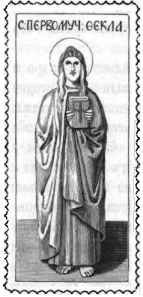
Из жизнеописания св. Феклы, составленного в V веке церковным писателем епископом Селевкийским Василием на основании прежних жизнеописаний ее,315 известно, что «когда Господь вознесся на небеса и явилось и одождило землю великое и бесчисленное множество мучеников, то является в это время и Фекла, только не после многих мучеников или многих мучениц, но второй непосредственно после апостолов и мученика Стефана, и занимает первое место между подвизавшимися за Христа и для Христа женщинами».
From the life of St. Thecla, compiled in the fifth century by the church writer Basil, Bishop of Seleucia, on the basis of earlier accounts of her life,315 it is known that "when the Lord ascended into heaven and there appeared and rained down upon the earth a great and countless multitude of martyrs, then at that time Thecla also appears, not after many martyrs or many female martyrs, but second directly after the apostles and the martyr Stephen, and she occupies the first place among women who struggled for Christ and for Christ."
Началом обращения Феклы к вере Христовой было нечаянное знакомство ее с апостолом Павлом в то время, когда он обходил различные страны для проповедания о Христе, и между прочим, пришел в Иконию, где жила богатая вдова, язычница Феоклия, с дочерью своей, девятнадцатилетней Феклой. Здесь, когда Павел находился в доме Онисифора, благочестивого последователя учения Апостолов (о котором во II послании своем к Тимофею (2Тим.1:16) апостол воспоминает: «да даст Господь милость дому Онисифора за то, что он многократно покоил меня и не стыдился уз моих…»), и когда он предлагал открыто новое учение, то случилось так, что между слушателями Павла оказалась и одна молодая девица, по имени Фекла, которая, сидя у окна в своем доме, бывшего рядом с окном в доме Онисифора, неожиданно услышала божественную проповедь Павла и пленилась ей так, что с тех пор вся преобразилась душой и неудержимо последовала по новому пути, открывшемуся ей внезапно в поучениях апостола о Христе.
The beginning of Thecla's conversion to the faith of Christ was her unexpected acquaintance with the Apostle Paul at the time when he was traveling through various countries to preach about Christ, and, among other places, came to Iconium, where a wealthy widow, the pagan Theocleia, lived with her daughter, the nineteen-year-old Thecla. Here, when Paul was in the house of Onesiphorus, a pious follower of the Apostles' teaching (of whom in his second epistle to Timothy (2 Tim. 1:16) the apostle recalls: "The Lord grant mercy to the house of Onesiphorus, for he oft refreshed me, and was not ashamed of my chain..."), and when he was openly setting forth the new teaching, it happened that among Paul's listeners there was also a certain young maiden, by name Thecla, who, sitting at a window in her own house, which was next to the window in the house of Onesiphorus, unexpectedly heard Paul's divine preaching and was so captivated by it that from that time she was completely transformed in soul and irresistibly followed the new path that had suddenly opened before her in the apostle's teachings about Christ.
Да, чем более вслушивалась Фекла во вдохновенные слова апостола и «ловила их», стоя у своего окна и не видя говорившего – «быстрее всех, присутствовавших при нем», тем более стремилась она к большему и большему уяснению понятий, озаривших душу ее… И не могла она оторваться от окна, через которое слух доносил до нее чудные речи, открывавшие перед ней совершенно новый, божественный мир, охвативший теперь всю ее душу… И куда девалась прелесть прежнего мира, земного? Как вдруг чужда ей стала хотя и блистательная, но языческая обстановка ее родного дома. Как отчудилась вдруг молодая девушка даже от жениха своего – знатного и богатейшего в городе язычника Фамира, с которым уже обручена была своей матерью.
Yes, the more Thecla listened to the apostle's inspired words and "caught them," standing at her window and not seeing the speaker—"faster than all who were present with him"—the more she strove for greater and greater clarification of the concepts that had illumined her soul... And she could not tear herself away from the window through which her hearing brought her the wondrous speeches, revealing before her a completely new, divine world, which now seized her whole soul... And where had the charm of the former, earthly world gone? How suddenly alien to her had become the brilliant but pagan surroundings of her native home. How the young girl suddenly became estranged even from her betrothed—the noble and wealthiest pagan in the city, Thamyris, to whom she had already been betrothed by her mother.
Не ведавшая Христа, разделявшая все языческие заблуждения, мать Феклы поражена была переменой, произошедшей в ее дочери. Окончательно ужаснулась она, когда узнала, что так неудержимо приковывает дочь ее к заветному окну… Самым оскорбительным образом стала она объяснять внимание дочери к словам чужеземца и поспешила сообщить избранному ею для дочери жениху все свои опасения относительно Феклы.
The mother of Thecla, who did not know Christ and shared all pagan delusions, was struck by the change that had taken place in her daughter. She was utterly horrified when she learned what it was that so irresistibly bound her daughter to the fateful window... In the most offensive manner she began to explain her daughter's attention to the words of the foreigner and hastened to communicate to the bridegroom she had chosen for her daughter all her fears concerning Thecla.
– «Слова мои, Фамир, – обратилась к нему Феоклия, – предупреждаются стыдом и слезами… я еще не изъясняюсь, однако стыжусь, не снося оскорбления от того, что хочу высказать тебе против дочери своей. Выслушай, однако меня, хотя я и против желания говорю о случившемся приключении. Фекла, невеста твоя, на которую мы так полагались и надеялись, обманула нас; она презирает меня, мать свою, презирает и тебя, жениха своего, а того, что касается дома родного, решительно не хочет знать; она любит одного чужестранца, обманщика, обольстителя и бездельника, поселившегося в соседнем доме и на погибель дома нашего, чтобы пленить Феклу и увести ее с собой… Итак, поспеши, предупреди, Фамир, исторгни из рук другого ту, которая любит его, как глаз свой, и возврати ее опять нам, и охрани, для своего и нашего рода, древнее благополучие, чтобы не сделались мы предметом постыдных рассуждений и не подали людям повода говорить о нас весьма худо. Но говори с ней нежно и ласково и смягчи упорную и жестокую страсть ее, как елеем каким, лаской, так как над своенравием и упорством нельзя одержать верх силой: они скорее смягчаются уговариванием и кроткими словами… Иди, говорю, к ней – с вежливостью и ласковостью: может быть, ты склонишь ее на свою сторону и возвратишь ее к прежней свободе, к прежнему образу жизни и к стыдливости и скромности, приличным отроковицам и девицам…»
"My words, Thamyris," Theocleia addressed him, "are forestalled by shame and tears... I have not yet explained myself, yet I am ashamed, unable to bear the insult from what I wish to tell you against my own daughter. Hear me, however, although I speak against my will about what has happened. Thecla, your bride, in whom we so trusted and hoped, has deceived us; she despises me, her mother, she despises you, her betrothed, and as for what concerns her own home, she absolutely wants to know nothing of it; she loves only a certain foreigner, a deceiver, a seducer, and a worthless fellow who has settled in the neighboring house to the ruin of our house, in order to captivate Thecla and take her away with him... Therefore, hasten, forestall him, Thamyris, tear from the hands of another her who loves him as her own eye, and return her again to us, and preserve, for your own and our family, the ancient well-being, lest we become the subject of shameful talk and give people cause to speak very ill of us. But speak with her gently and kindly and soften her stubborn and cruel passion, as with some oil, with caress, since willfulness and stubbornness cannot be overcome by force: they are rather softened by persuasion and gentle words... Go, I say, to her—with courtesy and kindness: perhaps you will win her over to your side and return her to her former freedom, to her former way of life, and to the modesty and propriety befitting maidens and virgins..."
Но напрасно встревоженный словами матери своей невесты Фамир вместе с ней старался убедить Феклу отвратить свое внимание от недостойного пришельца, не слушать слов его… Фекла не отходила от окна своего, с напряженным вниманием вслушивалась только в слова Павла и всей душой погружалась в мысли об едином Боге-Христе…
But in vain did Thamyris, alarmed by the words of his bride's mother, together with her, try to persuade Thecla to turn her attention away from the unworthy stranger, not to listen to his words... Thecla did not leave her window, with intense attention she listened only to Paul's words and with her whole soul immersed herself in thoughts of the one God-Christ...
В смущении своем Фамир был окончательно убежден против Павла, когда случайно встретился однажды с двумя сопутниками Павла – Димасом и Ермогеном, которые хотя и сопутствовали святому апостолу, но были тайными завистниками и недоброжелателями его, и теперь, воспользовавшись случаем повредить ему в глаза нового ненавистника его – могущественного человека, они так отвечали ему на его вопросы о Павле: – «выслушай от нас, о чем спрашиваешь, и притом – правду. Откуда этот чужестранец, и кто он, мы хорошенько не знаем; но что он – обманщик и что он, бродя туда и сюда, вопреки общему порядку жизни и благочинию, все извращает, об этом мы знаем и притом – наилучшим образом, потому что об этом он сам часто говаривал нам… Вся забота его состоит в том, чтобы истребить, изгладить и всеми силами уничтожить путь к распространению потомства через брак, указанный роду человеческому самой природой. Он новым и странным учением усиливается расстроить всю природу человеческую, узаконяет безбрачие, рассуждает о девстве, употребляя выражения новые и теперь впервые им высказанные. Он старается также впервые проповедывать и ввести какое-то воскресение тел, давно сраженных смертью и обратившихся в прах, – дело новое и никем еще не слыханное до сих пор, потому что истинное и точное воскресение хранится в самой природе человеческой и совершается каждодневно: оно состоит в преемстве рождающихся от нас детей, уподобляющемся семенам, которые поспевают, которые вырастают и которые обновляются во всем и некоторым образом воскресают, так то умершие некогда снова представляются нам в людях живых и существующих».
In his confusion, Thamyris was finally confirmed against Paul when he once accidentally met two companions of Paul—Demas and Hermogenes, who, although they accompanied the holy apostle, were secretly envious and ill-disposed toward him, and now, seizing the opportunity to harm him in the eyes of a new hater of his—a powerful man, they answered him thus to his questions about Paul: "Hear from us what you ask, and moreover, the truth. Where this foreigner comes from, and who he is, we do not know exactly; but that he is a deceiver and that he, wandering here and there, contrary to the general order of life and good order, perverts everything, this we know, and moreover, in the best way, because he himself often spoke to us about it... All his concern is to destroy, efface, and by all means annihilate the path to the propagation of offspring through marriage, which has been appointed to the human race by nature itself. With a new and strange teaching he strives to disrupt all human nature, he establishes celibacy, discourses on virginity, using expressions new and now first uttered by him. He also tries for the first time to preach and introduce some kind of resurrection of bodies long since struck down by death and turned to dust—a new thing and unheard of by anyone until now, because the true and exact resurrection is preserved in human nature itself and is accomplished daily: it consists in the succession of children born from us, resembling seeds which ripen, which grow, and which are renewed in everything and in a certain way rise again, so that those who once died are again presented to us in living and existing people."
Выслушав слова Димаса и Ермогена, почерпнув из них орудие мести своему мнимому врагу, затаив однакоже в настоящую минуту враждебные свои намерения относительно Павла, Фамир благосклонно пригласил в свой дом клеветников апостола, предложил им роскошное угощение, чтобы расположить их еще более послужить ему для его дальнейших целей… Между тем, едва рассвело на следующий день, он вышел из дома и, забрав с собой нескольких праздношатающихся по улицам простолюдинов, готовых на всякую дерзость, напал с ними на Павла.
Having heard the words of Demas and Hermogenes, and having drawn from them a weapon of vengeance against his supposed enemy, but concealing for the moment his hostile intentions toward Paul, Thamyris graciously invited the slanderers of the apostle into his house, offered them a luxurious feast, in order to dispose them even more to serve him for his further purposes... Meanwhile, as soon as it dawned the next day, he went out of the house and, taking with him several idlers loitering in the streets, commoners ready for any insolence, he attacked Paul with them.
– «Бить, предать суду обманщика, выдумщика новых и противных природе законов!» – кричала разъяренная и ежеминутно увеличивавшаяся толпа, устремившаяся с насилиями и оскорблениями против проповедника христианских истин, предоставленных народу в искаженном виде ненавистником Павла.
"Beat him, bring to judgment the deceiver, the inventor of new and unnatural laws!" cried the enraged and ever-increasing crowd, which rushed with violence and insults against the preacher of Christian truths, presented to the people in a distorted form by Paul's hater.
– «Судья! – заговорил он, встав на возвышении, – я приписываю благосклонности богов и почитаю знаком твоей счастливой судьбы, что этот злодей и беззаконник, до сих пор находящийся здесь на вред всему городу, открыть наконец, и подлежит осуждению по законам. Твое дело теперь и дело справедливости – помочь устроившемуся уже царству, оградить законы, позаботиться и вообще о благосостоянии рода человеческого, которому угрожает опасность погибнуть… Каким образом? Я это тебе вкратце объясню. Кто этот человек, стоящий теперь перед твоим судом, и откуда он пришел сюда, я не умею сказать, потому что он – чужестранец и никому из нас не известен.
"Judge!" he began, standing on a raised place, "I attribute to the favor of the gods and consider it a sign of your happy fortune that this evildoer and lawless man, who until now has been here to the harm of the whole city, is at last exposed and is subject to condemnation according to the laws. It is now your task and the task of justice to help the already established kingdom, to protect the laws, to care for the general welfare of the human race, which is in danger of perishing... In what way? I will explain this to you briefly. Who this man is, standing now before your judgment, and from where he came here, I cannot say, because he is a foreigner and known to none of us.
Прикидываясь добросовестным и прикрываясь благочестием, как ты и сам можешь это теперь заметить, он предлагает новое и странное учение, пагубное для рода человеческого, именно – порицает брак, который всякий справедливо может называть началом, корнем и источником природы нашей, от которого произошли отцы, матери, дети, семейства, города, поля и села, который дал начало мореплаванию, земледелию и всем многоразличным искусствам, которому обязаны бытием своим царство, государство, законы, власти, судилища, войска, начальства военные, через который явились философия, риторика и весь рой свободных наук; от которого, наконец, что всего лучше, существуют храмы, капища, жертвы, обряды, таинства, обеты и молитвы… И это-то самое, о чем говорю я, т.е. брак, она порицает, хулит и всех убеждает ненавидеть, а какое-то девство, о котором я не умею сказать, в чем состоит оно, выхваляет… Кроме того, я узнал от некоторых, что он хвалить безбрачие и представляет чудным делом то, чтобы люди не сходились и не вступали в брак, но с любовью принимали на себя бездетство и уединенную жизнь. Что же иное значит это, как не назначать уничтожение всего вдруг – и семейств, и народов, и городов, и полей, и искусств, и работ, а короче сказать – обрекать землю на то, чтобы она была пустой и необитаемой? Ибо если и в этом убедятся все люди, то род человеческий в скором времени прекратится… Я пересказал вкратце, что говорил и на что покусился этот человек. Остается, судья, чтобы ты по обязанности свое наказал его…»
Pretending to be conscientious and covering himself with piety, as you yourself can now observe, he proposes a new and strange teaching, pernicious to the human race, namely—he reviles marriage, which everyone may rightly call the beginning, root, and source of our nature, from which have come fathers, mothers, children, families, cities, fields, and villages, which gave rise to navigation, agriculture, and all the various arts, to which kingdom, state, laws, authorities, courts, armies, military commands owe their existence, through which philosophy, rhetoric, and the whole swarm of liberal sciences have appeared; from which, finally, best of all, there exist temples, shrines, sacrifices, rites, mysteries, vows, and prayers... And this very thing of which I speak, i.e., marriage, he reviles, blasphemes, and persuades all to hate, while some kind of virginity, of which I cannot say what it consists, he extols... Besides, I have learned from some that he praises celibacy and represents as a wonderful thing that people should not come together and enter into marriage, but should lovingly accept childlessness and a solitary life. What else does this mean but to decree the destruction of everything at once—families, peoples, cities, fields, arts, and labors, and, in short, to doom the earth to be empty and uninhabited? For if all people are persuaded of this, the human race will soon cease... I have briefly recounted what this man has said and attempted. It remains, judge, that you, according to your duty, punish him...
– «Прекрасно, сильно и мудро высказался ты, Фамир, против Павла, – сказали ему стоявшие невдалеке от него Димас и Ермоген, – но ты пропустил прибавить к сказанному одно и притом весьма важное обстоятельство, именно то, что он – христианин; обстоятельство это весьма противно законам и скорее может привлечь на него наказание и погубить его…» Фамир не замедлил воспользоваться этим новым орудием, чтобы усилить значение своих показаний. Тогда судья стал лично допрашивать обвиняемого христианина.
– «Beautifully, strongly, and wisely have you spoken, Thamyris, against Paul,» said to him Demas and Hermogenes, who stood near him, – «but you have omitted to add to what you have said one circumstance, and that a very important one, namely, that he is a Christian; this circumstance is very contrary to the laws and may the sooner draw down punishment upon him and destroy him…» Thamyris did not delay to avail himself of this new weapon to strengthen the weight of his testimony. Then the judge began personally to interrogate the accused Christian.
– «Наилучший из мужей, проконсул! – отвечал ему Павел, – не я – виновник или изобретатель учения, за которое обвиняют меня теперь эти лица. Истинный виновник, учитель и законоположник его есть Бог, Который, по милосердию Своему к роду человечекому и сожалея о погибельной слепоте его, послал ныне многих, и меня между ними, проповедывать об Его человеколюбии ко всем нам, чтобы мы искоренили и истребили болезнь, издавна распространившуюся между нами от неведения, обольщения и обмана, и огласили, выставили на вид и показали людям столь долгое время таившееся зло идолослужения, разумею – обряды, таинства, приношение в жертву животных и заклание для того же людей, – которые при посредстве различных басней и благовиднейших учений вошли в общее употребление и наполнили землю всяким беззаконием и всякой мерзостью. Всего этого нельзя ни высказать, ни перечислить, и все это – совершенно гнусно и отвратительно. От этих басней или вымыслов произошло неведение истинного Бога, Правителя и Создателя всего. По причине этого-то и всех прочих зол нечестия, Бог, сожалея о природе человеческой, которую Он сотворил, назначил нас, апостолов, чтобы мы, по власти единородного Сына Его, прошли и обошли всю землю и очистили ее от всех зол, о которых я сказал, и о которых умолчал, и вместо них ввели веру истинную, боговедение, благочестие, которые наиболее всего изображает и напечатлевает Отец и Сын и Дух Святой, Святая достопоклоняемая Троица, Божество несозданное и единосущное, вечное, неизменное нераздельное, неописуемое, вневременное, непостижимое, от Которого все зависит, Которого все желает, от Которого ничто не отделено. Затем повелено нам проповедывать и о пришествии Сына Божия, Бога Слова к человекам по плоти. Ибо Он, будучи от Бога и Богом и всегда существуя со Отцом, явился и во плоти, родившись по общему человеческой природе закону, но от Девы не знающей мужа жены, чтобы Самому спасти собственное создание – человека, и освободить нас от всегдашнего насилия духов злых и, кроме того, научить обузданию страстей, предложить совет относительно непорочности, девства и священного воздержания, и желающим и слушающимся слова Божия внушить идти к Богу путем добродетели и воздержания, а не желающих и не слушающихся – не принуждать, так как насилие или страх никогда не могут быть руководителями к добродетели, потому что добро есть дело произволения, а не необходимости. И брак, – продолжал апостол, – дарован и предложен Богом, Творцом всего, как врачество и пособие для всего рода человеческого, и как источник, и поток, и непрерывное продолжение всего рода нашего – для сохранения, сбережения и продолжения жизни человеческой – с той целью, чтобы посредством него одни заступали место других и снова восстановляли часто гибнующую природу – до тех пор, пока наступит время кончины мира и воскресения и преобразования образа мира сего, вместо которого последует лучшее и божественнейшее состояние, ибо смертное это должно облечься в бессмертие и тленное это – в нетление, и все мы, созданные Богом, должны возвратиться в прежнее отечество, находящееся на небе…
– «Best of men, O proconsul!» answered Paul, – «it is not I who am the author or inventor of the teaching for which these persons now accuse me. The true author, teacher, and lawgiver of it is God, Who, in His mercy toward the human race and pitying its pernicious blindness, has now sent many, and me among them, to preach of His love for mankind toward us all, that we might root out and destroy the disease that has long spread among us from ignorance, delusion, and deceit, and proclaim, set forth, and show to men the evil of idolatry so long concealed, I mean – its rites, mysteries, the offering of animals in sacrifice, and the slaying of men for the same purpose, – which, through the medium of various fables and most specious teachings, have come into general use and filled the earth with all lawlessness and all abomination. All this can neither be uttered nor enumerated, and all of it is utterly vile and abominable. From these fables or inventions has come the ignorance of the true God, the Ruler and Creator of all things. Because of this and all the other evils of impiety, God, pitying human nature, which He created, has appointed us apostles, that we, by the authority of His Only-begotten Son, might pass through and go about all the earth and cleanse it from all the evils of which I have spoken and of which I have kept silence, and in their place introduce true faith, knowledge of God, and piety, which above all things the Father and the Son and the Holy Spirit, the Holy, worshipful Trinity, the uncreated and consubstantial Godhead, eternal, immutable, indivisible, indescribable, timeless, incomprehensible, upon Whom all things depend, Whom all things desire, from Whom nothing is separated, most fully portray and imprint. Then we are commanded to preach also of the coming of the Son of God, God the Word, to men in the flesh. For He, being from God and God, and always existing with the Father, appeared also in the flesh, being born according to the common law of human nature, but of a Virgin who knew not man, that He Himself might save His own creation – man – and deliver us from the constant violence of evil spirits, and, moreover, teach the curbing of the passions, offer counsel concerning purity, virginity, and sacred continence, and to those willing and obedient to the word of God instill the resolve to go to God by the path of virtue and self-restraint, while those unwilling and disobedient He does not compel, since violence or fear can never be guides to virtue, because good is a matter of free will, not of necessity. And marriage,» continued the apostle, «has been granted and offered by God, the Creator of all things, as a medicine and aid for the whole human race, and as a source, and stream, and unbroken continuation of all our kind – for the preservation, safeguarding, and continuance of human life – to the end that through it some might take the place of others and again restore nature, which so often perishes – until the time of the end of the world and the resurrection and transformation of the image of this world shall arrive, in place of which a better and more divine state shall follow, for this mortal must put on immortality and this corruptible must put on incorruption, and we all, created by God, must return to our former homeland, which is in heaven…
Вот что проповедую я, вот чему я учу, – заключил Павел, – для этого-то и хожу по всей земле, для этого-то теперь и пришел сюда; за это-то меня и осуждает и гонит всякий, кто хочет и может, – но я за истину готов на всякие испытания и на всякие опасности…»
This is what I preach, this is what I teach,» concluded Paul, «and for this I go about all the earth, and for this I have now come here; for this I am condemned and persecuted by every one who wishes and is able – but for the truth I am ready for every trial and every danger…»
Не найдя в словах подсудимого ничего оправдывающего возмутительные показания Фамира, проконсул, посмеявшись только в душе над необычными и новыми для него понятиями, изложенными Павлом, тем не менее – чтобы успокоить общее возбуждение против Павла, велел заключить его в темницу до окончательного обсуждения и приговора по его делу.
Finding in the words of the accused nothing that justified the outrageous testimony of Thamyris, the proconsul, only laughing inwardly at the unusual and novel concepts set forth by Paul, nevertheless – in order to calm the general excitement against Paul – ordered him to be confined in prison until the final consideration and sentence in his case.
Между тем Фекла, со вниманием следившая за всем происходившим, узнав, что Павел отведен в темницу, неустрашимо вознамерилась присоединиться к нему, чтобы продолжать слушать его учение. Покинув свой дом и подкупив захваченными ей с собой драгоценными своими вещами тюремного сторожа, она беспрепятственного вошла в темницу, к изумлению и страху всех бывших там узников. Сам Павел пришел в ужас от ее смелого поступка, но не оттолкнул ее, не отверг надежды ее, возложенной на Христа, и, приблизив к себе, стал беседовать о божественных предметах, которых так жаждала привлеченная к Богу речами апостола молодая девушка. Провидев духом в ней будущую подвижницу, Павел с любовью и пламенным усердием просвещал, наставлял ее и приготовлял к борьбе за воспринятую от него божественную истину. И забыв все мир у ног своего учителя, Фекла ненасытно слушала его учение и складывала «благие вести» в сердце своем…
Meanwhile Thecla, who had attentively followed all that took place, learning that Paul had been led away to prison, fearlessly resolved to join him, that she might continue to hear his teaching. Leaving her home and bribing the prison keeper with the precious things she had taken with her, she entered the prison unhindered, to the amazement and fear of all the prisoners there. Paul himself was horrified at her bold act, but he did not repel her, did not reject her hope placed in Christ, and drawing her near, began to speak of divine things, which the young maiden, drawn to God by the apostle's words, so thirsted for. Foreseeing in spirit the future ascetic in her, Paul with love and fervent zeal enlightened, instructed her, and prepared her for the struggle for the divine truth she had received from him. And forgetting all the world at the feet of her teacher, Thecla insatiably listened to his teaching and stored up the «good tidings» in her heart…
Между тем, когда в доме Фекла узнали о бегстве ее, то мать ее и жених пришли в неописанную ярость; скоро и в городе все с негодованием приняли весть об обманутой каким-то пришельцем-чужестранцем богатой и знатной девице, покинувшей ради него свою родную мать и жениха. Когда же Фамир, открыв, наконец, убежище Феклы, увидел ее сидящей у ног Павла и с благоговением слушающей его речи, то гневу его не было границ. Немедленно настоял он, чтобы Павел был предан суду и казнен, но, поводов для осуждения на казнь Павла не найдя достаточных, проконсул ограничился изгнанием его из города, между тем как Фекла, по настоянию матери своей, была представлена на суд.
Meanwhile, when in Thecla's house they learned of her flight, her mother and her betrothed flew into indescribable rage; soon throughout the city, too, all received with indignation the news of the rich and noble maiden deceived by some stranger-foreigner, who had abandoned for his sake her own mother and betrothed. And when Thamyris, having at last discovered Thecla's refuge, saw her sitting at Paul's feet and reverently listening to his words, his wrath knew no bounds. He immediately insisted that Paul be brought to trial and executed; but finding no sufficient grounds for condemning Paul to death, the proconsul limited himself to banishing him from the city, while Thecla, at the insistence of her mother, was brought before the court.
Величественный вид Феклы, одаренной необычной красотой, произвел на всех сильное впечатление. Все жалели мать ее и преданного ею жениха. Проконсул Кестиллий, принимая близкое участие во всех этих высокопоставленных гражданах, сам пожелал убедить Феклу прийти в разум и отказаться от своего недостойного поведения. Он долго усовещивал ее самыми кроткими и нежнейшими словами. В молчании выслушивала его Фекла, не находя нужным возражать тому, кто сам-то и находился в действительном заблуждении…
The majestic appearance of Thecla, endowed with extraordinary beauty, made a strong impression on all. All pitied her mother and the betrothed she had abandoned. The proconsul Castilius, taking a close interest in all these high-ranking citizens, himself wished to persuade Thecla to come to her senses and abandon her unworthy conduct. He long admonished her with the gentlest and tenderest words. In silence Thecla listened to him, not deeming it necessary to answer one who himself was in actual error…
Кестиллий недоумевал, что ему предпринять, чтоб убедить непреклонную девушку; мать же Феклы, взволнованная ее упорством, наконец, вне себя от гнева закричала судье: – «что ты медлишь, судья? Зачем не предаешь наказанию эту беззаконницу и неприятельницу брака? Зачем откладываешь предать сожжению непокорную дочь? Пусть сожгут и погубят ту, которая отказалась вступить в брак по отечественному закону и самовольно убежала к обманщику и чужестранцу, которая через это причинила величайшее бесславие всему отечеству, роду, городу и мне, родившей дитя на такое зло, чтобы я была в позорной жалости и посмеянии у людей…»
Castilius was at a loss what to undertake to convince the inflexible maiden; but Thecla's mother, agitated by her stubbornness, at last beside herself with anger cried out to the judge: – «Why do you delay, O judge? Why do you not deliver this lawless woman and enemy of marriage to punishment? Why do you put off delivering the disobedient daughter to the fire? Let her be burned and destroyed who refused to enter into marriage according to the ancestral law and of her own will fled to a deceiver and foreigner, who through this has brought the greatest disgrace upon the whole fatherland, kindred, city, and upon me, who bore a child for such evil, that I should be an object of shameful pity and mockery among men…»
Тронутый скорбью матери, опасаясь также гнева Фамира, смущенный проконсул приказал предать Феклу огню. Но когда Фекла сама, осенив себя крестным знамением, бросилась в разожженный костер, то Бог спас ее чудным образом: внезапный проливной дождь погасил костер, а над городом разразилась такая гроза, что весь народ в страхе разбежался по своим домам. Фекла, освободившаяся от огня и озабоченная мыслью о том, как бы присоединиться ей к изгнанному из города Павлу, вышла также из города и встретилась c детьми Онисифора, бывшими при Павле, но которых он в это время послал в город для покупки необходимого пропитания. Они узнали ее и привели прямо к Павлу. Она застала его повергшимся на земле и прилежно просившим и молившим Бога о том, что уже было совершено… о подкреплении и спасении той, которую просветил он познанием Бога.
Moved by the mother's grief, fearing also the wrath of Thamyris, the troubled proconsul ordered Thecla to be given to the fire. But when Thecla herself, signing herself with the sign of the cross, cast herself into the kindled pyre, God saved her in a wondrous manner: a sudden torrential rain extinguished the pyre, and such a storm broke over the city that all the people in fear scattered to their homes. Thecla, delivered from the fire and preoccupied with the thought of how she might join Paul, who had been banished from the city, also went out of the city and met the children of Onesiphorus, who had been with Paul, but whom he had at that time sent into the city to purchase necessary provisions. They recognized her and brought her straight to Paul. She found him prostrate on the ground, earnestly asking and praying to God for that which had already been accomplished… for the strengthening and salvation of her whom he had enlightened with the knowledge of God.
Велика была радость Павла о спасении Феклы, и в отрадной молитве излилась перед Богом благодарность, преисполнившая сердца их! – Фекла пожелала сопутствовать Павлу в его дальнейших странствованиях, чтобы более и более просвещаться верой и укреплять свою душу под его влиянием. Не без опасения согласился апостол взять ее с собой, но предвидя трудные случаи в исключительном положении молодой, отличающейся поразительной красотой девицы, он предвидел и необходимость поддержать ее и защитить в начале вступления ее на истинно-трудный путь, и потому позволил Фекле сопутствовать ему в настоящее время, и покинув Иконию, отправились они вместе по городам и весям, в которых предстояло благовествовать апостолу.
Great was Paul's joy at Thecla's deliverance, and in grateful prayer there poured forth before God the thanksgiving that filled their hearts! – Thecla desired to accompany Paul in his further wanderings, that she might be more and more enlightened by faith and strengthen her soul under his influence. Not without apprehension did the apostle consent to take her with him, but foreseeing difficult circumstances in the exceptional position of the young maiden, distinguished by striking beauty, he also foresaw the necessity of supporting and defending her at the beginning of her entry upon the truly difficult path, and therefore permitted Thecla to accompany him at that time, and leaving Iconium, they set out together through the cities and villages where the apostle was to proclaim the good tidings.
В скором времени, а именно по прибытии их в Антиохию (в Сирии), опасения Павла относительно Феклы оправдались. Она подверглась бедствию обратить на себя внимание начальника Антиохии Александра, знатного и влиятельного человека. Очарованный красотой Феклы, он посредством всяких насилий старался приобрести ее расположение и власть над ней.
Soon, namely upon their arrival in Antioch (in Syria), Paul's fears concerning Thecla were justified. She suffered the misfortune of drawing upon herself the attention of Alexander, the ruler of Antioch, a noble and influential man. Charmed by Thecla's beauty, he strove by every kind of violence to gain her favor and power over her.
Возбужденная до крайности сопротивлением бесчестным намерениям язычника, Фекла в порыве негодования разорвала одежду Александра и сбросила с головы его сделанный из золота венок, и таким образом явилась победительницей его в глазах бывшего при этом народа.316
Driven to the utmost by resistance to the dishonorable intentions of the pagan, Thecla in a burst of indignation tore Alexander's garment and cast from his head the crown made of gold, and thus appeared his conqueror in the sight of the people present.316
Таким оскорблением, нанесенным самолюбивому, привыкшему властвовать человеку, возбудила Фекла в сердце его яростную злобу и в нем закипело желание отомстить ей. Немедленно привлек он ее к суду, не зная того, что не скорбь, а радость осенила душу христианки, готовой даже на всякого рода исполнения чистых заветов той веры, которой она просветилась и была одушевлена.
By this insult, inflicted upon a proud man accustomed to wielding power, Thecla aroused in his heart a furious malice, and within him there boiled a desire to avenge himself upon her. Immediately he brought her to trial, not knowing that it was not sorrow, but joy that overshadowed the soul of the Christian woman, who was ready even for every kind of fulfillment of the pure precepts of that faith by which she was enlightened and by which she was inspired.
Промысл Божий, всегда бодрствующий над вверившимися ему и доставляющий им пути и способы к выходу из самых трудных обстоятельств, не замедлил явить и Фекле свою спасительную помощь. Устроилось случайно, по-видимому, так, что решено было до окончательного суда поручить ее надзору одной знатной женщины царского рода, по имени Трифены, которая согласилась взять ее на свое попечение – потому, что почувствовала сожаление к молодой девушке, с которой, по ее мнению, поступали несправедливо, и которую, поэтому, она всей душой пожелала защищать. Тем более горячо приняла участие в Фекле эта женщина, что и сама была в это время глубоко огорчена смертью своей единственной дочери – Фалькониллы, бывшей одного возраста с Феклой.
The Providence of God, ever watching over those who entrust themselves to Him and providing them with paths and means of escape from the most difficult circumstances, did not delay in showing His saving help to Thecla as well. It was arranged, as if by chance, that before the final trial she was to be entrusted to the supervision of a certain noblewoman of royal lineage, named Tryphaena, who agreed to take her into her care—because she felt pity for the young girl, who, in her opinion, was being treated unjustly, and whom, therefore, she desired with all her soul to defend. This woman took an even more fervent interest in Thecla because she herself was at that time deeply grieved by the death of her only daughter, Falconilla, who had been of the same age as Thecla.
Скоро, впрочем, не одно сожаление, но и другие впечатления возбудили в сердце Трифены сильнейшую привязанность к девице, принятой ею на свое попечение… Во-первых, поражена была она совершившимся в ее глазах истинным чудом в то время, когда Фекла, вызванная на суд, куда сопровождала ее Трифена, и осужденная на растерзание дикими зверями, осталась невредимой среди них, и даже свирепая львица, как бы утратив внезапно свойства природы своей, спокойно улеглась у ног Феклы, не угрожая ни малейшим вредом.
Soon, however, it was not only pity but also other impressions that aroused in Tryphaena's heart a most powerful attachment to the maiden she had taken into her care… First, she was struck by a true miracle that took place before her eyes, when Thecla, summoned to trial—whither Tryphaena accompanied her—and condemned to be torn apart by wild beasts, remained unharmed among them, and even a fierce lioness, as if suddenly losing the properties of her nature, calmly lay down at Thecla's feet, threatening not the slightest harm.
Во-вторых, поражена была язычница Трифена видением в ночь после чудного спасения Фекла, когда, приведя ее домой, она уже рассталась с ней для отдыха ночного. Во сне явилась ей ее дочь Фальконилла и сказала ей: – «умоляю тебя, мать моя, не плачь и не терзай свою душу скорбью по мне, потому что скорбью твоей и мне не поможешь, и себя ты погубишь… Проси лучше живущую с тобой Феклу, ставшую для тебя дочерью вместо меня, чтобы помолилась она за меня Богу, чтобы по человеколюбию Его успокоилась бы я и возрадовалась бы душа моя среди праведных Его, потому что исполнит Бог моление той, которая и здесь приводит всех в удивление мужественным подвижничеством своим за Христа…»
Secondly, the pagan Tryphaena was struck by a vision on the night after Thecla's miraculous deliverance, when, having brought her home, she had already parted from her for the night's rest. In her sleep, her daughter Falconilla appeared to her and said: "I implore you, my mother, do not weep and do not torment your soul with grief for me, for with your grief you will not help me, and you will destroy yourself… Rather, ask Thecla, who lives with you and has become a daughter to you in my place, to pray to God for me, that by His love for mankind I may be at peace and my soul may rejoice among His righteous, for God will fulfill the prayer of her who even here astonishes all by her courageous struggle for Christ…"
Пробужденная сильным восторгом от посещения дочери и слов ее, Трифена, встав поспешно с постели, разбудила Феклу и, передав ей свое знаменательное сновидение, умоляла ее помолиться о Фальконилле.
Awakened by a strong rapture from the visit of her daughter and her words, Tryphaena, rising hastily from her bed, roused Thecla and, relating to her her significant dream, implored her to pray for Falconilla.
Пламенной молитвой к Богу отозвалась тогда на эту мольбу язычницы растроганная до глубины души христианка, и Господь услышал и исполнил молитву ее, как бы желая проявить чрезвычайным и исключительным образом Свое милосердие и всемогущество, к которым со святым дерзновением воззвала совершавшая в то время свой подвиг за веру первомученица Фекла… И, прежде всего, Бог успокоил сердце Трифены, превратив ее нестерпимую материнскую скорбь в радостное упование о спасении дочери…317 Предрасположенное таким образом сердце ее вскоре окончательно могло воспринять божественную истину.
With a fervent prayer to God did the Christian woman, moved to the depths of her soul, respond to this entreaty of the pagan, and the Lord heard and fulfilled her prayer, as if desiring to manifest His mercy and omnipotence in an extraordinary and exceptional manner, to which the first martyr Thecla, then accomplishing her struggle for the faith, had cried out with holy boldness… And, first of all, God calmed Tryphaena's heart, transforming her unbearable maternal grief into a joyful hope for her daughter's salvation…317 Her heart, thus predisposed, was soon able to fully receive the divine truth.
Во время новых испытаний и истязаний, которым вскоре была подвергнута Фекла, Трифена, пораженная чудесами, которыми Богу угодно было снова прославить первую подвижницу за имя Его, познала в них божественную силу и в глубине души присоединилась к тем многим из народа, которые, быв поражены присоединилась к тем многим из народа, которые, быв поражены благоговением вместе с Трифеной, восклицали: велик Тот Бог, Которого исповедует Фекла!
During the new trials and torments to which Thecla was soon subjected, Tryphaena, struck by the miracles with which God was pleased once again to glorify the first female ascetic for His name, recognized in them divine power, and in the depths of her soul joined those many among the people who, struck with reverence together with Tryphaena, cried out: Great is that God Whom Thecla confesses!
И как было не поражаться удивлением, когда выпущенные из клеток рассвирепевшие львы и медведи, вместо того чтобы наброситься на преданную им жертву, тихо подошли к Фекле и спокойно улеглись у ног ее, а когда один наиболее разъяренным медведь устремился на нее, то на него бросилась львица, и как бы защищая Феклу, стала биться с ним, пока оба страшные зверя не погибли в яростной схватке. Фекла же, молясь, пребыла невредимой… Подобным же чудесным образом спаслась она и от хищных морских животных, бывших в водоеме, куда она бросилась нагая, призывая имя Господе… В эту минуту блеснул яркий свет, как бы от молнии, и ошеломленные чудища стали неподвижными… – Спаслась Фекла и от разъяренных раскаленным железом быков, к которым привязали ее мучители: огонь попалил узлы веревок, и Фекла оказалась освобожденной… Страх напал на всех зрителей, и Трифена от сильного волнения упала замертво на ступени цирка. Поражен был страхом и удивлением и начальник города Александр, но не уразумевший в этих чудных знамениях ничего, кроме волшебства, он стал просить правителя области выслать из города эту странную волшебницу, «чтобы она отправилась показывать и другим опыты столь странной и новой природы своей»; – весь город в страхе, – говорил Александр, – Трифена, царская родственница, заболела от испуга; если она пострадает, то это будет на нашей ответственности.
And how could one not be struck with wonder, when the enraged lions and bears released from their cages, instead of rushing upon the victim delivered to them, quietly approached Thecla and calmly lay down at her feet; and when one most furious bear rushed at her, a lioness threw herself upon it, and as if defending Thecla, began to fight with it, until both terrible beasts perished in a furious struggle. Thecla, however, praying, remained unharmed… In a similar miraculous manner she was saved also from the rapacious sea creatures that were in the pool, into which she threw herself naked, calling upon the name of the Lord… At that moment a bright light flashed, as if from lightning, and the stunned monsters became motionless… Thecla was also saved from the bulls enraged by red-hot iron, to which the tormentors had bound her: the fire burned the knots of the ropes, and Thecla was found freed… Fear fell upon all the spectators, and Tryphaena, from strong agitation, fell dead onto the steps of the circus. The city prefect Alexander was also struck with fear and astonishment, but understanding nothing in these wondrous signs except sorcery, he began to ask the governor of the region to banish this strange sorceress from the city, 'that she might go and show to others the proofs of so strange and new a nature of hers'; 'the whole city is in fear,' said Alexander, 'Tryphaena, a royal relative, has fallen ill from fright; if she suffers harm, it will be upon our responsibility.'
Убежденный доводами Александра и в то же время довольный, что может уклониться от беззаконного, по его мнению, над чужеземкой суда, правитель был готов ее освободить, но прежде того он призвал Феклу к себе и стал спрашивать, кто она и какой силой и искусством победила зверей?
Convinced by Alexander's arguments and at the same time content that he could avoid an unlawful, in his opinion, trial of a foreigner, the governor was ready to release her, but before that he summoned Thecla to himself and began to ask who she was, and by what power and skill she had overcome the beasts.
– «Я, как ты видишь, молодая возрастом чужестранка, гонимая людьми, – отвечала Фекла правителю, – я – раба Бога живого, а сила моя в том, что я уверовала в Того, в Ком все благоволение Его, в Сына Его Иисуса Христа. На Него-то возложив упование мое, я победила многих и притом страшных зверей Александра, а прежде того – тиранство и злочестие его самого. Такие же, одинаковые с моими и даже большие дарования получит всякий, кто истинно возложит на Него свое упование и уверует в Него, потому что Он один есть предел спасения и основа жизни бессмертной, прибежище для обуреваемых, упокоение для угнетаемых, помощь для отчаявшихся… и кто не уверует в Него, тот не будет жить, но подлежит вечной смерти».
"I, as you see, am a young foreigner in age, persecuted by men," answered Thecla to the governor, "I am a handmaid of the living God, and my power is that I have believed in Him in Whom is all His good pleasure, in His Son Jesus Christ. Placing my hope in Him, I have overcome many and terrible beasts of Alexander, and before that, his tyranny and impiety. Such gifts, equal to mine and even greater, shall every one receive who truly places his hope in Him and believes in Him, for He alone is the limit of salvation and the foundation of immortal life, a refuge for the storm-tossed, a rest for the oppressed, a help for the despairing… and whoever does not believe in Him shall not live, but is subject to eternal death."
Выслушав эти слова, правитель, удивленный твердостью и мужеством, и достоинством речи молодой Феклы, почувствовал к ней великое уважение и, решив немедленно отпустить ее, поспешил также оправдать ее перед народом:
Having heard these words, the governor, astonished at the firmness, courage, and dignity of the speech of the young Thecla, felt great respect for her, and having decided to release her immediately, he hastened also to justify her before the people:
– Антиохяне! – сказал он, – преступление, которое этот Александр заявил и выставил в обвинение против этой девицы, по всей вероятности – ложно. И несправедливо было бы ставить судьей ее жизни – гнев его, а не славную чудесность всего свершившегося теперь над ней, чего вы сами были свидетелями. Все это, виденное всеми нами, можно принять только за истинно божественное знамение… Ее предложили множеству свирепых зверей, вид которых наводил ужас даже на тех, кто с высоты смотрел на это зрелище, а она, между тем, сохранилась цела и невредима… Для кого же из несовершенно глупых не очевидно, что есть какой-то Бог, Который действительно покровительствует непорочной девице? – Вы видели, как она, поставленная среди зверей, простерла руки к небу и оттуда привлекла себе помощь против беспощадных хищных зверей; вы видели, как иные из них и не подошли даже к ней; другие, подойдя, мирно ласкались; когда же иные устремились на нее, то были умерщвлены другими, находившимися вблизи, – и от этого небывалого и вопреки законов природы совершившегося чуда весь город пришел в трепет и огласился криками и стонами…
"Antiochenes!" he said, "the crime which this Alexander has declared and set forth as an accusation against this maiden is, in all probability, false. And it would be unjust to make his wrath the judge of her life, rather than the glorious miraculousness of all that has now taken place concerning her, of which you yourselves have been witnesses. All this, seen by all of us, can only be accepted as a truly divine sign… She was offered to a multitude of savage beasts, the sight of which inspired terror even in those who looked upon this spectacle from on high, yet she remained whole and unharmed… For whom among those not utterly foolish is it not obvious that there is some God Who truly protects the immaculate maiden? You saw how, placed among the beasts, she stretched forth her hands to heaven and from there drew help against the merciless rapacious beasts; you saw how some of them did not even approach her; others, approaching, peacefully caressed her; and when yet others rushed at her, they were slain by others nearby—and from this unprecedented miracle, contrary to the laws of nature, the whole city was seized with trembling and resounded with cries and groans…
Как же нам не отпустить теперь эту чужестранку с приличными похвалами ей, как честной и целомудренной, как служительнице Божьей, сделавшейся для этого города виновницей божественных и небывалых чудес и научившей наших дев и женщин ничему не предпочитать целомудрие, хотя бы и предстояло иметь дело с огнем, мечем и зверями! Не опасайся же больше, девица, никакого испытания… если бы мы и хотели подвергнуть тебя какому-нибудь бедствию, то ты отразишь его, будучи защищенной весьма крепкими и ничему не поддающимися оружиями… Иди теперь, куда желаешь; только сделай Бога своего, кто бы Он ни был, благосклонным и милостивым к нам…
How then should we not now release this foreigner with fitting praises to her, as an honorable and chaste woman, as a servant of God, who has become for this city the cause of divine and unprecedented miracles, and has taught our maidens and women to prefer nothing to chastity, even should they have to deal with fire, sword, and beasts! Fear no further trial, O maiden… even if we wished to subject you to some calamity, you would repel it, being defended by very strong and invincible weapons… Go now whither you wish; only make your God, whoever He may be, favorable and merciful to us…"
Между тем, Трифена, которую без чувств перенесли домой из цирка, придя, наконец, в себя, с тревожным нетерпением ожидал вестей о той, которую полюбила, как свою родную дочь. И потому вся радостно встрепенулась и ожила она, когда снова увидела Феклу – невредимой и свободной, и с тех пор не стало предела желанию этой язычницы узнавать все более и более о том Боге, Которого исповедовала Фекла, так что беседой о Нем и любовью к Нему наполнился теперь весь дом ее и «стал походить более на церковь, чем на жилище…» и вскоре Трифена и вся многочисленная прислуга ее были просвещены и приведены ко Христу проповедью молодой чужеземки.
Meanwhile, Tryphaena, who had been carried home unconscious from the circus, finally coming to herself, awaited with anxious impatience news of her whom she had come to love as her own daughter. And therefore she started up and revived with joy when she again saw Thecla—unharmed and free—and from that time there was no limit to this pagan woman's desire to learn more and more about the God Whom Thecla confessed, so that by conversation about Him and love for Him her whole house was now filled, and "it began to resemble more a church than a dwelling…" and soon Tryphaena and all her numerous servants were enlightened and brought to Christ by the preaching of the young foreign woman.
Не смотря на то, однако же, что радовалось сердце проповедницы, она тосковала о возлюбленном учителе своем Павле и заботливо осведомлялась о нем и разыскивала его. Узнав, что он находится в городе Мирах в Ликии, она поспешила присоединиться к нему. С любовью принял апостол просвещенную им и, выслушав рассказ ее о всем, что произошло с ней во время их разлуки, убедился, что она созрела для высшего духовного подвига, и потому отпустил ее от себя, сказав ей: – «иди, учи слову, проходи путь благовестнический и будь участницей в моем труде за Христа. Для того и избрал тебя Христос через меня, чтобы возвысить тебя до апостольства и поручить тебе какую-либо местность, еще не просвещенную учением Христовым, потому что и ты должна разнообразно умножить таланты свои».
Yet notwithstanding the joy that filled the heart of the preacher, she yearned for her beloved teacher Paul, and diligently inquired after him and sought him out. Learning that he was in the city of Myra in Lycia, she hastened to rejoin him. The Apostle received with love her whom he had enlightened, and having heard her account of all that had befallen her during their separation, he became convinced that she was matured for a higher spiritual struggle; and therefore he dismissed her from him, saying to her: "Go, teach the word, traverse the path of evangelism, and be a partaker in my labor for Christ. For this end did Christ choose you through me, that He might raise you to apostleship and entrust to you some region not yet enlightened by the teaching of Christ, for you too must multiply your talents in manifold ways."
– «Поручи же меня Христу!» – простилась Фекла с апостолом и, предоставив ему большое количество золота, данной ей Трифеной для употребления в пользу бедных, предприняла путь сначала в свой отечественный город – Иконию. Фамира, бывшего жениха своего, она уже не застала в живых. Начав свою проповедь в родном городе, Фекла старалась обратить и мать свою ко Христу, но когда увидела полнейшую безуспешность своих стараний просветить эту закоренелую язычницу, то удалилась из города и отошла в Селевкию. Здесь, поселившись на вершине одной горы, предалась она всецело благовестию слова Христова и с успехом распространяла его, тем более, что проповедь ее сопровождалась многочисленными чудесами, в особенности же исцелениями всевозможных болезней. Злоба человеческая и здесь воздвигла гонение на великую подвижницу, но Богу угодно было сохранить ее жизнь до преклонной старости: взятая на мучение на 18-году, семьдесят два года после того прожила Фекла в странствовании и подвижничестве и скончалась на 90-м году своей жизни, мирно почив в своей пещере. Храм, воздвигнутый впоследствии на месте ее упокоения, в продолжении многих веков привлекал к себе поклонников, прибегавших к помощи святой первомученицы, равноапостольной Феклы, неисчерпаемо проявлявшейся в бесчисленных чудотворениях, непрекращающихся и доныне для всех, почитающих славную память ее.318
"Commend me then to Christ!" — thus Thecla took leave of the Apostle, and, presenting him with a large quantity of gold given her by Tryphaena for distribution to the poor, she set out first for her native city, Iconium. Thamyris, her former betrothed, she no longer found among the living. Beginning her preaching in her native city, Thecla strove also to convert her mother to Christ; but when she saw the utter fruitlessness of her efforts to enlighten this inveterate pagan, she departed from the city and withdrew to Seleucia. Here, settling on the summit of a mountain, she gave herself wholly to the evangelization of the word of Christ, and spread it with success, all the more because her preaching was accompanied by numerous miracles, especially the healing of every kind of disease. Human malice even here raised up persecution against the great ascetic, but God was pleased to preserve her life to extreme old age: taken to martyrdom in her eighteenth year, Thecla lived seventy-two years thereafter in wandering and ascetic labors, and reposed in the ninetieth year of her life, peacefully falling asleep in her cave. The church afterwards erected on the place of her repose, for many centuries drew to itself worshippers who had recourse to the aid of the holy First-Martyr, Equal-to-the-Apostles Thecla, which aid was manifested inexhaustibly in countless miracles, continuing even to this day for all who honor her glorious memory.318
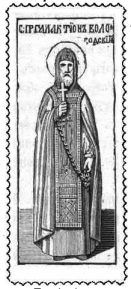
«Свят Симон монах», так говорит надпись над древним изображением сына Стефана Немани. Изображение представляет первовенчанного короля Сербского с огромной бородой в монашеской одежде, с черным платом, подвязанным под подбородком, и в черном клобуке с развалом наверху.319
"Holy monk Simon," — so says the inscription over the ancient image of the son of Stephen Nemanja. The image represents the First-Crowned King of Serbia with an enormous beard, in monastic raiment, with a black cloth tied beneath his chin, and in a black klobuk with a cleft at the top.319
Когда престарелый жупан Неманя решился посвятить последние годы свои молитве и посту в иноческой обители, то перед собранием священных лиц и вельмож Сербии передал правление Сербией старшему сыну Стефану. «Оставих на престоле моем любавного ми сына Стефана, велнего жупана и севастократора», так говорил сам отец.320 Стефан сын стал великим жупаном в марте 1195 г. В первое время правления покойно занимался он делами благочестия.321 Но потом, не смотря на то, что по воле отца Стефан был великим жупаном всей Сербии, младший брат его Вулкан захотел предоставить удельном княжеству своему Зете полную независимость от брата. Венгерский король, по его просьбе, послал войска, и Вулкан стал независимым князем Зеты.322 Потом Вулкан стал домогаться того, чтобы согнать брата с Сербского престола. Он вошел в сношения с папой, располагавшим тогда силами Запада, и подчинился распоряжениям его.323 Венгерский король, со своей стороны, дал обещание папе, по его убеждению, ввесть папизм в Сербию. Война кровопролитная опустошала Сербию. Стефан мужественно, но с трудом, отбивался от неприятелей. Они уже провозгласили Вулкана королем Сербии.324 Стефан не пренебрегал и тогдашним сильным средством против врагов. Он просил через послов своих мощного папу защитить его права от насилий Венгрии. – Венгерский король, опасаясь, что его могу унизить пере Стефаном для целей романизма, поспешил просить папу не доверять покорности Стефана. Так замыслы страстей вошли во борьбу между собой и открыли для чистой совести путь дойти до цели своей.325 Благочестивый Стефан хорошо понимал папизм. Он ограждал себя другими, более надежными мерами, чем власть князя земного. Он с сокрушением сердечным молил небо и его друзей о помощи, – просил брата, преподобного Савву, для спасения Сербии перенести мощи преподобного отца их в Сербию. «Брат мой, писал он, пренебрег завещанием отца и господина своего, – привел иноплеменников на отечество свое, забрал и опустошил его, не послушав заповеди Божией: чти отца твоего и матерь. Но – мы надеялись не на оружие наше, а на силу Господа, Спасителя Иисуса Христа. И не обманулись в своей надежде. Низложив их силой Своей, Господь возвратил в свое отечество. – Прошу тебя, преподобный отец Савва, – принеси благоуханные мощи святого. По отшествии вашем, земля наша стала осквернена беззакониями нашими, улита кровью, пленена иноплеменными, враги одолели нас и – по взаимной ненависти мы стали смехом для соседей наших. Может быть вашими святыми молитвами, вашим пришествием к нам, всемилостивый Бог умилосердится над нами и соберет воедино рассеянных и посрамит противников.326 Вулкан по сербской почтительности к отцу явился на встречу мощей святого отца; потом быв свидетелем чудес святого отца, по убеждению преподобного Саввы, дал клятву не тревожить более брата в законных правах его.327 Стефан со своей стороны помог брату выгнать из Хлума западника Петрислава, оставив за последним только Невесин и Дебре.328 Бра Вулкан скоро умер; удел его Зета предоставлен был Стефаном двоюродному брату Андрею Мирославичу.329
When the aged župan Nemanja resolved to devote his last years to prayer and fasting in a monastic habitation, then before the assembly of the clergy and nobles of Serbia he transferred the rule of Serbia to his elder son Stephen. "I left upon my throne my beloved son Stephen, the Grand Župan and Sebastocrator," — so spoke the father himself.320 Stephen the son became Grand Župan in March of the year 1195. In the first period of his rule he peacefully occupied himself with works of piety.321 But afterwards, notwithstanding that by the will of his father Stephen was Grand Župan of all Serbia, his younger brother Vukan desired to secure for his appanage principality of Zeta full independence from his brother. The Hungarian king, at his request, sent troops, and Vukan became an independent prince of Zeta.322 Then Vukan began to strive to drive his brother from the Serbian throne. He entered into relations with the Pope, who at that time disposed of the forces of the West, and submitted himself to his directives.323 The Hungarian king, for his part, promised the Pope, at his persuasion, to introduce papism into Serbia. A bloody war laid waste Serbia. Stephen defended himself courageously, but with difficulty, against his enemies. They had already proclaimed Vukan king of Serbia.324 Stephen did not neglect even the then-powerful means against his foes. He requested through his envoys the mighty Pope to defend his rights from the violence of Hungary. — The Hungarian king, fearing that he might be humiliated before Stephen for the sake of Romanist aims, hastened to ask the Pope not to trust Stephen's submission. Thus the designs of the passions came into conflict with one another and opened for a pure conscience the path to attaining its goal.325 The pious Stephen understood papism well. He guarded himself by other, more reliable measures than the authority of an earthly prince. With contrition of heart he besought heaven and his friends for help — he asked his brother, the Venerable Sava, for the salvation of Serbia to translate the relics of their Venerable father to Serbia. "My brother," he wrote, "has despised the testament of his father and lord — he has brought foreigners upon his fatherland, seized and laid it waste, not heeding the commandment of God: Honor thy father and thy mother. But we hoped not in our arms, but in the power of the Lord, the Savior Jesus Christ. And we were not deceived in our hope. Having cast them down by His power, the Lord restored us to our fatherland. — I entreat you, Venerable Father Sava — bring the fragrant relics of the saint. After your departure, our land has been defiled by our iniquities, drenched with blood, taken captive by foreigners, enemies have prevailed over us, and — through mutual hatred we have become a laughingstock to our neighbors. Mayhap by your holy prayers, by your coming to us, the all-merciful God will have compassion upon us and gather together the scattered and put the adversaries to shame."326 Vukan, out of Serbian reverence for his father, came to meet the relics of the holy father; then, having been a witness of the miracles of the holy father, at the persuasion of the Venerable Sava he gave an oath not to trouble his brother further in his lawful rights.327 Stephen, for his part, helped his brother drive the Latin Petrislav from Chlum, leaving to the latter only Nevesinje and Debre.328 Brother Vukan soon died; his appanage of Zeta was given by Stephen to his cousin Andrew Miroslavić.329
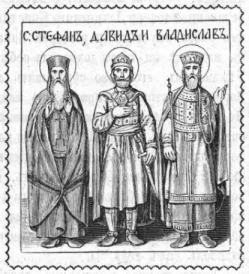
Сын Вулкана, благочестивый князь Димитрий охотно довольствовался уделом, какой назначил дядя; он построил обитель на реке Лим в Бродареве и, приняв иночество, с именем Давида по смерти чтился Сербской Церковью между святыми.330 Так Стефан спокойно располагал уделами Сербии, как верховный правитель всей Сербии.331
The son of Vukan, the pious prince Demetrius, readily contented himself with the appanage which his uncle assigned; he built a monastery on the river Lim at Brodarevo and, having received the monastic tonsure with the name David, after his death was venerated by the Serbian Church among the saints.330 Thus Stephen quietly disposed of the appanages of Serbia, as the supreme ruler of all Serbia.331
По усмирении домашних врагов Стефану пришлось бороться со сторонними неприятелями. Против него восстали Болгарский царь Борис и тесть его Латинский император Царьграда. Они заняли Ниш и хотели отнять города, которые когда-то были болгарским и потом греческими, а теперь принадлежали Сербии. Тяжело было Стефану: неприятели были сильны. Но за Стефана отец его. «Неприятели были приведены в ужас явлением святого, бросились бежать и рубили друг друга, – наконец, ушли восвояси, униженные и посрамленные».332
After the pacification of domestic enemies, Stephen had to contend with foreign adversaries. Against him rose the Bulgarian Tsar Boris and his father-in-law, the Latin Emperor of Constantinople. They occupied Niš and wished to take away the cities which had once been Bulgarian and afterwards Greek, but now belonged to Serbia. It was hard for Stephen: the enemies were strong. But Stephen had his father with him. "The enemies were struck with terror by the appearance of the saint, took to flight and cut one another down — at last they departed to their own places, humiliated and put to shame."332
Блаженный великий князь был весьма добродушен и сострадателен. Болгарский князь искал смерти князя Стрезы, родственника покойного князя Болгарского Ясеня. Стреза с дружиной, верной ему, искал себе защиты в Сербии. Добрый Стефан укрыл у себя беглеца. Князь Борис с угрозами требовал выдачи Стрезы. Стефан побратался со Стрезой и дал ему для житья крепкий замок Просек, потом передал в его управление несколько других мест, принадлежавших империи. – Стреза оказался великим негодяем. Женившись на незаконной дочери латинского Константинопольского императора, он скоро научился у рыцарей Запада беспутной их жизни и в надежде на тестя дозволял себе безобразия всякого рода.333 Утешением его было сбрасывать людей с утеса в бурный Вардар, который справедливо назывался хищной рекой.334 Не было проезда никому мимо замка Стрезы, – каждому грозила опасность от прихотей жестокого владельца. – Стефан не раз посылал к Стрезе с напоминанием о долге правды и человеколюбия; Стрезе все было нипочем. Наконце, Стреза поднялся войной против благодетеля своего и грозил согнать Стефана с престола. Не внявший убеждениям святого Саввы нечестивец поражен был гневом Божиим: ночью в ужасе от приведения заколол сам себя.335
The blessed Grand Prince was most kind-hearted and compassionate. The Bulgarian prince sought the death of Prince Strez, a kinsman of the late Bulgarian prince Asen. Strez, with a retinue faithful to him, sought refuge for himself in Serbia. The good Stephen sheltered the fugitive. Prince Boris with threats demanded the surrender of Strez. Stephen swore brotherhood with Strez and gave him for his habitation the strong fortress of Prosek, and afterwards placed under his governance several other places that belonged to the empire. — Strez proved to be a great scoundrel. Having married the illegitimate daughter of the Latin Emperor of Constantinople, he soon learned from the knights of the West their dissolute way of life, and in hope of his father-in-law permitted himself every kind of outrage.333 His amusement was to cast people from the cliff into the stormy Vardar, which was rightly called the rapacious river.334 No one could pass by the fortress of Strez — everyone was threatened with danger from the whims of the cruel master. — Stephen more than once sent to Strez with reminders of the duty of justice and humanity; to Strez it was all as nothing. At length Strez rose up in war against his benefactor and threatened to drive Stephen from the throne. The impious man, who heeded not the admonitions of the holy Sava, was struck by the wrath of God: at night, in terror from a vision, he stabbed himself.335
Точно также неожиданно погиб Грек Михаил, захвативший у Сербии Драч. Опаснее был венгерский король, поднявшийся против Степана, по наущению злившегося латинского императора. Тогда как последний шел к Сербии с востока, венгерский король с севера вступил в Сербию. Неожиданное примирение венгерского короля со Стефаном заставило латинянина возвратиться ни с чем.
In like manner unexpectedly perished the Greek Michael, who had seized Dyrrhachium from Serbia. More dangerous was the Hungarian king, who rose against Stephen at the instigation of the enraged Latin emperor. While the latter advanced upon Serbia from the east, the Hungarian king entered Serbia from the north. The unexpected reconciliation of the Hungarian king with Stephen compelled the Latin to return with nothing.
По окончании этих бед блаженный Стефан, благоговея к памяти великого отца своего, как образца правителя умного и молитвенника в загробной жизни, описал житие великого жупана Стефана Немани.336
After the end of these calamities, the blessed Stephen, revering the memory of his great father as a model of a wise ruler and of a man of prayer in the life beyond the grave, wrote the Life of the Grand Župan Stephen Nemanja.336
Так как по завоевании Константинополя латинянами (1204 г.) насилия романизма стали настойчивее, а меры вредить православию шире и сильнее, то Стефан в ограждение безопасности Сербии вступил (в 1216 г.) в брачный союз со внучкой венецианского дожа Дандоло. – Папа побаивался сильной тогда Венецианской республики. Потому, когда сильные родственники жены Стефановой попросили у папы для Стефана королевского венца и защиты против Венгрии, папа в 1217 г. поспешил прислать ему венец, а королю венгерскому послал запрещение называться Сербским королем.337 – Чтобы не быть непризнательным к папе, Стефан утвердил за Млетским Бенедиктинским монастырем остров Млет и Бабино поле.338 – Папа мог тешиться мыслью, что приобрел себе нового подданного – короля; но благочестивый сын Немани, видевший мерзости питомцев папы в Царьграде, не мог и подумать о религиозном союзе с папой; во всю жизнь не искал он суетной славы; кротость составляла отличительный характер его. «Аз грешный Стефан», так писал он в грамотах. Современные владетельные лица по какому-то странному увлечению один перед другими спешили выпрашивать у папы королевский венец, как например современный князь Болгарский;339 но блаженный Стефан принял венец, когда тот прислан был папой, а не искал его. К тому же сербский народ не был доволен и тем, что православный властитель вступил в сношение, хотя и политическое, с ненавистным папой. – Так королевский венец, присланный папой в Сербию, не произвел перемены в отношениях Сербии к православию. Когда же святой Савва посвящен был в архиепископа Сербского, то по совещании с представителями Сербской земли короновал он брата своего венцом, присланным от греческого императора, помазал его святым миром и отдал в королевскую мантию. – При этом блаженный король торжественно исповедал, что он – верный сын восточной православной Церкви.340 Вслед затем сделаны были распоряжения в ограничение произволов иноверия.341 – Возвышение сербского властителя возбудило зависть с венгерском короле, а новое венчание его – досаду в папе за пренебрежение к его дару. Король Венгерский объявил Сербии войну; по личным сношениям святого Саввы с Венгерским королем война отклонена.342
Since after the conquest of Constantinople by the Latins (1204), the violences of Romanism became more persistent, and the measures to harm Orthodoxy wider and stronger, Stephen, for the safeguarding of Serbia's security, entered (in 1216) into a marriage alliance with the granddaughter of the Venetian Doge Dandolo. – The pope feared the then-powerful Venetian Republic. Therefore, when the powerful relatives of Stephen's wife asked the pope for a royal crown for Stephen and protection against Hungary, the pope in 1217 hastened to send him the crown, and to the Hungarian king he sent a prohibition against calling himself King of Serbia.337 – In order not to be ungrateful to the pope, Stephen confirmed for the Benedictine monastery on Mljet the island of Mljet and Babino Polje.338 – The pope could console himself with the thought that he had acquired a new subject – a king; but the pious son of Nemanja, who had seen the abominations of the pope's nurslings in Constantinople, could not even think of a religious union with the pope; throughout his life he did not seek vain glory; meekness constituted the distinguishing character of his. "I, the sinful Stephen," thus he wrote in his charters. Contemporary sovereigns, by some strange impulse, vied with one another in hastening to beg the royal crown from the pope, as for example the contemporary Prince of Bulgaria;339 but the blessed Stephen accepted the crown when it was sent by the pope, and did not seek it. Moreover, the Serbian people were not even pleased that the Orthodox ruler had entered into relations, albeit political, with the hated pope. – Thus the royal crown sent by the pope to Serbia produced no change in Serbia's relations to Orthodoxy. When St. Sava was consecrated Archbishop of Serbia, then, after consultation with the representatives of the Serbian land, he crowned his brother with the crown sent by the Greek emperor, anointed him with holy myrrh, and invested him in the royal mantle. – At this the blessed king solemnly confessed that he was a faithful son of the Eastern Orthodox Church.340 Thereupon arrangements were made to restrict the arbitrary acts of heterodoxy.341 – The elevation of the Serbian sovereign aroused envy in the Hungarian king, and his new coronation – vexation in the pope at the contempt for his gift. The King of Hungary declared war on Serbia; through the personal relations of St. Sava with the Hungarian king, the war was averted.342
Первоначальный краль употребил власть свою во ослабление в народе обычаев несогласных с христианством. В грамоте Жичскому монастырю изложил он меры против своевольных разводов брака и против таких же сочетаний брака. По первому предмету писал он: «если кто окажется нарушителем страшной заповеди», прогонит от себя жену: то «с виновного взыскать 6 лошадей в пользу короля и в пользу судьи 2 лошади, а с бедного поселянина – 2 вола», брак же остается в силе. Если жена по своей воле оставит мужа, муж наказывает ее по своему усмотрению, если же участвовали в том родители, «они наказываются, смотря по их состоянию». Первоначальный запретил сочетания в родстве, например по смерти жены брать за себя сестру ее; в предупреждение незаконных сочетаний повелел обращаться перед браком ко священнику с просьбой разыскать, нет ли родства между желающими брачиться.343 Для того, чтобы в благонамеренных распоряжениях по церковным делам не допустить какой-либо ошибки против постановлений вселенской Церкви, он входил в письменное сношение с просвещенным болгарским архиепископом Димитрием Хоматиным, знатоком церковных правил.344
The first king (kral) used his power to weaken among the people customs inconsistent with Christianity. In a charter to the Žiča monastery he set forth measures against arbitrary divorces and against such arbitrary marriages. On the first subject he wrote: "if anyone should be found a violator of the terrible commandment," driving away his wife: then "from the guilty one shall be exacted 6 horses in favor of the king and in favor of the judge 2 horses, and from a poor peasant – 2 oxen," the marriage, however, remaining in force. If a wife of her own will leaves her husband, the husband punishes her at his discretion; if her parents participated in this, "they are punished according to their means." The first king prohibited marriages within kinship, for example, after the death of a wife to take her sister; for the prevention of unlawful unions he commanded that before marriage one should turn to the priest with a request to investigate whether there is any kinship between those desiring to marry.343 In order that in his well-intentioned arrangements in church affairs he might not admit any error against the statutes of the universal Church, he entered into written communication with the learned Bulgarian Archbishop Demetrius Chomatian, a connoisseur of church canons.344
Святой король много благотворил храмам и обителям православия: Студенице, Милетскому, кафедральному в Жиче, Сопочанам,345 Которскому монастырю Превале, где впоследствии паписты отравили зараз 72 инока.346 Не говорим о Хиландаре.
The holy king bestowed many benefactions upon the churches and monasteries of Orthodoxy: Studenica, Mileševa, the cathedral at Žiča, Sopoćani,345 the Kotor monastery of Prevala, where later the papists poisoned at once 72 monks.346 We say nothing of Hilandar.
Некрепкий здоровьем, блаженный Стефан в болезни почувствовал близость смерти и желал принять пострижение от руки святого брата своего. Святитель Савва, имея в виду не глубокую старость его отвечал, что еще будет время для выполнения желания. Когда же по новому призыву к умирающему королю явился владыка, брат-король лежал уже бездыханный. Пораженный скорбью святитель помолился, и Стефан ожил, чтобы выполнить желание его;347 пострижение совершено, и он предал дух свой Господу, сентября 24-го 1224 г.348 Тело короля-инока через год по смерти оказалось нетленным, и он причтен к лику святых.349
Of weak health, the blessed Stephen in his illness felt the nearness of death and desired to receive the tonsure from the hand of his holy brother. Hierarch Sava, having in view his not-advanced old age, replied that there would still be time for the fulfillment of his desire. When, however, upon a new summons to the dying king the vladyka appeared, the brother-king already lay breathless. Struck with grief, the Hierarch prayed, and Stephen revived, to fulfill his desire;347 the tonsure was performed, and he surrendered his spirit to the Lord, September 24, 1224.348 The body of the king-monk a year after death was found incorrupt, and he was numbered among the saints.349
Из четырех сыновей его трое: Родослав (с октября 1224 г.), Влавислав (с февраля 1230 г.) и Стефан Урош, храпавый (с 1239 г.), один за другим, были венчанными королями Сербии.350
Of his four sons, three: Radoslav (from October 1224), Vladislav (from February 1230), and Stephen Uroš, the Hoarse (from 1239), one after another, were crowned kings of Serbia.350
Сын, король Владислав, как и отец, чтится в числе святых. Ему пришлось потерпеть довольно тревог от людских слабостей. Брат его Родослав, сведенный с ума беспутной женой, венецианкой, за беспутсва выгнан был из Сербии, и Владислав объявлен был преемником его.351 – Но Родослав грамотой от 04 февраля 1234 г. объявил из Дубровника, что он – король Сербии и надеется возвратить себе престол, которого лишен братом.352 Убеждения святителя Саввы заставили Родослава принять монашество.353 Едва кончились эти тревоги, как Владимир, граф Омышский со своими Омышанами, привыкшими с морскому разбою опустошил приморские земли Сербии. Расправившись оружием с грабителями, Владислав обязал Рагузян грамотой не помогать ни Владимиру, ни другому подобному, в действиях неприязненных для Сербии.354 – Заботясь о внутреннем устройстве Сербии, король Владислав отыскал серебряные рудники в стране своей и разработкой их обогатил Сербию. По известию Даниила, «желая достигнуть небесных селений, он построил на земле храмы прекрасные и снабдил их дарами (землями) и всякими принадлежностями;355 им с основания построен храм Вознесения Господня, называемый Милешев, в который он перенес из Тернова тело великого архиерея Саввы. Благотворения же его нищим, странным, больным – неисчислимы. Королевствовав 7 лет, перешел в вечность с радостью о Господе. Тело его положено было в монастыре Милешеве.356 На монетах писался он: «раб Христов Владислав», и изображался: «стоящий король с венцом на голове, в длинной одежде, опоясанный, с державой в правой руке».357 В Милешевской обители еще цело на стене изображение с надписью: «обретение мощем святого Стефана».358 – В древнем сербском уставе под 30 июля, сказано: «бысть объявление мощем краля Владислава, хтитора Милешевского, в дени многокрасного царя Уроша».359
His son, King Vladislav, like his father, is venerated among the saints. He had to endure considerable troubles from human weaknesses. His brother Radoslav, driven mad by a dissolute wife, a Venetian, was for his debauchery expelled from Serbia, and Vladislav was proclaimed his successor.351 – But Radoslav, by a charter of February 4, 1234, declared from Dubrovnik that he was king of Serbia and hoped to regain the throne of which he had been deprived by his brother.352 The persuasions of Hierarch Sava induced Radoslav to accept monasticism.353 Scarcely had these troubles ended, when Vladimir, Count of Omiš, with his Omišani, accustomed to maritime piracy, laid waste the maritime lands of Serbia. Having dealt with the plunderers by arms, Vladislav bound the Ragusans by charter not to aid either Vladimir or another like him in actions hostile to Serbia.354 – Caring for the internal organization of Serbia, King Vladislav discovered silver mines in his land and by their working enriched Serbia. According to the account of Daniel, "desiring to attain the heavenly habitations, he built on earth beautiful churches and furnished them with gifts (lands) and all manner of appurtenances;355 by him was built from the foundations the church of the Ascension of the Lord, called Mileševa, into which he translated from Tarnovo the body of the great archbishop Sava. His benefactions to the poor, strangers, and sick were innumerable. Having reigned 7 years, he passed into eternity with joy in the Lord. His body was laid in the Mileševa monastery.356 On his coins he was inscribed: 'servant of Christ Vladislav,' and was depicted: 'a standing king with a crown on his head, in a long garment, girded, with an orb in his right hand.'357 In the Mileševa monastery there is still intact on the wall an image with the inscription: 'the uncovering of the relics of St. Stephen.'358 – In the ancient Serbian ustav (typikon) under July 30 it is said: 'there was the proclamation of the relics of King Vladislav, founder (ktetor) of Mileševa, in the days of the much-resplendent King Uroš.'359
В рукописных святцах читаем: «преподобный Аврамий, игумен Спасского монастыря, иже Мироже реке», во Пскове. Единственным памятником трудов основателя обители, но памятником прочным и прекрасным остается каменный храм обители, целый с XII века. – Он весь складен из плитняка и доныне сохраняет древний квадратный вид свой. – В алтаре на горнем месте сохранились остатки фресков XII в., случайно открытые в недавнее время при починке храма.
In the manuscript calendars (svyatsy) we read: "the Venerable Abramius, abbot of the monastery of the Savior, which is on the Miroža river," in Pskov. The sole monument of the labors of the founder of the monastery, but a durable and beautiful monument, remains the stone church of the monastery, intact since the 12th century. – It is entirely built of flagstone and to this day preserves its ancient square form. – In the altar, on the high place, remnants of 12th-century frescoes have been preserved, accidentally discovered in recent times during the repair of the church.
Над средним окном изображено деисус – моление Богоматери и Предтечи перед Спасителем. Ниже был целый ряд изображений: на правой стороне Спаситель преподает святой хлеб шести апостолам; остальное сокрыто под слоем позднейшей штукатурки. – Так как обитель стоит за городом, на дороге из Литвы и Ливонии, то легко подвергалась она разграблению неприятелей, и все, что можно было унесть, разрушить и сжечь, погибло. Преподобный Аврамий скончался 24 сентября 1158 г.; мощи его почивают под спудом в Спасском храме Мирожской обтели, приписанной к архиерейскому дому; память его место чтится 24 сентября. Тогда же празднуется находящейся здесь же Мирожской иконе Богоматери, прославившейся в 1567 г.360
Above the middle window is depicted the Deesis – the supplication of the Theotokos and the Forerunner before the Savior. Below was a whole row of images: on the right side the Savior gives the holy bread to six apostles; the rest is hidden under a layer of later plaster. – Since the monastery stands outside the city, on the road from Lithuania and Livonia, it easily fell prey to plundering by enemies, and everything that could be carried off, destroyed, and burned perished. The Venerable Abramius reposed September 24, 1158; his relics rest hidden in the church of the Savior of the Mirož monastery, attached to the hierarch's house; his memory is locally venerated September 24. On the same day is celebrated the Mirož Icon of the Mother of God, located here, which was glorified in 1567.360
В погосте Видельбе Псковского уезда в 1507 г. родился у благочестивых поселян сын Никон;361 в доме родителя обучился он чтению, чтобы понимать книги, указывающие путь к небу; с юности был богобоязнен и посещал храм Божий. Пример старшего брата, принявшего монашеств и именем Арсения, и слава недавно почивших преподобных Саввы и Евфросина, возбуждали в юной душе решимость отказаться от дозволенных утешений жизни и служить единому Господу. По смерти отца семнадцатилетний Никон убедил мать раздать имение частью храмам, частью бедным, и удалиться в обитель молитвы. Сам он обошел иноческие обители Псковские для назидания своего. Заметив в себе недостаточное умение читать полезные книги, он поступил для работы в дом одного набожного псковского жителя, а тот отдал его для обучения опытному книжному учителю, и Никон приобрел «разумение писаний».
In the churchyard (pogost) of Videlbe in the Pskov district, in 1507, a son Nikon was born to pious peasants;361 in his parent's home he learned to read, in order to understand the books that point the way to heaven; from youth he was God-fearing and attended the church of God. The example of his elder brother, who had received monasticism under the name Arsenius, and the fame of the recently reposed Venerables Sava and Euphrosynus, aroused in the young soul the resolve to renounce the permitted consolations of life and to serve the one Lord. After the death of his father, the seventeen-year-old Nikon persuaded his mother to distribute the estate partly to churches, partly to the poor, and to withdraw to a monastery of prayer. He himself went around the monastic cloisters of Pskov for his own edification. Noticing in himself an insufficient ability to read useful books, he entered for work into the house of a devout Pskov resident, and he handed him over for instruction to an experienced teacher of books, and Nikon acquired "understanding of the Scriptures."
Услышав о пустынном месте на реке Демьянке, между Псковом и Порховом, решился он удалиться туда на безмолвие. Блаженный Николай, встретив его на дороге, сказал ему, что ожидают его горечи; но это не остановило его, также и дикость пустынного места не изменила намерения его. И теперь с трудом достигают Никандровой обители по болотистому грунту, покрытому лесом. Что же было тут в XVI веке?.. Поставив себе хижину на реке Демьянке, Никон провел несколько лет в безмолвных подвигах молитвы и питался растениями пустыни. – Узнав о новом пустыннике, люди стали посещать его и невольно нарушили безмолвие его. Никон, избегая мирской известности, ушел в общежительную пустынь Саввы Крыпецкого и принял здесь иночество с именем Никандра. – Строгостью жизни своей скоро обратил он на себя внимание братии и от того опять возвратился в прежнюю пустынь.
Having heard of a desolate place on the Demyanka River, between Pskov and Porkhov, he resolved to withdraw there for silence. Blessed Nicholas, meeting him on the road, told him that bitterness awaited him; but this did not stop him, nor did the wildness of the desolate place change his intention. Even now the Nikandrova Hermitage is reached with difficulty across a swampy, wooded terrain. What was it like here in the sixteenth century?.. Having built himself a hut on the Demyanka River, Nikon spent several years in silent ascetic labors of prayer and fed on the plants of the wilderness. – Learning of the new hermit, people began to visit him and involuntarily disturbed his silence. Nikon, avoiding worldly fame, withdrew to the cenobitic hermitage of Sava of Krypetsk and there received monastic tonsure with the name Nikander. – By the strictness of his life he soon drew the attention of the brethren, and for that reason returned again to his former hermitage.
Безмолвный и уединенный, без всякой защиты со стороны людей, отшельник жил в беседе с Господом и с надеждами на Него. Раз злые люди вошли в его келью, ограбили иконы. Книги и другую бедную собственность отшельника, избили его немилосердно, а один пронзил копьем ребро его. Едва живой, покрытый кровью, он со слезами благодарил Господа и молил его простить бедных, увлекшихся грехами корысти и злости. Он исцелел быстрь; хищники, потеряв дорогу, блуждали три дня около озера; двое из них очувствовались и раскаялись в грехе своем против старца; а двое других, ожесточившись, осыпали имя его бранью и скоро, упав в реку, утонули. Пришедшие в себя возвратили отшельнику отнятое у него и просили молиться за них; отшельник отпустил их с миром. Народ стал собираться к нему, желая слышать наставления из уст подвижника. Отшельник провел уже 15 лет в уединении; но и теперь боялся славы человеческой.
Silent and solitary, without any protection from men, the hermit lived in converse with the Lord and with hope in Him. Once evil men entered his cell, plundered the icons, books, and other poor possessions of the hermit, beat him mercilessly, and one pierced his side with a spear. Barely alive, covered with blood, he gave thanks to the Lord with tears and prayed Him to forgive the poor wretches who had been carried away by the sins of greed and malice. He recovered quickly; the robbers, having lost their way, wandered for three days around a lake; two of them came to their senses and repented of their sin against the elder; while the other two, hardened, heaped abuse upon his name and soon, falling into a river, drowned. Those who had come to their senses returned to the hermit what had been taken from him and asked him to pray for them; the hermit dismissed them in peace. The people began to gather to him, desiring to hear instruction from the mouth of the ascetic. The hermit had already spent fifteen years in solitude; but even now he feared human glory.
Убегая известности, опасной для души, преподобный снова пришел в Крыпецкую обитель. Здесь поручили ему должность уставщика и потом келаря. Жизнь его была и здесь так же строга, как в отшельничестве. Пять дней довольствовался он только хлебом с водой и только по субботам и воскресеньям вкушал немного вареной пищи. Днем сверх возложенного послушания носил воду и дрова для братии, а ночью тайно молился. По временам, уходя из обители в лес, обнажал он под половины тело свое и отдавал в пищу насекомым, а сам прял волну или пел псалмы. Строгость его по званию и жизнь, не похожая на жизнь других, казались тяжкими для слабых. Он, оставив обитель, в 3 верстах от нее на острове поставил себе хижину и опять стал подвизаться отшельником. Но и отселе жизнь его колола глаза слабых. – Когда стали приходить ревнители благочестия за советами отшельника, – братия обители еще более вознегодовали на него и говорили: «Никандр отнимает доходы у обители». Святой отправился опять на реку Демьянку.
Fleeing from fame, which is dangerous for the soul, the Venerable One again came to the Krypetsk monastery. Here he was entrusted with the office of canonarch and afterwards of cellarer. His life here was as strict as in his hermitage. For five days he contented himself only with bread and water, and only on Saturdays and Sundays did he partake of a little cooked food. By day, in addition to the obedience laid upon him, he carried water and firewood for the brethren, and at night he prayed in secret. At times, going from the monastery into the forest, he would bare his body from the waist down and give it as food to insects, while he himself spun wool or sang psalms. His strictness according to his calling and his life, unlike that of others, seemed burdensome to the weak. Leaving the monastery, he built himself a hut on an island three versts from it and again began to struggle as a hermit. But even from there his life pricked the eyes of the weak. – When zealots of piety began to come to the hermit for counsel, the brethren of the monastery became even more indignant against him and said: "Nikander is taking away the monastery's income." The saint again set out for the Demyanka River.
По дороге в пустыню, в селе Локотах, нетрезвые крестьяне избили его по подозрению, не из числа ли он злых людей, сожегших перед тем дом одного из них? Преподобный великодушно простил их. – В последние годы открылся в нем дар прозрения и чудесной силы. Помещика Петра называл он по имени, когда тот стоял за дверью, и предсказал чадородие бесплодной супруге его. Другому предсказал скорую смерть. Крестьянин Назарий, полтора года лежавший больным, велел несть себя в пустынь к преподобному старцу; принесенный, он со слезами умолял старца о помощи. Старец велел его отнесть в гостинную хижину, стоявшую у дуба, где останавливались приходившие, и оградил его крестом; больной, сладко уснув, встал на другой день совершенно здоровым.
On the way to the wilderness, in the village of Lokoty, drunken peasants beat him on suspicion that he was one of the evil men who had shortly before burned down the house of one of them. The Venerable One magnanimously forgave them. – In his last years the gift of foresight and miraculous power was revealed in him. He called the landowner Peter by name when he was standing behind the door, and foretold childbearing to his barren wife. To another he foretold a speedy death. The peasant Nazarius, who had lain ill for a year and a half, ordered himself to be carried to the wilderness to the Venerable Elder; when he was brought, he tearfully begged the elder for help. The elder ordered him to be carried to the guest hut, which stood by an oak where visitors stopped, and made the sign of the Cross over him; the sick man, falling into a sweet sleep, arose the next day completely healthy.
Каждый год в великий пяток преподобный отшельник приходил к вечерне в Демьянский монастырь и на другой день после исповеди приобщался Святых Таин; а за 8 лет до кончины принял схиму от Демьянского игумена. Жившие в окрестности иногда тайно приходили к хижине отшельника и всегда слышали, что он молился с горьким рыданием; когда же замечал близость людей, внезапно умолкал. Никто не заставал его лежащим для отдыха; он только сидя засыпал немного. Постоянной пищей его были пустынные растения и по захождении солнца вкушал он немного сухого хлеба, если приносили ему; в великий пост только раз в неделю принимала пищу.
Every year on Great Friday the Venerable Hermit came to Vespers at the Demyansky Monastery and on the next day, after confession, partook of the Holy Mysteries; and eight years before his repose he received the schema from the Demyansky abbot. Those living in the vicinity sometimes secretly came to the hermit's hut and always heard that he prayed with bitter weeping; but when he noticed the nearness of people, he suddenly fell silent. No one ever found him lying down to rest; he only dozed a little while sitting. His constant food was the plants of the wilderness, and after sunset he would partake of a little dry bread, if it was brought to him; during Great Lent he took food only once a week.
В последние годы жизни его часто приходил к нему благочестивый диакон Петр для беседы о душевном спасении. – Раз преподобный сказал ему: «брат мой! Много страдал я ногами, но по благодати Божье освободился от болезни». – Тогда же преподобный открыл ему, что скоро умрет он, и просил предать его тело земле. «Как же узнаю я о кончине»? спросил Петр. «Без скорби нельзя сказать тебе о исходе моем», отвечал преподобный; «в тот день Псков обнят будет бурей войны, его будут держать в осаде литовцы! Ты же, когда услышишь о смерти моей, послужи мне». Так и случилось 1581 г. сентября 24 крестьянин нашел преподобного простертым на рогоже со сложенным на груди руками, только что отшедшим ко Господу. – Баторий действительно осаждал тогда Псков и опустошал Псковскую сторону.362 – Диакон, услышав о кончине преподобного, пригласил духовных и мирян отдать честь подвижнику Божию, и хотя литовское войско рассеяно было по уездам Порховскому, Псковскому, усердствующие безопасно совершили благочестивое дело свое.
In the last years of his life the pious deacon Peter often came to him for conversation about the salvation of the soul. – Once the Venerable One said to him: "My brother! I have suffered much in my feet, but by the grace of God I have been freed from the illness." – At the same time the Venerable One revealed to him that he would soon die, and asked him to commit his body to the earth. "How shall I know of your end?" asked Peter. "It is impossible to tell you of my departure without sorrow," answered the Venerable One; "on that day Pskov will be enveloped by a storm of war; the Lithuanians will hold it under siege! But you, when you hear of my death, serve me." And so it happened. On September 24, 1581, a peasant found the Venerable One lying stretched out on a mat with his hands folded on his chest, having just departed to the Lord. – Báthory was indeed then besieging Pskov and laying waste the Pskov region.362 – The deacon, hearing of the Venerable One's end, invited clergy and laymen to pay honor to the ascetic of God, and although the Lithuanian army was scattered through the districts of Porkhov and Pskov, the zealous safely accomplished their pious deed.
Первые благодеяния усопшего праведника испытал на себе инок Исаия. Едва поселился он на пустынном месте преподобного Никандра, как живший с ним клирик Андрей ночью похитил у него все, что было у него, одежду, книги, иконы. Исаия со слезами припал ко гробу преподобного, – а клирик в то же время увидал перед собой седого старца, укоряющего его за воровство, и бросил все похищенное. Тот же Исаия сильно страдал ногами, так что едва двигался, и по молитве получил исцеление. Благодарный к преподобному Никандру, Исаия построил (1584 г.) на месте его подвигов обитель со храмом Благовещения Богоматери. В новую обитель скоро собрались пустынники, в их числе и клирик Андрей, глубоко раскаявшийся в грехе своем. От гроба преподобного стали истекать разные чудеса. Новгородский дворянин Иаков Муравьев, скорбевший о бесчадии, обратился с молитвой к преподобному Никандру и через год родился ему сын; он построил домовый храм в честь преподобного Никандра, по благословению св. Никона.
The monk Isaiah was the first to experience the benefactions of the departed righteous one. He had scarcely settled in the desolate place of the Venerable Nikander when the cleric Andrew, who lived with him, stole by night everything he had—clothing, books, icons. Isaiah fell down with tears at the grave of the Venerable One, and at that same moment the cleric saw before him a gray-haired elder reproaching him for his theft, and he threw down all that he had stolen. The same Isaiah suffered severely in his feet, so that he could barely move, and through prayer received healing. Grateful to the Venerable Nikander, Isaiah built (in 1584) a monastery on the site of his ascetic labors, with a church of the Annunciation of the Theotokos. Soon hermits gathered to the new monastery, among them the cleric Andrew, who had deeply repented of his sin. Various miracles began to flow from the grave of the Venerable One. The Novgorod nobleman James Muravyov, who grieved over his childlessness, turned in prayer to the Venerable Nikander, and within a year a son was born to him; he built a house church in honor of the Venerable Nikander, with the blessing of St. Nikon.
Мощи преподобного Никандра был свидетельствованы по распоряжению п. Иоакима в 1686 г. и тогда установлено было праздновать память преподобного.363
The relics of the Venerable Nikander were examined by order of Patriarch Joachim in 1686, and at that time it was established to celebrate the memory of the Venerable One.363
По воле грозного царя князь и боярин Иван Иванович Бельский лишен был жизни.364 – Чтобы спасти жизнь невинного семилетнего сына его, князь Гаврила, родственники погибшего князя тайно увели юного князя в г. Старицу. – В зрелом возрасте молодой князь видел, что ему остается крыться как можно дальше от грозных взоров царских, и он удалился в Вологду. Здесь, верный своему положению, он поселился у чеботаря, и бывший князь научился сапожному ремеслу; это доставляло средства к жизни его. Вступив в супружество, не долго утешался он супругой: она умерла, оставив на руках его дочь. – Отягченный превратностью земной жизни, Гавриил выпросил себе у жителя Вологды местечко на реке Соденке, окопал его рвом, поставил себе келью и стал подвизаться в посте и молитвах, не оставляя ремесла своего. То, что получал он за работу свою, делил на три части: одну посвящал Богу, другую отдавал нищим, а третью питался. Время от времени возрастая в жизни духовной, он наконец определил себя на жизнь саму невеселую для плоти; чтобы лишить себя удовольствия видеться в людьми, близкими душе его, он приковал себя к стене цепью; богобоязненные люди подавали ему в окошко пищу; когда склонял его сон, он становился на колени, и держась за цепь, засыпал сном легким и прерывистым; пищей его был только сухой хлеб с водой. Тайно приняв на себя иночество с именем Галактиона, он не имел ничего в своей келье, кроме одной рогожки и бывшей на плечах бедной одежды. К затворнику стали приходить за советами, и он принимал всех одинаково, богатого и бедного; слово его исполнено было силы, утешало печальных и вразумляло забывчивых. Молитва его достигала крепости духовной. – Раз в вологодской стороне было бездождие; епископ с крестным ходом пришел к церкви Святой Троицы, стоявшей вблизи кельи Галактионовой, и послал просить затворника помолиться вместе со всеми о бедствии общем.365 – Послушный слову святителя затворник, вопреки своему правилу, оставил свою келью и пришел в храм на всенародную молитву. И Господь послал обильный дождь жаждущей земле.
By the will of the terrible Tsar, Prince and Boyar Ivan Ivanovich Belsky was deprived of life.364 – To save the life of his innocent seven-year-old son, Prince Gabriel, the relatives of the slain prince secretly led the young prince to the town of Staritsa. – In his mature years the young prince saw that he had to hide himself as far as possible from the terrible gaze of the Tsar, and he withdrew to Vologda. Here, faithful to his situation, he settled with a shoemaker, and the former prince learned the cobbler's trade; this provided him with the means of life. Having entered into marriage, he did not long take comfort in his wife: she died, leaving a daughter in his arms. – Burdened by the vicissitudes of earthly life, Gabriel begged from a resident of Vologda a small plot of land on the Sodenka River, dug a ditch around it, set up a cell for himself, and began to struggle in fasting and prayer, not abandoning his trade. What he received for his work he divided into three parts: one he dedicated to God, another he gave to the poor, and with the third he fed himself. Growing from time to time in the spiritual life, he at last devoted himself to a life most cheerless for the flesh; in order to deprive himself of the pleasure of seeing people close to his soul, he chained himself to the wall with a chain; God-fearing people would hand him food through the window; when sleep overcame him, he would kneel, and holding onto the chain, would fall into a light and broken sleep; his food was only dry bread and water. Having secretly received monastic tonsure with the name Galaktion, he had nothing in his cell except a single mat and the poor garment on his shoulders. People began to come to the recluse for counsel, and he received all alike, rich and poor; his word was full of power, comforting the sorrowful and admonishing the forgetful. His prayer attained spiritual strength. – Once there was a drought in the Vologda region; the bishop came with a procession to the church of the Holy Trinity, which stood near Galaktion's cell, and sent to ask the recluse to pray together with all for the common calamity.365 – Obedient to the word of the Hierarch, the recluse, contrary to his custom, left his cell and came to the church for the public prayer. And the Lord sent abundant rain to the thirsty earth.
Приближалось время кончины преподобного и страшное время для Вологды. Подвижнику Божию открыто было о наступающих для Вологды бедствиях. Он вышел из своей кельи в цепи своей, явился в земскую избу и объявил: «грехи призвали на нас ляхов и Литву; пусть начнут пост и молитву и поспешать построить храм Знамения Богоматери, и Небесная Царица, как прежде Новгород, избавит Вологду от гнева Божия». Но один из именитых, Нечай Проскуров, сказал: «не о нас, а о себе хлопочет он, – ему хочется иметь храм вблизи себя; а что будет с храмом, когда умрешь ты, старец»? Старец отвечал строго: «гнев близок к Вологде; что же до меня, то на моем месте прославится Бог, – построена будет обитель». Затем объявил, что Троицкий храм, построенный Нечаем, будет сожжен, и дом Нечая запустеет. Проходя мимо храма святого Димитрия Прилуцкого, он громко сказал: «чудотворец Димитрий молил Спасителя за город; но его оскорбили тем, что вокруг его храма настроили лавок и завели шум торговый; вот увидите, что и это храм разорен будет». – До какой же степени нужна была Вологде проповедь о покаянии, и как исполнилось пророчество праведника над некаявшимися, показывает известие современного святителя.
The time of the Venerable One’s repose was approaching, and a terrible time for Vologda. It was revealed to the ascetic of God concerning the calamities about to befall Vologda. He came out of his cell in his chains, appeared at the town hall, and declared: “Our sins have summoned the Poles and the Lithuanians upon us; let them begin fasting and prayer and hasten to build a church of the Sign of the Mother of God, and the Queen of Heaven, as once she did Novgorod, will deliver Vologda from the wrath of God.” But one of the notables, Nechai Proskurov, said: “He is troubling himself not about us, but about himself—he wants to have a church near himself; and what will become of the church when you die, old man?” The elder answered sternly: “Wrath is near to Vologda; as for me, God will be glorified in my place—a monastery will be built.” Then he declared that the Trinity church built by Nechai would be burned, and Nechai’s house would be desolate. Passing by the church of St. Demetrius of Priluki, he said loudly: “The Wonderworker Demetrius prayed to the Savior for the city; but they offended him by building shops around his church and setting up a noisy marketplace; you will see that this church too will be destroyed.” – To what extent Vologda needed a sermon on repentance, and how the prophecy of the righteous man was fulfilled upon the unrepentant, is shown by the account of a contemporary hierarch.
Вот что писал в Москву Вологодский архипастырь Сильвестр: «нынешнего 121 (1612) сентября 24 дня с понедельника на вторник, в последнем часу ночи, разорители нашей чистой, православной веры и ругатели креста Христова, поляки и литовцы с черкасами и русскими изменниками нечаянным набегом пришли в Вологду, взяли город, умертвили людей, осквернили церкви Божии, сожгли город и посады, – воевода князь Иван Одоевский ушел, а окольничий и воевода князь Григорий Долгорукий и дьяк Истома Карташев убиты, меня грешного взяли в плен, держали у себя 4 ночи и не раз присуждали к казни, но Господь умилостивился надо мной, – едва живого отпустили. Когда ляхи и Литва пришли к Вологде, то по грехам нашим, по нерадению воевод не было ни разъезжих караулов, ни сторожей на башнях, на городской стене и в крепости; у ворот было несколько человек на карауле, да и те не слыхали, как литовцы вошли в город, а большие ворота были не заперты. – С 25 сентября неприятели оставили Вологду. Воевода Григорий Образцов со своим полком прибыл с Белоозера и занял Вологду: но никто не слушает его, друг друга грабят… Все от пьянства: воеводы пропили Вологду».366
This is what the Vologda archpastor Sylvester wrote to Moscow: “On the present 121st (1612) year, September 24, from Monday to Tuesday, in the last hour of the night, the destroyers of our pure Orthodox faith and the revilers of the Cross of Christ, the Poles and Lithuanians with Cherkassians and Russian traitors, made a sudden raid on Vologda, took the city, killed people, defiled the churches of God, burned the city and the suburbs—the voivode Prince Ivan Odoevsky fled, while the okolnichy and voivode Prince Gregory Dolgoruky and the clerk Istoma Kartashev were killed; me, a sinner, they took captive, kept me for four nights, and more than once sentenced me to death, but the Lord had mercy on me—they released me barely alive. When the Poles and Lithuanians came to Vologda, then, through our sins, through the negligence of the voivodes, there were neither patrols nor sentinels on the towers, on the city wall, or in the fortress; at the gates there were several men on guard, and even they did not hear how the Lithuanians entered the city, and the main gates were not locked. – From September 25 the enemies left Vologda. Voivode Gregory Obraztsov arrived with his regiment from Beloozero and occupied Vologda; but no one listens to him, they rob one another… All from drunkenness: the voivodes drank away Vologda.”366
По житию затворника, дом и храм Нечая сожжены, как и городской храм святого Димитрия. «Преподобный Галактион затворник убиен бысть от поляков и Литвы в лето 7121–1612 месяца сентября в 24 день».367 – Благоговейные погребли тело подвижника Божия в его келье. – По временам совершались здесь чудесные исцеления. – При епископе Варлааме (1627–1645 г.) над мощами преподобного построен был храм в честь Знамения Богоматери и устроилась обитель; а при архиепископе Маркеле (1645–1663 г.), знаменитом ревнителе о правильном писании святых икон,368 построен соборный храм в честь Святого Духа, и скит Галактиона стали именовать монастырем Святого Духа.369 Так исполнилось предсказание страдальца!
According to the life of the recluse, Nechai’s house and church were burned, as was the city church of St. Demetrius. “The Venerable Galaktion the Recluse was slain by the Poles and Lithuanians in the year 7121–1612, on the 24th day of September.”367 – The devout buried the body of the ascetic of God in his cell. – From time to time, miraculous healings occurred here. – Under Bishop Barlaam (1627–1645), a church in honor of the Sign of the Mother of God was built over the relics of the Venerable One, and a monastery was established; and under Archbishop Markell (1645–1663), a famous zealot for the correct painting of holy icons,368 a cathedral church in honor of the Holy Spirit was built, and the skete of Galaktion began to be called the Monastery of the Holy Spirit.369 Thus the prediction of the sufferer was fulfilled!
«На пути правды жизнь» (Притч.12:28). «Путь глупого для глаз его кажется прям: а умный слушает совета» (Притч.12:15). «Ныне, если услышите голос Его (Господа); не ожесточайте сердец ваших» (Пс.94:8).
“In the way of righteousness is life” (Prov. 12:28). “The way of a fool is right in his own eyes: but he that is wise hearkeneth unto counsel” (Prov. 12:15). “Today, if ye will hear His voice (the Lord’s), harden not your hearts” (Ps. 94:8).
Мирожская чудотворная икона Знамения Богородицы явилась в 1198 году и пребывает в Спасомирожском мужском монастыре, основанном при Пскове, на устье реки Мирожи. На иконе Божия Матерь изображена во весь рост, стоящей.
The Mirozh wonderworking icon of the Sign of the Mother of God appeared in the year 1198 and abides in the Savior-Mirozh men’s monastery, founded near Pskov, at the mouth of the Mirozha River. On the icon the Mother of God is depicted standing, in full stature.
Празднество этой иконе, как упоминается в записках монастыря, установлено в память избавления Пскова от морового поветрия, в 1567 году, при царе Иоанне Васильевиче, по благословению Новгородского и Псковского архиепископа Пимена. С тех пор в честь Мирожской иконы Богоматери составлена особенная церковная служба, которая и напечатана в 1666 г. в Москве, в сентябрьской месячной минее. По этой службе доныне празднование совершается ежегодно в 24 день сентября.
The feast of this icon, as is mentioned in the monastery records, was established in memory of the deliverance of Pskov from a plague, in the year 1567, under Tsar John Vasilievich, with the blessing of the Archbishop of Novgorod and Pskov, Pimen. Since then, a special church service has been composed in honor of the Mirozh Icon of the Mother of God, which was printed in Moscow in 1666 in the September Menaion. According to this service, the celebration is still performed annually on the 24th day of September.
Первое житие, известное еще во время Тертуллиана, было написано одним пресвитером, но приписано им Ап. Павлу. Второе – неизвестного автора, которому известно было первое сказание; оба во многом подтверждены свидетельством святых отцов (см. «Месяц. Вост.» архим. Сергия, т. II, ч. 2, о. 304).
The first Life, known already in the time of Tertullian, was written by a certain presbyter, but was attributed by him to the Apostle Paul. The second is by an unknown author, who was acquainted with the first account; both are in many things confirmed by the testimony of the holy fathers (see “Monthology of the East” by Archimandrite Sergius, vol. II, part 2, p. 304).
На месте, где произошел этот случай, был выстроен храм, посвященный имени св. Феклы, который существовал еще в V веке, по свидетельству епископа Василия Селевкийского, описателя ее жития.
On the spot where this event occurred, a church was built, dedicated to the name of St. Thecla, which still existed in the 5th century, according to the testimony of Bishop Basil of Seleucia, the writer of her Life.
Об этом обстоятельстве, как бы ссылаясь на него, упоминает и св. Иоанн Дамаскин, когда удостоверяет, что молитвы и милостыни по усопшим в вере приносят им величайшую пользу. – «Почему почитать это трудным? – рассуждает он: – первомученица Фекла не спасла ли Фалькониллы по смерти? Но, может быть, скажут, что она удостоилась такого действия своих молитв, как первомученица, молитва которой должна была быть услышанною? На это отвечу: правда, она была первомученица. Но пусть обратят также внимание и на то, за кого была совершена ею молитва? За язычницу, идолослужительницу, совсем не знавшую христианской веры... Здесь же первый молится за первого единому и тому же Господу»... (св. Иоан. Дам. Слов. о усопш. в вере; Христ. Чт., ч. 26, стр. 315–316. Свес. Соборник. лист. 25 на обор. Москва, 1804 г.). Впрочем св. Иоанн Дамаскин, хотя и ссылается на вышеприведенное воспоминание о Фальконилле, но почитает это выступающее за пределы Богооткровенной веры проявление Божественного изволения – исключительным, потому что в другой раз, рассуждая по подобному поводу, упоминает он, что «хотя Бог и даровал даже Трояну, как свидетельствует о том весь Восток и Запад, оставление грехов по молитвам св. Григория Двоеслова, однако сказал при этом святому молитвеннику: но ты впредь не приноси Мне молитв за нечестивых» (Св. Иоан. Дам. Слов. о усопш. в вере. Христ. Чт., ч. 26, стр. 323–324, снес. Соборник. лист. 28. Москва, 1804 г.).
Concerning this circumstance, as if referring to it, St. John of Damascus also mentions it when he affirms that prayers and alms for those who have fallen asleep in the faith bring them the greatest benefit. – “Why consider this difficult?” he reasons. “Did not the Protomartyr Thecla save Falconilla after death? But perhaps someone will say that she was deemed worthy of such an effect of her prayers as a protomartyr, whose prayer was bound to be heard? To this I answer: it is true, she was a protomartyr. But let them also pay attention to whom she prayed for: for a pagan, an idolater, one who knew nothing of the Christian faith… Here, however, the first prays for the first to one and the same Lord…” (St. John of Damascus, Discourse on Those Who Have Fallen Asleep in the Faith; Christian Reading, part 26, pp. 315–316; cf. Sobornik, fol. 25 verso, Moscow, 1804). However, St. John of Damascus, although he refers to the above-mentioned recollection of Falconilla, considers this manifestation of the Divine will, which goes beyond the limits of divinely revealed faith, to be exceptional, because on another occasion, reasoning on a similar subject, he mentions that “although God granted even to Trajan, as the whole East and West testify, the remission of sins through the prayers of St. Gregory the Dialogist, yet He said to the holy intercessor: ‘But do not offer Me prayers for the ungodly in the future’” (St. John of Damascus, Discourse on Those Who Have Fallen Asleep in the Faith; Christian Reading, part 26, pp. 323–324; cf. Sobornik, fol. 28, Moscow, 1804).
Зап. геогр. общ. XIII, 147. Еще изображение его – в Грачанице. Ibid. 236. На монетах: первомуч. Стефан передает королю длинный крест с двумя перекладинами на верхнем конце, со словами на стороне: тех, с звездою на нижнем конце. Гласник 111, 199–201. В Сербляке изображение не совсем сходно с древними.
Notes of the Geographical Society, XIII, 147. Another depiction of him is in Gračanica. Ibid., 236. On coins: the Protomartyr Stephen hands the king a long cross with two crossbars at the upper end, with words on the side: those, with a star at the lower end. Glasnik, 111, 199–201. In the Serbljak, the depiction is not entirely similar to the ancient ones.
Запись в церкви св. Стефана, в Алексинецком округе: «въздвигвеся храм сы во дни благовернаго кнеза Стефана в л. 6707 (1199). Аз кнез Стефан с братом своим Влокмь приложих к. ризи Морове сь семи старинарами... 53 винограда у Липовици». Гласник 1. 184.
An inscription in the church of St. Stephen, in the Aleksinac district: “This church was erected in the days of the right-believing Prince Stephen in the year 6707 (1199). I, Prince Stephen, with my brother Vlk, added… robes of Morova with seven starinar… 53 vineyards at Lipovica.” Glasnik, 1, 184.
В 1202 г. папа поздравлял короля Венгерского с покорением Сербии и упоминал о том, что Венгерский король передал права свои на Сербию Вулкану. Assemani calend. V, 26.
In 1202, the Pope congratulated the King of Hungary on the subjugation of Serbia and mentioned that the Hungarian king had transferred his rights over Serbia to Vukan. Assemani, Calend. V, 26.
Папа в 1204 г. писал к Венгерскому королю: «не надобно забывать, что благородный Стефан, мегаложупан Сербии, чрез посланников, смиренно просил нас, дабы легат ваш, явясь в Сербию, привел ее в повиновение Римской церкви (лукавое двумыслие!) и подал царству его корону. Мы с собором соизволили на прошение и поручили посольство пречестному брату вашему Албанскому епископу (т. е. in exteris). Но узнав, что это неприятно вашей светлости, за любовь твою, не без смущения, отложили свое намерение». Raynald 1, 190. Верить папе на слово, будто Стефан просил привесть Сербию в религиозное «повиновение Римской церкви», может только тот, кто не знает языка тогдашней дипломатики папизма, намеренно мешавшего политическую учтивость с религиозною. Если бы папе дано было обещание папизма со стороны Стефана, он не был бы так учтив пред Венгерским королем, прислал бы и венец Стефану и под угрозою анафемы запретил бы Венгерскому называться королем Сербии. Венгерский король точно дал обещание папе привесть Сербию в повиновение папе (письмо у Черниговца De Spiritu s. р. 957); во с одной стороны увидал, что Сербский народ повторяет анафему папе, с другой ссора Андрея с братом Мирком и Венецианцами заставила Андрея хлопотать о себе, а не о папе. По этим-то причинам и папа, собравшийся по надеждам на короля Венгерского наложить властную руку на Сербию, вынужден был расстаться с мечтами.
In 1204, the Pope wrote to the King of Hungary: “It must not be forgotten that the noble Stephen, the Grand Župan of Serbia, through envoys, humbly asked us that your legate, coming to Serbia, should bring it into obedience to the Roman Church (crafty duplicity!) and give his kingdom a crown. We, with the council, consented to the request and entrusted the embassy to your most honorable brother, the Bishop of Albania (i.e., in exteris). But learning that this was displeasing to your Serenity, for love of you, not without distress, we postponed our intention.” Raynald, 1, 190. Only one who does not know the language of the then diplomacy of papism, which deliberately mixed political courtesy with religious, can believe the Pope on his word that Stephen asked to bring Serbia into religious “obedience to the Roman Church.” If Stephen had given the Pope a promise of papism, he would not have been so courteous to the King of Hungary; he would have sent a crown to Stephen and, under threat of anathema, forbidden the Hungarian to call himself king of Serbia. The King of Hungary indeed gave the Pope a promise to bring Serbia into obedience to the Pope (letter in Chernigovets, De Spiritu s., p. 957); but on the one hand, he saw that the Serbian people repeated the anathema against the Pope; on the other, the quarrel of Andrew with his brother Mirko and the Venetians forced Andrew to busy himself with his own affairs, not the Pope’s. For these reasons, the Pope, who had gathered, relying on the hopes placed on the King of Hungary, to lay a powerful hand on Serbia, was forced to part with his dreams.
Св. Савва в житии Немани, у Шафарика, стр. 13. Дометианово житие св. Саввы. Баснь Грека Никиты об отношении Стефана к Гречанке Евдокии, употреблявшей в орудие злости своей Вулка, разобрана Раичем 11, 361. 362. Книга Евангельских чтений, писанная при Волке, сыне самодержавного Стефана Немани, великом жупане Зетском и Поморском (Прохорова древн., тетр. II, стр. 150–152), писана не позже 1208 г.
St. Sava, in the Life of Nemanja, in Šafárik, p. 13. The Life of St. Sava by Domentian. The fable of the Greek Niketas concerning Stephen’s relationship with the Greek woman Eudocia, who used Vukan as an instrument of her malice, is analyzed by Raič, II, 361, 362. The book of Gospel readings, written under Vlk, son of the autocratic Stephen Nemanja, the Grand Župan of Zeta and the Littoral (Prokhorov’s Antiquities, notebook II, pp. 150–152), was written no later than 1208.
Житие св. Стефана Лазаревича: «Вълканъ – великий князь, роди сына жупана Дмитрия, в иноческом сане Давид именовашеся и светый, созда церковь при реке Лиме в месте Бродареве». Блаж. Давид похоронен был подле отца своего, у мощей св. Немани, в Студенице. Летоп. в Гласнике У.48. X. 264. Изображение святого Давида у Григоровича, стр. 151. 65. 66.
The Life of St. Stephen Lazarević: "Vŭlkan – the Grand Prince, begat a son, the Župan Demetrius, who in the monastic rank was named David and the holy one, and built a church at the river Lima in the place of Brodarevo." The blessed David was buried beside his father, at the relics of St. Nemanja, in Studenica. Chronicle in Glasnik, U.48. X.264. Depiction of the saintly David in Grigorovich, pp. 151, 65, 66.
Стефан в 1217 г. назывался: «велии краль, наместныи господин вьсе Срьбске земле и Диоклие и Дальматие и Травуние и Хльмске земле». Споменници № 51. Раич II, 355.
In 1217, Stephen was called: "the great king, the vicarious lord of all the Serbian land and Dioclea and Dalmatia and Travunia and the Hum land." Spomennitsi, no. 51. Raič II, 355.
Вот что делали рыцари запада, взяв Константинополь: «святые образа бесстыдно потоптаны. О горе! мощи святых мучеников заброшены в места всякой мерзости... Божественное тело и кровь Христовы были разлиты и разбросаны по земле. Некоторые из них разбивали драгоценные чаши, их украшения прятали в пазуху, а из них пили, как из бокалов... Когда им нужно было вынести из храма священные сосуды – предметы необыкновенного искусства и чрезвычайной редкости, серебро и золото, которым обложены были кафедры, амвоны, врата, они ввели в притворы мулов и лошадей с седлами... Какая-то женщина, – восседая на патриаршем престоле, пела неприличные песни и ломаясь скакала вокруг... Разве могли пощадить жен, дочерей и дев посвященных Богу те, которые не щадили Самого Бога?... Кто сколько-нибудь противоречил им или отказывал, тому грозил нож»... Никита Холиат в истории, кв. 1, гл. 6. См. Стасюлевича средн. века III, 608. 609.
This is what the knights of the West did after taking Constantinople: "the holy icons were shamelessly trampled. O woe! the relics of the holy martyrs were cast into places of every abomination... The divine Body and Blood of Christ were spilled and scattered upon the ground. Some of them broke the precious chalices, hid their ornaments in their bosoms, and drank from them as from goblets... When they needed to carry out of the church the sacred vessels – objects of extraordinary artistry and extreme rarity, the silver and gold with which the pulpits, ambons, and gates were overlaid, they brought mules and horses with saddles into the narthexes... A certain woman – sitting upon the patriarchal throne, sang indecent songs and, posturing, leaped about... Could they spare wives, daughters, and virgins consecrated to God, those who did not spare God Himself?... Whoever contradicted them in any way or refused, to him the knife threatened"... Nicetas Choniates in History, Book 1, ch. 6. See Stasyulevich, Middle Ages III, 608, 609.
Западный паломник называет Вардар fluvius гарах, хищною рекою, так как течение ее бурное, aqvae cursu rapido. (Wilhelmus Tyrius ap. Murator. Italie. 2. 287). Никифор Вриэнний: «Вардар вытекает из гор Мисии и, проходя чрез Скупы, бежит между Струмницею и Стипием, рассекая горы» (Hist. 4, 18). Тимарион о Вардаре: «это самая бурная река из рек Македонии; начинается в горах Болгарских». Схолиаст на историю Кантакузена, 2, 25 написал: «река Аксиос, называемая ныне Вардером или лучше Быстрицею». Thilo de Thessalonica р. 293. 288.
A Western pilgrim calls the Vardar fluvius rapax, a rapacious river, because its current is turbulent, aqvae cursu rapido. (Wilhelmus Tyrius ap. Murator. Italie. 2. 287). Nikephoros Bryennios: "The Vardar flows out of the mountains of Mysia and, passing through Skupi, runs between Strumitsa and Štip, cutting through the mountains" (Hist. 4, 18). Timarion on the Vardar: "it is the most turbulent river of the rivers of Macedonia; it begins in the Bulgarian mountains." The Scholiast on the history of Kantakouzenos, 2, 25 wrote: "the river Axios, now called Varder or rather Bistritsa." Thilo de Thessalonica p. 293, 288.
Дометианово житие св. Саввы; Стефан в житии Немани, стр. 22. 23. Никон. л. 2, 281. Особое сказание о Стрезе-Крезе, с примесью вымыслов, – в Гласнике VIII, 144–146. Акрополит р. 21.
Domentijan's Life of St. Sava; Stephen in the Life of Nemanja, pp. 22, 23. Nikon Chronicle, 2, 281. A particular account of Strez-Krez, with an admixture of fictions, – in Glasnik VIII, 144–146. Akropolites, p. 21.
Andr. Dandolo in Chron, ad an. 1216. Assemani Calend. VI, 43. В 1220 г. Стефан в письме к д. Гонорию, посланном с епископом Мефодием, называет себя rex coronatus, след. тогда он уже носил королевский венец. Папу просил он: benedictio et confirmatio Dei et vestrae sit, si placet, super coronam. Ясно, что Мефодий ездил не за короною к папе, а с учтивою благодарностию за корону. Raynaldus ad an. 1220, η. 37.
Andr. Dandolo in Chron, ad an. 1216. Assemani Calend. VI, 43. In 1220, Stephen, in a letter to Pope Honorius, sent with Bishop Methodius, calls himself rex coronatus, consequently he then already bore the royal crown. He asked the pope: benedictio et confirmatio Dei et vestrae sit, si placet, super coronam. It is clear that Methodius went not for the crown to the pope, but with courteous thanks for the crown. Raynaldus ad an. 1220, η. 37.
Изд. у Аврамовича в Сербскпх памятниках, Белград, 1840 г. № 51. О времени Майков, стр. 19. 20. 219. Бенеднктинский монастырь на Млете существовал с 1155 г. Farlati Illyria VI, 79.
Published by Avramović in Serbian Monuments, Belgrade, 1840, no. 51. On the time, Maikov, pp. 19, 20, 219. The Benedictine monastery on Mljet existed from 1155. Farlati Illyria VI, 79.
Micloschich monumenta Serbica, Uiennae 1858. Жичская грамота издаваема была и прежде (у Шафарика – Lesecörner, Pest 1833), но не в точном виде. О ней в изв. акад. I, 346. VII, 206. 207.
Miklosich, Monumenta Serbica, Viennae 1858. The Žiča charter had been published before (in Šafárik – Lesecörner, Pest 1833), but not in an accurate form. On it in Izv. Akad. I, 346; VII, 206, 207.
«Ктитор святаго места сего», так говорит надпись в Сопочанском мов. на изображении первовенчанно. Зап. геогр. общ. XIII, 147. Грамоты монастырям: Студеничсескому, Милетскому и Жичскому у Миклошича: monumenta Serbica. Viennae 1858.
"Founder of this holy place," so says the inscription in the Sopoćani monastery on the image of the First-Crowned. Zap. Geogr. Obshch. XIII, 147. Charters to the monasteries: Studenica, Mljet, and Žiča in Miklosich: Monumenta Serbica. Viennae 1858.
Попова путешествие в Черногорию 72. 73. Спб. 1847. По летописи, св. Савва в первое путешествие на восток идет «чрез Херцоговину, проповедуя людям путь спасения, даже до Котора». Гласник V, 40. Еще Неманя «Которь остави, утвердив ип и вьзнесь двор свои в немь, иже е и доселе», говорит первовенчанный. Царь Душан в 1351 г., подтверждая привилегии, данные Которянам предкам его, ограждает безопасностию «монастырь светаго Георгиа со всем метохиом своим». – Miclosch. monum. Serb. № 130.
Popov's Journey to Montenegro, 72, 73. St. Petersburg, 1847. According to the chronicle, St. Sava on his first journey to the East goes "through Herzegovina, preaching to the people the way of salvation, even to Kotor." Glasnik V, 40. Moreover, Nemanja "left Kotor, having strengthened it and raised up his court in it, which is there even to this day," says the First-Crowned. Tsar Dušan in 1351, confirming the privileges given to the people of Kotor by his ancestors, guarantees the safety of "the monastery of St. George with all its metochion." – Miklosich. Monum. Serb. no. 130.
Раич II, 366. 367 говорил, что св. Савва скорбел о неожиданной смерти брата оттого, что будто Стефан не назначил преемника престола. Но первовенчанный еще в Жичской грамоте назвал Родослава «первенцем, Божиею милостию наместником своим».
Raič II, 366, 367 said that St. Sava grieved over the unexpected death of his brother because Stephen supposedly had not appointed a successor to the throne. But the First-Crowned, already in the Žiča charter, called Radoslav "the first-born, by the grace of God my viceroy."
Дометиан. Тело святого Стефана-Симеона сперва положено было в Студенице, близ мощей отца своего. Король Урош 3 положил мощи в м. Сопочанах. По смерти Стефана Лазаревича, при нашествии Турок, они сокрыты были в земле. В 1629 г. по явлению св. короля были открыты и потом, разделяя судьбу бедного народа своего, переходили из одного места в другое, пока в 1839 г. не возвратились в Студеницу. Синаксарь Сербляка л. 12. 13. Гласник V, 42–44. Зап. геогр. общ. XIII, 149.
Domentijan. The body of St. Stephen-Symeon was first placed in Studenica, near the relics of his father. King Uroš III placed the relics in the monastery of Sopoćani. After the death of Stephen Lazarević, at the invasion of the Turks, they were hidden in the earth. In 1629, by the appearance of the holy king, they were uncovered and afterwards, sharing the fate of their poor people, they passed from one place to another, until in 1839 they returned to Studenica. Synaxarion of the Serbljak, ll. 12, 13. Glasnik V, 42–44. Zap. Geogr. Obshch. XIII, 149.
Житие св. Стефана Лазаревича: «Стефан первовенчанный роди 4 сына: Родослава, Владислава, Стефана, Предслава; Стефан же наречен бысть Урошь в прадеда своего и сье храпавый краль». Последний назывался еще Драгославом (Летоп. в Гласнике I, 165. Раич II, 387). Сербский октоих Уварова, писанный при крале Стефане Уроше (изв. акад. I, 248. 249), должен быть отнесен ко времени 1237–1270 г. При том же Уроше в 1252 г. переведен был Номоканон с полными правилами и толкованиями (Григоровича 182. 183), который потом перешел в Россию. Об Уроше летоп. в Гласнике V, 49, 50.
The Life of St. Stephen Lazarević: "Stephen the First-Crowned begat 4 sons: Radoslav, Vladislav, Stephen, Predslav; Stephen was named Uroš after his great-grandfather, and he is the rough king." The latter was also called Dragoslav (Chronicle in Glasnik I, 165. Raič II, 387). The Serbian Oktoichos of Uvarov, written under King Stephen Uroš (Izv. Akad. I, 248, 249), must be assigned to the time 1237–1270. Under the same Uroš, in 1252, the Nomocanon was translated with full canons and commentaries (Grigorovich, 182, 183), which afterwards passed into Russia. On Uroš, Chronicle in Glasnik V, 49, 50.
В Гласнике VII, 328 указывают церковь св. Стефана в Белом поле, построенную кор. Владиславом. Сл. зап. геогр. общ. XIII, 314. В 1242 г. кор. Владислав дал земли монастырю св. Николая Вранинскому и еще Богородичному монастырю, что в Быстрице (Miclosch. monum. № 32.34).
In Glasnik VII, 328, they point to the church of St. Stephen in Belo Polje, built by King Vladislav. Cf. Zap. Geogr. Obshch. XIII, 314. In 1242, King Vladislav gave lands to the monastery of St. Nicholas at Vranjina and also to the Theotokos monastery at Bistrica (Miklosich, Monumenta Serbica, no. 32, 34).
Родослав у Раича II, 378–386. Основания для мысли, что Владислав был жив при кор. Уроше 1, приводимые Майковым (стр. 223–225) – очень не тверды. По летописи «Владислав, муж во крепости, умирает не оставив сынов, но токио две дщеры». Гласник V, 48. Грамоты 1235.1239 г. у Шафарика в памят. 2, 12–14. Летопись 2, 51: «Богоугодно и благочьстивно поживь». Самая поздняя грамота Владислава Вранинская 6750 (1242), у Миклошича № 32. Изгнание Родослава из Сербии надобно относить к январю 1234 г., а февр. 4-го 1234 г. написан им ив Рагузы протест против брата. Итак Владислав управлял Сербиею 1234–1242 г., восемь лет. Даниил считает 7 лет оттого, что пока Родослав не принял монашества, он назывался еще королем.
Radoslav in Raič II, 378–386. The grounds for the opinion that Vladislav was alive under King Uroš I, adduced by Maikov (pp. 223–225), are very weak. According to the chronicle, "Vladislav, a man of strength, dies leaving no sons, but only two daughters." Glasnik V, 48. Charters of 1235, 1239 in Šafárik's Monuments 2, 12–14. Chronicle 2, 51: "Having lived in a God-pleasing and pious manner." The latest charter of Vladislav, the Vranjina one of 6750 (1242), in Miklosich no. 32. The expulsion of Radoslav from Serbia must be assigned to January 1234, and on February 4, 1234, he wrote a protest against his brother from Ragusa. Thus Vladislav ruled Serbia from 1234 to 1242, eight years. Daniel counts 7 years because, until Radoslav received monasticism, he was still called king.
Гласник III, 203–206. В грамотах Владислав писался так: «Стефан Владислав с помокию (помощию) Божиовь краль всех Рашских земель и Диоклитие и Далмацие и Травуние и Захльмие». – Аврамовича пам. №7. Ц. Алексей Мих. грамотою 1653 г. дозволил Милешеву монастырю чрез 4 года присылать в Россию 4 иноков для сбора подаяний. Грамота в сев. архиве за 1823 г., ч. 5, стр. 25.
Glasnik III, 203–206. In charters Vladislav styled himself thus: "Stephen Vladislav, by the help of God, king of all the Raška lands and Dioclea and Dalmatia and Travunia and Zachlumia." – Avramović's Monuments, no. 7. Tsar Alexei Mikhailovich, by a charter of 1653, permitted the Mileševa monastery to send 4 monks to Russia every 4 years for collecting alms. The charter in Severny Arkhiv for 1823, part 5, p. 25.
Гр. Толстого древности Пскова, стр. 66. 67. М. 1861 г. Ист. иер. V, 67. Служба Мирожской иконе Богоматери в рук. XVI в. в музее Румянцева № 397.
Count Tolstoy's Antiquities of Pskov, pp. 66, 67. Moscow, 1861. History of the Hierarchy V, 67. Service to the Mirozh Icon of the Mother of God in a 16th-century manuscript in the Rumyantsev Museum, no. 397.
Ркп. житие преп. Никандра, описанное неизвестным, в Синод. ркп. 17. № 620. С дополнениями напечатано оно Спб. 1805, 1807 г.
Manuscript Life of the Venerable Nicander, described by an unknown author, in Synodal manuscript 17, no. 620. With additions it was printed in St. Petersburg, 1805, 1807.
В ркп. житии, епископ, приглашавший преподобного на общую молитву, раз называется Кириллом, а в другой раз Корнилием. – Но ни Кирилла, ни Корнилия не видим по спискам между Вологодскими епископами современными Галактиону. Это был без сомнения блаженный епископ Антоний, который из архимандрита Болдинского поступил в 1586 г. на Вологодскую кафедру и скончался 28 окт. 1588 г. (ист. иер. 1, 350–352). По ркп. святцам он в числе святых и с именем чудотворца; тело его почивает в кафедральном соборе, и память его чтут в Вологде, совершая над ним панихиды. Сведен. о монаст. 80.
In the manuscript Life, the bishop who invited the Venerable one to common prayer is once called Cyril, and another time Cornelius. – But neither Cyril nor Cornelius do we see in the lists among the Vologda bishops contemporary with Galaktion. This was without doubt the blessed Bishop Anthony, who from archimandrite of the Boldino monastery was appointed in 1586 to the Vologda see and reposed on October 28, 1588 (History of the Hierarchy 1, 350–352). According to the manuscript Menologia, he is among the saints and with the name of wonderworker; his body reposes in the cathedral church, and his memory is honored in Vologda, with panikhidas performed over him. Information on Monasteries, 80.
Жалоба царю Алексию: «добру ревность по Бозе показал господин преосвящ. Маркелл архиепископ Вологодский во своей епископьи, – в конце заказал плохим мастерам икон не писати на большая уничижения... анафеме предал, токмо кто дерзнет бесчинно писати св. Христов образ или Богородичный».
Complaint to Tsar Alexis: "Good zeal for God did the lord the most reverend Markell, Archbishop of Vologda, show in his diocese – at the end he forbade poor masters to paint icons to great disparagement... he consigned to anathema anyone who should dare to write the holy image of Christ or the Theotokos in a disorderly manner."
Словарь святых 72. Служба преп. Галактиону написана была ок. 1700 г. Иваном Слободским, чтецом и певцом Вологодского архипастыря. В предисловии он пишет, что в 1697 г. архиепископ Гавриил осматривал мощи пр. Галактиона и нашел их нетленными. Изв. акад. VI, 96. По древней описи Вологод. архиерейского дома «грамота Андреяна патр. о свидетельстве преп. Галактиона и Герасима Вологодских писана 7199 г. (1691)».
Dictionary of Saints, p. 72. The service to Venerable Galaktion was written around 1700 by Ivan Slobodsky, reader and singer of the Vologda archpastor. In the preface he writes that in 1697 Archbishop Gabriel examined the relics of Venerable Galaktion and found them incorrupt. See Izvestiya Akademii, VI, 96. According to an ancient inventory of the Vologda archiepiscopal residence, "the charter of Patriarch Adrian concerning the witness of Venerable Galaktion and Gerasim of Vologda" was written in the year 7199 (1691).