Святой пророк Иона, живший в 1-й половине IX века до Р.Х. оставил после себя книгу, состоящую из четырех глав, в которой описывается событие, послужившее прообразованием трехдневного пребывания во гробе и воскресения Иисуса Христа, как существуют указания на это в книге Нового Завета: – когда книжники и фарисеи, вступив в разговор с Иисусом, выражали Ему их желание видеть знамение от Него, то Он сказал им в ответ: «род лукавый и прелюбодейный ищет знамения, и знамения не дастся ему, кроме знамения Ионы пророка. Ибо как Иона был во чреве китове три дня и три ночи, так и Сын Человеческий будет в сердце земли три дня и три ночи. – Ниневитяне восстанут на суд с родом сим и осудят его; ибо они покаялись от проповеди Иониной, а здесь – больше Ионы…» (Мф.12:39–41).
The holy prophet Jonah, who lived in the first half of the ninth century B.C., left behind him a book consisting of four chapters, which describes an event that served as a type of the three-day sojourn in the tomb and the resurrection of Jesus Christ, as there are indications of this in the book of the New Testament: when the scribes and Pharisees, entering into conversation with Jesus, expressed to Him their desire to see a sign from Him, He said to them in answer: "An evil and adulterous generation seeketh after a sign; and there shall no sign be given to it, but the sign of the prophet Jonah. For as Jonah was three days and three nights in the whale's belly, so shall the Son of Man be three days and three nights in the heart of the earth. The men of Nineveh shall rise in judgment with this generation, and shall condemn it: because they repented at the preaching of Jonah; and, behold, a greater than Jonah is here..." (Mt. 12:39–41).
Об этом «знамении пророка Ионы» известно, что когда Бог вознамерился обратить впавших в нечестие израильтян к покаянию – примером содеянного с ними языческого народа ассирийского, то «было Господне слово к Ионе, сыну Амафиину: встань, иди в Ниневию, город великий, и проповедуй в нем; ибо злодеяния его дошли до Меня». Но любящий свое отечество и поколебавшийся отвратил гибель враждебного израильтянам народа, Иона, вместо того, чтобы исполнить повелененное ему от Господа, «встал, чтобы бежать в Фарсис от лица Господа, и пришел в Иоппию в нашел корабль, отправлявшийся в Фарсис; отдал плату за провоз и вошел в него, чтобы плыть с ними в Фарсис от лица Господня».
Concerning this "sign of the prophet Jonah," it is known that when God intended to turn the Israelites, who had fallen into impiety, to repentance—by the example of the dealings with them of the pagan Assyrian people—then "the word of the Lord came unto Jonah the son of Amittai, saying, Arise, go to Nineveh, that great city, and preach in it; for their wickedness is come up before Me." But Jonah, loving his fatherland and wavering, turned away from bringing destruction upon a people hostile to the Israelites; and instead of fulfilling what was commanded him by the Lord, he "rose up to flee unto Tarshish from the presence of the Lord, and went down to Joppa; and he found a ship going to Tarshish: so he paid the fare thereof, and went down into it, to go with them unto Tarshish from the presence of the Lord."
Между тем, во время плавания поднялась сильная буря, которая грозила потопить корабль. Корабельщик и путники – язычники, испугавшись опасности, решились принести умилостивительную жертву богу морей, бросив в море человека, который привлек на себя кару богов… Был брошен жребий, чтобы узнать виновного между бывшими на корабле. Жребий пал на Иону. На расспросы корабельщиков, чем прогневил он своего Бога, Иона не утаил от них, но открыл им, что прогневал он своего Господа тем, что не исполнил внушения Его, но «бежал он от лица Господня», и просил, чтобы взяли его и бросили в море, обещая, что море утихнет тогда, потому что «ради него постигла всех эта великая буря».
Meanwhile, during the voyage a great storm arose, which threatened to sink the ship. The sailors and passengers—pagans—fearing the danger, resolved to offer a propitiatory sacrifice to the god of the seas by casting into the sea the man who had drawn upon himself the punishment of the gods... They cast lots to discover the guilty one among those on the ship. The lot fell upon Jonah. In answer to the sailors' questions as to how he had angered his God, Jonah did not conceal it from them, but revealed to them that he had angered his Lord by not fulfilling His prompting, but "fled from the presence of the Lord," and asked that they take him and cast him into the sea, promising that the sea would then become calm, because "for my sake this great tempest is upon you."
Между тем «повелел Господь большому киту проглотить Иону; и был Иона во чреве этого кита три дня и три ночи. И помолился Иона Господу Богу своему из чрева кита, и сказал: к Господу воззвал я в скорби моей, и Он услышал меня; из чрева преисподней я возопил, и Ты услышал голос мой. Ты вверг меня в глубину, в сердце моря, и потоки окружили меня; все воды Твои и волны Твои проходили надо мной. И я сказал: отринут я от очей Твоих; однако я опять увижу святой храм Твой… Объяли меня воды до души моей, бездна заключила меня; морской травой обвита голова моя. До основания гор я нисшел; земля своими запорами навек заградила меня; но Ты, Господи Боже мой, изведешь душу мою из ада.
Meanwhile "the Lord had prepared a great fish to swallow up Jonah. And Jonah was in the belly of the fish three days and three nights. Then Jonah prayed unto the Lord his God out of the fish's belly, and said, I cried by reason of mine affliction unto the Lord, and He heard me; out of the belly of hell cried I, and Thou heardest my voice. For Thou hadst cast me into the deep, in the midst of the seas; and the floods compassed me about: all Thy billows and Thy waves passed over me. Then I said, I am cast out of Thy sight; yet I will look again toward Thy holy temple... The waters compassed me about, even to the soul: the depth closed me round about, the weeds were wrapped about my head. I went down to the bottoms of the mountains; the earth with her bars was about me for ever: yet Thou, O Lord my God, wilt bring up my soul from hell.
Чтущие суетных и ложных богов оставили Милосердого своего. А я гласом хвалы принесу Тебе жертву; что обещал, исполню: у Господа – спасение!»
They that observe lying vanities forsake their own mercy. But I will sacrifice unto Thee with the voice of thanksgiving; I will pay that that I have vowed. Salvation is of the Lord!"
И на истинно-чудесную веру и раскаяние высокой души Господь отозвался поистине чудным спасением воззвавшего к Нему: пророк Иона был выброшен на берег из чрева зверя морского. И подчиняясь новому внушению свыше, «встал Иона и пошел в Ниневию, и начал ходить по городу, сколько можно пройти в один день, и проповедовал, говоря: еще сорок дней и Ниневия будет разрушена… И поверили Ниневитяне Богу», и устрашились гнева Его, и все, начиная с царя, приступили к посту и покаянию – с верой, что «Господь умилосердится и отвратит от них пылающий гнев Свой, и что они не погибнут».
And to the truly wondrous faith and repentance of the lofty soul, the Lord responded with a truly miraculous salvation of him who had cried out to Him: the prophet Jonah was cast out onto the shore from the belly of the sea creature. And submitting to a new prompting from on high, "Jonah arose, and went unto Nineveh, and began to go through the city, as much as can be gone in one day, and he preached, saying, Yet forty days, and Nineveh shall be overthrown... And the people of Nineveh believed God," and feared His wrath, and all, beginning with the king, betook themselves to fasting and repentance—with faith that "God will repent, and turn away from His fierce anger, that we perish not."
«И увидел Бог дела их, что они обратились от злого пути своего, пожалел Бог о бедствии, о котором сказал, что наведет на них, и не навел».
"And God saw their works, that they turned from their evil way; and God repented of the evil, that He had said that He would do unto them; and He did it not."
Между тем, Иона, выйдя из города, «сел близ восточной стороны его, и сделал себе там кущу, и сел под ней в тени, чтобы увидеть, что будет с городом». Не дождавшись однакоже исполнения провозглашенной им по внушению Бога кары Божьей, Иона огорчился и молитвенно воззвал к Господу: – «не это ли говорил я, о, Господи, когда еще был в стране моей? Потому я и побежал в Фарсис, ибо знал, что Ты – Бог благий и милосердый, долготерпеливый и многомилостивый, и сожалеешь о бедствии»… – И желал даже умереть Иона от сильного огорчения, что не сбылось провозвещенное им… Тогда восхотел Господь явить рабу Своему вразумление, воспоминание о котором может служить вразумлением и из рода в род во все времена. Произрастил Господь в одну ночь над шалашом Ионы широколиственное растение, «и оно поднялось над Ионой, чтобы надо головой его была тень, и чтобы избавить его от огорчения его; Иона весьма обрадовался этому растению. И устроил Бог так, что на другой день, при появлении зари, червь подточил растение, и оно заглохло. Когда же взошло солнце, навел Бог знойный восточный ветер, и солнце стало палить голову Ионы, так что он изнемог, и просил смерти, и сказал: лучше мне умереть, нежели жить… И сказал Бог Ионе: неужели так сильно огорчился ты за растение? Он сказала: очень огорчился, даже до смерти. – Тогда сказал Господь: ты сожалеешь о растении, надо которым ты не трудился, и которого не растил, которое в одну ночь выросло, и в одну же ночь и пропало. Мне ли не пожалеть о Ниневии, города великого, в котором более ста двадцати тысяч человек, не умеющих отличить правой руки от левой, и множество скота?»…
Meanwhile, Jonah, having gone out of the city, "sat on the east side of the city, and there made him a booth, and sat under it in the shadow, till he might see what would become of the city." But not having awaited the fulfillment of the divine punishment proclaimed by him at God's prompting, Jonah was grieved and cried out in prayer to the Lord: "Was not this my saying, when I was yet in my country? Therefore I fled before unto Tarshish: for I knew that Thou art a gracious God, and merciful, slow to anger, and of great kindness, and repentest Thee of the evil"... And Jonah even wished to die from great grief that what he had proclaimed had not come to pass... Then the Lord desired to give His servant instruction, the remembrance of which may serve as instruction from generation to generation for all times. The Lord caused a broad-leaved plant to grow up overnight over Jonah's booth, "that it might be a shadow over his head, to deliver him from his grief. So Jonah was exceeding glad of the plant. And God prepared a worm when the morning rose the next day, and it smote the plant that it withered. And it came to pass, when the sun did arise, that God prepared a vehement east wind; and the sun beat upon the head of Jonah, that he fainted, and wished in himself to die, and said, It is better for me to die than to live. And God said to Jonah, Doest thou well to be angry for the plant? And he said, I do well to be angry, even unto death. Then said the Lord, Thou hast had pity on the plant, for which thou hast not laboured, neither madest it grow; which came up in a night, and perished in a night. And should not I spare Nineveh, that great city, wherein are more than sixscore thousand persons that cannot discern between their right hand and their left; and also much cattle?"...
Фока, уроженец города Синопа, за добродетельную жизнь поставленный во епископа, много людей обратил от языческого заблуждения и привел к познанию истинного Бога. В царствование Траяна схвачен был градоправителем Африканом, принуждаем к отречению от Христа и после многих мук, затворенный в горячей бане, скончался. Тело его похоронено было верными с честью, а в 404 году перенесено в Константинополь и положено в церкви его имени.
Phocas, a native of the city of Sinope, appointed bishop for his virtuous life, converted many people from pagan error and brought them to the knowledge of the true God. In the reign of Trajan he was seized by the city prefect Africanus, compelled to renounce Christ, and after many torments, being shut up in a heated bath, he died. His body was buried with honor by the faithful, and in the year 404 it was translated to Constantinople and placed in the church named after him.
Фока жил в г. Синопе, расположенном на южном берегу Черного моря. Это был небогатый человек, который содержал себя продажей плодов из своего небольшого сада, и при этом, умеряя до крайности свои нужды, находил возможность пропитывать и собиравшихся к нему нищих; любил также оказывать гостеприимство странникам. Вообще вел жизнь богоугодную, примером которой так благотворно действовал на других, что даже язычники уважали его под его влиянием нередко оставляли свои языческие заблуждения и принимали христианскую веру.
Phocas lived in the city of Sinope, situated on the southern shore of the Black Sea. He was a poor man who supported himself by selling fruit from his small garden, and at the same time, reducing his own needs to the utmost, he found it possible to feed also the beggars who gathered to him; he also loved to show hospitality to strangers. In general, he led a God-pleasing life, by the example of which he acted so beneficially upon others that even pagans respected him, and under his influence they often abandoned their pagan errors and embraced the Christian faith.
Между тем, так как в то время еще продолжалось гонение на христиан, то правитель области, узнав об успешном распространении Фокой христианского учения, приказал его взять и умертвить; Фока случайно сам встретил ищущих его посланных от правителя и, не объявив им сначала своего имени, принял их в дом свой, радушно угостил и предложил им на ночь отдохнуть под кровом у него. Между тем, сошел ночью в сад, приготовил там себе гроб и место для погребения и, сделав распоряжение, чтобы все его имущество было по смерти его роздано бедным, утром объявил гостям своим, что он – тот, кого они ищут, и просил их, чтобы они исполнили дело, ради которого присланы были… Смутились и не захотели убивать Фоку те, которые воспользовались радушным гостеприимством такого доброго хозяина. Они пожелали непременно спасти его и ради этого скрыть от правителя, что нашли Фоку. Но сам Фока решительно воспротивился этому. – «Ничем так отрадно не оплатите вы мне за гостеприимство, как если разрешите меня от плотских уз и препроводите меня к желанному Христу…» – возразил он своим гостям и, убедив их, спокойно преклонил под меч свою голову…
Meanwhile, since the persecution of Christians was still continuing at that time, the governor of the region, learning of Phocas's successful spread of Christian teaching, ordered him to be taken and put to death; Phocas himself chanced to meet the messengers sent by the governor who were seeking him, and without first revealing his name to them, he received them into his house, hospitably entertained them, and offered them rest for the night under his roof. Meanwhile, he went down into the garden at night, prepared there a grave and a place for burial, and having given orders that all his property should be distributed to the poor after his death, in the morning he declared to his guests that he was the one they sought, and asked them to carry out the task for which they had been sent... Those who had enjoyed the gracious hospitality of such a good host were troubled and did not wish to kill Phocas. They desired by all means to save him and for this purpose to conceal from the governor that they had found Phocas. But Phocas himself resolutely opposed this. "In no way can you so joyfully repay me for my hospitality as by releasing me from the bonds of the flesh and sending me on to the Christ I desire..." he replied to his guests, and having persuaded them, he calmly bowed his head under the sword...
После того был предан погребению в могиле, приготовленной им самим для себя в своем саду. Это было около 320 г. – На месте этом впоследствии над мощами святого Фоки, прославленными чудесами, была построена церковь.
After that he was committed to burial in the grave which he had prepared for himself in his garden. This was around the year 320. On this site, a church was later built over the relics of St. Phocas, which were glorified by miracles.
Достоверное описание мученической кончины святого Фоки составлено древним писателем Астерием Амасийским (умершим ок. 410 г.), митрополии которого был подчинен и Синоп, и по свидетельству которого память святого Фоки в особенности почиталась мореплавателями, прибегавшими с верой к покровительству святого Фоки вертоградаря, и между которыми даже долго сохранялся обычай, чтобы во время плавания часть кушанья от трапезы моряков откладывалась и продавалась кому-нибудь из экипажа, а деньги, собранные таким образом, раздавались по окончании плавания от имени святого Фоки – сиротам и убогим.
A reliable account of the martyric end of St. Phocas was composed by the ancient writer Asterius of Amasea (who died around 410), to whose metropolis Sinope was also subject, and according to whose testimony the memory of St. Phocas was especially venerated by sailors, who had recourse with faith to the protection of St. Phocas the Gardener, and among whom even long afterward the custom was preserved that during a voyage a portion of the sailors' meal should be set aside and sold to someone from the crew, and the money thus collected should be distributed, at the end of the voyage, in the name of St. Phocas—to orphans and the poor.
Имя святого Фоки величали на многих кораблях – в песнях, которые обычно распевали корабельщики, перелагая их на хвалебный лад в честь святого чудотворца.
The name of St. Phocas was glorified on many ships—in songs which the sailors customarily sang, adapting them in a laudatory manner in honor of the holy wonderworker.
В странах Африки, возвращенных императором Юстинианом от Вандалов в 534 году от Рождества Христова, в царствование сего государя был главным сборщиком податей некто Петр, весьма не милостивый, который никогда не миловал нищих, не памятовал о смерти, в церкви Божии не ходил и не внимал просящим милостыни у него. Благий же человеколюбец Бог, не хотящий смерти грешников, промышляющий о спасении всех и ведомыми Ему только путями наставляющий каждого на спасение, и с Петром сотворил милость по благости своей и направил его на спасительный путь таковым образом.
In the lands of Africa, which were returned to the empire by the Emperor Justinian from the Vandals in the year 534 A.D., during the reign of this sovereign there was a certain Peter, the chief tax-collector, a man utterly without mercy, who never had compassion on the poor, remembered not death, did not go to the churches of God, and gave no heed to those who begged alms of him. But the good and man-loving God, Who wills not the death of sinners, Who provides for the salvation of all and by ways known only to Himself guides each one to salvation, showed mercy also to Peter according to His goodness and directed him onto the path of salvation in the following manner.
В одно время нищие и убогие, сидя на улице, начали хвалить домы милостивых и Бога за них молить, а немилостивых укоряли; речь коснулась и Петра, что он вовсе не милостив. И спрашивали друг друга: получил ли кто когда-нибудь милостыню из дома его? И когда все сказали, что никто не получал, то встал один убогий и сказал: «что мне дадите, если я теперь пойду и выпрошу у него милостыню?» И заключили между собой условие. Нищий пошел и стал у ворот дома Петрова. Когда же вышел из дому Петр, сопровождая на осле бремя хлебов к правителю области, то нищий поклонился ему и начал просить милостыни, усердно и громко крича. Петр, не имея камня под рукой, схвативши хлеб, бросил на нищего и поразил его в лицо, и затем продолжал путь свой. А нищий, поймав хлеб, воротился к своей дружине и сказал, что из рук самого Петра получил хлеб, и прославил Бога за то, что Петр, сборщик податей, оказал милость.
On one occasion, the poor and needy, sitting in the street, began to praise the houses of the merciful and to pray to God for them, while they reproached the unmerciful; their speech touched also upon Peter, that he was utterly without mercy. And they asked one another: had anyone ever received alms from his house? And when all said that no one had ever received any, one needy man stood up and said: "What will you give me if I now go and beg alms from him?" And they made a wager among themselves. The beggar went and stood at the gate of Peter's house. When Peter came out of the house, accompanying a load of bread on a donkey to the governor of the region, the beggar bowed to him and began to ask for alms, crying out earnestly and loudly. Peter, having no stone at hand, seized a loaf of bread, threw it at the beggar, and struck him in the face, and then continued on his way. But the beggar, catching the loaf, returned to his companions and said that he had received a loaf from the very hands of Peter, and glorified God because Peter, the tax-collector, had shown mercy.
Через два дня разболелся сборщик податей и близок был к смерти. И вот, видит он в видении, что стоит на некоем судище, давая отчет, и что дела его полагаются на весы. На одной стороне весов стояли мурины гнусные и смрадные, а на другой – мужи светлые и благообразные. Мурины, собравши все злые дела Петровы, которыми согрешил он от юности своей, положили их на своей стороне весов; а мужи светоносные, не находя никаких добрых дел Петровых, чтобы положить из на другой стороне весов, стояли в смущении и с недоумением говорили друг другу: «итак, нам нечего тут положить». Тогда один из них сказал: «действительно нечего, кроме одного хлеба, данного им Христу за два дня перед сим, и то недобровольно». Они положили тот хлеб на весы, и тотчас сторона их перетянула первую. Тогда благие те мужи сказали Петру: «иди, неимущий Петр, и прибавь еще к хлебу сему, чтобы не взяли тебя темные мурины и не увлекли в муку вечную». Пришед в себя, Петр размышлял о том, что видел, и уразумел, что то было не привидение, не сон обыкновенный, потому что видел все свои от юности соделанные грехи, которые уже и забыл, на весах. И, удивляясь, сказал сам себе: если и один хлеб, брошенный мной в лицо нищего, так помог, что не взяли меня бесы, то тем более щедрая милостыня, подаваемая с кротостью и усердием, помогает тем, которые подают убогим от своего имущества. И с того времени он сделался милостивым ко всем даже до непощадения себя.
After two days, the tax-collector fell ill and was near death. And behold, he saw in a vision that he was standing at a certain judgment seat, giving an account, and that his deeds were being placed on a balance. On one side of the balance stood loathsome and foul-smelling black men, and on the other, bright and comely men. The black men, having gathered together all the evil deeds of Peter with which he had sinned from his youth, placed them on their side of the balance; but the radiant men, finding no good deeds of Peter to place on the other side of the balance, stood in confusion and said to one another in perplexity: "So then, we have nothing to place here." Then one of them said: "Truly, nothing, except one loaf of bread which he gave to Christ two days ago, and that not willingly." They placed that loaf on the balance, and immediately their side outweighed the first. Then those good men said to Peter: "Go, destitute Peter, and add more to this loaf, lest the dark black men take you and drag you away into eternal torment." Coming to himself, Peter reflected on what he had seen and understood that it was not a phantom, nor an ordinary dream, because he had seen all his sins committed from his youth, which he had already forgotten, upon the balance. And marvelling, he said to himself: If even one loaf, thrown by me into the face of a beggar, helped so much that the demons did not take me, then how much more does generous almsgiving, given with meekness and zeal, help those who give to the needy from their own possessions. And from that time he became merciful to all, even to the point of not sparing himself.
Некогда, идя на место своей службы, встретил он обнаженного человека, который все потерял при кораблекрушении и теперь просил дать ему одежду для прикрытия наготы. Петр, сняв с себя верхнюю одежду, хорошую и дорогую, отдал ее, но тот, стыдясь ходить в такой дорогой одежде, дал ее некоторому купцу для продажи. На обратном пути Петр случайно увидел ту одежду, выставленную для продажи, и сильно опечалился. И, придя в дом свой, от скорби не мог вкусить пищи, но затворился в клети своей, плакал и рыдал, говоря: «не принял Бог милостыни моей, недостойным я оказался, чтобы убогий помнил обо мне». Так скорбя и воздыхая, он заснул немного. И вот видит некоего мужа благообразного и светоносного, имеющего крест на главе своей и облеченного в ту одежду, которую он дал обнищавшему, и слышит голос его, к нему обращенный: «что скорбишь и плачешь, брат Петр!» А Петр отвечал: «как мне не плакать, Владыко, когда подаваемое мной убогим из того, что Ты мне даруешь, они снова продают на торжищах?» Тогда сказал ему явившийся: «узнаешь ли одежду эту, которая на Мне?» Петр отвечал: «истинно, Владыко, знаю, что это та, которую я подал наготующему». И сказал ему явившийся: «не скорби же! С того времени, как ты дал ее нищему, Я принял ее и ношу, как видишь, и хвалю доброе твое намерение, потому что облек Меня, терпевшего от холода».
Once, while going to his place of service, he met a naked man who had lost everything in a shipwreck and now begged him to give him clothing to cover his nakedness. Peter, taking off his outer garment, which was fine and costly, gave it to him; but the man, being ashamed to walk about in such costly clothing, gave it to a certain merchant to sell. On his way back, Peter chanced to see that garment put out for sale, and he was greatly grieved. And coming to his house, from sorrow he could not taste food, but shut himself up in his cell, weeping and lamenting, saying: "God has not accepted my alms; I have proved unworthy that the poor man should remember me." While thus grieving and sighing, he fell asleep for a little while. And behold, he saw a certain comely and radiant man, having a cross upon his head and clothed in that garment which he had given to the impoverished man, and he heard his voice addressed to him: "Why are you grieving and weeping, brother Peter?" And Peter answered: "How should I not weep, O Lord, when what I give to the needy from that which Thou dost grant me, they again sell in the marketplaces?" Then He who appeared said to him: "Dost thou recognize this garment which is upon Me?" Peter answered: "Truly, O Lord, I know that it is the one which I gave to the naked man." And He who appeared said to him: "Grieve not, then! From the time thou gavest it to the beggar, I have received it and wear it, as thou seest, and I praise thy good intention, because thou hast clothed Me, Who suffered from the cold."
Восстав же от сна, сборщик податей удивился, блажил убогих и сказал в себе: если убогие заступают место Христа, то я, в уповании на Бога, не умру, доколе буду как один из них.
Rising from sleep, the tax-collector marvelled, blessed the poor, and said to himself: If the poor take the place of Christ, then I, trusting in God, shall not die as long as I am like one of them.
И тотчас роздал все имение свое нищим и дал волю рабам, кроме одного, которому сказал: «хочу поверить тебе тайну, а ты послушай меня и сохрани ее; если не послушаешь меня и не сохранишь слова моего, то знай, что продам тебя язычникам». Раб обещал в точности соблюсти повеление господина. И сказал ему Петр: «пойдем во святой град (Иерусалим) поклониться животворящему гробу Христову; там продай меня кому-нибудь из христиан и цену за меня раздай убогим, а сам будешь свободен». Раб, услышав о странном намерении господина своего, не хотел послушать его и сказал: «идти с тобой во святой град я обязан, как раб твой, а чтобы продать тебя, моего господина, нет! Не будет того, никогда того не сделаю». Тогда сказал ему Петр: «если не продашь меня, то я продам тебя язычникам». И пошли в Иерусалим. А поклонившись святым местам, сказал опять рабу: «продай меня; иначе я продам тебя варварам в тяжкую неволю». Раб, видя неизменное намерение господина своего, против собственного желания послушал его, и некоторому знаемому себе серебряных дел мастеру, мужу богобоязненному, по имени Зоилу, предложил купить у него хорошего раба. Тот отказывался, говоря, что обнищал и не имеет чего дать за него. И сказал ему раб Петра, сборщика податей: «займи у кого-нибудь денег и купи моего раба; потому что он очень хорош, и ради него благословит тебя Бог». Зоил, веря словам его, взял у некоего друга своего тридцать златниц и купил Петра, не зная, что Петр был господином тому, кто теперь продал его. И продавший раб тотчас отправился в Константинополь, никому не говоря о сделанном, и полученную за господина цену роздал убогим; а Петр работал у Зоила, делая то, к чему дотоле не привыкал, то прислуживая на поварне, то очищая гой от дома, то копая землю в винограднике, и другими работами изнуряя тело свое и смиряя душу. Зоил же, видя, что дом его благословляется Богом ради Петра, как некогда дом Пентефриев ради Иосифа, и что имение умножилось, возлюбил Петра и чувствовал стыд, смотря на чрезмерное его смирение. И однажды сказал ему: «брат Петр! Хочу уже освободить тебя и иметь тебя вместо брата». Но он не хотел быть свободным и желал служить ему, как раб. И можно было часто видеть, как другие рабы бранили его, иногда и били и различные наносили оскорбления; но он все претерпевал молча. А в одну ночь Петр видит во сне явившегося ему некогда в Африке светоносного мужа в одежде его; теперь Он держал в руке своей тридцать златниц и сказал к нему: «не скорби, брат Петр, – потому что Я принял цену за тебя; потерпи до времени, пока будешь узнан».
And immediately he distributed all his possessions to the poor and set his slaves free, except for one, to whom he said: "I wish to entrust a secret to you; do you listen to me and keep it. If you do not listen to me and do not keep my word, then know that I will sell you to the pagans." The slave promised to fulfill his master's command exactly. And Peter said to him: "Let us go to the holy city (Jerusalem) to worship at the life-giving tomb of Christ. There, sell me to some Christian and distribute the price for me to the poor, and you yourself shall be free." The slave, hearing of his master's strange intention, did not wish to obey him and said: "To go with you to the holy city I am bound, as your slave; but to sell you, my master—no! That shall not be; I will never do that." Then Peter said to him: "If you do not sell me, I will sell you to the pagans." And they went to Jerusalem. And having worshipped at the holy places, he said again to the slave: "Sell me; otherwise I will sell you to the barbarians into harsh bondage." The slave, seeing his master's unchangeable intention, against his own will obeyed him, and proposed to a certain acquaintance of his, a silversmith, a God-fearing man named Zoilus, that he buy a good slave from him. He refused, saying that he had become poor and had nothing to give for him. And the slave of Peter the tax-collector said to him: "Borrow money from someone and buy my slave; for he is very good, and for his sake God will bless you." Zoilus, trusting his words, took thirty gold coins from a certain friend of his and bought Peter, not knowing that Peter was the master of the one who now sold him. And the one who sold the slave immediately set out for Constantinople, telling no one of what had been done, and distributed the price received for his master to the poor; but Peter worked for Zoilus, doing what he had not been accustomed to before—sometimes serving in the kitchen, sometimes cleaning the house, sometimes digging in the vineyard, and with other labors mortifying his body and humbling his soul. Zoilus, seeing that his house was blessed by God for Peter's sake, as once the house of Potiphar was for Joseph's sake, and that his property had increased, loved Peter and felt shame, looking upon his exceeding humility. And once he said to him: "Brother Peter! I wish now to set you free and to have you as a brother instead." But he did not wish to be free and desired to serve him as a slave. And one could often see how other slaves reviled him, sometimes even beat him and inflicted various insults; but he endured all in silence. And one night Peter saw in a dream the radiant man who had once appeared to him in Africa, wearing his garment; now He held in His hand thirty gold coins and said to him: "Grieve not, brother Peter—for I have received the price for thee; be patient until the time when thou shalt be recognized."
Через несколько времени прибыли из Африки в Палестину некоторые продавцы серебряных изделий для поклонения святым местам, и Зоил, господин Петра, пригласил их в дом свой на обед. Во время обеда гости присмотрелись к Петру, начали узнавать его и говорили друг другу: как похож человек на Петра, сборщика податей! А Петр старался прикрывать лицо свое, чтобы не быть узнанным от них. Но они хорошо узнали его и говорили Зоилу: «господин Зоил, хотим сказать тебе нечто, чтобы знал ты, что между прислугой в доме твоем имеешь ты великого человека. Ибо воистину этот человек есть Петр, бывший знатным сановником в Африке и отпустивший на волю множество рабов своих. Но вставши возьмем его с собой, потому что правитель области весьма скорбит и печалится о нем». А Петр, стоя вне и слыша это, положил на землю блюдо, которое нес и поспешив к воротам, чтобы бежать оттуда. Привратник же был нем и глух от рождения, и только посредством помаваний разумел, что от него требовали. Раб Божий Петр, спеша выйти, сказал немому: «тебе говорю именем Господа нашего Иисуса Христа, скорей отвори дверь». Немой же отвечал: «тотчас отворю, господин!» И тотчас отворил ему, и он вышел. Немой же, придя к господину своему, перед всеми начал говорить, и все дивились, что он начал говорить. Поискали Петра и не нашли. И сказал бывший немым: «смотрите, как бы он не скрылся. А он великий раб Божий! Потому что, когда пришел ко воротам и сказал мне: именем Господа Иисуса Христа тебе говорю – отвори! То я видел исшедший из уст его пламень, который коснулся устам моим, и я проговорил». Тогда все начали скорбеть и плакать, что не познали такого подвижника, и прославили Бога, имеющего многих сокровенных от молвы человеческой рабов Своих.
After some time, certain sellers of silverware arrived from Africa in Palestine to worship at the holy places, and Zoilus, Peter's master, invited them into his house for dinner. During the meal, the guests looked closely at Peter, began to recognize him, and said to one another: How much this man resembles Peter the tax-collector! And Peter tried to cover his face, so as not to be recognized by them. But they recognized him well and said to Zoilus: "Master Zoilus, we wish to tell you something, so that you may know that among the servants in your house you have a great man. For truly this man is Peter, who was a notable dignitary in Africa and set many of his slaves free. But let us rise and take him with us, for the governor of the region is greatly distressed and sorrowful about him." But Peter, standing outside and hearing this, put down the dish he was carrying and hastened to the gate, to flee from there. The gatekeeper was mute and deaf from birth, and only by gestures understood what was required of him. The servant of God Peter, hastening to go out, said to the mute man: "I say to you in the name of our Lord Jesus Christ, open the door quickly." The mute man answered: "I will open it at once, master!" And he immediately opened it for him, and he went out. The mute man, coming to his master, began to speak before them all, and all marvelled that he had begun to speak. They searched for Peter and did not find him. And he who had been mute said: "See to it that he does not hide himself. For he is a great servant of God! Because when he came to the gate and said to me: 'In the name of the Lord Jesus Christ I say to you—open!' I saw a flame issuing from his mouth, which touched my lips, and I spoke." Then they all began to grieve and weep that they had not known such an ascetic, and they glorified God, Who has many servants hidden from human fame.
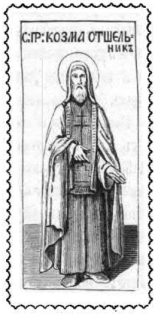
Преподобный Козма Болгарин308 происходил из рода бояр царей болгарских. Как знатные люди Болгарии того времени непременно изучали и язык греческий: Козма также еще в юности знал и болгарский и греческий языки. Родители готовили ему невесту; но он, пламенно желая девственной и пустынной жизни, тайно ушел от них на Афон. Приветливо принятый в монастыре Зографе, который еще в грамотах XII столетия назывался Болгарским,309 блаженный Козма оставался в этой обители для подвигов. Послушный воле старших, усердно исполнял возложенные на него дела и, облеченный в иночество, был экклисиархом. – Сердечная простота была отличием души его, и эта простота рано открыла духовный взор его. В праздник Благовещения, по обычаю Афонскому, был в Ватопеде и Козма на храмовом празднике. – К изумлению своему, видит он, – жена царственного величия распоряжается в храме и потом на трапезе. Как это так? Думает смущенный Козма, – на Афоне жена?... «Отчего ты так грустен?» спрашивает старец возвратившегося Козму. Козма рассказал, что видел он в Ватопеде. «Какого вида был жена?» спросил старец. «Невиданной красоты, невиданной славы», говорит Козма. «И ты не угадал, кто Она? Это царица Афона – Пресвятая Богородица, – Она здесь благоволит начальствовать у нас», отвечал старец. Услышав это, Козма с восторгом благодарил Небесную Царицу, что благоволила явить Себя ему, простому Козме. Спустя некоторое время он посвящен был в иеродиакона и потом в иеромонаха.
The Venerable Cosmas the Bulgarian308 was descended from the boyar lineage of the Bulgarian tsars. As the noblemen of Bulgaria in that time necessarily studied the Greek language as well, Cosmas likewise in his youth knew both Bulgarian and Greek. His parents prepared a bride for him; but he, ardently desiring a virginal and solitary life, secretly fled from them to Athos. Kindly received in the monastery of Zographou, which even in charters of the twelfth century was called the Bulgarian,309 the blessed Cosmas remained in that monastery for ascetic labors. Obedient to the will of his superiors, he diligently fulfilled the tasks laid upon him, and, having been clothed in monasticism, he served as ecclesiarch. – Heartfelt simplicity was the distinguishing mark of his soul, and this simplicity early opened his spiritual sight. On the feast of the Annunciation, according to the Athonite custom, Cosmas was also at Vatopedi for the patronal feast. – To his astonishment, he sees a woman of royal majesty giving orders in the church and afterwards at the trapeza. How can this be? thinks the troubled Cosmas – a woman on Athos?... “Why are you so sad?” asks an elder of the returning Cosmas. Cosmas told what he had seen at Vatopedi. “What was the appearance of the woman?” asked the elder. “Of unseen beauty, of unseen glory,” says Cosmas. “And you did not guess who She is? That is the Queen of Athos – the Most Holy Theotokos – She is pleased to rule over us here,” answered the elder. Hearing this, Cosmas with rapture gave thanks to the Heavenly Queen, that She had deigned to reveal Herself to him, the simple Cosmas. After some time he was ordained a hierodeacon and afterwards a hieromonk.
Ревностный подвижник, раз оставшись один в церкви, молился Богоматери наставить его на путь спасения. «Сыне и Боже Мой!» слышит он голос, «научи раба Твоего, как ему спастись». «Пусть удалится из монастыря на безмолвие», говорит другой голос.310 Узнав такую волю Божию о себе, Козма, по благословению настоятеля, удалился в соседнюю пустыню и иссек себе в скале пещеру, на запад от Зографа. Как там подвизался Козма, знает один только Бог. Но действия подвижничества открылись и людям. Раз пришли к Козме из Хиландаря два иеромонаха посмотреть, как живет отшельник. Козма принял их приветливо, поговорил с ними духовно и при расставании заметил: «тыквицу с вином, спрятанную вами на дороге разбейте, – в ней – змея и впустила яд свой в вино». Хилардарцы изумились тому, что Козма узнал о спрятанной тыквице, а еще более поражены были, когда, разбив тыквицу, увидали, что в ней точно змея. Они благодарили Бога, что спас жизнь их от смерти через угодного Ему раба Своего. Выдели в преподобном и другой опыт более обширного прозрения. В великий четверток посылает он ученика своего сказать в Хиландаре: «пусть братия молятся за отшедшего игумена, – он борется в воздушных пространствах со злыми духами». Братия, услышав об этом, говорили: «мы видели игумена у утрени, и после утрени пошел он готовиться к совершению литургии, – старец – в мечтах, хотя и выдает себя за святого». Но когда пришли в келью игумена, увидали, что игумен точно умер скоропостижно.
The zealous ascetic, once remaining alone in the church, prayed to the Mother of God to instruct him in the path of salvation. “My Son and My God!” he heard a voice, “teach Thy servant how he may be saved.” “Let him withdraw from the monastery for silence,” said another voice.310 Having learned such a will of God concerning himself, Cosmas, with the blessing of the abbot, withdrew to a neighboring hermitage and hewed out for himself a cave in the rock, to the west of Zographou. How Cosmas struggled there, God alone knows. But the fruits of his asceticism were revealed also to men. Once two hieromonks came to Cosmas from Hilandar to see how the hermit lived. Cosmas received them kindly, spoke with them spiritually, and at parting remarked: “Break the gourd with wine that you have hidden on the road – in it is a serpent, and it has poured its venom into the wine.” The Hilandarians were amazed that Cosmas knew of the hidden gourd, and were even more struck when, having broken the gourd, they saw that there was indeed a serpent in it. They gave thanks to God that He had saved their lives from death through His servant who was well-pleasing to Him. Another instance of more extensive foresight was also manifested in the Venerable One. On Great Thursday he sent his disciple to say at Hilandar: “Let the brethren pray for the departed abbot – he is struggling in the aerial spaces with evil spirits.” The brethren, hearing this, said: “We saw the abbot at Matins, and after Matins he went to prepare for the celebration of the Divine Liturgy – the elder is dreaming, though he gives himself out for a saint.” But when they came to the abbot’s cell, they saw that the abbot had indeed died suddenly.
На северо-западе от Эсфигмена есть гора Самари.311 – Там уединился инок Дамиан. Старец дал ему заповедь – никогда не оставаться на ночь в чужой келье. По особенной нужде Дамиан ходил к соседнему брату и так как тот отлучился на это время куда-то, дожидался возвращения его до вечера. Наконец, брат является и Дамиан, выполнив дело, за которым пришел, поторопился воротиться в свою келью. Напрасно друг упрашивал его остаться у него на ночь и указывал ему на опасность ночного пути, притом пути под дождем начавшимся. Дамиан, верный заповеди, ушел. Дорогой он точно сбился в темноте с пути и не знал, где идет и куда надобно идти? «Господи! Спаси меня», воззвал он к Богу и вслед затем очутился он близ своей кельи. Пораженный тем, что с ним было, Дамиан немедленно идет к преподобному Козме и рассказывает о случившимся. «Храни, брат, заповедь старца, и Бог сохранит тебя от смерти», сказал преподобный Козма.
To the northwest of Esphigmenou there is a mountain called Samari.311 – There a monk named Damian had secluded himself. The elder gave him a commandment – never to remain overnight in another’s cell. For a particular need Damian went to a neighboring brother, and since the latter had gone away somewhere at that time, he waited for his return until evening. Finally, the brother appears, and Damian, having accomplished the matter for which he had come, hastened to return to his cell. In vain the friend begged him to stay with him for the night and pointed out to him the danger of the night journey, especially a journey in the rain that had begun. Damian, faithful to the commandment, departed. On the way he indeed lost his way in the darkness and did not know where he was going or where he ought to go. “Lord! Save me,” he cried out to God, and immediately thereafter he found himself near his cell. Struck by what had happened to him, Damian immediately goes to the Venerable Cosmas and tells him of the occurrence. “Keep, brother, the commandment of the elder, and God will preserve you from death,” said the Venerable Cosmas.
Раз преподобный Козма сильно заболел и ему захотелось покушать рыбы. Питавший Илию посылает и пустыннику Козме нужную пищу. Неожиданно пустынный орел спускается к келье Козмы и кладет рыбу. Козма поблагодарил Господа и велел сварить рыбу. Но когда подана была рыба, тайный голос говорит ему: «отложи половину для гостя». На следующий день приходит соседний пустынник Христофор. Козма ласково принимает его: «добро пожаловать, дорогой гость», говорит Козма, – «у меня готово угощение для тебя», и подает рыбу. Тогда Христофор с улыбкой рассказывает, что вчера мыл он пойманную рыбу, и спустившийся орел унес ее и вот принес ее к тебе, любя тебя. Оба радостно благодарили Бога.
Once the Venerable Cosmas fell seriously ill and desired to eat some fish. He who fed Elijah sends also to the hermit Cosmas the needed food. Unexpectedly, a desert eagle descends to Cosmas’s cell and lays down a fish. Cosmas thanked the Lord and ordered the fish to be cooked. But when the fish was served, a secret voice says to him: “Set aside half for a guest.” The next day a neighboring hermit, Christopher, arrives. Cosmas receives him kindly: “Welcome, dear guest,” says Cosmas, “I have a treat ready for you,” and he serves the fish. Then Christopher relates with a smile that yesterday he was washing a fish he had caught, and a descending eagle carried it off and, behold, brought it to you, loving you. Both joyfully gave thanks to God.
Предсмертные дни были весьма тяжелы для преподобного Козмы. Но он извещен был Господом об ожидающем его подвиге. Приходит Христофор к келье Козмы и слышит, что Козма говорит с кем-то. Войдя в келью и не видя никого, спрашивает Козму: «с кем говорил он?» После некоторого раздумья преподобный, по духовной дружбе к Христофору, открывает ему о дивном посещении. «Посетил меня Христос», говорит он в смиренной простоте, «и возвестил, что по тайному усмотрению спасения нападет на меня сатана с полчищем и измучит мою плоть; это знак близкого перехода моего в ту жизнь; теперь оставь меня, брат, а в такой-то день навести меня». Христофор грустный удалился. Когда наступил означенный день, Христофор пришел к Козме и нашел его полумертвым. «Что с тобой?» спросил Христофор. «Вчера с вечера напал на меня сатана с полчищем», говорил преподобный, «и, рыкая злобой, кричал на своих: лентяи! Глупцы! Не умели совладать с одним. Он бил меня с неистовой злобой, и ты видишь, как изуродовал он тело мое». Недолго страдал преподобный. На третий день после сатанинских побоев причастился он святых Таин и с молитвой на устах мирно предал душу свою Господу, сентября 22-го 1323 г.312
The days before his death were very grievous for the Venerable Cosmas. But he was informed by the Lord of the struggle awaiting him. Christopher comes to Cosmas’s cell and hears that Cosmas is speaking with someone. Entering the cell and seeing no one, he asks Cosmas: “With whom was he speaking?” After some reflection, the Venerable One, out of spiritual friendship for Christopher, reveals to him the wondrous visitation. “Christ visited me,” he says in humble simplicity, “and announced that, by the secret dispensation of salvation, Satan will attack me with a host and torment my flesh; this is a sign of my imminent departure to that life; now leave me, brother, and on such-and-such a day visit me.” Christopher departed sorrowfully. When the appointed day arrived, Christopher came to Cosmas and found him half-dead. “What is the matter with you?” asked Christopher. “Yesterday, from evening, Satan attacked me with a host,” said the Venerable One, “and, roaring with malice, cried out to his own: ‘Sluggards! Fools! You could not overcome one man!’ He beat me with furious malice, and you see how he has disfigured my body.” The Venerable One did not suffer long. On the third day after the satanic beatings, he partook of the Holy Mysteries and, with prayer on his lips, peacefully surrendered his soul to the Lord, on September 22, A.D. 1323.312
Славян. рукописи Зографа – у Григоровича, стр. 62–73. У поклонника, стр. 327–340. Зографский Апостол, писанный «в память и в вечни покои своим родителем» при ц. Александре 1359 г. – в изв. акад. X. 158. 159. См. еще окт. 10 ч.
Slavonic manuscripts of Zographou – in Grigorovich, pp. 62–73. In the Pilgrim, pp. 327–340. The Zographou Apostol, written “in memory and eternal repose of his parents” under Tsar Alexander in 1359 – in the Bulletin of the Academy X. 158, 159. See also October 10.
Самари – седло, и таков вид горы. Потому эта гора не имеет ничего общего с р. Самарою Русского юга, как напротив думали иные. Отзыв поклонника св. Горы, стр. 300.
Samari – a saddle, and such is the appearance of the mountain. Therefore this mountain has nothing in common with the Samara River of the Russian south, as some have mistakenly thought. Testimony of the Pilgrim of the Holy Mountain, p. 300.