Евфимия молодая девица знатного рода, пострадала в отчестве своем Халкидоне вместе с другими христианами, укрывшимися и захваченными в окрестностях города в то время, когда анфипат Приск, исполняя предписание императора Диоклитиана, жестоко преследовал христиан и разыскивал их повсюду, чтобы принуждать к отречению от Христа или осуждать их на мучительную смерть в случае их сопротивления принимать участие в языческих жертвоприношениях.
Euphemia was a young maiden of noble birth, who suffered in her native city of Chalcedon together with other Christians who had hidden and been seized in the vicinity of the city at the time when the proconsul Priscus, carrying out the edict of the Emperor Diocletian, cruelly persecuted Christians and sought them out everywhere, in order to compel them to renounce Christ or to condemn them to a painful death if they refused to take part in pagan sacrifices.
Не поколебалась в это время в твердости своего исповедания и молодая Евфимия, едва вышедшая из детского возраста и не испытавшая до сих пор в жизни ничего, кроме нежных попечений, которыми она была окружена в родительском доме. Устояла она среди испытания, подготовленная благочестивыми родителями, любовь которых успела воспитать в душе их дитяти руководящее и спасительное для нее чувство – преданность Богу, которая не замедлила оказаться силой, неодолимой в борьбе.
The young Euphemia, who had scarcely left childhood and had until then known nothing in life but the tender care with which she was surrounded in her parents' home, did not waver in the steadfastness of her confession at this time. She stood firm in the trial, prepared by her pious parents, whose love had nurtured in the soul of their child a guiding and saving feeling—devotion to God—which soon proved to be an invincible force in the struggle.
Когда в числе других христиан, напрасно вынужденных принять участие в празднестве в честь языческого бога Марса, Приск заметил молодую Евфимию, то ему показалось, что не трудно будет обещаниями или угрозами покорить волю такого неопытного существа; поэтому велико было его удивление, когда Евфимия, вразумленная мудрыми христианами-руководителями, на все его убеждения отвратиться от христианской веры, отвечала ему:
When, among the other Christians who had been vainly forced to take part in the festival in honor of the pagan god Mars, Priscus noticed the young Euphemia, it seemed to him that it would not be difficult to subdue the will of such an inexperienced creature by promises or threats; therefore his astonishment was great when Euphemia, instructed by wise Christian guides, answered all his exhortations to turn away from the Christian faith:
– Не думай, чтобы я по слабости моей уступила твоему требованию отречься от моей святой веры; если я, как женщина, и слаба телесными силами, то сердце мое не слабо: его укрепляет надежда моя на Христа и делает меня разумнее мудрецов, которые не знают истинного Бога и поклоняются бездушным богам…
"Do not think that because of my weakness I will yield to your demand to renounce my holy faith; if I, as a woman, am weak in bodily strength, yet my heart is not weak: my hope in Christ strengthens it and makes me wiser than the sages who do not know the true God and worship soulless gods…"
Пораженный таким ответом, Приск не пощадил от истязаний твердую исповедницу чуждого ему Христа: «бичевание, пламя, колеса, разожженная печь», всем этим испытаниям была подвергнута мученица, но силой Божьей осталась невредима… Поражен был этим чудом сам язычник-судья, но и в нем не уразумел силы Господней… Уразумели же ее простые сердца двух воинов, предстоявших для исполнения приказаний мучителя, и отказались содействовать пытке мученицы, и уверовали в Бога Евфимии, творящего чудеса, и бесстрашно исповедали Его, говоря: «отныне мы знаем, что только один есть истинный Бог, и Ему единому мы хотим служить».
Struck by such an answer, Priscus did not spare the steadfast confessor of the Christ who was alien to him from tortures: "scourging, fire, wheels, a red-hot furnace"—the martyr was subjected to all these trials, but by the power of God she remained unharmed… The pagan judge himself was struck by this miracle, but even he did not comprehend the power of the Lord… However, the simple hearts of two soldiers who stood ready to carry out the torturer's commands did comprehend it, and they refused to assist in the torture of the martyr, and believed in the God of Euphemia, who works miracles, and fearlessly confessed Him, saying: "From now on we know that there is only one true God, and Him alone we wish to serve."
На принуждения же судьи поклониться богам, отвечали: «узнав истину, не можем почитать ложных богов, делай с нами, что хочешь, в твоих руках тела наши, души же наши примет Бог». Эту веру свою немедленно запечатлели мученической смертью новые христиане – Виктор и Сосфен. Они были преданы на растерзание зверям.
And to the judge's compulsion to worship the gods, they answered: "Having learned the truth, we cannot worship false gods; do with us what you will, our bodies are in your hands, but our souls will be received by God." These new Christians, Victor and Sosthenes, immediately sealed their faith with a martyr's death. They were given over to be devoured by beasts.
На такую же казнь была осуждена и Евфимия после того, как истощены были все средства ее поколебать с помощью истязаний, среди которых она чудной силой Божией также пребыла невредимой. И до конца проявил над ней Господь Свое чудное милосердие. Когда она была приведена на место казни и, окруженная выпущенными на нее львами и медведями, бестрепетно изливала свою душу в последней, предсмертной молитве, то звери сначала только лизали ноги ее… Наконец одна медведица слегка ранила ногу ее, и в это время Евфимия спокойно предала Богу свою душу (304 г.).
Euphemia was condemned to the same punishment after all means of shaking her through tortures had been exhausted, during which she also remained unharmed by the wondrous power of God. And to the very end the Lord showed His wonderful mercy upon her. When she was led to the place of execution and, surrounded by lions and bears let loose upon her, fearlessly poured out her soul in a final, deathbed prayer, the beasts at first only licked her feet… Finally, a she-bear slightly wounded her foot, and at that moment Euphemia peacefully surrendered her soul to God (304 A.D.).
В это же время буря и землетрясение разразились над городом, и христиане, воспользовавшись общим смятением, взяли тело скончавшейся мученицы и похоронили его в окрестностях города.
At the same time, a storm and earthquake broke over the city, and the Christians, taking advantage of the general confusion, took the body of the departed martyr and buried it in the vicinity of the city.
Описывая впоследствии этот храм в Халкидоне, историк Евагрий свидетельствует, что «известно всем христианам, что святая иногда совершает там и чудеса…» Действительно, кроме многих чудес, которыми Богу угодно было прославить прославившую Его св. великомученицу Евфимию, сама Церковь воспоминает (11-го июля), о следующем чуде, «имже утвердися православие». Когда отцы 4-го Вселенского собора, бывшего в Халкидоне, православные и еретики, не соглашавшиеся между собой, написали свои исповедания и оба свитка положили в руку великомученицы Евфимии, запечатав при этом раку и молясь, чтобы Бог этой угодившей Ему указал им правую веру, то, открыв на четвертый день после того гробницу Евфимии, они нашли один свиток у ног святой, другой же – в руках ее, и последний содержал в себе православное исповедание (- в 451 г.).
Later describing this church in Chalcedon, the historian Evagrius testifies that "it is known to all Christians that the saint sometimes works miracles there…" Indeed, besides the many miracles by which God was pleased to glorify the holy Great Martyr Euphemia who had glorified Him, the Church itself commemorates (on July 11) the following miracle, "by which Orthodoxy was confirmed." When the Fathers of the 4th Ecumenical Council, held in Chalcedon—the Orthodox and the heretics, who disagreed among themselves—wrote down their confessions and placed both scrolls in the hand of the Great Martyr Euphemia, having sealed the reliquary and prayed that God, through this saint who had pleased Him, might indicate the true faith to them, then, upon opening the tomb of Euphemia on the fourth day thereafter, they found one scroll at the feet of the saint and the other in her hands, and the latter contained the Orthodox confession (in 451 A.D.).
В Деяниях Вселенского собора есть ясное указание на это чудо; в послании ко Льву, папе Римскому, непосредственно по окончании собора отцы говорят: «действующим был Бог, а увенчавшей в чертоге собрание добропобедная Евфимия, которая, принявши от нас определение веры, представила его, как собственное исповедание, своему Жениху, через благочестивейшего императора и христолюбивую императрицу утишивши всякое волнение противников, укрепивши исповедание веры».140
In the Acts of the Ecumenical Council there is a clear reference to this miracle; in the epistle to Leo, Pope of Rome, immediately after the conclusion of the council, the Fathers say: "The one who acted was God, and the one who crowned the assembly in the chamber was the victorious Euphemia, who, having received from us the definition of the faith, presented it as her own confession to her Bridegroom, through the most pious emperor and the Christ-loving empress, having stilled all the agitation of the opponents and strengthened the confession of the faith."140
В каноне, написанном св. Иоанном Дамаскиным в память св. Евфимии, также воспомянуто это чудо ее: в последней песне он ясно говорит о свитке веры, вверенном ей собором. О нем же говорится и в каноне Иосифа песнописца, и действительность его с редким согласием подтвреждается великим множество свидетелей с древних времен.
In the canon written by St. John of Damascus in memory of St. Euphemia, this miracle of hers is also recalled: in the last ode he clearly speaks of the scroll of faith entrusted to her by the council. It is also mentioned in the canon of Joseph the Hymnographer, and its reality is confirmed with rare unanimity by a great multitude of witnesses from ancient times.
Мощи св. Евфимии после взятия персами Халкидона в 617 г. были перенесены в Константинополь около 620 г. Во время иконоборства он были брошены с ракой в море, но извлечены благочестивыми корабельщиками и отвезены на остров Лемнос и уже в 796 г., при царице Ирине, возвращены в Констанинополь и сохраняются поныне в патриархии Константинопольской, в храме, построенном во имя ее.
The relics of St. Euphemia, after the Persians took Chalcedon in 617 A.D., were translated to Constantinople around 620 A.D. During the iconoclasm they were thrown into the sea together with the reliquary, but were recovered by pious sailors and taken to the island of Lemnos, and already in 796 A.D., under the Empress Irene, they were returned to Constantinople and are preserved to this day in the Patriarchate of Constantinople, in a church built in her name.
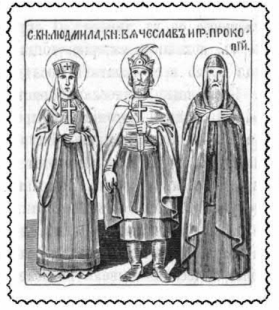
Блаженная Людмила, бабка св. кн. Вячеслава, была супруга христианского князя Богемии Боривоя.141 – Великий просветитель славян св. Мефодий, архиепископ соседней с Богемией Моравии, преподал Боривою и Людмиле наставление в чистой, святой вере и омыл их водой благодатного крещения в Велеграде.142 Князь и княгиня Богемии были искренними христианами и по искренней любви к св. вере употребляли меры для обращения подданных ко христианству. Таков же был и сын их кн. Вратислав. – Но язычество еще жило между богемскими славянами и особенно сильно оно было между соседними полабскими славянами; дела немецкого романизма не только не сближали местных славян с христианством, напротив питали сильную вражду против него.143 В таком положении дел неизбежна была в Богемии борьба начал языческой жизни с искренним христианством. Жена кн. Вратислава Драгомира была урожденная княжна Браниборо-Стодеранская. – Быть не могло, чтобы в таком глубоко-христианском семействе, какого было семейств князя Боривоя, жена князя христианина стала язычницей, не крещеной, как выставляют Драгомиру легенды романизма. Но то не подлежит сомнению, что она не была искренней христианкой, была горда и зла и по гордости дорожила всем славянским, в том числе и языческой жизнью; ненависть ко христианству, воспитанная в полабских славянах жестокостями немецких миссионеров и властителей, являлась в ней в виде недоверия и холодности ко христианству. Два сына Вратислава и Драгомиры, Вячеслав и Болеслав, по расположениям своим совсем не походили один на другого: сколько Вячеслав характером и делами напоминал доброго отца его, столько в Болеславе отразились качества злой Драгомиры.
The blessed Ludmila, grandmother of St. Prince Vyacheslav, was the wife of the Christian prince of Bohemia, Borivoi.141 The great enlightener of the Slavs, St. Methodius, Archbishop of neighboring Moravia, instructed Borivoi and Ludmila in the pure, holy faith and washed them with the water of grace-filled baptism in Velegrad.142 The prince and princess of Bohemia were sincere Christians and, out of sincere love for the holy faith, took measures for the conversion of their subjects to Christianity. Their son, Prince Vratislav, was likewise. But paganism still lived among the Bohemian Slavs, and it was especially strong among the neighboring Polabian Slavs; the deeds of German Romanism not only did not draw the local Slavs closer to Christianity, but on the contrary nourished a strong enmity against it.143 In such a state of affairs, a struggle between the principles of pagan life and sincere Christianity was inevitable in Bohemia. The wife of Prince Vratislav, Dragomira, was a born princess of Branibor-Stoderan. It could not be that in such a deeply Christian family as that of Prince Borivoi, the wife of a Christian prince would be a pagan, unbaptized, as the legends of Romanism portray Dragomira. But it is beyond doubt that she was not a sincere Christian, was proud and evil, and out of pride cherished everything Slavic, including pagan life; the hatred of Christianity, nurtured in the Polabian Slavs by the cruelties of German missionaries and rulers, appeared in her as distrust and coldness toward Christianity. The two sons of Vratislav and Dragomira, Vyacheslav and Boleslav, were completely unlike one another in their dispositions: as much as Vyacheslav resembled his good father in character and deeds, so much did Boleslav reflect the qualities of the evil Dragomira.
Старая княгиня Людмила по смерти супруга своего кн. Боривоя жила в Праге. Вратислав, хорошо понимая жену свою, поручил воспитание Вячеслава матери своей Людмиле. Блаж. Княгиня желала видеть во внуке своем прежде всего искреннего христианина. «И веда и баба своя Людмила научити книгам словенским по следу попову; и навиче разум добре», говорит современник. Нельзя сомневаться, что «книги словенские» здесь значат письмена славянские, те, которые изобрел св. Кирилл; такое значение имело слово «книгы» даже у Кирилла Туровского, тем более в первоначальном, церковно-славянском языке.144 Итак, известие современное значит то, что Людмила «отдала Вячеслава изучать славянские письмена по указанию священника, и он научился хорошо понимать», что читал. Вячеслав отвечал заботам доброй бабки не только усердием к учению, но и вообще поведением, достойным христианского отрока. Он был добр, кроток, не заносчив, целомудрен. Образование дано было ему лучшее по тому времени. Отец посылал его в Будучь (Будечь). Молодой человек «учился там латинской грамматике и научился хорошо.145 – Бог подал ему Свою благодать: он умел читать латинские книги, «как хороший бискуп» (греха нечего таить, обыкновенные бискупы плохо знали латынь, хотя служили мессы по-латыни); «если брал греческие книги или славянские, то читал их без ошибок. И не только умел книги, но, исполняя требования веры, благотворил бедным». Это значит, что жил он вовне не как молодой немецкий князь, который пожалуй – блистал светской образованностью, но жил, как язычник, пьянствовал, буянил, развратничал.
The old princess Ludmila, after the death of her husband Prince Borivoi, lived in Prague. Vratislav, well understanding his wife, entrusted the upbringing of Vyacheslav to his mother Ludmila. The blessed princess desired to see in her grandson, above all, a sincere Christian. "And his grandmother Ludmila knew to teach him the Slavic books according to the priest's guidance; and he learned to understand well," says a contemporary. There can be no doubt that "Slavic books" here means the Slavic letters, those invented by St. Cyril; such was the meaning of the word "books" even for Cyril of Turov, and even more so in the original Church Slavonic language.144 Thus, the contemporary account means that Ludmila "gave Vyacheslav to study the Slavic letters according to the priest's guidance, and he learned to understand well" what he read. Vyacheslav responded to the care of his good grandmother not only by diligence in learning, but also by conduct worthy of a Christian youth. He was good, meek, not arrogant, chaste. He was given the best education for that time. His father sent him to Buduch (Budech). The young man "studied Latin grammar there and learned it well."145 God granted him His grace: he could read Latin books "like a good bishop" (there is no use concealing the fault: ordinary bishops knew Latin poorly, although they served Mass in Latin); "if he took Greek books or Slavic books, he read them without mistakes. And not only did he know books, but, fulfilling the requirements of the faith, he gave alms to the poor." This means that he lived outwardly not like a young German prince, who might perhaps shine with secular education but lived like a pagan, drinking, rioting, and debauching.
Князь Вратислав, будучи преклонных лет и чувствуя близость смерти, созвал к себе вельмож и епископа и объявил наследником своим старшего сына; после литургии он сам привел Вячеслава к епископу и сказал: «преподай, владыко, благословение сыну, наследнику моему» и святитель совершил молитву о ниспослании благословения Божия.146 Так как Вячеслав был на 18 году возраста, когда отец умер, то мать его Драгомира начала управлять княжеством от имени сына. Правительница скоро обнаружила свой характер: она приблизила к себе людей худых, даже язычников, которых еще много оставалось в княжестве. Она стала отменять порядки, какие введены были Боривоем и Вратиславом, в ослабление язычества. – Дела стали приходить в расстройство.
Prince Vratislav, being of advanced years and sensing the nearness of death, summoned his nobles and the bishop to himself and declared his eldest son his heir; after the Divine Liturgy, he himself led Vyacheslav to the bishop and said: "Give, Vladyko, a blessing to my son, my heir," and the Hierarch performed a prayer for the sending down of God's blessing.146 Since Vyacheslav was in his eighteenth year when his father died, his mother Dragomira began to govern the principality in her son's name. The ruler soon revealed her character: she drew near to herself evil people, even pagans, of whom many still remained in the principality. She began to abolish the orders that had been introduced by Borivoi and Vratislav to weaken paganism. – Affairs began to fall into disorder.
Блаженная Людмила скорбела о несчастии отчизны. – По христианской ревности к общему благу, она настояла перед Вячеславом на том, чтобы сам он вступил в управление княжеством. Добрый Вячеслав выполнил совет бабки, и вся страна обрадовалась. Для того, чтобы предупредить раздоры и смуты, Вячеслав уступил младшему брату половину княжества; эта половина, богатая и обширная, и после называлась Болеславией (Bunzlau).
The blessed Ludmila grieved over the misfortune of the fatherland. – Out of Christian zeal for the common good, she insisted before Vyacheslav that he himself take up the governance of the principality. The good Vyacheslav fulfilled his grandmother's counsel, and the whole country rejoiced. In order to forestall discord and turmoil, Vyacheslav ceded to his younger brother half of the principality; this half, rich and extensive, was afterwards called Boleslavia (Bunzlau).
Драгомира, гордая и тщеславная, жестоко оскорбилась распоряжением, несогласным с ее замыслами; но до времени затаила свою злобу; ненависть ее стала отыскивать средства отомстить Людмиле. Она переливала злость свою в Болеслава, питала и усиливала в нем вражду к брату, любимому Людмилой. Тайно приискала она себе партию, чтобы ее помощью безопасно совершить злодейство над Людмилой.
Dragomira, proud and vainglorious, was grievously offended by this arrangement, which was contrary to her designs; but she concealed her malice for a time; her hatred began to seek means of taking vengeance on Ludmila. She poured her spite into Boleslav, nourishing and strengthening in him enmity toward his brother, whom Ludmila loved. She secretly gathered a party for herself, so that with its help she might safely commit a villainous deed against Ludmila.
Блаженная Людмила, совершив святое дело для отчизны и внука, удалилась на покой в г. Течин, тем более, что видела ненависть невестки своей и желала быть вдали от зла. Драгомира нашла ее и здесь. Купленные ею два боярина явились в Течин и здесь набрали себе других головорезов. Блаженная молилась в домашней моленной, как ворвались сюда злодеи. «Так ли помните благодеяния мои?» сказала добрая княгиня. Но изверги накинули петлю на старческую шею ее. «Лучше поразите меня мечем, сказала Людмила, чтобы по примеру мучеников пролилась кровь моя». Душа ее отлетела в небесные селения 16 дня, в день субботний в 927 году.
The blessed Ludmila, having accomplished a holy work for the fatherland and her grandson, withdrew to the city of Techin for repose, all the more because she saw the hatred of her daughter-in-law and wished to be far from evil. Dragomira found her even there. Two boyars bought by her appeared in Techin and there gathered other cutthroats. The blessed one was praying in her domestic chapel when the villains burst in. "Do you remember my benefactions thus?" said the good princess. But the wretches cast a noose around her aged neck. "Better strike me with a sword," said Ludmila, "so that, after the example of the martyrs, my blood might be shed." Her soul flew away to the heavenly abodes on the 16th day, on a Saturday, in the year 927.
Неизвестно, знал ли блаженный Вячеслав, что в убиении святой бабы его принимала участие мать его. Современник говорит, что Вячеслав удалил мать от двора, но прибавляет: «пси злии, иже быша Вячеслава научили выдати матерь свою без вины». Кто эти злые псы? Какими мыслями руководились они, внушив удалить Драгомиру? – биограф не сказал.
It is unknown whether the blessed Vyacheslav knew that his mother had taken part in the slaying of his holy grandmother. A contemporary says that Vyacheslav removed his mother from court, but adds: "evil dogs, who would have taught Vyacheslav to give up his mother without cause." Who were these evil dogs? By what thoughts were they guided in prompting the removal of Dragomira? – the biographer did not say.
Думают, что Драгомира составляла заговор с ревнителями славянской народности, дабы противодействовать сближению Вячеслава с немецким императором и его романизмом – и что сторонники романизма успели было удалить Драгомиру от двора.148 Если по внушениям беспокойной женщины нанесено было оскорбление посулу императора, вызвавшее войну, – то поступок ее, при всем патриотизме, не был благоразумным, и оставалось бы только выражение биографа признать слишком резким; но напрасно выводят из отзыва биографа заключение такое, будто кн. Вячеслав думал вводить в Богемию папизм, – да и еще немецкий. Хвала древней Церкви говорит о нем, что он жил «в вере чисте», просвященный «разумом благоверия».149 Если он окончил борьбу свою и импер. Генрихом Птицеловом тем, что (в 928 г.) признал зависимость свою от императора; – это было следствием политической слабости Богемии перед империей, – но после того правление и законы Богемии не стали немецкими, а остались славянскими.150 Введение романизма в Богемию началось при Болеславе; а св. Вячеслав сколько дорожил чистотой веры, столько любил и отчизну. Обращаясь к словам биографа о злых псах, вероятнейшим считаем, что биограф осуждал удаливших мать от сына собственно за то, что они, выставив преступным не совсем преступное отношение ее к императору, скрыли слишком преступное дело ее с покойной матерью, тогда как обнаружение последнего дела могло предотвратить последующие беды.
It is thought that Dragomira formed a conspiracy with zealots of Slavic nationality, in order to oppose Vyacheslav's rapprochement with the German emperor and his Romanism – and that the partisans of Romanism succeeded in removing Dragomira from court.148 If, through the promptings of a restless woman, an insult was offered to the emperor's envoy, provoking war, then her act, for all its patriotism, was not prudent, and it would remain only to acknowledge the biographer's expression as too harsh; but it is vain to draw from the biographer's remark the conclusion that Prince Vyacheslav intended to introduce papism into Bohemia – and that, moreover, German papism. The praise of the ancient Church says of him that he lived "in pure faith," enlightened by "the understanding of right-believing."149 If he ended his struggle with Emperor Henry the Fowler by acknowledging (in 928) his dependence on the emperor – this was a consequence of Bohemia's political weakness before the empire – but after that, the government and laws of Bohemia did not become German, but remained Slavic.150 The introduction of Romanism into Bohemia began under Boleslav; and St. Vyacheslav, as much as he valued purity of faith, so much did he love his fatherland. Turning to the biographer's words about evil dogs, we consider it most probable that the biographer condemned those who removed the mother from her son precisely because they, having represented as criminal her not entirely criminal relation to the emperor, concealed her too criminal deed with the deceased mother, whereas the disclosure of the latter deed might have prevented subsequent calamities.
Блаженный Вячеслав христиански устраивал и дела семейные и дела Богемии. Четырех сестер своих выдал он замуж. – Соседний князь Баурзимский Радислав напал с сильным войском на города Вячеславовы. Вячеслав, любя мир, послал спросить Радислава: что побудило его к таким поступкам? Если он, Вячеслав, неправ в чем-либо перед ним, пусть скажет о вине, и удовлетворение будет сделано. Радислав отвечал, что Вячеслав должен уступить ему Богемию. Вячеслав вывел в поле сильное войско. И все-таки ему не хотелось проливать кровь ближних. Он послал предложение Радиславу: «спор идет между нами двумя; тебе хочется владеть Богемией, а я не согласен уступить. Пусть бой между нами двумя и решит дело. К чему кровавой битвой войск доводить дело до того, что тебе, пожалуй, не над кем будет и властвовать?» Радислав согласился на поединок и, побежденный, вынужден был на коленях просить прощения у Вячеслава.
The blessed Vyacheslav arranged both family affairs and the affairs of Bohemia in a Christian manner. He gave his four sisters in marriage. – The neighboring prince of Baurzim, Radislav, attacked Vyacheslav's towns with a strong army. Vyacheslav, loving peace, sent to ask Radislav: what had impelled him to such acts? If he, Vyacheslav, was in any way in the wrong before him, let him declare the fault, and satisfaction would be given. Radislav replied that Vyacheslav must yield Bohemia to him. Vyacheslav led a strong army into the field. And yet he did not wish to shed the blood of his neighbors. He sent a proposal to Radislav: "The dispute is between us two; you wish to possess Bohemia, and I do not consent to yield. Let a duel between us two decide the matter. Why bring matters, through a bloody battle of armies, to the point where you, perhaps, will have no one left to rule over?" Radislav agreed to the duel and, being defeated, was forced to beg forgiveness of Vyacheslav on his knees.
Тогда император Оттон пригласил всех князей на сейм в Вормс. Вячеслав явился после других, быв задержан на дороге делами благочестия. При входе Вячеслава в собрание, немецкие князья изъявили неудовольствие, – не отдали поклона: надутость немецкая верна себе, пуста, как и глупа. – Император принял Вячеслава с особенным вниманием и ласками, – он сказал, что готов исполнить всякую просьбу его. Блаженный Вячеслав просил одного – мощей мученика Вита, – и император согласился на просьбу. Блаж. Князь перенес мощи святого в Прагу и здесь построил для них храм в честь муч. Вита. Тогда же он перенес мощи и св. бабки своей Людмилы в Прагу, в храм св. Георгия, построенный отцом его.
At that time, Emperor Otto invited all the princes to a diet at Worms. Vyacheslav arrived after the others, having been delayed on the road by works of piety. Upon Vyacheslav's entry into the assembly, the German princes expressed displeasure – they did not bow: German haughtiness is true to itself, as empty as it is foolish. – The Emperor received Vyacheslav with particular attention and kindness – he said that he was ready to fulfill any request of his. The blessed Vyacheslav asked for only one thing – the relics of the Martyr Vitus – and the emperor agreed to the request. The blessed Prince translated the relics of the saint to Prague and there built a church in honor of the Martyr Vitus for them. At the same time, he also translated the relics of his holy grandmother Ludmila to Prague, to the church of St. George built by his father.
Он весьма заботливо охранял покой подданных своих: чиновников избрал он из лучших христиан и строго следил за тем, чтобы в судах не тесним был невинный. По ревности к вере Христовой покупал он детей у язычников и, окрестив их, посвящал на служение Богу. Строгость его к самому себе напоминала древних пустынников. Часто сам он в течении ночи занимался печением просфор и утром сам же относил в церковь для св. литургии; особенно так, а не иначе, бывало, когда готовился он приобщиться святых Таин. Если день он проводил за делами правления, то ночь посвящал на молитву. Нередко, в зимнее ненастье, с верным старым слугой Подивоем шел он босыми ногами к утрени в какой-либо отдаленный храм. Дряхлый Подивой иногда кряхтел от стужи. Вячеслав с улыбкой говорил ему: «теперь зима, старче, ступай по следам моим, какие проложил я в снегу». Иногда св. Вячеслав, идя по замерзшей и кочковатой земле, раздирал до крови ноги свои. «Сущим в бедах помощник ты бысть, нищем кормление, печальным утеха», поет ему Церковь в древней службе.151 Князь собирал рабов Божиих – священников – и ставил по городам храмы, где каждый день совершалась служба. К его заботливости надобно отнести перевод Евангелия Иоаннова на чешский язык: остатки перевода, доселе целые, по языку относятся к его времени.152 День Эммерама, которому посвящен был Вячеслав родителями,153 он проводил в веселии о Боге.
He very carefully guarded the peace of his subjects: he chose officials from among the best Christians and strictly watched that the innocent were not oppressed in the courts. Out of zeal for the Christian faith, he bought children from pagans and, having baptized them, dedicated them to the service of God. His severity toward himself recalled the ancient hermits. Often he himself, during the night, occupied himself with baking prosphora and in the morning himself carried them to church for the Divine Liturgy; this was especially so, and not otherwise, when he prepared to receive the Holy Mysteries. If he spent the day on affairs of government, he devoted the night to prayer. Not infrequently, in winter foul weather, he went with a faithful old servant, Podivoi, barefoot to Matins at some distant church. The decrepit Podivoi sometimes groaned from the cold. Vyacheslav would say to him with a smile: "Now it is winter, old man; step in my footprints, which I have made in the snow." Sometimes St. Vyacheslav, walking over frozen and bumpy ground, tore his feet until they bled. "You were a helper to those in distress, a feeding to the poor, a consolation to the sorrowful," the Church sings to him in the ancient service.151 The prince gathered the servants of God – priests – and set up churches in the towns, where the service was performed every day. To his solicitude must be attributed the translation of the Gospel of John into the Czech language: the remnants of the translation, still intact, by their language belong to his time.152 The day of Emmeram, to whom Vyacheslav had been dedicated by his parents,153 he spent in rejoicing in God.
В последнее время блаженный хотел сам передать управление княжеством брату, с тем, чтобы посвятить всего себя на служение Богу. Но брат определил ему другой путь.
In his last days, the blessed one wished himself to hand over the governance of the principality to his brother, in order to devote himself entirely to the service of God. But his brother destined another path for him.
«Наустиша и (Болеслава) на брата своего». Кто это и по каким убеждениям? Последствия обнаруживают дело. Советники требовали от Болеслава, чтобы умерщвлена была и Драгомира. Следовательно, это не были люди, любившие славянскую народность. С другой стороны вслед за смертью Вячеслава введены были в Богемию ксендзы, которых прежде того не терпели в Богемии. Присоедините к сему еще и то, что на Вормском сейме немцы открыто выразили свое негодование против князя, ревнителя благочестия отеческого и, благосклонность Оттона к Вячеславу могла только усилить зависть в Болеславе и возбудить решимость – стать на стороне немецкого романизма. Так, более, чем вероятно, что Болеслав, воспитанный злой матерью, теперь действовал сколько по своей страсти к власти, столько и по внушениям хитрых пропагандистов немецкого романизма.
"They incited him (Boleslav) against his brother." Who were these, and by what persuasions? The consequences reveal the matter. The counselors demanded of Boleslav that Dragomira also be put to death. Consequently, these were not people who loved Slavic nationality. On the other hand, immediately after Vyacheslav's death, priests (ksendzes) were introduced into Bohemia, who had not been tolerated there before. Add to this also that at the Diet of Worms the Germans openly expressed their indignation against the prince, a zealot of ancestral piety, and Otto's favor toward Vyacheslav could only strengthen envy in Boleslav and arouse in him the resolve to take the side of German Romanism. Thus, it is more than probable that Boleslav, raised by an evil mother, now acted as much from his own passion for power as from the promptings of cunning propagandists of German Romanism.
На праздник св. бессребренников блаж. Вячеслав поехал в Болеславль и после литургии захотел возвратиться в дом свой. – Но Болеслав неожиданно стал добр к брату. Он упрашивал его с притворным усердием остаться. «Куда хочешь ты ехать, брат мой, когда готово у меня пиво?» – блаженный не отказал в просьбе брату, чтобы не оскорбить любви, и не поехал домой. Он предчувствовал близкую смерть. «Завтра на утреннем бдении райского предстоятеля св. Михаила, буду пить чашу моего Владыки», говорил он в тот же вечер. – Но невинный предал себя воле Божьей. Когда была рыцарская потеха на дворе брата, один из преданных ему тайно сказал ему, что брат хочет умертвить его. Блаж. Князь не хотел верить и отвечал: быть не может. К вечернему пиру явилось множество друзей Болеслава.
On the feast of the holy Unmercenaries, the blessed Vyacheslav rode to Boleslav's town and, after the Divine Liturgy, wished to return to his own house. – But Boleslav unexpectedly became kind to his brother. He begged him with feigned earnestness to stay. "Where do you wish to go, my brother, when I have beer ready?" – the blessed one did not refuse his brother's request, so as not to offend his love, and did not go home. He sensed his approaching death. "Tomorrow at the morning vigil of the heavenly intercessor, St. Michael, I shall drink the cup of my Lord," he said that same evening. – But the innocent one surrendered himself to the will of God. When there was knightly sport in his brother's courtyard, one of those secretly devoted to him told him that his brother wished to kill him. The blessed Prince did not wish to believe it and replied: It cannot be. At the evening feast, many of Boleslav's friends appeared.
По окончании стола вечернего Вячеслав спокойно вышел и, ложась спать, помолился с обычными земными поклонами за себя и своих. – На рассвете едва услышал утренний звон, поспешил встать с кровати, осенил себя крестным знамением и говорил: «слава Тебе, показавшему нам свет». Умыв лицо и одевшись в скромную одежду, поспешил он в церковь. В воротах княжеского двора нагнал его Болеслав. Оглянувшись, Вячеслав сказал с улыбкой: «добрый вечер был у тебя, брат мой!» Но Болеслав, выхватив из-под одежды меч, сказала: «нынешний хочу сделать тебе лучше вчерашнего». И с этими словами ударил блаженного по голове. Крепкий силами князь не пошатнулся; повергнув на землю врага, стал над ним твердой ногой и кротко сказал: «что ты задумал против меня, брат мой?» В эту минуту прибежал один из соумышленников Болеслава и ударил Вячеслава мечем по руке; Вячеслав, видя заговор, бросил брата и побежал к церкви. В самых дверях нагнали его убийцы и мечами прокололи его в ребра. На пороге церковном испустил он дух со словами: «Господи! В руки Твои предаю душу мою».154 Это было 28 сентября 935 г.155
After the evening feast ended, Vyacheslav calmly withdrew and, lying down to sleep, prayed with his usual prostrations for himself and his own. – At dawn, scarcely had he heard the bell for Matins when he hastened to rise from his bed, made the sign of the Cross and said: "Glory to Thee, who has shown us the light." Having washed his face and dressed in modest clothing, he hurried to church. At the gates of the prince's court, Boleslav overtook him. Turning around, Vyacheslav said with a smile: "You had a fine evening, my brother!" But Boleslav, drawing a sword from beneath his garment, said: "I wish to make this day better for you than yesterday." And with these words he struck the blessed one on the head. The prince, strong in his powers, did not stagger; casting his enemy to the ground, he stood over him with a firm foot and said meekly: "What have you devised against me, my brother?" At that moment, one of Boleslav's accomplices ran up and struck Vyacheslav on the arm with a sword; Vyacheslav, seeing the conspiracy, released his brother and ran toward the church. In the very doorway the murderers overtook him and pierced him in the ribs with their swords. On the threshold of the church he gave up his spirit with the words: "Lord! Into Thy hands I commend my soul."154 This was on September 28, 935 A.D.155
Злодеи не остановились на убийстве князя. Они обратились с насилиями и против придворных его. Иные из них успели спастись от смерти, хотя и не от побоев; но отроки княжеские были убиты; священники княжие – «Божии рабы» – ограблены и выгнаны были, а их жены выданы были за других мужей; поступок с женатыми священниками означал именно то, что по немецкому уставу считали нечистой жизнь священника с законной женой и вводили безженных ксендзов. – Священник Красей не осмелился везти тело святого в Прагу, но, обмыв его в своем доме, положил в церковь и покрыл тонким покрывалом. – Драгомира, услышав о смерти сына, прибежала и с воплем пала на бездыханное тело. Но узнав, что она также обречена на смерть, поспешила скрыться. Три дня лежало тело князя в церкви, и кровь не переставала истекать из его ран, как бы у живого. Когда похоронен был добрый и праведный государь, кровь, которую дотоле не могли ни смыть, ни соскоблить, сама собой скрылась в землю в виду всех. «Надеемся о Боге, прибавляет древний повествователь, что по молитвам и благоверию доброго Вячеслава явятся и большие чудеса».
The evildoers did not stop at the murder of the prince. They also turned to violence against his courtiers. Some of them managed to escape death, though not from beatings; but the prince's servants were killed; the prince's priests – "the servants of God" – were robbed and driven out, and their wives were given to other husbands; this treatment of married priests meant precisely that, according to the German rule, the life of a priest with a lawful wife was considered impure, and they were introducing celibate clergy. – The priest Krasei did not dare to take the body of the saint to Prague, but, having washed it in his own home, he placed it in the church and covered it with a fine veil. – Dragomira, hearing of her son's death, ran and fell weeping upon the lifeless body. But learning that she too was condemned to death, she hastened to hide herself. For three days the prince's body lay in the church, and blood did not cease to flow from his wounds, as though he were alive. When the good and righteous sovereign was buried, the blood, which until then could neither be washed away nor scraped off, of its own accord sank into the ground before the eyes of all. "We hope in God," adds the ancient narrator, "that through the prayers and piety of the good Vyacheslav, even greater miracles will appear."
«Помышляше себе блаженный Борис мученье святого Никиты и страсти святого Вячеслава князя» и желал себе подобной блаженной доли: так говорит древний повествователь о страдальческой кончине св. князей Бориса и Глеба. Это показывает, что при св. Владимире читали известное ныне сказание об убиении св. Вячеслава и бабы его Людмилы и уже тогда чтили память их в Церкви Русской.
"The blessed Boris reflected upon the martyrdom of the holy Nikita and the passion of the holy Prince Vyacheslav" and desired for himself such a blessed lot: thus speaks the ancient narrator of the martyric end of the holy Princes Boris and Gleb. This shows that under St. Vladimir, the now-known account of the murder of St. Vyacheslav and his grandmother Ludmila was already read, and their memory was already honored in the Russian Church.
Служба св. кн. Вячеславу, писанная на перенесение мощей из Болеславля в Прагу, известна по минеям XII–XIV в.
The service to the holy Prince Vyacheslav, written for the translation of his relics from Bolesław to Prague, is known from menaia of the 12th–14th centuries.
«Тело твое святое, блаженное, приими Праг днесь, предивная чудеса мирови провозвещает (Пес. VIII). Весело ликует Праг днесь преславный ти град, почитая память ти и чудесы озаряя светло вся страны (Пес. VII). Веселия добротами, преславне, паче солнца в земле Боемсце (сияеши), благодетными зарями свыше освещен, превознашая Христа во векы вься» (Пес. VIII).156
“Your holy body, O blessed one, Prague receives today, proclaiming most wondrous miracles to the world” (Ode VIII). “Rejoicing, your most glorious city Prague today, honoring your memory and brightly illumining all lands with miracles” (Ode VII). “With the beauties of joy, O most glorious one, you shine more than the sun in the land of Bohemia, illumined from on high by beneficent rays, exalting Christ forever in all things” (Ode VIII).156
По смерти св. Вячеслава Болеслав ввел в Чехию немецких священников с латинской службой, которой те сами не понимали. В 967 г. папа, назначая первого своего бискупа для Праги, писал: божественная служба должна быть отправляема «не по обрядам болгарского или русского или славянского языка, но по уставам Римской Церкви».157 Особенно второй пражский бискуп, славянин родом (Войтех)158, но которого нарочно воспитывали в Магдебурге с целями романизма, фанатически гнал славянскую службу и вводил латинство в Чехии.159
After the death of St. Vyacheslav, Boleslav introduced German priests into Bohemia with the Latin service, which they themselves did not understand. In 967 A.D., the pope, appointing his first bishop for Prague, wrote: the divine service must be celebrated “not according to the rites of the Bulgarian or Russian or Slavonic language, but according to the statutes of the Roman Church.”157 Especially the second bishop of Prague, a Slav by birth (Vojtech),158 but who was deliberately educated in Magdeburg with the aims of Romanism, fanatically persecuted the Slavonic service and introduced Latinism into Bohemia.159
И однако в Чехии еще держалось славянское православие. Особенно оживил его своими подвигами и деятельностью преп. Прокопий, основатель обители на реке Сазаве.
And yet, Slavonic Orthodoxy still held firm in Bohemia. It was especially revived by the exploits and activity of the Venerable Procopius, founder of the monastery on the Sázava River.
Легенды романизма XVII века до того старались закрыть от людских взоров подвижника восточного православия, что ни словом, ни намеком не давали знать о том, что он был богемец.160 Только в старинных богемских известиях, хотя и кратких, показывается он в точном виде.
The legends of Romanism of the 17th century tried so hard to conceal from human eyes the ascetic of Eastern Orthodoxy that they gave no word nor hint that he was a Bohemian.160 Only in ancient Bohemian accounts, though brief, does he appear in his true form.
Сазавский инок, скрывший свое имя, писал: «во время князя Ульриха был пустынник (eremita), по имени Прокопий, родом богемец из деревни Хотунь, весьма правильно наученный славяским письменам, изобретенным некогда святейшим Кириллом, в мире превосходный священник, совершавший чистое житие и чисто отправлявший тайны, а после того облеченный в иноческую одежду жил непоколебимо в вере, один с единым Богом.» Это известие внесено в летопись Косьмы Пражского под 1038 г.161
A monk of Sázava, who concealed his name, wrote: "In the time of Prince Ulrich there was a hermit (eremita) by the name of Procopius, a Bohemian by birth from the village of Chotun, very correctly instructed in Slavonic letters, invented long ago by the most holy Cyril, in the world an excellent priest who led a pure life and purely administered the Mysteries, and afterward, clothed in the monastic habit, he lived unshakably in the faith, alone with the one God." This account is included in the chronicle of Cosmas of Prague under the year 1038161
Прокопий, родом богемец, сын благородных родителей, – родился в некоем селе, называемом обыкновенно Хотишь… Знаменитые родители его, увидя, что в отроке сияет благодать Божия, отдали его в городе Велеграде учителю свободных наук для обучения, дабы учась наставлен был небесной мудрости, – ибо там тогда процветала наука славянского языка.162
Procopius, a Bohemian by birth, son of noble parents, was born in a certain village commonly called Chotish… His illustrious parents, seeing that divine grace shone in the youth, sent him to the city of Velehrad to a teacher of the liberal arts for instruction, so that, while learning, he might be taught heavenly wisdom – for there the science of the Slavonic language then flourished.162
В Градяцкой рукописи, по письму начала XIV века, а по языку принадлежащей к более древнему времени, находится сказание о св. Прокопии на чешском языке, в стихах. Вот оно:
In the Hradec manuscript, written in the early 14th century, but belonging by language to an earlier time, there is a tale about St. Procopius in the Czech language, in verse. Here it is:
Соединяя древние и верные известия, должны мы представить жизнь преп. Прокопия в таком виде: Прокопий еще в доме родителей учился славянской грамоте, и, следовательно, родители его держались правильной веры и жизни, посеянных в Богемии св. Мефодием, моравским апостолом. Для усовершения познаний, они отправили его в Велеград, где тогда процветали науки, преподаваемые на отечественном славянском языке. Окончив учение, он посвящен был во священника и усердно учил вверенных ему правилам православного учения. Потом удалился в пустыню, где проводил жизнь, по примеру восточных пустынников. Герцог Ульрих, гоняясь на охоте за зверьми, неожиданно нашел отшельника в глухом лесу, в пещере. В беседе с герцогом, отшельник просил доброго государя построить храм св. Предтечи. И просьба была исполнена.164 Так основалась на реке Сазаве пустынная обитель. Так как Ульрих стал владетельным герцогом с 1012 года, то и основание обители Сазавской последовало не прежде этого года. По летописям русским, равноапостольный Владимир был в дружбе с герцогом Андреем и даже, как говорят некоторые летописи, хотел выдать за него дочь свою.165 Понятно после того, что герцог, которого любил равноапостольный Владимир, не мог не обрадоваться желаниям блаженного Прокопия, решившегося основать православную, славянскую обитель. С пособиями герцога и стараниями преп. Прокопия обитель Сазавская цвела. В ней совершалось богослужение, в ней исповедовали веру, что в том виде, в каком предлагали славянские просветители. До нас дошло славянское Евангелие, писанное рукой преп. Прокопия – и кирилловскими буквами. Другая половина книги написана после глаголитскими буквами, и писец глаголиты в конце написал: «а друга страна тиехто книжек – иенжь о подле (по) русского закона; – ту псал святи отец Прокоп сву руку, а то писмо русске дал – небожчик карель чврти царь Рзимски, ко Славени тому то кляштру».166 – Уцелел и другой памятник чешского православия, современный преп. Прокопию: это светильны постной и цветной триоди, оказавшиеся на переплете апостола 1053 года.167 Король Брячислав, преемник Ульриха, поддерживал монастырь. Но не легко было жить по православному преп. Прокопию. Пилатники делали все, что могли, к оскорблению преп. Прокопия. Приблизившись к смерти, святой сказал братии своей, что спустя три дня умрет он, – при Спитичнев они потерпят гонение, но не долго; преемник его будет любить их. Так все и было. Святой почил на третий день, 1 апреля 1053 года.168 В 1055 году Сазавских иноков выставили перед Спитичневом, будто славянская письменность «вводит ересь», и православных иноков выгнали из Сазавской обители, поместив в ней немецких ксендзов с латынью.169 Но король Вратислав в 1061 году возвратил изгнанников в их обитель. Вратислав упрашивал самого папу, дабы он своим голосом утвердил славянское богослужение. Гордый Григорий VIII в 1080 году писал: «ваше высочество просили, чтобы совершалась у вас служба на славянском языке мы никак не можем быть благосклонны к вашей просьбе. – Мы убеждены, что не напрасно угодно было Богу, чтобы некоторые места священного писания были сокрыты и чтобы оно было не всем ясно или понятно, дабы через то не пришло в пренебрежение или худо понятое не ввело в заблуждение. Не извинительно, что некоторые духовные особы беспрекословно исполняли требования народа и допустили беспорядки. Первоначальная Церковь (Богемии) много потворствовала тому; но впоследствии, когда христианство окрепло, это исправлено по строгом исследовании. Потому, не смотря на ваше требование неблагоразумное, повелеваем властью блаженного Петра и в славу Божию – противостать суетной дерзости всеми силами».170 Это повеление суетного романизма само по себе столько не умно, что даже высказывает хулу на откровение Божие, будто оно вводит нас в заблуждение; папа не хочет понять того, что в заблуждения вводят нас произволы наши. Потому и Вратислав не обратил внимания на волю папы: славянская служба продолжалась в Сазавской обители. – Голос папы должна заметить история: по сознанию папы, народ Богемии, а не одни князья, был питомцем и искренним чтителем православия в лучшие времена свои. Остается молить Господа, да снова засияет восточный благодатный свет в стране, на которую людские страсти навели столько мрака и бед.
Combining ancient and reliable accounts, we must present the life of the Venerable Procopius in this form: Procopius, while still in his parents' home, learned Slavonic letters, and consequently his parents adhered to the right faith and life sown in Bohemia by St. Methodius, the apostle of Moravia. To perfect his knowledge, they sent him to Velehrad, where the sciences, taught in the native Slavonic tongue, then flourished. Having completed his studies, he was ordained a priest and diligently taught those entrusted to him the rules of Orthodox doctrine. Afterwards he withdrew into the wilderness, where he passed his life after the example of the Eastern hermits. Duke Ulrich, while hunting wild beasts, unexpectedly found the hermit in a dense forest, in a cave. In conversation with the duke, the hermit asked the good prince to build a church of St. the Forerunner. And the request was fulfilled.164 Thus was founded the hermitage on the Sázava River. Since Ulrich became the sovereign duke in 1012, the foundation of the Sázava monastery followed no earlier than that year. According to Russian chronicles, the Equal-to-the-Apostles Vladimir was on friendly terms with Duke Andrew and even, as some chronicles say, wished to give his daughter in marriage to him.165 It is understandable after that, that the duke, whom the Equal-to-the-Apostles Vladimir loved, could not but rejoice at the desires of the blessed Procopius, who resolved to found an Orthodox, Slavonic monastery. With the duke's assistance and the labors of the Venerable Procopius, the Sázava monastery flourished. In it divine services were performed, in it the faith was confessed in the very form in which the Slavonic enlighteners presented it. A Slavonic Gospel, written by the hand of the Venerable Procopius—and in Cyrillic letters—has come down to us. The other half of the book was written later in Glagolitic letters, and the scribe of the Glagolitic part wrote at the end: "and the other side of these books—which is according to the Russian law;—this the holy father Procopius wrote with his own hand, and this Russian script was given—the deceased Karel, the fourth Roman emperor, to the Slavs for that monastery."166 Another monument of Czech Orthodoxy, contemporary with the Venerable Procopius, has also survived: this is the festal and Lenten Triodion hymns, found on the binding of an Apostle of 1053.167 King Bretislav, Ulrich's successor, supported the monastery. But it was not easy for the Venerable Procopius to live according to the Orthodox way. The Pilatniks did everything they could to insult the Venerable Procopius. Approaching death, the saint said to his brethren that in three days he would die, and that under Spytihněv they would suffer persecution, but not for long; his successor would love them. And so it all came to pass. The saint reposed on the third day, April 1, 1053.168 In 1055, the Sázava monks were denounced before Spytihněv, as if Slavonic letters "introduced heresy," and the Orthodox monks were driven out of the Sázava monastery, German priests with Latin being placed in it.169 But King Vratislav in 1061 returned the exiles to their monastery. Vratislav even begged the pope himself to confirm Slavonic divine service by his own voice. The proud Gregory VIII wrote in 1080: "Your Highness has requested that the service be performed among you in the Slavonic tongue; we can by no means be favorable to your request. —We are convinced that it was not in vain that God was pleased that certain places of sacred scripture should be hidden and that it should not be clear or understandable to all, lest through this it come into contempt or, being poorly understood, lead into error. It is inexcusable that certain clergy have unquestioningly fulfilled the demands of the people and permitted disorders. The primitive Church (of Bohemia) greatly indulged this; but afterwards, when Christianity was strengthened, this was corrected after strict investigation. Therefore, notwithstanding your unwise demand, we command by the authority of blessed Peter and for the glory of God—to oppose vain audacity with all our might."170 This command of vain Romanism is in itself so foolish that it even utters blasphemy against divine revelation, as if it leads us into error; the pope does not wish to understand that it is our own wills that lead us into error. Therefore Vratislav paid no attention to the pope's will: Slavonic service continued in the Sázava monastery. —The pope's voice must be noted by history: by the pope's own admission, the people of Bohemia, and not only the princes, were the nursling and sincere venerator of Orthodoxy in their best times. It remains to pray to the Lord, that the Eastern grace-filled light may shine again in the land upon which human passions have brought so much darkness and calamity.
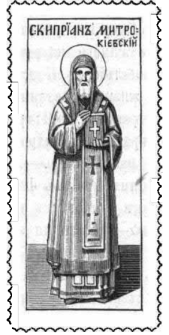
Блаженный Киприан, родом серб, из города Тернова,171 совершал иноческие подвиги на Афоне. – Послание Терновского патриарха Евфимия к иноку Киприану на Афоне показывает, что трудами своими на Афоне Киприан приобрел известность.172 Как жизнью, так и образованностью он обратил на себя особенное внимание Константинопольского патриарха, так что тот приблизил его к себе и сделал лицом доверенным. Когда в последние горды святителя Алексея князья западной России обратились к патриарху с жалобами на митрополита, патриарх «послал, говорит собор о Киприане, собственного монаха, человека миролюбивого и богобоязненного, умеющего хорошо пользоваться обстоятельствами и управлять делами; послал его, чтобы примирил князей друг с другом и с митрополитом». Киприан успел на время успокоить волнения. Но потом «недовольные князья послали большое посольство с грамотами к патриарху, умоляя дать им» митрополита, – иначе «готовы будут приступить к другой церкви». После соборного рассуждения, патриарх Филофей рукоположил «кир Киприяна в миторполита Киева и Литвы. А чтобы сохранился древний порядок и чтобы Россия впредь была под одним митрополитом», – положено тогда же, – по смерти святителя Алексия, быть Киприану митрополитом всей России.173 Это было в январе 1376 года.174 Сообразно с такими мыслями партиарха блаженный Киприан дал знать в Новгороде о своем посвящении в митрополита России. Ему отвечали из Москвы, что в Москве еще жив митрополит Алексий.175 Блаженный Киприан по долгу своему употребил всю пастырскую заботливость об исправлении дел на юго-западе. Здесь многое потребовало забот его. Вот как сам он описывал положение юго-запада и свою деятельность для него: «пусть не осуждает меня никто за то, что буду говорить. Если был я в Литве, то многих христиан избавил я от горького плена; многие незнающие Бога познали истинного Бога и обратились к истинной вере крещением; я поставил церкви, утвердил христианство, издавна опустошенные святые места восстановил и присоединил к митрополии всей России. Новгородок Литовский давно отпал, и я его ввел в порядок, получаю для митрополии десятину и села. В Волынской земле сколько лет оставалась Владимирская епископия без владыки! – я поставил владыку и св. места восстановил. Исконные софийские села перешли ко князьям и боярам, и я их отыскиваю, чтобы по смерти моей владел, кого Бог поставит». Святитель Алексий не только по старческой немощи, но и по явной неприязни к нему Ольгерда и Витовта, давно не был на юге. «При недостатке надзора святительского каждый владыка жил по своей воле, как хотел; попы, иноки и все миряне – то же, что овцы без пастуха. Ныне Божьей помощью и нашими трудами дела Церкви приведены в порядок».176
The blessed Cyprian, a Serb by birth, from the city of Tarnovo,171 performed monastic labors on Mount Athos. —The epistle of the Patriarch of Tarnovo, Euthymius, to the monk Cyprian on Athos shows that by his labors on Athos Cyprian had acquired renown.172 Both by his life and by his learning he drew the special attention of the Patriarch of Constantinople, so that the latter brought him near and made him a trusted person. When in the last years of the Hierarch Alexis the princes of western Russia turned to the patriarch with complaints against the metropolitan, the patriarch "sent," says the council concerning Cyprian, "his own monk, a peaceable and God-fearing man, able to make good use of circumstances and to manage affairs; he sent him to reconcile the princes with each other and with the metropolitan." Cyprian succeeded for a time in calming the disturbances. But afterwards "the discontented princes sent a great embassy with letters to the patriarch, beseeching him to give them" a metropolitan—otherwise they "would be ready to join another church." After conciliar deliberation, Patriarch Philotheus ordained "kyr Cyprian as metropolitan of Kiev and Lithuania. And in order that the ancient order might be preserved and that Russia might henceforth be under one metropolitan,"—it was decreed at that time—that after the death of the Hierarch Alexis, Cyprian should be metropolitan of all Russia.173 This was in January 1376.174 In accordance with such thoughts of the patriarch, the blessed Cyprian gave notice in Novgorod of his consecration as metropolitan of Russia. He was answered from Moscow that Metropolitan Alexis was still alive in Moscow.175 The blessed Cyprian, according to his duty, employed all pastoral solicitude for the correction of affairs in the southwest. Much there required his care. Thus he himself described the state of the southwest and his activity for it: "Let no one condemn me for what I shall say. If I was in Lithuania, I delivered many Christians from bitter captivity; many who knew not God came to know the true God and turned to the true faith through baptism; I established churches, confirmed Christianity, restored holy places long devastated, and united them to the metropolitanate of all Russia. Novgorodok of Lithuania had long fallen away, and I brought it into order, receiving for the metropolitanate the tithe and villages. In the Volhynian land, how many years did the Vladimir episcopacy remain without a bishop!—I appointed a bishop and restored the holy places. The ancient Sophia villages passed to princes and boyars, and I am seeking them out, so that after my death he whom God shall appoint may possess them." The Hierarch Alexis, not only from senile infirmity but also from the manifest enmity toward him of Olgerd and Vytautas, had long not been in the south. "Through the lack of hierarchical oversight, each bishop lived according to his own will, as he wished; priests, monks, and all the laity—like sheep without a shepherd. Now, by God's help and our labors, the affairs of the Church have been brought into order."176
По смерти св. Алексия (12 февраля 1378 г.) блаженному Киприану, согласно с волей патриаршего собора, надлежало принять всю Русскую Церковь в свое управление. Но чудное дело! Блаженному Киприану с первых дней святительства и почти до гроба пришлось терпеть скорби изумительные! Великих князь Московский, увлеченный пристрастием к Митяю, захотел, во что бы то ни стало, видеть Митяя митрополитом в Москве. Все лучшие люди были против Митяя, тем более, что уже известна была воля патриарха. Буйный Митяй довел дела до того, что, когда блаженный Киприан ехал в Москву, его схватили и заперли, отняли у него все, что было с ним, – и «чего не вытерпел я? Пишет он. Хулы, брань, насмешки, голод; иноков моих заперли особо, слуг особо»; потом «отправили слуг моих на лошадях изморенных, без седел и узд, – ограбленных до сорочки и обуви». Блаженный митрополит отправил обширное послание к преп. Сергию и к преп. Феодору, где изложил и искренность любви своей к великому князю, и несправедливость князя в отношении к Церкви, и низость бесчестного Митяя, а в конце произнес пастырское осуждение тем, которые оскорбили в лице его сан святительский.177 Отправляясь в Царьград, писал он: «не ищу я ни славы, ни богатства, ищу свою митрополию, которую дала мне святая великая Церковь, желая тишины и единения церковного» – между югом и севером.178 На дороге он утешен был любовью, с какой приняли его в отечественном городе Тернове. «Народ подобно волнам хлынул на встречу святителю: купцы оставили свои лавки и торговлю; ремесленники, слуги, уроженцы Тернова и иноземцы, – все вышли за город; и дева неисходная, и старцы и дети спешили видеть его; одни падали в ноги или целовали десницу его, другие довольны были и тем, что видели его издали». Так пишет родственник его Григорий Цамблак.179 Митяй утонул в море; но Пимен обманом достиг того, что посвящен был в митрополита «Великой России», тогда как Киприан признан только митрополитом «Малой России».180 Он оставался в Цареграде во особенным обстоятельствам. Он присутствовал на двух соборах, из которых один низложил Макария с патриаршей кафедры, а другой осудил Иконийского митрополита. Затем посетила его тяжкая болезнь, которая едва не довела его до гроба. Он обратился со скорбной молитвой к св. Петру и испытал чудную помощь. «Когда настал третий год, пишет он, я отправился в Царьград, надеясь найти некоторое успокоение, но нашел великое нестроение. – Там пробыл я до 13 месяцев. Нельзя было выйти из Царьграда по облежавшей его тесноте: морем владели латиняне (генуэзцы), а на суше кругом безбожные турки. Когда находился я в этом заключении, напала на меня болезнь до того тяжка, что едва оставался я живой. Лишь только пришел я в себя, обратился я за помощью к св. Петру чудотворцу; я молился ему: раб Божий и угодник Спасителя! Знаю, ты имеешь дерзновение к Богу и можешь помочь мне в беде и болезни; если угодно тебе, чтобы я, раб твой, достиг до твоего престола и поклонился чудотворному гробу твоему, подай мне облегчение в болезни моей. – И верьте мне, в тот же час тяжкая болезнь моя кончилась и через несколько дней оставил я Царьград. – Угодник Божий поспешествовал мне поклониться честному гробу его и с честью принял меня великий князь Московский».181 Великий князь, лишь только услышал о происках Пимена и о возвращении блажен. Киприана в Киев, отправил своего духовника, игумена Феодора, пригласить Киприана в Москву. Мая 23-го 1381 г. святитель встречен был за городом вел. князем и народом.182 Москва тогда торжествовала Куликовскую победу,183 возвысившую ее перед другими городами. Блаж. Киприан, описывая жизнь покровителя своего чудотворца Петра, напомнил тогда Москве, что возвышение ее началось с того времени, как свят. Петр перенес в нее свою кафедру; напомнил и о том, в каких отношениях находились между собой кн. Иоанн Данилович и святитель Петр: «князь во всем слушался отца своего, по повелению Господа, изрекшего: слушаяй вас Мене слушает; а святитель заботился о сыне своем князе и в душевных и земных нуждах его».184 Куликовская битва вместе с радостью принесла России много горьких потерь. Утешая тех, которые оплакивали смерть павших в битве, святитель установил совершать каждый год в Дмитриеву субботу поминовение об умерших. Казалось, вел. Князь полюбил блаж. Киприана: при заключении мирного договора с Олегом, князем Рязанским – принимал участие и митрополит.185 Блаж. Киприан вместе с преп. Сергием (в авг. 1381 г.) крестил сына кн. Владимира Андреевича Серпуховского.186 – У Пимена на дороге в Москву отобрали знаки сана и отправили его в Чухлому, откуда через год переведен был в Тверь. Блаж. Святитель Киприан усердно выполнял дела пастырского служения своего; он писал тогда к игумену Афанасию обширное послание с разными наставлениями.187 Между тем после нашествия Тохтамыша на Москву опять вспыхнуло неудовольствие на блаж. Киприана. Это нашествие было так неожиданно, что сам вел. князь вынужден был удалиться из столицы, чтобы собрать войска на севере. Митрополит только за два дня до осады Москвы возвратился из Новгорода; в оставленный вел. князем столице все волновалось, – большая часть хотела убежать, но другие не пускали; начались убийства и грабежи. Митрополит напрасно старался успокоить волнение: его не слушали. В таком положении не видно, для чего было нужно оставаться митрополиту там, где никто не слушал его. Когда вместе с вел. княгиней хотел он оставить Кремль, то и ему и вел. княгине пришлось перенести много оскорблений, пока удалось им кое-как вырваться на свободу.
After the death of St. Alexis (12 February 1378), blessed Cyprian, in accordance with the will of the patriarchal council, was to take the whole Russian Church under his administration. But a wondrous thing! From the very first days of his hierarchal service and almost to the grave, blessed Cyprian had to endure astonishing sorrows! The Great Prince of Moscow, carried away by his partiality for Mityai, desired, at any cost, to see Mityai as metropolitan in Moscow. All the best people were opposed to Mityai, the more so since the will of the patriarch was already known. The turbulent Mityai brought matters to such a point that, when blessed Cyprian was traveling to Moscow, he was seized and locked up; everything that was with him was taken from him—and “what did I not endure?” he writes. “Blasphemy, abuse, mockery, hunger; my monks were locked up separately, the servants separately”; then “they sent my servants on exhausted horses, without saddles or bridles—robbed down to their shirt and shoes.” The blessed metropolitan sent an extensive epistle to Venerable Sergius and to Venerable Theodore, in which he set forth both the sincerity of his love for the Great Prince and the prince’s injustice toward the Church, and the baseness of the dishonorable Mityai, and at the end pronounced a pastoral condemnation upon those who had insulted the hierarchal dignity in his person.177 Setting out for Constantinople, he wrote: “I seek neither glory nor riches; I seek my metropolis, which the holy great Church gave me, desiring peace and unity of the Church”—between the south and the north.178 On the way he was consoled by the love with which he was received in his native city of Tarnovo. “The people, like waves, rushed to meet the hierarch: merchants left their shops and trade; craftsmen, servants, natives of Tarnovo and foreigners—all went out of the city; and the maiden who never left her home, and the old men and children hastened to see him; some fell at his feet or kissed his right hand, others were content even to see him from afar.” Thus writes his relative Gregory Tsamblak.179 Mityai drowned in the sea; but Pimen by deceit achieved that he was consecrated metropolitan of “Great Russia,” while Cyprian was recognized only as metropolitan of “Little Russia.”180 He remained in Constantinople due to special circumstances. He was present at two councils, one of which deposed Macarius from the patriarchal throne, and the other condemned the Metropolitan of Iconium. Then a grievous illness visited him, which nearly brought him to the grave. He turned with sorrowful prayer to St. Peter and experienced wondrous help. “When the third year came,” he writes, “I set out for Constantinople, hoping to find some repose, but I found great disorder. I remained there for up to thirteen months. It was impossible to leave Constantinople because of the straits that beset it: the sea was held by the Latins (Genoese), and on land all around were the godless Turks. While I was in this confinement, an illness fell upon me so severe that I scarcely remained alive. As soon as I came to myself, I turned for help to St. Peter the Wonderworker; I prayed to him: ‘Servant of God and favorite of the Savior! I know that you have boldness before God and can help me in trouble and illness; if it is pleasing to you that I, your servant, should reach your throne and bow down before your wonderworking tomb, grant me relief from my illness.’ And believe me, in that same hour my grievous illness ended, and after a few days I left Constantinople. The favorite of God sped me on to venerate his honorable tomb, and the Great Prince of Moscow received me with honor.”181 The Great Prince, as soon as he heard of Pimen’s intrigues and of blessed Cyprian’s return to Kiev, sent his confessor, Abbot Theodore, to invite Cyprian to Moscow. On 23 May 1381, the hierarch was met outside the city by the Great Prince and the people.182 Moscow was then celebrating the victory of Kulikovo,183 which had exalted it above other cities. Blessed Cyprian, describing the life of his patron, the Wonderworker Peter, reminded Moscow then that its exaltation had begun from the time when St. Peter transferred his see to it; he also reminded them of the relationship that had existed between Prince John Danilovich and Hierarch Peter: “the prince obeyed his father in all things, according to the command of the Lord, who said: ‘He who hears you hears Me’; and the hierarch cared for his son the prince in both his spiritual and earthly needs.”184 The Battle of Kulikovo, together with joy, brought Russia many bitter losses. Comforting those who lamented the death of those fallen in battle, the hierarch established that each year on Demetrius Saturday a commemoration of the departed should be performed. It seemed that the Great Prince had come to love blessed Cyprian: when concluding a peace treaty with Oleg, Prince of Ryazan, the metropolitan also took part.185 Blessed Cyprian, together with Venerable Sergius (in August 1381), baptized the son of Prince Vladimir Andreevich of Serpukhov.186 From Pimen, on the road to Moscow, the insignia of his rank were taken away, and he was sent to Chukhloma, whence after a year he was transferred to Tver. Blessed Hierarch Cyprian diligently fulfilled the duties of his pastoral service; he then wrote to Abbot Athanasius an extensive epistle with various instructions.187 Meanwhile, after Tokhtamysh’s invasion of Moscow, displeasure with blessed Cyprian flared up again. This invasion was so unexpected that the Great Prince himself was forced to withdraw from the capital in order to gather troops in the north. The metropolitan had returned from Novgorod only two days before the siege of Moscow; in the capital, abandoned by the Great Prince, everything was in turmoil—most wanted to flee, but others would not let them; murders and robberies began. The metropolitan tried in vain to calm the disturbance; he was not listened to. In such a situation, it was not clear why the metropolitan should remain where no one heeded him. When, together with the Great Princess, he wished to leave the Kremlin, both he and the Great Princess had to endure many insults before they managed somehow to break free.
Митрополит удалился в Тверь; сюда же уклонился и преп. Сергий, а Коломенский епископ Герасим укрылся в Новгороде. – Тохтамыш страшно опустошил Москву. Тогда как вел. князь сильно оскорблял об этом бедствии, а Тверской князь не принял никакого участия в отражении Тохтамыша и даже просил у него утверждения себе на престоле, не трудно было выставить перед вел. князем в сомнительном виде пребывание митрополита у Тверского князя.188 – В то же время подоспела и другая неприятность. Патриарх, узнав о заточении Пимена, «сочел делом недобрым, что человек, Церковью каким бы то ни было образом рукоположенный, предается мирской властью телесному страданию, и отправил к вел. князю грамоты, упрашивая принять его, как архиерея его земли».189 Вел. князь вызвал Кирпиана из Твери и, объявив ему неудовольствие сове за Тверь, сказал, что он принимает Пимена. Блаж. Киприану оставалось удалиться в Киев. С дороги писал он в скорби другу своему игумену Афанасию: «не хотелось мне жить без детей своих; но что делать? Кто меня вынуждает на труды? Господь Бог да подаст ему (велик. князю) и опять узнать истину! Надобно мне быть у вас скоро из Царя-града. Бог обнаружит льстеца и лживого человека».190
The metropolitan withdrew to Tver; Venerable Sergius also withdrew there, while Bishop Gerasim of Kolomna took refuge in Novgorod. Tokhtamysh devastated Moscow terribly. Since the Grand Prince was greatly aggrieved by this calamity, and the Prince of Tver had taken no part in repelling Tokhtamysh and had even asked him for confirmation on his throne, it was not difficult to present the metropolitan’s stay with the Prince of Tver in a suspicious light before the Grand Prince.188 At the same time, another unpleasantness arose. The patriarch, learning of Pimen’s imprisonment, “considered it an evil thing that a man ordained by the Church in whatever manner should be subjected by secular authority to bodily suffering, and sent letters to the Grand Prince, entreating him to receive him as the bishop of his land.”189 The Grand Prince summoned Cyprian from Tver and, declaring his displeasure with him over Tver, said that he was receiving Pimen. Blessed Cyprian had no choice but to withdraw to Kiev. On the way, he wrote in sorrow to his friend Abbot Athanasius: “I did not wish to live without my children; but what is to be done? Who compels me to labors? May the Lord God grant him (the Grand Prince) to know the truth again! I must soon come to you from Constantinople. God will expose the flatterer and the deceitful man.”190
В Киеве приняли святителя с радостью. Летопись говорит, что распоряжения его в южном крае принимали с любовью; король оказывал ему благосклонность. – Само собой понятно, что когда блаж. Киприан узнал, что Пимен принят в Москве по желанию самого патриарха, ему надлежало до времени отложить путешествие в Константинополь. Но он не забывал цели своей жизни – соединить Церкви двух государств под одну митрополию. «Я тружусь, писал он к преп. Сергию, чтобы возвратить к митрополии отпавшие от нее места, – чтобы не было разделения». – Когда в Новогороде поднялись с неудовольствиями против Пимена, да и в Москве не уважали его, Киприан отправился в Константинополь; туда же позвали и Пимена. – Однако на этот раз Пимен удержал за собой Москву, и Киприан (1386 г.) возвртился в Киев. Сюда прибыл к нему и духовный друг его игум. Афанасий.191 Рано или поздно, неправды Пимена должны были открыться. В следующем году сам патриарх вызвал Киприана в Царьграде. На этом пути в Молдавии Киприан приводил (авг. 20) молдавского воеводу Петра к присяге на верности Польскому королю. Затем видим, что в Цареграде, в Студийском монастыре, смиренно занимается он списыванием книг.192 Сюда же удалился теперь и блаженный Афанасий, который также занимался здесь списыванием полезного для Церкви Русской; в Предтечевой Цареградской обители жило тогда довольно русских.193 Киприан не оставался и без занятий правительственных: император посылал его по своим делам в славянские земли.194 Между тем дело о Пимене, требовавшее многих и долгих исследований, наконец приведено к концу. Собор (1389 г.) лишил Пимена власти и Киприана объявил митрополитом всей России. – «И преста мятеж в митрополии и бысть едина митрополия Киев и Галич и всея Руси».195 Долгое пребывание Киприана в Константинополе истощило небогатые средства его; он вошел в долги, впрочем, не один за себя, а вместе с посланником вел. князя, Ростовским епископом Феодором.196 Во время осеннего плавания по Черному мору буря рассеяла суда, на которых Киприан вместе с несколькими епископами возвращался в Россию. – Разлученные путники уже считали друг друга погибшими, но наконец собрались все к Белгороду на Днестре и с живейшими чувствами благодарили милость Божию за спасение свое.197 Смотря на ряд скорбей, посещавших блаж. Киприана в продолжение нескольких лет, нельзя не повторить слов Григория Цамблака о св. Киприане: «Господь обыкновенно посылает на святых напасти, чтобы в страданиях оказались они более славными».
In Kiev, the Hierarch was received with joy. The chronicle says that his directives in the southern region were accepted with love; the king showed him favor. – It is self-evident that when blessed Cyprian learned that Pimen had been received in Moscow at the very wish of the patriarch, it behooved him to postpone his journey to Constantinople for a time. But he did not forget the goal of his life – to unite the Churches of the two states under one metropolis. “I labor,” he wrote to Venerable Sergius, “to bring back to the metropolis those places that have fallen away from it – that there be no division.” – When in Novgorod the people rose up with displeasure against Pimen, and even in Moscow they did not respect him, Cyprian set out for Constantinople; Pimen was also summoned there. – However, on this occasion Pimen retained Moscow for himself, and Cyprian (in 1386) returned to Kiev. His spiritual friend, Abbot Athanasius, also came to him there.191 Sooner or later, the injustices of Pimen were bound to be revealed. The following year, the patriarch himself summoned Cyprian to Constantinople. On this journey, in Moldavia, Cyprian (on August 20) administered the oath of allegiance to the Polish king to the Moldavian voivode Peter. Then we see that in Constantinople, in the Studion Monastery, he humbly occupied himself with copying books.192 Blessed Athanasius also withdrew there at this time, who likewise occupied himself with copying what was useful for the Russian Church; in the Monastery of the Forerunner in Constantinople, quite a number of Russians were then living.193 Cyprian did not remain without governmental occupations either: the emperor sent him on his affairs to the Slavic lands.194 Meanwhile, the matter concerning Pimen, which required many and lengthy investigations, was finally brought to a conclusion. A Council (in 1389) deprived Pimen of authority and declared Cyprian Metropolitan of all Russia. – “And the rebellion in the metropolis ceased, and there was one metropolis of Kiev and Galich and all Rus’.”195 Cyprian’s long sojourn in Constantinople exhausted his meager resources; he incurred debts, though not for himself alone, but together with the envoy of the Great Prince, Theodore, Bishop of Rostov.196 During the autumn voyage across the Black Sea, a storm scattered the ships on which Cyprian, together with several bishops, was returning to Russia. – The separated travelers already considered one another lost, but at last they all gathered at Belgorod on the Dniester and with the liveliest feelings thanked the mercy of God for their salvation.197 Looking upon the series of sorrows that visited blessed Cyprian over the course of several years, one cannot but repeat the words of Gregory Tsamblak concerning St. Cyprian: “The Lord is wont to send tribulations upon the saints, that in sufferings they might be shown to be more glorious.”
В половине февраля 1390 г. Киприан был в Киеве, а в марте торжественно встречали его в Москве.198 Несколько времени озаботили его собой дела Тверские. Он отправился в Тверь, и там на соборе рассмотрены были дела Тверского епископа Евфимия, на которого жаловался князь. На место Евфимия посвящен им блаженный Арсений.199 Киприан еще в Константинополе приготовил некоторые меры для устройства дел в Новгороде, где волновались стригольники. Вслед за его прибытием в Москву получено послание преп. Антония с обличениями своеволию стригольников.200 Святитель отправился в Новгород. Но своеволие Новгорода, найдя себе в пищу в учении стригольников, решительно отказало митрополиту в суде месячном.201 Киприан представил патриаршую грамоту, которую испросил он еще в Цареграде, для утверждения прав своих в Новгороде. Но и это н прекратило упорства Новгородцев.202 Оставалось великому князю смирить своеволие Новгорода мечем, и он смирил его.203 Святитель со своей стороны мерами пастырскими действовал на псковитян, возмущаемых стригольниками, – написал к ним нескольких посланий.204 Новгородцы, жаловавшиеся на митрополита патриарху, получили совет патриарха повиноваться во всем митрополиту; после того приняли они Киприана с почестями, дозволили ему производить месячный суд, как теперь, так и в будущее время, и он пробыл у них с весны до Петрова поста.205 Во время неприятной борьбы со своевольным Новгородом святитель имел истинно-христианское утешение – крестить трех знаменитых мурз: он крестил их торжественно в реке Москве, в присутствии великого князя и двора.206
In the middle of February 1390, Cyprian was in Kiev, and in March he was solemnly welcomed in Moscow.198 For some time, affairs of Tver troubled him. He set out for Tver, and there at a council the affairs of Euthymius, Bishop of Tver, against whom the prince had complained, were examined. In place of Euthymius, blessed Arsenius was consecrated by him.199 Cyprian had already prepared in Constantinople certain measures for the ordering of affairs in Novgorod, where the Strigolniki were in turmoil. Following his arrival in Moscow, an epistle of Venerable Anthony was received, containing rebukes of the self-will of the Strigolniki.200 The Hierarch set out for Novgorod. But the self-will of Novgorod, having found nourishment in the teaching of the Strigolniki, flatly refused the metropolitan the monthly court.201 Cyprian presented the patriarchal charter, which he had obtained while still in Constantinople, for the confirmation of his rights in Novgorod. But even this did not put an end to the obstinacy of the Novgorodians.202 It remained for the Great Prince to humble the self-will of Novgorod by the sword, and he humbled it.203 The Hierarch, for his part, acted by pastoral measures upon the Pskovites, who were being stirred up by the Strigolniki – he wrote several epistles to them.204 The Novgorodians, who had complained to the patriarch against the metropolitan, received the patriarch’s advice to obey the metropolitan in all things; after that, they received Cyprian with honors, permitted him to conduct the monthly court, both now and in the future, and he remained with them from spring until the Fast of St. Peter.205 During this unpleasant struggle with self-willed Novgorod, the Hierarch had a truly Christian consolation – to baptize three illustrious Murzas: he baptized them solemnly in the Moscow River, in the presence of the Great Prince and the court.206
В то же время не без утешения для Киприана происходили дела о Галицкой митрополии. Не взирая на то, что и именовавшийся митрополитом Галицким просил (1391 г.) патриарха посвятить иеромонаха Симеона в Галицкого митрополита, и Луцкий епископ являлся сам (1393 г.) к патриарху с просьбой о посвящении его в митрополита, патриарх признал Киприана митрополитом всей России и поручил ему а место несовестливого Луцкого епископа посвятить достойного в Луцкого епископа.207
At the same time, not without consolation for Cyprian, affairs concerning the Metropolis of Galich were taking place. Notwithstanding that even he who styled himself Metropolitan of Galich petitioned (in 1391) the patriarch to consecrate the hieromonk Simeon as Metropolitan of Galich, and the Bishop of Lutsk himself appeared (in 1393) before the patriarch with a request for his consecration as metropolitan, the patriarch recognized Cyprian as Metropolitan of all Russia and charged him to consecrate a worthy man as Bishop of Lutsk in place of the unscrupulous Bishop of Lutsk.207
В 1395 г. Тамерлан, опустошив Рязанское княжество, приближался к Москве; имя его наводило ужас. Великий князь решился встретить его с оружием в руках. В Москве митрополит и народ слезно молились, особенно в наступивший пост Богоматери. Святитель отправил духовенство во Владимир – принес в Москву чудотворную Владимирскую икону Богоматери; шествие со св. иконой приблизилось к Москве; 22 августа митрополит со всем духовенством и жителями столицы вышел за город для сретения грядущей Защитницы. Не было ни одного, кто бы не плакал и не молился. «Владычица! Спаси нас!» взывали все из глубины сердца. И молитва сокрушения была услышана. В тот самый день, когда сретала Москва икону Богоматери, Тамерлан оставил берега Дона, на которых стоял две недели. Не одна Москва, вся Россия спаслась защитой Царицы Небесной. И все говорили: «не наши воеводы прогнали его, не наши войска устрашили его, – у него были неисчислимые войска, – сила невидимая послала на него страх и – он бежал из пределов России». Когда великий князь возвратился в Москву, святителем положено было на месте сретения чудотворной иконы построить монастырь, сохраняющий поныне имя Сретенского, и тогда же установлено праздновать повсюду 26 число августа – день избавления России от Тамерлана.208
In 1395, Tamerlane, having laid waste the Principality of Ryazan, was approaching Moscow; his name inspired terror. The Great Prince resolved to meet him with arms in hand. In Moscow, the metropolitan and the people prayed tearfully, especially during the approaching Dormition Fast. The Hierarch sent the clergy to Vladimir to bring to Moscow the wonderworking Vladimir Icon of the Mother of God; the procession with the holy icon drew near to Moscow; on August 22, the metropolitan, together with all the clergy and the inhabitants of the capital, went out of the city to meet the coming Protectress. There was not a single person who did not weep and pray. “O Lady! Save us!” all cried out from the depths of their hearts. And the prayer of contrition was heard. On that very day when Moscow met the Icon of the Mother of God, Tamerlane abandoned the banks of the Don, where he had stood for two weeks. Not Moscow alone, but all Russia was saved by the protection of the Queen of Heaven. And all said: “It was not our voivodes who drove him away, not our armies that terrified him – he had innumerable armies – an invisible power sent fear upon him, and he fled from the borders of Russia.” When the Great Prince returned to Moscow, the Hierarch decreed that a monastery be built on the spot where the wonderworking icon was met, which to this day preserves the name of the Sretensky Monastery, and at the same time it was established to celebrate everywhere the 26th day of August – the day of Russia’s deliverance from Tamerlane.208
Нужды юго-запада, где так долго не был Киприан, заставили его посетить епархии юго-запада. В апреле 1396 г. отправился он вместе с великим князем в Смоленск к Витовту и посвятил здесь епископа Смоленска Кассиана. Витовт тогда же на съезде князей дал слово не теснить православие и признать Киприана главой всего православного духовенства. Киприан отправился в Киев.209 Король Польский Ягайло, покорный слуга Ядвиги и прелатов, по временам предавал мукам несоглашавшихся заменить православие папизмом.210 Киприану надлежало иметь много терпения и рассудительности, чтобы не повредить Церкви ни неуместной ревностью, ни преступной холодностью. Он пробыл в Киеве 9 месяцев, исправляя дела православия.211
The needs of the southwest, where Cyprian had not been for so long, compelled him to visit the dioceses of the southwest. In April 1396, he set out together with the Great Prince for Smolensk, to Vytautas, and there he consecrated Cassian, Bishop of Smolensk. Vytautas, at that same congress of princes, gave his word not to oppress Orthodoxy and to recognize Cyprian as the head of all the Orthodox clergy. Cyprian set out for Kiev.209 The Polish King Jagiello, a submissive servant of Jadwiga and the prelates, from time to time subjected to torments those who refused to exchange Orthodoxy for papism.210 Cyprian needed to have much patience and prudence, so as not to harm the Church either by misplaced zeal or by culpable coldness. He remained in Kiev for nine months, setting in order the affairs of Orthodoxy.211
После стольких трудов и тревоги жизни любовь к безмолвному уединению не ослабла, а усилилась в Киприане. По возвращении в Москву с юга, уклоняясь от шума городского, искал он уединения, и любимым местом его было село Голенищево, тогда окруженное лесом. Здесь он построил храм трех святителей.212 В другое время удалялся он на Святое озеро во Владимирскую волость, где также построен им храм Преображения Господня.213 В уединении он занимался учеными трудами; но не оставлял дел управления. Здесь он обдумал, как оградить права свои правилами, согласно с духом Евангельским и историей. Он не расположен был вмешиваться в дела, прямо не относящиеся к духовной власти. Это выразил он в грамоте своей о распоряжениях Суздальского архиепископа.214 Но считал за справедливое желать и того, чтобы гражданская власть оградила своим законом неприкосновенность прав Церкви. И в несчастные времена порабощения монгольского митрополиты России получили от ханов ярлыки, которыми предоставлялось им право суда и расправы над лицами духовными и людьми подчиненными им. Теперь, когда великий князь Москвы только самого себя выставлял обязанным иметь сношения с Ордой, по усмотрению его, – все же прочее начало зависеть от него, митрополиту надлежало ожидать подтверждения прав своих от великого князя Московского, тем более, что митрополия так много и так искренно помогала ему возвыситься над всеми прочими князьями. Вследствие того в 1402 г. великий князь Василий Димитриевич писал в свое грамоте: «вот я князь великий, Василий Димитриевич, рассудил со своим отцом, с Киприаном, митрополитом Киевским и всей Руси, постановил о судах церковных по старине. Найдя старый номоканон, как управлял прадед мой, святой князь Владимир, и сын его князь великий Ярослав всей Руси, как поставили они, рассудив с митрополитами о церковных судах, и составили номоканон по греческому номоканону, определив, что такое суды церковные и права Церкви по древнему порядку: так и мы ныне поставили, чтобы оставалось то непременным навсегда и впредь, чтобы ни увеличивать, ни уменьшать, но стояло бы то непоколебимым, как написали и укрепили те великие святые князья».215 Блаженный Киприан, как инок, не считал полезным для иноков владение населенными землями.216 Но как митрополит, получивший от предшественников волости и земли, он считал законным оберегать данное Церкви Божьей, тем более, что дом его был не келья, а дворец,217 при нем служили бояре и стольники, печатник и конюший, требовавшие награждения за труды.218 Великий князь Василий Димитриевич, утверждая по совещании с Киприаном, имения за его кафедрой, а) освободил живущих в митрополичьих и монастырских вотчинах от своих податей, за исключением того времени, когда надлежало платить дань Орде; б) освободил их от своего суда и от таможенных сборов.219 – Великий князь, по соглашению с митрополитом, определил и количество сбора с церквей в пользу митрополита и его дома.220
After such labors and anxieties of life, love for silent seclusion did not weaken but grew stronger in Cyprian. Upon returning to Moscow from the south, shunning the noise of the city, he sought solitude, and his beloved place was the village of Golenishchevo, then surrounded by forest. Here he built a church of the Three Hierarchs.212 At other times he withdrew to the Holy Lake in the Vladimir district, where he also built a church of the Transfiguration of the Lord.213 In seclusion he occupied himself with scholarly labors; but he did not abandon the affairs of administration. Here he pondered how to safeguard his rights by rules, in accordance with the spirit of the Gospel and with history. He was not disposed to interfere in matters not directly pertaining to spiritual authority. This he expressed in his charter concerning the arrangements of the Archbishop of Suzdal.214 But he considered it just to desire also that the civil authority should safeguard by its law the inviolability of the rights of the Church. And in the unhappy times of the Mongol enslavement, the metropolitans of Russia received from the khans charters (yarlyks) by which was granted them the right of judgment and jurisdiction over clergy and persons subject to them. Now, when the Grand Prince of Moscow alone considered himself obliged to have dealings with the Horde, at his own discretion — while all else began to depend on him — the metropolitan had to expect confirmation of his rights from the Grand Prince of Moscow, all the more so because the metropolitanate had so much and so sincerely helped him to rise above all other princes. Consequently, in 1402, Grand Prince Basil Dimitrievich wrote in his charter: "Behold, I, Grand Prince Basil Dimitrievich, having deliberated with my father, Cyprian, Metropolitan of Kiev and All Rus', have decreed concerning church courts according to ancient custom. Having found the old nomocanon, how my great-grandfather, the holy Prince Vladimir, and his son, Grand Prince Yaroslav of All Rus', governed, and how they, having deliberated with the metropolitans concerning church courts, established and composed a nomocanon according to the Greek nomocanon, determining what church courts and rights of the Church are according to the ancient order: so also have we now established, that it should remain immutable forever and henceforth, neither to increase nor to diminish, but that it should stand unshaken, as those great holy princes wrote and confirmed."215 Blessed Cyprian, as a monk, did not consider the possession of populated lands beneficial for monks.216 But as metropolitan, having received from his predecessors districts and lands, he considered it lawful to guard what had been given to the Church of God, all the more since his household was not a cell but a palace,217 and at his service were boyars and stewards, a chancellor and a master of the horse, who required recompense for their labors.218 Grand Prince Basil Dimitrievich, confirming by deliberation with Cyprian the estates of his see, a) freed those living in the metropolitan's and monastic patrimonies from his taxes, except for the time when tribute to the Horde had to be paid; b) freed them from his court and from customs duties.219 — The Grand Prince, by agreement with the metropolitan, also determined the amount of collection from churches in favor of the metropolitan and his household.220
В июне 1404 г. блаженный Киприан снова отправился в Киев. Там открылись значительные беспорядки, так что пришлось переменить как наместника митрополичьего, так и всех служащих при нем.221 Затем был он в Луцке, где посвятил епископа; в Миролюбове, Волынском городе, виделся он с кор. Ягайлом и с в. кн. Витовтом и обоими принят был с уважением; но вынужден был, к прискорбию своему сменить Туровского епископа Антония. Витовт жаловался, будто епископ сносился с ханом Шади-Беком и призывал его властвовать в Киеве. – На деле против блаж. пастыря восстало со всей злостью латинское духовенство за его ревность к делу своему. Оно выходило из себя оттого, что «в Литве как говорил великий магистр перед дворами Европы, не заметно успехов латинства, литовцы больше обращаются в руссую веру».222 Оно не могла простить Антонию того, что пастырь обличал произволы папизма и свободно крестил в православие литовцев. Святой Киприан, узнав положение дела, хотел было ограничиться тем, чтобы на время удержать Антония при себе. Но Витовт грозил отнять западные епархии у Киприана, если Антоний не будет низложен, и святитель вынужден был уступить силе.223
In June 1404, Blessed Cyprian again set out for Kiev. There significant disorders had arisen, so that it became necessary to replace both the metropolitan's vicar and all those serving under him.221 Then he was in Lutsk, where he consecrated a bishop; in Mirolyubov, a Volhynian town, he met with King Jagiello and Grand Prince Vytautas and was received by both with respect; but he was compelled, to his sorrow, to remove Anthony, the Bishop of Turov. Vytautas complained that the bishop had supposedly communicated with Khan Shadi-Bek and summoned him to rule in Kiev. — In reality, against the blessed pastor rose with all malice the Latin clergy for his zeal in his cause. They were beside themselves because, "in Lithuania, as the Grand Master said before the courts of Europe, no progress of Latinism is noticeable; Lithuanians are rather converting to the Russian faith."222 They could not forgive Anthony that the pastor denounced the arbitraries of papism and freely baptized Lithuanians into Orthodoxy. Saint Cyprian, having learned the state of affairs, wished to limit himself to keeping Anthony with him for a time. But Vytautas threatened to take away the western dioceses from Cyprian if Anthony were not deposed, and the Hierarch was compelled to yield to force.223
Января 1-го 1406 г. св. Киприан возвратился в Москву. Отягченный старостью и скорбями жизни, он стал чувствовать близость кончины. В с. Голенищеве он занимался преимущественно молитвой и размышлениями о вечности. В начале сентябя (1406 г.), уже больной, посвятил он в Голенищеве епископа Митрофана для Суздаля; потом написал духовное завещание и 16 сент. 1406 г. предал дух свой Господу.224 Мощи его, обретенные в 1472 г. почивают в Московском Успенском соборе под спудом.225
On January 1, 1406, St. Cyprian returned to Moscow. Weighed down by old age and the sorrows of life, he began to feel the nearness of his end. In the village of Golenishchevo he occupied himself chiefly with prayer and reflections on eternity. At the beginning of September (1406), already ill, he consecrated in Golenishchevo Bishop Mitrophan for Suzdal; then he wrote his spiritual testament, and on September 16, 1406, he committed his spirit to the Lord.224 His relics, uncovered in 1472, repose in the Moscow Cathedral of the Dormition, beneath a covering.225
«Многие святые книги с греческого языка на русский переложи и довольно писания к пользе нам остави», говорит древнее известие о св. Кирпиане.226
"Many holy books from the Greek language he rendered into Russian, and left us considerable writings for our benefit," says the ancient account of St. Cyprian.226
«Духовная грамота» св. Киприана была читаема и при погребении преемников его. «Род людей земнородных! оплачем общую нашу долю, мы, которые так нечасто обогащены. О! как унизилось высокое создание Божие, образ и подобие Божие! Лежит без дыхания, полно червей нечистых, испускает смрад гнусный. Как пропала мудрость, замолкло слово, распалось двойственное естество!... Увы страсти! Земля – состав ваш, земля – покров, хотя земля же и восстанет. Увы страсти, увы мне! Нагим младенцем пришел я для плача, нагим и отхожу. К чему же труды? К чему заботы, когда знаем конец свой? Выходим из тьмы в свет и отходим из света в тьму. С плачем выходим из чрева матерьнего в этот мир, с плачем и отходим из мира печального в гроб. И начало и конец – слезы. Что же в середине? Жизнь исчезает как цвет, как прах, как тень».227
The "Spiritual Testament" of St. Cyprian was read also at the burial of his successors. "O race of earthborn men! Let us lament our common lot, we who are so rarely enriched. O! How humbled is the lofty creation of God, the image and likeness of God! It lies without breath, full of unclean worms, emitting a foul stench. How has wisdom perished, speech fallen silent, the twofold nature been dissolved!... Alas, passions! Earth is your composition, earth is your covering, though earth itself shall rise again. Alas, passions, alas for me! Naked as an infant I came for weeping, naked I depart. Why then labors? Why cares, when we know our end? We come forth from darkness into light and depart from light into darkness. With weeping we come forth from the mother's womb into this world, with weeping we depart from the sorrowful world into the grave. Both beginning and end are tears. What then in the middle? Life vanishes as a flower, as dust, as a shadow."227
Таким же живым благочестием дышит «житие св. митр. Петра», плод благодарности блаженного за избавление его от бед.228 Летопись Татищева говорит, что св. Киприан написал «многие жития русских святых». Ныне неизвестны эти многие жития, если только не разумеются жития, помещенные в Степенной книге.
The same living piety breathes in the "Life of St. Metropolitan Peter," the fruit of the blessed one's gratitude for his deliverance from misfortunes.228 The Tatishchev Chronicle says that St. Cyprian wrote "many lives of Russian saints." These many lives are now unknown, unless what is meant are the lives included in the Book of Degrees.
В послании к игумену Афанасию предложены умнеые советы и размышления. «Горе нам, пишет святитель, что оставили мы путь правый. Все хотим повелевать, все быть учителями, не быть учениками. Новоначальные хотят властвовать над многолетними и высокоумствуют. Хочется мне плакить или лить слезы. Особенно скорблю и плачу о лже, господствующей между людьми. Ни Бога не боясь, ни людей не стыдясь, сплетаем мы ложь на ближнего, увлекаемые завитсью. Лютый недуг – зависть: много убийств совершено в миру, много стран опустошено... Самого Господа распяли жиды по зависти... Приобретем братолюбие и сострадание. Нет иного пути ко спасению, кроме любви, хотя бы кто измождал тело свое подвигами, – так говорит великий учитель Павел. Кто достиг любви, достиг Бога и в Нем почивает».229
In his epistle to Abbot Athanasius, wise counsels and reflections are set forth. "Woe to us," writes the Hierarch, "that we have forsaken the right path. We all want to command, all want to be teachers, not to be disciples. Newly tonsured ones want to rule over those of many years and think highly of themselves. I want to weep or to shed tears. Especially do I grieve and weep over the falsehood that reigns among men. Neither fearing God nor ashamed before men, we weave lies against our neighbor, carried away by envy. A fierce malady is envy: many murders have been committed in the world, many lands laid waste... The Lord Himself was crucified by the Jews out of envy... Let us acquire brotherly love and compassion. There is no other path to salvation except love, even if one should exhaust his body with ascetic labors — so says the great teacher Paul. He who has attained love has attained God and reposes in Him."229
Псковитянам писал он: «я слышал, что во Пскове миряне судят и наказывают священников в делах церковных. Мирянам не следует ни судить, ни наказывать священника, не следует осуждать его, ни говорить о нем худо. Святитель, который поставил священников, судит, наказывает и учит их. Дети мои псковичи! Никому из вас, от малого до великого, не должно судить и наказывать их; не берите греха на душу, не кладите зарока о том на всесь Псков. Слышал я, что некоторые молодые священники, овдовев и не сняв с себя священства, женятся. И о том не нам судить или ограничивать произвол. Это ведает святитель, поставивший их: он поставил, он и извержет, он и судит, и наказывает, и учит. Вам же не должно вмешиваться в такие дела. Кого Церковь Божия и святитель провозгласят, того и должны вы чтить. Куплей ли, или даром предсмертным достались Церкви земли и села, не вступайте в эти земли, чтобы не обидеть Церкви Божьей, что было бы тяжким грехом перед Богом. По сану и по власти, данной Богом, учу вас, детей моих, слушайтесь».230 Священникам говорил он: «соблюдайте священство, которое приняли, в чистоте и непорочности; живите в мятежном мире, как люди Божии. Кто хочет учить, прежде внимай себе. Кто говорит и учит, но не творит, тот медь звенящая». Укоряет священников за то, что «не смиряют грешников эпитимиями, а смотрят на то, как бы брать деньги».231
To the Pskovites he wrote: "I have heard that in Pskov laymen judge and punish priests in church matters. Laymen ought neither to judge nor punish a priest, nor ought they to condemn him, nor speak evil of him. The Hierarch who ordained the priests judges, punishes, and teaches them. My children, Pskovites! None of you, from small to great, should judge or punish them; take not sin upon your souls, lay not a vow upon all Pskov concerning this. I have heard that some young priests, having become widowers and without laying aside the priesthood, marry. And concerning that, it is not for us to judge or to restrict their will. That is known to the Hierarch who ordained them: he ordained, he shall also depose, and he judges, punishes, and teaches. But you should not interfere in such matters. Whom the Church of God and the Hierarch proclaim, him should you honor. Whether by purchase or by deathbed gift lands and villages came to the Church, do not encroach upon those lands, lest you offend the Church of God, which would be a grievous sin before God. According to my rank and the authority given by God, I teach you, my children, to obey."230 To the priests he said: "Keep the priesthood which you have received in purity and blamelessness; live in the turbulent world as men of God. He who wishes to teach, first attend to himself. He who speaks and teaches but does not do, is a sounding brass." He reproaches priests for "not humbling sinners with penances, but looking rather to how they might take money."231
Святитель много заботился о правильности и благоприличии богослужения церковного. Он рассылал списки литургии и других священнодействий, предлагал объяснения священнодействиям, обличал производы в их совершении.232 – Им переведены были с греческого требники, разные каноны и молитвы.233
The Hierarch was greatly concerned for the correctness and decorum of church services. He sent out copies of the Divine Liturgy and other sacred rites, offered explanations of the sacred rites, and denounced arbitrary practices in their celebration.232 — By him were translated from the Greek the service books (trebniks), various canons, and prayers.233
По летописи Татищева, Киприан «переписал соборы, бывшие в Руси». И по грамоет великого князя Василия видно, что святитель собирал канонические статьи русских святителей и князей. В VXI в. хранилась в Московском Успенском соборе кормчая Киприанова перевода.234 На нее указывал игумен Илия в споре с Зизанием.235 Попечительный святитель и собственными посланиями ограждал законное церковное управление от своеволия людского.236
According to the Tatishchev Chronicle, Cyprian "copied the councils that were held in Rus'." And from the charter of Grand Prince Basil it is evident that the Hierarch gathered the canonical articles of Russian Hierarchs and princes. In the 16th century, the Kormchaya (Nomocanon) of Cyprian's translation was preserved in the Moscow Cathedral of the Dormition.234 Abbot Elijah pointed to it in his dispute with Zizanius.235 The solicitous Hierarch also by his own epistles guarded lawful church administration from human self-will.236
Житие Ев. Вячеслава, писанное на церковнославянском языке Чехом вслед за смертию Вячеслава, нап. Востоковым в Московском вестнике 1829 г. Оно же в Чешском переводе Ганки изд. в Casop. Gesk. Mus. 1830, с немногими переменами – в сентябр. минее Макария. Vita et passio s. Wenzeslavi martyris, писанное по распоряжению имп. Оттова (973–83) изд. in 1 t. script. Boheraicorum, Prahae 1783. Житие Вячеслава, писанное Христаном, принадлежит XIII в.
The Life of St. Wenceslaus, written in Church Slavonic by a Czech immediately after the death of Wenceslaus, was published by Vostokov in the Moscow Messenger of 1829. The same, in the Czech translation of Hanka, was published in Časopis Českého Musea 1830, with slight changes — in the September menaion of Macarius. Vita et passio s. Wenceslavi martyris, written by order of Emperor Otto (973–83), published in vol. 1 of Scriptores Bohemicorum, Prague 1783. The Life of Wenceslaus written by Christian belongs to the 13th century.
Гельмольд так говорит о восстании Славян XI в.: «Славяне свергли вооруженною рукою иго рабства и с такою твердостию старались защитить свою свободу, что лучше захотели умереть, чем принять имя христиан или платить дань Саксонским князьям. – Этот позор навлекла несчастная жадность Саксонцев... Саксонцы всегда склонны более увеличивать подати, чем приобретать души для Господа. – Христианство давно укрепилось бы в Славянии, если бы не препятствовала тому жадность Саксонцев». Chron. 1. § 25.
Helmold speaks thus of the uprising of the Slavs in the 11th century: "The Slavs cast off by armed hand the yoke of servitude and strove with such firmness to defend their freedom, that they preferred rather to die than to receive the name of Christians or to pay tribute to the Saxon princes. — This disgrace was brought on by the wretched greed of the Saxons... The Saxons are always more inclined to increase tribute than to acquire souls for the Lord. — Christianity would long ago have been established in Slavia, had not the greed of the Saxons hindered it." Chron. 1. § 25.
Древний текст: «отсади же Воротислав в Будучь и нача отрок учитися книгам Латинским». Христан: Wenceslaum in lege divina litteris imbuendum tradiderat in civitatem, qvae Budecz vocabatur. – Тут уже примесь толкований романизма.
The ancient text: "Then Vratislav placed him in Budeč, and the youth began to learn Latin books." Christian: Wenceslaum in lege divina litteris imbuendum tradiderat in civitatem, quae Budecz vocabatur. — Here there is already an admixture of Romanist interpretations.
«И взрасте отрок и яко бы уяти ему волос и призва Воротислав князь епископа етера сь всем клиросом и певшим литургию в церкви святые Марии, – поставиша на степени пред олтарем, и благослови его епископ... Умре Воротислав князь и поставиша князя Вячеслава на столе дедьи».
"And the youth grew, and when it was time to cut his hair, Prince Vratislav summoned a certain bishop with all his clergy, and having sung the Divine Liturgy in the church of St. Mary, — they placed him on the step before the altar, and the bishop blessed him... Prince Vratislav died, and they set Prince Wenceslaus on the throne of his grandfather."
Cont. Beginon. ар. Perz. 1. 616. Annal. Sax. an. 928. В уставе Генриха Птицелова о Магдебургских турнирах (995 г.) упоминаются Браним князь Поморский и Велемир Русский, Belimarus princeps Russise.
Cont. Benignon. ap. Pertz. 1. 616. Annal. Sax. an. 928. In the statute of Henry the Fowler concerning Magdeburg tournaments (995) there are mentioned Branim, Prince of Pomerania, and Velemir the Russian, Belimarus princeps Russiae.
Древний текст: «приде день сватаго Емърана, к немуже обещав святый Вячеслав, веселяшеся о Боге». В Макариевой чет. мин. вместо Емърама написали: «Авраама». Поправка неудачная. Еммеран был Французским епископом и проповедовал Евангелие в Регенбурге, где и замучен был сент. 22-го 652 г. (Buttler Leben d. Vätem u. Märtyrer zu 22 September). Составители Макарьевой минеи внесли и несколько других перемен в древний текст сказания о св. Вячеславе, как показал г. Бодянский о времени Славян. письмен, стр. 77. 80. 81.
The ancient text: "there came the day of St. Emmeram, at which the holy Wenceslaus had promised [to be present], and he rejoiced in God." In Macarius's Great Menaion Reader, instead of Emmeram they wrote: "Abraham." An unsuccessful correction. Emmeram was a French bishop and preached the Gospel in Regensburg, where he was martyred on September 22, 652 (Butler, Leben der Väter und Märtyrer, on 22 September). The compilers of Macarius's menaion also introduced several other changes into the ancient text of the account of St. Wenceslaus, as Mr. Bodyansky has shown in On the Time of Slavonic Writing, pp. 77, 80, 81.
Бодянский о времени Славян. письмен прим. 18. У Вершинского св. Вячеслав убит в 929 г., св. Людмила – в 922 г., мощи князя перенесены в 932 г. (стр. 147. 154). Все это – неверно.
Bodyansky, On the Time of Slavonic Writing, note 18. In Vershinsky, St. Wenceslaus was killed in 929, St. Ludmila in 922, the relics of the prince were translated in 932 (pp. 147, 154). All this is incorrect.
Изв. акад. V, 192. 275. 276. В прологах сентяб. 28 воспоминается убиение св. князя Вячеслава, а 4 марта перенесение мощей из Болеславля в Прагу.
Izvestia of the Academy V, 192, 275, 276. In the Prologues, September 28 commemorates the murder of the holy Prince Wenceslaus, and March 4 the translation of his relics from Boleslav to Prague.
В прибавлении к житию св. Кирилла и в некоторых синаксарях сказано: «потом же (после смерти Мефодия) многим летом минувшим, пришед Вайтех в Мораву и в Чехы и в Ляхы, разруши веру правую, и Русскию (т. е. Славянскую) грамату отъврже, а Латинскую вери и грамоту постави, и правые веры епископы и попы изсече, а другия раэгна». – Жизнь Войтеха, испорченного Славянина и мечтателя, убитого Немцами, см. у Стасюлевича: история средних веков 11, 571–578.
In the addition to the Life of St. Cyril and in some synaxaria it is said: "Then, after many years had passed (after the death of Methodius), Vojtěch came to Moravia and to the Czechs and to the Poles, and destroyed the right faith, and cast away the Russian (i.e., Slavonic) letters, and established the Latin faith and letters, and cut down the bishops and priests of the right faith, and scattered others." — The life of Vojtěch, a corrupted Slav and dreamer, killed by the Germans, see in Stasyulevich: History of the Middle Ages, vol. 11, pp. 571–578.
Там же у Шафарика: Wybor z literatury ceske, w Praze 1845 г. У Ганки еще одно старинное сказание, взятое из служебника, сходное по содержанию с первым известием.
Also in Šafařík: Wýbor z literatury české, w Praze 1845. In Hanka there is also another ancient account, taken from a service book, similar in content to the first notice.
Cosmæ chronicon, lib. 1. «Осыпали (Сазавцев) разными поношениями, внушая князю (Сиштигневу) разные выдумки и клеветы, – говорили, что Славянскою письменностию вводится ересь и они совсем испорчены лицемерием; потому надобно выгнать их и ввесть Латинского аббата с братиями его».
Cosmae chronicon, lib. 1. "They heaped (the Sázava monks) with various reproaches, suggesting to the prince (Spytihněv) various inventions and slanders, — saying that by Slavonic writing a heresy was introduced and that they were wholly corrupted by hypocrisy; therefore they ought to be driven out and a Latin abbot with his brethren brought in."
Жизнь св. Киприана описана в прибавл. к твор. отц. 1848 г. Но после того открыты памятники, дотоле неизвестные.
The Life of St. Cyprian was described in the Supplement to the Works of the Holy Fathers of 1848. But since then monuments have been discovered that were previously unknown.
«Послание л. Евфимия к Киприану монаху, жившу на Афон. горе и просившу написатися о церковных вещах», содержит ответы на вопросы: a) о поклонах во дни Пятидесятницы и в 12 дней между Рождеством Христовым и Богоявлением; б) о причащении св. таин в отсутствие священника в пустынях. Опис. Синод. ркп. II, 208.
"The Epistle of the monk Euthymius to Cyprian the monk, who dwelt on Mount Athos and asked that he write concerning church matters," contains answers to the questions: a) concerning prostrations during the days of Pentecost and during the 12 days between the Nativity of Christ and Theophany; b) concerning communion of the Holy Mysteries in the absence of a priest in the wildernesses. Description of Synodal Manuscripts II, 208.
Послание к игумену Сергию и Феодору в православн. собесед. 1860 г., стр. 85–102. Первое послание писано из Любутска 3 июня 1378 г., второе 23 июня, третье 18 октября 1378 г.
Epistle to Abbot Sergius and Theodore in Orthodox Interlocutor 1860, pp. 85–102. The first epistle was written from Lyubutsk on June 3, 1378, the second on June 23, the third on October 18, 1378.
Третье письмо к игуменам от 18 октября из Киева. Собесед., стр. 104 сл. Ник. л. IV, 92. Вероятно, Киприан отправился из Киева в Царьград и вслед за Митяем, который выехал из Москвы в июле 1379 г. Так должно быть и потому, что, по словам его, пробыл он в Константинополе 13 месяцев, тогда как в Киеве видим его в начале 1381 г. сл. пр. 181.
The third letter to the abbots of October 18 from Kiev. Interlocutor, p. 104 ff. Nikon Chronicle IV, 92. Probably Cyprian set out from Kiev to Constantinople and followed after Mityai, who had left Moscow in July 1379. This must be so also because, according to his own words, he remained in Constantinople 13 months, whereas we see him in Kiev at the beginning of 1381, cf. note 181.
«Похвальное слово Киприану, говоренное спустя 3 года после кончины его» (1406 г.). Здесь сказано, что это свидание с родиною было за 30 лет назад тому.
"A Eulogy to Cyprian, delivered 3 years after his death" (1406). Here it is said that this meeting with his homeland was 30 years before that.
Типогр. лет., стр. 147. Собр. л. 1, 233. Никон. л. 4, 77. 78. 92. 93. «В л. 6889 в праздник Воскресения Господня прийде из Царяграда на Русь преосвященный Киприан митрополит на свою митрополию в Москву; князь же великий Димитрий Иван. прия его с великою честию».
Typographical Chronicle, p. 147. Collection of Chronicles 1, 233. Nikon Chronicle 4, 77, 78, 92, 93. "In the year 6889, on the feast of the Resurrection of the Lord, there came from Constantinople to Rus' the most reverend Cyprian, Metropolitan, to his metropolis in Moscow; and Grand Prince Demetrius Ivanovich received him with great honor."
Еще Карамзин (5, пр. 53) замечал, что по Троицкой Ростовской и по другим летописям, кроме Никоновской, 4, 93. 96. 99, Киприан прибыл в Москву в 1381 г. после Куликовской битвы. В правосл. собесед. 1862 г. 1, 34–36 – неверно.
Karamzin himself (5, note 53) observed that according to the Trinity, Rostov, and other chronicles, besides the Nikon one, 4, 93, 96, 99, Cyprian arrived in Moscow in 1381, after the Battle of Kulikovo. In the Orthodox Interlocutor 1862, 1, 34–36 — this is incorrect.
Послание в правосл. собес. 1860 г. 2, 105. Кого называл Киприан льстецом и лживым человеком? Конечно Пимена. Он тогда, как Киприан был в Твери, сидел в Тверском заключении и вероятно через сторонников своих доводил до в. князя несправедливые слухи о Киприане, а в Константинополе жаловался на вел. князя. – В Москву из Твери Киприан прибыл 7 окт. 1382 г. (Карам. 5, пр. 101). Потому надобно положить, что из Москвы в Киев отправился он в конце октября.
Epistle in Orthodox Interlocutor 1860, 2, 105. Whom did Cyprian call a flatterer and a lying man? Of course, Pimen. He, at the time when Cyprian was in Tver, was sitting in Tver imprisonment, and probably through his partisans brought unjust rumors about Cyprian to the Grand Prince, while in Constantinople he complained of the Grand Prince. — Cyprian arrived in Moscow from Tver on October 7, 1382 (Karamzin 5, note 101). Therefore one must suppose that he set out from Moscow to Kiev at the end of October.
Никон. л. IV, 139. 140. 145. 39. Собр. л. IV, 91. 92. V, 239. 243. Письмо к Афанасию с извещением: «еду кь Царюгороду конми на Волошскую землю»; – без года и числа. Издатели относят его к началу 1383 г.
Nikon Chronicle IV, 139, 140, 145, 39. Collection of Chronicles IV, 91, 92. V, 239, 243. A letter to Athanasius with the notice: "I am going to Constantinople by horse to the Wallachian land"; — without year and date. The editors assign it to the beginning of 1383.
Палаузова Румынские государства в отечеств. зап. 1858 г. октяб., стр. 544. В 1387 г. в Студийском монастыре писана м. Киприаном лестница. Собственноручная ркп. в б. Моск. дух. акад. № 152. Грамота, вызывавшая Киприана в Константинополь, писана мая 27-го 1387 г. Acta patriarch. 2; 98.
Palauzov, The Danubian Principalities, in Notes of the Fatherland 1858, October, p. 544. In 1387, in the Studite monastery, the Ladder was copied by Metropolitan Cyprian. The autograph manuscript is in the library of the Moscow Theological Academy, No. 152. The charter summoning Cyprian to Constantinople was written May 27, 1387. Acta patriarch. 2, 98.
Соборное деяние 1389 г.: «прибыл и кир Киприан согласно с писанием патриарха к нему. Прошло еще время, пока этот последний, посылаемый по царским делам, воротился». Архив Калачова, стр. 14.
Council act of 1389: "and kyr Cyprian arrived in accordance with the writing of the patriarch to him. Time passed again, until the latter, sent on imperial affairs, returned." Archive of Kalachov, p. 14.
Ист. ак. 1. № 282. Здесь замечательно и то, что митрополит обещает присланных от Нотары проводить с товарами до Буга, «доколе изыдут конечне от всякия Русския земли». Не указывает ли это как на испытанные Киприаном опасности пути, так и на тогдашние пределы России?
Historical Acts 1. No. 282. Here it is also remarkable that the metropolitan promises to escort those sent by Notaras with their goods as far as the Bug, "until they depart finally from every Russian land." Does this not point both to the dangers of the journey experienced by Cyprian and to the then boundaries of Russia?
Собр. л. 3, 97. Ник. лет. 4. 257. Степ. кн. 1, 252. Acta patriarch. 2, 177–203. Новгородцы «даша ему (м. Исидору). суд по старине» в 1437 г. (собр. л. 3, 112. Царств. л. 203). Ясно, что отношения Новгорода к митрополиту после патриаршего суда не оставались в неопределенном виде. То же видно и по договору 1471 г. (собр. госуд. грам. 1. № 20).
Collection of Chronicles 3, 97. Nikon Chronicle 4, 257. Book of Degrees 1, 252. Acta patriarch. 2, 177–203. The Novgorodians "gave him (Metropolitan Isidore) judgment according to ancient custom" in 1437 (Collection of Chronicles 3, 112. Tsarstvenny Chronicle 203). It is clear that the relations of Novgorod to the metropolitan after the patriarchal judgment did not remain in an indefinite state. The same is evident from the treaty of 1471 (Collected State Charters 1. No. 20).
Опис. муз. 296. Розенкампф о кормчей, в примеч., стр. 209. 210. Неволина о церк. суде, стр. 147–151. Спб. 1847.
Description of the Museum 296. Rosenkampf on the Kormchaia, in the notes, pp. 209. 210. Nevolin on ecclesiastical court, pp. 147–151. St. Petersburg, 1847.
Никон. лет. 4, 318. 5, 1–7. Львов. лет. 2, 239. Русск. врем. 1. 218. 219. Собр. лет. VIII, 78. По ркп. житию (у Царского № 481. 694) и печат. прологу: «преставися к Богу в л. 6914. Сент. в 16 д.». Но по летописям скончался сент. 16-го 6915 (след. 1406 г.). На соборе 1667 г. говорили: «ниже Киприан и Фотий митрополиты и прочии, котории поставлени суть в Цареграде во архиерейство, носиша белые клобуки... Послан белый клобук к Василию епископу Новгородскому от Филофея патриарха». Но исторические памятники говорят другое. Никон. лет. под 1392 г, (4, 231) и Русск. времен. 1, 276, показывают: «клобуки ж белыи изначала вси ношаху на Руси, и митрополиты и епископи». О митр. Ппмене, возвращавшемся из Царяграда в сане митрополита, сказано: «на Коломне сняша с него клобук белый» (Карамз. 5, пр. 60). Об Антонии епископе Туровском под 1404 г. говорится: «отъя от него (м. Киприан) сан епископский и ризницу его и клобук белый» (Карамз. 5, пр. 232). Собор 1564 г. говорил, что древние Московские митрополиты Петр, Алексий, Киприан, Новгородский святитель Иоанн, Ростовские святители Леонтий, Игпатий, Исаия, изображаются на иконах в белых клобуках, и потому определил: Московский митрополит должен носить белый клобук. Ист. ак. 1. № 173.
Nikon Chronicle 4, 318. 5, 1–7. Lvov Chronicle 2, 239. Russian Time-book 1, 218. 219. Collection of Chronicles 8, 78. According to the manuscript Life (in Tsarsky's collection, No. 481. 694) and the printed Prologue: "he reposed in God in the year 6914, September 16." But according to the chronicles he died September 16, 6915 (consequently 1406). At the Council of 1667 they said: "Neither Cyprian nor Photius the metropolitans, nor others who were appointed in Constantinople to the episcopate, wore white klobuks... A white klobuk was sent to Basil, Bishop of Novgorod, by Patriarch Philotheus." But historical monuments say otherwise. The Nikon Chronicle under the year 1392 (4, 231) and the Russian Time-book 1, 276 show: "white klobuks from the beginning all wore in Rus', both metropolitans and bishops." Of Metropolitan Pimen, returning from Constantinople in the rank of metropolitan, it is said: "at Kolomna they took from him the white klobuk" (Karamzin 5, note 60). Of Anthony, Bishop of Turov, under the year 1404 it is said: "he (Metropolitan Cyprian) took from him the episcopal rank and his vestry and his white klobuk" (Karamzin 5, note 232). The Council of 1564 said that the ancient Moscow metropolitans Peter, Alexis, Cyprian, the Novgorod Hierarch John, the Rostov Hierarchs Leontius, Ignatius, Isaiah, are depicted on icons in white klobuks, and therefore decreed: the Moscow metropolitan must wear a white klobuk. Historical Acts 1, No. 173.
Собр. лет. VI, 195. 196. Степ. кн. 2, 89. Львов. лет. 3, 26. В уставе XVI в. «сент. 16 преставление св. Киприана митрополита». Толстого 1. № 100. То же в псалтыри Толстого 1. № 113.
Collection of Chronicles 6, 195. 196. Book of Degrees 2, 89. Lvov Chronicle 3, 26. In a ustav (typikon) of the 16th century: "September 16, the repose of St. Cyprian the metropolitan." Tolstoy 1. No. 100. Likewise in the Psalter of Tolstoy 1. No. 113.
Окончание завещания в Никон. лет. 5, 3–7. В актах, относящихся к юрид. быту, I, 544–547. Здесь сказано: «по концы ж таковые грамоты приписано философски».
The conclusion of the testament in the Nikon Chronicle 5, 3–7. In Acts pertaining to juridical life 1, 544–547. Here it is said: "at the end of such a charter there is written something philosophical."