Готф, ученик Феофила († около 340 года), епископа Готфского. Когда король Атанарих, соперник другого короля Фридигерна, союзника Римской империи и доброхота христиан, приметил, что и в его владениях ширится христианство через подданных Фридигерна, то объявил запрет на христианство и многих из явных христиан предавал смерти. Никита, сгорая ревностью по вере, обличил Атанариха в лицо за жестокость, посему был нещадно бит и брошен в огонь (в 372 году). Мощи его перенесены неким греческим торговцем в город Мопсует, в Киликию, – откуда, вероятно в VII веке, перенесены в Константинополь.
A Goth, disciple of Theophilus († ca. 340), Bishop of the Goths. When King Athanaric, rival of the other king Fritigern, an ally of the Roman Empire and a well-wisher of Christians, noticed that Christianity was spreading even in his domains through the subjects of Fritigern, he proclaimed a ban on Christianity and put many open Christians to death. Niketas, burning with zeal for the faith, denounced Athanaric to his face for his cruelty, wherefore he was mercilessly beaten and cast into the fire (in the year 372). His relics were translated by a certain Greek merchant to the city of Mopsuestia in Cilicia—whence, probably in the 7th century, they were translated to Constantinople.
Сей святый жил в IX веке и был уроженцем местечка Муравиного (Μύρμηξ), в Вифинии. Дочь благочестивых родителей, Феофила, вступивши в супружество, родила сына, которого нарекла Филофеем (Боголюбивым), – самым именем желая внушить сыну приличный ему жребий: чтобы, что есть, когда перестанет ползать, выучится говорить и узнает, какого имени сподобился, он естественного своего человека соделывал угоднейшим Богу и стыдился такое прекрасное и святое имя бесчестить непотребными делами. И, действительно, (говорит жизнеописатель его Евствфий, Солунский митрополит XI века) блаженный отрок старался оправдать имя свое деятельностью, и как именем, так и делами начертывал в себе образ Божий, поучаясь слову Божию и размышлял об уставах Божиих, утешаясь откровениями Господними и советуясь с заповедями Его (Пс.118:23–24), часто посещая и храм Божий, это училище добродетели, ходя туда на обычные собрания и насыщая там дух свой. Не одним же умозрением, но еще большее благоприличной деятельностью любомудро приближался он к Высочайшему Существу, – деятельностью, о которой отчасти только свидетельствуют его благотворительность и обуздание чрева. Потому что, истощая из своего телесного сосуда все лишние соки и влаги, которыми расслабляется человек, и облегчая тяготение к земле пощениями, он старался быть выше земли, подобно ангелам и сообразно Евангельским заповедям, считая недостойным себя делом быть вписанным в близкого Богу, Верховному Отцу светов (Иак.1:17), а привязываться к матери земле (Мф.10:37) и небесному предпочитать дольнее и низкое. А может быть, не наполняя чрева, он расширял внешние хранилища свои и помышлял воздвигнуть еще большие (см. Лк.12)? Нет! По благословению Божию, земного богатства и всяких житейских потребностей было у него в таком изобилии, каким только измеряют счастье на земле; но общительность, участие к другим и человеколюбие, направляемые Евангелием, располагали святого мужа сообщать свое добро и другим, с единоестественными делиться благословением Божиим и вверять сокровища утробам бедных, слагать их в такие именно хранилища, на которые указывает Сам Бог (Мф.19:21), говоря: продавайте имения ваши и давайте милостыню; приготовляйте себе влагалища неветшающие, сокровище неоскудевающее, на небесах, куда вор не приближается и где моль не съедает (Лк.12:33). Он радовался, подавая щедро, как будто не давал, а сам принимал щедрые дары; и вообще он старался, по-апостольски, быть всем для всех (Кор.9:22). И даяние его не было ни скудно, ни лицемерно (разве кто скажет, что и сеющий семя в чаянии будущей жатвы сеет лицемерно).
This saint lived in the 9th century and was a native of the village of Mirmix (Μύρμηξ), in Bithynia. The daughter of pious parents, Theophila, having entered into marriage, gave birth to a son, whom she named Philotheus (God-loving)—by the name itself wishing to instill in her son a fitting lot: that, when he ceased to crawl, learned to speak and came to know of what name he had been deemed worthy, he might make his natural man most pleasing to God and be ashamed to dishonor such a beautiful and holy name with unseemly deeds. And indeed, (says his biographer Eustathius, Metropolitan of Thessalonica of the 11th century) the blessed youth strove to justify his name by his activity, and both by name and by deeds he traced in himself the image of God, learning the word of God and meditating on the ordinances of God, delighting in the revelations of the Lord and taking counsel with His commandments (Ps. 118:23–24), often visiting also the church of God, that school of virtue, going there for the usual assemblies and satiating his spirit therein. Not by speculation alone, but even more by seemly activity did he approach the Most High Being by wisdom—activity of which his charity and the restraint of his belly bear only partial witness. For, draining from his bodily vessel all superfluous juices and humors by which a man is enervated, and lightening his gravitation toward the earth by fastings, he strove to be above the earth, like the angels and in accordance with the Gospel commandments, deeming it unworthy of himself to be inscribed as near to God, the Supreme Father of lights (Jas. 1:17), yet to cling to the mother earth (Mt. 10:37) and to prefer the lower and base to the heavenly. But perhaps, by not filling his belly, he was expanding his external storehouses and thinking to raise up even greater ones (see Lk. 12)? No! By God's blessing, he had earthly wealth and all manner of worldly necessities in such abundance as happiness is measured on earth; but sociability, compassion for others, and philanthropy, directed by the Gospel, disposed the holy man to share his goods with others, to divide the blessing of God with those of the same nature, and to entrust treasures to the bellies of the poor, to lay them up in precisely those storehouses to which God Himself points (Mt. 19:21), saying: Sell your possessions and give alms; prepare for yourselves imperishable purses, an inexhaustible treasure, in heaven, where no thief approaches and where moth does not consume (Lk. 12:33). He rejoiced in giving generously, as if he were not giving but himself receiving generous gifts; and in general he strove, apostolically, to be all things to all men (1 Cor. 9:22). And his giving was neither niggardly nor hypocritical (unless one should say that he who sows seed in hope of a future harvest sows hypocritically).
Так как много есть путей добродетели и восхождение на высоту совершенства происходит не одинаково, то и Филофей обслуживал, какой бы ему путь избрать для безопаснейшего и удобнейшего течения жизни и угождения Богу. Многим кажется превосходнейшей других жизнь уединенная и нероскошная, когда человек не имеет ничего и блюдет только себя самого, – потому ищут мест удаленных и пустынных; иные укрываются в пещеры и недра земли, и многое другое делают, чтобы избежать треволнений жизни, гордости и тщеславия, не подвергать себя опасностям гражданской жизни. А св. Филофей, рассмотревши и многое иное, хотя сначала стремился к жизни отшельнической, но, тщательно взесивши для себя выгоды и невыгоды жизни уединенной и гражданской, рассудил вести добродетельно жизнь гражданскую, в которой и блаженнейший Иов просиял весьма богоугодно. Филофей открыл свою мысль родителям, которые обрадовались и тому, что не вынудили у него решения, и тому, что будут утешаться детьми сына своего. Господь Бог благословил супружество такими детьми, которые достойны благословения отца и матери, веселящейся о чадах своих.
Since there are many paths of virtue and the ascent to the height of perfection does not occur in the same way, Philotheus also considered which path he might choose for the safest and most convenient course of life and for pleasing God. To many, the solitary and non-luxurious life seems most excellent, when a man has nothing and keeps only himself—therefore they seek remote and desert places; others hide in caves and the bowels of the earth, and do many other things to avoid the tumults of life, pride and vainglory, and not to expose themselves to the dangers of civil life. But St. Philotheus, having examined many other things as well, although at first he inclined toward the hermitic life, yet, having carefully weighed for himself the advantages and disadvantages of the solitary and the civil life, he resolved to lead a virtuous civil life, in which even the most blessed Job shone forth most godly. Philotheus disclosed his thought to his parents, who rejoiced both that they had not forced a decision upon him and that they would be comforted by the children of their son. The Lord God blessed the marriage with such children as were worthy of the blessing of a father and mother rejoicing in their offspring.
Когда же взошла ему на мысль благая часть священства и по священным правилам требовалось засвидетельствование о нем, то не от одних, как часто бывает, заметных в обществе и богатых лиц получил он доброе свидетельств о себе (1Тим.3:7). Едва прошел слух, что Филофею для получения священства нужно одобрение местных жителей, все в один голос одобрили этого мужа, не незнаемого и спрашивавшим о нем.
When the good portion of the priesthood came into his mind and, according to the sacred canons, a testimony concerning him was required, he received a good testimony of himself not only from those, as often happens, who are notable in society and wealthy (1 Tim. 3:7). Scarcely had the rumor spread that Philotheus needed the approval of the local inhabitants to receive the priesthood, when all with one voice approved this man, who was not unknown to those inquiring about him.
Приняв сан священства, он воистину казался светлым ангелом и пламенным служителем велений Божиих пребывал в священных собраниях, внимал божественным псалмам и песням, то читая и воспевая их на пользу слушающих, то и наедине делая это в обогащение собственной души, и чтобы, сегодня собравши довольно себе, на завтра из того предложить и другим, желающим воспользоваться. Дом у него во многом подобен был дому Божию. Немного времени отдавал он прежним обычным занятиям по хозяйству и по всему тому, что необходимо для живущих в мире. Любил же не наемными только руками распахивать землю для разного рода посева, но и собственными руками трудиться около нее, считая это делом благородным и приличным человеку. И земледелие привлекало его не только потому, что это занятие честное, но и потому, что оно иссушает лишнюю влагу в теле, укрепляет человека и приучает его к терпению и постоянству в занятиях, а потому и к добродетели. Так уроками от земли поучая душу, он и домашним своим приобретал достаточное для них, и нуждающимся давал хлеб от праведных трудов своих.
Having received the rank of priesthood, he truly appeared as a bright angel and a fiery servant of the commands of God, abiding in the sacred assemblies, heeding the divine psalms and hymns, both reading and chanting them for the benefit of the hearers, and also doing this in private for the enrichment of his own soul, and so that, having gathered enough for himself today, he might offer from it tomorrow to others who wished to profit. His house was in many respects like the house of God. He gave but little time to his former customary occupations concerning the household and all that is necessary for those living in the world. He loved not only to till the soil for various kinds of sowing by hired hands, but also to labor about it with his own hands, considering this a noble and fitting occupation for a man. And agriculture attracted him not only because it is an honorable occupation, but also because it dries up superfluous moisture in the body, strengthens a man, and accustoms him to patience and constancy in labors, and therefore also to virtue. Thus, by lessons from the earth instructing his soul, he both acquired sufficient for his household and gave bread to the needy from the righteous fruits of his labors.
И не только святой жизнью, но и даром чудотворений славен был Филофей во всей стране той. Своими молитвами, помазанием елеем и возложением рук исцелял он болящих, утешал скорбных и ходатайством перед Богом отвращал праведный гнев Его. Много славного сотворил Господь через него! И по кончине, во свидетельство родам грядущим, сподобил тело его нетления. Именно, через год после погребения два священника (потому что в Муравьином были два священника), по желанию прихожан, перенесли гроб его в особо устроенное место, и при этом открылось, что останков святого не коснулось тление и самый гроб наполнен был миром, чудесно истекшим от них.
And not only by his holy life, but also by the gift of wonderworking was Philotheus renowned throughout that whole country. By his prayers, anointing with oil, and laying on of hands, he healed the sick, comforted the sorrowful, and by his intercession before God averted His righteous wrath. Many glorious things did the Lord accomplish through him! And after his repose, as a testimony to future generations, He vouchsafed his body incorruption. Specifically, a year after his burial, two priests (for in Mirmix there were two priests), at the desire of the parishioners, translated his coffin to a specially prepared place, and it was then revealed that the saint's remains had not been touched by corruption and that the coffin itself was filled with myrrh, which had miraculously flowed from them.
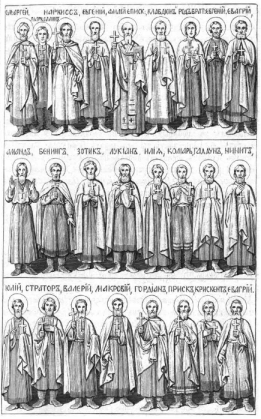
Когда Ликиний поднял (320 г.) столько же жестокое, сколько и хитрое, гонение против христианства, предписал явно требовал епископов, воинов и придворных к суду за неповиновение языческому государственному закону, а тайно дав знать преследовать и всех христиан,132 – в Малой Скифии святитель Филий, Томский епископ, первый обратил на себя злость языческой власти. Его потребовали к суду и в то же время начали хватать христиан в разных местах Скифии. Святителя били палками до полусмерти, запирали в темницу, предавали вновь бесчеловечным истязаниям и наконец по приговору судебному бросили его в море; тело его, приплывшее к берегу, перенесено было благоговейными людьми в загородный дом благочестивого Аманда, и здесь оно прославилось чудесными исцелениями.133 В тот же третий день января окончили в Томах мученический подвиг три родные брата Аргей, Наркисс и юный Маркеллин, также два Евгения, Клавдион и Род.
When Licinius raised (320 A.D.) a persecution against Christianity as cruel as it was cunning, he openly commanded that bishops, soldiers, and courtiers be brought to trial for disobedience to the pagan state law, while secretly giving orders to persecute all Christians as well,132—in Scythia Minor, St. Phileas, Bishop of Tomi, was the first to draw upon himself the malice of the pagan authorities. He was summoned to trial, and at the same time they began to seize Christians in various places of Scythia. The Hierarch was beaten with clubs to the point of half-death, cast into prison, subjected anew to inhuman tortures, and finally, by judicial sentence, thrown into the sea; his body, having floated to shore, was translated by reverent men to the country house of the pious Amandus, and there it was glorified by miraculous healings.133 On that same third day of January, three natural brothers—Argeus, Narcissus, and the young Marcellinus—also two Eugenii, Claudion, and Rhod, ended their martyric struggle in Tomi.
Братья после истязаний также брошены были в море.134 Апреля 3 в Томах преданы были смерти св. Евагрий и Бенигн. Блаженный Аманд также последовал за любимым учителем своим: он и несколько других 6 июня замучены «в городе Новидун», иначе в Новом Дунайце, славном городе Малой Скифии.135 Здесь же июня 4 после долгих пыток и темничного заключения обезглавлены были св. Зотик, Ликиан и Илия. Последний в греческом известии называется ͗Ηλει, а не ͗Ηλεις: грек удержал славянское имя Ильи, не подозревая, что это – одно и то же, что Илия. Со св. Зотиком пострадали в один и тот же день – 4 июня и в одном и том же месте – в Новом Дунайце св. Комарь, Гаддун, Нинит, Юлия и до 30 других стардальцев веры.136 – Сентября 17 тут же окончили подвиг свой три юные царедворца, сосланные Ликинием в Малую Скифию.137 За два перед тем дня «в городе Томах» окончились страдания славной смертью св. Стратора, Валерия, Макровия и Гордиана; наконец октября 1 увенчались мученическим венцом в Томах «св. Приск, Крискент и Евагрий».138 Так при Ликинии явились в Малой Скифии, Славянской стране, целые сонмы мучеников за св. веру.
The brothers, after tortures, were likewise thrown into the sea.134 On April 3, in Tomi, Sts. Evagrius and Benignus were put to death. The blessed Amandus also followed his beloved teacher: he and several others were tortured on June 6 "in the city of Noviodunum," otherwise New Danube, a famous city of Scythia Minor.135 There, on June 4, after long tortures and imprisonment, Sts. Zoticus, Lycianus, and Elias were beheaded. The last-named is called in the Greek account ͗Ηλει, not ͗Ηλεις: the Greek retained the Slavic name Il'ya, not suspecting that this is the same as Elias. Together with St. Zoticus, on the same day—June 4, and in the same place—New Danube, suffered Sts. Comarius, Gaddunus, Ninitus, Julia, and up to 30 other stalwart sufferers for the faith.136—On September 17, in the same place, three young courtiers, exiled by Licinius to Scythia Minor, ended their struggle.137 Two days before that, "in the city of Tomi," the sufferings of Sts. Strator, Valerius, Macrovius, and Gordianus ended in a glorious death; finally, on October 1, "Sts. Priscus, Crescentius, and Evagrius" were crowned with the martyric wreath in Tomi.138 Thus, under Licinius, whole hosts of martyrs for the holy faith appeared in Scythia Minor, a Slavic land.
Беспредельная благодать Божия, бодрствующая неизменно и неотступно над всякой душой человеческой, не оставляет ее и в те минуты, когда она сама-собой, по-видимому, совершенно отлучена от Бога. Так коснулась и осенила благодать Божия и темного язычника Порфирия – в минуту, когда он по неведению своему издевался над святыней, когда он, в угоду отступнику от Христа императору Иулиану, пересмеивая в присутствии его христиан, погрузился в воду, как бы совершая обряд крещения… Но когда, подражая ради смеха крестившимся, он произнес имя Св. Троицы, то внезапно омыслилась в постижении его сущность того, что он совершил… внезапно почувствовал он себя христианином и, озаренный и умудренный свыше, Порфирий стал обличать в преступном заблуждении царя отступника, ради потехи которого он предпринял кощунственное представление…
The infinite grace of God, which watches unceasingly and unremittingly over every human soul, does not abandon it even in those moments when it seems to have utterly cut itself off from God. Thus did the grace of God touch and overshadow even the dark pagan Porphyrius—in the very moment when, in his ignorance, he mocked at a holy thing; when, to please the apostate emperor Julian, he mimicked Christians in his presence and plunged into the water as if performing the rite of baptism… But when, imitating the baptized for the sake of laughter, he pronounced the name of the Holy Trinity, the essence of what he had done suddenly dawned upon his understanding… Suddenly he felt himself a Christian, and, illumined and made wise from on high, Porphyrius began to denounce the criminal error of the apostate emperor, for whose amusement he had undertaken the blasphemous spectacle…
За неустрашимое исповедание постигнутой истины Порфирий был предан истязаниям, которые он мужественно перенес ради воспринятого им в душу Спасителя-Христа, и после мук был обезглавлен – в 362-м году.
For his fearless confession of the truth he had grasped, Porphyrius was delivered over to tortures, which he courageously endured for the sake of the Savior Christ, whom he had received into his soul; and after his torments he was beheaded—in the year 362.
В начале IV в. жили в Мизии, в г. Маркианополе (ныне – Преславль), известные знатностью рода и благочестием Максим и Асклипиодота. Когда правитель Фракии Тирис обходил города для преследования христиан, то он велел их себе представить и после разговора о вере с Максимом, из которого он убедился в твердости исповедания христианского Максима, приказал четырем человекам бить его по всему телу; затем, после исповедания веры во Христа Асклипиодотой, он приказал бить ее подошвами. Терпением своим она одних приводила в удивление, в других возбуждала сострадание. В это время выступил благочестивый Феодот и обличил бесчеловечие мучителя, и за это был повешен на дереве и строган по телу. Через 13 дней Тирис, отправившись с мучениками в Адрианополь, подверг всех троих новым ранам, потом к телу их приказал приложить раскаленные медные пластинки, так что плоть их растоплялась, но они утешены были голосом с неба, ободрявшим их… Когда они провели после того несколько дней в темнице, то Тирис приказал среди народного зрелища предать их зверям; но медведица, выпущенная сначала на Максима, а потом на Феодота, ласкалась к ним, а бык, к которому привязали Асклиопиодоту, остановился, как бы связанный, и не тронулся с места. Эти чудные проявления божественной силы поразили народ и, казалось, должны были склонить его к вере во Христа, между тем толпа требовала побиения камнями мучеников… Правитель отправился с ними по пути в Филиппополь и за 30 миль до этого города в селении Салтис после новых убеждений отречься от Христа велел отрубить им головы.
At the beginning of the fourth century, there lived in Moesia, in the city of Marcianopolis (now Preslav), Maximus and Asclepiodota, renowned for their noble birth and piety. When the governor of Thrace, Tyris, was making a circuit of the cities to persecute Christians, he ordered them to be brought before him; and after a conversation about the faith with Maximus, from which he became convinced of the firmness of Maximus’ confession of Christianity, he ordered four men to beat him all over his body. Then, after Asclepiodota’s confession of faith in Christ, he ordered her to be beaten on the soles. By her endurance she aroused wonder in some and compassion in others. At that time the pious Theodotus stepped forward and denounced the inhumanity of the tormentor, and for this he was hung on a tree and his body was scraped. After thirteen days, Tyris set out with the martyrs for Adrianople and inflicted new wounds on all three; then he ordered red-hot copper plates to be applied to their bodies, so that their flesh melted, but they were comforted by a voice from heaven that encouraged them… After they had spent several days in prison, Tyris ordered them to be thrown to the beasts in the midst of a public spectacle; but the she-bear, first released upon Maximus and then upon Theodotus, fawned upon them, and the bull to which Asclepiodota was tied stood still as if bound and did not move from the spot. These wondrous manifestations of divine power amazed the people and seemed likely to incline them to faith in Christ; yet the crowd demanded that the martyrs be stoned… The governor set out with them on the road to Philippopolis, and thirty miles before that city, in the village of Saltis, after renewed exhortations to renounce Christ, he ordered their heads to be cut off.
Иосиф – из числа 12 отцов Сирских (воспоминаемых мая 7-го), был одним из проповедников веры христианской по всей долине Кахетии и обратил ко Христу даже диких жителей Кавказа. Скончался в 570 г. Мощи его почивают в Алавердском соборе.
Joseph—one of the twelve Syrian Fathers (commemorated on May 7)—was one of the preachers of the Christian faith throughout the valley of Kakheti, and converted even the wild inhabitants of the Caucasus to Christ. He reposed in the year 570. His relics rest in the Alaverdi Cathedral.
Такое известие у Рабана Мавра, где сказано под 3 янв.: in Tomis civitate nativitas Titi episcopi, qui sub Licinio – caesus ad mortem carcere mancipatus и пр. Ошибка в имени. Мартиролог Беды под 3 янв.: In Tomis natalis s. Philii, qui post alia tormenta in mare est mersus. В Иеронимовом мартирологе неправильное чтение: in Tomis Christianifili episcopi. Надобно читать: christiani Filii episcopi. К сожалению, этот древнейший мартиролог доселе не очищен от ошибок писцов, которые то соединяли два слова в одно, то принимали имена городов за имена мучеников. Заметны еще, – напрасно Лекень (Or. chr. 11. 12, 14) и Геншений указывают на сходство страданий св. Филия с страданием современного Феогена, епископа Парийского (янв. 2), как на что-то сомнительное; напротив этим сходством подкрепляется верность известий, так как у каждого злодея своя манера терзать людей.
Such an account is found in Rabanus Maurus, where it is said under January 3: in Tomis civitate nativitas Titi episcopi, qui sub Licinio – caesus ad mortem carcere mancipatus etc. An error in the name. In the Martyrology of Bede under January 3: In Tomis natalis s. Philii, qui post alia tormenta in mare est mersus. In the Hieronymian Martyrology there is an incorrect reading: in Tomis Christianifili episcopi. One should read: christiani Filii episcopi. Unfortunately, this most ancient martyrology has not yet been cleansed of the errors of scribes, who sometimes joined two words into one, sometimes took the names of cities for the names of martyrs. It is also noteworthy—Lequien (Or. chr. 11. 12, 14) and Henschenius point in vain to the similarity of the sufferings of St. Phileas with those of his contemporary Theogenes, Bishop of Parium (Jan. 2), as something suspicious; on the contrary, this similarity confirms the reliability of the accounts, since each evildoer has his own manner of tormenting people.
По мартирологам Адова и Усуарда 6 июня: civitate Noveduno (Nividuno, Niveduno) sanctorum Amantil et Alexandri; y Ноткера прибавлен Лукий. В Иеронимовом, 6 июня: Noveduno Amamtii, Lucii, Alexandri, Alexandriae, Donatae, Peregriae.
According to the martyrologies of Ado and Usuard, June 6: civitate Noveduno (Nividuno, Niveduno) sanctorum Amantil et Alexandri; in Notker, Lucius is added. In the Hieronymian, June 6: Noveduno Amamtii, Lucii, Alexandri, Alexandriae, Donatae, Peregriae.
В менологе Василия (на 13 сент.) сказано, что Макроний и Гордиан «сосланы были в Малую Скифию» и здесь «нашли мужественно подвизающихся за исповедание Христа святых Зотика, Лукияна и Илью». След. по менологу страдание трех СЕИФОВ предшествовало кончине Гордиана. По мартирологам это видно с полною ясностию. В мартирологах Адона и Усуарда под 4 июня civitate Noveduno sanctorum Zotici, Attali et Evtici. У Нотвера прибавлено: cum aliis multis. В Иеровиыовом мартирологе: «июня 4 в гор. Новедуне страд. кончина Зотика, Аттала, Евтиха, Амаса, Карина, Юлин, Сатурнина, Гаддуна, Нинита и других 28». – Рабана in Ninive natalis Dinoci (Zotici), Attali, Camari (Amasi), Fyrinae (Carini), Juliae et Saraciae (Saturnini). Камар должен быть призван за подлинник. – По прологу Зотик и Илья – «Протисемейска града». С таким именем не было города в Малой Скифии; мыслию сказателя было конечно означать только знатность города, бывшего духовною родиною святых. О городах Малой Скафии см. июля 7 пр. 92.
In the Menologion of Basil (under September 13) it is said that Macrobius and Gordian “were exiled to Scythia Minor” and there “found the holy Zoticus, Lucian, and Elias courageously struggling for the confession of Christ.” Consequently, according to the Menologion, the suffering of the three Scythians preceded the death of Gordian. This is seen with complete clarity in the martyrologies. In the martyrologies of Ado and Usuard under June 4: civitate Noveduno sanctorum Zotici, Attali et Evtici. In Notker it is added: cum aliis multis. In the Hieronymian Martyrology: “June 4, in the city of Novedunum, the death by martyrdom of Zoticus, Attalus, Eutychus, Amasius, Carinus, Julia, Saturninus, Gaddunus, Ninitus, and 28 others.” – Rabanus: in Ninive natalis Dinoci (Zotici), Attali, Camari (Amasi), Fyrinae (Carini), Juliae et Saraciae (Saturnini). Camar must be acknowledged as the original. – According to the Prologue, Zoticus and Elias are “of the city of Protisemeisk.” There was no city with such a name in Scythia Minor; the intention of the narrator was, of course, only to indicate the eminence of the city that was the spiritual homeland of the saints. On the cities of Scythia Minor, see July 7, note 92.
По менологу юные царедворцы – «Макровий и Гордиан». В мартирологах «сент. 17. Noviduno natalis sanctorum martyrum Valeriani, Macrini et Cordiani (Gordiani)».
According to the Menologion, the young courtiers are “Macrobius and Gordian.” In the martyrologies: “Sept. 17. Noviduno natalis sanctorum martyrum Valeriani, Macrini et Cordiani (Gordiani).”
Так мартирологи. К сожалению не дошли до вас деяния Дунайских II Томских мучеников. Менолог только потому и говорит о Скифах Зотике, Лукиане и Илье, что их страдания находятся в некоторой связи с страданиями царедворцев. Бак видно, западные мартирологии были благосклоннее к мученикам – Скифам: они отметили мученическую кончину многих Скифских христиан, о которых ни слова не сказано Греками.
Thus the martyrologies. Unfortunately, the acts of the Danube and Tomis martyrs have not come down to us. The Menologion speaks of the Scythians Zoticus, Lucian and Elias only because their sufferings are in some connection with the sufferings of the courtiers. As can be seen, the Western martyrologies were more favorable to the Scythian martyrs: they recorded the martyric death of many Scythian Christians, of whom the Greeks say not a word.