Равноапостольный царь Константин Великий, благоговея ко Христу Спасителю и желая священнейшее место спасительного Его воскресения сделать славным памятником всеобщего христианского поклонения, соорудил в Иерусалим, где совершалось наше спасение, запечатленное воскресением Христовым, храм в честь этого великого события, знаменующего победу Спасителя над смертью. Этот Новозаветный храм Иерусалимский, равно как и самый Иерусалим, были торжественно обновлены и освящены в 335 году отцами 1-го Тирского собора, кои по окончании собора приглашены были императором Константином в Иерусалим для празднования освящения храма Новозаветного. По случаю исполнившегося тридцатилетия царствования Константина, освящение с особенным торжеством и веселием совершено было 13 сентября, в то время, когда освящен был и древний храм Иерусалимский, поруганный Антиохом. Бывшие при освящении св. отцы в память сего установили 13 сентября, согласно благочестивому желанию императора, ежегодный христианский праздник. «С того времени Иерусалимская церковь, говорит Созомен, совершает этот праздник каждогодно и весьма торжественно, так что тогда преподается даже таинство крещения, и церковные собрания, подобно Ветхозаветному празднику освящения храма, продолжаются восемь дне. По случаю этого торжества, в Иерусалим для посещения св. мест стекаются многие, почти со всей подсолнечной.»
The Equal-to-the-Apostles Emperor Constantine the Great, reverencing Christ the Savior and wishing to make the most holy place of His saving resurrection a glorious monument of universal Christian worship, built in Jerusalem, where our salvation was accomplished, sealed by the resurrection of Christ, a church in honor of this great event, which signifies the Savior's victory over death. This New Testament church in Jerusalem, as well as Jerusalem itself, were solemnly renewed and consecrated in the year 335 by the fathers of the First Council of Tyre, who, after the conclusion of the council, were invited by Emperor Constantine to Jerusalem for the celebration of the consecration of the New Testament church. On the occasion of the completion of the thirtieth year of Constantine's reign, the consecration was performed with special solemnity and joy on September 13, at the same time when the ancient Jerusalem temple, profaned by Antiochus, had been consecrated. The holy fathers who were present at the consecration, in memory of this, established, according to the pious desire of the emperor, an annual Christian feast on September 13. "From that time," says Sozomen, "the Church of Jerusalem celebrates this feast every year with great solemnity, so that even the mystery of baptism is then administered, and the church assemblies, like the Old Testament feast of the consecration of the temple, continue for eight days. On the occasion of this celebration, many, from almost all the world, flock to Jerusalem to visit the holy places."
В V веке Анатолий Константинопольский, в VIII – Иоанн Дамаскин предали Церкви многие из священных песнопений, ныне поемых в день обновления храма Воскресения Христова. Православная церковь в этот день молит Господа, чтобы Он, показавши как «вышния тверди благолепие, так и нижнюю красоту святого селения славы Своея, утвердил сие селение в век века», и с обновлением храма даровал «обновление духа в сердцах и проведение внутренним.»
In the fifth century, Anatolius of Constantinople, and in the eighth, John of Damascus, bequeathed to the Church many of the sacred hymns now sung on the day of the renewal of the Church of the Resurrection of Christ. On this day, the Orthodox Church prays to the Lord that He, having shown "both the splendor of the heavenly firmament and the lower beauty of the holy dwelling place of His glory, may establish this dwelling place unto ages of ages," and with the renewal of the temple, grant "renewal of spirit in hearts and guidance to the inner man."
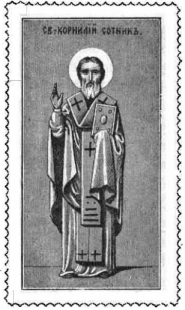
В чудном обращении в веру Христову Корнилия – язычника положено было начало исполнения Божественного предсказания о всемирном обращении язычников к вере Христовой: «говорю же вам, что многие приидут с Востока и Запада и возлягут с Авраамом, Исааком и Иаковом в Царстве Небесном…» (Мф.8:11), и выразилась воля Божия о принятии язычников в Церковь Божию вопреки убеждению Иудеев, считавших себя единственным народом, избранным для участия в Царстве Мессии, убеждению, которому причастны были до тех пор и ближайшие ученики Иисуа Христа.
In the wondrous conversion to the faith of Christ of Cornelius, a pagan, was laid the beginning of the fulfillment of the divine prophecy concerning the universal conversion of the pagans to the faith of Christ: "I say to you that many will come from the east and the west, and will recline with Abraham, Isaac, and Jacob in the Kingdom of Heaven..." (Mt. 8:11), and the will of God was expressed concerning the reception of the pagans into the Church of God, contrary to the conviction of the Jews, who considered themselves the only people chosen to participate in the Kingdom of the Messiah, a conviction which until then had been shared even by the closest disciples of Jesus Christ.
Об этом событии так повествует св. Евангелист Лука (в Х главе Деяний апостольских): «в Кесарии (Палестинской) был некоторый муж, именем Корнилий, сотник из полка, называемого Италийским, благочестивый и боящийся Бога со всем домом своим, творивший много милостыни народу и всегда молившийся Богу.»
The holy Evangelist Luke relates this event as follows (in the tenth chapter of the Acts of the Apostles): "There was a certain man in Caesarea (of Palestine) named Cornelius, a centurion of the cohort called the Italian, a devout man and one who feared God with all his household, who gave many alms to the people and always prayed to God."
Такой-то язычник, близкий к христианству по жизни своей, хотя и не знавший Христа, – и мог быть избранным для наглядного засвидетельствования слов Иисуса Христа.
Such a pagan, close to Christianity by his life, although he did not know Christ, could indeed be chosen for the clear testimony of the words of Jesus Christ.
Корнилий же, взглянув на него и испугавшись, сказал: что, Господи? Ангел отвечал ему: «молитвы твои и милостыни твои пришли на память перед Господом. Итак пошли людей в Иоппию и призови Симона, называемого Петром. Он гостит у некоего Симона, кожевника, которого дом находится при море. Он скажет тебе слова, которыми спасешься ты и весь дом твой.»
And he, gazing at him and being afraid, said: What is it, Lord? The angel answered him: "Your prayers and your alms have come up as a memorial before God. Now send men to Joppa, and summon Simon, who is called Peter. He is lodging with one Simon, a tanner, whose house is by the sea. He will tell you words by which you and all your house will be saved."
Когда ангел, говоривший с Корнилием, отошел, то он призвал двоих из своих слуг и благочестивого воина из находившихся при нем и, рассказав им все, послал их в Иоппию.
When the angel who spoke to Cornelius had departed, he called two of his servants and a devout soldier from among those who attended him, and having told them everything, sent them to Joppa.
На другой день, когда они шли и приблизились к городу, Петр около шестого часа взошел на верх дома помолиться. И почувствовал он голод, и хотел есть. Между тем как приготовляли, он пришел в исступление и видит отверстое небе и сходящий к нему некоторый сосуд, как бы большое полотно, привязанное за четыре угла и опускаемое на землю. В нем находились всякие четвероногие земные, звери, пресмыкающиеся и птицы небесные. – И был глас к нему: встань, Петр, заколи и ешь. Но Петр сказал: нет, Господи, я никогда не ел ничего скверного или нечистого. – Тогда в другой раз был глас к нему: что Бог очистил, того ты не почитай нечистым.
The next day, as they were on their journey and approaching the city, Peter went up on the housetop to pray, about the sixth hour. And he became hungry and wanted to eat. While they were preparing, he fell into a trance and saw heaven opened and a certain vessel descending to him, like a great sheet bound at the four corners and let down to the earth. In it were all kinds of four-footed animals of the earth, wild beasts, creeping things, and birds of the air. And a voice came to him: Rise, Peter; kill and eat. But Peter said: Not so, Lord; for I have never eaten anything common or unclean. And a voice spoke to him again the second time: What God has cleansed, do not call common.
Это было трижды, и сосуд опять поднялся на небо. Когда же Петр недоумевал в себе, что бы значило видение, которое он видел, – вот, мужи, посланные Корнилием, расспросив о доме Симона, остановились у ворот и, крикнув, спросили: здесь ли Симон, называемый Петром?
This was done three times, and the vessel was taken up again into heaven. While Peter wondered within himself what this vision which he had seen might mean, behold, the men who had been sent from Cornelius, having inquired for Simon's house, stood at the gate, and called out to ask whether Simon, who was called Peter, was lodging there.
Между тем как Петр размышлял о видении, Дух сказал ему: вот три человека ищут тебя: встань, сойди и иди с ними, нимало не сомневаясь, ибо Я послал их.
While Peter was pondering the vision, the Spirit said to him: Behold, three men are seeking you. Arise, go down, and go with them, doubting nothing; for I have sent them.
Они же сказали: Корнилий сотник, муж добродетельный и боящийся Господа, одобряемый всем народом иудейским, получил от святого ангела повеление призвать тебя в дом свой и послушать речей твоих. – Тогда Петр, пригласив из, угостил, а на другой день, встав, пошел с ними, и некоторые из братий иоппских пошли с ним. В следующий день пришли они в Кесарию. Корнилий же ожидал их, созвав родственников своих и близких друзей.
And they said: Cornelius the centurion, a righteous man and one who fears God, well spoken of by the whole Jewish nation, was directed by a holy angel to summon you to his house and to hear words from you. Then Peter invited them in and entertained them; and the next day he arose and went with them, and some of the brethren from Joppa accompanied him. The following day they entered Caesarea. Cornelius was waiting for them, having called together his relatives and close friends.
Когда Петр входил, Корнилий встретил его и поклонился, пав к ногам его. Петр же поднял его, говоря: встань, я тоже человек. И, беседуя, с ним, вошел в дом и нашел многих собравшихся. И сказал им: вы знаете, что иудею возбранено сообщаться или сближаться с иноплеменником; но мне Бог открыл, чтобы я не почитал ни одного человека скверным или нечистым. Посему я, будучи позван, и пришел беспрекословно. Итак спрашиваю: для какого дела вы призвали меня? Корнилий сказал: четвертого для я постился до теперешнего часа, и в девятом часу молился в своем доме, и вот, стал предо мной муж в светлой одежде и говорит: Корнилий! Услышана молитва твоя и милостыни твои воспомянулись перед Богом. Итак, пошли в Иоппию и призови Симона, называемого Петром; он гостит в доме кожевника Симона при море; он придет и скажет тебе.
As Peter entered, Cornelius met him and fell down at his feet and worshiped him. But Peter lifted him up, saying: Stand up; I myself am also a man. And as he talked with him, he went in and found many who had come together. And he said to them: You know how unlawful it is for a Jewish man to keep company with or go to one of another nation. But God has shown me that I should not call any man common or unclean. Therefore I came without objection as soon as I was sent for. I ask, then, for what reason have you sent for me? Cornelius said: Four days ago I was fasting until this hour; and at the ninth hour I prayed in my house, and behold, a man stood before me in bright clothing, and said: Cornelius! Your prayer has been heard, and your alms are remembered before God. Send therefore to Joppa and summon Simon, whose surname is Peter; he is lodging in the house of Simon the tanner by the sea; when he comes, he will speak to you.
Петр отверз уста и сказал: истинно познаю, что Бог неличеприятен; но во всяком народе боящийся Его и поступающий по правде приятен Ему! – и стал проповедовать о Христе дому Корнилия. Не успел апостол Петр кончить проповеди, как Дух Святой сошел на слушавших. И верующие из обрезанных, пришедшие с Петром, изумились, что дар Святого Духа излился и на язычников. Ибо слышали их, говорящих языками и величающих Бога.
Then Peter opened his mouth and said: In truth I perceive that God shows no partiality; but in every nation whoever fears Him and works righteousness is acceptable to Him! And he began to preach Christ to the household of Cornelius. While Peter was still speaking these words, the Holy Spirit fell upon all those who heard the word. And the believers of the circumcision who had come with Peter were astonished, because the gift of the Holy Spirit had been poured out even on the pagans. For they heard them speaking with tongues and magnifying God.
Тогда Петр сказал: кто может запретить креститься водой тем, которые, как и мы, получили Духа Святого? И велел им креститься во имя Иисуса Христа.
Then Peter said: Can anyone forbid water, that these should not be baptized who have received the Holy Spirit just as we have? And he commanded them to be baptized in the name of Jesus Christ.
Когда же Петр возвратился в Иерусалим, то верующие из иудеев упрекали его, что он ходил к необрезанным и ел с ними. Он же пересказал им по порядку все случившееся, и тогда они успокоились и славили Бога, говоря: «видно и язычникам дал Бог покаяние в жизнь…» Впоследствии Корнилий поставлен был от апостола Петра епископ Кесарии Палестинской и много потрудился, проповедуя Христа язычникам. В Скепсии – городе Малой Азии – он пострадал за исповедание Христа перед язычниками. Скончался мирно и погребен был в Скепсии. По пришествии почти 400 лет, когда забыто было место его погребения, св. Корнилий сам открыл о нем, явившись в ночном видении Троадскому епископу Силуану, бывшему в Скепсии (подчиненной в V веке Троаде в церковном управлении); – вследствие чего воздвигнут был храм в честь св. Корнилия усердием епископа и иждивением одного богатого гражданина, куда и перенесены были открытые мощи св. Корнилия, как говорит предание – сами собой во время освящения храма при пении Трисвятого и заняли место на правой стороне близ алтаря.126
When Peter returned to Jerusalem, the believers from among the Jews reproached him, saying that he had gone to uncircumcised men and eaten with them. But he related to them in order all that had happened, and then they were satisfied and glorified God, saying: "Then God has also granted to the pagans repentance unto life..." Afterwards, Cornelius was appointed by the Apostle Peter as bishop of Caesarea in Palestine and labored much, preaching Christ to the pagans. In Skepsis, a city of Asia Minor, he suffered for confessing Christ before the pagans. He reposed peacefully and was buried in Skepsis. After nearly 400 years, when the place of his burial had been forgotten, St. Cornelius himself revealed it, appearing in a night vision to Silvanus, the bishop of Troas, who was in Skepsis (which in the fifth century was subject to Troas in church governance); as a result, a church was built in honor of St. Cornelius through the zeal of the bishop and at the expense of a certain wealthy citizen, and the uncovered relics of St. Cornelius were translated there, as tradition says, of their own accord during the consecration of the church while the Trisagion was being sung, and took their place on the right side near the altar.126
Слава и украшение своей страны, блаженная Кетевань, дочь владетельного князя Багратиона Мухранского и правнучка Карталиского царя Константина III, христианским воспитанием, полученным ею от благочестивых родителей, с детства была подготовлена к высоким подвигам, которыми ознаменовалась жизнь ее, увенчанная мученической кончиной за веру Христову.
The glory and adornment of her country, the blessed Ketevan, daughter of the ruling prince Bagrat of Mukhrani and great-granddaughter of King Constantine III of Kartli, was prepared from childhood by the Christian upbringing she received from her pious parents for the high deeds that marked her life, crowned by a martyr's death for the faith of Christ.
После недолговременного супружества с Давидом Кахетинским (также из рода Багратидов), который скончался после шестимесячного царствования над Кахетией, Кетевань, оставшись вдовой и совершенно одинокой, так как и малолетнего сына своего Теймураза она, по смутным обстоятельствам времени отправила заложником ко двору Персидского шаха Аббаса I, поселилась в одном уединенном месте и проводила время в богоугодных занятиях и чтении священного писания. В это время постигло ее новое тяжелое испытание: Константин, меньший брат ее мужа, бывший также заложником у Персидского шаха, передался ему до такой степени, что даже, отрекшись от веры Христовой по научению шаха, желавшего сделать из него орудие для подчинения себе Кахетинского царства, коварным образом убил своего престарелого отца и брата – ради того, чтобы остаться единственным наследником царства, и, вступив на престол, потребовал от Кетевани, чтобы она сделалась его супругой.
After a brief marriage to David of Kakheti (also of the Bagratid line), who reposed after a six-month reign over Kakheti, Ketevan, left a widow and completely alone—for she had sent her young son Teimuraz as a hostage to the court of the Persian Shah Abbas I due to the troubled circumstances of the time—settled in a secluded place and spent her time in God-pleasing occupations and the reading of Holy Scripture. At this time a new grievous trial befell her: Constantine, the younger brother of her husband, who was also a hostage at the Persian court, became so devoted to the shah that, even renouncing the faith of Christ at the shah's instigation—who wished to make him an instrument for subjugating the kingdom of Kakheti—he treacherously killed his aged father and brother in order to remain the sole heir to the kingdom, and, having ascended the throne, demanded that Ketevan become his wife.
Передав через послов Константина решительный отказ ему на его предложение, Кетевань обратилась к знатным Кахетинцам, прося их защиты против насилия Константина, предупредив их об опасности, которая угрожает со стороны этого убийцы всему царствующему дому и всем жителям, которых он намеревается обратить в магометанство, и сказала при этом, что если не помогут ей защититься от беззаконных требований Константина, то она оставит Кахетию и возвратится к своему семейству.
Having conveyed through envoys her decisive refusal to Constantine’s proposal, Ketevan turned to the nobles of Kakheti, asking for their protection against Constantine’s violence, warning them of the danger that threatened from this murderer the entire royal house and all the inhabitants, whom he intended to convert to Mohammedanism, and said at the same time that if they did not help her to defend herself against Constantine’s lawless demands, she would leave Kakheti and return to her own family.
Услышав это от Кетевани, в лице которой народ чтил мудрую помощницу своего мужа в правлении страной, так как, в короткое даже время его царствования, она успела много совершить для благосостояния Кахетии, усмирила знать, привела в порядок расстроенные дела, доставила мир и благосостояния Церкви, построила несколько храмов, больниц, приютов для нищих и сирот, оградила царство даже то внешних врагов, – высшие представители народа Кахетинского обещали ей защиту и действительно выступили со своими воинами против Константина и убили его, войско же персидское, которое призвал Константин, чтобы сразиться с грузинами-христианами, все было истреблено. Тогда Кетевань решилась снова принять правление над царством и поселилась в город Греми – древней столице Кахетии, находившимся у подошвы гор, отделяющих Кахетию от Дагестана.127 Вскоре, однакоже, Кетевань, мысли которой давно уже были устремлены на служение одному Богу, почувствовала себя не в силах быть во главе царства, особенно же при таком трудном положении дел, какое было в то время; не имея кому передать управление, так как из всего царского дома не оставалось в живых никого, кроме ее сына, отрока Теймураза, бывшего заложником при персидском дворе, она решилась устроить его возвращение и, отправив почетное посольство с богатыми подарками к шаху Аббасу 1-му, написала ему, что если он не возвратит ей ее сына Теймураза, то Кахетия отложится от его зависимости.
Hearing this from Ketevan, in whose person the people honored a wise helper to her husband in governing the country—for even in the short time of his reign she had accomplished much for the welfare of Kakheti, pacified the nobles, put disordered affairs in order, brought peace and prosperity to the Church, built several churches, hospitals, shelters for the poor and orphans, and protected the kingdom even from external enemies—the highest representatives of the Kakhetian people promised her protection and indeed marched out with their warriors against Constantine and killed him, while the Persian army, which Constantine had summoned to fight the Christian Georgians, was entirely destroyed. Then Ketevan decided once again to take up the governance of the kingdom and settled in the city of Gremi—the ancient capital of Kakheti, situated at the foot of the mountains separating Kakheti from Dagestan.127 Soon, however, Ketevan, whose thoughts had long been directed toward the service of God alone, felt herself unable to stand at the head of the kingdom, especially given the difficult state of affairs at that time; having no one to whom to entrust the government, since of the entire royal house no one remained alive except her son, the youth Teimuraz, who was a hostage at the Persian court, she resolved to arrange his return and, sending a distinguished embassy with rich gifts to Shah Abbas I, wrote to him that if he did not return her son Teimuraz to her, Kakheti would withdraw from its dependence on him.
Опасаясь, чтобы Кахетия не присоединилась к Турции или России, шах Аббас позволил Теймуразу возвратиться в свое царство. – Велика была радость царицы Кетевани при свидании со своим сыном. В особенности была она утешена тем, что, не смотря на долгое пребывание свое при персидском дворе, он не утратил веры своих отцев. Вскоре по прибытии его, передала она ему, как законному наследнику, управление всей страной, сама же успокоилась в уединении, предавшись теперь безрассеянно главной заботе о приготовлении к вечной жизни.
Fearing that Kakheti might join Turkey or Russia, Shah Abbas allowed Teimuraz to return to his kingdom. Great was the joy of Queen Ketevan at the meeting with her son. She was especially consoled that, despite his long stay at the Persian court, he had not lost the faith of his fathers. Soon after his arrival, she handed over to him, as the lawful heir, the governance of the entire country, while she herself found rest in seclusion, now giving herself without distraction to the chief concern of preparing for eternal life.
Но недолговременна была радость Кетевани по случаю соединения со своим сыном, недолговременно было и успокоение ее при возможности жить, как ей было по душе. Шах Аббас не оставлял мысли о подчинении ему Кахетии и, выискав коварным образом благовидный предлог, угрожал нападением на царство Теймураза. Устрашенные кахетинцы обратились тогда к своему царю и просили его послать к шаху мать свою с сыном его Александром, чтобы мудрая Кетевань «укротила гнев, шаха своей просьбой и умолила бы его оставить свою мысль погубить их.» Со слезами передал Теймураз своей матери просьбу своих вельмож и народа. Не предвидя пользы от исполнения этого желания, опытная царица отвечала своему сыну: – «ты знаешь, дитя мое, что много раз я принимала на себя бедственное положение Кахетии и не щадила себя для страны, но бесполезно будет предпринимать путешествие к шаху, потому что никакие молитвы не остановят его решение опустошить нашу страну…» Не смотря на эти слова Кетевани, народ не переставал умолять ее ехать к шаху ради спасения страны и, всегда готовая жертвовать собой, она решила исполнить общее желание и в конце 1615-го года отправилась к шаху, взяв с собой младшего внука своего, царевича Александра. Ласково принял их коварный Аббас, однакоже потребовал, чтобы Теймураз выслал к нему и старшего сына своего Леона, обещая воспитывать обоих детей, как прилично их высокому роду… Напрасно предупреждала Кетевань своего сына не исполнять этого требования шаха; вынужденный народом, которой в отказе уступить желанию шаха видел свою погибель, Теймураз выслал к шаху и старшего своего сына Леона. Не смотря на то, он вскоре убедился, что предупреждения ему со стороны матери были не напрасны и что никакими жертвами не отвратить ему бедствий, которые готовились со стороны Аббаса. Вскоре и обрушились на Кахетию все эти бедствия. «Шах двинулся на нее с огромным войском, – пишет Аракиль, историк армянский, – и по нашествии персов страшные бедствия постигли Иверию: растление девства, смерть старцев, которых нельзя было переселить в Персию, смерть воинствующей молодежи, отказывавшейся от переселения из отечества в числе пленных, смерть иереев и диаконов, и даже епископов и монашеского чина обоего пола и отведение их в плен, убиение малолетних, срытие святых могил и сожжение святых храмов и богатого города Греми и всех городов и сел Кахетинских.»128 Царь Теймураз нашел в это время убежище у Имеретинского царя Георгия. Между тем, сыновья его Леон и Александр вместе с бабкой их, царицей Кетевань, томились в это время в темнице в Ширазе, по распоряжению лютого Аббаса. Оба царевича были изувечены, старший из них, не пересилив испытания, скончался.
But short-lived was Ketevan’s joy at being reunited with her son, and short-lived was her peace in the opportunity to live as her soul desired. Shah Abbas did not abandon his thought of subjugating Kakheti and, having craftily found a plausible pretext, threatened an attack on Teimuraz’s kingdom. The terrified Kakhetians then turned to their king and begged him to send his mother with his son Alexander to the shah, so that the wise Ketevan might “quell the shah’s anger with her entreaty and implore him to abandon his intention to destroy them.” With tears, Teimuraz conveyed to his mother the request of his nobles and the people. Foreseeing no benefit from fulfilling this wish, the experienced queen answered her son: “You know, my child, that many times I have taken upon myself the calamitous state of Kakheti and have not spared myself for the country, but it will be useless to undertake a journey to the shah, because no prayers will stop his decision to lay waste our land…” Despite these words of Ketevan, the people did not cease to implore her to go to the shah for the sake of saving the country, and, ever ready to sacrifice herself, she resolved to fulfill the general wish and at the end of the year 1615 set out to the shah, taking with her her younger grandson, Prince Alexander. The treacherous Abbas received them kindly, but demanded that Teimuraz send him also his elder son Leon, promising to raise both children as befitted their high birth… In vain did Ketevan warn her son not to fulfill this demand of the shah; compelled by the people, who saw in a refusal to yield to the shah’s wish their own destruction, Teimuraz sent to the shah also his elder son Leon. Despite this, he soon became convinced that his mother’s warnings to him had not been in vain and that no sacrifices could avert the calamities being prepared by Abbas. Soon all these calamities fell upon Kakheti. “The shah moved against it with a vast army,” writes Arakil, the Armenian historian, “and after the invasion of the Persians, terrible calamities befell Iberia: the defilement of maidens, the death of elders who could not be resettled in Persia, the death of the warlike youth who refused to be resettled from their fatherland among the captives, the death of priests and deacons, and even of bishops and the monastic order of both sexes, and their being led away into captivity, the slaughter of infants, the razing of holy graves and the burning of holy churches and the rich city of Gremi and all the cities and villages of Kakheti.”128 King Teimuraz at this time found refuge with George, the king of Imereti. Meanwhile, his sons Leon and Alexander, together with their grandmother, Queen Ketevan, languished at this time in a prison in Shiraz, by order of the cruel Abbas. Both princes were mutilated; the elder of them, unable to endure the trial, died.
С христианской покорностью переносила блаженная Кетевань тяжкие испытания, постигшие ее, и всеми своими чувствами и помышлениями все более и более переносилась в иной мир; темница, в которой содержалась она десять лет, сделалась для нее местом высших духовных подвигов, которыми приготовлялась она к переходу в вечную жизнь. Неусыпными молитвами, ночными бдениями утоляла она свою душу, отрешенную от всяких земных упований. Единственным утешением служила ей возможность устроить в своей темнице маленькую церковь, в которой духовник ее ежедневно совершал литургию.
With Christian submission did the blessed Ketevan bear the grievous trials that befell her, and with all her feelings and thoughts she was more and more transported into the other world; the prison in which she was kept for ten years became for her a place of the highest spiritual struggles, by which she prepared herself for the passage into eternal life. With unceasing prayers and nightly vigils she nourished her soul, detached from all earthly hopes. Her sole consolation was the opportunity to arrange in her prison a small church, in which her confessor daily celebrated the Divine Liturgy.
Наконец, настало для царицы Кетевани последнее и высшее испытание: шах давно настаивал на том, чтобы она отреклась от веры Христовой, ублажая ее всякими блистательными обещаниями, прислал объявить ей окончательно свою волю, чтобы она или отреклась от веры христианской, или готовилась принять жестокие мучения и смерть.
At last there came for Queen Ketevan the final and supreme trial: the shah had long insisted that she renounce the faith of Christ, enticing her with all manner of brilliant promises, and now sent to declare to her his final will—that she either renounce the Christian faith or prepare to suffer cruel torments and death.
Не смутилась уготованная раба Христова словами посланного от шаха: – «скажи пославшему тебя, – ответила она ему, – что ни смерть, ни жизнь и ничто не может разлучить меня с Христом Богом моим, и невозможно для меня оставить веру мою православную, ради которой готова я принести себя в жертву», и в молчании выслушав дальнейшие убеждения градоначальника, попросила его оставить ее одну на некоторое время, сама же, удалившись в свою темничную церковь, излилась перед Богом в пламенной молитве, чтобы простил ее, укрепил, был помощником сыну ее Теймуразу и «совершающим память ее подавал всегда утешение сердечное…» Затем причастившись Тайн святых и осенив себя крестным знамением, вышла к мучителям своим и сказала им: «делайте, что замыслили, я готова на все мучения.»
The handmaid of Christ was not troubled by the words of the shah’s envoy: “Tell him who sent you,” she answered him, “that neither death nor life nor anything can separate me from Christ my God, and it is impossible for me to abandon my Orthodox faith, for which I am ready to offer myself as a sacrifice”; and having listened in silence to further persuasions from the city governor, she asked him to leave her alone for a time, and she herself, withdrawing into her prison church, poured herself out before God in fervent prayer, that He would forgive her, strengthen her, be a helper to her son Teimuraz, and “to those who celebrate her memory grant always consolation of heart…” Then, having partaken of the Holy Mysteries and signed herself with the sign of the cross, she went out to her tormentors and said to them: “Do what you have devised; I am ready for all torments.”
И тогда начались страшные истязания над царицей-мученицей, одно зрелище которых трудно было перенести, так что и сам градоначальник, пораженный до слез, поспешил удалиться. Служители царицы поколебались душой и умоляли ее пощадить свою жизнь… сам иерей, духовник Кетевани, смутился при виде истязаний, раскаленными орудиями, и когда и его привели на площадь, где пылал костер для исповедников Христовых, то готов был уступить настояниям персов… – Чего смущаешься, Имеретин? – громко и повелительно обратилась к нему непоколебимая в твердости Кетевань, – пришло время засвидетельствовать имя Христово! Разве кто-нибудь из отрекшихся от Христа остался вечно жить на земле? Разве не лучше поспешить уйти из этого мира туда, где вечный покой и вечная радость?... Причастимся страданиям Христовым, чтобы причаститься и воскресению Его!
And then began the terrible tortures of the queen-martyr, the mere sight of which was hard to bear, so that even the city governor himself, struck to tears, hastened to withdraw. The queen’s servants wavered in soul and implored her to spare her life… The priest himself, Ketevan’s confessor, was dismayed at the sight of the tortures with red-hot instruments, and when he too was brought to the square where a pyre blazed for the confessors of Christ, he was ready to yield to the Persians’ insistence… “Why are you troubled, O Imeretian?” Ketevan, unshaken in her firmness, turned to him loudly and commandingly, “the time has come to bear witness to the name of Christ! Has any of those who have denied Christ remained alive forever on earth? Is it not better to hasten to depart from this world to where there is eternal rest and eternal joy?… Let us partake of the sufferings of Christ, that we may also partake of His resurrection!”
Эти слова мученицы Христовой мгновенно, как огнем, попалили малодушие в сердцах, готовых отступить от святых верований, и все воспрянули исповедниками истины и твердо приняли мученическую смерть.
These words of the martyr of Christ instantly, like fire, burned away the faint-heartedness in hearts ready to fall away from the holy faith, and all rose up as confessors of the truth and steadfastly accepted a martyr’s death.
Истязания же Кетевани продолжались, все тело ее было растерзано, из ран в изобилии струилась кровь, раскаленной цепью обожжены были эти раны и раскаленным котлом покрыта была ее голова, после чего она и скончалась, до последней минуты едва уже слышным голосом призывая имя Отца и Сына и Св. Духа.
The tortures of Ketevan continued; her whole body was torn, blood flowed abundantly from her wounds, these wounds were burned with a red-hot chain, and her head was covered with a red-hot cauldron, after which she died, until her last moment calling upon the name of the Father and the Son and the Holy Spirit in a barely audible voice.
Это было 13 сентября 1624 г. Латинские миссионеры тайно взяли тело св. великомученицы и, по смерти шаха, принесли часть св. мощей ее в г. Тифлисс, где с торжеством и неизобразимой радостью приняты были останки ее всем народом и положены в кафедральном соборе великомуч. Георгия, называемом Алавердским, под престолом – в новое утверждение Церкви и народа грузинского.
This occurred on September 13, 1624. Latin missionaries secretly took the body of the holy Great Martyr and, after the shah’s death, brought a portion of her holy relics to the city of Tiflis, where her remains were received with triumph and indescribable joy by all the people and placed in the cathedral church of the Great Martyr George, called Alaverdi, beneath the altar—for the new confirmation of the Church and the Georgian people.
Развалины Греми, из древних памятников которого уцелел только храм св. Архангелов, находятся в Телавском уезде (см. геогр. Грузиии Вахушта, стр. 316).
The ruins of Gremi, of whose ancient monuments only the church of the Holy Archangels survives, are located in the Telavi district (see Vakhushti’s Geography of Georgia, p. 316).