Сестры жили в Вифинии. По любви к уединенной и подвижнической жизни, удалились на некоторый высокий и пустой холм верстах в двух от Пифий (местность близ Никомидии, где находились теплые воды). Жили они своими трудами, помогали бедным и больным.
The sisters lived in Bithynia. Out of love for a solitary and ascetic life, they withdrew to a certain high and deserted hill about two versts from Pythia (a place near Nicomedia where warm springs were located). They lived by their own labors and helped the poor and the sick.
В то время восточными странами обладал император Максимиан Галерий (305–311), а правителем Вифании был некий Фронтон. Этот Фронтон, слыша о святых девах, велел представить их себе, спросил об именах и отечестве и обещал богатства и почести, если принесут жертвы богам. Он сказал им: «царь полюбит вас и выдаст за великих бояр своих; вы приобретете славу и богатство, только поклонитесь богам». Но сестры отвечали, что не отвергнутся Христа, что готовы принять за Него муки в надежде на вечную жизнь. Тогда обратился он к старше сестре со словами: «ты старшая летами и разумом, послушайся и поклонись богам!» «Напрасно ты трудишься, князь», отвечала та, «этого не сделаем ни я, ни мои сестры. Мы готовы умереть за Христа». Мучитель велел бить святую; ее били часа два, так что составы тела сокрушались и кости ломались, и она скончалась.
At that time, the eastern regions were ruled by the emperor Maximian Galerius (305–311), and the governor of Bithynia was a certain Fronton. This Fronton, hearing of the holy virgins, ordered them to be brought before him, asked their names and homeland, and promised them riches and honors if they would offer sacrifices to the gods. He said to them: "The emperor will love you and give you in marriage to his great nobles; you will acquire glory and wealth, only bow down to the gods." But the sisters answered that they would not deny Christ, and that they were ready to suffer for Him in hope of eternal life. Then he turned to the eldest sister with the words: "You are the eldest in years and understanding, listen and bow down to the gods!" "In vain do you labor, O prince," she answered, "neither I nor my sisters will do this. We are ready to die for Christ." The tormentor ordered the saint to be beaten; they beat her for about two hours, so that the joints of her body were shattered and her bones broken, and she died.
Через четыре дня две остальные сестры потребованы были на суд; бездыханное тело сестры положено было у ног их. Но исповедницы затаили скорбь о сестре и сказали: «мы готовы умереть за Христа!» Тогда Митродору пытали огнем и били железными палками, пока она не умерла. После сего таким же образом замучили и Нимфодору. Верующие похоронили тела их в одном гробе.
After four days, the two remaining sisters were summoned to judgment; the lifeless body of their sister was placed at their feet. But the confessors suppressed their grief for their sister and said: "We are ready to die for Christ!" Then Mitrodora was tortured with fire and beaten with iron rods until she died. After this, Nymphodora was likewise tormented to death. The faithful buried their bodies in one tomb.
Святых апостолов от 70-ти: Аполлоса, Лукия и Клима. Аполлос (Деянь XVIII, 24–26. 1 Кориф. III, 6) епископствовал в Смирне прежде Поликарпа; Лукий – в Лаодикии, Клим – в Сардике. О них см. в соборе семидесяти апостолов, 4 января.
Sts. Apollos, Lucius and Clement, Apostles of the Seventy. Apollos (Acts 18:24–26; 1 Cor. 3:6) was bishop in Smyrna before Polycarp; Lucius in Laodicea; Clement in Sardica. Concerning them, see the Synaxis of the Seventy Apostles, January 4.
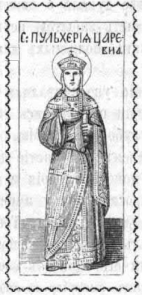
Пульхерия была дочь императора Аркадия;80 брату ее Феодосию было 8 лет, когда (в 408 г.) объявлен он императором; опекуном его был Анфимий, умный и добродетельный вельможа. Пульхерия была только двумя годами старше брата, но она далеко превосходила его дарованиями ума и твердостью доброй воли; с молодых лет она искренне любила благочестие; при всей незрелости лет, она была наставницей брата, старалась передать ему лучшие правила жизни. Прекрасно владея языками греческим и латинским, имела она обширные познания – исторические, философские, богословские. В 414 г. объявлена она была августой, соправительницей императору. Империя восточная была обширная, и дела ее не были в порядке. Потому-то умный и добрый Анфимий признал нужным, дабы такая сестра, какова была Пульхерия, была соправительницей брату. И она дала направление делам лучшее. Недостаток опытности в управлении Пульхерия восполняла зоркостью ума своего и желаниями добра. Брату своему всего более старалась внушить, что без веры, без благочестия, лучшие дарования бесполезны и политика без веры вредная, не умная политика. Так она направляла и дела империи. Она не решала дел без молитв и советов с людьми добросовестными. Внутренние волнения империи – дела страстей людских – были успокоены; с соседними державами поддержан или восстановлен мир; сбор податей приведен в порядок; армия и флот поставлены во хорошее состояние. Наукам даны способы для их успехов. Империя была счастлива, как не была она счастливой при Аркадии.
Pulcheria was the daughter of the emperor Arcadius;80 her brother Theodosius was eight years old when (in A.D. 408) he was proclaimed emperor; his guardian was Anthemius, an intelligent and virtuous nobleman. Pulcheria was only two years older than her brother, but she far surpassed him in gifts of mind and firmness of good will; from her youth she sincerely loved piety; despite her immaturity of years, she was a teacher to her brother and strove to impart to him the best rules of life. Being excellently versed in the Greek and Latin languages, she possessed extensive knowledge—historical, philosophical, and theological. In A.D. 414 she was proclaimed Augusta, co-ruler with the emperor. The Eastern Empire was vast, and its affairs were not in order. For this reason, the wise and good Anthemius recognized the need for such a sister as Pulcheria to be co-ruler with her brother. And she gave a better direction to affairs. Pulcheria compensated for her lack of experience in governance by the keenness of her mind and her desire for good. She strove above all to instill in her brother that without faith, without piety, the best talents are useless, and that politics without faith is a harmful, unwise politics. Thus she also directed the affairs of the empire. She decided no matter without prayer and counsel with conscientious people. The internal disturbances of the empire—the works of human passions—were calmed; peace was maintained or restored with neighboring powers; the collection of taxes was put in order; the army and fleet were placed in good condition. The sciences were given means for their advancement. The empire was as happy as it had not been under Arcadius.
Пульхерия была воспитательницей и двух младших сестер своих, Аркадии и Марины; она оставалась при них безотлучно, если не только не отвлекали ее дела управления. Она назначала им и предметы занятий и давала направление их мыслям и чувствам. Красота – обман, и пригожество – суета, жена, имеющая страх Иеговы, достойна всякой хвалы, говорил боговдохновенный мудрец (Притч. XXXI, 30).81 Уроки его твердо изучала для себя и сестер Пульхерия. Ею дан был обет перед Богом – остаться девственницей до гроба. И этот обет запечатлела она памятником: в соборном храме поставлен был престол, устроенный из золота и драгоценных камней, с надписью: Обет девства. Она имела утешение видеть, что и сестры ее также решились посвятить себя на служение Богу. Дворец императорский был при ней истинно христианским домом, чем он уже давно не был: ни роскоши, ни праздности, ни рассеянию тут не было места. Пульхерия совершала с сестрами подвиги покаяния и молитвы. В комнаты из не ступала нога мужчины. Соправительница принимала просителей и министров не иначе, как в определенное время и публично. Все это имело последствия полезные и для быта империи; обеты царевен преграждали путь интригам придворной жажды почестей и власти. Считая тело свое храмом распятого Господа, она усмиряла в нем нечистые движения строгим постом и трудами.82
Pulcheria was also the educator of her two younger sisters, Arcadia and Marina; she remained with them constantly, unless affairs of state drew her away. She assigned them subjects of study and gave direction to their thoughts and feelings. "Charm is deceitful, and beauty is vain, but a woman who fears the Lord is to be praised," said the divinely inspired sage (Prov. 31:30).81 Pulcheria firmly studied his lessons for herself and her sisters. She made a vow before God to remain a virgin until the grave. And she sealed this vow with a monument: in the cathedral church was placed an altar made of gold and precious stones, with the inscription: "Vow of Virginity." She had the consolation of seeing that her sisters also resolved to dedicate themselves to the service of God. The imperial palace under her was a truly Christian home, which it had not been for a long time: there was no place for luxury, idleness, or dissipation. Pulcheria performed with her sisters the labors of repentance and prayer. No man's foot entered their chambers. The co-ruler received petitioners and ministers only at a set time and publicly. All this had beneficial consequences for the life of the empire as well; the vows of the princesses barred the way to the intrigues of courtly lust for honors and power. Considering her body a temple of the crucified Lord, she subdued its impure movements by strict fasting and labors.82
Когда брат Феодосий достиг полного возраста, 20-ти лет, Пульхерия озаботилась приискать ему невесту. Выбор ее пол на Афинаиду, дочь Афинского философа. Афинаида явилась к августе с просьбой возвратить ей имение отца ее, отобранное неправдами людскими. При разговоре оказалось, что Афинаида была прекрасно образована и умна. По сведениям сторонним оказалось то же. Афинада объявлена была невестой императора. Это должно было изумить многих и иных оскорбить: выбор пал не на аристократку. Пульхерия желала одного добра. Так как Афинаида была еще язычницей, то она была крещена и названа Евдокией. Брак был совершен 7 июня 421 года. Спустя два года Евдокия объявлена была августой. Пульхерия оставалась по прежнему соправительницей, но старалась делать вид, что император – один в империи. Повеления шли в империю от имени Феодосия, дела решались от его же имени. Умная Пульхерия дала в это время памятный урок брату своему. Феодосий, добродушный и доверчивый, стал было подписывать дела, не читая их – и даже не всегда спрашивая о их содержании. Вельможи, пользуясь этой доверчивостью, дозволяли себе и грабить казну и теснить невиновных. Пульхерия, не теряя слов напрасных, поднесла императору доклад. Феодосий, не спросив о содержании, подписал и отдал бумагу сестре. Затем Пульхерия зовет к себе Евдокию и, занимаясь с ней разговорами, удерживает ее у себя весь день. Вечером зовут Евдокию к царю. Пульхерия не отпустила. Приходят в другой раз. Пульхерия с улыбкой сказала: « доложите царю, что Евдокия – моя собственность, по его воле». Явясь затем к брату, она подала ему подписанную им грамоту. Тот прочитал, и Пульхерия сказала: «видишь ли, государь, как опасно не читая подписывать бумагу! Ты, по доброте своей не думаешь, чтобы могли обманывать тебя. Но – на земле не ангелы, а люди всякого сорта. Ты – отец отечества. Берегись, чтобы не страдало от тебя отечество.» Феодосий, пораженный стыдом, дал слово – быть осторожным.83
When her brother Theodosius reached full age, twenty years old, Pulcheria took care to find him a bride. Her choice fell upon Athenais, the daughter of an Athenian philosopher. Athenais appeared before the Augusta with a request to return her father's inheritance, which had been taken from her by human injustices. In conversation, it turned out that Athenais was excellently educated and intelligent. Information from other sources confirmed this. Athenais was proclaimed the emperor's betrothed. This must have amazed many and offended others: the choice fell not on an aristocrat. Pulcheria desired only good. Since Athenais was still a pagan, she was baptized and named Eudocia. The marriage was solemnized on June 7, 421. Two years later, Eudocia was proclaimed Augusta. Pulcheria remained co-ruler as before, but strove to make it appear that the emperor was sole ruler of the empire. Decrees went out to the empire in the name of Theodosius, and affairs were decided in his name. The wise Pulcheria at this time gave her brother a memorable lesson. Theodosius, good-natured and trusting, began to sign documents without reading them—and even without always inquiring about their content. The nobles, taking advantage of this trustfulness, allowed themselves to plunder the treasury and oppress the innocent. Pulcheria, without wasting words, presented a report to the emperor. Theodosius, without asking about its content, signed it and gave the paper back to his sister. Then Pulcheria summoned Eudocia to herself and, engaging her in conversation, kept her with her the whole day. In the evening, Eudocia was summoned to the emperor. Pulcheria did not let her go. They came a second time. Pulcheria said with a smile: "Inform the emperor that Eudocia is my property, by his will." Then, appearing before her brother, she handed him the document he had signed. He read it, and Pulcheria said: "Do you see, O sovereign, how dangerous it is to sign a paper without reading it? You, in your kindness, do not think that you could be deceived. But—on earth there are not angels, but people of every sort. You are the father of the fatherland. Beware lest the fatherland suffer because of you." Theodosius, struck with shame, gave his word to be cautious.83
По убеждению благочестивой Пульхерии, Феодосий отправил в Иерусалим много денег для раздачи бедным и золотой крест с дорогими каменьями для водружения его на лобном месте. Признательный архиепископ послал царю правую руку архидиакона Стефана. Когда мощи были в Халкидоне, первомученик является во сне Пульхерии и говорит: «вот молитва твоя услышана, и я уже в Халкидоне». Царевна и царь вышли навстречу мощам, и Пульхерия построила в столице великолепный храм первомученику, где и положены были мощи его.84
At the persuasion of the pious Pulcheria, Theodosius sent much money to Jerusalem for distribution to the poor, and a golden cross with precious stones to be set up on Golgotha. The grateful archbishop sent the emperor the right hand of the Archdeacon Stephen. When the relics were in Chalcedon, the Protomartyr appeared to Pulcheria in a dream and said: "Behold, your prayer has been heard, and I am already in Chalcedon." The princess and the emperor went out to meet the relics, and Pulcheria built a magnificent church in the capital to the Protomartyr, where his relics were placed.84
Сколько патриарх Несторий не был силен связями своими с вельможами империи, как ни ловко действовал он для своей пользы: в 431 году составился в Ефесе Вселенский собор; долго длился собор по интригам защитников Нестория; Феодосий вовлекаем был в распоряжения несправедливые; но учение Нестория осуждено было как ересь и Несторий сослан в заточение. Защитой православия служила благочестивая Пульхерия.
However strong the patriarch Nestorius was through his connections with the nobles of the empire, and however cleverly he acted for his own advantage: in 431 an Ecumenical Council was convened in Ephesus; the council was long drawn out by the intrigues of Nestorius's defenders; Theodosius was drawn into unjust decisions; but the teaching of Nestorius was condemned as heresy, and Nestorius was sent into exile. The defense of Orthodoxy was served by the pious Pulcheria.
Блаженная отдала почесть великому святителю Златоусту: мощи его (в 438 г.) перенесены были из заточения и торжественно положены были в столице, в храме апостолов.85
The blessed one paid honor to the great Hierarch Chrysostom: his relics (in A.D. 438) were brought from exile and solemnly placed in the capital, in the Church of the Holy Apostles.85
В следующем году землетрясение долго держало в ужасе столицу. За 20 дней до Пасхи совершали общественное моление: царь, царевна и патриарх шли пешие по городу. Пением ангельской песни: Святый Боже, прекращено бедствие, и песнь введена в общественное и частное богослужение.86
The following year, an earthquake long held the capital in terror. Twenty days before Pascha, a public supplication was performed: the emperor, the princess, and the patriarch walked on foot through the city. By the singing of the angelic hymn: "Holy God," the calamity was ended, and the hymn was introduced into public and private worship.86
В 444 году Пульхерия похоронила сестру свою Аркадию, сохранившую, по ее убеждению, девство до гроба.87 При дворе место Анфима занял евнух Хризаф, которого все достоинство состояло в том, что великан телом был довольно способный полководец; иначе – это был человек без всяких правил и жадный до денег. Пульхерия останавливала Хризафа в его дурных делах. Хризаф возбудил в Евдокии зависть к власти Пульхерии. Евдокия и Хризаф стали действовать за одно против Пульхерии.
In 444, Pulcheria buried her sister Arcadia, who, by her persuasion, had preserved her virginity to the grave.87 At court, the place of Anthemius was taken by the eunuch Chrysaphius, whose only merit was that, being a giant in body, he was a fairly capable military commander; otherwise—he was a man without any principles and greedy for money. Pulcheria restrained Chrysaphius in his evil deeds. Chrysaphius aroused in Eudocia envy of Pulcheria's authority. Eudocia and Chrysaphius began to act together against Pulcheria.
Феодосий, добрый, но слабый и недальновидный, сперва не принимал участия в их планах, но потом был вовлечен в него. Он потребовал, чтобы Констинопольский партиарх Флавиан посвятил Пульхерию в диакониссы. Святитель объявил, что он не может посвящать никого против его воли, да и счастье империи требует совсем другого. Император упорно наставивал на своем требовании. Св. Флавиан отвечал, что он явится ко двору в другое время. Он поспешил дать знать Пульхерии о злостных замыслах врагов ее. Она решилась удалиться в уединение в 447 г. удалилась от двора. В империи и Церкви по воле Хризафа начались дела одни других страшнее. Против Флавиана поднято гонение. Евтихий еретик стал любимцем двора. Диодор и евтихиане стали производить злодейские насилия. На Ефесском соборе 449 г. Флавиан был удален. Ересь Евтихия явилась под защитой императора. Хризаф злодейстовал в империи, – грабил и убивал.
Theodosius, good but weak and shortsighted, at first took no part in their plans, but later was drawn into them. He demanded that Flavian, the Patriarch of Constantinople, consecrate Pulcheria as a deaconess. The Hierarch declared that he could not consecrate anyone against their will, and besides, the welfare of the empire required something quite different. The emperor stubbornly insisted on his demand. St. Flavian replied that he would appear at court at another time. He hastened to inform Pulcheria of the malicious designs of her enemies. She resolved to withdraw into seclusion, and in 447 she retired from court. In the empire and the Church, at the will of Chrysaphius, affairs began to unfold, each more terrible than the last. A persecution was raised against Flavian. The heretic Eutyches became a favorite of the court. Diodorus and the Eutychians began to commit villainous acts of violence. At the Council of Ephesus in 449, Flavian was deposed. The heresy of Eutyches appeared under the protection of the emperor. Chrysaphius committed evil deeds in the empire—plundering and murdering.
Блаженная Пульхерия благодарила Бога за свою уединенную жизнь. Она не хотела думать ни о неблагодарности Евдокии, которая всем ей одолжена, ни о непризнательности слабого брата, а еще менее думала о низком Хризафе. Она хотела забыть все и быть забытой всеми, занималась только молитвой, чтением книг, полезных для души, и – подвигами покаяния.
The blessed Pulcheria thanked God for her secluded life. She wished to think neither of the ingratitude of Eudocia, who owed everything to her, nor of the thanklessness of her weak brother, and still less did she think of the base Chrysaphius. She wanted to forget everything and be forgotten by all, occupying herself only with prayer, the reading of books profitable for the soul, and the labors of repentance.
Между тем бедствия увеличивались со дня на день. В разных частях империи поднимались волнения народа. Пульхерия видела это с глубокой скорбью. Ей тяжело было, что добрый брат ее завлечен в участие дел страшных. Она решилась попытаться помочь империи и Церкви.
Meanwhile, calamities increased from day to day. In various parts of the empire, disturbances of the people arose. Pulcheria saw this with deep sorrow. It was grievous to her that her good brother had been drawn into participation in terrible deeds. She resolved to attempt to help the empire and the Church.
Явясь ко двору, просила она у императора дозволения видеться с ним. Ей не отказали. Тогда открыла она глаза брату на состояние дел. Он с ужасом увидел бездну, на краю которой поставили его. Хризаф сослан был на остров и там по суду наказан смертью за свои злодейства. Евдокия, чувствуя свои грехи, с дозволения императора, отправилась на поклонение в Иерусалим. Пульхерия снова приняла участие в управлении империей. В 449 г. умерла девой сестра Пульхерии Марина, а в следующем году скончался император Феодосий.
Appearing at court, she asked the emperor for permission to see him. She was not refused. Then she opened her brother's eyes to the state of affairs. With horror he saw the abyss to the edge of which they had brought him. Chrysaphius was exiled to an island and there, by judgment, punished with death for his villainies. Eudocia, conscious of her sins, with the emperor's permission, set out on a pilgrimage to Jerusalem. Pulcheria again took part in the governance of the empire. In 449, Pulcheria's sister Marina died a virgin, and in the following year the Emperor Theodosius reposed.
Пульхерия осталась одна правительницей империи. Она не хотела думать, что в состоянии одна управлять империей. Она решила найти способного император. Выбор ее пал на полководца Маркиана; он был опытный правитель, любил чистую веру Христову и искренне любил все доброе. Он был вдовец; дочь первого брака его Евфимия была супругой Анфимия, впоследствии западного императора. Когда Пульхерия избрала Маркиана в императоры, то объявила ему условие «я избираю тебя из всего сената, как достойнейшего; но дай мне слово – уважать девство мое, которое обещала я Богу». Маркиан принял и исполнил условие. Маркиан и Пульхерия жили как брат и сестра, в чистоте целомудрия.
Pulcheria remained alone as the ruler of the empire. She did not wish to think that she was capable of governing the empire alone. She resolved to find a capable emperor. Her choice fell upon the military commander Marcian; he was an experienced ruler, loved the pure faith of Christ, and sincerely loved all that is good. He was a widower; the daughter of his first marriage, Euphemia, was the wife of Anthemius, later the Western emperor. When Pulcheria chose Marcian as emperor, she declared to him the condition: "I choose you from the whole senate as the most worthy; but give me your word to respect my virginity, which I have promised to God." Marcian accepted and fulfilled the condition. Marcian and Pulcheria lived as brother and sister, in the purity of chastity.
В 451 г. созван был Вселенский собор в Халкидоне. На соборе осуждено было евтихианство и постановлены были правила, между прочим, о девах, посвятивших себя Господу, о диаконах и о смешанных браках.88 Отцы собора не раз, в продолжении деяний своих, провозглашали Пульхерию защитницей правоверия и главой Церквей. В империи с радостью с радостью приняты были решения собора. Только в Египте в Палестине упорные евтихиане произвели беспорядок. Пульхерия писала два послания в Палестину, с подробным оправданием решений собора и с объяснением того, что собор вовсе не думал принимать сторону Нестория.
In 451, an Ecumenical Council was convened at Chalcedon. At the Council, Eutychianism was condemned, and canons were established, among others, concerning virgins who had consecrated themselves to the Lord, concerning deacons, and concerning mixed marriages.88 The Fathers of the Council, repeatedly in the course of their proceedings, proclaimed Pulcheria the defender of the Orthodox faith and the head of the Churches. In the empire, the decisions of the Council were received with joy. Only in Egypt and Palestine did the obstinate Eutychians cause disorder. Pulcheria wrote two epistles to Palestine, with a detailed justification of the Council's decisions and an explanation that the Council had no intention of taking the side of Nestorius.
Блаженная императрица основала много благодетельных заведений в столице, больницы и странноприимные дома.89 Ею построены были три знаменитые храма Богоматери, писанная Евангелистом Лукой, доставлена была из Палестины еще императрицей Евдокией. Теперь эта икона поставлена была в храме Одигитрии.90 Современный историк говорит: «с каким усердием исполняла Пульхерия дела благочестия, сколько выстроила великолепных храмов, сколько возвела домов для бедных и странных, также монашеских обителей, назначив для содержания этих заведений постоянную сумму денег, а для живущих в них известное количество хлеба, – перечислять все это было бы долго.»91 Занятия делами империи не препятствовали ей заниматься делами благочестия, молитвой, чтением, посещением бедных и больных: последним прислуживала она своими руками. Благочестие царицы награждено было откровениями небесными. Три раза являлся ей св. мученик Фирс и объявлял ей о мощах 40 мучеников Севастийских, скрытых в земле; мученик объявлял волю свою, чтобы мощи присоединены были к его мощам, в его храме. Являлись ей и 7 мучеников, облеченные в светлые одежды. По исследованию точному оказалось, что действительно македонианами сокрыты были в указанном месте мощи мучеников. Мощи найдены и с торжеством положены были в храм св. Фирса.92
The blessed empress founded many charitable institutions in the capital, hospitals and hospices.89 Three famous churches of the Mother of God were built by her; painted by the Evangelist Luke, was brought from Palestine by the Empress Eudocia. Now this icon was placed in the Hodegetria church.90 A contemporary historian says: "With what zeal did Pulcheria perform works of piety, how many magnificent churches did she build, how many houses did she erect for the poor and strangers, also monastic dwellings, assigning for the maintenance of these institutions a fixed sum of money, and for those living in them a certain amount of bread—to enumerate all this would be lengthy."91 The occupations of imperial affairs did not hinder her from engaging in works of piety, prayer, reading, visiting the poor and the sick: the latter she served with her own hands. The piety of the empress was rewarded with heavenly revelations. Three times the holy Martyr Thyrsus appeared to her and announced to her concerning the relics of the Forty Martyrs of Sebaste, hidden in the earth; the martyr declared his will that the relics should be joined to his relics in his church. Seven martyrs also appeared to her, clothed in bright garments. Upon exact investigation, it turned out that the Macedonians had indeed hidden the relics of the martyrs in the indicated place. The relics were found and with triumph placed in the church of St. Thyrsus.92
Перед кончиной своей Пульхерия завещала, дабы все ее имущества обращены были в пользу бедных. Маркиан выполнил завещание во всей точности. Она почила 10 сентября 453 г., на 55 году своей жизни.
Before her end, Pulcheria bequeathed that all her possessions should be turned to the benefit of the poor. Marcian fulfilled the bequest in all exactness. She reposed on September 10, 453, in the 55th year of her life.
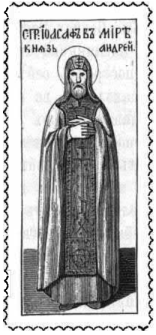
Жизнь преп. князя длилась не долго, но она была прекрасна.94 Князь Андрей был сын князя Заозерского Димитрия Васильевича, потомка св. князя Федора Ярославского.95 Кн. Димитрий жил в городке близ устья р. Кубенки, где ныне с. Устье; при деревне Чериковой доныне стоит часовня – памятник о дворах и теремах князя Заозерского.96 Благов. Князь Димитрий оказывал пособия преп. Дионисию Глушицкому при построении Глушицкого монастыря и был убит татарами. Мать кн. Андрея благоговейно чтила преп. Александра Куштского и присылала подаяния в обитель его. Сын благочестивых родителей, испрошенный у Бога молитвами, с первых дней развития души воспитанных в страхе Божьем, оставшись сиротой, почувствовал суетность мирской жизни, столько печальной для него по неожиданной смерти отца и по судьбе княжества Заозерского. За родство кн. Шемяки с кн. Димитрием, которого дочь (а сестра кн. Андрея) была за Шемякой, в. кн. Василий в 1447 г. отдал половину Заозерья Можайскому кн. Михаилу Андреевичу, а другую брату его Ивану.97 Таким образом сыновья Димитрия перестали быть владетельными князьями Заозерскими.98 Кн. Андрей и по расположениям сердца не принадлежал к миру; а когда мир гнал его от себя, он пришел к Спасу на Каменный остров и просил игумена облечь его в иноческие одежды.
The life of the Venerable Prince was not long, but it was beautiful.94 Prince Andrew was the son of Prince Demetrius Vasilievich of Zaozerye, a descendant of St. Prince Theodore of Yaroslavl.95 Prince Demetrius lived in a town near the mouth of the Kubenka River, where the village of Ustye now stands; near the village of Cherikova, a chapel still stands—a memorial of the courts and towers of the Prince of Zaozerye.96 The Right-believing Prince Demetrius rendered assistance to the Venerable Dionysius of Glushitsa in the building of the Glushitsa Monastery and was killed by the Tatars. The mother of Prince Andrew reverently honored the Venerable Alexander of Kushta and sent alms to his monastery. The son of pious parents, besought from God by prayers, from the first days of the development of his soul brought up in the fear of God, having been left an orphan, felt the vanity of worldly life, so sorrowful for him because of the unexpected death of his father and the fate of the principality of Zaozerye. Because of the kinship of Prince Shemyaka with Prince Demetrius, whose daughter (and sister of Prince Andrew) was married to Shemyaka, Grand Prince Basil in 1447 gave half of Zaozerye to Prince Michael Andreevich of Mozhaisk, and the other half to his brother Ivan.97 Thus the sons of Demetrius ceased to be sovereign princes of Zaozerye.98 Prince Andrew, by the inclinations of his heart, did not belong to the world; and when the world drove him from itself, he came to the Savior on Stone Island and asked the abbot to clothe him in monastic garments.
И молодость князя (ему было тогда не более 20 лет),99 и высокое происхождение его, и перестройка политического быта России, совершавшаяся волей вел. кн. Московского (в. князь благоволил к Кассиану, посылал его в Константинополь по делу по митрополите, но близ царя близ огня), навевали на душу Кассиана сомнения о князе Андрее. «Место твое – не здесь, а в думе бояр или на поле брани», сказал игумен кн. Андрею. «Напрасно смущаешься, отвечал юный князь, намерение мое твердо – не принимать услуги от других, а служить другим и несть крест по следам Господа моего». Игумен, увидав чистые желания юного князя, увещевал его, дабы раз принял на себя иго Христово, не колебался потом мыслями о величии мирском, а твердо шел бы по избранному пути. Затем облек его в иночество и назвал Иоасафом, именем царевича, который оставил царство для Христа. Юный Иоасаф Кубенский поручен был смотрению опытного старца.100 Блаженный князь-инок со всею радостью выполнял обеты иночества. С братией имел он свидание только в храме; все время его посвящалось молитве и размышлениям о вечности; пост соблюдал самый строгий. Чистый душей и телом, он еще не земле удостоился посещения небесного. Раз пел он псалмы в келии и услышал голос, ответ на молитву души его; голос уверял: «обширная пустынь, окружающая озеро, наполнится пустынниками, певцами славы Божьей, и если они будут хранить заповеди Божьи, все будет готово для их земной жизни.» Блаженный Иоасаф рассказал об этом откровении игумену Кассиану в простоте чистого своего сердца. Кн. Борису Васильевичу Ржевскому пришло на мысль посетить племянника своего и предложить ему деньги с тем, чтобы построил себе свой монастырь. Предложение приятное для самолюбия, но потому-то и опасное для душевного спасения. Блаж. Иоасаф отвечал родичу князю: «Христолюбивый князь! Нам не нужны серебро и золото, когда искренне хотим жить в пустыне; раздай бедным, что назначил ты для нас, и получишь щедрую награду от Господа.» Кн. Борис исполнил совет искреннего пустынника. Юный подвижник как бы предчувствовал, что путь подвигов его – не долгий, и с пламенным усердием поспешал творить добро. В последний год своей жизни, а он подвизался в обители всего пять лет, только раз в неделю вкушал он пищу, в день воскресный, и в каждый воскресный день приобщался св. Таин. Тело его от подвигов очень ослабело, но он благодарил за то Господа; в продолжении болезни, когда только чувствовал некоторое облегчение, являлся в церковь. В праздник Рождества Богородицы велел он весть себя к литургии, приобщался св. Тайн. И возвратясь в келью, не встал более с одра. Простясь с братией, велел иноку читать канон на исход души, сам взял кадильницу в руки, покадил ею около себя и с молитвой на устах предал Господу дух свой, 10 сентября 1453 г. Чистое тело его положено было в храме и от него скоро стали истекать чудесные исцеления. Юный князь Роман, сын кн. Олега Дорогобужского, был немым от рождения; приложась к мощам блаженного Иоасафа, стал говорить свободно. Мария, женщина из богатого дома, долго была слепой и при мощах князя инока прозрела. В 1472 г. Спасский Каменский монастырь опустошен был пожаром, и после того только остатки мощей князя собраны в ковчег, но они продолжали источать исцеления. После вторичного опустошения обители пожаром, св. мощи перенесены в Вологодский Духов монастырь, где находятся доселе.101 Церковная служба св. князю известна по ркп. XVI.102
And the prince’s youth (he was then no more than twenty years old),99 and his high birth, and the reshaping of the political life of Russia, which was being accomplished by the will of the Grand Prince of Moscow (the Grand Prince was well-disposed toward Cassian and sent him to Constantinople concerning the matter of the metropolitan, but near the tsar is near the fire), all breathed doubts into Cassian’s soul concerning Prince Andrew. “Your place is not here, but in the council of boyars or on the field of battle,” the abbot said to Prince Andrew. “You are troubled in vain,” replied the young prince; “my intention is firm—not to receive service from others, but to serve others and to bear the cross in the footsteps of my Lord.” The abbot, seeing the pure desires of the young prince, exhorted him that, having once taken upon himself the yoke of Christ, he should not afterward waver with thoughts of worldly greatness, but should walk steadfastly along the chosen path. Then he clothed him in monasticism and named him Joasaph, after the name of the prince who left a kingdom for Christ. The young Joasaph of Kubena was entrusted to the supervision of an experienced elder.100 The blessed prince-monk fulfilled the vows of monasticism with all joy. He met with the brethren only in church; all his time was devoted to prayer and meditation on eternity; he observed the strictest fast. Pure in soul and body, he was yet on earth vouchsafed a heavenly visitation. Once he was singing psalms in his cell and heard a voice, an answer to the prayer of his soul; the voice assured him: “The vast wilderness surrounding the lake shall be filled with hermits, singers of the glory of God, and if they keep the commandments of God, all shall be prepared for their earthly life.” Blessed Joasaph told this revelation to Abbot Cassian in the simplicity of his pure heart. Prince Boris Vasilievich of Rzhev took it into his head to visit his nephew and to offer him money, so that he might build his own monastery. An offer pleasing to self-love, but for that very reason dangerous to spiritual salvation. Blessed Joasaph answered his kinsman the prince: “Christ-loving prince! We have no need of silver and gold when we sincerely wish to live in the wilderness; give to the poor what you have appointed for us, and you shall receive a generous reward from the Lord.” Prince Boris followed the counsel of the sincere hermit. The young ascetic, as if foreseeing that the path of his labors would not be long, hastened with fervent zeal to do good. In the last year of his life—and he labored in the monastery only five years in all—he partook of food only once a week, on Sunday, and every Sunday he communed of the Holy Mysteries. His body grew very weak from his labors, but he thanked the Lord for it; during his illness, whenever he felt some relief, he appeared in church. On the feast of the Nativity of the Theotokos, he ordered himself to be brought to the Divine Liturgy, communed of the Holy Mysteries, and returning to his cell, he rose no more from his bed. Having taken leave of the brethren, he bade a monk read the canon for the departure of the soul, himself took the censer in his hands, censed himself with it, and with a prayer on his lips surrendered his spirit to the Lord, on September 10, 1453 A.D. His pure body was placed in the church, and soon miraculous healings began to flow from it. The young Prince Roman, son of Prince Oleg of Dorogobuzh, had been mute from birth; having venerated the relics of blessed Joasaph, he began to speak freely. Maria, a woman from a wealthy house, had long been blind, and at the relics of the prince-monk she received her sight. In 1472 A.D., the Savior Monastery on Stone Island was devastated by fire, and after that only the remains of the prince’s relics were gathered into a reliquary, but they continued to pour forth healings. After a second devastation of the monastery by fire, the holy relics were transferred to the Vologda Spiritual Monastery, where they remain to this day.101 The church service to the holy prince is known from a 16th-century manuscript.102
Павел, епископ Моновасийский, оставил о них следующее известие: – «был я, говорит он, – послан на Восток по царскому делу. На дороге встретился мне пустынный монастырь и мне захотелось побывать в нем. Игумен и черноризцы вышли ко мне на встречу и, поздоровавшись, сели мы на горе. Тут были плодовитые деревья. И вот, птицы, прилетая, ломали ветки с плодами и быстро уносили. Я спросил игумена, отчего это птицы не едят плодов, а уносят куда-то с ветками? Он отвечал: вот уже одиннадцатый год, как они то же делают каждое лето. – Тут, в горах, – сказал я по какому-то вдохновению, – живут или мужи или жены, и им-то носят они плоды. Когда я говорил это, прилетевший ворон сломил ветвь с плодом. Я сказал игумену: ворон сломил ветвь с плодом. Я сказал игумену: пойдем за ним, – и пошли. Ворон с плодом летел впереди нас и, долетев до утеса, положил ветку. Когда подходили мы к нему, – он, взяв ветку, полетел в провалье и, там оставил ветвь, воротился без всего. Придя к провалью, мы бросили вниз камень. И вот, кто-то кричит: если вы христиане, не убивайте нас. Кто вы таковы? – спросили мы. – Если хотите, – был ответ, – видеть нас, то бросьте нам три одеяния; мы – нагия жены; идя по горе, увидите дорожку, и по ней можете сойти к нам.
Paul, Bishop of Monembasia, left the following account of them: “I was sent to the East on imperial business. On the way I came upon a desert monastery, and I wished to visit it. The abbot and the monks came out to meet me, and after greeting one another, we sat down on the mountain. There were fruit-bearing trees there. And behold, birds would come, break off branches with fruit, and quickly carry them away. I asked the abbot why the birds did not eat the fruit but carried it off somewhere with the branches. He answered: ‘For eleven years now they have done the same thing every summer.’ ‘Here in the mountains,’ I said, as if by some inspiration, ‘there live either men or women, and to them they carry the fruit.’ As I was saying this, a raven that had flown up broke off a branch with fruit. I said to the abbot: ‘Let us follow it,’ and we went. The raven flew ahead of us with the fruit, and having reached a cliff, it laid down the branch. When we approached it, it took the branch, flew into a ravine, and having left the branch there, returned without anything. Coming to the ravine, we threw a stone down. And behold, someone cries out: ‘If you are Christians, do not kill us.’ ‘Who are you?’ we asked. ‘If you wish to see us,’ came the answer, ‘throw down three garments to us; we are naked women. Going along the mountain, you will see a path, and by it you can come down to us.’
Услышав это, три чернеца сняли с себя одежды и, обвив ими камень, пустили вниз. Найдя указанную узенькую дорожку, с трудом сошли мы по ней к святым. Три женщины, увидев нас, поклонились нам до земли и, сотворив молитву, сели мы. Одна из них тоже села, а две стояли. Тогда игумен спросил севшую: откуда ты, госпожа матерь, и как пришла сюда? – Я – из Константинограда, – отвечала она, – муж мой служил при императоре и скончался молодым; я осталась вдовой 20-лет и горько плакала, как о вдовстве, так и о том, что не имела детей. Спустя несколько дней один вельможа присылает ко мне слуг с тем, чтобы насильно доставить меня к нему. Слуги, ничего не слушая, хотели вести меня. Я же не хотела быть неверной памяти мужа моего и, поручив себя Богу, сказала: я рада идти к вашему господину, столько славному; но теперь я больна; потерпите, пока выздоровлю, и тогда с радостью пойду к нему. – Хорошо, – сказали они, – господин будет ждать до 40 дней. По удалении их, созвала я слуг моих и, дав им денег, отпустила их на волю, а при себе оставила только двух служанок, которых вы видите. Потом, пригласив одного родственника, человека христолюбивого, под клятвами завещала ему продать села мои и дом, и раздать деньги нищим. Так я и оставалась без забот житейских. Ночью, взяв моих служанок, а теперь – моих сестер, вступила я с ними на корабль, и мы пришли на это место, где видите нас. Вот одиннадцатый год, как не видали мы ни одного человека, кроме вас. Одежды наши изветшали и распались…
Hearing this, three monks took off their garments, wrapped them around a stone, and let them down. Finding the narrow path indicated, we descended with difficulty along it to the holy women. The three women, seeing us, bowed to the ground before us, and having made a prayer, we sat down. One of them also sat down, while the other two stood. Then the abbot asked the one who sat: ‘Where are you from, lady mother, and how did you come here?’ ‘I am from Constantinople,’ she answered; ‘my husband served the emperor and died young; I remained a widow at twenty years of age and wept bitterly, both for my widowhood and because I had no children. After a few days, a certain nobleman sent servants to me, to bring me to him by force. The servants, listening to nothing, wanted to take me. But I did not wish to be unfaithful to the memory of my husband, and entrusting myself to God, I said: “I am glad to go to your lord, so glorious; but now I am ill; have patience until I recover, and then I will gladly go to him.” “Good,” they said, “the lord will wait up to forty days.” After they departed, I summoned my servants, gave them money, and set them free, keeping only the two handmaidens whom you see with me. Then, inviting a certain relative, a Christ-loving man, I charged him under oath to sell my estates and my house, and to distribute the money to the poor. So I remained free from worldly cares. At night, taking my handmaidens—now my sisters—I embarked with them on a ship, and we came to this place where you see us. For eleven years now we have seen no one except you. Our garments have worn out and fallen apart…’
– Благой и человеколюбивый Бог, – отвечала она, – прокормивший народ Свой в пустыне 40 лет, посылает пищу и нам, недостойным рабам Своим: каждое лето птицы приносят сюда всякие овощи, даже до излишества… И нагота не тяготит нас, ни зимой не боимся холода, ни летом – зноя, прославляя Святую Троицу…
‘The good and man-loving God,’ she answered, ‘Who fed His people in the wilderness for forty years, sends food also to us, His unworthy servants: every summer the birds bring here all kinds of vegetables, even in abundance… And nakedness does not burden us, nor do we fear cold in winter nor heat in summer, glorifying the Holy Trinity…’
Мы слушали это с изумлением. Игумен сказал: если прикажешь, госпожа моя, пошлю брата в монастырь принести пищи, и мы покушаем с вами. Она отвечала: прикажи прийти священнику; пусть наперед помолится, и мы причастимся святых Таин, – с того времени, как удалились мы из города, не удостоивались мы принять святые Тайны.
We listened to this with amazement. The abbot said: ‘If you command, my lady, I will send a brother to the monastery to bring food, and we shall eat with you.’ She answered: ‘Bid a priest come; let him first pray, and we shall partake of the Holy Mysteries—since the time we departed from the city, we have not been vouchsafed to receive the Holy Mysteries.’
Игумен послал чернеца в монастырь позвать пресвитера и принести пищу. Пресвитер, придя, совершил службу, и рабыни Божии причастились св. Тайн. Потом покушали они с нами.
The abbot sent a monk to the monastery to summon a presbyter and to bring food. The presbyter, having come, performed the service, and the handmaidens of God partook of the Holy Mysteries. Then they ate with us.
Игумен дал обещание. Блаженная, встав, усердно молилась и тихо преставилась ко Господу. Совершив надгробное пение, мы похоронили ее. На другой день так же спокойно скончалась другая, а потом – третья…
The abbot gave his promise. The blessed one, rising, prayed fervently and quietly reposed in the Lord. Having performed the funeral hymnody, we buried her. On the next day, the second likewise peacefully fell asleep, and then the third…
Созомена ист. 9.1.3. «И свое девство посвятила она Богу и к тому же направляла жизнь своих сестер, с намерением удалить из дворца царского всякого мужчину и чрез то уничтожить всякий повод к ревности и козням... И сестры ее вели одинаковый образ жизни, заботились об иереях в молитвенных домах, были щедры к нуждающимся странникам и бедным, имели всегда общий стол, вместе делали выходы, вместе ночью и дней хвалили Бога и, как прилично достоуважаемым женам, занимались тканьем и подобными работами. Праздность и роскошь они считали недостойными священного девства, а потому изгнали их из своей жизни, не смотря на то, что были царевны, родились и воспитались в царском дворце. За это Бог явно показывал к ним милость и хранил их дом».
Sozomen, History 9.1.3. “And she dedicated her virginity to God, and likewise directed the life of her sisters, with the intention of removing every man from the imperial palace and thereby destroying every occasion for jealousy and intrigue… And her sisters led the same manner of life, cared for the priests in the houses of prayer, were generous to needy strangers and the poor, always had a common table, went out together, together praised God night and day, and, as befits venerable women, occupied themselves with weaving and similar works. Idleness and luxury they considered unworthy of sacred virginity, and therefore banished them from their life, although they were princesses, born and brought up in the imperial palace. For this God manifestly showed them mercy and preserved their house.”
Сократа ист. 7, 22. Диакон Игнатий в 1390 г.: «идохом в Павдократорскую церковь и в сосудохранительнице видехом святое Евангелие, писано все златом рукою Феодосия царя малаго». Путешествия, стр. 102. Спб. 1849 г.
Socrates, History 7.22. Deacon Ignatius in 1390 A.D.: “We went to the Pantocrator church and in the sacristy saw the holy Gospel, written entirely in gold by the hand of the little Emperor Theodosius.” Travels, p. 102. St. Petersburg, 1849.
Летопись Феофана. Повествование о перенесении мощей в Цареград у Сурия 2 августа. Все тело первомученика перенесено было в 430 г. Marcellini Chronicon ad. an. 4.30. Игнатий диакон, в 1390 г.: идохом в монастырь св. Стефана первомученика; и поклонихомся и целовахом св. мощи его. Путешествия (Спб. 1849 г.), стр. 101.
Theophanes’ Chronicle. The account of the translation of the relics to Constantinople in Surius for August 2. The entire body of the Protomartyr was translated in 430 A.D. Marcellini Chronicon ad an. 430. Deacon Ignatius, in 1390 A.D.: “We went to the monastery of St. Stephen the Protomartyr; and we venerated and kissed his holy relics.” Travels (St. Petersburg, 1849), p. 101.
Обзор песнопевцев Греч. Церкви, стр. 188–198. Черниг. 1864 г. В Прологе Румянцева (Опис., стр. 450) янв. 26 «память страха великого и преславного труса в царство малого Феодосия». Янв. 25 началось землетрясение.
Survey of the Hymnographers of the Greek Church, pp. 188–198. Chernigov, 1864. In the Prologue of Rumyantsev (Description, p. 450) for January 26: “Memory of the great and most glorious earthquake in the reign of the little Theodosius.” The earthquake began on January 25.
Вселенский собор 451 г. «определил, чтобы никому из чтецов II певцов не было позволено брать себе в жену иноверную, чтобы родившие уже детей от такового брака и прежде сего уже крестившие их у еретиков приводили их к общению с кафолическою церковию, а не крестившие не могли крестити их у еретика, ни совокупляти их браком с еретиком или Иудеем или язычником, разве в таком только случае, когда лице, сочетавшееся с православным лицем, обещает перейти в православную веру». Прав. 14. Трульский собор 692 г. распространил силу этого правила на всех православных. «Недостоит мужу православному с женою еретическою браком совокуплятися, ни православней жене с мужем еретиком сочетаватися». Прав. 72. О девах собор 451 г.: «девы, посвятившия себя Господу Богу, равво и монашествующим, не позволяется вступать в брак. Аще же обретутся творящие сие, да будут лишены общения церковного. Впрочем определили мы местному епископу имети полную власть в оказании таковым человеколюбия».
The Ecumenical Council of 451 "decreed that none of the readers or singers be permitted to take a wife of another faith; that those who had already borne children from such a marriage and had previously had them baptized by heretics should bring them into communion with the Catholic Church; and that those who had not baptized them should neither have them baptized by a heretic, nor join them in marriage with a heretic, a Jew, or a pagan, except only in the case when the person united with an Orthodox person promises to convert to the Orthodox faith." Canon 14. The Council in Trullo of 692 extended the force of this rule to all Orthodox Christians. "It is not fitting for an Orthodox man to be joined in marriage with a heretical woman, nor for an Orthodox woman to be joined with a heretical man." Canon 72. Concerning virgins, the Council of 451 decreed: "Virgins who have dedicated themselves to the Lord God, and likewise monastics, are not permitted to enter into marriage. But if any are found doing this, let them be deprived of communion with the Church. Nevertheless, we have decreed that the local bishop shall have full authority to show mercy to such persons."
Феодора чтеца, ист. 1 ч. Никифор 4, 2. Кодив, р. 95 ad. Beckeri. Du-Cangii Const. christ. § 6. 9. 24. Освящение Халкопратийского храма праздновалось декабря 18. Пролог Румянцева, стр. 449. 450. Кодин: «храмы св. Мокия в Мины устроил Константин Великий; он выбросил из них идолов в дал им новое назначение. Но все здание с притворами и св. сосудами», спустя 169 лет, перестроили Пульхерия и Маркиан. «Храмы св. Исаии и Лаврентия построены были импер. Маврикием и Пульхериею; при них святое тело преп. Исаии перенесено было из Иерусалима», ed. Beckeri, р. 72. 95.
Theodore the Reader, History, part 1. Nicephorus 4, 2. Codinus, p. 95, ed. Beckeri. Du Cange, Constantinopolis Christiana, §§ 6, 9, 24. The consecration of the Church of the Chalkoprateia was celebrated on December 18. Prologue of Rumyantsev, pp. 449, 450. Codinus: “The churches of St. Mocius and of St. Menas were built by Constantine the Great; he cast out the idols from them and gave them a new purpose. But the whole edifice, with its narthexes and holy vessels,” after 169 years, was rebuilt by Pulcheria and Marcian. “The churches of St. Isaiah and St. Laurence were built by the Emperors Maurice and Pulcheria; at that time the holy body of the Venerable Isaiah was translated from Jerusalem,” ed. Beckeri, pp. 72, 95.
Созомена, ист. 9, 1. 2. 3. «Бог за ее благочестивую жизнь имел к ней всегда столь великое благоволение, что немедленно внимал ее молитвам и часто наперед открывать то, что надлежало делать». Marcellini Chronie, ad. an. 453.
Sozomen, History 9, 1, 2, 3. "God, because of her pious life, always had such great favor toward her that He immediately hearkened to her prayers and often revealed beforehand what was to be done." Marcellini Chronicon, ad an. 453.
Феодорита ист. 1, 1. Неизвестный писатель: «Лев Великий имел обыкновение торжественно прославлять блаженнейшую августу Пульхерию. Потому чтил день кончины ее; изображение ее поставил он на ее гроб и, смотря на живописный образ ее, прославлял жизнь ее. Тот же Лев перенес статуи Маркиана и Пульхерии в Феодосиевы портики Константинополя». Кодин: «в Халке у дворца воздвигнута статуя знаменитой Пульхерии». Codinus ed. Becker bon. 1843 p. 34. 176. И Греческая II Римская Церковь чтут память св. Пульхерии сент. 10 дня.
Theodoret, History 1, 1. An unknown writer: “Leo the Great had the custom of solemnly glorifying the most blessed Augusta Pulcheria. Therefore he honored the day of her repose; he placed her image upon her tomb, and gazing upon the painted likeness of her, he glorified her life. The same Leo transferred the statues of Marcian and Pulcheria to the Porticoes of Theodosius in Constantinople.” Codinus: “In the Chalke, near the palace, a statue of the renowned Pulcheria was erected.” Codinus, ed. Becker, Bonn, 1843, pp. 34, 176. Both the Greek and the Roman Church honor the memory of St. Pulcheria on September 10.
Ркп. сказание у Толстого 2. № 368 и 53. У Царского № 124. 134. Этим сказанием немногое дополняется в известии Паисия Ярославова о Каменском мон. изд. в правосл. собесед. 1861 г. I, 210–213. Чудеса взяты с записки неизвестного. Сочинитель, как говорит сам, написал и службу святому.
Manuscript account in Tolstoy 2, Nos. 368 and 53. In Tsarsky, Nos. 124, 134. This account adds but little to the information of Paisius Yaroslavov concerning the Kamenny Monastery, published in Pravoslavny Sobesednik, 1861, I, 210–213. The miracles are taken from the notes of an unknown author. The writer, as he himself says, also composed the service to the saint.
Родословн. кн., стр. 55. 57. 58. 149. Паисий прямо называет кн. Андрея внуком кн. Василия Ярославского, а не внуком вел. кн. Василия Московского, – как называют иные.
Genealogical Book, pp. 55, 57, 58, 149. Paisius directly calls Prince Andrew the grandson of Prince Basil of Yaroslavl, and not the grandson of the Grand Prince Basil of Moscow, as some others do.
Пишут: «он (Андрей) остался единственным наследником удела». (Сентябрь, стр. 156). Это – неправда. Равно несправедливо сказано Савваитовым, будто кн. Андрей «женился у кн. Ивана у Дея, и взял в приданое Кубену, а у него взял Кубену князь великий» (Извест. археол. общ., т. 2, стр. 10). По родословной книге это относится к брату кн. Андрея к кн., Семену; другой брат его, кн. Феодор, по родослов. кн., бездетен, как и Андрей, т. е. инок. Родосл. кн. стр. 58. 149. 232. 234.
Some write: “He (Andrew) remained the sole heir of the appanage.” (September, p. 156). This is untrue. Equally unjust is what Savvaitov says, that Prince Andrew “married the daughter of Prince Ivan Dej, and received Kubena as a dowry, and the Grand Prince took Kubena from him” (Proceedings of the Imperial Archaeological Society, vol. 2, p. 10). According to the Genealogical Book, this refers to Prince Andrew's brother, Prince Simeon; his other brother, Prince Theodore, according to the Genealogical Book, was childless, as was Andrew, that is, a monk. Genealogical Book, pp. 58, 149, 232, 234.
По ркп. сказанию, Андрей при вступлении в обитель был 12 лет; до топографическоому описанию Вологды (словарь святых 1836 г., стр. 26) он постригся 20 лет. Первое без сомнения несправедливо. Если Андрей родился и в том же 1429 г., как убит отец его (см. о пр. Александре Кушт. июня 9), то скончался он (в 1453 г.) – 24 лет и вступил в обитель на 19 году.
According to the manuscript account, Andrew was 12 years old when he entered the monastery; according to the Topographical Description of Vologda (Dictionary of Saints, 1836, p. 26), he was tonsured at 20. The former is undoubtedly incorrect. If Andrew was born in the same year 1429 in which his father was killed (see the Life of the Venerable Alexander of Kusht, June 9), then he reposed (in 1453) at the age of 24 and entered the monastery in his 19th year.
Паисий: «и даст его старцу духовному наказати его иноческому житию». Писатель жития кн. Иоасафа называет старца Григорием и выдает его за того самого Григория, который был Ростовским архиепископом. Но Григорий был Ростовским архиепископом с 1395 г., т. е. далеко прежде поступления кН. Андрея в монастырь.
Paisius: “And he gave him to a spiritual elder to instruct him in the monastic life.” The writer of the Life of Prince Joasaph calls the elder Gregory and claims him to be that same Gregory who was Archbishop of Rostov. But Gregory was Archbishop of Rostov from 1395, that is, long before Prince Andrew's entry into the monastery.