Она родилась в уничиженном у иудеев Галилейском городе Назарете, от праведных родителей Иоакима и Анны, имена которых сохранило предание. Епифаний говорит: «Иоаким значит приготовление для Господа, ибо от Иоакима приготовился храм Господень, т.е. Пресвятая Дева Мария; Анна – благодать, потому что Иоаким и Анна получили благодать через зачатие от них благословенной Девы». По отцу Дева Мария происходила от рода царского – по матери от архиерейского, и таким образом «Она венчана славой и честью; славой – как от корня царского прозябшая, частью – яко от архиерейского племени израстшая». Дева Мария была единственная дочь Иоакима и Анны, рожденная ими в старости, по их усердным молитвам, по обетованию и благословению Божию. «Пресв. Дева, говорит Иероним, названа Марией, ибо так назвал Ее ангел, предвозвестивший родителям о Ее рождении». «Мария или Мариам с еврейского языка, говорит св. Епифаний, значит: Госпожа и надежда. Ибо Она имела родить Господа, Который есть чаяние языков». Мария, сделавшись Матерью Творца, говорит св. Дамаскин, действительно стала Госпожой всех тварей.
She was born in the Galilean city of Nazareth, which was despised among the Jews, of the righteous parents Joachim and Anna, whose names have been preserved by tradition. Epiphanius says: "Joachim means preparation for the Lord, for from Joachim was prepared the temple of the Lord, that is, the Most Holy Virgin Mary; Anna means grace, because Joachim and Anna received grace through the conception of the blessed Virgin from them." On her father's side the Virgin Mary was descended from the royal line, and on her mother's side from the high-priestly line, and thus "She was crowned with glory and honor: with glory, as having blossomed from the royal root; with honor, as having sprung from the high-priestly race." The Virgin Mary was the only daughter of Joachim and Anna, born to them in their old age, through their fervent prayers, according to the promise and blessing of God. "The Most Holy Virgin," says Jerome, "was called Mary, for so the angel named Her, who foretold Her birth to Her parents." "Mary or Mariam, from the Hebrew tongue," says St. Epiphanius, "means Lady and hope. For She was to give birth to the Lord, Who is the expectation of the nations." Mary, having become the Mother of the Creator, says St. Damascene, truly became the Lady of all creatures.
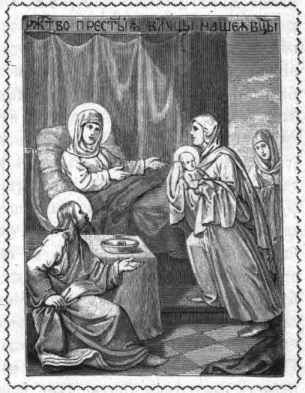
В воспоминание Рождества Пресв. Богородицы издревле установлен Церковью праздник. Указание на него можно находить в IV веке, в котором равноапостольная Елена, как пишут путешественники, основываясь на Палестинских преданиях, соорудила храм в честь и память рождения Матери Божией. Указание можно находить также в писаниях св. Иоанна Златоустого, св. Прокла, Епифания и Августина. В V веке о празднике Рождества Богородицы упоминается в служебнике (сакраментарии) Геласия, и в этом же веке Анатолий, епископ Константинопольский, написал на день Рождества Богородицы некоторые стихиры, ныне поемые Церковью в этот день. В VI веке о праздновании Рождества Богородицы упоминает св. Григорий Двоеслов в своем саркаментарии. В этом же веке Стефан Святогородский, в VII веке св. Андрей Критский, Сергий, патриарх Константинопольский, в VIII – св. Иоанн Дамаскин, Герман, патриарх Константинопольский, в IX веке Иосиф Студит – прославили событие Рождества Богородицы многими песнопениями, коими и ныне Церковь воспевает рождшуюся Пресв. Деву. Так с древних времен «язык всяк православных похваляет и блажит и славит пречистое рождество Марии Богоневесты!»
In remembrance of the Nativity of the Most Holy Theotokos, a feast was established by the Church from ancient times. An indication of it can be found in the fourth century, when the Equal-to-the-Apostles Helen, as travelers write, relying on Palestinian traditions, built a church in honor and memory of the birth of the Mother of God. An indication can also be found in the writings of St. John Chrysostom, St. Proclus, Epiphanius, and Augustine. In the fifth century, the feast of the Nativity of the Theotokos is mentioned in the service book (sacramentary) of Gelasius, and in the same century Anatolius, Bishop of Constantinople, wrote certain stichera for the day of the Nativity of the Theotokos, which are now sung by the Church on this day. In the sixth century, St. Gregory the Dialogist mentions the celebration of the Nativity of the Theotokos in his sacramentary. In the same century, Stephen of the Holy City, in the seventh century St. Andrew of Crete, Sergius, Patriarch of Constantinople, in the eighth St. John of Damascus, Germanus, Patriarch of Constantinople, and in the ninth century Joseph the Studite, glorified the event of the Nativity of the Theotokos with many hymns, with which the Church even now sings the praises of the Most Holy Virgin Who was born. Thus from ancient times "every tongue of the Orthodox praises and blesses and glorifies the pure nativity of Mary the Bride of God!"
Праздник Рождества Пресв. Богородицы есть великий, двунадесятый, вселенский, сообразно важности события в домостроительстве нашего спасения. Празднуя Рождеству Богородицы, Церковь и св. отцы прославляют высшую степень приближения Божества к благодатному единению с человечеством, в лице предъизбранной Девы, рожденной по обетованию Божию, «мановением всех Создателя». «Днесь плод раждати благодать начинает, являющи миру Божию Матерь», воспевает Церковь при богослужении. «Днесь всемирные радости провозвещение, днесь возвеяша ветры, спасения провозвестницы. Иоаким и Анна поношения безчадства свободистася во св. рождестве Пречистой дщери своей. Раждается Мати живота, тму разрешающи, – Адамово обновление, и Евино воззвание, и нетления источник: Еяже ради мы обожихомся, и от смерти изобавлени быхом. Раждается Матерь Божия, и мир с Нею обновляется, Церковь в свое благолепие украшается». Св. Андрей Критский в слове на день Рождества Пресв. Богородицы говорит: «настоящий праздник есть для нас начало праздников. Он служит дверью к благодати и истине. Ныне Создателю всего устроился одушевленный храм, и тварь уготовляется в новое Божественное жилище Творцу». По словам св. Иоанна Дамаскина, «день Рождества Богородицы есть праздник всемирной радости, потому что Богородицей весь род человеческий обновился и печаль праматери Евы применилась в радость. Дева Мария родилась от неплодной, потому что чудесами должно было предуготовить путь к единственной новости под солнцем, главнейшему из чудес, и постоянно восходит от меньшего к большему».
The feast of the Nativity of the Most Holy Theotokos is a great, twelve-feast, universal feast, in accordance with the importance of the event in the dispensation of our salvation. Celebrating the Nativity of the Theotokos, the Church and the holy fathers glorify the highest degree of the approach of the Godhead to the gracious union with humanity, in the person of the pre-chosen Virgin, born according to the promise of God, "by the beckoning of the Creator of all." "Today grace begins to bring forth fruit, revealing to the world the Mother of God," the Church sings during the divine service. "Today is the proclamation of universal joy; today the winds have blown, the heralds of salvation. Joachim and Anna have been freed from the reproach of childlessness through the holy nativity of their most pure daughter. The Mother of life is born, dispelling the darkness—the renewal of Adam, the restoration of Eve, and the source of incorruption; through Her we have been deified and delivered from death. The Mother of God is born, and the world is renewed with Her; the Church is adorned in her splendor." St. Andrew of Crete, in his homily for the day of the Nativity of the Most Holy Theotokos, says: "The present feast is for us the beginning of feasts. It serves as the door to grace and truth. Today the animate temple is prepared for the Creator of all, and creation is being made ready as a new divine dwelling for the Creator." According to the words of St. John of Damascus, "the day of the Nativity of the Theotokos is a feast of universal joy, because through the Theotokos the whole human race was renewed, and the sorrow of the foremother Eve was changed into joy. The Virgin Mary was born of a barren woman, because it was fitting that miracles should prepare the way for the sole novelty under the sun, the chief of miracles, and that one should ascend from the lesser to the greater."
Праздник Рождества Богородицы, в пределах предпразднества и попразднества продолжается 6 дней, с 7 до 12 сентября.
The feast of the Nativity of the Theotokos, within the limits of the forefeast and afterfeast, continues for six days, from the 7th to the 12th of September.
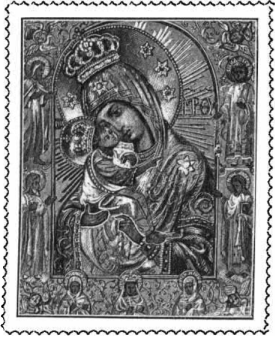
Об этой иконе сохраняются следующие предания. В 1595 году греческий митрополит Неофит, путешествовавший в России, в благодарность за оказанное ему гостеприимство, благословил одну из благочестивых и страннолюбивых жен привезенной им из Константинополя иконой Пресвятой Богородицы. Пребывая в доме той, которая благословлена иконой, эта святыня сначала немногим известна была. Но Богу угодно было прославить ее. Она неоднократно являлась в лучезарном свете жившим в доме Гойской и ей самой во сне, но Анна не верила ни другим, ни снам своим. Случилось, что она увидела Богоматерь в сиянии света уже не во сне, а на яву, и с той поры стала более оказывать благоговения к иконе Богоматери; приказала теплить неугасаемую лампаду и молилась перед иконой.
The following traditions are preserved concerning this icon. In the year 1595, the Greek Metropolitan Neophytos, while traveling in Russia, in gratitude for the hospitality shown to him, blessed one of the pious and hospitable women with an icon of the Most Holy Theotokos which he had brought from Constantinople. While remaining in the house of the woman who had been blessed with the icon, this sacred object was at first known to few. But God was pleased to glorify it. It repeatedly appeared in a radiant light to those living in the house of Goyskaya and to her herself in a dream, but Anna believed neither others nor her own dreams. It happened that she saw the Mother of God in a radiance of light not in a dream, but in reality, and from that time she began to show greater reverence for the icon of the Mother of God; she ordered an unquenchable lamp to be kept burning and prayed before the icon.
Прошло немного времени, и от иконы Богоматери стали истекать чудеса. Анна удивлялась благодати от иконы Богоматери. Но когда брат ее, слепец от рождения, подведенный к иконе и как бы вдохновенный свыше озарившей его благодатью, в умилении сердца, со слезами и молитвой подвергся перед иконой, получил зрение, – Анна, видя столько великую благодать Пречистой Девы, являемую от Ее образа, в 1597 году с торжеством препроводила сей образ, по совету и согласию духовных и мирских лиц, в Почаевскую обитель, находящуюся в Волынской губернии в местечке Почаев. С тех пор икона известна под именем Почаевской. Между многими чудесами от Почаевской иконы Богоматери, особенно было чудесное избавление Почаевской обители в 1675 году в 20 день июля заступлением Богородицы от турок, которые приступили уже к монастырским стенам. Православные иноки, возлагая надежду свою на помощь Пресвятой Девы, всю ночь молились и пели перед чудотворной иконой Богородицы акафист, и когда возгласили: «Взбранной Воеводе», в эту минуту Божия Матерь явилась в светлой одежде, окруженная ангелами, имеющими обнаженные мечи, с белоблещущим омофором, знамением Своего всегдашнего предстательства и заступления. На неверных напал внезапный страх, который обратил всех их в бегство. В 1770 году, года Почаевской обителью уже владели униаты, учреждена была особая комиссия для достовернейшего исследования преданий о чудотворной иконе Богородицы. Собранные комиссией сведения утверждены свидетельством епископов. Из сих сведений, подтвержденных собственноручной подписью многих лиц, видно, что на поклонение Почаевской иконе Божьей Матери приходили и исцеление от нее получали не только православные и бывшие униаты, но и христиане исповедания латинского и лютеранского и даже евреи, кои по исцелении принимали христианскую веру.
A short time passed, and miracles began to flow from the icon of the Mother of God. Anna marveled at the grace from the icon of the Mother of God. But when her brother, blind from birth, having been led to the icon and, as if inspired from on high by the grace that illumined him, in contrition of heart, with tears and prayer, prostrated himself before the icon, and received his sight—Anna, seeing such great grace of the Most Pure Virgin manifested from Her image, in the year 1597, with solemnity, conveyed this image, on the advice and with the consent of clergy and laypersons, to the Pochaev monastery, located in the Volhynia province in the town of Pochaev. From that time the icon has been known by the name of the Pochaev Icon. Among the many miracles from the Pochaev Icon of the Mother of God, especially notable was the miraculous deliverance of the Pochaev monastery in the year 1675, on the 20th day of July, through the intercession of the Theotokos from the Turks, who had already approached the monastery walls. The Orthodox monks, placing their hope in the help of the Most Holy Virgin, prayed all night and sang an akathist before the wonderworking icon of the Theotokos, and when they exclaimed: "To Thee, the Champion Leader," at that moment the Mother of God appeared in a bright garment, surrounded by angels bearing drawn swords, with a white-shining omophorion, the sign of Her everlasting intercession and protection. A sudden terror fell upon the infidels, which put them all to flight. In the year 1770, when the Pochaev monastery was already under the control of the Uniates, a special commission was established for the most reliable investigation of the traditions concerning the wonderworking icon of the Theotokos. The information gathered by the commission was confirmed by the testimony of bishops. From this information, confirmed by the personal signatures of many persons, it is evident that to venerate the Pochaev Icon of the Mother of God there came and received healing from it not only the Orthodox and former Uniates, but also Christians of the Latin and Lutheran confessions, and even Jews, who after their healing embraced the Christian faith.
В 1831 г., по возвращении Почаевского монастыря православном ведомству, он наименован Успенской Почаевской лаврой. И ныне православные христиане питают к Почаевской иконе Богоматери великое благоговение. На поклонение к ней притекают богомальцы из отдаленных мест России, даже из Архангельской губернии и Сибири, и богомольцев всегда много в обители Почаевской.
In the year 1831, upon the return of the Pochaev monastery to the Orthodox jurisdiction, it was named the Dormition Pochaev Lavra. And even now Orthodox Christians hold the Pochaev Icon of the Mother of God in great reverence. Pilgrims flock to venerate it from distant parts of Russia, even from the Arkhangelsk province and Siberia, and there are always many pilgrims in the Pochaev monastery.
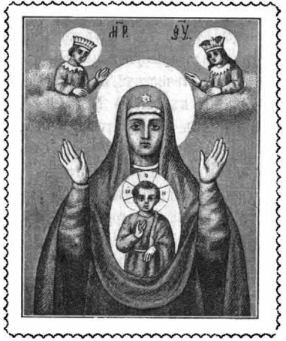
Один из жителей Рыльска, ходя по лесу в 1295 году 8 сентября, для охоты по берегу реки Тускари, увидел при корне дерева образ, обращенный ликом к земле; поднял икону и увидел, что это образ Знамения Богоматери. Когда образ поднят был, из земли открылся источник воды на том месте, где лежала икона. Слух о явлении иконы достиг Рыльского князя Василия Шемяки. Икона, по распоряжению его, перенесена был в Рыльск и благоговейно встречена народом. Сам князь при сретении святыни не присутствовал и во время сретения объят был слепотой. Он сознал свою вину, принес покаяние и моление перед явленной иконой и вновь получил зрение. В благодарность за сие благодеяние он соорудил в городе Рыльске во имя Рождества Богоматери церковь, в которой и была поставлена явленная и чудотворная икона, и установлен праздник явления Курской иконы 8 сентября. Но она чудесно возвратилась на место явления своего, где построена была для нее часовня, и пребывала в ней 302 года. Эта часовня при нашествии татар в 1385 году сожжена, доска иконы была расколота и разметана. Но впоследствии икона явилась невредима. Слава о чудотворной иконе Курской достигла до столицы и в 1597 году святыня перенесена была в Москву. Здесь ее встретили с великим торжеством царь Федор Иоанович, духовные, бояре и народ. В Москве поставили ее п сребро-позолоченную раму и присовокупили, по подобию иконы Софии – Премудрости Божией, изображение на ней Господа Саваофа сверху, а по сторонам и внизу изображения пророков. Царица Ирина Федоровна украсила икону драгоценными камнями. Впрочем, в том же году икона была возвращена на место явления ее, и здесь по усердию Феодора Иоановича основаны манастырь или пустынь и церковь во имя Рождества Богородицы. От явления иконы при корне дерева икона часто называется Коренской, а сама пустынь известна под именем Коренной. При нашествии крымских хищников на южные пределы России, св. икона перенесена была из пустыни в Курск, а в Коренной пустыни поставлен список с нее. Борис Федорович, благоговея к святыне, защищавшей Курск от голода, бывшего при нем, принес ей от своего усердия много пожертвований. Даже самозванец, по вторжении в Путивль, желая мнимым благочестием привлечь к себе православных, повелел перенести в стан свой Курскую икону и, по сказанию современного повествования, молился перед ней. Тогда она вторично посетила первопрестольную Москву и осталась в царских чертогах. В 1612 году курские граждане видели особенную помощь Божьей Матери надо своим городом, когда поляки со многочисленным войском осаждали город в этом году.
One of the inhabitants of Rylsk, while walking through the forest on September 8, 1295, to hunt along the banks of the River Tuskari, saw at the root of a tree an image, its face turned toward the ground; he lifted the icon and saw that it was the image of the Sign of the Theotokos. When the image was lifted up, a spring of water issued from the earth at the place where the icon had lain. The report of the appearance of the icon reached Prince Vasily Shemyaka of Rylsk. The icon, by his order, was transferred to Rylsk and was reverently met by the people. The prince himself was not present at the meeting of the shrine, and during the meeting he was struck with blindness. He acknowledged his fault, offered repentance and prayer before the appeared icon, and again received his sight. In gratitude for this benefaction, he built in the city of Rylsk a church in the name of the Nativity of the Theotokos, in which the appeared and wonderworking icon was placed, and established the feast of the appearance of the Kursk Icon on September 8. But it miraculously returned to the place of its appearance, where a chapel was built for it, and it remained there for 302 years. This chapel was burned during the invasion of the Tatars in 1385, and the board of the icon was split and scattered. But afterwards the icon appeared unharmed. The fame of the wonderworking Kursk Icon reached the capital, and in 1597 the shrine was transferred to Moscow. There it was met with great solemnity by Tsar Theodore Ioannovich, the clergy, the boyars, and the people. In Moscow they placed it in a silver-gilt frame and added, after the likeness of the icon of Sophia—the Wisdom of God, an image of the Lord Sabaoth above, and on the sides and below images of the prophets. Tsarina Irene Feodorovna adorned the icon with precious stones. However, in the same year the icon was returned to the place of its appearance, and there, through the zeal of Theodore Ioannovich, a monastery or hermitage and a church in the name of the Nativity of the Theotokos were founded. From the appearance of the icon at the root of a tree, the icon is often called the Korenskaya, and the hermitage itself is known by the name of Korennaya. During the invasion of the Crimean raiders upon the southern borders of Russia, the holy icon was transferred from the hermitage to Kursk, and a copy of it was placed in the Korennaya Hermitage. Boris Feodorovich, reverencing the shrine that had protected Kursk from the famine that occurred during his time, offered to it many donations out of his zeal. Even the Pretender, upon his invasion of Putivl, desiring to attract the Orthodox to himself by feigned piety, ordered the Kursk Icon to be brought to his camp and, according to the account of a contemporary narrative, prayed before it. Then it visited the first-throne city of Moscow a second time and remained in the royal chambers. In 1612 the citizens of Kursk saw the special help of the Mother of God over their city, when the Poles with a numerous army besieged the city in that year.
При самом начале некоторые видели над стенами города жену с двумя светлыми иноками, осеняющую город. В это время жители Курска неоднократно совершали крестные хождения вокруг города и произнесли обет, если Бог поможет им освободиться от осады, воздвигнуть среди города монастырь в честь Богоматери и поставить в нем чудотворную Ее икону по возвращении ее из Москвы. Неприятели скоро отступили от города с великой потерей. Исполняя обет свой, жители Курска, в благодарность Заступнице, построили в Курске во имя Пресвятой Богородицы иконы Знамения монастырь. В 1615 году, по прошению Курских граждан и по повелению царя Михаила Феодоровича, чудотворная икона Курская возвращена из Москвы в Курск и поставлена в соборном храме. В 1618 году курские граждане просили о дозволении перенести икону из собора в монастырь, куда она по дозволению Михаила Феодоровича и перенесена и где доселе пребывает и посему называется Курской.
At the very beginning, some saw above the walls of the city a woman with two radiant monks, overshadowing the city. At that time the inhabitants of Kursk repeatedly made processions of the cross around the city and made a vow, if God would help them to be delivered from the siege, to erect a monastery in the midst of the city in honor of the Theotokos and to place in it Her wonderworking icon upon its return from Moscow. The enemies soon withdrew from the city with great loss. Fulfilling their vow, the inhabitants of Kursk, in gratitude to the Intercessor, built in Kursk a monastery in the name of the Icon of the Sign of the Most Holy Theotokos. In 1615, at the petition of the citizens of Kursk and by command of Tsar Michael Feodorovich, the wonderworking Kursk Icon was returned from Moscow to Kursk and placed in the cathedral church. In 1618 the citizens of Kursk requested permission to transfer the icon from the cathedral to the monastery, where, by permission of Michael Feodorovich, it was transferred and where it remains to this day, and therefore is called the Kursk Icon.
В 1676 году св. икона поднимаема была на Дон для благословения храбрых и благочестивых донцев. В 1684 г. от государей и великих князей Иоанна и Петра Алексеевичей прислан был в Коренной монастырь список с чудотворной иконы Знамения Пресв. Богородицы в сребро-позолоченном окладе, с повелением носить сей список в походах православных воинов. В 1689 г., по грамоте тех же царей, с чудотворной Курской иконы снят был новый список для полков, отправлявшихся в поход. И в достопамятный 1812 год Курское градское общество и прав. Воинство возлагали упование свое на Пресв. Деву. По усердию своему к отечеству, Курские граждане послали в действующую армию к князю Кутузову-Смоленскому в позолоченной ризе список с чудотворной Курской иконы для благословения и ободрения подвизающихся за веру и отечество. Князь, в письме своем от 20 сентября того же года на имя Курского градского головы, изъявил гражданам свою признательность, с уверением, что город Курск есть и будет всегда в безопасности.
In 1676 the holy icon was carried to the Don for the blessing of the brave and pious Don Cossacks. In 1684, from the sovereigns and grand princes John and Peter Alexievich, a copy of the wonderworking Icon of the Sign of the Most Holy Theotokos was sent to the Korennaya Monastery in a silver-gilt riza, with the command to carry this copy in the campaigns of the Orthodox soldiers. In 1689, by charter of the same tsars, a new copy was made from the wonderworking Kursk Icon for the regiments setting out on campaign. And in the memorable year 1812, the city society of Kursk and the Orthodox army placed their hope in the Most Holy Virgin. Out of their zeal for the fatherland, the citizens of Kursk sent to the active army to Prince Kutuzov-Smolensky a copy of the wonderworking Kursk Icon in a gilded riza for the blessing and encouragement of those striving for faith and fatherland. The prince, in his letter of September 20 of that year to the mayor of Kursk, expressed his gratitude to the citizens, with the assurance that the city of Kursk is and will always be in safety.
В воспоминание перенесения Курской иконы из Москвы в Курске и первоначального появления образа, ежегодно с 1618 года после праздника Пасхи, в пятницу девятой седмицы, этот образ препровождаем бывает, с крестным ходом, из Курска на место явления его – в Коренную пустынь, и остается там до 13-го сентября. «Нельзя не заметить, говорит один очевидец, что, при совершении крестного хода с чудотворной Курской иконой в Коренную пустынь, богомольцы сопровождают ее в таком количестве, что подобного стечения народа не встретит не только в России, но и во всей Европе. На лицах всех, сопровождающих шествие иконы, выражается благоговейное умиление, а в сердцах чистая преданность к святыне».
In commemoration of the transfer of the Kursk Icon from Moscow to Kursk and of the original appearance of the image, annually since 1618, after the feast of Pascha, on the Friday of the ninth week, this image is escorted, with a cross-procession, from Kursk to the place of its appearance—to the Korennaya Hermitage, and remains there until September 13. “One cannot fail to notice,” says an eyewitness, “that, during the performance of the cross-procession with the wonderworking Kursk Icon to the Korennaya Hermitage, the pilgrims accompany it in such numbers that a similar gathering of people will not be met not only in Russia, but in all of Europe. On the faces of all who accompany the procession of the icon is expressed reverent compunction, and in their hearts, pure devotion to the shrine.”
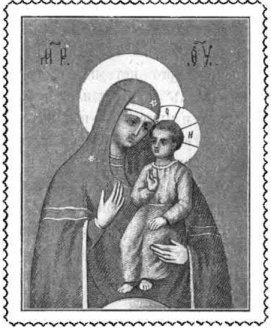
В селении Отводном, близ Кубенского озера, недалеко от Вологды, крестьянин Иван Родионов два года лежал в расслаблении. В 1524 году является ему во сне Богоматерь, повелевая идти в Сямскую волость к Покровской церкви и объявить прихожанам волю Владычицы и построении здесь обители во имя Пречистого Ее Рождества, близ сей волости у речки Крутца на поляне Долгой.
In the settlement of Otvodnoye, near Lake Kubenskoye, not far from Vologda, the peasant Ivan Rodionov lay paralyzed for two years. In 1524 the Theotokos appeared to him in a dream, commanding him to go to the Syamsk volost to the Church of the Protection and to declare to the parishioners the will of the Lady concerning the building of a monastery there in the name of Her Most Pure Nativity, near this volost by the river Krutets on the clearing called Dolgaya.
За исполнение сего повеления больному обещано исцеление. Повинуясь небесному внушению, он возвестил волю Богоматери и во то же время получил исцеление. Видя в чудесном исцелении крестьянина ясное подтверждение истины словом его, жители волости в тот же год воздвигли деревянный монастырь в честь Рождества Богородицы. Чудотворная икона Рождества Богородицы с тех пор сделалась местной храмовой, известной под именем Сямской; в монастырском летописце записано много от нее чудес. В 1542 году весь этот монастырь сгорел до основания; спасена только одна чудотворная икона и снова воздвигнуты были монастырские здания.
For the fulfillment of this command, healing was promised to the sick man. Obeying the heavenly prompting, he proclaimed the will of the Theotokos and at the same time received healing. Seeing in the miraculous healing of the peasant a clear confirmation of the truth of his words, the inhabitants of the volost in that same year erected a wooden monastery in honor of the Nativity of the Theotokos. The wonderworking icon of the Nativity of the Theotokos from that time became the local temple icon, known under the name of Syamsk; many miracles from it are recorded in the monastery chronicle. In 1542 this entire monastery burned to the ground; only the wonderworking icon was saved, and the monastery buildings were erected anew.
Св. новомуч. Афанасия Солунского, пострадавшего от турок в 1774 г. за порицание магометанской веры и непринятие ислама. (См. «Христ. мучч.» Соловьева).
St. New Martyr Athanasius of Thessalonica, who suffered from the Turks in 1774 for reviling the Mohammedan faith and for not accepting Islam. (See “Christian Martyrs” by Solovyov.)
Родом из Галича. Еще в молодых годах разделял с отцом своим Дионисием благочестивое и подвижническое уединение в Брынском лесу. После того, пожив в обители Покровской близ Углича, Лукиан (до пострижения – Иларион) удалился в пустынное место в 30-ти верстах от Переславля, поставил себе келью близ запустившей после нашествия Литвы церкви Рождества Богородицы, в которой находилась чудотворная икона Ее; возобновил эту церковь и, приняв пострижение с именем Лукиана, священнодействовал в ней. Много потерпел от клеветы завистников. Был основателем двух монастырей: женского близ города Александрова и мужского – при опустевшей церкви Божьей Матери, где и погребен по смерти своей в 1655 году. Отличался умилительным даром слова и даром прозорливости (напр. задолго предсказал о губительном моровом поветрии, предупреждая народ о необходимости покаяния, так как «грядет гнев Божий великий и язву смертоносную пошлет Господь»).
A native of Galich. Even in his youth he shared with his father Dionysius a pious and ascetic seclusion in the Bryn Forest. After that, having lived in the Monastery of the Protection near Uglich, Lucian (before tonsure—Hilarion) withdrew to a desert place 30 versts from Pereslavl, set up a cell for himself near the church of the Nativity of the Theotokos, which had fallen into desolation after the invasion of the Lithuanians, and in which was found a wonderworking icon of Her; he restored this church and, having received tonsure with the name Lucian, served as a priest in it. He suffered much from the slander of the envious. He was the founder of two monasteries: a women’s monastery near the city of Alexandrov and a men’s monastery at the desolate church of the Mother of God, where he was buried after his death in 1655. He was distinguished by a compunctionate gift of speech and the gift of foresight (for example, long beforehand he predicted a deadly pestilence, warning the people of the necessity of repentance, for “the great wrath of God is coming and the Lord will send a deadly plague”).