Orthodox Translations

September 55 сентября

Old Calendar: civil September 18 · New Calendar: civil September 5

History

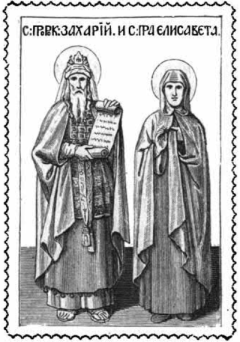
Св. праведных Захарии и Елизаветы, родителей Иоанна Предтечи

Sts. Righteous Zacharias and Elizabeth, parents of John the Forerunner

E1.TAI draft

Праведные Захария и Елизавета, жена его из рода Ааронова, сестра Анны, матери Пресвятой Девы Марии, жили во дни Ирода, царя Иудейского. Оба они были праведны перед Богом, ходяща во всех заповедях и оправданиях Господних беспорочна. Захария был первосвященник и пророк. Хотя евангелист Лука называет его иереем (Лк.1:5–9); но иереем в св. Писании часто называется и архиерей (Лев.2. Исх.35:19. Деян.5:24).

The Righteous Zacharias and Elizabeth, his wife of the lineage of Aaron, sister of Anna, the mother of the Most Holy Virgin Mary, lived in the days of Herod, king of Judea. They were both righteous before God, walking in all the commandments and ordinances of the Lord blameless. Zacharias was a high priest and a prophet. Although the Evangelist Luke calls him a priest (Lk. 1:5–9); yet in Holy Scripture a priest is often also called a high priest (Lev. 2; Ex. 35:19; Acts 5:24).

E1.0AI draft

Первосвященником же и великим архиереем называют Захарию Дионисий Ареопагит, св. Златоуст, Феодорит, Димитрий митрополит и св. Церковь в службе на Введение Богородицы.

Dionysius the Areopagite, St. John Chrysostom, Theodoret, Metropolitan Demetrius, and the Holy Church in the service for the Entry of the Theotokos call Zacharias a high priest and great hierarch.

E1.1AI draft
Engraving

Захария, по выражению церковной песни, был «зритель тайных». При торжественном событии введения Девы Марии он, по Божию научению, ввел Ее во святая святых. Плодом супружеской праведности Захирии и Елисаветы был честный и славный пророк, Предтеча и Креститель Господень Иоанн, о котором, как Предтече Господа, Захария пророчествовал (Лк.1:56–67). Св. Захария был свидетелем Евангельской истины по воплощении Сына Божия. Когда Пресвятая Дева, в 40 день по рождении Спасителя, пришла в храм Божий для очищения законного, то, по сказанию предания, Захария принял Ее с Предвечным Младенцем и поставил в храме на месте, назначенном для дев. Книжники негодовали; но Захария исповедал, что Дева сия хотя и стала Матерью, но не перестала быть и чистой Девой.

Zacharias, in the words of the Church hymn, was a "beholder of mysteries." At the solemn event of the Entry of the Virgin Mary into the temple, he, by divine instruction, brought Her into the Holy of Holies. The fruit of the marital righteousness of Zacharias and Elizabeth was the honorable and glorious Prophet, the Forerunner and Baptist of the Lord John, concerning whom, as the Forerunner of the Lord, Zacharias prophesied (Lk. 1:56–67). St. Zacharias was a witness of the Gospel truth after the incarnation of the Son of God. When the Most Holy Virgin, on the fortieth day after the birth of the Savior, came to the temple of God for legal purification, then, according to the account of tradition, Zacharias received Her with the Eternal Infant and placed Her in the temple in the place appointed for virgins. The scribes were indignant; but Zacharias confessed that this Virgin, though She had become a Mother, had not ceased to be a pure Virgin.

E1.3AI draft

Скрывая и спасая сына своего младенца Иоанна от смерти, на которую осудил младенцев Вифлеемских Ирод, царь Иудейский, опасаясь Младенца Христа, чтобы Сей Богомладенец царского рода не отнял у него царства, Захария, сын Варахин, по повелению Ирода, сам убит был мечем, между церковью и алтарем (Мф.23:35). Прав. Церковь в своих песнопениях и сказаниях, называя Захарию, сына Варахиина, убиенного между церковью и алтарем, отцем Предтечи, основывается на древнем предании Церкви первенствующей. Так передают Ориген, св. Петр Александрийский, св. Григорий Нисский в слове на Рождество Христово, Кирилл Александрийский и другие. Св. Петр, архиепископ Александрийский и священномученик, живший в конце III и в начале IV христианского века и написавший правила, принятые Церковью в руководство, в 13 правиле своем об убиении Захарии между церковью и алтарем говорит: «кровожадный Ирод видел, яко поруган бысть от волхвов, разневася зело и послав изби вся дети, сущия в Вифлееме, и во всех пределах его, от двою лету и нижайше по времени, еже известно испыта от волхвов (Мф.2:12, 16). Искав купно с ними убити и иное отроча, рожденное прежде Его, и не нашедши, убил он отца его – Захарию между церковью и алтарем, тогда как младенец удалился с матерью Елизаветой». День св. праведных Захарии и Елизаветы празднуется Церковью с древних времен. В IV веке в этот день св. Иоанн Златоуст говорил поучения.

Hiding and saving his infant son John from the death to which Herod, king of Judea, had condemned the infants of Bethlehem, fearing the Infant Christ, lest this Divine Infant of royal lineage take away his kingdom, Zacharias, the son of Barachias, was himself slain by the sword, by the command of Herod, between the temple and the altar (Mt. 23:35). The Orthodox Church, in its hymns and narratives, calling Zacharias, the son of Barachias, slain between the temple and the altar, the father of the Forerunner, is based on the ancient tradition of the primitive Church. Thus relate Origen, St. Peter of Alexandria, St. Gregory of Nyssa in his homily on the Nativity of Christ, Cyril of Alexandria, and others. St. Peter, Archbishop of Alexandria and Hieromartyr, who lived at the end of the third and the beginning of the fourth Christian century and wrote the canons accepted by the Church as a guide, in his thirteenth canon concerning the slaying of Zacharias between the temple and the altar, says: 'the bloodthirsty Herod, seeing that he was mocked of the wise men, was exceeding wroth, and sent forth, and slew all the children that were in Bethlehem, and in all the coasts thereof, from two years old and under, according to the time which he had diligently inquired of the wise men (Mt. 2:12, 16). Seeking also to kill with them another child born before Him, and not finding him, he slew his father—Zacharias between the temple and the altar, while the infant had withdrawn with his mother Elizabeth.' The day of Sts. Righteous Zacharias and Elizabeth has been celebrated by the Church from ancient times. In the fourth century, St. John Chrysostom delivered homilies on this day.

E1.4AI draft

Чтением Апостольским Церковь проповедует о непреложности обетований Божиих, данных Аврааму и потомкам его, к коим принадлежат Захария и Елисавета (Евр.6:13–20); а Евангельским благовествует об убиении Захарии между церковью и алтарем (Мф.23:29–39).

In the Apostolic reading, the Church preaches the immutability of God's promises given to Abraham and his descendants, to whom Zacharias and Elizabeth belong (Heb. 6:13–20); and in the Gospel reading, it announces the slaying of Zacharias between the temple and the altar (Mt. 23:29–39).

E1.5AI draft

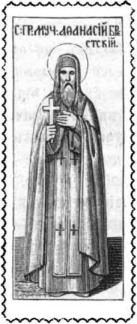
† Страдание преп. Афанасия Брестского

† The Passion of the Venerable Athanasius of Brest

E2.TAI draft

Уже Медведев в свое время писал: «имать Церковь Христова Малороссийская в Брести, Литовском граде, прежде лет 40 веры ради страдавшего иеромонаха Афанасия, которого и доселе нетленны мощи пребывают».23 Георгий Конисский в свое время радостно говорил вслух православных и неправославных: «к числу нетленно почивающих святых надобно отнесть преподобномученика нашей Церкви Афанасия Филипповича, убиенного римскими католиками за веру в нашем православном загородном Брестском монастыре, уже более полтораста лет Божьей силой цело и невредимо почивающего.24

Already Medvedev in his time wrote: 'The Church of Christ in Little Russia has in Brest, a Lithuanian city, the hieromonk Athanasius, who suffered for the faith some forty years ago, whose relics remain incorrupt even to this day.'23 George Konissky in his time joyfully declared in the hearing of both Orthodox and non-Orthodox: 'Among the saints who repose incorrupt must be numbered the Venerable Martyr of our Church Athanasius Filipovich, slain by Roman Catholics for the faith in our Orthodox suburban Brest Monastery, who for more than a hundred and fifty years has reposed whole and unharmed by the power of God.'24

E2.0AI draft
Engraving

Блаженный Афанасий, сын благородных и благочестивых родителей, получил в молодых годах своих высокое образование, так что мог учить других языкам латинскому, польскому и русскому. – В 1622 г. гетман Сапега, по воле короля, отдал ему на воспитание мнимого сына Марины Мнишек, шляхтича Лубу; по распоряжению Сигизмунда отпускали на содержание дорого человека до 6000 злотых в год; блаженный наставник жил с питомцем своим в Брестском монастыре. – Владислав, не желавший быть орудием иезуитов, как был его отец, уменьшил выдачу жалованья до 100 злотых.25 – В 1627 г. блаженный принял монашество в Вильне; потом жил в обителях Кутеинской и Межигоской. Искренний подвижник благочестия и образованный защитник св. веры поставлен был в наместника обители Дубовской, что под Пинском. В 1636 году по распоряжению канцлера Радзивилла Дубовский монастырь отдан был иезуитам, и православные иноки выгнаны были из своей обители. Блаженный Афанасий перешел в Купятицкий монастырь, но и здесь не было покоя от папизма. В 1637 году Афанасий отправился для сбора милостыни в Белоруссию и отселе в Москву. Полный помыслов и забот о благе православия, представив царю Михаилу Федоровичу о печально судьбе своей, он для успехов св. веры над ее врагами советовал изобразить на военных хоругвях образ Божьей Матери в кресте, по его видению. По возвращении из Москвы определен он был в игумена Брестского Симеоновского монастыря. По долгу звания своего вступив в спор об имениях обители, резко обличал он поклонников папы в жадности к корысти и в происках злостных. Это навлекло на него непрятности; но митр. Петр Могила защитил его.26 Какая резкая разность между православным служителем алтаря Божия и папистом-священником! Православному иерею говорит архипастырь его в грамоте: «не принимай приношения жертвеннику Божию от неверных, ни от еретиков, ни от блудников, ни от прелюбодеев, ни от воров, ни от разбойников, ни от властителей немилосердных, ни от корчемников, ни от ростовщиков, ни от нарушителя клятвы, ни от ложного пастыря, ни от волхва, ни от сводника, ни от актера, ни от мучащего слуг своих голодом и побоями.27 – Слуга папы не только не был разборчив в принятии приношений, но грабил чужое, где только мог. – Блаж. Афанасий, провождая житие в страхе Господнем, учил тому же и братию и настойчиво внушал – не слушать новых учений, рассеиваемых отступившими от восточной кафолической веры; – особенно же в скорбях времени ожидал он всего от благодати Божией и проводил дни и ночи в молитве. Положив себе за правило читать каждую субботу акафист Матери Божией, он с точностью выполнял свое правило. Матерь Божья утешила подвижника Своего. «Иди, слуга Мой, сказала Она блаженному, смело говори сенату и королю, дабы не тревожили святой православной веры: иначе они навлекут на себя суд Божий, – преданы будут во власть сильного царя и народа». Блаженный, повинуясь Матери Божьей, объявлял вслух сенаторов, чего поляки должны ожидать себе за кровавые притеснения православию.28 Тогда в Варшаве находились послы православного царя. Бл. Афанасий открыл послам, что иезуиты скрывают у себя лице опасное для России, мнимого сына Марины Мнишек, шляхтича Лубу, бывшего у него на воспитании, а теперь уже 15 лет проживающего у иезуитов; игумен доставил послам и несколько писем Лубы, где тот называет себя царевичем. По воле царя послы потребовали, чтобы выдан им был самозванец. Иезуиты боялись многого теперь и за себя; они употребили все старание, чтобы Луба не был отдан в полное распоряжение России. Паны объявили послам, что Луба – бедный шляхтич, невиновный ни в чем, и Польша не может выдать его для казни. Твердый исповедник правды Божьей смело повторял сенаторам, что напрасно худые люди строят ковы против православного царства, – себе во вред преследуют они православие. От него требовали доказательств, что воспитанник его – не сын Марины. «Ни покойный Сапега, ни Мнишки не признавали Лубы за царевича», отвечал он. «Игумен, который объявил о воре», писали послы царю в Москву, «посажен в Варшаве в оковы» и условием свободы его положена свобода Лубы.29 Иезуиты напрягали усилия мстить отцу Филипповичу: из Варшавской тюрьмы перевели его в Краковскую темницу, – причем подвергали его брани, побоям и голоду.30 – Послы сильно заботились о спасении невинной жертвы злости. По их совету преподобный подал просьбу к королю. Так как не стали более требовать выдачи Лубы в Россию, то и невинного страдальца, святого Афанасия, освободили из темницы. Это было уже в конце 1645 года. В Киеве он в 1646 году докончил дневник свой или записки о своей печальной жизни, не оставшейся без утешений небесных.31 – Когда Богдан Хмельницкий восстал на защиту православия, понятно, что преп. Афанасий, как открытый противник унии, мог повторять только проповедь свою о вреде унии. Иезуиты никак не могли простить ему и за Лубу. Тогдашние отношения папизма к православию так описывал Хмельницкий: «причиной, понудившей козаков восстать на ляхов, было не то, что ляхи несправедливо отбирали у нас поселения и дома, не то, что лишали нас земной отчизны, и не то, что отягощали немилостивно работами, подобно фараону (все это не отказались бы терпеть козаки), но то, что ляхи, принуждая отказаться от православных догматов и присоединиться к заблуждению, злобным юродством разоряли мысленные селения и домы нетленных душ».32 – От того, кто во всю жизнь жил по правилам чистой веры и кто открыто говорил о вреде унии и для временной и для вечной жизни, потребовали теперь признать законность унии; за несогласие же с произволами человеческими заключили в Брестскую подземную темницу и заковали по рукам и ногам в кандалы. – Твердый исповедник смело объявлял гнев Божий польскому правительству за оскорбление прав человечества и защиту, оказываемую тем, которые нагло оскорбляли откровение Божие для прихотей человеческих. И за все это решено предать его позорной смерти. Когда об этом объявлено ему, он вслух всех сказал: «конечно отступники от св. веры, надменные ложным просвещением, еще не малое время будут преследовать исповедников истины небесной; – но будет время, когда в Бресте и во всей окрестной стране процветает православие, и слава его уже не померкнет; там, где будет лежать тело мое, козни врагов, отступников от св. веры, будут бессильны». – Св. исповедник был обезглавлен.33 Это было 5. сент. 1648 года.34 Мощи его почивают открыто в соборном храме Брестского Симеонова монастыря.35

Blessed Athanasius, son of noble and pious parents, received in his youth a lofty education, so that he was able to teach others the Latin, Polish, and Russian languages. – In the year 1622, Hetman Sapieha, by the will of the king, entrusted to his upbringing the supposed son of Marina Mniszech, the nobleman Łuba; by order of Sigismund, up to 6000 złotys a year were allotted for the maintenance of this precious person; the blessed instructor lived with his pupil in the Brest Monastery. – Władysław, who did not wish to be an instrument of the Jesuits as his father had been, reduced the payment of the salary to 100 złotys.25 – In 1627 the blessed one received monastic tonsure in Vilna; afterwards he lived in the monasteries of Kutein and Mezhyhorsk. A sincere ascetic of piety and an educated defender of the holy faith, he was appointed superior of the Dubov Monastery, which is near Pinsk. In 1636, by order of Chancellor Radziwiłł, the Dubov Monastery was given to the Jesuits, and the Orthodox monks were driven out of their monastery. Blessed Athanasius moved to the Kupyatitsky Monastery, but even here there was no peace from papism. In 1637 Athanasius set out to collect alms in Belorussia and from there to Moscow. Full of thoughts and cares for the good of Orthodoxy, having presented to Tsar Michael Feodorovich the account of his sorrowful fate, he advised, for the success of the holy faith over its enemies, to depict on military banners the image of the Mother of God in a cross, according to his vision. Upon his return from Moscow, he was appointed abbot of the Brest St. Simeon Monastery. By the duty of his office, having entered into a dispute over the monastery's estates, he sharply denounced the adherents of the pope for their greed for gain and for their malicious intrigues. This brought unpleasantness upon him; but Metropolitan Peter Mogila defended him.26 What a sharp difference between an Orthodox minister of the altar of God and a papist priest! To the Orthodox priest his archpastor says in a charter: "Do not accept offerings for the altar of God from the unfaithful, nor from heretics, nor from fornicators, nor from adulterers, nor from thieves, nor from robbers, nor from merciless rulers, nor from tavern-keepers, nor from usurers, nor from a violator of an oath, nor from a false pastor, nor from a sorcerer, nor from a pimp, nor from an actor, nor from one who torments his servants with hunger and beatings."27 – The servant of the pope was not only indiscriminate in accepting offerings, but plundered what belonged to others wherever he could. – Blessed Athanasius, passing his life in the fear of the Lord, taught the same to the brethren and persistently instilled in them not to listen to the new teachings scattered by those who had fallen away from the Eastern Catholic faith; – especially in the sorrows of the time he expected everything from the grace of God and spent days and nights in prayer. Having made it a rule for himself to read the akathist to the Mother of God every Saturday, he fulfilled his rule with exactness. The Mother of God comforted Her ascetic. "Go, My servant," She said to the blessed one, "speak boldly to the senate and the king, that they not trouble the holy Orthodox faith; otherwise they will bring upon themselves the judgment of God – they will be delivered into the power of a mighty tsar and people." The blessed one, obeying the Mother of God, declared aloud before the senators what the Poles should expect for themselves for their bloody oppressions of Orthodoxy.28 At that time the envoys of the Orthodox tsar were in Warsaw. Blessed Athanasius revealed to the envoys that the Jesuits were hiding a person dangerous for Russia, the supposed son of Marina Mniszech, the nobleman Łuba, who had been in his care and had now been living with the Jesuits for fifteen years; the abbot also delivered to the envoys several letters of Łuba, in which he calls himself the tsarevich. By the will of the tsar, the envoys demanded that the impostor be handed over to them. The Jesuits now feared much for themselves; they used every effort to prevent Łuba from being given over completely to Russia. The lords declared to the envoys that Łuba was a poor nobleman, guilty of nothing, and that Poland could not hand him over for execution. The firm confessor of God's truth boldly repeated to the senators that evil men were vainly plotting against the Orthodox tsardom, – to their own harm they were persecuting Orthodoxy. They demanded from him proof that his pupil was not the son of Marina. "Neither the late Sapieha nor the Mniszechs recognized Łuba as the tsarevich," he answered. "The abbot who denounced the thief," the envoys wrote to the tsar in Moscow, "has been put in irons in Warsaw," and the condition for his freedom was set as the freedom of Łuba.29 The Jesuits strained every effort to take revenge on Father Filipovich: from the Warsaw prison they transferred him to the Krakow dungeon, – subjecting him to abuse, beatings, and hunger.30 – The envoys were greatly concerned for the salvation of the innocent victim of malice. On their advice, the Venerable One submitted a petition to the king. Since they no longer demanded the extradition of Łuba to Russia, the innocent sufferer, the holy Athanasius, was freed from prison. This was already at the end of 1645. In Kiev, in 1646, he finished his diary or notes about his sorrowful life, which did not remain without heavenly consolations.31 – When Bohdan Khmelnytsky rose up in defense of Orthodoxy, it is understandable that the Venerable Athanasius, as an open opponent of the Union, could only repeat his preaching about the harm of the Union. The Jesuits could by no means forgive him for Łuba either. Khmelnytsky described the relations of papism to Orthodoxy at that time thus: "The cause that compelled the Cossacks to rise up against the Poles was not that the Poles unjustly took away our settlements and homes, not that they deprived us of our earthly fatherland, and not that they mercilessly burdened us with labors like Pharaoh (all this the Cossacks would not have refused to endure), but that the Poles, forcing us to renounce the Orthodox dogmas and join the error, with malicious folly laid waste the spiritual settlements and homes of immortal souls."32 – From him who had lived all his life according to the rules of the pure faith and who had openly spoken of the harm of the Union both for temporal and for eternal life, they now demanded that he acknowledge the legality of the Union; for his disagreement with human whims they confined him in the Brest underground dungeon and chained him hand and foot in fetters. – The firm confessor boldly declared the wrath of God upon the Polish government for its insult to human rights and for the protection it afforded to those who insolently insulted God's revelation for the sake of human lusts. And for all this it was decided to put him to a shameful death. When this was announced to him, he said aloud before all: "Indeed, the apostates from the holy faith, puffed up with false enlightenment, will for no small time yet persecute the confessors of heavenly truth; – but the time will come when in Brest and in all the surrounding land Orthodoxy will flourish, and its glory will no longer be dimmed; there, where my body will lie, the machinations of the enemies, the apostates from the holy faith, will be powerless." – The holy confessor was beheaded.33 This was on the 5th of September, 1648.34 His relics rest uncovered in the cathedral church of the Brest St. Simeon Monastery.35
E2.2AI draft

Свв. мучч. Иувентина и Максима

Sts. Martyrs Juventinus and Maximus

E3.TAI draft

Иувентин и Максим состояли на службе при императоре Иулиане и были из числа его телохранителей. Они пострадали в Антиохии за то, что смело порицали приказ императора богоотступника – окропить идоложертвенной кровью все снеди, продаваемые на рынках – с целью осквернить пищу христиан. По повелению Иулиана, выставившего виной их «оскорбление царского величества», они, после истязаний, были усекнуты в темнице. – «Чтя их подвиги, антиохийцы положили их в драгоценной раке и каждый год всенародно праздновали их память» (Ц. ист. кн. III, гл. 14). В одном из слов Иоанна Златоустого, которое он начинает словами: «Недавно собирал нас здесь блаженный Вавила с тремя отроками (пам. 4 сент.), сегодня двоица святых воинов поставила в строй воинство Христово», – изображены страдания мучеников Иувентина и Максима («Христ. Чт.» 1864 г. ч. II, стр. 219, Прилож.).

Juventinus and Maximus were in the service of the Emperor Julian and were among his bodyguards. They suffered in Antioch for boldly condemning the order of the emperor-apostate to sprinkle all foodstuffs sold in the markets with blood offered to idols – with the aim of defiling the food of Christians. By the command of Julian, who alleged as their crime "insult to the imperial majesty," they were, after tortures, beheaded in prison. – "Honoring their exploits, the Antiochenes placed them in a precious reliquary and each year celebrated their memory publicly" (Church History, Book III, ch. 14). In one of the homilies of John Chrysostom, which he begins with the words: "Recently the blessed Babylas with the three youths (comm. Sept. 4) gathered us here; today a pair of holy soldiers has set the army of Christ in order," the sufferings of the martyrs Juventinus and Maximus are depicted ("Christian Reading," 1864, part II, p. 219, Appendix).

E3.0AI draft

Примечания Notes

Опис. ркп. Синод. II, 3, стр. 442.

Description of Manuscripts of the Synod. II, 3, p. 442.

N23AI draft

В Ист. Унии г. Каменского, стр. 314. 315.

In the History of the Union by Mr. Kamensky, pp. 314, 315.

N24AI draft

Объявление игум. Афанасия: «Сапегою отослан (Луба) в Брест-Литовский Сѵмеоновский монастырь в нему, Афанасию, учиться Русской грамоте, по Польски и по Латыне, где находился семь лет» (Собр. грам.3:41). Поелику же после того до сент. 1644 г. Луба жил в Бресте «в езуитском монастыре больше 15 лет» (Соловьева Ист. IX, 343), то оказывается, что Филиповичу Луба отдан был в 1622 г. Сл. переписку между Россиею и Польшею 1613–1644 г. чтен. общ. ист. 1862 г., вн. 4. 132–137. Запис. Филиповича в Синод. б. 2, 67.

Declaration of Abbot Athanasius: "By Sapieha (Łuba) was sent to the Brest-Litovsk St. Simeon Monastery to him, Athanasius, to learn the Russian script, Polish and Latin, where he remained for seven years" (Collection of Charters, 3:41). Since after that, until September 1644, Łuba lived in Brest "in the Jesuit monastery for more than 15 years" (Solovyov's History, IX, 343), it appears that Łuba was given to Filipovich in 1622. Cf. Correspondence between Russia and Poland 1613–1644, Readings of the Society of History, 1862, bk. 4, pp. 132–137. Notes of Filipovich in the Synod. Library, 2, 67.

N25AI draft

Опис. ркп. Синод. б. 2, 67.

Description of Manuscripts of the Synod. Library, 2, 67.

N26AI draft

Грамота м. Сильвестра в Акт. Зап. Росс. 111. 117.

Charter of Metropolitan Sylvester in Acts of Western Russia, III, 117.

N27AI draft

«Краткое описание жития св. Афанасия Филиповича, игумена Брестского, преподобномученика новаго», напеч. в Виленск. епарх. вед. 1864 г. № 1. В конце жития сказано: «сочинено 1648 г.». В Синод. ркп. «о смерти славной памяти небожчика о. Афанасия Филиповича, игумена Берестейскпго православнпго, – повесть чрез послушников его списана, року 1648, сталой». О. Саввы, указатель Синод. б., стр. 159. М. 1858 г.

A Brief Description of the Life of St. Athanasius Filipovich, Abbot of Brest, Venerable Martyr of recent times, printed in the Vilna Diocesan Gazette, 1864, No. 1. At the end of the Life it is said: "composed in 1648." In the Synod. manuscript: "On the death of the glorious memory of the late Father Athanasius Filipovich, Orthodox Abbot of Brest, – a narrative written by his novices, in the year 1648, completed." By Fr. Sabbas, Index of the Synod. Library, p. 159. M. 1858.

N28AI draft

«Каждый может понять, писал преподобный, что если бы Луба был сын Мнишковой, то Мнишковы дали бы знать о своем участии. Прежде того из уст покойного Сапеги слышал я, будучи учителем, следующее: я просил ковра обить над кроватию его (Лубы); он с гневом громко сказал: это на что? Кто его знает, кто он таков? И едва приказал купить коврик и одеяло. Соловьева Ист. IX, 344–350. 493.

"Everyone can understand," wrote the Venerable One, "that if Łuba were the son of Mniszech's daughter, the Mniszechs would have made known their involvement. Before that, I heard from the lips of the late Sapieha, being a teacher, the following: I asked for a carpet to be spread over his (Łuba's) bed; he said loudly with anger: What is this for? Who knows who he is? And he barely ordered a small carpet and a blanket to be bought." Solovyov's History, IX, 344–350, 493.

N29AI draft

Житие: «св. Афанасий потерпел на теле раны, укоризны, верыги в темницах, из коих первая была в Варшаве, вторую определили в Кракове».

Life: "St. Athanasius suffered wounds on his body, reproaches, fetters in prisons, of which the first was in Warsaw, the second was assigned in Krakow."

N30AI draft

Опис. Синод. ркп. 1, 66–68.

Description of Synod. Manuscripts, I, 66–68.

N31AI draft

Прошение к дарю 1659 г. в Чт. Общ. Ист. 1848 г. № 8. Первый универсал Хмельницкого, вызвавший к войне с Ляхами, написан мая 28 1648 г. Акт. Зап. Росс. V, № 23.

Petition to the Tsar of 1659, in Readings of the Society of History (1848), No. 8. Khmelnitsky’s first universal, which called for war against the Poles, was written on May 28, 1648. Acts Relating to the History of Western Russia, V, No. 23.

N32AI draft

Житие св. Афанасия, в Литов. епарх. вед. 1864 г. Славянский список жития, доставленный сочинителю, несколько разнится в словах от напечатанного текста.

Life of St. Athanasius, in the Lithuanian Diocesan Gazette (1864). The Slavonic copy of the Life, supplied to the author, differs somewhat in wording from the printed text.

N33AI draft

Описание Синод. ркп. 2, 68. Июля 20 день, показываемый днем памяти преп. Афанасия в Ист. Иер. 211. 459. 557, конечно есть день открытия мощей его.

Description of Synodal Manuscripts, II, 68. July 20, shown as the day of commemoration of Venerable Athanasius in History of the Hierarchy, 211, 459, 557, is certainly the day of the uncovering of his relics.

N34AI draft

Сведен. о монаст., стр. 94.

Information on Monasteries, p. 94.

N35AI draft