Св. священному. Анфима, еп. Никомидийского, и с ним свв. мучч. Феодила, диакона, Гликерия пресвитера, Дорофея, Мардония, Мигдония, Петра, Индиса, Горгония, Зинона, Домны девы, Агафии и Феофилы – дев и Евфимия
St. Hieromartyr Anthimus, Bishop of Nicomedia, and with him the holy Martyrs Theodulus the deacon, Glycerius the presbyter, Dorotheus, Mardonius, Migdonius, Peter, Indis, Gorgonius, Zeno, Domna the virgin, Agathia and Theophila, virgins, and Euthymius
Анфим, избранный в епископа отечественного своего города Никомидии, принял управление Церковью в тяжелое время в особенности для Никомидийских христиан, так как на них преимущественно обрушивалось гонение, воздвигнутое в это время императорами Диоклитианом и Максимианом, жившими большей частью в Никомидии. Когда же случился пожар, истребивший часть императорского дворца, и который был приписан Христианам, то издано было повеление истреблять беспощадно и всякими мерами тех, которые признавались опасными врагами государства. В самый праздник Рождества Христова в одном храме в Никомидии было сожжено до 20 000 христиан.
Anthimus, chosen bishop of his native city of Nicomedia, received the governance of the Church at a grievous time, especially for the Christians of Nicomedia, since upon them chiefly fell the persecution raised at that time by the emperors Diocletian and Maximian, who dwelt for the most part in Nicomedia. When a fire occurred which destroyed a part of the imperial palace, and which was attributed to the Christians, an edict was issued to destroy mercilessly and by every means those who were regarded as dangerous enemies of the state. On the very feast of the Nativity of Christ, up to 20,000 Christians were burned in one church in Nicomedia.
Главным образом преследуемы были пастыри Церкви и потому были приняты меры для разыскания и Анфима, который, по особенному внушению Божьему, пребывал в это время в одном окрестном селении, откуда он рассылал письменные увещания для подкрепления и утешения своей бедствующей паствы.
The shepherds of the Church were chiefly persecuted, and therefore measures were taken for the discovery of Anthimus as well, who, by a special prompting of God, was at that time residing in a neighboring village, whence he sent written exhortations for the strengthening and consolation of his suffering flock.
Узнав об его местопребывании, гонители послали воинов, чтобы привести его в Никодимию. Когда они дошли до того селения, где был Анфим, то встретив его самого, спросили у него: где тут скрывается учитель христианский Анфим?
Having learned of his whereabouts, the persecutors sent soldiers to bring him to Nicomedia. When they reached the village where Anthimus was, they met him himself and asked him: "Where is the Christian teacher Anthimus hiding here?"
– Войдите ко мне в дом и отдохните, – отвечал им епископ, уразумев, что наступило время его подвига, – я вам укажу, где скрывается тот, которого вы ищете…
"Come into my house and rest," the bishop answered them, perceiving that the time of his contest had come, "and I will show you where he whom you seek is hiding..."
И приняв в свой дом пришедших взять его, Анфим радушно их угостил и потом сказал им: я – тот епископ Анфим, за которым вы посланы, возьмите меня и ведите к пославшим вас. – Тронутые незлобием почтенного старца, так приветливо принявшего их, воины смутились и не решались взять его… – Постарайся скрыться, – предложили они ему, – мы же скажем, что нигде не могли тебя найти…
And receiving into his house those who had come to take him, Anthimus hospitably entertained them, and then said to them: "I am that bishop Anthimus for whom you have been sent; take me and lead me to those who sent you." — Touched by the meekness of the venerable elder, who had received them so kindly, the soldiers were troubled and did not dare to take him... "Try to hide yourself," they proposed to him, "and we will say that we could not find you anywhere..."
– Нет, отвечал им святитель, – великий грех перед Богом – поступить против правды; преступно – обмануть кого бы то ни было, и тем более царя своего, и допустить обман при исполнении долга. Исполните честно порученное вам, вы не виноваты в исполнении незаконного поручения, возложенного на вас… – И Анфим отправился с воинами. Дорой он беседовал с ними и так подействовал на их простые сердца, что они во время самого пути, подойдя к одной реке, пожелали немедленно принять крещение.
"No," the Hierarch answered them, "it is a great sin before God to act against the truth; it is criminal to deceive anyone whatsoever, and all the more one's own emperor, and to permit deceit in the fulfillment of duty. Fulfill honestly what has been entrusted to you; you are not guilty in carrying out the unlawful commission laid upon you..." — And Anthimus set out with the soldiers. Along the way he conversed with them and so acted upon their simple hearts that they, during the very journey, coming to a river, desired to receive baptism immediately.
Анфим же, представ перед гонителями, твердо исповедовал веру и с такой же твердостью перенес все истязания и, наконец, был усекнут мечем10.
And Anthimus, appearing before the persecutors, firmly confessed the faith and with the same firmness endured all the tortures, and at last was beheaded by the sword10.
Около того же времени (302–303 г.) пострадали: пресвитер Гликерий, с дерзновением возразивший на угрозу Максимиана истребить христианское имя, после муки сожжен; Зинон воевода, обличивший всенародно суетность идолослужения, после истязаний усечен; Феофил, приносивший христианским узникам утешительные послания от епископа Анфима, убиен камнями и стрелами; Дорофей, препозит Италийский – усекнут мечем; Мардоний – сожжен; Мигдоний, живой зарыт в землю; Индис – евнух, Горгоний и Петр постельничий – ввержены в море; слуги придворные Максимиана скончались от разных мук. Три святые девы: Агафия – настоятельница отшельниц, Домна – до крещения жрица богини Цецеры, после крещения, которое приняла от св. Кирилла, епископа Никомидийского, предшественника св. Анфима, чтительница святых мучеников, приняла мученический подвиг 14-то лет и Феофила и, наконец, Евфимий, – усекнуты мечем.
About the same time (302–303 A.D.) there suffered: the presbyter Glycerius, who with boldness answered the threat of Maximian to destroy the Christian name, was burned after torture; Zeno the voivode, who publicly denounced the vanity of idol-worship, was beheaded after tortures; Theophilus, who brought consoling epistles from Bishop Anthimus to the Christian prisoners, was slain with stones and arrows; Dorotheus, the praepositus of Italy, was beheaded by the sword; Mardonius was burned; Migdonius was buried alive in the earth; Indis the eunuch, Gorgonius and Peter the chamberlain were cast into the sea; the court servants of Maximian died from various torments. Three holy virgins: Agathia, the superior of the recluses, Domna, who before baptism was a priestess of the goddess Ceres, and after baptism, which she received from St. Cyril, Bishop of Nicomedia, the predecessor of St. Anthimus, a venerator of the holy martyrs, undertook the martyr's contest at the age of 14, Theophila, and finally Euthymius, were beheaded by the sword.
И детский возраст на спасал от преследования во время страшного гонения при Доклитиане. Так пострадала и девятилетняя Василиса, устоявшая в твердом исповедании веры Христовой, когда, как христианка, представлена была на суд гонителя игемона Александра в Никомидии. Но, пораженный и непоколебимой твердостью ребенка, и многими знамениями сверхъестественного заступления за нее Высшего Существа, сохранившего Василису невредимой и среди огня, и среди зверей, игемон сам уверовал в Бога истинного, Всемогущего. – «Это – дело Божье!» воскликнул он, вразумленный чудесами, совершавшимися в глазах его в то время, как истязали Василису по его повелению, – и, приняв св. крещение, сделался истинным христианином.
Even childhood did not save one from persecution during the terrible persecution under Diocletian. Thus also suffered the nine-year-old Basilissa, who stood firm in the steadfast confession of the faith of Christ when, as a Christian, she was brought before the tribunal of the persecutor, the hegemon Alexander, in Nicomedia. But struck both by the unshakable firmness of the child and by the many signs of supernatural protection of the Supreme Being for her, which preserved Basilissa unharmed both in the midst of fire and among wild beasts, the hegemon himself believed in the true, Almighty God. — "This is the work of God!" he exclaimed, instructed by the miracles wrought before his eyes at the time when Basilissa was being tortured by his command — and, having received holy baptism, he became a true Christian.
Св. Фивы диакониссы, служившей Церкви в Кенхреях, Коринфской веси. О Фиве, через которую св. Ап. Павел доставил свое послание Римлянам, упоминает он в этом послании: «представляю вам Фиву, сестру нашу, диакониссу Церкви Кенхрейской; примите ее для Господа, как прилично святым, и помогите ей, в чем она будет иметь нужду у вас, ибо и она была помощницей многим и мне самому» (Римлян. XVI, 1–2).
St. Phoebe the deaconess, who served the Church in Cenchreae, a village of Corinth. Of Phoebe, through whom St. Apostle Paul delivered his Epistle to the Romans, he makes mention in that epistle: "I commend to you Phoebe, our sister, a deaconess of the Church of Cenchreae: receive her in the Lord, as becometh saints, and assist her in whatsoever matter she hath need of you: for she hath been a succourer of many, and of myself also" (Rom. 16:1–2).
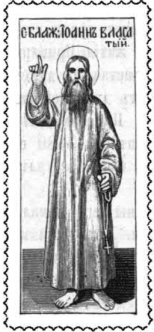
В Ростовском храме св. Власия почивают под спудом мощи блаженного Иоанна Власатого. На гробнице его лежат серебряный крест и псалтирь на латинском языке. На последней написано: «в л. 7089 (1580) сентября 3, в царство велик. госп. и вел. кн. Иоанна Вас. В Богоспасаемом граде Ростове преставился угодник Божий Иоанн Власатый и погребен в церкви св. священномуч. Власия, что в Заровье. От гроба его подаются ицеления больным, с верой приходящим. В л. 1702 в царствование вел. гос. ц. и в. кн. Петра Алексеевича, в неделю 2 поста, марта 1 д. прииде в Ростов преосвящен. Архиепископ Дмитрий и прия престол митрополии Ростовской и Ярославской. От времени преставления блажен. Иоанна Власатого и милостивого даже доселе бяше на гробе его книжица сия, зело ветха, псалтирь Давида на латинском диалекте, юже угодник Божий, молився Богу, чтяше; и видев ю ветху и раздирающуся, преосв. Митрополит Димитрий повелел ю вновь переплести; обновив паки на гроб блаж. Иоанна положи, да лежит неотъемлемо в последняя лета».
In the Rostov church of St. Blaise repose under a covering the relics of the blessed John the Hairy. On his tomb lie a silver cross and a Psalter in the Latin language. On the latter is written: "In the year 7089 (1580), September 3, in the reign of the great sovereign and Grand Prince John Vasilievich, in the God-preserving city of Rostov, there reposed the servant of God John the Hairy, and he was buried in the church of the holy Hieromartyr Blaise, which is in Zarovye. From his grave healings are granted to the sick who come with faith. In the year 1702, in the reign of the great sovereign Tsar and Grand Prince Peter Alexievich, on the Second Sunday of Lent, March 1, there came to Rostov the Most Reverend Archbishop Demetrius and received the throne of the metropolis of Rostov and Yaroslavl. From the time of the repose of the blessed John the Hairy and Merciful even until now, there lay upon his grave this little book, very old, the Psalter of David in the Latin tongue, which the servant of God, praying to God, read; and seeing it old and falling apart, the Most Reverend Metropolitan Demetrius commanded it to be bound anew; having renewed it, he again placed it upon the grave of the blessed John, that it might lie unremoved unto the latter years."
Если он мог читать латинскую псалтирь, то это, по тогдашнему времени означало, что он получил лучшее образование и был не из простого звания. Иностранные языки знали тогда в России чиновники, служившие при посольском приказе. По ркп. житию, блажен Иоанн подвизался в Ростове, но откуда пришел он и кто таков был? – оставляет оно в неизвестности. По обстоятельствам времени Грозного царя весьма вероятно, что он скрылся из Москвы от ужасов Грозного, чтобы в тиши и неизвестности служить Господу. В Ростове жил он, сказано в кратком житии его, в виде юродивого, терпя нужды и скорби; не имея жилья своего и приходя только по временам для отдыха то к одной престарелой вдове, то к духовнику своему, Всесвятскому священнику Петру, он проводил время в умной молитве и внимании к душе своей. По житию Иринарха Ростовского видно, что блаж. Иоанн, сам возрастая в духовной жизни, подавал и другим советы на счет духовной жизни; так утешал он изгнанного из обители Иринарха. После долгих подвигов мирно почил он 3 сентября 1580 г. и согласно с завещанием своим погребен был за алтарем Власиевой церкви вдовой и духовником.
If he could read the Latin Psalter, this, by the standards of that time, signified that he had received a better education and was not of simple rank. Foreign languages were known in Russia at that time by officials who served in the ambassadorial office. According to the manuscript life, the blessed John struggled in Rostov, but whence he came and who he was — this it leaves in obscurity. From the circumstances of the time of the Terrible Tsar, it is very probable that he hid himself from Moscow, fleeing the horrors of the Terrible One, in order to serve the Lord in quietness and obscurity. In Rostov he lived, it is said in his brief life, in the guise of a fool-for-Christ, enduring want and sorrows; having no dwelling of his own and coming only from time to time to rest, now with a certain aged widow, now with his spiritual father, the priest Peter of the All-Saints Church, he spent his time in mental prayer and attention to his own soul. From the life of Irinarch of Rostov it is evident that the blessed John, himself growing in the spiritual life, gave to others also counsel concerning the spiritual life; thus he consoled Irinarch when he was cast out of his monastery. After long labors he peacefully reposed on September 3, 1580, and according to his own testament he was buried behind the altar of the Church of St. Blaise by the widow and his spiritual father.
Вскоре после кончины его начали истекать благодатные исцеления от его гроба. Ростовский митрополит Кирилл, будучи в преклонных летах, долго оставался без употребления ног и рук; услышав о чудесах блаженного, он велел нести себя к его могиле и здесь после молитвы получил исцеление. Это было за полтора года до его смерти и, следовательно, в 1618 г.
Soon after his death, gracious healings began to flow from his grave. Rostov Metropolitan Cyril, being in advanced years, long remained without the use of his legs and arms; hearing of the miracles of the blessed one, he ordered himself to be carried to his grave, and there after prayer he received healing. This was a year and a half before his death, and consequently in 1618.
В память св. еп. Анфима построены два храма – императорами Иустинианом и Львом Великим: один на противоположном берегу Рога, а другой близ Ксироцирка.
In memory of St. Bishop Anthimus, two churches were built — by the emperors Justinian and Leo the Great: one on the opposite shore of the Horn, and the other near the Xyrocircus.
Ярослав. епарх. ведом. 1860 г. № 26. 1862 г. № 18. 19. Ркп. святцы: «святый и блаженный Иоанн, юродивый Христа ради, преставися в л. 7089 сент. 3 д.».
Yaroslavl Diocesan Gazette, 1860, No. 26; 1862, Nos. 18, 19. Manuscript calendar: "The holy and blessed John, fool-for-Christ, reposed in the year 7089, September 3."