Orthodox Translations

September 22 сентября

Old Calendar: civil September 15 · New Calendar: civil September 2

History

Святого мученика Маманта

St. Martyr Mamant

E1.TAI draft

Святой Мамант имел родителям своими Феодота и Руфину, знатных граждан Пафлагоского города Гангры, схваченных за исповедование Христа и отосланных в тюрьму Кесарии Каппадокийской. Феодот скончался в тюрьме, а жена его от печали по муже родила прежде времени дитя мужеского пола и сама в родах скончалась. Некая благочестивая гражданка Амния с дозволения властей похоронила тела умерших, а дитя взяла с собой на воспитание. Мальчик не говорил до пяти лет и потом первое слово, произнесенное им было мамма (mamma – мать, кормилица); посему и назвали его Мамантом. Воспитательница позаботилась и грамоте научить его.

St. Mamant had as his parents Theodotus and Rufina, illustrious citizens of the Paphlagonian city of Gangra, who were seized for confessing Christ and sent to the prison of Caesarea in Cappadocia. Theodotus died in prison, and his wife, from grief over her husband, gave birth prematurely to a male child and herself died in childbirth. A certain pious citizen, Amnia, with the permission of the authorities, buried the bodies of the deceased and took the child to raise. The boy did not speak until he was five years old, and then the first word he uttered was mamma (mamma – mother, nurse); therefore they called him Mamant. His foster mother also took care to teach him letters.

E1.0AI draft

По смерти воспитательницы своей он еще посещал школу и, как потомок знатного рода, обратил на себя внимание властей, а еще и потому, что был христианин и сверстников своих обучал святой вере. Посему на пятнадцатом году возраста взят правителем Кесарии и отослан в Еги к императору Аврелиану (в 272 году), который, впрочем, после допроса отпустил его. Мамант же удалился в пустынную гору близ Кесарии, занялся пастушеством и сыры своего изделия носил в Кесарию для раздачи нищим. Когда о сем узнал градоправитель, то послал воинов схватить его, за твердость в вере пытал и, наконец, вывел на позорище для растерзания зверями; тут некий идольский жрец рассек ему чрево и так нанес ему смерть (в 275 году). При Василии Великом память ему праздновалась 1-го сентября, но впоследствии – 2-го сентября, может быть по случаю освящения храма в честь его в Константинополе, при императоре Льве Великом.

After the death of his foster mother, he still attended school and, as a descendant of a noble family, drew the attention of the authorities, and also because he was a Christian and taught his peers the holy faith. Therefore, in his fifteenth year, he was taken by the governor of Caesarea and sent to the emperor Aurelian at Aegae (in the year 272), who, however, after interrogation released him. Mamas then withdrew to a desolate mountain near Caesarea, took up shepherding, and carried cheeses of his own making into Caesarea to distribute to the poor. When the city governor learned of this, he sent soldiers to seize him; for his steadfastness in the faith he tortured him and, finally, brought him out to the arena to be torn apart by wild beasts. There a certain pagan priest pierced his belly and thus inflicted death upon him (in the year 275). Under St. Basil the Great, his memory was celebrated on the 1st of September, but later on the 2nd of September, perhaps on account of the consecration of a church in his honor in Constantinople, under the emperor Leo the Great.
E1.1AI draft

Святого Иоанна Постника, патриарха Константинопольского

St. John the Faster, Patriarch of Constantinople

E2.TAI draft

Иоанн еще в сане диакона Константинопольской церкви столько известен был подвигами своими, что имя постника сделалось отличительным его именем. Избранный в патриарха, желал спастись бегством от высокого назначения, но удержан видением. Вступив 585 года на престол, он не оставил постнической жизни и приобрел щедрость к бедным. Когда он скончался (595 г.), то император Маврикий нашел у него только деревянное ложе, льняную сорочку и ветхую одежду. Из оставшихся после него сочинений заслуживают особенного внимания книги о покаянии и сочинение об исповеди, т.е. наставление, как надлежит исповедовать.

John, while still in the rank of deacon of the Church of Constantinople, was so renowned for his ascetic labors that the name the Faster became his distinguishing title. When chosen as patriarch, he wished to flee from the high appointment, but was restrained by a vision. Having ascended the throne in the year 585, he did not abandon the fasting life and acquired generosity toward the poor. When he reposed (in the year 595), the emperor Maurice found in his possession only a wooden bed, a linen shirt, and worn-out clothing. Among the writings he left behind, the books on repentance and the work on confession, that is, instruction on how one ought to confess, deserve special attention.

E2.0AI draft

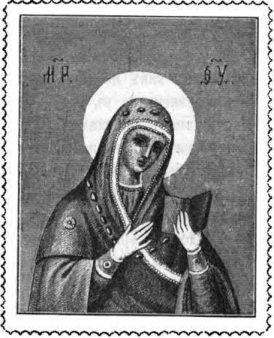
Празднование Калужской иконы Богородицы

Celebration of the Kaluga Icon of the Mother of God

E3.TAI draft

Калужская икона Богоматери явилась в 1748 году, в царствование императрицы Елисаветы Петровны, в сельце Тинькове, в семи верстах от Калуги, в доме боярина Хитрова.

The Kaluga Icon of the Mother of God appeared in the year 1748, during the reign of the Empress Elizabeth Petrovna, in the village of Tinkovo, seven versts from Kaluga, in the house of the boyar Khitrovo.

E3.0AI draft

Две девушки, служанки Хитрова, взошли на чердак его дома, где лежали старые вещи. Одна из них, Евдокия легкомысленная и дерзкая, над всеми смеялась и говорила много непристойного; другая старалась удерживать ее от этого. Разбирая вещи, последняя нашла свиток сурового полотна и, развернув его, увидела живописное изображение благоговейного и умиленного лица наподобие монахини, читающей по книге свое правило. Девица была тронута изображением и, указывая на лице игуменьи (так называла она найденное изображение), стала с большой силой обличать дерзкие слова подруги. Но Евдокия плюнула на изображение и сказала: «вот как я боюсь и уважаю твою игуменью». Но в то же мгновенье она была внезапно поражена и упала без чувств: руки и ноги ее скорчились; вся она впала в расслабление и лишилась зрения и языка. Испуганная подруга тотчас известила о всем господина, – и Евдокию нашли чуть дышащей, с пеной на губах, и тотчас перенесли в постель, ожидая ее смерти. В наступившую ночь родителям Евдокии явилась во сне Богоматерь и сказала: «дочь ваша своим дерзким поступком в изображенном на полотне лице оскорбила не инокиню, но Меня, потому что это изображение, ею поруганное есть Мой образ, через который по воле Сына Моего и Бога, Я буду ходатайствовать за город ваш и жителей его. Утром объявите о сем священникам, и вместе с ними помолившись перед поруганной иконой Моей, окропите расслабленную водой, истекающей из-под храма, и дочь ваша исцелится». Наутро, как скоро совершено было молебствие, больная исцелела и с тех пор исправила свою жизнь. После чудесных знамений, явленных от св. иконы, боярин не осмелился держать икону в своем доме, и она с подобающей честью перенесена была в церковь Рождества Богородицы, что на Калужке, где она и доселе пребывает, а точный список с нее в Калуге, в кафедральном соборе.

Two maidservants of Khitrovo went up to the attic of his house, where old things were stored. One of them, Eudocia, frivolous and insolent, mocked everyone and spoke much that was indecent; the other tried to restrain her from this. While sorting through the things, the latter found a roll of coarse linen and, unrolling it, saw a painted image of a reverent and tender face, like a nun reading her rule from a book. The maiden was moved by the image and, pointing to the face of the abbess (as she called the image she had found), began with great force to rebuke the insolent words of her companion. But Eudocia spat on the image and said: "See how I fear and respect your abbess!" But at that same instant she was suddenly struck and fell unconscious: her hands and legs contorted; she became completely paralyzed and lost her sight and speech. The frightened companion immediately informed the master of all that had happened—and they found Eudocia barely breathing, with foam on her lips, and they at once carried her to bed, expecting her death. During the following night, the Mother of God appeared in a dream to Eudocia's parents and said: "Your daughter, by her insolent act, has insulted not a nun in the face depicted on the linen, but Me, because this image which she reviled is My icon, through which, by the will of My Son and God, I will intercede for your city and its inhabitants. In the morning, announce this to the priests, and together with them, having prayed before My reviled icon, sprinkle the paralyzed woman with water flowing from beneath the church, and your daughter will be healed." In the morning, as soon as a moleben was performed, the sick woman was healed and from that time corrected her life. After the miraculous signs manifested from the holy icon, the boyar did not dare to keep the icon in his house, and it was transferred with due honor to the Church of the Nativity of the Theotokos on Kaluzhka, where it remains to this day, while an exact copy of it is in Kaluga, in the cathedral.

E3.1AI draft
Engraving

Кроме благодеяний частным лицам, жители Калуги обязаны явленной иконе спасением своего города. В 1771 году в Калуге свирепствовала моровая язва; жители города просили архимандрита Лаврентьева монастыря Никодима принести из села Калужки чудотворную икону Богоматери и в крестном ходе обойти с ней город. Благочестивое желание граждан исполнено было. После поста и молитвы они подняли чудотворную икону, и в продолжении трех дней обходили вокруг города, умоляя Заступницу христиан ходатайствовать у Сына Своего о помиловании людей согрешивших. Усердная молитва не осталась без плода: губительная сила язвы тотчас ослабела. В воспоминание сего чудесного избавления города от язвы установлено ежегодно 2-го сентября обходить вокруг города в крестном ходу с чудотворной Калужской иконой Богоматери.

Besides benefactions to private individuals, the inhabitants of Kaluga owe the salvation of their city to the appeared icon. In the year 1771, a plague raged in Kaluga; the city's inhabitants asked Archimandrite Nicodemus of the Lavrentiev Monastery to bring the wonderworking icon of the Mother of God from the village of Kaluzhka and to go around the city with it in a procession of the cross. The pious desire of the citizens was fulfilled. After fasting and prayer, they raised the wonderworking icon and for three days went around the city, imploring the Intercessor of Christians to intercede with Her Son for mercy upon the sinful people. The fervent prayer did not remain without fruit: the destructive power of the plague immediately weakened. In remembrance of this miraculous deliverance of the city from the plague, it was established that annually on the 2nd of September a procession of the cross should go around the city with the wonderworking Kaluga Icon of the Mother of God.

E3.3AI draft