Весна и осень во все времена были особенно важны для народов. Осень была началом нового года с древних первобытных времен. Основание начинать год осенью указано отчасти самой природу и важнейшими событиями Церкви Ветхозаветной и христианской. Указание природы видно в том, что с окончанием лета обыкновенно оканчивается жатва и труды года (Исх.23:16). По собрании плодов, как по достижении цели природы и земледелия, наступает новый кругооборот дел и новых надежд на будущее плодородие.
Spring and autumn have at all times been especially important for peoples. Autumn was the beginning of the new year from ancient, primitive times. The foundation for beginning the year in autumn is indicated partly by nature itself and by the most important events of the Old Testament and Christian Church. Nature's indication is seen in that with the end of summer the harvest and the labors of the year ordinarily come to an end (Ex. 23:16). After the gathering of fruits, as after the attainment of nature's and agriculture's goal, a new cycle of labors and new hopes for future fertility begins.
Согласно с этим течением природы осень, а именно седьмой месяц (сентябрь) был началом года у древнейшего из народов – у народа Божия – у евреев (Исх.23:16) и других народов. Главным и основным число в определении частей времени у евреев принято было число семь. Господь, Царь веков, положивший времена и лета во Своей власти (Деян.1:7), и в оные к славе имени Своего и для нашего упокоения от дел житейских узаконивший различные дни и праздники, дал повеление в Ветхом Завете праздновать седьмый и день и месяц и год, и седьмый или субботный год, и седьмый из седьмых или субботных годов. После 6 седьмичных дней у евреев был праздник суббота – день седьмый. После 7-ми седьмиц или 49 дней по Пасхе праздновалась Пятидесятница. Протекло шесть месяцев года, – праздновалось новолетие года гражданского. Оканчивалось шесть лет, – праздновалось новолетие года субботнаго. Проходило семь седьмин лет или сорок девять лет, – праздновалось новолетие пятидесятого года, называвшегося юбилеем. Отсюда у евреев новолетие года гражданского было троякое: новолетие каждого года, или новолетие простого года, новолетие года субботнаго и новолетие юбилея.
In accordance with this course of nature, autumn—namely the seventh month (September)—was the beginning of the year among the most ancient of peoples—among the people of God—the Jews (Ex. 23:16) and other peoples. The number seven was accepted by the Jews as the chief and fundamental number in determining the divisions of time. The Lord, the King of ages, Who has set the times and the seasons in His own power (Acts 1:7), and Who in times past, for the glory of His name and for our rest from worldly affairs, ordained various days and feasts, gave commandment in the Old Testament to celebrate the seventhday, the seventhmonth, the seventhyear, and the seventh or Sabbath year, and the seventh of the seventh or Sabbath years. After six weekdays, the Jews had the feast of the Sabbath—the seventh day. After seven weeks, or 49 days after Passover, Pentecost was celebrated. Six months of the year passed—the new year of the civil year was celebrated. Six years ended—the new year of the Sabbath year was celebrated. Seven weeks of years, or forty-nine years, passed—the new year of the fiftieth year, called the Jubilee, was celebrated. Hence among the Jews the new year of the civil year was threefold: the new year of each year, or the new year of the ordinary year, the new year of the Sabbath year, and the new year of the Jubilee.
Новолетие простого года гражданского совершалось в первый день седьмого месяца – Тисри, соответствующего нашему сентябрю, и было особенным праздником. Месяца седьмого, в первый день месяца, да будет вам покой, говорит Господь Моисею, память труб (праздник труб): наречен свят будет вам. Всякого дела работня не сотворите, и принесете всесожжение Господу (Лев.23:24–25). В этот праздник было священное собрание у народа, умножались жертвы (Числ.29:1–6). Народ в скинии, а после в храме и в синагогах слушал чтение закона и умилялся душею, воспоминая неисповедимые судьбы Божии над собой. Кроме благочестивого значения, ежегодное новолетие гражданское было весьма важно для евреев в отношении к жизни гражданской и хозяйственной. К седьмому месяцу обыкновенно поспевали и собирались полевые и садовые произведения земли (Лев.23:39). Следовательно, должники могли в это время расплачиваться с заимодавцами; бедные в народе без труда доставали себе пропитание. Если урожай был хорош. Это было знаком благоволения Божия и показывало, что народ ходит в заповедях Господних – тогда все восхваляли Иегову Бога своего. Если земля родила скудно, народ смирял души свои пред Иеговой, каялся, давал обеты строжайшей верности и вместе с тем деятельнее побуждался к обрабатыванию полей, огородов и садов в наступающем году. Каждый семьянин, видя милость или гнев Бога своего в собранном хлебе, призывал благословение Иеговы на будущий год.
The new year of the ordinary civil year was celebrated on the first day of the seventh month—Tishri, corresponding to our September—and was a special feast. In the seventh month, on the first day of the month, ye shall have a rest, says the Lord to Moses, a memorial of trumpets (the feast of trumpets): it shall be called holy unto you. Ye shall do no servile work, and ye shall offer a burnt-offering unto the Lord (Lev. 23:24–25). On this feast there was a sacred assembly of the people, and sacrifices were multiplied (Num. 29:1–6). The people in the tabernacle, and afterward in the temple and in the synagogues, listened to the reading of the law and were contrite in soul, remembering the inscrutable judgments of God upon them. Besides its pious significance, the annual civil new year was very important for the Jews in relation to civil and economic life. By the seventh month the field and garden produce of the land usually ripened and was gathered (Lev. 23:39). Consequently, debtors could at this time settle with their creditors; the poor among the people could easily obtain their sustenance. If the harvest was good, this was a sign of God's favor and showed that the people walked in the commandments of the Lord—then all praised Jehovah their God. If the land yielded scantily, the people humbled their souls before Jehovah, repented, made vows of strictest faithfulness, and at the same time were more actively urged to cultivate the fields, gardens, and orchards in the coming year. Every householder, seeing the mercy or wrath of his God in the gathered grain, invoked Jehovah's blessing on the future year.
Новолетие года субботнаго праздновалось также в первый день седьмого месяца, только через шесть лет, с теми же обрядами и жертвами, с какими начало всякого простого года. Но год субботный весь был, можно сказать, новолетием, или праздником на целый год. В течение этого года усиливались дела благочестия и обязанности любви к ближним. Закон Божий, кроме обыкновенных времен чтения, читаем был особенно в праздник Кущей восемь дней (от 15 до 22-го сентября), и его должен был слушать весь народ. По седми летех во время лета оставления, в праздник Кущей, егда сходится весь Израиль явитися пред Господем Богом твоим, читайте закон пред всем Израилем. Соберите люди, мужи, и жены, и дети, и пришельца, иже в градех ваших, да услышат, и научатся боятися Бога вашего (Втор.31:10–12). Рабы отходили на волю, когда пред годом субботным успели прослужить 6 лет; нищим предоставлена была полная свобода пользоваться произведениями земли, никем не собираемыми; долги или не взыскивались в течение года, или совершенно прощаемы были, почему и год субботный назывался годом оставления или прощения (Втор.15:1–2. Исх.23:10–11). Особенно важен был этот год в хозяйственном отношении; здесь на целый год прекращалось земледелие, собирание плодов и обрезывание виноградников. Через это земля возвращала истощенные силы и растения укреплялись (Лев.25:1–7).
The new year of the Sabbath year was also celebrated on the first day of the seventh month, only after six years, with the same rites and sacrifices as the beginning of every ordinary year. But the entire Sabbath year was, one might say, a new year, or a feast for a whole year. During this year, works of piety and duties of love for neighbor were intensified. The law of God, besides the ordinary times of reading, was read especially during the Feast of Tabernacles for eight days (from the 15th to the 22nd of September), and the whole people were obliged to hear it. At the end of seven years, in the time of the year of release, in the Feast of Tabernacles, when all Israel is come to appear before the Lord thy God, thou shalt read this law before all Israel. Gather the people together, men, and women, and children, and the stranger that is within thy gates, that they may hear, and that they may learn to fear the Lord your God (Deut. 31:10–12). Slaves went free when they had managed to serve six years before the Sabbath year; the poor were granted full freedom to enjoy the produce of the land, which was gathered by no one; debts were either not collected during the year or were completely remitted, which is why the Sabbath year was called the year of release or forgiveness (Deut. 15:1–2; Ex. 23:10–11). This year was especially important in economic terms; here agriculture, the gathering of fruits, and the pruning of vineyards ceased for a whole year. Through this, the land restored its exhausted strength and the plants were strengthened (Lev. 25:1–7).
Новолетие юбилея праздновалось в десятый день седьмого месяца, в день очищения. Наступление сего года возвещалось священным звуком трубы или рога, и тогда открывалось всеобщее торжество для Израильтян – год юбилея. В это время субботствование продолжалось два года, т.е. сорок девятый год, который по счислению семи седьмиц лет всегда годом субботным, и юбилей, т.е. пятидесятый год. Исчислишь себе седмь лет покоя, говорил Бог о юбилее, седмь лет семижды: и будут тебе седмь седмин лет, четыредесять девять лет. И возвестите трубным гласом во всей земли вашей месяца седьмаго, в десятый день месяца: в день очищения возвестите трубою во всей земли вашей. И освятите лето, пятьдесятое лето, и разгласите оставление на земли всем живущим не ней (Лев.25:8–10). Это оставление заключалось: 1) в освобождении рабов и совершенном отпущении их на волю, так что в юбилейный год во всей земле Иудейской не оставалось ни одного раба кроме тех, кои поступили в рабство из иноплеменников (Лев.25:39–46). 2) В возвращении каждого еврея в свое колено и в свою наследственную землю. Каждый еврей, где бы он ни был, возвращался в свое колено, отыскивал свой родовой участок земли (Лев.25:10–13). 3) В возврате проданных или заложенных имений, кои в юбилей отдавались без платы прежним владельцам своим; если владельцы умерли, то – их наследникам (Лев.25:13–17, 23–28, 31). 4) В прощении долгов, состоявших из движимого имущества, напр. домашнего скота, зернового хлеба, денег. 5) В повсюдном прекращении земледелия. Послю, говорил Бог, благословение Мое вам, в лето шестое, и сотворит плоды своя на три лета: и посеете в лето осьмое, и снесте от плодов ветхих до лета девятого (Лев.25:21–22).
The new year of the Jubilee was celebrated on the tenth day of the seventh month, on the Day of Atonement. The arrival of this year was announced by the sacred sound of a trumpet or horn, and then a universal celebration opened for the Israelites—the year of Jubilee. At this time, the sabbath-rest continued for two years, that is, the forty-ninth year, which by the reckoning of seven weeks of years was always a Sabbath year, and the Jubilee, that is, the fiftieth year. And thou shalt number seven sabbaths of years unto thee, God said concerning the Jubilee, seven times seven years; and the space of the seven sabbaths of years shall be unto thee forty and nine years. Then shalt thou cause the trumpet of the jubilee to sound on the tenth day of the seventh month, in the day of atonement shall ye make the trumpet sound throughout all your land. And ye shall hallow the fiftieth year, and proclaim liberty throughout all the land unto all the inhabitants thereof (Lev. 25:8–10). This release consisted of: 1) the freeing of slaves and their complete release to liberty, so that in the Jubilee year not a single slave remained in all the land of Judah except those who had entered into slavery from among foreigners (Lev. 25:39–46). 2) The return of every Jew to his tribe and to his hereditary land. Every Jew, wherever he might be, returned to his tribe and sought out his ancestral plot of land (Lev. 25:10–13). 3) The return of sold or mortgaged estates, which in the Jubilee were given without payment to their former owners; if the owners had died, then to their heirs (Lev. 25:13–17, 23–28, 31). 4) The forgiveness of debts consisting of movable property, e.g., domestic livestock, grain, money. 5) The universal cessation of agriculture. I will command My blessing upon you in the sixth year, God said, and it shall bring forth fruit for three years: and ye shall sow in the eighth year, and eat yet of old fruit until the ninth year (Lev. 25:21–22).
Таким образом, новолетия у евреев были праздниками не только для людей, но и для всей природы; они приносили с собой вожделенный покой не только человеку и скоту, но плугу и серпу, косе и ножу, очищающему виноградную лозу. Юбилей был в полном смысле годом Господним для всех царств природы, необыкновенно радостным и приятным.
Thus, the new years among the Jews were feasts not only for men, but for all nature; they brought with them a longed-for rest not only for man and beast, but for the plow and the sickle, the scythe and the knife that cleans the vine. The Jubilee was in the full sense a year of the Lord for all the kingdoms of nature, extraordinarily joyful and pleasant.
Месяц сентябрь – важнейший и по течению природы, священнейший и в устройстве Ветхозаветной Церкви, торжественнейший по многим и великим ее праздникам и событиям, и для христианской Церкви был особенно знаменателен. В первый день седьмого месяца, когда праздновали в Ветхом Завете новое лето, Иисус Христос, пришед в Назарет, где воспитан был, и войдя по обыкновению Своему в день субботный в синагогу, всенародно возвестил, яко днесь сбыстся писание сие во ушию вашею: Дух Господень на Мне: егоже ради помаза Мя, благовестити нищим посла Мя, исцелити сокрушенныя сердцем, проповедати пленным отпушение и слепым прозрение, отпустити сокрушенныя во отраду, проповедати лето Господне приятно (Ис.61:1–2. Лк.4:18–19). В первый день сентября, говорит св. Димитрий, митрополит Ростовский, «Сам Законодавец яви Себя миру, сошед от горних, нося на Себе Духа Отча и написуя закон Божий, не перстом, но Божественным Своим языком и пресладкими Своими усты, не на скрижалех каменных, но на скрижалех сердца нашего плотяных». В воспоминание сего священнейшего события, а также и в память славной победы, которую в 312 году, после продолжительной борьбы, христианская вера, при защитнике своем, равноапостольном царе Константине, одержала над язычеством, в лице побежденного Максентия, и воцарилась в мире, в лице царя Константина, сделавшегося после низложения Максентия единодержавным, св. отцы Первого Вселенского собора определили начинать новое лето с 1 сентября. В 540 году Греческий император Юстиниан, уничтожив летосчисление от создания Рима, продолжавшееся в Римской империи, и приняв летосчисление от сотворения мира, назначил и для всех дело своего государства началом года – первое сентября. С того времени круг года в Римской империи начинался с сентября. Это летосчисление было господствующим по всей почти Европе до половины XV века. Вместе с христианской верой Церковь Греческая передала свое летосчисление Российской, которая сохраняет это летосчисление.
The month of September—the most important according to the course of nature, the most sacred in the structure of the Old Testament Church, the most solemn because of its many and great feasts and events—was also especially significant for the Christian Church. On the first day of the seventh month, when the new year was celebrated in the Old Testament, Jesus Christ, coming to Nazareth, where He had been brought up, and entering according to His custom on the Sabbath day into the synagogue, publicly announced that this day is this scripture fulfilled in your ears: The Spirit of the Lord is upon Me, because He hath anointed Me to preach the gospel to the poor; He hath sent Me to heal the brokenhearted, to preach deliverance to the captives, and recovering of sight to the blind, to set at liberty them that are bruised, to preach the acceptable year of the Lord (Is. 61:1–2; Lk. 4:18–19). On the first day of September, says St. Demetrius, Metropolitan of Rostov, "the Lawgiver Himself revealed Himself to the world, descending from on high, bearing upon Himself the Spirit of the Father, and inscribing the law of God, not with a finger, but with His Divine tongue and His most sweet lips, not on tablets of stone, but on the fleshly tablets of our heart." In remembrance of this most sacred event, and also in memory of the glorious victory which in the year 312, after a prolonged struggle, the Christian faith, through its defender, the Equal-to-the-Apostles Emperor Constantine, won over paganism in the person of the defeated Maxentius, and reigned in the world in the person of Emperor Constantine, who after the overthrow of Maxentius became sole ruler, the holy fathers of the First Ecumenical Council decreed to begin the new year from September 1. In the year 540, the Greek Emperor Justinian, having abolished the reckoning from the founding of Rome, which had continued in the Roman Empire, and having adopted the reckoning from the creation of the world, appointed the first of September as the beginning of the year for all the affairs of his state. From that time, the cycle of the year in the Roman Empire began with September. This reckoning was dominant throughout almost all of Europe until the middle of the fifteenth century. Together with the Christian faith, the Greek Church transmitted its reckoning to the Russian Church, which preserves this reckoning.
Древнее начало года, 1 сентября, названо в церковном уставе Латинским словом индикт. Это название произошло от постановления Августа кесаря собирать в продолжение 15 лет подати с народа. Для удобнейшего сбора податей и в память победы, одержанной при Окарнанском мысе Акциуме за 30 лет до Р.Х. 1 или 2 сентября, решившей судьбу между Антонием и Октавианом и доставившей Августу верховную власть в Римской империи, назначено было началом года – время окончания жатвы, т.е. месяц сентябрь. Период времени, с которого начинался пятнадцатилетний сбор подати, назвали Римляне индикт (indictio – повеление или объявление о подати).
The ancient beginning of the year, the 1st of September, is called in the Church Typikon by the Latin word indiction. This name originated from the decree of Caesar Augustus to collect taxes from the people over a period of 15 years. For the more convenient collection of taxes and in memory of the victory won off the Acharnean Cape of Actium 1 or 2 September, 30 years B.C., which decided the fate between Antony and Octavian and secured supreme power for Augustus in the Roman Empire, the beginning of the year was appointed as the time of the completion of the harvest, that is, the month of September. The period of time from which the fifteen-year tax collection began was called by the Romans indiction (indictio – an order or declaration concerning the tax).
Хотя христианский индикт не от Римских царей узаконен, а от Небесного Царя Христа, но именем Римского индикта св. отцы назвали в IV веке первое сентября 312 года, в котором благочестивый защитник веры и Церкви Христовой восторжествовал над гонителем христиан и приобрел власть единодержавия. Христианский индикт есть также круг времени, заключающий в себе 15 лет.
Although the Christian indiction was not established by the Roman emperors, but by the Heavenly King Christ, yet with the name of the Roman indiction the holy fathers in the 4th century designated the 1st of September of the year 312, in which the pious defender of the faith and of the Church of Christ triumphed over the persecutor of Christians and acquired the power of sole rule. The Christian indiction is also a cycle of time, containing 15 years.
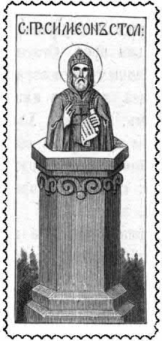
Из св. преп. иноков особенно удивляют своими св. подвигами столпники, кои, горя любовью к Богу и ища особенных трудов благочестия, служили или предстояли Богу на столпах. Подвиг стояния на столпе ради благочестия мы встречаем ранее IV века. Но в V в. Этот подвиг прославлен всюду. «Новое и удивительное совершилось в наши времена таинство», говорит Антоний, ученик Симеона Столпника, начиная его жизнеописание. Симеон, молодой Сирианин из пастушеского состояния, воспитанный во благочестии, был первый столпник, прославившийся своим подвигом на столпе. Услышав некогда в церкви слова Евангелия о блаженстве нищих духом и плачущих (Мф.5:3), он спросил одного старца: как приобрести это блаженство? «Постом, молитвой, смирением, нищетой и удалением от мира», отвечал старец. Юный Симеон положил в сердце своем удалиться от сует мира и тайно от родителей скрылся в соседний монастырь; 18-ти лет принял пострижение иноческое; был в строгом послушании у всех; постился не до вечера ежедневно по примеру других иноков, но по целой седьмице; тело свое от бедр до выи обвил вервью, сплетенной из финиковых ветвей, так крепко, что ветви впились в его тело и причинили ему болезненные раны, из которых текла кровь. Но игумен велел снять сии вериги.
Among the holy venerable monks, those who especially astonish by their holy struggles are the Stylites, who, burning with love for God and seeking special labors of piety, served or stood before God on pillars. The struggle of standing on a pillar for the sake of piety is encountered earlier than the 4th century. But in the 5th century, this struggle was glorified everywhere. "A new and wondrous mystery has been accomplished in our times," says Antony, the disciple of Simeon the Stylite, beginning his life account. Simeon, a young Syrian of shepherd origin, raised in piety, was the first Stylite to become famous for his struggle on a pillar. Having once heard in church the words of the Gospel concerning the blessedness of the poor in spirit and those who mourn (Mt. 5:3), he asked an elder: how is this blessedness to be acquired? "By fasting, prayer, humility, poverty, and withdrawal from the world," answered the elder. The young Simeon resolved in his heart to withdraw from the vanities of the world and secretly from his parents hid himself in a neighboring monastery; at 18 years of age he received the monastic tonsure; he was in strict obedience to all; he fasted not merely until evening daily, after the example of other monks, but for whole weeks; he bound his body from the hips to the neck with a rope woven from date palm branches, so tightly that the branches cut into his body and caused him painful wounds from which blood flowed. But the abbot ordered these chains to be removed.
Вознося мысли и сердце свое к Богу вдохновенными словами Псалмопевца, преподобный в короткое время выучил наизусть весь Псалтирь. Жаждая строжайших подвигов благочестия, Симеон оставил монастырь, уединился в горах пустыни и потом три года провел в тесной келии затворником в непрестанной молитве и строжайшем посте. Слава о его подвигах распространилась по всей окрестности, и к нему отовсюду стекались посетители, желая прикоснуться к нему и принять от него благословение. Уклоняясь славы, преп. Симеон умыслил создать столп и на нем стоять, дабы приходящие к преподобному не могли касаться его. Итак, начал собирать близлежащие каменья и из них построил себе столп в 6 локтей высотой и не нем тесную хижину в 2 локтя. Восшед на этот столп и непрестанно взирая на открытые небеса, преподобный постоянно пребывал в посте и возносился молитвой к Богу. Через несколько лет усердные к преподобному создали для него иной столп в 12 локтей, после того в 22, потом в 36, наконец в 40 локтей, и кругом столпа каменную ограду: отчего преп. Симеон называется архимандритом (μανὸρα – ограда). Различными столпами, как по лестнице, преподобный восходил к небесным селениям, много тяготы претерпевая на сих столпах, мочимый дождем, жегомый зноем, томимый стужей, питаясь сочивом и водой. По гласу Церкви, он «был столпом терпения, ревнителем Иову в страстях, Иосифу в искушения и Бесплотных жительству».
Raising his mind and heart to God with the inspired words of the Psalmist, the Venerable One learned the entire Psalter by heart in a short time. Thirsting for the strictest struggles of piety, Simeon left the monastery, secluded himself in the mountains of the desert, and then spent three years in a narrow cell as a recluse in unceasing prayer and the strictest fasting. The fame of his struggles spread throughout the entire vicinity, and visitors flocked to him from everywhere, desiring to touch him and receive his blessing. Shunning glory, the Venerable Simeon devised the plan to build a pillar and stand upon it, so that those coming to the Venerable One could not touch him. And so, he began to gather nearby stones and built himself a pillar of 6 cubits in height and on it a narrow hut of 2 cubits. Having ascended this pillar and gazing unceasingly at the open heavens, the Venerable One constantly abode in fasting and ascended in prayer to God. After a few years, those devoted to the Venerable One built for him another pillar of 12 cubits, afterwards one of 22, then of 36, and finally of 40 cubits, and around the pillar a stone enclosure: whence the Venerable Simeon is called archimandrite (μανδρά – enclosure). By various pillars, as by a ladder, the Venerable One ascended to the heavenly abodes, enduring much hardship on these pillars, wetted by rain, burned by heat, tormented by cold, nourishing himself with pulse and water. According to the voice of the Church, he "was a pillar of patience, an emulator of Job in sufferings, of Joseph in temptations, and of the life of the Bodiless Ones."
Новые и необычайные подвиги св. жизни Симеона возбудили к нему во всех величайшее удивление и уважение. Никифор Каллист пишет: «великий Симеон, святые и славные памяти, первый избрал стояние на столпе и стяжал себе славное имя, имея на столпе жилище в два локтя. В это время на кафедре Антиохийской был Домнос или Домн, который, услышав о подвигах Симеона и пришед в нему, поражен был удивлением и пожелал иметь общение с ним в тайне св. причащения. Великий Симеон, и самым телом восходя горе и подражая житию Ангелов, отрекся от всех земных благ и подражая житию Ангелов, отрекся от всех земных благ и забот; собрав силы свои, стремился к горнему и создал себе жилище между небом и землей, дабы вне всякого общества и препятствий непрестанно благословлять и славословить Бога, купно с Ангелами. Он был как посредник, возносящий к Богу мольбы людей молящихся и подающий им свыше великую благодать. Удивительные его дела преданы памяти многими очевидцами. Приятно и красноречиво изложил подвиги Симеона в истории своей Феодорит, епископ Киррский. Как Симеон – земной Ангел, еще во плоти гражданин и житель небесного Иерусалима, стремился по пути жизни совершенно новому, никем не проложенному: то отцы, обитавшие на вершинах гор, весьма благосклонно к нему расположенные, послали к нему от себя спросить его: что значит такая его необычайная и чудная жизнь? Для чего он, прежний всеми почти святыми проходимый путь оставивши, вступил на иную совершенно неведомую стезю? И потребовали, чтобы он сошел со столпа и подвизался по примеру св. отцов. И как он готов был сойти со столпа, то они позволили ему вести род жизни, им избранный; по его послушанию они судили, что Сам Бог внушил ему образ его жизни».
The new and extraordinary struggles of the holy life of Simeon aroused in all the greatest wonder and respect. Nikephoros Kallistos writes: "the great Simeon, of holy and glorious memory, was the first to choose standing on a pillar and acquired for himself a glorious name, having on the pillar a dwelling of two cubits. At this time, Domnos or Domnus was on the see of Antioch, who, hearing of the struggles of Simeon and coming to him, was struck with wonder and desired to have communion with him in the mystery of holy Communion. The great Simeon, ascending even in body towards the heights and imitating the life of the Angels, renounced all earthly goods and cares; gathering his strength, he strove for the heavenly and built for himself a dwelling between heaven and earth, so that, outside all society and hindrances, he might unceasingly bless and glorify God, together with the Angels. He was like a mediator, bearing up to God the prayers of supplicating men and bestowing upon them from above great grace. His wondrous deeds have been committed to memory by many eyewitnesses. Theodoret, Bishop of Cyrrhus, has set forth the struggles of Simeon in his history pleasantly and eloquently. Since Simeon—an earthly Angel, already while in the flesh a citizen and inhabitant of the heavenly Jerusalem—strove along a path of life that was completely new, trodden by no one: therefore the fathers who dwelt on the mountain peaks, being very favorably disposed towards him, sent to him to ask him: what is the meaning of such his extraordinary and wondrous life? Why, having abandoned the path formerly traversed by almost all the saints, had he entered upon another, completely unknown path? And they demanded that he come down from the pillar and struggle according to the example of the holy fathers. And when he was ready to come down from the pillar, they permitted him to lead the kind of life he had chosen; by his obedience they judged that God Himself had inspired in him the form of his life."
Преподобный силой благодати, в нем обитавшей, исцелял всякие болезни и недуги, и предвидел будущее. Тысячи людей повергались долу перед столпом преп. Симеона и просили его благословения. Язычники, взирая на него, убеждались в истине Евангелия и принимали веру христианскую. Все советы Симеона были слушаемы, как боговдохновенные. Император Феодосий Младший или Второй (408–450) повиновался словам преподобного; преемник Феодосия Маркиан скрытно в одежде простолюдина посещал необыкновенного подвижника, пользовался духовной его беседой и удивлялся ему; преемник Маркиана император Лев писал преподобному письма, как знаменитому подвижнику. Цариц Персидская и Исмаильтская просили его благословения и молитв. Славный великими подвигами благочестия, даром чудотворений и прозрения, преп. Симеон столько был кроток и смирен, что считал себя униженнейшим из всех. Ко всем являлся он с лицом веселым, со словом ласковым. Посещавшие угодника не могли насытиться видением благолепного лица его и св. его беседой. Он подвизался не столпах среди неба и земли около 47, а по мнению св. Димитрия, митрополита Ростовского, до 80 лет.
The Venerable One, by the power of the grace that dwelt in him, healed all manner of sicknesses and infirmities, and foresaw the future. Thousands of people prostrated themselves before the pillar of the Venerable Simeon and asked for his blessing. Pagans, looking upon him, were convinced of the truth of the Gospel and received the Christian faith. All the counsels of Simeon were hearkened to as divinely inspired. Emperor Theodosius the Younger or Second (408–450) obeyed the words of the Venerable One; Theodosius' successor, Marcian, secretly in the garb of a commoner visited the extraordinary ascetic, enjoyed his spiritual conversation, and marvelled at him; Marcian's successor, Emperor Leo, wrote letters to the Venerable One as to a renowned ascetic. The queens of Persia and of the Ishmaelites asked for his blessing and prayers. Glorious for his great struggles of piety, for the gift of wonderworking and foresight, the Venerable Simeon was so meek and humble that he considered himself the most lowly of all. He appeared to all with a cheerful countenance and a kind word. Those who visited the saint could not be sated with the sight of his comely face and his holy conversation. He struggled on pillars between heaven and earth for about 47 years, and according to the opinion of St. Demetrius, Metropolitan of Rostov, up to 80 years.
Устав повседневного жития преподобного был таков: всю ночь и день до 9 утра он стоял на молитве, в 9 часов назидал приходивших к нему, выслушивал и облегчал прошения и нужды притекавших к нему; утешал скорбящих, исцелял больных силой молитвы. По захождении солнца опять становился на молитву. При таких трудах он не переставал пещись о мире Церкви Православной; царей и начальников поучал своими письмами мудрыми и душеспасительными. Доселе сохранились письма преп. Симеона Столпника: одно к императору Феодосию Младшему и возвращении отданных Антиохийским иудеям церквей, которые император действительно и возвратил христианам; другое о Халкидонском соборе к императору Льву; третье о том же соборе к Василию, епископу Антиохийскому, четвертое к Евдокии императрице, впадшей в Евтихиеву ересь; слово о непрестанном памятовании каждому о своей смерти, и проч.
The rule of the daily life of the Venerable One was as follows: the whole night and day until 9 in the morning he stood in prayer; at 9 o'clock he instructed those who came to him, heard and alleviated the petitions and needs of those who flocked to him; he comforted the sorrowful, healed the sick by the power of prayer. After sunset he again stood in prayer. Amidst such labors he did not cease to care for the peace of the Orthodox Church; he instructed emperors and rulers by his wise and soul-saving letters. To this day have been preserved letters of the Venerable Simeon the Stylite: one to Emperor Theodosius the Younger concerning the return of the churches given to the Jews of Antioch, which churches the emperor indeed returned to the Christians; another concerning the Council of Chalcedon to Emperor Leo; a third concerning the same Council to Basil, Bishop of Antioch; a fourth to the Empress Eudocia, who had fallen into the Eutychian heresy; a discourse on the unceasing remembrance by each one of his own death, and others.
Так, проводя дни жизни своей, и в удалении от общества благотворные для него, преп. Столпник преставился в 459 году 1 сентября, 103 лет.
Thus, spending the days of his life, even in withdrawal from society beneficially for it, the Venerable Stylite reposed in the year 459, on the 1st of September, at the age of 103.
По преставлении преподобного чудотворные мощи его с великим торжеством, при много численному стечении народа и войска, перенесены были патриархом в Антиохию, «яко стена и защищение граду», и тогда же Церковь начала творить память его. На месте подвигов его сооружен был храм во имя его. В VIII веке от Иоанна Дамаскина, который сложил канон с акростихом: «прими пение, о Симеоне всеблаженне», и от Германа патриарха Церковь приняла хвалебные священные песнопения, ныне поемые в честь св. Симеона Столпника. В сих песнопениях духовные песнопевыцы восхваляют Симеона подражателем Владыке Христу. «Христос взыде на крест, он же на столп. Аще бы возможно столпу вещать, не бы престал вопити его болезни, труды и рыдания. Удивишася Ангели, учудишася человецы, устрашишася демоны терпения Симеона. Познаша мудрость его персияне, ефиопляне, индиане, скифяне и аравляне».
After the repose of the Venerable One, his wonderworking relics were transferred with great solemnity, with a very numerous gathering of people and troops, by the Patriarch to Antioch, "as a wall and protection for the city," and at that time the Church began to celebrate his memory. On the site of his struggles a church was built in his name. In the 8th century, from John of Damascus, who composed a canon with the acrostic: "Receive the hymn, O all-blessed Simeon," and from Germanus the Patriarch, the Church received the laudatory sacred hymns now sung in honor of St. Simeon the Stylite. In these hymns, the spiritual hymnographers praise Simeon as an imitator of the Lord Christ. "Christ ascended the Cross, he the pillar. If the pillar could speak, it would never cease to proclaim his sufferings, labors, and lamentations. Angels marvelled, men wondered, demons were terrified at the patience of Simeon. The Persians, Ethiopians, Indians, Scythians, and Arabians acknowledged his wisdom."
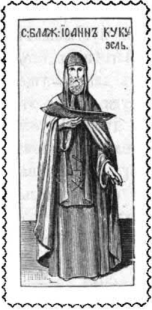
Блаженный Иоанн был родом из Диррахии, Славянского Драча. Славянином был и блаж. Иоанн, хотя по обстоятельствам жизни получил образование в Цареграде греческое. Фамилия его Кукузель – указывает на славянское происхождение его. Когда он, взятый за прекрасный голос ко двору, воспитывался вместе с другими детьми, и дети спрашивали его: что он кушал? Он, не зная еще хорошо греческого языка, простодушно отвечал: Куку-зеле. Греческое куки – боб, а сербское зеле – растение. Так и стали звать его Кукузеле. Но он дарованиями своими к пению и многими сочинениями о церковном пении1 прославил свое прозвание, так что в XIV в. видим еще нескольких Кукузелей – знатоков греческого церковного пения2. Необыкновенное искусство в пении доставило Иоанну не только звание доместика – начальника придворных певчих, но оно же сделало его любимцем вельмож и самого царя. Царь, уважая дарования его и жизнь добрую, готовился ввести его в родственную связь с кем-нибудь из богатых вельмож своих. Но благочестивый Иоанн не увлекался придворными веселостями. – Душа его стремилась к Господу.
The blessed John was a native of Dyrrachium, the Slavic Drach. The blessed John was also a Slav, although the circumstances of his life gave him a Greek education in Constantinople. His surname Koukouzelis points to his Slavic origin. When, taken to court for his beautiful voice, he was being raised together with other children, and the children asked him: what had he eaten? He, not yet knowing the Greek language well, artlessly replied: Kuku-zele. The Greek kuki means bean, and the Serbian zele means plant. And so they began to call him Koukouzelis. But by his gifts for singing and by his many compositions on church singing1 he glorified his surname, so that in the 14th century we see several more Koukouzelises—experts in Greek church singing2. His extraordinary skill in singing brought John not only the rank of domestikos—chief of the court singers—but also made him the favorite of nobles and of the emperor himself. The emperor, respecting his talents and his good life, was preparing to bring him into a family connection with one of his wealthy nobles. But the pious John was not captivated by courtly amusements. His soul yearned for the Lord.
Раз случилось ему видеть у императора игумена лавры Афонской и узнать о жизни отшельников афонских. Плененный тихой жизнью молитвенников божиих, Иоанн тайно удалился со двора, с посохом в руке и в рубище на плечах. На Афоне называет он себя пастухом и получает поручение пасти коз. Долго оставался Иоанн в неизвестности; напрасно искали его по приказанию императора. Пустынническая жизнь утешала Иоанна; он в тиши молился Господу. Однажды в раздумьи сидел он при своем стаде; мысль пробегала по прошлой жизни и сердце трепетало благодарностью Богу за промысел о нем. Думая, что некому слышать его в пустыне, Иоанн начал петь священные песни и ангельский голос его разливался в пустынных высотах Афона мелодическими звуками. – Долго и в сладости пел умилившийся певец; а между тем в диком ущелье слушал его изумленный пустынник. Откуда взялся этот ангельский певец, и к тому же пастух? думал пустынник. Он пошел в лавру и сказал настоятелю о чудном певце-пастухе. Иоанн вызван был в лавру и, заклинаемый именем Божиим, открылся игумену, что он учитель придворных певчих Иоанн. Игумен в потухающем взоре и в безжизненных ланитах едва мог узнать любимца царского, которого он видел в цветущем здоровье и с играющим на щеках румянцем. По слезной просьбе скромного Иоанна игумен оставил его при стаде коз. Потом, быв при дворе, упросил императора оставить любимца Иоанна в Афонской пустыне. «Даль мне дорогого Иоанна, сказал император; но спасение души – выше всего; пусть будет про его желаниям». Свободный Иоанн избрал себе за монастырем уединенное место, выстроил себе келью и стал жить по шести дней в безмолвии, а в седьмой и в праздники приходил в собор и пел на правом клиросе. Труд и усердие к свящ. пению награждены были небесным утешением. В акафистную субботу, по окончании канона, Иоанн, утомленный бдением, заснул. Пречистая, явясь к нему, сказала: «будь здрав, чадо Мое, пой, пой; Я не оставлю тебя», и затем дала ему червонец. Проснувшись, Иоанн находит в руке дар Пречистой и с радостными слезами благодарит Богоматерь. С этого времени он удвоил свое усердие к пению. Прежде того он пел только в праздничные дни: теперь он стал ходить каждый день. Продолжительное стояние и пение на клиросе имели последствием то, что одна нога его покрылась гнойными ранами. Пречистая явясь, исцелила ногу. Иоанн столько успел в духовной жизни, что прозрел день своей смерти.
Once it happened that he saw at the emperor’s the abbot of the Lavra of Athos and learned about the life of the Athonite hermits. Captivated by the quiet life of God’s prayerful ones, John secretly withdrew from the court, with a staff in his hand and rags on his shoulders. On Athos he calls himself a shepherd and receives the task of tending goats. John remained unknown for a long time; they sought him in vain by the emperor’s command. The hermit life consoled John; in stillness he prayed to the Lord. One day he sat in thought by his flock; his mind ran over his past life, and his heart trembled with gratitude to God for His providence over him. Thinking that no one could hear him in the wilderness, John began to sing sacred hymns, and his angelic voice poured out in melodious sounds over the wild heights of Athos. Long and sweetly did the tender-hearted singer sing; and meanwhile, in a wild gorge, an astonished hermit listened to him. “Where did this angelic singer come from, and a shepherd at that?” thought the hermit. He went to the Lavra and told the superior about the wondrous shepherd-singer. John was summoned to the Lavra and, adjured by the name of God, revealed to the abbot that he was John, the teacher of the court singers. In his fading gaze and lifeless cheeks the abbot could scarcely recognize the emperor’s favorite, whom he had seen in blooming health with a rosy glow playing on his cheeks. At the tearful request of the humble John, the abbot left him with the goat-herd. Later, being at court, he begged the emperor to leave his beloved John in the Athonite wilderness. “You have taken my precious John from me,” said the emperor, “but the salvation of the soul is above all; let it be according to his wishes.” Free John chose for himself a solitary place beyond the monastery, built himself a cell, and began to live six days in silence, and on the seventh day and on feasts he would come to the cathedral and sing on the right cliros. His labor and zeal for sacred singing were rewarded with heavenly consolation. On Akathist Saturday, after the end of the canon, John, exhausted by the vigil, fell asleep. The Most Pure One, appearing to him, said: “Be well, My child; sing, sing; I will not forsake you,” and then gave him a gold coin. Waking up, John finds in his hand the gift of the Most Pure One and with joyful tears thanks the Mother of God. From that time he doubled his zeal for singing. Before that he sang only on feast days; now he began to go every day. Prolonged standing and singing on the cliros had the consequence that one of his legs became covered with festering wounds. The Most Pure One appeared and healed the leg. John advanced so far in the spiritual life that he foresaw the day of his death.
Червонец, дар Богоматери, привешен был к иконе Богоматери, перед которой пел Иоанн. И он иконы, и от червонца совершались чудеса. Ныне икона стоит местной в параклисе Введения Богоматери в храме, и перед ней горят три неугасимые3.
The gold coin, the gift of the Mother of God, was hung on the icon of the Mother of God before which John sang. And from the icon, and from the gold coin, miracles were performed. Now the icon stands as a local icon in the side-chapel of the Entry of the Mother of God into the Temple, and before it burn three unquenchable lamps3.
Барский видел храм Архангела в келье Иоанна и описал жизнь Кукузеля, следуя книге Агапия, Афонского отшельника: «Спасение грешникам»4.
Barsky saw the church of the Archangel in John’s cell and described the life of Koukouzelis, following the book of Agapius, the Athonite hermit: “Salvation of Sinners”4.
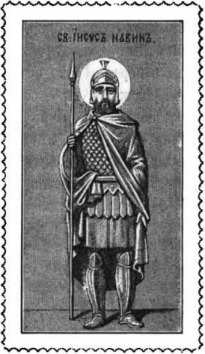
Моисей, пророк и законодатель еврейского народа, достигнув глубокой старости – 120 лет, призвал к себе незадолго до смерти своей Иисуса Навина из колена Ефремова и в присутствии всех израильтян сказал этому избранному им в преемники своей власти, «радовавшемуся славе Моисея, как своей собственной – будь тверд и мужествен, ибо ты войдешь с народом сим в землю, которую Господь клялся отцам его дать ему, – и ты разделишь ее на уделы ему; Господь Сам пойдет перед тобой не отступит от тебя и не оставит тебя; не бойся и не ужасайся»5.
Moses, the prophet and lawgiver of the Jewish people, having reached a deep old age—120 years—called to himself shortly before his death Joshua the son of Nun, of the tribe of Ephraim, and in the presence of all the Israelites said to this man, whom he had chosen as successor to his authority and who rejoiced in the glory of Moses as in his own: “Be strong and of good courage, for you shall go with this people into the land which the Lord swore to their fathers to give them, and you shall divide it among them as an inheritance. The Lord Himself will go before you; He will not fail you nor forsake you; do not fear nor be dismayed”5.
«Моисей, раб Мой, умер; итак, встань, перейди через Иордан сей, ты и весь народ сей, в землю, которую Я даю им, сынам Израилевым. Всякое место, на которое ступят стопы ног ваших, Я даю вам, как я сказал Моисею. От пустыни и Ливана сего до реки великой, реки Евфрата, всю землю Хеттеев; и до великого моря к западу солнца будут пределы ваши. Никто не устоит перед тобой во все дни жизни твоей; и как я был с Моисеем, так буду и с тобой; не отступлю от тебя и не оставлю тебя. Вот, Я повелеваю тебе: будь тверд и мужествен, не страшись и не ужасайся, ибо с тобой Господь Бог твой везде, куда ни пойдешь… Будь тверд и очень мужественен, и тщательно храни и исполняй весь закон, который завещал тебе Моисей, раб Мой; не уклоняйся от него ни направо, ни налево, дабы поступать благоразумно во всех предприятиях твоих. Да не отходит книга закона от уст твоих; но поучайся в ней день и ночь, чтобы в точности исполнить все, что в ней написано: тогда ты будешь успешен в путях твоих и будешь поступать благоразумно»6.
“Moses My servant is dead; now therefore arise, go over this Jordan, you and all this people, to the land which I am giving to them, to the children of Israel. Every place that the sole of your foot will tread upon I have given you, as I said to Moses. From the wilderness and this Lebanon as far as the great river, the river Euphrates, all the land of the Hittites; and to the Great Sea toward the going down of the sun shall be your border. No man shall be able to stand before you all the days of your life; as I was with Moses, so I will be with you; I will not leave you nor forsake you. Behold, I command you: be strong and of good courage; do not be afraid, nor be dismayed, for the Lord your God is with you wherever you go… Be strong and very courageous, that you may observe to do according to all the law which Moses My servant commanded you; turn not from it to the right hand or to the left, that you may prosper wherever you go. This Book of the Law shall not depart from your mouth, but you shall meditate in it day and night, that you may observe to do according to all that is written in it; for then you will make your way prosperous, and then you will have good success”6.
Достойным доверия вождя народа Израильского, достойным обетований Божественных оказался Иисус Навин, о котором повествует Иисус, сын Сирахов, что он «силен был в бранях и бы преемником Моисея в пророчествах. Соответственно имени своему7, он был велик в спасении избранных Божиих, когда мстил восставшим врагам, чтобы ввести Израиля в наследие его. Как он прославился, когда поднял руки свои и простер меч на города! Кто прежде него так стоял? Ибо он вел брани Господни. Не его ли рукой остановлено было солнце, и один день был как бы два? Он воззвал к Всевышнему Владыке, когда со всех сторон стеснили его враги, и великий Господь услышал его; камнями града с могущественной силой бросил он на враждебный народ, и погубил противников на склоне горы, чтобы язычники познали всеоружие его, что война его была перед Господом, а он только следовал за Всемогущим».
Joshua the son of Nun proved himself a worthy leader of the people of Israel, worthy of the Divine promises, of whom Jesus the son of Sirach relates that he “was mighty in war, and succeeded Moses in prophecy. According to his name7, he was great in the salvation of God’s elect, when he took vengeance on the enemies that rose up against them, that he might bring Israel into their inheritance. How was he glorified when he lifted up his hands and stretched out his sword against the cities! Who before him so stood? For he led the wars of the Lord. Was it not by his hand that the sun stood still, and one day became as two? He called upon the Most High Lord when the enemies pressed him on every side, and the great Lord heard him; with mighty hailstones he cast down destruction upon the hostile nation, and destroyed the adversaries on the slope of the mountain, that the Gentiles might know his full armor, that his war was before the Lord, and he only followed after the Almighty.”
«И во дни Моисея он оказал благодеяние, он и Халев, сын Иефонии, тем, что они противостояли враждующим, удерживали народ от греза и утишали злой ропот. И они двое из шестисот тысяч путешествовавших были спасены, чтобы ввести народ в наследие, в землю, текущую молоком и медом…, чтобы видели все сыны израилевы, что благо следовать Господу»8.
“And in the days of Moses he showed mercy, he and Caleb the son of Jephunneh, by resisting the rebellious, keeping the people from sin, and silencing the wicked murmurings. And these two alone were saved from six hundred thousand who marched, that they might bring the people into the inheritance, into a land flowing with milk and honey…, that all the children of Israel might see that it is good to follow the Lord”8.
Покорив постепенно жителей Ханаанской земли, истребив 31 царя, Иисус Навин, по повелению Божию, разделили Ханаанскую землю, хотя она еще не вся была завоевана в то время, по жребию перед дверьми скинии свидения, получив для себя с согласия всего народа удел в Фамнаф-сараи, что на горе Ефремевой, на севере от горы Гааша.
Having gradually subdued the inhabitants of the land of Canaan, having destroyed 31 kings, Joshua the son of Nun, by the command of God, divided the land of Canaan, although it was not yet all conquered at that time, by lot before the doors of the tabernacle of meeting, receiving for himself, with the consent of all the people, an inheritance in Timnath-serah, which is in the mountains of Ephraim, on the north side of Mount Gaash.
Незадолго до смерти своей, сознав, что «отходит в путь всей земли», Иисус Навин, призвав всех евреев, напомнил им о всех благодеяниях, полученных ими от Бога, убеждал их служить истинному Богу, «как они делали это до сего дня». – «Если же оставите Господа и будете служить чужим богам, то Он наведет на вас зло и истребит вас после того, как благотворил вам», – пророчески угрозил он народу. «И заключил с народом завет в тот день и дал ему постановления и закон в Сихеме (перед скинией Господа Бога Израилева). И вписал Иисус слова эти в книгу Закона Божия, и взял большой камень и положил его там под дубом, который подле святилища Господня». Услышав же обещание народа, что будет служить Богу и слушать Его, сказал Иисус всему народу: «вот камень этот будет нам свидетелем; будет свидетелем, чтобы вы не солгали перед Господом Богом вашим». – И отпустил Иисус народ каждого в свой удел».
Shortly before his death, knowing that he was “going the way of all the earth,” Joshua the son of Nun, having called all the Israelites, reminded them of all the benefits they had received from God, and urged them to serve the true God, “as you have done to this day.”—“But if you forsake the Lord and serve foreign gods, then He will bring evil upon you and destroy you, after He has done you good,” he prophetically warned the people. “So Joshua made a covenant with the people that day, and gave them statutes and ordinances in Shechem, before the tabernacle of the Lord God of Israel. And Joshua wrote these words in the Book of the Law of God; and he took a great stone and set it up there under the oak that was by the sanctuary of the Lord.” And when he heard the promise of the people that they would serve the Lord and obey Him, Joshua said to all the people: “Behold, this stone shall be a witness to us; it shall be a witness, lest you deal falsely before the Lord your God.” Then Joshua sent the people away, each to his inheritance.
Иисус Навий сначала назывался Осий – спаси: потом Моѵсей при избрании его своим преемником, по повелению Божию, назвал его Иисусом – спасителем (Числ.13:17).
Joshua the son of Nun was first called Hoshea—salvation; later Moses, when choosing him as his successor, by the command of God, named him Joshua—savior (Num. 13:17).