Александр из пресвитеров сделался помощником престарелому Митрофану (4 июня), епископу Византии, и уже в сане епископа присутствовал, как представитель его, на первом вселенском соборе. По смерти Митрофана (326) занимал престол 13 лет и скончался 340 года. В его время Византия сделалась столицею империи и переименована в Константинополь Иоанн Постник скончался 595 года; о нем 2 сент. Св. Павел управлял Церковию четыре года и шесть месяцев, с 20 февр. 780 года по 30 авг. 784, когда отказался и удалился в монастырь св. Флора, где вскоре и умер. Он сильно убеждал императрицу Ирину восстановить почитание икон и указал на св. Тарасия, как на преемника себе.
Alexander, from among the presbyters, became an assistant to the aged Mitrophanes (June 4), Bishop of Byzantium, and already in the rank of bishop he attended the First Ecumenical Council as his representative. After the death of Mitrophanes (326), he occupied the throne for 13 years and reposed in the year 340. In his time, Byzantium became the capital of the empire and was renamed Constantinople. John the Faster reposed in the year 595; concerning him, see September 2. St. Paul governed the Church for four years and six months, from February 20, 780, to August 30, 784, when he resigned and withdrew to the monastery of St. Florus, where he soon died. He strongly urged the Empress Irene to restore the veneration of icons and pointed to St. Tarasius as his successor.
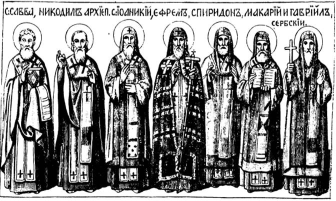
Сербская Церковь в 30 д. августа прославляет своих учителей, прославленных Господом, архиепископов Савву 2 и Никодима, патриархов Иоанникия, Ефрема, Спиридона, Макария и Гавриила, из которых последний удостоился мученической кончины288.
The Serbian Church, on the 30th day of August, glorifies her teachers, glorified by the Lord: Archbishops Sava II and Nicodemus, Patriarchs Joannicius, Ephraim, Spyridon, Macarius, and Gabriel, of whom the latter was vouchsafed a martyr's end288.
Преемник св. Арсения Савва 2 был младший сын первовенчанного краля Стефана и племянник великого Саввы. Предслав, так назывался он в миру у сербов, возревновав идти по следам св. дяди своего, еще в молодости принял иночество. Он ходил в Иерусалим и там прожил не малое время; потом подвизался на Афоне. Ему пришлось потерпеть много бед от охотников жить на чужой счет. По возвращении его в отчизну бл. Арсений, чувствуя свою старость и тяжкую болезнь, посвятил его в преемники себе. В сане первосвятителя подражал он жизни предшественников своих. Любимою добродетелию его была кротость289. С именем св. Саввы покоится он в Пекской обители, вблизи св. Арсения290. Сербская Церковь поет ему: «из корене благаго благая отрасль прозябл еси, Божия разума водами напаяем, тем и плод благоуханен явился еси житием от юности, веселяя сердца и души поющия тя»291.
The successor of St. Arsenius, Sava II, was the younger son of the First-Crowned King Stephen and a nephew of the great Sava. Predslav—so he was called in the world among the Serbs—having grown zealous to follow in the footsteps of his holy uncle, received the monastic tonsure while still young. He journeyed to Jerusalem and dwelt there for no small time; afterwards he struggled on Mount Athos. He had to endure many misfortunes from those who sought to live at another's expense. Upon his return to his homeland, the blessed Arsenius, sensing his own old age and grievous illness, consecrated him as his successor. In the rank of chief hierarch, he imitated the life of his predecessors. His beloved virtue was meekness289. With the name of St. Sava, he reposes in the monastery of Peć, near St. Arsenius290. The Serbian Church sings to him: "From a good root thou didst put forth a goodly branch, watered by the waters of divine understanding; wherefore thou didst appear as a fragrant fruit by thy life from youth, gladdening the hearts and souls of those who sing to thee"291.
Пред иконостасом печского храма, на левой стороне, стоит рака с мощами св. Никодима архиепископа сербского, великого чудотворца292. Блаж. Никодим, природный серб, подвизался постнически на Афоне и был игуменом Хиландаря. По смерти Саввы 3 Сербия объявила желание видеть Никодима своим первосвятителем; не хотелось ему расстаться с тихою пустынею, но афонские отцы убедили его не отказываться от призвания Церкви. Потому «посвятили его в день вознесения Господня и возведоша на престол св. Саввы с многих лет приветствием глаголюще: преосвященному архиепископу Никодиму всея сербския и поморския земли многая лета», так говорит современник293. Это было в 1317 г.294. При гробе блажен. кор. Милютина поднято было кровавое волнение приверженцами Симониды; энергический архипастырь остановил кровопролитие и грабеж. Потом в янв. 1321 г. венчал он на кралевство старшего сына Милютинова, не взирая на партию королевы295. Ревностный патриот был ревностным попечителем о делах св. веры. В предисловии к переведенному им в 1319 г. уставу пишет он, что быв в Константинополе, еще в сане игумена, он расспрашивал у иерусалимского патриарха об уставе церковном по заботе о том, «еже единствовати по словеси богоносца братона ввупе и всей срьпьской земли»: потом будучи архиепископом, «послал, говорит, в црьскый град в монастырь св. Предтечи и крьстителя Иоанна и принесень ми бысть си типик ерусалимскы и преложихь и в нашь езыкь от письмень грьчьского езыка... Елико есть противу мощии, подвигнемь се еже бдети и трезвити се. в славословие Богу. Мы убо потьшимсе, братие, се сь естеством и обычаем пльтьскыи: благи же дародатель и подвигоподавець, всемогеи Бог, веди немощь нашу, ть подасть нам мощь духовну, нь аще прьвее трудь покажемь»296. – Прекрасный урок о деле спасения нашего! В 1324 г. по распоряжению святителя черноризец Дамиан написал в Печской обители апостол, доныне уцелевший, а прежде того – параклитик и октоих, ныне неизвестные297. Богомилов – бабунов первосвятитель преследовал обличениямп и предавал суду как вредных обществу и церкви298. Блаженный архипастырь, искренно любивший иноческую жизнь и содействовавший процветанию ее в Сербии299, писал грамоту о том, дабы сербские архиепископы в хиландарские игумены не забывали типикарницы св. Саввы, при чем красноречиво описал жизнь св. Саввы, это было предсмертное завещание хиландарского подвижника и архиепископа всей Сербии300.
Before the iconostasis of the church of Peć, on the left side, stands a reliquary with the relics of St. Nicodemus, Archbishop of Serbia, great wonderworker292. The blessed Nicodemus, a Serb by birth, struggled in asceticism on Mount Athos and was abbot of Hilandar. After the death of Sava III, Serbia expressed the desire to see Nicodemus as her chief hierarch; he was unwilling to part with the quiet hermitage, but the Athonite fathers persuaded him not to refuse the calling of the Church. Therefore, "they consecrated him on the day of the Ascension of the Lord and elevated him to the throne of St. Sava with the greeting of many years, saying: 'Many years to the most holy Archbishop Nicodemus of all the Serbian and maritime lands,'" as a contemporary says293. This was in the year 1317294. At the tomb of the blessed King Milutin, a bloody disturbance was raised by the adherents of Simonis; the energetic archpastor halted the bloodshed and plunder. Afterwards, in January 1321, he crowned the eldest son of Milutin as king, disregarding the queen's party295. A zealous patriot, he was a zealous guardian of the affairs of the holy faith. In the preface to the Typicon which he translated in 1319, he writes that, being in Constantinople while still in the rank of abbot, he inquired of the Patriarch of Jerusalem concerning the church Typicon, out of concern "that there might be unity, according to the word of the God-bearing brother, both in common and throughout all the Serbian land"; then, being archbishop, "I sent, he says, to the imperial city, to the monastery of the holy Forerunner and Baptist John, and this Jerusalem Typicon was brought to me, and I translated it into our language from the letters of the Greek tongue... As much as is within our power, let us strive to be watchful and sober, unto the glorification of God. Let us therefore hasten, brethren, for this is according to the nature and custom of the flesh; but the good Giver of gifts and Bestower of contests, the almighty God, knowing our weakness, will grant us spiritual strength, if only we first show labor"296. — A beautiful lesson concerning the work of our salvation! In 1324, by order of the hierarch, the monk Damian wrote an Apostolos in the monastery of Peć, which survives to this day, and before that, a Paraclitic and an Octoechos, now unknown297. The chief hierarch pursued the Bogomils—the Babuni—with reproofs and delivered them to judgment as harmful to society and the Church298. The blessed archpastor, who sincerely loved the monastic life and promoted its flourishing in Serbia299, wrote a charter that the Serbian archbishops and the abbots of Hilandar should not forget the Typikaria of St. Sava, wherein he eloquently described the life of St. Sava; this was the testament before death of the Hilandar ascetic and archbishop of all Serbia300.
Блаж. Иоанникий управлял Церковию с 1339 г. сперва в сане архиепископа, – а потом в 1346 г. сербский собор, состоявший из болгарского патриарха и всех сербских архипастырей, по желанию вор. Душана, провозгласил его патриархом; патриарх вслед затем венчал Душана царским венцем301. Блаж. Иоанникию много надобно было иметь высоких качеств, чтобы иметь влияние на Душана. Душан был владетель умный, энергический, но иногда бурный в порывах страстей302; он не был так худ, как изображали злившиеся на него греки: он страстно любил не одну свою славу, а и славу имени Христова: так показывает выполненная молитва его в победоносцу Георгию303! Но иметь влияние на такого человека – подвиг трудный. Блаж. Иоанникий влиянием на Душана ограждал покой православия и вызывал Душана на благотворения Церкви304. Так в 1348 г. «благословением господина патриарха, кир. Иоанникиа и всего збора» дана была грамота Призренскому монастырю архангелов, с дарованием множества земель. И в том же году выдана была Душаном грамота для иерусалимской церкви арх. Михаила, построенной Е. Милютиным; последнею приписан был в той церкви храм св. Николая Вранинского со всеми селами, угодьями и поселенцами. – Это было посильною помощию православию, после того, как Душан имел неосторожность отменить постановления отца и деда о православии в Рагузе; следствием отмены было гонение на православие в республике; православные иноки вынуждены были удалиться в Иерусалим и для них-то оказана теперь помощь305. До иночества своего блаж. Иоанникий, родившийся в стольной Призрене, служил при короле в звании секретаря. Как хорошо знавший юридические обычаи страны своей, он участвовал в составлении законника и в 1349 г. утвердил его на церковном соборе306. Церковь чтит в св. Иоанникие «сирот и вдов питателя, скорбящих утешителя, прибегающих помощника и тепла заступника, призывающих его скоро послушающа, самодержавнаго Стефана на милосердие и милость прелагающа, противные примиряюща»307. Он и скончался на подвиге миротворения. – Душан поссорился с венгерским королем и пригласил патриарха в Жидчу. Патриарх поспешно прибыл, сильно хлопотал о потушении ссоры и от хлопот почувствовал себя сильно нездоровым. Больного понесли его в патриаршую обитель и он на дороге скончался, 3 сент. 1349 г.308.
The blessed Joannicius governed the Church from 1339, first in the rank of archbishop, and then in 1346, the Serbian council, consisting of the Bulgarian patriarch and all the Serbian archpastors, by the desire of the ruler Dušan, proclaimed him patriarch; the patriarch then crowned Dušan with the imperial crown301. The blessed Joannicius needed to possess many high qualities in order to have influence over Dušan. Dušan was an intelligent and energetic ruler, but at times turbulent in the impulses of his passions302; he was not as evil as the Greeks who were angry with him depicted him: he passionately loved not only his own glory, but also the glory of the name of Christ, as his fulfilled prayer to the Victory-bearer George shows303! But to have influence over such a man is a difficult feat. The blessed Joannicius, by his influence over Dušan, safeguarded the peace of Orthodoxy and called Dušan to acts of benefaction toward the Church304. Thus, in 1348, "by the blessing of the lord patriarch, kyr Joannicius, and of the whole council," a charter was given to the monastery of the Archangels in Prizren, granting many lands. And in the same year, Dušan issued a charter for the Jerusalem church of the Archangel Michael, built by E. Milutin; to the latter was appended in that church a church of St. Nicholas of Vranje with all its villages, lands, and settlers. This was a timely aid to Orthodoxy, after Dušan had had the imprudence to revoke the decrees of his father and grandfather concerning Orthodoxy in Ragusa; the consequence of the revocation was a persecution of Orthodoxy in the republic; Orthodox monks were forced to withdraw to Jerusalem, and it was for them that help was now given305. Before his monasticism, the blessed Joannicius, born in the capital Prizren, served at the king's court in the capacity of secretary. As one well acquainted with the legal customs of his country, he participated in the compilation of the Law Code and confirmed it at a church council in 1349306. The Church honors in St. Joannicius "the nourisher of orphans and widows, the comforter of the sorrowful, the helper of those who flee to him and the fervent intercessor, the swift hearer of those who call upon him, who turned the autocratic Stephen to mercy and compassion, and reconciled adversaries"307. He reposed even while laboring in the work of peacemaking. Dušan quarreled with the Hungarian king and summoned the patriarch to Žiča. The patriarch arrived hastily, labored greatly to extinguish the quarrel, and from the exertion felt himself severely unwell. They carried him, ill, to the patriarchal monastery, and he reposed on the road, on September 3, 1349308.
Так как законник Душана составлен под влиянием великого святителя и особенно церковные статьи его принадлежат без сомнения уму и перу сербского первосвятителя: то в почесть святителю и для общей пользы выписываем церковные статьи законника309.
Since Dušan's Law Code was compiled under the influence of the great hierarch, and especially its ecclesiastical articles belong without doubt to the mind and pen of the Serbian chief hierarch: therefore, in honor of the hierarch and for the common benefit, we transcribe the ecclesiastical articles of the Law Code309.
2. Начальники и прочие люди не должны жениться, не получив благословения от своего архиерея или от духовного отца или от поставленного архиереем.
2. Rulers and other people must not marry without receiving a blessing from their bishop, or from their spiritual father, or from one appointed by the bishop.
3. Ни одна свадьба не должна совершаться без венчания. Если же совершится без благословения и дозволения Церкви: таковых разлучать и сажать в темницу.
3. No wedding shall be performed without the crowning. If it is performed without the blessing and permission of the Church: such persons shall be separated and cast into prison.
4. Каждый должен слушаться священников и своего духовного отца. Если кто окажется виновным пред Церковию или священником или нарушит что-нибудь, особенно иноверец по своему произволу: пусть покорится св. Церкви и исправит должное. Если же не послушается и не захочет исправиться: отлучить его от Церкви и подвергнуть наказанию.
4. Everyone must obey the priests and his own spiritual father. If anyone is found guilty before the Church or a priest, or violates anything, especially a heterodox person of his own will: let him submit to the holy Church and make amends. If he does not obey and does not wish to correct himself: let him be excommunicated from the Church and subjected to punishment.
5. Священники не должны произносить проклятия на христиан за их прегрешения. Пусть тихо и кротко приглашают их для двукратного я троекратного вразумления. Если не послушаются: отлучать от Церкви.
5. Priests shall not pronounce curses upon Christians for their transgressions. Let them quietly and meekly summon them for a twofold or threefold admonition. If they do not obey: let them be excommunicated from the Church.
6. Совращающих православного христианина в латинство патриарх и митрополит с епископами убеждают наставлениями и св. писанием, дабы возвратились к православной вере и чистому христианству. Если кто не покорится и не захочет возвратиться в православие: того подвергать наказанию, как предписано в законе св. отцов. Благочестивый дар будет выгонять всякую ересь из своих пределов. Кто не захочет обратиться: отбирать у него все имение и передавать тем, которые покорятся православной вере. Иноверческих еретических попов, отвращающих людей от православия, ловить и отсылать в рудники и заточение. Еретические храмы освящать и передавать православным священникам; пусть наставляют в них – заблудившихся обращаться к св. вере.
6. Concerning those who seduce an Orthodox Christian into Latinism: the patriarch and the metropolitan, together with the bishops, shall persuade them with instructions and holy Scripture, that they may return to the Orthodox faith and pure Christianity. If anyone does not submit and does not wish to return to Orthodoxy: let him be subjected to punishment, as is prescribed in the law of the holy fathers. The pious king shall expel every heresy from his borders. Whoever does not wish to convert: let all his property be taken from him and given over to those who submit to the Orthodox faith. Heterodox heretical priests who turn people away from Orthodoxy shall be seized and sent to the mines and into imprisonment. Heretical churches shall be consecrated and handed over to Orthodox priests; let them instruct therein those who have gone astray to return to the holy faith.
7. Великая Церковь поставит протопопов по городам, местечкам и селам, чтобы умножались христиане, обращаясь из латинской ереси, где кто совратился. Выдать духовную заповедь, чтобы каждое воскресенье учили тех в храме и чтобы каждый христианин соблюдал православный, истый, закон, переданный апостолами и св. отцами.
7. The Great Church shall appoint protopopes in cities, towns, and villages, so that Christians may multiply, turning from the Latin heresy, wherever anyone has been seduced. Let a spiritual commandment be issued, that every Sunday they teach those in the church, and that every Christian observe the Orthodox, true law handed down by the apostles and the holy fathers.
9. Если полуверец возьмет за себя христианку: он, хищник, должен обратиться в христианство (православие); если же не обратится, жена, дети я дом отбираются, а его отсылают в заточение.
9. If a half-believer takes a Christian woman for himself: he, as a plunderer, must convert to Christianity (Orthodoxy); if he does not convert, his wife, children, and house are taken away, and he is sent into confinement.
11. Святители поставляют духовников во всем областям, во городам и селам, и те пусть будут духовники духовниками, которые получили от своих архиереев благословение на духовничество, чтобы вязать и разрешать; их должен слушать каждый, по церковному закону; а те духовники, которые не поставлены в духовников, должны быть прогнаны, – пусть Церковь накажет их по закону310.
11. The hierarchs appoint spiritual fathers throughout all regions, in cities and villages, and let those be spiritual fathers who have received from their bishops a blessing for spiritual fatherhood, to bind and to loose; everyone must heed them, according to church law; and those spiritual fathers who have not been appointed as spiritual fathers shall be driven out—let the Church punish them according to the law310.
12. Мирянин пусть не разбирает духовного дела; если же окажется, что не поставленный судил церковное дело, то платит 300 перперов. – Только Церковь судит о грехах и о всяком церковном деле.
12. Let no layman judge a spiritual matter; if it be found that one not appointed has judged a church matter, he shall pay 300 perpers. — Only the Church judges concerning sins and every church matter.
13. Епископы, митрополиты, игумены не должны быть поставляемы за деньги. Иначе поставивший проклят и анафема. Те должны быть поставляемы – собором. Каждый должен судиться пред своею церковию. Если спорящие принадлежат к двум церквам: пусть ищут решения у обеих церквей. – Церковные села и церковные люди должны служить своей церкви, а не чужой. К чужим церквам пусть не ходят ни для сенокоса, ни для пахати, ни для сада виноградного, ни для другой работы, малой ли или великой. Если кто вынудит на свою работу церковных подданных: царская власть отнимает у того боярина имение его и он наказывается как преступник царский и церковный.
13. Bishops, metropolitans, and abbots shall not be appointed for money. Otherwise, the one who appointed is accursed and anathema. They shall be appointed by a council. Everyone must be judged before his own church. If the disputants belong to two churches: let them seek a decision from both churches. — Church villages and church people must serve their own church, and not another. Let them not go to other churches either for haymaking, or for plowing, or for a vineyard, or for any other work, whether small or great. If anyone compels church subjects to work for him: the imperial authority takes away that boyar's estate, and he is punished as a criminal against the emperor and the Church.
14. Священники баштинники пользуются своею баштанною землею по своему усмотрению; они люди свободные. А тем священникам, которые не имеют батьковщины, должно давать три нивы по закону и эта земля (капа) священническая свободна (от подати)311; церковную баштину никто не должен ни купить, ни продать, за исключением промена на близкую к церкви.
14. Priests who are baštiniks enjoy their baština land according to their own discretion; they are free men. And to those priests who have no patrimony, three fields shall be given according to the law, and this land (kapa) is priestly and free (from tax)311; no one may buy or sell a church baština, except in exchange for land near the church.
15. Священник не должен отходить от своего господаря (помещика). Если господарь не выполняет законного, священник идет к архиерею и архиерей дает знать господину, чтобы содержал священника по закону. Если же господин не послушается: тогда священник может поступить по своей воле. Если же священник – баштинник: господин не имеет права удалить его.
15. A priest shall not depart from his lord (landowner). If the lord does not fulfill what is lawful, the priest goes to the bishop, and the bishop informs the lord that he should maintain the priest according to the law. If the lord does not heed: then the priest may act according to his own will. If the priest is a baštinik: the lord has no right to remove him.
16. Если властели и другие люди имеют церкви на своих батьковщинах: царь и патриарх не подчиняют те церкви церкви великой. Баштинник имеет право ставить церковь и держать своего калугера (иеромонаха), только должен представить к архиерею для благословения ему духовной власти. Если же властелин подчинил свою церковь великой церкви: то он уже не властен в той церкви.
16. If lords and other people have churches on their own patrimonies: the emperor and the patriarch do not subject those churches to the great church. The baštinik has the right to establish a church and keep his own kaluger (hieromonk), only he must present him to the bishop for a blessing of spiritual authority. If the lord has subjected his church to the great church: then he no longer has authority over that church.
38. Митрополиты и епископы не должны быть поставляемы за деньги. Иначе оба лишаются престола, как поставленный, так и поставивший.
38. Metropolitans and bishops shall not be appointed for money. Otherwise, both are deprived of their throne, both the one appointed and the one who appointed.
39. Игумены не удаляются без вины от церкви. В игумены монастырей поставляются люди добрые и искусные, желающие быть строителями дома Божия. Игумены должны жить в киновиях по закону и иметь совещания с старцами. При тысяче куков (хат) должны питаться в монастыре 50 монахов. Царская власть передана игуменам церкви, они заведывают имением монастырским, лошадями, овцами и всем прочим; они свободно распоряжаются всем, как требует правда и как написано в грамотах ктиторских. Пусть установят для иноков в церквах устав киновий, смотря по монастырю312.
39. Abbots shall not be removed from the church without cause. As abbots of monasteries, good and skilled men are appointed, who desire to be builders of the house of God. Abbots must live in cenobitic communities according to the law and hold counsel with the elders. For every thousand kukas (huts), 50 monks shall be fed in the monastery. Imperial authority is entrusted to the abbots of the church; they administer the monastic property, horses, sheep, and everything else; they freely dispose of all things, as justice requires and as is written in the ktitorial charters. Let them establish for the monks in the churches a cenobitic rule, according to the monastery312.
40. Архиереи не должны посылать мирских людей за священниками; пусть рассудительный монах посылается за ними по духовным дедам; а должное с баштины пусть отбирает церковный духовник.
40. Bishops shall not send laymen for priests; let a prudent monk be sent for them concerning spiritual matters; and what is due from the baština let the church spiritual father collect.
41. Монахи и монахини, которые, быв пострижены, живут в своих домах, должны быть выгоняемы; они должны жить в монастырях. Те монахи, которые постриглись из баштинников, не должны жить у той церкви, а пусть идут в монастырь313.
41. Monks and nuns who, having been tonsured, live in their own houses, shall be driven out; they must live in monasteries. Those monks who have been tonsured from among the baštiniks shall not live at that church, but let them go to a monastery313.
42. Монах, снимающий монашество, должен быть заперт в тюрьму, пока не обратится к послушанию. Надобно строго смотреть за монахами, чтобы не жили вне монастыря; разве уже это пустынник, который по любви к Богу поселился в пустыне.
42. A monk who casts off monasticism shall be locked in prison until he returns to obedience. One must strictly watch over monks, that they not live outside the monastery; unless it be a hermit who, out of love for God, has settled in the desert.
43. Есть еретики, которые берут из гробов мертвые тела и сожигают их. Если где окажутся такие: такое место или село платит за это беззаконие и выдает суду виновных. Если же участвовал в том священник: он лишается сана и отсылается в рудники, до смерти.
43. There are heretics who take dead bodies from graves and burn them. If such are found anywhere: that place or village shall pay for this lawlessness and hand over the guilty to the court. If a priest participated in this: he is deprived of his rank and sent to the mines, until death.
46. Церквами владеют только царь, святой господин патриарх и царский логофет, а другой никто. Царская власть освободила все церкви своей области от всех работ, малых и больших.
46. Churches are governed only by the emperor, the holy lord patriarch, and the imperial logothete, and no one else. The imperial authority has freed all churches of its domain from all labors, small and great.
47. При всех церквах должны содержаться бедные, и как положено первыми ктиторами. За тем смотрят митрополиты и епископы; они собирают в церквам нищих, чтобы были питаемы314.
47. At all churches, the poor shall be maintained, as was established by the first ktitors. The metropolitans and bishops oversee this; they gather the poor to the churches, that they may be fed314.
93. Тому, кто ест и пьет с еретиками, назначать покаяние, как предписывает восточная кафолическая церковь: но нет запрещения для заключенных и рабов, которые едят с иноверцами»317.
93. For one who eats and drinks with heretics, penance is appointed, as the Eastern Catholic Church prescribes: but there is no prohibition for prisoners and slaves who eat with heterodox"317.
Ефрем, сын священника, современного кор. Милютину, еще в молодых летах почувствовал влечение к иноческой жизни318. Родители желали видеть его женатым: но он скрылся из их дома и, найдя отшельника Василия, стал жить у него в посте и молитве, и у него же скоро дал обет иночества. Родители, узнав о месте пребывания его, хотели отнять его у пустынника: но он убежал на Афон и там скрылся в одном из скитов. Во время военных тревог Ефрем с учениками своими перешел в Ибровский монастырь здесь был он и игуменом, но недолго. Поклонившись святыням патриархии, он поселился в уединенном месте вблизи Дечанского монастыря и здесь жил строгим отшельником. По смерти ц. Душана начались смуты безначалия и потом появились разбои. Отшельник Ефрем избит был до полусмерти дурными людьми, вынуждавшими поделиться с ними деньгами. – Патриарх Савва, преемник св. Иоанникия, взял старца в патриархию и назначил для него пещерную велию; великий постник ожил и выздоровел здесь. Благоч. князь Лазарь отправил посольство к патриарху констан. с просьбою об окончании споров, происходивших относительно сербской патриархии. Мир с греческою церковию восстановлен. Надлежало спокойно избирать нового патриарха, на место почившего Саввы. Но, к сожалению, в Сербии явилось довольно искателей патриаршей кафедры. – После общей молитвы собор избрал в патриарха «преподобного отшельника Ефрема», как украшенного высокими добродетелями. Блаж. Ефрем, вовсе неожидавший такого избрания и попавший на собор случайно, горько заплакал и молил уволить его от тяжелой для него доли. Собор отвечал: указанный Богом имеет быть посвящен. Это было окт. 3-го 1376 г. Вслед затем Ефрем посвящен был в патриарха и потом венчал кн. Лазаря венцем сербских властителей319.
Ephraim, the son of a priest contemporary with King Milutin, felt a drawing toward the monastic life even in his youth318. His parents wished to see him married: but he hid himself from their house and, finding the hermit Basil, began to live with him in fasting and prayer, and soon with him made his vow of monasticism. His parents, learning of his place of sojourn, wished to take him away from the hermit: but he fled to Athos and there hid himself in one of the sketes. During times of military alarm, Ephraim with his disciples moved to the Ibrovsky Monastery; here he was also abbot, but not for long. Having venerated the holy things of the patriarchate, he settled in a solitary place near the Dečani Monastery and here lived as a strict hermit. After the death of Tsar Dušan, disorders of anarchy began, and later robberies appeared. The hermit Ephraim was beaten half to death by evil men who forced him to share money with them. — Patriarch Sava, the successor of St. Joannicius, took the elder to the patriarchate and appointed for him a great cave; the great faster revived and recovered here. The pious Prince Lazar sent an embassy to the Patriarch of Constantinople with a request for an end to the disputes that had arisen concerning the Serbian patriarchate. Peace with the Greek Church was restored. It was necessary to elect a new patriarch peacefully, in place of the reposed Sava. But, unfortunately, quite a few seekers of the patriarchal throne appeared in Serbia. — After common prayer, the council elected as patriarch "the Venerable hermit Ephraim," as one adorned with high virtues. Blessed Ephraim, who had not at all expected such an election and had come to the council by chance, wept bitterly and begged to be released from this heavy lot. The council answered: he who is pointed out by God must be consecrated. This was on October 3, 1376 A.D. Thereupon Ephraim was consecrated as patriarch and afterwards crowned Prince Lazar with the crown of the Serbian rulers319.
Не напрасно блаж. Ефрем так плакал о том, что возлагают на него высокий сан. Время было тяжелое: столько беспорядков завелось в Церкви при расстройстве гражданского правления. Как не все областные правители охотно покорялись кн. Лазарю: так не все архиереи и прочие духовные лица оказывали повиновение патриарху Ефрему, не взирая на его высокую духовную жизнь320. Привыкший к тихой, уединенной жизни, отягощенный нестроением дел, св. Ефрем отказался от многозаботливой должности правителя сербской церкви. В 1382 г. он посвятил на свое место блаж. Спиридона, а сам стал жить уединенно в архангельской обители ц. Душана. Известен ныне летописец Амартола, с припискою: «написасе – дрьжащу престол святительства срьбскые земли преосв. и патриарху вир Спиридону, в дому св. архистратигь Михаила и Гавриила, при господине учителе, бывшем патриархе, кир Ефреме, – в л. 1387»321. Заметка дает видеть, что люди духовной жизни высоко уважали блаж. Ефрема и в его уединении, признавали его наставником и учителем опытным и охотно следовали советам его. Блаж. Спиридон, заботливый о иноческих обителях322, скончался в 1388 г. почти в одно время с бл. кн. Лазарем, павшим на Косовом поле. По церковным песням, Спиридон «цевница духовная»323; это подает мысль, что он писал свящ. песни для сербской церкви. Мощи его почивают в храме Печской обители324.
Not in vain did blessed Ephraim weep so over the high rank being placed upon him. The time was grievous: so many disorders had crept into the Church amid the disruption of civil government. Just as not all regional rulers willingly submitted to Prince Lazar, so not all bishops and other clergy showed obedience to Patriarch Ephraim, despite his lofty spiritual life320. Accustomed to a quiet, solitary life, burdened by the disorder of affairs, St. Ephraim resigned from the care-filled office of ruler of the Serbian Church. In 1382 A.D. he consecrated blessed Spyridon in his place, and himself began to live in solitude in the Archangel Monastery of Tsar Dušan. There is known today the chronicle of Hamartolus, with a note: "Written — while holding the throne of the hierarchate of the Serbian land, the most holy and patriarch, lord Spyridon, in the house of the holy Archangels Michael and Gabriel, under the lord teacher, the former patriarch, kyr Ephraim, — in the year 1387"321. The note shows that men of spiritual life highly respected blessed Ephraim even in his solitude, acknowledging him as a guide and experienced teacher and willingly following his counsels. Blessed Spyridon, solicitous for monastic houses322, reposed in 1388 A.D., almost at the same time as the blessed Prince Lazar, who fell on the Field of Kosovo. According to church hymns, Spyridon is "a spiritual pipe"323; this suggests that he wrote sacred hymns for the Serbian Church. His relics repose in the church of the Peć Monastery324.
Так как по кончине Спиридона и кн. Лазаря время было крайне смутное: то упросили блаж. Ефрема снова управлять Церковию до избрания нового патриарха. Так он довольное время снова управлял сербскою паствою к утешению лучших людей325.
Since after the death of Spyridon and Prince Lazar the time was extremely troubled: they entreated blessed Ephraim to again govern the Church until the election of a new patriarch. Thus he again governed the Serbian flock for a considerable time, to the consolation of the best men325.
Дивный подвижник, кроткий, как ангел, почил 88 лет при преемнике п. Даниила, Савве326. Мощи его почивают в великой патриаршей церкви327.
The wondrous ascetic, meek as an angel, reposed at 88 years of age, under the successor of Patriarch Daniel, Sava326. His relics repose in the great patriarchal church327.
В трапезе печского Храма лежат под спудом мощи патриарха св. Макария. Блаженный святитель заботился о распространении просвещения в Сербии. При нем печатались церковные книги в разных местах: в Милешевом монастыре следованная псалтырь 1557 г.328. Молитвослов (требник) в 1545 г.; в Белграде евангелие 1552 г. в Меркшином монастыре евангелие 1562 г.; в Венеции молитвослов 1557 г.; служебник 1554 г.; постная триодь 1521 г.-в Скадаре цветная триодь 1562 г.329. Очевидно, что славянская любовь к просвещению – не то что любовь Лютера, топтавшего в грязь древнее, апостольское, христианство и доведшего учеников своих до антихристианства330. – Блажен. святитель, по милости Божией, имел возможность сделать многое для сербской Церкви и по ревности своей сделал весьма многое. Брат его был визирем при султане. При его помощи получил он гаттишериф султана на возобновление монастырей и церквей, расстроенных фанатизмом магометанским331. Прежде всего, как естественно, обратил он старание свое на возобновление древней патриаршей обители. Первые годы свои жил он в Милешевом монастыре332. Теперь он восстановлял свою кафедральную обитель. При обновлении святого престола сербской Церкви, говорит современная надпись, огромная трапеза патриархии, поддерживаемая тремя мраморными колоннами и тремя кирпичными, построена была «трудом и усердием преосвященнейшего и блаженнейшего кир Макария патриарха – в л. 7070 (1552)»333.
In the refectory of the church of Peć, the relics of Patriarch St. Macarius lie hidden beneath a covering328. The blessed Hierarch concerned himself with the spread of enlightenment in Serbia. Under him, church books were printed in various places: in the Mileševa Monastery, a Psalter with rubrics in 1557; a Prayer Book (Euchologion) in 1545; in Belgrade, a Gospel in 1552; in the Merkšin Monastery, a Gospel in 1562; in Venice, a Prayer Book in 1557; a Liturgicon in 1554; a Triodion of Lent in 1521—in Scutari, a Flower Triodion in 1562329. It is evident that the Slavic love of enlightenment is not like the love of Luther, who trampled into the mud the ancient, apostolic Christianity and led his disciples to anti-Christianity330. — The blessed Hierarch, by the mercy of God, had the opportunity to do much for the Serbian Church, and by his zeal he accomplished very much. His brother was a vizier under the sultan. With his help, he obtained a hatt-i sharif from the sultan for the restoration of monasteries and churches that had been ruined by Mohammedan fanaticism331. First of all, as was natural, he turned his efforts to the restoration of the ancient patriarchal monastery. In his early years he lived in the Mileševa Monastery332. Now he restored his cathedral monastery. At the renewal of the holy throne of the Serbian Church, says a contemporary inscription, the vast refectory of the patriarchate, supported by three marble columns and three brick columns, was built “by the labor and diligence of the most reverend and most blessed kyr Macarius, Patriarch—in the year 7070 (1552)”333.
Блаж. патриарх Гавриил334 из дворянского сербского дома Раичей335, был первосвятителем сербским во время весьма тяжелое. Христиане сербские сильно страдали тогда от своеволий магометанского фанатизма. В октоихе, писанном в 1639 г. в. Милешевом монастыре, писавший его говорил: «тогда подъехом нужду и гонение великое и приет мучения венец Гавриил иеромонах м. октоврия в 9 день и много мучение подъет от трьклетого Нух паши. И тогда изгна бостанжие из монастыря и не имехом, кому плакати. И идохь на царствующий град и царь (Мурат) бе на Богдаду; не имехомь, кому плакати»336. По крайним нуждам кафедры и страны блаж. патриарх Гавриил отправился для милостыни в Валахию и оттуда явился в благотворительную Москву. – Здесь в 1655 г. он вместе с антиохийским патриархом присутствовал на соборе, весьма важном для славянских церквей. – Собор определил исправить церковные книги по греческим и древним славянским книгам. Восставшие тогда же против определений собора протопоп Аввакум, главный виновник порчи книг при п. Иосифе, и друзья его, коломенский епископ Павел и муромский протопоп Даниил, отосланы были в монастыри на покаяние337. Блаженный патриарх, привезший в дар Москве несколько рукописей и три напечатанные на юге литургии, получил щедрую милостыню для Сербии от доброго царя338. Когда после долгого странствования возвратился он в Сербию: патриаршая кафедра оказалась занятою другим (Максимом). Он объяснял право свое на кафедру и несправедливое присвоение ее другим. – Под турецкою властию, особенно тогда, простор был только страстям. Интриги иезуитов, злобствовавших на Россию за Хмельницкого, довели в 1657 г. конст. патриарха Парфения до мученической смерти: его обвинили в государственной измене за сношение с Россиею339. Точно также враждовавшие против блаж. Гавриила, действуя под влиянием иезуитов Австрии, где бедные искали недоступного счастия340, донесли турецким властям, что Гавриил – государственный изменник, жил в России. Визирь потребовал в себе блаж. Гавриила и допросил подробно о всех обстоятельствах пути его. Когда окончилось исследование, визирь, вполне узнавший несостоятельность клеветы, объявил святителю: так как тебя обвиняют в государственной измене, то по законам, как сам знаешь, ты должен быть казнен смертию; но если ты согласишься принять нашу веру, не только пощажу жизнь твою, по предоставлю тебе важную должность и ты будешь жить в почете и роскоши. Блаженный видел, что государственному изменнику не должны были предоставлять ни почестей, ни жизни, а если предоставляют, то только за измену св. вере; как же согласиться на измену вере в Господа Иисуса? Он отвечал визирю: «я совершенно невинен в государственном преступлении, – это сознаете вы сами. Спасти же жизнь мою отступлением от веры христианской не соглашусь никогда, пока остаюсь с здоровым смыслом. Почести и богатства ваши поберегите себе, мне они не нужны». Святитель предан был пыткам, которыми принуждали его принять магометанство. Мужественный страдалец переносил все терпеливо и благодарил Господа, что удостоил его страдать за св. веру. Потеряв всякую надежду отвлечь святителя от христианства, привели его на место казни и повесили341. Это было в октябре 1659 г. В Печской обители хранится посох с надписью: Патху Ку (патриарху Кириу) Гаврилу»342.
The blessed Patriarch Gabriel334, of the noble Serbian house of Raičić335, was the first-hierarch of Serbia during a very difficult time. Serbian Christians then suffered greatly from the lawlessness of Mohammedan fanaticism. In an Oktoechos written in 1639 in the Mileševa Monastery, the scribe said: “Then we endured need and great persecution, and the hieromonk Gabriel received the crown of martyrdom on the 9th day of October, and he endured much torment from the thrice-accursed Nuh Pasha. And then the bostanji were driven out of the monastery, and we had no one to whom to complain. And I went to the imperial city, and the Tsar (Murad) was at Baghdad; we had no one to whom to complain”336. Because of the extreme needs of the see and the country, the blessed Patriarch Gabriel set out for alms to Wallachia, and from there he appeared in charitable Moscow. — Here in 1655, together with the Patriarch of Antioch, he was present at a Council very important for the Slavic Churches. — The Council decreed to correct the church books according to the Greek and ancient Slavic books. The protopope Avvakum, the chief culprit in the corruption of the books under Patriarch Joseph, and his friends, Bishop Paul of Kolomna and Protopope Daniel of Murom, who rose up against the decrees of the Council, were sent to monasteries for repentance337. The blessed Patriarch, who brought as a gift to Moscow several manuscripts and three printedliturgies from the south, received generous alms for Serbia from the good Tsar338. When, after a long sojourn, he returned to Serbia, the patriarchal see was found to be occupied by another (Maximus). He explained his right to the see and the unjust appropriation of it by another. — Under Turkish authority, especially at that time, there was scope only for passions. The intrigues of the Jesuits, who bore malice against Russia over Khmelnytsky, led in 1657 to the martyr’s death of Patriarch Parthenius of Constantinople: he was accused of high treason for his relations with Russia339. In like manner, those who were hostile to the blessed Gabriel, acting under the influence of the Jesuits of Austria, where the poor sought an unattainable happiness340, denounced him to the Turkish authorities, saying that Gabriel was a traitor to the state, having lived in Russia. The vizier summoned the blessed Gabriel to himself and interrogated him in detail about all the circumstances of his journey. When the investigation was concluded, the vizier, having fully recognized the baselessness of the slander, declared to the Hierarch: “Since you are accused of high treason, according to the laws, as you yourself know, you must be put to death; but if you agree to accept our faith, I will not only spare your life, but will grant you an important office, and you shall live in honor and luxury.” The blessed one saw that a traitor to the state should not be granted either honors or life, and if they were granted, it was only for betrayal of the holy faith; how then could he consent to betray faith in the Lord Jesus? He answered the vizier: “I am completely innocent of a state crime—this you yourself acknowledge. But to save my life by apostasy from the Christian faith I will never consent, as long as I remain in my right mind. Keep your honors and riches for yourselves; I have no need of them.” The Hierarch was given over to tortures, by which they tried to force him to accept Mohammedanism. The courageous sufferer endured all patiently and thanked the Lord that He had deemed him worthy to suffer for the holy faith. Having lost all hope of turning the Hierarch from Christianity, they led him to the place of execution and hanged him341. This was in October 1659. In the monastery of Peć there is preserved a staff with the inscription: “Πατχυ Κυ (Patriarch Kyriou) Gabriel”342.
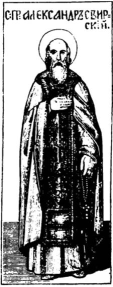
Благословен Бог, дарующий на пользу бедных людей таких великих подвижников благочестия, таких близких к Нему рабов Своих, каков преп. Александр Свирский. Жизнь его – чудно высокая, отражение чистой евангельской жизни; и чего не может он получить от Господа, став так близким к Нему высокою жизнию своею343.
Blessed be God, Who grants for the benefit of poor people such great ascetics of piety, such servants of His who are so close to Him, as is the Venerable Alexander of Svir. His life is wondrously exalted, a reflection of the pure evangelical life; and what can he not obtain from the Lord, having become so close to Him through his exalted life343?
Дивный раб Божий родился в древней обонежской пятине, в с. Мандере, что ныне в Олонецкой губернии. Когда он отдан был учиться грамоте: то сначала тупо учился в сравнении с прочими. Это сильно огорчало его. Раз со слезами молился он в храме о раскрытии разумения своего и услышал голос: «встань, что просил, получишь». Веселым воротился он в дом и – с того времени легко и скоро стал понимать книжную мудрость. Богобоязненное дитя был и отроком таким же, – постоянно соблюдал пост и молился по ночам. «Зачем ты, сын мой, так изнуряешь себя?» с скорбию говорила мать. Сын отвечал: «зачем же тебе, мать моя, отклонять меня от приятного мне воздержания?» Родители хотели, чтобы вступил он в брак: но он уклонялся от того под разными предлогами, и думал об одном, как бы совсем расстаться с миром. В село, где жили родители, пришли иноки валаамские; увидав их, отрок подошел к ним и поклонился им до земли, с словами: «благословите меня, отцы святые!» Иноки изумились смирению отрока. Старший из них, поняв расположение отрока, сообщил, как живут иноки в Валаамской обители их, но прибавил «нам игумен не приказал отнимать детей у родителей и привозить в монастырь; иди в дом твой; Сам Господь управить твой путь».
The wondrous servant of God was born in the ancient Obonezh Pyatina, in the village of Mandera, which is now in the Olonets Governorate. When he was sent to learn to read and write, at first he learned slowly in comparison with others. This greatly grieved him. Once, with tears, he prayed in the church for the opening of his understanding, and he heard a voice: “Arise; what you have asked, you shall receive.” He returned home joyful, and from that time he easily and quickly began to comprehend bookish wisdom. He was a God-fearing child, and remained the same as a youth—constantly keeping the fast and praying at night. “Why, my son, do you so exhaust yourself?” his mother said with sorrow. The son answered: “Why, my mother, do you turn me away from the abstinence that is pleasant to me?” His parents wished him to marry, but he avoided it under various pretexts, and thought only of how to part completely with the world. Monks from Valaam came to the village where his parents lived; seeing them, the youth approached them and bowed to the ground, saying: “Bless me, holy fathers!” The monks were amazed at the youth’s humility. The eldest of them, understanding the youth’s disposition, told him how the monks lived in their Valaam monastery, but added: “Our abbot has not commanded us to take children away from their parents and bring them to the monastery; go to your home; the Lord Himself will direct your path.”
Блаженный отрок решился расстаться с родителями, которых любил. Получив дозволение их отлучиться в ближнее село за делом, он оставляет дом, чтобы не возвращаться более в него. Он отправился прямо на Валаамский остров и здесь на 26 году возраста облекся в иноческие одеяния. Здесь провел он 13 лет, как самый строгий к себе послушник. Крепкий здоровьем, он усердно служил всем, носил воду, таскал из леса дрова, а того и до души своей не допускал, чтобы отказаться от приказания старших. Ночь проводил в молитве, а иногда обнаженное до пояса тело свое отдавал в пищу комарам, и потом шел к утрени. Спустя 13 лет, проведенных в общежитии, получил он благословение подвизаться в уединении. Он и прежде того желал посвятить себя этому подвижничеству. Но опытный наставник удерживал его. «Нет, чадо, говорил настоятель, не утвердясь ногами на ступени общежития послушанием, как на корне, нельзя касаться вершины молчанием и уединением; не следует не вовремя предаваться своей воле; на все свое время».
The blessed youth resolved to part from his parents, whom he loved. Having obtained their permission to go to a nearby village on business, he left home, never to return to it. He set out directly for the island of Valaam, and there, at the 26th year of his age, he was clothed in the monastic habit. Here he spent 13 years as the most strict novice. Strong in health, he diligently served everyone, carried water, dragged firewood from the forest, and never allowed into his soul the thought of refusing an order from his elders. He spent the night in prayer, and sometimes gave his body, bared to the waist, as food for the mosquitoes, and then went to Matins. After 13 years spent in the cenobitic life, he received a blessing to struggle in solitude. He had desired to devote himself to this asceticism even before. But the experienced instructor restrained him. “No, child,” said the abbot, “without planting one’s feet firmly on the step of the cenobitic life through obedience, as on a root, one cannot touch the summit of silence and solitude; one should not give oneself over to one’s own will out of season; for everything there is a time.”
В 1486 г. Александр удалился на озеро Рощинское, туда, где желал он жить еще тогда, как ушел из дома родительского; в 6 верстах от р. Свири избрал себе место и там, где впоследствии построен храм Спасителя, 7 лет подвизался в тесной хижине. Здесь по случаю нашел его боярин Завалишин и подумал, что видит привидение: так изнурил себя подвигами раб Божий. По усердной просьбе набожного боярина преподобный открыл ему жизнь свою, под условием молчания. «Семь лет живу я здесь, не видя никого, говорил он; ни разу не вкушал я хлеба, а довольствовался травою; иногда же и приходилось мне есть одну сырую землю». «Трудно было жить тебе так?» спросил изумленный боярин. – Вначале было тяжело, отвечал преподобный; сильно страдал я желудком; по временам валялся на земле, не в силах будучи поднять головы; я совершал пение свое, лежа на земле: раз очень сильно страдал я и – вот вижу кого-то светлого. «Чем ты болен?» спросил он меня. – Желудком, отвечал я. «Покажи мне больное место», сказал он. И когда я указал, он возложил на меня руку и сказал: «се здрав еси, к тому не согрешай, но работай Господу». – С того времени чувствую себя здоровым. Была и еще борьба отшельнику. Духи злобы не раз являлись ему в грозных привидениях: но он не уступал насилию их и молитвою рассеивал мечты их344. Спустя 7 лет стали собираться к нему труженики: но и они сперва жили отшельнически, не близко один от другого. Боярин Завалишин доставлял по временам отшельникам хлеб, что укрепляло слабых.
In 1486, Alexander withdrew to Lake Roshchinskoye, to the place where he had wished to live even when he left his parental home; six versts from the River Svir he chose a spot, and there, where the church of the Savior was later built, he struggled for seven years in a cramped hut. Here the boyar Zavalishin found him by chance and thought he saw a vision: so greatly had the servant of God exhausted himself by his ascetic labors. At the earnest request of the devout boyar, the Venerable one revealed his life to him, on condition of silence. “For seven years I have lived here, seeing no one,” he said; “I have never tasted bread, but have been satisfied with grass; sometimes, too, I have had to eat only raw earth.” “Was it difficult for you to live thus?” asked the astonished boyar. “At first it was hard,” answered the Venerable one; “I suffered greatly in my stomach; at times I lay on the ground, unable to lift my head; I performed my singing while lying on the ground. Once I was suffering very severely, and—behold, I saw someone bright. ‘What ails you?’ he asked me. ‘My stomach,’ I answered. ‘Show me the painful place,’ he said. And when I pointed, he laid his hand on me and said: ‘Behold, you are whole; sin no more, but serve the Lord.’—From that time I have felt myself well.” There was also another struggle for the hermit. Spirits of malice appeared to him more than once in terrible visions, but he did not yield to their violence and scattered their phantoms by prayer344. After seven years, laborers began to gather to him, but at first they also lived as hermits, not close to one another. The boyar Zavalishin from time to time supplied the hermits with bread, which strengthened the weak.
По особенному внушению, преподобный начал строить монастырь в 130 саженях от своей хижины; а сподвижники убедили его принять на себя сан священства и начальствования. – В 1508 г. посвящен он в игумена и тогда же освящен храм св. Троицы345. – Став игуменом, блаженный Александр не переменил строгости к себе, но казался последним в обители. Первый выходил на труды и больше всех трудился: то месил в хлебне тесто и пек хлебы, то носил воду из озера, то рубил и носил дрова, то приходил туда, где мололи рожь, и тогда, как другие спали, он молол за других своими руками. Никогда не спал он даже на рогоже, а на голой доске или сидя. Одежда его была ушита заплатами. Иные и смеялись над ним за такую одежду, но он оставался верным себе. Усердно заботился он о спасении чад своих, иноков. В глубокий вечер приходил он к келье каждого, чтобы знать, кто чем занят, и потом кротко давал знать о цене времени. Он умолял братию приближаться к Богу смирением, трудами, послушания, постом и молитвою.
By a special prompting, the Venerable One began to build a monastery 130 sazhens from his hut; and his companions persuaded him to accept upon himself the rank of priesthood and leadership. – In the year 1508 he was consecrated as abbot, and at the same time the church of the Holy Trinity was consecrated345. – Having become abbot, the blessed Alexander did not change his strictness toward himself, but seemed the last in the monastery. He was the first to go out to labors and labored more than all: sometimes he kneaded dough in the bakehouse and baked bread, sometimes he carried water from the lake, sometimes he chopped and carried firewood, sometimes he went to where they ground rye, and then, while others slept, he ground with his own hands for others. He never slept even on a mat, but on a bare board or sitting. His clothing was sewn together with patches. Some even laughed at him for such clothing, but he remained true to himself. He diligently cared for the salvation of his children, the monks. In the deep evening he would come to the cell of each one, to know who was occupied with what, and then gently made known the value of time. He besought the brethren to draw near to God through humility, labors, obedience, fasting, and prayer.
Когда умножилось число братии: преподобный начал строить обширный храм св. Троицы, при том каменный. Братия, смотря на скудость средств обители, говорили: «где возьмем средства? Предприятие нерассудительное!» Преподобный отвечал: «точно, мы ничего не можем сделать, если не поможет Господь; но Он помогает уповающим на Него». Храм освящен по благословению архиеп. Макария, в 1526 г. Преподобный построил еще братскую трапезу и другие здания, необходимые для общежития.
When the number of the brethren increased, the Venerable One began to build a spacious church of the Holy Trinity, and that of stone. The brethren, looking upon the poverty of the monastery’s means, said: “Where shall we obtain means? The undertaking is imprudent!” The Venerable One answered: “Truly, we can do nothing if the Lord does not help; but He helps those who hope in Him.” The church was consecrated with the blessing of Archbishop Macarius, in the year 1526. The Venerable One also built a fraternal refectory and other buildings necessary for the cenobitic life.
Высокая духовная жизнь северного подвижника привлекала к нему многих, из близких и дальных мест. К великому авве одни приходили для испрошения благословения и молитв, другие шли с скорбями земной жизни, третьи открывали больную совесть свою. Преподобный принимал всех с кроткою любовию.
The lofty spiritual life of the northern ascetic drew many to him, from near and distant places. To the great abba some came to ask for a blessing and prayers, others went with the sorrows of earthly life, still others opened their ailing conscience. The Venerable One received all with gentle love.
«Сын Авраамов пришел к нам, диакон Феодорит», так приветствовал преподобный Феодорита, соловецкого инока и будущего просветителя лопарей, к которому вышел он навстречу. Об этом пишет современник, князь Курбский»346.
“The son of Abraham has come to us, the deacon Theodoretus,” thus the Venerable One greeted Theodoretus, a Solovki monk and future enlightener of the Lapps, to whom he went out to meet. This is written by a contemporary, Prince Kurbsky346.
Боярин Априлов, у которого рождались только дочери и который бил за то жену, просил преподобного помолиться, чтобы Бог дал ему сына. Святой старец сказал: «и теперь жена твоя носит во чреве дитя не мужского, а женского пола. Это устрояет Бог, а не жена твоя. Потому напрасно, сын мой, оскорбляешь ты жену твою. Патриархи по молитве получали чадородие. Поступай, как они поступали. Земледелец, засевая землю ячменем, не думает, чтобы родилась ему пшеница. Подавай милостыню бедным: они – молитвенники наши пред Богом». По неотступной просьбе Априлова преподобный помолился за него и через год исполнилось желание боярина.
The boyar Aprilev, to whom only daughters were born and who beat his wife for that, asked the Venerable One to pray that God would give him a son. The holy elder said: “Even now your wife carries in her womb a child not of the male, but of the female sex. This is ordained by God, not by your wife. Therefore, my son, you offend your wife in vain. The patriarchs received childbearing through prayer. Act as they acted. A husbandman, sowing his field with barley, does not think that wheat will grow for him. Give alms to the poor: they are our intercessors before God.” At the unceasing request of Aprilev, the Venerable One prayed for him, and after a year the boyar’s desire was fulfilled.
Один из самых богатых и знаменитых купцов Новгорода, Богдан Семенович Корюков, хотя жил вдали от обители святого, но был близок к нему душою, уважал его. В одно время посетил он монастырь преподобного. Пав к ногам святого, говорил он ему: «помилуй меня, раб Божий! помолись за меня Богу: у меня один сын и есть и тот тяжело болен, готов умереть». Преподобный отвечал: «не в нашей воле, чадо, давать, что хотели бы. Веруй Богу искренно и молись Ему с сокрушением. Он может подать все полезное для души нашей. У тебя много было детей и все они еще юноши расстались с жизнию, судьбами Божиими; придется похоронить и того, который остается, за грехи твои, которых так много. Сын мой! по крайней мере теперь пробудись расстанься с грехами: не прибавляй более ростов к ростам («не прилагай резы на резы»); будь сострадателен к бедным, сирым и вдовам, корми заключенных в темнице; процентов не вымогай с должников. Такими добрыми делами обратишь к себе милость Божию... Ты удостоишься, сын мой, и ангельского чина». По летописи видим, что Богдан Семенович вошел потом в особенное доверие в. князя, – ему поручено было (1536 г.) надсматривать за деланием монеты в Новгороде. По известию ученика Александрова Корюков пред смертию облекся в иночество.
One of the richest and most famous merchants of Novgorod, Bogdan Semenovich Koryukov, although he lived far from the monastery of the saint, was near to him in soul and respected him. On one occasion he visited the monastery of the Venerable One. Falling at the feet of the saint, he said to him: “Have mercy on me, servant of God! Pray to God for me: I have only one son, and he is grievously ill, ready to die.” The Venerable One answered: “It is not in our will, child, to give what we would wish. Believe in God sincerely and pray to Him with contrition. He can grant all that is profitable for our soul. You had many children, and all of them, still youths, departed from life by the judgments of God; you will have to bury even that one who remains, for your sins, of which there are so many. My son! at least now awaken, part with your sins: add no more usury to usuries (‘add not interest to interests’); be compassionate to the poor, the orphans, and widows; feed those imprisoned in the dungeon; do not extort interest from debtors. By such good deeds you will turn the mercy of God toward yourself... You will be vouchsafed, my son, even the angelic rank.” From the chronicle we see that Bogdan Semenovich afterward entered into special confidence with the Grand Prince—he was entrusted (in 1536) with overseeing the minting of coin in Novgorod. According to the account of Alexander’s disciple, Koryukov was clothed in monasticism before his death.
Когда освящал он храм св. Троицы: после молебна народ подавал ему то деньги, то вещи. – Поселянин Григорий также хотел подать от себя что-то: но преподобный не принял. Два и три раза Григорий пытался положить дар свой в фелонь преподобного: но преподобный отталкивал руку его. «Рука твоя смердит, сказал ему наконец преподобный, ты бил ею мать твою и тем навлек на себя гнев Божий». – Что ж мне делать? спросил в сокрушении Григорий. «Ступай, испроси прощения у матери твоей и впредь не смей оскорблять ее».
When he was consecrating the church of the Holy Trinity: after the moleben, the people gave him either money or objects. – The peasant Gregory also wished to offer something of his own: but the Venerable One did not accept it. Two and three times Gregory tried to place his gift into the phelonion of the Venerable One: but the Venerable One pushed his hand away. “Your hand stinks,” the Venerable One finally said to him, “you struck your mother with it and thereby brought down upon yourself the wrath of God.” – “What then shall I do?” asked Gregory in contrition. “Go, ask forgiveness from your mother, and henceforth dare not offend her.”
Незадолго до смерти своей, преподобный построил еще каменный, теплый храм в честь покрова Богородицы, с братскою каменною трапезою. Тогда же утешен он был видением Богоматери, которая обещала ему не забывать обители его и умножить число иноков ее.
Shortly before his death, the Venerable One built yet another stone, heated church in honor of the Protection of the Theotokos, with a stone fraternal refectory. At that time he was also comforted by a vision of the Mother of God, who promised him not to forget his monastery and to multiply the number of its monks.
Препод. Александр воспитал многих подвижников благочестия. В бывшей Оредежской пустыни – ученик его преп. Макарий, основатель пустыни, почивший в 1532 г.347. В важеозерской Спасской пустыни, в 12 вер. От Свирского монастыря, почивает подвижник его и основатель пустыни преп. Никифор. В Оятской пустыни скончались питомцы свирского наставника: Игнатий, Леонид, Дионисий, Феодор, Феофан, Корнилий и Афанасий348. Александр – великий авва. В духовном своем завещании он писал: «братии моей приказываю жить в любви о Христе и отнюдь не держать в нашей пустыне опьяняющего питья, не иметь вражды между собою и не считаться ни в чем. Бог дал, доселе считаться не из чего, – казны монастырской нет: что Бог посылал при моей жизни, какой христолюбец давал вклад в монастырь – то все пошло в дом св. Троицы и боголепного преображения, на храм и теплую церковь и на другой монастырский расход»349. Св. старец скончался на 85 году от рождения, 80 августа 1533 г. Наружный вид его: плешив, борода широкая и долгая, но редкая.
The Venerable Alexander nurtured many ascetics of piety. In the former Oredezh Hermitage—his disciple, the Venerable Macarius, founder of the hermitage, who reposed in 1532347. In the Vazheozersk Savior Hermitage, 12 versts from the Svir Monastery, reposes his ascetic and founder of the hermitage, the Venerable Nicephorus. In the Oyat Hermitage there reposed the pupils of the Svir instructor: Ignatius, Leonidas, Dionysius, Theodore, Theophanes, Cornelius, and Athanasius348. Alexander is a great abba. In his spiritual testament he wrote: “I command my brethren to live in love in Christ and by no means to keep in our hermitage any intoxicating drink, to have no enmity among themselves, and to reckon nothing. God has given; hitherto there is nothing to reckon—there is no monastery treasury: whatever God sent during my life, whatever Christ-lover gave as a contribution to the monastery—all that went to the house of the Holy Trinity and the divine Transfiguration, for the church and the heated church and for other monastery expenses”349. The holy elder reposed in the 85th year from his birth, on the 30th of August, 1533. His outward appearance: bald, beard broad and long, but sparse.
С 1547 года уже чтили преп. Александра церковною службою350, но мощи его открыты только в 1641 году и ц. Михаил в 1643 году устроил для них серебряную раку, в которой они и ныне покоятся351.
From 1547 the Venerable Alexander was already honored with church services350, but his relics were uncovered only in 1641, and Tsar Michael in 1643 had a silver reliquary made for them, in which they repose to this day351.
В 1710 император Петр I основал на берегах Невы, прославленных победою, одержанною в 1240 году 15 июля Невским, известную ныне Александроневскую лавру, и заключив славный мир со шведами после продолжительной брани, повелел 4 июня 1723 года перенести из Владимира в свою новую столицу честные мощи Александра Невского, который по самому названию своему принадлежал уже столице невской, чтобы перенесением св. мощей освятить новую столицу, новую обитель и торжество мира. По совещанию с Святейшим Синодом Император повелел устроить великолепную раку от своих сокровищ. До Новгорода св. мощи с торжеством несены были на руках, а от Новгорода водою на богатоубранной ладии. Перенесение совершилось 30 августа, в день освящения храма Св. Троицы в Невском монастыре и заключения с Швециею Нейштадтского мира. Император Петр сам встретил мощи чудотворца у устья Ижоры и, поставив на великолепную галеру, с вельможами своими вез в С.-Петербург и потом от пристани нес в обитель. Во вратах ее архиепископ новгородский Феодосий с членами Святейшего Синода и священным собором встретил св. мощи и своими руками внесли раку во вновь устроенный храм во имя Александра Невского. Три дня столица торжествовала это событие. С того времени, в память перенесения мощей св. благоверного великого князя Александра Невского, установлен Церковию 30 августа ежегодный праздник, в ознаменование благодарности Богу как за победы, дарованные молитвами св. Александра над шведами, так и за славный Нейштадтский мир, заключенный в 1721 году. Гавриилом Бужинским, епископом Рязанским, написана была служба на день перенесения мощей св. Александра Невского.
In 1710, Emperor Peter I founded on the banks of the Neva, glorified by the victory won on July 15, 1240, by Alexander Nevsky, the now famous Alexander Nevsky Lavra, and having concluded a glorious peace with the Swedes after a prolonged war, commanded on June 4, 1723, to transfer from Vladimir to his new capital the precious relics of Alexander Nevsky, who by his very name already belonged to the Neva capital, so that by the translation of the holy relics he might sanctify the new capital, the new monastery, and the triumph of peace. After consultation with the Most Holy Synod, the Emperor commanded that a magnificent reliquary be made from his own treasures. As far as Novgorod the holy relics were carried with triumph on the hands, and from Novgorod by water on a richly adorned boat. The translation took place on August 30, the day of the consecration of the Church of the Holy Trinity in the Nevsky Monastery and of the conclusion of the Peace of Nystad with Sweden. Emperor Peter himself met the relics of the Wonderworker at the mouth of the Izhora and, placing them on a magnificent galley, with his nobles conveyed them to St. Petersburg and then from the wharf carried them into the monastery. At its gates, Archbishop Theodosius of Novgorod, with members of the Most Holy Synod and the sacred council, met the holy relics, and with their own hands they brought the reliquary into the newly built church in the name of Alexander Nevsky. For three days the capital celebrated this event. From that time, in memory of the translation of the relics of the holy Right-believing Grand Prince Alexander Nevsky, the Church established an annual feast on August 30, in token of gratitude to God both for the victories granted through the prayers of St. Alexander over the Swedes, and for the glorious Peace of Nystad concluded in 1721. Gabriel Buzhinsky, Bishop of Ryazan, composed a service for the day of the translation of the relics of St. Alexander Nevsky.
С 1725 года 30 день августа сделался вместе кавалерским праздником ордена, установленного Екатериною I в честь св. благоверного великого князя Александра Невского. В 1753 году императрица Елисавета Петровна соорудила богатейшую серебряную раку для мощей Александра Невского и учредила в С.-Петербурге 30 августа крестный ход из Казанского, ныне из Исакиевского собора, в Невский монастырь. Великая Екатерина устроила в Невской лавре новый величественный собор, куда в день его освящения в 1790 году св. мощи Александра Невского перенесены из Благовещенской церкви монастыря с великим торжеством.
From 1725, the 30th day of August also became the cavalier feast of the order established by Catherine I in honor of the holy Right-believing Grand Prince Alexander Nevsky. In 1753, Empress Elizabeth Petrovna had a most rich silver reliquary made for the relics of Alexander Nevsky and instituted in St. Petersburg on August 30 a procession of the cross from the Kazan Cathedral, now from St. Isaac’s Cathedral, to the Nevsky Monastery. The Great Catherine built in the Nevsky Lavra a new majestic cathedral, to which on the day of its consecration in 1790 the holy relics of Alexander Nevsky were transferred from the Annunciation Church of the monastery with great solemnity.
В песнопении своем в честь св. благоверного Александра Невского Церковь возглашает к нему: «яви тя Христос, яко некое божественное сокровище Российстей земли, нового чудотворца преславна и богоприятна». Паремии и чтения Евангельские и Апостольское во дни благоверного князя Александра те же, какие назначены св. преподобным. Ибо и он при своей смерти принял иноческое пострижение.
In its hymnody in honor of the holy Right-believing Alexander Nevsky, the Church exclaims to him: “Christ has revealed thee as a certain divine treasure for the Russian land, a new Wonderworker most glorious and well-pleasing to God.” The readings from the Paroemia, the Gospel, and the Apostle on the days of the Right-believing Prince Alexander are the same as those appointed for the holy Venerable Ones. For he also at his death received monastic tonsure.
В общей службе сербляка на 30 августа упоминается еще «Григорий богоносный», архиепископы: Иоанникий, Иаков, Савва третий, патриархи: Кирилл, Никон, Иоанн, Максим (л. 161. 162). В предисловии сербляка сказано: «надлежало бы нам – вместити молебные правила и сих угодников Божиих: св. Григория, сербского архиепископа, иже бе от корене неманичей, его же мощи беша в монастыре Куманице на р. Лиме, преподобного Стефана, его же мощи почивают в Пипере, и св. новоявленного Петра черные горы митрополита: обаче ничтоже ныне обрести возмогохом». Тоже должны и мы сказать о Иакове – Иоанне. В гласнике VI, 34. 43. 44, весьма мало сказано о них. Не можем не прибавить и того, что пат. Максим, сколько известен он, едва ли не напрасно причислен о. Анфимом (зап. геогр. общ. XIII, 175) к великим святителям; построение галереи и венчание Бранковича – не великия дела, а отношения его к св. Гавриилу очень не благовидны. В древнем сербском уставе (гласник XI, 194) не называются святыми ни Иаков и Савва третий, ни Евстафий 2. О св. Стефане сказано под 28 мая. В одной сербской летописи ХV в. говорится, что со времени св. Неемани «явилась в сербской церкви великие светильники миру, одни равночестные апостолам, другие миротворцы и чудотворцы и архиереи достоблаженные и множество преподобных и праведных мужей». (Рус. беседа 1860. 11, 19). Теперь пока неизвестно «множество» преподобных сербской земли, а из праведных пока известен только Щилянович. Сохранилась надпись на кресте, назначенном для храма св. апостолов Петра и Павла: «и крест створи епискупь Рашки Григорие вьтори, еко и она вьдовица две цете дадуще». Так как в устроении того же креста, по надписи, участвовал и король Милютин (Mikloschitz monum. № 86): то Григорий, расский, епископ, был современником сего короля.
In the general service of the Srblyak for August 30, mention is also made of "Gregory the God-bearing," the archbishops: Ioannikios, James, Sava the Third, the patriarchs: Cyril, Nikon, John, Maximus (fol. 161, 162). In the preface of the Srblyak it is said: "It would be fitting for us to include the prayerful canons also of these holy ones of God: St. Gregory, the Serbian archbishop, who was of the Nemanjić root, whose relics were in the monastery of Kumanica on the River Lim; the Venerable Stephen, whose relics repose in Piperi; and the holy newly-revealed Peter, Metropolitan of Montenegro; however, we were able to find nothing at present." The same we must also say concerning James and John. In the Glasnik VI, 34, 43, 44, very little is said about them. We cannot but add also that Patriarch Maximus, as far as he is known, was hardly justly numbered by Father Anthimus (Zap. Geogr. Obshch. XIII, 175) among the great Hierarchs; the building of a gallery and the crowning of Branković are not great deeds, and his relations with St. Gabriel are very unseemly. In the ancient Serbian Typikon (Glasnik XI, 194) neither James nor Sava the Third, nor Eustathius II are called saints. Concerning St. Stephen, it is said under May 28. In one Serbian chronicle of the 15th century it is said that from the time of St. Nemanja "there appeared in the Serbian Church great luminaries to the world, some equal in honor to the Apostles, others peacemakers and wonderworkers and most blessed hierarchs, and a multitude of Venerable and Righteous men" (Russkaya Beseda 1860, II, 19). Now, as yet, the "multitude" of the Venerable of the Serbian land is unknown, and of the Righteous, only Štiljanović is known so far. An inscription has been preserved on a cross intended for the church of the holy Apostles Peter and Paul: "And this cross was made by Gregory the Second, Bishop of Raška, even as that widow also gave two mites." Since, according to the inscription, King Milutin also participated in the making of this cross (Miklosich, Monum. № 86), this Gregory, Bishop of Raška, was a contemporary of this king.
Раича 11. 410. 411. Летоп. в гласник 1, 165. У, 41. VI, 28. 29. X, 264. Общая служба: „радуйся Савво вторы. подобный Моисею во кротости“. Сербляк л. 162. По известию о первосвятителях (гласник VI, 28) «еще жив сый святый сей (Арсений) постави серблен архиенископа вместо Себе Савву втораго». Так как блаж. Арсений († окт. 28-го 1266 г.) 3 года пред смертию был болен: то конечно не позже 1263 г. Савва посвящен был в архиепископа Арсением. В том же известии сказано, что Савва архиерействовал 7 лет. Но тогда он умер в 1270 г., а этого не могло быт. В 1269 г. был архиепископом Иоанникий. Да и само известие в другом случае (гласник VI, 30) говорит, что Савва 2, как и Даниил, не долго был архиепископом. – Потому надобно положить, что блаж. Савва почил в начале 1268 г. В древнем уставе (гласник XI, 194) сказано: февр. 12 «престависе архиеп. свет Савва втори».
Raić II, 410, 411. Chronicle in Glasnik I, 165; V, 41; VI, 28, 29; X, 264. General service: "Rejoice, Sava the Second, like unto Moses in meekness." Srblyak, fol. 162. According to the account of the chief hierarchs (Glasnik VI, 28), "while this saint (Arsenius) was still alive, he appointed the Serbian archbishop Sava the Second in his stead." Since the blessed Arsenius († October 28, 1266 A.D.) was ill for three years before his death, then certainly not later than 1263 A.D. Sava was consecrated archbishop by Arsenius. In the same account it is said that Sava served as hierarch for 7 years. But then he would have died in 1270 A.D., which could not have been. In 1269 A.D. Ioannikios was archbishop. Moreover, the account itself in another place (Glasnik VI, 30) says that Sava II, like Daniel, was not long archbishop. Therefore it must be supposed that the blessed Sava reposed at the beginning of 1268 A.D. In the ancient Typikon (Glasnik XI, 194) it is said: February 12, "the archbishop, St. Sava the Second, reposed."
Зап. геогр. общ. XIII, 173. В сербском уставе мая 12 «престависе архиепископь светы Никодимь». Гласник XI, 194. Служба в сербляке, л. 128.
Zap. Geogr. Obshch. XIII, 173. In the Serbian Typikon, May 12, "the archbishop, St. Nicodemus, reposed." Glasnik XI, 194. Service in the Srblyak, fol. 128.
Даниил пишет, что кн. Милютин умер «летом яко рещи четырем минувшим архиепископу Никодиму», т. е. спустя почти 4 года после поставления Никодима в архиепископа. поскольку же Милютин умер окт. 20-го 1320 г. то возведение Никодима в архиепископа было в начале 1317 г. или иначе пред вознесением Господним. В хиландарской грамоте Милютина подписался «Сава по милости Божией архиепископ всех сербских и поморских земель». В приписке исчислены предшественники его: Савва св., Арсений, Савва 2, Иоаникий, Евстафий, Иаков, Евстафий 2. (Аврамовича памятники № 4. Григорович стр. 56). В житии Милютина сказано (сербляк л. 57), что при к. Милютине были архиепископами: Савва 3. Никодим и Даниил. Это – не точно. При нем были: св. Евстафий († 1279 г.), Иаков († 1285 р.), Евстафий 2 († 1304), Савва 3 (1305–1316 г.) и Никодим. Но Даниил был архиепископом уже при Дечанском и Душане.
Daniel writes that Prince Milutin died "when, as one might say, about four years had passed since Archbishop Nicodemus," i.e., almost four years after the appointment of Nicodemus as archbishop. Since Milutin died on October 20, 1320 A.D., the elevation of Nicodemus to archbishop was at the beginning of 1317 A.D., or otherwise before the Ascension of the Lord. In the Hilandar charter of Milutin, he signed himself "Sava, by the mercy of God Archbishop of all Serbian and maritime lands." In a postscript, his predecessors are enumerated: St. Sava, Arsenius, Sava II, Ioannikios, Eustathius, James, Eustathius II (Avramović, Pamjatnici № 4; Grigorovich, p. 56). In the Life of Milutin it is said (Srblyak, fol. 57) that during the time of Prince Milutin the archbishops were: Sava III, Nicodemus, and Daniel. This is not accurate. During his time there were: St. Eustathius († 1279 A.D.), James († 1285 A.D.), Eustathius II († 1304 A.D.), Sava III (1305–1316 A.D.), and Nicodemus. But Daniel was already archbishop under Dečanski and Dušan.
В сербляке служба ему: «православными ученьми твоими иноплеменные ереси от церкве Христовы далече отгнал еси... Ревность божественную имея, яко Илия великий, гневом дыхаеши на враги креста Христова и сих отгоняеши, якоже волеи хищные, от своего стада, пастырю блаженне».
In the Srblyak, the service to him: "With thy Orthodox teachings thou hast driven far from the Church of Christ the foreign heresies... Having divine zeal, like the great Elijah, thou dost breathe wrath against the enemies of the Cross of Christ and dost drive them away, like ravening wolves, from thy flock, O blessed shepherd."
При нем в соборе вместе с епископами были (у Григоровича стр. 48) игумены: студенечский, милещевский, сопочанский, банский, градечский, моравского градца, рашский, кончульский, ораховецкий, нагорницкий, скопский. У Раача II, 512. показаны еще современные св. Никодиму игумены; модрицкий, хвосшенский, гостиварский. Епископы при нем: леттский, рашский, хлумский, хвостенский, топлицеий, будимльский, дьбрский, моравидкий, скоильский, призренский, липлянский, браничевский, мачвенский, грададкий и кончульский, всего 15 (Хризовул у Шафарика в памятн. стр. 51). См. окт. 30 о кафедральных храмах и монастырях Милютина.
During his time, together with the bishops, the following abbots were present in the council (in Grigorovich, p. 48): the abbots of Studenica, Mileševa, Sopoćani, Banjska, Gračanica, Moravica, Raška, Končul, Orahovac, Nagoričino, Skopje. In Raić II, 512, the following abbots contemporary with St. Nicodemus are also shown: Modrica, Hvosno, Gostivar. The bishops during his time were: of Lješ, Raška, Hum, Hvosno, Toplica, Budimlje, Debar, Moravica, Skopje, Prizren, Lipljan, Braničevo, Mačva, Gradac, and Končul, 15 in all (Chrysobull in Šafárik, Pamjatniki, p. 51). See October 30 concerning the cathedral churches and monasteries of Milutin.
У Григоровича (пут. 57) показано, что грамота написана в 6840 (1332 г.). Но тут ошибка. Гласник (VI, 35) показывает, что Никодим управлял церковию 8 лет и след. скончался в мае 1325 г. Да известно евангелие 1329 г. писанное при архиеп. Данииле (Григоровича стр. 18–21).
In Grigorovich (Puteshestvie, 57) it is shown that the charter was written in 6840 (1332 A.D.). But this is an error. Glasnik (VI, 35) shows that Nicodemus governed the Church for 8 years and consequently reposed in May 1325 A.D. Moreover, a Gospel of 1329 A.D. written under Archbishop Daniel is known (Grigorovich, pp. 18–21).
Гласник VI, 41. 42. XI, 160–162. Душан: «венчан был на царство в л. 6854 (1346) апр. 14 д. – благословеннемь и рукою преосвященнаго патриарха Иоанникия и вьсеми архиереи собора срьбскаго, благословеннемь и рукою преосвященнаго патриарха болгарского кир. Симеона и вьсеми архиереи сьбора бльгарскаго». (Майков 239. 240). поскольку же венчание Душана происходило вслед за провозглашением Иоанникия патриархом (Раича II, 746): то ясно, что возведение Иоанникия в патриарший сан было делом болгарского патриарха и собора архипастырей. Харьковский вестник (1854 г.1:512) принимает Симеона за орхидского архиепископа. Это – ошибка. Симеон был терновским патриархом (Изв. акад. VII, 155). Записка о сербском патриаршестве, писанная полугреком, говорит: «патриарьха себе изьбра срьблемь не по закону, ни с благословением цароградского патриарха, – нь поиска благословение безчинно на архиепископу трьновьском и на ахриепископу орхидском и сбором срьбским». (Гласник XI, 161). По «тому известию на соборе был и охридский архиепископ. Кто же он был? Без сомнения, тои же «смиренный ахридонский Анфим», который подписался под деянием констант. собора 1347 г. и которого Мелетий называет „многоученым“. Но полугрек а) несправедливо называет болгарского первосвятителя архиепископом: сама константинопольская Церковь признала его патриархом. б) Так как сербский первосвятитель признан конст. собором за независимого и всегда посвящался собором сербских архипастырей; а патриарх константинопольский еще при св. Савве отказался от управления сербскою Церковию: то полугрек несправедлив и в том, будто «по закону» посвящение сербского патриарха должно быть «с благословением цареградного патриарха». Да и при св. Иоанникие греческая Церковь не предъявляла неудовольствий на сербское патриаршество. Неудовольствия подняты при п. Савве собственно за то, что Душан выгнал из своего царства греков епископов, не хотевших повиноваться воле его.
Glasnik VI, 41, 42; XI, 160–162. Dušan: "was crowned Tsar in the year 6854 (1346 A.D.), April 14, with the blessing and by the hand of the most reverend Patriarch Ioannikios and all the hierarchs of the Serbian council, and with the blessing and by the hand of the most reverend Bulgarian Patriarch Kyr Simeon and all the hierarchs of the Bulgarian council" (Maikov, 239, 240). Since the crowning of Dušan took place immediately after the proclamation of Ioannikios as Patriarch (Raić II, 746), it is clear that the elevation of Ioannikios to the patriarchal dignity was the work of the Bulgarian Patriarch and the council of archpastors. The Kharkov Messenger (1854, I:512) takes Simeon for the Archbishop of Ohrid. This is an error. Simeon was the Patriarch of Tarnovo (Izv. Akad. VII, 155). A note on the Serbian patriarchate, written by a half-Greek, says: "They chose a patriarch for themselves, the Serbs, not according to law, nor with the blessing of the Patriarch of Constantinople, but they sought a blessing unlawfully from the Archbishop of Tarnovo and from the Archbishop of Ohrid and from the Serbian council" (Glasnik XI, 161). According to that account, the Archbishop of Ohrid was also present at the council. Who then was he? Without doubt, it was the same "humble Anthimus of Ohrid," who signed the act of the Council of Constantinople in 1347 A.D., and whom Meletius calls "most learned." But the half-Greek: a) unjustly calls the Bulgarian chief hierarch an archbishop: the Church of Constantinople itself recognized him as Patriarch. b) Since the Serbian chief hierarch was recognized by the Council of Constantinople as independent and was always consecrated by the council of Serbian archpastors, and the Patriarch of Constantinople had already at the time of St. Sava renounced the governance of the Serbian Church, the half-Greek is also unjust in claiming that "according to law" the consecration of the Serbian Patriarch should be "with the blessing of the Patriarch of Constantinople." Moreover, under St. Ioannikios the Greek Church did not express displeasure at the Serbian patriarchate. Displeasure was raised under Patriarch Sava specifically because Dušan drove out of his kingdom the Greek bishops who did not wish to submit to his will.
Грамота Призренскому монастырю в гласнике ХV, 264. 269. 306. 311. Грамота иерусалимской церкви Михаила у Аврамовича в памятниках № 35. О времени ее Шафарик: Monumenta illyrica. Pragae 1839. Майков стр. 28. 238. Троношская летопись о Душане; «той нанесенния им (рагузянам) обиды или повеления от деда и отца загладил и паки свободное и волное, якоже кто хощет, исповедание да держит. Итак паки восприяли рагужане, но не вси, тогда римское исповедание». Гласник V, 68. О гонении на православие см. декаб. 2 прим. 13.
Charter to the Monastery of Prizren in Glasnik XV, 264, 269, 306, 311. Charter to the Jerusalem church of Michael in Avramović, Pamjatnici № 35. On its date, see Šafárik: Monumenta illyrica. Pragae 1839. Maikov, pp. 28, 238. The Tronoša Chronicle concerning Dušan: "He annulled the injuries or commands inflicted by his grandfather and father upon the Ragusans, and again granted them free and voluntary confession, as each one wishes. And thus the Ragusans received it again, but not all, then the Roman confession." Glasnik V, 68. On the persecution of Orthodoxy, see December 2, note 13.
«Закон – поставляем в л. 6857 (1349) – мая 27 – честным сбором нашим с преосвященным господином отцом нашим патриархом Иоаникием и всеми архиереи и церковники». Законник издан у Раича (неполный) IV, 342–271 Шафариком: Pamatkii drevniho Pisemstvie w Praze 1851. До исследованию Шафарика законник дополняем был в 1354 г. Законник 1349 г. оканчивается 136 статьею, остальные 64 статьи принадлежат к дополнению 1354 г. Майков (стр. 36). Очень может быть, что и сочиняло его какое-нибудь духовное лице.
“The Law Code was established in the year 6857 (1349 A.D.), May 27, by our honorable council, with the most reverend lord our father Patriarch Ioannikios and all the hierarchs and churchmen.” The Law Code was published by Raić (incomplete) IV, 342–271, and by Šafárik: Památky dřevního písemnictví v Praze 1851. According to Šafárik’s research, the Law Code was supplemented in 1354 A.D. The Law Code of 1349 A.D. ends with article 136; the remaining 64 articles belong to the supplement of 1354 A.D. (Maikov, p. 36). It is very possible that some clerical person composed it.
Известие в гласнике VI, 52. Законник утвержден в мае 1349 г. (Прим. 297). Но в том же 1449 г. ц. Душан уже при патр. Савве утверждает земли за храмом введения. (Аврамовича памят. № 12 Григоровича стр. 49. 50). До древнему уставу «сент. 3 престависе прь вы патриархь Иоанникие». (Гласник XI, 193). Итак блаж. Иоанникий скончался сент. 3-го 1349 г. После того ясно, что св. Иоанникий был в сане патриаршем три года с половиною и в сане архиепископа около семи лет, а в сербских поздних заметках (гласник VI, 42. XI, 161) несправедливо сказано, будто святительствовал он 16 лет. После того не можем ничего сказать о том, что будто п. Иннокентий в 1354 г. писал к ц. Душану и к патр. Иоанникию об унии, о чем говорит Дю-Канж. Мощи св. Иоанникия покоятся в Печском храме, в прекрасной мраморной гробнице. Зап. геогр. общ. XIII, 174.
A notice in Glasnik VI, 52. The Law Code was confirmed in May 1349 (Note 297). But in that same year 1449, Tsar Dušan, under Patriarch Sava, already confirms lands for the church of the Presentation. (Avramović's Monuments, No. 12; Grigorovich, pp. 49, 50). According to the ancient Typikon: "September 3, the first Patriarch Ioannikios reposed." (Glasnik XI, 193). Thus the blessed Ioannikios reposed on September 3, 1349. After that it is clear that St. Ioannikios held the patriarchal rank for three and a half years and the rank of archbishop for about seven years; and in later Serbian notes (Glasnik VI, 42; XI, 161) it is unjustly stated that he held the hierarchal office for 16 years. After that we can say nothing about the claim that Pope Innocent in 1354 wrote to Tsar Dušan and to Patriarch Ioannikios concerning union, of which Du Cange speaks. The relics of St. Ioannikios rest in the church of Peć, in a beautiful marble tomb. Notes of the Imperial Russian Geographical Society XIII, 174.
Переводим текст по изданию Раича IV, 243. Церковные статьи законника рассмотрены при пособии грамот Крестичем, в гласнике XI, 204–261. Шафариково сравнение законника с чешскими и другими юридическими обычаями – в чтен. общ. ист. 1846 г. в гласнике 11, 97–155.
We translate the text according to the edition of Raić IV, 243. The ecclesiastical articles of the Law Code have been examined with the aid of charters by Kreštić, in Glasnik XI, 204–261. Šafárik's comparison of the Law Code with Czech and other legal customs is in Readings of the Society of Russian History for 1846, in Glasnik 11, 97–155.
Выражение сп. 1390 г. «кто не имать бащины» в сп. 1701 г. пояснено словом: «сирома». Кто не имел батяковщины, т. е. родовой и наследственной собственности, назывался сиротою. Другой закон: «сирота горшечник – свободен, как и поп», т. е. если горшечник не имеет родовой земли, где бы мог добывать глину, то он свободен от повинности за ремесло, как и священник.
The expression of the manuscript of 1390, "who has no patrimony," is explained in the manuscript of 1701 by the word: "orphan." He who had no paternal inheritance, i.e., ancestral and hereditary property, was called an orphan. Another law: "An orphan potter is free, as is a priest," i.e., if a potter has no ancestral land where he might obtain clay, he is free from obligation for his craft, as is a priest.
Так по изданию Шафарика ст. 13–16. 36. 37. У Раича в ст. 39 смысл закона довольно изменен. Грамота 1348 г. Призренскому монастырю: „быть только игуменству – и общему житию. Игумен сидит на соборе за одним столом с игуменами св. Стефана (банским). Пандократора (дечанским) и забродским. Игумен ставится не иначе, как из киновии, кого изберут патриарх и царь с согласия монастырской братищ если же не найдется способный, взять из Хиландаря. Игумен не сменяется, разве по великой вине... Когда приходит (на праздник) в монастырь патриарх, дарится ему конь и когда ставит игумена, также дарится конь. Игумен не имеет права ни отдать (монастырское), ни сделать что-либо подобное, без согласия эконома и экклесиарха. Хранитель хлеба и вина выдает, как установил святой король (Милютин) в Банске, для всех одинаково хлеб, в среду, пятницу и понедельник раз в день, вино по утру и вечером; в пост каждый день однажды кроме субботы и воскресенья; трапеза – всегда». Гласник ХV, 269. 306.
Thus according to Šafárik's edition, articles 13–16, 36, 37. In Raić, the meaning of the law in article 39 is considerably altered. A charter of 1348 to the Monastery of Prizren: "There shall be only an abbacy—and a common life. The abbot sits in council at the same table with the abbots of St. Stephen (of Banjska), of Pantocrator (of Dečani), and of Zbrd. The abbot is appointed in no other way than from the cenobium, whomever the patriarch and the tsar shall choose with the consent of the monastic brethren; if no capable one is found, one is to be taken from Hilandar. The abbot is not removed, except for a grave fault... When the patriarch comes (for a feast) to the monastery, a horse is given to him as a gift, and when he appoints an abbot, a horse is likewise given. The abbot has no right either to give away (monastic property) or to do anything of the sort without the consent of the steward and the ecclesiarch. The keeper of the bread and wine dispenses, as the holy king (Milutin) established at Banjska, bread equally to all, on Wednesday, Friday, and Monday once a day, wine in the morning and evening; during the fast, once each day except Saturday and Sunday; the meal is always." Glasnik XV, 269, 306.
По изданию Шафарика ст. 18. «монахи постригшиеся из подворьев монастырских должны идти в другой монастырь. Иначе живя в монастыре не могут удержаться, чтобы не давать чего либо родственникам и знакомым. Выходит и великий соблазн для братии: созывают в монастырь гостей π пришельцев».
According to Šafárik's edition, article 18: "Monks who have been tonsured from monastic dependencies must go to another monastery. Otherwise, living in the monastery, they cannot refrain from giving something to relatives and acquaintances. This gives rise to great scandal for the brethren: they summon guests and strangers into the monastery."
По изданию Шафарика в ст. 28 прибавлено: «кто ли их (нищих) не узьхранить от митрополито или от игумень, да отлучить се от сана».
According to Šafárik's edition, in article 28 it is added: "Whoever does not protect them (the poor) from the metropolitan or from the abbots, let him be deposed from his rank."
Церковными людьми в законнике называются а) люди духовного звания; б) арендаторы церковных земель и наемные смотрители; в) поселенцы, работающие на церковных землях. Напр. ст. 48: «Если церковные люди, которые держат церковные села и церковные земли, прогонят посадников (поселенцев церковных): то прогнавшие церковных людей связываются, земля отбирается у них, пока не наймут поселенцев».
By "church people" the Law Code means: a) persons of the clerical rank; b) lessees of church lands and hired overseers; c) settlers working on church lands. For example, article 48: "If church people who hold church villages and church lands drive away the settlers (church settlers): then those who drove away the church people are bound, the land is taken from them until they hire settlers."
По изданию Шафарика ст. 82. 83. «Если кто обезчестит святителя или монаха или попа: платит 100 перпер. Если кто окажется убийцею святителя или монаха или попа: убивается или вешается».
According to Šafárik's edition, articles 82, 83: "If anyone dishonors a hierarch or a monk or a priest: he pays 100 perpers. If anyone is found to be the murderer of a hierarch or a monk or a priest: he is killed or hanged."
Сказание в продолжении Родослова (муз. Румянц. стр. 159), Раича III, 20. 21. Летопись в гласнике V, 76. 77. Заметка: «елико болыпе возрасташе власть и честь церкве сербския, толико уже вяше начаша и охотники не добродетельми, но деньгами и разбойническо, куповати сан сей». Гласник VI, 42, 43. Титул сербского патриарха; „васесветейшему васеблаженнейшеиу отцу же и господину нашему, архиепископу пекскому прьвие Иусттиание, патриарху же васем срьблемь и болгаромь, поморие, далматие, травуние и вретанинскимь островомь и севернимь странамь и белаго подуновиня, господамь господину». – Так возглашали патриарху желание многих лет во время литургии. Гласник IX, 257.
The narrative in the continuation of the Genealogy (Rumyantsev Museum, p. 159), Raić III, 20, 21. The chronicle in Glasnik V, 76, 77. A note: "The more the power and honor of the Serbian Church increased, the more also began those who sought this rank not by virtues, but by money and by brigandage." Glasnik VI, 42, 43. The title of the Serbian patriarch: "To the most holy, most blessed father and lord of ours, Archbishop of Peć first of Justinian, and Patriarch of all Serbs and Bulgarians, of the seaboard, Dalmatia, Travunia, and the Vretanian islands, and the northern lands, and the white Danube region, lord to the lord."—Thus they proclaimed to the patriarch the wish for many years during the Divine Liturgy. Glasnik IX, 257.
В 1382 г. «благословением патриарха кир Спиридонац основана обитель с храмом в с. Дренчах и освобождена от подчинения афонской горе. Григоровича стр. 83. У Миклошича (monum. seb№ 191. 200). грамоты патр. Спиридона: ибарской введенской церкви 1385 г. и другая монастырю Ждрело (Жерло) или Горнаку. В последних п. Спиридон освобождает обители горнакскую от подчинения местному митрополиту. Это естественно: пр. Григорий Синаит основатель обители, пользовался высоким уважением и при жизни, а по смерти он чтится в числе святых. Патр. пишет свою жалованную грамоту на основании грамоты кн. Лазаря († 1389 г.). В грамоте представляется дело в таком виде, будто пр. Григорий испрашивает милостей для основанной обители. поскольку же пр. был настав. п. Каллиста, ск. в 1362 г. (см. февр. 27 д.): то едва ли пр. Григорий явился лично к к. Лазарю и тогда как Лазарь был только князем Подунавия. Потому слова грамоты о пр. Григорие дело воображения. Указанный в грамоте год ее – ошибочный, как признает и Миклошич.
In 1382, "by the blessing of Patriarch Kyr Spyridon, a monastery with a church was founded in the village of Drenča and freed from subordination to Mount Athos." Grigorovich, p. 83. In Miklošič (Monumenta Serbica, Nos. 191, 200) are charters of Patriarch Spyridon: to the Church of the Presentation at Ibar, 1385, and another to the Monastery of Ždrelo (Žerlo) or Gornak. In the latter, Patriarch Spyridon frees the Gornak monastery from subordination to the local metropolitan. This is natural: the Venerable Gregory of Sinai, the founder of the monastery, was held in high esteem during his life, and after his death he is venerated among the saints. The patriarch writes his grant charter on the basis of a charter of Prince Lazar († 1389). In the charter the matter is presented as if the Venerable Gregory were asking for favors for the founded monastery. But since the Venerable One was the teacher of Patriarch Kallistos, who reposed in 1362 (see February 27), it is hardly likely that the Venerable Gregory appeared personally to Prince Lazar, and at a time when Lazar was only prince of the Danube region. Therefore the words of the charter concerning the Venerable Gregory are a matter of imagination. The year indicated in the charter is erroneous, as Miklošič himself acknowledges.
По троношской летоп. (V, 80) вторичное управление св. Евфрема Церковию было после Саввы. Но летопись сообщает тут предания явно ошибочные: она говорит, что во второй раз призывал бл. Евфрема на кафедру кн. Лазарь и что это было после смерти Даниила и Саввы; – обстоятельства несовместимые. См.пр. 322. Д. Даниил в 1395 г. утвердил грамоты к. Милицы – Евгении. Григоровича стр. 83. О. Порфирия стр. 56. Диплом деспота Стефана 1403 г. «и сговори се с госпогом маикот ми кнегином Милицом и с господином ми преосвещенниим патриархом кир. Данилом и с митрополити и чьстными игумени и властели моими». Аврамовича древ. афон. стр. 63. Миклошича monum. р. 568. У Миклошича (monum. № 130) напечатана грамота Душана 1351 г. Которянам с привилегиями утвержденными то «архиепископом кир. Данилом», то «патриархом кур Данилом». Но – или вся грамота подложная, или же надобно разуметь в ней архиепископа Даниила († 1338 г.) – и след. принадлежит она к 1336–1338 г.; у того же Миклошича грамота 1357 г. дана по совещанию с патриархом Саввою (№ 141). Да и по другим заметк. (Глас. XI, 163. 164. 194. VI, 42. 43). Савва 2-й патр. долго управл. Церковию, так что св. Евфрем называется преемн. его и 3-им патр.
According to the Tronoša Chronicle (V, 80), the second administration of the Church by St. Ephraim was after Sava. But the chronicle here relates traditions that are clearly erroneous: it says that Prince Lazar summoned the blessed Ephraim to the see a second time, and that this was after the death of Daniel and Sava—circumstances that are incompatible. See note 322. Patriarch Daniel in 1395 confirmed the charters of Princess Milica-Eugenia. Grigorovich, p. 83. Father Porfiry, p. 56. The diploma of Despot Stephen of 1403: "and I agreed with my lady mother, Princess Milica, and with my lord, the most reverend Patriarch Kyr Daniel, and with the metropolitans and honorable abbots and my nobles." Avramović's Antiquities of Mount Athos, p. 63. Miklošič, Monumenta, p. 568. In Miklošič (Monumenta, No. 130) a charter of Dušan of 1351 to the Kotorans is printed, with privileges confirmed sometimes by "Archbishop Kyr Daniel," sometimes by "Patriarch Kyr Daniel." But—either the whole charter is forged, or one must understand by it Archbishop Daniel († 1338)—and consequently it belongs to the years 1336–1338; in the same Miklošič, a charter of 1357 was given after consultation with Patriarch Sava (No. 141). And according to other notes (Glasnik XI, 163, 164, 194; VI, 42, 43), Sava II, patriarch, governed the Church for a long time, so that St. Ephraim is called his successor and the third patriarch.
Поклонник св. Горы видел в Карее псалтырь следованную, печатанную в Милешеве мон. 1557 г. при архиепископе «вьсее сербския земле и поморскые кир. Макарие» стр. 125.
A pilgrim to the Holy Mountain saw in Karyes a Psalter with appendices, printed at the Mileševo Monastery in 1557 under Archbishop "of all the Serbian land and the seaboard, Kyr Makarios," p. 125.
Сахарова славян. библиогр. № 24. 25. 28–31. 39, 41. Шафарика югославян. типографии в чт. общ. ист. 1846 г. Как смотрели на печатание книг в Венеции, высказывает дечанский иерод. Моисей в предисловии е сборнику 1538 г. «Велико поперение бысть от измаильтян на христианех ради согрешений наших. Того ради и наше укьснение бысть в западных странах италских, в велицей ереси римской, не могши изыти в своем отчьству, ради измаильтских великих поперений». Строева дополн. к опис. стар. книг стр. 7. М. 1841.
Sakharov's Slavic Bibliography, Nos. 24, 25, 28–31, 39, 41. Šafárik's South Slavic Typographies in Readings of the Society of Russian History for 1846. How they regarded the printing of books in Venice is expressed by the Dečani hierodeacon Moses in the preface to a collection of 1538: "Great oppression came upon Christians from the Ishmaelites because of our sins. For this reason our sojourn was in the western Italian lands, in the great heresy of Rome, being unable to go out into our own fatherland because of the great oppressions of the Ishmaelites." Stroev's Supplement to the Description of Old Books, p. 7. Moscow, 1841.
Славянская оценка папе и Лютеру: на стене болгарского Зографского монастыря представлена на море ладья с учителями Церкви и со Христом Господом на корме; с берегу грозятся на нее еретики, папа старается багром опрокинуть лодку, а рядом с ним Лютер стреляет в нее из ружья. Заметки поклонника стр. 333.
A Slavic assessment of the Pope and Luther: on the wall of the Bulgarian Zograf Monastery, a boat is depicted on the sea with the teachers of the Church and the Lord Christ at the helm; from the shore heretics threaten it, the Pope tries to overturn the boat with a boat-hook, and next to him Luther shoots at it with a gun. Notes of a Pilgrim, p. 333.
См. пр. 328. Не знаем на чем основаны известия Момировича стр. 131 о перенес. патр. кафедры в 1389 г. в новый Дек, в 1438 г. в Белград. Первого не видно по житию п. Евфрема. Стефан Деспот избирал своею столицею Белград, но по памятникам не видно, чтобы патр. кафедра тогда же перенесена была в Белград; напротив п. Никодим приходил в Белград на погребение деспота. См. июля 19 прим. 230. «Кое-что о сербской церкви под турецким владением». Спасича в гласнике 1, 140–153.
See note 328. We do not know on what the accounts of Momirović, p. 131, are based, concerning the transfer of the patriarchal see in 1389 to New Peć, and in 1438 to Belgrade. The first is not evident from the life of Patriarch Ephraim. Despot Stephen chose Belgrade as his capital, but from the monuments it is not evident that the patriarchal see was then transferred to Belgrade; on the contrary, Patriarch Nicodemus came to Belgrade for the burial of the despot. See July 19, note 230. "Something about the Serbian Church under Turkish rule" by Spasić, in Glasnik 1, 140–153.
Зап. геогр. общ. XIII, 173. По надписи на евангелии (Григоровича стр. 189. 190.) блаж. святитель еще жив был в 1563 г. В известии о первосвятителях сербских (гласник VI, 43. 44) предшественниками Макария после Саввы показаны только четверо: Кирилл, Никон, Никодим и Арсений. Едва ли это было так. П. Кирилл известен в 1407 г. (Раича III, 406.407). Никодим в 1427 г. погребал блаж. деспота Стефана. – См. „Жития св“. июль пр. 230.В сопочанск. синодике (зап. геогр. XII, 152) после Арсения и Никодима Павел и Феодосий и затем Макарий, после Савватия Филипп и предшественник Паисия Симеон. В известных списках первосвятителей сербских (гласник VI, 43. 44. XI, 165) эти четыре лица опущены. См. пр. 74. До одной летописи (Майков стр. 52) в 1574 г. скончался архиеп. Антоний. Это – преемник Макария (гласн. VI, 44).
Notes of the Imperial Russian Geographical Society, XIII, 173. According to an inscription on a Gospel book (Grigorovich, pp. 189, 190), the blessed Hierarch was still alive in 1563. In the account of the Serbian chief hierarchs (Glasnik VI, 43, 44), only four are shown as predecessors of Macarius after Sava: Cyril, Nikon, Nicodemus, and Arsenius. This can hardly have been so. Patriarch Cyril is known in 1407 (Rajić III, 406, 407). Nicodemus in 1427 buried the blessed Despot Stephen. – See "Lives of the Saints," July, note 230. In the Sopočani synodicon (Notes of the Geographical Society XII, 152), after Arsenius and Nicodemus come Paul and Theodosius, and then Macarius; after Sabbatius, Philip, and the predecessor of Paisius, Simeon. In the known lists of Serbian chief hierarchs (Glasnik VI, 43, 44; XI, 165), these four persons are omitted. See note 74. According to one chronicle (Maikov, p. 52), Archbishop Anthony died in 1574. He was the successor of Macarius (Glasnik VI, 44).
Зап. геогр. общ. XIII, 311–313. Писец говорит еще, что гонение происходило при п. Паисие, известном в 1641 и 1646 г. по его надписям на книгах. Зап. геогр. общ. XIII, 168. Гласник VIII, 150. Грамота архиепископа Паисия стр. 1633 г. у о. Порфирия стр. 60. У него же (стр. 60) разрешительная грамота п. Максима 1669 г. В гласнике 1, 159. 160. грамота п. Максима в Сараево 7131 (1623). Если верно показан год последней грамоты: то кроме п. Максима, скончавшегося в 1681 г. (гласник VI, 44) был еще п. Максим, предшественник Паисия. В гласнике (III, 299) указано письмо пекского патриарха Иоанна к босанскому митрополиту Феодору, писаннае в июле 1614 г.
Notes of the Imperial Russian Geographical Society, XIII, 311–313. The scribe further says that the persecution took place under Patriarch Paisius, known in 1641 and 1646 from his inscriptions on books. Notes of the Imperial Russian Geographical Society, XIII, 168. Glasnik VIII, 150. A charter of Archbishop Paisius of 1633, in Fr. Porfiry, p. 60. In the same work (p. 60), an absolutional charter of Patriarch Maxim of 1669. In Glasnik I, 159, 160, a charter of Patriarch Maxim to Sarajevo of 7131 (1623). If the year of the latter charter is correctly given, then besides Patriarch Maxim, who died in 1681 (Glasnik VI, 44), there was another Patriarch Maxim, the predecessor of Paisius. In Glasnik (III, 299), a letter of the Peć Patriarch John to the Metropolitan Theodore of Bosnia is noted, written in July 1614.
Ист. рус. Цер. IV, 133–135. В тоже время на Моск. соборе был щее сербский митрополит Михаил. Строева дополнение к опис. староп. книг стр. 152. 162. 163. М. 1841 г. Митроп. Михаил, пробыв полтора года в Москве, в 1657 г. был в Иерусалиме, где оставил сборник для сербской обители арх. Михаила. (Ж. м. пр. 1836 г. XI, 542. 546, 547).
History of the Russian Church, IV, 133–135. At the same time, the Serbian Metropolitan Michael was also present at the Moscow Council. Stroev, Supplement to the Description of Early Printed Books, pp. 152, 162, 163. Moscow, 1841. Metropolitan Michael, having remained a year and a half in Moscow, was in Jerusalem in 1657, where he left a collection for the Serbian monastery of the Archangel Michael (Journal of the Ministry of Public Education, 1836, XI, 542, 546, 547).
По записям двора московского, в мае 1654 г. прибыл в Москву Гавриил, патр. сербский и болгарский; он привез с собою письменные книги: типик и сборник патр. цареградского Михаила Кавасилы на латинскую ересь (читай: Нила Кавасилы архиеп. солунского Fabrieli bibi. gr. X, 20), житие и пов. сербских царей и патр. еще свиток жития всех святых сербских и откуда изидет царствие и патриаршество, тетради Кирикла философа и учителя славянского и книгу Василия великаго с тремя напечатаннами литургиями (Саввы опис. патр. библ. стр. 8. М. 1858 г.). По дворц. зап. сербский патр. Гавриил в 1655 г. обедал у государя февр. 12 в имянины царевича и февр. 20 в имянины царевны. Дворц. раз. III, 457. 458.
According to the records of the Moscow court, in May 1654 Gabriel, Patriarch of Serbia and Bulgaria, arrived in Moscow; he brought with him written books: a typicon and a collection of the Patriarch of Constantinople Michael Cabasilas against the Latin heresy (read: Nilus Cabasilas, Archbishop of Thessalonica; Fabrieli Bibl. Gr. X, 20), the life and narrative of the Serbian tsars and patriarchs, also a scroll of the lives of all the Serbian saints and whence the kingdom and patriarchate came, the notebooks of Cyril the Philosopher and teacher of the Slavs, and the book of Basil the Great with three printed liturgies (Sava, Description of the Patriarchal Library, p. 8. Moscow, 1858). According to the palace records, the Serbian Patriarch Gabriel in 1655 dined with the Sovereign on February 12, on the name-day of the Tsarevich, and on February 20, on the name-day of the Tsarevna. Palace Records, III, 457, 458.
Житие св. Александра описано учеником его в 1545 г. Сочинитель говорит: «что слышал я о сем блаженном и великом отце нашем Александре от бывших с ним первых отцов, то и написал я, грешный Иродион, меньший всех в обители святого. И я принят был, им в монастырь, его рукою пострижен и удостоен чина священства, которого не стою по грехом моим и невежеству. Видя и слыша житие сего преподобного и богоносного отца Александра, радовался я, что в последнее наше время так подвизался он. поскольку же никто не писал о жизни его, то скорбел я о том. По любви моей к великому отцу решился я кратко описать, что видел и слышал о нем». В син. библ. № 874.
The life of St. Alexander was written by his disciple in 1545. The author says: "What I heard concerning this blessed and great father of ours, Alexander, from the first fathers who were with him, that I have written, I, the sinful Herodion, the least of all in the monastery of the saint. And I was received by him into the monastery, was tonsured by his hand, and was deemed worthy of the priestly rank, which I do not deserve for my sins and ignorance. Seeing and hearing the life of this venerable and God-bearing father Alexander, I rejoiced that in our last times he struggled thus. And since no one had written of his life, I grieved over this. Out of my love for the great father, I resolved briefly to write what I saw and heard concerning him." In the Synodal Library, No. 874.
По ркп. святцам, «преп. отцы: Игнатий, Леонид, Дионисий, Феодор, Ферапонт, Корнилий и Афанасий, – ученицы пр. Александра свирского, в задней пустыни на Ояте р. в монастыре введения Богородицы, от Свири р. 5 поприщ, но Ояти, вверх села Архангельского Сермакса, идеже отец и мати Александра положены». Пр. Афанасия, основателя сяндемской пустыни, считают также учеником пр. Александра (сведен. о монас. 423). Но он, как писал сам, полагал начало своей пустыни при архиеп. Пимене, а архиеп. Александр граматою 1577 г. ограждал право его заведовать обителию (акт. ист. 1. № 197). След. это было долго после кончины пр. Александра. В грамоте 1577 г. он назван бывшим игуменом свирской пустыни, но не учеником пр. Александра. По описанию сяндебской пустыни. Спб. 1856 г. Афанасий – сподвижник Александра на Валааме. Это уже вовсе выходит из пределов вероятия.
According to the manuscript calendar, "the venerable fathers: Ignatius, Leonid, Dionysius, Theodore, Therapont, Cornelius, and Athanasius – disciples of the Venerable Alexander of Svir, in the rear hermitage on the Oyat River, in the monastery of the Entry of the Theotokos, 5 furlongs from the Svir River, up the Oyat, above the village of Arkhangelskoye Sermaksa, where Alexander's father and mother are buried." The Venerable Athanasius, founder of the Syandema hermitage, is also counted as a disciple of the Venerable Alexander (Information on Monasteries, 423). But he, as he himself wrote, laid the foundation of his hermitage under Archbishop Pimen, and Archbishop Alexander by a charter of 1577 confirmed his right to administer the monastery (Historical Acts I, No. 197). Consequently, this was long after the repose of the Venerable Alexander. In the charter of 1577 he is called a former abbot of the Svir hermitage, but not a disciple of the Venerable Alexander. According to the Description of the Syandema Hermitage (St. Petersburg, 1856), Athanasius was a companion of Alexander on Valaam. This already goes entirely beyond the bounds of probability.
Ист. рус. ц. 3, 201. 295. 239. А. э. 1, 203. В 1559 г. в Москве устроен был придел в честь преп. Александра свирского (Карамз. 8. пр. 587). В грамоте 1563 г. преп. Александр святой. (Ист. акт. 1, 320).
History of the Russian Church, 3, 201, 295, 239. Acts of the Empire, 1, 203. In 1559 a chapel was built in Moscow in honor of the Venerable Alexander of Svir (Karamzin, vol. 8, note 587). In a charter of 1563 the Venerable Alexander is called a saint (Historical Acts 1, 320).
А. э. 3. № 323. Ист. иер. 6, 40 41. Материалы статистики стр. 64. Спб. 1831. г. Служба пр. Александру (в минее) написана после открытия мощей – очень неискусно; это набор пышных слов, без мысли и чувства.
Acts of the Empire, 3, No. 323. History of the Hierarchy, 6, 40, 41. Materials for Statistics, p. 64. St. Petersburg, 1831. The service to the Venerable Alexander (in the Menaion) was written after the uncovering of the relics – very unskillfully; it is a collection of pompous words, without thought or feeling.