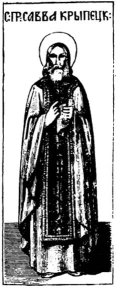
† В тот же день память о Печерских угодниках, почивающих в Феодосиевой пещере
† On the same day, the commemoration of the saints of the Kiev Caves who repose in the Theodosian Cave
В 28 д. августа Киевская лавра совершает память о всех нетленно почивающих в пещере Феодосиевой. Ныне здесь открыто покоятся 46 нетленных мощей угодников Божиих. У Кальнофойского (1638 г.) показано в Феодосиевой пещере 33 святых; а у Гербиния (1674 г.) – 37. – Малорусское известие «о житиях святых, в пещере преп. Феодосия почивающих», говорит о 40 святых. Таким образом время от времени открывались мощи угодников Божиих237 – Малорусское описание святых, как видно по содержанию его, писано после Гербиниева описания, около 1678 г.238. Но и после того открыта была пещера с доскою, где покоились мощи священномученика Лукиана. По ркп. святцам московским указываются в киевских пещерах и такие угодники, о которых не говорит ни малорусское известие, ни нынешнее описание пещер. Это означает, что мощи их были когда-то известны, но потом сокрыты переменами времени, как подобное открывается при обзоре мощей, указываемых Кальнофойским и Гербинием239.
On August 28, the Kiev Lavra celebrates the memory of all who incorruptly repose in the Theodosian Cave. At present, forty-six incorrupt relics of the saints of God are openly reposing here. Kalnofoysky (1638) shows thirty-three saints in the Theodosian Cave; and Herbinius (1674), thirty-seven. A Little Russian account "On the Lives of the Saints Reposing in the Cave of the Venerable Theodosius" speaks of forty saints. Thus from time to time the relics of the saints of God were uncovered237. The Little Russian description of the saints, as can be seen from its content, was written after Herbinius's description, around 1678238. But even after that, a cave was uncovered with a slab where the relics of the Hieromartyr Lucian reposed. According to manuscript Menologia of Moscow, such saints are indicated in the Kiev Caves as are mentioned neither in the Little Russian account nor in the present description of the caves. This means that their relics were once known, but were later hidden by the changes of time, as similar things become evident when reviewing the relics indicated by Kalnofoysky and Herbinius239.
По указанным нами памятникам видим в Феодосиевой пещере
According to the records indicated by us, we see in the Theodosian Cave:
а) Святителей: Илариона киев., Амфилохия владимирского, Феофила новгородского.
a) Hierarchs: Hilarion of Kiev, Amphilochius of Vladimir, *Theo*philus of Novgorod.
М. Иларион, как начальный русский пещерник, имел преимущественное право на покой в пещере и при том в пещере Феодосиевой, так как здесь же была и Иларионова пещера, вошедшая в состав общей, многопещерной пещеры. К тому же он не только называется святым по надписям сочинений его240 и в степенной книге241, но известен в числе киевских подвижников по ркп. святцам, где сказано (по одному списку): «положен бысть в Печерском монастыре». В ркп. каталоге святителей читаем о нем: «положен бысть в Печерском монастыре и крайние ради его добродетели бысть свят и чудотворец предивен»242. Мелетий Сириг поет: «Михаиле, Иларионе, Петре – божественнии иерарси»! А у Гербиния киевский патерик говорит: «Мы радуемся о своей планете Венере, о философе Иларионе, который, еще до появления русского солнца Антония, выкопал пещеру в Берестове, в которой и жил благочестиво и почил»243.
Metropolitan Hilarion, as the first Russian cave-dweller, had a preeminent right to repose in the cave, and moreover in the Theodosian Cave, since Hilarion's cave was also here, having entered into the composition of the common, many-caved cave. Moreover, he is not only called a saint by the inscriptions of his works240 and in the Book of Degrees241, but is known among the Kiev ascetics in manuscript Menologia, where it is said (according to one copy): "He was laid to rest in the Pechersk Monastery." In a manuscript catalogue of hierarchs we read of him: "He was laid to rest in the Pechersk Monastery, and because of his extreme virtue he became a saint and a wondrous wonderworker"242. Meletius Syrigos sings: "Michael, Hilarion, Peter—divine hierarchs!" And in Herbinius, the Kiev Patericon says: "We rejoice in our planet Venus, in the philosopher Hilarion, who, even before the appearance of the Russian sun Anthony, dug a cave in Berestovo, in which he lived piously and reposed"243.
Блаженный Симон писал Поликарпу: «о митрополите Иларионе ты сам читал в житии святого Антония, что им он пострижен и таким образом удостоился святительства»244. – По известиям преп. Нестора знаем, что блаж. Иларион выполнял священническое служение при храме княжеского села Берестова, где был дворец вел. князя я где, по примеру отца своего, любил жить благоверный Ярослав, обогащая апостольский храм дарами своими; Иларион известен был тогда как «муж благий и книжный, еще же и постник». Выкопав в днепровской горе малую, двусаженную пещеру, он – уединенно подвизался здесь в посте и молитвах – совершая служение в придворном берестовском храме, удалялся он от шума житейского в свою пещеру, для молитв и богомыслия245. Пострижение в иночество принял он от Антония вероятно незадолго до святительства. Сам он в своем исповедании говорит: «аз мних и пресвитер Иларион»246. Когда умер м. Феопемпт († 1049 г.): великий князь Ярослав положил возвесть благочестивого и просвещенного Илариона на кафедру митрополита всей Руси. Современный летописец не говорит, по какой причине Ярослав не отправил Илариона в Константинополь для посвящения, как посвящались прежние митрополиты. Вероятно, что в этом участвовало охлаждение к Царьграду, возбужденное жестокими поступками греков с русскими пленниками247. – Не могли не участвовать в том и смуты, какие производил тогда папа в восточной Церкви, возбуждая недоверие к п. Михаилу Керуларию248. Как бы то ни было: блаж. Иларион был поставлен в митрополита в Киеве, собором русских архипастырей. «Аз милостию человеко любиваго Бога мних и пресвитер Иларион, изволением его, от благочестивых епископов священ бых и настолован в велицем граде Киеве, яво быти в нем митрополиту, пастуху же и учителю. Быша же си в л. 6559 (1051), владычествующу благоверному кагану Ярославу, сыну Владимерю». – Так говорит сам Иларион в конце своего исповедания249. Нераннее известие показывает, что посвященный по древнему правилу Иларион испрашивал и получил утверждение себе в звании митрополита от патриарха250. И приведенные слова из исповедания Илариона митрополита дают знать, что посвященный митрополит писал и посылал куда-то свое исповедание и след. подтверждают известие о сношении нового митрополита с патриархом. – Ко времени правления Илариона русскою церковию относятся блистательные события церковные. В его время, говорит летопись, «вера христианская нача плодитися», т. е. приносить плоды в сознании и жизни народа. В его время начало процветать духовное просвещение, – умножены церковные училища; в его же время расцветало искреннее благочестие. К его времени относилось устройство церковного богослужения. Он освятил храм в. м. Георгия, несколько лет остававшийся неоконченным, и установил праздновать по всей России в. м. Георгия 28 ноября251. Блажен. Иларион хорошо понимал и чувствовал нужды великой своей паствы и живая любовь его к отчизне находила средства удовлетворять им. Доподлинно неизвестно, когда последовала блаженная кончина его, во вероятно не прежде 1066 года252.
Blessed Simon wrote to Polycarp: "Concerning Metropolitan Hilarion you yourself have read in the life of Saint Anthony, that he was tonsured by him and thus was deemed worthy of the hierarchate"244. From the accounts of the Venerable Nestor we know that the blessed Hilarion performed priestly service at the church of the prince's village of Berestovo, where the palace of the Grand Prince was located and where, following the example of his father, the Right-believing Yaroslav loved to live, enriching the Apostolic Church with his gifts; Hilarion was then known as "a man good and book-learned, and also a faster." Having dug in the Dnieper hill a small, two-sazhen cave, he struggled here in solitude in fasting and prayers—performing his service in the court church of Berestovo, he withdrew from the noise of life into his cave for prayers and the contemplation of God245. He received monastic tonsure from Anthony probably shortly before his hierarchate. He himself says in his confession: "I, the monk and presbyter Hilarion"246. When Metropolitan Theopemptus died († 1049), Grand Prince Yaroslav resolved to elevate the pious and enlightened Hilarion to the cathedra of Metropolitan of all Rus'. The contemporary chronicler does not say for what reason Yaroslav did not send Hilarion to Constantinople for consecration, as previous metropolitans had been consecrated. Probably, a cooling toward Constantinople, aroused by the cruel treatment of Russian captives by the Greeks, played a part in this247. The disturbances which the pope was then causing in the Eastern Church, arousing distrust of Patriarch Michael Cerularius, could not but have also played a part248. However that may be, the blessed Hilarion was appointed Metropolitan in Kiev by a council of Russian archpastors. "I, by the mercy of the God who loves mankind, the monk and presbyter Hilarion, by His will, was consecrated and enthroned by the pious bishops in the great city of Kiev, to be metropolitan therein, a shepherd and teacher. This was in the year 6559 (1051), under the rule of the Right-believing Kagan Yaroslav, son of Vladimir." So says Hilarion himself at the end of his confession249. A later account shows that Hilarion, consecrated according to the ancient rule, sought and received confirmation of his rank as metropolitan from the patriarch250. And the quoted words from the confession of Metropolitan Hilarion indicate that the consecrated metropolitan wrote and sent his confession somewhere, and thus confirm the account of the new metropolitan's communication with the patriarch. To the time of Hilarion's governance of the Russian Church belong brilliant ecclesiastical events. In his time, says the chronicle, "the Christian faith began to multiply," that is, to bear fruit in the consciousness and life of the people. In his time spiritual enlightenment began to flourish—church schools were multiplied; in his time also sincere piety blossomed. To his time belonged the ordering of church services. He consecrated the church of the Great Martyr George, which had remained unfinished for several years, and established the celebration throughout all Russia of the Great Martyr George on November 28251. The blessed Hilarion well understood and felt the needs of his great flock, and his living love for his fatherland found means to satisfy them. It is not precisely known when his blessed end occurred, but probably not before the year 1066252.
По своим писаниям он остается навсегда незабвенным учителем веры и благочестия. Его поучение о законе и благодати, похвала кагану Владимиру, исповедание веры и наставление о жизни253 – блистательные памятники живого благочестия его, светлого ума и глубокого знания веры, живого красноречия и сильного чувства.
By his writings he remains forever an unforgettable teacher of faith and piety. His homily on the Law and Grace, his praise of Kagan Vladimir, his confession of faith, and his instruction on the Christian life253 are brilliant monuments of his living piety, his bright intellect and deep knowledge of the faith, his living eloquence and powerful feeling.
Учение о ветхом и новом законе показывает собою, что тогда имели нужду говорить против иудейства. Оно дает видеть, что безуспешные при Владимире проповедники иудейства не оставляли надежд своих на успех и при Ярославе: конечно, успехи их между казарами слишком обольстили их. По личным сношениям с иудейскими учителями в России знали о их жестоких отзывах о христианстве, – так показывает учение Илариона. Блаженный учитель показывает превосходство благодати Христовой пред законом, прежде всего типическою историею Агари и Сарры; потом раскрывает всемирное значение христианства и местное, временное, – закона Моисеева. – «Закон существовал прежде, но ненадолго возвысился и прешел. Вера христианская, хотя явилась и после, стала более закона и распространилась на множество языков. Благодать Христова наполнила всю землю, покрыла ее как вода морская. Все, оставив ветхое, испортившееся по худобе иудеев, держатся нового... Прежде в одном Иерусалиме было место для поклонения Богу; ныне же – святая Троица славится по всей земле и принимает поклонение от всей твари: малые и великие славят Бога». Затем излагается основная мысль христианства – соединение божества с человечеством, и обличается слепота иудеев, не понявших божественного величия в Иисусе Христе и учения пророков о Мессии. Наконец мысль о всемирном значении христианства излагается в приложении к русскому народу, при чем показывается, какие высокие благодеяния принесло с собою христианство в Россию. «Уже не без надежд мы, но уповаем на жизнь вечную; уже не капища строим, но созидаем церкви Христовы; не закалаем друг друга в жертву бесам, но Христос за нас закалается и раздробляется в жертву Богу и Отцу; уже не кровь жертв вкушаем и погибаем, но вкушаем пречистую кровь Христову и спасаемся... Слепыми были, не зная света истинного и блуждая во тьме идолопоклонства; глухи мы были, не слыша спасительного учения; но помиловал нас Бог и пролил на нас свет ведения.... Мы были прежде подобны зверям и скотам, не умели различать правой руки от левой, привязаны были к земному и нимало не заботились о небесном: но и к нам послал Господь заповеди, которые ведут к жизни вечной».
His teaching on the Old and New Law shows that there was then a need to speak out against Judaism. It makes evident that the preachers of Judaism, who had been unsuccessful under Vladimir, did not abandon their hopes of success even under Yaroslav; no doubt their successes among the Khazars had too greatly deluded them. From personal dealings with Jewish teachers in Rus’, people knew of their harsh opinions concerning Christianity—so the teaching of Hilarion shows. The blessed teacher demonstrates the superiority of the grace of Christ over the Law, first by the typological history of Hagar and Sarah; then he unfolds the universal significance of Christianity and the local, temporal significance of the Law of Moses. — “The Law existed before, but it was exalted only for a short time and passed away. The Christian faith, though it appeared later, became greater than the Law and spread among many nations. The grace of Christ filled the whole earth, covering it like the waters of the sea. All, having abandoned the old, which had become corrupted through the baseness of the Jews, hold to the new... Formerly there was only one place for worshiping God, in Jerusalem; but now the Holy Trinity is glorified throughout all the earth and receives worship from all creation: the small and the great glorify God.” Then he sets forth the fundamental thought of Christianity—the union of divinity with humanity—and denounces the blindness of the Jews, who did not understand the divine majesty in Jesus Christ nor the teaching of the prophets concerning the Messiah. Finally, the thought of the universal significance of Christianity is set forth in application to the Russian people, showing what great benefits Christianity brought with it to Rus’. “No longer are we without hope, but we trust in eternal life; no longer do we build pagan temples, but we erect churches of Christ; we do not slaughter one another as a sacrifice to demons, but Christ is slaughtered and broken for us as a sacrifice to God the Father; no longer do we partake of the blood of victims and perish, but we partake of the most pure blood of Christ and are saved... We were blind, not knowing the true light and wandering in the darkness of idolatry; we were deaf, not hearing the saving teaching; but God had mercy on us and poured upon us the light of knowledge... We were formerly like beasts and cattle, unable to distinguish our right hand from our left, clinging to earthly things and caring not at all for heavenly things; but the Lord also sent to us commandments that lead to eternal life.”
«Похвала кагану Владимиру» – одушевленное изображение заслуг и добродетелей св. в. к. Владимира, просветителя России, оканчивающееся молитвою за Россию.
"The Praise of Kagan Vladimir" is an inspired depiction of the merits and virtues of St. Grand Prince Vladimir, the enlightener of Rus', concluding with a prayer for Rus'.
В «исповедании веры» блаж. Иларион излагает свои понятия о догматах веры. Пространнее, чем другие, излагает он догматы о св. Троице и о воплощении Сына Божия; короче – говорит о будущем суде и воскресении, о почитании икон и святых. «Верую, говорит он, в единаго Бога, славимаго в Троице, Отца нерожденнаго, безначальнаго и безконечнаго, – Сына рожденнаго, но также безначальнаго и безконечнаго, Духа святаго, исходящего от Отда и в Сыне являющагося, но также безначальнаго, равнаго Отцу и Сыну.... Так верую и не постыжусь, говорит он в заключение, исповедаю пред народами, и за исповедание готов положить и душу».
In the “Confession of Faith,” the blessed Hilarion sets forth his understanding of the dogmas of the faith. He expounds the dogmas of the Holy Trinity and of the Incarnation of the Son of God more fully than others; he speaks more briefly of the future judgment and resurrection, and of the veneration of icons and saints. “I believe,” he says, “in one God, glorified in the Trinity: the Father, unbegotten, without beginning and without end; the Son, begotten, but likewise without beginning and without end; the Holy Spirit, proceeding from the Father and manifest in the Son, but likewise without beginning, equal to the Father and the Son.... Thus I believe and am not ashamed,” he says in conclusion, “I confess before the nations, and for this confession I am ready to lay down even my soul.”
Назидательное «слово святого Илариона, митрополита киевского», помещенное в прологе254, предлагаем здесь вполне255.
The instructive “Homily of St. Hilarion, Metropolitan of Kiev,” included in the Prologue,254 we present here in full.255
Молю вас, братия и сестры, позаботьтесь о вечной светлой жизни, которую Господь, по своей милости, дает нам даром; а от удовольствий сей временной жизни будем удаляться как от ядовитых змей; не прикасайтесь к ним. Господь приготовил нам жизнь на небе и зовет нас. А мы, угождая телу своему сладкими яствами, питием, сном, похотями, привычками преступными, живя расслабленно, отказываемся от небесного царства и от призывающего нас к нему. Он уготовал брак Сыну Своему, т. е. небесное царство, и послал слуг Своих звать (Мф.12:2), т. е. послал пророков, апостолов мучеников. А мы отказываемся и говорим: «жену поях, не могу идти», и еще: «волы купих, иду искусить их», и еще: «село купих, иду съглядать его» (Лк.14:18–20) – и другими делами сей жизни отказываемся от жизни вечной, – не слышим ли, что Господь говорит: не заботьтесь о утре, что есть или пить или во что одеться. Смотрите на птиц небесных, как они ни сеют, ни жнут, ни собирают в житницу; смотрите на полевые цветки, как растут они, а не трудятся (Мф.6:34, 25, 26)? Слыша это, братия, вспрянем как от сна и пойдем по узкому пути, который ведет в небесное царство. Отдадим тело, свое на труды, на пост, на молитву, на воздержание, на поклоны. Царство небесное с нуждами борется и принуждающие себя берут его (Мф.11:12). Почему же мы не жалеем себя, когда леностию своею лишаем себя жизни вечной? Понудим себя, братия, на краткое это время. Хотя бы и гореть нам во огне; но и это было бы только до смерти. Зачем же мы угождаем этому глиняному телу? Если бы знали вы небесную жизнь, вы сказали бы – пусть горим мы во огне, только бы там царствовать с Господом в великой славе, вечно. Но я не зову гореть. Нет, но потрудимся, иссушим тела свои. Господь сказал: «аще зерно пшенично пад на землю не умрет, то едино пребудет» (Ин.12:24). Ясно сказал тем, что если не умрет телесная похоть, то не может принесть плодов духовных. Не любящий души своей «в веце сем в той жизни обрящет ю» (Ин.12:25). Слыша это, станем подвизаться. Скажете ли: мы немощны? Но ты только начни, сделай начало подвигу по силе своей, сколько можешь, и Бог, видя твой подвиг, подаст тебе помощь, как делателю добра. Не станем же откладывать подвига. Долга ли жизнь наша! Лет 50 или 60, а уже много 100. Много ли же нам трудиться? А между тем там на небе будем царствовать. Если же здесь станем сладко кормиться и пить и исполнять похоти плоти неудержимо: там вечно будем мучиться. Итак позаботимся. Нас зовет Сам Христос, не человек, а Царь царей и Господь всех. Преклоним ум наш к нему, будем жить богомудренно, в посте и молитве, в труде и пении, плача о грехах своих, всегда имея пред очами Господа и день судный. Не будем ослабевать против того, как начали. Господь сказал: в чем застану, в том и сужу. Примем к сердцу это слово, не ослабеть бы нам в смерти. Не знаем мы, когда придет час смертный, похитит душу неготовую, осудит ее на вечный огонь. Если смерть застанет нас в раскаянии: то, избавясь всего горького, получим обещанные блага».
I beseech you, brothers and sisters, take thought for the eternal bright life which the Lord, in His mercy, gives us freely; and from the pleasures of this temporal life let us withdraw as from venomous serpents; do not touch them. The Lord has prepared for us life in heaven and calls us. But we, gratifying our body with sweet foods, drink, sleep, lusts, sinful habits, living in laxity, refuse the heavenly kingdom and Him who calls us to it. He prepared a marriage feast for His Son, that is, the heavenly kingdom, and sent His servants to call (Mt. 22:2), that is, He sent prophets, apostles, martyrs. But we refuse and say: “I have married a wife, I cannot come,” and again: “I have bought oxen, I go to prove them,” and again: “I have bought a field, I go to see it” (Lk. 14:18–20)—and by other deeds of this life we refuse eternal life. Do we not hear what the Lord says: Take no thought for the morrow, what to eat or drink or wherewith to be clothed. Behold the birds of the heaven, how they neither sow nor reap nor gather into barns; behold the lilies of the field, how they grow, yet they toil not (Mt. 6:34, 25, 26)? Hearing this, brethren, let us arise as from sleep and walk along the narrow path that leads to the heavenly kingdom. Let us give our body to labors, to fasting, to prayer, to abstinence, to prostrations. The kingdom of heaven is taken by violence, and those who force themselves take it (Mt. 11:12). Why then do we not spare ourselves, when by our laziness we deprive ourselves of eternal life? Let us compel ourselves, brethren, for this brief time. Even if we were to burn in fire, that too would be only until death. Why then do we gratify this clay body? If you knew the heavenly life, you would say—let us burn in fire, only to reign there with the Lord in great glory, forever. But I do not call you to burn. No, but let us labor, let us dry up our bodies. The Lord said: “Except a grain of wheat fall into the ground and die, it abideth alone” (Jn. 12:24). He clearly said that if the lust of the flesh does not die, it cannot bring forth spiritual fruit. He that hateth his soul “in this world shall keep it unto life eternal” (Jn. 12:25). Hearing this, let us strive. Will you say: we are weak? But only begin, make a beginning of the struggle according to your strength, as much as you can, and God, seeing your struggle, will grant you help, as to a worker of good. Let us not put off the struggle. Is our life long? Fifty or sixty years, and even a hundred is much. How much then do we have to labor? And yet there in heaven we shall reign. But if here we feed and drink sweetly and fulfill the lusts of the flesh unrestrainedly, there we shall be tormented forever. Therefore let us take thought. Christ Himself calls us, not a man, but the King of kings and Lord of all. Let us incline our mind to Him, let us live in godly wisdom, in fasting and prayer, in labor and psalmody, weeping over our sins, always having the Lord and the day of judgment before our eyes. Let us not grow weak compared to how we began. The Lord said: In what I find you, in that I judge you. Let us take this word to heart, lest we grow weak at death. We do not know when the hour of death will come, when it will snatch the unprepared soul and condemn it to eternal fire. If death finds us in repentance, then, delivered from all bitterness, we shall receive the promised blessings.”
Так поучает святитель – подвижник.
Thus teaches the Hierarch—the ascetic.
О святом Амфилохие, епископе Владимира волынского, которого ркп. святцы поставляют между святыми печерскими подвижниками, летописи говорят нам только то что он хиротонисан в 1105 году и скончался в 1122 году256. В одном списке святцев сказано, что «св. Амфилохий – в пещере преставися».
Concerning St. Amphilochius, Bishop of Vladimir in Volhynia, whom manuscript saints’ calendars place among the holy ascetics of the Kiev Caves, the chronicles tell us only that he was consecrated in the year 1105 and reposed in the year 1122.256 In one copy of the saints’ calendar it is said that “St. Amphilochius reposed in the cave.”
Феофил, почивающий в Феодосиевой пещере, у Кальнофойского называется московским епископом. Это новгородский архиепископ, для которого сан архиепископа был причиною одних скорбей. Начало иноческой жизни полагал он в Отенской обители и при святителе Ионе был протодиаконом и ризничим кафедры. По смерти его, жребием (15 нояб. 1470 г.) он избран был в архиепископа. Монах Пимен, бывший ключником и успевший обогатиться на счет казны архиепископской, сильно домогался той же чести. Он пристал к партии недовольных в. князем и объявил своим друзьям: «пошлите меня в Киев, я согласен принять рукоположение и от Григория». Но бессовестный льстец людским слабостям скоро потерял все: он уличен был в хищении казны архиепископской; его обобрали и выгнали из города. В Москву послали за дозволением Феофилу явиться для посвящения к митрополиту257. Скоро потом начались сильные волнения в Новгороде против в. князя. Напрасно «преподобный» Феофил уговаривал беспокойных искателей суеты одуматься. Имея в виду все то, что делалось тогда в польском королевстве с православными, по милости ультра-папистической партии, надобно было быть в Новгороде или слишком увлеченным земными расчетами и холодным к небу, или вовсе слепым к положению дел, чтобы желать подчинения Новгорода польскому королю. – И однако Новгород, по требованию людей своекорыстных, вступил в договор с королем польским. Феофил хотел удалиться в монастырь: но его удержали в доме архиепископа и заставили принять участие в этом договоре; для совести много значило, что в договоре настояли, чтобы православная вера оставалась неприкосновенною в новгородских владениях и отнюдь не было бы здесь костелов; о самом посвящении архиепископа сказано, что он будет посвящаться там, где угодно Новгороду. Таким образом Феофил не желал расторгать связи с московским митрополитом, верным блюстителем православия258. М. Филипп не раз присылал письменные увещания Новгороду – разорвать связь с королем259. Новгород решился на войну с в. князем, тогда как в то же время страшный пожар истребил в нем множество домов, 8 храмов и даже не мало людей. Шелонская битва (14 июля 1471 г.), в которой полк архиепископа, по его наставлению, не принимал участия, окончилась в пользу в. князя. Феофил заставил новгородцев просить милости у православного государя и заключен был договор с ним260. В декабре Феофил посвящен был в архиепископа в Москве и выпросил у в. князя свободу 30 знаменитым новгородцам, захваченным в плен261. Архипастырь мирно занимался потом церковными делами и посещал Псков для обыкновенных судных дел262. В 1475 г. Иоанну донесли на неправосудие сановников Новгорода; обвинение, к несчастию Новгорода, было справедливо; два раза являлся архипастырь к в. князю с ходатайством о милосердии к виновным. Иоанн III оказал некоторое снисхождение263. Но в 1477 г. новгородская знать, по своим расчетам, сама предоставила на московскому великому князю поводы требовать от Новгорода большего, чем требовал он прежде. Некоторые из знати, после того, как являлись в Москву требовать суда против своих врагов, устроили дела в Новгороде так, что явились в Москву двое чиновников веча – с признанием Иоанна государем Новгорода. При таких смутах от Новгорода потребовали, чтобы отказался он от всех древних прав своих. – И действительно, старый порядок дел Новгорода уже несогласен был с переменившимся положением России. Блаж. Феофил видел это, но не видели многие в Новгороде. Архипастырь много употребил трудов на то, чтобы как в. князь смягчил суровые свои требования, так и Новгород не был слишком настойчив на свои отжившие права не раз являлся он к в. князю с просьбами за Новгород. Иоанн сделал кое-какие уступки, но неважные. Новгород отважился снова вступить в сношения с королем, и Феофил, по званию архиепископа новгородского, вовлечен был в это дело. Иоанн (1478 г.) вошед в Новгород с войсками; новгородская кафедра лишена была многих сел и имуществ, собранных веками; затем заставили Феофила отказаться грамотою от управления епархиею и около трех лет жил он в Чудовом монастыре, сперва в тесном заключении, потом больной264. На пещерной доске, закрывавшей мощи блаж. святителя, написано было следующее: «когда Феофил лежал больной в Чудовом монастыре: явился ему новгородский епископ Нифонт, почивающий в ближних пещерах, и напомнил ему обещание его поклониться печерским преподобным. Он отправился в Киев и уже приближался к Днепру, как болезнь его усилилась и он получил откровение, что хотя не достигнет он живым до пещер, но тело его упокоится в них, и это исполнилось»265. Кондак ему: «яко воистину по имени своему житие боголюбезне святителю Феофиле, преподобне соблюдшу, явися тебе Христос Спас, обещая ти живот вечный и царствие свое, в нем же днесь ликуя, не забуди нас рабов твоих».
Theophilus, who reposes in the Theodosian cave, is called by Kalnofoysky the bishop of Moscow. He was the archbishop of Novgorod, for whom the rank of archbishop was the cause of nothing but sorrows. He began his monastic life in the Otnya monastery, and under Hierarch Jonah he was protodeacon and sacristan of the cathedral. After Jonah’s death, by lot (15 November 1470) he was chosen as archbishop. The monk Pimen, who had been the key-keeper and had succeeded in enriching himself at the expense of the archiepiscopal treasury, strongly aspired to the same honor. He joined the party of those dissatisfied with the Grand Prince and declared to his friends: “Send me to Kiev; I am willing to accept ordination even from Gregory.” But this shameless flatterer of human weaknesses soon lost everything: he was exposed in the theft of the archiepiscopal treasury; they stripped him and drove him out of the city. To Moscow they sent for permission for Theophilus to appear for consecration before the metropolitan257. Soon afterward, strong disturbances began in Novgorod against the Grand Prince. In vain did “the Venerable” Theophilus urge the restless seekers of vanity to come to their senses. Considering all that was then happening in the Polish kingdom to the Orthodox, through the mercy of the ultra-papist party, one would have to be either too carried away by earthly calculations and cold toward heaven, or completely blind to the state of affairs, to desire the subjugation of Novgorod to the Polish king. – And yet Novgorod, at the demand of self-interested men, entered into a treaty with the Polish king. Theophilus wished to withdraw to a monastery, but they detained him in the archbishop’s house and forced him to take part in this treaty; for conscience’s sake it mattered much that in the treaty they insisted that the Orthodox faith remain inviolate in the Novgorod domains and that there be absolutely no Latin churches there; concerning the consecration of the archbishop himself, it was stated that he would be consecrated wherever Novgorod pleased. Thus Theophilus did not wish to break the bond with the Moscow metropolitan, the faithful guardian of Orthodoxy258. Metropolitan Philip more than once sent written admonitions to Novgorod to break off relations with the king259. Novgorod decided on war with the Grand Prince, even though at the same time a terrible fire destroyed many houses, eight churches, and even not a few people in the city. The Battle of the Shelon River (14 July 1471), in which the archbishop’s regiment, by his instruction, took no part, ended in favor of the Grand Prince. Theophilus compelled the Novgorodians to beg mercy from the Orthodox sovereign, and a treaty was concluded with him260. In December, Theophilus was consecrated archbishop in Moscow and obtained from the Grand Prince the freedom of thirty prominent Novgorodians taken captive261. The archpastor then peacefully occupied himself with church affairs and visited Pskov for ordinary judicial matters262. In 1475, John was informed of the injustice of Novgorod’s dignitaries; the accusation, to the misfortune of Novgorod, was just; twice the archpastor appeared before the Grand Prince to intercede for mercy toward the guilty. John III showed some leniency263. But in 1477, the Novgorod nobility, for their own calculations, themselves provided the Moscow Grand Prince with pretexts to demand more from Novgorod than he had demanded before. Some of the nobility, after they had appeared in Moscow to demand judgment against their enemies, arranged matters in Novgorod so that two officials of the veche appeared in Moscow acknowledging John as sovereign of Novgorod. Amid such disturbances, Novgorod was required to renounce all its ancient rights. – And indeed, the old order of things in Novgorod was no longer in harmony with the changed position of Russia. Blessed Theophilus saw this, but many in Novgorod did not. The archpastor labored much so that both the Grand Prince might soften his harsh demands and Novgorod might not be too insistent on its obsolete rights; he appeared more than once before the Grand Prince with petitions for Novgorod. John made some concessions, but insignificant ones. Novgorod ventured again to enter into relations with the king, and Theophilus, by virtue of his office as archbishop of Novgorod, was drawn into this matter. John (in 1478) entered Novgorod with troops; the Novgorod cathedral see was deprived of many villages and properties accumulated over centuries; then they forced Theophilus by a written deed to renounce the administration of the diocese, and for about three years he lived in the Chudov Monastery, at first in close confinement, then ill264. On the cave board covering the relics of the blessed hierarch was written the following: “When Theophilus lay ill in the Chudov Monastery, the Novgorod bishop Niphon, who reposes in the Near Caves, appeared to him and reminded him of his promise to venerate the Venerable Fathers of the Caves. He set out for Kiev and was already approaching the Dnieper when his illness worsened and he received a revelation that, although he would not reach the caves alive, his body would rest in them; and this was fulfilled”265. His kontakion: “Truly, O Hierarch Theophilus, having kept a life pleasing to God according to thy name, Christ the Savior appeared to thee, promising thee eternal life and His kingdom, wherein now rejoicing, forget not us, thy servants.”
б) Из почивших в сане священства ныне открыто почивают в Феодосиевых пещерах: игумен Пимен постник, Игнатий архимандрит, иеромонах Евфимий, Панкратий иеромонах и затворник, Лукиан священномученик и исповедник Памво. В ркп. святцах упоминаются еще преподобный Тимофей игумен, пр. Акиндин архимандрит и пр. Досифей архимандрит.
b) Of those reposing in the rank of priesthood, there now lie openly in the Theodosian caves: Abbot Pimen the Faster, Archimandrite Ignatius, Hieromonk Euthymius, Hieromonk and Recluse Pancratius, Lucian the Hieromartyr, and Pambo the Confessor. In manuscript saints’ calendars there are also mentioned the Venerable Abbot Timothy, the Venerable Archimandrite Acindynus, and the Venerable Archimandrite Dositheus.
Игумен Тимофей в 1127 г. был предшественником Пимена и преемником Прохора. В 1130 г. обложил он раку пр. Феодосия серебром и золотом, на что суздальским тысяцким Юрием Симоновичем прислано было 500 гривен серебра и 50 гривен золота. Пимен постник был игуменом с 1132 г. до 1141 г. При нем подвизались св. кн. Святоша, пр. Спиридон и Никодим; Спиридона он принял и в обитель. – Об иноческом подвиие его древнее известие говорит: «мел тую благодать, иж раз тылько в тыждень (в неделю) мало едал, а безпрестанно послушание монастырское отправлял, а нигды от посту не ослобевал, и в жорнах мелючи и дрова на себе носячи, а чрез день на молитве стоял». Кальнофойский так указывает на него: «кости св. инока Пимена»266.
Abbot Timothy in 1127 was the predecessor of Pimen and the successor of Prochorus. In 1130 he covered the reliquary of the Venerable Theodosius with silver and gold, for which the Suzdal tysyatsky George Simonovich sent 500 grivnas of silver and 50 grivnas of gold. Pimen the Faster was abbot from 1132 to 1141. During his time the holy Prince Svyatosha, the Venerable Spiridon and Nicodemus struggled; he received Spiridon into the monastery. – Concerning his monastic asceticism, an ancient account says: "He had such grace that he ate little only once in a week (in a week), and unceasingly performed monastic obedience, and never relaxed from fasting, grinding at the millstones and carrying wood on himself, and standing at prayer every other day." Kalnofoysky points to him thus: "The bones of the holy monk Pimen"266.
Преп. Досифей архимандрит первый принес в Россию с св. горы афонской чин пения дванадесяти псалмов и написал ответ на предложенные ему вопросы о жизни афонских иноков, невполне уцелевший в рукописях. поскольку же об употреблении чина 12 псалмов упоминается уже в послании Симона к Поликарпу: то преп. Досифей должен быть признан предшественником преп. Акиндина. Неизвестно, когда принято им имя Феодосия, в малой ли, или великой схиме, только в назидательном повествовании его о жизни афонцев по спискам он называется то Досифеем, то Феодосием. «Послушники, говорит здесь преподобный, живут (на Афоне) по воле и благословению старца. А братия, живущие отдельно по своим келиям, держат во всю жизнь такое правило: всякий день прочитывают половину псалтири и совершают по 600 молитв: Господи Иисусе Христе! Если кто хочет прибавить: это в его воле. Сверх того полагают от 300 до 500 поклонов. Но и всякий час, сидя, ходя, лежа и занимаясь рукоделием, непрестанно с воздыханием сердечным говорят: Господи Иисусе Христе! Неумеющие грамоте совершают 7000 молитв Иисусовых, кроме поклонов и церковного правила. А более немощным – более легкое правило. Престарелым более предписывается совершать молитву Иисусову и внимание умное, а поклоны по силе. Святогорцы весьма любят молчание для Бога и бегают мятежа и бесед мирских. Скажите Бога ради и прочим братьям, кто будет спрашивать: тогда, как святые отцы на Руси имеют обыкновение прочитывать всю псалтырь в великий пост и другие посты, святогорцы живут не так: они одно держать правило во всю жизнь. Таи каждому брату надобно иметь в келии иконостас или крест и перед ним выполнять правило. Неумеющий читать должен служить рукоделием, послушанием по службе, с отсечением своей воли»267.
The Venerable Archimandrite Dositheus was the first to bring to Russia from the Holy Mountain of Athos the rule of singing the Twelve Psalms, and he wrote an answer to the questions put to him concerning the life of the Athonite monks, which has not fully survived in manuscripts. Since mention of the use of the rule of the Twelve Psalms is already made in the epistle of Simon to Polycarp, the Venerable Dositheus must be recognized as the predecessor of the Venerable Acindynus. It is unknown when he received the name *Theo*dosius, whether in the small or the great schema; only in his edifying narrative of the life of the Athonites, according to the copies, he is called sometimes Dositheus, sometimes Theodosius. “The novices,” says the Venerable one here, “live (on Athos) according to the will and blessing of the elder. And the brethren who live separately in their own cells keep throughout their whole life the following rule: every day they read through half the Psalter and perform 600 prayers: ‘Lord Jesus Christ!’ If anyone wishes to add more, that is in his will. Besides this, they make from 300 to 500 prostrations. But also at every hour, whether sitting, walking, lying down, or occupied with handiwork, they unceasingly say with heartfelt sighing: ‘Lord Jesus Christ!’ Those who do not know letters perform 7000 Jesus prayers, besides prostrations and the church rule. And for the more infirm, a lighter rule. For the elderly, it is prescribed more to perform the Jesus prayer and mental attention, and prostrations according to strength. The Holy Mountain dwellers greatly love silence for God’s sake and flee from disturbance and worldly conversations. Tell, for God’s sake, also the other brethren, whoever may ask: whereas the holy fathers in Rus’ have the custom of reading through the entire Psalter during Great Lent and the other fasts, the Holy Mountain dwellers do not live thus: they keep one rule throughout their whole life. Likewise, each brother ought to have in his cell an iconostasis or a cross and before it perform his rule. He who cannot read must serve by handiwork, by obedience in the service, with cutting off of his own will”267.
По летописи блаж. Акиндин архимандрит в 1231 г. был на посвящении ростовского епископа Кирилла268. Блаж. Симон епископ называет его «мужем святым». О ревности его к жизни духовной свидетельствует то, что приказал он благочестивому и наблюдательному Поликарпу описать жизнь печерских подвижников, в память и назидание черноризцам. Поликарп, как говорит он сам, исполнял эту волю блажен. игумена «в 15 год игуменства» его. поскольку же Поликарп с скорбию замечает, что уже 160 лет прошло, как после летописца Нестора никто не писал о печерских подвижниках, а преп. Нестор о блаженных отцах писал в летописи под 1074 г.: то 15 год игуменства Акиндинова падает на 1234 год, первый же год его – на 1219 год, и Акиндин был преемником блаж. Досифея – Феодосия269.
According to the chronicle, the blessed Archimandrite Acindynus in 1231 was present at the consecration of the Rostov bishop Cyril268. The blessed Bishop Simon calls him “a holy man.” His zeal for the spiritual life is witnessed by the fact that he commanded the pious and observant Polycarp to describe the life of the Caves ascetics, for the memory and edification of the monks. Polycarp, as he himself says, fulfilled this will of the blessed abbot “in the 15th year of his abbacy.” Since Polycarp notes with sorrow that 160 years had already passed since the chronicler Nestor had written about the Caves ascetics, and the Venerable Nestor wrote about the blessed fathers in the chronicle under the year 1074, then the 15th year of Acindynus’s abbacy falls on the year 1234, and his first year on the year 1219; thus Acindynus was the successor of the blessed Dositheus–Theodosius269.
Св. Лукиан пресвитер «в священстве и иночестве благочестно пожив», претерпел мученическую смерть при нашествии Батые в 1239 г.270.
The holy priest Lucian, “having lived piously in the priesthood and monasticism,” suffered a martyr’s death during the invasion of Batu in 1239270.
Подобно св. Лукиану муки терпел за веру преп. Памво. По древнему известию, Памво «на послушании монастырском пойманный от погиан, много от них пострада, не хотячи Христа отврещися, молвил им, иж ваши боги прокляти суть, а я верую во Христа истиннаго Бога, который сотворил небо и землю; Той и мене избавит от рук ваших. Ангели визволили (освободили) его от уз и здраваго в келии посадили». Тропарь преподобному: «неленостным послушанием и отвержением воли своея крепко себя обуздав, вдался еси за Христа на муки и раны: от Него же сугубо, всечестне отче Памво, венчався, молися о душах наших». По этим известиям, преп. Памво, неупоминаемый Поликарпом, терпел страдания за веру от татар язычников. По всей вероятности это было в 1240 г. – когда иноки, затворившись в пещерах от врагов, вынуждены были послать Памву за пищею; как ни велика была опасность, Памво принял на себя дело послушания, но был схвачен татарами, которые подвергли его мукам. Освобожденный чудесно от смерти, он почил в затворе в 1241 г.
Like St. Lucian, the Venerable Pamvo endured torments for the faith. According to an ancient account, Pamvo, “having been seized by pagans while on a monastic obedience, suffered much at their hands, not wishing to deny Christ, and said to them: ‘Your gods are accursed, but I believe in Christ, the true God, who created heaven and earth; He will also deliver me from your hands.’ Angels freed (delivered) him from his bonds and placed him safe in his cell.” The troparion to the Venerable One: “Having firmly curbed thyself by unflagging obedience and the rejection of thy will, thou didst give thyself up for Christ to torments and wounds; from Him, O all-honorable Father Pamvo, having been doubly crowned, pray for our souls.” According to these accounts, the Venerable Pamvo, not mentioned by Polycarp, suffered for the faith at the hands of pagan Tatars. In all likelihood this occurred in 1240—when the monks, having shut themselves in the caves from the enemies, were compelled to send Pamvo for food; great as the danger was, Pamvo took upon himself the work of obedience, but was seized by the Tatars, who subjected him to torments. Miraculously delivered from death, he reposed in seclusion in 1241.
Преп. Игнатий с 1435 г. архимандрит лавры «за святое житие», говорит о нем древнее известие, «получил от Бога дар чудес, – молитвою своею исцелял он многих недужных, – кому давали просфору освященную в служении его, получал тот исцеление». Кондак ему: «проходя, всеблаженне, добродетелию от силы в силу и всех с тобою сущих превозвышая, всем служил еси Игнатие и угождал, – тем избран всем в дому Божия Матери сущим в старейшину и вождя, в чесом паче Господеви благоугодил еси, стадо Его доброе упас; молися о нас чадех твоих»271.
The Venerable Ignatius, from 1435 archimandrite of the Lavra, “for his holy life,” says an ancient account, “received from God the gift of miracles—by his prayer he healed many of the sick—whosoever was given a prosphora consecrated at his service received healing.” The kontakion to him: “Passing, O all-blessed one, from strength to strength in virtue and surpassing all who were with thee, thou didst serve and please all, O Ignatius—wherefore thou wast chosen by all dwelling in the house of the Mother of God as elder and guide, wherein thou didst especially please the Lord, having well shepherded His good flock; pray for us, thy children.”271
О преп. Евфимие схимнике иеромонахе Кальнофойский пишет, что ременным крестом его благословляются приходящие в нему и некоторые больные получают исцеление; ав ркп. святцах называется он иеросхимником и молчальником272. По древней записке, «як в схиму потригся, негды ни с ким, ни мало, ни велико, не мовил, окроме молитвы в церкви и в келии; жадна теж покорму (никакой пищи), который огнем роблен, не идал, окроме суроваго зелия». Преп. Панкратий священник и чудотворец, говорит таже записка, молитвою и постом и помазанием елея исцелял больных и, нелениво подвизаясь для спасения своего, угождал Господу. Кондак ему: «в постницех явился еси велик, во иереях же нарочит и в чудотворения дарех показася славен, священне отче Панкратие; тем тя чтим и ублажаем».
Concerning the Venerable Euthymius the schemamonk and hieromonk, Kalnofoisky writes that those who come to him are blessed with his leather cross and some of the sick receive healing; in manuscript menologia he is called a hieroschemamonk and a silence-keeper272. According to an ancient note, “when he had been tonsured into the schema, he never spoke with anyone, neither little nor much, except for prayer in church and in his cell; nor did he eat any food prepared by fire, only raw herbs.” The Venerable Pancratius, priest and wonderworker, says the same note, healed the sick by prayer, fasting, and anointing with oil, and, laboring unceasingly for his own salvation, pleased the Lord. The kontakion to him: “Thou didst appear great among ascetics, notable among priests, and glorious in the gifts of wonderworking, O holy Father Pancratius; wherefore we honor and bless thee.”
Из диаконов ныне открыто почивают: Акила, Макарий и Мартирий. По древней записке «преп. Акила не только не вкушал никогда вкусной пищи, приправленной или вареной, но и суровой ел мало; пищею служила ему просфора, вкушаемая раз в неделю». В кондаке еще сказано, что при таком посте «он был тверд в бдениях молитвенных». Преп. Макарий, будучи больным ребенком, обещан был Богу, если выздоровеет, и по выздоровлении отдан был печерским отцам; обученный в монастыре всему доброму, удостоился монашества и диаконства; в этом звании еще усерднее служил он Богу постом и молитвою и сподобился дара чудес. «Мартирий диакон», по древнему известию, «за великую чистоту и постнические подвиги удостоен был диаконства и дара чудес. За кого молился он стоя на амвоне, испрашивал тому нужное, или здравие или благую мысль; бесам был страшен и издали, и прогонял их молитвою; после долгих подвигов и трудов переселился к Богу, которому служил». Кальнофойский писал: «тело св. инока Мартирия диакона, поныне почивающего в стихаре».
Of the deacons, the following now repose uncovered: Aquila, Macarius, and Martyrius. According to an ancient note, “the Venerable Aquila never partook of tasty food, seasoned or cooked, but even of raw food he ate little; his food was a prosphora, partaken once a week.” In the kontakion it is further said that with such fasting “he was steadfast in prayerful vigils.” The Venerable Macarius, being a sick child, was promised to God if he should recover, and upon his recovery was given to the fathers of the Caves; having been taught all that is good in the monastery, he was deemed worthy of monasticism and the diaconate; in this rank he served God even more zealously by fasting and prayer and was vouchsafed the gift of miracles. “Martyrius the deacon,” according to an ancient account, “for his great purity and ascetic labors was deemed worthy of the diaconate and the gift of miracles. For whomsoever he prayed, standing on the ambo, he would obtain for him what was needful, whether health or a good thought; he was terrible to demons even from afar and drove them away by prayer; after long struggles and labors he passed over to God, whom he served.” Kalnofoisky wrote: “the body of the holy monk Martyrius the deacon, still reposing in a sticharion.”
в) С именем чудотворцев покоятся преп. Агафон, Григорий, Ипатий и Моисей. По древней записке преп. Агафон «за постническую жизнь сподобился такого дара, что на какого больного возлагал руку, получал тот исцеление; он имел и дар пророчества, знал о времени своей смерти». Лавра молит его: «Агафон блаженный, красота постников, пророк не ложный, целитель больных! Скажи нам нечувственным, нет ли в нас пути беззакония, и наставь нас твоими молитвами на путь вечный». Пищею преп. Григория во всю жизнь служила невареная трава; он давал эту траву приходившим к нему и больные исцелялись. «Преп. Ипатий целебник служил святым отцам во времена болезни их; молитвенник и постник, он получил от Бога такой дар, что прикосновением руки исцелял больных; и ныне кто в болезни притекает к мощам его, получает исцеление». Преп. Моисей чудотворец, желая представить тело свое чистым Богу, старался умерщвлять его разными способами: носил на голом теле железный пояс и железный крест, который устроил себе сам; за такие подвиги и труды удостоился дара чудес. Кальнофойский пишет: «преподобные двое, во св. духе братия, Мартирий и Моисей положены в одном гробе, целые в святых телах своих». Ныне они покоятся отдельно.
c) With the name of wonderworkers repose the Venerable Agathon, Gregory, Hypatius, and Moses. According to an ancient note, the Venerable Agathon “was vouchsafed such a gift by his ascetic life that whatever sick person he laid his hand upon received healing; he also had the gift of prophecy, knowing the time of his own death.” The Lavra prays to him: “Blessed Agathon, ornament of ascetics, true prophet, healer of the sick! Tell us, who are insensible, whether there be in us any path of lawlessness, and guide us by thy prayers onto the eternal path.” The food of the Venerable Gregory throughout his life was uncooked herbs; he gave this herb to those who came to him, and the sick were healed. “The Venerable Hypatius the healer served the holy fathers during times of their illness; a man of prayer and an ascetic, he received from God such a gift that by the touch of his hand he healed the sick; and now, whosoever in sickness has recourse to his relics receives healing.” The Venerable Moses the wonderworker, desiring to present his body pure to God, strove to mortify it in various ways: he wore an iron belt and an iron cross on his bare body, which he had made himself; for such struggles and labors he was deemed worthy of the gift of miracles. Kalnofoisky writes: “two venerable ones, brothers in the Holy Spirit, Martyrius and Moses, are laid in one coffin, whole in their holy bodies.” Now they repose separately.
г) В затворе приобрели спасение: преп. Афанасий, Анатолий, Кассиан, Лаврентий, Пафнутий, Шор, Софроний, у Кальнофойского и по ркп. Святцам еще Исидор. – Кондак преп. Афанасию: «ведый мира сего суету бытии тщетну, отвратился еси ея не только очима, но и всего себе всеконечне, преподобне, отвратив, затворился еси в темней пещере, в ней же в молитвах и слезах многовременне потруждся и обрет на небеси безконечную радость, молися непрестанно за души наша». По древнему известию, «тому без свечки небесная (духовная) светлость светила, – исцеление подает, кто с верою приходит». По тому же известию «преп. Кассиан, затворник и постник трудолюбивый, святым послушанием принудил бесов исповедать, что в Печерском монастыре много есть таких иноков, которые могли бы прогонять бесов, и что бесы сильно боятся святых печерских». У Кальнофойского сказано: «лежат мощи святаго инока и постника Кассияна». У Гербиния преп. Кассиан также называется постником. Преп. Лаврентию тропарь: «затворивый себе Господа ради в темней пещере, преп. отче Лаврентие, многолетне и Ему добре в ней угодивый, подаждь и нам от всякаго зла чувствия затворити и тмы страстей отвратитися и светлость получити царствия небеснаго». «Преп. Пафнутий затворник», по древнему известию, «зоставши законником (иноком).. безпрестанно плакал, воспоминаючи себе, иж придет час, когда душа с телом разлучатися будет; где станут ангели? Кому душа достанется? и який декрет (решение) Христос учинит? где мает душа достатися, чи до неба, чи до пекла? В котором плачу содержась аж до смерти, а умираючи видел хоры ангелов, которые по его душу пришли и в небо запроводили». Преп. Пиору тропарь: «затворивыйся, богоблаженне Пиоре, в месте темне и отнюдь света сего и всяких плищий (тревог) в нем сущих зрети не хотевый, света же днесь невечерняго яко сподобился, моли и нам светом тем же озаритися». У Кальнофойского замечено: «мощи преп. старца и отца нашего Пиора; только ноги видны, а прочее тело засыпала земля». Преп. Софроний затворник, по древнему известию, каждый день прочитывал псалтырь, всегда носил власяницу и еще носил на теле железный пояс.
d) In seclusion acquired salvation: the Venerable Athanasius, Anatolius, Cassian, Laurence, Paphnutius, Shor, Sophronius; in Kalnofoisky and according to manuscript menologia, also Isidore. — The kontakion to the Venerable Athanasius: “Knowing the vanity of this world to be vain and futile, thou didst turn away from it not only with thine eyes, but having turned away wholly and completely, O venerable one, thou didst shut thyself up in a dark cave, wherein thou didst labor long in prayers and tears and didst find endless joy in heaven; pray unceasingly for our souls.” According to an ancient account, “to him, without a candle, heavenly (spiritual) light shone—he grants healing to whosoever comes with faith.” According to the same account, “the Venerable Cassian, a recluse and a laborious ascetic, by holy obedience compelled the demons to confess that in the Monastery of the Caves there are many such monks who could drive out demons, and that the demons greatly fear the holy Caves-dwellers.” In Kalnofoisky it is said: “the relics of the holy monk and ascetic Cassian lie.” In Herbinius, the Venerable Cassian is also called an ascetic. The troparion to the Venerable Laurence: “Having shut thyself up for the Lord’s sake in a dark cave, O venerable Father Laurence, having pleased Him well therein for many years, grant that we also may shut ourselves off from every evil sensation and turn away from the darkness of the passions and receive the light of the heavenly kingdom.” “The Venerable Paphnutius the recluse,” according to an ancient account, “having remained a monk… wept incessantly, remembering that the hour would come when the soul would be separated from the body; where will the angels stand? To whom will the soul fall? And what decree will Christ pronounce? Where will the soul go, whether to heaven or to hell? He remained in this weeping until death, and when dying he saw choirs of angels, who came for his soul and led it into heaven.” The troparion to the Venerable Pior: “Having shut thyself up, O God-blessed Pior, in a dark place and not wishing to see this light or any of the troubles (disturbances) therein, having now been vouchsafed the never-failing light, pray that we also may be illumined by that same light.” In Kalnofoisky it is noted: “the relics of the venerable elder and our father Pior; only the feet are visible, the rest of the body is covered with earth.” The Venerable Sophronius the recluse, according to an ancient account, read the Psalter every day, always wore a hair-shirt, and also wore an iron belt on his body.
Постники: Вениамин, Захария, Зинон, Иосиф; схимники: Силуан и Сисой, у Кальнофойского старцы: Евлогий и Даниил. По древнему известию преп. Вениамин «был купцом великим. – Той единаго часу в церкви слухаючи пильно (внимательно) набоженства (благочестие) церковнаго, почул оное слово с псалма: погубиши вся глаголющые лжу, взял себе тое в память, мовячи: если Господь Бог погубит глаголящия лжу, то и купцов, бо купечество без лжи не может ся обойти; а потом, почувши слово, яко не удобь богатии внидут в царствие небесное, раздал все имение нищим и на церкви и зостал иноком, угождаючи Господу Богу в постах и молитвах аж до смерти». Кальнофойский пишет: «святый отец Вениамин лежит в осмоленной колоде»273. «Преп. Захария, постник, постановил «себе до смерти ничего печенаго, а ни варенаго, не исти, тылько суровие ярены (зерны ярового хлеба) и то раз в день, мало, по заходе солнца, едал, и так був страшный бесам, же имя его гды кто спомвил боялись: той и ангели часто видал». «Преп. Зинон, постник и трудолюбец, многими добродетельнаго иноческого жития подвиги, постом, молитвами, смирением, послушанием благоугоди Богови». Кальнофойский писал: «почил после трудов своих благословенный инок Зинон; в теле целом лежит». Преп. Силуану тропарь: «многаго ти ради воздержания и безмернаго пощения приемый благодать чудотворения и к Богу велие дерзновение стяжавый, постником красота, Силуане, Тому молися, да подаст нам мир и велию милость». Древнее известие говорит, что раз «злодее прийшли красти; молитвою связал он, же не могли рушитися (двинуться) с места чрез три дни, а потом оных наказавши и до покаяния приведши, пустил». По канону, преп. Силуан «ревнитель чистоты и хранитель садовый, татей – плоды окрасти хотящих» связал. Преподобный Сисой схимник, живя в пещере постнически, постом и молитвою усмирил чувственные страсти; он узнал; день преставления своего и ныне подает исцеления приходящим с верою. По ркп. святцам он был канонархистом и конечно прежде, чем принял схиму. Преп. Иосиф болезненный, много лет хворая, обещался служить в Печерском монастыре до смерти, если Господь поднимет его. Бог услышал его и он выздоровел: поступив в монастырь, усердно трудился до смерти, угождая Господу Богу постом и молитвою и служа братии. Правая рука почившего преп. Иосифа остается в положении молящейся: три первые перста соединены вместе, два последние, безыменный и малый, пригнуты к ладони.
Fasters: Benjamin, Zachariah, Zeno, Joseph; schemamonks: Silouan and Sisois; according to Kalnofoisky, the elders Eulogius and Daniel. According to an ancient account, the Venerable Benjamin "was a great merchant. – Hearing one hour in church, attentively, the divine service, he heard that word of the psalm: Thou shalt destroy all them that speak a lie, and took it to heart, saying: if the Lord God destroys those who speak a lie, then also merchants, for trade cannot do without lying; and afterwards, hearing the word, that it is hard for the rich to enter the kingdom of heaven, he distributed all his possessions to the poor and to the churches and became a monk, pleasing the Lord God in fasts and prayers until death." Kalnofoisky writes: "the holy father Benjamin lies in a tarred coffin"273. "The Venerable Zachariah, a faster, resolved 'unto death to eat nothing baked nor boiled, but only raw grain (grains of spring wheat), and that once a day, a little, after sunset, he ate, and he was so terrible to the demons that when someone mentioned his name they were afraid: he also often saw angels.'" "The Venerable Zeno, a faster and lover of labor, by many labors of virtuous monastic life, by fasting, prayers, humility, obedience, pleased God." Kalnofoisky wrote: "he reposed after his labors, the blessed monk Zeno; he lies with his body whole." To the Venerable Silouan a troparion: "For thy great abstinence and measureless fasting having received the grace of wonderworking and having acquired great boldness toward God, O beauty of fasters, Silouan, pray to Him that He may grant us peace and great mercy." An ancient account says that once "thieves came to steal; by prayer he bound them, so that they could not move from the place for three days, and then, having punished them and brought them to repentance, he released them." According to the canon, the Venerable Silouan, "a zealot of purity and a keeper of the garden, bound the thieves who wished to steal the fruits." The Venerable Sisois the schemamonk, living in a cave ascetically, by fasting and prayer subdued the passions of the flesh; he knew the day of his repose and even now grants healings to those who come with faith. According to the manuscript menologia he was a canonarch and certainly before he received the schema. The Venerable Joseph the ailing, having been sick for many years, promised to serve in the Pechersk monastery until death, if the Lord would raise him up. God heard him and he was healed: having entered the monastery, he labored zealously until death, pleasing the Lord God by fasting and prayer and serving the brethren. The right hand of the reposed Venerable Joseph remains in the position of one praying: the three first fingers are joined together, the two last, the ring and little fingers, are bent to the palm.
д) Канонархисты: Геронтий и Леонтий, «в младых летах постриглися в образ иноческий и жили угождаючи Господу Богу в постах и молитвах, подобячися совершенным святым отцем».
d) Canonarchs: Gerontius and Leontius, "in their youthful years they were tonsured into the monastic habit and lived pleasing the Lord God in fasts and prayers, imitating the perfect holy fathers."
е) Странническую жизнь проводил преп. Аммонии, полное бескорыстие стяжал Мардарий, молчанием спасался Феодор, Паисий и Меркурий жили в братской любви. Преп. Аммоний, по словам кондака, много странствовал в жизнь свою. По древнему известию, «за благословением игумена ходил до Святой горы и до Иерусалима, кланяючись местам святым и ревнуючи житию святых великих отцев, а потом вернувшися, так жил святобливо (свято), иж за него многие вызорунок (образец) жития иноческого брали у старости». Преп. Мардарий по ркп. святцам «нестяжательный», по древней надписи «безкелейный» С тех пор, как стал он иноком, «не только старался хранить пост, молитву и послушание, но приучил себя полному бескорыстию, так что ничего не хотел держать в кельи своей, кроме одежды, которую носил на себе». Преп. Даисий и Меркурий «жили в братской любви и просили Господа, что бы нигде не разлучал Он их. Господь дал им по молитве их: на земле жили они в одной келье и по смерти положены вместе, и на небе наслаждаются вместе радостию у Христа Господа». Любовь не умирает, сказал апостол.
e) The Venerable Ammonius led a life of pilgrimage; Mardarius acquired perfect non-acquisitiveness; Theodore was saved by silence; Paisius and Mercurius lived in brotherly love. The Venerable Ammonius, according to the words of the kontakion, wandered much in his life. According to an ancient account, "with the blessing of the abbot he went to the Holy Mountain and to Jerusalem, worshipping the holy places and emulating the life of the holy great fathers, and then, having returned, he lived so holily that many took from him a model of monastic life in his old age." The Venerable Mardarius, according to the manuscript menologia, was "non-acquisitive," according to an ancient inscription "cell-less." From the time he became a monk, "he not only strove to keep fasting, prayer and obedience, but accustomed himself to perfect non-acquisitiveness, so that he wished to keep nothing in his cell except the clothing he wore on himself." The Venerable Daisius and Mercurius "lived in brotherly love and asked the Lord that He would never separate them. The Lord granted them according to their prayer: on earth they lived in one cell and after death were laid together, and in heaven they rejoice together in joy in Christ the Lord." Love does not die, said the Apostle.
ж) Трудолюбивые: Арсений, Логгин вратарь, Нестор некнижный, Павел и Руф послушливые. О пр. Арсении древнее известие говорит, что «его никогда не видали праздным, а всегда то молился он, то выполнял послушание монастырское; пищи не принимал никогда прежде захождения солнца». По словам Кальнофойского, «лежит над другим в пещере»274. Преп. Логгин исполнял послушание вратаря; «он имел, по древнему известию, такой дар от Господа, что знал мысли людей, с какими кто входил в монастырь и с какими выходил; кого видел с дурными мыслями, напоминал тому, чтобы отстал от злой мысли своей, грозя ему гневом Господа Бога»275. Преп. Нестор, по древнему известию, «не книжный, не тот, что написал летописец о Руссии, а другой; этот был неученый и рода простого. Оставив свет и хлопоты мирские, так горячо служил Господу, что, слушая благочестивые поучения, никогда не дремал, молясь не думал ни о чем другом, как о Боге и о том, что говорил языком; день от дня стараясь быть лучшим, он видал при молитвах ангелов и Самого Христа, и узнал день смерти своей». Преп. Павел послушливый, приняв на себя иноческий образ в Печерском монастыре, безропотно выполнял послушание, какое ни назначал ему настоятель, и никогда не был праздным, во время свободное от послушания усердно молол жерновами, изнуряя тело свое. Преп. Руфу послушливому кондак: «честна смерть твоя, преподобне Руфе, пред Господем; честне бо и преподобне жизнь твою в послушании святом препроводил еси; – тем тя почитаем, яко послушником образ и наставника». По древнему известию, выполняя послушания, постоянно заботился быть лучшим. Почил в затворе.
f) The industrious: Arsenius, Longinus the gatekeeper, Nestor the unlettered, Paul and Rufus the obedient. Of the Venerable Arsenius an ancient account says that "he was never seen idle, but was always either praying or fulfilling the monastic obedience; he never took food before sunset." According to the words of Kalnofoisky, "he lies above another in the cave"274. The Venerable Longinus fulfilled the obedience of gatekeeper; "he had, according to an ancient account, such a gift from the Lord that he knew the thoughts of people, with which each entered the monastery and with which he left; whom he saw with evil thoughts, he reminded him to abandon his evil thought, threatening him with the wrath of the Lord God"275. The Venerable Nestor, according to an ancient account, "was unlettered, not the one who wrote the chronicle of Rus', but another; this one was unlearned and of simple birth. Having left the world and worldly cares, he served the Lord so fervently that, listening to pious teachings, he never dozed, praying he thought of nothing else but God and of what he spoke with his tongue; striving day by day to be better, he saw at prayers angels and Christ Himself, and knew the day of his death." The Venerable Paul the obedient, having taken upon himself the monastic habit in the Pechersk monastery, fulfilled without complaint whatever obedience the superior assigned him, and was never idle; in time free from obedience he zealously ground with millstones, mortifying his body. To the Venerable Rufus the obedient a kontakion: "honorable is thy death, O Venerable Rufus, before the Lord; for honorably and reverently thou didst pass thy life in holy obedience; – therefore we honor thee as an image and instructor of the obedient." According to an ancient account, fulfilling obediences, he constantly strove to be better. He reposed in seclusion.
з) Князь Феодор и Тит – воин почивают также нетленные276. По древнему известию, «преп. Тит воин, когда на войне пробили ему голову, пришел в монастырь; здесь плакал он о грехах своих до смерти; пред смертию дано ему знать, что Господь простил грехи его»277. Князь Феодор Васильевич (а не Данилович) Острожский, по летописям, усердно строил и украшал храмы православия на Волыни, тогда как папизм домогался разрушать их278. Искренний христианин и ревностный сын православия, кн. Феодор был мужественным защитником православных против насилий папизма. Когда Ягелло, отступник от православия для Ядвиги, стал теснить св. веру и права русских: к. Феодор, по словам современного польского историка, «самый храбрый из всех князей Литвы и России и самый опытный в военном деле», приняв сторону низверженного защитника православных Свидригайлы, в 1432 г. несколько раз разбивал поляков, взял Смотричь и едва не уничтожил польскую армию. В следующем году взял он Луцк и Каменец. – Победы его вынудили Ягелла оградить законом свободу православия, сравнять русское дворянство с польским и оставить без исполнения замыслы, неприязненные православию. Когда же Ягелло. переменился в отношениях своих к православию, кн. Феодор примирился с Польшею и, в 1435, освободясь из рук жестокого Свидригайлы, осыпан был милостями Польши. По всей вероятности после жаркой битвы с татарами 1438 г., когда, по словам современника, «пал цвет русского дворянства», кн. Феодор удалился в Печерскую обитель и сменил княжескую мантию на иноческое вретище279. Древнее печерское известие говорит о нем: «оставиши прелесть мира сего и княжескую славу, взяв на себя святое иночество, крепко подвизался он для спасении своего до самой смерти»; по древнему кондаку, бывший князь отличался «смиренным послушанием и белмолвным житием»: какой контраст с прежнею, ни от koto независимою и шумною жизнию! Подлинник изображает его: «преп. Феодор князь Острожский – надсед; брада – наконец космами, власы с ушей; на плечах клобук черный; риза преподобническая; руки на крест держит у сердца»280.
g) Prince Theodore and Titus the soldier also repose incorrupt276. According to an ancient account, "the Venerable Titus the soldier, when his head was pierced in war, came to the monastery; here he wept over his sins until death; before death he was given to know that the Lord had forgiven his sins"277. Prince Theodore Vasilievich (not Danilovich) of Ostrog, according to the chronicles, zealously built and adorned churches of Orthodoxy in Volhynia, while papism sought to destroy them278. A sincere Christian and zealous son of Orthodoxy, Prince Theodore was a courageous defender of the Orthodox against the violences of papism. When Jagiello, an apostate from Orthodoxy for Jadwiga's sake, began to oppress the holy faith and the rights of the Rus': Prince Theodore, in the words of a contemporary Polish historian, "the bravest of all the princes of Lithuania and Rus' and the most experienced in military affairs," having taken the side of the deposed defender of the Orthodox Svidrigaila, in 1432 several times defeated the Poles, took Smotrych and nearly destroyed the Polish army. In the following year he took Lutsk and Kamenets. – His victories compelled Jagiello to safeguard by law the freedom of Orthodoxy, to equal the Rus' nobility with the Polish, and to leave unfulfilled designs hostile to Orthodoxy. When Jagiello changed his relations toward Orthodoxy, Prince Theodore reconciled with Poland and, in 1435, having freed himself from the hands of the cruel Svidrigaila, was showered with the favors of Poland. In all probability after the fierce battle with the Tatars in 1438, when, in the words of a contemporary, "the flower of the Rus' nobility fell," Prince Theodore withdrew to the Pechersk monastery and exchanged the princely mantle for the monastic sackcloth279. An ancient Pechersk account says of him: "having forsaken the deceit of this world and princely glory, taking upon himself holy monasticism, he strove mightily for his salvation until death"; according to an ancient kontakion, the former prince was distinguished by "humble obedience and a silent life": what a contrast with his former life, independent of no one and noisy! The iconographic original depicts him: "the Venerable Theodore, Prince of Ostrog – gray-haired; beard – at the end in locks, hair from the ears; on his shoulders a black klobuk; the monastic robe; his hands hold a cross at his heart"280.
Таким образом видим, что большая часть угодников, почивающих в Феодосиевой пещере, по ясным указаниям памятников, принадлежала кончиною XIII–ХV в. После сего становится вероятным само по себе, что и те, которых время не указано ни в записках пещерных, ни в летописях, относились к тому же времени. Это видно еще и из того, что никто из почивающих в Антониевой пещере не кончил подвига своего позже 1220 г. и никто из почивающих в Феодосиевой пещере не описан ни Симоном, ни Поликарпом.
Thus we see that the greater part of the saints reposing in the Theodosius Cave, according to the clear indications of the monuments, belonged by their death to the XIII–XV centuries. After this it becomes probable in itself that those whose time is indicated neither in the cave records nor in the chronicles also belonged to the same period. This is evident also from the fact that none of those reposing in the Anthony Cave ended his struggle later than 1220, and none of those reposing in the Theodosius Cave is described either by Simon or by Polycarp.
Тайновидец пишет: «и взглянул я, и се Агнец стоит на горе Сионе и с Ним сто сорок четыре тысячи, у коих имя Отца написано на челах. – Это суть те, которые не осквернились с женами; ибо они девственники; они идут за Агнцем, куда бы Он ни пошел. Никто не мог научиться песни той, кроме сих ста сорока четырех тысяч искупленных с земли» (Апок.14:1, 3, 4). «Куда идет Агнец, говорит блаженный Августин, идет так, что с Ним могут идти не кто другие, как души девственные? Куда идет Он? Какие это жилища покоя? Это места, где удовольствия бесконечно более высокие, чем суетные, безвкусные, обманчивые наслаждения мира. Это даже не те места покоя, которые даны будут в царствии Божием не-девственникам. Это совсем другие жилища. Радостию девственников будет Сам Иисус, радость чрез Иисуса и в Иисусе. Это радость особого рода, не общая с радостию других святых. Другие святые, которые не будут следовать за Агнцем, будут видеть сопутствие девственников Агнцу, во не станут завидовать тому: они будут радоваться их счастию. Они не будут петь песни, а станут слушать, и в драгоценном преимуществе, которым те будут наслаждаться, найдут свою радость».
The Seer writes: "and I looked, and lo, a Lamb stood on the mount Sion, and with Him an hundred forty and four thousand, having His Father's name written in their foreheads. – These are they which were not defiled with women; for they are virgins; these are they which follow the Lamb whithersoever He goeth. No man could learn that song but the hundred and forty and four thousand, which were redeemed from the earth" (Rev. 14:1, 3, 4). "Whither the Lamb goes," says Blessed Augustine, "does He go so that none other can follow Him but virgin souls? Whither does He go? What are those dwellings of rest? They are places where the pleasures are infinitely higher than the vain, tasteless, deceitful delights of the world. They are not even those places of rest which will be given in the kingdom of God to the non-virgins. These are quite other dwellings. The joy of the virgins will be Jesus Himself, joy through Jesus and in Jesus. This is a joy of a special kind, not shared with the joy of other saints. Other saints, who will not follow the Lamb, will see the virgins accompanying the Lamb, but will not envy it: they will rejoice in their blessedness. They will not sing the song, but will listen, and in the precious privilege which those will enjoy, they will find their joy."
Примечания Notes
При сличении вида пещеры Феодосиевой у Кальнофойского с видом Гербинии (Kiowia subterranea, lenae 1675) открывается, что линия пещеры на юго-западе, после 1638 г., несколько изменена и без сомнения вследствие землетрясения, произведшего повреждения особенно в варяжской пещере, которая шла на юг от юго-западного угла нынешней Феодосиевой пещеры. – При исправлении повреждений пещеры, мощи некоторых святых положены в других местах; – надобно прибавить, что у Гербиния на рисунке пещеры указано несколько мощей безыменных. Конечно имена преподобных отысканы впоследствии – по синодикам и другим записям.
In comparing the view of the Theodosian cave in Kalnofoisky with the view of Herbinias (Kiowia subterranea, lenae 1675), it is revealed that the line of the cave on the southwest, after 1638, was somewhat altered, and undoubtedly as a result of an earthquake, which caused damage especially in the Varangian cave, which ran south from the southwestern corner of the present Theodosian cave. — In repairing the damage to the cave, the relics of some saints were placed in other places; — it must be added that in Herbinias’ drawing of the cave several unnamed relics are indicated. Of course the names of the Venerable Ones were found later—from synodika and other records.
Это писание с кондаками и тропарями недавно напечатано в книжке: «краткие сказания о жизни и подвигах св. отцов дальних пещер», R. 1862 г. Издатель полагает, что «описаниеа составлено в одно время с кондаками и тропарями, которых сочинителем признает он Мелетия у Сирига. С мыслию о его времени «описания» нельзя согласиться, как по числу описываемых святых, так и потому, что у Гербиния нет и намека на это описание. Малорусское описание важно тем, что взято с древних надписей, бывших на досках, закрывавших пещеры с мощами. Шесть из таких досок поныне целы и славянские надписи их говорят о шести пещерниках то же, что видим в малорусском описания. Канон преподобным дальней пещеры (К. 1855 г.) написан позже тропарей и кондаков, и он менее их важен для истории.
This writing with kontakia and troparia was recently printed in the booklet: “Brief accounts of the life and labors of the holy fathers of the Far Caves,” K. 1862. The publisher supposes that “the accounts were composed at the same time as the kontakia and troparia, whose author he recognizes as Meletius Syrigus.” With the thought of his time for the “accounts” one cannot agree, both by the number of saints described, and because Herbinias has not even a hint of this account. The Little Russian account is important because it was taken from the ancient inscriptions that were on the boards covering the caves with relics. Six of such boards are intact to this day, and their Slavonic inscriptions say of six cave-dwellers the same as we see in the Little Russian account. The canon to the Venerable Ones of the Far Cave (K. 1855) was written later than the troparia and kontakia, and it is less important for history than they.
Кальнофойский показывает в Феодосиевой пещере мощи: затворника Исидора, старца Евлогия и старца Даниила; но ныне их не видно. Русский посланник св. мест 1634 г. Василий Гагара игумен: „много полестинския земли прошел и грузинскую – и ефиопскую – и мутьянскую и сербскую – и нигде столько не нашел святых мощей чудотворцев что в Киеве в пещерах мнозии Святии во плоти опочивают нетленными, от Бога почтени, чудотворцов за 200; а инии токмо мощи лежат, и тех сказывают не одна тысяча Святых“. – Сказ. русс. народа, изд. Сахарова, 2, 4, 121.
Kalnofoisky shows in the Theodosian cave the relics of: the recluse Isidore, the elder Eulogius, and the elder Daniel; but now they are not visible. The Russian envoy to the holy places of 1634, Vasily Gagara, abbot: “I walked through much of the Palestinian land—and Georgian—and Ethiopian—and Wallachian and Serbian—and nowhere did I find so many holy relics of wonderworkers as in Kiev, in the caves, where many Saints repose in the flesh incorrupt, honored by God, wonderworkers over 200; and others only relics lie, and of those they say no less than a thousand Saints.” — Skaz. russ. naroda, ed. Sakharov, 2, 4, 121.
Прибавл. к твор. отд. 2, 219, 293.
Additions to the Works of the Holy Fathers, part 2, 219, 293.
Степ. кн. 1, 223.
Book of Degrees 1, 223.
Каталог новгор. соф. б. № 203. Отеческие святцы 1718 г.
Catalog of the Novgorod Sophia Library, No. 203. Paternal saints’ calendars of 1718.
Kiowia Subterranea p. 112. Iense 1675. Малорусское известие говорит: «преп. Иларион схимник такового воздержания был, иж в тыждень (в неделю) раз тилко и то мало что едал, ревнуючи преп. Феодосию, бо и сожитель его был, молитв же и молений много день и нощь с коленопреклонением и слезами творящи, угодил Господу Богу». – Ии сожалению, не сохранилась доска пещерная с надписью, закрывавшая мощи схимника Илариона, чтобы судить, не прибавило ли чего от себя малорусское известие о схимнике Иларионе. Как бы то ни было, нельзя видеть в Иларионе Феодосиевой пещеры того послушника Феодосиева Илариона, о котором говорится в Несторовом житии Феодосия. а) Иларион Феодосиева жития – послушник, а не схимник; б) м. Иларион имел, как сказали мы, особенные права на то, чтобы почивать в Феодосиевой пещере; по не видно причины, почему один послушник Феодосия оставлен в Феодосиевой пещере, тогда как современные Антонию и Феодосию подвижники почивают в Антониевой пещере; – в) по ркп. святцам показан в Киеве между святыми митр. Иларион, но не показано никакого другого Илариона. г) Отзывы патерика и Сирига – ясны.
Kiowia Subterranea p. 112. Iense 1675. The Little Russian account says: “The Venerable Hilarion the schemamonk was of such abstinence that in a week (in a week) once only and that little he ate, emulating the Venerable Theodosius, for he was also his companion; prayers and supplications many day and night with kneeling and tears he made, and pleased the Lord God.” — And unfortunately, the cave board with the inscription covering the relics of the schemamonk Hilarion has not been preserved, to judge whether the Little Russian account added anything of its own about the schemamonk Hilarion. Be that as it may, one cannot see in Hilarion of the Theodosian cave that novice of Theodosius, Hilarion, of whom Nestor’s Life of Theodosius speaks. a) Hilarion of the Life of Theodosius is a novice, not a schemamonk; b) Metropolitan Hilarion had, as we have said, special rights to repose in the Theodosian cave; but no reason is seen why one novice of Theodosius should be left in the Theodosian cave, whereas ascetics contemporary with Anthony and Theodosius repose in the Anthony cave; — c) according to the manuscript saints’ calendars, Metropolitan Hilarion is shown in Kiev among the saints, but no other Hilarion is shown. d) The testimonies of the Paterikon and Syrigus are clear.
Послание Симона в памят. XII в. стр. 256. Симон употребляет слово „священства“, но при сличении с Нестором и по связи мысли видно, что разумеет он святительство.
The Epistle of Simon in Monuments of the 12th century, p. 256. Simon uses the word “priesthood,” but in comparing with Nestor and by the connection of thought it is evident that he means the hierarchal office.
Собр. л. 1, 67.
Collection of Chronicles 1, 67.
Прибавл. к твор. отц. 2, 255.
Additions to the Works of the Holy Fathers 2, 255.
Никон. л. 1, 139.
Nikon Chronicle 1, 139.
Gieseler Kirchegesch. B. 2. Th. 1. S. 342.
Gieseler Kirchengesch. B. 2. Th. 1. S. 342.
Прибавл. к твор. Отц. 2, 287, 288. 255. Чтен. общ. ист. 1848 г.
Add. to the Works of the Holy Fathers 2, 287, 288. 255. Readings of the Society of History 1848.
Конисский об унии, в Чтен. общ. нст. 1846 г. стр. 7.
Konissky on the Union, in Readings of the Society of History 1846, p. 7.
Соб. л. 1, 69. 247. 248. По месяцесловам освящение Георгиевского храма полагалось в 1045 г. Но это ошибка: «и святи ю Ларионом митрополитом», говорит пролог XIV в. ист. рус. цер. 1,149. 150. В Киевлянине на 1850 г. стр. 66. 67. напечатано сказание – древнего пролога.
Collection of Chronicles 1, 69. 247. 248. According to the menologia, the consecration of the Church of St. George was placed in 1045. But this is an error: "and Metropolitan Hilarion consecrated it," says a prologue of the 14th century, History of the Russian Church 1, 149. 150. In the Kievlianin for 1850, pp. 66. 67, a narrative from an ancient prologue is printed.
Новгр. 2 летоп. под 1055 г. упоминает о м. Евфреме (соб. л.3:122); но она составлена в 16 в. и потому не имеет права на полное доверие в себе. Пo Несторову житию пр. Феодосия в 1068 г. видим м. Георгия (ист. рус. цер. 1. 198). И так вероятно, кончина св. Илариона последовала в 1066 г. В одном списке Святцев сказано: «преставися 6579 (1071) г.» Но это – неверно.
The Second Novgorod Chronicle under the year 1055 mentions Metropolitan Ephraim (Collection of Chronicles 3:122); but it was compiled in the 16th century and therefore does not have the right to full trust in itself. According to Nestor's Life of the Venerable Theodosius, in 1068 we see Metropolitan George (History of the Russian Church 1. 198). And so, probably, the death of St. Hilarion followed in 1066. In one list of the Saints it is said: "he reposed in the year 6579 (1071)." But this is incorrect.
Изд. в приб. к твор. отд. 2.
Published in the Add. to the Works of the Holy Fathers, section 2.
Пролог 21 нояб.
Prologue, November 21.
Слово изд. в приб. к твор. отц. 2, 293–295. с ркп. XIV в. Оно же по ркп. XIII в. изд. в Изв. акад. 5, 223. 224. Мы будем следовать последнему изданию в своем переводе.
The sermon published in the Add. to the Works of the Holy Fathers 2, 293–295, from a manuscript of the 14th century. It is also published from a manuscript of the 13th century in the News of the Academy 5, 223. 224. We will follow the latter edition in our translation.
Собр. л. 1, 119. 128. II, 9. 287. 292. VII, 20. 24. Никон. л. 2, 38. 54.
Collection of Chronicles 1, 119. 128. II, 9. 287. 292. VII, 20. 24. Nikon Chronicle 2, 38. 54.
Ист. ак. 1. № 279. Собр. л. 3, 141. 4, 235. 236. 6, 191. Степ. кн. 2, 102.
Historical Acts 1. No. 279. Collection of Chronicles 3, 141. 4, 235. 236. 6, 191. Book of Degrees 2, 102.
Акт. Э. 1. № 87. Степ. кн. 2, 106.
Acts of the Expedition 1. No. 87. Book of Degrees 2, 106.
Ист. ак. 1 № 380. 281. Степ. кн. 2, 106–107.
Historical Acts 1 No. 380. 281. Book of Degrees 2, 106–107.
Ак. Э. № 90. 91. 92. 93. Собр. л. 3, 142. Карам. 6. пр. 66. Степ. кн. 2, 108–116.
Acts of the Expedition No. 90. 91. 92. 93. Collection of Chronicles 3, 142. Karamzin 6, note 66. Book of Degrees 2, 108–116.
Собр. л. 3, 183. 4, 150. 6, 194. Степ. кн. 2, 119.
Collection of Chronicles 3, 183. 4, 150. 6, 194. Book of Degrees 2, 119.
Собр. л. 4, 246, 254. Грамота его в Псков о святительском суде в ист. ак. 1. №287.
Collection of Chronicles 4, 246, 254. His charter to Pskov on the hierarchal court in Historical Acts 1. No. 287.
Собр. л. 4, 252. 6, 201–205. Степ. кн. 2, 120. 121.
Collection of Chronicles 4, 252. 6, 201–205. Book of Degrees 2, 120. 121.
Степ. кн. 2, 125–131. Грамот. его с отречением от кафедры в ак. э. 1. стр. 476–477. Новгор. лет. (собр. л. III, 138. IV, 152. VI, 19.) говорят: «посади его в монастыри у Чуда и сидел полтретья лета, ту и преставися». – Так как Феофил взят в Москву в январе 1480 г., то кончину его по тому счету надлежало бы отнесть к средине 1482 г. Но невероятно, чтобы и после смерти его не назначили преемника ему Сергия целый год. Итак надобно доложить, что два года с половиною были временем самого тесного заключения, потом страдалец с полгода лежал больным; больному предоставили свободу пребывать, где хочет, и он весною 1483 г. отправился в Киев.
Book of Degrees 2, 125–131. His letter of renunciation of the see in Acts of the Expedition 1. pp. 476–477. The Novgorod chronicles (Collection of Chronicles III, 138. IV, 152. VI, 19) say: "he placed him in a monastery at Chud, and he sat there for two and a half years, and there he reposed." – Since Theophilus was taken to Moscow in January 1480, his death, according to that reckoning, would have to be assigned to the middle of 1482. But it is improbable that after his death they would not have appointed a successor to him, Sergius, for a whole year. Therefore it must be added that two and a half years were the time of the most strict confinement; then the sufferer lay ill for half a year; the sick man was granted freedom to stay where he wished, and in the spring of 1483 he set out for Kiev.
Опис. Киев. лавры 112. 187. Святыни Киева 60. 61. Малорусское известие; «преп. Феофил, епископ новгородский, которому в хоробе указался преподобный Нифонт, мовячи: иж обещался поклонитеся святым печерским, а не исполнил еси ... але гды приехали ко Днепру, указался ему Христос, ознаймуючи ему кончину и обеща душу его прияти, тилько не хай тело твое положат в печере и так преставился, котораго в колоде Днепром дущеное аж под печеру приплыло и ту положено».
Description of the Kiev Lavra 112. 187. Shrines of Kiev 60. 61. A Little Russian account: "the Venerable Theophilus, bishop of Novgorod, to whom in his illness the Venerable Niphon appeared, saying: 'You promised to venerate the holy ones of the Caves, and you did not fulfill it... but when they came to the Dnieper, Christ appeared to him, announcing his death and promising to receive his soul, only let your body be placed in the cave, and so he reposed; his body was floated down the Dnieper in a boat as far as the cave, and there it was placed."
Опис. лавры стр. 131. 132. 113. Но здесь ошибочно сказано, что Тимофей поставлен в 1124 г. Прохор скончался 15 ноября 1127 г. (Собр. л. 2, 10. 12. 293). Пимена постника Феодосиевой пещеры не надобно смешивать ни с Пименом многоболезненным (7 авгус.), ни с Пименом сподвижником Кукши (27 авг.): эти оба в Антониевой пещере.
Description of the Lavra pp. 131. 132. 113. But here it is erroneously said that Timothy was appointed in 1124. Prochorus reposed on November 15, 1127 (Collection of Chronicles 2, 10. 12. 293). Pimen the Faster of the Theodosian Cave must not be confused either with Pimen the Much-Ailing (August 7) or with Pimen the Companion of Kuksha (August 27): both of these are in the Anthony Cave.
Ответ напеч. в прибавл. к твор. отцов 6, 134. 135. По рукописи Погодина „правило“ с такою надписью: «правило св. Горы; принес архим. печерский Феодосий, како есмы от св. Горы пришли». У Толстого II, 63. тоже с именем Досифея. Этим объясняются, почему м. Евгений во 2 изд. описания лавры исключил Досифея в списке настоятелей: Досифей и Феодосий, скончав. в 1219 г. (Опис. лавры стр. 133) – одно и то же лице.
The answer is printed in the Add. to the Works of the Holy Fathers 6, 134. 135. According to Pogodin's manuscript, the "rule" bears this inscription: "the rule of the Holy Mountain; brought by the Pechersk archimandrite Theodosius, how we came from the Holy Mountain." In Tolstoy II, 63, it is likewise with the name Dositheus. This explains why Metropolitan Eugene, in the 2nd edition of the Description of the Lavra, excluded Dositheus from the list of abbots: Dositheus and Theodosius, who reposed in 1219 (Description of the Lavra p. 133), are the same person.
Собр. л. 1, 194.
Collection of Chronicles 1, 194.
В приложении к житию Агапита Поликарп пишет: „поелику твое преподобие повелевает, то я пишу, как постигаю твоим умом и сколько помогает память, хотя и неудачно. Пусть написанное останется будущим после нас на пользу, как и блаж. Нестор написал в летописи о блаж. отцах Дамиане, Иеримие, Матфие и Исаакие и как в житии св. Антония написанны все жития их, хотя и кратко. – Я буду говорить о черноризцах открыто, не таясь, как уже и сказал об них. Вот я говорю о них в 15 лето твоего игуменства, а в продолжении 160 лет доселе не было упоминаемо о них в 15 лето твоего игуменства, а в продолжении 160 лет доселе не было упоминаемо о них».
In the appendix to the Life of Agapetus, Polycarp writes: "Since your reverence commands, I write as I comprehend with your mind and as much as memory helps, though unsuccessfully. Let what is written remain for the benefit of those after us, just as the blessed Nestor wrote in the chronicle about the blessed fathers Damian, Jeremiah, Matthew, and Isaac, and as in the Life of St. Anthony all their lives are written, though briefly. – I will speak about the monks openly, without hiding, as I have already spoken about them. Behold, I speak of them in the 15th year of your abbacy, and in the course of 160 years until now there has been no mention of them in the 15th year of your abbacy, and in the course of 160 years until now there has been no mention of them."
Надпись на старинной доске с изображением святого: «Лукиан священомученик пострадал от Батые около 1243 г.» Показание, очевидно, неопределенное.
Inscription on an ancient board with an image of the saint: "Lucian the Hieromartyr suffered under Batu around 1243." The indication is obviously indefinite.
Опис. лавры стр. 137. Здесь преемники преп. Игнатия до Мелетия Бокуринского показаны весьма сбивчиво и неверно. – Имея в виду ркп. софийский синодик и поверив его грамотами, представляем преемников св. Игнатия: 27 – Николай в 1446 г. свидетельствовал духовную к. Владимира Андреевича. (Опис. Муз. 111); – а в 1463 г. слушал рассказ о пасхальном приветствии преподобных (сент. 21); 28 – Иоанн 2; 29 – Иоасаф; 30 – Феодосий Войнилович с 1480 до 1491 г. (Акт. зап. Рос. ). № 66. 111), 31 Макарий, слуцкий архимандрит, с 1492 г. (ibid. № 99); 32 – Филарет 1500–1505 г. (Акт. зап. Рос. 2. Λ1. 46.). 33 – Вассиан Шишка, упом. в грам. 28 ноб. 1506 г. (ibid.) № 1. 46); 34 – Иона был на соборе 1509 г., 35 – Сильвестр, 36 – Григорий, 37 – Петр, 38 – Игнатий в 1522 г. испросил грамоту на общежитие (Акт. зап. Рос. 2. № 112): 39 – Антоний с 23 апр. 1524 г., но по грамоте 17 июля 1525 г. уступил место Игнатию, а сам поступил в Овручский монастырь. В июле 1528 г. по ходатайству киев. воеводы Немировича, снова настоятель лавры. (Акт. зап. Рос. 2. № 126. 135. 154); 40 – Иоаким в 1532 г. переведен из Выдубицкого монастыря, 41 – Протасий с 1535 г. 42 – Софроний, известный по грамотам 1540 и 1541 г. (Акт. зап. Рос. 2. № 204. 210); 43 – Вассиан грам. 1542 назначен из архим. минского (Акт. зап. Рос. 2. № 216. 3. №1); 44: – Иосиф архим. 1550 г. (Акт. зап. Рос. 3. № 112); 45 – Иларион Песочинский 1559–1566 г., 46 – Геннадий, 47 – Мелетий.
Description of the Lavra p. 137. Here the successors of the Venerable Ignatius up to Meletius Bokurinsky are shown very confusedly and incorrectly. – Having in view the Sophia synodicon manuscript and verifying it with charters, we present the successors of St. Ignatius: 27 – Nicholas in 1446 witnessed the spiritual will of Prince Vladimir Andreevich (Description of the Museum 111); – and in 1463 he heard the account of the Paschal greeting of the venerable ones (September 21); 28 – John 2; 29 – Joasaph; 30 – Theodosius Voinilovich from 1480 to 1491 (Acts of Western Russia No. 66. 111); 31 – Macarius, archimandrite of Slutsk, from 1492 (ibid. No. 99); 32 – Philaret 1500–1505 (Acts of Western Russia 2. No. 46); 33 – Bassian Shishka, mentioned in a charter of November 28, 1506 (ibid. No. 1. 46); 34 – Jonah was at the council of 1509; 35 – Sylvester; 36 – Gregory; 37 – Peter; 38 – Ignatius in 1522 obtained a charter for the cenobitic life (Acts of Western Russia 2. No. 112); 39 – Anthony from April 23, 1524, but by a charter of July 17, 1525, he yielded his place to Ignatius, and himself entered the Ovruch Monastery. In July 1528, at the petition of the Kiev voivode Nemirovich, he again became abbot of the Lavra (Acts of Western Russia 2. No. 126. 135. 154); 40 – Joachim in 1532 was transferred from the Vydubitsky Monastery; 41 – Protasius from 1535; 42 – Sophronius, known from charters of 1540 and 1541 (Acts of Western Russia 2. No. 204. 210); 43 – Bassian by a charter of 1542 was appointed from the archimandrites of Minsk (Acts of Western Russia 2. No. 216. 3. No. 1); 44 – Joseph archimandrite in 1550 (Acts of Western Russia 3. No. 112); 45 – Hilarion Pesochinsky 1559–1566; 46 – Gennadius; 47 – Meletius.
По переводу описания лавры (стр. 288) у Кальнофойского крест Евфимия «раменный»: но в подлиннике rzemienny krzyz. Кальнофойский пишет: «преп. иеросхимонах Евфимий: знак того – ременный крест на святом; приходящие благословляются им и некоторые больные исцеляются». К сожалению, перевод м. Евгения часто не точен. Напр. Кальнофойский определенно говорит, целое ли тело святого лежит или только кости его? – Под № 52 «преподобные двое, во св. Духе братья, Мартирий и Моисей, положены в одном гробе; целые в телах своих». Последних слов нет у м. Евгения. Под № 36 «кости святаго инока Пимена», у Евгения – мощи. Под № 55. 56. 65 – многое не переведено.
According to the translation of the Description of the Lavra (p. 288) by Kalnofoysky, the cross of Euthymius is "shoulder" [ramenny]: but in the original it is rzemienny krzyz. Kalnofoysky writes: "the Venerable Hieroschemamonk Euthymius: the sign of this is a leather cross on the saint; those who come are blessed by it and some of the sick are healed." Unfortunately, the translation of Metropolitan Eugene is often inaccurate. For example, Kalnofoysky states definitely whether the whole body of the saint lies or only his bones? – Under No. 52: "two venerable ones, brothers in the Holy Spirit, Martyrius and Moses, placed in one coffin; whole in their bodies." The last words are absent in Metropolitan Eugene. Under No. 36: "the bones of the holy monk Pimen," in Eugene – relics. Under No. 55. 56. 65 – much is not translated.
Надпись на пещерной доске: «преп. отец наш Вениамин, бесчисленными, в мире живя, обвязан был куплями житейскими. Егда же слыша словеса евангелия, яко неудобь богати внидут в царствие небесное, абие измени богатство на нищету произвольную Христа ради и раздав имение все требующим, сам присовокупился к нищим в духе, преп. отцем печерским, с ними же добре потрудися, пройде душею к подвигоположнику Христу прияти венед победы. Мощи его святые зде нетленно почивают».
Inscription on a cave board: "Our Venerable Father Benjamin, while living in the world, was entangled in countless worldly dealings. When he heard the words of the Gospel, that it is hard for the rich to enter the kingdom of heaven, he immediately exchanged wealth for voluntary poverty for Christ's sake, and having distributed all his possessions to the needy, he himself joined the poor in spirit, the venerable fathers of the Caves, with whom he labored well, and passed in soul to Christ the Awarder of prizes to receive the crown of victory. His holy relics rest here incorrupt."
Надпись на доске пещерной: «преп. Арсений трудолюбивый никогда же являшеся празден, но всегда или моляшеся или послушание делаше монастырское; хлеба не вкушаше, разве по захождении солнца. Ныне же во свете немерцающем видения лица Божия наслаждается». Почти то же в малорус. известии.
Inscription on a cave board: "The Venerable Arsenius the Lover of Labor was never seen idle, but was always either praying or performing monastic obedience; he did not taste bread except after sunset. Now he delights in the unfading light of the vision of the face of God." Almost the same in the Little Russian account.
Надпись на доске пещерной: «преп. Логгин, вратарь печерский, свято и праведно моностырское проходя послушание, сицеваго от Всеведца Бога сподобился дара чудотворения, яко ведал приходящих в монастырь и исходящих мысли сокровенные; добрых во благом предложении ѵтверждал, злых же нещадно обличал, приводя к покаянию. По многотрудном житии, отъидя к Господу, есть неусыпающий о всех приходящих к Богу молитвенник».
Inscription on a cave board: "The Venerable Longinus, gatekeeper of the Caves, passing through his monastic obedience holily and righteously, was vouchsafed such a gift of wonderworking from the All-Knowing God, that he knew the hidden thoughts of those coming to the monastery and those departing; he confirmed the good in their good intention, and mercilessly reproved the evil, leading them to repentance. After his much-laborious life, having departed to the Lord, he is an unceasing intercessor for all who come to God."
Опис. лавры стр. 111–113. 288. Святыни Киева стран. 60–65.
Description of the Lavra pp. 111–113. 288. Shrines of Kiev pp. 60–65.
Слав. древняя надпись на уцелевшей пещерной доске: «преп. Тит воин, бывший на брани, поражен бе во главу оружием, едва не смертне и сего ради остави воинствование; мало нечто возмог, прииде в монастырь печерский и прият быв от ту живущих преподобных отцев, облекся в чин иноческий и доблественно подвизался постом и молитвою противу невидимых супостат, вооружися, слезами же безпрестанными, толику сниска благодать, яко извеидено бысть ему прежде смерти о отпущении грехом в его. После переселилыя духом на небо к торжествующим ликом, доброподвижное же тело его зде положенное почивает». Украинское известие короче.
An ancient Slavonic inscription on a surviving cave board: "The Venerable Titus the soldier, being in battle, was struck on the head by a weapon, almost mortally, and for this reason he left soldiering; having recovered a little, he came to the Pechersk monastery and was received by the venerable fathers living there, and was clothed in the monastic rank, and valiantly struggled with fasting and prayer against the invisible enemies, arming himself, and with unceasing tears he acquired such grace, that it was revealed to him before death concerning the remission of his sins. Afterward, having passed in spirit to heaven to the triumphant hosts, his good-striving body, placed here, reposes." The Ukrainian account is shorter.
Перлштейна острог в Чтен. общ. ист. 4. смесь стр. 139, 140. На величавых развалинах замкового Богоявленского храма надпись: 6921 (1414). Храм Печерской, обращенный в 17 в. в костел, по визитационной книге, основан кн. Феодором Васильевичем, будто бы для домиканцев митр. Исидора. Но в 1442 г. кн. Феодора уже не было в живых. Несецкий (Aerbarz. УИ, 178) в свое время читал в городских львовских книгах запись о том, что кн. Феодор построил в Галиче клироскую церковь и дал для содержания село Перечинское.
Perlshtein's fortress in Readings of the Society of History 4, miscellany pp. 139, 140. On the majestic ruins of the castle Church of the Theophany an inscription: 6921 (1414). The Church of the Caves, converted in the 17th century into a Catholic church, according to the visitation book, was founded by Prince Theodore Vasilievich, supposedly for the Dominicans under Metropolitan Isidore. But in 1442 Prince Theodore was no longer alive. Niesiecki (Herbarz. III, 178) in his time read in the city books of Lviv a record that Prince Theodore built the katholikon church in Halych and gave the village of Perechynske for its support.
Длугош lib. XI., Крамер lib. XX. Зубрицкий о червонной Руси стр. 279. 300–309. 320, 323. В 1440 г. уже не видим кн. Феодора в числе деятелей южной Руси; в 1446 и 1447 г. видим в Остроге кн. Василия Феодоровича. Зубрицкие стр. 333.335.346–348. Киевлянин на 1840 г. стр. 83–85. 146.
Dlugosz lib. XI., Kromer lib. XX. Zubrytsky on Red Rus' pp. 279. 300–309. 320, 323. In 1440 we no longer see Prince Theodore among the actors in southern Rus'; in 1446 and 1447 we see in Ostrog Prince Basil Theodorovich. Zubrytsky pp. 333. 335. 346–348. Kievlianin for 1840 pp. 83–85. 146.
Буслаева рус. словесн. и искусства 2, 356.
Buslaev's Russian Literature and Art 2, 356.
Ркп. сказ. о преп. Савве принадлежит известному Василию. Оно с некотор. переменами напеч. в повести о Псков. печер. мон. л. 45–66. М. 1831. В синод. 6. в ркп. XVI в. № 633». В прологе авг. 28 сокращение.
A manuscript account of the Venerable Sabbas belongs to the well-known Basil. It was printed, with some changes, in the Narrative of the Pskov Caves Monastery, fols. 45–66. M. 1831. In Synodal Library manuscript No. 633 of the 16th century. In the Prologue for August 28, an abridgment.
Ист. псков. княж. 3, 79. 103–107. Житие Саввы л. 52. 53.
History of the Pskov Principality 3, 79. 103–107. Life of Sabbas, fols. 52. 53.
Житие пр. Саввы л. 47–49.
Life of the Venerable Sabbas, fols. 47–49.
Так в житии и в Свед. о монас. 450. В прологе сказано. «мощи же его обретены в л. 7062 (1554); явление бысть тоя же обители священномонаху Исаии». Но относится ли этот год к установлению празднования, тогда как видение было в 1547 г. В соборном определении 1547 г. нет имени Саввы а. э. 1, 203. Служба пр. Савве у Румянцева № 397. Царского № 563.
Thus in the Life and in Information on Monasteries, 450. In the Prologue it is said: "His relics were uncovered in the year 7062 (1554); the appearance was to the hieromonk Isaiah of the same monastery." But does this year refer to the establishment of the celebration, since the vision was in 1547? In the conciliar decree of 1547, the name of Sabbas is not found. a. e. 1, 203. Service to the Venerable Sabbas in Rumyantsev No. 397. Tsarsky No. 563.
Повесть о Печерск. монас. 53. 57. 60.
Narrative of the Pskov Caves Monastery, 53. 57. 60.