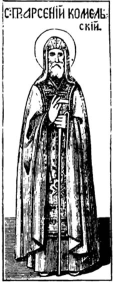
Сира была родом из Карх-Селевкии в Елимаиде (нын. Абизард), дочь одного из начальнейших магов. Желая предохранить ее от знакомства и дружбы с христианскими девицами, отец еще в очень равней юности отправил ее в город Фарс для воспитания и подготовления в жрицы в капище огня. Достигши же совершенного возраста, возвратилась в дом родительский и поступила в число жриц. Скоро познакомилась с некоторыми нищими христианами, а чрез них и с учением христианским, обсуждала великое различие между верою магов и верою христиан, позвала лучшее и решилась присоединиться к истинному благочестию. Желая ближе ознакомиться с христианским учением, тайно посещала церковь, слушала чтение и пение и положила начало новой жизни постами и молитвами. Не укрылось это от домашних, братьев и сестер, и просили они мачеху свою убедить Сиру не отступать от веры предков, чтоб не нанесть бесчестия всему роду их и не навлечь гнева царского. Мачеха наедине открыла девице, будто и она тайная христианка, и советовала ей чтить Христа втайне, а явно служить богам, чтобы не дать о себе подозрения и не подвергнуться бичеваниям, терзаниям, жжениям и прочим мукам; потому что опасно, говорила, как бы, не стерпевши мук, она и явно не отверглась от Христа и не совершила греха непростительного. Сими и подобными словами удалось ей преклонить Сиру на малое время, но затем скоро последняя, повинуясь внутреннему званию, отправилась рано в церковь и просила епископа Иоанна сподобить ее святого крещения. – Этот Иоанн есть второй известный в VI веке представитель православной церкви в Персии. – Епископ возрадовался духом об ищущей крещения, но, рассудив обстоятельства времени, не сподобил ее крещения. Ибо знал, что она – знатного рода, а ненависть магов к христианам била очевидна для всех; он боялся раздражить их и дать повод к общему преследованию христиан. Частию же и о самой девице сомневался епископ и советовал ей прежде исповедать Христа пред отцом своим, братьями, сродниками и всеми домашними; и если сможет претерпеть ожидающие ее истязания, то пусть и пребывает в добром исповедании, и тогда сподобится святого крещения. Так советовал ей епископ и отпустил с миром. Чрез день, когда ранним утром надлежало ей совершить в доме своем утреннюю жертву богам, она сокрушила орудия жертвенные и плюнула на огонь, восклицая: «плюю на ложных богов и на алтари нечестивые, верую в истинного Бога и присоединяюсь к Церкви христианской». Мачеха, братья и все домашние (отца не было дома) с другими сродниками и ближними слезно просили ее отстать от такого дела, не бесчестить рода своего в не предаваться самовольно на муки; но она и слушать их не хотела. Воротившийся отец сначала бил ее без пощады, потом умолял со слезами; наконец, видя непреклонность ее и предупреждал огласку, сам известил обо всем Мавиптиса, начальника магов. Созваны были маги к храму огня судить отступницу от веры предков; собралось туда и множество народа, в том числе и христиане. Мавиптис спросил: «для чего ты отвергла отечественных богов и предания, а другую веру приняла?» Сира: «каждый здравомыслящий человек не подобится бессловесным животным, без рассуждения идущим вслед за родившими их, но идет путем, какой находит лучшим, и не следует к гибели за своими заблуждавшими предками; и я, видя христианскую веру лучшею нечестия, отвергла худшее и избрала лучшее». Мавиптис: «Девица, многим мукам предана будешь, если не послушаешь нас». Сира же, положа руку на шею, сказала: «отруби ее, имеешь власть, только и говорю тебе». На дальнейшие слова судьи она ничего не отвечала, но читала про себя псалмы, для магов не вразумительные. И сказал один из магов: «это она вторит какое-то христианское учение». Тогда Мавиптис велел позвать епископа для удостоверения, христианские ли какие мысли высказывает девица? Будучи спрошен о произнесенных девицею словах, епископ подтвердил, что это действительно слова христианские. Тогда Мавиптис велел бить ее по устам и грозил лютыми муками, но, не желая доносить царю о таком происшествии в доме и роде знаменитого мага, поручил отцу беречь ее в доме своем и стараться больше ласками, чем угрозами, о возвращении ее в вере предков. Случилось придти в Селевкию некоему знатному персидскому сановнику, и отец снова жаловался на упорство дочери своей и на ненависть христиан, будто они злоумышляют против него и хотят его побить камнями. Сановник послал нарочитых мужей спросить девицу, для чего она оставила отеческую веру, и ласковыми словами отвратить ее от христианства. И так как она посланным ответила, что готова страдать и умереть за имя Христово, то была отведена в общенародную темницу и содержалась в оковах без хлеба и без воды три дня. А когда и после сего пребывала твердою в своем исповедании, была брошена в векую яму, глубокую и смрадную, и там провела пятнадцать дней; наконец снова возвращена в общую тюрьму и христианам не возбраняли посещать ее. Когда наступал праздник в честь всех персидских мучеников и предстояло богослужение в одном из молитвенных домов (’εν τινι τῶν εὐκτηρίων οἴκων) вне города, то пожелала и св. Сира выйти туда ночью на всенощное бдение, и некоторые из верных подарками страже доставили ей к тому возможность. Итак, переменивши одежду, она присутствовала при богослужении. «В другую же опять ночь, за поруками и за деньги отпущенная из тюрьмы, она пошла к епископу и приняла от него крещение в церкви, которая в городе», – говорится в Четь-Минее на основании позднейших известий, потому что в греческом памятнике, писанном когда еще живы были участники этого дела, читаем следующее. «А каким образом и при чьем участии совершено над нею таинство крещения, полезным считаю умолчать по причине настоящего положения вещей; только замечу здесь, что по письменному дозволению епископа, еще находясь в узах, она получила крещение в святейшей церкви того города».
Sira was a native of Carch-Seleucia in Elymais (present-day Abizard), the daughter of one of the chief Magi. Desiring to protect her from acquaintance and friendship with Christian maidens, her father sent her at a very early age to the city of Fars for upbringing and preparation as a priestess in the temple of fire. Having reached full age, she returned to her parental home and entered the ranks of the priestesses. Soon she became acquainted with some poor Christians, and through them with Christian teaching; she considered the great difference between the faith of the Magi and the faith of Christians, recognized the better, and resolved to join herself to true piety. Wishing to become more closely acquainted with Christian teaching, she secretly attended church, listened to the reading and singing, and laid the foundation of a new life by fasts and prayers. This did not remain hidden from her household, her brothers and sisters, and they begged their stepmother to persuade Sira not to depart from the faith of her ancestors, lest she bring dishonor upon their whole family and incur the king's wrath. The stepmother privately revealed to the maiden that she herself was a secret Christian, and advised her to honor Christ in secret, while openly serving the gods, so as not to arouse suspicion against herself and not to be subjected to scourgings, tortures, burnings, and other torments; for it was dangerous, she said, lest, unable to endure the torments, she might openly deny Christ and commit an unforgivable sin. By these and similar words she succeeded in swaying Sira for a short time, but soon afterwards the latter, obeying the inner call, went early to church and asked Bishop John to vouchsafe her holy Baptism. — This John is the second known representative of the Orthodox Church in Persia in the sixth century. — The bishop rejoiced in spirit over her who sought Baptism, but, considering the circumstances of the time, did not vouchsafe her Baptism. For he knew that she was of noble birth, and the hatred of the Magi toward Christians was evident to all; he feared to provoke them and give occasion for a general persecution of Christians. In part also the bishop had doubts about the maiden herself and advised her first to confess Christ before her father, brothers, kinsmen, and all her household; and if she could endure the torments awaiting her, then let her remain in the good confession, and then she would be vouchsafed holy Baptism. Thus the bishop advised her and dismissed her in peace. A day later, when early in the morning she was to perform the morning sacrifice to the gods in her house, she shattered the sacrificial implements and spat upon the fire, crying out: "I spit upon the false gods and upon the impious altars; I believe in the true God and join myself to the Christian Church." Her stepmother, brothers, and all the household (her father was not at home), together with other kinsmen and neighbors, tearfully begged her to desist from such a deed, not to dishonor her family and not to deliver herself willingly to torments; but she would not even listen to them. Her father, upon returning, first beat her without mercy, then implored her with tears; finally, seeing her inflexibility and anticipating publicity, he himself informed Maviptis, the chief of the Magi, of everything. The Magi were summoned to the temple of fire to judge the apostate from the faith of her ancestors; a great multitude of people also gathered there, including Christians. Maviptis asked: "Why have you rejected the ancestral gods and traditions, and accepted another faith?" Sira: "Every sound-minded man does not resemble the dumb animals, which follow without reasoning those who gave them birth, but follows the path he finds best, and does not follow his erring ancestors to destruction; and I, seeing the Christian faith better than impiety, have rejected the worse and chosen the better." Maviptis: "Maiden, you will be given over to many torments if you do not obey us." Sira, placing her hand on her neck, said: "Cut it off; you have the power; this only I say to you." To the judge's further words she answered nothing, but recited psalms to herself, unintelligible to the Magi. And one of the Magi said: "She is repeating some Christian teaching." Then Maviptis ordered the bishop to be summoned to confirm whether the maiden was uttering Christian thoughts. Being asked about the words the maiden had spoken, the bishop confirmed that these were indeed Christian words. Then Maviptis ordered her to be beaten on the mouth and threatened her with fierce torments, but, not wishing to report to the king about such an occurrence in the house and family of a renowned Magus, he entrusted her father to keep her in his house and to strive more by caresses than by threats for her return to the faith of her ancestors. It happened that a certain noble Persian dignitary came to Seleucia, and the father again complained of his daughter's stubbornness and of the hatred of the Christians, alleging that they were plotting against him and wished to stone him. The dignitary sent special men to ask the maiden why she had left the ancestral faith, and with gentle words to turn her from Christianity. And since she answered those sent that she was ready to suffer and die for the name of Christ, she was led away to the public prison and kept in chains without bread and without water for three days. And when even after this she remained firm in her confession, she was thrown into a certain pit, deep and foul, and spent fifteen days there; finally she was returned again to the common prison, and Christians were not forbidden to visit her. When the feast in honor of all the Persian martyrs was approaching and a divine service was to take place in one of the houses of prayer (εν τινι τῶν εὐκτηρίων οἴκων) outside the city, St. Sira also wished to go out there at night for the All-night Vigil, and some of the faithful, by giving gifts to the guards, made this possible for her. So, having changed her clothes, she was present at the divine service. "On another night again, being released from prison on surety and for money, she went to the bishop and received from him Baptism in the church which is in the city," says the Cheti-Minei on the basis of later accounts, because in the Greek account, written while the participants in this event were still alive, we read the following: "But in what manner and with whose participation the mystery of Baptism was performed over her, I consider it useful to pass over in silence because of the present state of affairs; only I note here that, by the written permission of the bishop, while still in bonds, she received Baptism in the most holy church of that city."
В это время ожидалось посольство от римского императора к персидскому двору, и маги, опасаясь, чтоб римский посол не принял участия в Сире и не испросил ей у царя свободы, решили скорее отправить ее на суд к царю, находившемуся тогда в мидийском городе Адваке (Ἀλουὰκων – нын. Алибок, в Мазандеране). И послали ее туда, наложивши на ее шею печать, по господствующему у них обычаю, чтобы воины не представили иное лице или не сказали, что на пути умерла, потому что изгладить такую печать не отрезавши головы нельзя было. В Алваке Сира передана была начальнику той области, который после напрасных убеждений велел снять с нее обычную благородным женщинам одежду, облечь в грязное рубище и отдать под стражу евреям. А евреи, взявши ее скованную, затворили ее в темной храмине и на пропитание давали ячменного хлеба в таком количестве, чтобы она только не умерла с голоду, укоряя при том и понося ее и веру ее. Чрез одиннадцать дней она представлена была на суд начальнику магов, который, слыша от ней твердое исповедание веры христианской и опровержение персидского вероучения, решил снова отдать ее под стражу евреям и не допускать к ней никого из христиан. А пред возвращением ее в тюрьму, персы, обнаживши меч пред нею, поклялись убить ее, если не последует убеждениям начальника магов. Чрез три дня главный сановник над тюрьмами перевел Сиру из еврейской тюрьмы в другую, – и это сделал для своего прибытка, потому что христиане платили большие деньги за позволение посещать узницу.
At this time an embassy from the Roman emperor to the Persian court was expected, and the Magi, fearing that the Roman envoy might take an interest in Sira and obtain her freedom from the king, decided to send her as soon as possible to the judgment of the king, who was then in the Median city of Advak (Ἀλουὰκων — present-day Alibok, in Mazandaran). And they sent her there, having placed a seal upon her neck, according to the prevailing custom among them, so that the soldiers might not present another person or say that she had died on the way, for such a seal could not be removed without cutting off the head. In Alvak, Sira was handed over to the governor of that region, who, after vain persuasions, ordered the customary clothing of noble women to be taken from her, to clothe her in a filthy rag, and to give her into the custody of the Jews. And the Jews, taking her in chains, shut her up in a dark chamber and gave her barley bread for sustenance in such quantity that she would not die of hunger, while also reproaching and reviling her and her faith. After eleven days she was brought to judgment before the chief of the Magi, who, hearing from her a firm confession of the Christian faith and a refutation of the Persian religious teaching, decided to give her again into the custody of the Jews and to allow none of the Christians to approach her. And before returning her to prison, the Persians, having drawn a sword before her, swore to kill her if she did not heed the persuasions of the chief of the Magi. After three days, the chief warden over the prisons transferred Sira from the Jewish prison to another — and this he did for his own profit, because the Christians paid large sums for permission to visit the prisoner.
Тем временем царь захотел перейти в другой город, Ресанкусадон; с ним пошли вельможи и начальник магов. Вслед за ними ведена была туда и Сира с другими узниками. И когда случилась остановка в Карсе великом, начальник магов и другие сановники еще раз потребовали ее на суд, и когда она пребыла мужественною в своем исповедании, решили, что она «повинна смерти, потому что и богов хулит, и царя уничижает, и властям ругается», и велели снова наложить на ее шею клеймо, в предупреждение замены другим лицом. Впрочем казнь была отложена на некоторое время и назначена в другом месте, из опасения смуты от христиан. Итак, отданная под стражу начальнику пехоты, приведена вслед за царем в область Бетармайскую и тут умерщвлена следующим образом. Когда привели ее на место казни и накинули петлю на шею, то не сразу задушили, а затянувши петлю так, что мученица уже едва могла дышать, ослабили ее и объявили, что она будет пощажена, если откажется от христианской веры. Но святая ответила: «исполняйте повеленное вам, не нарушайте законов своих». И затем вторично, стянувши петлю и ослабивши ее, предложили Сире отречься от Христа, но получили тот же ответ. После сего окончательно стянули петлю, и таким образом мученица скончала свое земное поприще в 28 день месяца перития (февраля) 870 года по сирскому счету (т. е. 558 по нашему). Тело ее взято верными и похоронено с честию в некоем сокровенном месте (См. Acta ss. 18 мая).
Meanwhile, the king wished to move to another city, Resankusadon; with him went the nobles and the chief of the Magi. Sira was led there after them, together with other prisoners. And when a halt occurred at Great Kars, the chief of the Magi and other dignitaries again summoned her to judgment, and when she remained courageous in her confession, they decided that she was "guilty of death, because she both blasphemes the gods and reviles the king and insults the authorities," and they ordered a brand to be placed again on her neck, to prevent substitution by another person. However, the execution was postponed for some time and appointed in another place, for fear of disturbance from the Christians. So, being given into the custody of the commander of the infantry, she was led after the king into the region of Beth-Armaye and there put to death in the following manner. When they brought her to the place of execution and put a noose around her neck, they did not strangle her at once, but having tightened the noose so that the martyr could scarcely breathe, they loosened it and declared that she would be spared if she renounced the Christian faith. But the saint answered: "Do what has been commanded you; do not violate your own laws." And then a second time, having tightened the noose and loosened it, they proposed to Sira that she deny Christ, but received the same answer. After this they finally tightened the noose, and thus the martyr finished her earthly course on the 28th day of the month Peritius (February) of the year 870 according to the Syrian reckoning (i.e., A.D. 558). Her body was taken by the faithful and buried with honor in a certain secret place (See Acta ss., May 18).