Пятнадцатый и последний судия Израильский, скончавшийся за 1100 лет перед Р. Хр. «Возлюбленный Господом своим Самуил, пророк Господень, учредил царство и помазал царей народу своему. Он судил народ по закону Господню, и Господь призирал на Иакова. По вере своей он был истинным пророком, и в словах его дознана верность видения. (Сир.46:16–18). Умер в глубокой старости и погребен в Армафеме, отечественном его городе. В 406 году останки его перенесены в Константинополь и положены в храме, посвященном его имени.
The fifteenth and last Judge of Israel, who reposed 1100 years before the birth of Christ. "Samuel, the prophet of the Lord, beloved of his Lord, established the kingdom and anointed kings for his people. He judged the people according to the law of the Lord, and the Lord watched over Jacob. By his faith he was a true prophet, and the truthfulness of his visions was proven in his words (Sir. 46:16–18). He died in extreme old age and was buried in Ramathaim, his native city. In the year 406 his remains were translated to Constantinople and placed in a church dedicated to his name.
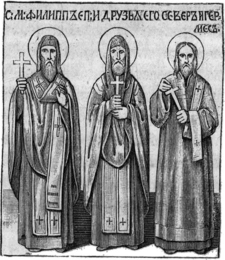
Блаж. Филипп был сперва диаконом, потом пресвитером и спустя некоторое время, как испытанный по высокой жизни, возведен на епископскую кафедру Ираклии фракийской168. «Учеников своих пресвитера Севера и диакона Гермеса, укрепляя частыми наставлениями, он сделал подобными ему не только по мыслям и чувствам, но и по страданию. – Когда поднялся огонь жестокого гонения: он не смутился; иные советовали удалиться из города, – он отверг совет». Явился стационарий Аристомах, чтобы запечатать церковь христианскую. Блаж. Филипп сказал: «ужели ты думаешь, что Бог заперт в стенах! Он живет в сердцах». Аристомах опечатал все в церкви. Блаж. Филипп с Севером и Гермесом остался при дверях и поучали паству.
Blessed Philip was first a deacon, then a presbyter, and after some time, as one proven by his lofty life, he was elevated to the episcopal see of Heraclea in Thrace168. "His disciples, the presbyter Severus and the deacon Hermes, strengthening them with frequent instructions, he made like unto himself not only in thoughts and feelings, but also in suffering. – When the fire of a fierce persecution arose, he was not troubled; some advised him to withdraw from the city – he rejected the counsel." The stationarius Aristomachus appeared to seal the Christian church. Blessed Philip said: "Do you think that God is shut up within walls! He dwells in hearts." Aristomachus sealed everything in the church. Blessed Philip, together with Severus and Hermes, remained at the doors and instructed the flock.
Явился в суд префект Басс и, когда введены были к нему все, спросил: «кто из вас учитель христиан»? Филипп отвечал: «я тот, которого ищешь». – Вы знаете, сказал Басс, закон императоров, запрещающий христианам собираться и предписывающий этим людям или приносить жертвы или погибать. Доставьте мне золотые или серебряные сосуды ваши, или какие имеете, и также книги, которые вычитаете или изучаете». Филипп отвечал: «нельзя выдать тебе книг». Префект позвал исполнителей казни. Явился Мукапор, самый жестокий человек. Префект велел привесть пресвитера Севера; его не отыскали и префект велел мучить Филиппа. Когда жестоко били его: стоявший вблизи Гермес сказал: «хотя бы и достал ты все наши книги, последователи наши, заботясь о душевном спасении, напишут другие и еще усерднее научать будут благоговению, какое надобно оказывать Христу». Его наказали за то палками. Когда потом сделал он замечание ассессору Публию за покушение присвоить себе церковную собственность: его били до того, что все лице его покрылось кровью.
The prefect Bassus appeared in court, and when all were brought before him, he asked: "Which of you is the teacher of the Christians?" Philip answered: "I am he whom you seek." – "You know," said Bassus, "the law of the emperors, which forbids Christians to assemble and commands these men either to offer sacrifice or to perish. Deliver to me your gold or silver vessels, or whatever you have, and also the books which you read or study." Philip answered: "It is impossible to give you the books." The prefect summoned the executioners. Mucapor, a most cruel man, appeared. The prefect ordered the presbyter Severus to be brought; he was not found, and the prefect ordered Philip to be tortured. While he was being cruelly beaten, Hermes, who was standing nearby, said: "Even if you should obtain all our books, our followers, caring for the salvation of their souls, will write others and will teach even more zealously the reverence that must be shown to Christ." For this he was punished with rods. When later he made a remark to the assessor Publius for attempting to appropriate church property, he was beaten until his whole face was covered with blood.
Сосуды и книги префект передал солдатам. Филипп и другие приведены были на площадь. Префект велел разломить крышу храма; книги преданы были огню. Св. Филипп спокойно поучал народ. «Принеси жертву, говорил префект; государям нашим должно приносить фимиам». Филипп отвечал: «мы научены оказывать императорам повиновение, но не божеское почитание». Префект изумлялся твердости Филиппа и, обратясь к Гермесу, сказал: «приноси ты жертвы». «Не могу, отвечал Гермес, – следую во всем учителю моему». А если Филипп принесет, последуешь ли за ним?» Гермес отвечал: «ни я не последую, ни он не будет побежден». Префект сказал: предан будешь огню. «Это – легкий огонь, отвечал Гермес; а есть огонь неугасимый, готовый для нечестивых». Басс велел запереть исповедников в темницу. Они пошли с радостию и поя псалмы. Проведя несколько дней в темнице, получили дозволение находиться в ближнем доме Панкратия под стражею; здесь они приняты были с любовию; здесь же совершали таинства и поучали народ.
The prefect handed over the vessels and books to the soldiers. Philip and the others were brought to the square. The prefect ordered the roof of the church to be broken open; the books were consigned to the fire. St. Philip calmly instructed the people. "Offer sacrifice," said the prefect; "incense must be offered to our sovereigns." Philip answered: "We have been taught to render obedience to the emperors, but not divine worship." The prefect marveled at Philip's steadfastness and, turning to Hermes, said: "Do you offer sacrifices." "I cannot," answered Hermes, "I follow my teacher in all things." "And if Philip offers sacrifice, will you follow him?" Hermes answered: "Neither will I follow, nor will he be overcome." The prefect said: "You shall be delivered to the fire." "That is a light fire," answered Hermes; "but there is an unquenchable fire prepared for the ungodly." Bassus ordered the confessors to be shut up in prison. They went with joy, singing psalms. After spending several days in prison, they received permission to stay in the nearby house of Pancratius under guard; there they were received with love; there also they celebrated the Mysteries and instructed the people.
Между тем Басса сменил префект Юстин, человек испорченный. Басс уступал умным рассуждениям и жена его когда-то служила истинному Богу. Юстин не знал страха Божия. Филипп представлен был на суд. Юстин сказал: государи наши повелели принуждать христиан к принесению жертв; если не захотят, подвергать казням. Филипп отвечал: «я христианин, – не могу исполнять то, чего требуешь; ты можешь мучить, но не можешь преодолеть меня». Юстин велел вести его в оковах в темницу и его терзали дорогою.
Meanwhile, Bassus was replaced by the prefect Justinus, a corrupt man. Bassus yielded to wise arguments, and his wife had once served the true God. Justinus knew no fear of God. Philip was brought to trial. Justinus said: "Our sovereigns have commanded that Christians be compelled to offer sacrifices; if they refuse, to subject them to punishments." Philip answered: "I am a Christian – I cannot do what you demand; you may torture me, but you cannot overcome me." Justinus ordered him to be led in chains to prison, and he was tormented along the way.
Привели к Юстину и Севера. Исполняй повеление императоров, сказал Юстин. Север отвечал: «я должен исполнить то, чему научен». Его отвели в темницу. Представлен Гермес. «Муки заставят тебя исполнить волю императоров», сказал префект. «Нет, отвечал Гермес, – я вырос в святой вере, хромать не намерен; ты можешь мучить меня, сколько тебе угодно».
Severus was also brought to Justinus. "Fulfill the command of the emperors," said Justinus. Severus answered: "I must fulfill that which I have been taught." He was led away to prison. Hermes was presented. "Torments will compel you to do the will of the emperors," said the prefect. "No," answered Hermes, "I have grown up in the holy faith; I do not intend to limp; you may torture me as much as you please."
Три мученика провели семь месяцев в смрадной темнице, потом перевели их в Одрин. Когда явился сюда префект: Филиппа наказывали здесь так жестоко, что все тело его было растерзано и видны были внутренности. Юстин велел отвесть его в темницу. Призван был Гермес: но ни угрозам, ни ласкам не уступил. На третий день снова привели Филиппа. «Зачем ты так безрассудно противишься воле императорской»? сказал префект. Филипп отвечал: «не безрассудно поступаю я, а исполняю волю Бога – Творца и Судии всех. Св. писание говорит: воздадите Божие Богу и кесарево кесарю. Это и исполняю я. Справедливым повелениям императоров всегда повиновался я». – Гермес в ответ префекту объяснил глупость и нечестие идолопоклонства. Юстин, вне себя от гнева, закричал: «как? ты, несчастный, думаешь обратить меня к христианской вере»? И потом произнес решение: Филиппа и Гермеса, не исполняющих воли императорской, повелеваем сжечь живых. Святые выслушали это с радостию. – Когда приведены они были на место казни: Гермес, подозвав к себе одного из братьев христиан Белаго (Velogum), заклинал его Господом Иисусом Христом – передать сыну его Филиппу приказание отца заплатить все долги. Это говорил он о деньгах, порученных ему на хранение многими. Потом прибавил: «он молод; пусть работою снискивает пропитание; так поступал отец и жил со всеми хорошо». Мученики возложены были на костер.
The three martyrs spent seven months in a foul prison; then they were transferred to Hadrianople. When the prefect arrived there, Philip was punished so cruelly that his whole body was torn and his entrails were visible. Justinus ordered him to be taken back to prison. Hermes was summoned, but he yielded neither to threats nor to caresses. On the third day Philip was brought again. "Why do you so foolishly resist the imperial will?" said the prefect. Philip answered: "I do not act foolishly, but fulfill the will of God, the Creator and Judge of all. Holy Scripture says: Render unto God the things that are God's, and unto Caesar the things that are Caesar's. This I fulfill. I have always obeyed the just commands of the emperors." – Hermes, in answer to the prefect, explained the folly and impiety of idolatry. Justinus, beside himself with rage, cried out: "What? Do you, wretch, think to convert me to the Christian faith?" And then he pronounced the sentence: "Philip and Hermes, who do not fulfill the imperial will, we command to be burned alive." The saints heard this with joy. – When they were brought to the place of execution, Hermes, calling to him one of the Christian brethren, Belus (Velogum), adjured him by the Lord Jesus Christ to convey to his son Philip his father's command to pay all debts. This he said concerning the money entrusted to him for safekeeping by many. Then he added: "He is young; let him earn his living by labor; so did his father, and lived well with all." The martyrs were placed on the pyre.
Юстину взошла еще дурная мысль. Он приказал бросить тела святых в р. Эбр. Когда это исполнено: христиане Одрина садятся в лодки, не удастся ли кому поймать добрую ловлю. Желание их исполнилось. Они вытаскивают сетьми нетленные останки. Они положили их в местечке, которое на родном их языке называется Гетистирон, в двух милях от города.
An evil thought also entered Justinus's mind. He ordered the bodies of the saints to be thrown into the river Hebrus. When this was done, the Christians of Hadrianople got into boats, hoping that someone might catch a good catch. Their desire was fulfilled. They drew out the incorrupt remains with nets. They placed them in a place which in their native tongue is called Getistiron, two miles from the city.
Когда пресвитер Север, содержавшийся в темнице, знал о мученической кончине Филиппа и Гермеса: то радовался торжеству их и молил Бога быть удостоенным той же чести. Молитва его была услышана: спустя три дня и ему дарован тот же венец.
When the presbyter Severus, who was being held in prison, learned of the martyric end of Philip and Hermes, he rejoiced at their triumph and prayed to God to be deemed worthy of the same honor. His prayer was heard: after three days, the same crown was granted to him as well.
а) Древний географ писал: По Эбру (у славян р. Марица) живут карпляне (Кαρπηλοι, Кαρπιкοι), еще выше враны (Βρεναι), потом последние бессы (Βεσσοι, Βιεασοι). Все эти племена – хищнические, особенно же бессы, соседи, как говорят, с одричами (Οδρυσαις) И сапунами... Вся Фракия составлена из 22 племен171. По другому известию, карпяне и соседние с ними сапуны живут в ущельях Еракии172. Одричи явно славяне, – как и сапуны (σαπαισι); точно таковы же враны, оставившие свое имя Варне, и частию перешедшие за Дунай173. Карпяне в 305 г. насильно переселены были под Карпаты, но иные остались на юге174. И другие фракийские племена, упоминаемые у древних, оказываются также славянами175. По известию Страбона, «геты – говорят тем же фракийским языком, который во всеобщем употреблении во Фракии»176. поскольку же несомненно известно, что геты – жители малой Скифии, говорили славянским языком: то ясно, что язык фракийский – язык славянский.
a) An ancient geographer wrote: "Along the Hebrus (among the Slavs, the Maritsa River) live the Carpiani (Καρπηλοι, Καρπιкοι), further up the Breni (Βρεναι), and then the last of the Bessians (Βεσσοι, Βιεασοι). All these tribes are predatory, especially the Bessians, neighbors, as they say, of the Odrysians (Οδρυσαις) and Sapaeans... All Thrace is composed of 22 tribes."171 According to another account, the Carpiani and their neighbors the Sapaeans live in the gorges of Thrace.172 The Odrysians are clearly Slavs – as are the Sapaeans (σαπαισι); exactly the same are the Breni, who left their name to Varna, and partly crossed beyond the Danube.173 The Carpiani were forcibly resettled to the Carpathians in 305, but some remained in the south.174 And other Thracian tribes mentioned among the ancients also prove to be Slavs.175 According to Strabo, "the Getae speak the same Thracian language which is in common use throughout Thrace."176 Since it is indisputably known that the Getae – inhabitants of Little Scythia – spoke the Slavic language, it is clear that the Thracian language is the Slavic language.
б) По описанию мученичества св. Филиппа и друзей его родной язык жителей Одрина – не латинский и не греческий. В том же описании христианин Белый – ясное славянское имя. Мукапор – непонятное название поротеля – мучителя. Гети-стирон – в первой половине гет – славянин, а стирон исковерканное стеров – стерво177.
b) According to the description of the martyrdom of St. Philip and his companions, the native language of the inhabitants of Hadrianople is neither Latin nor Greek. In the same description, the Christian Belus is a clearly Slavic name. Mucapor is an incomprehensible name for the torturer. Getistiron – in the first half, Get – a Slav, and stiron is a corrupted form of sterov – carrion.177
в) По записке о мученичестве римского христианина св. Александра, на пути его из Рима в Друзипору в 298 г. во Фракии, после Филиппополя – Пловдипа Полчищное место и потом Верея, где большая часть жителей христиане, но хранят веру свою втайне, – верейцы проводили мученика за 40 поприщ от Вереи178.
c) According to the account of the martyrdom of the Roman Christian St. Alexander, on his journey from Rome to Druzipara in Thrace in 298, after Philippopolis – Plovdiv – the Place of the Hosts, and then Beroea, where the majority of the inhabitants were Christians, but kept their faith in secret – the Beroeans accompanied the martyr for 40 stadia from Beroea.178
По всем этим показаниям священномученики Филипп, Север и Гермес, – как фракиане, были из славян и проповедовали св. веру славянам. И при благоверном Константине в Одрине был уже епископ179.
According to all these indications, the Hieromartyrs Philip, Severus, and Hermes – as Thracians – were from the Slavs and preached the holy faith to the Slavs. And under the Right-believing Constantine, there was already a bishop in Hadrianople.179
Страдание св. Филиппа и друзей его довольно подробно описано в записке латинской, изд. сперва Мабилонием Analect. IV, 134. потом Руннартом: Acta mart. ii, 437. s. Weiss Leben. d. Heligen XV, 407–416. В записке сохранено многое из записки очевидца; сочинитель писал не раньше 4 века. В мартирологах память показана 22 окт. Но в менологе Василия и в слав. прологе память Севера и друзей его – авг. 20. Из латинской записки делаем извлечение
The passion of St. Philip and his companions is described in considerable detail in a Latin account, published first by Mabillon in Analect. IV, 134, then by Ruinart: Acta mart. ii, 437. s. Weiss Leben. d. Heiligen XV, 407–416. The account preserves much from an eyewitness account; the author wrote no earlier than the 4th century. In the martyrologies, the commemoration is given on October 22. But in the Menologion of Basil and in the Slavic Prologue, the commemoration of Severus and his companions is August 20. We make an extract from the Latin account.
Менолог говорит притом, что Север «был родом из Сиды памфилийской – и пришел в Филипополь фракийский, когда префект Апеллиан мучил там 36 мучеников» – В современной записке не сказано, где замучен Север: могло быть, что когда св. Филиппа и Гермеса послали в Одрин, Север выслан в Филиппополь. – Но несомненно, что Менолог ошибается, называя Севера пришельцем из Сиды. По современной записке, он – ученик и священник фракийского святителя. Мартирологи показывают, что в Одрине пострадал с св. Филиппом, кроме Гермеса, Евсевий. В Иеронимовом мартирологе: 29 сент. во Фракии страдание св. Евтихия, Плавта. Нояб. 12 «во Фракии мученическая кончина (natalis) св. Эдикта, Евтика, Феликса, Гермогена и Агиеста мучеников». 14 нояб. «в Ираклии, городе фракийском, страдание святых Климента, Климентина, Феодота, Филимона и многих других». Нояб. 16 «в гор. Ираклий страдание святых Григория, Виктора, Геммана». Нояб. 18 «в Ираклии страдание святой жены с 46 своими». Декаб. 20 «во Фракии, в гор. Гетдубе, страдание Юлия» – Гетдубу полагали на границах Болгарии и Романии, – но без доказательств. Гет-дуб скорее найдут по истории.
The Menologion further states that Severus “was a native of Side in Pamphylia—and came to Philippopolis in Thrace, when the prefect Apellian was torturing 36 martyrs there.” The contemporary account does not say where Severus was martyred: it may be that when St. Philip and Hermes were sent to Hadrianople, Severus was sent to Philippopolis. But there is no doubt that the Menologion errs in calling Severus a newcomer from Side. According to the contemporary account, he is a disciple and priest of the Thracian Hierarch. The martyrologies show that in Hadrianople, besides Hermes, Eusebius suffered with St. Philip. In the Hieronymian Martyrology: September 29, in Thrace, the passion of Sts. Eutychius and Plautus. November 12, “in Thrace, the martyr’s death (natalis) of Sts. Edictus, Euticus, Felix, Hermogenes and Agiestus, martyrs.” November 14, “in Heraclea, a city of Thrace, the passion of Sts. Clement, Clementinus, Theodotus, Philemon and many others.” November 16, “in the city of Heraclea, the passion of Sts. Gregory, Victor, Gemmanus.” November 18, “in Heraclea, the passion of a holy woman with her 46 companions.” December 20, “in Thrace, in the city of Getduba, the passion of Julius.” Getduba was placed on the borders of Bulgaria and Romania, but without proof. Get-dub will rather be found by history.
Бароний относил страдание св. Филиппа и Севера ко времени Юлиана. Ему последовал Вершинский в месяцеслове, стр. 128. Но в описании мученичества не только нет никакого основания для такой мысли, напротив, как сказано, оно ясно говорит о времени Диоклитиана. Гонение за книги у Лактанция de morte persecnt. с. 15. 18. Евсевия 8,2. у Руинарта записка о мученичестве св. Сатурнина начинается так: «при Диоклитионе и Максимиане диавол поднял такую войну против христиан, что требовал па сожжение святые заветы Господа и св. писания, разрушал храмы, запрещал богослужение и священные собрания». Acta 2, 378.
Baronius assigned the passion of Sts. Philip and Severus to the time of Julian. Vershinsky followed him in his Menology, p. 128. But in the description of the martyrdom there is not only no basis for such a thought; on the contrary, as has been said, it clearly speaks of the time of Diocletian. The persecution for books is in Lactantius, De morte persecutorum, cc. 15, 18; Eusebius, Hist. eccl. VIII, 2. In Ruinart, the account of the martyrdom of St. Saturninus begins thus: “Under Diocletian and Maximian, the devil raised such a war against Christians that he demanded the burning of the holy covenants of the Lord and the sacred writings, destroyed churches, forbade divine service and sacred assemblies.” Acta 2, 378.
Шафарика древности V, 152. Славяне и в средние времена называли Адрианополь не иначе, как Одрином. Болгарский переводчик Манасииной летописи: „Крум князь брань състави под Одринем». У Черткова стр. 87.
Schafarik, Slavonic Antiquities V, 152. The Slavs even in the Middle Ages called Adrianople nothing other than Odrin. The Bulgarian translator of the Manasses Chronicle: “Krum the prince waged war under Odrin.” In Chertkov, p. 87.
Пересмотр других фракийских племен – у Черткова во временнике общ. ист. X, 83–89. О Бесах см. июля 24. Да и сами византийцы писали, что греки во Фракии и Македонии стали являться колонистами только со времени Филиппа Македонского, напр. Стефан византиец у Тафеля de provinc. p. 25. 26. Даже епископ 3 века писал: «Элий Публий Юлий, епископ колонии Дебельта во Фракии, призываю в свидетеля Бога» и пр. Евсевия ист. 1, 30».
A review of other Thracian tribes is in Chertkov, in the Journal of the Imperial Society of Russian History and Antiquities X, 83–89. On the Bessi, see July 24. And even the Byzantines themselves wrote that Greeks began to appear as colonists in Thrace and Macedonia only from the time of Philip of Macedon, e.g., Stephen the Byzantine in Tafel, De provinciis pp. 25, 26. Even a bishop of the 3rd century wrote: “Aelius Publius Julius, bishop of the colony of Deultum in Thrace, call God to witness,” etc. Eusebius, Hist. eccl. I, 30.
В латинских актах это слово писали резлично: то Getistirion, то Ogetistion, то Ogestiron, также как Гетъ-дубъ – (пр. 23) писали Gildoba, то Gelduba, то Gildo Bacli. – Чужаки не понимали славянского слова и каждый коверкал его по своему. Один умник прибавил такое объяснение первому слову: interpetatione vero latinae linguae locus possessionis vocatur. Угадал! Стерав y Востокова. – О образовании личных славянских имен – в Изв. акад. IX, 91–99.
In the Latin Acts this word was written variously: sometimes Getistirion, sometimes Ogetistion, sometimes Ogestiron, just as Get-dub (note 23) was written Gildoba, sometimes Gelduba, sometimes Gildo Bacli. Strangers did not understand the Slavic word and each distorted it in his own way. One clever fellow added this explanation to the first word: “interpretatione vero latinae linguae locus possessionis vocatur.” He guessed! Cf. Strav in Vostokov. On the formation of personal Slavic names, in Izvestiya of the Academy IX, 91–99.
Четь-минея 13 мая, Acta Sanct. 3 maii droece in apbend. p. 15. satine p. 194. О Верее у Черткова o монас. 125. 146–110. Св. Александр был тот мученик Александр, которого храм в Друзинаре 597 г. сжеги аварский каган и за то жестоко был наказан; семь сыновей хана и множество войска погибли от моровой язвы под Друзинерою. Хану договором уступлено право переходить Дунай против славян. Simocatti hist. VII, 14. 15. Друзинара на р. Эригоне, о которой Вриенний пишет: „не знаю, как называлась она в древности, – названия часто меняются; а ныне она, вытекая из фракийских гор, называется Алмиром (Соленою), близь нее крепость, которой имя Калаврия“. (Спб. 1858 г. стр. 128). Тафель (de provinciis р. 29) замечает, что древние жители – фракийды и имя крепости полуфракийское.
Cheti-Minei, May 13; Acta Sanctorum, May 3, in append. p. 15, satine p. 194. On Verea, in Chertkov, On Monasteries pp. 125, 146–110. St. Alexander was that martyr Alexander whose church in Drusinara was burned in 597 by the Avar khagan, who was severely punished for it; seven sons of the khan and a multitude of troops perished from the plague near Drusinara. By treaty, the khan was granted the right to cross the Danube against the Slavs. Simocattes, Hist. VII, 14, 15. Drusinara is on the river Erigon, about which Bryennius writes: “I do not know what it was called in antiquity—names often change; but now it, flowing from the Thracian mountains, is called Almir (Salty), and near it is a fortress whose name is Calavria.” (St. Petersburg, 1858, p. 128). Tafel (De provinciis p. 29) notes that the ancient inhabitants were Thracians and the name of the fortress is half-Thracian.