Флор и Лавр, братья по телу и духу, каменосечцы, научены святой вере учителями своими, Проклом и Максимом. После мученической кончины последних, братья продолжали свои занятия и подрядились выстроить капище идольское. Во время производства работ юноша, сын жреца Мемертина, подошел в месту я от внезапно отскочившего обломка вышиб себе глаз. Флор и Лавр утешали жреца, обещая вылечить сына, и взяв последнего на ночь с свое жилище открыли ему учение о едином Боге и сказали: «если станешь всем сердцем веровать в проповедуемого нами Бога, то глаз твой будет здоров». Юноша обещал веровать. Тогда братья помолились о нем Господу, крестным знамением осенили больной глаз и исцелили его. Юноша уверовал вместе с отцом своим.
Florus and Laurus, brothers in body and spirit, were stonecutters, instructed in the holy faith by their teachers, Proclus and Maximus. After the martyric death of the latter, the brothers continued their labors and contracted to build a pagan temple. During the work, a youth, the son of the priest Memertinus, approached the site and, struck in the eye by a suddenly flying fragment of stone, lost his eye. Florus and Laurus consoled the priest, promising to heal his son, and, taking the youth to their dwelling for the night, revealed to him the teaching about the one God and said: "If you believe with all your heart in the God we preach, your eye will be healed." The youth promised to believe. Then the brothers prayed to the Lord for him, made the sign of the cross over the ailing eye, and healed him. The youth, together with his father, came to believe.
Окончивши же здание, освятили его в славу имени Христова и поставили в нем св. крест; а после всенощного бдения, на которое собрали много христиан, пошли в храмину, где сложены были идолы для нового капища, и сокрушили их на мелкие части. За это все участники были сожжены, а Флор и Лавр брошены в глубокий колодезь и засыпаны землею (в третьем веке). Это происходило в Иллирии.
Having finished the building, they consecrated it to the glory of the name of Christ and placed a holy cross in it; and after an All-night Vigil, to which they gathered many Christians, they went into the chamber where the idols for the new temple were stored and shattered them into small pieces. For this, all the participants were burned, and Florus and Laurus were thrown into a deep well and covered with earth (in the third century). This took place in Illyria.
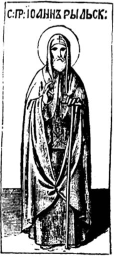
Преподобный отец наш Иоанн149, великий между подвижниками, был из пределов города Средца, из села называемого Скрином150. Родители его были люди благочестивые, и не очень богатые, из племени болгарского. Когда они умерли, а он с юности возлюбил Господа: то оставшееся ему имущество роздал он бедным и больным151; а сам, приняв монашество, вышел из родины своей, нося на теле своем одну кожаную одежду152. Взойдя на высокую и голую гору, стал тут подвизаться, питаясь лишь диким растением». – Хижина его была сплетена тут из хвороста. Спустя не долгое время разбойники напали на него ночью и избив прогнали отсюда»153. – Он нашел глубокую пещеру и поселился в ней. Сюда пришел к нему молодой племянник Лука, который, скрывшись от отца, едва нашел дядю в скалах диких. Так трудно было найти тут отшельника, что сам он, увидав издали отрока, сочел появление его за мечту. С любовию принял Иоанн юного племянника и особенно обрадовался, когда услышал, что тот жаждет душевного спасения. Они стали подвизаться вместе. – Брат, узнав, что сын его скрывается у дяди, закипел гневом и злобою на Иоанна. Найдя его в пещере, он ругал его всячески и даже поднимал на него камень. – Преподобный молчал. Отец, ухватив сына, потащил его за собою. Иоанн пал на землю и со слезами молил Господа, дабы устроил он сам нужное для вечного спасения человека молодого. – Помолясь, сел он в своей пещере, с тугою об опасностях мирской жизни. Что же случилось с отроком? Дорогою змей укусил его и он умер. Отец, так неожиданно потерявший сына, почувствовал свою виновность. Он возвратился к брату и сказал о несчастии. Пустынник велел ему похоронить умершего»; впоследствии преподобный хаживал на могилу праведного отрока и здесь было любимое место отдыха его154. Крепки были подвиги его и против мечтаний духов и против немощей плоти. Двенадцать лет пробыл Иоанн в дикой своей пещере155.
Our Venerable Father John149, great among the ascetics, was from the region of the city of Sredets, from a village called Skrino150. His parents were pious people, not very wealthy, of the Bulgarian tribe. When they died, and he from his youth had loved the Lord, he distributed the property that remained to him to the poor and the sick151; and himself, having received monastic tonsure, departed from his homeland, wearing on his body only a leather garment152. Ascending a high and barren mountain, he began to struggle there, nourishing himself only on wild plants. His hut was woven there from brushwood. After a short time, robbers attacked him by night and, beating him, drove him away from there153. He found a deep cave and settled in it. Here a young nephew, Luke, came to him, who, having hidden from his father, barely found his uncle among the wild rocks. So difficult was it to find the hermit there, that he himself, seeing the youth from afar, took his appearance for a vision. John received his young nephew with love and was especially glad when he heard that he thirsted for spiritual salvation. They began to struggle together. – The brother, learning that his son was hiding with his uncle, blazed with anger and malice against John. Finding him in the cave, he reviled him in every way and even raised a stone against him. – The Venerable One was silent. The father, seizing his son, dragged him away with him. John fell to the ground and with tears prayed to the Lord that He Himself might arrange what was necessary for the eternal salvation of the young man. – Having prayed, he sat in his cave, grieving over the dangers of worldly life. But what happened to the youth? On the way, a serpent bit him, and he died. The father, who had so unexpectedly lost his son, felt his own guilt. He returned to his brother and told him of the misfortune. The hermit bade him bury the dead man; afterwards, the Venerable One would go to the grave of the righteous youth, and this was his favorite place of rest154. His struggles were strong, both against the phantoms of spirits and against the infirmities of the flesh. John remained for twelve years in his wild cave155.
Из пещеры перешел он «в пустыню Рыльскую и, поселясь в дупле дерева, твердо подвизался, постился, молился и плакал постоянно; питался он только травою:, не видел здесь и лица человеческого, но пребывал с зверьми156; Бог, видя великое терпение его, повелел, да произрастает для него слануток – (бобы)157 и блаженный питался тем долгое время. Пастухи увидели его и чрез них узнали о нем везде». Это было так: овцы внезапно от какого-то страха побежали и летели по стремнинам дотоле, пока не добежали до места, где жил отшельник. Пастухи, бежав за ними, с изумлением увидели пустынника. «Вы пришли сюда голодные, – рвите себе слонутки мои – и кушайте», сказал отшельник158. Они ели и насытились; только один напрятал себе много бобов в запас, без благословения пустынника, и когда на дороге дал товарищам: то в украденных стручьях не оказалось ни зерна. Они воротились к доброму старцу с раскаянием. Старец простил их и с улыбкою сказал: «видите, дети, эти плоды назначены Богом для пропитания пустынного». Понятна, как много говорили после того пастухи о дивном отшельнике. Но известие их породило разные толки, в том числе, как бывает у мирских людей, и невыгодные. Знавшие его в миру называли его исступленным, чуть не пустым человеком. Отчего стал жить, как не они159. Но другие и «многие приходили к нему и, принося своих больных, получали здравие молитвами святого». Человек несколько лет одержимый нечистым духом, увидя шедших в Иоаннову пустыню, последовал за ними. Не дошел он еще версты до Рыльской пустыни, как упал на землю и стал кричать: «не могу идти далее, палит меня огонь». Спутники, связав несчастного, приволокли его к преподобному и просили исцелить его. «Дети мои, сказал он, – это – не по силам моим, – я немощный человек, как и вы; один Бог может исцелить его». Те неотступно просили его и отшельник помолился о нем, больной внезапно стал здоровым и все прославили Бога160.
From the cave he moved "into the Rila wilderness and, settling in the hollow of a tree, struggled firmly, fasted, prayed, and wept constantly; he nourished himself only on grass; he saw no human face here, but dwelt with the beasts156; God, seeing his great patience, commanded that chickpeas (beans)157 should grow for him, and the blessed one fed on them for a long time. Shepherds saw him, and through them they learned of him everywhere." This happened thus: sheep, suddenly frightened by something, ran and flew down the precipices until they reached the place where the hermit lived. The shepherds, running after them, saw the hermit with astonishment. "You have come here hungry," said the hermit, "pluck my chickpeas and eat"158. They ate and were filled; only one hid many beans for himself as a supply, without the hermit's blessing, and when he gave them to his companions on the way, there were no grains in the stolen pods. They returned to the good elder with repentance. The elder forgave them and said with a smile: "You see, children, these fruits are appointed by God for the nourishment of the desert-dweller." It is understandable how much the shepherds afterwards spoke of the wondrous hermit. But their news gave rise to various rumors, including, as happens with worldly people, unfavorable ones. Those who had known him in the world called him a madman, almost an empty man. Why did he begin to live as they did not159. But others, and "many came to him and, bringing their sick, received health through the prayers of the saint." A man possessed by an unclean spirit for several years, seeing those going to John's hermitage, followed them. He had not yet gone a verst to the Rila wilderness when he fell to the ground and began to cry out: "I cannot go further, fire burns me." His companions, having bound the unfortunate man, dragged him to the Venerable One and asked him to heal him. "My children," he said, "this is beyond my strength – I am a weak man, like you; only God can heal him." They besought him insistently, and the hermit prayed for him; the sick man suddenly became healthy, and all glorified God160.
Избегая известности человеческой, подвижник скрылся из любимого дуба и, найдя весьма высокую и едва доступную скалу, поселился тут. Здесь он провел более 7 лет, под открытым небом, перенося все воздушные перемены, молитвы совершая то стоя на ногах, то коленопреклонный161. Дошел слух о великом пустыннике до болгарского царя Петра. Благочестивый царь сильно желал видеться с ним: но смиренный отшельник отклонил свидание и только в письме сказал доброму царю нужное для него162. «Многие, возревновав о жизни добродетельной святого, пожелали жить около него и устроили монастырь, имея начальником и пастырем преподобного. Он пас свое стадо мудро». Храм устроен в пещере, где прежде жил преподобный. Достигнув глубокой старости, преподобный предал дух свой Богу августа 18-го 946 г. на 70 году своей жизни163.
Avoiding human fame, the ascetic hid himself from his beloved oak and, finding a very high and barely accessible rock, settled there. Here he spent more than 7 years, under the open sky, enduring all changes of weather, performing his prayers either standing on his feet or kneeling161. Word of the great hermit reached the Bulgarian Tsar Peter. The pious Tsar greatly desired to see him, but the humble hermit declined the meeting and only in a letter told the good Tsar what was necessary for him162. "Many, having become zealous for the virtuous life of the saint, desired to live near him and established a monastery, having the Venerable One as their head and shepherd. He pastured his flock wisely." A church was built in the cave where the Venerable One had formerly lived. Having reached a deep old age, the Venerable One gave up his spirit to God on August 18th, A.D. 946, in the 70th year of his life163.
Спустя не малое время преподобный явился ученикам своим и повелел перенесть мощи его в город Средец (Софию). Открыв гроб, они нашли нетленное и благоуханное тело и прославили Бога, перенесли с честию св. тело, поставили его в храме св. евангелиста Луки164. Когда же построен был в его же имя прекрасный храм: то положили его здесь и многие подавались пособия страдальцам всякого рода165.
After no small time, the Venerable One appeared to his disciples and commanded them to transfer his relics to the city of Sredets (Sofia). Opening the coffin, they found the body incorrupt and fragrant, and glorified God; they transferred the holy body with honor and placed it in the church of the holy Evangelist Luke164. When a beautiful church was built in his name, they placed him there, and many benefits were given to sufferers of every kind165.
«После долгого времени, венгерский король приходил войною и взял многие места, в том числе и Средец. Взяв мощи преподобного, с великою честию перенес их в свою страну, где положены они были в храме, так как слышал он о чудесах его. Остригомский бискуп, тогда как слышал, что велик он пред Богом, сказал: «не знаю я этого святого, в древних писаниях не поминается он». И внезапно онемел язык его. Несчастный поспешил к раке преподобного, просил прощения, и угодник Божий, услышав молитву его, разрешил его тот час. Много и других чудес совершил преподобный в земле венгерской. Король, услышав о тои, украсил раку золотом и возвратил ее в Средец в 1093 г.
"After a long time, the Hungarian king came with war and took many places, including Sredets. Taking the relics of the Venerable One, he transferred them with great honor to his own country, where they were placed in a church, for he had heard of his miracles. The Bishop of Ostrigom, when he heard that he was great before God, said: 'I do not know this saint; he is not mentioned in the ancient writings.' And immediately his tongue became speechless. The unfortunate one hastened to the reliquary of the Venerable One, asked forgiveness, and the Pleaser of God, hearing his prayer, loosed him at once. Many other miracles did the Venerable One perform in the Hungarian land. The king, hearing of this, adorned the reliquary with gold and returned it to Sredets in A.D. 1093."
При болгарском царе Иоанне Ясене и при п. Василие мощи пр. Иоанна перенесены были в Тернов и положены были в храме, посвященном его имени. Это было в 6746 (1238 г.)166.
Under the Bulgarian Tsar John Asen and under Patriarch Basil, the relics of the Venerable John were transferred to Tarnovo and placed in a church dedicated to his name. This was in the year 6746 (A.D. 1238)166.
Сия святая икона в конце IV века преподобными Варнавою и Софронием принесена из Азии в страну Трапезундскую, где и поставлена в пещерной церкви основанного ими монастыря в горе Черной (Меда, ныне Сумела). Монастырь доныне существует, и на богомолье к иконе стекаются поклонники из Малой Азии, Тавриды и стран прикавказских. Память преподобных основателей монастыря празднуется в сей же день. Скончались в 412 году.
This holy icon was brought at the end of the 4th century by the Venerable Barnabas and Sophronius from Asia to the region of Trebizond, where it was placed in a cave church of the monastery they founded on Mount Black (Mela, now Sumela). The monastery exists to this day, and pilgrims from Asia Minor, Taurida, and the lands near the Caucasus flock to the icon on pilgrimage. The memory of the Venerable founders of the monastery is celebrated on this same day. They reposed in the year 412.
О св. Иоанне: а) известия писанные тогда, как мощи его лежали в Средце: аа) служба ему в минее за август, в ркп. XII в. парижской б-кн № 23. Здесь сказано о Иоанне: «в наши дня явися, преподобне». бб) житие св. Иоанна в ркп. 6-ке общества сербской словесности (списки службы и жития доставлены професс. Лавровским): 6) известия составленные по перенесения мощей в Тернов: аа) сказание синаксаря 1340 г. напеч. в изв. акад. VIII, 150–152. бб) Описание жития, составленное п. Евфимием около 1380 г. Передаем текст синаксаря, с дополнениями Евфимия и других источников.
Concerning St. John: a) Accounts written while his relics lay in Sredets: aa) A service to him in the Menaion for August, in a 12th-century manuscript of the Paris Library, No. 23. Here it is said of John: "You have appeared in our days, O Venerable One." bb) The Life of St. John in a manuscript of the Library of the Serbian Literary Society (copies of the service and Life were provided by Professor Lavrovsky). b) Accounts compiled after the translation of the relics to Tarnovo: aa) The narrative of the Synaxarion of 1340, printed in the Izvestiya Akademii VIII, 150–152. bb) A description of the Life, compiled by Patriarch Euthymius around 1380. We present the text of the Synaxarion, with additions from Euthymius and other sources.
Синаксарь говорит еще: „в царство христолюбивого Петра царя болгарского“. Это – неточность. К первой половине царствования Петра относятся последние пустынные подвиги преподобного. Так как он скончался 70 лет в 945 г., то рождение его было в 876 г. при к. Борисе.
The Synaxarion also says: "in the reign of the Christ-loving Peter, Tsar of Bulgaria." This is an inaccuracy. The last desert struggles of the Venerable One belong to the first half of the reign of Peter. Since he reposed at the age of 70 in 945, his birth was in 876, under Prince Boris.
Служба: «наготою уразумев человека прьваго, ризою кожною приодеяся». Одежда пльти твоея, отче, риза поисана, в ню же облечеся и умертвил еси преподобне страстныя вьзыграние, дебельство же кононое адемскые, ризы отвергль еси».
Service: "Having understood the first man through nakedness, you clothed yourself in a leather garment." "The garment of your flesh, O father, was a girded robe, into which you clothed yourself and mortified, O Venerable One, the passionate impulses, having cast off the coarse skin of Adam's garment."
Об этом говорит и средеческое сказание, где сказано и то, что отрок похоронен, по указанию преподобного, на месте Осенево, и св. Иоанн «хождаше на место то душе тое ради праведничью сътвори себе место то покоище».
The Sredets account also speaks of this, where it is also said that the youth was buried, according to the Venerable One’s instruction, at the place called Osenevo, and St. John “would go to that place for the sake of that righteous soul, making that place a resting place for himself.”
По средческому сказанию, «сътвори в пещере той св. Иоанн, не исходе, тры лета и 6 месяц». – Так как известие Евфимия, писанное позже, оправдывается во всех других случаях: то и в этом заслуживает предпочитательного доверия, тем более, что по средечскому сказанию Иоанн вслед за тем живет 7 лет на скале, тогда как по другим известиям он прежде скалы жил в дупле.
According to the Sredets account, “St. John remained in that cave, without leaving, for three years and six months.” — Since the account of Euthymius, written later, is confirmed in all other instances, it also deserves preferential trust in this matter, all the more so because, according to the Sredets account, John thereafter lived for seven years on a rock, whereas according to other accounts he lived in a hollow tree before the rock.
Служба: «обновлено ралом постничества, отче, сердце твое въсприем Бог, в пустыни неорана прозябает тебе славнуток (по др. списку: «слаенюток»)». У Востокова в словаре слаенуток в переводе с греческого отвечает теревинфу, Миклошич считал слануток за плодовитое дерево. Но по службе св. Иоанну, слануток – растение являющееся на невспаханной земле. Евфимий заменяет его словом: бобы.
Service: “God, having renewed your heart with the plowshare of asceticism, O father, causes the slenutok to spring forth for you in the untilled wilderness” (according to another manuscript: “slaenutok”). In Vostokov’s dictionary, slenutok, translated from the Greek, corresponds to the terebinth; Miklošič considered slanutok to be a fruit-bearing tree. But according to the service to St. John, slanutok is a plant that appears on unplowed ground. Euthymius replaces it with the word: beans.
Служба, пес. 6. «Якоже Илия грьстию питаше вдовицю и чада ея: так и ты малою алною препител еси пасющих». У Востокова алъна – лань, дикая коза. В службе – пища дикой козы.
Service, Ode 6. “As Elijah nourished the widow and her children with a handful of meal, so you, with a little alna, fed those who were pasturing.” In Vostokov, alna means a doe, a wild goat. In the service, it is the food of a wild goat.
Служба: «божественных послушав заповедей, – мльчаши пребыл еси въсе житие твое, яко непотребен и безчестен, в отчьстве своем въменися поношением».
Service: “Having hearkened to the divine commandments, you remained silent all your life, as one useless and dishonored, and was accounted a reproach in your fatherland.”
Так средечское сказание. Здесь же сказано: „высота камене того 40 саженей... До днешнего дне знаятое стопи ногу его на камены и кръвь его».
Thus the Sredets account. Here it is also said: “The height of that rock is 40 sazhens… To this day the prints of his feet are visible on the rock, and his blood.”
В минее августа XII в. «18 д. успение преподобнаго отца нашего Иоанна Рыльскаг». – Тот же день кончины в средечском сказании.
In the Menaion of August from the 12th century: “On the 18th day, the repose of our Venerable Father John of Rila.” — The same day of his end is given in the Sredets account.
По средечскому сказанию, преподобный являлся самому царю Петру и при этом царе мощи перенесены с пустынной скалы в Средец.
According to the Sredets account, the Venerable One appeared to Tsar Peter himself, and during this tsar’s reign his relics were translated from the desert rock to Sredets.
Служба, слава глас I. «В постницех въсиявших ревнителя, пустынное въспитание, средечскаго светилъника словесы песньми вси вернии похвалим, зовюще: радуйся великая славо, иже в наше дни явися, преподобне». Пес. 7. Божественная рука мощей твоих, яко другыи раи благоухает притекающим к тебе... Пес 8. Паче звезднаго множества, паче песка морского чюдес твоих множество. Отче: ибо слепым зряк даеши и недужным исцелениа и всех прошениа испльняеши к полевному».
Service, Glory, Tone 1. “The emulator of ascetics who shone forth, the nurture of the desert, the luminary of Sredets, let us all, the faithful, praise with words and hymns, crying: Rejoice, O great glory, who appeared in our days, O Venerable One.” Ode 7. “The divine hand of your relics, like another paradise, is fragrant for those who hasten to you…” Ode 8. “Beyond the multitude of stars, beyond the sand of the sea is the multitude of your wonders, O father: for you grant sight to the blind and healings to the infirm, and fulfill all petitions for that which is profitable.”
«Идеже до днешнего дне лежит чудотворное тело преподобнаго», говорит синаксарь. Эти слова показывают, что сказание синаксаря писано около 1240 г. У Евфимия следует после того история обители. Памятники обители – в гласнике VII, 180–189. Память ир. Иоанна показывается под 19 октября – листопада у Григоровича стр. 70 у поклонника св. Горы стр. 336. Но это – день перенесения мощей в Тернов. Место, куда перенесены были мощи, в синаксаре болгарском и афонском (у поклонника св. Горы стр. 335), называется Трапезицею, тогда как по известию Евфимия перенесены они в Тернов. Г. Княжич пишет: „в Тернове – между двух скал и р. Янтрою есть возвышенность, называемая Трапезец или Трапезицею, на этом месте был дворец болгарских царей“. (Зап. археол. общ. IV, 109). Так как храм во имя св. Иоанна решились строить в то же время, как положили перенесть мощи его в Тернов, и ко времени перенесения не могла окончиться постройка его: то естественно, что на первое время св. мощи положены в храме Трапезицы, столько затруднявшей собою поклонника, стр. 332.
“Where the wonderworking body of the Venerable One lies to this day,” says the Synaxarion. These words show that the account of the Synaxarion was written around 1240 A.D. In Euthymius, the history of the monastery follows after that. The monuments of the monastery are in Glasnik VII, 180–189. The memory of St. John is indicated under October 19th in Grigorovich, p. 70, and in the Pilgrim of the Holy Mountain, p. 336. But this is the day of the translation of the relics to Tarnovo. The place to which the relics were translated, in the Bulgarian and Athonite Synaxarion (in the Pilgrim of the Holy Mountain, p. 335), is called Trapezitsa, whereas according to the account of Euthymius they were translated to Tarnovo. Mr. Knyazhich writes: “In Tarnovo, between two cliffs and the river Yantra, there is an elevation called Trapets or Trapezitsa; on this site was the palace of the Bulgarian tsars.” (Notes of the Archaeological Society, IV, 109). Since they resolved to build a church in the name of St. John at the same time as they decided to translate his relics to Tarnovo, and its construction could not be completed by the time of the translation, it is natural that the holy relics were initially placed in the church of Trapezitsa, which so perplexed the pilgrim, p. 332.
Григоровича путеш. стр. 147–101. 101. где описана и местность обители. ИЗ 1627 г. являлся в Москву за милостынею настоятель Рыльской обители; в грамоте дарю было иисано: „в области сардикийской на горе Книшаве есть царского создания обитель Рыло с храмом преп. отца Иоанна пустынножителя, где почивают мощи его, целые и невредимые доселе. Здесь же сказано, что обители преп. Иоанна даны были грамоты царями Иоанном и Феодором. Сношения с Востоком 2, 57–60.
Grigorovich’s Travels, pp. 147–101. 101, where the locality of the monastery is also described. In 1627 A.D., the abbot of the Rila Monastery came to Moscow for alms; in the charter to the tsar it was written: “In the Sardican region, on Mount Knishava, there is a monastery of imperial foundation, Rila, with a church of the Venerable Father John the Hermit, where his relics repose, whole and incorrupt to this day.” It is also stated here that charters were granted to the monastery of St. John by Tsars John and Theodore. Relations with the East 2, 57–60.